25 Living Room Closet Organization Ideas That Actually Work
If you’ve ever opened your living room closet and had a blanket, a board game box, and a mystery cable avalanche onto the floor, you already know the problem. Living room closets tend to become the catch-all for everything that doesn’t have an obvious home coats, linens, electronics, craft supplies, the vacuum and because this closet often sits in a shared, visible part of the house, a disorganized one affects more than just your storage. It affects how calm the whole room feels.
The good news is that a living room closet doesn’t need a full renovation to function well. With the right combination of bins, shelving, labeling, and a bit of intentional zoning, you can turn a chaotic catch-all into a space that actually supports your daily life. Here are 25 living room closet organization ideas to help you get there, whether you’re working with a deep reach-in closet, a shallow coat closet, or something in between.
1. Zone by Category, Not by Convenience
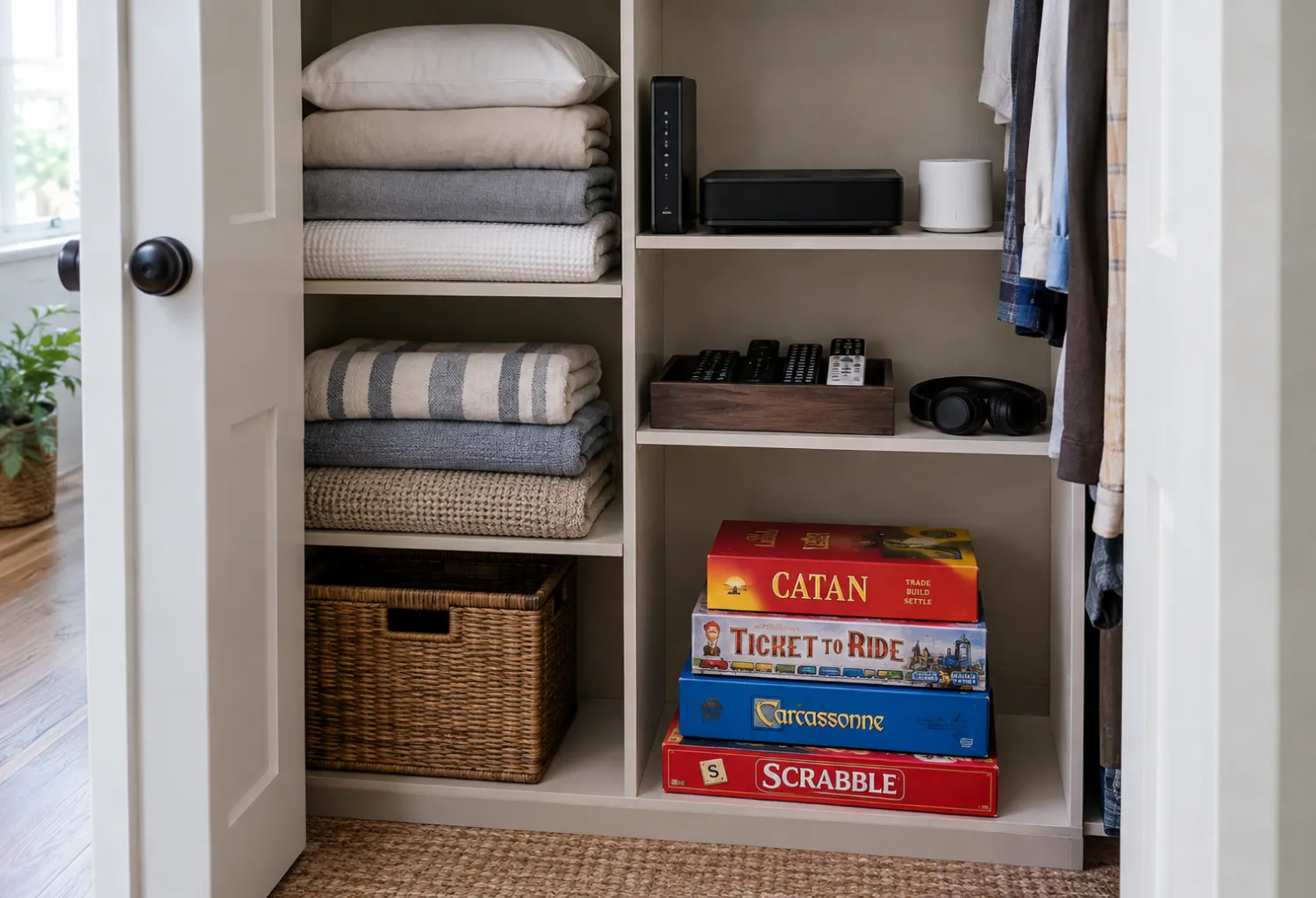
Before you buy a single bin, decide what this closet is actually for. Most living room closets end up organizing themselves by whatever got shoved in last, which is exactly why they stop working. Instead, split the space into two or three clear zones say, media and electronics on one shelf, linens and throw blankets on another, and games or entertaining supplies on the floor. Once you know the zones, everything else (bins, labels, shelf height) follows naturally. This single step solves more clutter than any product you could buy.
2. Floor-to-Ceiling Shelving
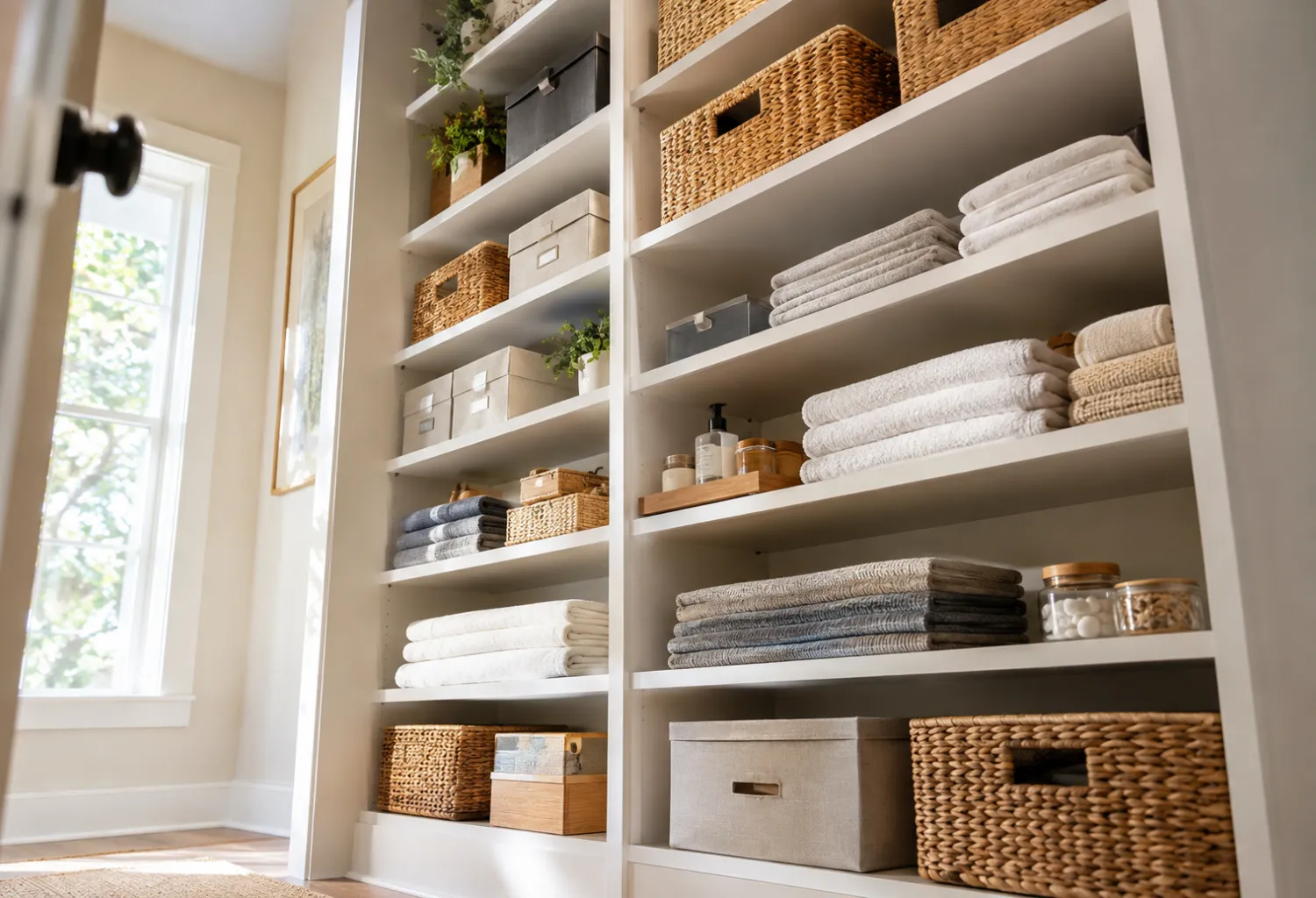
If your closet only has one or two shelves near the top, you’re wasting most of its vertical potential. Adding floor-to-ceiling shelving either built-in or a freestanding unit sized to fit turns dead air into usable storage. Keep everyday items like remotes, chargers, and coasters at eye level, reserve the top shelves for rarely used seasonal items, and use the lowest shelf for heavier things like board games or a small tool kit. White or light wood shelving keeps the closet from feeling boxed in, even when it’s fully stocked.
3. Slide-Out Drawers for Small Items
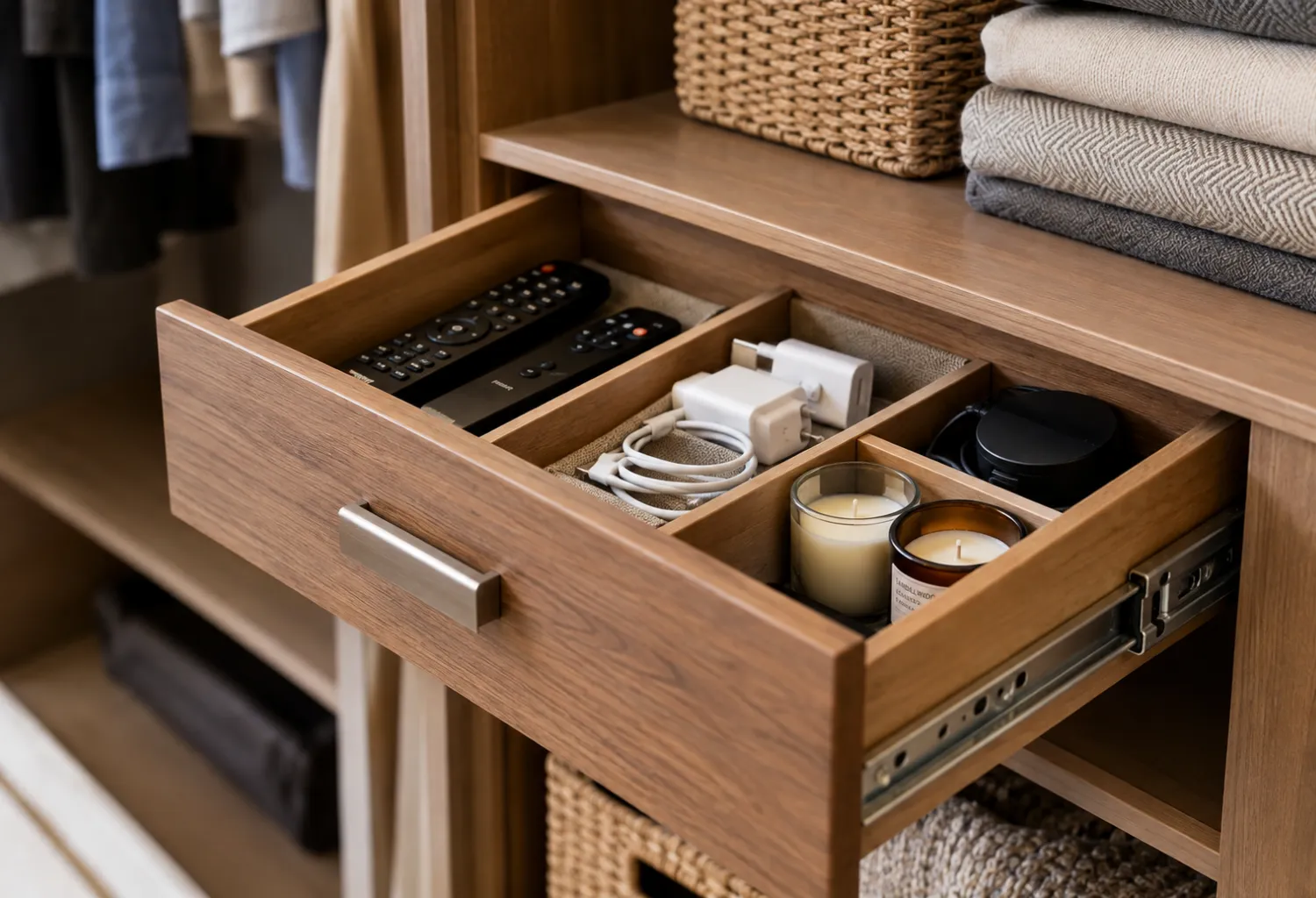
Deep closets are notorious for swallowing small items whole you know something is back there, but reaching it means climbing over three other things. Slide-out drawer units, either purchased ready-made or added as an insert, solve this instantly. They work especially well for remote controls, gaming accessories, candles, or craft supplies. Because you can pull the whole drawer forward, you see everything at once instead of digging blind.
4. Woven Baskets for Blankets
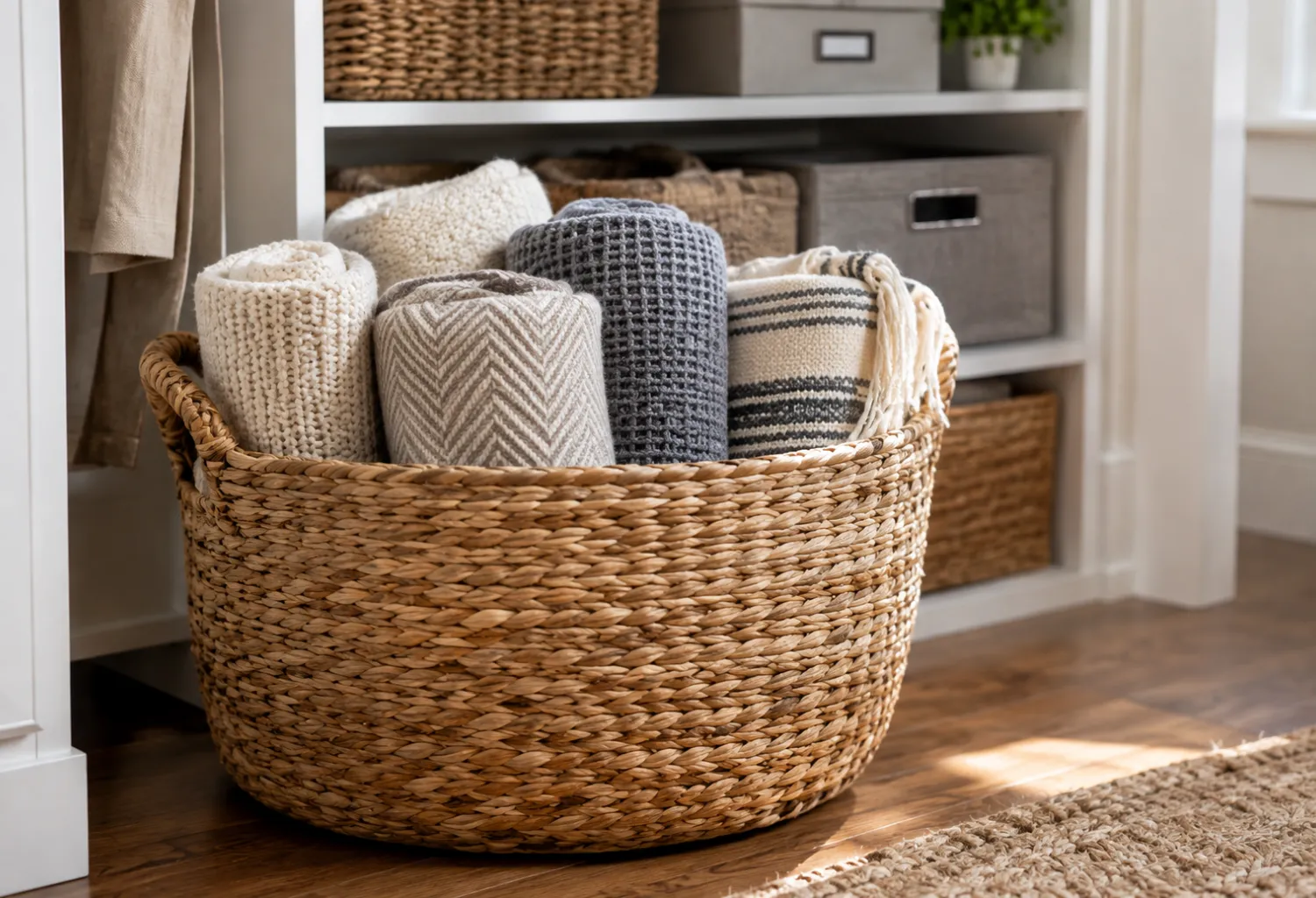
Throw blankets multiply fast, and folded stacks tend to slump over time no matter how neatly you start. Swap the shelf-stacking approach for a large woven basket instead. Set it on the closet floor or a low shelf, roll the blankets rather than folding them, and stand them upright inside the basket like you would firewood. This keeps each blanket accessible without unstacking the whole pile, and the natural texture of rattan or seagrass adds warmth if you ever leave the closet door open during a gathering.
5. A Dedicated Games and Puzzles Shelf
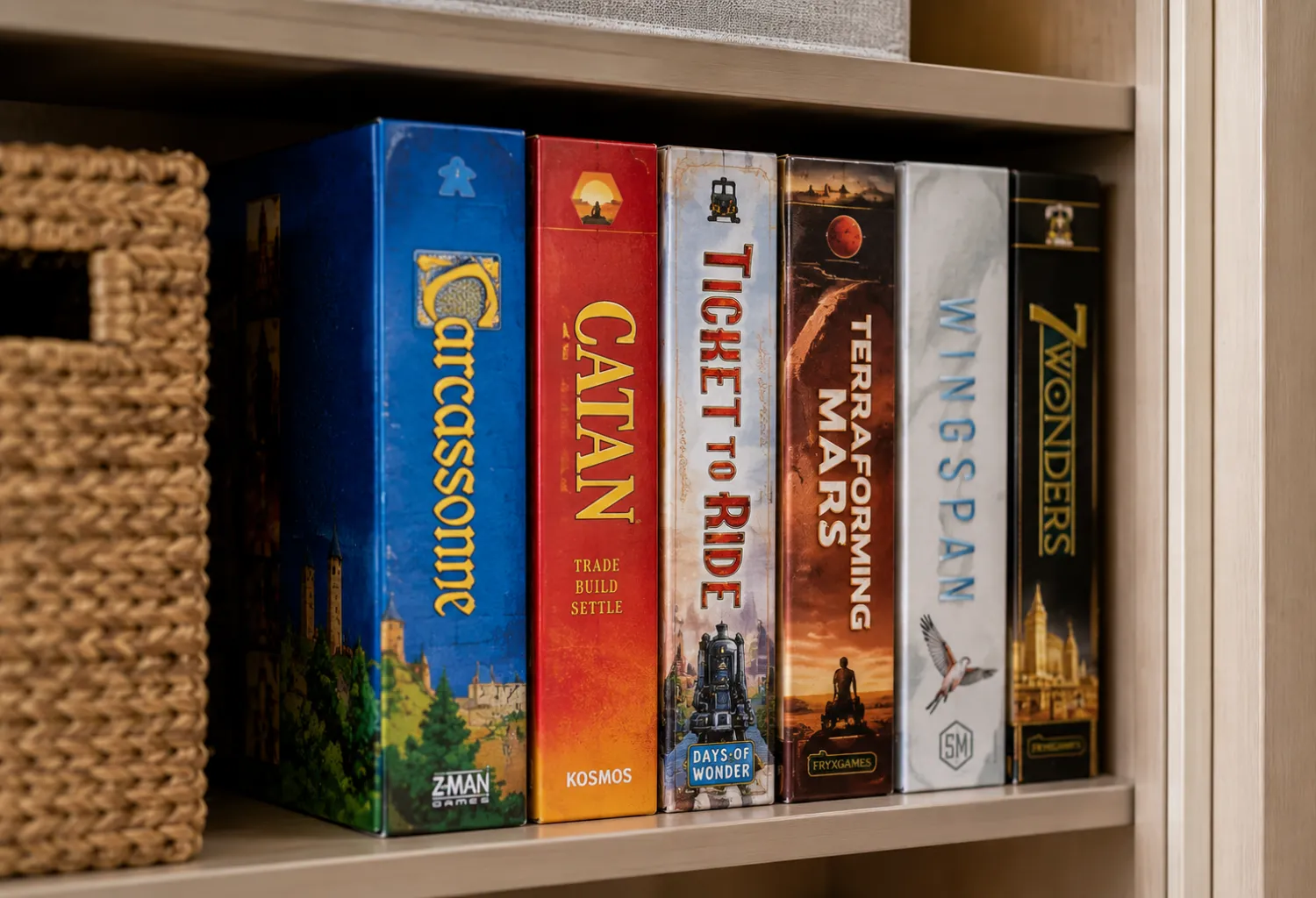
If your living room hosts family game nights, board games and puzzles need their own real estate instead of getting crammed sideways on a random shelf. Measure your tallest box first, then set a shelf height that fits it upright games stored on their side get shuffled and damaged faster. Group by frequency of use, with go-to favorites at the front and rarely-played ones toward the back or higher up.
6. Cord and Charger Organization Box
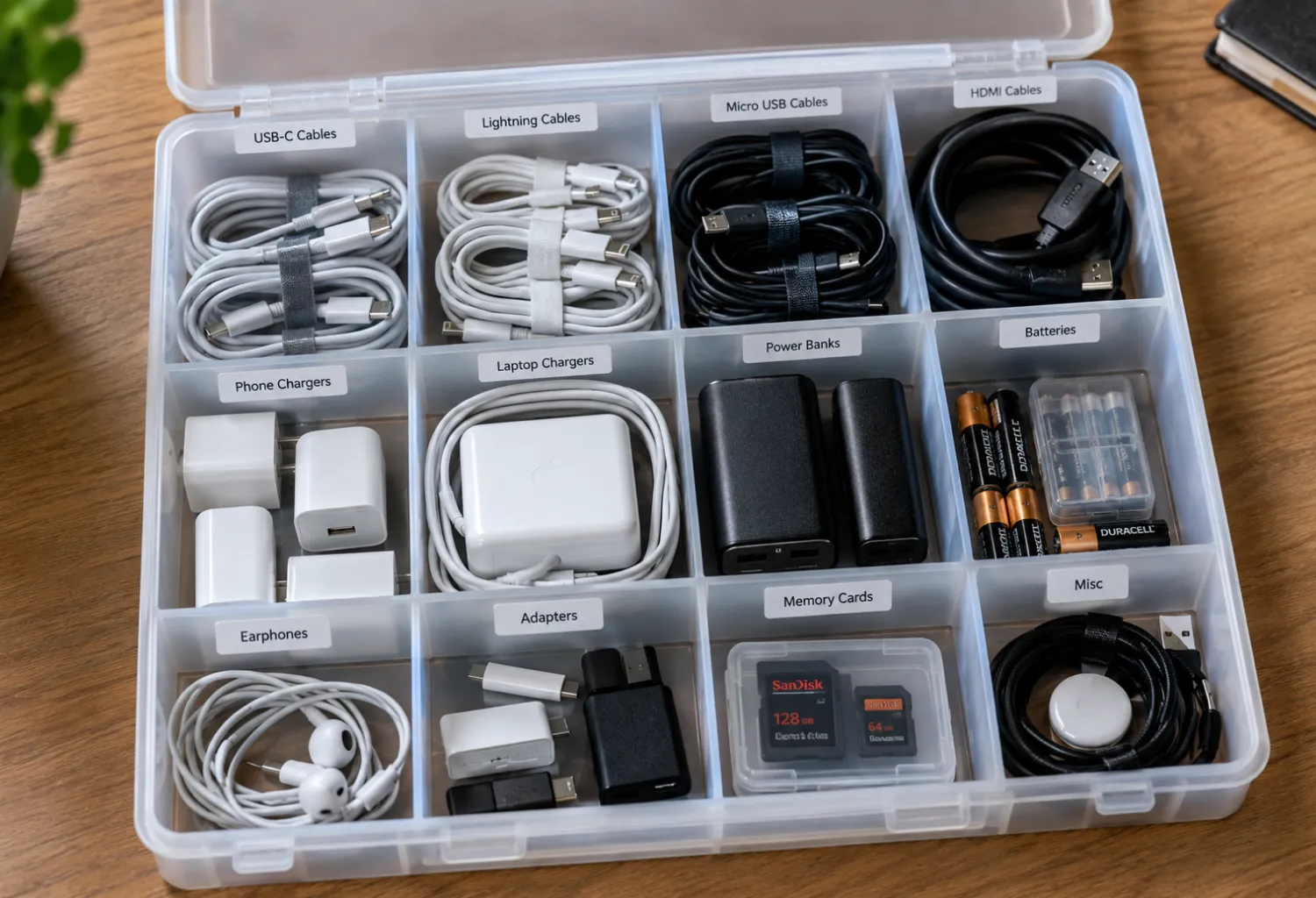
Every living room closet seems to have a drawer or bin where cords go to tangle. A small divided organizer box the kind with individual compartments stops this cycle for good. Label each compartment (HDMI, phone chargers, remotes, batteries) so you’re not untangling a knot every time you need one specific cable. This is a small fix, but it removes one of the most common daily frustrations in a shared living space.
7. Fabric Bins with Labels for Miscellaneous Items
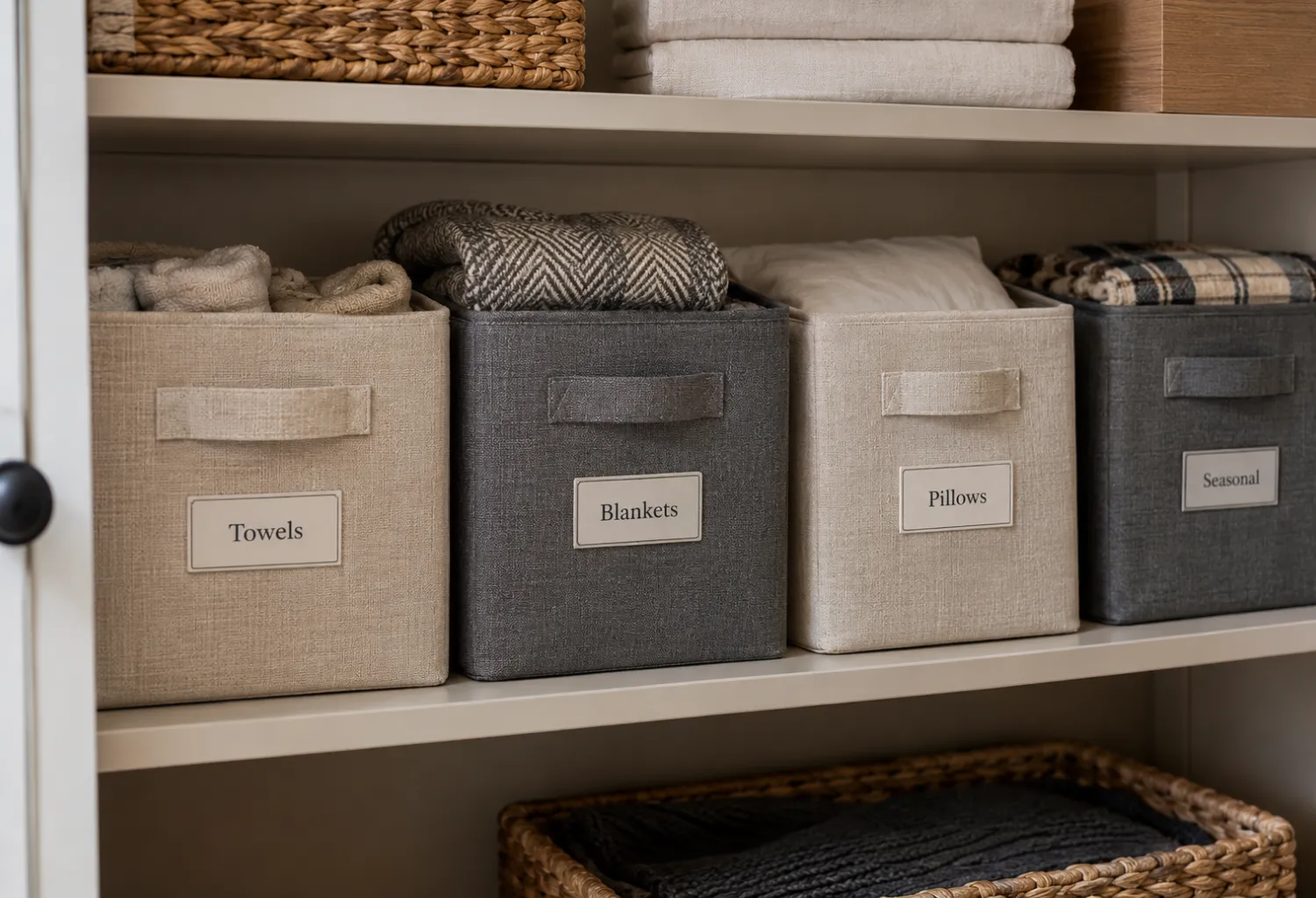
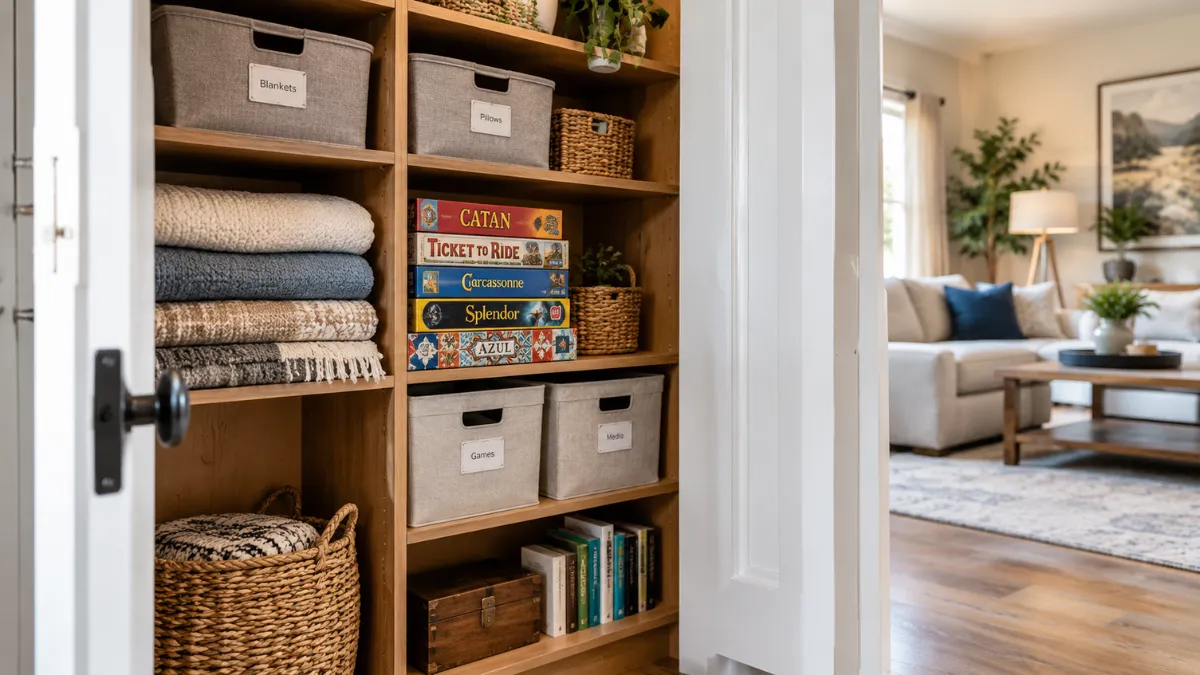
Not everything in a living room closet fits neatly into “linens” or “electronics.” For the odds and ends spare light bulbs, picture-hanging hardware, extra coasters use uniform fabric bins with clear labels rather than letting these items float loose on a shelf. Choose bins in a neutral tone like oatmeal, charcoal, or soft gray so the closet reads as cohesive rather than mismatched, even with several different categories stored side by side.
8. Hooks for Bags and Reusable Totes
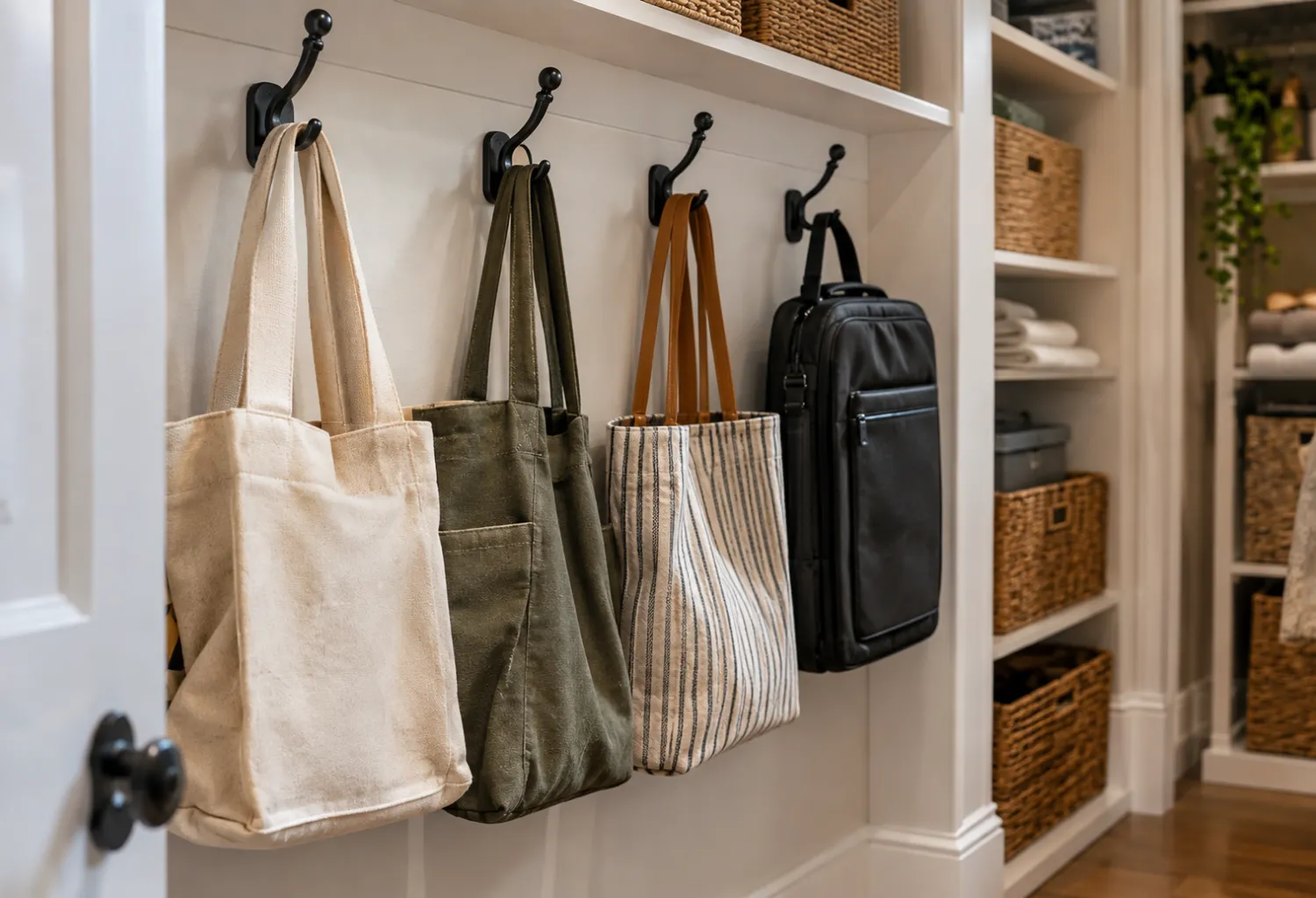
If you’re storing tote bags, reusable grocery bags, or a laptop bag in this closet, hooks are far more efficient than trying to stack or fold them onto a shelf. Install a row of hooks along one interior wall or the inside of the closet door at a height that keeps bags from dragging on the floor. This also makes grab-and-go mornings faster since you’re not digging through a pile to find the right bag.
9. A Fold-Down Ironing Station
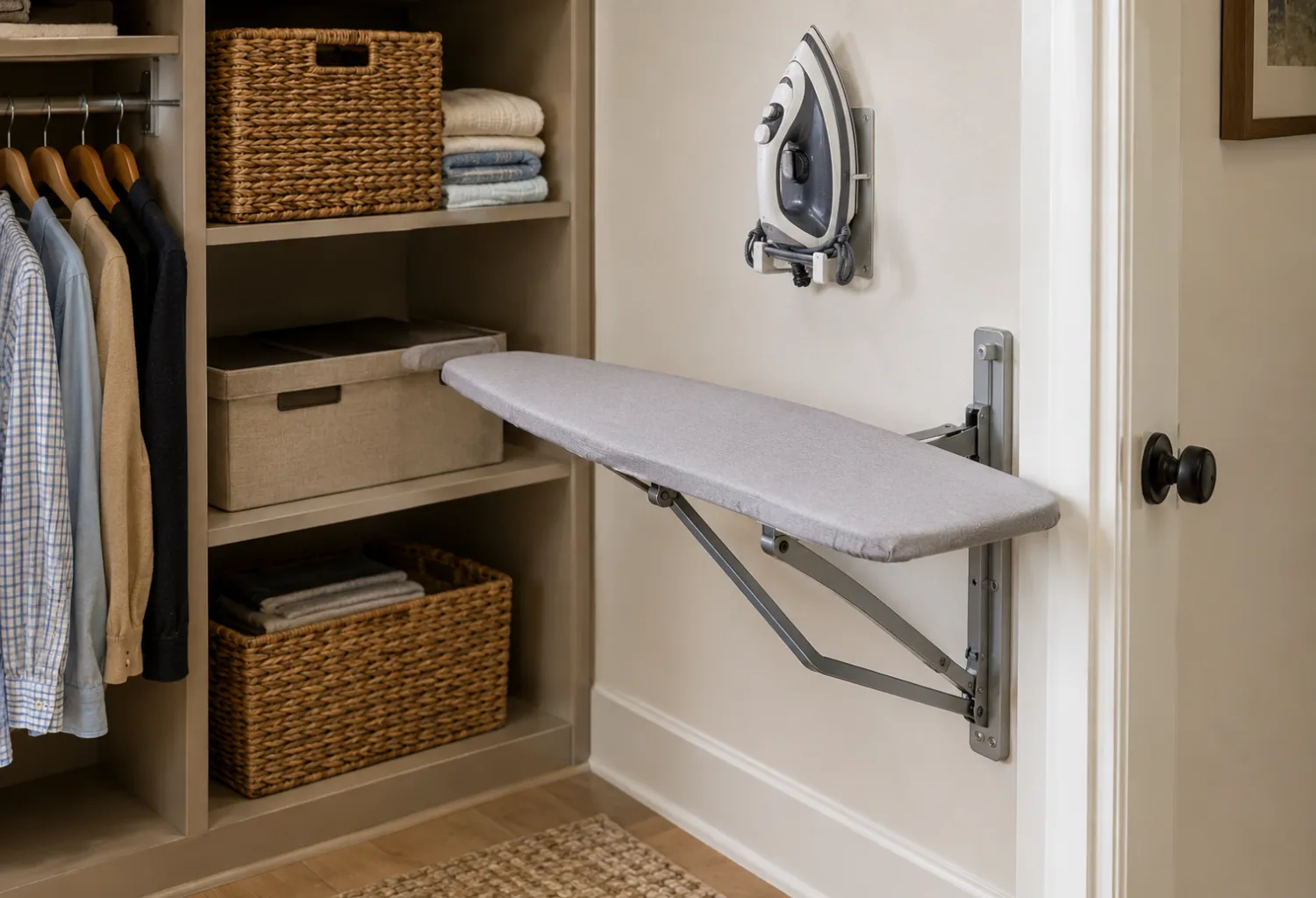
If space allows, a wall-mounted fold-down ironing board inside the closet turns unused vertical space into a genuinely useful feature. Look for a compact model that tucks flat against the closet wall when not in use, with a small hook nearby for the iron itself. This works particularly well in smaller homes where a separate laundry or utility space isn’t available.
10. Labeled Bins for Seasonal Decor
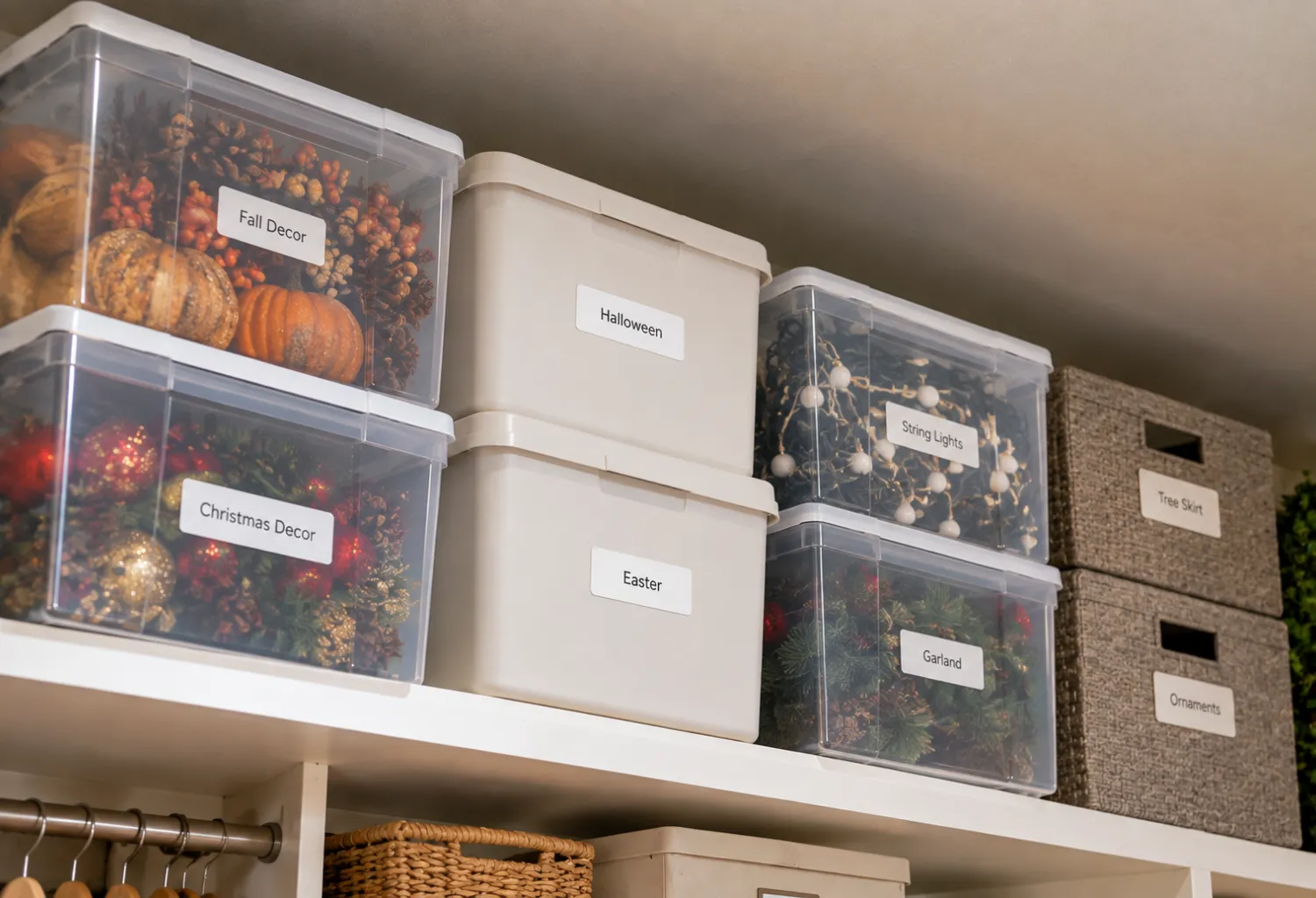
Holiday decorations and seasonal accents take up more room than most people expect, and they’re only needed a few weeks a year. Store them in stackable, labeled bins one per holiday or season and keep them on the highest shelf since you’ll only need them occasionally. Clear or semi-clear bins let you spot the right one at a glance, while opaque bins with bold labels keep things looking tidy if the closet is visible from the main room.
11. Vertical Dividers for Trays and Serving Pieces
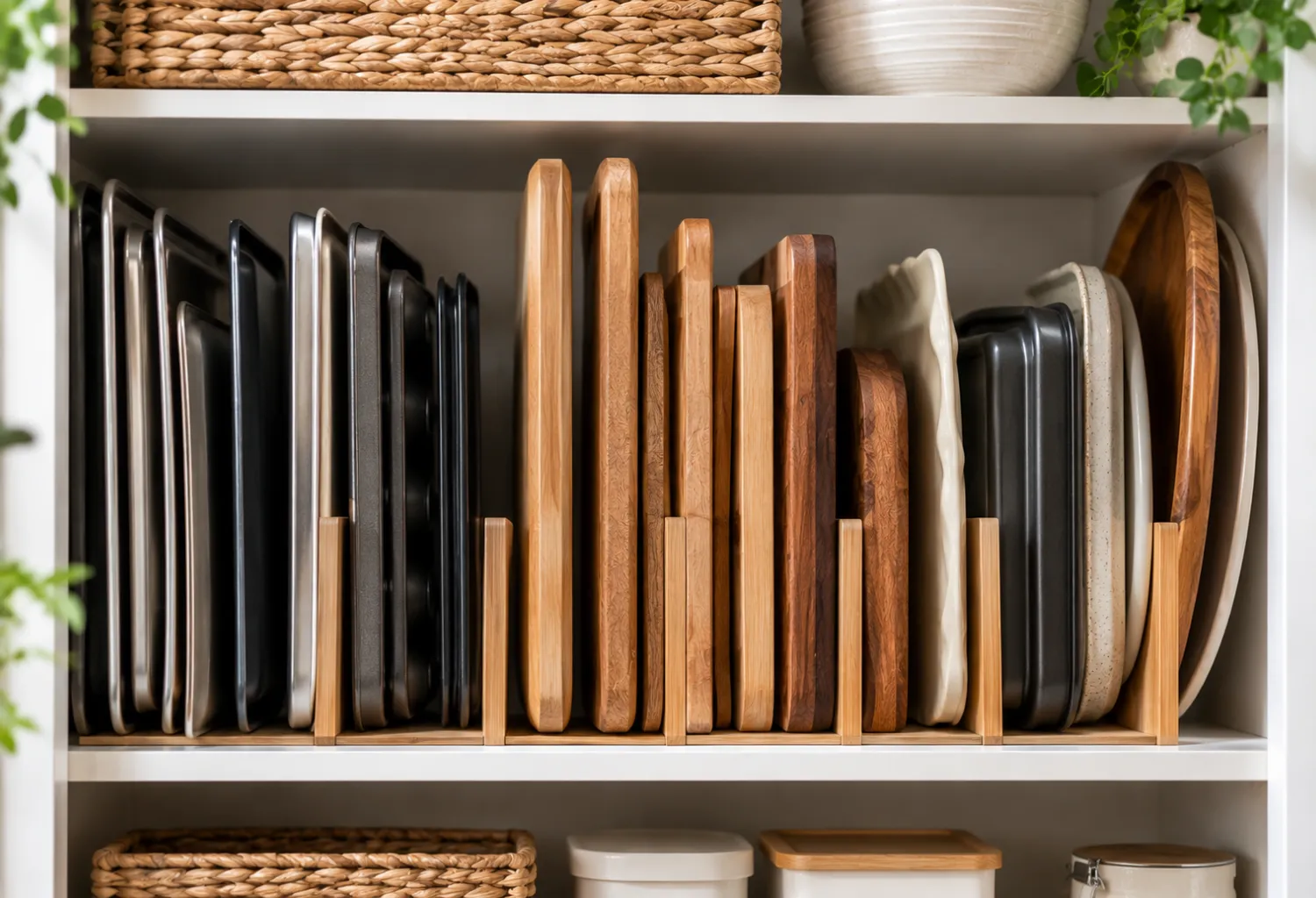
Large serving trays, cutting boards, and platters are awkward to store flat since they take up an entire shelf and get buried under other items. Adding simple vertical dividers even inexpensive tension rods or a small file-sorter rack lets you slot these pieces in standing up, side by side, like books on a shelf. This alone can free up significant shelf space elsewhere in the closet.
12. A Charging Station for Devices
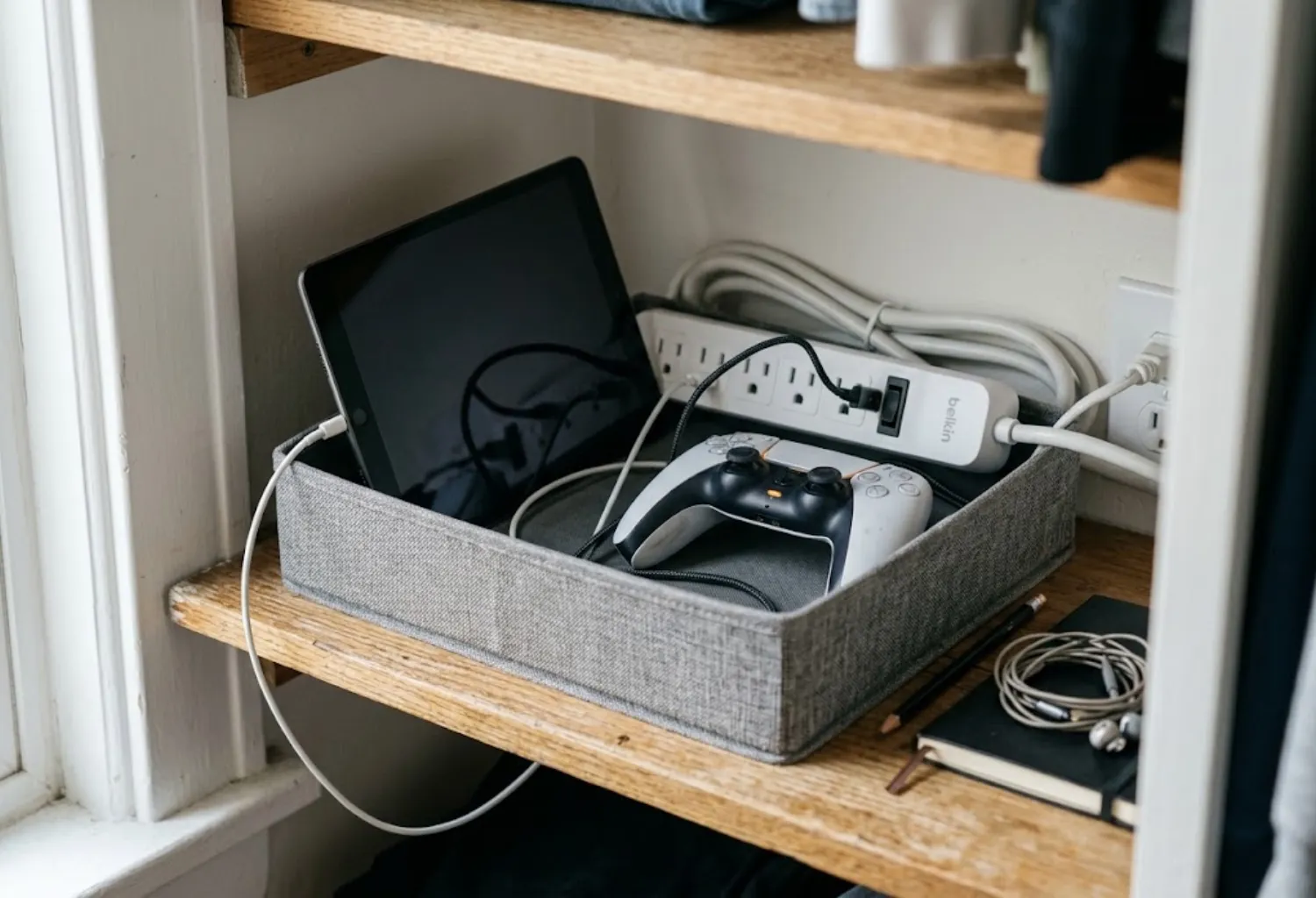
If your living room closet already houses your router, streaming devices, or spare electronics, consider adding a small charging station on one shelf. A single power strip with a surge protector, tucked into a shallow bin to hide the cord tangle, lets you charge tablets, game controllers, or a spare phone without cords crossing the whole closet. Keep this shelf at a height that’s easy to reach without crouching.
13. Slim Storage for Wrapping Paper and Ribbon
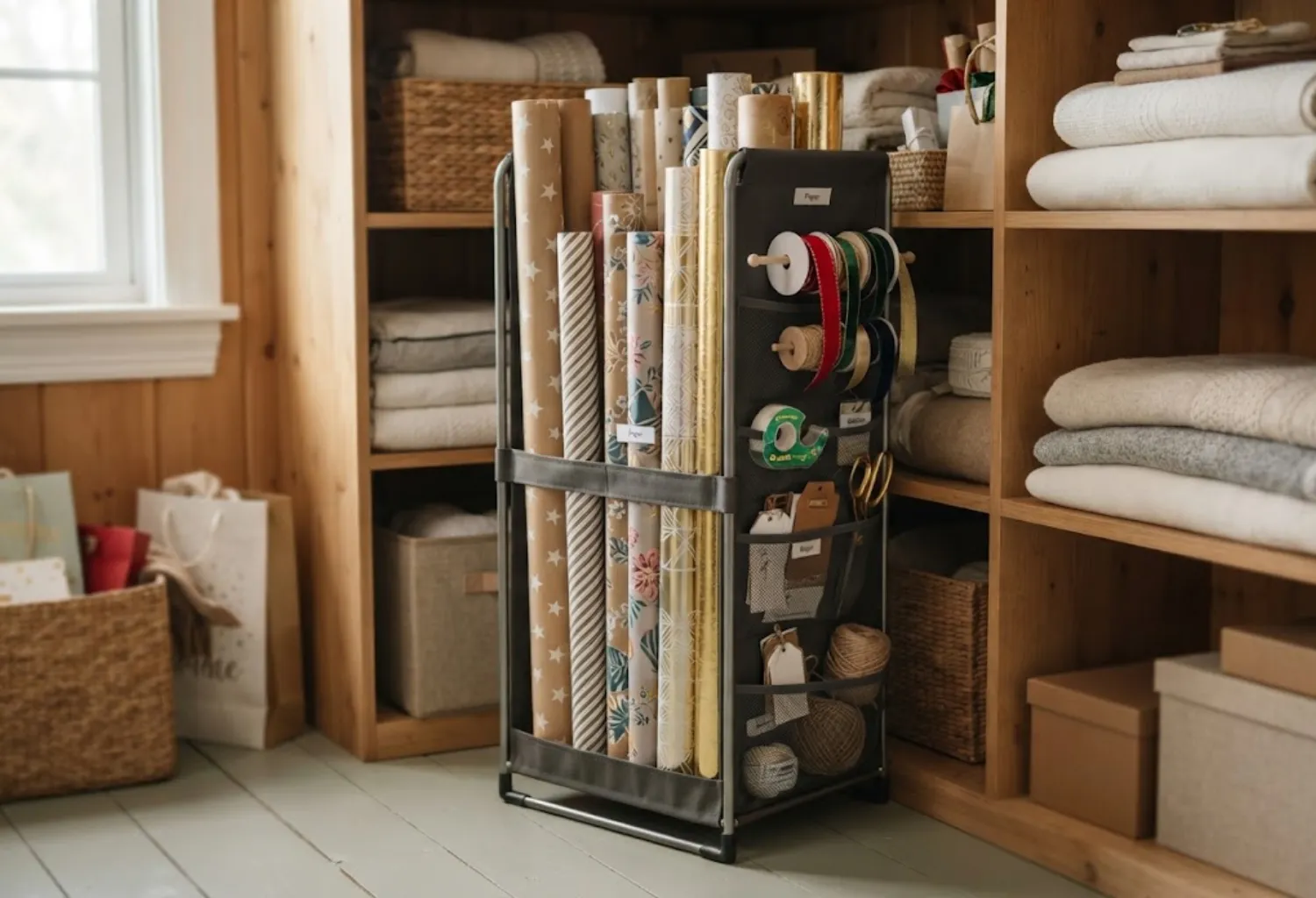
Wrapping paper rolls are one of the most commonly mis-stored items in any home they end up leaning in a corner, falling over, or getting crushed under something heavier. A tall, slim caddy designed specifically for wrapping supplies (rolls stand upright, with side pockets for ribbon, tape, and gift tags) solves this in one purchase. Store it in the back corner of the closet where its narrow footprint won’t compete with bulkier items.
14. Adjustable Shelving Instead of Fixed
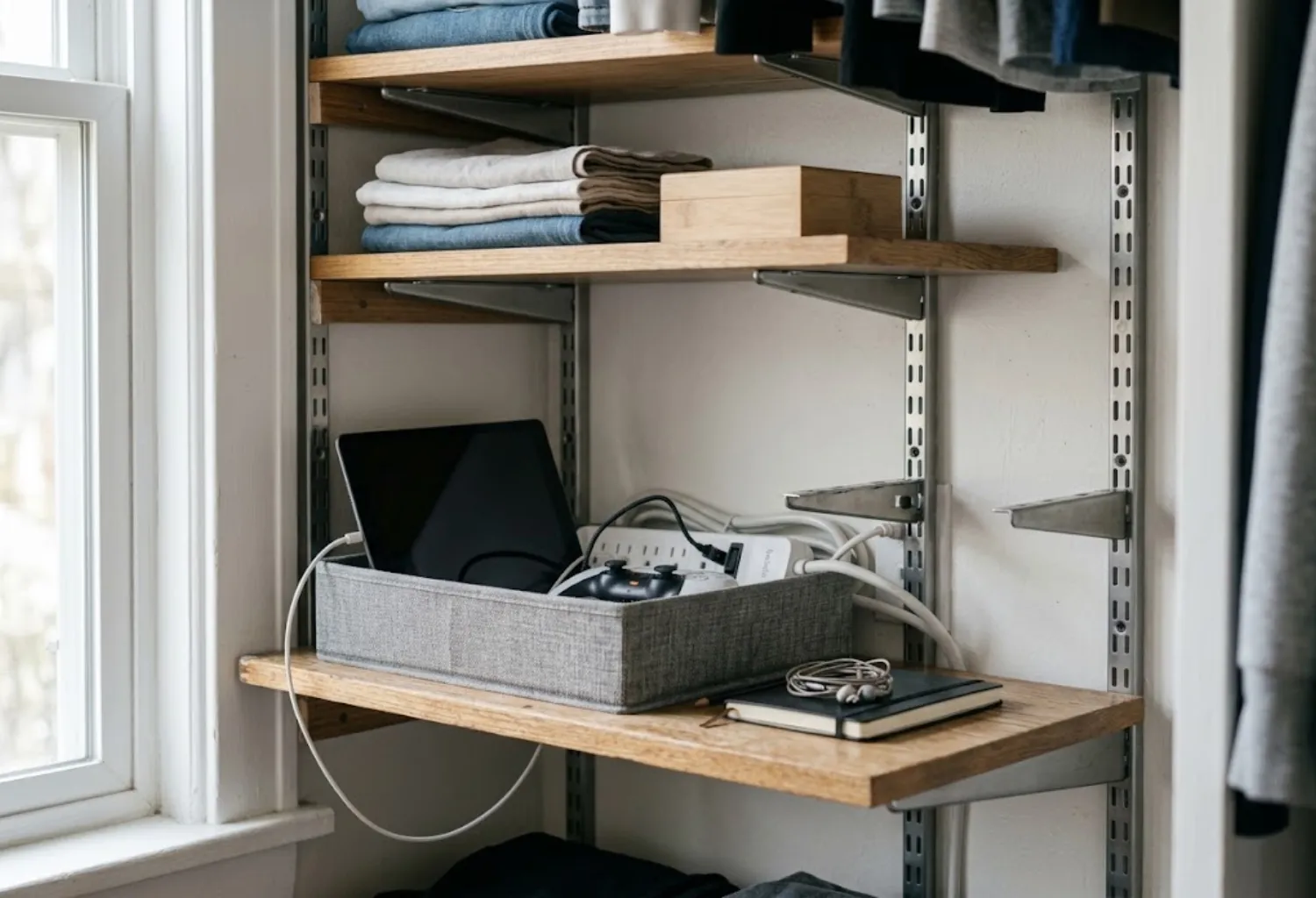
If your closet came with fixed shelves, consider swapping to an adjustable shelving system, even a simple track-and-bracket setup. Storage needs change what fits your closet now won’t necessarily fit it in two years and adjustable shelving lets you reconfigure heights as your collection of games, electronics, or seasonal items grows or shrinks. This is a bigger project than most on this list, but it pays off in flexibility for years.
15. A Designated Spot for Remote Controls
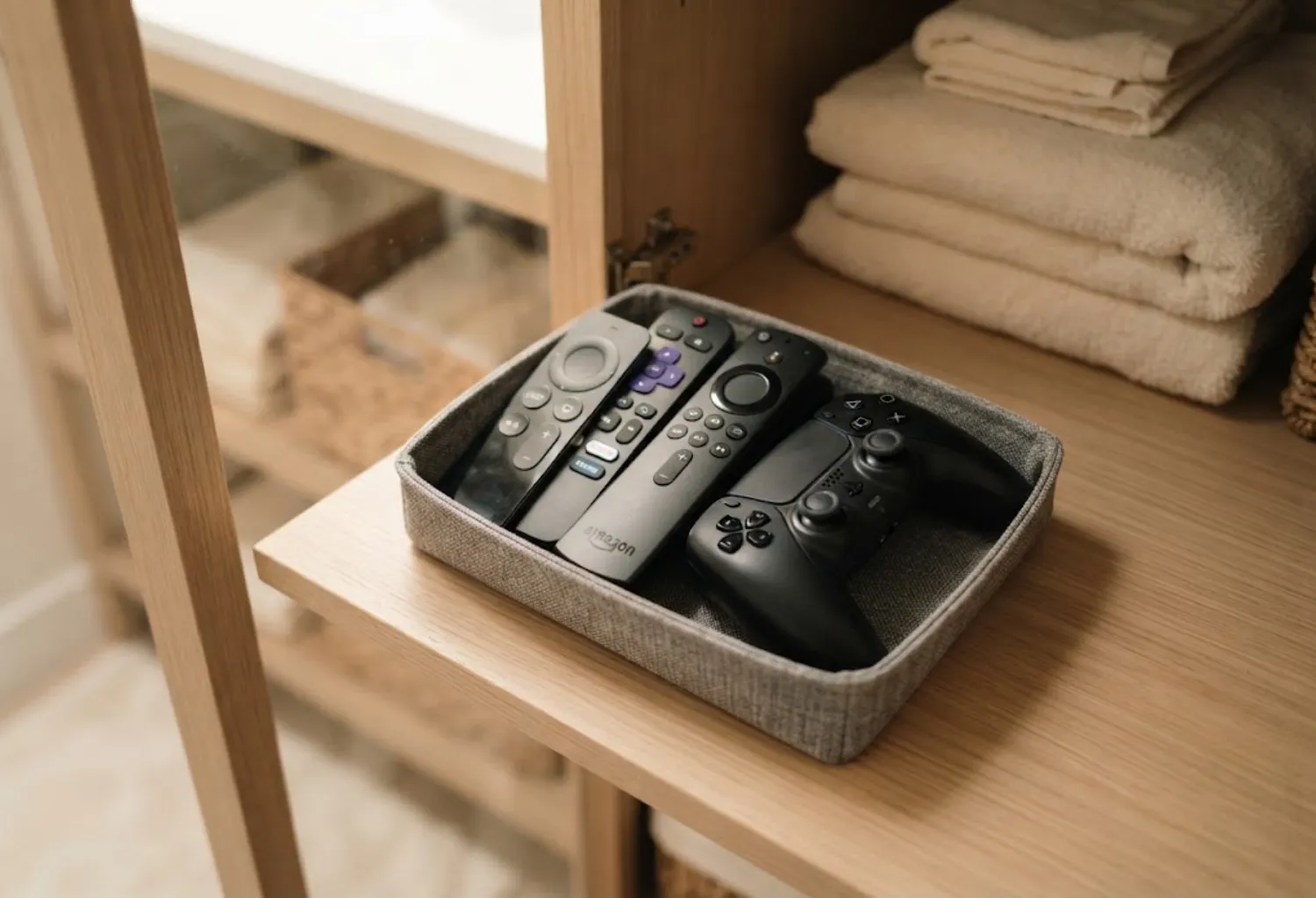
Remotes have a habit of scattering across end tables, couch cushions, and eventually disappearing altogether. Keep a small caddy or shallow tray just inside the closet door specifically for remotes and gaming controllers not currently in use. Even if most remotes live on the coffee table day to day, having a defined “home base” in the closet makes it easy to corral stray ones during cleanup instead of letting them pile up elsewhere.
16. Under-Shelf Baskets for Extra Space
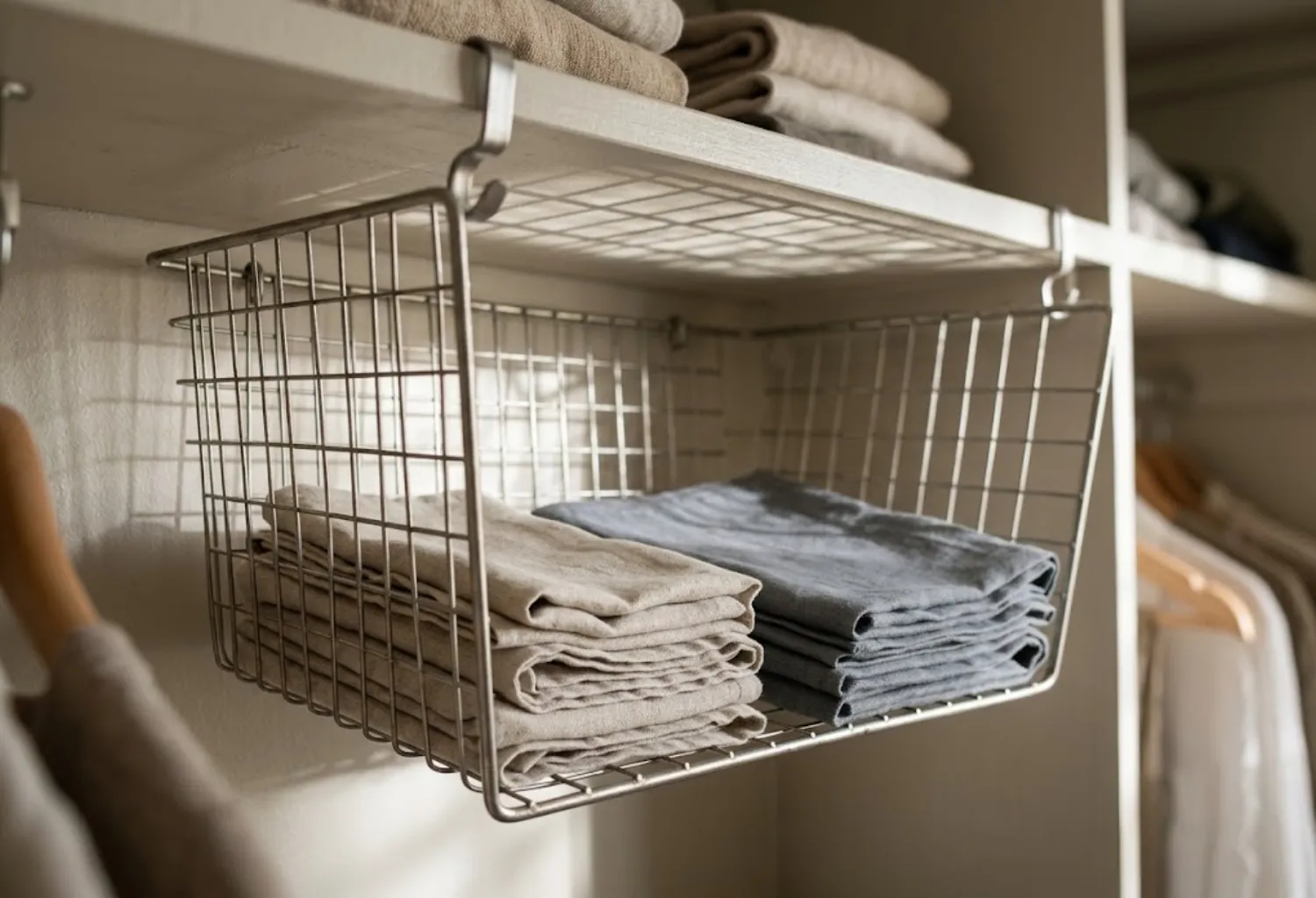
Most closets waste the gap between a shelf and the items sitting on it. Under-shelf hanging baskets the kind that clip onto the shelf edge and hang below add an entire extra layer of storage without installing anything new. These work well for lightweight items like napkins, placemats, or small craft supplies that would otherwise get lost in a deeper bin.
17. A Small Bookshelf Insert for Board Games or Books
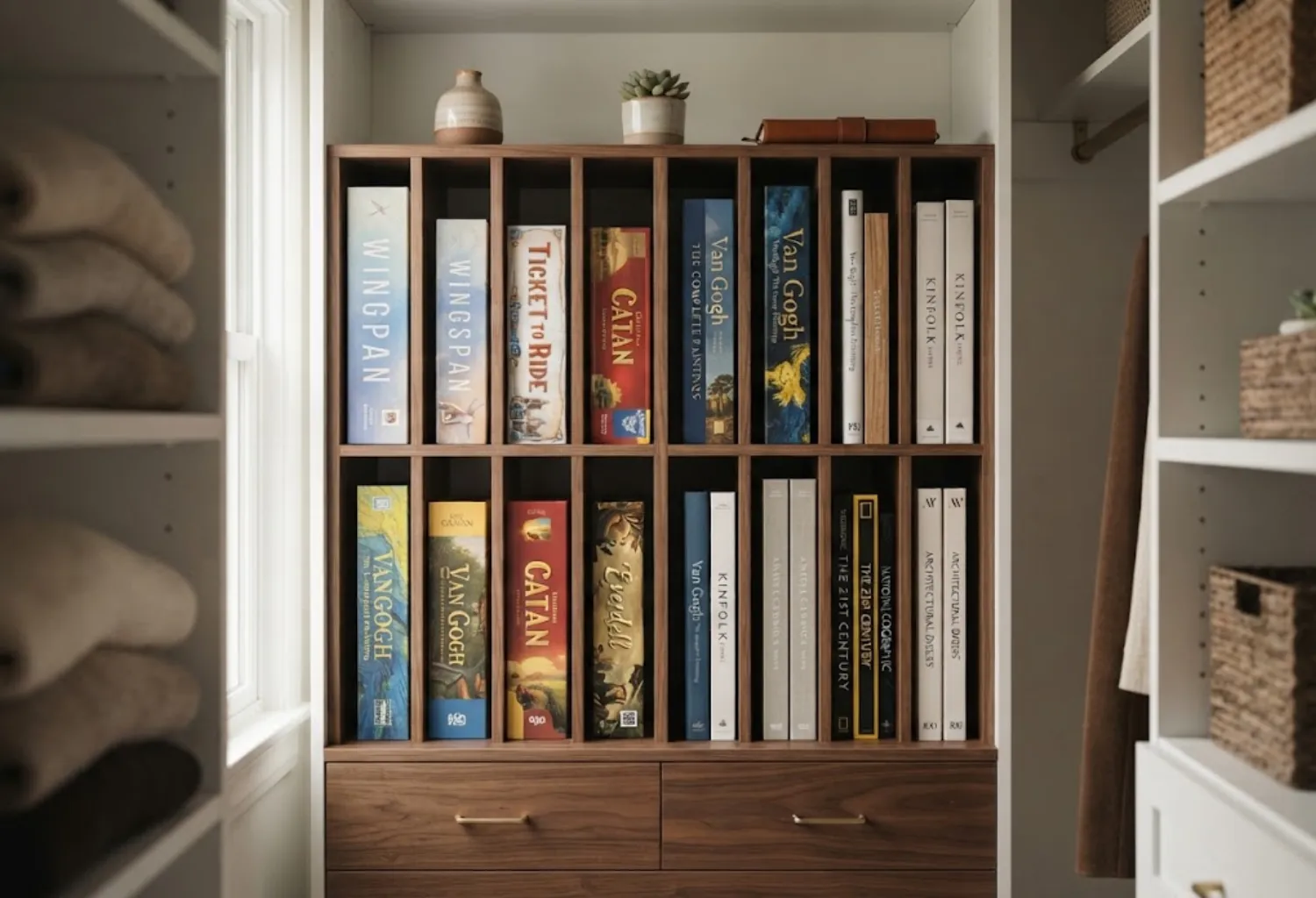
If your closet is on the deeper side, consider adding a slim bookshelf insert sized to the interior width. This creates defined slots for board games, coffee-table books, or photo albums, stopping them from sliding into a disorganized pile every time the door opens. Choose a unit in a finish that matches your shelving so it reads as one built-in system rather than a separate piece squeezed inside.
18. Use the Door for Extra Storage
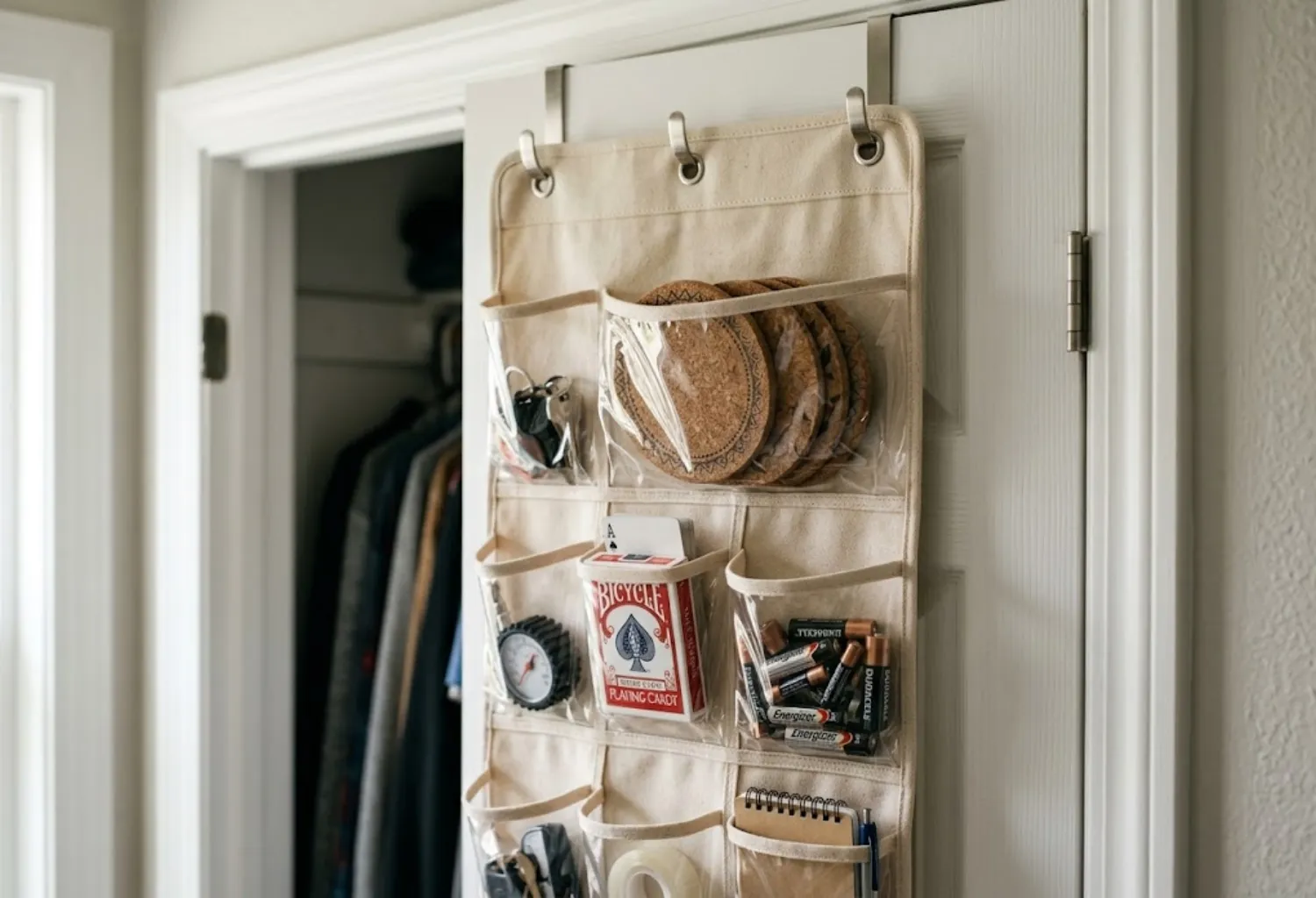
The back of a closet door is one of the most overlooked storage surfaces in the house. An over-the-door organizer with clear pockets works well for smaller items coasters, playing cards, spare batteries, craft supplies that would otherwise clutter a shelf. Because the pockets are visible, this also doubles as a quick inventory check so you’re not buying duplicates of things you already have.
19. Color-Coded Bins by Family Member
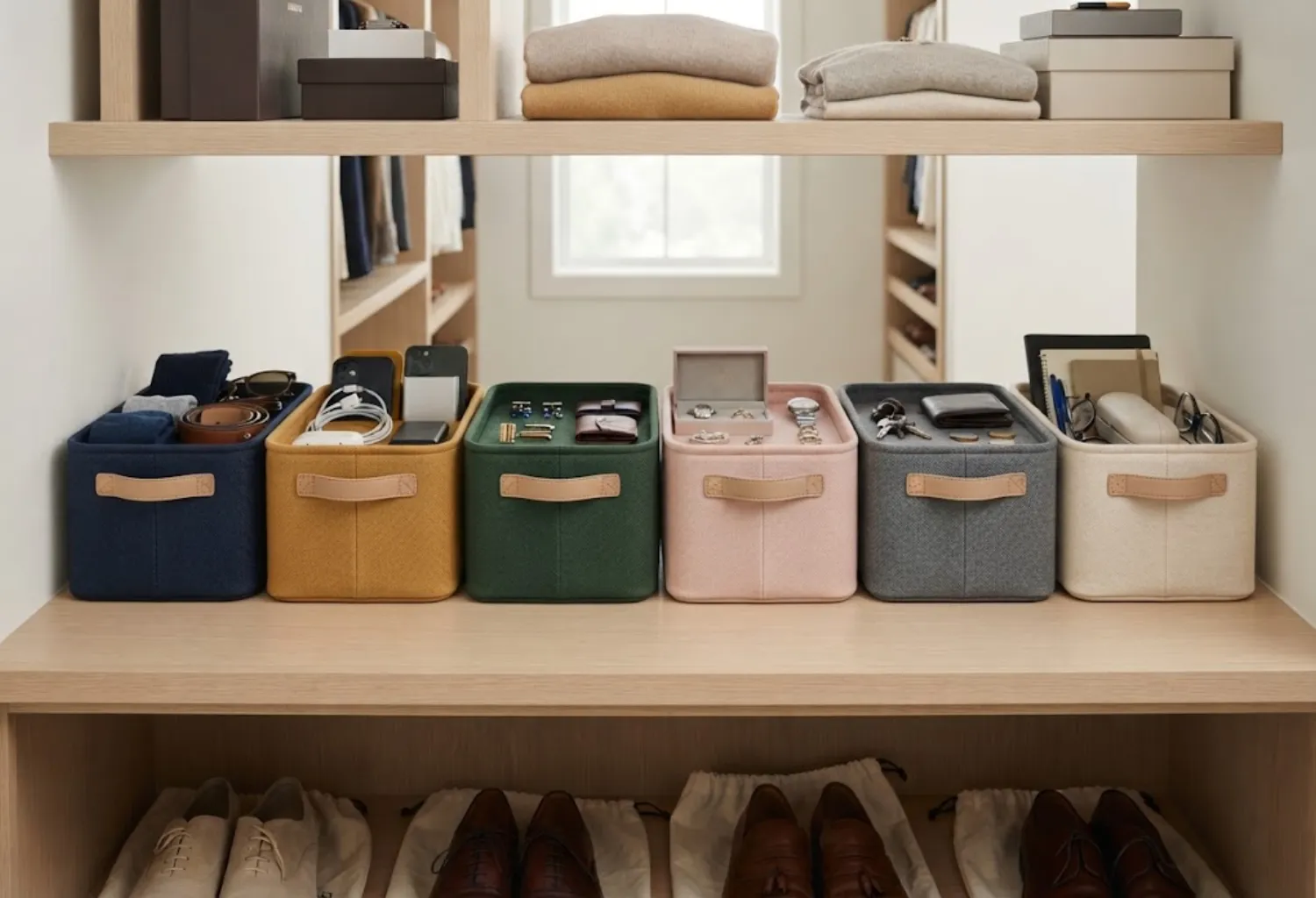
In households with kids, a living room closet often becomes shared storage for everyone’s odds and ends art supplies, toys that migrated from the playroom, homework materials. Assigning each family member a specific bin color turns cleanup into something almost automatic, since everyone already knows which bin is theirs. This works especially well paired with a simple house rule: if it’s out, it goes back in your color.
20. Slim Rolling Cart for Flexible Storage
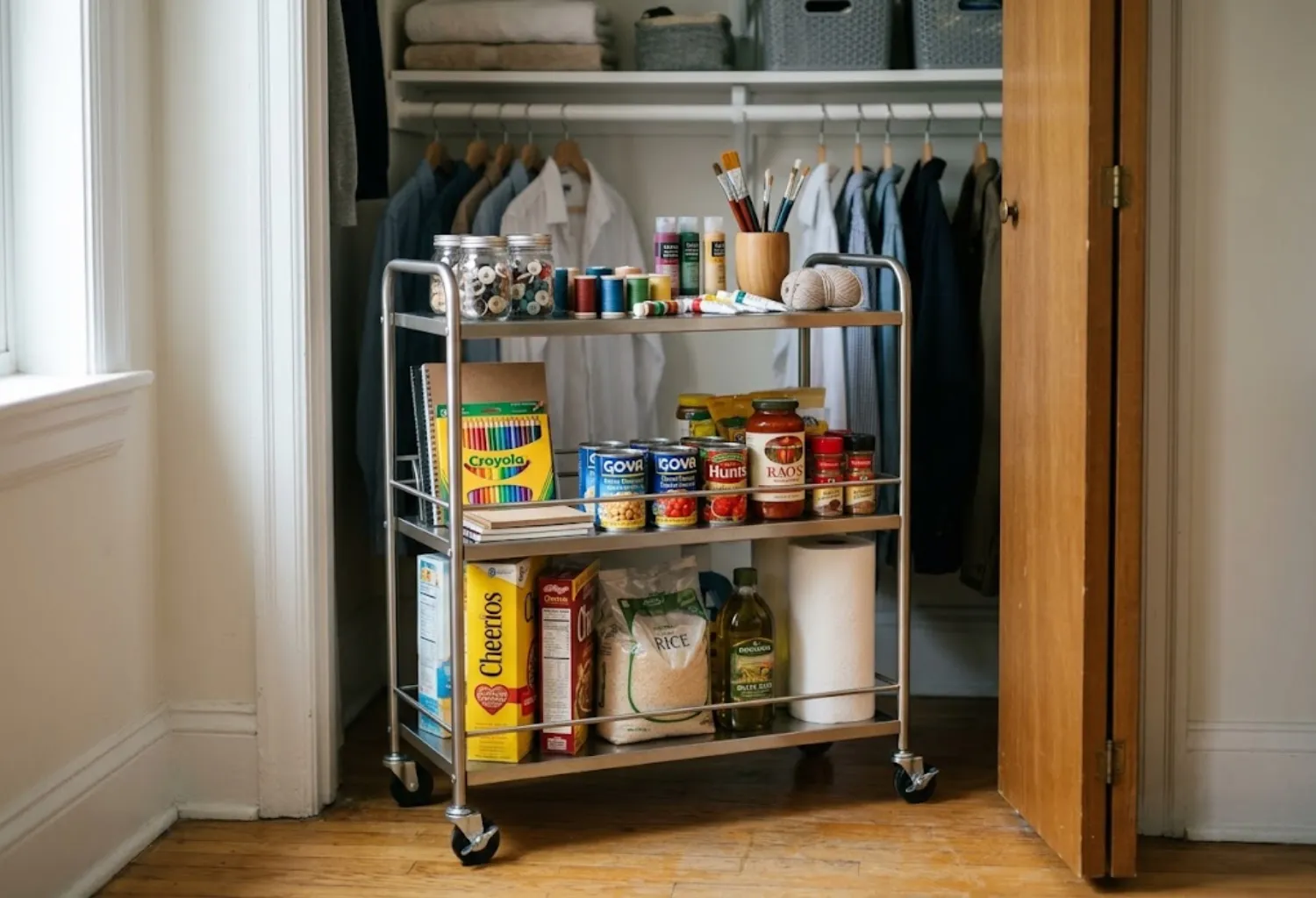
If your closet needs to serve double duty say, extra pantry overflow during holidays or craft supplies during a specific season a slim rolling cart gives you flexibility that fixed shelving can’t. Roll it in when you need the extra storage, then roll it out to use elsewhere in the house when you don’t. Look for a narrow three-tier cart that fits the closet’s width without eating into shelf space on either side.
21. A Small Bench or Step Stool Inside
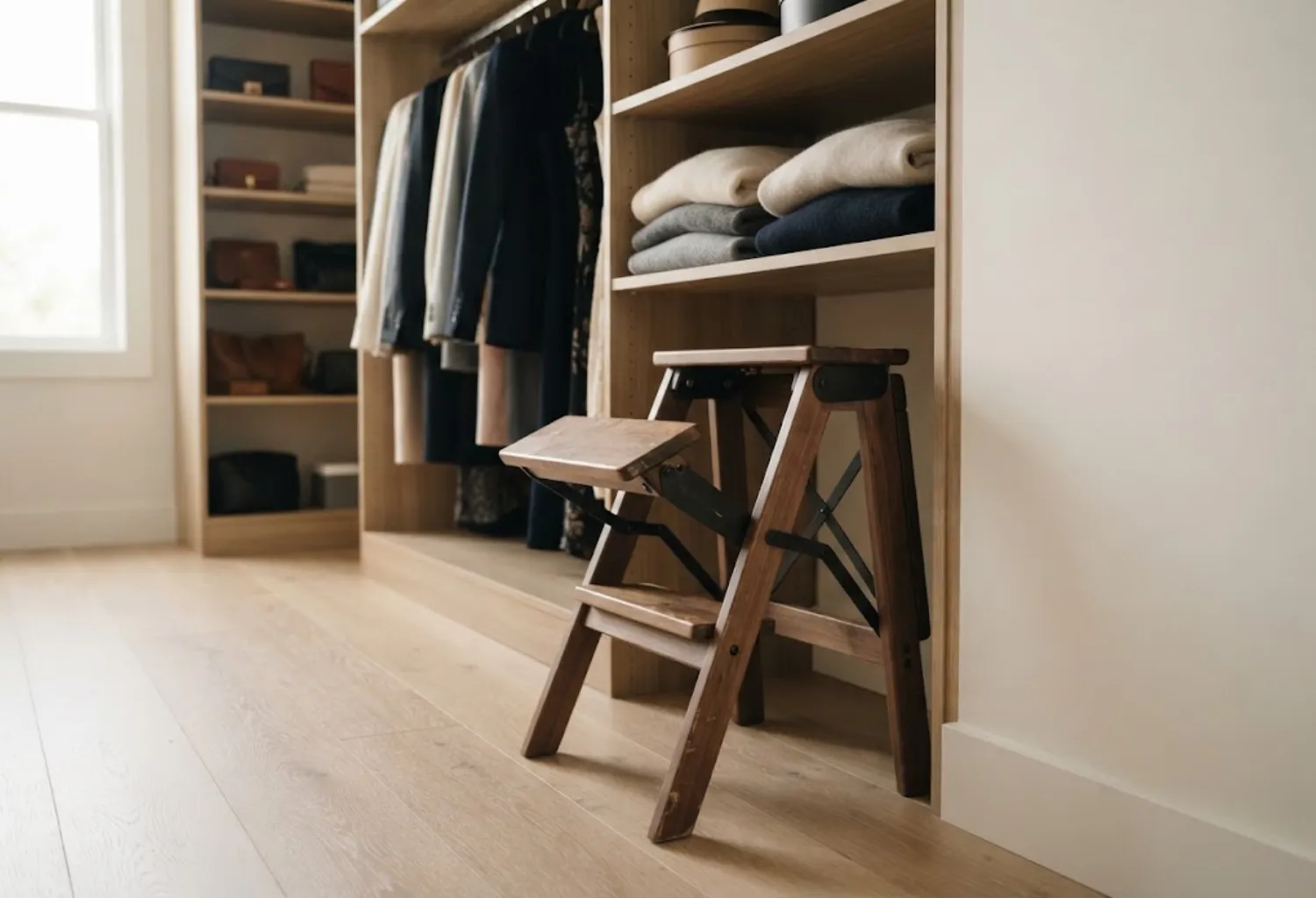
If your closet has floor space to spare, a small step stool or narrow bench solves two problems at once: it gives you a way to reach the top shelves safely, and it doubles as an extra seat or surface when needed nearby. Choose one that folds flat or slides under the bottom shelf when not in use, so it doesn’t compete with floor storage.
22. Label Everything, Even the Obvious Bins
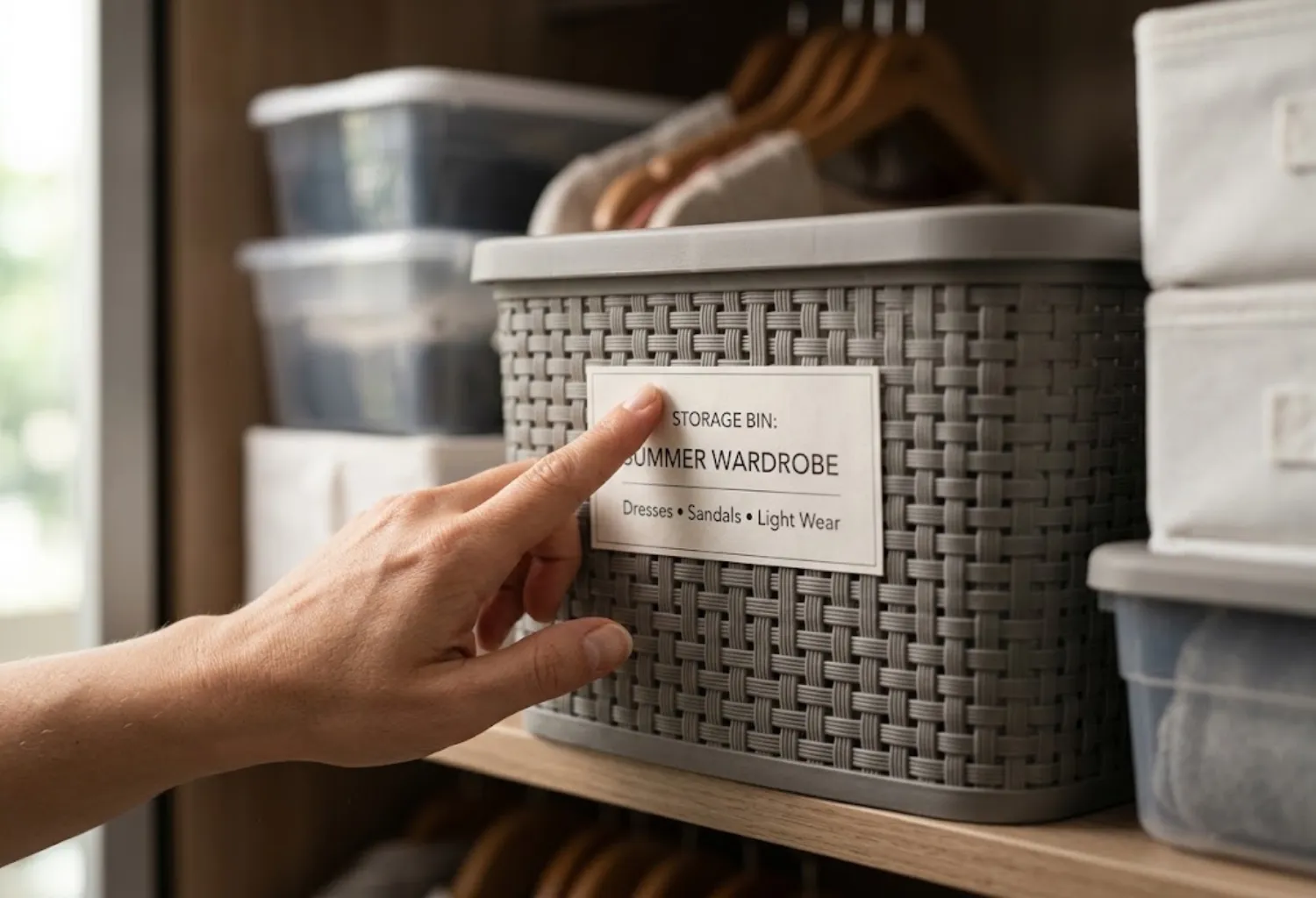
It’s tempting to skip labels on bins you’re sure you’ll remember, but six months later, “obvious” contents rarely stay obvious, especially in a shared household. Use a simple label maker or handwritten tags in a consistent style, and label bins by both category and, where useful, by size or occasion (for example, “Large Platters” instead of just “Serving”). Consistent labeling is what actually keeps a system working long after the initial organizing day.
23. Keep a Donation Box in the Closet Year-Round

One of the most practical living room closet organization ideas isn’t a product at all it’s a habit. Keep a designated donation bag or box on the floor of the closet at all times. Whenever you come across something you no longer need while tidying, it goes straight into the box instead of back onto a shelf. Once it’s full, take it out. This alone prevents the slow buildup that turns an organized closet back into a cluttered one within a year.
24. A Small Light Inside
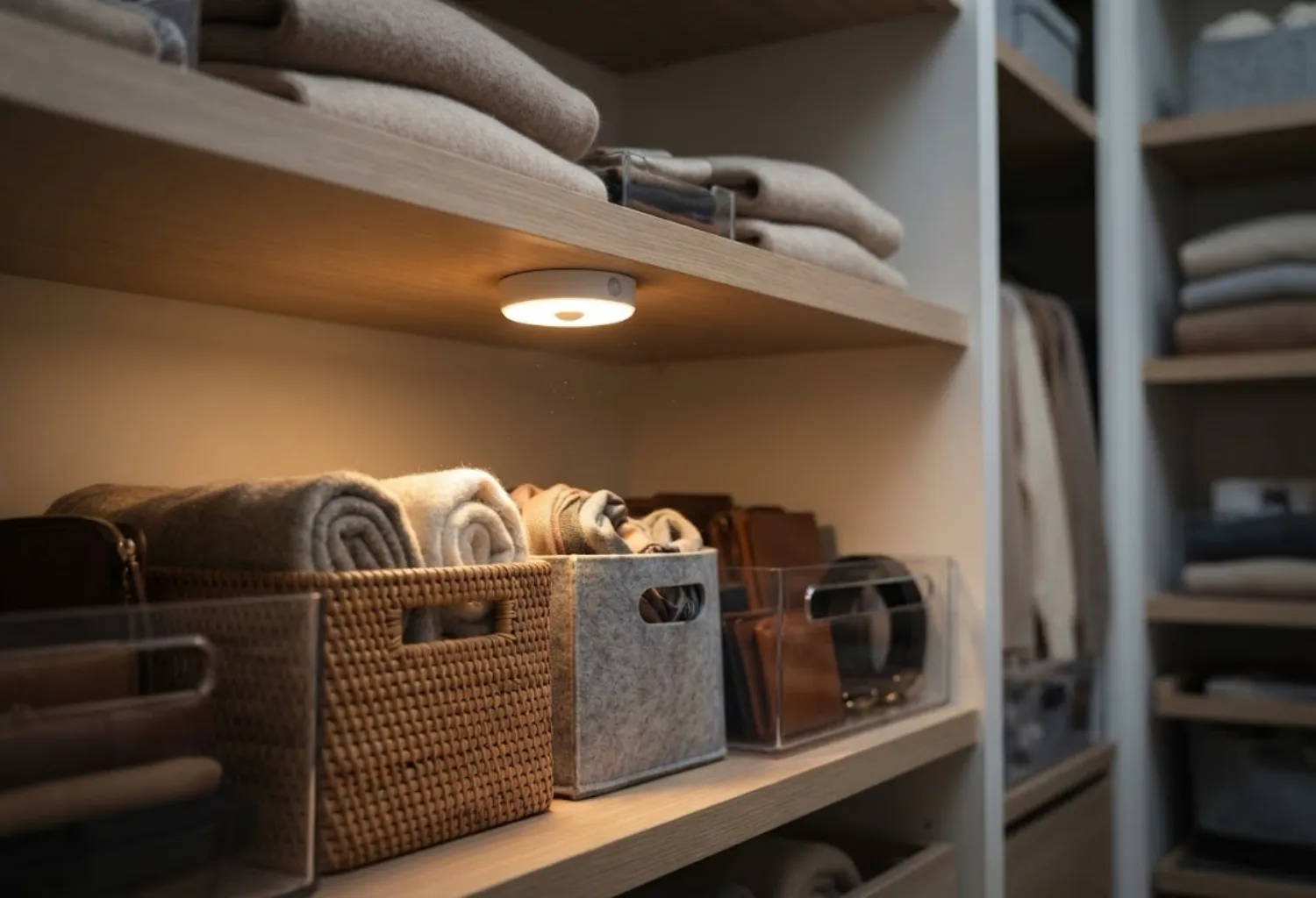
Even a well-organized closet is hard to use if you can’t see into the back corners. A battery-operated stick-on light or a small motion-sensor puck light solves this without any wiring. Position it on the inside of the door frame or the underside of the top shelf so it illuminates downward across the bins below. This small addition makes locating items faster and helps you notice when things have drifted out of place.
25. Match Bin and Basket Materials Style
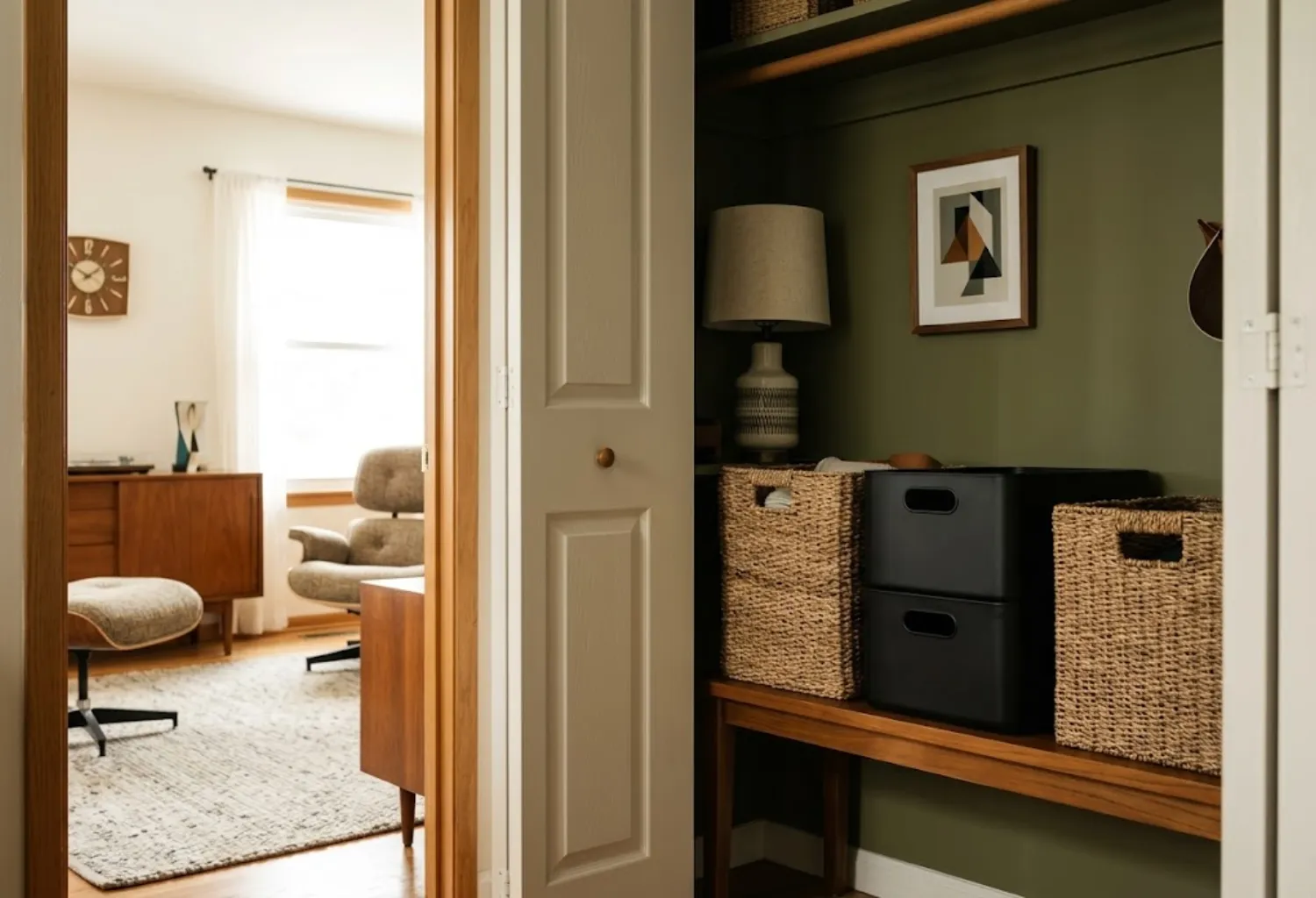
If your closet door is often left open, or sits in clear view of your seating area, treat its contents as a visible extension of the room rather than hidden storage. Choose bins and baskets that echo materials already in your living room woven textures if your sofa has linen upholstery, matte black bins if your decor leans modern, warm wood tones if you’re working with a mid-century palette. This small styling choice means an open closet door never feels like a break in the room’s look.
Conclusion
Not every idea here will suit your closet, and that’s the point a shallow coat closet has different needs than a deep walk-in, and a household with kids will lean on different systems than one without. Start with the zoning step, since it shapes almost every decision that follows, then layer in the bins, shelving, or labeling that match your specific mix of items. A few thoughtful changes, chosen deliberately rather than all at once, will do more for your living room closet organization than trying to overhaul everything in a single weekend.
If you’re short on time, focus first on whatever causes you the most daily frustration tangled cords, a blanket pile that never stays folded, or remotes that vanish into couch cushions and build outward from there.