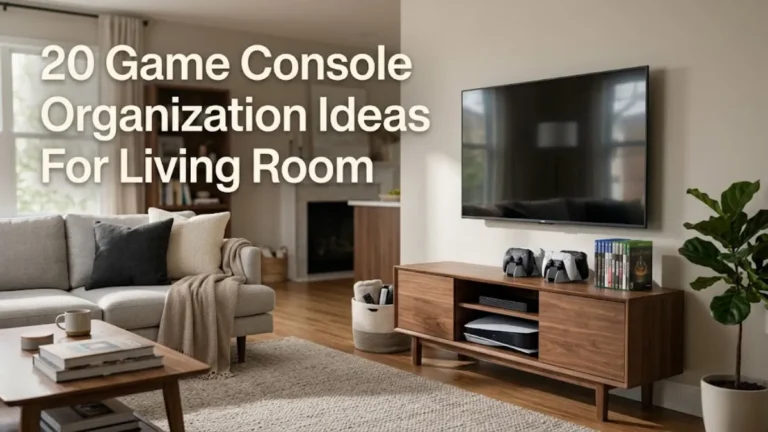
30 Living Room Toy Organization Ideas That Actually Work
If your living room doubles as a playroom by 9 a.m. every day, you already know the struggle one minute the space looks pulled together, and the next it’s buried in blocks, stuffed animals, and half-built puzzles. You’re not trying to create a showroom. You just want a room that works for movie nights and for LEGO towers, without you feeling like you’re constantly picking up after both. The good news is that toy organization doesn’t have to mean ugly bins shoved in a corner. With the right mix of furniture, storage, and a little bit of style, your living room can stay warm and welcoming for adults while still being genuinely functional for kids. Here are 30 ideas to help you get there.
1. Woven Baskets by the Sofa
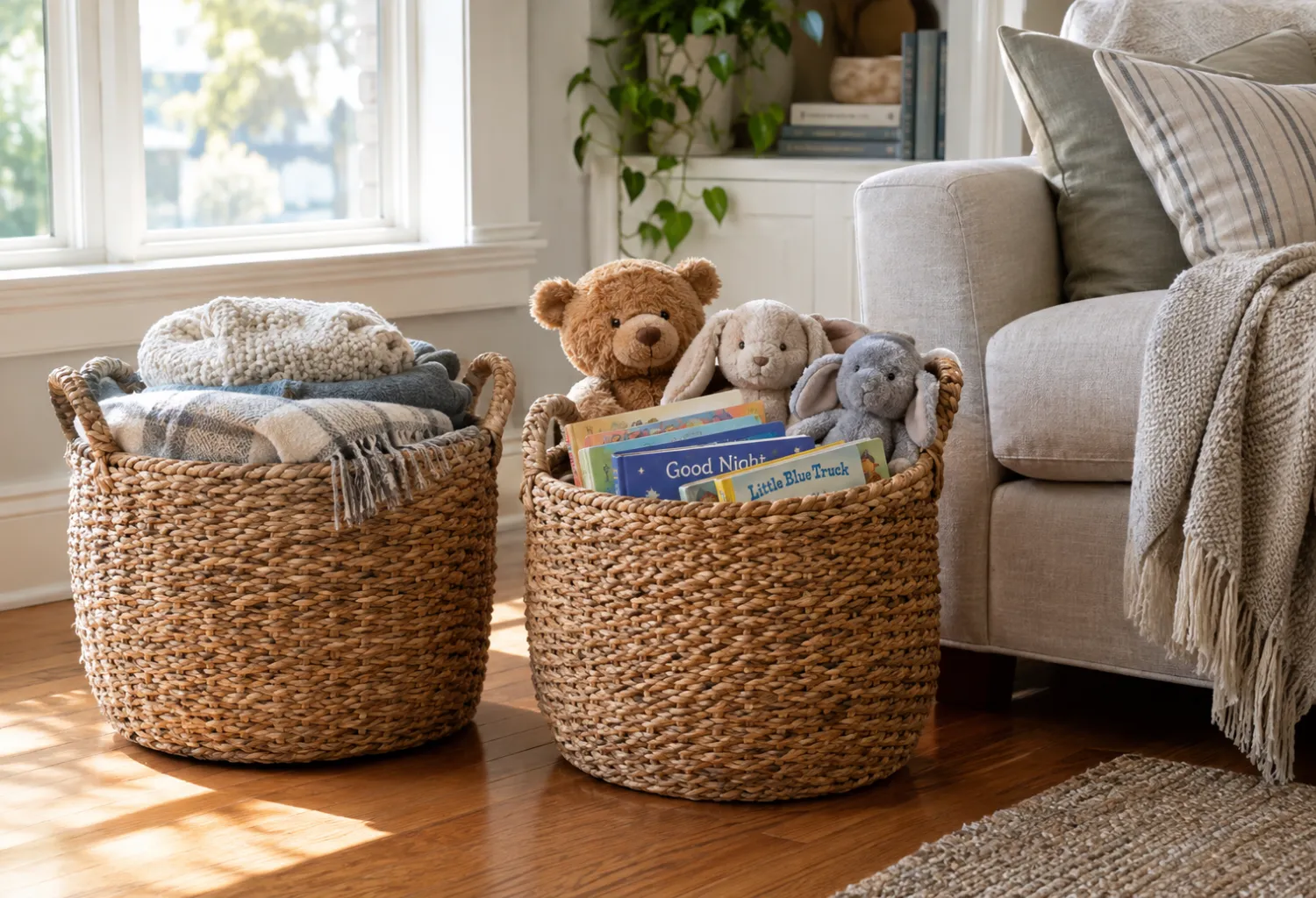
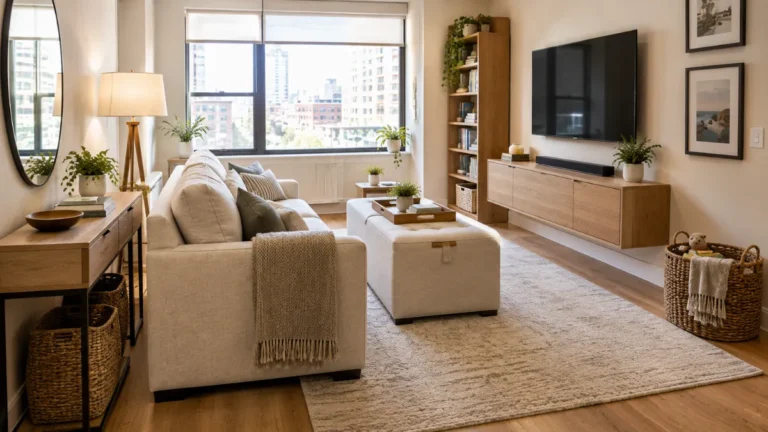
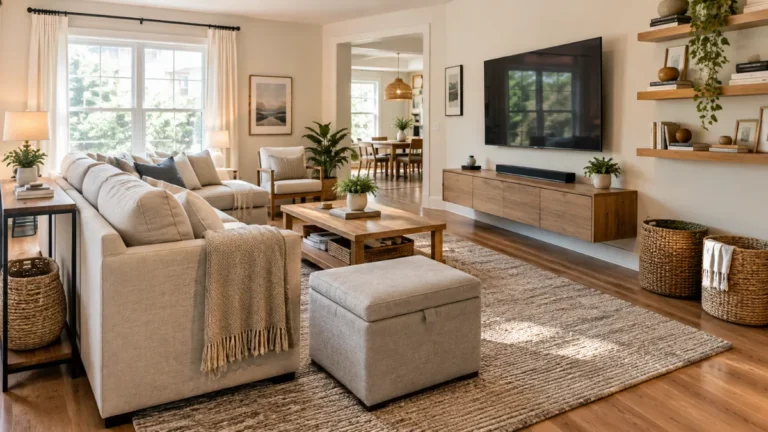
A pair of oversized woven baskets tucked beside the sofa is one of the easiest wins in toy organization they’re big enough to swallow blankets, board books, and stray stuffed animals in one sweep. Natural seagrass or rattan baskets bring in texture without looking like storage at all; they read more like a decor accessory. Keep one for “quick catch-all” toys and use the second for anything you want kids to grab often, like coloring supplies.
2. Multi-Bin Cube Storage Unit
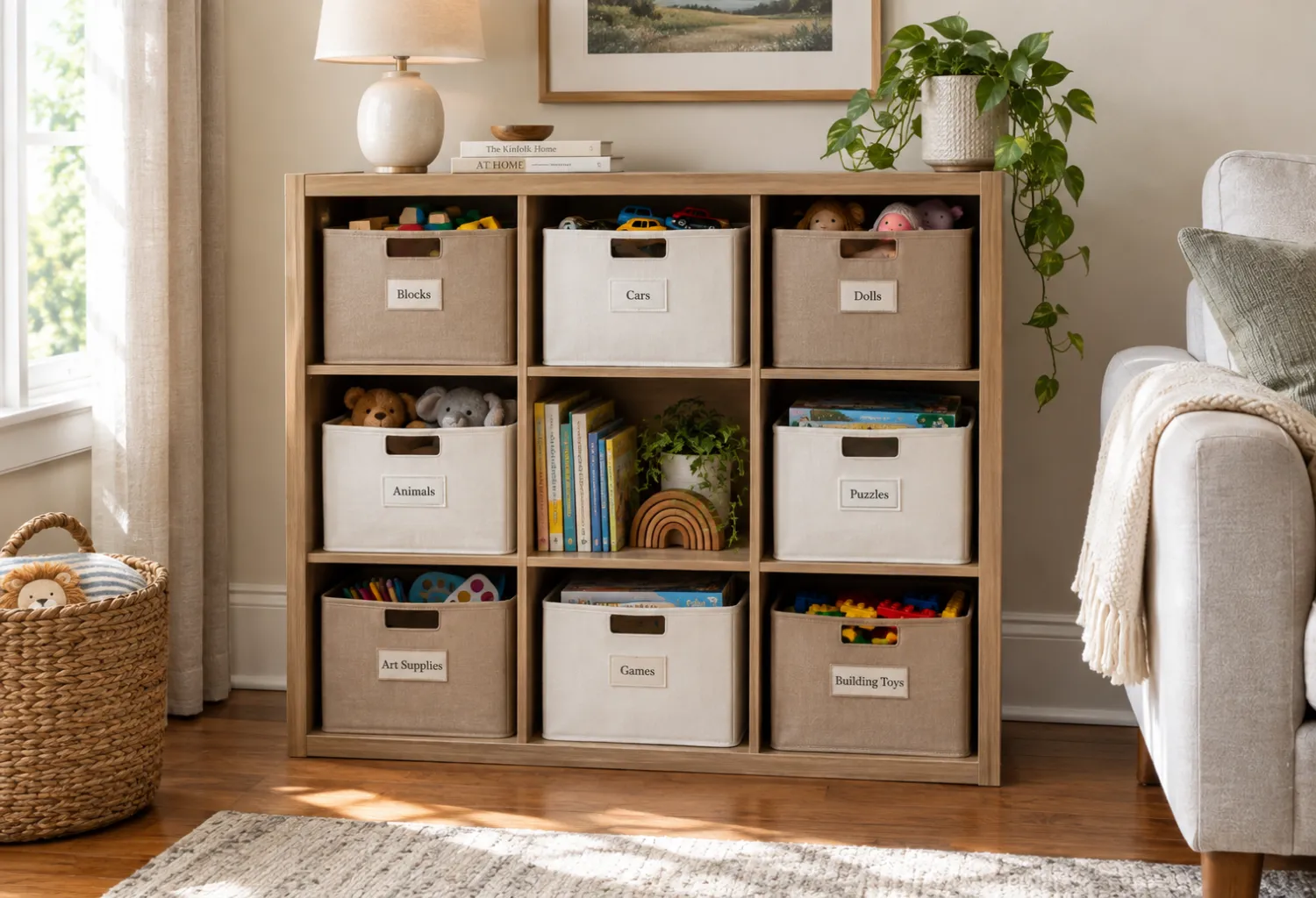
A cube organizer with fabric bins is basically the backbone of a lot of successful toy setups, because it gives every category of toy its own labeled home art supplies in one cube, cars in another, dress-up clothes in a third. Choose a unit in a neutral wood tone or matte white so it blends into a media wall or bookshelf setup instead of competing with your existing furniture. Nine or twelve-cube versions work well against a longer wall and can double as a room divider in open floor plans.
3. Storage Ottoman as Coffee Table
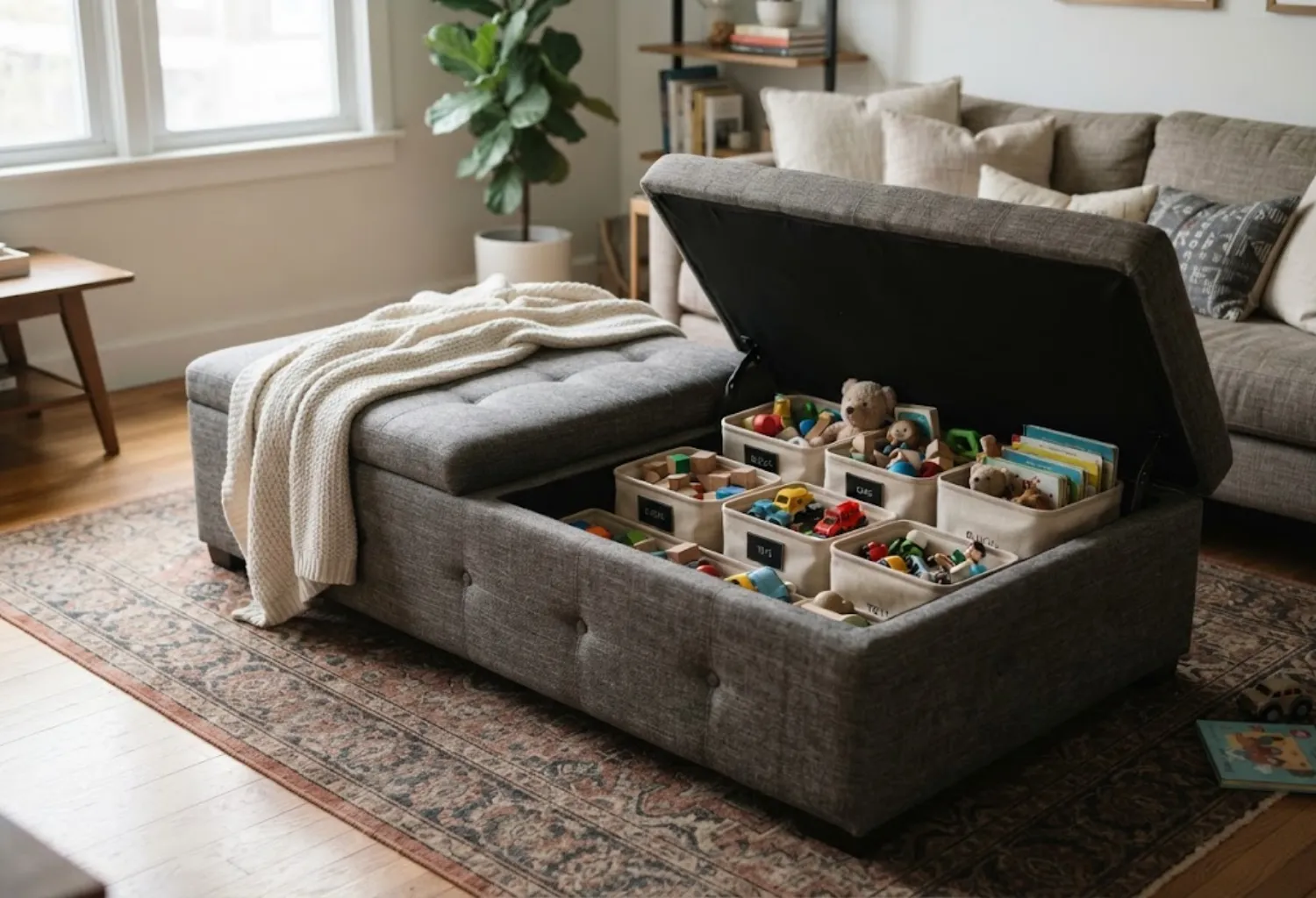
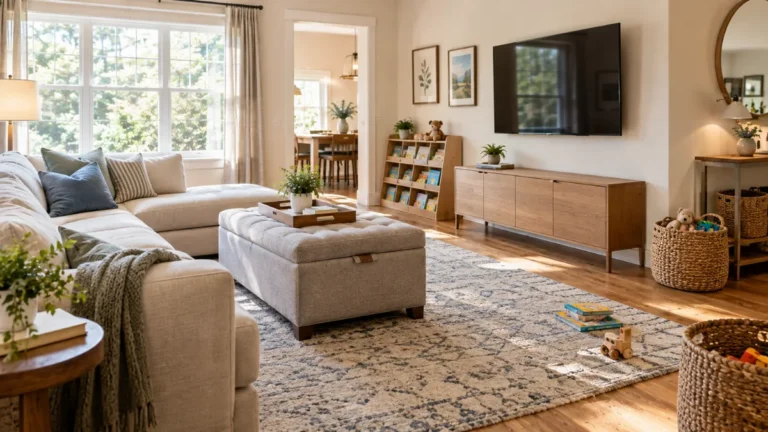
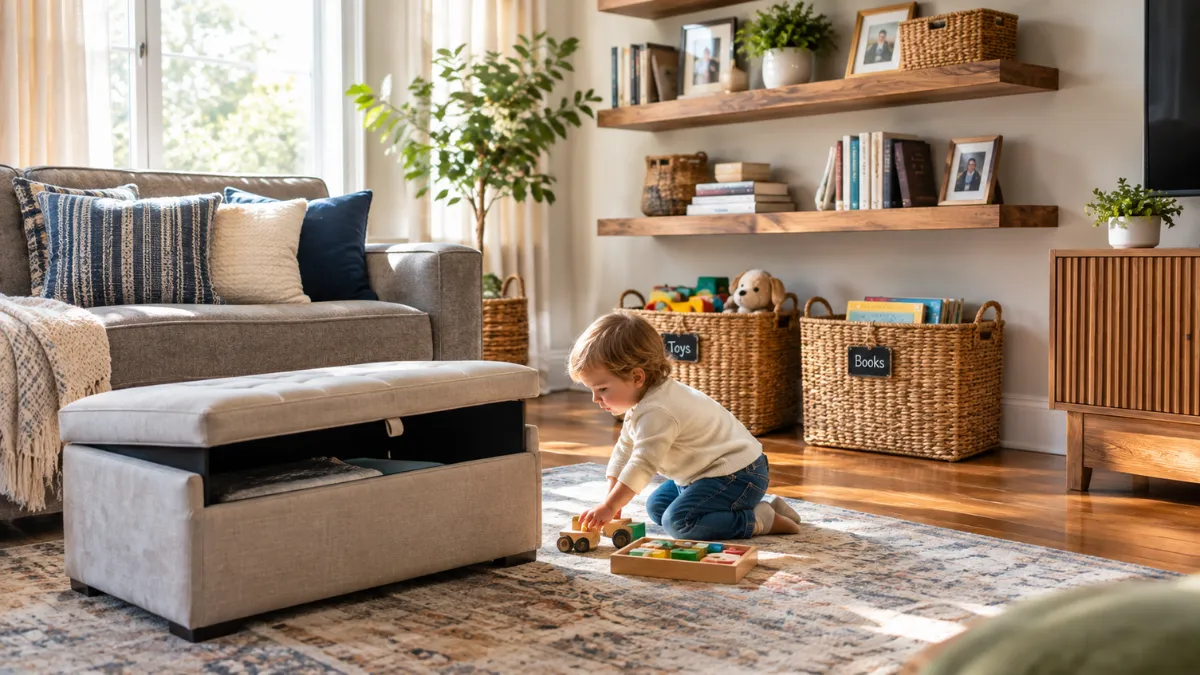
Swapping a traditional coffee table for a large storage ottoman is one of the most practical changes you can make in a toy-heavy living room. The top lifts open to reveal a deep interior for puzzles, board games, or bulky toys, while the outside still looks like a soft, upholstered piece of furniture. A performance fabric or faux leather cover in a neutral tone holds up to daily use and spills far better than fabric ottomans, and it gives you a surface for trays, books, or feet up on movie night.
4. Low Open Shelving for Little Hands
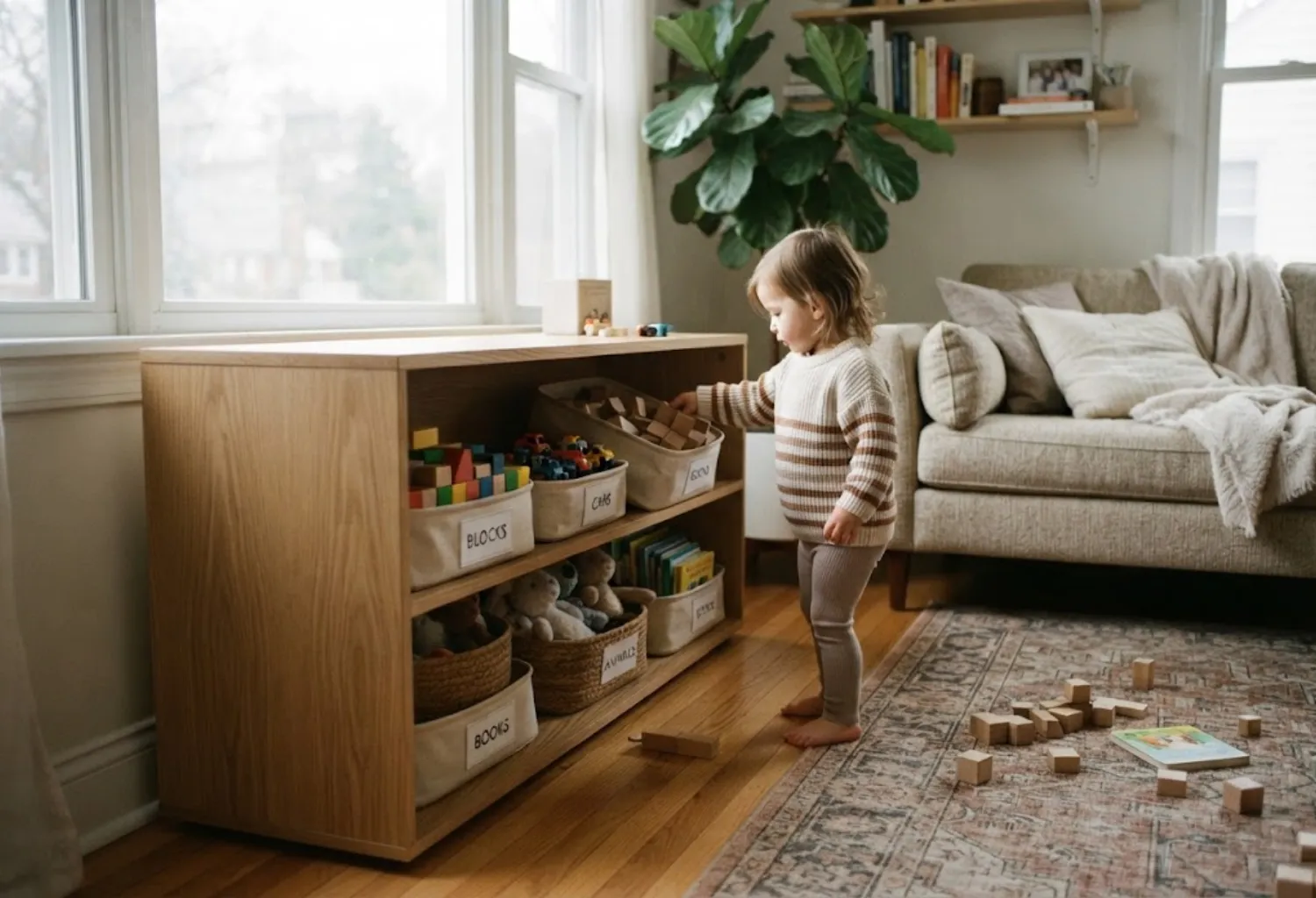
Kids are far more likely to put toys away and pick their own activities when shelving is at their height. A low bookshelf or open-front unit around knee to waist height for a toddler lets them see and reach everything without climbing or asking for help. Group similar toys together in shallow bins rather than piling them loose, and leave a little visual breathing room between groupings so the shelf doesn’t feel cluttered even when it’s full.
5. Toy Rotation System
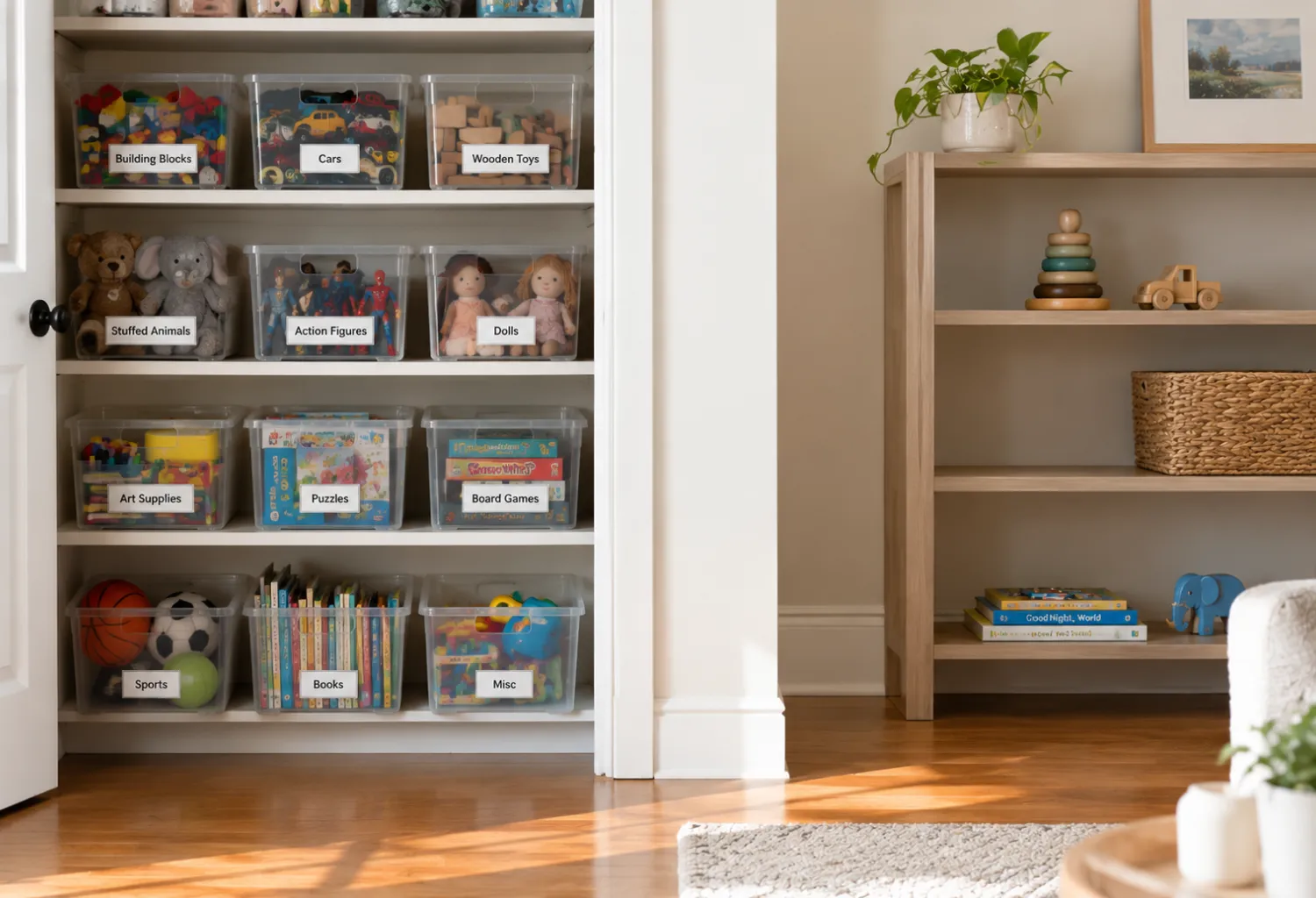
This one is more about strategy than furniture, but it changes everything. Store two-thirds of your kids’ toys in bins in a closet or garage, and only keep a curated third out in the living room at any given time. Swap the sets every few weeks. Not only does this cut down on visual clutter dramatically, kids tend to get renewed excitement over toys they haven’t seen in a while, almost like they’re new again.
6. Wall-Mounted Pegboard Display
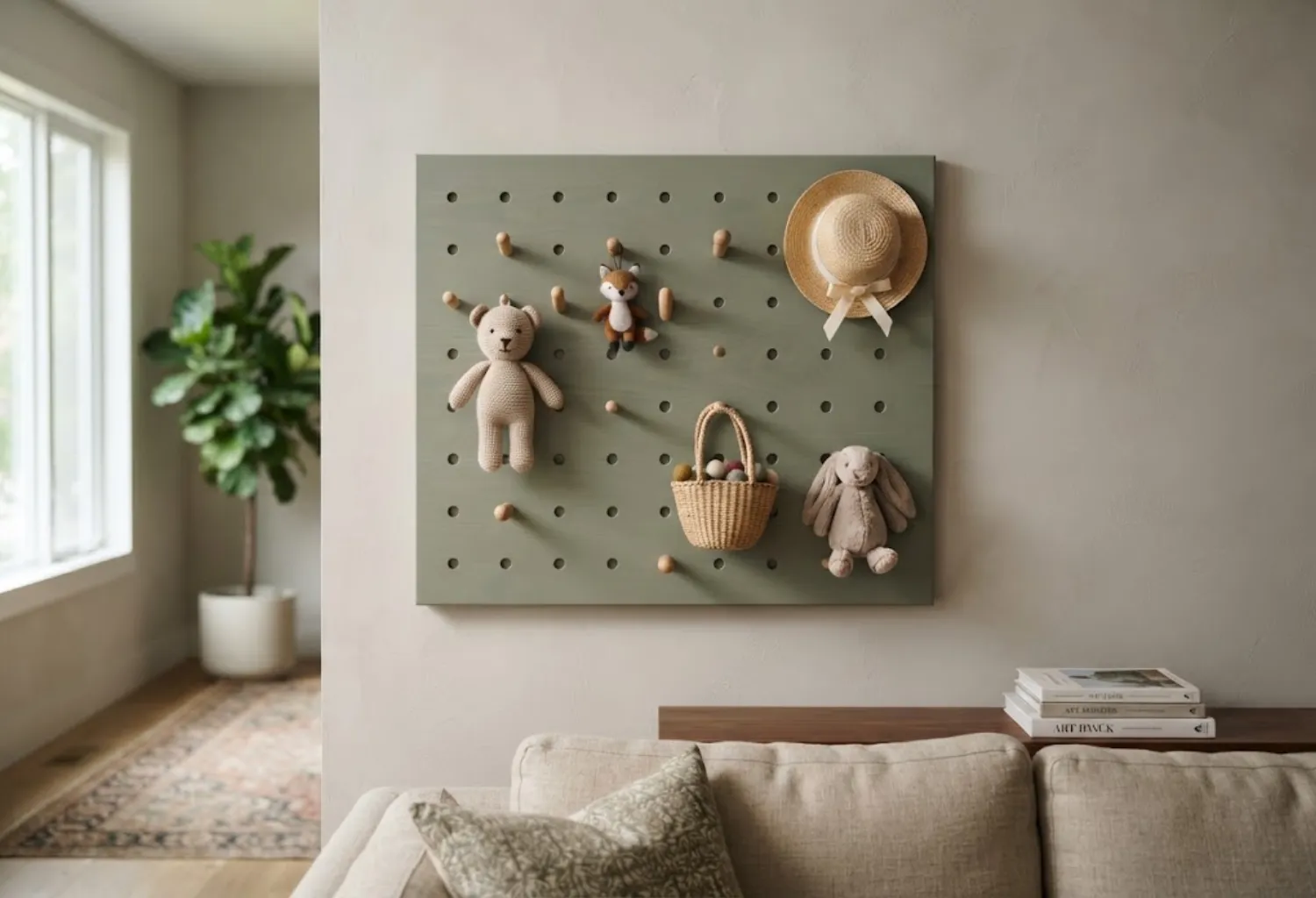
A painted pegboard mounted on an accent wall turns stuffed animals, dress-up accessories, or hats into part of the room’s decor instead of clutter on the floor. Choose a pegboard in a soft sage, blush, or navy to match your existing palette, and mix in small shelves, hooks, and baskets across the board so it holds a genuine variety of toys. This works especially well in smaller living rooms where floor space for bins is limited.
7. Closed Cabinet with Doors
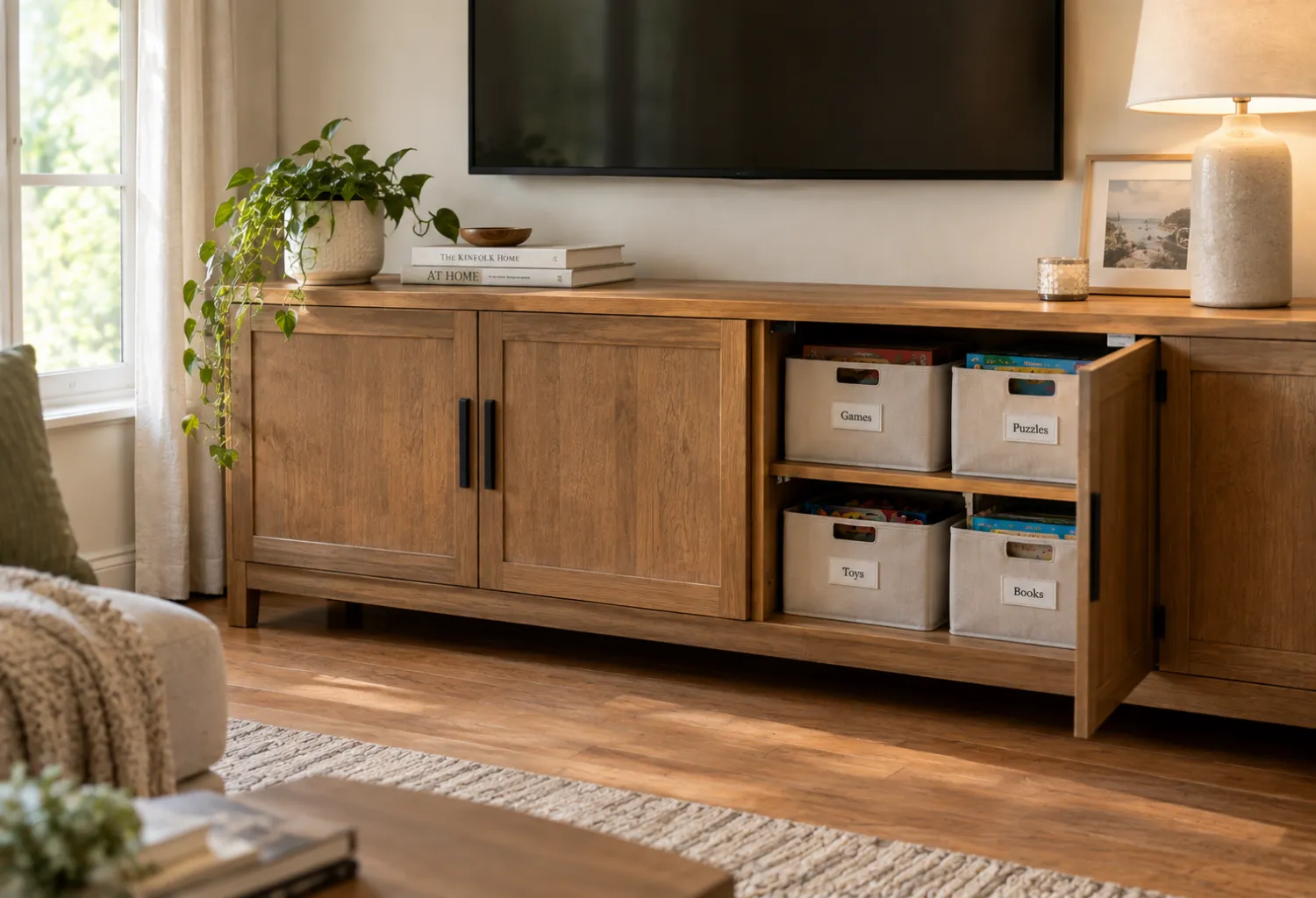
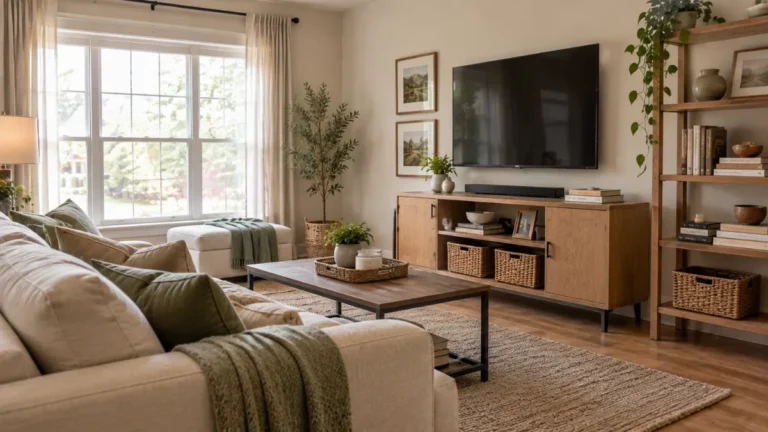
If you’d rather not see toys at all, a media cabinet or armoire with solid doors is the answer. Everything goes inside bins, boards games, even a step stool for taller shelves and the outside just looks like a stylish console or credenza. Look for a piece with adjustable interior shelving so you can reconfigure it as your kids’ toys change size over the years, from bulky baby toys to smaller building sets.
8. Canvas Bins on a Bookcase
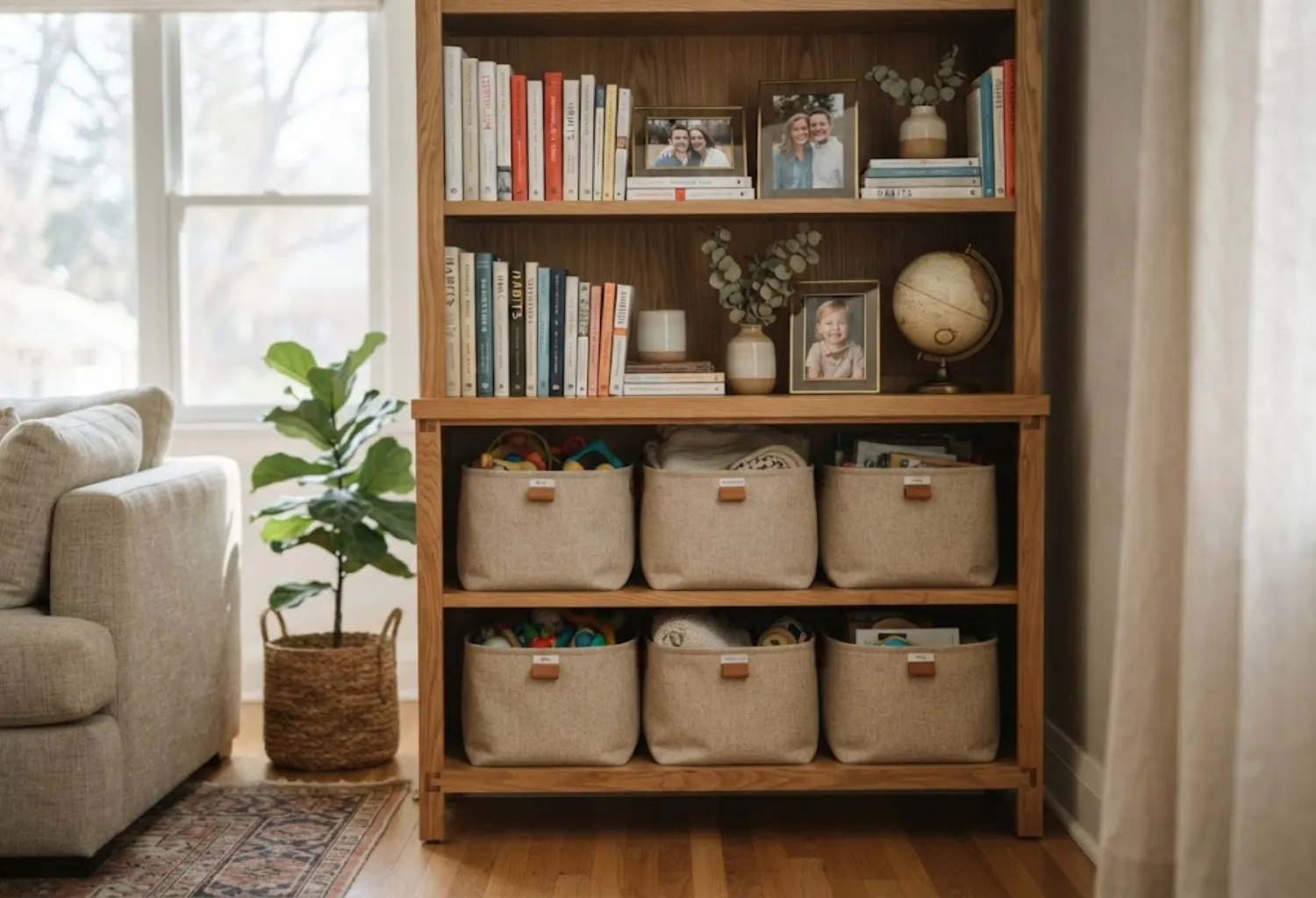
If you already have a bookcase in your living room, canvas or felt bins sized to fit the shelves let you use existing furniture instead of buying new storage. Choose bins in a color that complements your case soft gray or oatmeal tends to look intentional next to books rather than like an afterthought. Reserve the top shelves for display items and books, and keep the toy bins on lower shelves where kids can reach them.
9. Storage Bench Under the Window
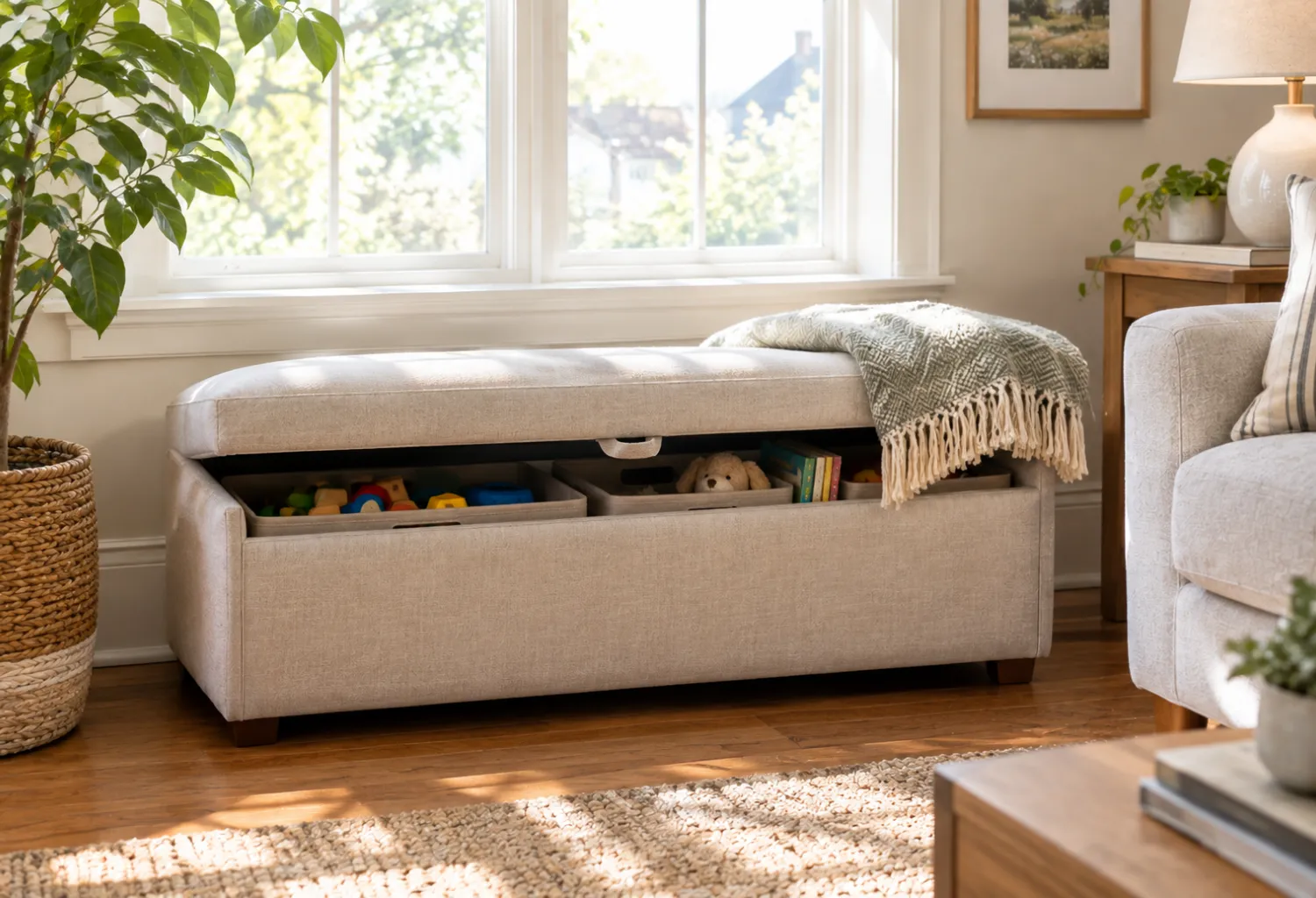
A bench with a lift-top or drawer storage placed under a window makes use of a spot that’s often wasted space. It gives you extra seating for guests, a landing spot for a throw blanket, and hidden storage for toys all in one footprint. A cushioned top in a durable fabric makes it comfortable enough to actually sit on, and a bench in the six-to-seven-foot range can hold a surprising number of bins underneath the seat.
10. Coffee Table with Hidden Storage
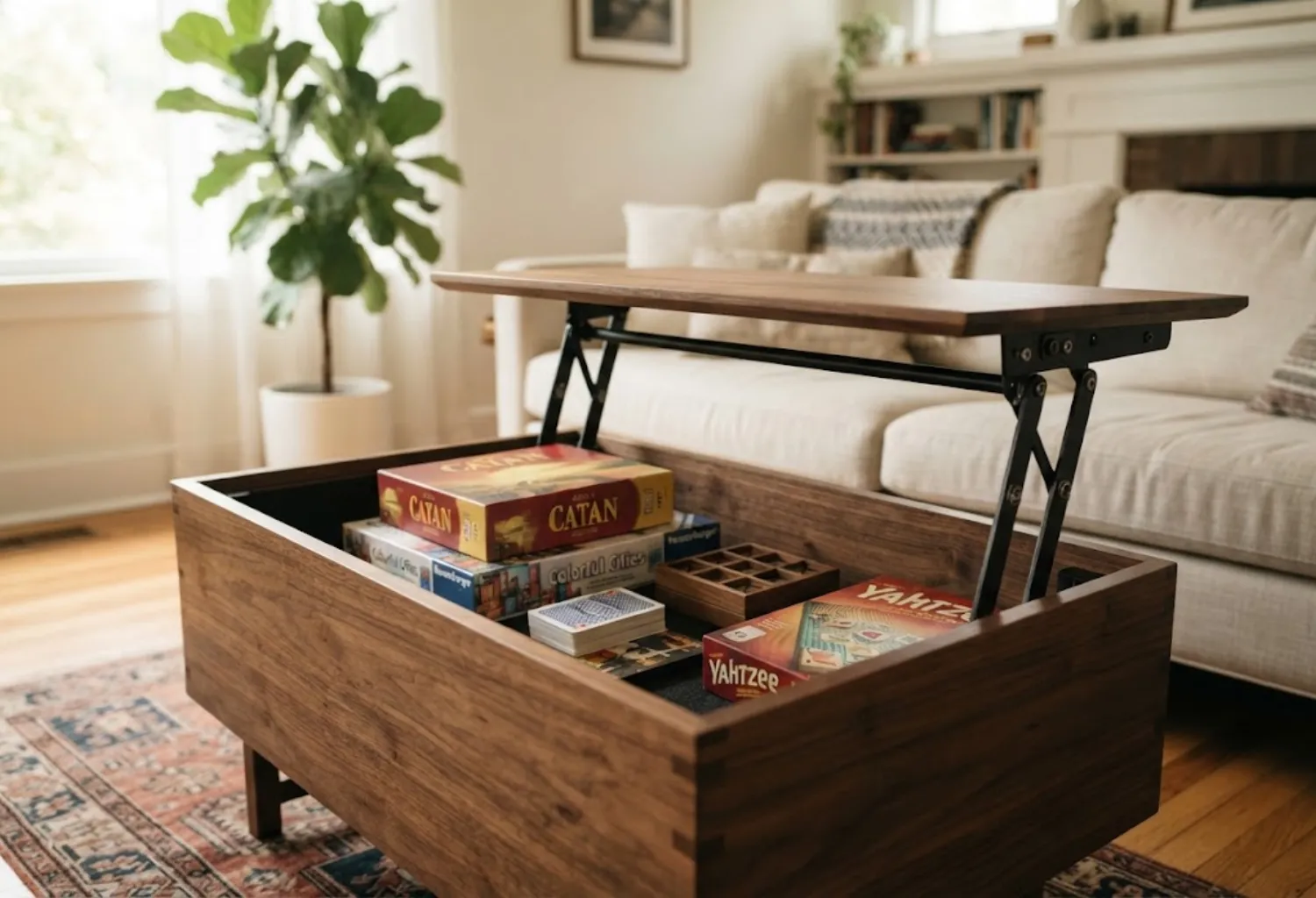
Beyond ottomans, there are coffee tables built specifically with lift-tops, drawers, or a shelf underneath designed for exactly this purpose. A table with a slatted or open lower shelf works well for baskets, while a lift-top model is better for flat items like puzzles and games. Look for a table with rounded edges if you have younger kids it’s a small detail that matters more than people expect.
11. Floating Shelves for Favorite Toys
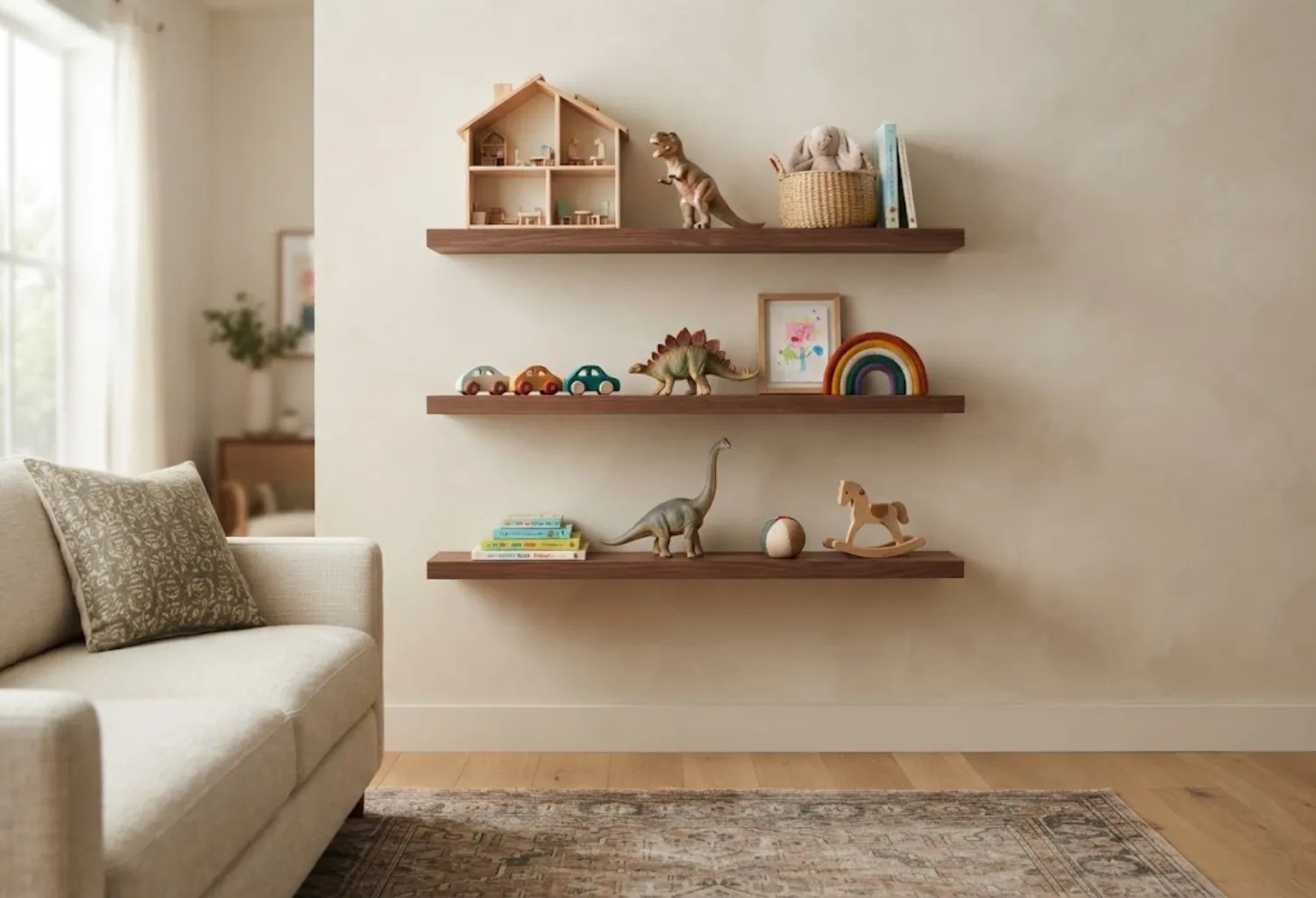
Not every toy needs to be hidden away. A few floating shelves mounted at a mid-height on an accent wall let you display a rotating handful of your kids’ favorite toys, like a collection of dinosaurs or a special dollhouse, almost like curated decor. Keep the shelf styling simple three to five items with a little space between them so it reads as intentional rather than crowded.
12. Labeled Bins for Quick Cleanup
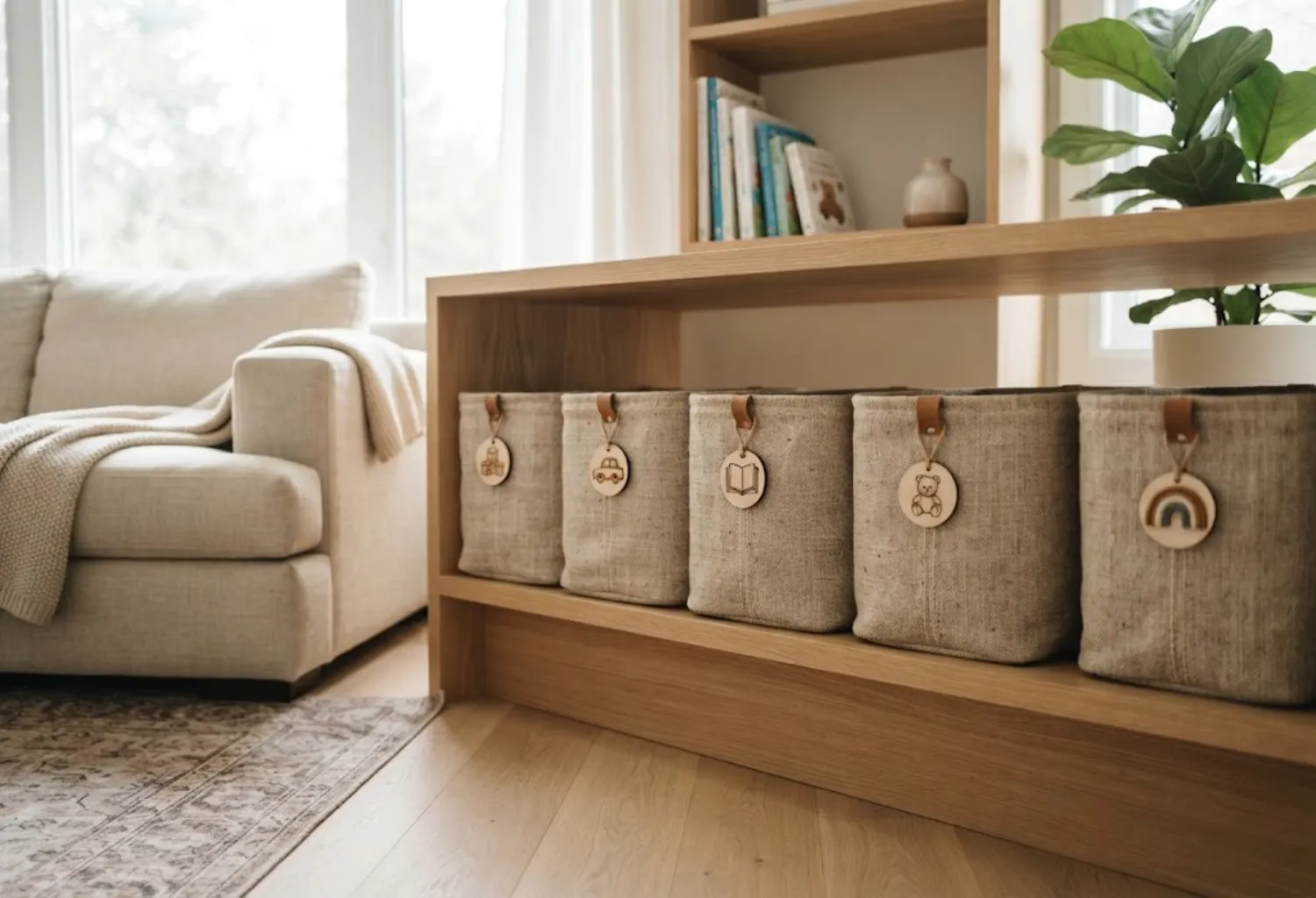
Simple wood, fabric, or chalkboard labels on your bins make cleanup genuinely faster because kids don’t have to guess where things go. Use pictures instead of words for kids who aren’t reading yet, and keep the label style consistent across all your bins so the whole system feels cohesive rather than mismatched. This is a small, low-cost upgrade that makes a bigger organizational system actually stick.
13. Vintage Trunk Storage
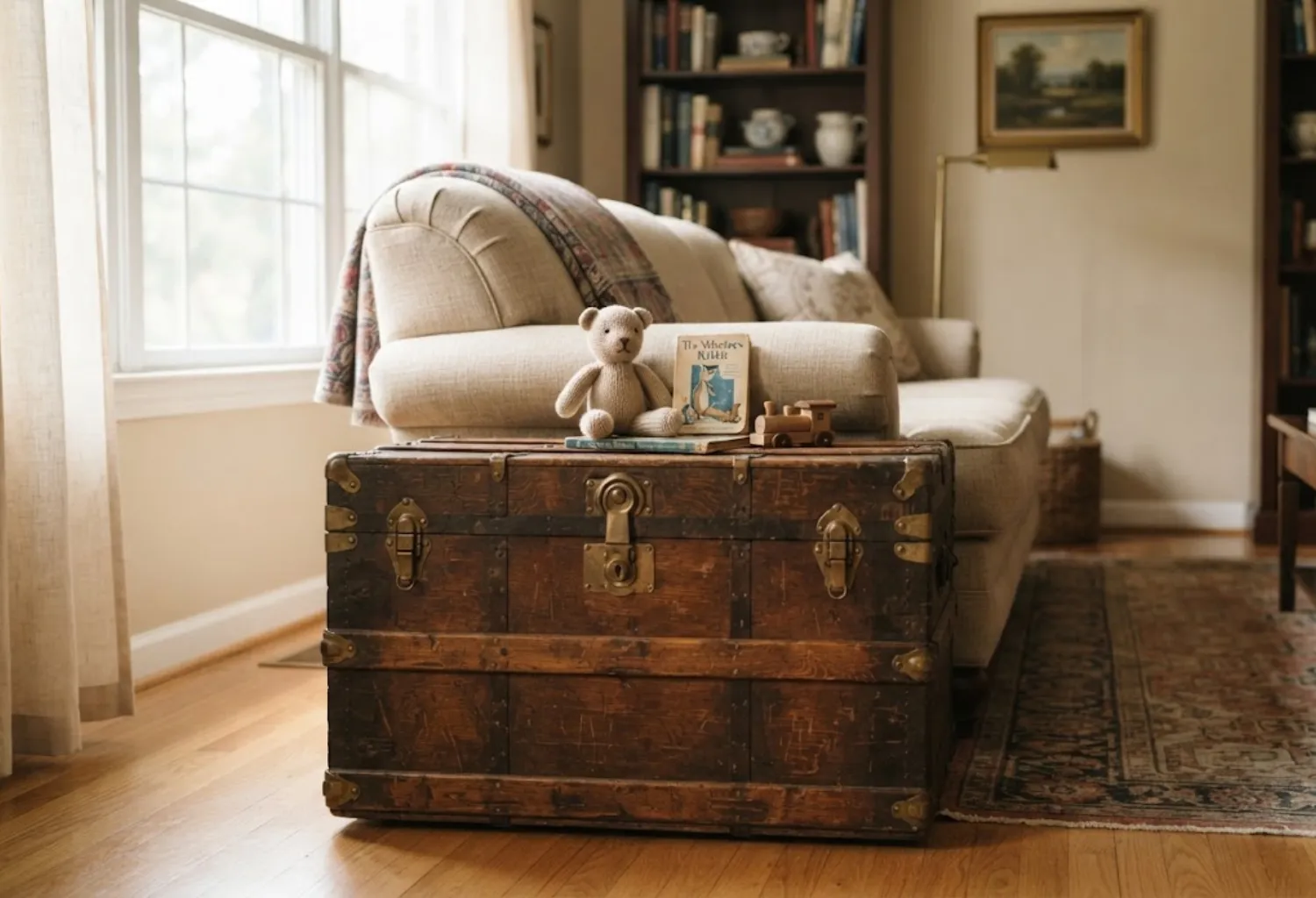
A vintage or vintage-style wooden trunk brings warmth and character into a living room while doing double duty as a toy chest. Unlike a plastic bin, a trunk can sit at the end of a sofa or under a window as a genuine piece of furniture, and it works well in farmhouse, traditional, or eclectic-styled rooms. Line the inside with a soft fabric or felt if you’re storing anything delicate, and use it for bulkier toys like stuffed animals or building blocks that don’t need much organizing within the container.
14. Corner Shelving Unit
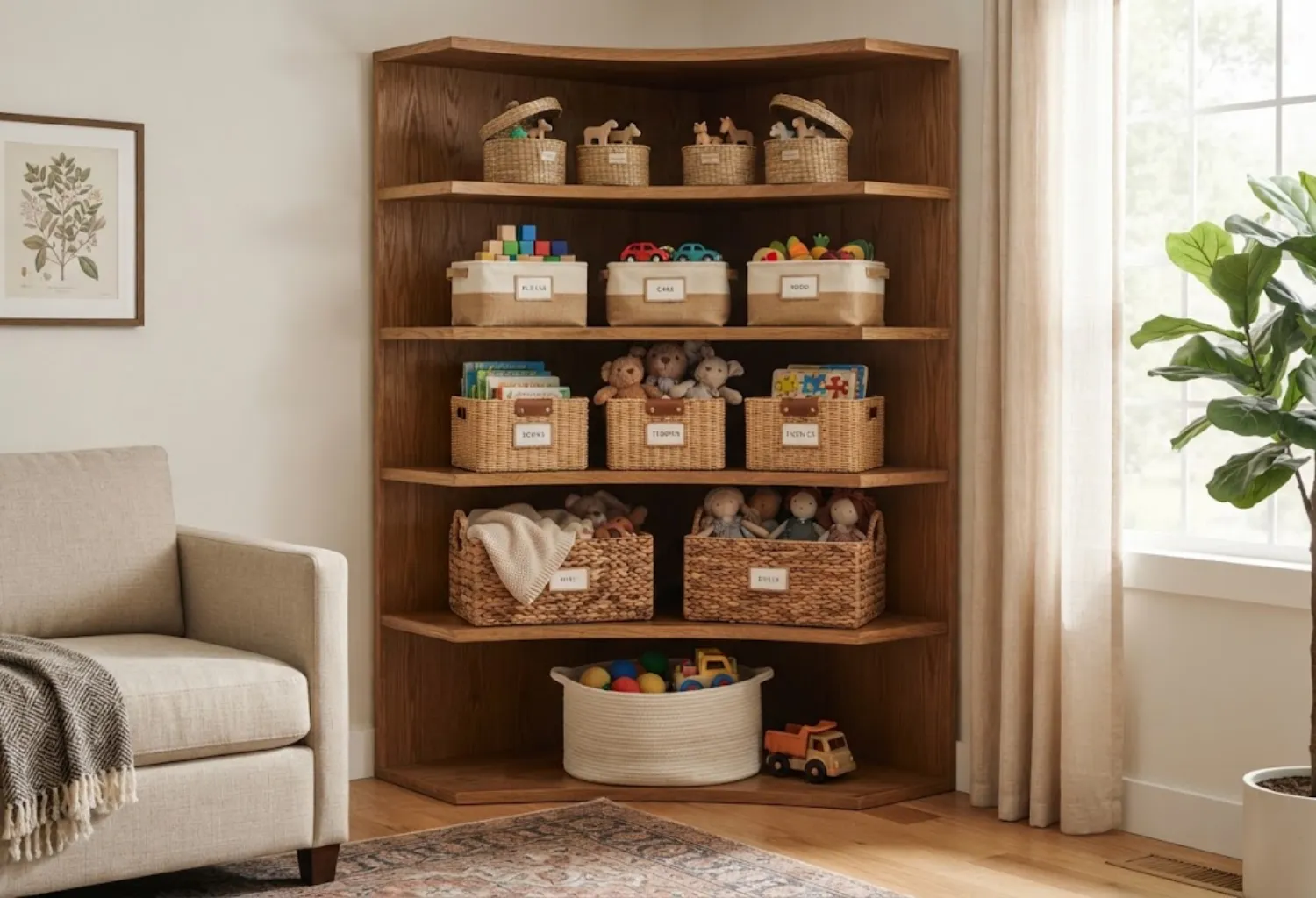
Corners are some of the most underused space in a living room, and a tall corner shelf or corner cabinet can hold a surprising amount of toy storage without eating into your usable floor space. A five-tier corner shelf with baskets on each level keeps things organized by category, while a solid corner cabinet hides everything behind doors. This is especially useful in smaller apartments where every square foot counts.
15. Fabric Hanging Organizer
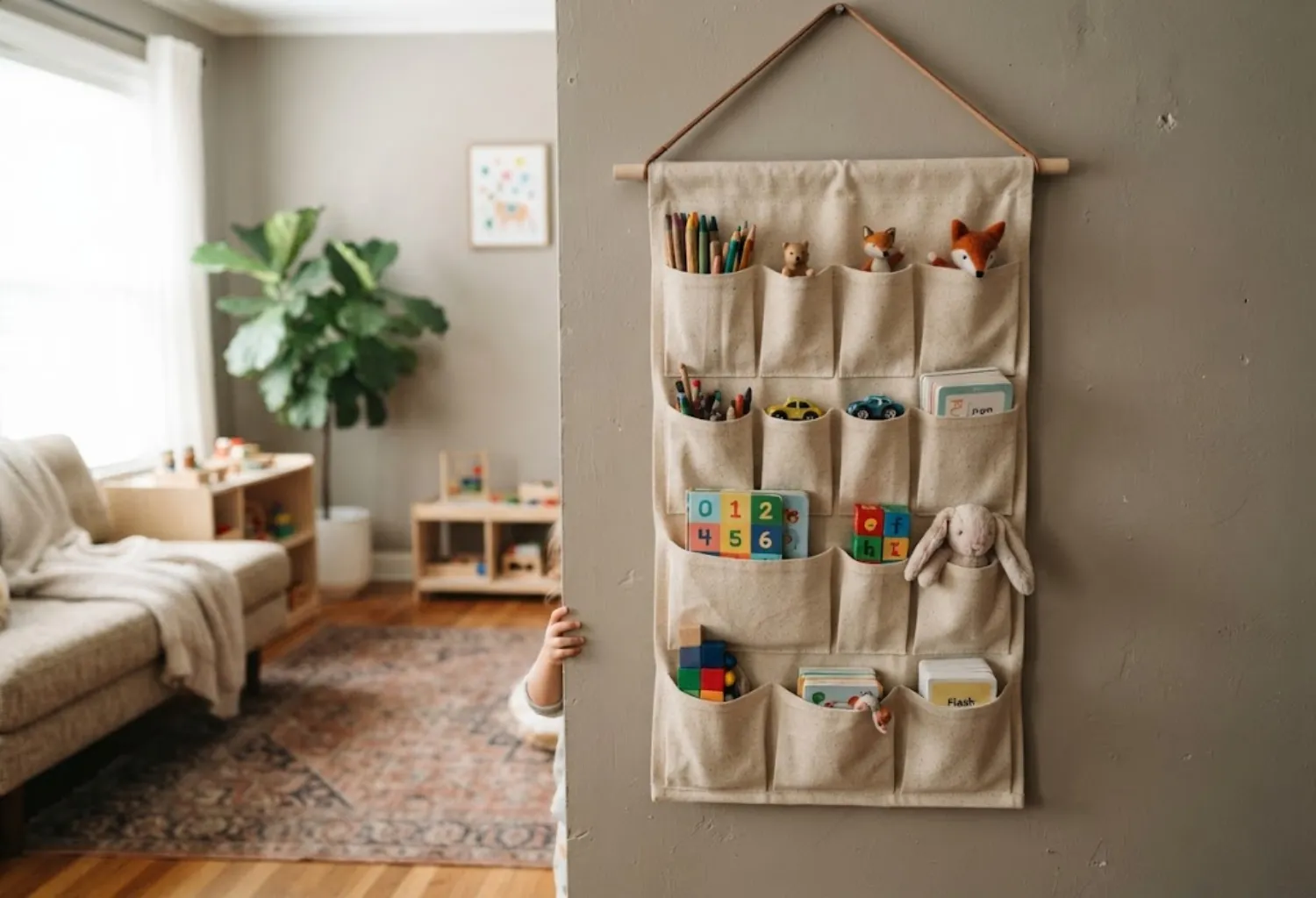
A hanging fabric organizer with multiple pockets, mounted on the back of a door or a wall near the play area, is ideal for smaller items that tend to get lost crayons, small figures, matchbox cars, or craft supplies. Choose one in a canvas material with a pattern or color that fits your room’s palette so it doesn’t feel like a nursery leftover. This solution works particularly well in living rooms with limited floor and shelf space.
16. Nesting Baskets in Varying Sizes
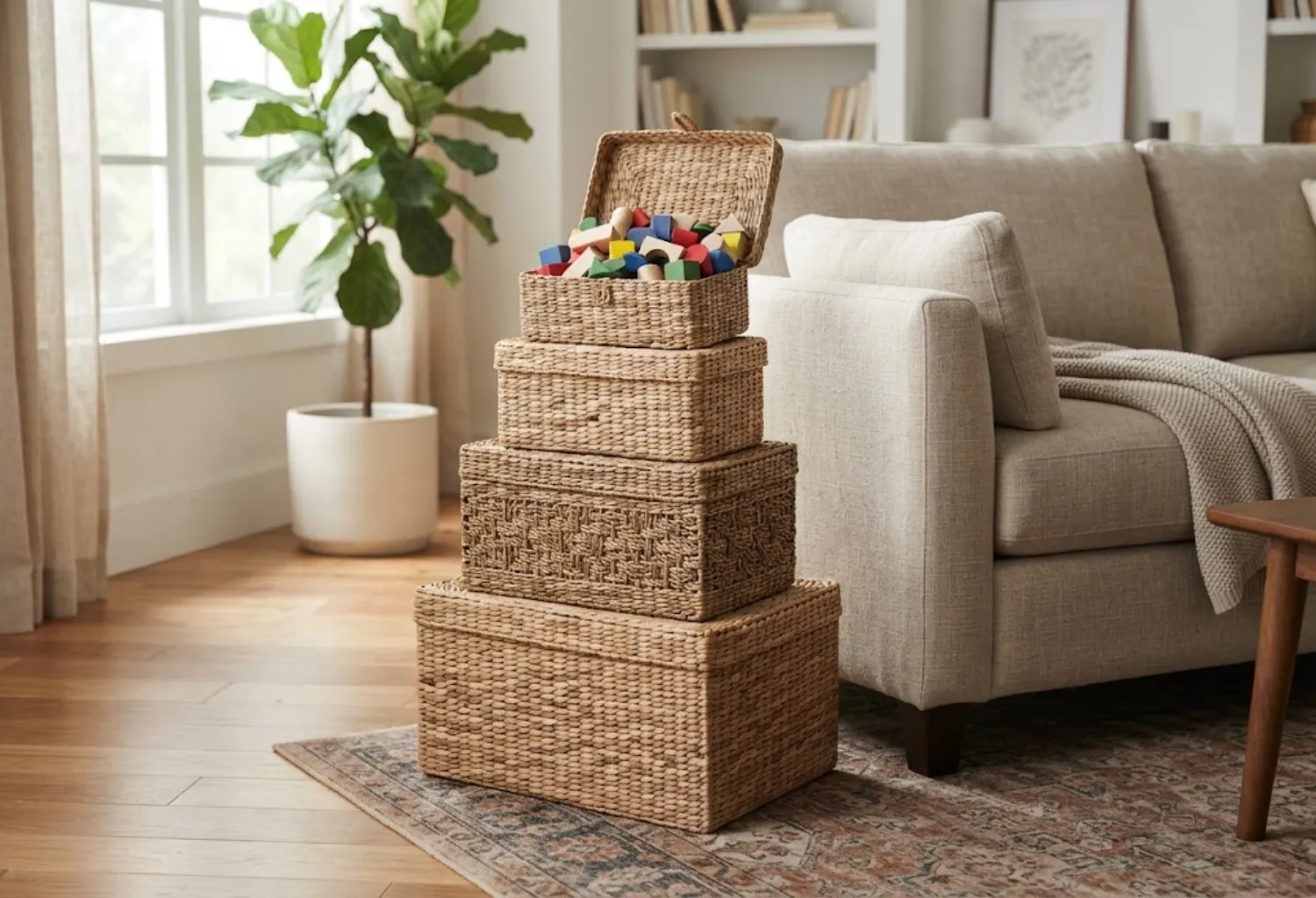
A set of nesting baskets in three or four graduating sizes gives you flexibility without needing a full matching set of identical bins. Use the largest for bulkier items like stuffed animals, the middle sizes for building blocks or cars, and the smallest for accessories. When they’re not in use, they stack inside one another, which is handy if you need to store extras or want to change up your system seasonally.
17. Decorative Tray for Small Pieces
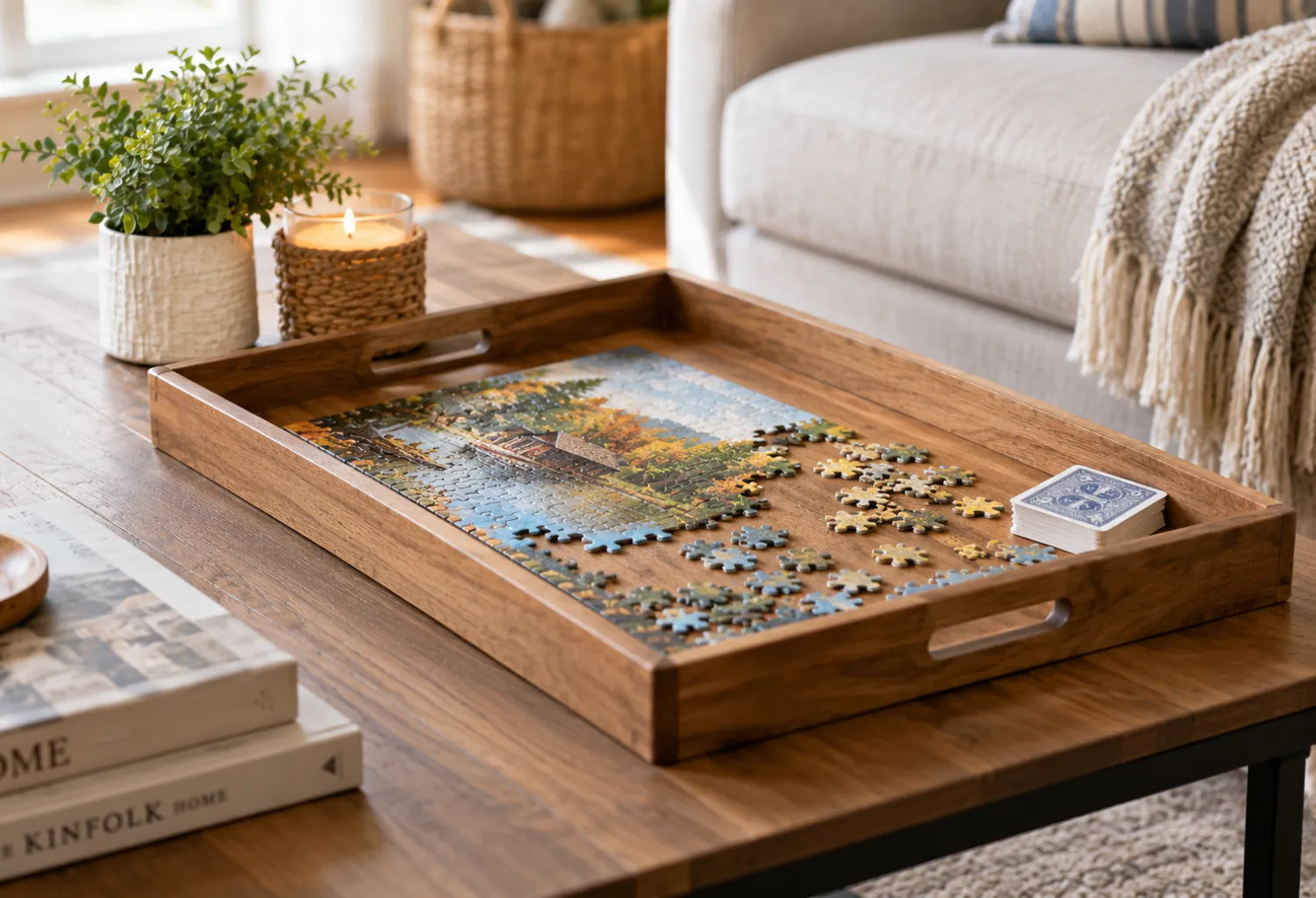
A decorative tray on the coffee table or an ottoman can corral the small stuff puzzle pieces mid-project, a deck of cards, tiny figurines so they don’t scatter across the whole room. A wood or woven tray adds texture and doubles as a stylish catch-all even when there isn’t a toy in sight, which makes it one of the more flexible pieces on this list.
18. Repurposed Bar Cart
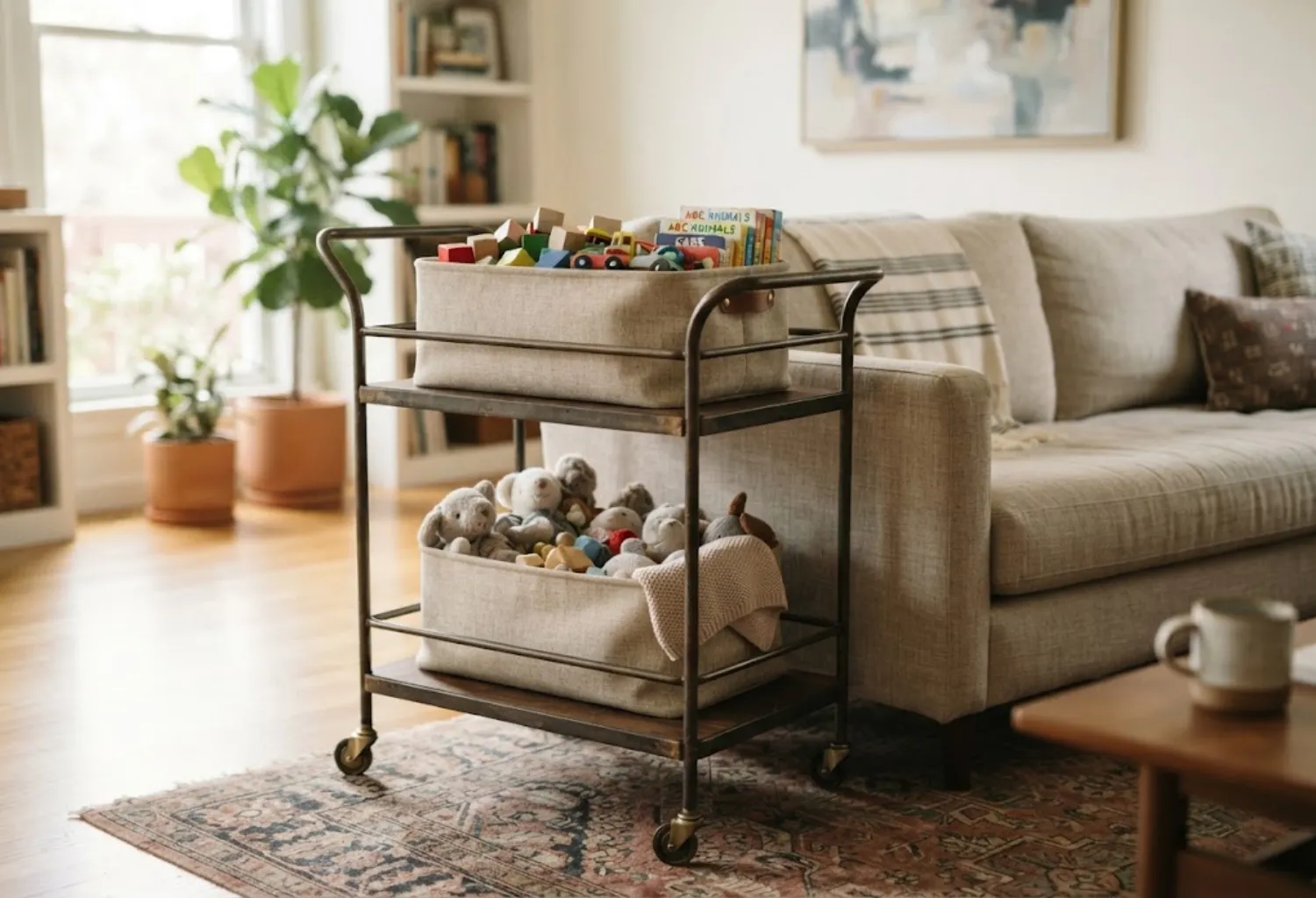
A bar cart isn’t just for drinks with a few fabric bins or baskets loaded onto its shelves, it becomes a mobile toy station you can roll from the living room to another space when you need the floor clear. Look for a cart with a metal frame and two tiers, and choose bins that fit snugly on each shelf so nothing slides around when you move it. This idea works especially well for families who need flexible storage that isn’t fixed to one spot.
19. Color-Coded Bin System
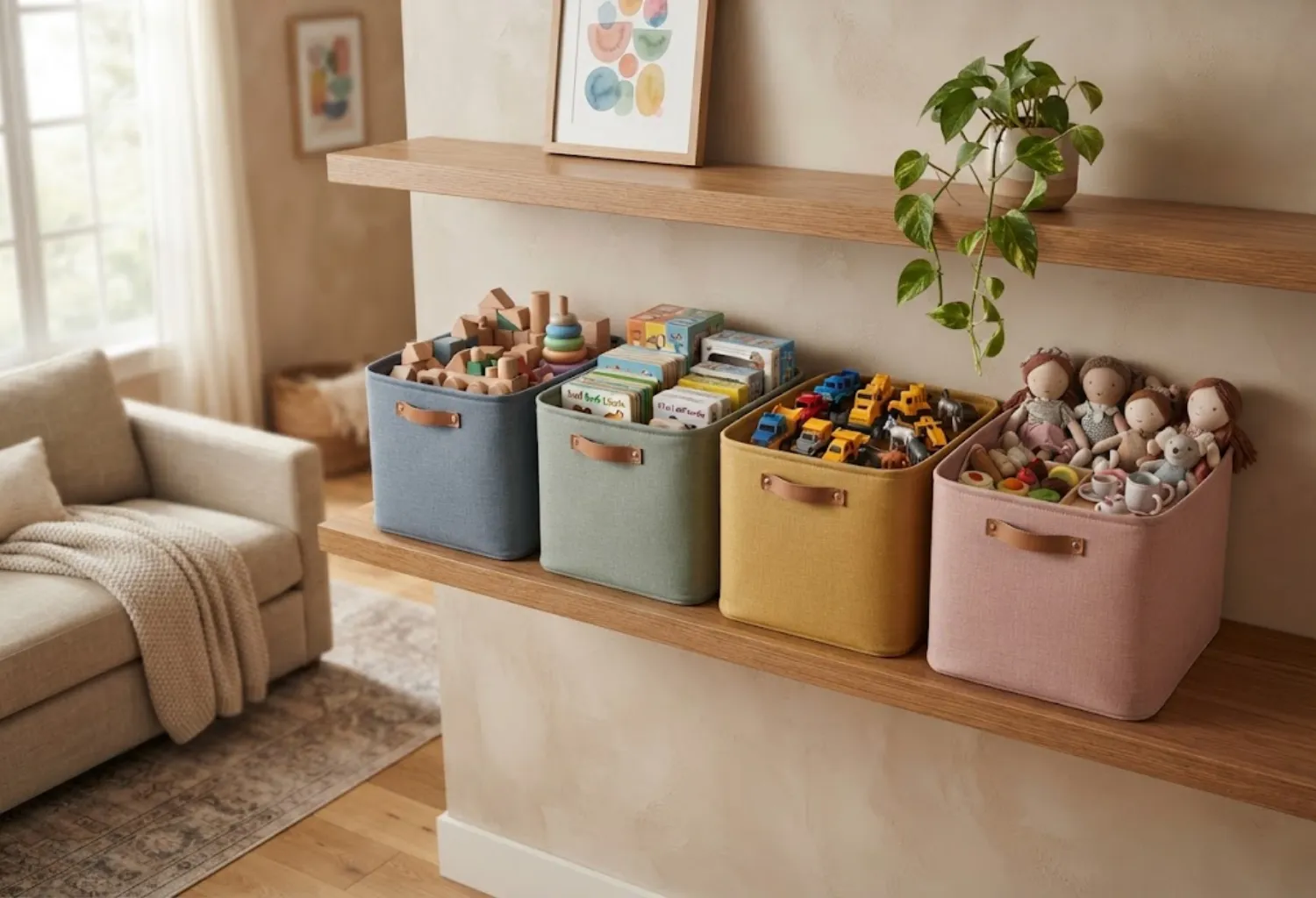
Assigning a specific color to each category of toy blue bins for vehicles, green for building blocks, yellow for art supplies creates a simple visual system that even very young kids can follow without reading labels. Choose colors that also work with your room’s palette so the system doesn’t clash with your decor; muted or pastel versions of primary colors tend to look more grown-up than bright, saturated ones.
20. Under-Console Table Baskets
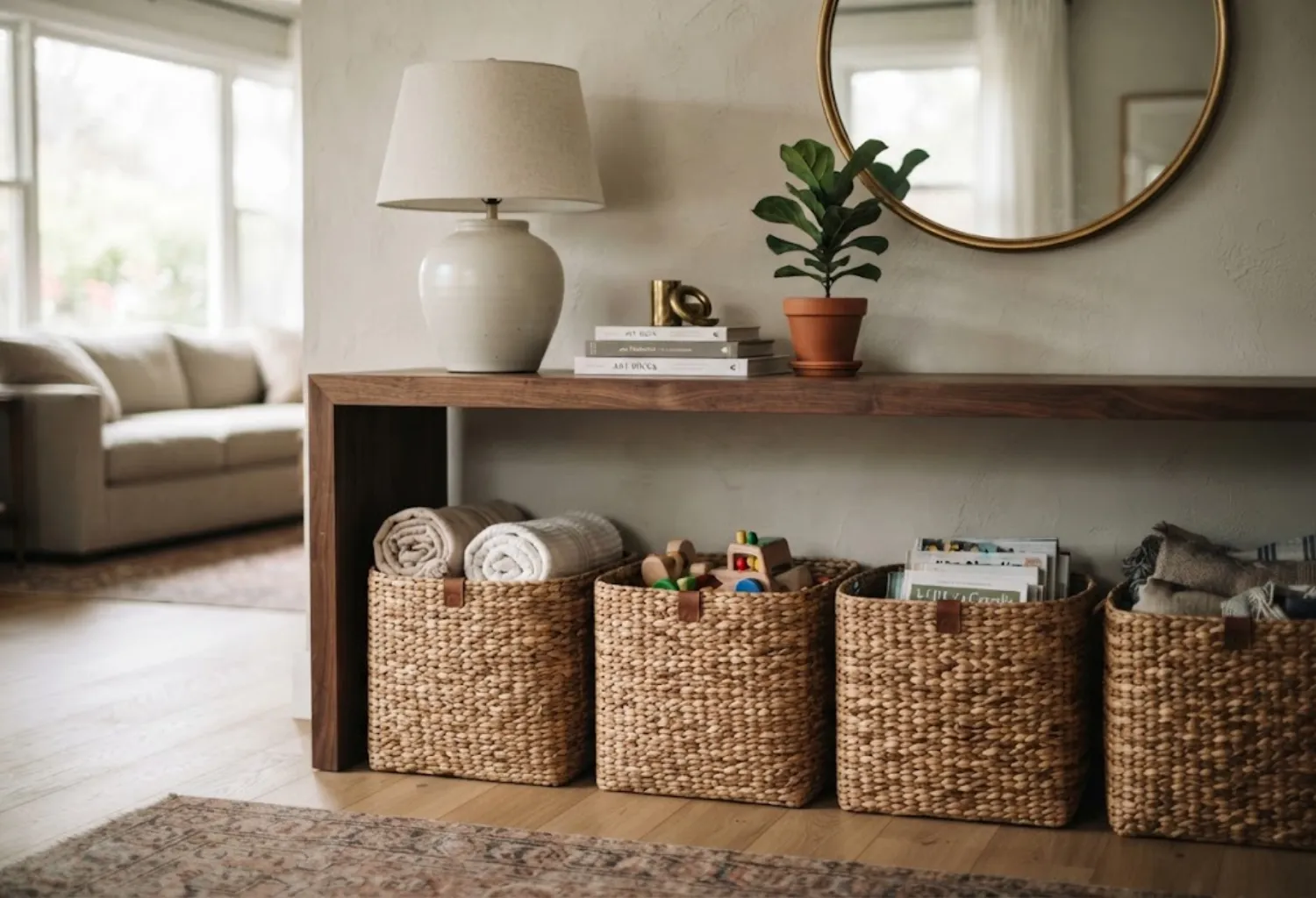
If you have a console table behind your sofa or against a wall, the open space underneath is prime real estate for a row of matching baskets. Choose baskets that are wide and shallow rather than tall so they slide in and out easily, and pick a natural material like rattan or seagrass to keep the look airy rather than heavy. This spot works well for toys you want accessible but not front and center.
21. Ladder Shelf Display
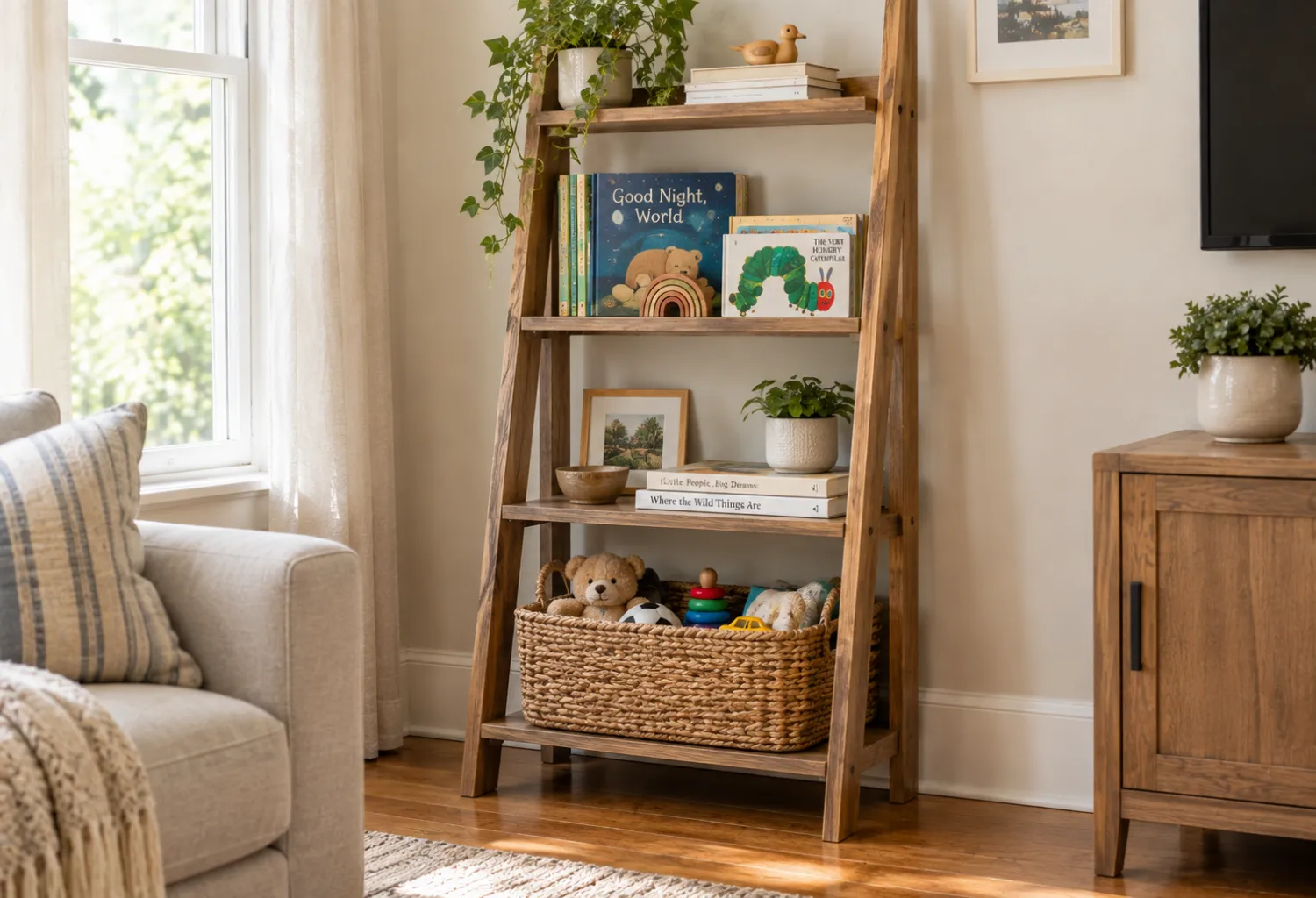
A leaning ladder shelf, which has become a popular styling piece in living rooms generally, can also serve as light toy storage. Use the lower rungs for baskets of toys within a child’s reach, and reserve the top shelf for books or decor items that are meant to stay out of little hands. It has a slim profile, which makes it a good option for narrow walls or awkward corners where a full shelving unit wouldn’t fit.
22. Window Seat with Storage
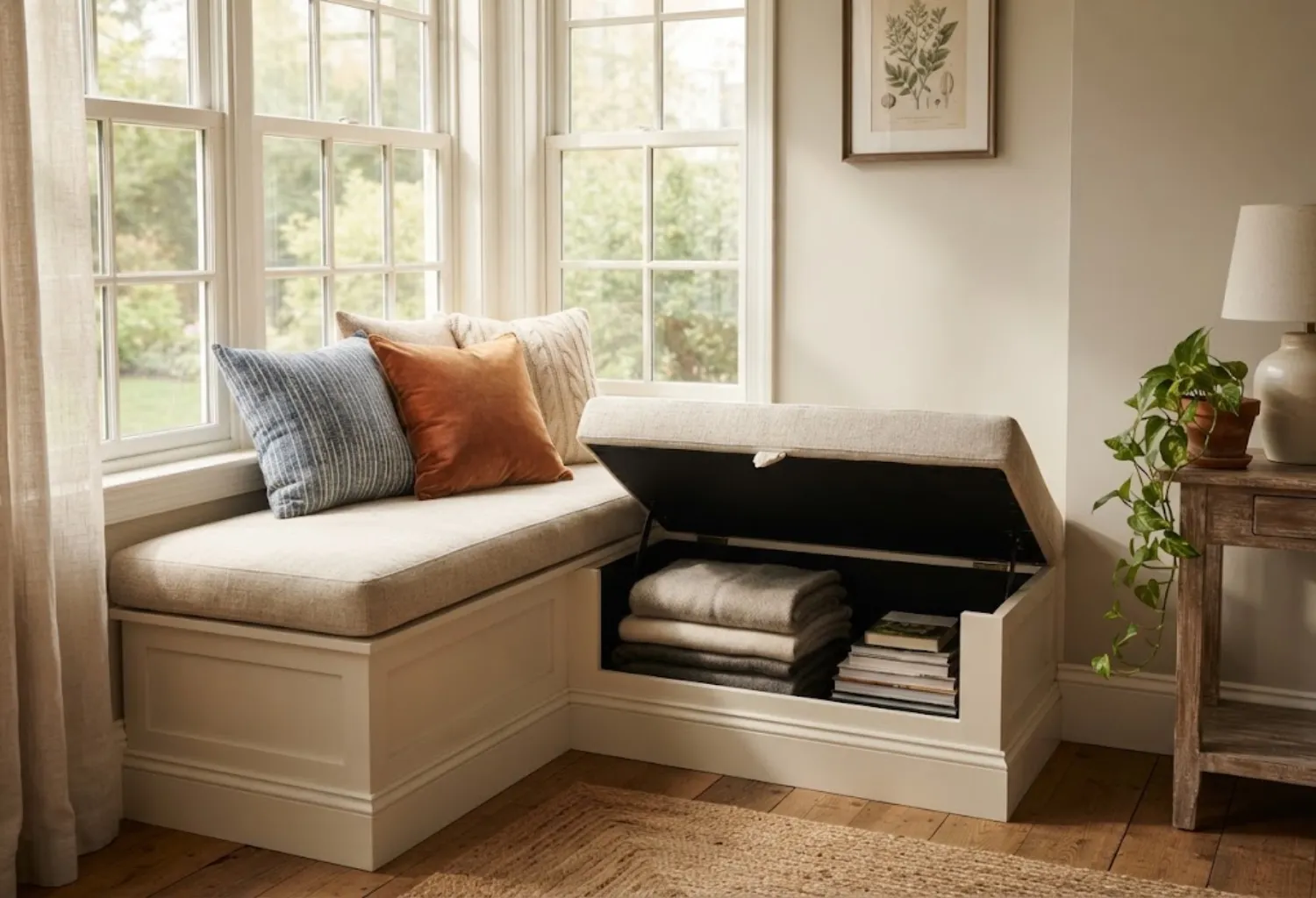
If your living room has a window nook, building or buying a bench seat with storage underneath turns unused space into both a reading spot and a toy hideaway. A hinged seat cushion that lifts to reveal storage below works well for bulkier toys, while a seat with pull-out drawers underneath is easier for younger kids to access on their own. Add a few throw pillows to soften the look so it still feels like a cozy corner and not just a storage box.
23. Mesh Pop-Up Hampers
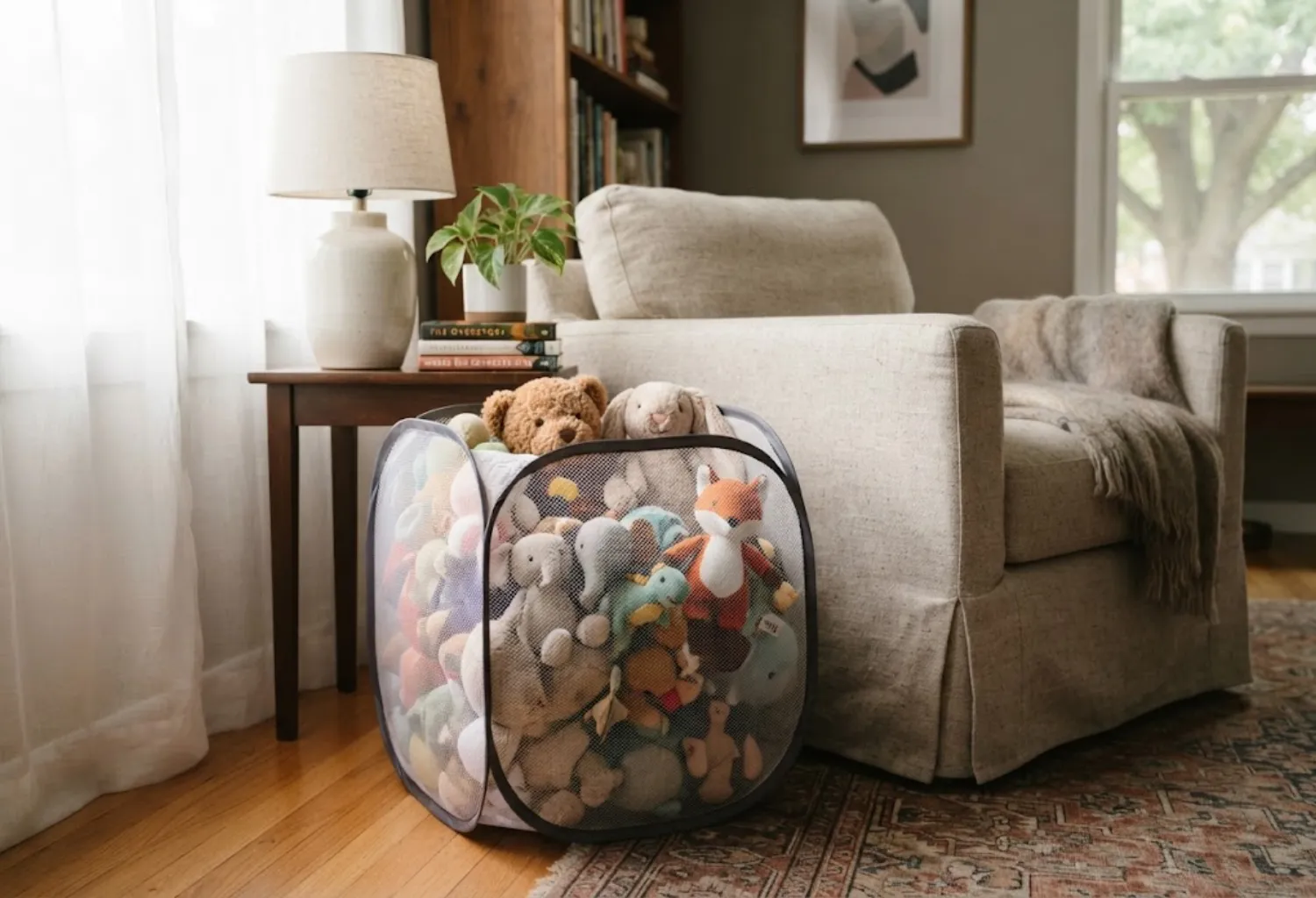
Collapsible mesh or fabric pop-up hampers are inexpensive and surprisingly sturdy for corralling stuffed animals or lightweight toys, and they fold flat when you don’t need them. They’re not the most polished option on this list, so they work best tucked into a closet, behind a chair, or inside a larger cabinet rather than sitting out in full view. Choose a solid neutral color instead of a bright print if you do want to keep one visible.
24. Toy Hammock in the Corner
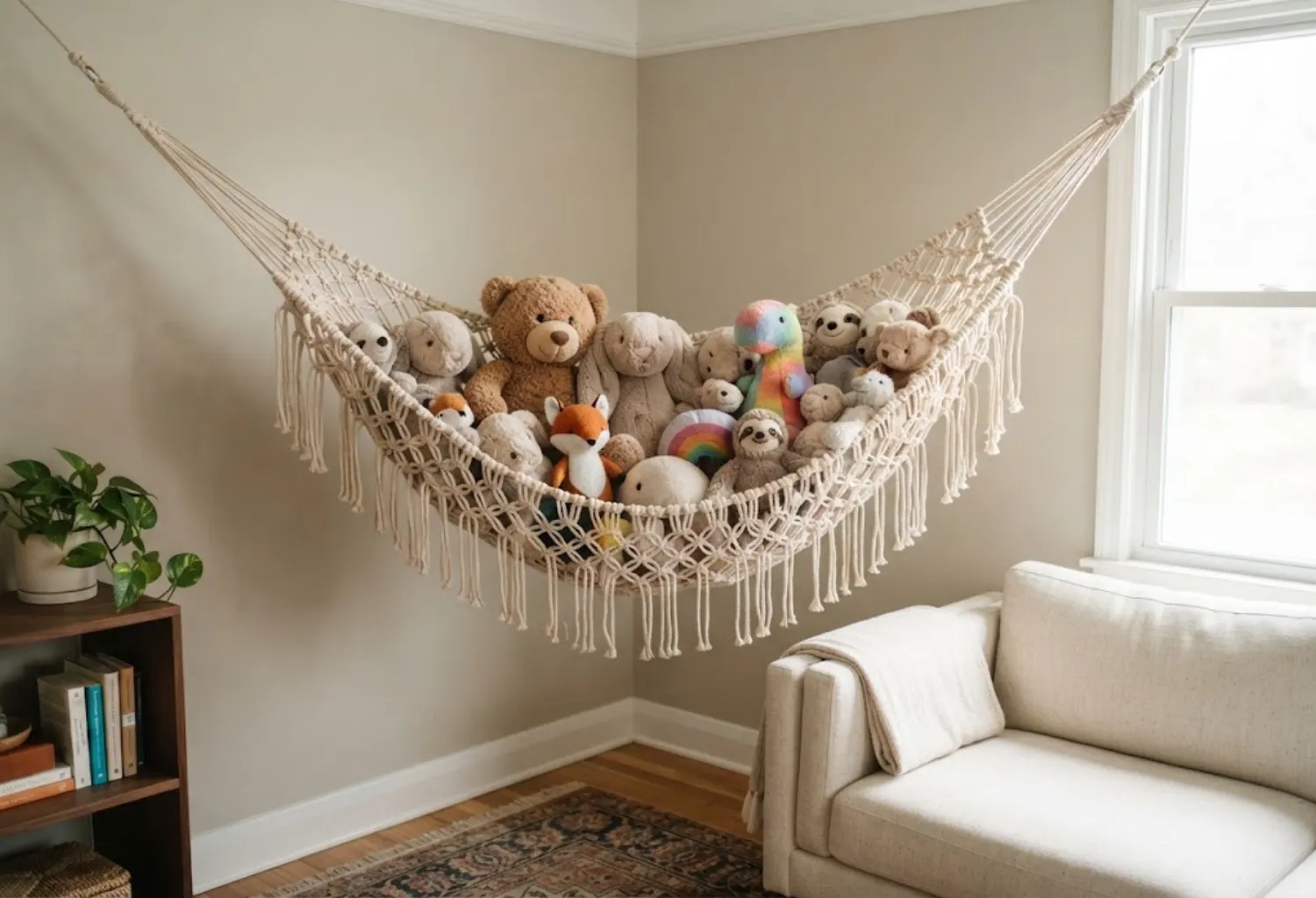
A stuffed-animal hammock, strung diagonally across a corner near the ceiling, is a clever way to store soft toys without using any floor or shelf space at all. It works especially well in kids’ playrooms that flow into the living room, and it adds a playful, layered look overhead that’s easy to overlook as “storage” at first glance. Just make sure it’s mounted securely into a stud, not just drywall.
25. Sliding Drawer Units
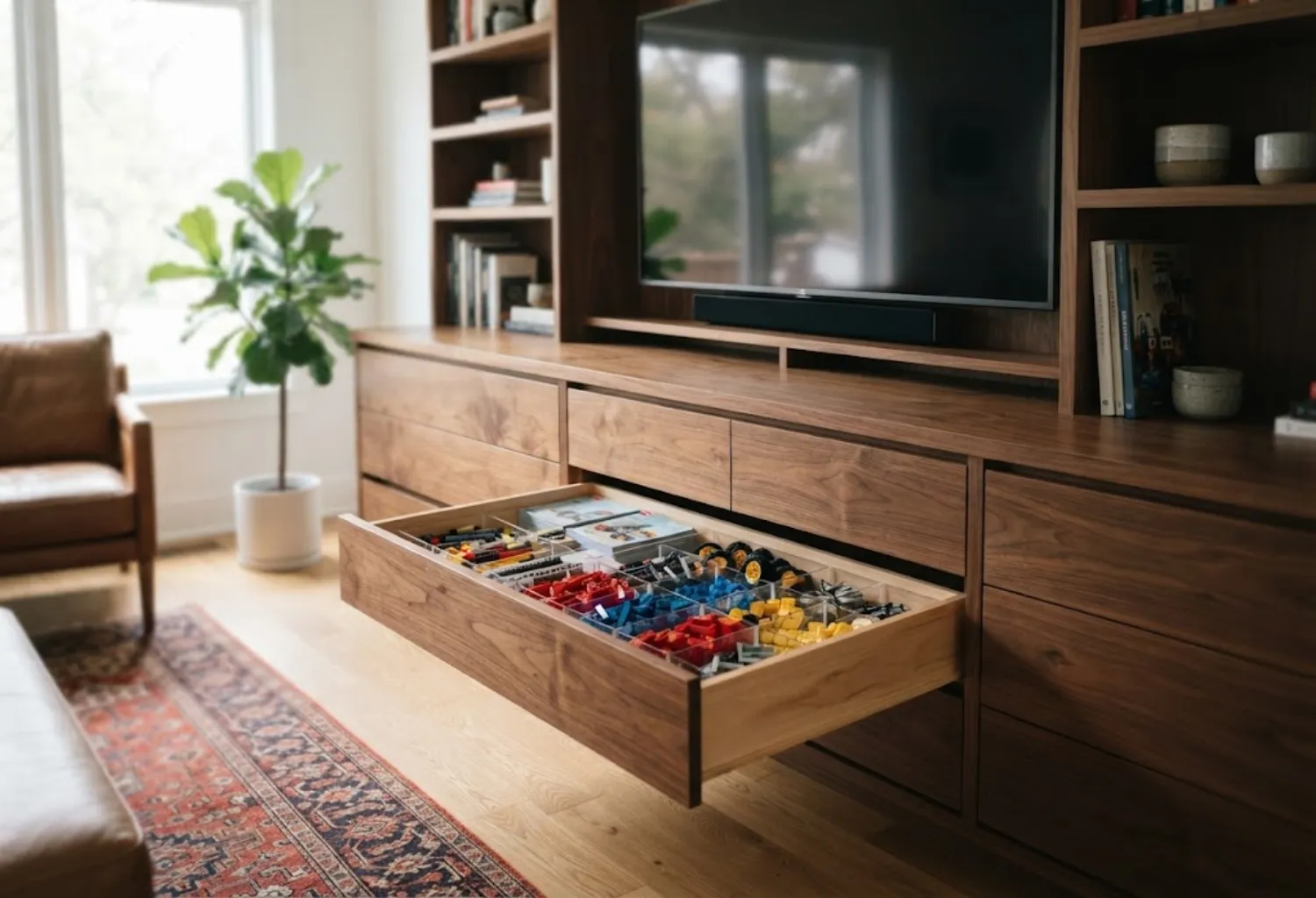
A set of stackable or built-in sliding drawers, either as a standalone unit or built into an entertainment center, keeps toys fully out of sight while staying easy to access. Drawers work particularly well for toys with lots of small parts, like building sets or puzzles, since a closed drawer prevents pieces from spilling out the way an open bin sometimes does. Look for soft-close hardware if you want to keep noise down during cleanup time.
26. Bookcase with Toy Zone
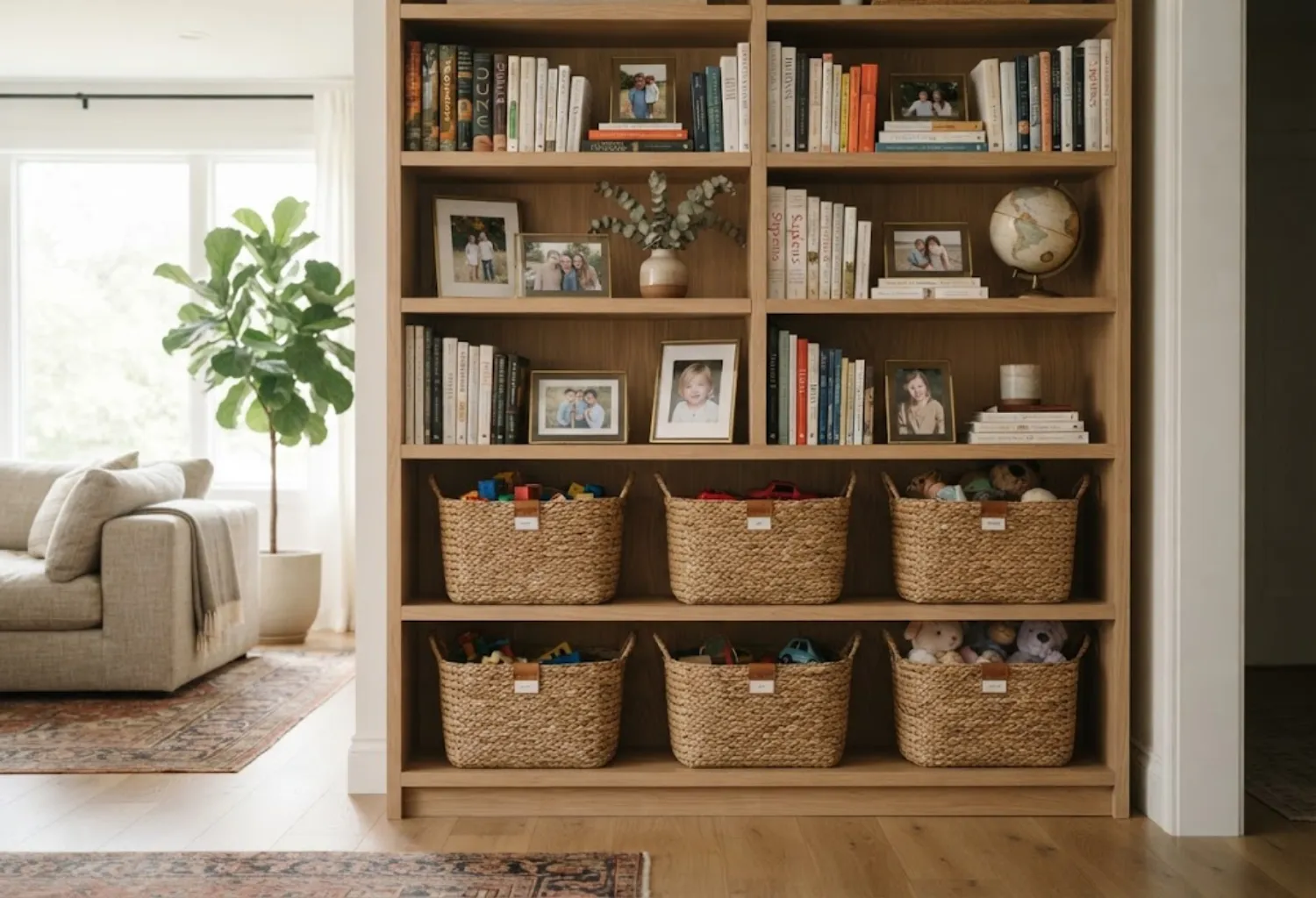
Rather than dedicating an entire bookcase to toys, section off just the bottom two shelves as the designated “toy zone” while keeping books, framed photos, and decor on the shelves above. This keeps the piece feeling like a real bookcase rather than a toy chest, and it’s an easy way to introduce toy storage into a room without buying additional furniture.
27. Rolling Storage Cart
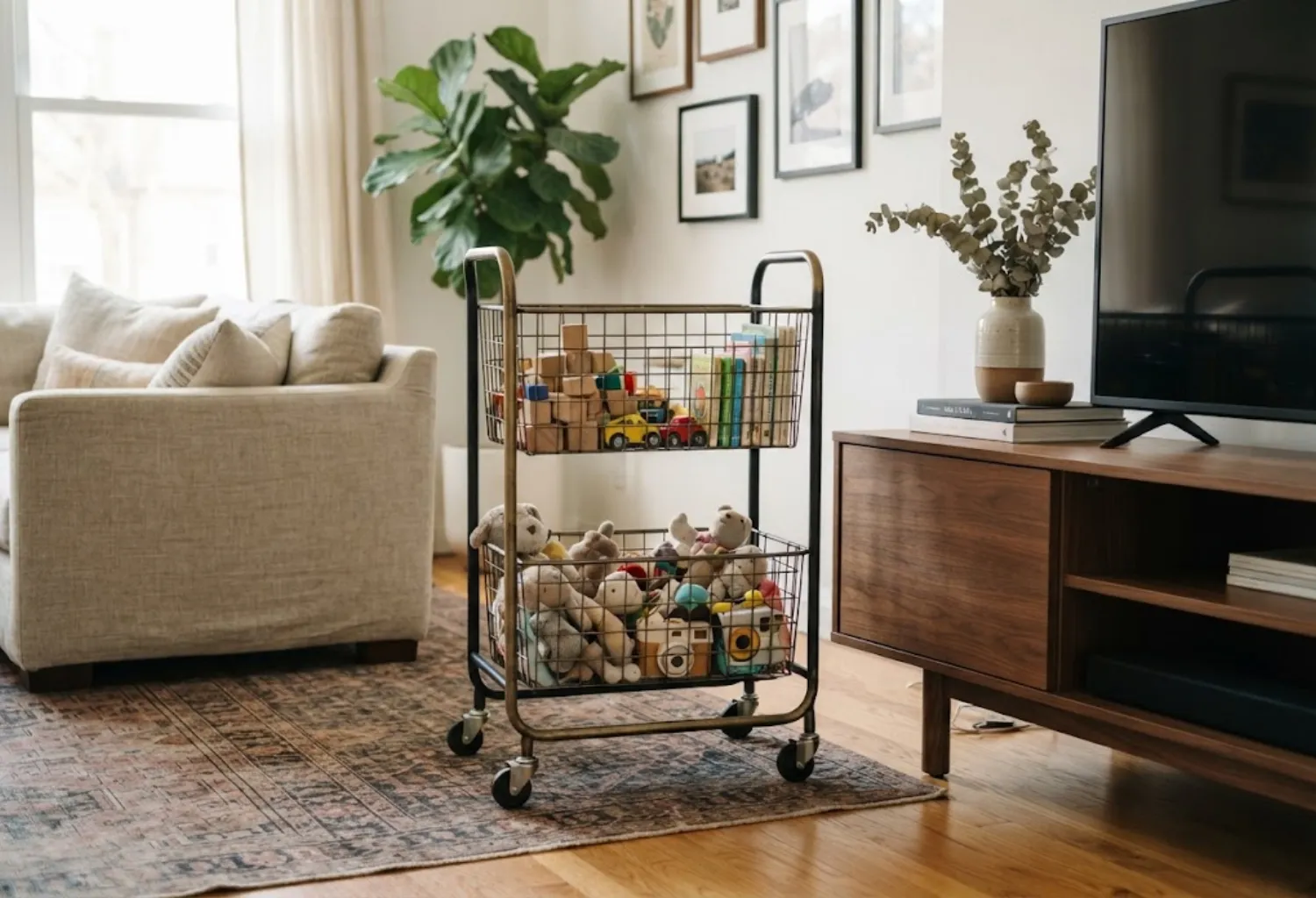
A slim rolling cart with two or three tiers of open bins gives you toy storage that can be tucked beside a sofa or media console and then pulled out when it’s playtime. Because it’s on wheels, it’s easy to move fully out of the room when you’re hosting guests or just want the space to feel like an adult living room again for the evening.
28. Magnetic Board for Small Toys
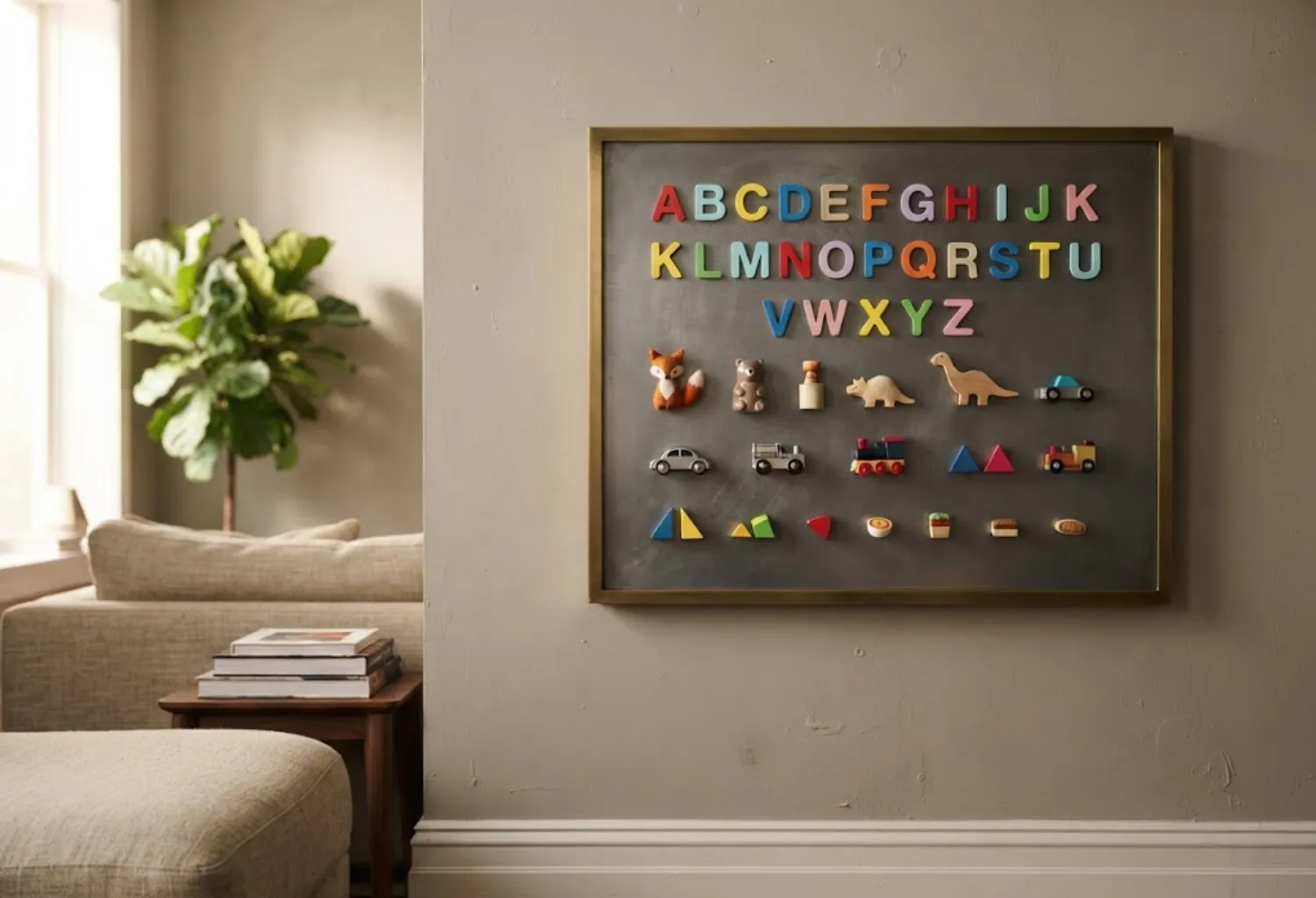
A metal magnetic board, styled like art on the wall, can hold small magnetic toys, letters, or figures upright and off the floor entirely. It works particularly well for imaginative play pieces that kids like to arrange and rearrange, and because it’s mounted vertically, it takes up zero floor or shelf space. Frame it like you would any piece of wall art so it reads as decor first.
29. Storage Pouf Seating
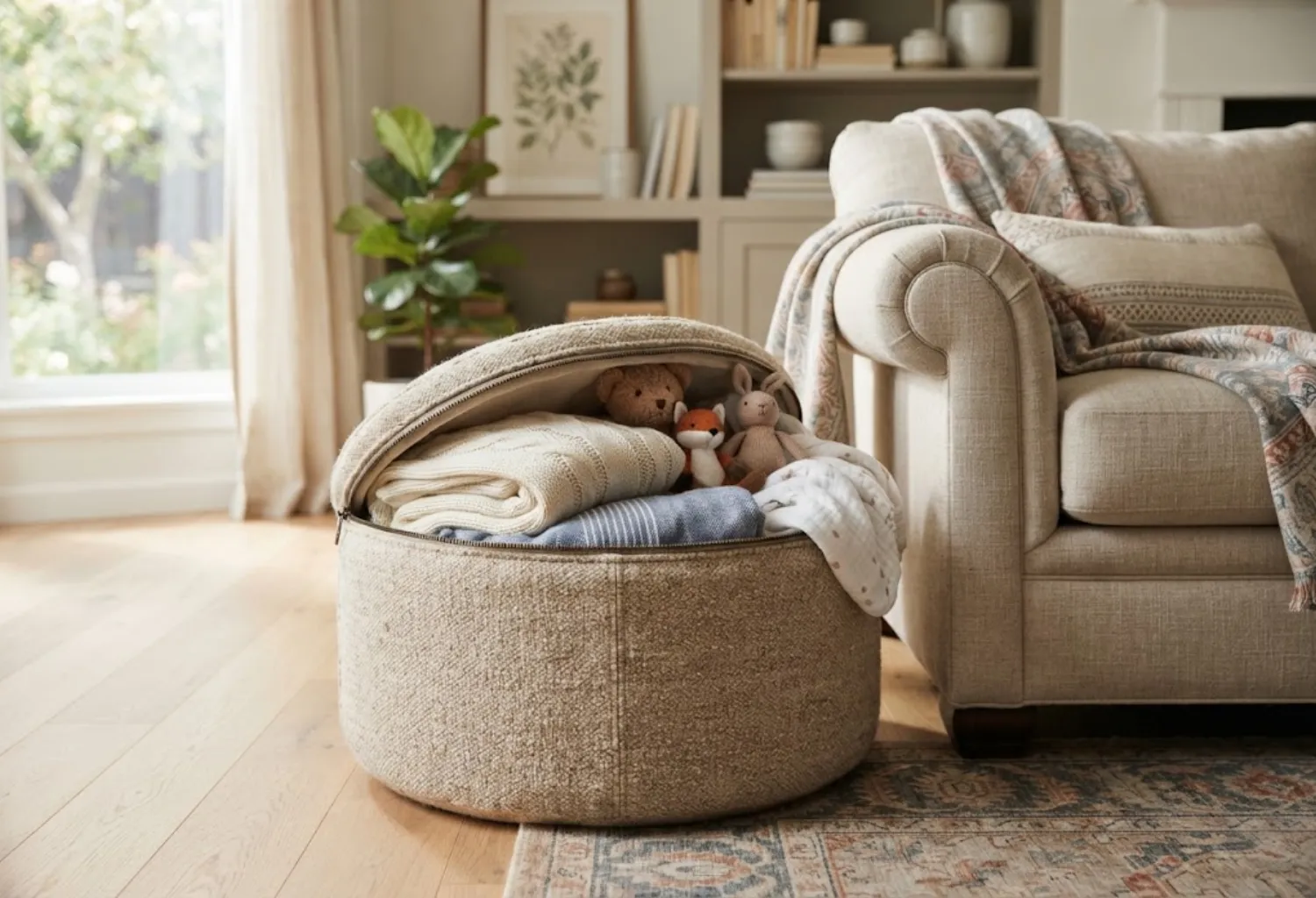
A soft pouf with a zippered or lift-top opening gives you an extra seat for the living room while quietly hiding a stash of soft toys or blankets inside. Because poufs are typically smaller and lighter than ottomans, they’re easy to move around the room as needed, which makes them a flexible option for smaller living rooms where furniture needs to multitask.
30. Rug-Anchored Play Zone
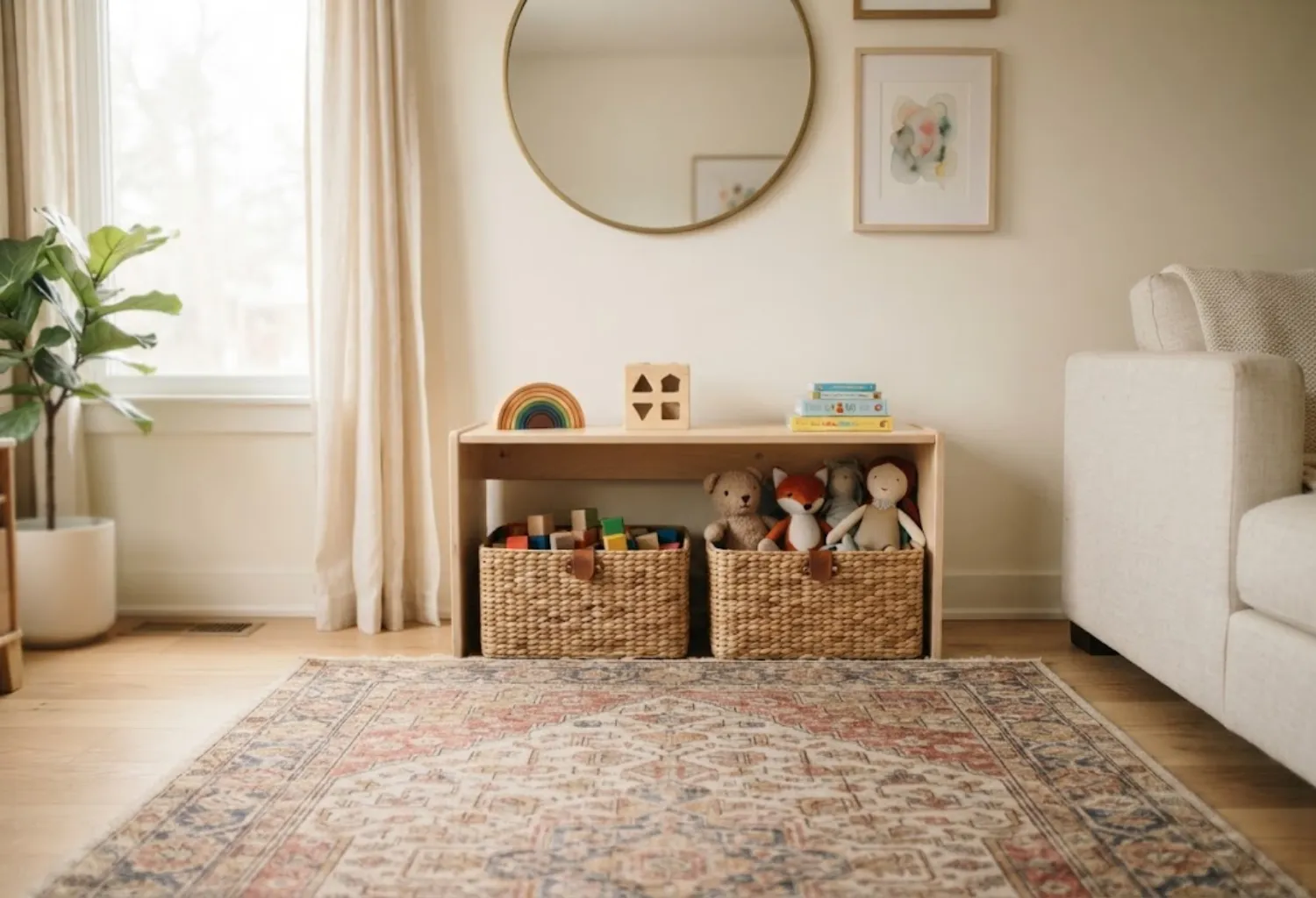
Defining one section of the living room with a distinct rug even a small one visually signals “this is the play area” without needing a wall or furniture divider. Pair the rug with a couple of low bins or a small shelf placed just at its edge, and kids naturally learn that toys live within that zone rather than spreading across the whole room. A patterned rug in durable, easy-to-clean material also hides everyday marks better than a plain one.
Conclusion
With 30 living room toy organization ideas on the table, the best approach is usually a combination rather than a single fix a storage ottoman for bulkier items, a few labeled bins for daily use, and maybe a pegboard or floating shelf to bring some of the toys into your decor rather than hiding everything away. Think about your child’s age and how independently they can put things away, how much floor space you actually have to work with, and whether you’d rather toys be visible and accessible or tucked out of sight. The right mix will look different in every home, but the goal is the same: a living room that still feels like yours, even with a few toys in the mix.