16 Living Room Organization Ideas With Kids That Work
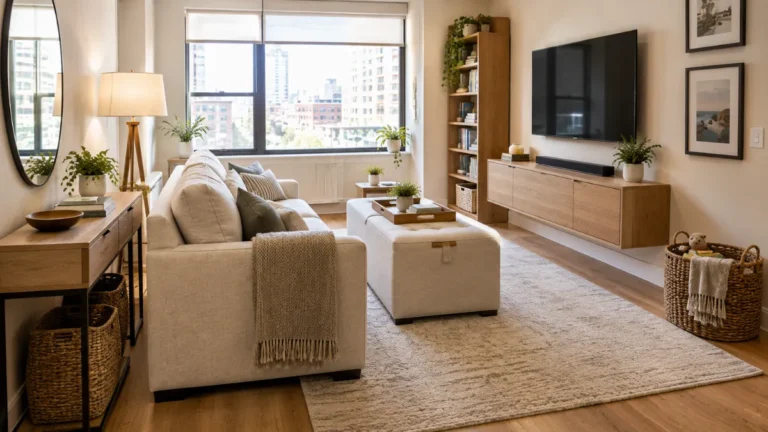
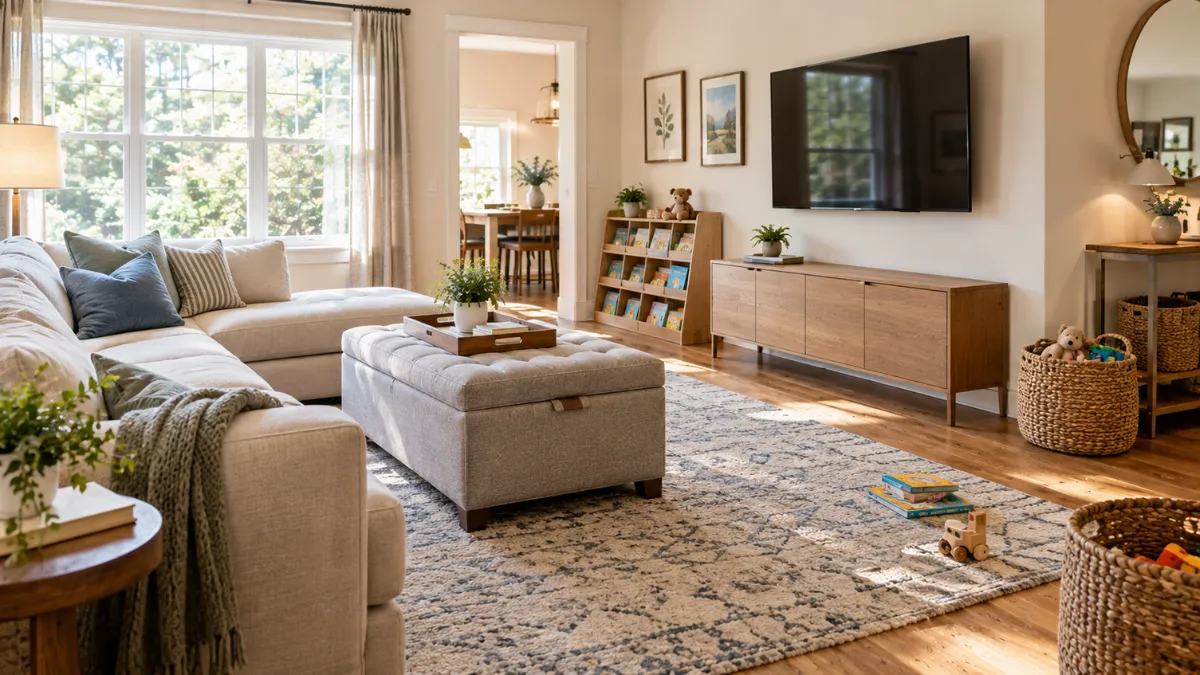
Living with kids often means toys, books, art supplies, and everyday items quickly spread across the living room. These 16 Living Room Organization Ideas With Kids are designed for families who want a room that stays usable, attractive, and easy to reset. From hidden storage to kid-friendly furniture placement, each idea works with real family routines while leaving room for comfortable seating, personal style, and everyday play.
1. Storage Ottomans
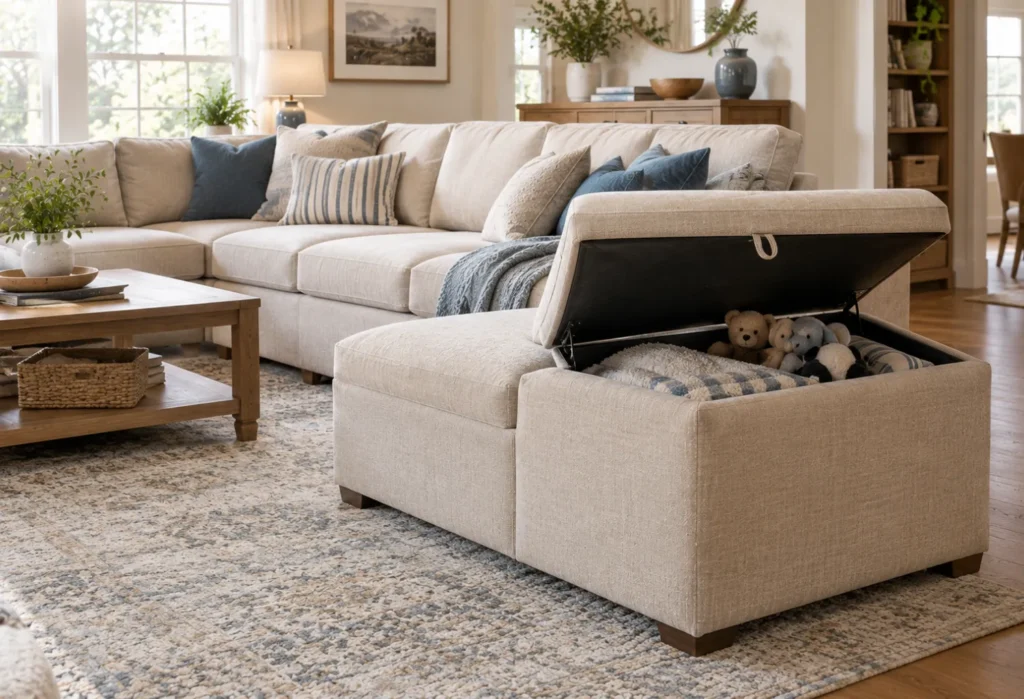
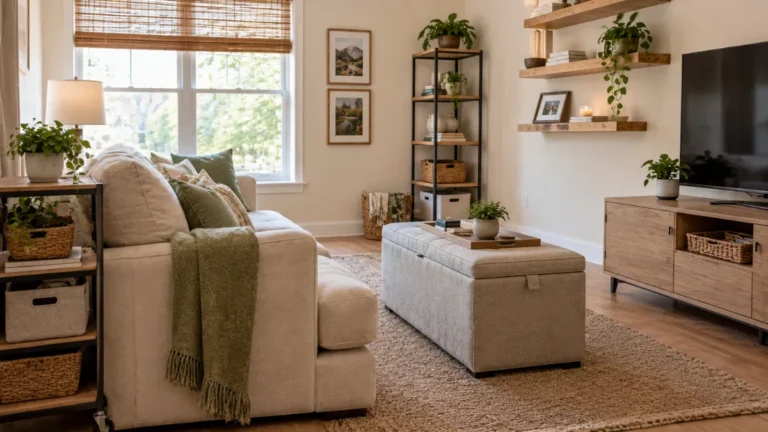
A storage ottoman gives kids a place to put toys without adding another large cabinet to the room. Choose one that works as a footrest or extra seat, so the same piece serves several purposes. A soft fabric finish can also make the room feel more relaxed and family-friendly.
Look for a hinged or lift-top design with enough interior depth for stuffed animals, blocks, or blankets. Keep heavier items elsewhere and reserve the ottoman for lightweight things children can put away without help.
2. Low Toy Baskets
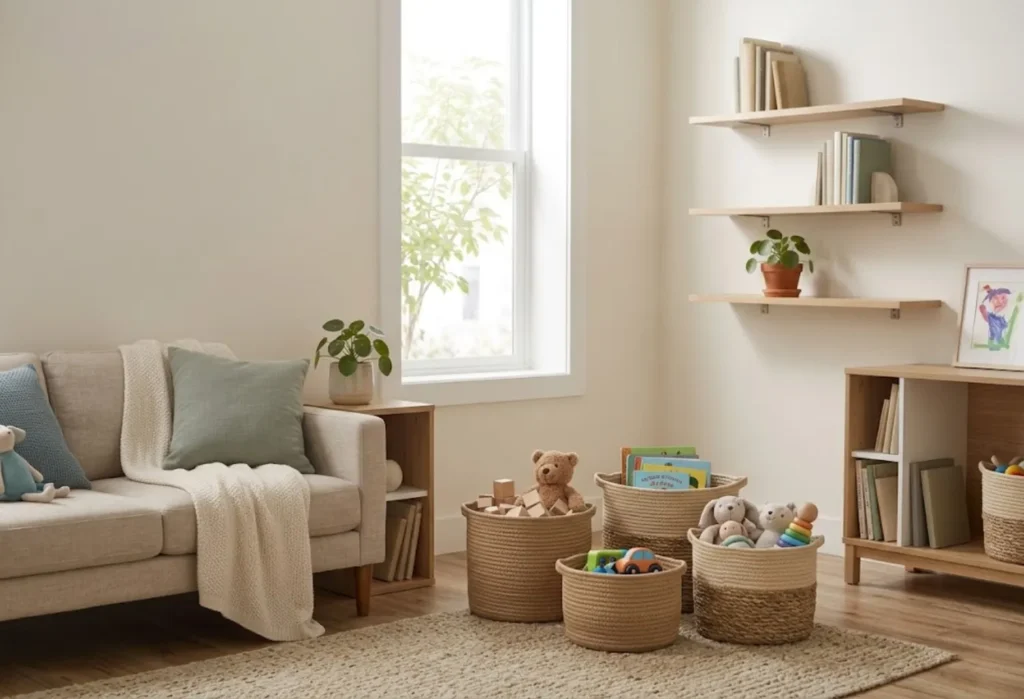
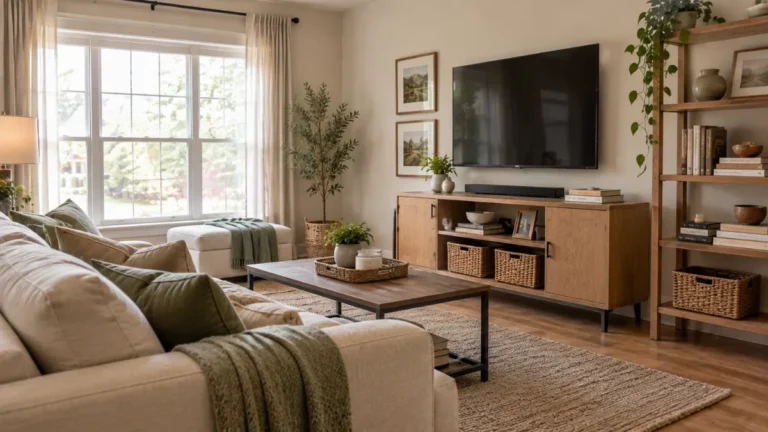
Low baskets make toy cleanup easier because children can see and reach their own storage. Instead of placing several containers around the room, group two or three baskets beside a media console, bookcase, or sofa. Natural woven baskets can work especially well with neutral furniture and warm wood finishes.
Choose baskets with sturdy handles and a size that fits underneath existing furniture when possible. Avoid filling them too deeply; a child is more likely to tidy up when toys can be dropped in without digging through layers.
3. Built-In Book Storage
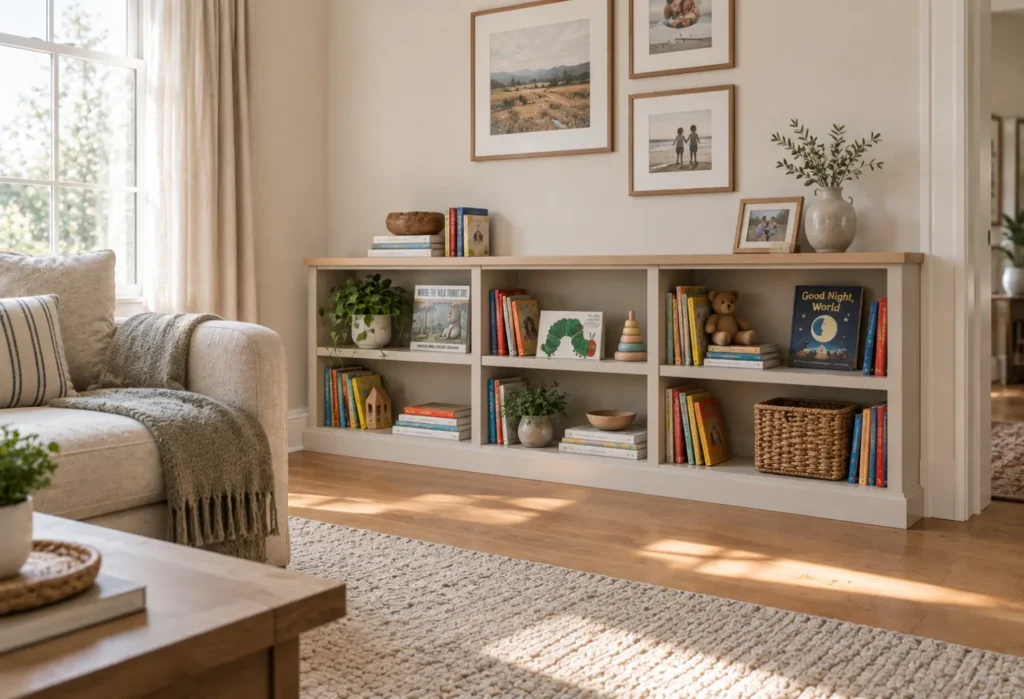
Books often create messy piles on coffee tables and floors, especially in homes where children read throughout the day. A low bookcase keeps favorite titles visible while giving the lower part of the wall a useful purpose. It can also add color through book covers without requiring extra wall decorations.
Position the shelves where children can safely reach them without climbing. Keep heavier books on lower shelves, and leave a little breathing room between groups so the storage looks organized rather than packed.
4. Sofa With Open Space
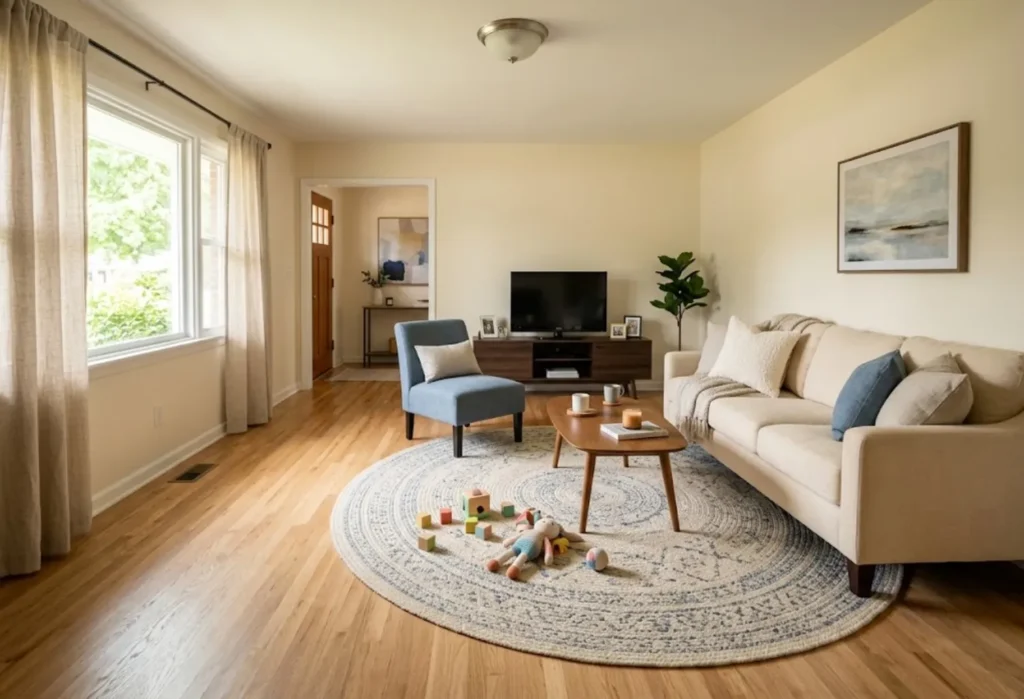
A sofa with clear floor space around it gives children room to play while keeping the main seating area comfortable. Instead of pushing multiple chairs tightly against the walls, use fewer, better-sized pieces and leave a defined open area in front or beside the sofa.
For a compact room, measure the walking paths before adding furniture. About 30 inches of clear passage is a useful target for everyday movement, while the children’s play zone should stay away from doorways and frequently used routes.
5. Wall-Mounted Toy Storage
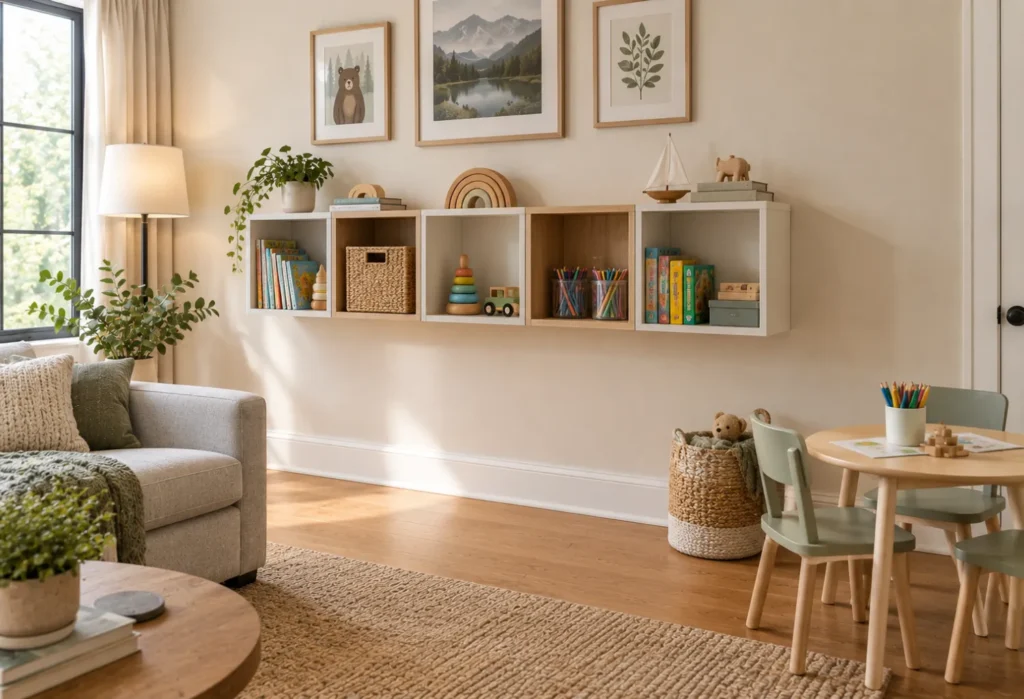
Floor storage can quickly take over a small living room, so using vertical wall space keeps belongings contained without reducing walking room. Narrow wall-mounted cubbies can hold small toys, puzzles, craft supplies, or rotating activities while keeping the floor clearer.
Use secure wall anchors and place the storage at a height children can safely reach. Reserve higher compartments for adult items or less frequently used toys. Keep the finish simple, such as white, light oak, or soft gray, so the storage blends with the room.
6. Color-Coded Bins
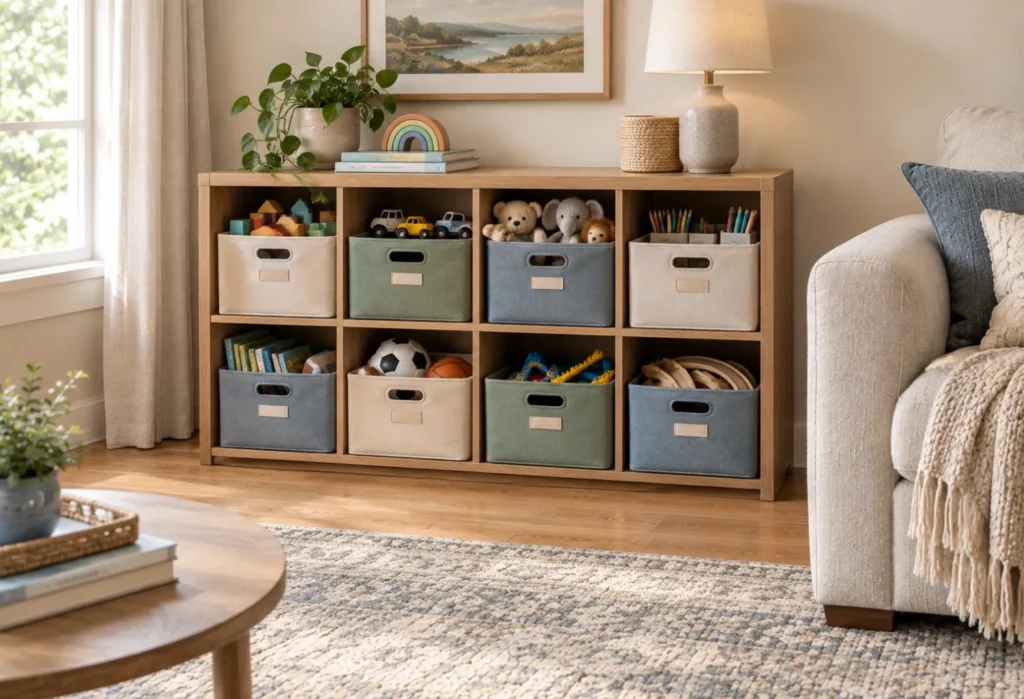
Color-coded bins can make cleanup easier for younger children because each group of belongings has a clear visual home. For example, blue can hold building toys, green can hold cars, and cream can hold stuffed animals. The system adds small touches of color without needing brightly colored furniture.
Choose two to four colors that already appear in the room’s rug, cushions, or artwork. Matching the storage colors to existing accents keeps the system intentional rather than making the living room look like a classroom.
7. Slim Storage Console
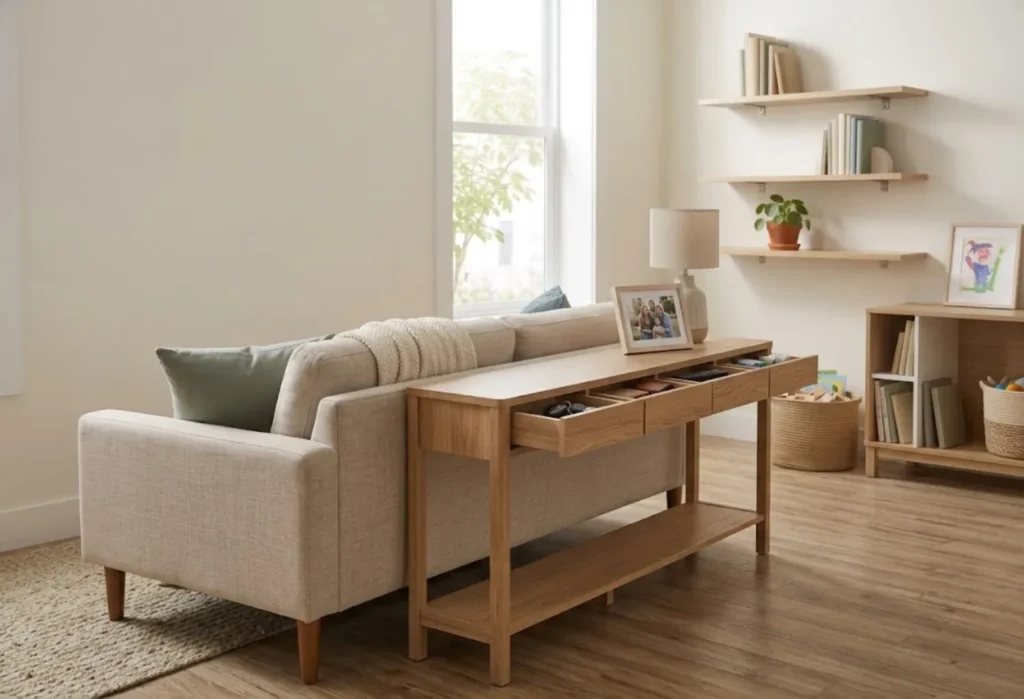
A slim console behind or beside the sofa can use a narrow strip of space for items that otherwise collect on tables. Drawers can hold remotes, coloring supplies, chargers, and small household items, while the top provides room for a lamp or a few decorative pieces.
Measure the available depth before buying one. A console that is too deep can interfere with walking paths, particularly in a compact room. Choose a design with rounded edges if children regularly move and play around the furniture.
8. Floating Shelves
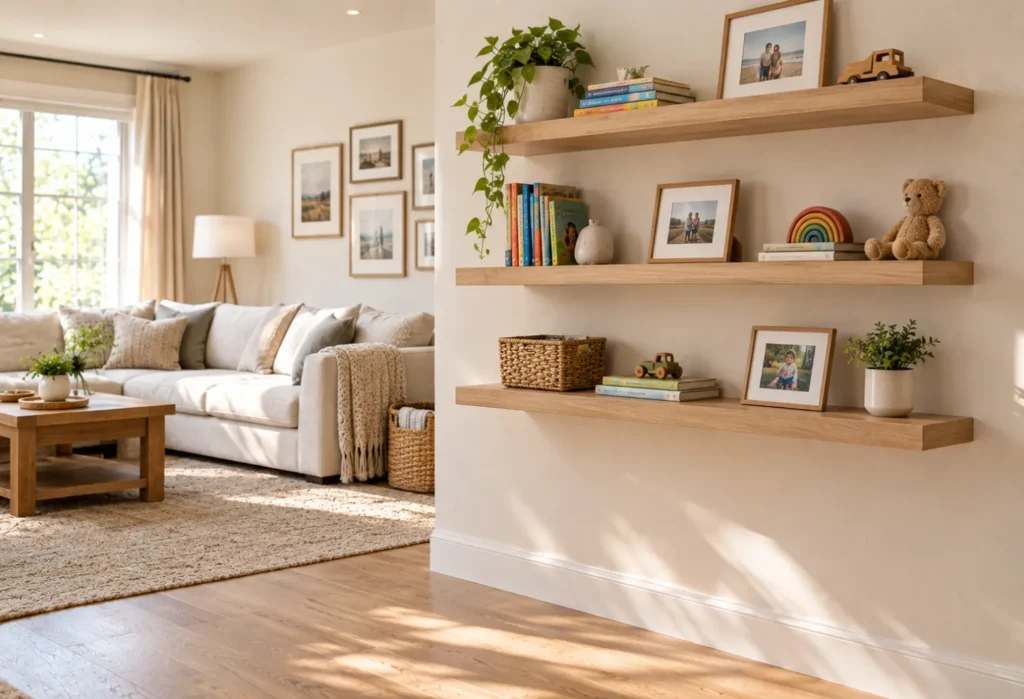
Floating shelves take advantage of unused wall space while keeping the floor open for children. Two or three shelves can display framed family photos, a small plant, favorite books, or a few carefully chosen toys. The open design also prevents the room from feeling crowded by bulky cabinets.
Keep the lowest shelf high enough that toddlers cannot easily pull items down, and secure every shelf properly. Mixing books with one or two decorative objects creates visual variety without filling every inch of the wall.
9. Under-Sofa Bins
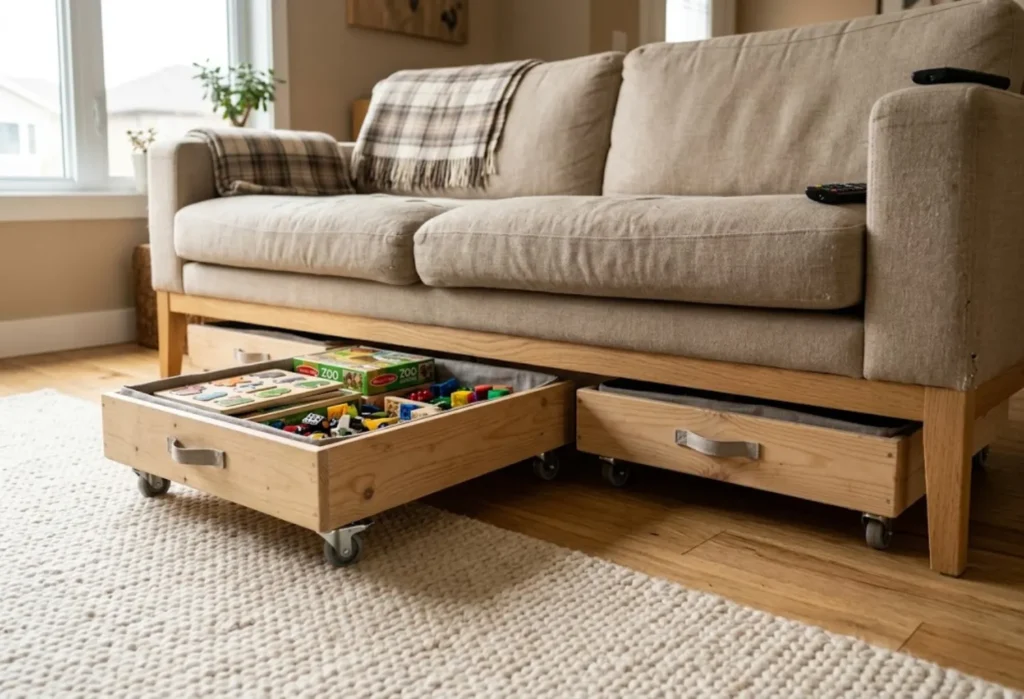
The space beneath a raised sofa can become useful storage for toys that are not needed every day. Flat rolling bins or shallow containers can slide underneath without taking away seating or floor area. This works particularly well in rooms where every square foot matters.
Measure the clearance beneath the sofa before purchasing containers. Choose bins with smooth edges and easy-to-grip handles. Label them for seasonal toys, puzzles, or extra blankets so the hidden storage remains easy to manage.
10. One-Touch Cleanup Zone
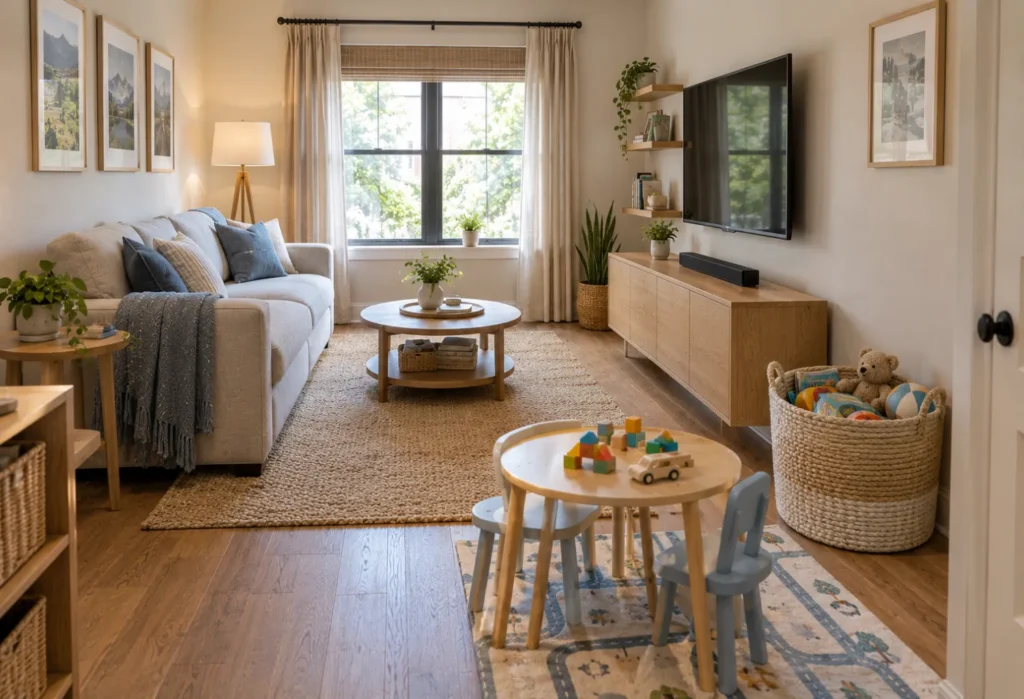
Picture a 10-by-12-foot living room with a sofa along one wall, a television opposite it, and a small play area beside the coffee table. If toys are stored across the room, children have to cross the main walking path every time they clean up. A nearby basket or low cabinet changes that routine.
The useful lesson is simple: storage should be close to where the mess happens. Place the main toy container beside the play area rather than across the room, and cleanup becomes a much shorter task for everyone.
11. Closed Media Storage
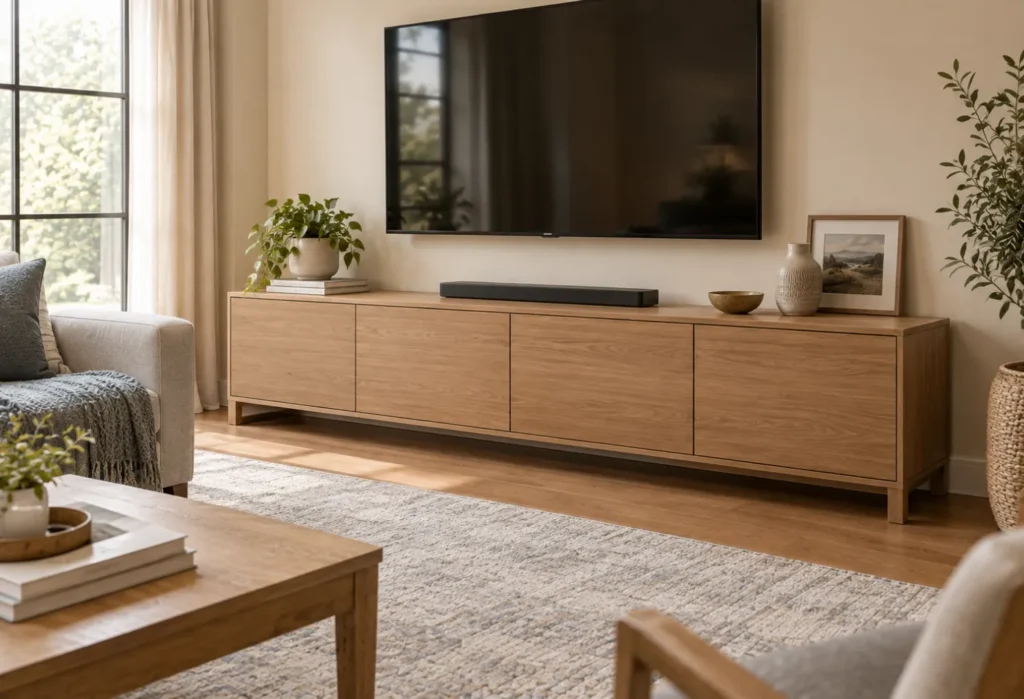
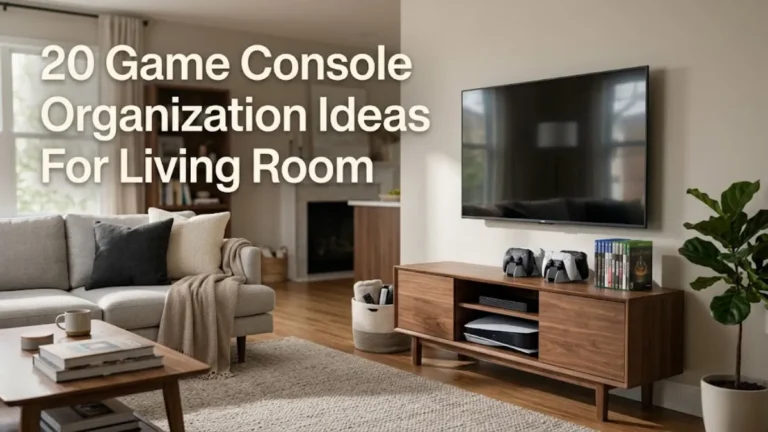
Open shelving around a television can quickly become crowded with games, controllers, toys, and cables. A closed media cabinet keeps those smaller items out of sight while giving the living room a cleaner visual line. It is especially useful for families who use the same room for entertainment and play.
Look for cabinets with cable-management openings and doors that are easy for adults to access. Keep electronics ventilated and avoid storing items where children can pull on cords or reach unsafe equipment.
12. Bench With Hidden Storage
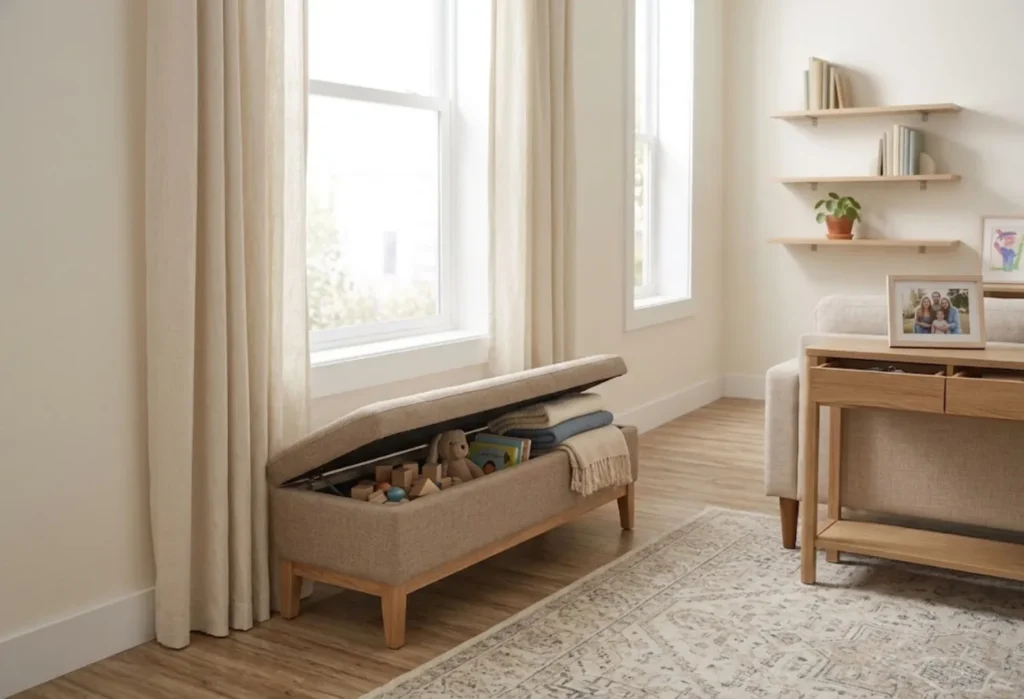
A storage bench can provide seating, toy storage, and a defined boundary for a child’s activity area. Place one along a window wall or beside a play corner where it does not compete with the main sofa. A cushioned top adds comfort while the compartment underneath handles less attractive necessities.
Choose a bench with a depth that suits the room rather than selecting the largest storage capacity available. In smaller living rooms, a slimmer piece can provide useful storage without narrowing the walking path.
13. Family Drop Zone
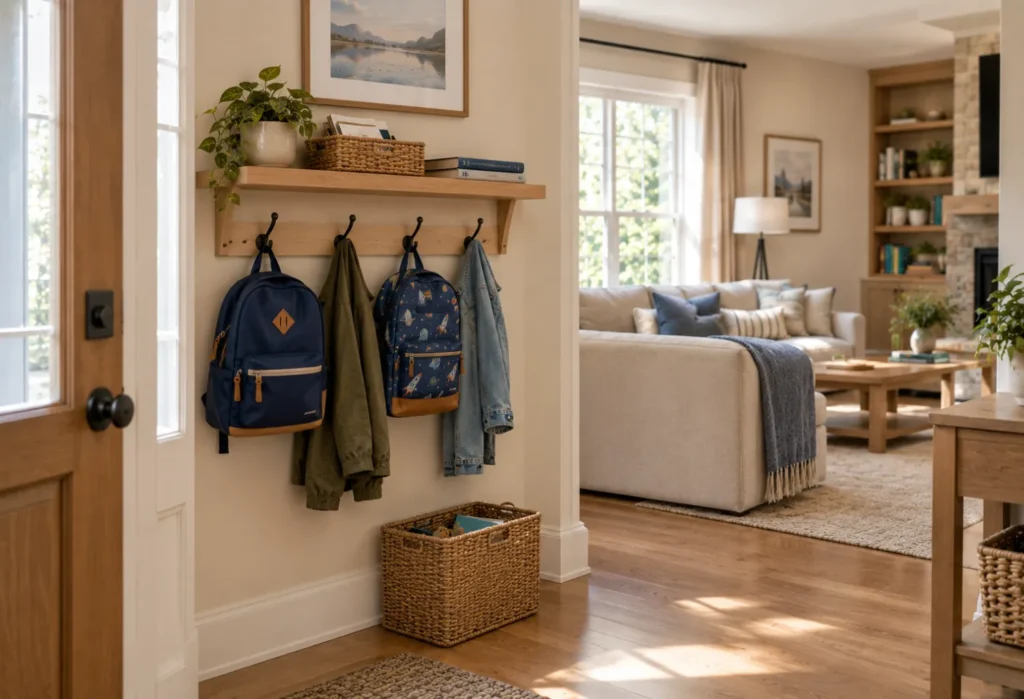
A small family drop zone prevents backpacks, shoes, jackets, and school papers from spreading across the living room. A narrow wall section near the entrance can hold hooks, a small shelf, and labeled baskets. This keeps everyday clutter contained before it reaches the main seating area.
Use hooks at child-friendly heights for lightweight bags and jackets. Add one basket for papers or small personal items so the area has a clear purpose. Keep the setup visually connected to the living room through matching wood tones or neutral finishes.
14. Play Rug Boundary
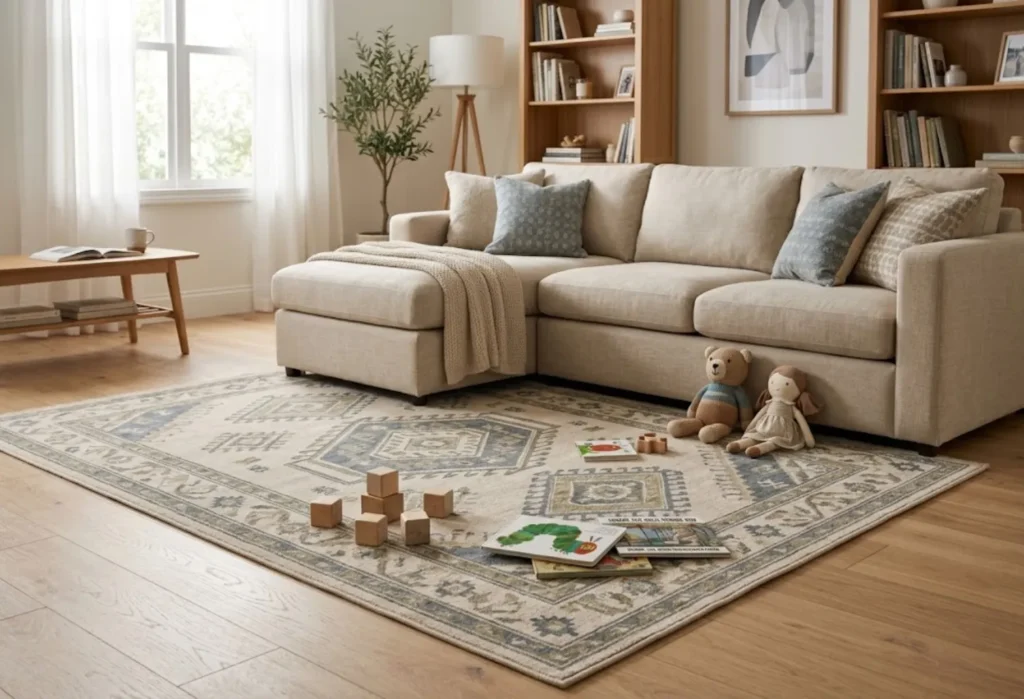
A large rug can quietly define where children play without adding physical barriers to the room. Place it beside the sofa or coffee table so blocks, dolls, and floor games stay within a recognizable area. The rug also adds softness and pattern to the living room.
Choose a washable or easy-clean material in a pattern that can disguise everyday marks. Soft beige, muted blue, olive, or charcoal patterns can work with family spaces without making the room feel overly busy.
15. Rotating Toy Shelf
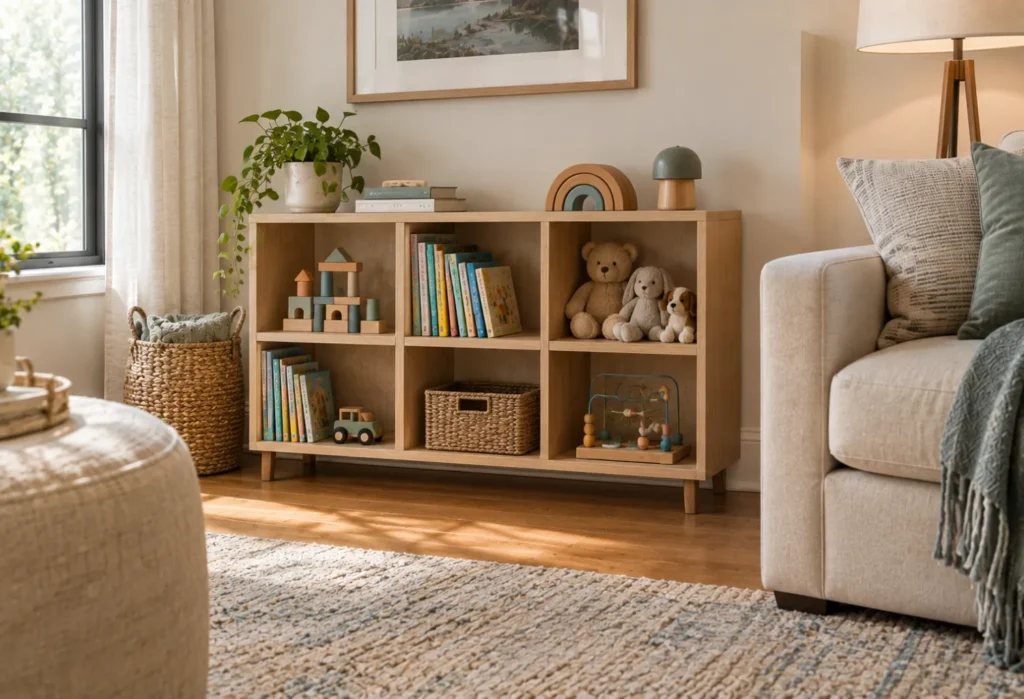
Keeping every toy available at once can make a living room feel crowded and can make cleanup harder. A rotating shelf solves this by displaying a smaller selection while the rest stays stored elsewhere. Swap the collection every week or two based on what your children are actually using.
Use a low, sturdy shelf with only a few compartments. Place current favorites at eye level and leave some empty space between groups. The goal is not to display everything, but to make the available choices easier to manage.
16. Multi-Use Coffee Table
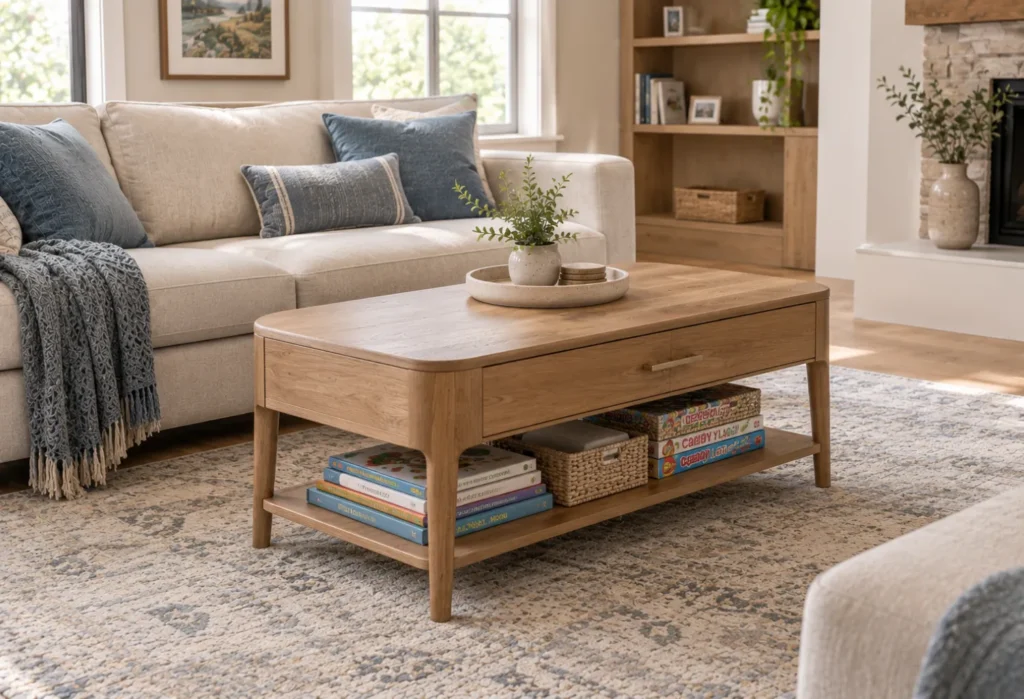
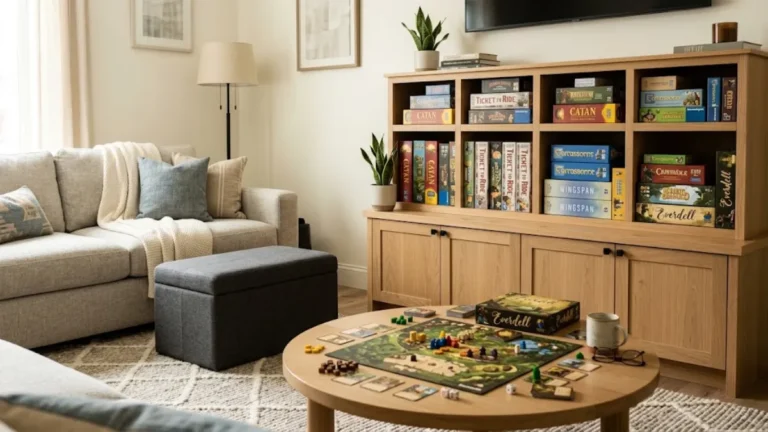
A family-friendly coffee table should support everyday living without becoming a permanent storage pile. A table with drawers, a lower shelf, or lift-top storage can hold coloring books, board games, or blankets while keeping the main surface available for drinks and decor.
Choose rounded corners and a durable finish if young children regularly play nearby. Keep the top relatively open, using only a tray, small plant, or simple decorative object so the table can quickly switch from family time to entertaining.
5 Best Ideas for Busy Family Living Rooms
| Idea | Best For | Why I Recommend It |
| Storage Ottomans | Small rooms | Combines seating and storage |
| Low Toy Baskets | Younger kids | Easy for children to reach |
| Slim Storage Console | Tight layouts | Uses narrow unused space |
| Closed Media Storage | Toy and cable clutter | Keeps visual clutter hidden |
| Play Rug Boundary | Everyday play | Defines a play area without barriers |
Conclusion
The best Living Room Organization Ideas With Kids are the ones that fit naturally into family routines. Start with the biggest source of clutter, then choose storage that stays close to where those items are used. A few well-sized pieces, practical containers, and a clear play area can keep the room comfortable while still leaving plenty of space for family life.