20 Living Room Organization Apartment Ideas for Small Spaces
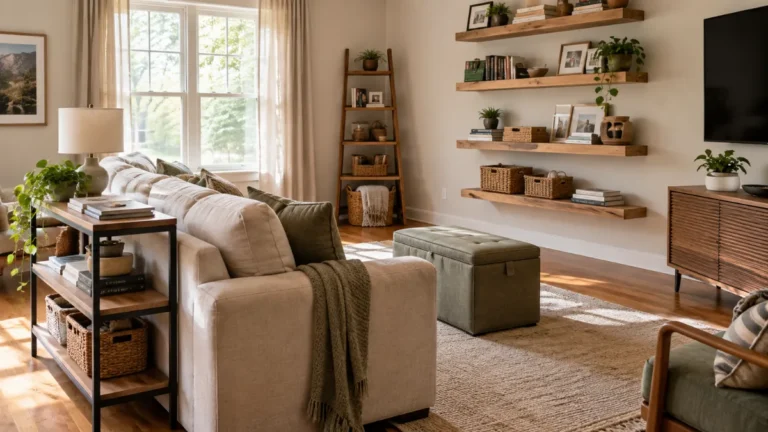
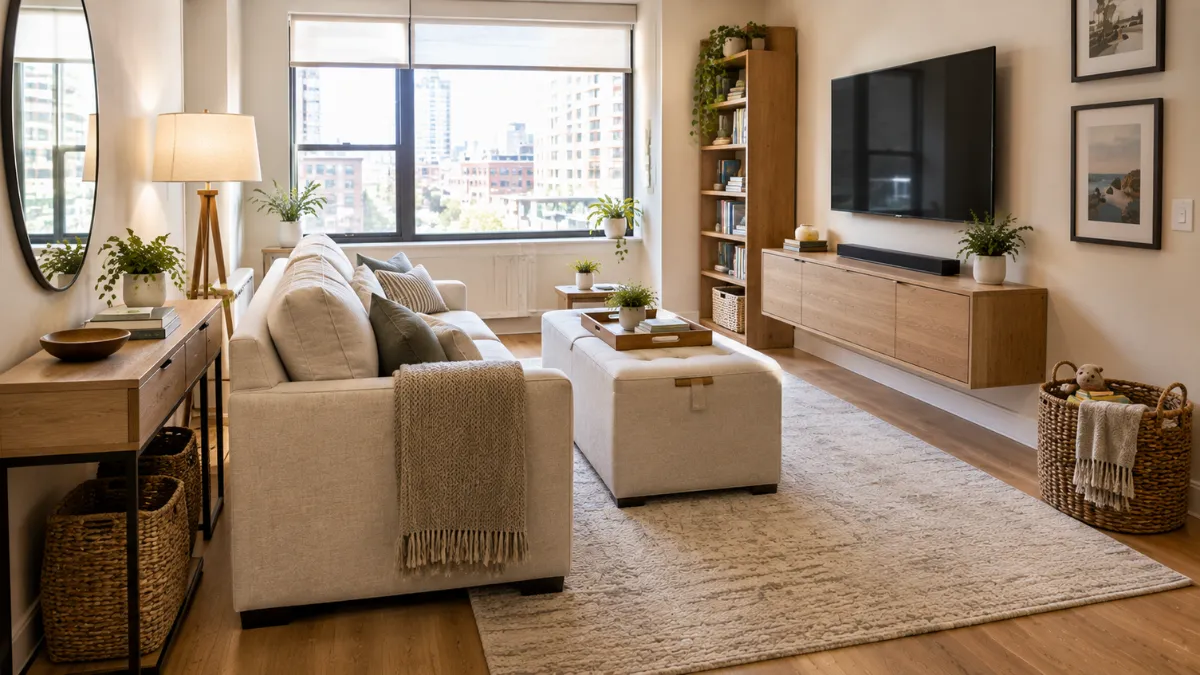
Small apartments often have to fit seating, storage, work areas, and everyday essentials into one room. These 20 Living Room Organization Apartment ideas focus on practical ways to keep that space tidy without making it feel crowded. You’ll find smart furniture choices, hidden storage, wall solutions, and simple styling ideas that work for renters and homeowners alike. Each option can be adjusted to suit your room size, budget, and decorating style.
1. Slim Storage Console
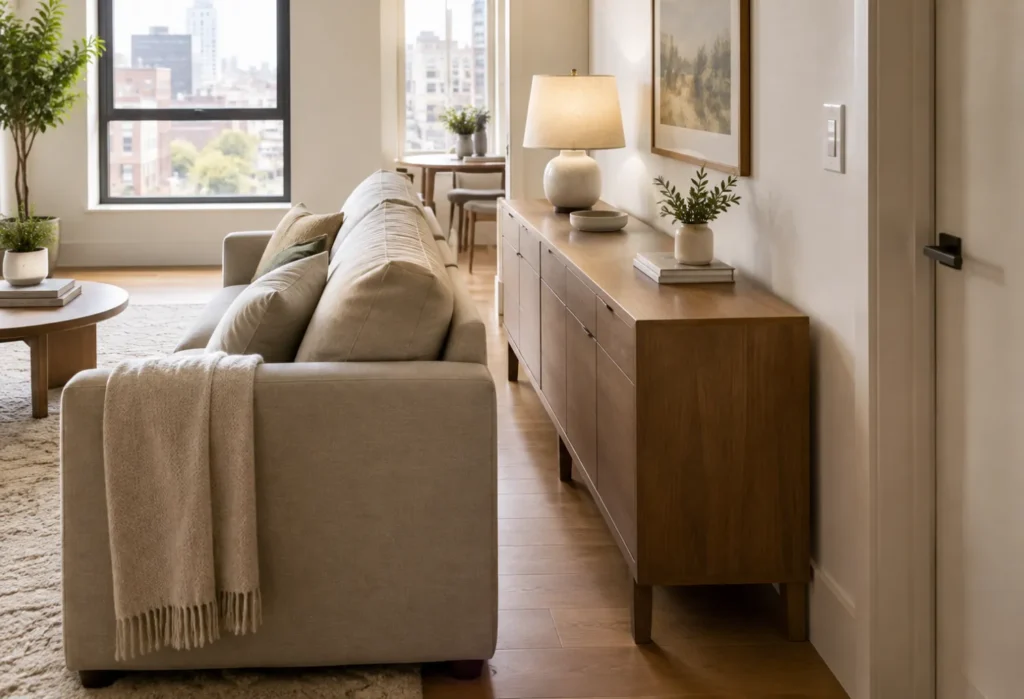
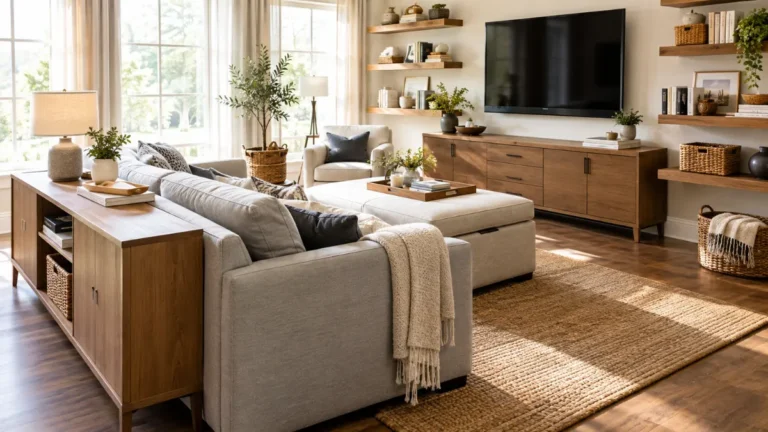
A bulky cabinet can make a small living room feel tight, especially when it sits behind a sofa or along a narrow wall. A slim storage console gives you a place for remotes, books, chargers, and small household items without taking up much floor space. Its long, low shape also creates a useful surface for a lamp, framed art, or a few carefully chosen accessories.
Look for a console around 10–14 inches deep if floor space is limited. Choose one with doors or drawers so everyday clutter stays out of sight. Light oak, walnut, or painted finishes can work well, depending on whether your apartment has a warm or modern style.
2. Matching Storage Baskets
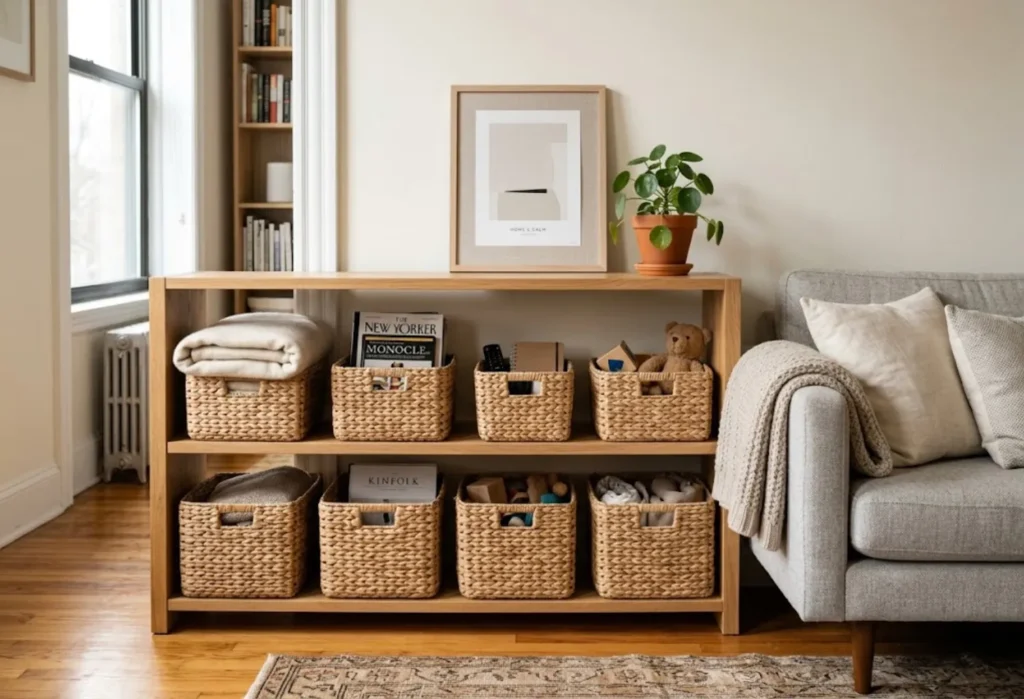
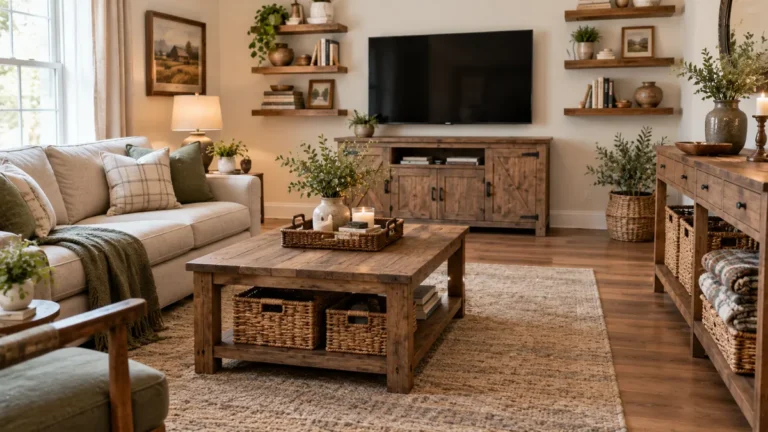
Open shelves can quickly become a collection of mismatched objects. Matching baskets bring visual order while giving loose items such as blankets, toys, magazines, and electronics a dedicated home. Repeating the same basket material also makes open storage look intentional rather than crowded.
For a relaxed apartment, try woven seagrass or natural fiber baskets. Fabric bins in cream, beige, or soft gray suit a cleaner modern room. Measure each shelf before buying so the baskets slide in easily without being squeezed together or leaving awkward gaps.
3. Floating Media Cabinet
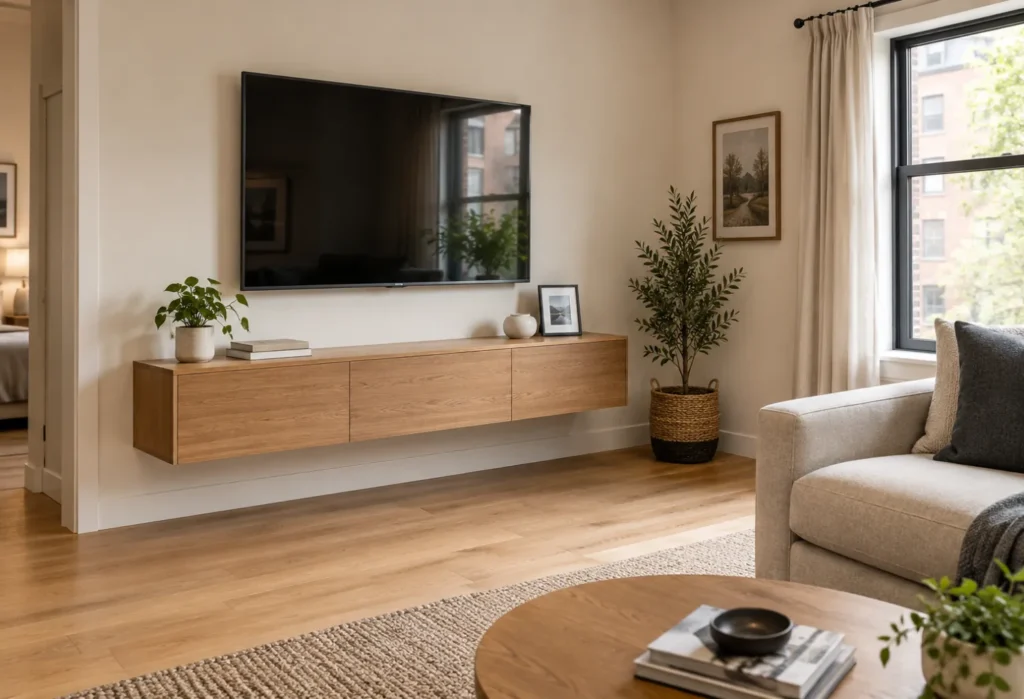
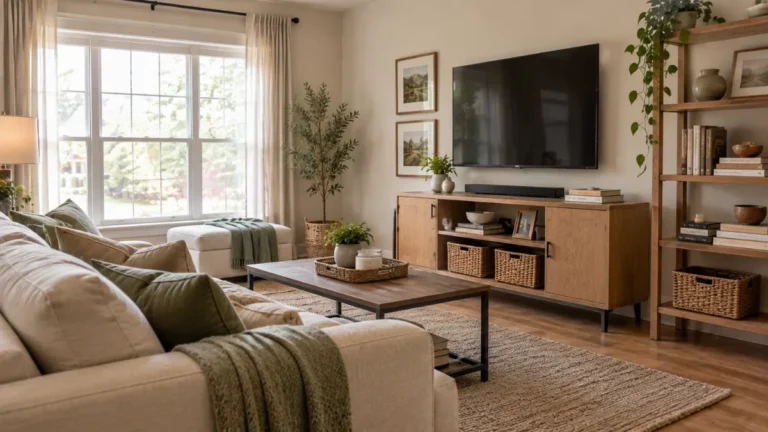
A floor-standing television cabinet can occupy valuable floor area and make furniture placement more difficult. A wall-mounted media cabinet keeps the storage footprint compact while leaving the floor visible underneath. That open area helps the room feel less visually heavy and makes cleaning easier.
Choose a cabinet wide enough for your television but not so deep that it projects into the walking path. Cable openings at the back are particularly useful in apartments. Pair a simple wood cabinet with a neutral wall and one or two small decorative objects rather than filling the entire surface.
4. Storage Ottoman
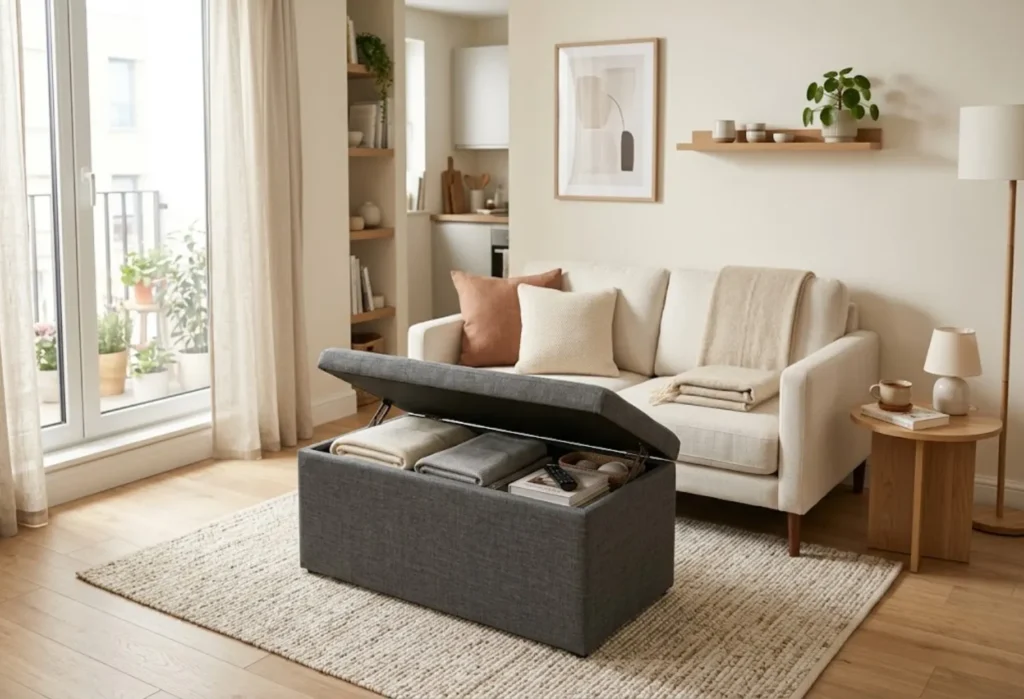
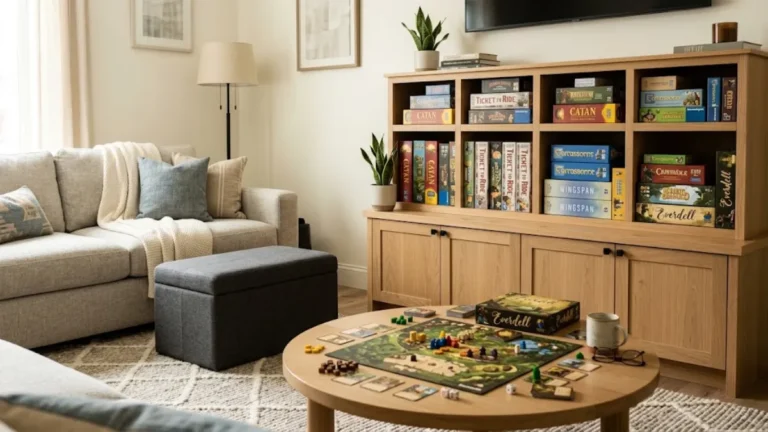
A standard coffee table provides a surface but usually does little for clutter. A storage ottoman can serve as a footrest, casual seating, and a hidden container for blankets or board games. In a compact apartment, having one piece perform several jobs can free space for other needs.
Select a rectangular ottoman if your sofa is long, or use a compact square version in a smaller seating arrangement. A lift-top model offers more storage, while a padded hinged lid gives easier access to frequently used items. Keep the upholstery close to your sofa tone for a unified appearance.
5. Corner Bookcase
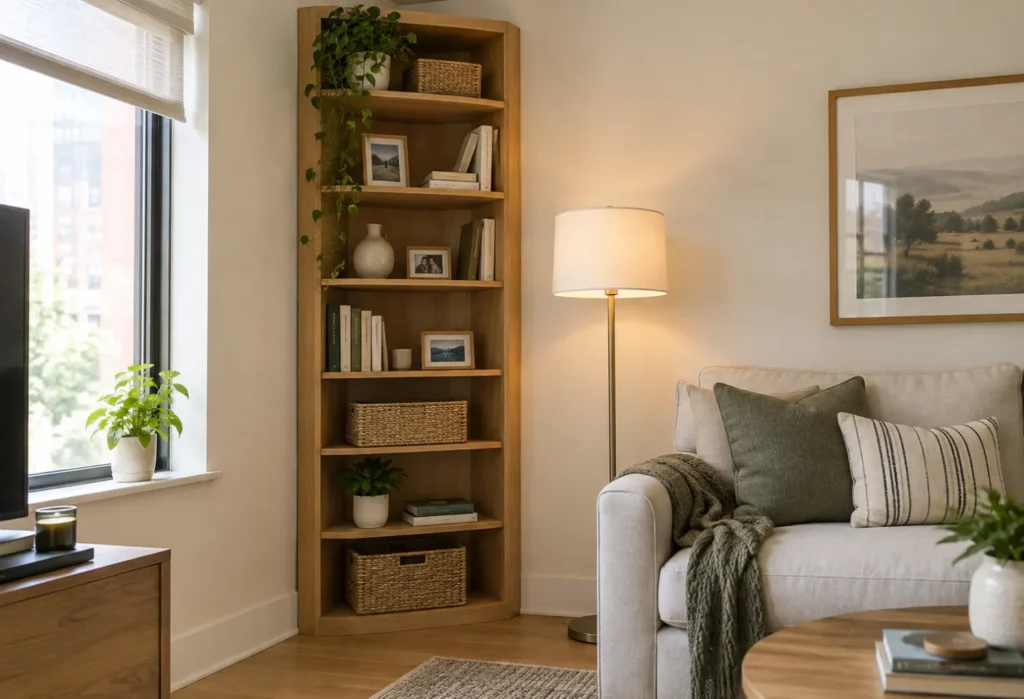
An unused corner can become a practical storage zone without interrupting the main seating area. A narrow bookcase makes use of vertical space for books, baskets, plants, and small decorative pieces. Because the storage rises rather than spreads outward, it can provide considerable capacity on a small footprint.
Choose a unit that is tall and relatively narrow, especially if the corner sits beside a sofa or doorway. Keep heavier books on lower shelves and lighter accessories higher up. Leaving some shelf space empty is useful because a completely packed bookcase can make a small room look busy.
6. Wall-Mounted Coat Hooks
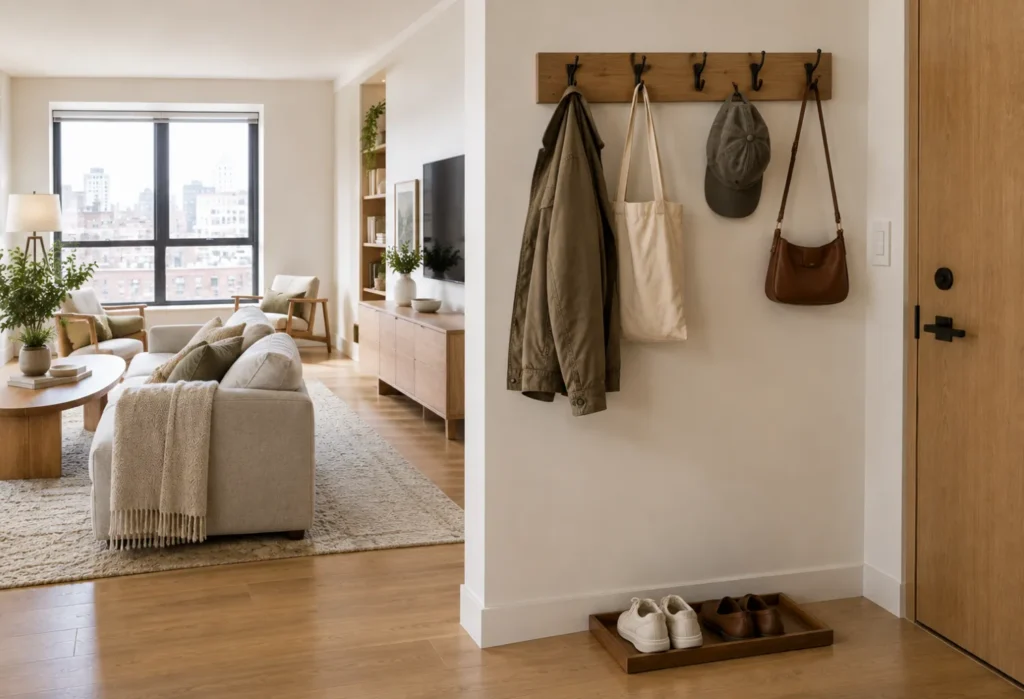
A pile of jackets, bags, and hats near the entrance can quickly spill into the living room. Wall-mounted hooks create a defined drop zone without requiring a freestanding coat rack. This is particularly helpful in apartments where the entryway and living area share the same limited floor space.
Use five or six sturdy hooks on a narrow wood rail or directly on the wall. Mount them at a comfortable height for everyday use, and leave enough space between hooks for bulky bags. A simple oak rail with matte metal hooks works nicely with Scandinavian, modern, or casual interiors.
7. Sofa With Hidden Storage
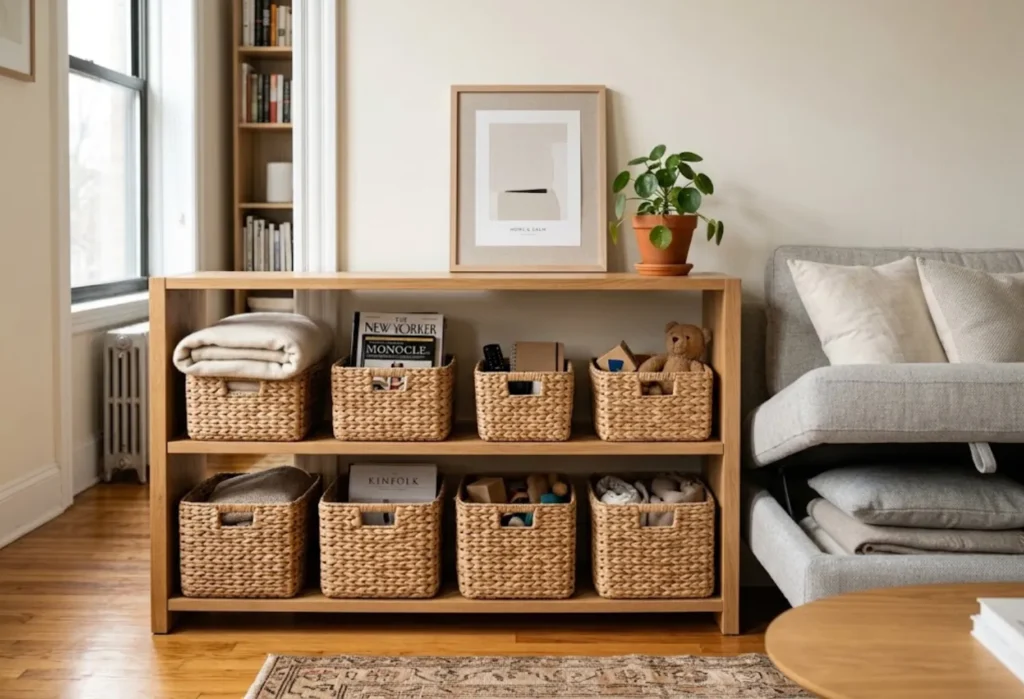
A sofa with a lift-up seat or built-in compartments can solve a major storage shortage without adding another cabinet. It provides an invisible place for spare cushions, throws, seasonal accessories, or items that are needed occasionally but do not deserve shelf space.
Check the actual storage capacity rather than relying on the appearance of the sofa. Make sure the mechanism is easy to open and that the sofa still leaves enough room for comfortable movement. In a narrow apartment, prioritize a compact sofa depth so storage does not come at the cost of walking space.
8. Vertical Picture Ledge
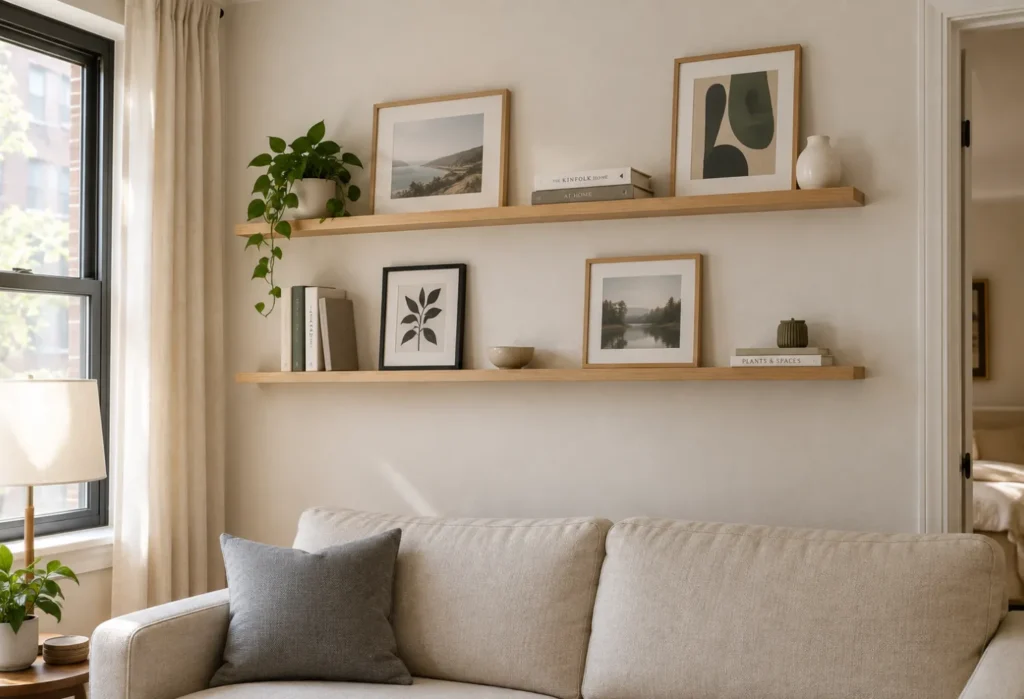
A small wall can often hold more useful storage than it first appears to offer. A narrow picture ledge provides a place for small framed prints, books, postcards, or lightweight decorative objects while keeping the floor completely clear. It also gives you a flexible way to refresh the room without drilling multiple holes.
Install one or two ledges above a sofa, desk, or low cabinet, keeping them high enough to avoid head contact. Combine artwork with a few thin books and one small plant. Avoid placing heavy objects on ledges unless they are specifically designed and secured for that load.
9. Nesting Side Tables
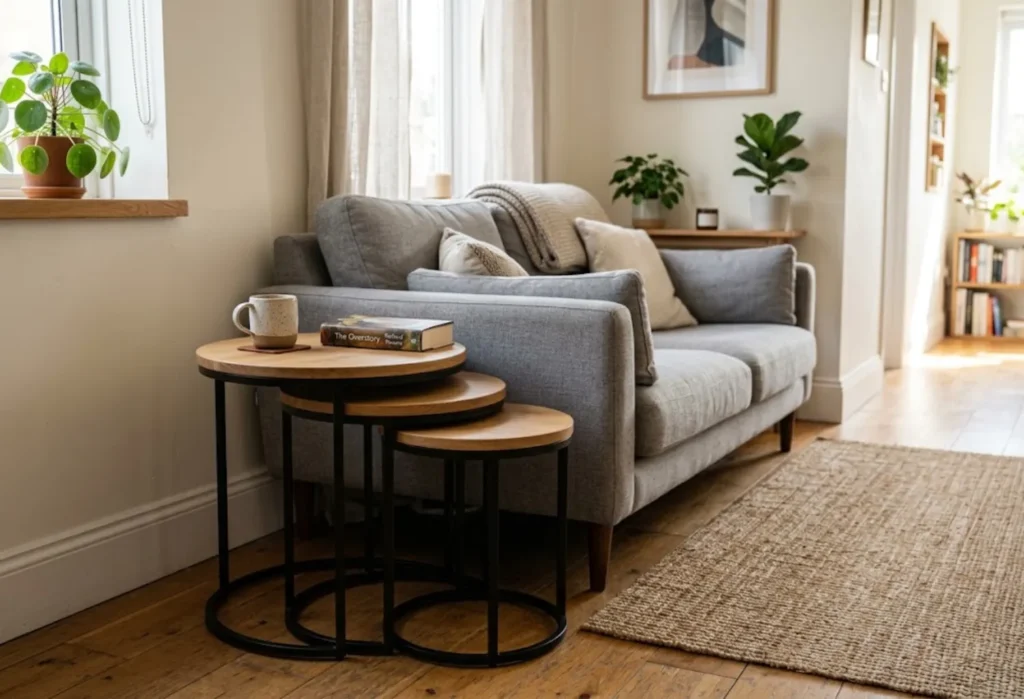
In a small apartment, permanent side tables can make the seating area feel crowded. Nesting tables solve this by allowing two or three surfaces to occupy almost the footprint of one table. Pull the smaller tables out only when guests need extra places for drinks, books, or snacks.
Choose tables with different heights so they slide neatly underneath one another. Round or softly curved tops can be useful around a compact sofa because they reduce sharp corners in busy walking areas. Wood tops with slim metal legs keep the furniture visually light.
10. A 450-Square-Foot Living Room Layout
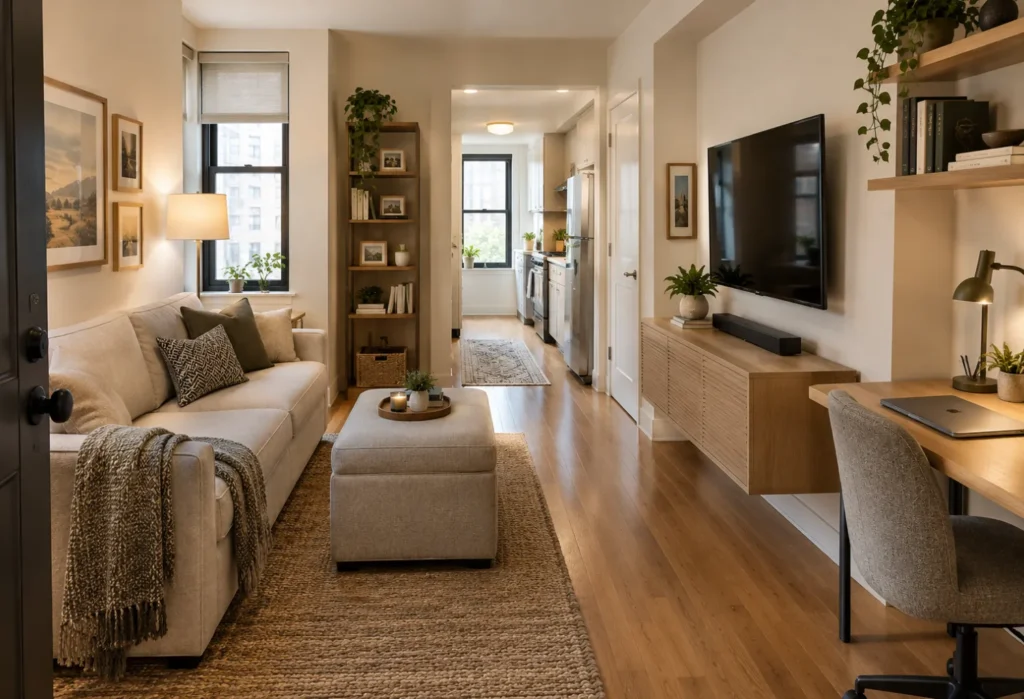
Imagine a 450-square-foot apartment where the living room also handles the entry, television, and occasional work-from-home needs. A deep sofa, large coffee table, and wide bookcase would quickly narrow the main walking route. Replacing those pieces with a compact sofa, storage ottoman, and tall narrow shelving leaves more open floor.
The lesson is to organize around circulation first, then add decorative storage. Keep the main route from the entrance to the kitchen clear, and use walls for vertical storage. If your apartment has a similar shared layout, measure the walking paths before purchasing furniture.
11. Under-Sofa Storage Boxes
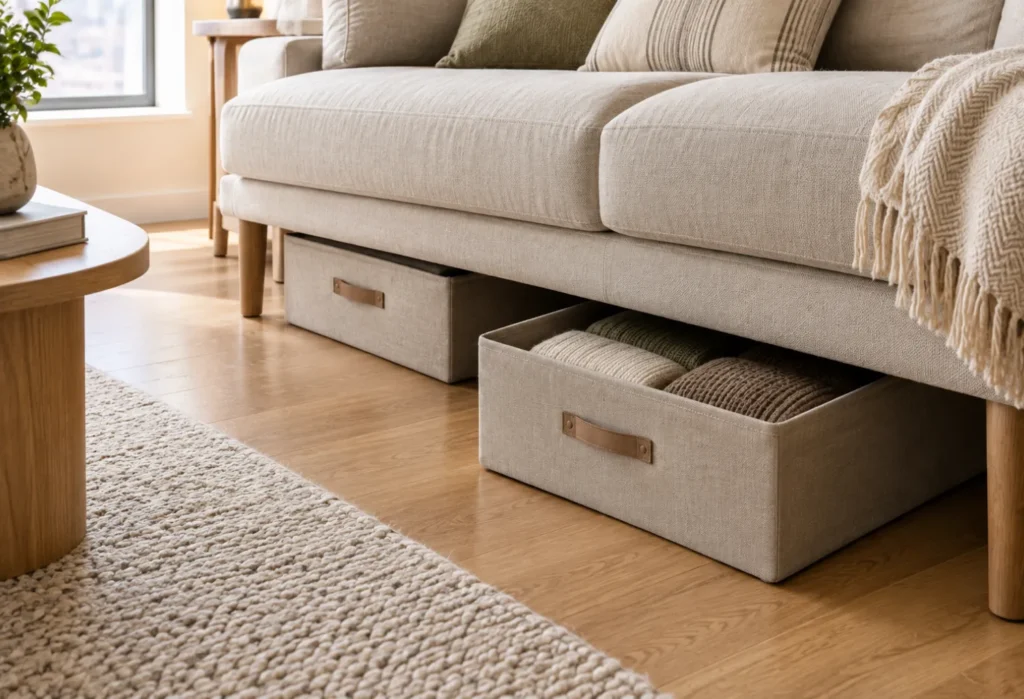
The empty area beneath a raised sofa can become useful storage instead of collecting dust. Low boxes or flat containers can hold extra linens, seasonal textiles, rarely used electronics, or small household supplies. Since the storage remains hidden from normal eye level, the room can stay visually calm.
Measure the clearance beneath your sofa before buying containers. Choose lidded boxes that slide easily and have handles or cutout grips. If the sofa has very little clearance, use shallow fabric organizers rather than forcing rigid boxes into the space.
12. Narrow Bar Cart Station
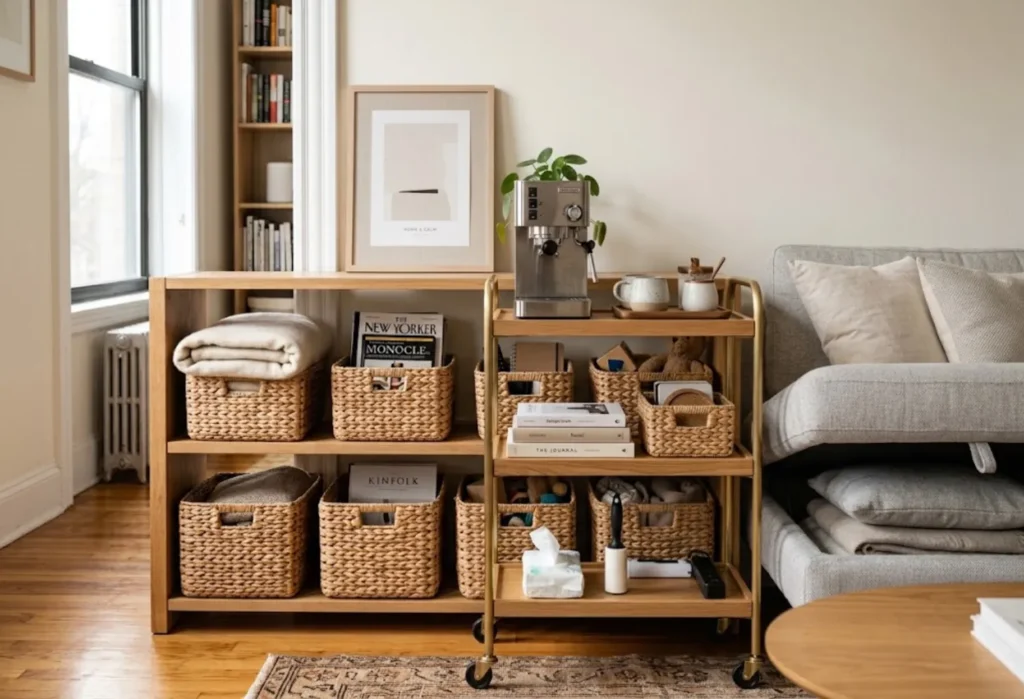
A compact bar cart can provide useful storage beyond drinks. Its shelves can hold coffee supplies, books, candles, serving pieces, or small electronics while remaining easy to move when the room needs to change. This makes it a useful choice for renters who cannot add permanent cabinetry.
Pick a cart with a footprint that fits beside the sofa or against a short wall without blocking outlets or pathways. Use the upper level for attractive daily items and lower levels for baskets or less decorative supplies. Wheels make the cart especially practical in flexible apartment layouts.
13. Cable Management Box
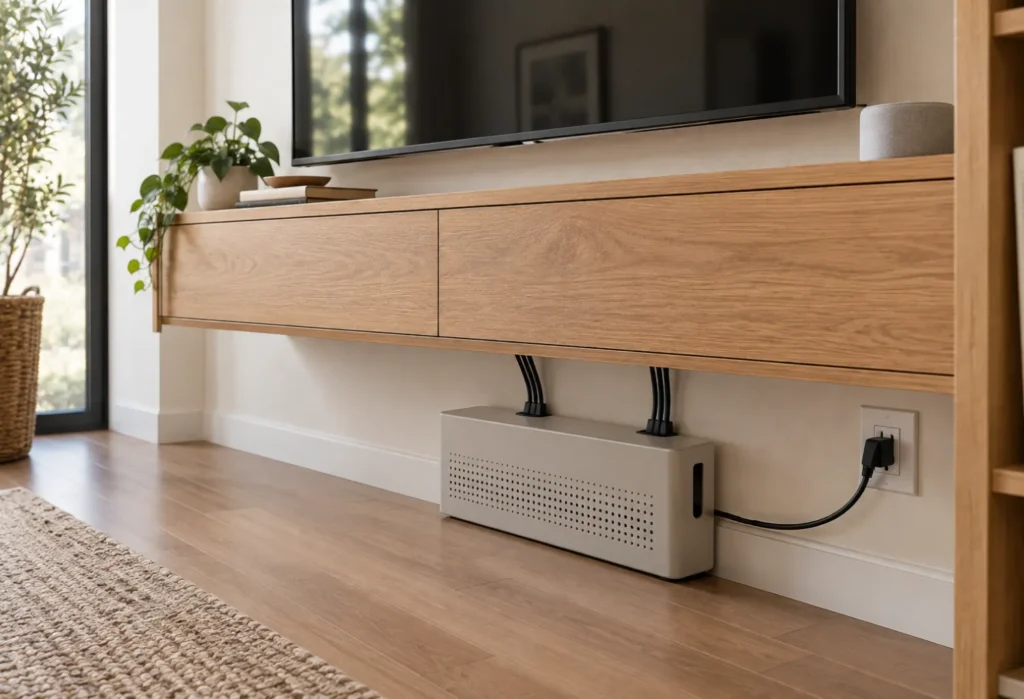
Television and charging cables can create a messy visual line across an otherwise organized living room. A cable management box hides power strips and excess cord length while keeping the area around electronics easier to clean. It is a small organizational change, but it can make the media zone look considerably neater.
Choose a ventilated box large enough for your power strip and cable adapters. Keep cables separated by purpose where possible, and label chargers that are easy to confuse. Never cover ventilation openings on electrical equipment or pack cords tightly enough to create heat concerns.
14. Large Mirror Above a Low Cabinet
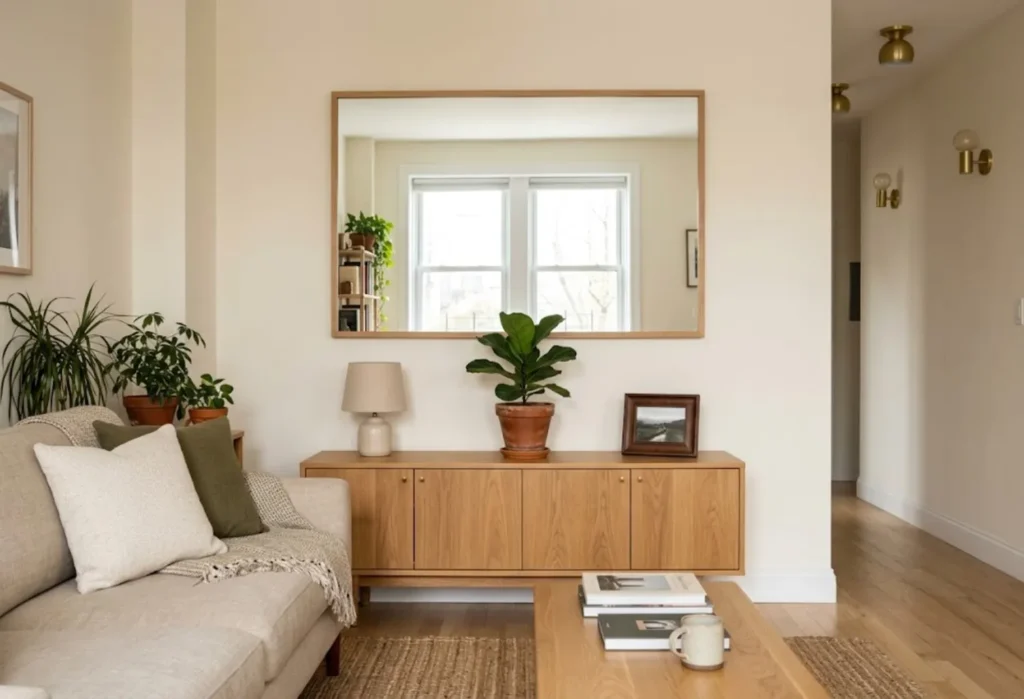
A large mirror can make a compact room feel brighter by reflecting daylight and nearby light sources. Placing it above a low cabinet also uses vertical wall space without adding another piece of furniture. The result is a storage zone that serves both a practical and decorative purpose.
Choose a mirror with a slim frame in black, natural wood, brass, or another finish already present in the room. Position it where it reflects a window, lamp, or bright wall rather than a cluttered corner. Keep the cabinet surface relatively open so the reflection does not multiply visual clutter.
15. Drawer Dividers
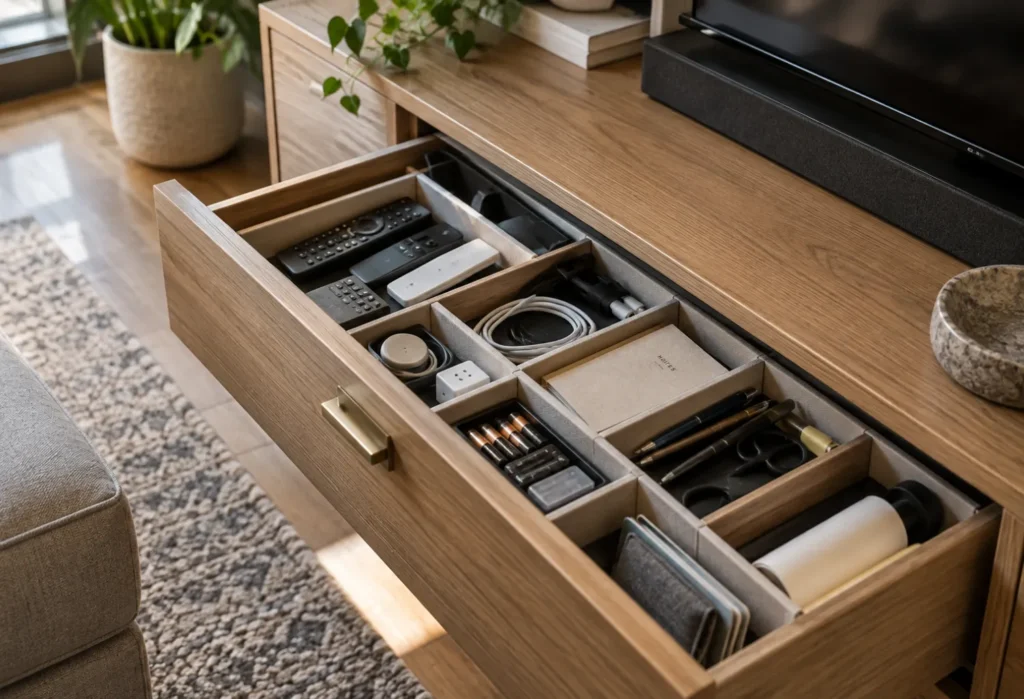
Small drawers often become catch-all spaces for batteries, remotes, charging cables, stationery, and miscellaneous items. Drawer dividers create separate sections so each category has a predictable place. This works particularly well in a media console, sideboard, or storage cabinet.
Use adjustable dividers so the compartments match the items you actually keep. Give frequently used objects the easiest-to-reach sections and group similar accessories together. Avoid creating too many tiny compartments because that can make the drawer harder to maintain.
16. Floor Lamp With Shelf
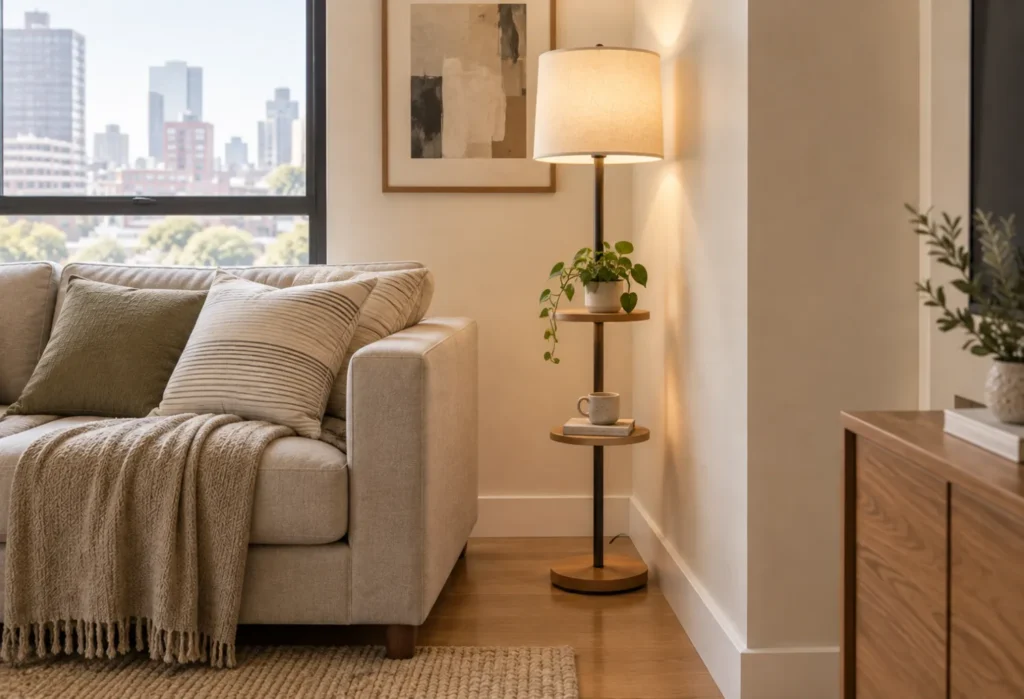
A traditional floor lamp and separate side table can occupy more floor area than expected. A floor lamp with a built-in shelf combines lighting and surface space in one vertical piece. The shelf can hold a small book, phone, plant, or decorative object without requiring another table.
Look for a narrow design with a stable base and a shelf positioned at a useful height beside the sofa. Warm white lighting around 2700K–3000K generally creates a pleasant evening setting. Keep the shelf lightly styled so the lamp remains practical rather than becoming another clutter point.
17. Behind-the-Door Organizer
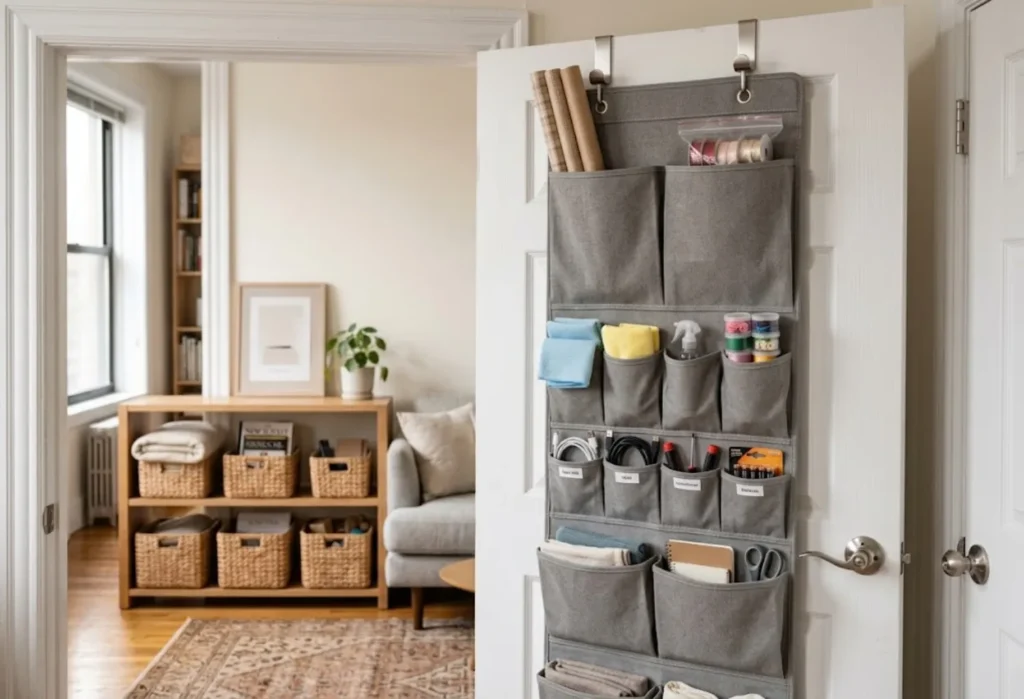
The back of a living-room door is often unused space that can hold surprisingly many small items. An over-door organizer can store wrapping supplies, cleaning accessories, craft materials, pet items, or other belongings that do not need to remain visible.
Select a slim organizer that does not interfere with the door frame or nearby furniture. Fabric pockets are useful for lightweight items, while stronger models can handle heavier supplies. Check the door’s clearance before installation, especially in older apartments with narrow frames.
18. Modular Cube Storage
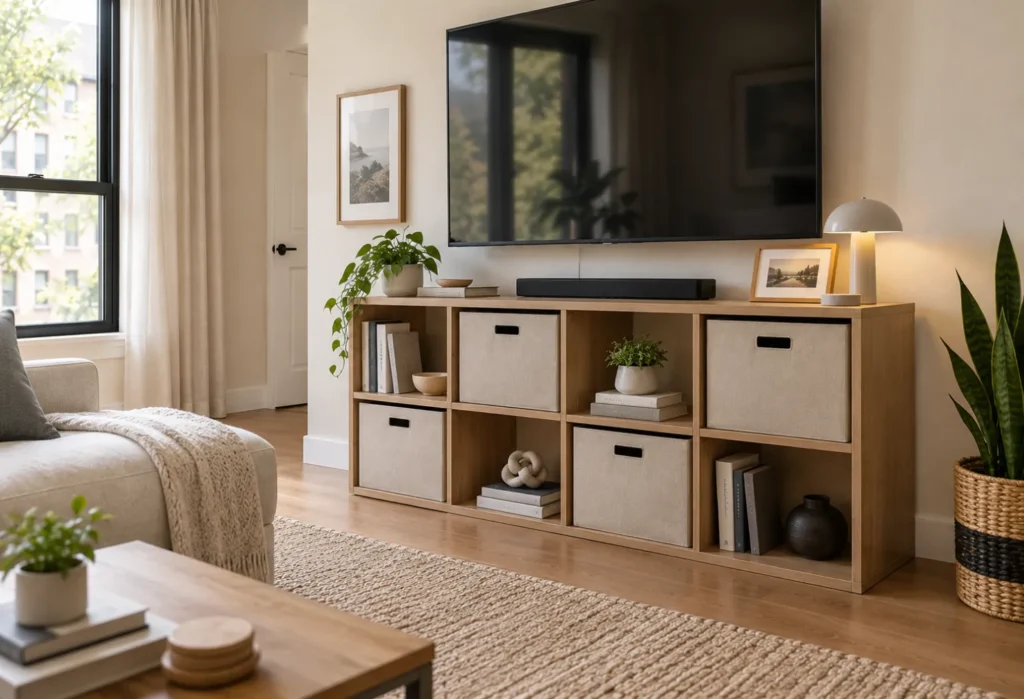
Modular cube storage gives you flexibility as your apartment needs change. Cubes can hold books openly while fabric or woven inserts conceal less attractive supplies. The same unit can function as a media console, room divider, display shelf, or general storage wall depending on its size and placement.
For a small living room, a low horizontal arrangement usually feels less imposing than a tall wall of cubes. Mix open and closed compartments rather than filling every section. Keep the largest visual objects toward the bottom and smaller decorative pieces higher up.
19. Foldable Guest Seating
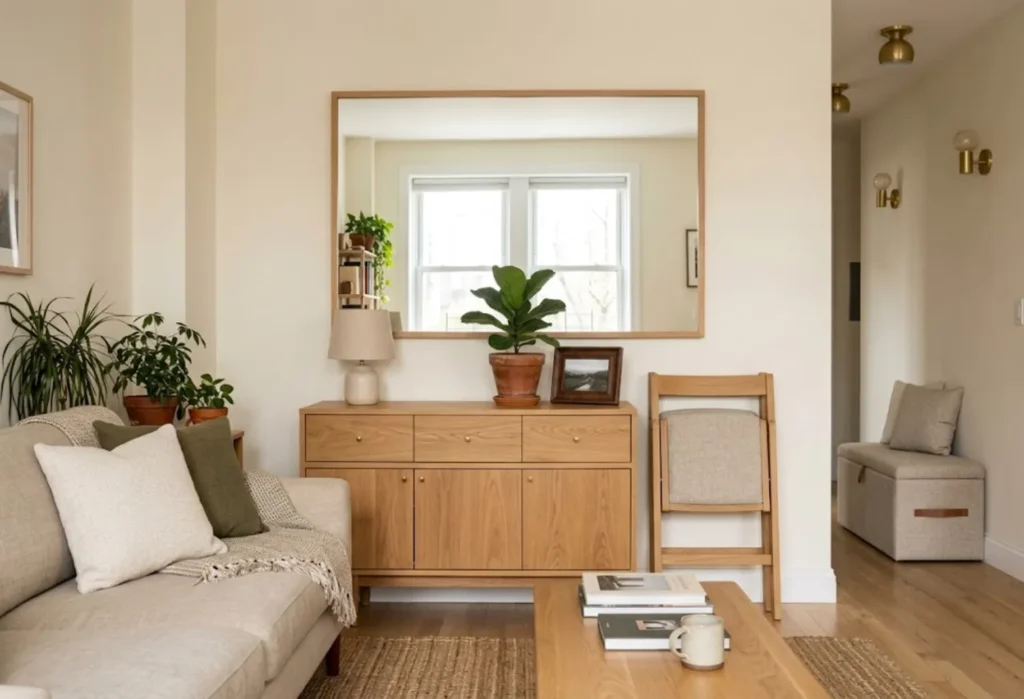
Extra chairs can create a storage problem when they are rarely used. Foldable guest seating gives you additional places to sit without permanently occupying valuable floor space. When visitors leave, the chairs can be folded and stored inside a closet, behind a door, or beside a slim cabinet.
Choose sturdy folding chairs with comfortable backs rather than lightweight temporary-looking models. Neutral upholstery, natural wood, or simple black frames can blend with most living-room furniture. Keep the storage location easy to reach so bringing out the chairs does not become a chore.
20. Closed Storage Bench
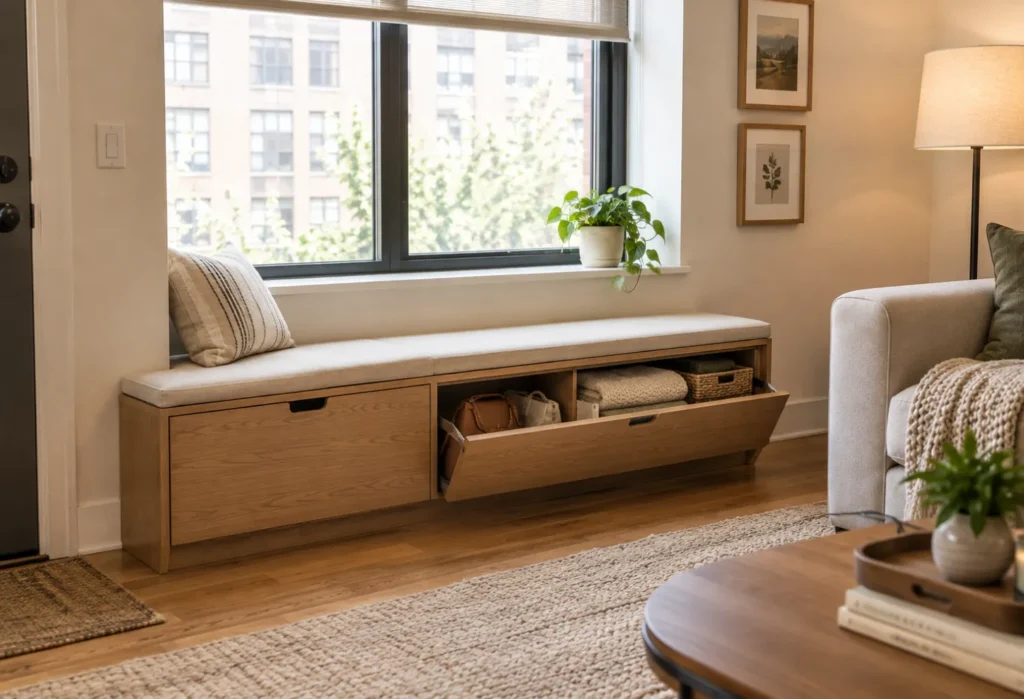
A storage bench can provide seating, hidden organization, and a visual anchor along a wall. It works especially well beneath a window or near an apartment entrance where a full cabinet may feel too large. Closed compartments keep shoes, bags, blankets, or household supplies out of sight.
Measure the bench carefully against the wall and nearby furniture, leaving enough clearance for doors and walking routes. A padded cream or beige seat can soften a room with wood furniture, while a darker fabric creates contrast. Choose lift-up or front-opening storage based on how much access the space requires.
Comparison Table
| Idea | Best For | Why I Recommend It |
| Storage Ottoman | Small seating areas | Adds hidden storage without another cabinet |
| Floating Media Cabinet | TV zones | Keeps floor space visually open |
| Slim Storage Console | Narrow walls | Provides useful storage with little depth |
| Sofa With Hidden Storage | Serious storage shortages | Uses space already occupied by the sofa |
| Modular Cube Storage | Changing needs | Can be rearranged as your apartment changes |
Conclusion
Good 20 Living Room Organization Apartment planning is less about adding more furniture and more about giving every piece a clear purpose. Start with your biggest problem—limited storage, crowded pathways, or too little seating—and choose one or two ideas that directly address it. From there, build around your existing style, colors, and daily routine so the room stays organized without feeling overly arranged.