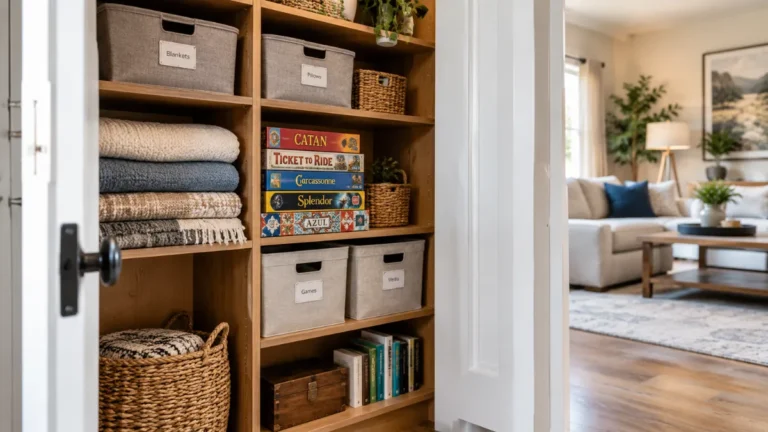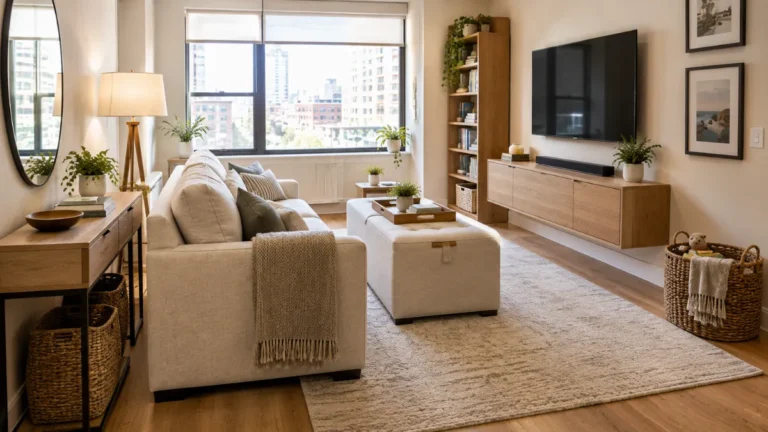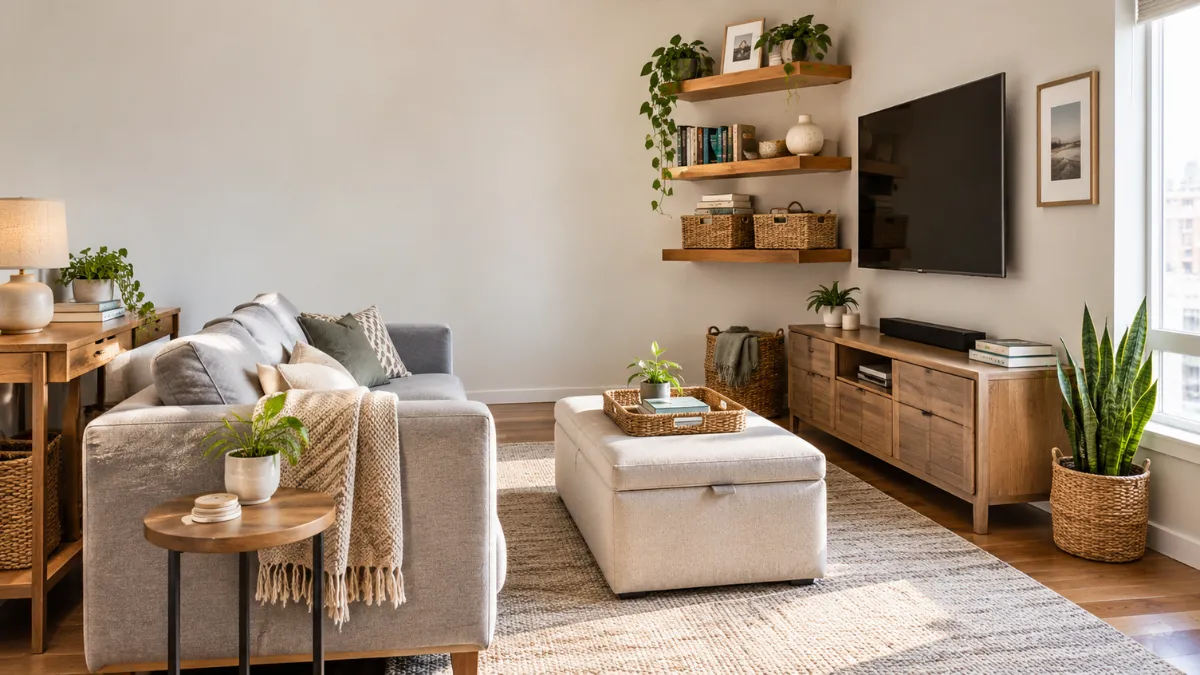
25 Small Living Room Organization Ideas for a Tidy Home
A small living room can become cluttered quickly. A few books on the coffee table, blankets on the sofa, toys on the floor, and everyday electronics can make the entire space feel crowded. The good news is that you don’t need a larger room to create better organization—you need storage that works with the space you already have.
These 25 Small Living Room Organization Ideas focus on practical storage, smarter furniture placement, and attractive ways to keep everyday items under control without making the room feel overfilled.
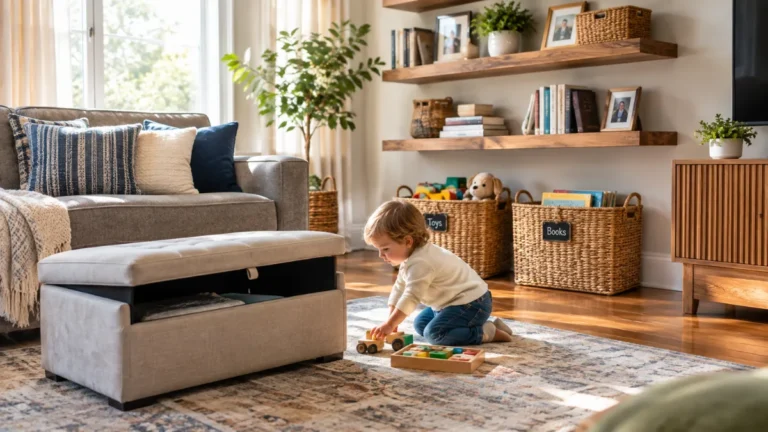
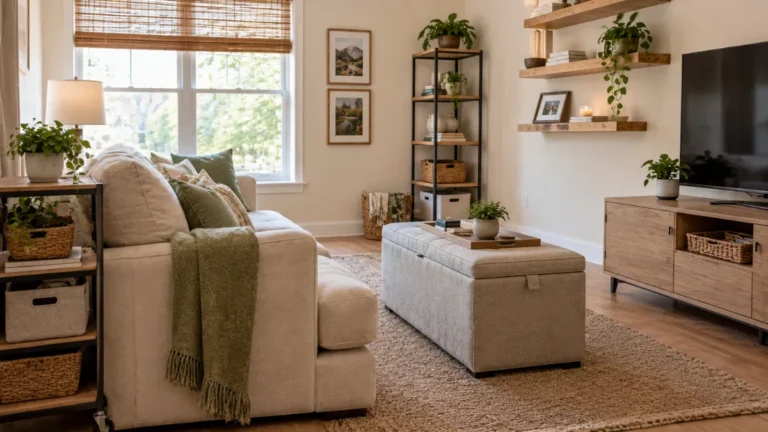
1. Storage Ottoman
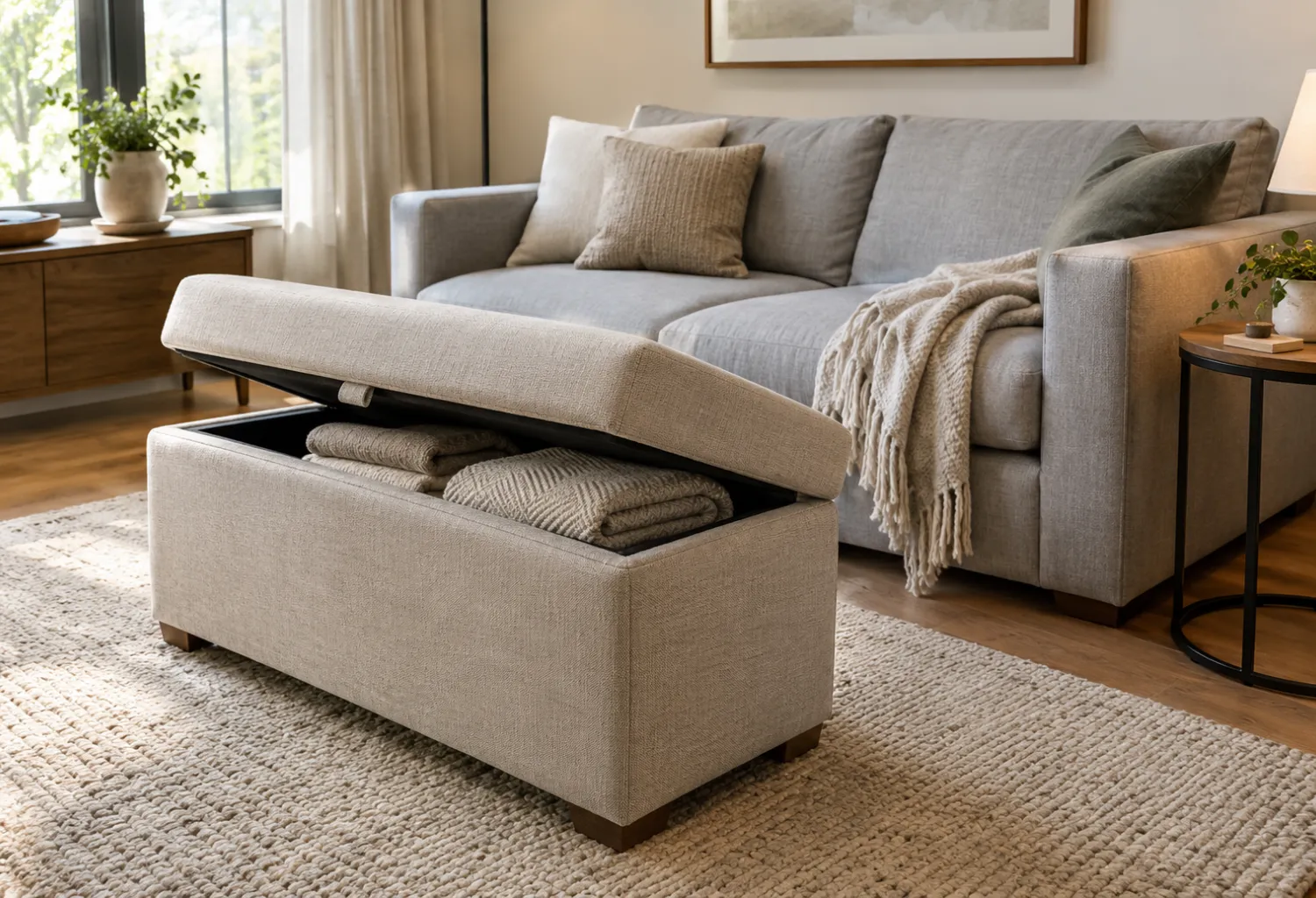
A storage ottoman gives a small living room two useful functions in one piece of furniture. Use it as a footrest or extra seating while keeping blankets, magazines, board games, or remote controls inside.
Choose a low-profile ottoman in a fabric that complements your sofa. A warm beige, soft gray, or muted olive works especially well with neutral living rooms.
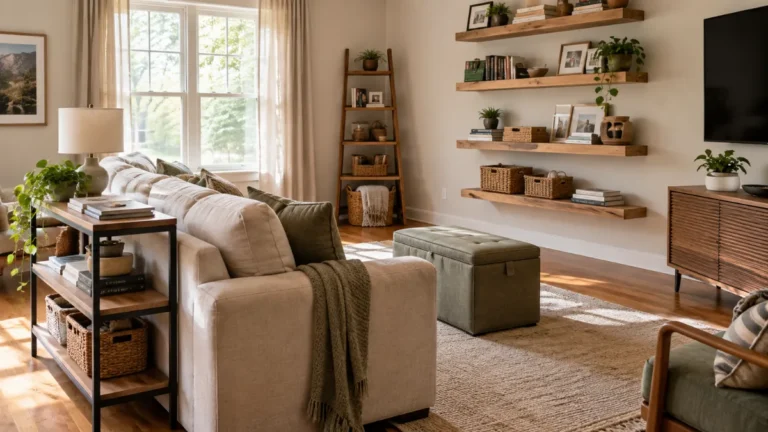
2. Floating Wall Shelves
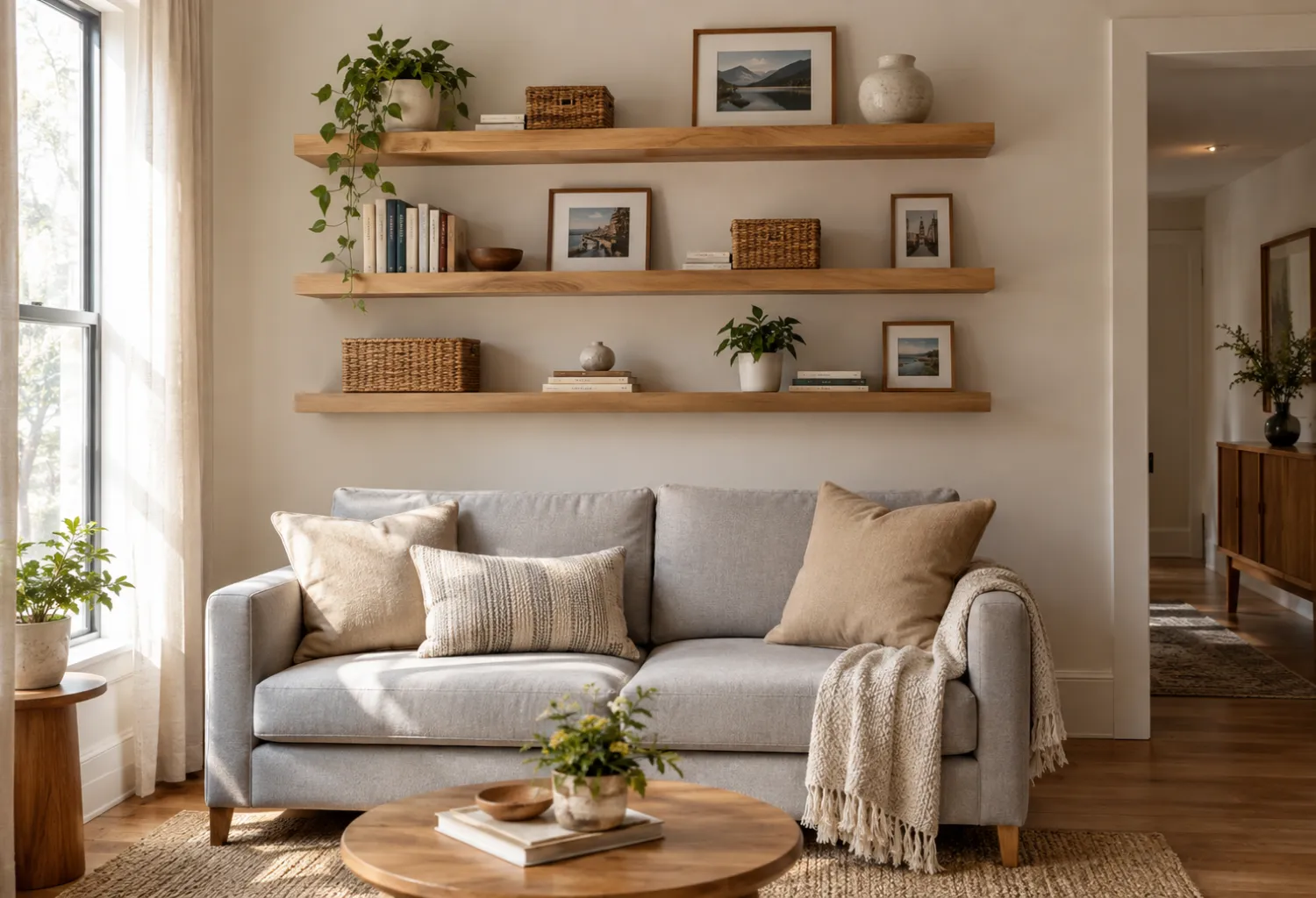
Floating shelves use vertical wall space without taking up valuable floor area. Install two or three shelves above a sofa, console, or unused section of wall for books, framed photos, small baskets, and decorative objects.
Keep the arrangement visually light by leaving some open space between items. Mixing wood shelves with white or cream walls can add warmth without making a compact room feel busy.
3. Slim Console Table
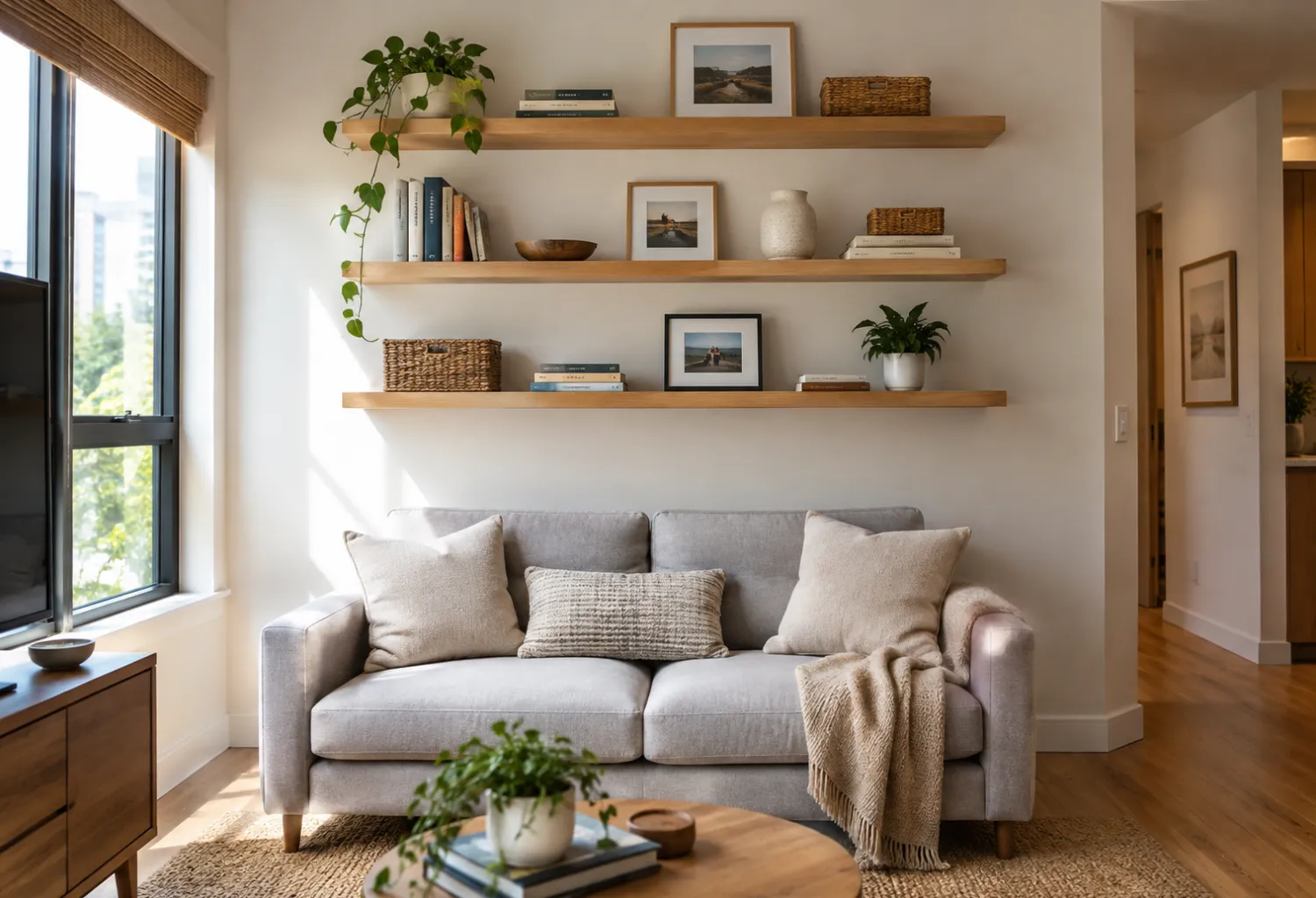
A narrow console table can turn an otherwise wasted wall into useful storage. Look for a design that is shallow enough to preserve walking space.
Use the surface for a small lamp and a few decorative pieces, while baskets underneath can hold blankets, children’s items, or electronics. A console with drawers is particularly useful for small objects that tend to create visual clutter.
4. Baskets Under the Coffee Table
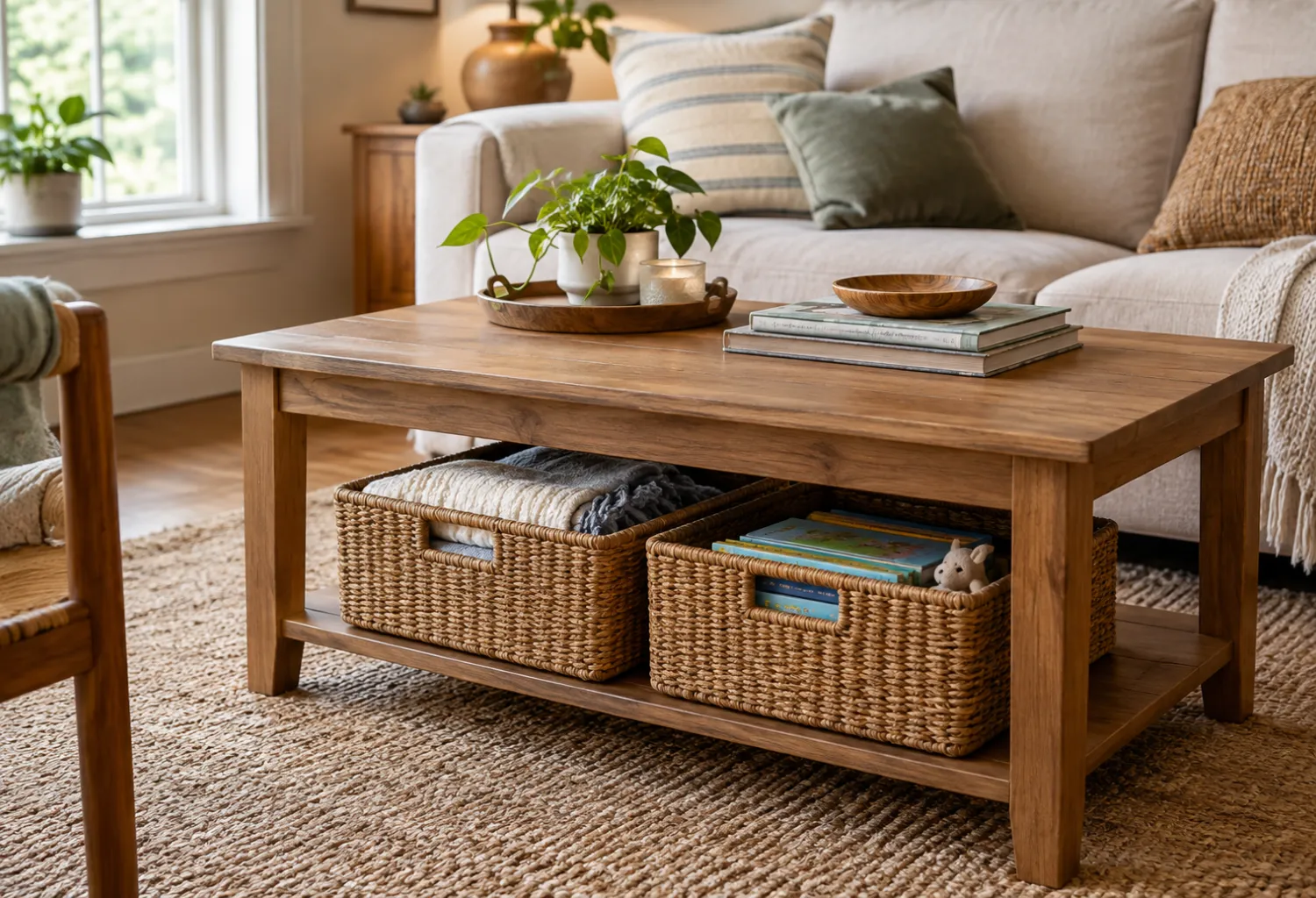
The space beneath a coffee table is often overlooked. Low woven baskets can fit underneath while keeping frequently used items hidden.
Use one basket for throws and another for books or children’s toys. Woven materials also introduce texture, making the storage look intentional rather than purely functional.
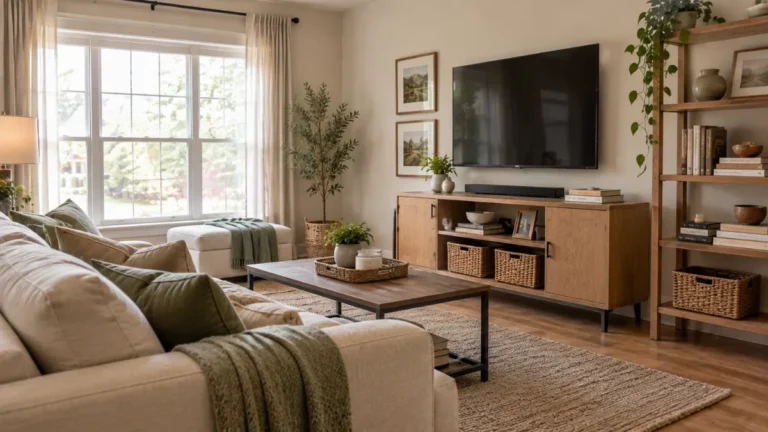
5. Wall-Mounted TV
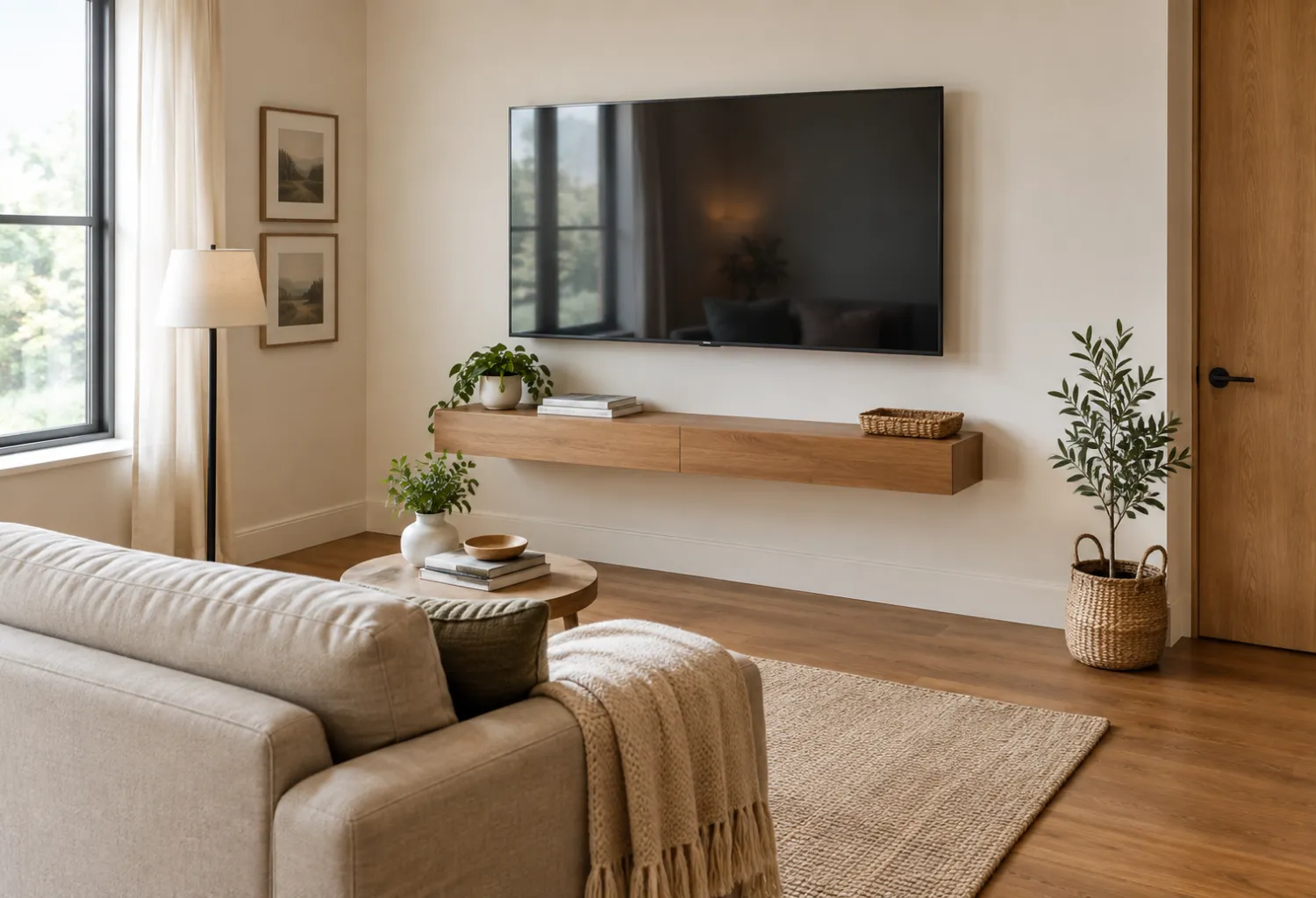
A wall-mounted television can free up considerable floor space in a small living room. Without a bulky TV stand, you have more flexibility when positioning the sofa and other furniture.
Hide visible cords with an appropriate cable-management system and keep the wall underneath relatively uncluttered. A slim floating media shelf can provide just enough storage for a streaming device or game console.
6. Closed Storage Cabinet
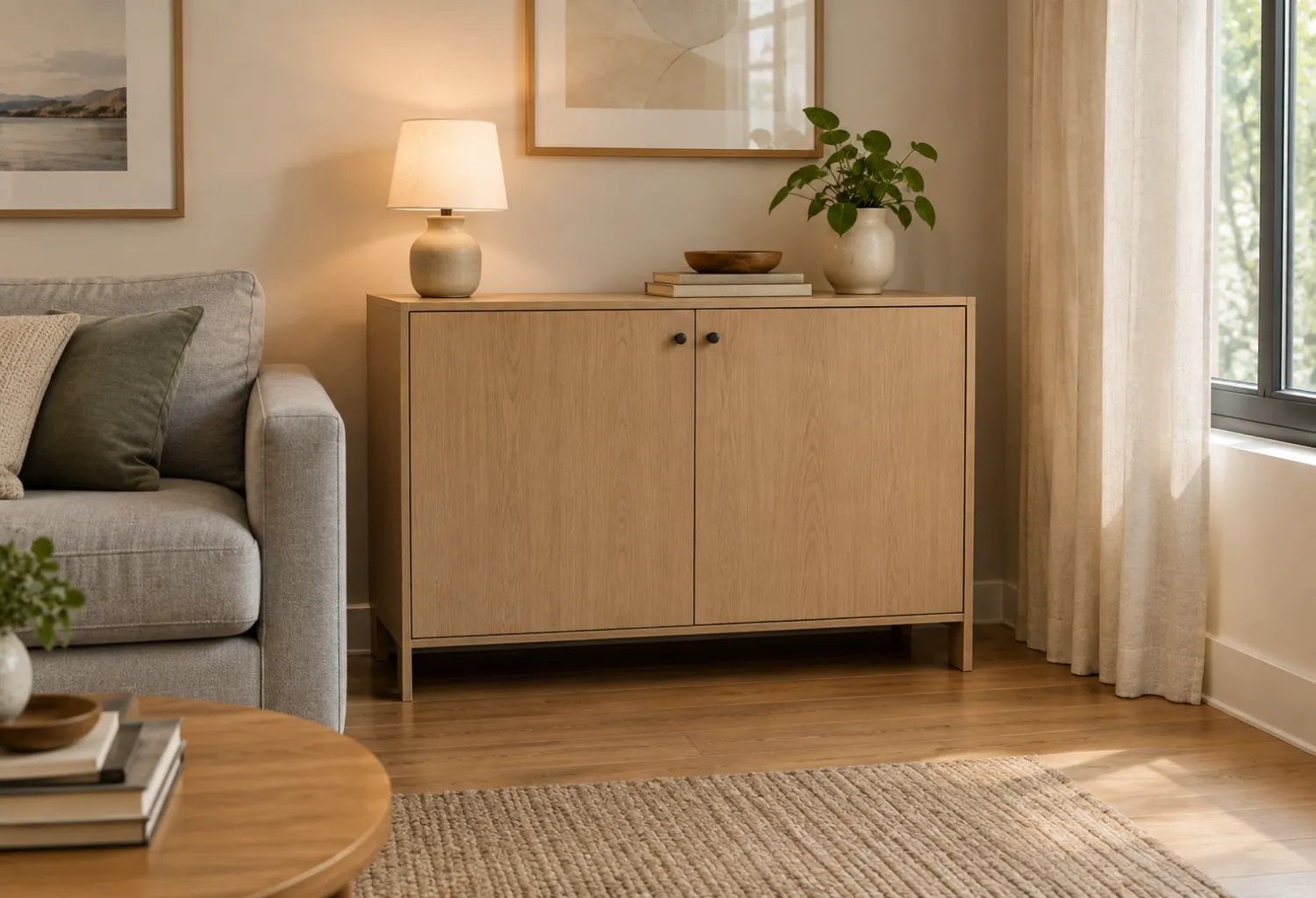
Open shelving is attractive, but too many visible objects can make a small room feel chaotic. A compact closed cabinet provides a place to hide items that don’t need to be displayed.
Use it for extra electronics, paperwork, games, children’s supplies, or miscellaneous household items. Choose a cabinet with clean lines so it blends naturally with the rest of the room.
7. Narrow Bookcase
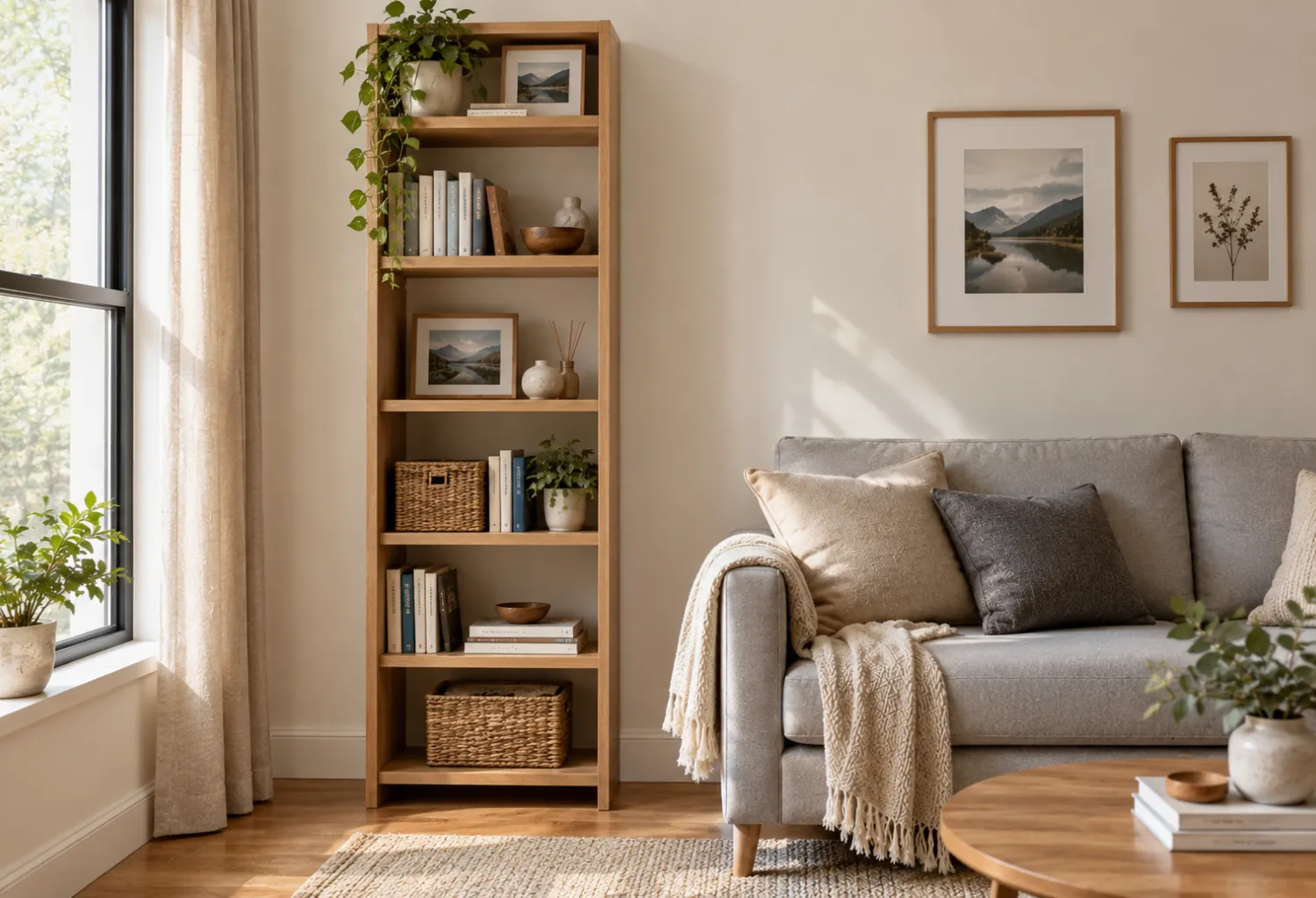
A tall, narrow bookcase can provide substantial storage while using very little floor width. This is particularly useful in apartments or living rooms where every few inches matter.
Arrange books vertically and horizontally, then add a few baskets to conceal smaller items. Leaving some shelves partially empty keeps the bookcase from looking visually heavy.
8. Sofa With Storage
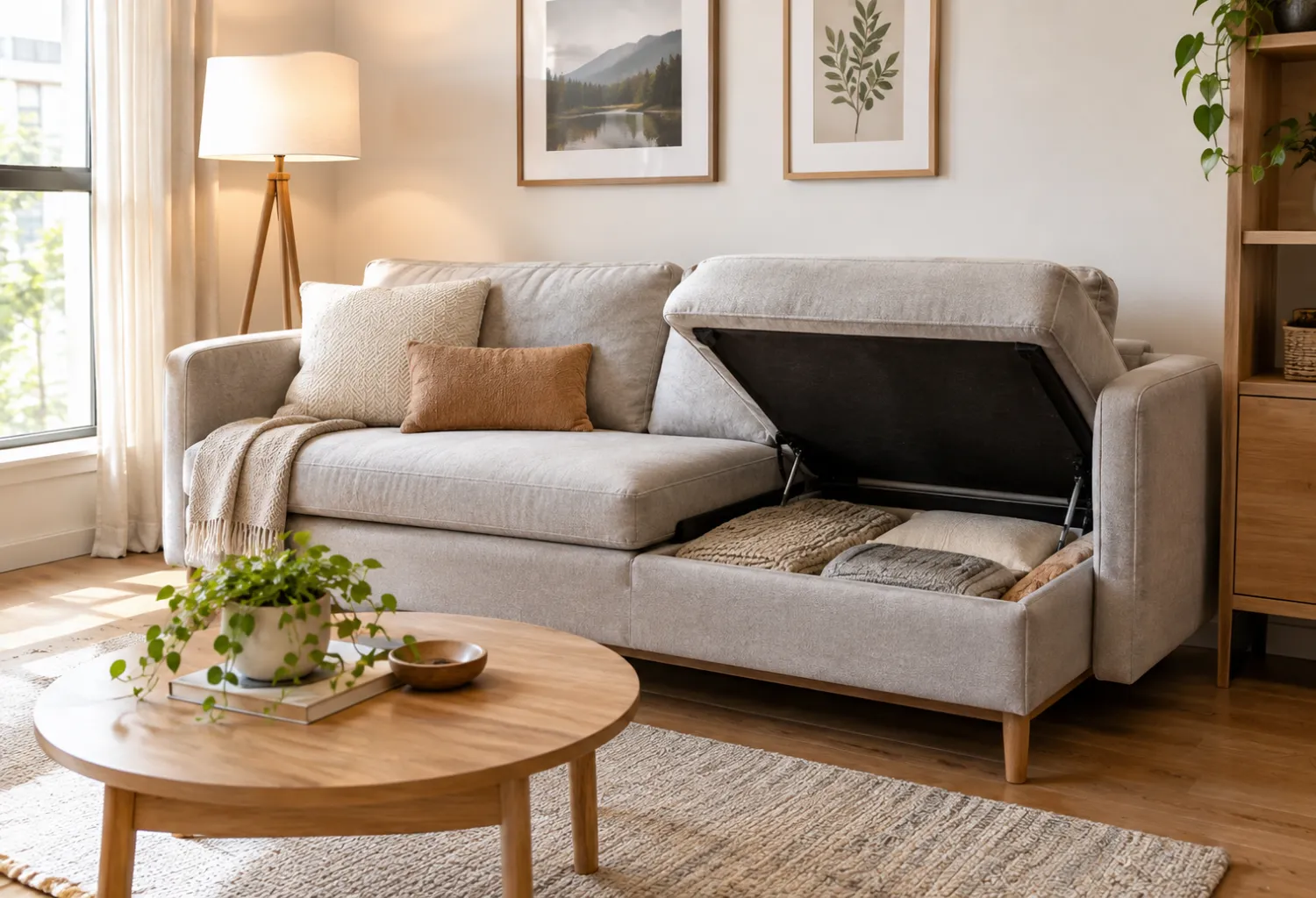
A sofa with built-in storage can be a smart choice when you’re furnishing a small living room from scratch. Some designs include lift-up seats or hidden compartments beneath the cushions.
This hidden space is ideal for seasonal blankets, pillows, or rarely used accessories. Choose a simple silhouette rather than an oversized sectional if floor space is limited.
9. Behind-the-Sofa Storage
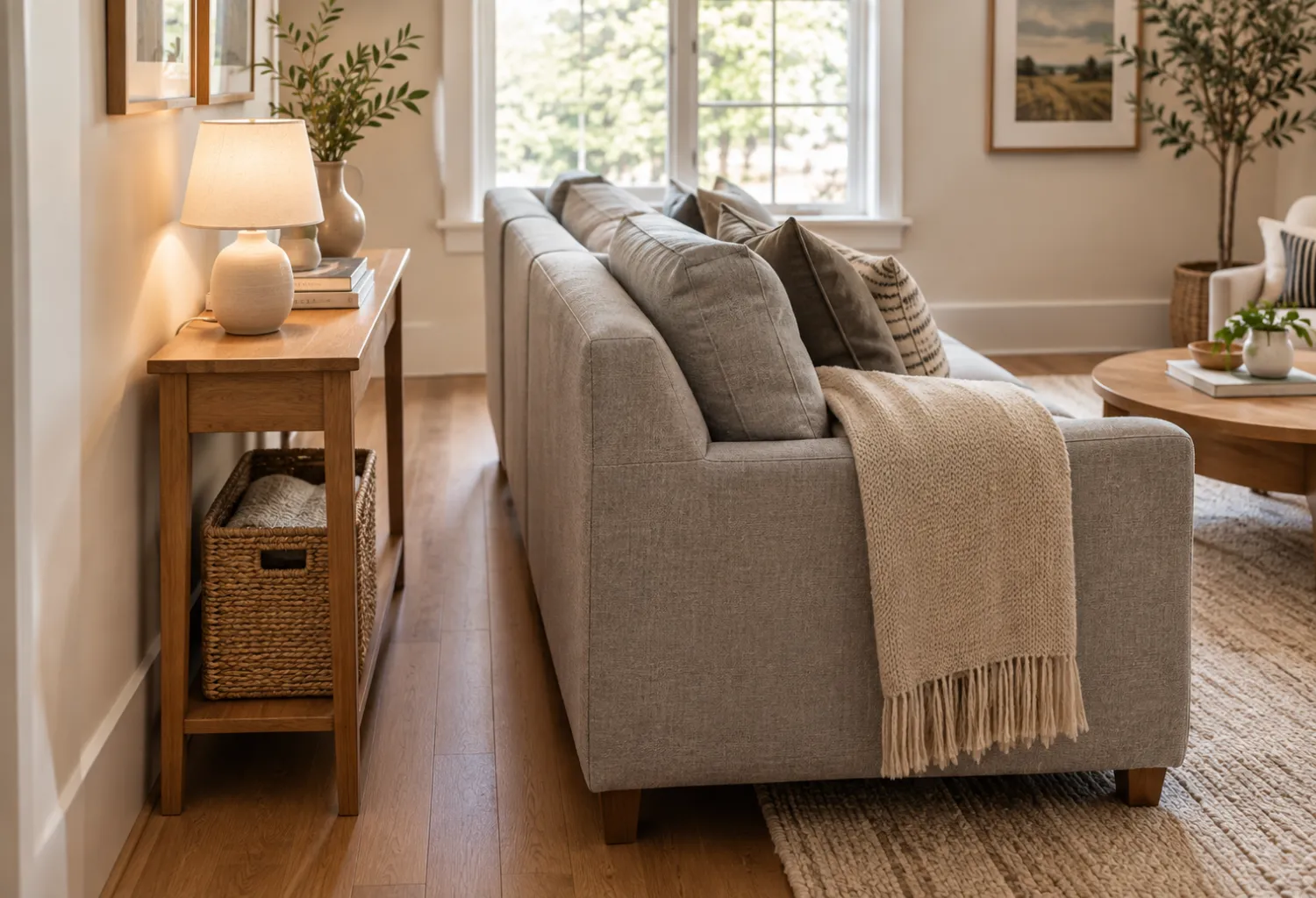
The narrow area behind a sofa can become useful storage when the furniture doesn’t sit directly against a wall.
A slim table or narrow shelving unit can hold lamps, books, baskets, and decorative accessories. Keep the furniture low enough that it doesn’t create a visual barrier across the room.
10. Wall-Mounted Baskets
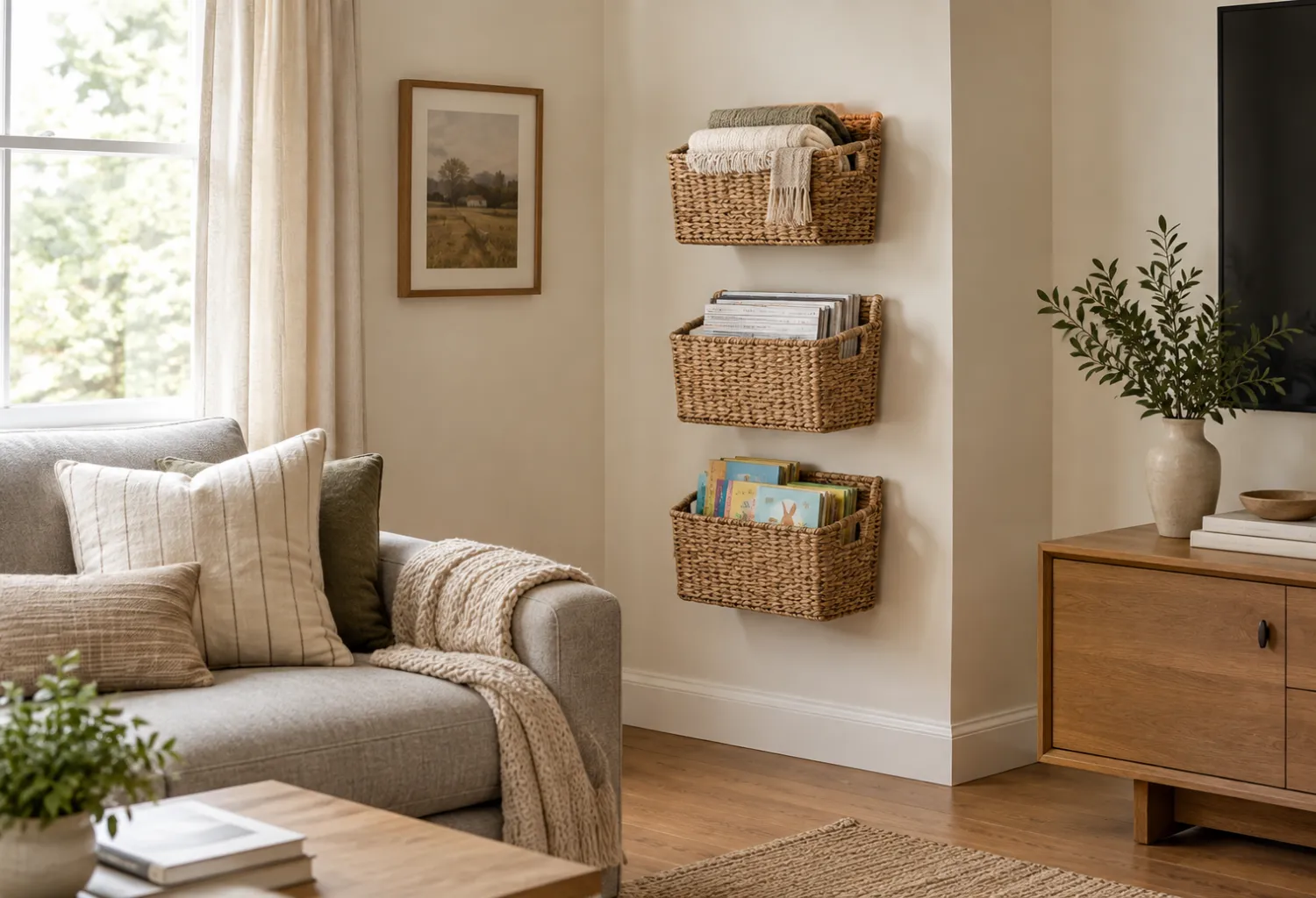
Wall-mounted baskets offer a practical solution for items that normally end up on the floor. They can hold magazines, lightweight blankets, children’s books, or everyday accessories.
Use matching baskets for a cleaner appearance, or choose natural woven baskets if your living room has a farmhouse, coastal, or relaxed organic style.
11. Furniture With Hidden Drawers
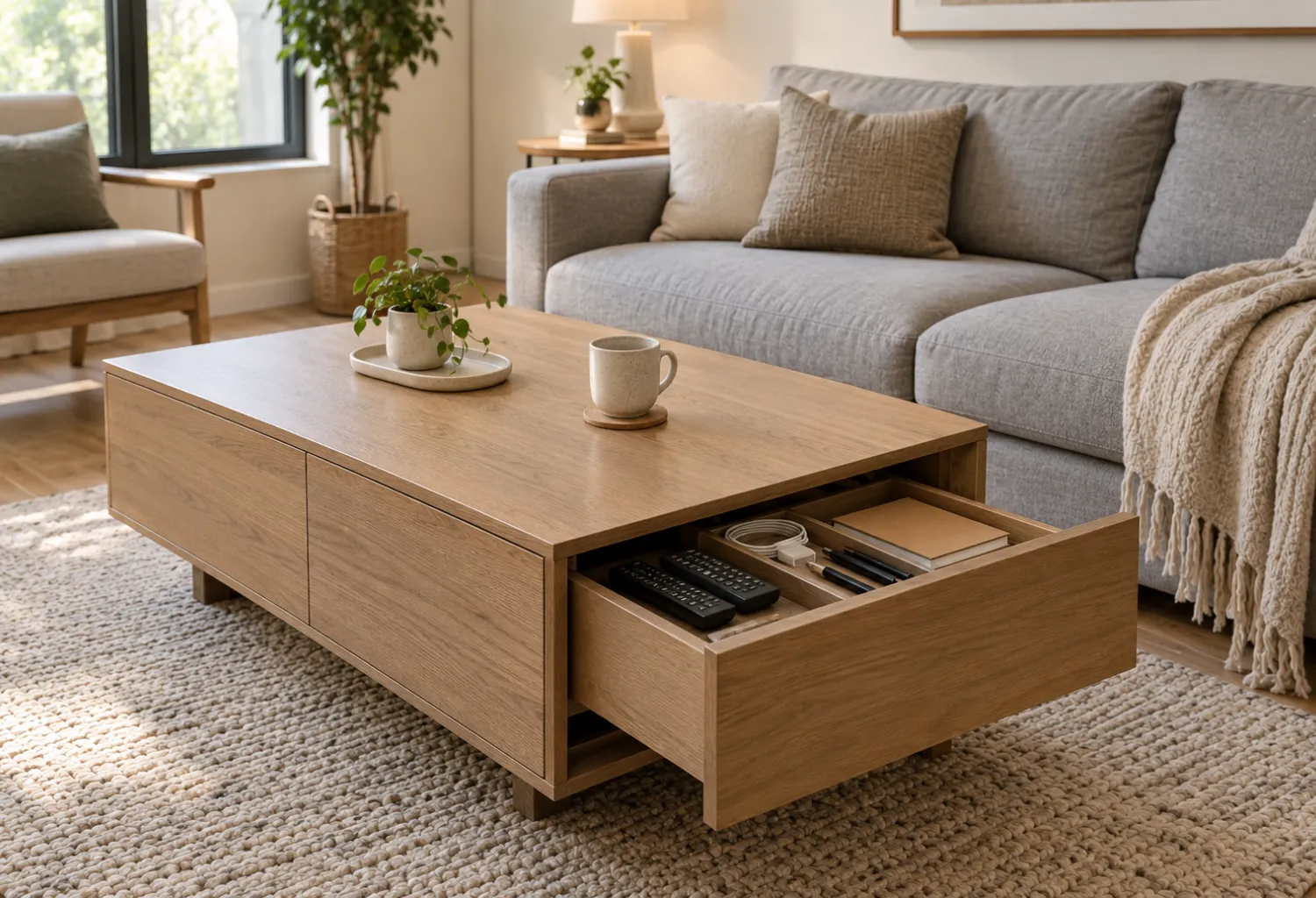
Small living rooms benefit from furniture that doesn’t reveal everything it stores. A coffee table, side table, or media console with drawers can keep small objects neatly contained.
Use drawers for remotes, chargers, notebooks, pens, and other items that are useful but visually distracting when left out.
12. Corner Shelving
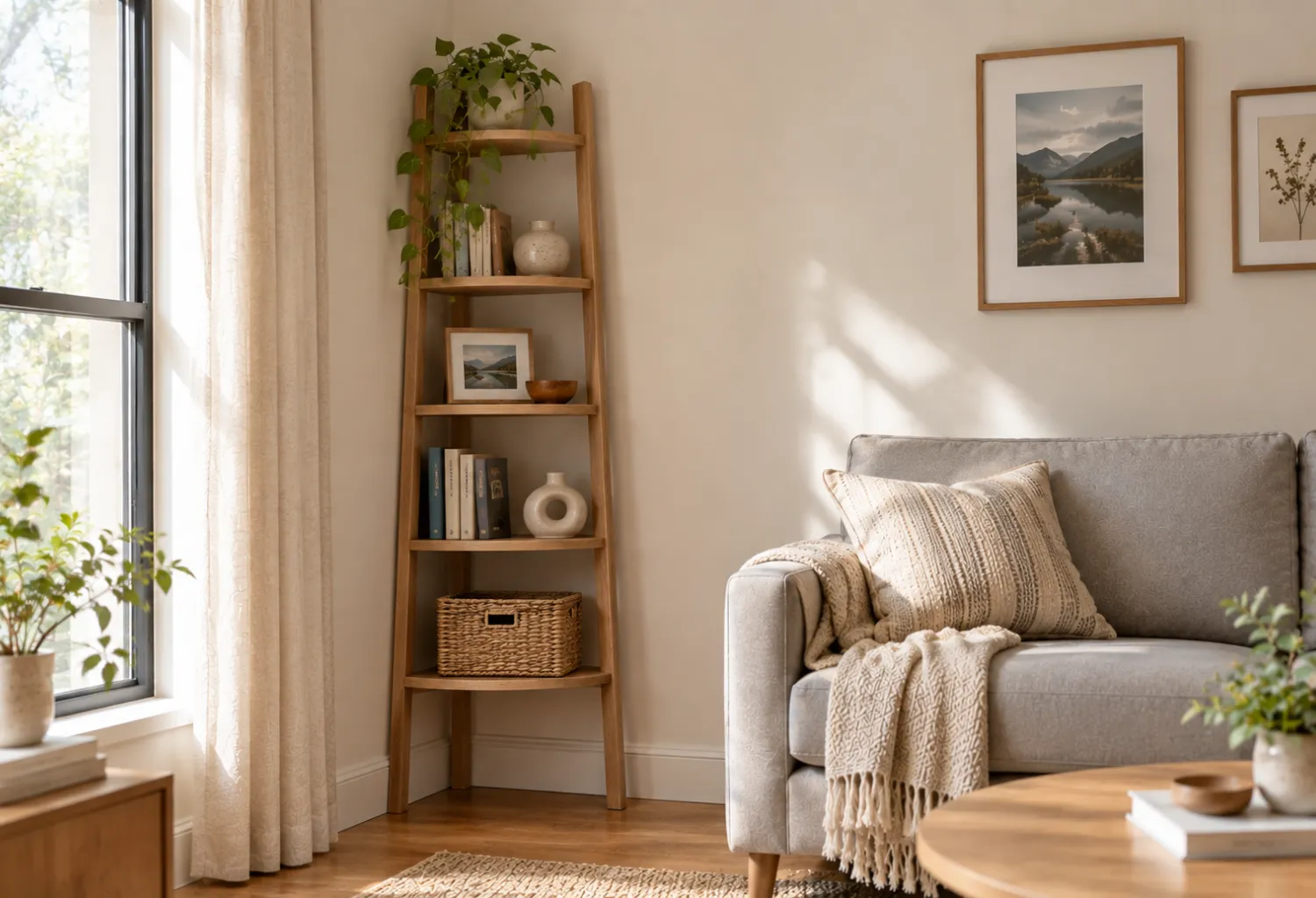
Corners often become dead zones in compact living rooms. A corner shelf can turn that unused area into vertical storage without interfering with the main furniture arrangement.
Use it for books, plants, framed artwork, or small storage baskets. A ladder-style corner shelf is especially effective because its open design keeps the area feeling airy.
13. Slim Side Tables
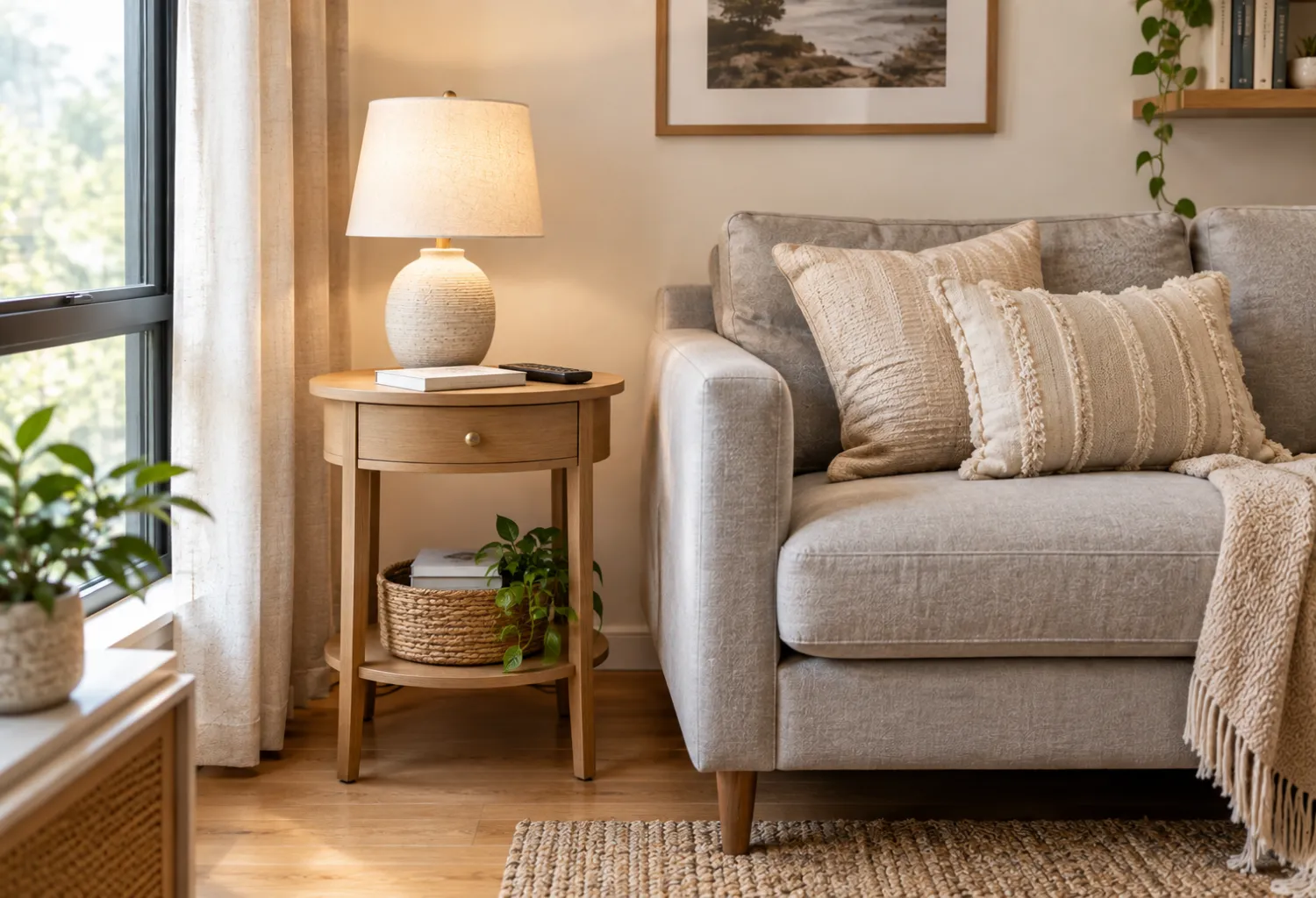
Bulky end tables can make a small seating area feel cramped. Replace them with slim side tables that provide only the storage you actually need.
A small table with a drawer or lower shelf is enough for a lamp, drink, book, and remote. Round tables can also make tight walking paths easier to navigate.
14. Decorative Storage Boxes
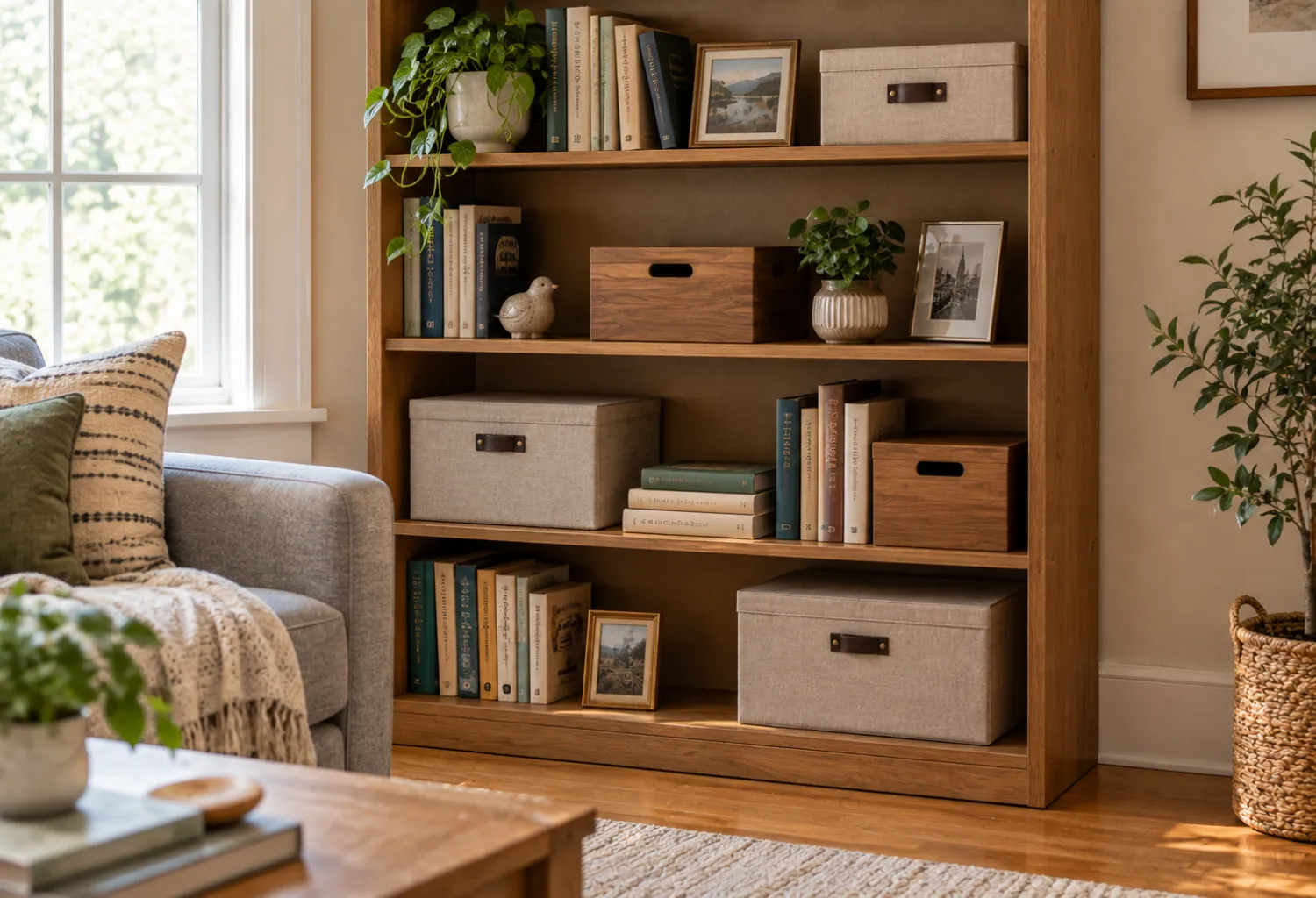
Storage boxes are useful for small items that otherwise spread across shelves and tables. Place attractive boxes on bookcases, consoles, or open shelving.
Fabric, wood, or textured paper boxes can complement the room’s existing materials. Label them discreetly if several household members need to find things quickly.
15. Built-In Window Seat Storage
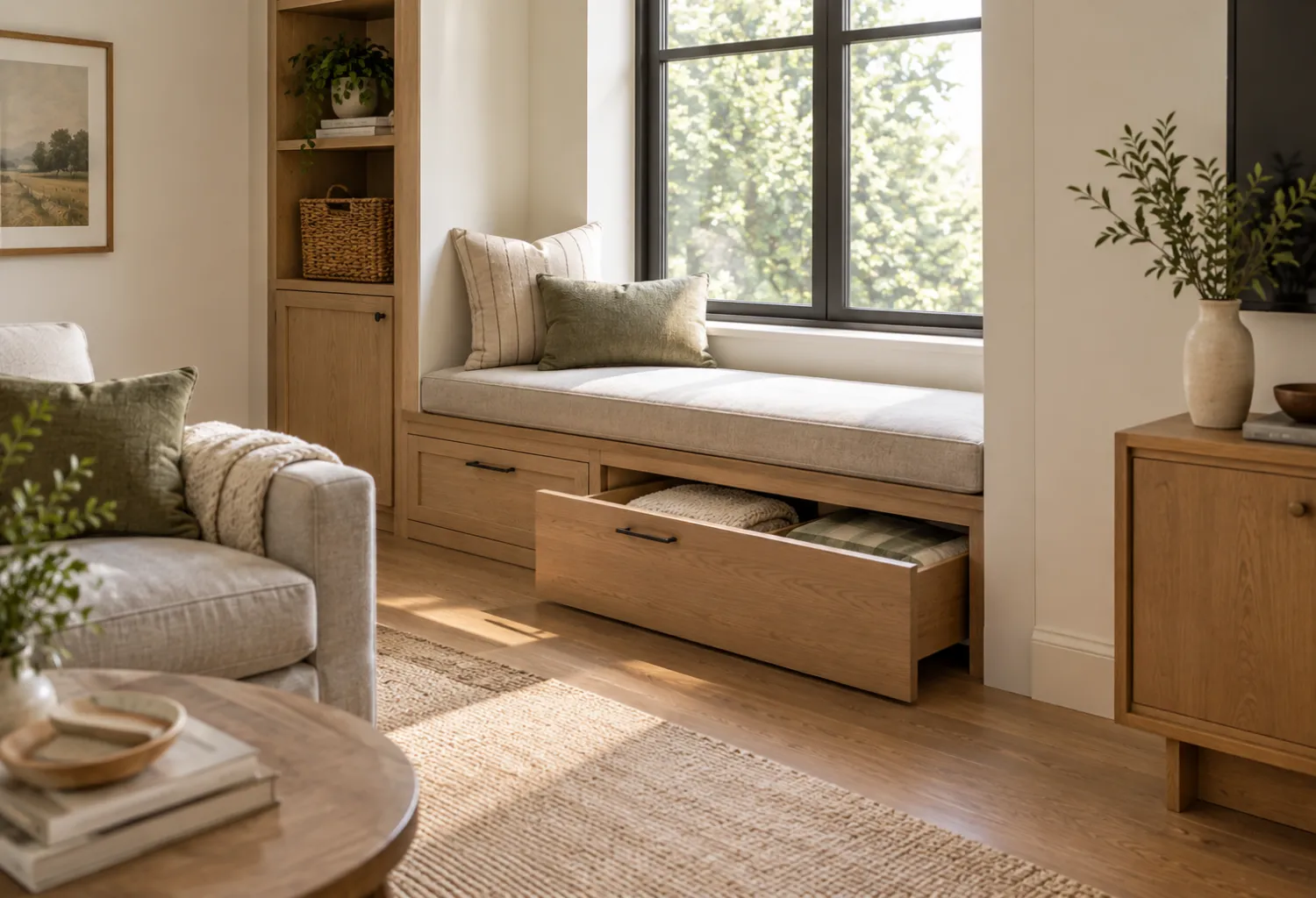
If your living room has a deep window recess, consider using the area as a window seat with drawers or lift-up storage underneath.
The hidden compartment can hold extra cushions, throws, books, or seasonal items. A soft cushion and a few coordinated pillows can turn the storage area into a comfortable reading spot as well.
16. Over-the-Door Organizer
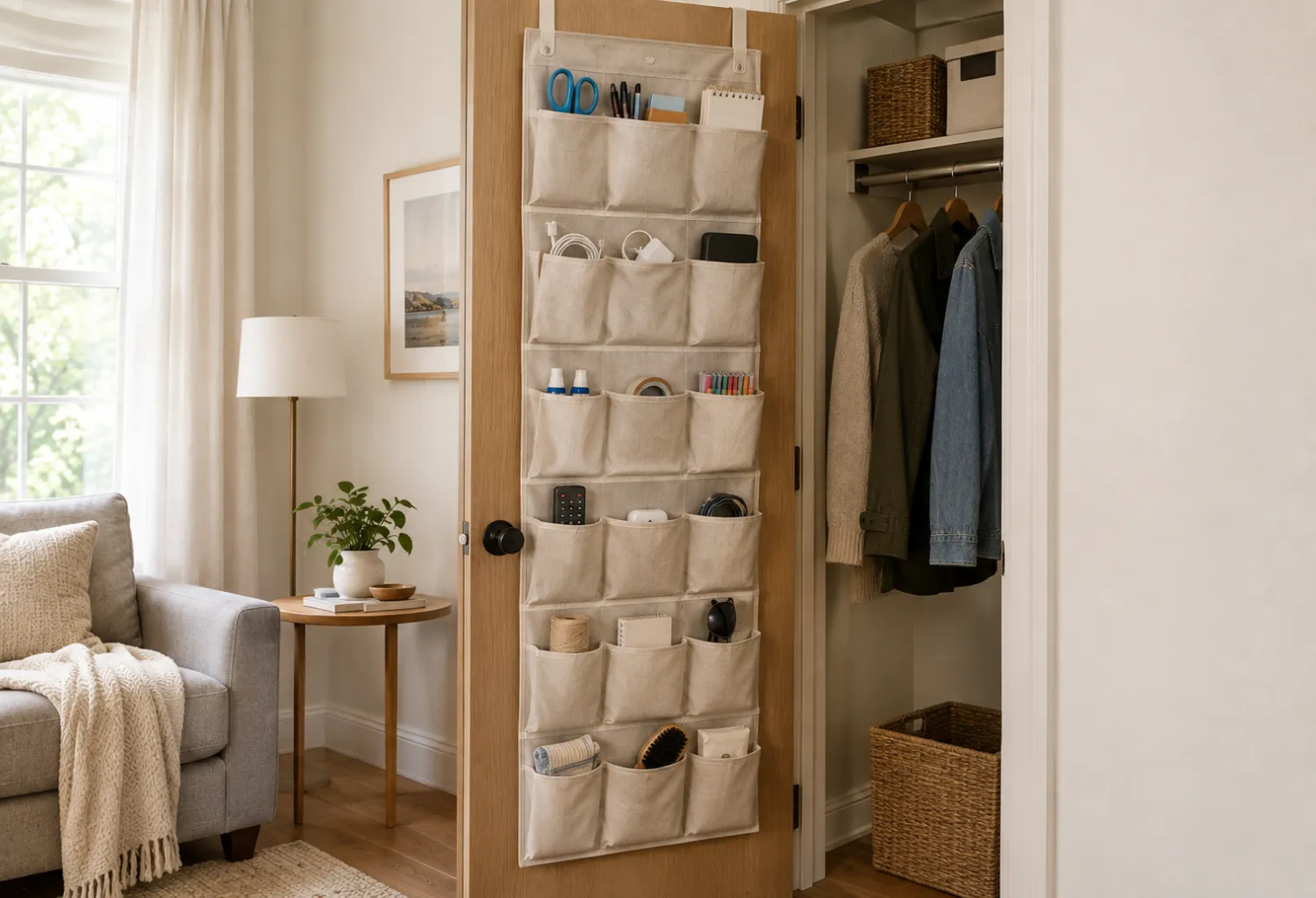
Doors provide valuable vertical space that is easy to ignore. An over-the-door organizer can store small household items without adding another piece of furniture.
Depending on the room and organizer style, it can hold craft supplies, children’s accessories, cleaning items, or miscellaneous objects. Choose a neutral design if the door is visible from the main seating area.
17. Floating Media Console
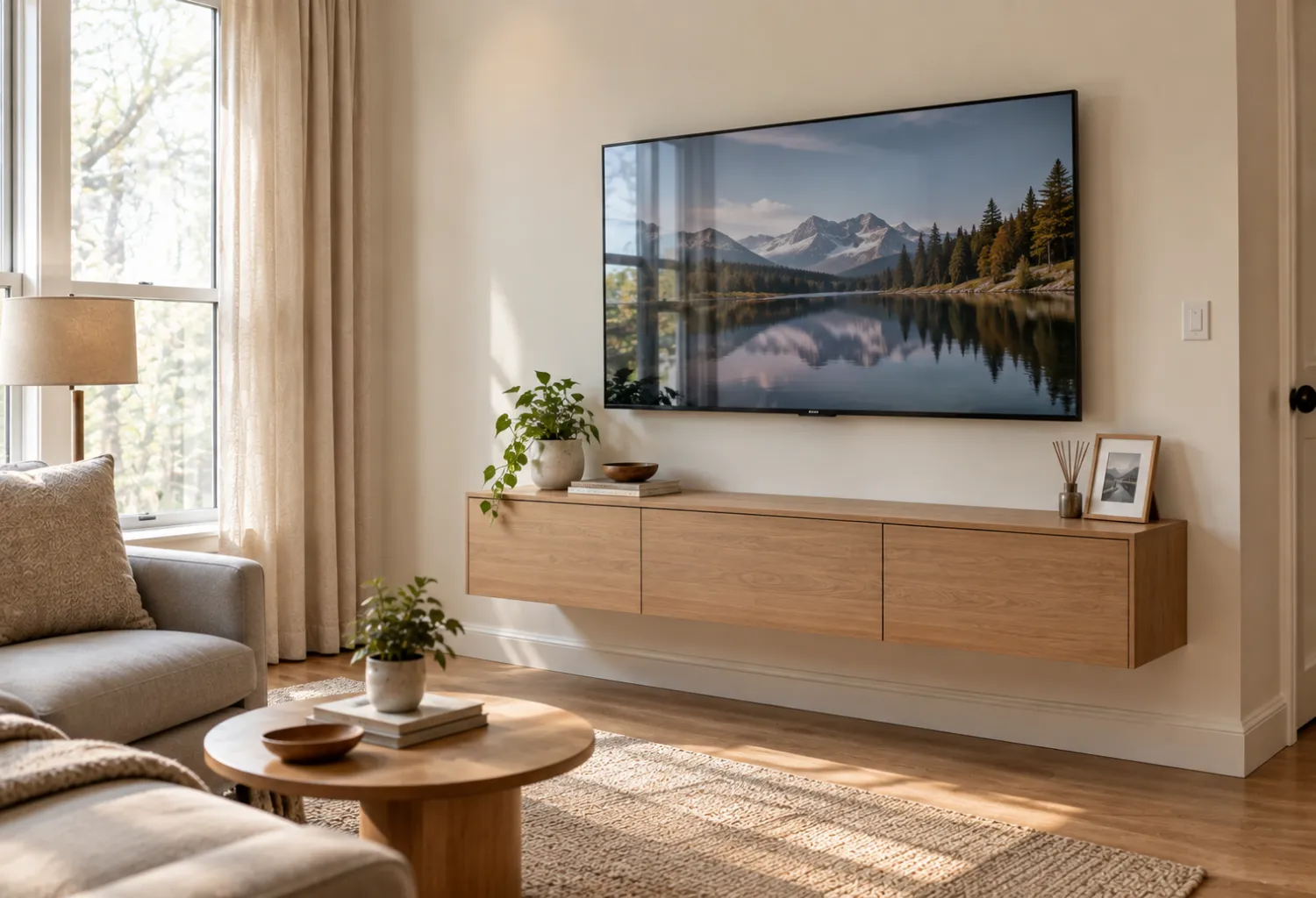
A floating media console keeps the floor underneath open while providing useful closed storage. The visual gap beneath the cabinet can make the room feel slightly more spacious.
Use the compartments for game systems, remotes, cables, DVDs, and other media accessories. Keep the console proportionate to the television so the entire wall feels balanced.
18. Cable Management Box
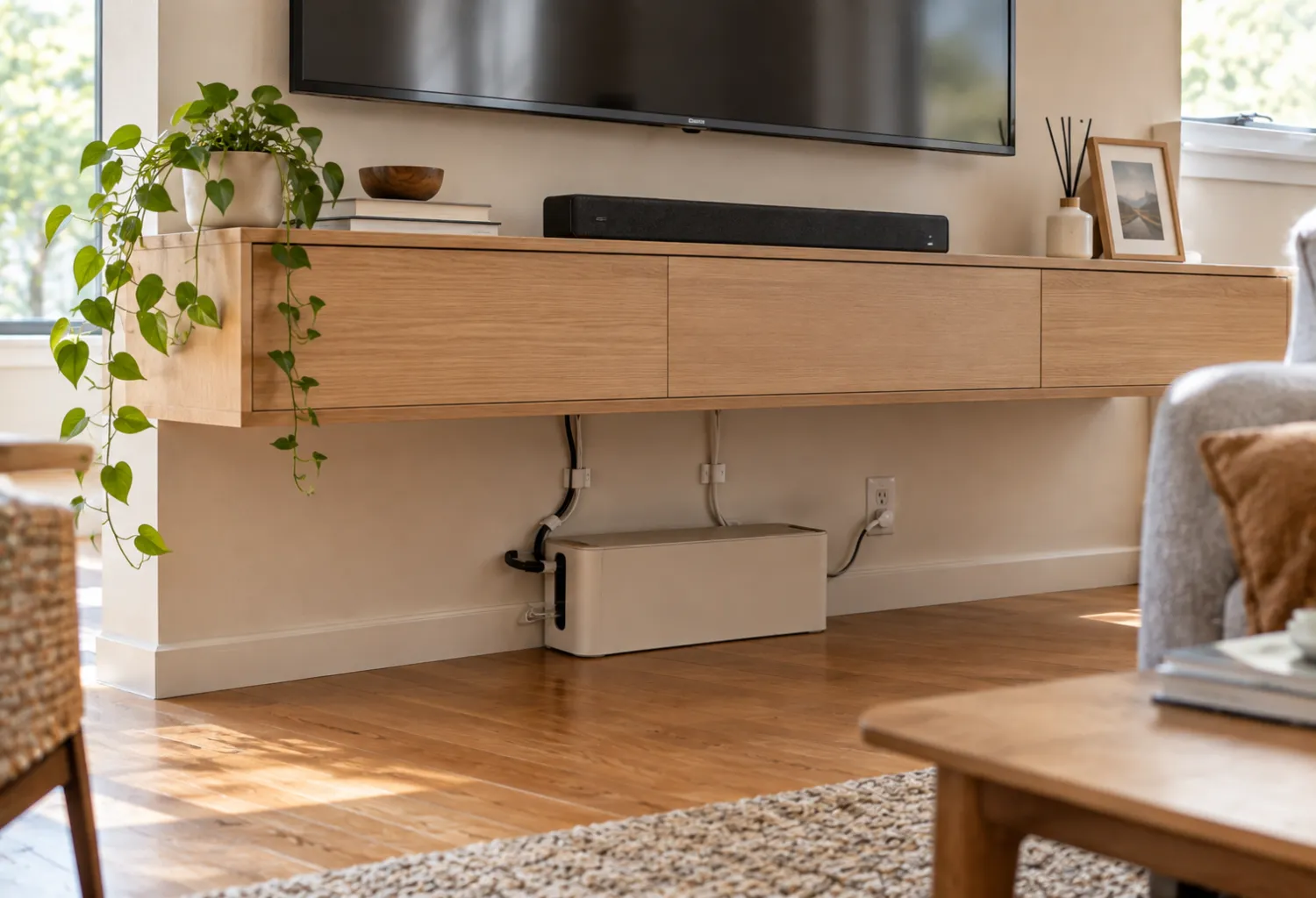
Loose charging cables can quickly make a small living room look messy. A cable-management box can conceal power strips and excess cords near the media center or charging station.
Pair it with adhesive cable clips or cord sleeves to keep individual wires organized. This small improvement can make a surprisingly noticeable difference in the room’s appearance.
19. Rolling Storage Cart
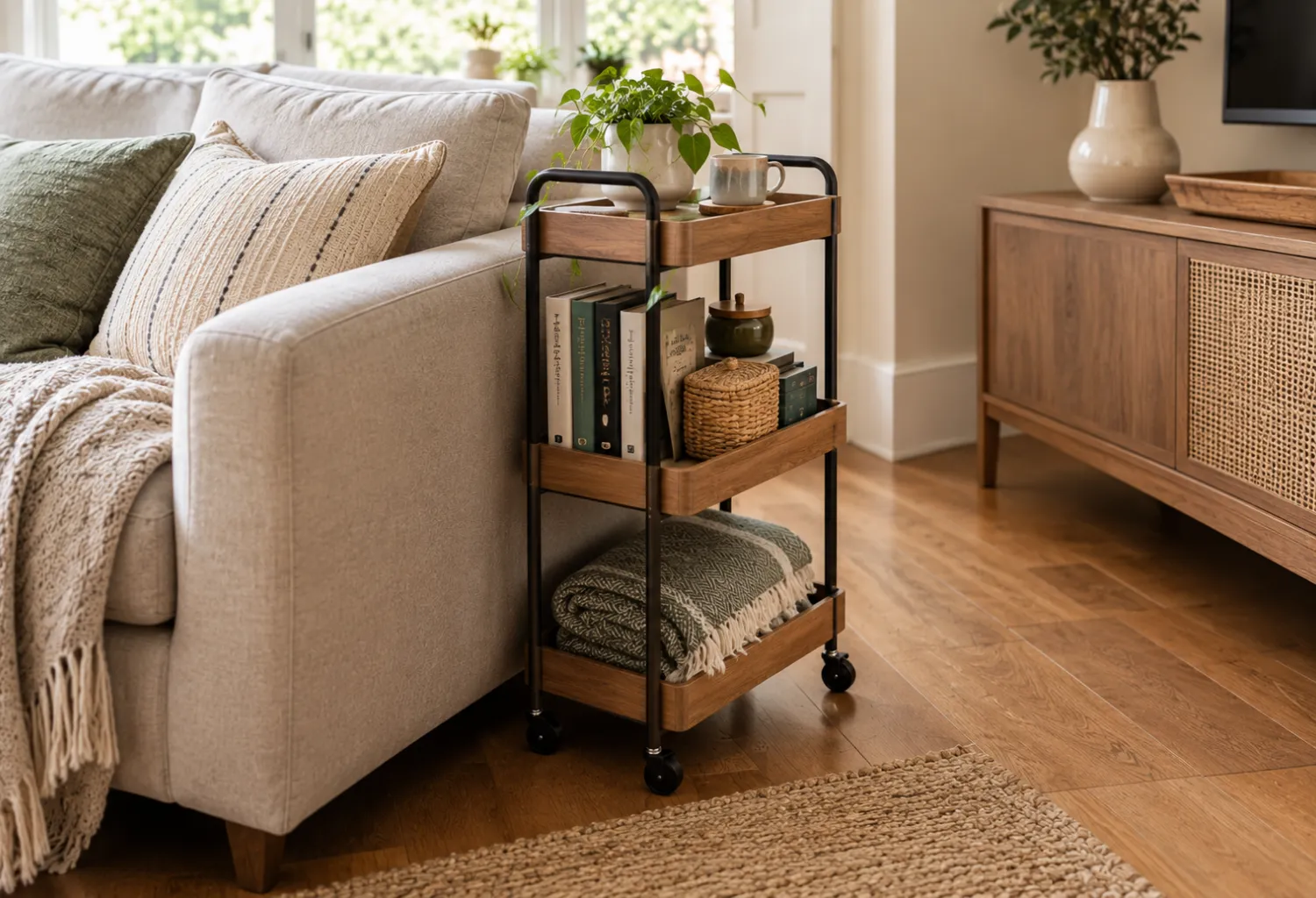
A narrow rolling cart can provide flexible storage without permanently occupying one location. Keep it beside the sofa for books and drinks, then move it when you need additional floor space.
A three-tier metal or wood cart can work with modern, industrial, farmhouse, or Scandinavian-inspired interiors depending on the finish.
20. Toy Storage Bench
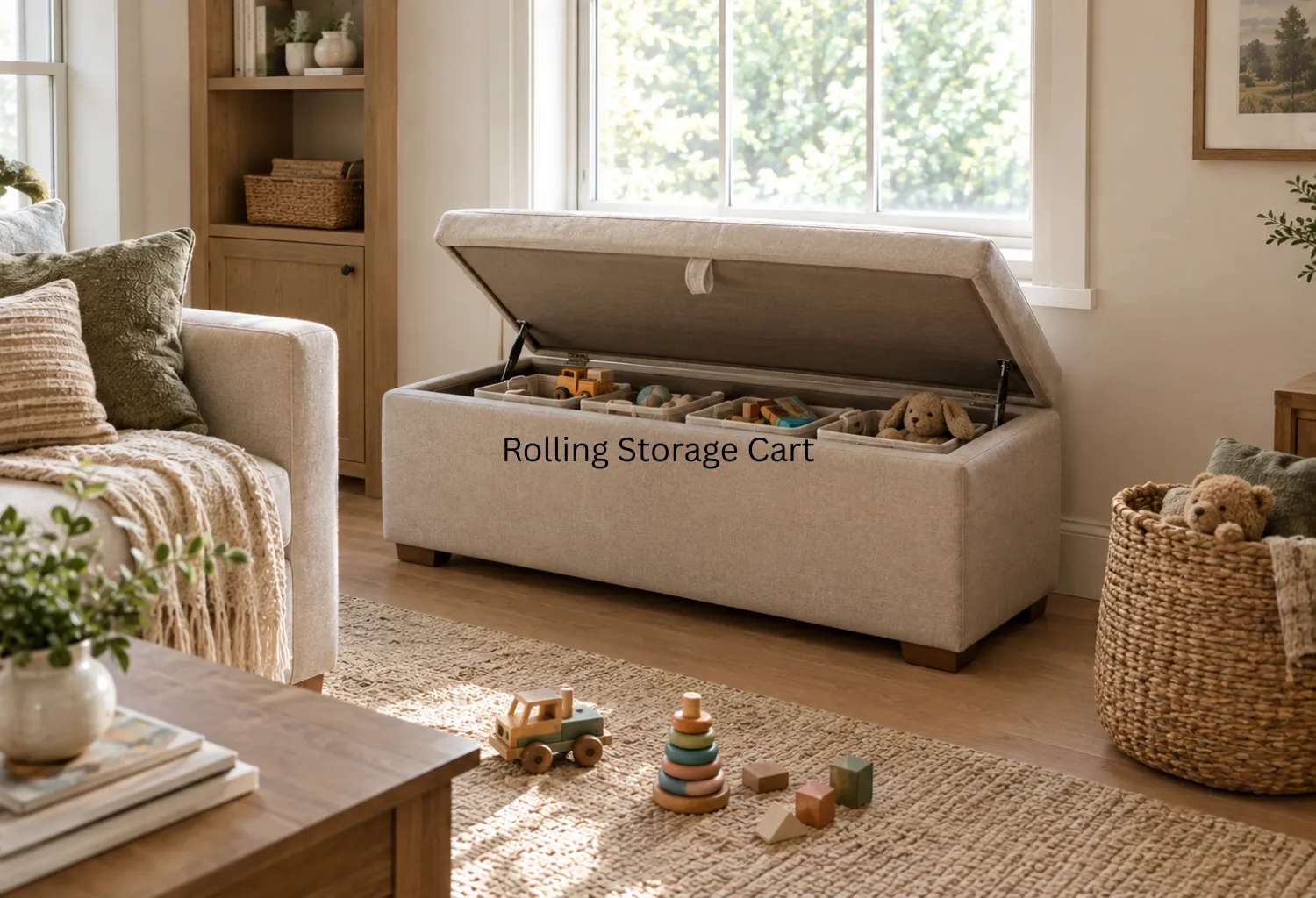
Families with young children can benefit from a storage bench that doubles as seating. Place it along an open wall or beneath a window where it doesn’t interfere with the main walking path.
Large bins inside make cleanup faster because toys can be gathered quickly rather than individually arranged. Choose baskets or bins that are easy for children to access.
21. Vertical Pegboard
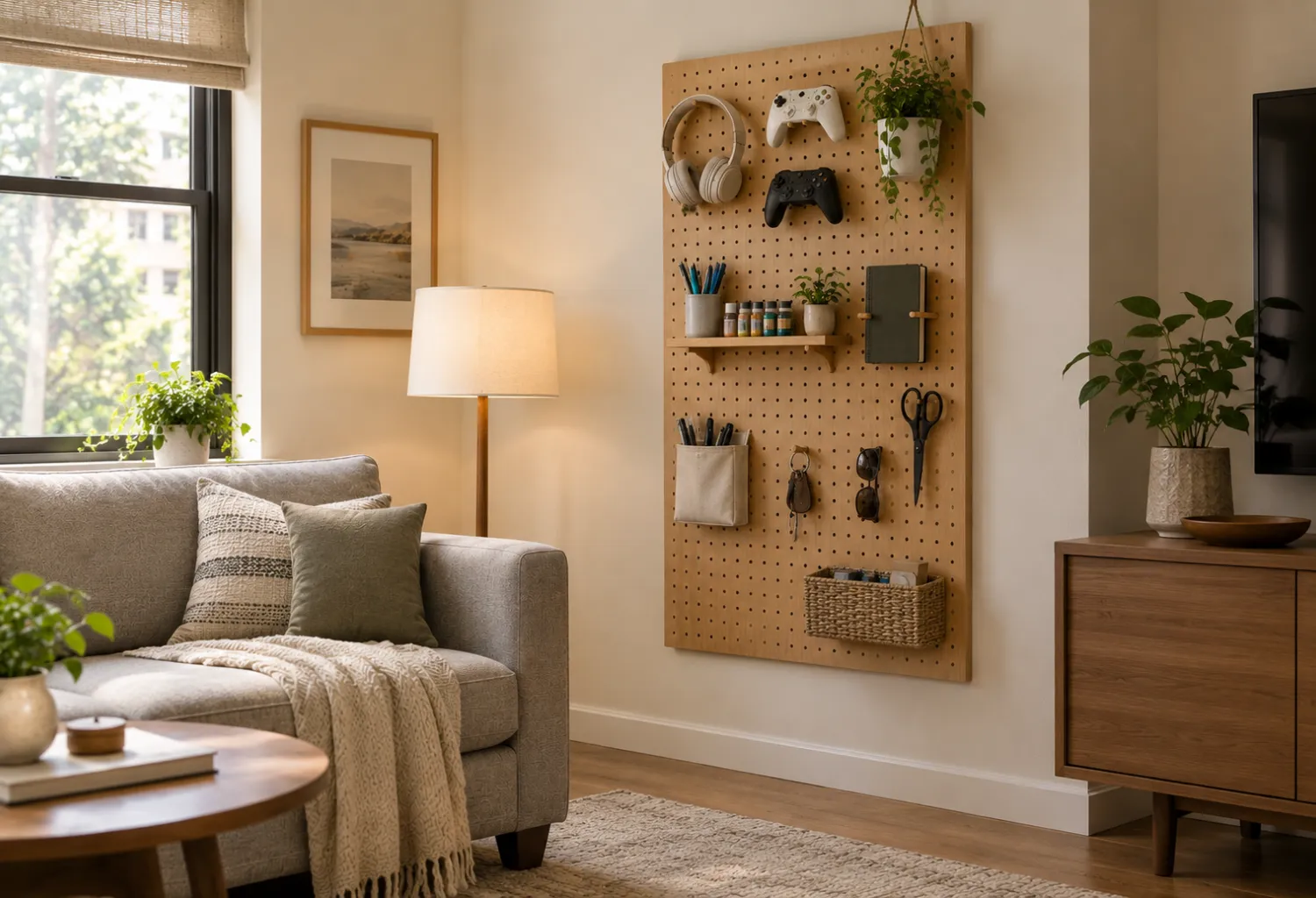
A pegboard isn’t only for garages or craft rooms. A carefully styled version can provide flexible organization in a living room, especially for households that need a place for small everyday items.
Use hooks and small shelves for headphones, controllers, craft supplies, or accessories. Painting the board in a color that coordinates with the room can help it look like part of the decor.
22. Storage Behind the Door
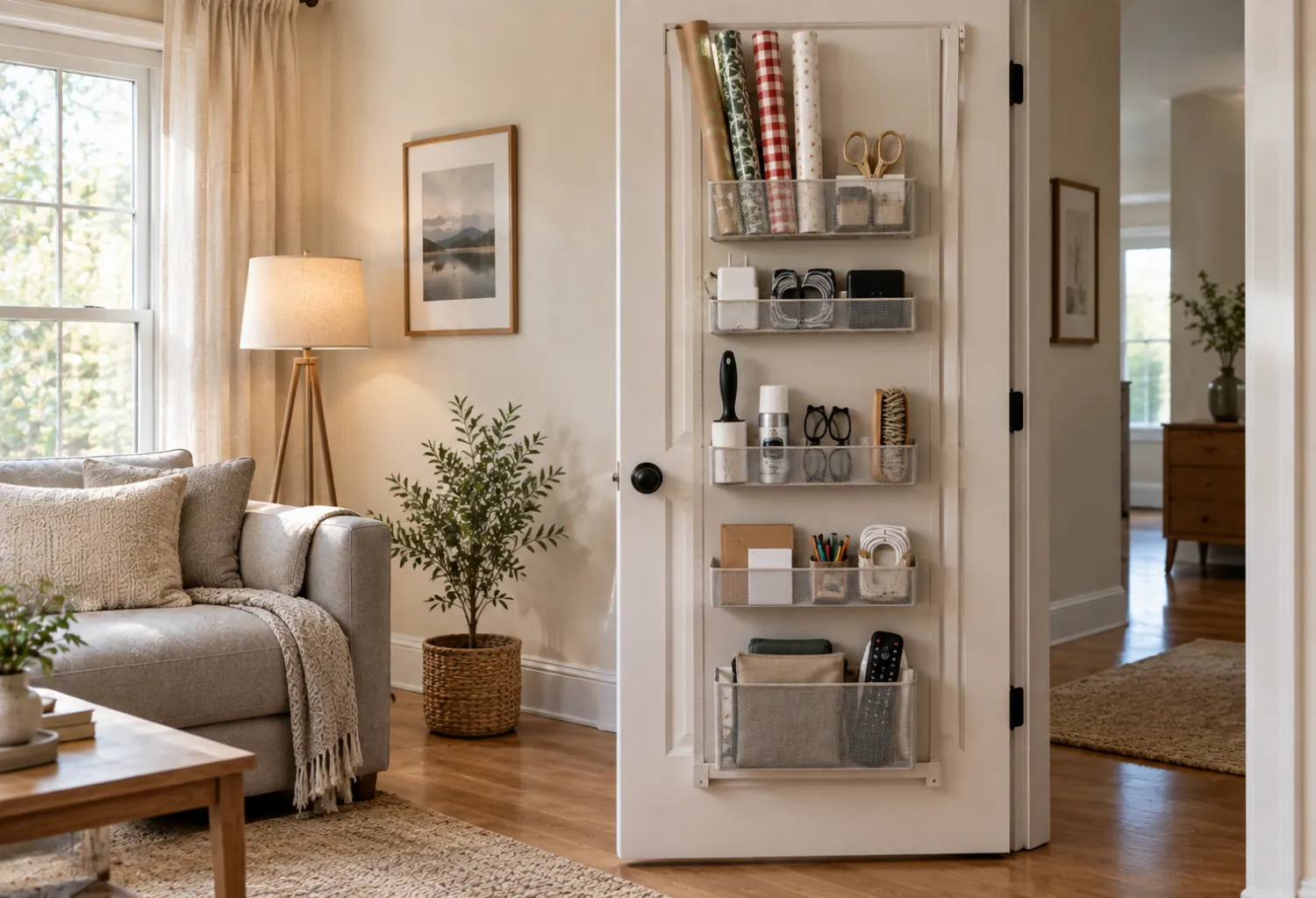
The back of a living room closet, utility door, or cabinet door can provide hidden organization without consuming floor space.
Install slim racks or pockets for lightweight items such as wrapping supplies, small electronics, cleaning accessories, or household paperwork. This is particularly useful when the room has very little free wall space.
23. One Dedicated Drop Zone
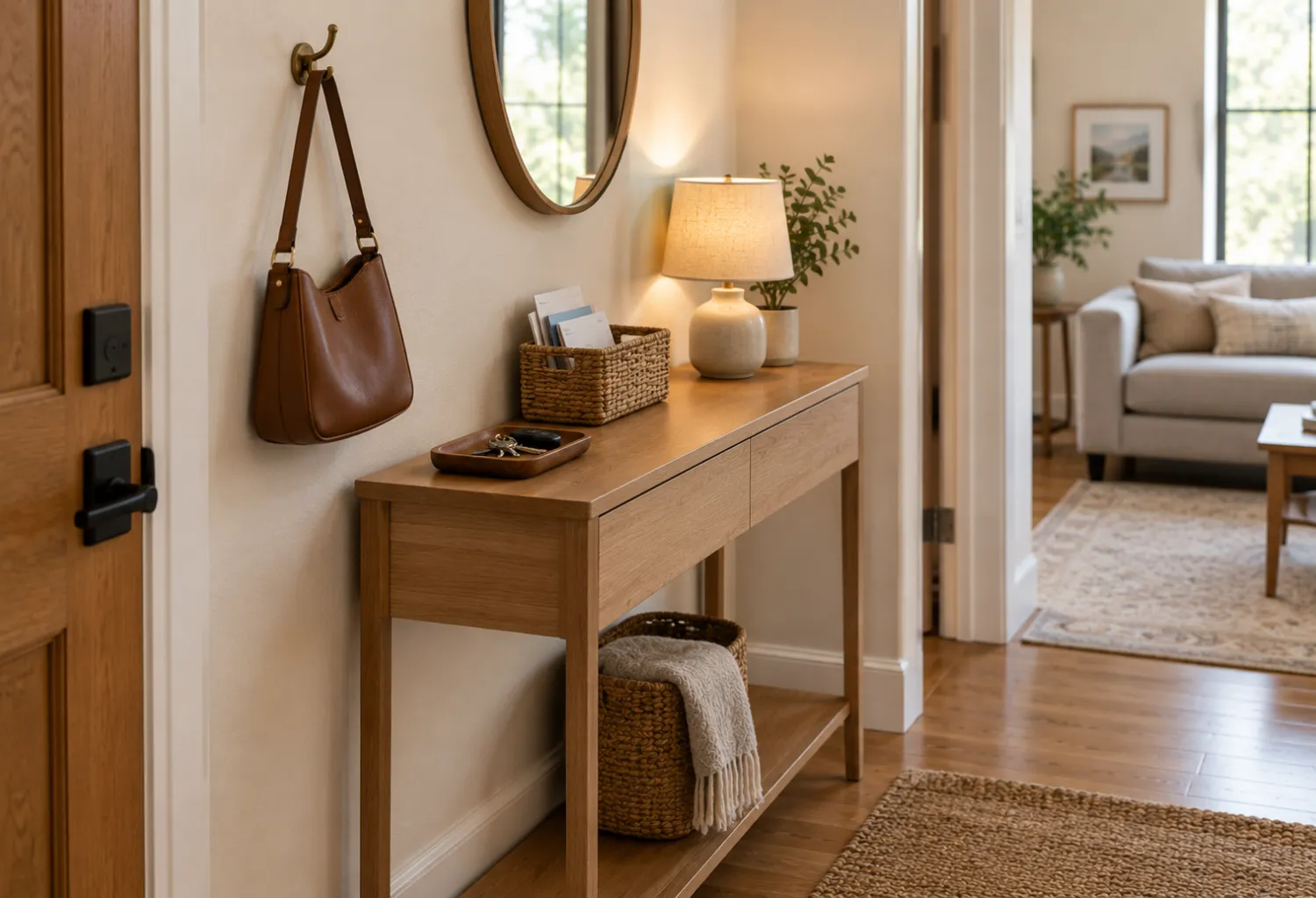
A small living room becomes easier to maintain when everyday items have a specific home. Create one compact drop zone near the entrance or most-used seating area.
A narrow console, small tray, wall hooks, and one basket can handle keys, mail, bags, and other daily clutter. Keeping the system simple makes it more likely that everyone will actually use it.
24. Double-Duty Floor Lamp
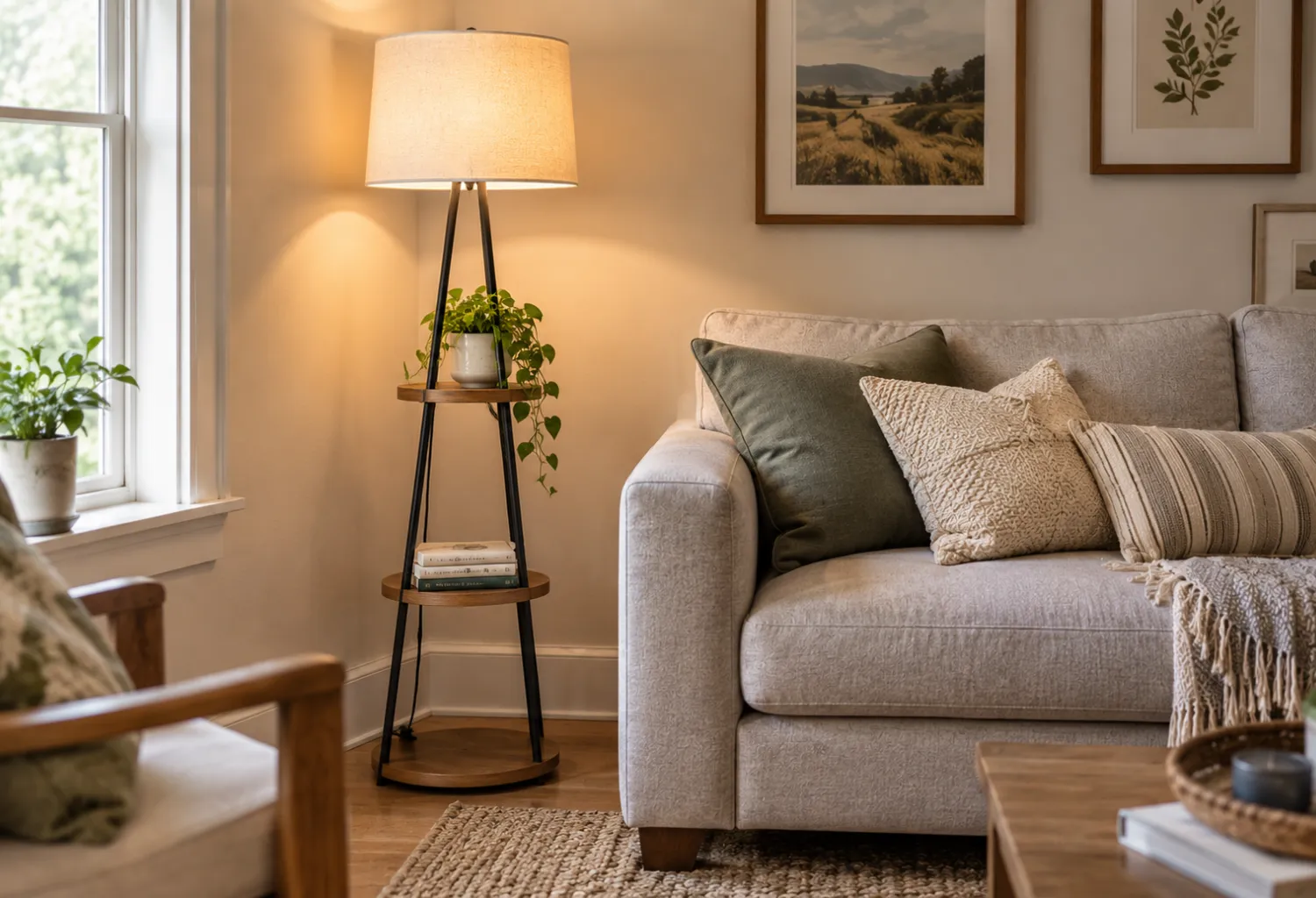
A floor lamp with integrated shelves or a small side table can replace two separate pieces of furniture. This is useful when you need both lighting and storage but don’t have room for a traditional lamp table.
Use the shelves for a few books or decorative objects rather than filling every level. The goal is to combine functions while maintaining an open feel.
25. Rotating Seasonal Storage
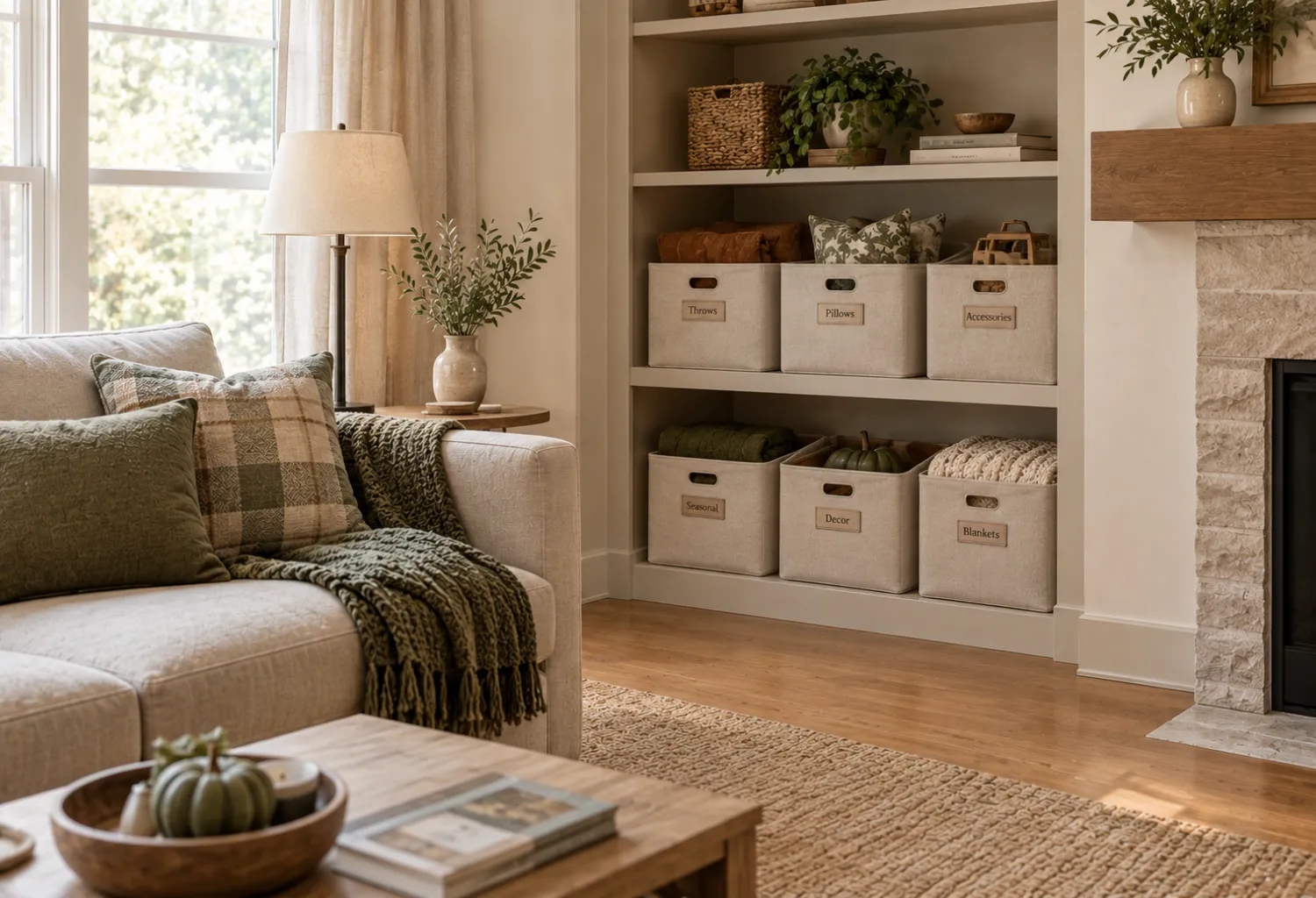
Not everything needs to stay in the living room year-round. Rotate decorative pillows, throws, seasonal accessories, and other occasional items into a closet or designated storage area.
Keep only the pieces that suit the current season and your everyday needs. A smaller collection of carefully chosen accessories often makes a compact living room feel calmer and more intentional.
Conclusion
The best Small Living Room Organization Ideas are the ones that solve a specific storage problem without making the room feel crowded. If floor space is limited, prioritize vertical shelves, floating storage, and furniture with hidden compartments. If everyday clutter is the biggest issue, focus on baskets, drawers, a dedicated drop zone, and easy-access storage.
Your decorating style matters, too. Woven baskets and warm wood can suit a relaxed or farmhouse-inspired room, while streamlined cabinets and floating shelves work well in modern spaces. Start with the areas that create the most clutter, then add storage gradually. A few well-chosen solutions can make a small living room feel noticeably more comfortable, organized, and usable.