30 Board Game Organization Ideas for Living Room
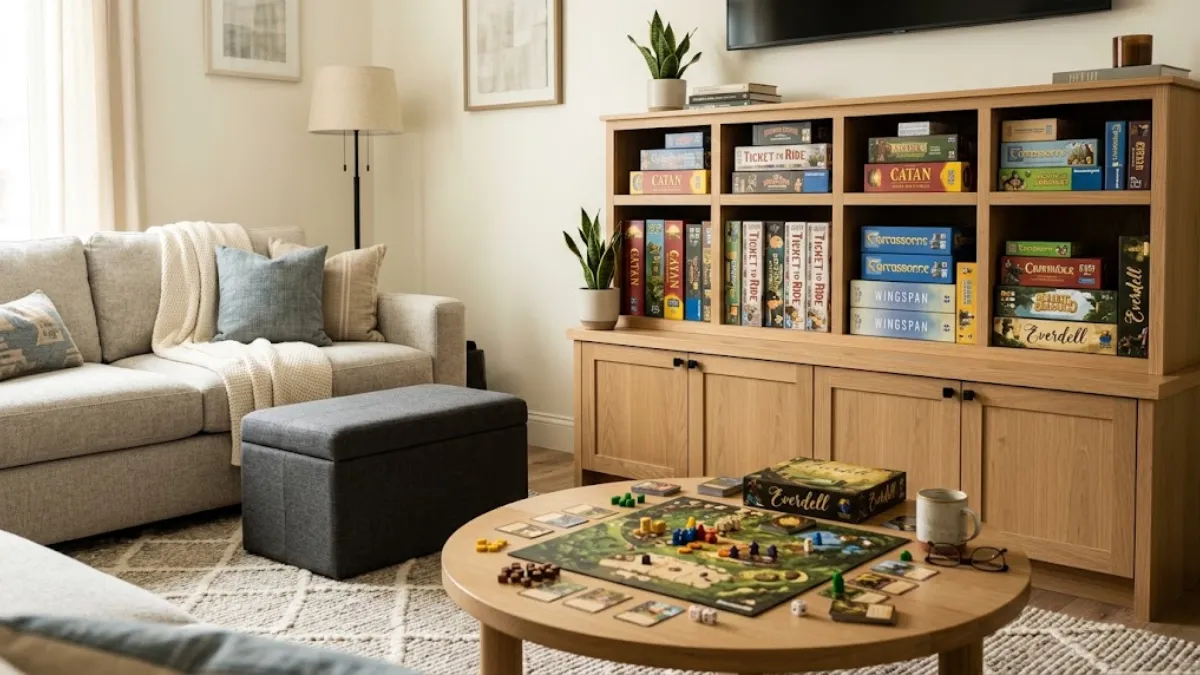
Board games are fun to keep around, but their bulky boxes, loose cards, dice, and game pieces can quickly make a living room feel cluttered. The challenge is finding storage that keeps everything together without turning your space into a game closet.
These 30 Board Game Organization Ideas For Living Room spaces range from built-in solutions to small-space tricks, so you can choose an approach that fits your furniture, decorating style, and how often your family actually plays.
1. Low Media Console Cabinets
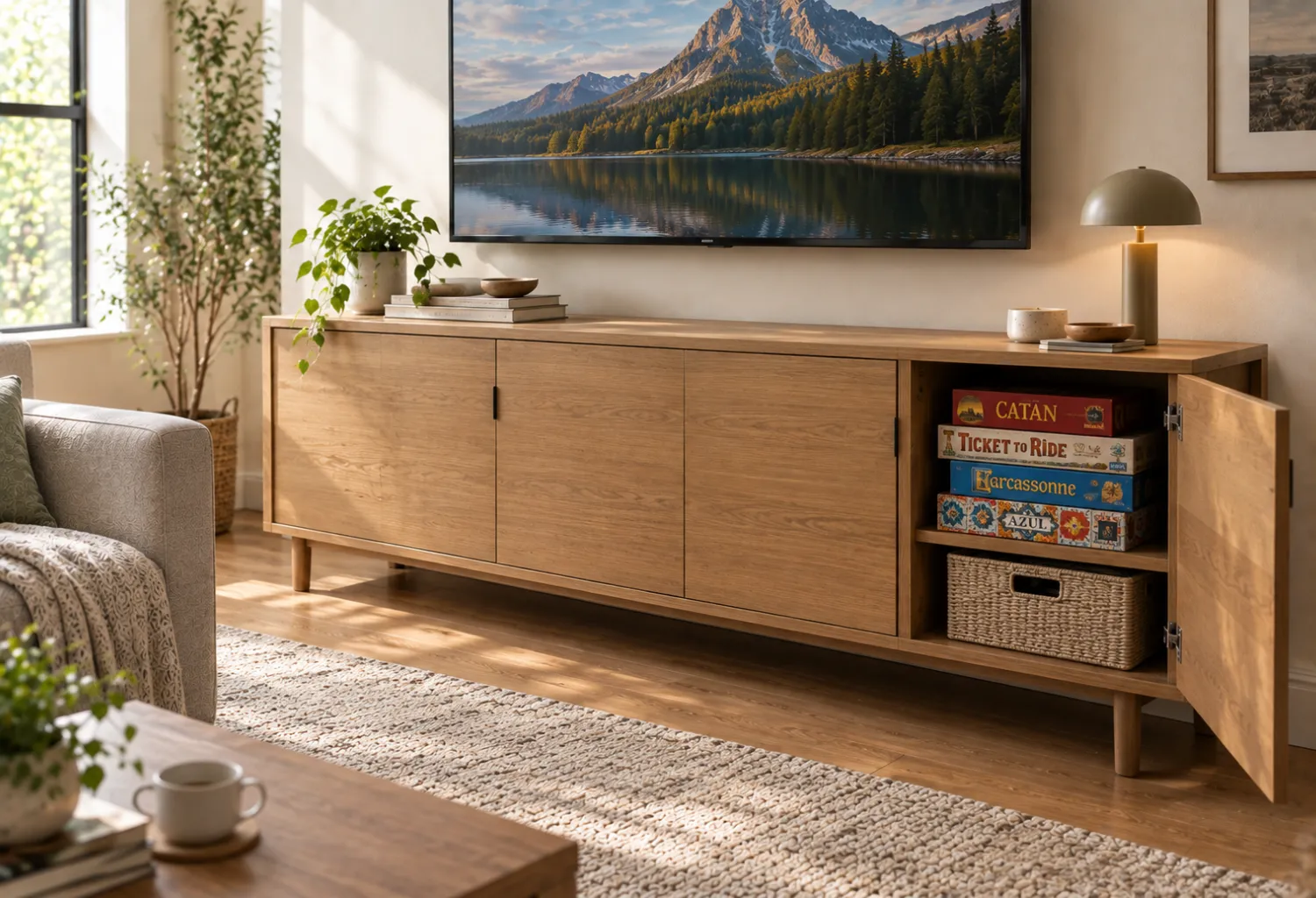
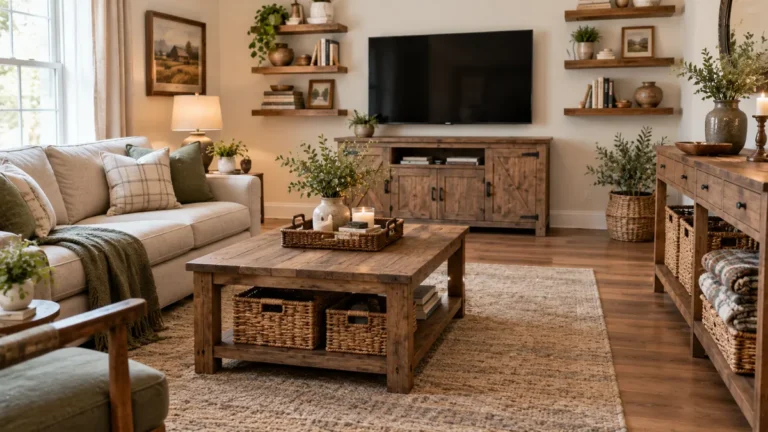
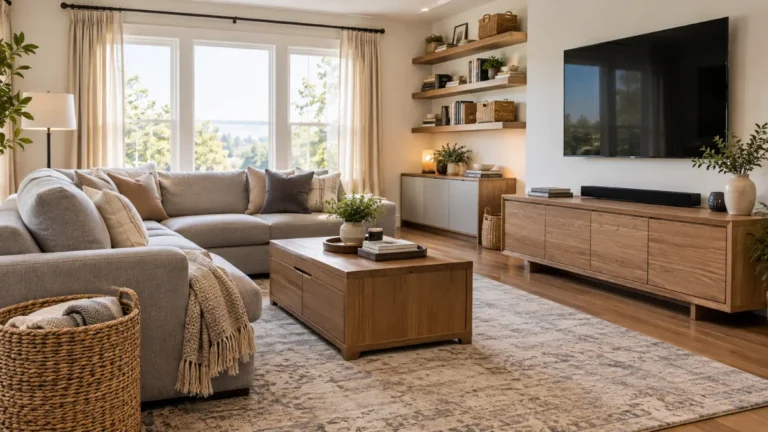
A media console with enclosed cabinets is one of the easiest places to store board games. Use the lower compartments for stacked game boxes and keep the television area visually clean. Adjustable shelves are especially useful because tall and shallow boxes can be separated instead of piled together.
2. Cube Storage With Woven Baskets
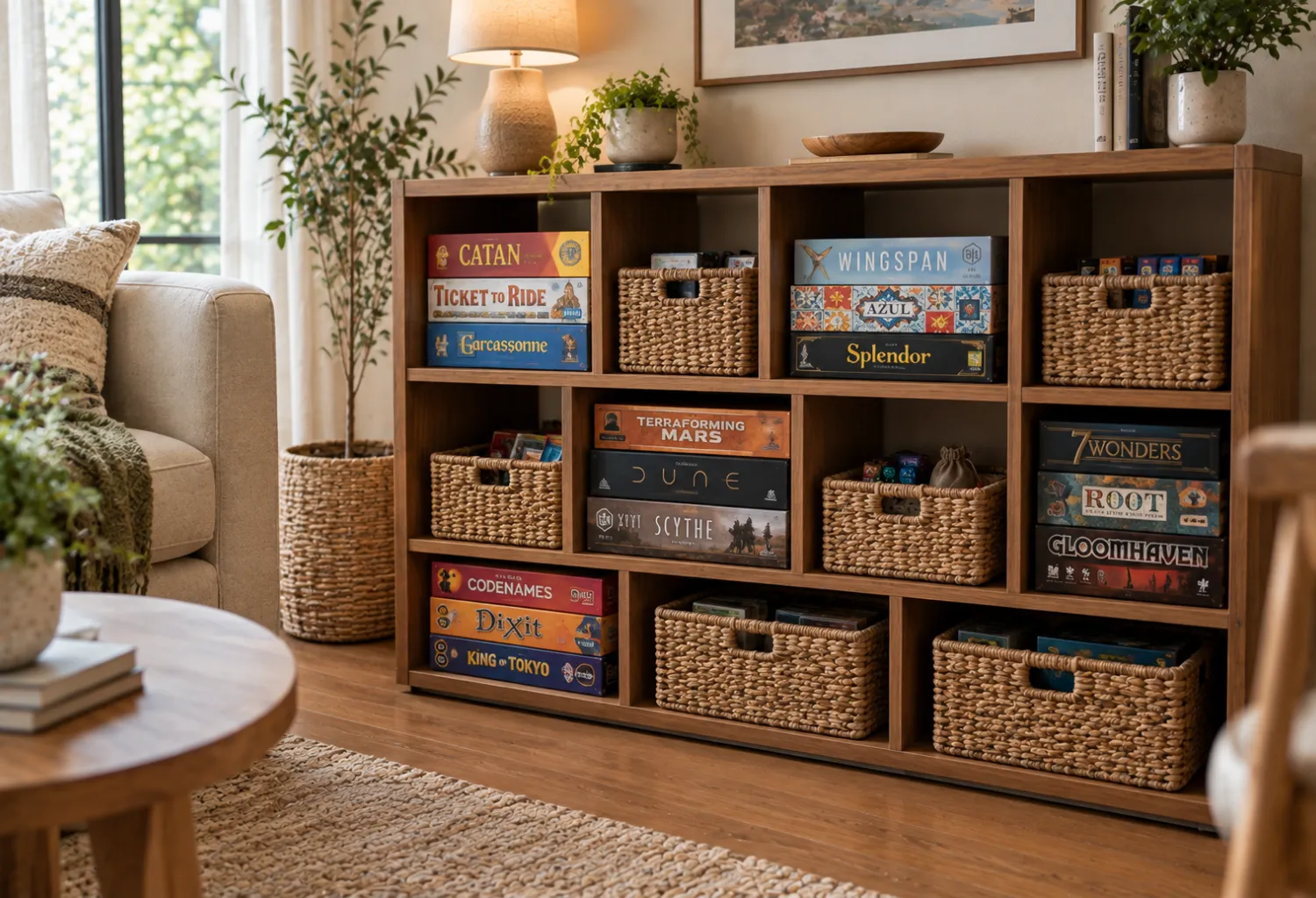
Cube shelving gives board games a dedicated home while woven baskets hide smaller pieces and accessories. Store boxed games directly in some cubes and use baskets for card decks, dice, timers, and other loose components. Natural wicker or water-hyacinth baskets work particularly well in relaxed living rooms.
3. Vertical Board Game Shelf
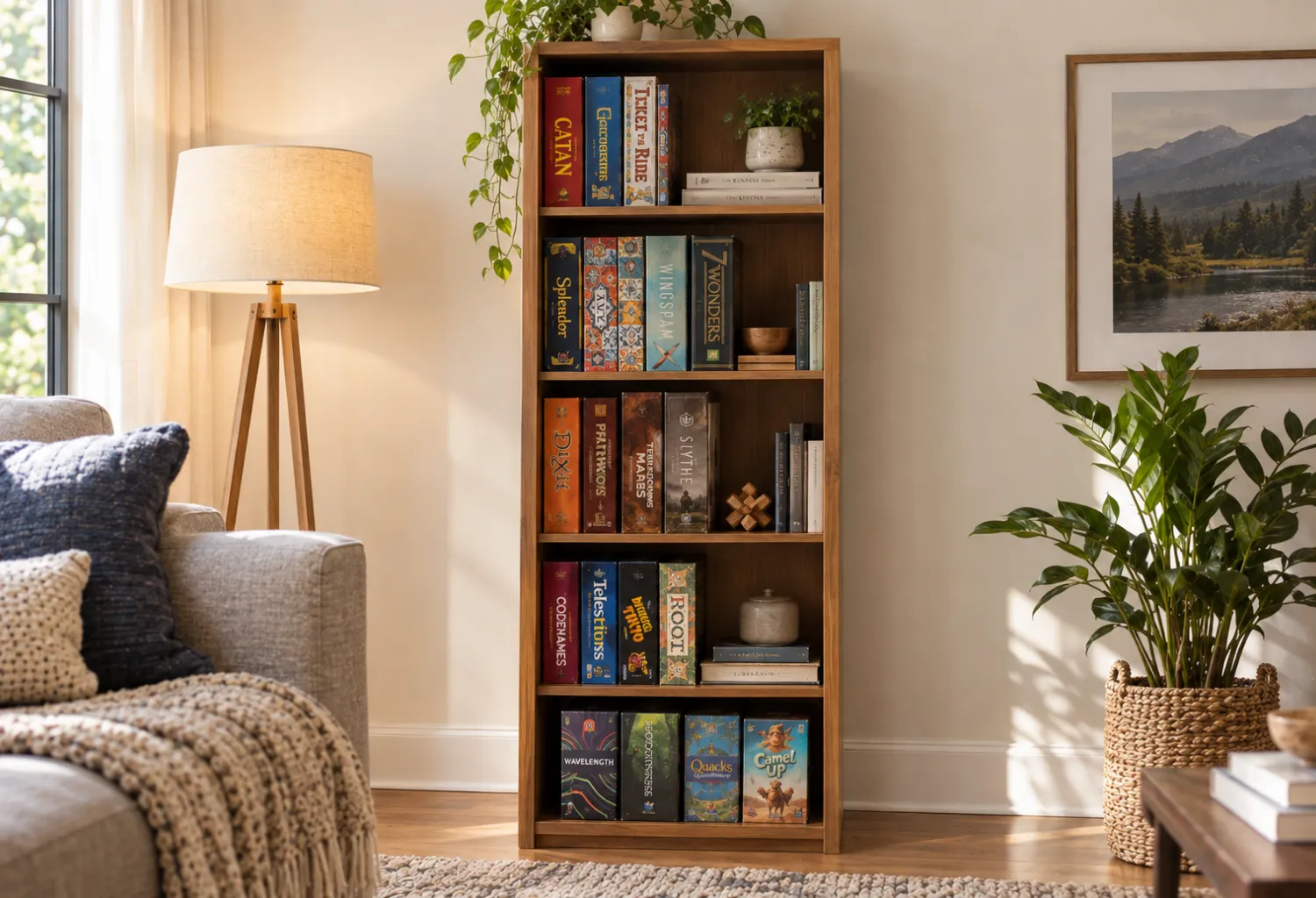
A tall, narrow bookshelf makes use of vertical wall space without taking much floor area. Arrange games by box height, keeping frequently played favorites between waist and eye level. Leave a little breathing room between stacks so the shelf doesn’t look overcrowded.
4. Closed Bookcase Storage
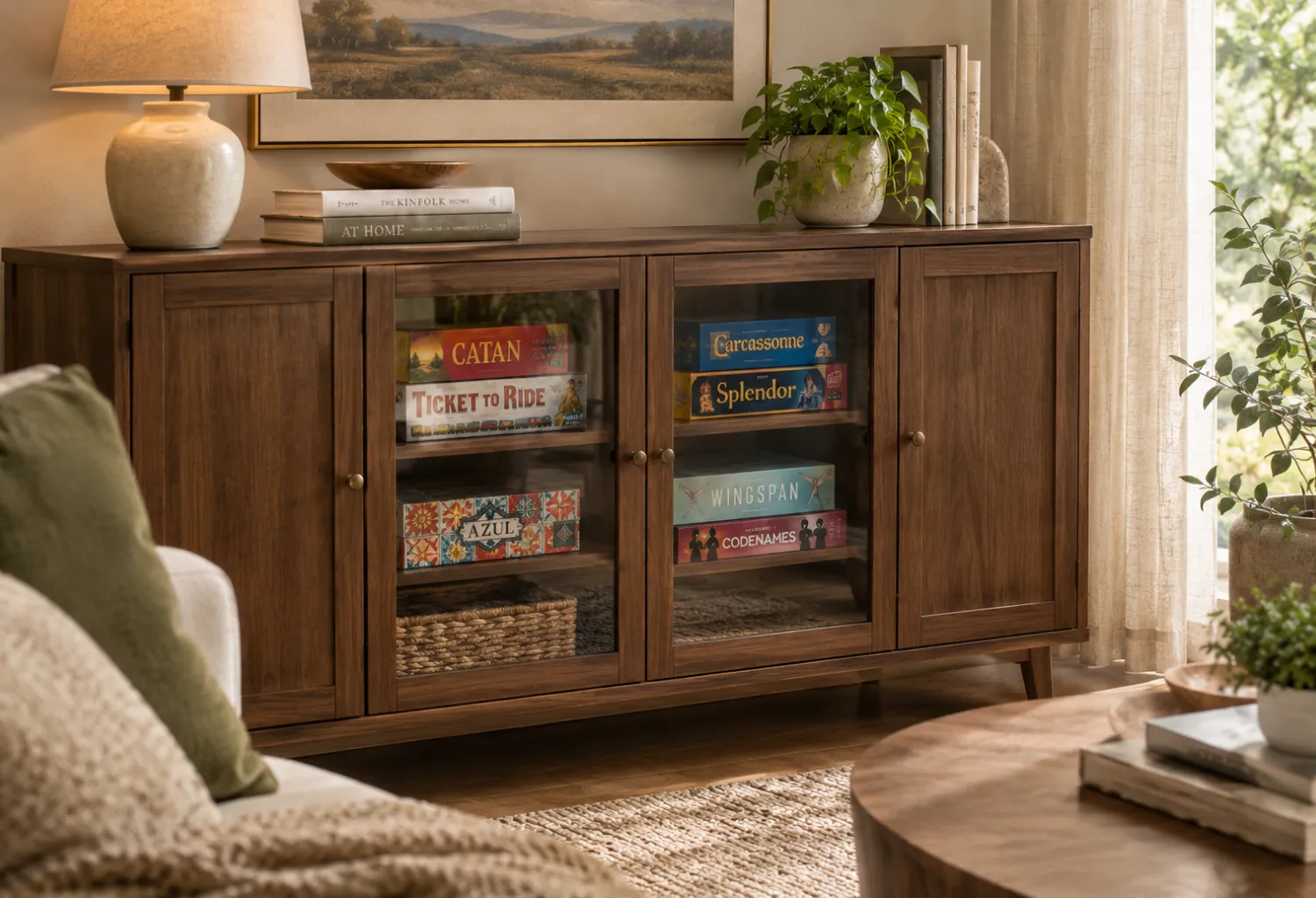
A bookcase with doors provides a cleaner option when you don’t want colorful game boxes visible. Glass doors can display attractive collections, while solid doors create a more streamlined look. This works particularly well with traditional, transitional, and modern living rooms.
5. Under-Ottoman Game Storage
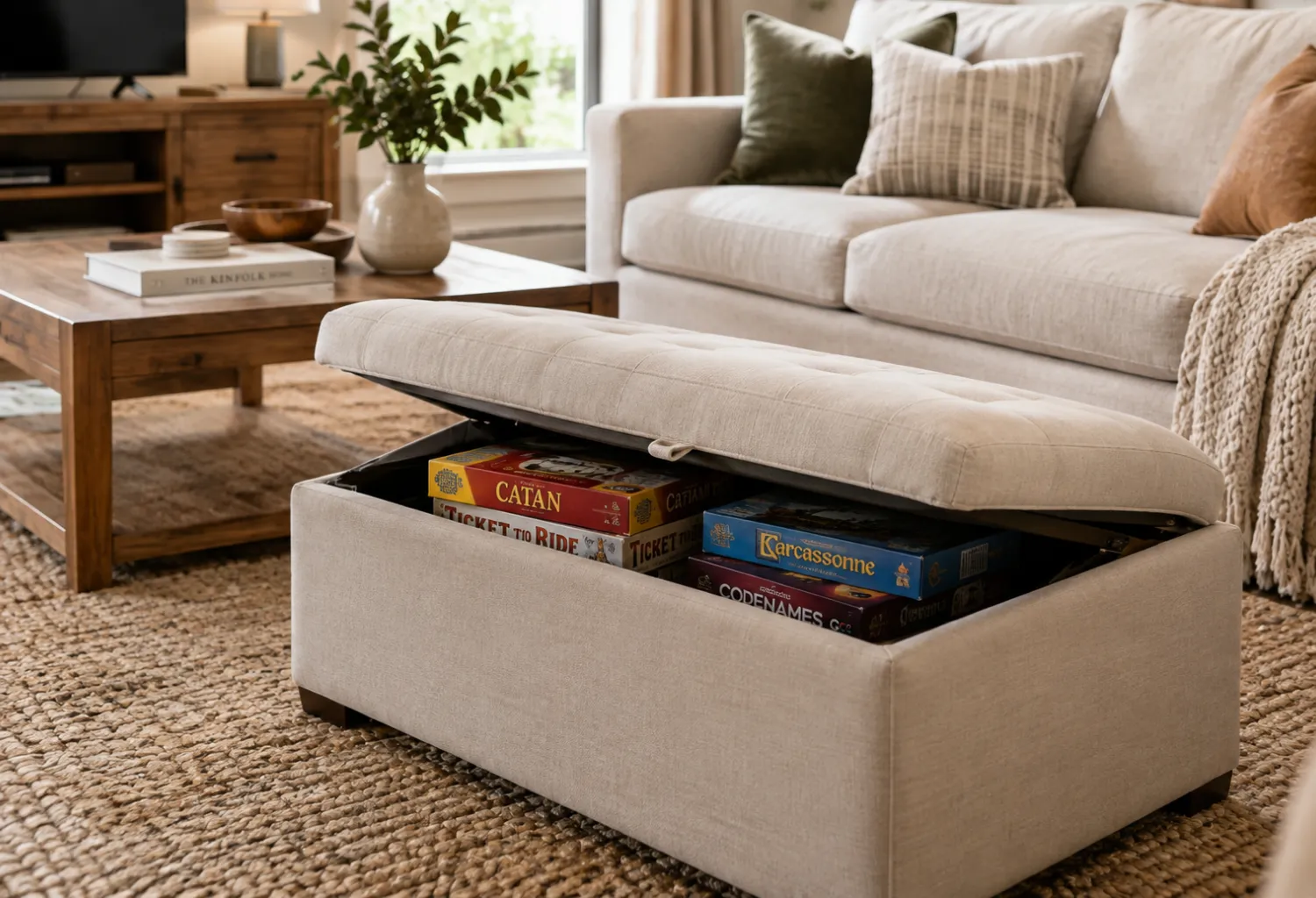
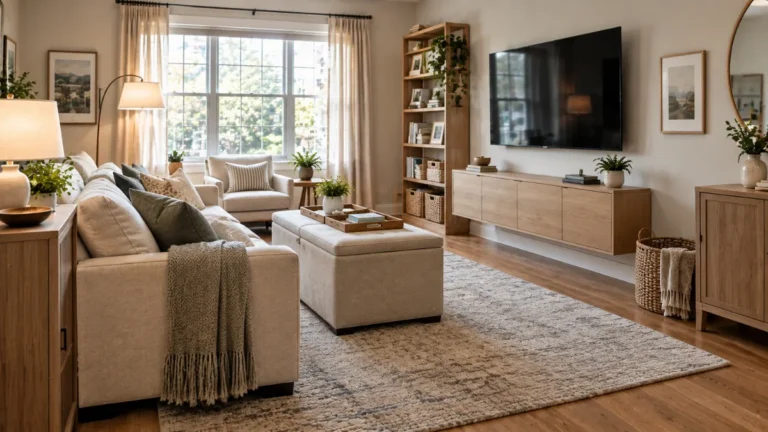
A storage ottoman can quietly hold several board games while serving as everyday living room furniture. Choose a hinged or lift-top design with enough interior depth for standard game boxes. It is especially practical when the coffee table sits close to the sofa and every inch of storage matters.
6. Rolling Game Cart
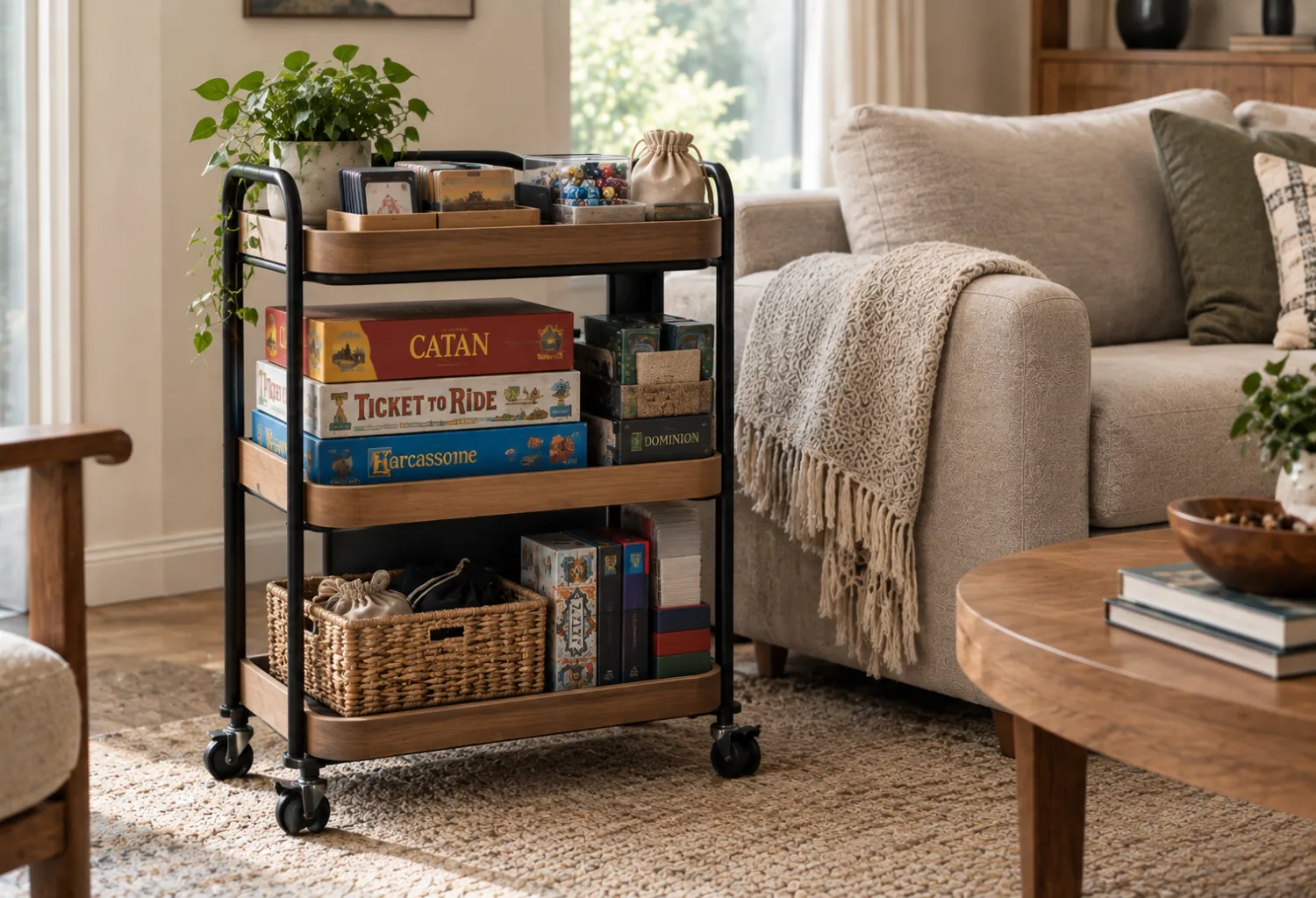
A rolling utility cart makes board games easy to move between storage and the coffee table. Keep complete games on the larger shelves and smaller accessories in containers on the upper level. When game night is over, simply roll the cart back beside a cabinet or into an unused corner.
7. Built-In Window Seat Drawers
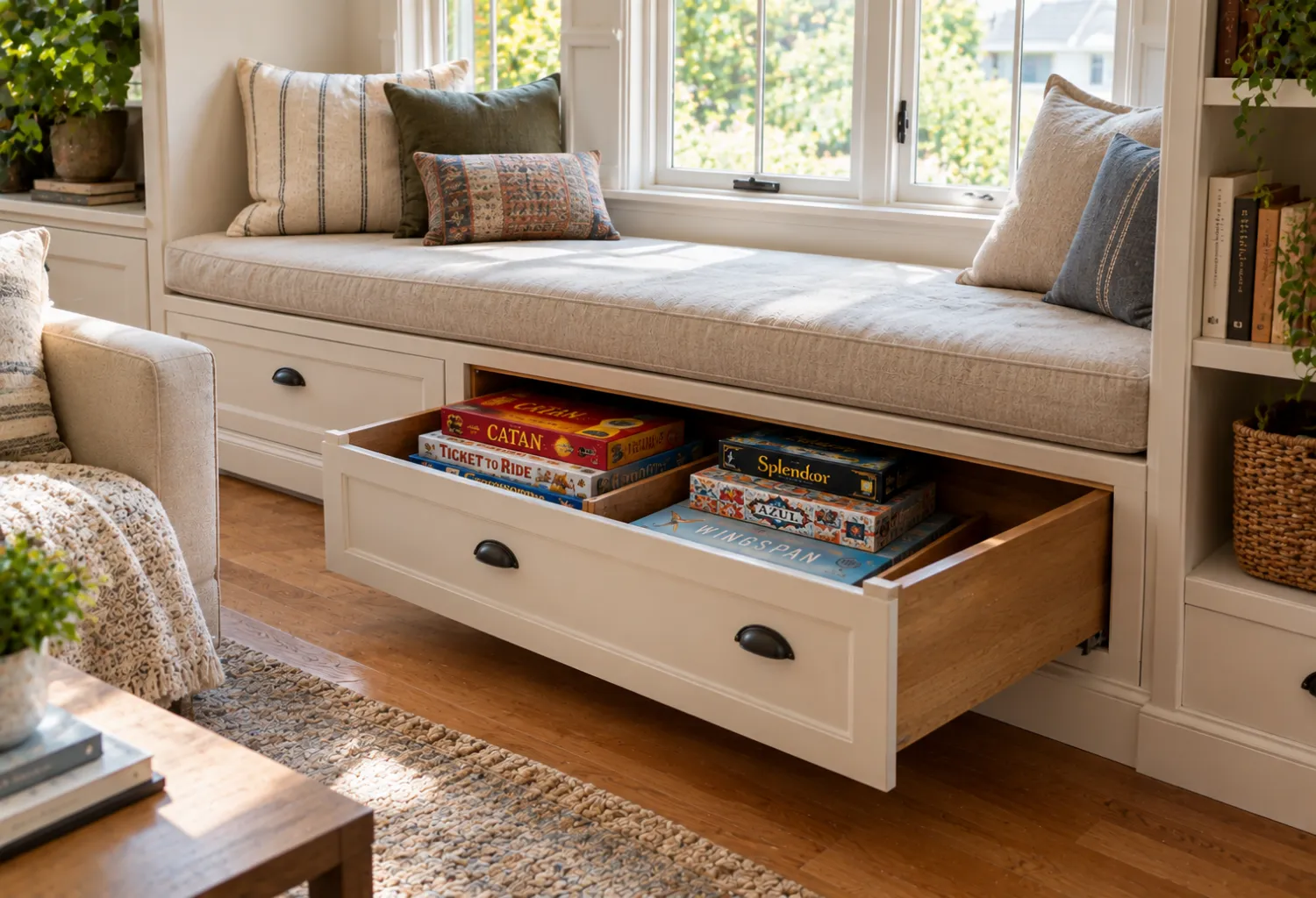
If your living room has a window seat with drawers underneath, that hidden space can become excellent board game storage. Wide drawers accommodate several boxes without adding visual clutter. Labeling the inside of each drawer can also make cleanup much faster.
8. Coffee Table With Storage
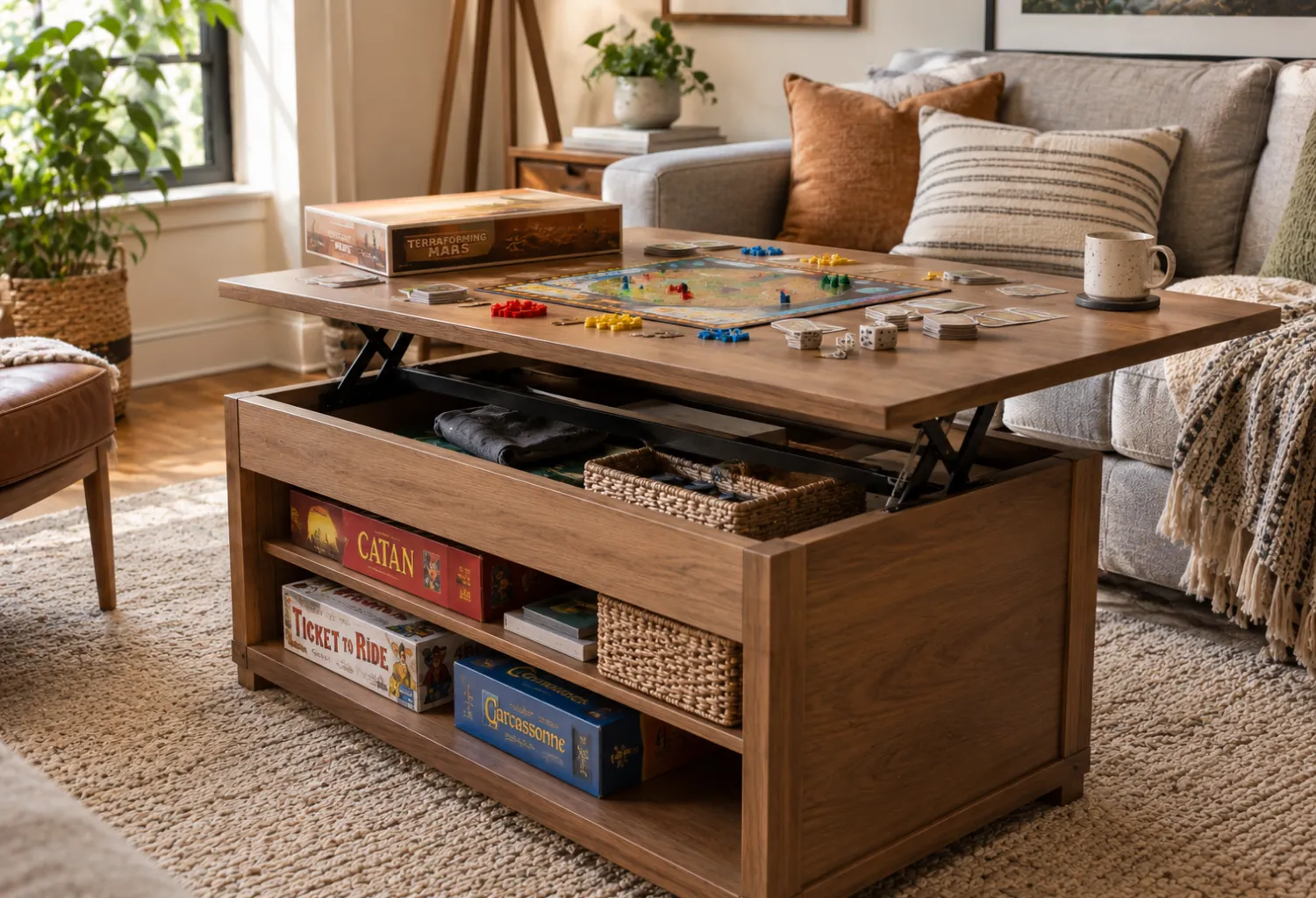
A lift-top or shelf-style coffee table can double as a game storage station. Use lower shelves for larger boxes and enclosed compartments for loose components. Keep the tabletop mostly clear so it can still function comfortably for drinks, books, and everyday use.
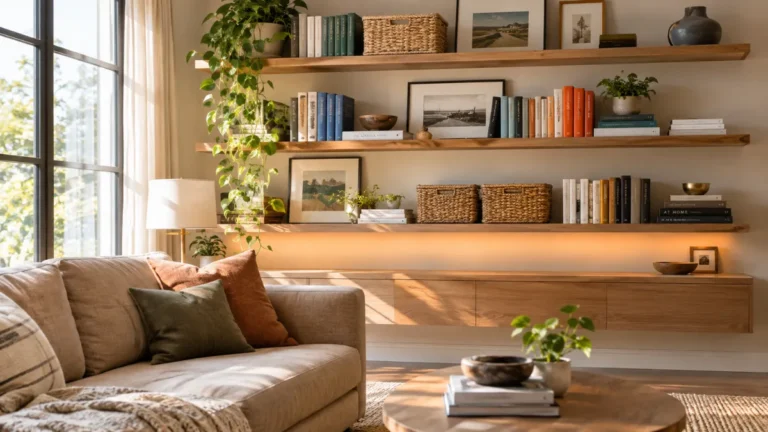
9. Floating Shelves for Favorite Games
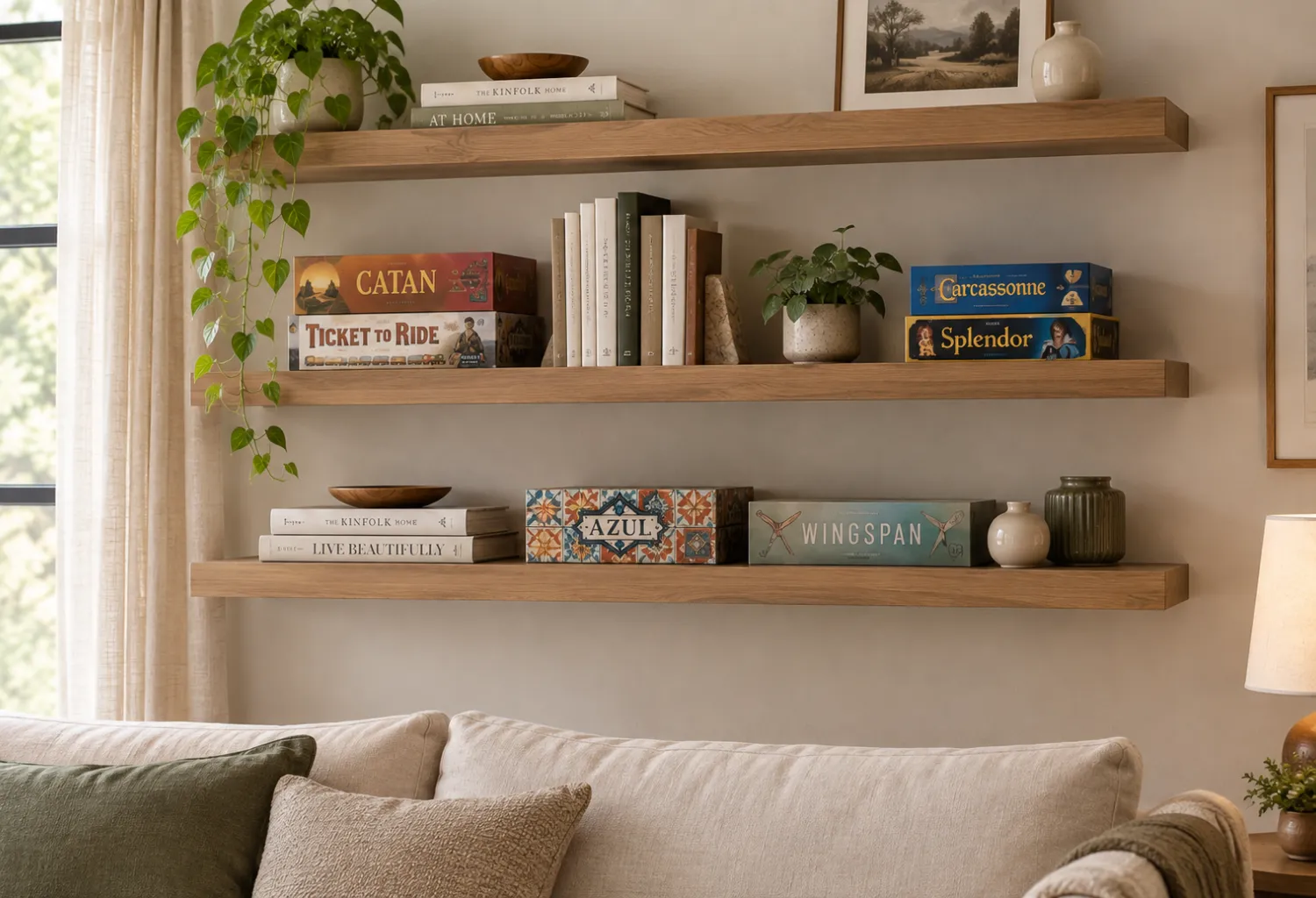
Floating shelves are useful when you want a small collection of games within easy reach. Display a few attractive boxes alongside books and decorative objects rather than filling every inch. Keep the shelves close to the main seating area for convenient access.
10. Large Storage Bench
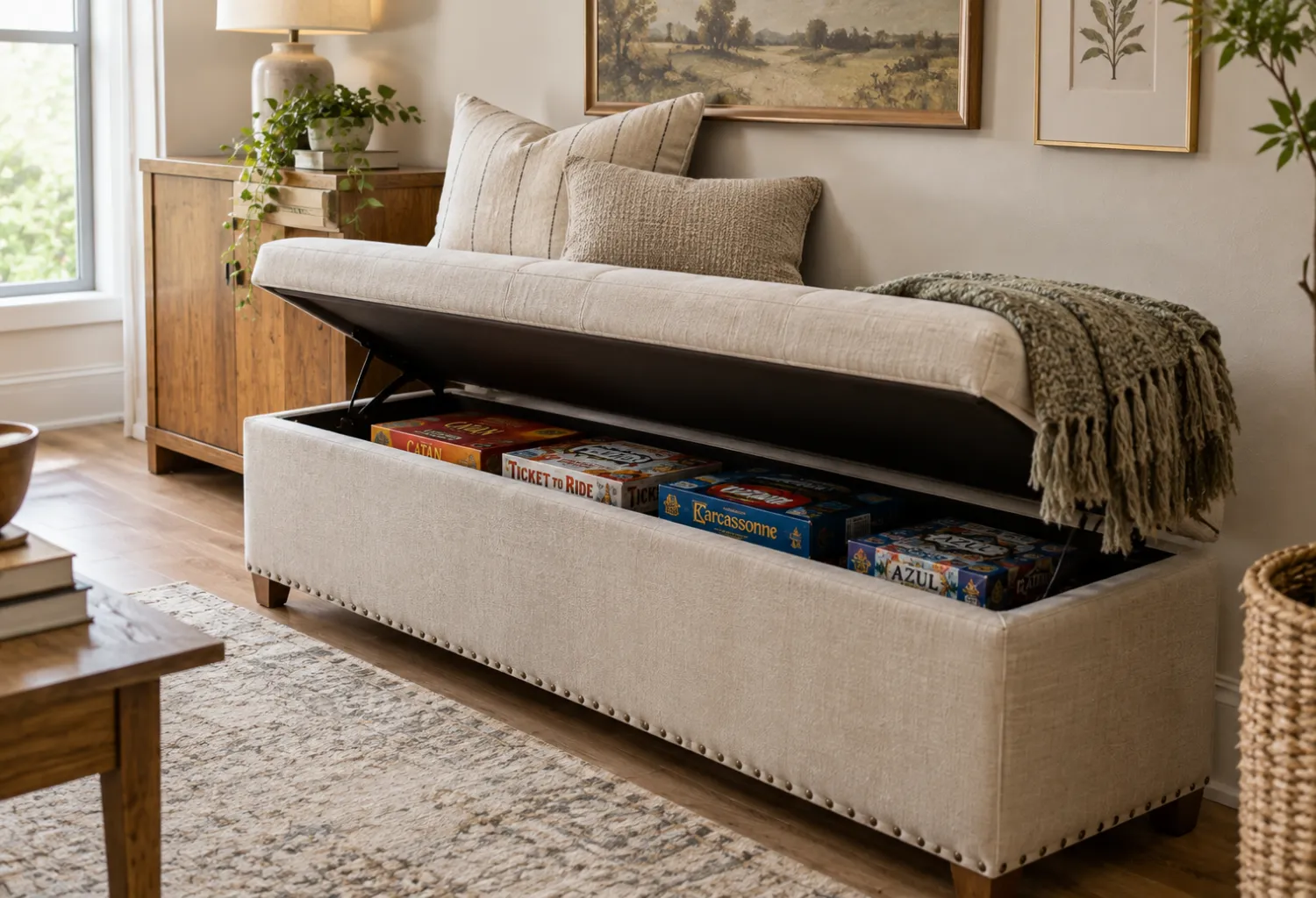
A long storage bench along a wall can hold a surprising number of board games. Place the larger boxes flat inside and use smaller bins to prevent pieces from shifting around. A cushioned top also creates extra seating when friends come over.
11. Game Boxes Inside Lidded Bins
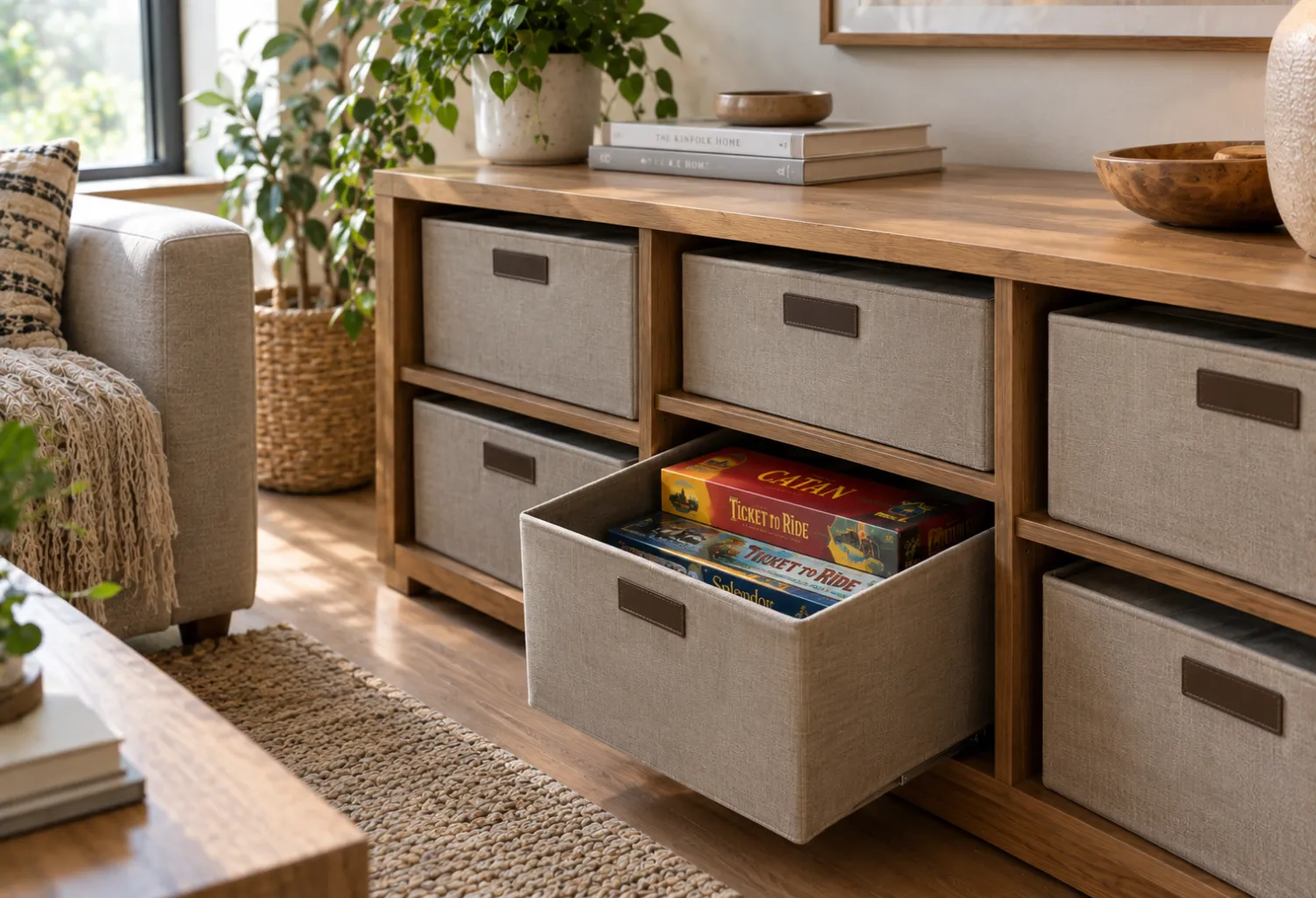
Large lidded bins are helpful when you prefer a completely contained collection. Choose neutral bins that coordinate with the room instead of bright plastic containers that compete with your decor. Clear labels on the front make it easier to identify what’s inside.
12. Rolling Storage Drawers
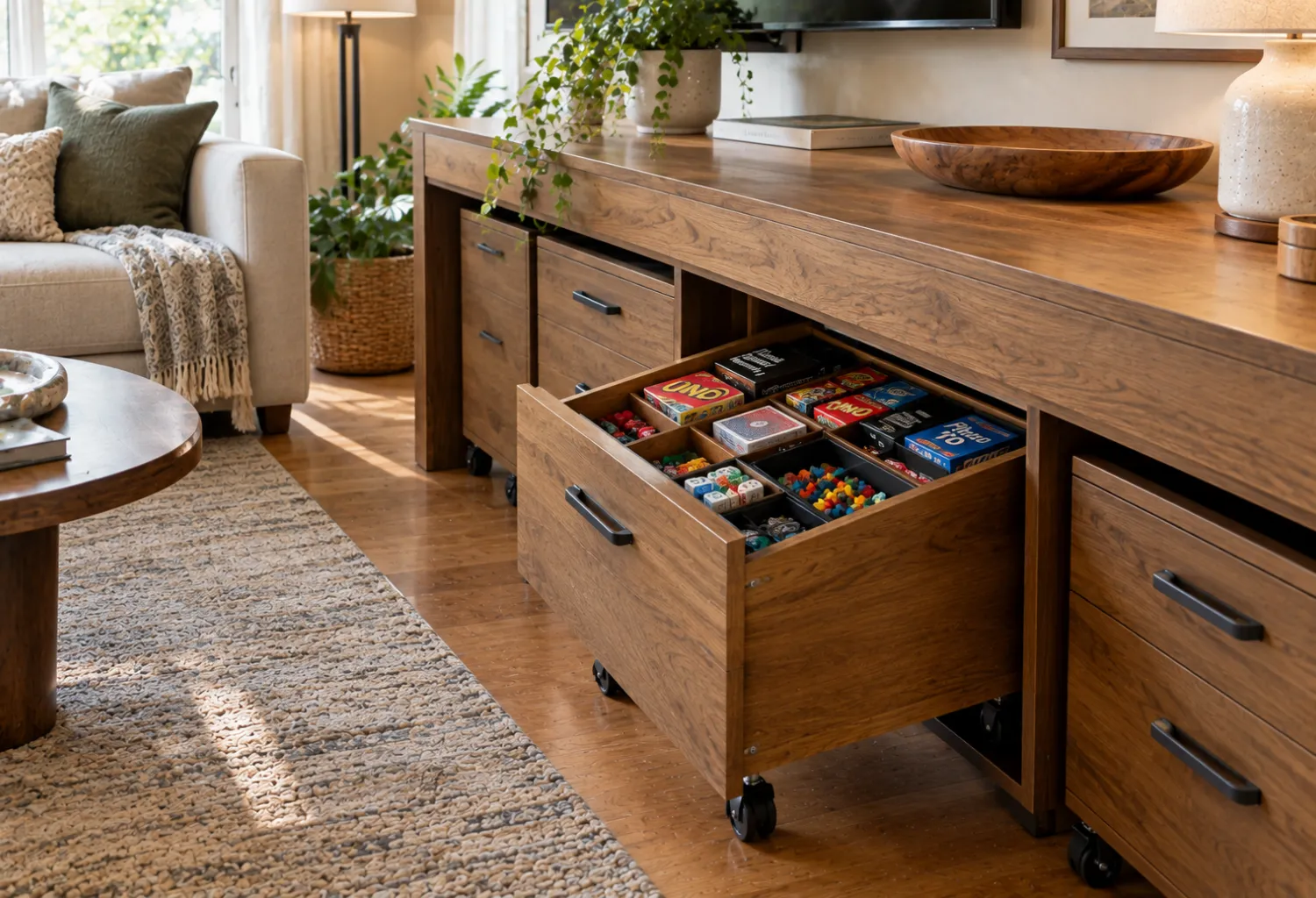
Slim rolling drawer units can fit underneath consoles, desks, or open shelving. Assign one drawer to card games, another to family games, and another to accessories. The wheels allow you to pull the entire collection out when needed and tuck it away afterward.
13. Drawer Dividers for Game Pieces
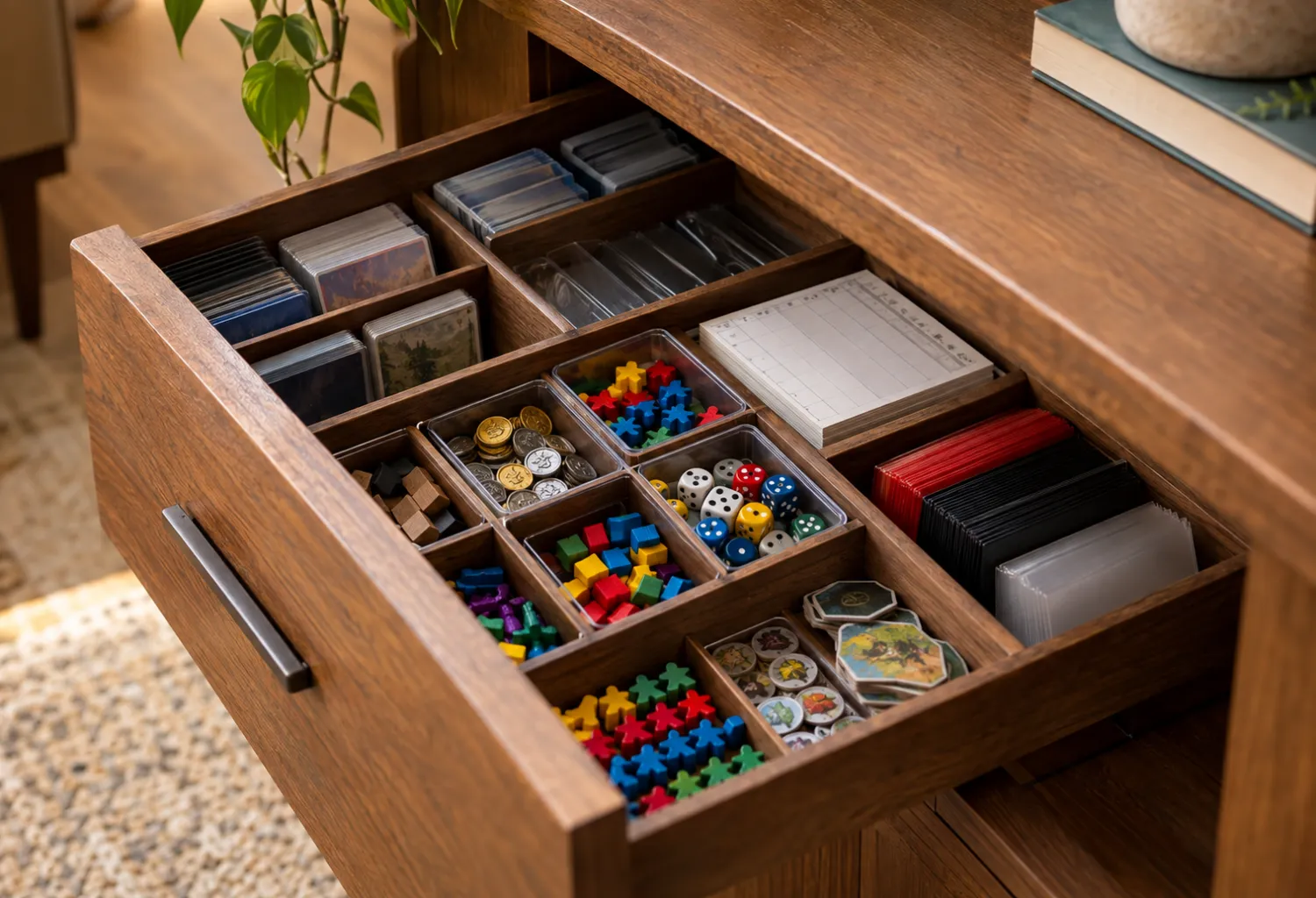
Board game storage isn’t only about the boxes. Deep furniture drawers can organize dice, tokens, pawns, score pads, and card sleeves using adjustable dividers or small containers. Keeping similar pieces together prevents the frustrating search for missing components.
14. Card Game Organizer Tray
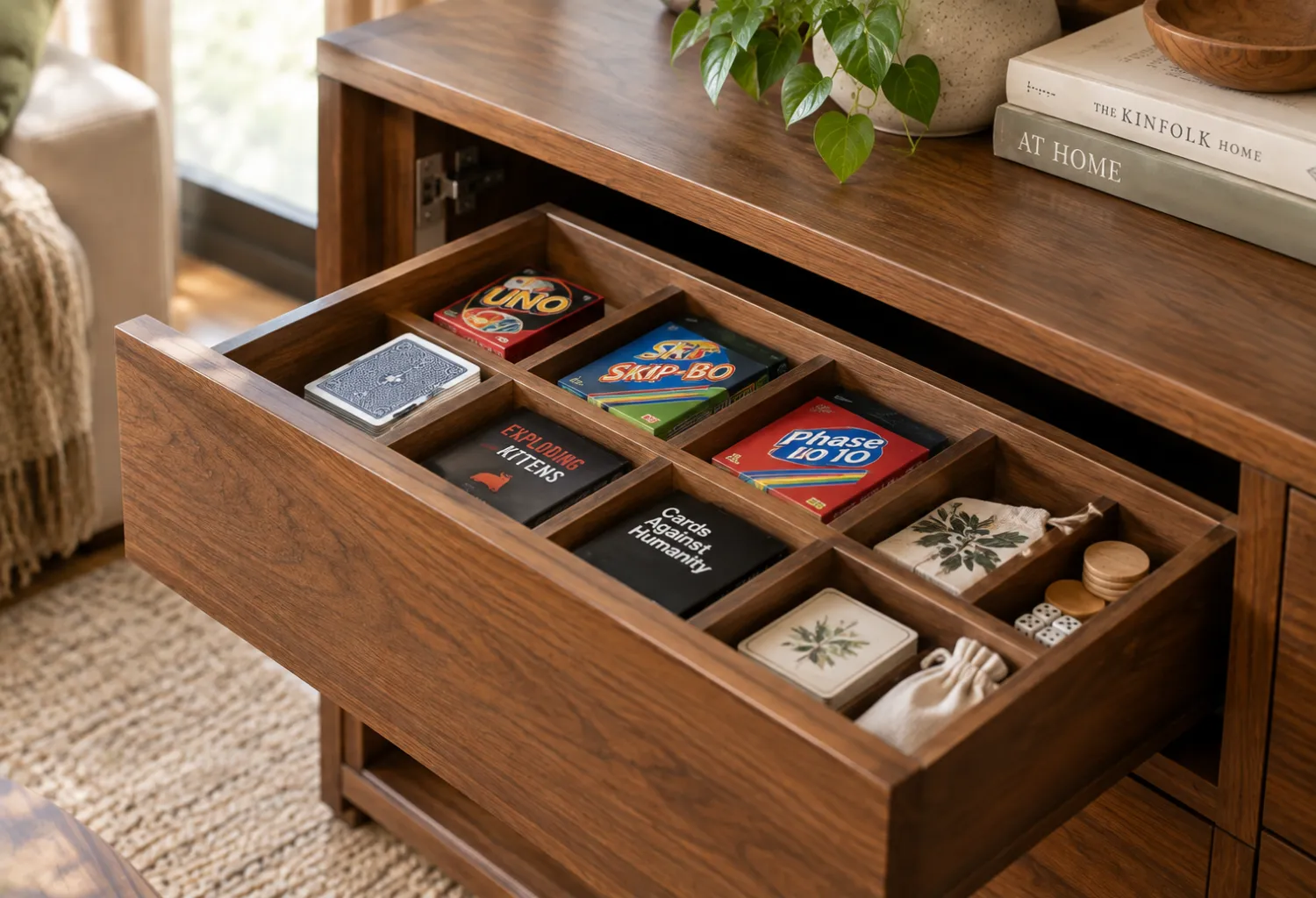
A shallow organizer tray works well for smaller card-based games that tend to disappear among larger boxes. Place the tray inside a media cabinet or bookshelf basket. Divided compartments keep individual decks together without taking up an entire shelf.
15. Game Night Cabinet
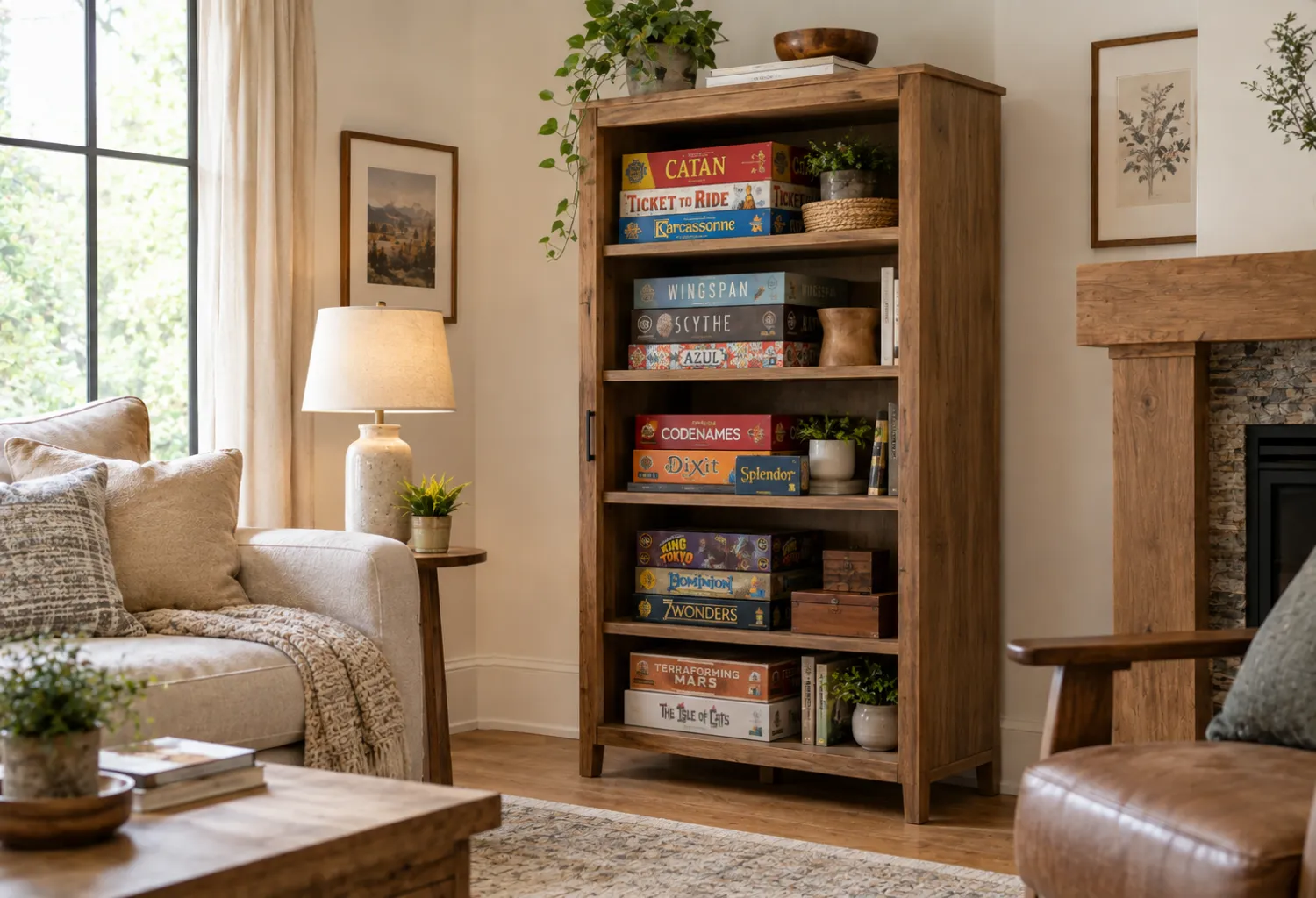
A dedicated cabinet creates a central home for the entire collection. Choose one with adjustable shelves so large games fit without awkward stacking. In a family living room, placing it near the main seating area makes setup and cleanup feel like part of the room’s normal routine.
16. Open Cubby Wall Unit
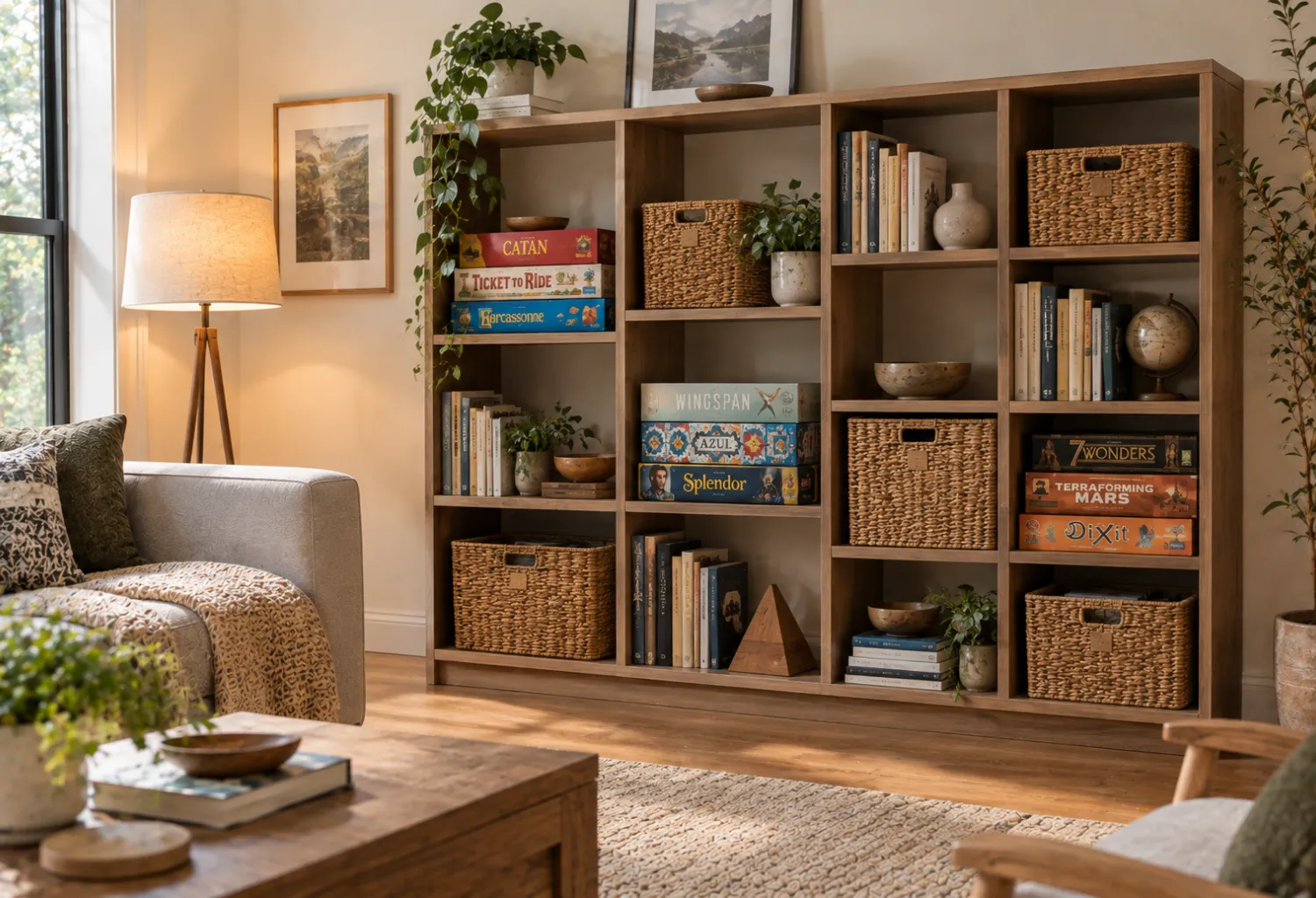
An open cubby unit can organize games while adding architectural interest to a blank living room wall. Stack boxes horizontally in some compartments and use baskets in others. Mixing storage with a few books or decorative pieces keeps the unit from looking like a storage warehouse.
17. Board Game Storage Trunk
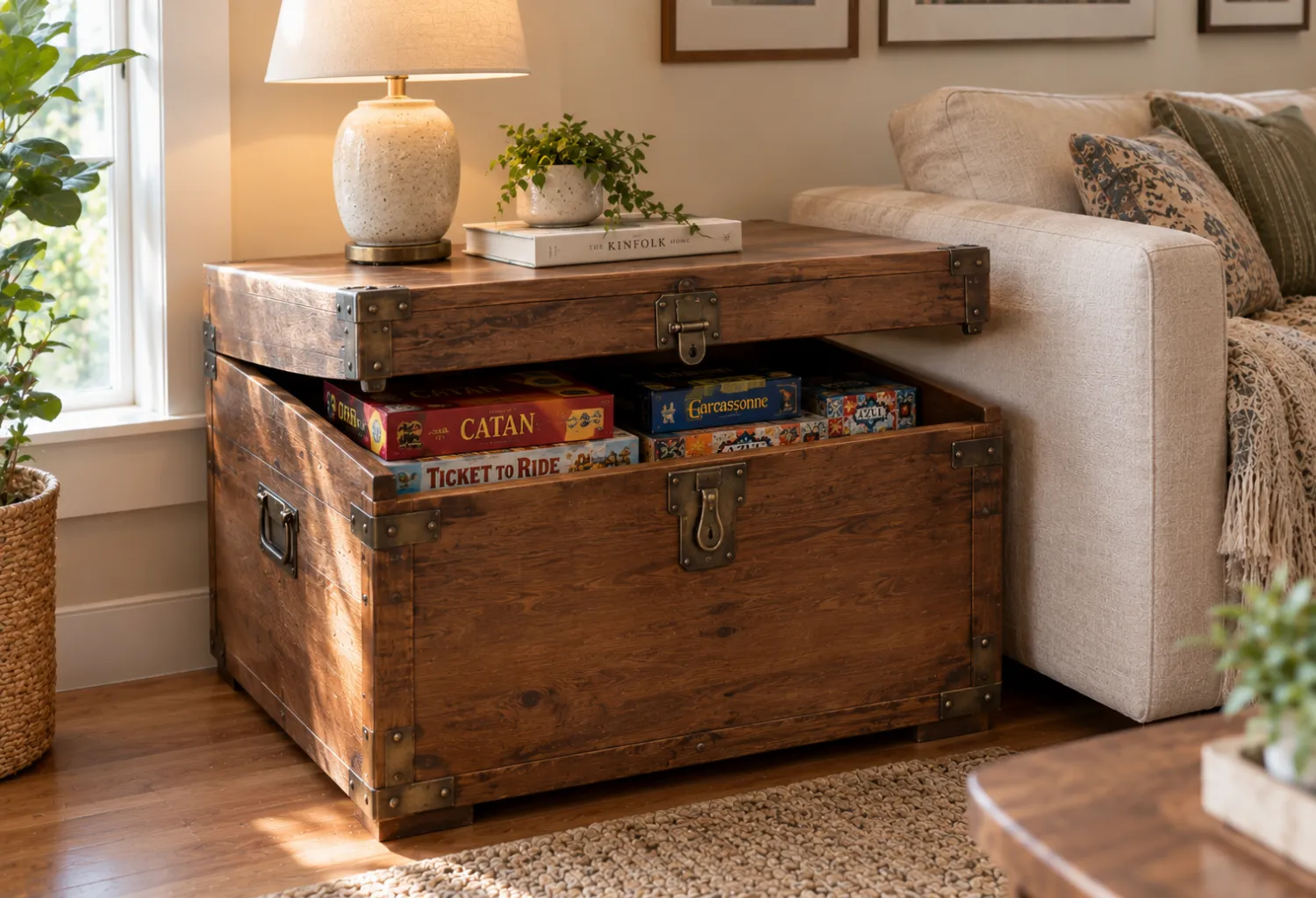
A decorative trunk can hide a collection while adding character to the room. Look for a sturdy design with a flat top that can work as an occasional side table. Wooden trunks suit rustic and farmhouse interiors, while upholstered versions can feel softer and more contemporary.
18. Closet Shelf Game Zone
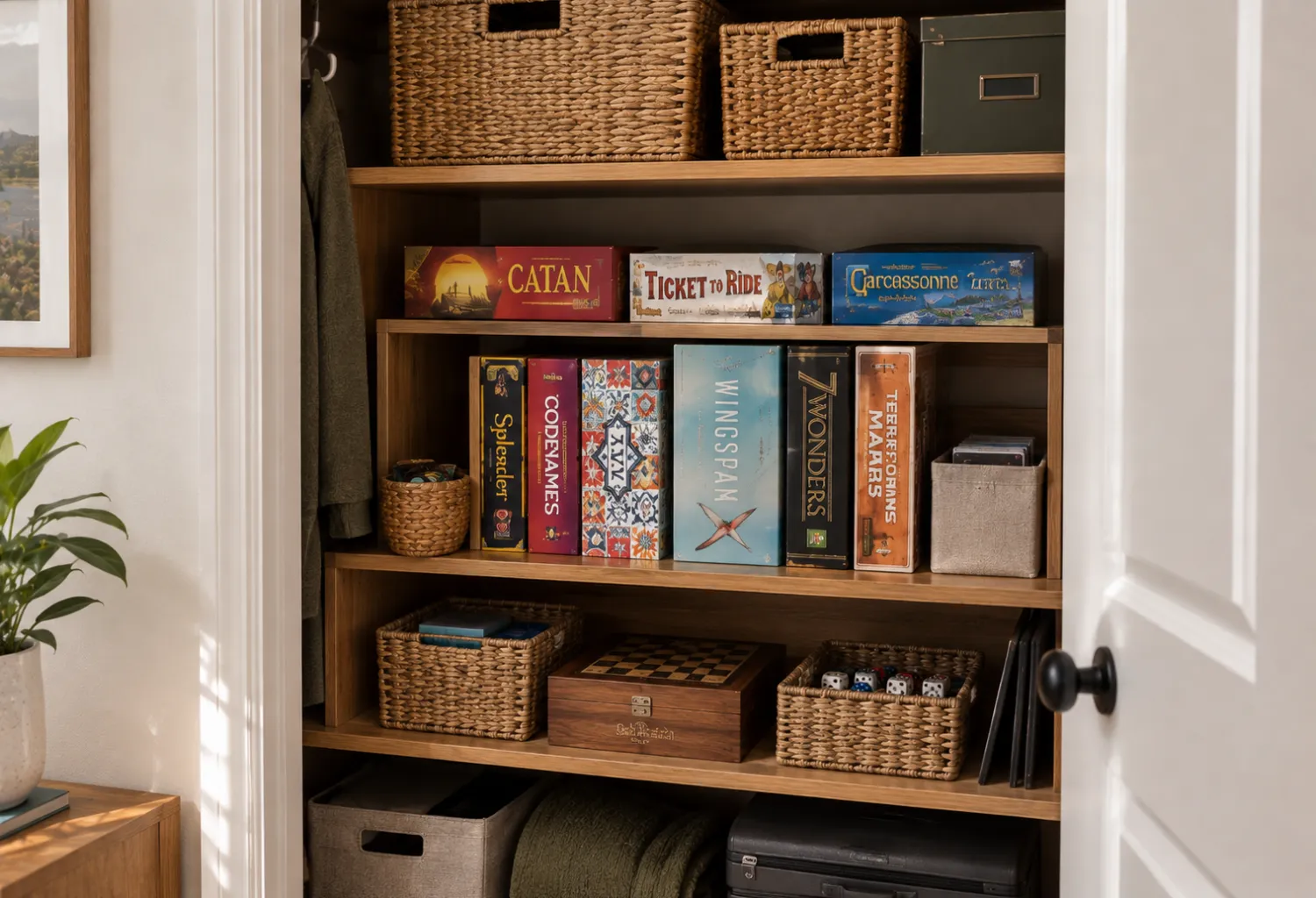
If your living room has a coat or utility closet, reserve one shelf for board games. Use shelf risers to create two levels when the closet is deep enough. Group the collection by frequency of use so everyday games stay toward the front.
19. Labeled Fabric Bins
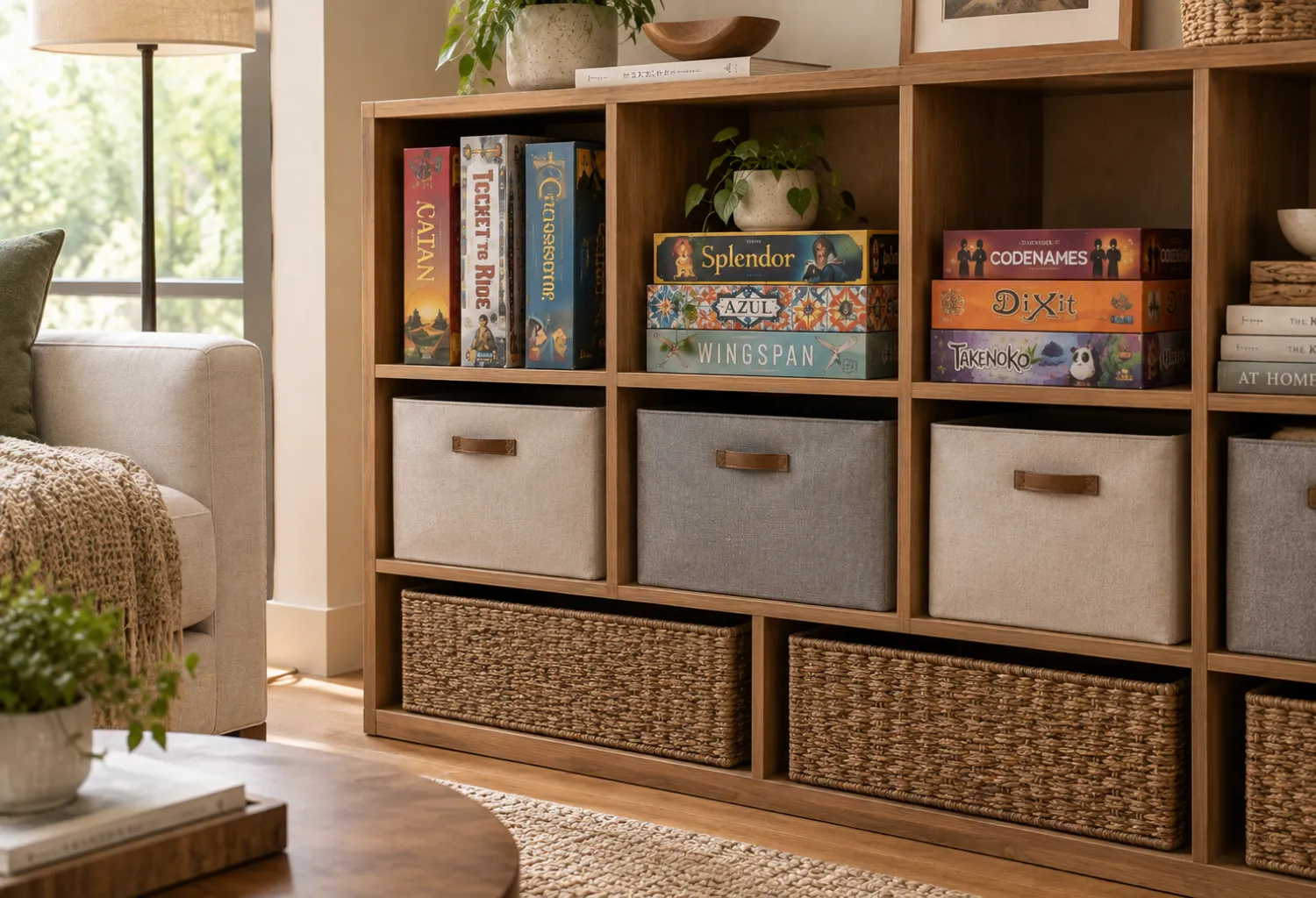
Fabric storage bins soften the appearance of open shelving while keeping games and accessories contained. Use short labels such as “Card Games,” “Kids,” “Family,” or “Strategy.” Matching bins in beige, gray, or another room-friendly shade create a more cohesive look.
20. Under-Sofa Storage Boxes
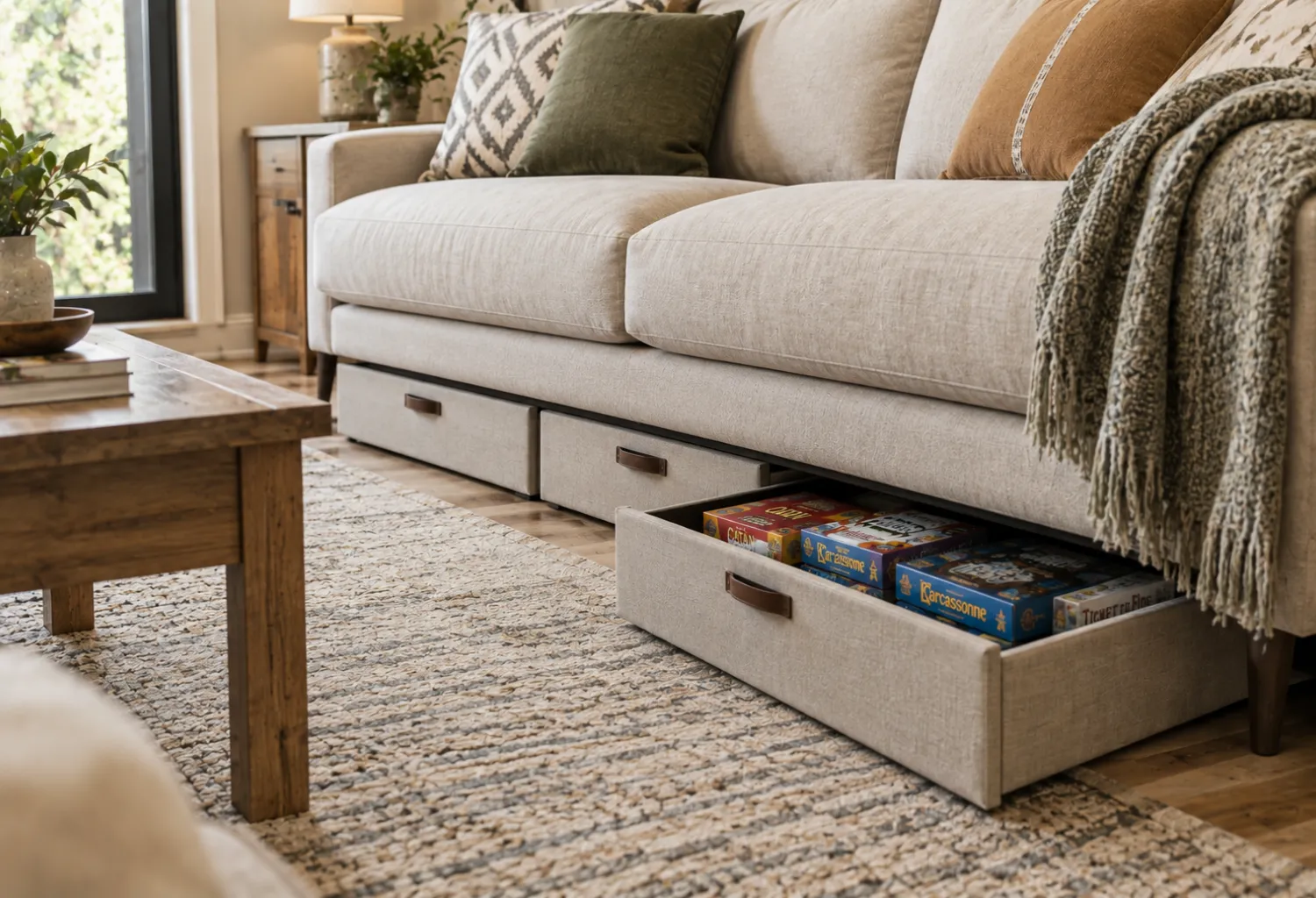
The unused space beneath a sofa can provide discreet storage for smaller games. Choose shallow boxes that slide easily underneath without touching the sofa frame. This option works best for occasional-use games rather than heavy boxes you need to retrieve every day.
21. Pegboard Game Accessory Station
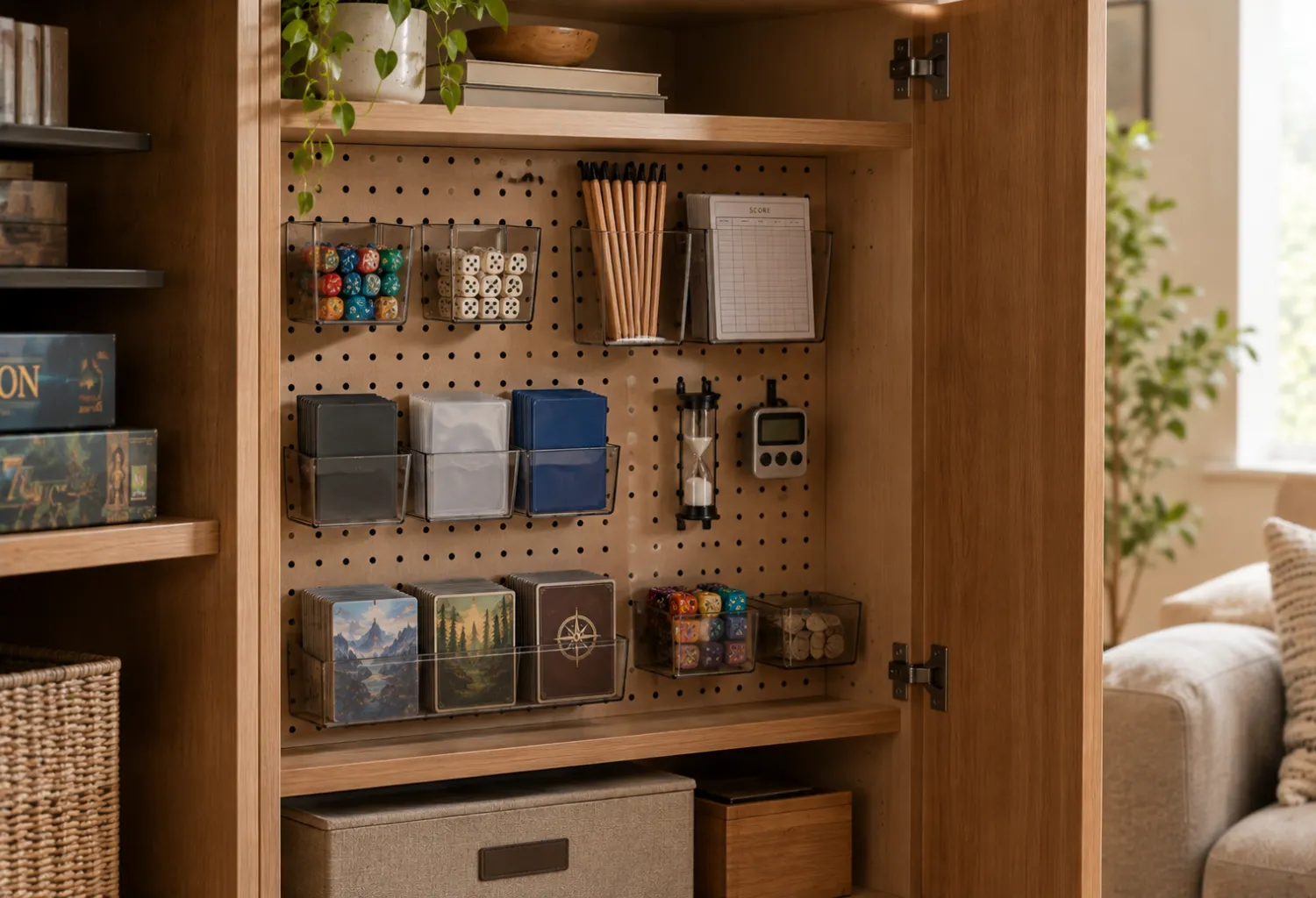
A small pegboard mounted inside a cabinet or on an available wall can organize accessories such as score sheets, pencils, timers, and storage bags. Keep the arrangement compact so it feels intentional rather than like a workshop display.
22. Matching Game Storage Baskets
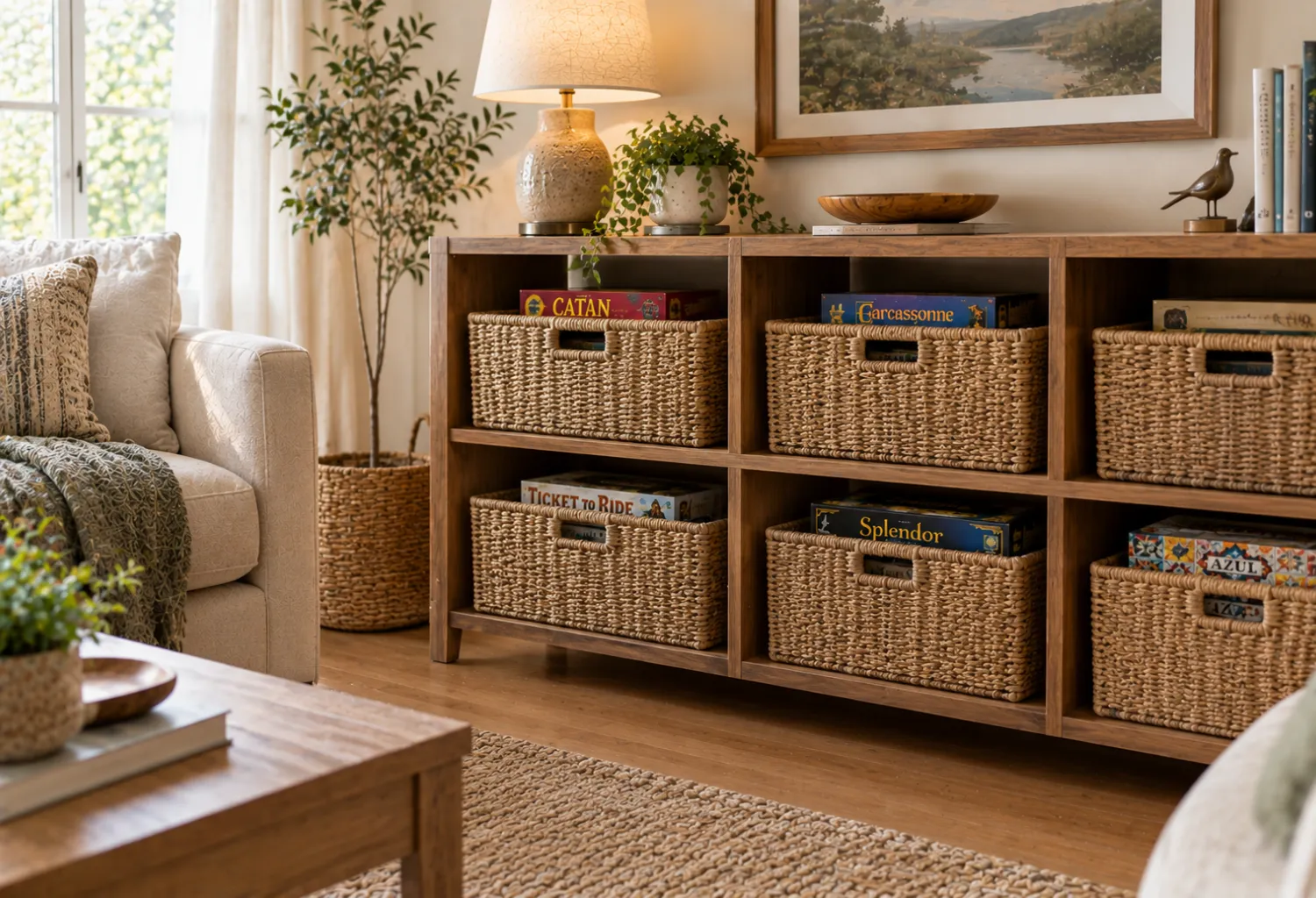
When colorful game boxes don’t suit your living room, place them inside matching baskets. This is an easy way to make an open shelf look calmer without hiding the collection in another room. Choose baskets that complement existing textures such as jute rugs, linen upholstery, or wood furniture.
23. Sideboard Game Storage
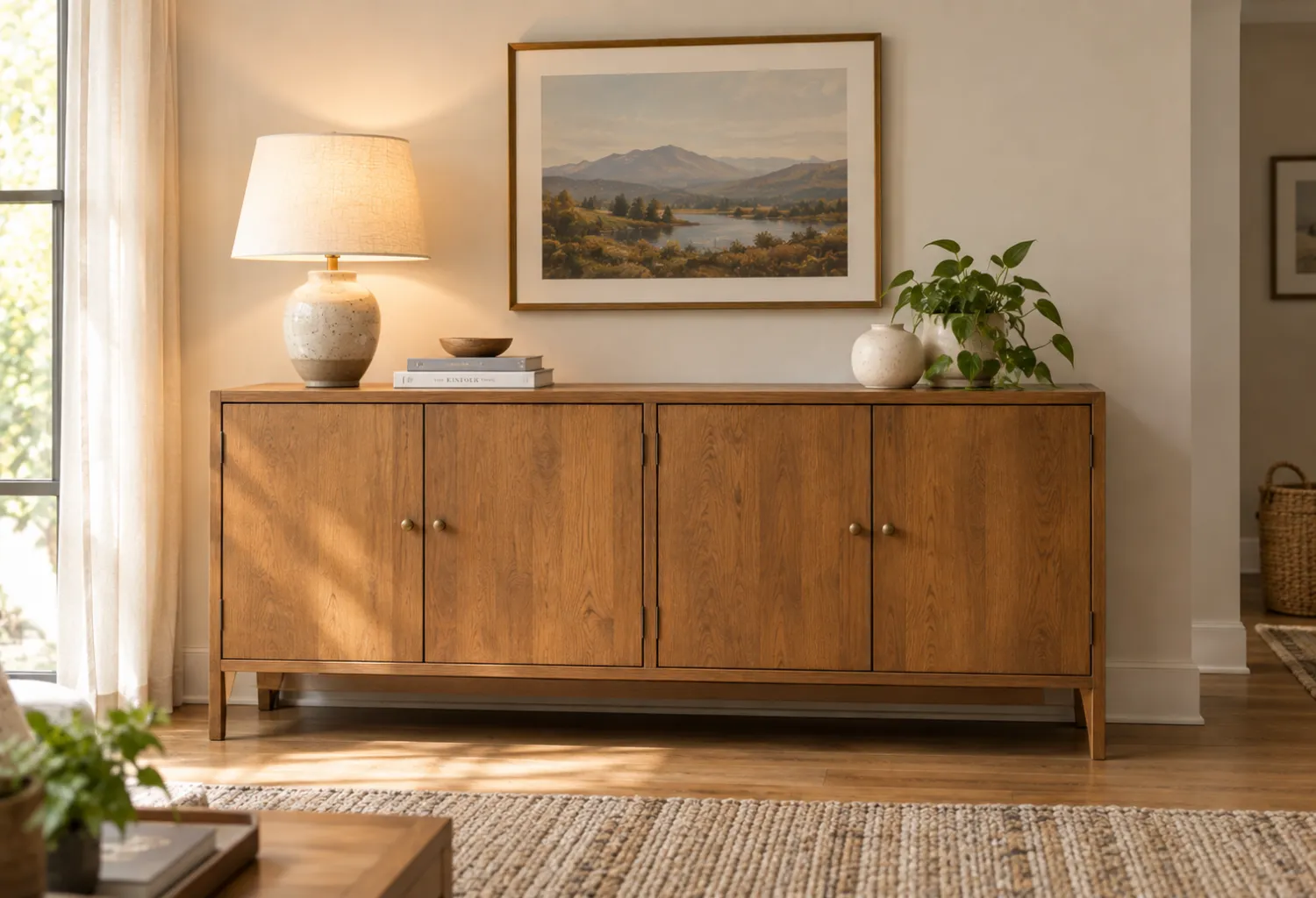
A dining-style sideboard can work beautifully in a larger living room, especially when it already sits against an empty wall. Store games behind the doors and use the top for a lamp, artwork, or a small decorative arrangement. The result feels like regular furniture rather than dedicated storage.
24. Categorized Shelf Sections
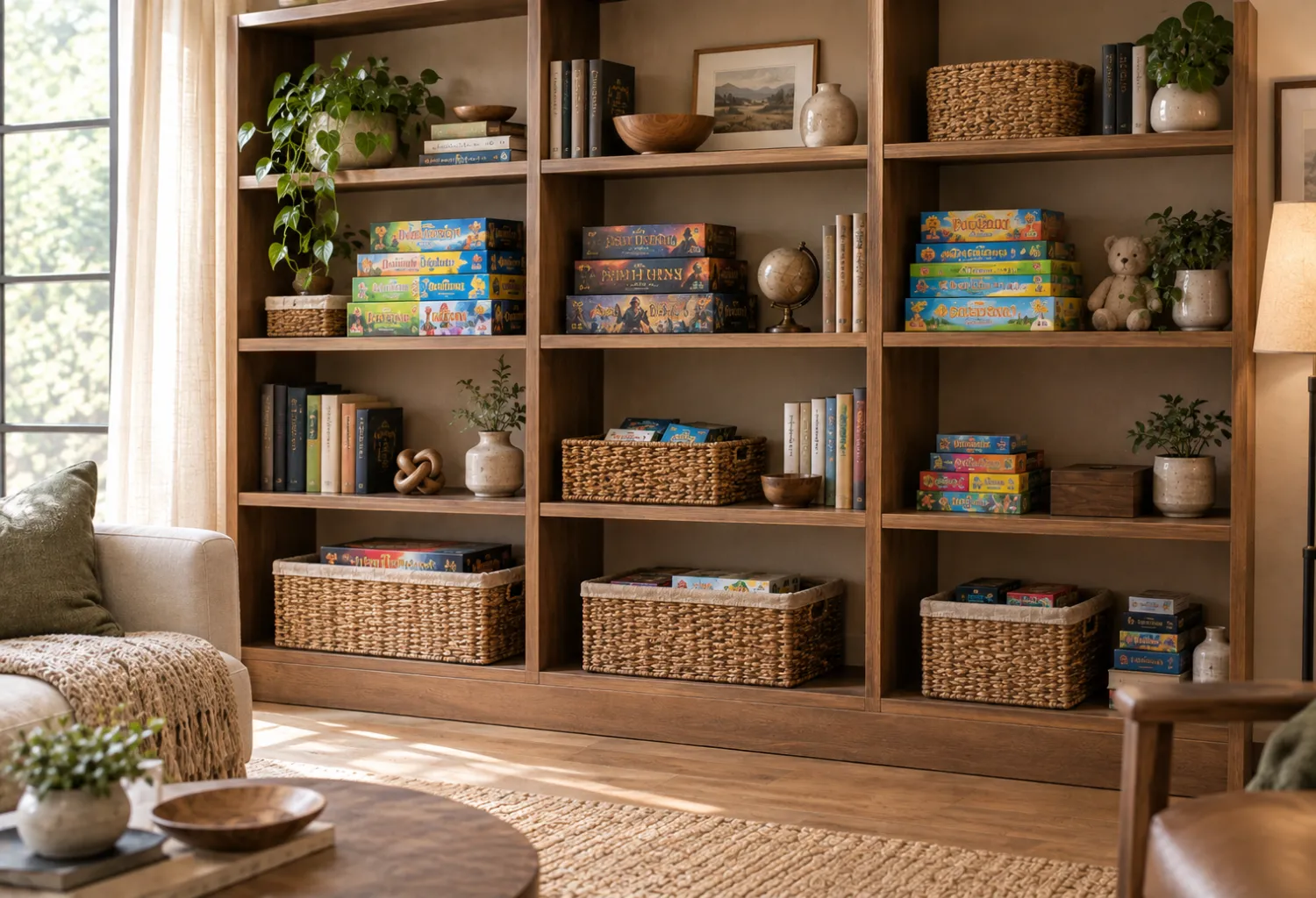
Divide one shelving unit into clear categories rather than stacking everything together. Family games, strategy games, children’s games, and card games can each have their own section. This makes it easier to find something quickly without disturbing the rest of the collection.
25. Front-Facing Game Display
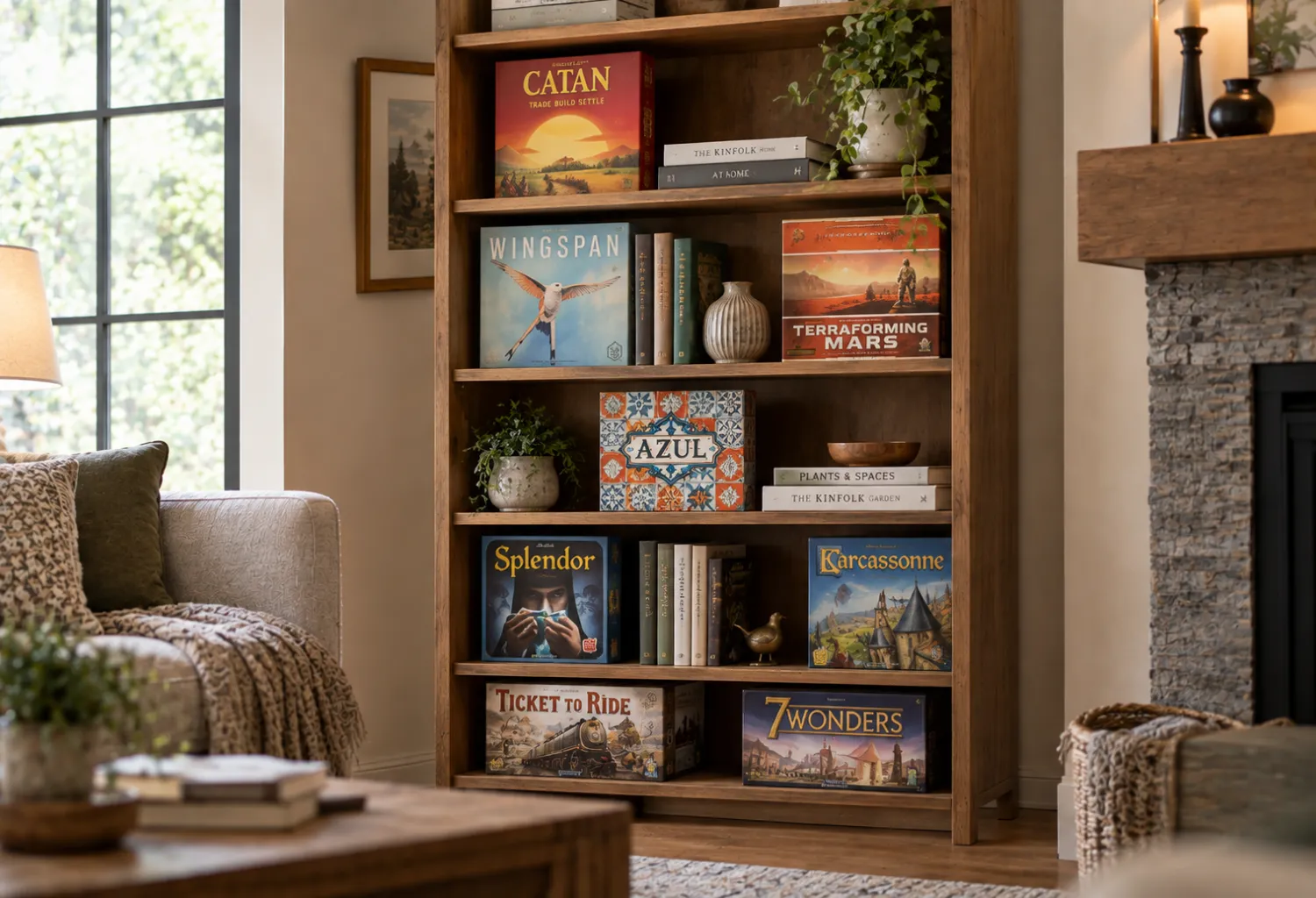
Some board game boxes have attractive artwork that can become part of the room’s personality. Stand a few favorite boxes upright with their covers facing outward, similar to displaying books or records. Rotate the selection occasionally so the display stays fresh.
26. Game Storage Behind the Sofa
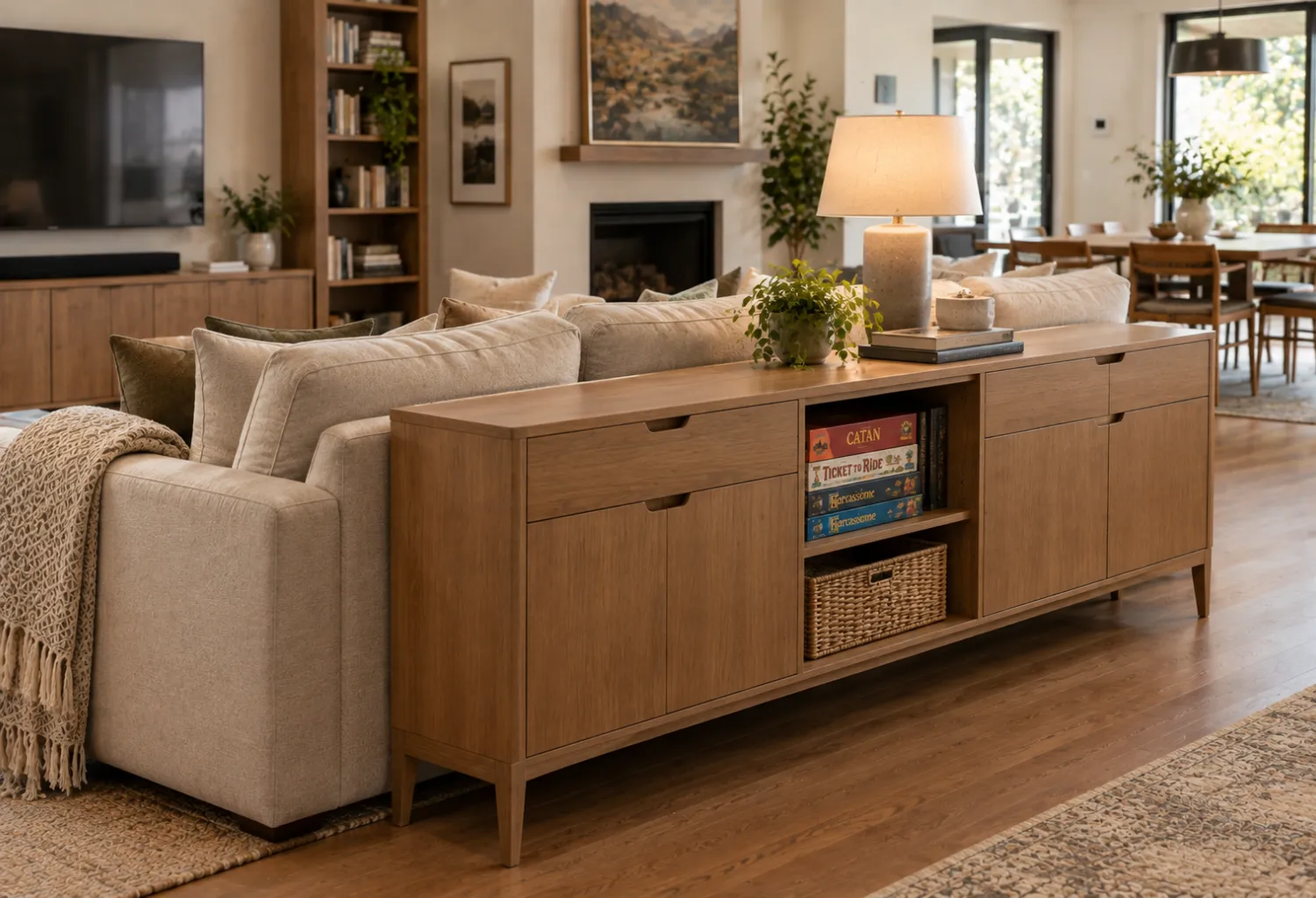
A narrow console positioned behind the sofa can provide hidden storage without taking up additional wall space. Choose a unit with drawers or cabinets and keep games inside. This arrangement is particularly useful when the sofa floats in the middle of an open-plan living area.
27. Modular Storage Cubes
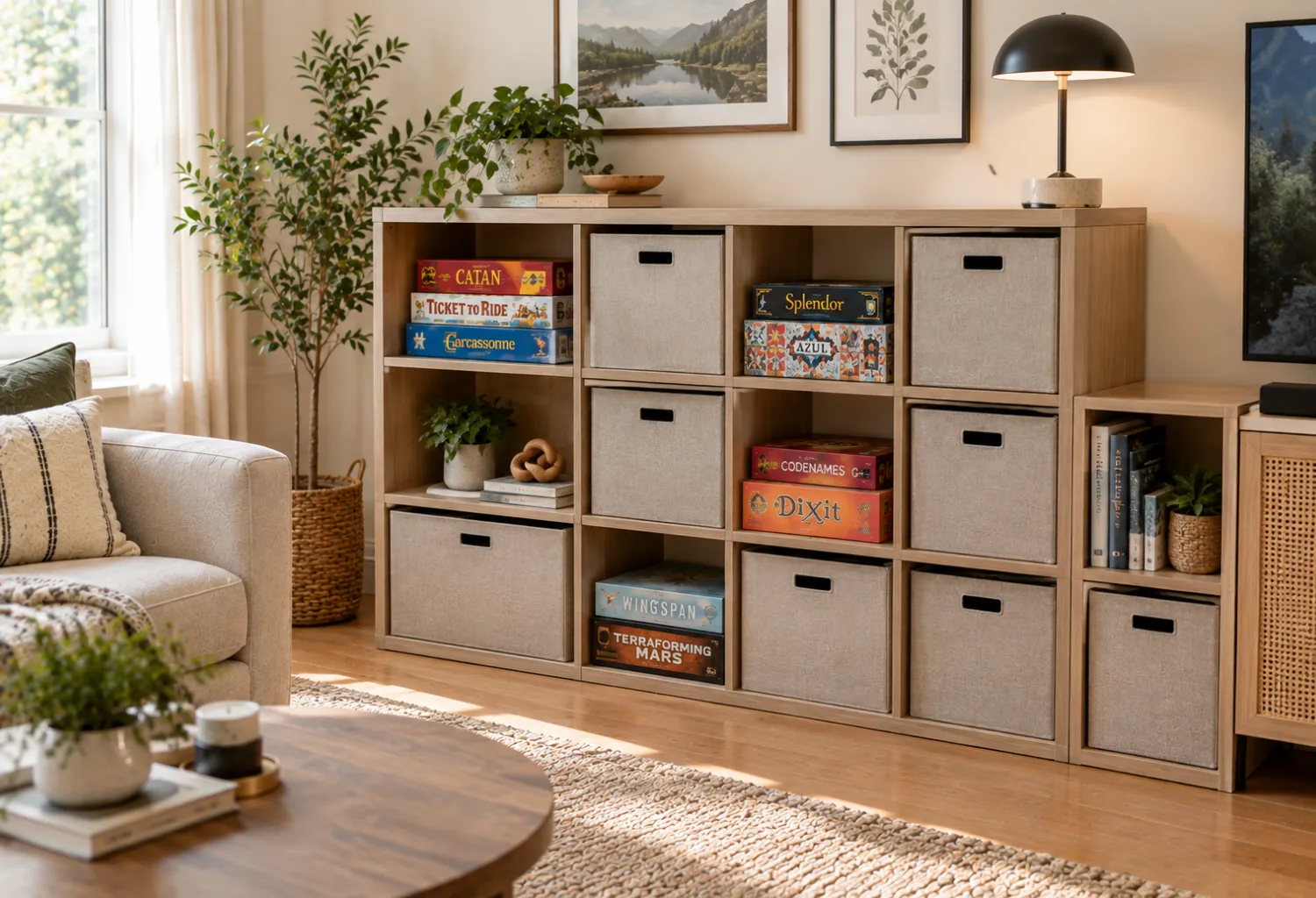
Modular cubes make it easy to expand storage as your board game collection grows. Start with a small arrangement and add sections later instead of buying a large cabinet immediately. Use fabric bins in selected cubes to balance open and closed storage.
28. Clear Component Containers
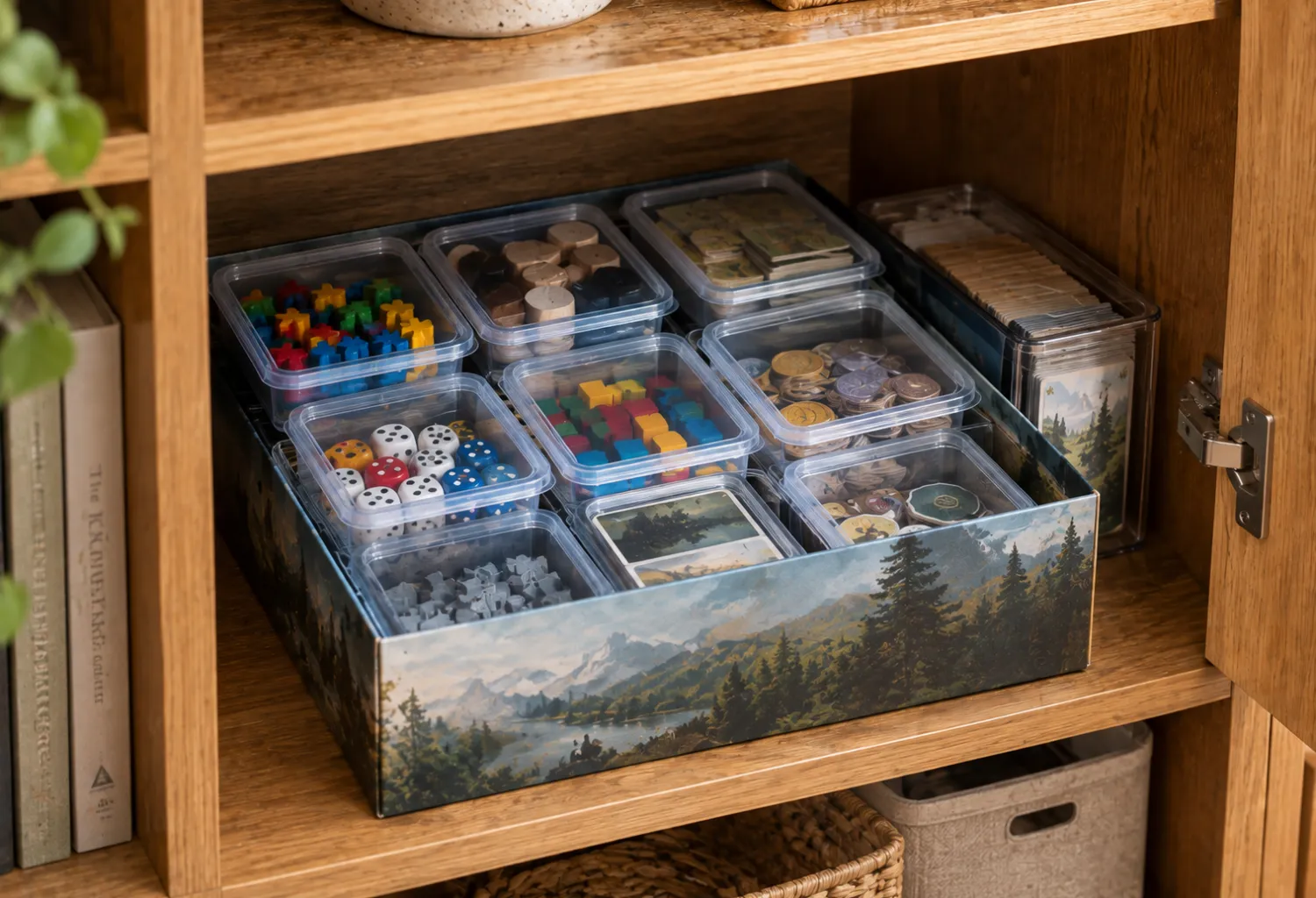
Small clear containers are useful for keeping loose game pieces separated inside larger boxes or drawers. Choose stackable containers with secure lids so tokens and dice don’t mix together. Transparent sides also make it easy to identify what you need before pulling everything out.
29. Family Game Basket
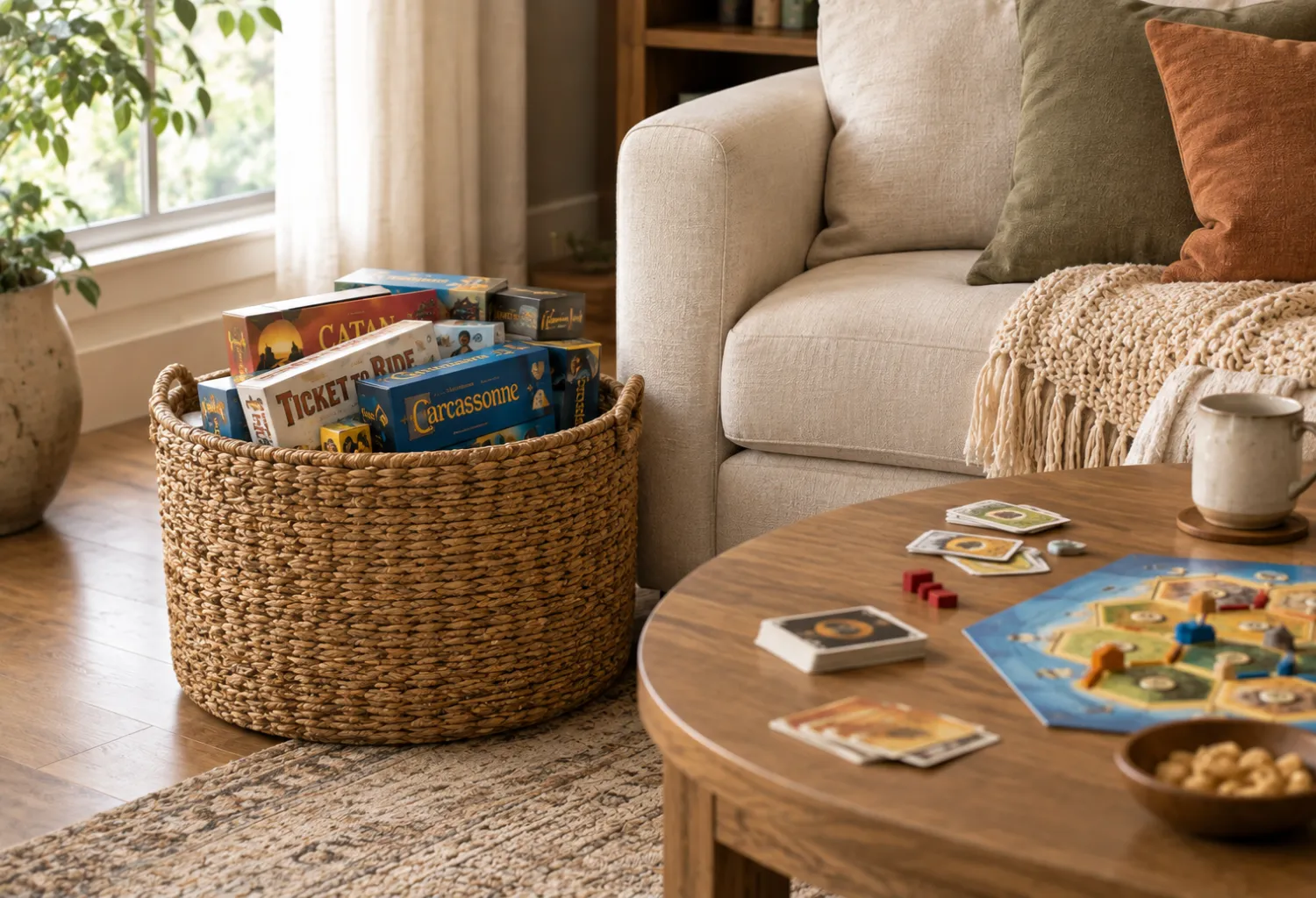
A single oversized basket can hold the games your household plays most often. Place it beside the sofa or coffee table where everyone can reach it. Because the basket only holds the active rotation, it prevents frequently used games from becoming mixed with the rest of the collection.
30. Dedicated Game-and-Decor Cabinet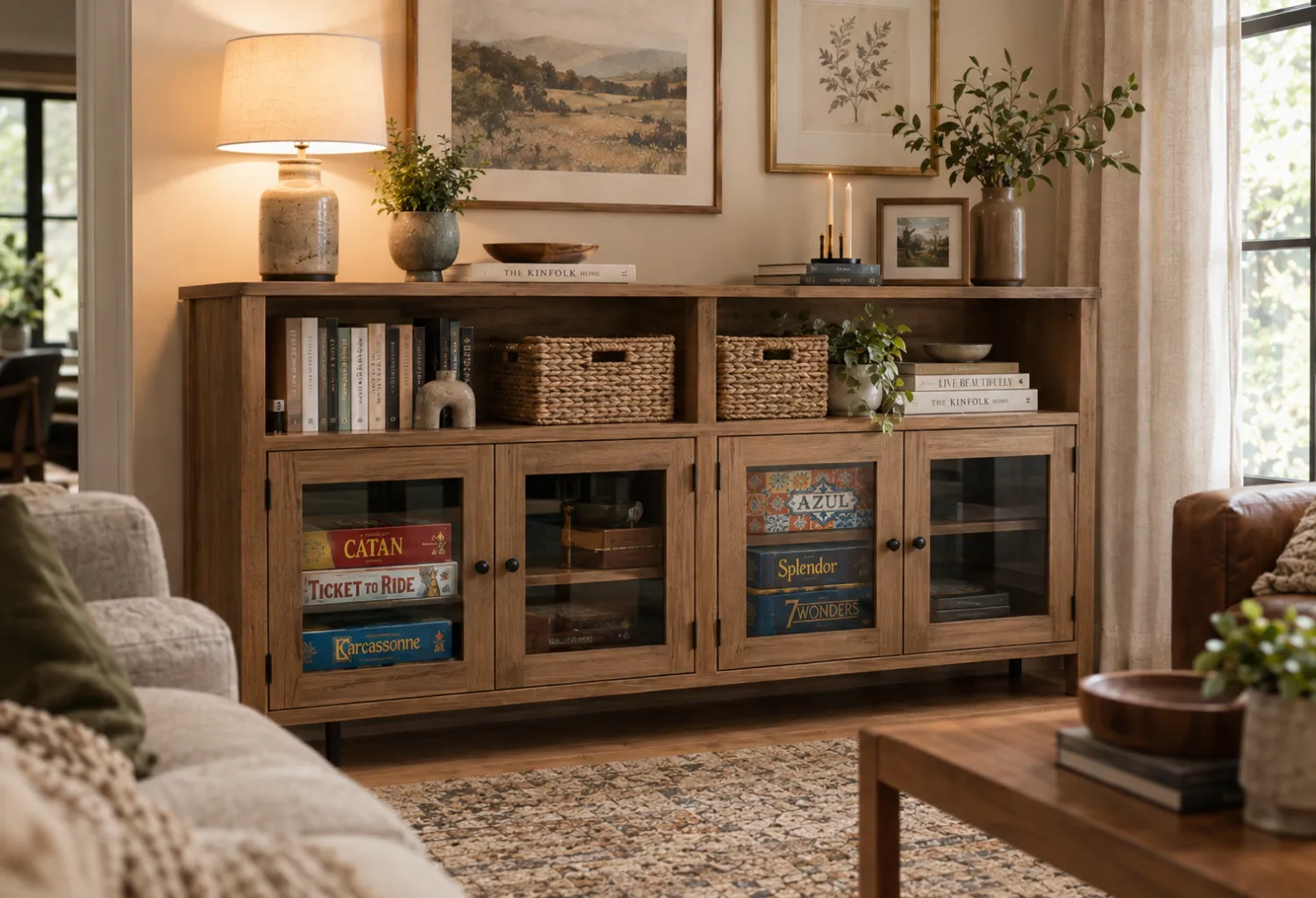
For a polished living room, combine board game storage with ordinary decorative storage. Use the lower cabinets for games, middle shelves for books and baskets, and the top area for artwork, a lamp, or accessories. This approach makes the collection feel naturally integrated into the room instead of visually dominating it.
Conclusion
The best Board Game Organization Ideas For Living Room spaces are the ones that make games easy to reach without allowing the collection to take over the room. A small basket or ottoman may be enough for a few favorites, while a cabinet, cubby wall, or sideboard works better for a larger collection.
Think about how your household actually plays. Frequent games deserve convenient storage near the seating area, while occasional games can live in closed cabinets or less accessible spaces. With the right combination of accessible storage and concealed organization, your living room can stay comfortable, attractive, and ready for the next game night.