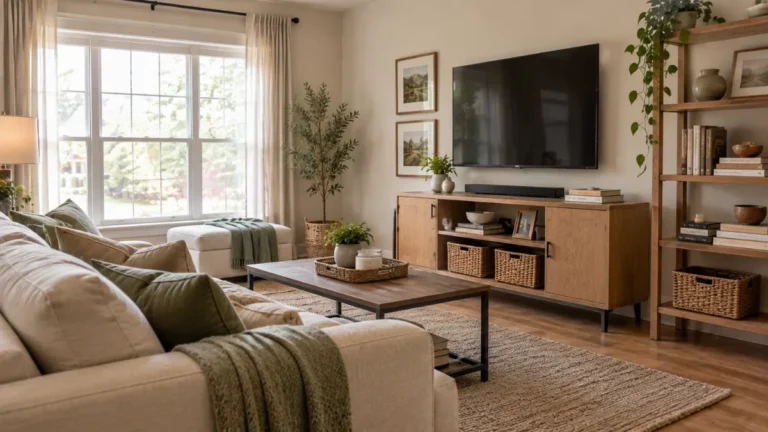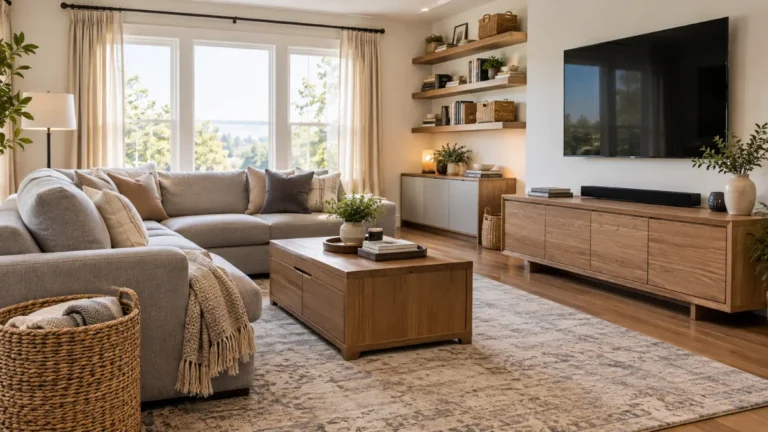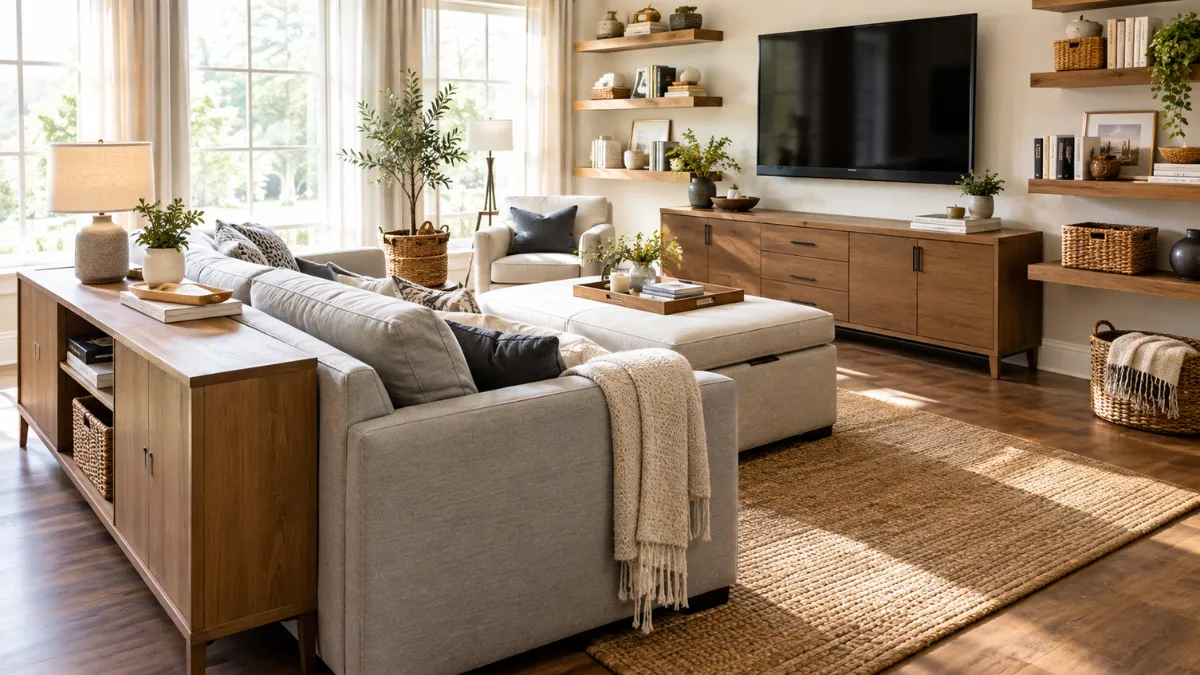
30 Living Room Storage Ideas for a Clutter-Free Space
A living room can look messy surprisingly quickly. Books pile up on the coffee table, blankets land on the sofa, toys migrate across the floor, and remotes seem to disappear exactly when you need them. The challenge is finding living room storage ideas that control everyday clutter without making the room feel crowded.
The best solutions work with the furniture and layout you already have. Some use overlooked corners, while others turn attractive furniture, wall space, or empty areas beneath existing pieces into useful storage. Here are 30 practical ideas to help you create a living room that feels organized, comfortable, and still looks like a home.
1. Built-In Media Cabinets
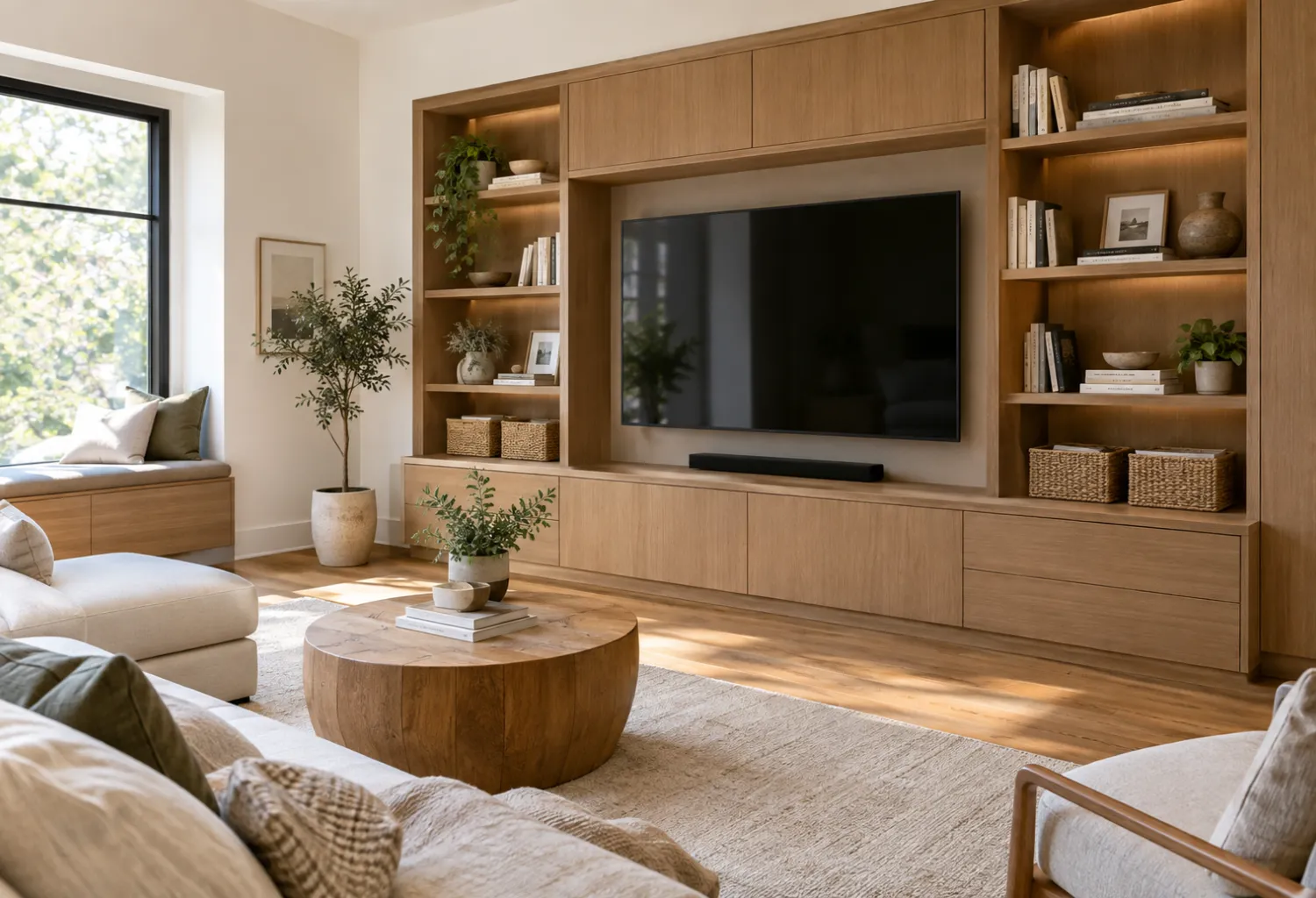
Built-in cabinets around the TV create a dedicated home for electronics, books, games, baskets, and decorative pieces. Closed cabinets keep visual clutter hidden, while open shelves provide space for styling.
For a traditional room, painted cabinetry works beautifully. In modern spaces, flat-front doors with simple hardware create a cleaner appearance.
2. Storage Ottoman
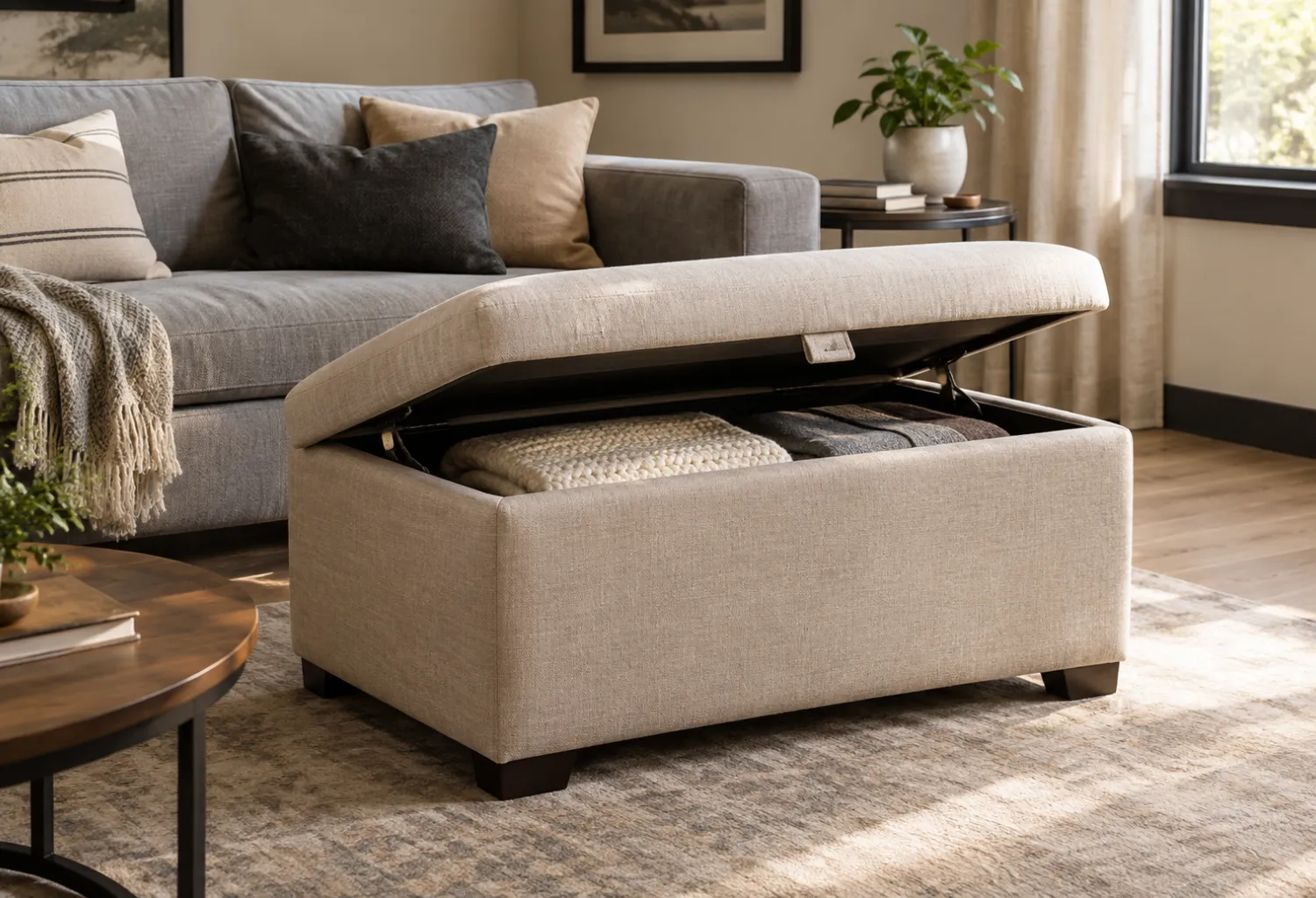
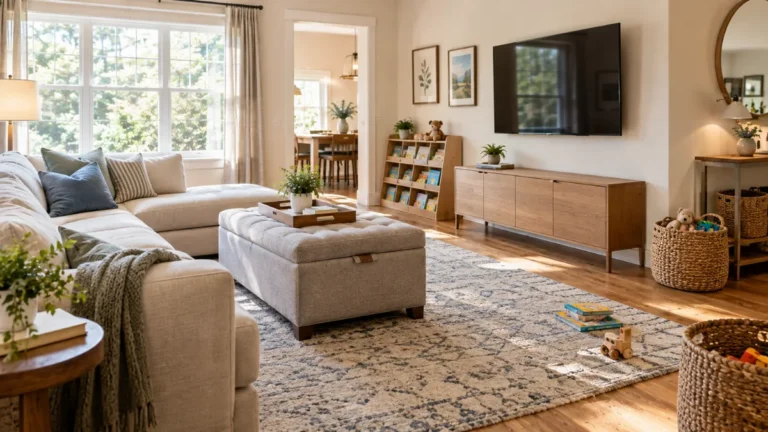
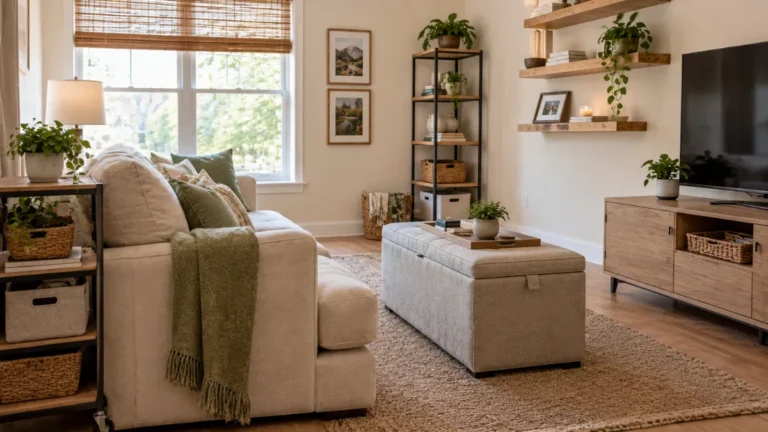
A storage ottoman is one of the easiest ways to add hidden storage without sacrificing comfort. Use it for throw blankets, pillows, board games, children’s toys, or seasonal accessories.
Choose an upholstered version that coordinates with your sofa. A textured fabric such as linen-look upholstery can add warmth without making the room feel visually heavy.
3. Lift-Top Coffee Table
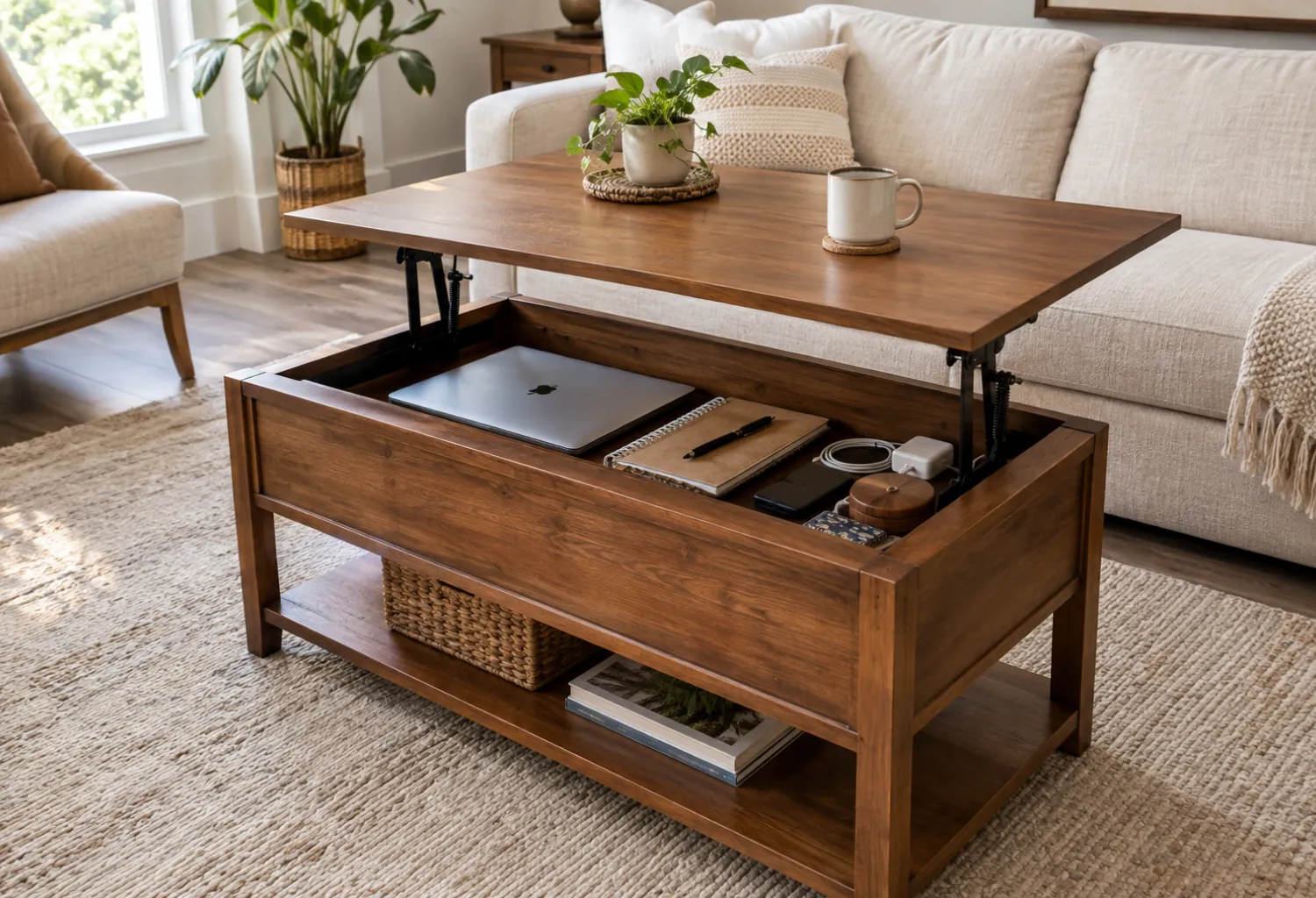
A lift-top coffee table provides storage and a practical work surface in one piece of furniture. The compartment underneath the tabletop can hold laptops, chargers, notebooks, remotes, and other frequently used items.
It is especially useful in smaller homes where the living room occasionally doubles as a workspace.
4. Floating Wall Shelves
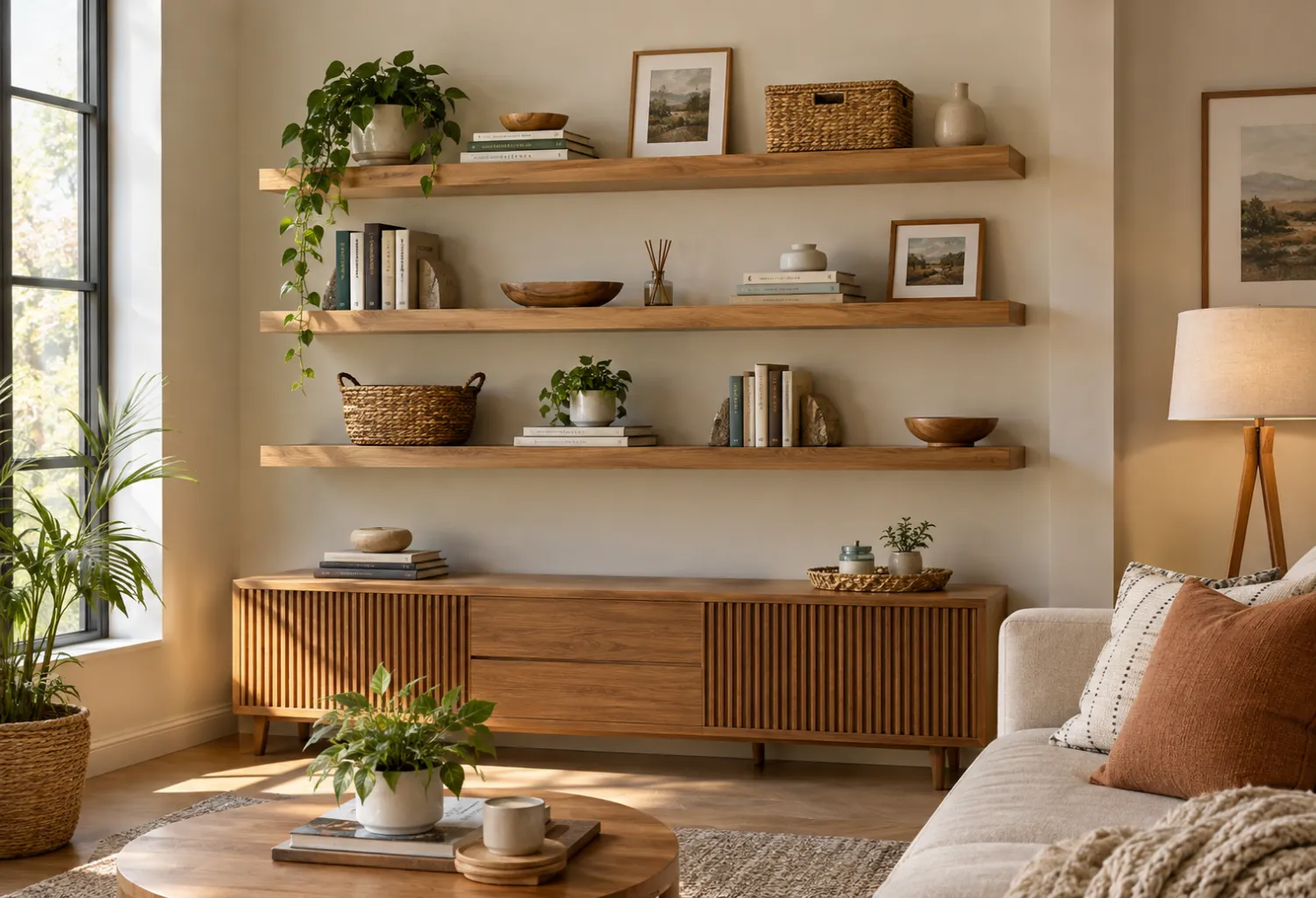
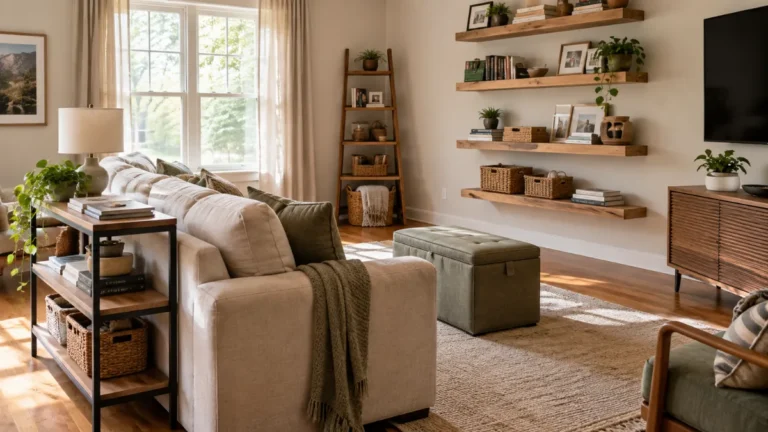
Floating shelves turn unused wall space into useful storage without taking up floor area. Arrange two or three shelves above a sofa, console, or empty wall section.
Mix books with small baskets, framed artwork, plants, and a few decorative objects. Leaving some open space between items keeps the arrangement from looking crowded.
5. Built-In Window Seat Storage
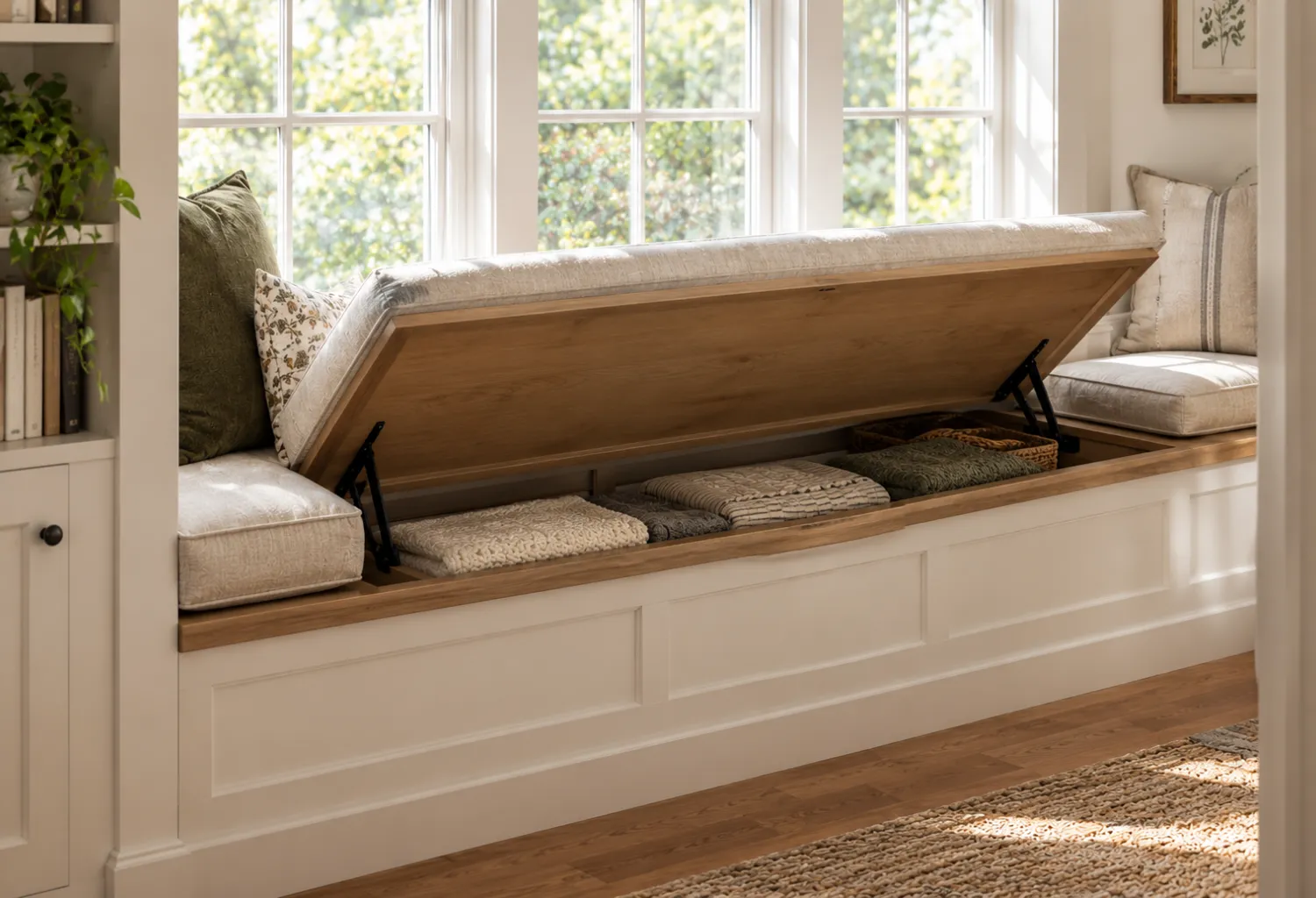
A window seat with drawers or lift-up compartments can turn an otherwise unused area into valuable storage. It is particularly useful in living rooms with deep windows or awkward alcoves.
Store blankets, children’s items, seasonal textiles, or rarely used accessories inside while keeping the top comfortable with a fitted cushion.
6. Narrow Console With Drawers
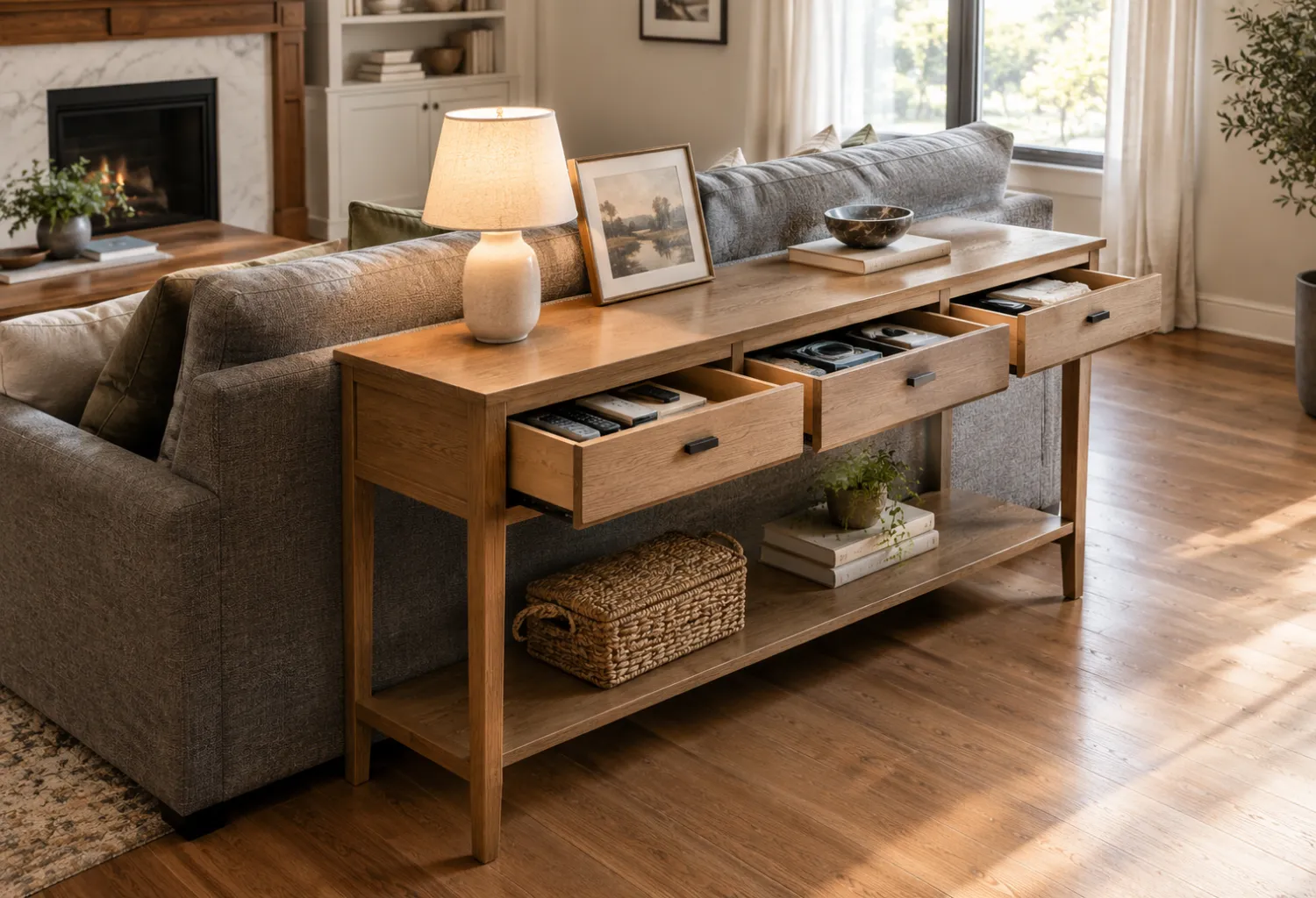
A slim console behind the sofa can provide surprisingly useful storage while occupying very little floor space. Look for one with several drawers for small items such as remotes, chargers, batteries, and stationery.
Keep the depth modest if the room has a narrow walkway behind the sofa. The goal is to improve storage without interfering with traffic flow.
7. Baskets Beneath a Console
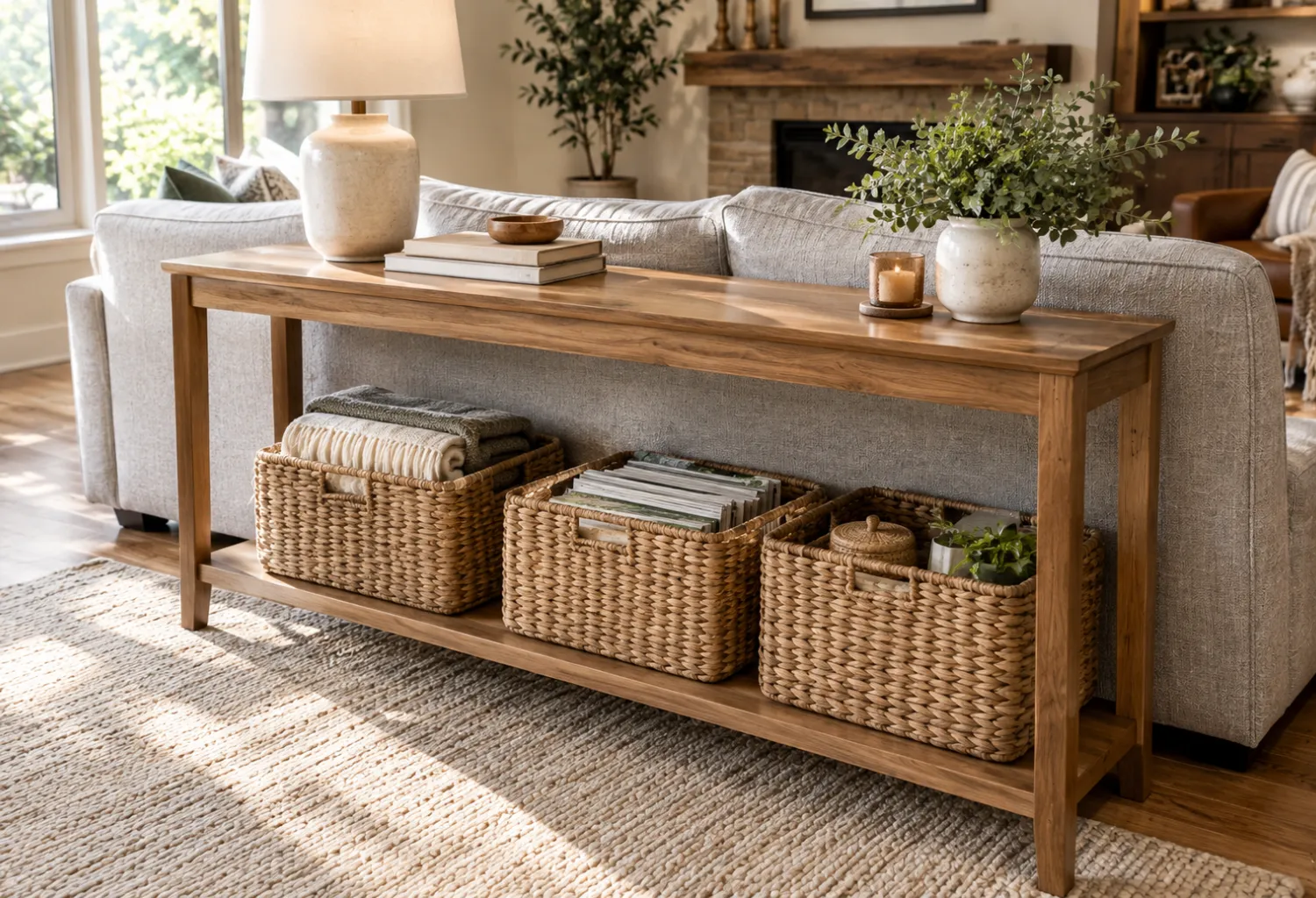
Open space underneath a console is perfect for attractive storage baskets. Woven baskets add texture while hiding blankets, toys, magazines, or miscellaneous living-room items.
Use matching baskets for a coordinated look or combine natural materials with neutral upholstery for a relaxed modern style.
8. Bookcase With Closed Cabinets
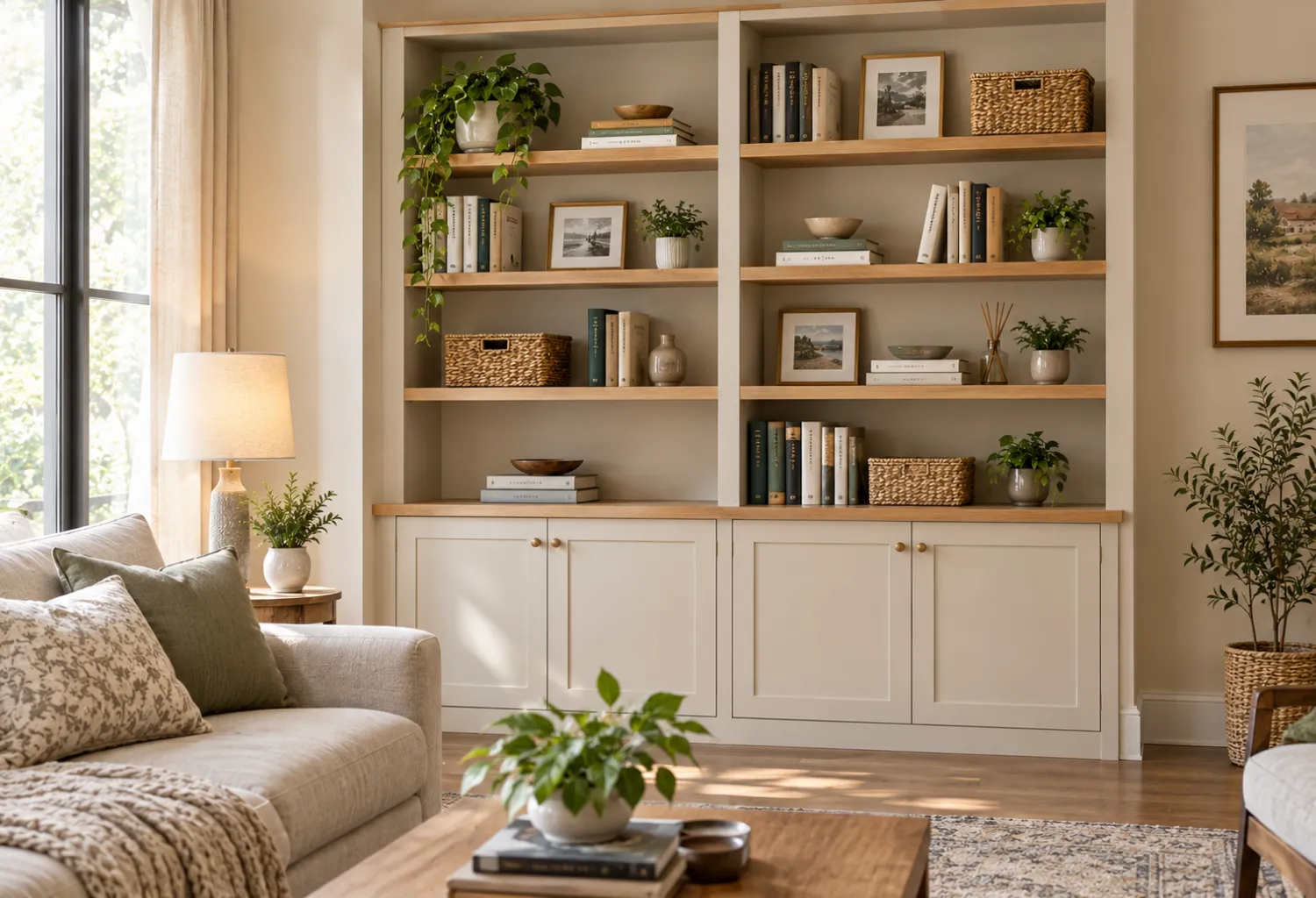
A bookcase that combines open shelving with closed storage gives you the best of both worlds. Display favorite books and accessories on top while hiding less attractive necessities behind cabinet doors.
This works particularly well when you need substantial storage but still want the room to feel decorative rather than utilitarian.
9. Built-In Corner Shelving
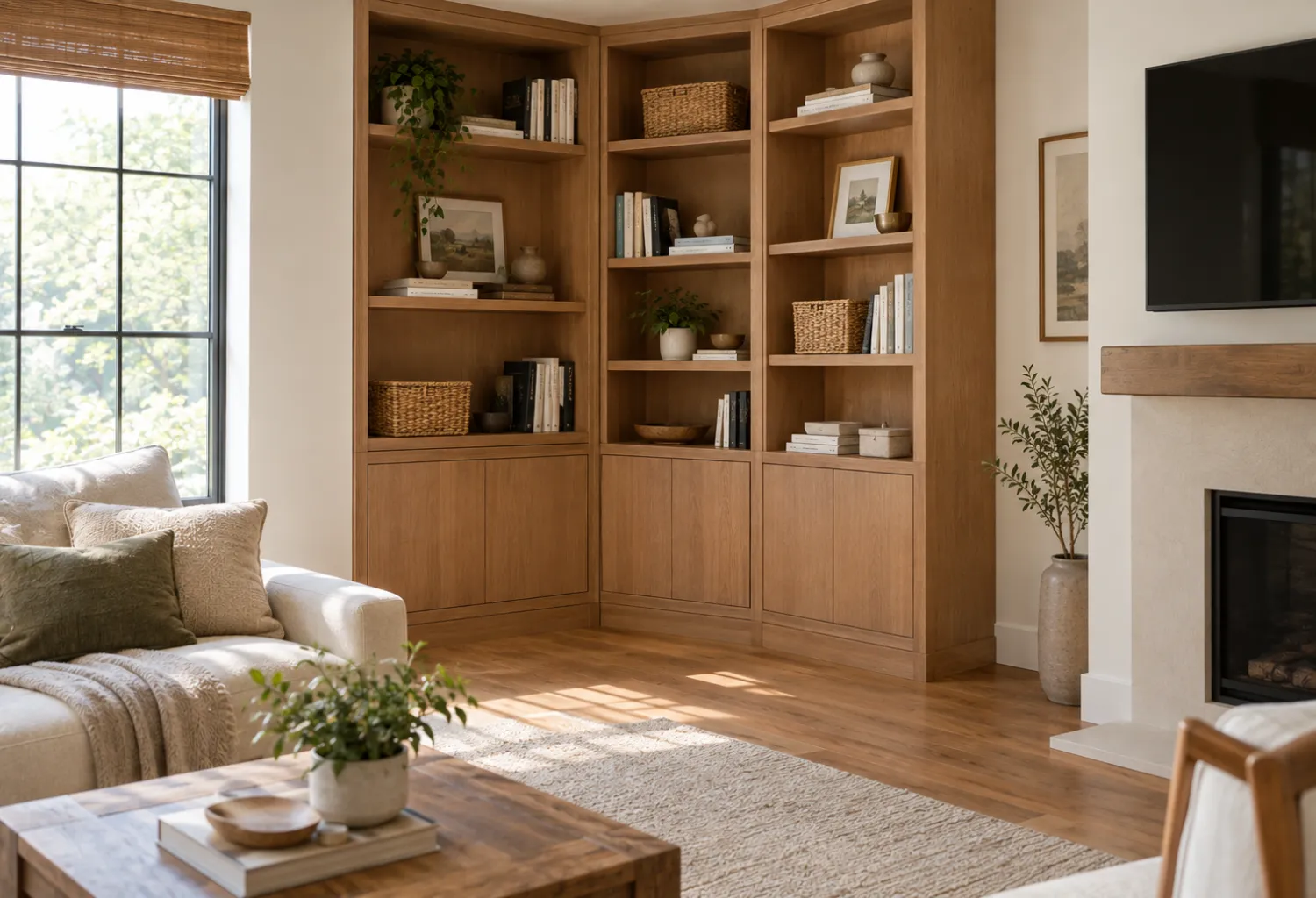
Corners often become dead space because standard furniture does not fit comfortably there. Custom or modular corner shelving can turn that forgotten area into useful storage.
Use lower cabinets for items you want hidden and upper shelves for books, artwork, plants, or collected objects.
10. Storage Bench
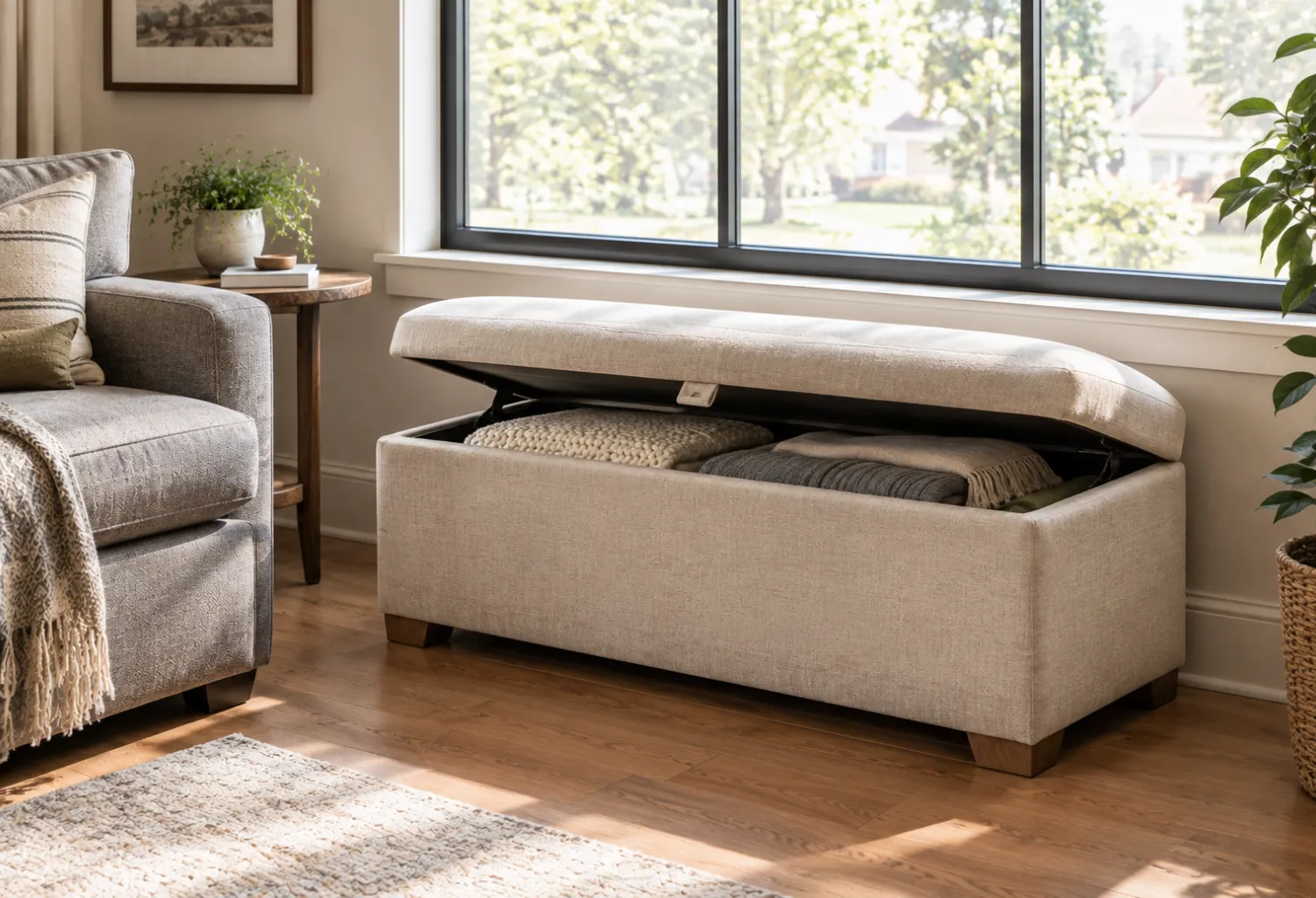
A storage bench can work along an empty wall, beneath a window, or near the entrance to the living room. It provides seating while concealing useful storage underneath.
Choose a bench with a comfortable cushion and compartments sized for the things you actually need to store. Deep storage is helpful, but excessively deep compartments can make everyday items difficult to reach.
11. TV Console With Drawers
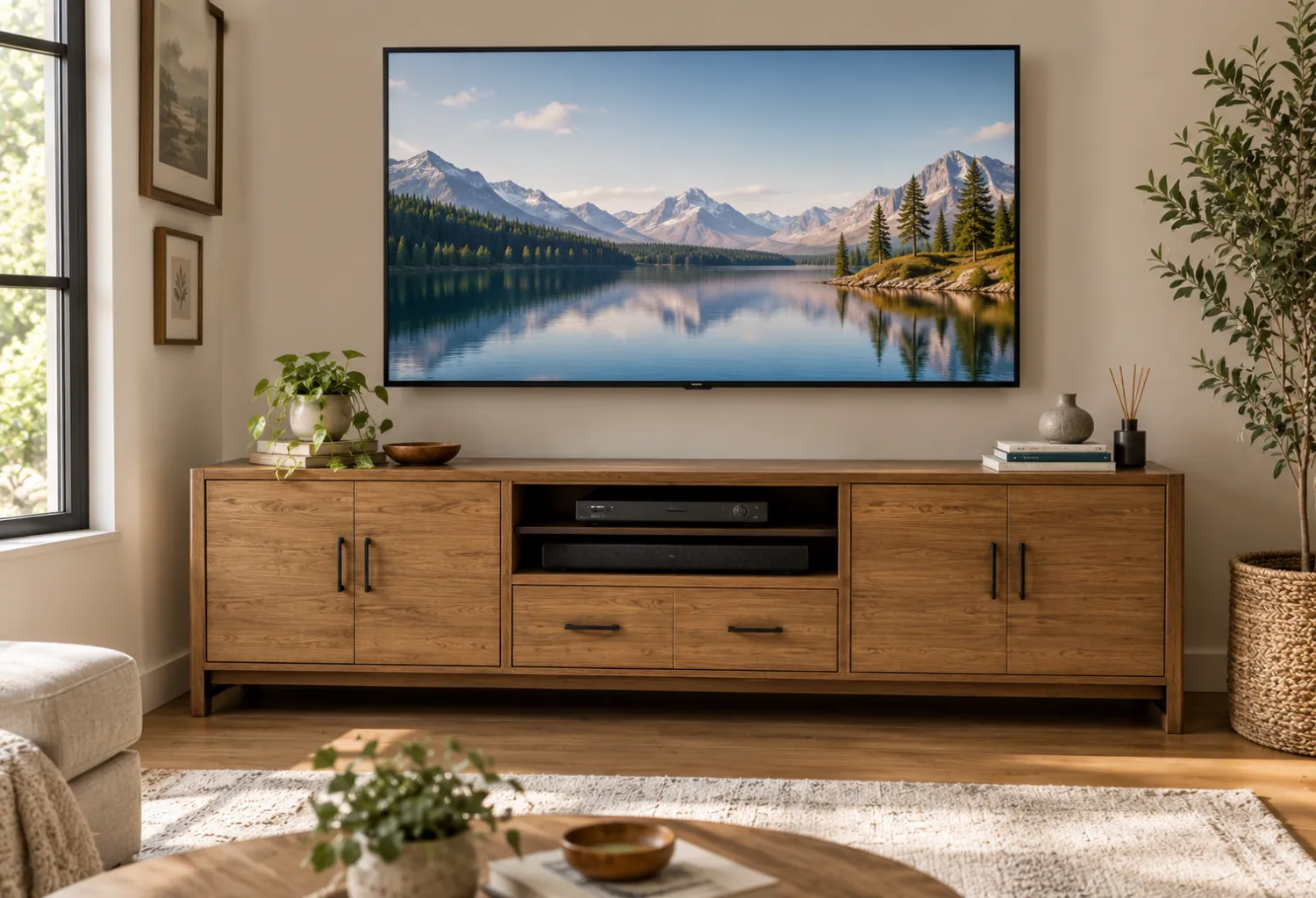
A media console with drawers is an easy upgrade if your current TV stand has only open shelving. Drawers are especially helpful for small electronics, controllers, remotes, cables, and accessories.
Choose a console wider than the television when possible. The balanced proportions make the entire media wall feel more intentional.
12. Under-Sofa Storage Boxes
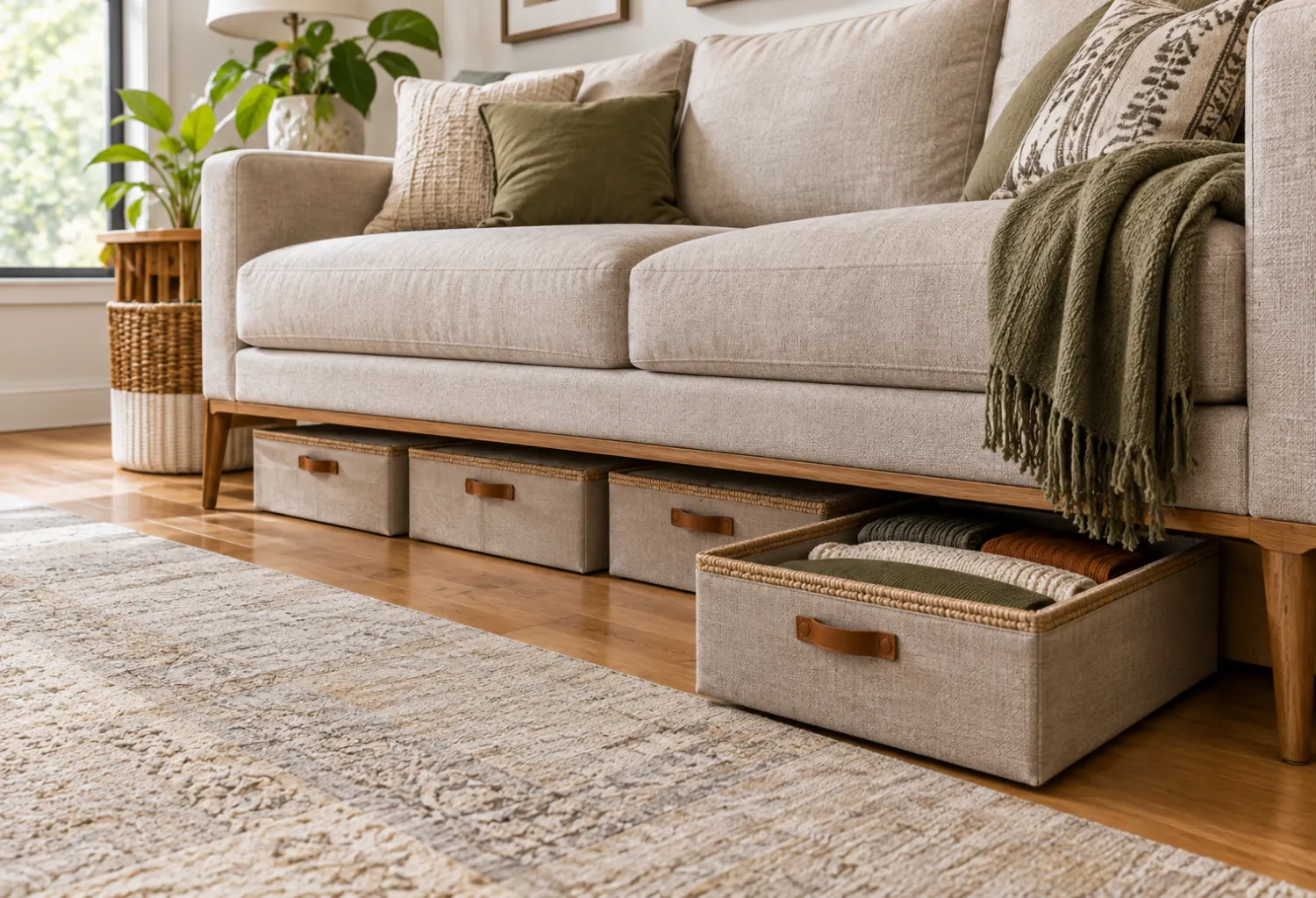
The space underneath a sofa can become useful storage if there is enough clearance. Flat boxes or shallow containers can hold seasonal blankets, extra pillow covers, books, or items that are not needed every day.
Use lidded containers if dust is a concern. Measure the clearance first so the containers slide completely underneath without becoming difficult to remove.
13. Armrest Storage Caddy
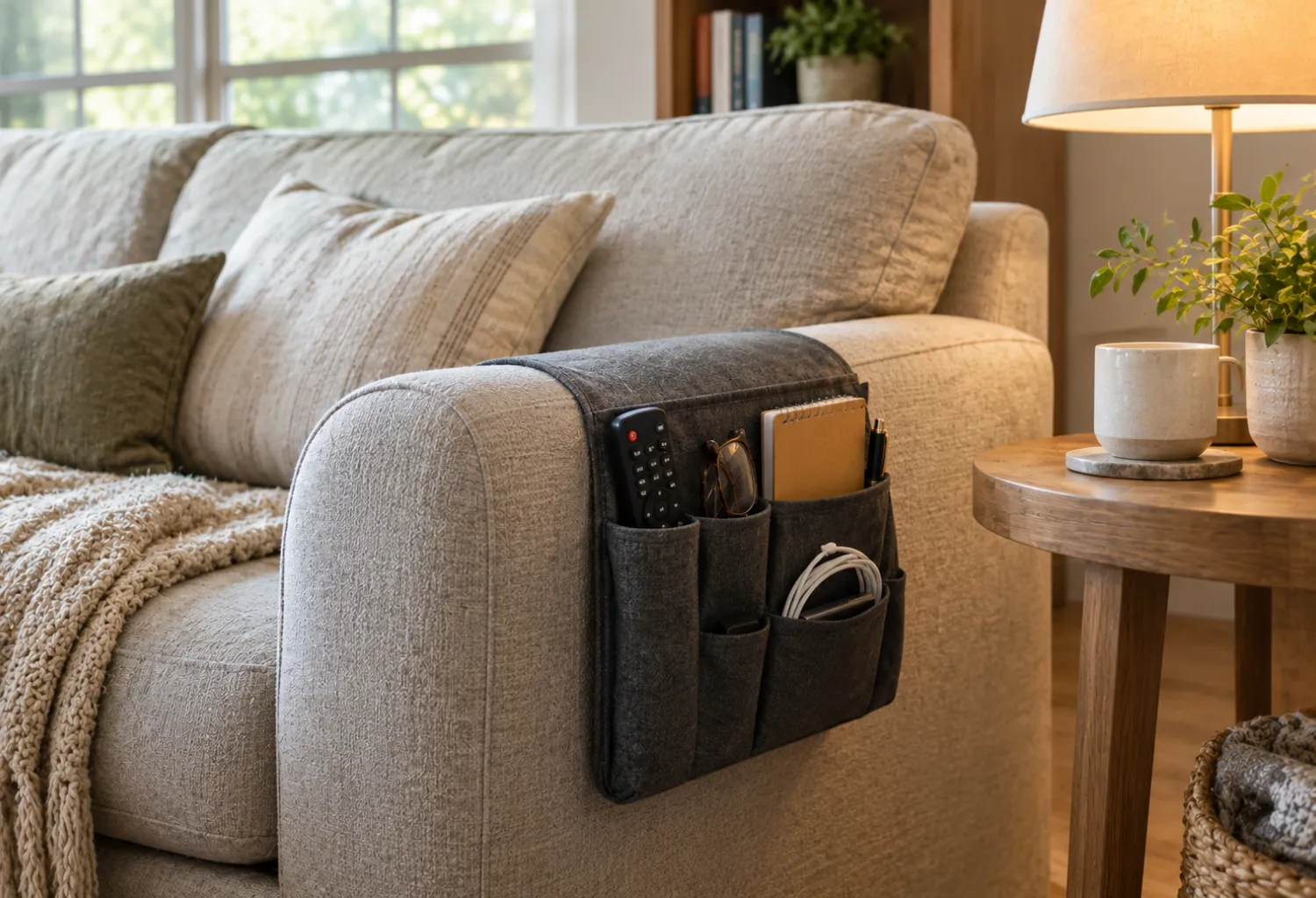
A sofa armrest caddy is a simple solution for controlling small everyday clutter. It can hold remote controls, reading glasses, notebooks, pens, or charging cables.
Choose a color close to the sofa upholstery if you want it to blend in. This is especially helpful in compact rooms where adding another piece of furniture is not practical.
14. Decorative Storage Trunks
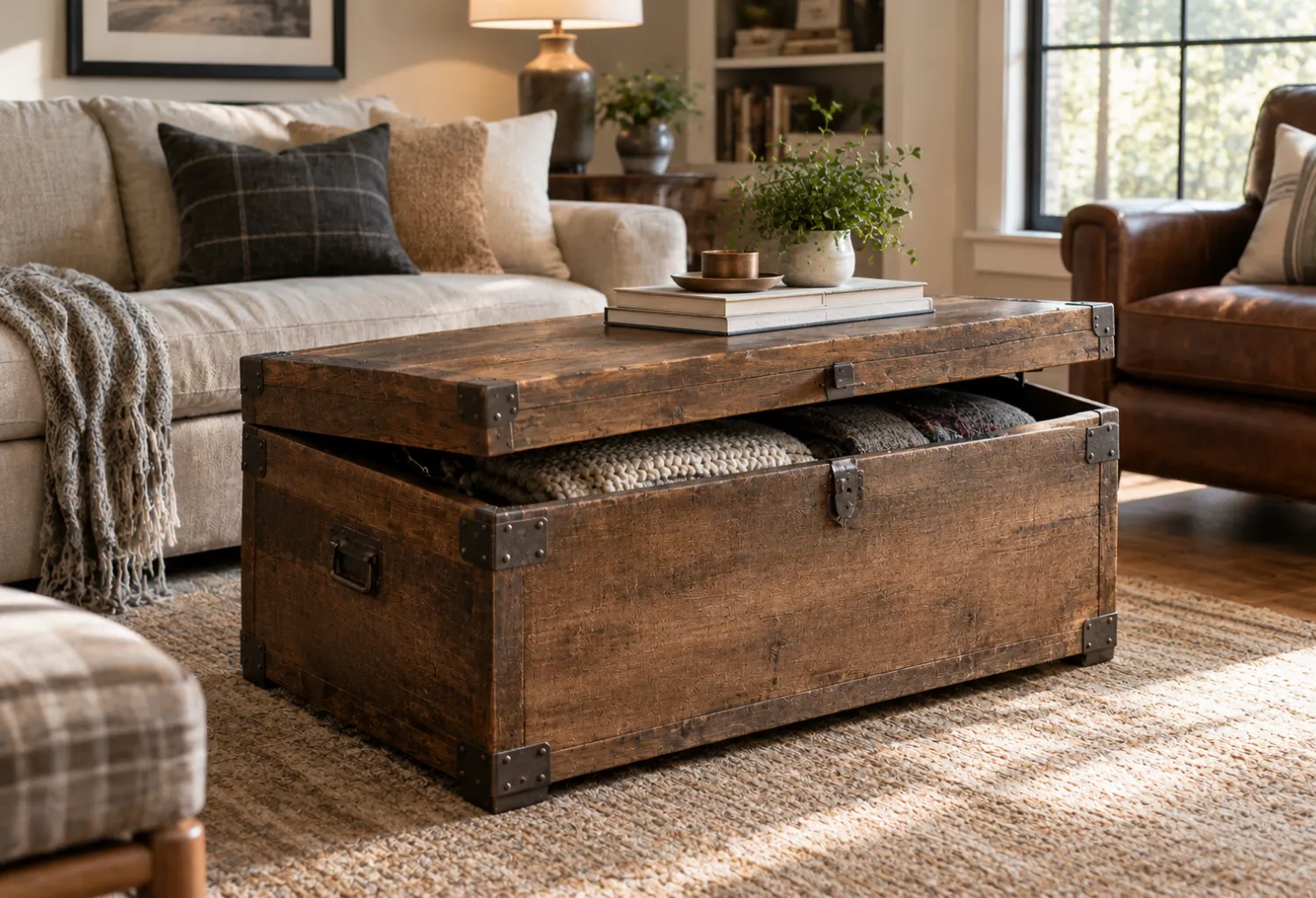
A storage trunk can function as a coffee table, end table, or accent piece while providing a large concealed compartment.
Vintage wooden trunks work well in traditional and eclectic rooms, while streamlined upholstered or wood versions suit contemporary interiors. Avoid placing a very heavy trunk in a location where it blocks normal movement around the seating area.
15. Ladder Shelf
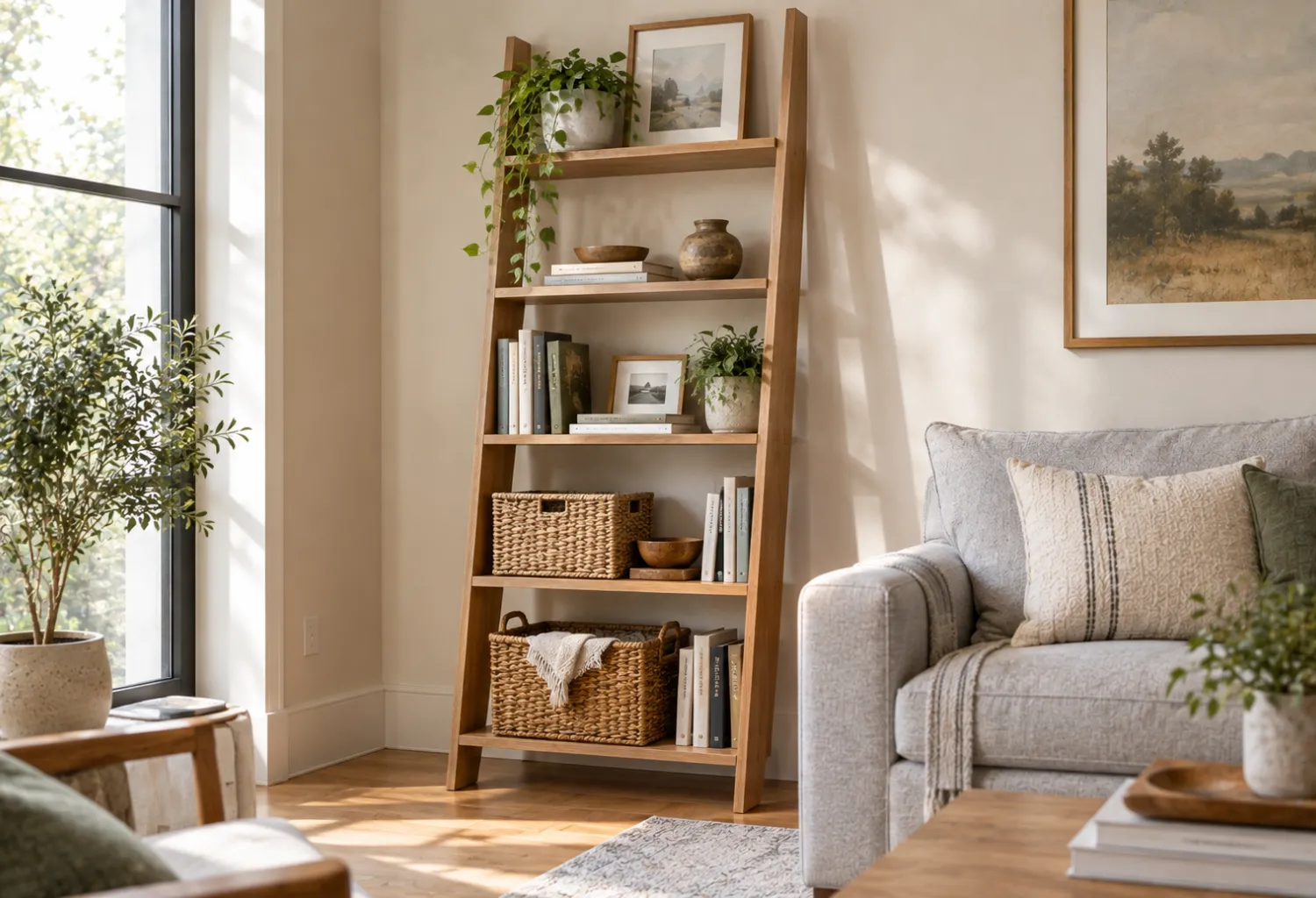
A ladder shelf provides vertical storage while maintaining a relatively small footprint. Use the lower levels for baskets and books and the upper shelves for lighter decorative pieces.
Because the shelves gradually become smaller toward the top, the furniture has a visually lighter appearance than a large solid bookcase.
16. Cube Storage Organizer
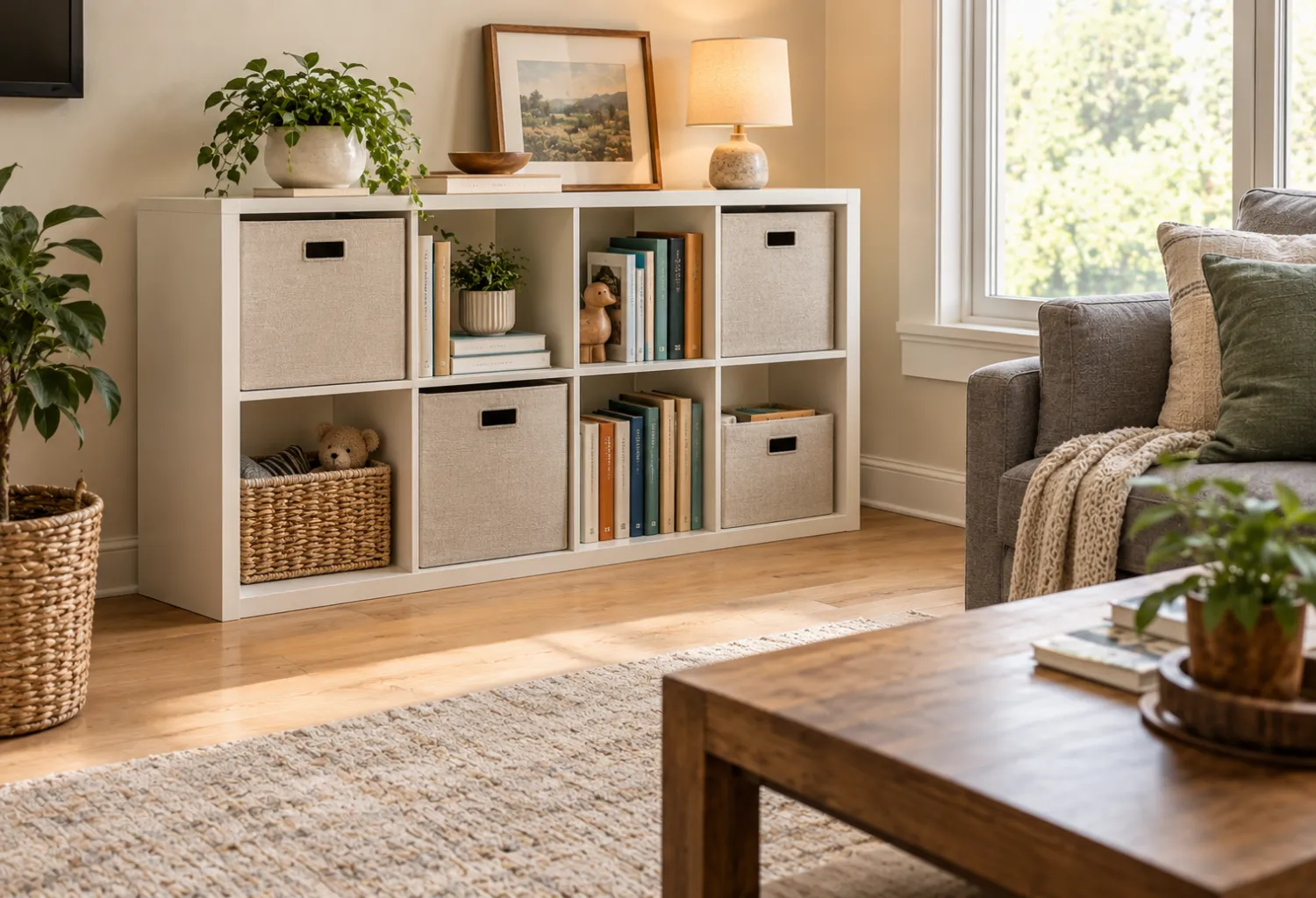
Cube organizers are useful when a living room needs flexible storage for books, toys, games, craft supplies, or electronics.
Place baskets or fabric bins inside selected cubes to hide clutter while leaving other compartments open for books and decor. This creates visual variation instead of one large block of storage.
17. Storage End Tables
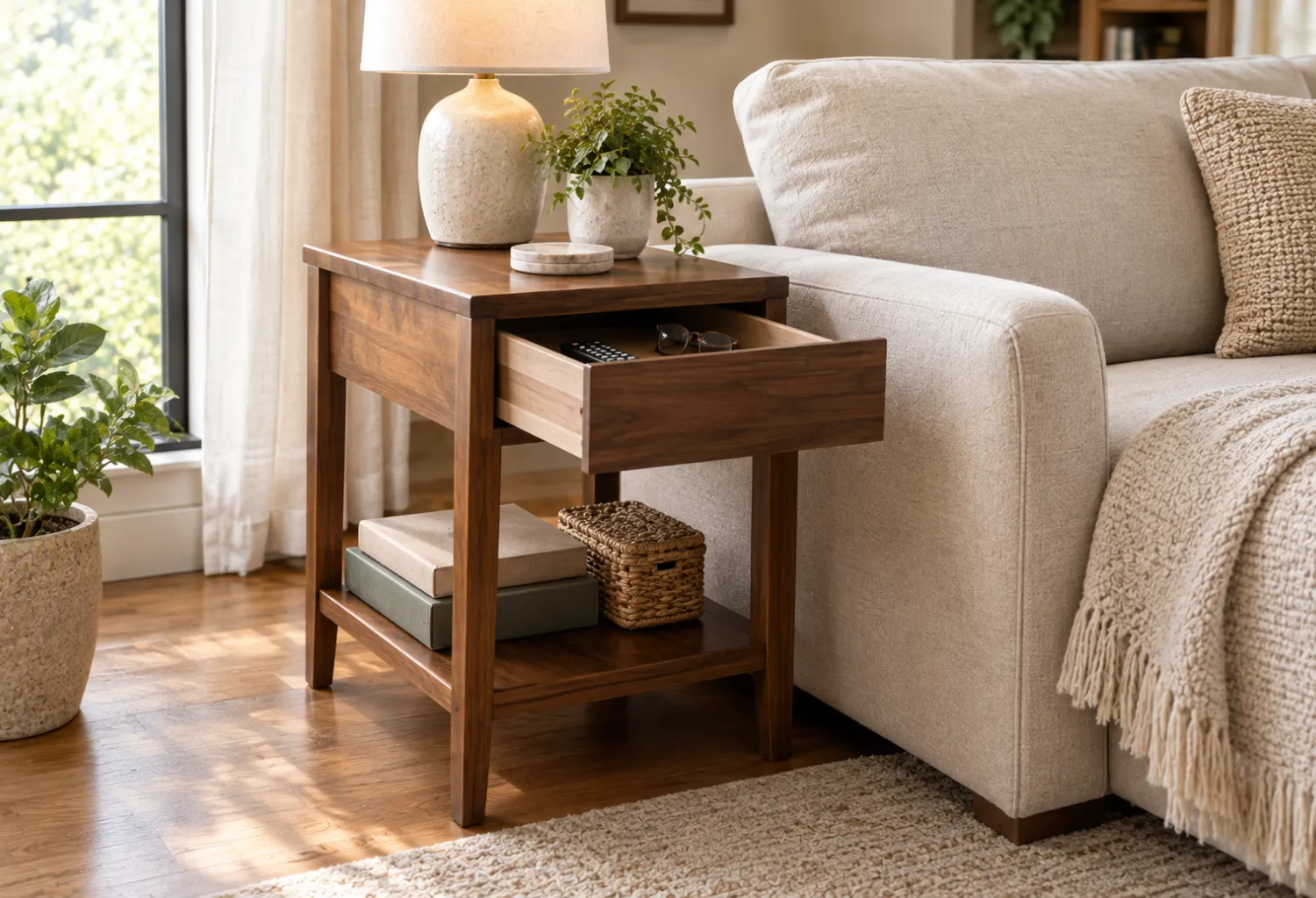
Replace ordinary side tables with versions that include drawers, cabinets, or shelves. The change can add useful storage without requiring additional floor space.
Use the drawer for frequently used small items and the lower shelf for books or a small basket. Keep the tabletop relatively clear so the piece remains functional.
18. Wall-Mounted Cabinets
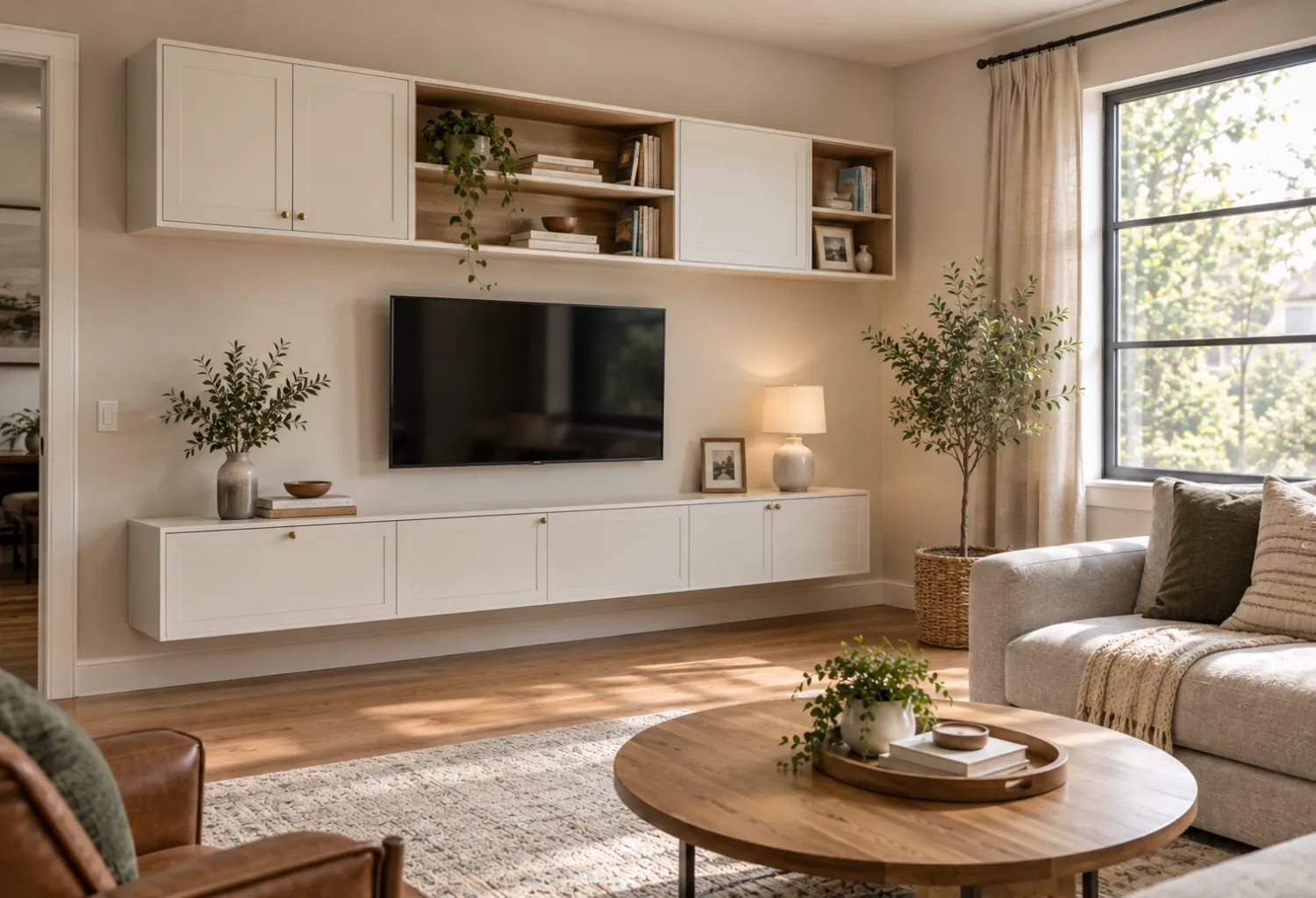
Wall-mounted cabinets can provide closed storage while keeping the floor underneath open. This makes them useful for smaller living rooms where floor space is limited.
Install them at a comfortable height and avoid placing too many cabinets on one wall. A combination of closed storage and open wall space usually feels more balanced.
19. Bookcase Room Divider
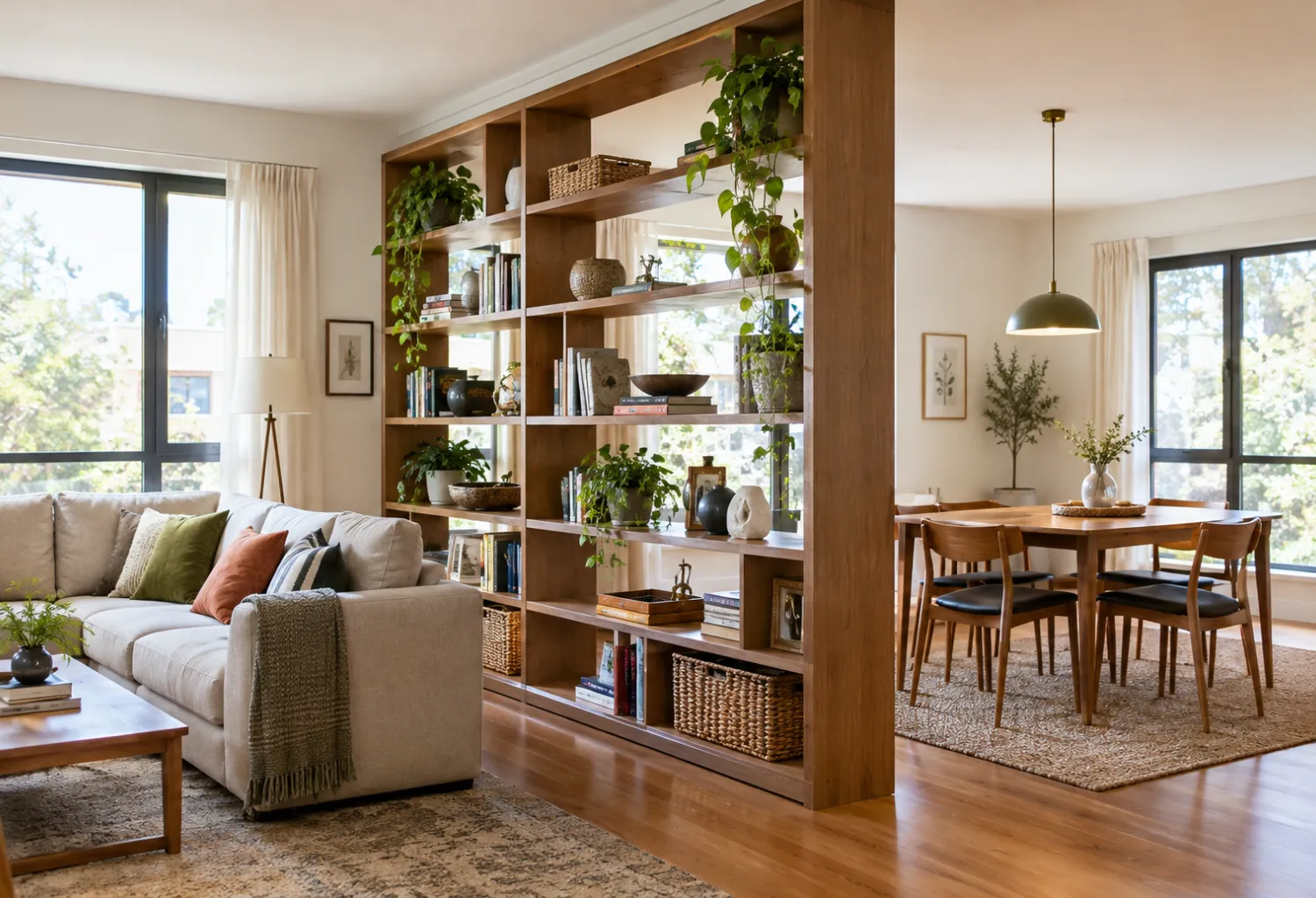
An open bookcase can separate a living room from a dining area, home office, or entry zone while providing storage at the same time.
Keep some compartments open so light can pass through. Books, baskets, and carefully selected accessories can define the two spaces without creating a solid visual barrier.
20. Fireplace Built-In Cabinets
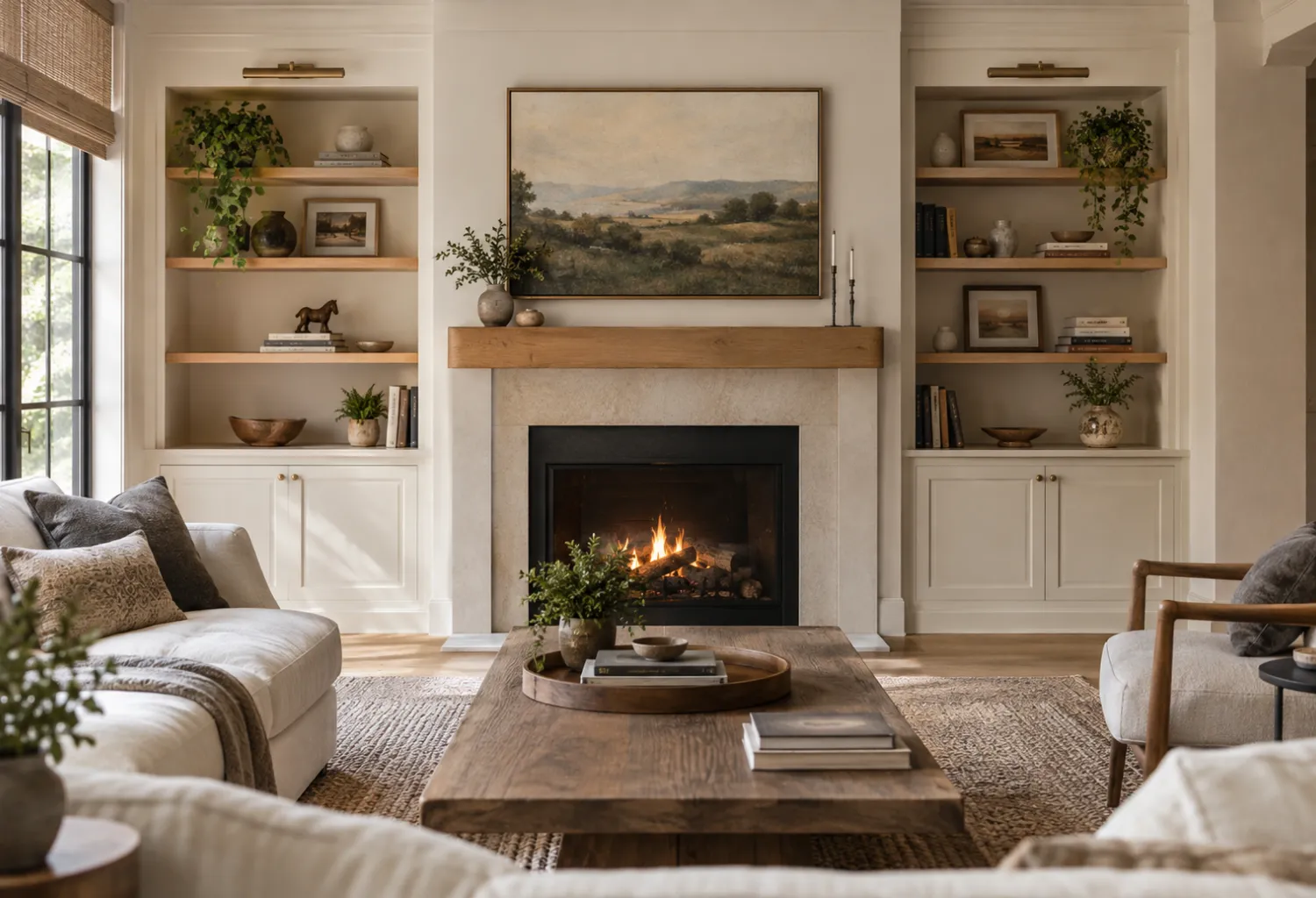
The space beside a fireplace is often ideal for custom cabinets or shelving. Lower cabinets can conceal larger belongings while upper shelves provide room for books, artwork, and accessories.
For a balanced appearance, keep the storage visually similar on both sides of the fireplace. Matching proportions matter more than making every object identical.
21. Behind-the-Door Shelving
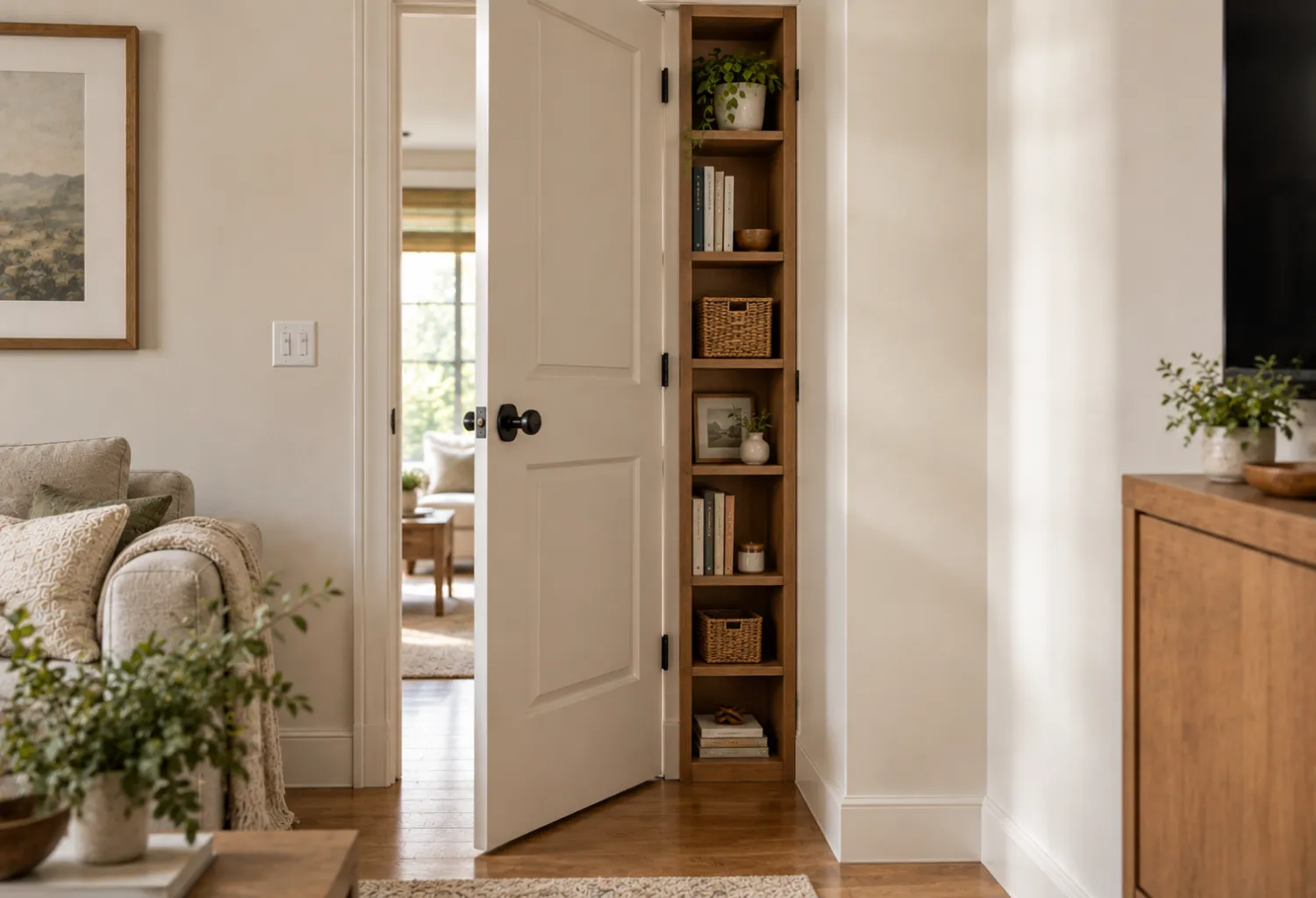
The wall behind a living-room door can sometimes accommodate a narrow shelving unit. It is a useful location for smaller items when other walls are already occupied.
Use shallow shelves for books, small baskets, games, or decorative storage boxes. Check the door swing before installing anything so the shelving does not interfere with movement.
22. Hidden Cable Storage
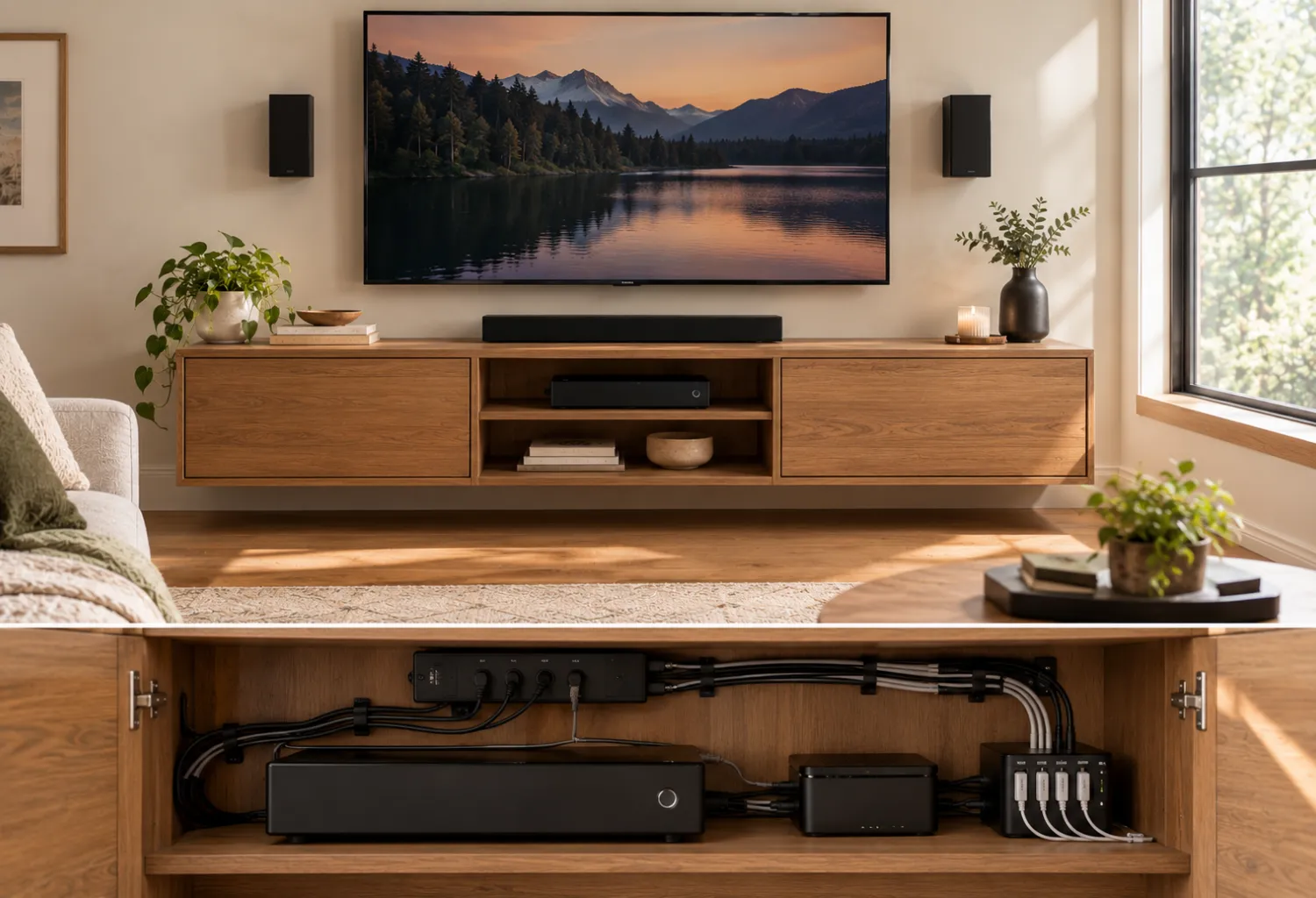
Entertainment areas often look cluttered because of cables rather than furniture. Cable boxes, cable-management sleeves, and small organizers can keep power strips and excess cords contained.
Route cables along the back of the media console and label chargers or device cords if several electronics share the same area. A cleaner cable setup can make the entire storage wall look more organized.
23. Rolling Storage Cart
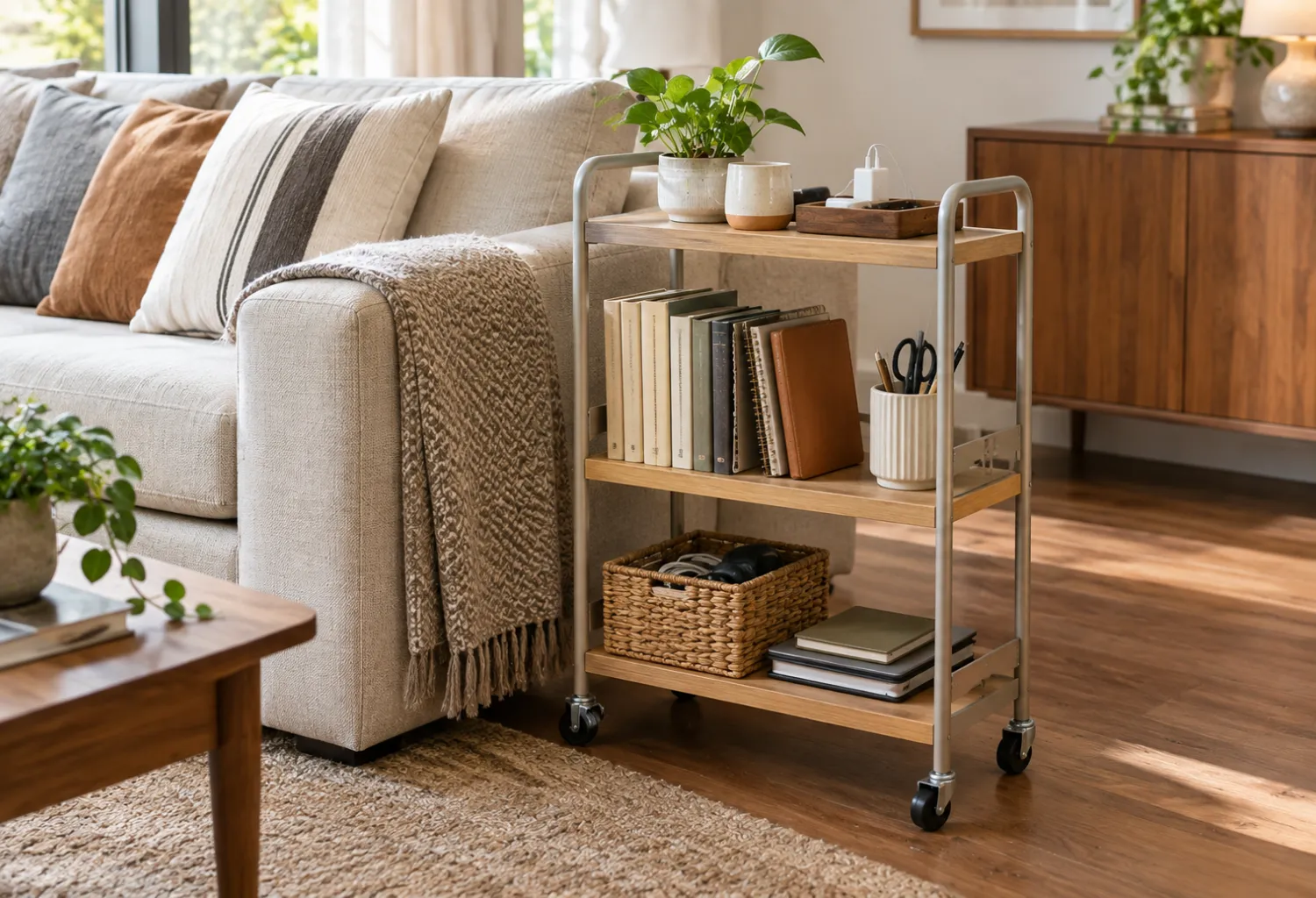
A slim rolling cart is useful when storage needs change throughout the day. It can hold children’s art supplies, craft materials, books, office supplies, or entertainment accessories.
Choose a cart that can slide beside a sofa or cabinet when not in use. Wheels make it particularly practical for multipurpose living rooms.
24. Storage Inside a Sectional
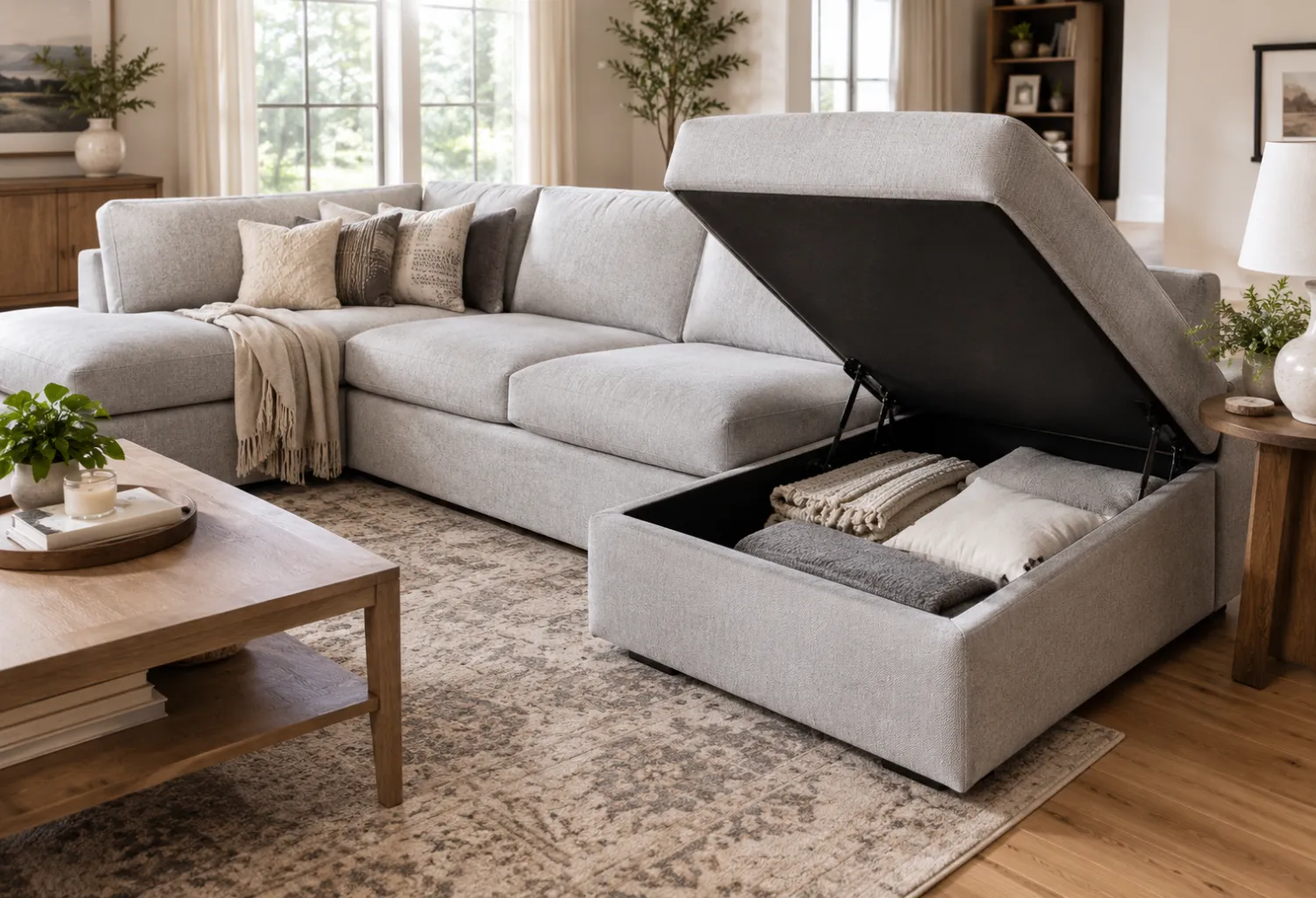
Some sectional sofas include hidden compartments inside chaise sections or other components. These spaces are excellent for bulky but lightweight items such as blankets, pillows, and throws.
If you are replacing your sofa anyway, consider storage as part of the furniture selection rather than adding separate storage later.
25. Picture Ledge for Books
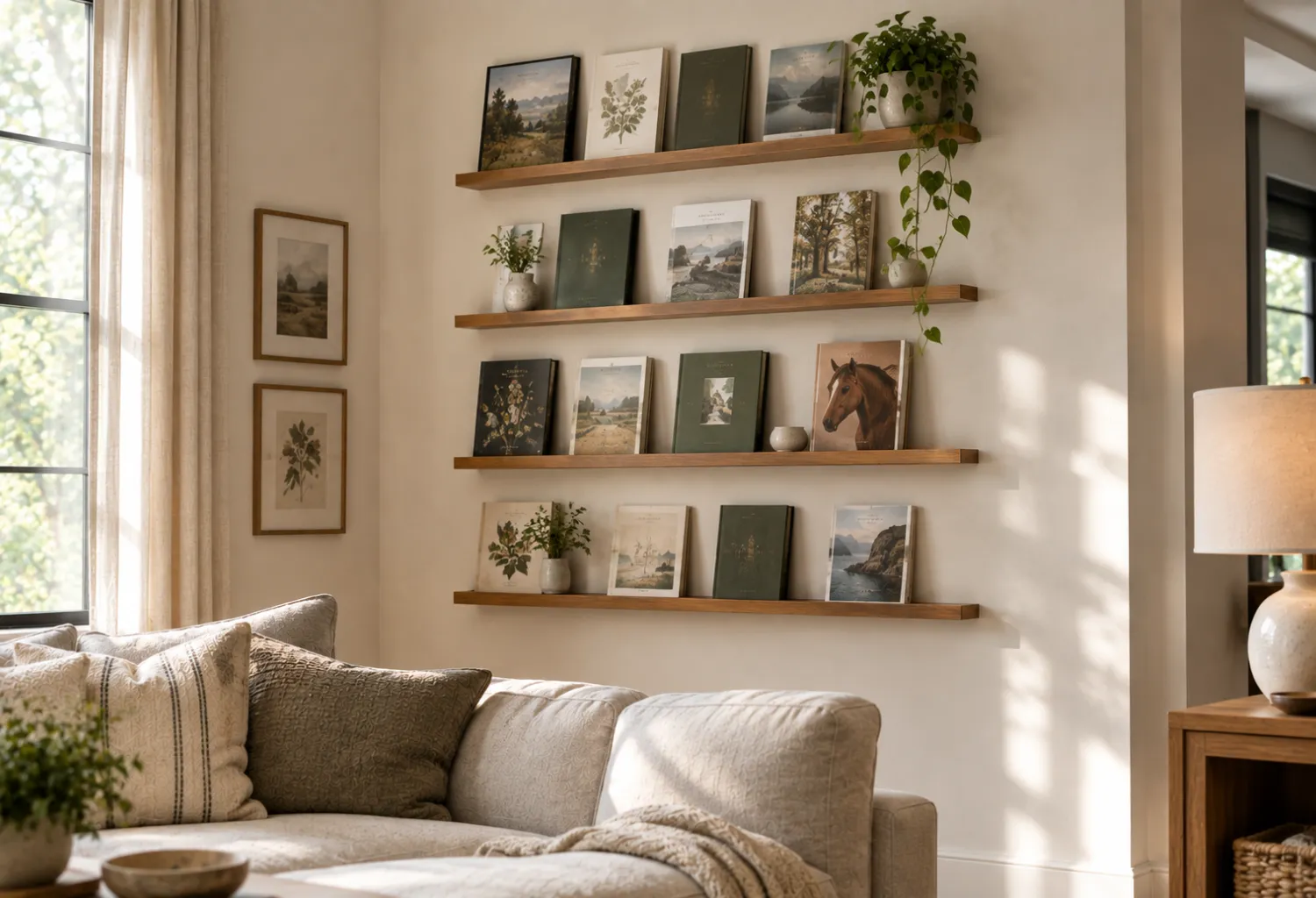
Picture ledges can store a small collection of frequently read books while also functioning as wall decor. Mount several at different heights to create a clean vertical arrangement.
This approach works particularly well in family living rooms because children’s books can remain accessible without occupying the coffee table or floor.
26. Entry-Style Drop Zone
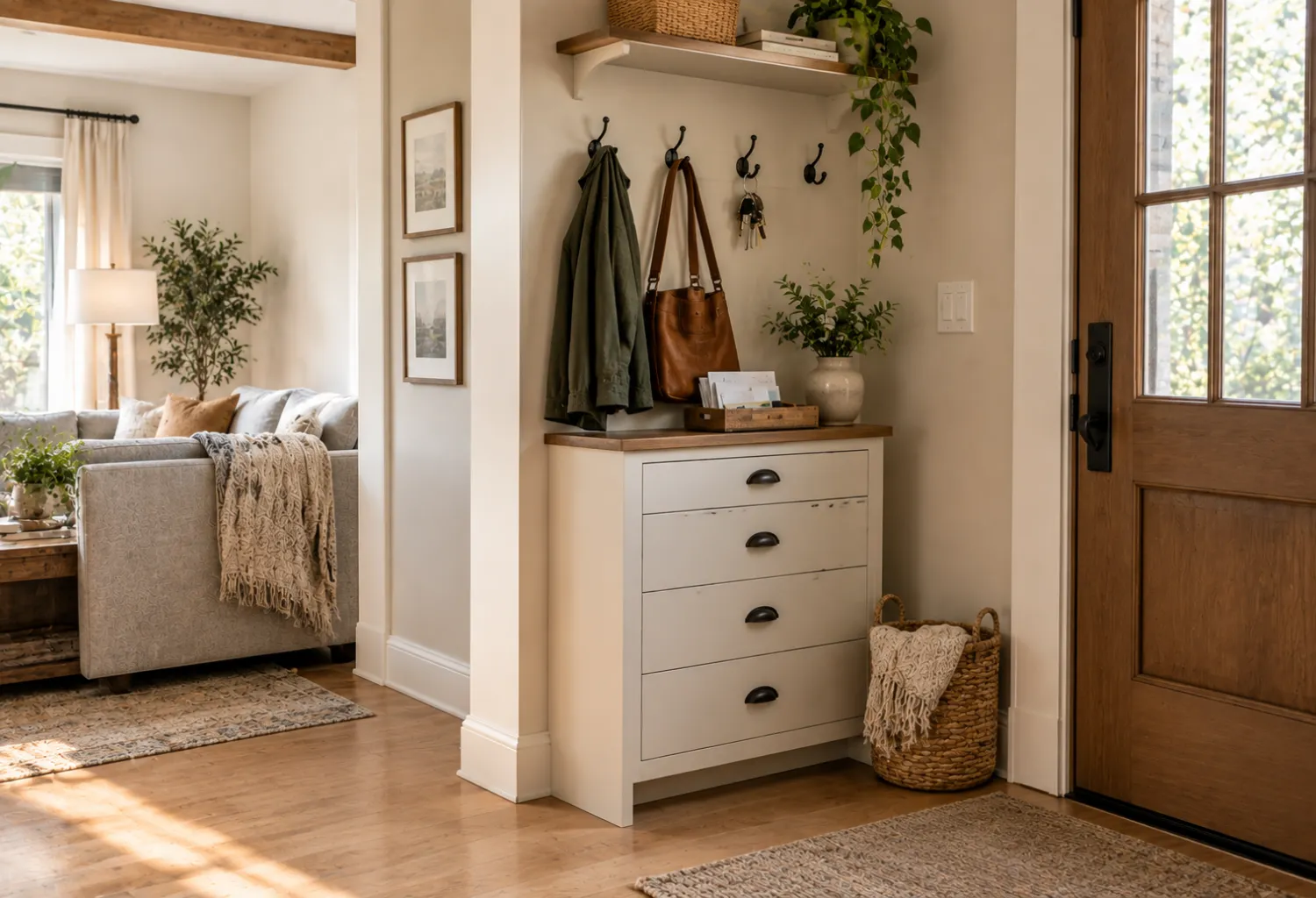
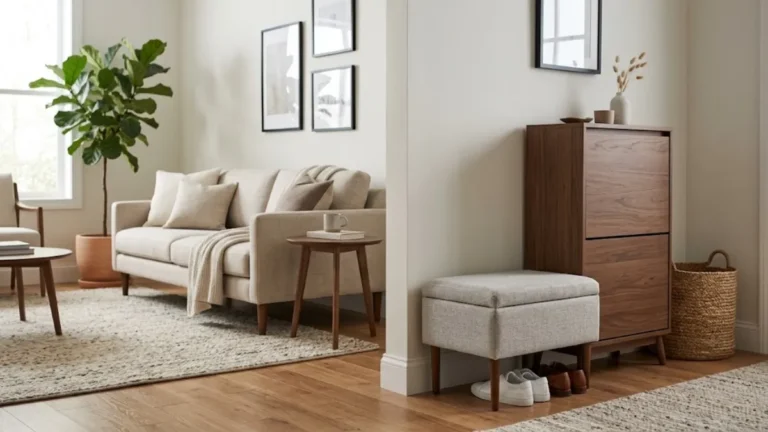
If your living room connects directly to an entryway, create a small drop zone with hooks, drawers, baskets, or a narrow cabinet.
Give everyday belongings a designated place for shoes, bags, keys, mail, and accessories. Even a compact drop zone can prevent entry clutter from spreading into the living area.
27. Decorative Boxes on Shelves
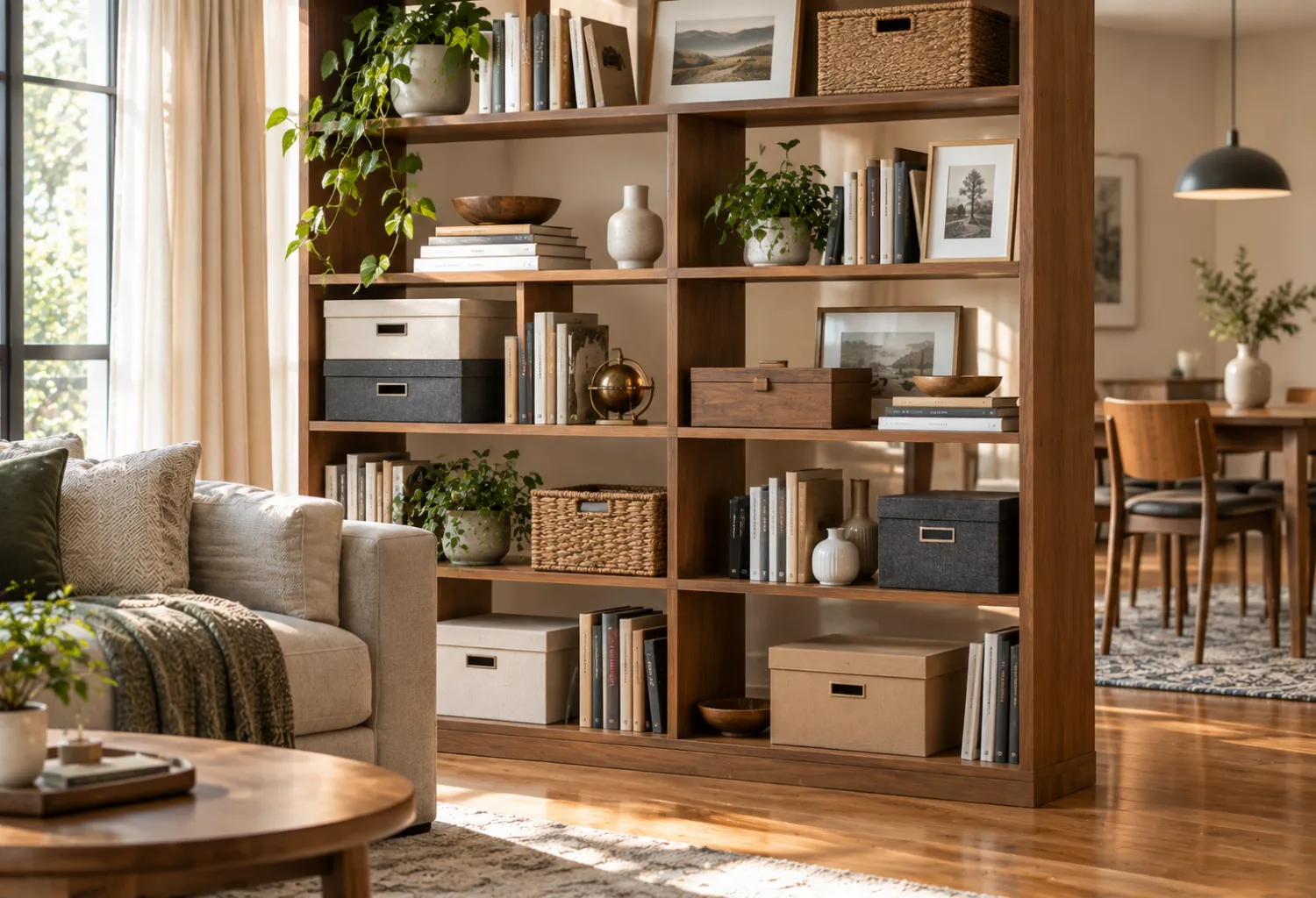
Decorative boxes are an inexpensive way to turn open shelving into concealed storage. Use them for paperwork, remote controls, small electronics, photographs, or miscellaneous items.
Choose boxes in a restrained palette such as cream, warm beige, charcoal, or natural wood. Coordinated containers make open storage feel intentional.
28. Toy Storage With Labeled Bins
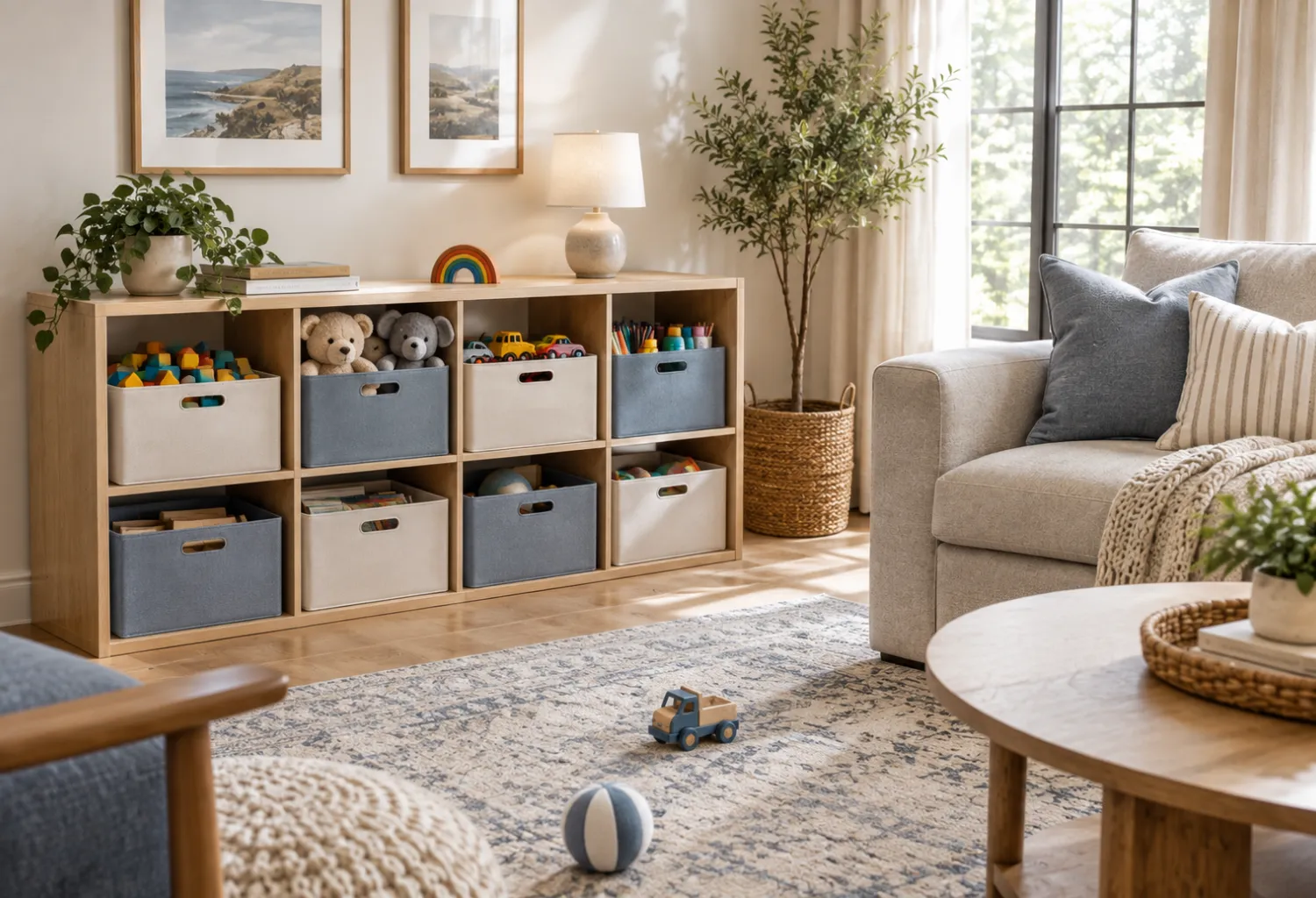
For family living rooms, dedicated toy storage can make daily cleanup much easier. Place labeled bins inside a low cabinet or cube organizer so children can see where different categories belong.
Keep frequently used toys in the easiest-to-reach bins and less-used toys higher or farther back. A simple system is more likely to stay organized than one with too many categories.
29. Blanket Ladder With Baskets
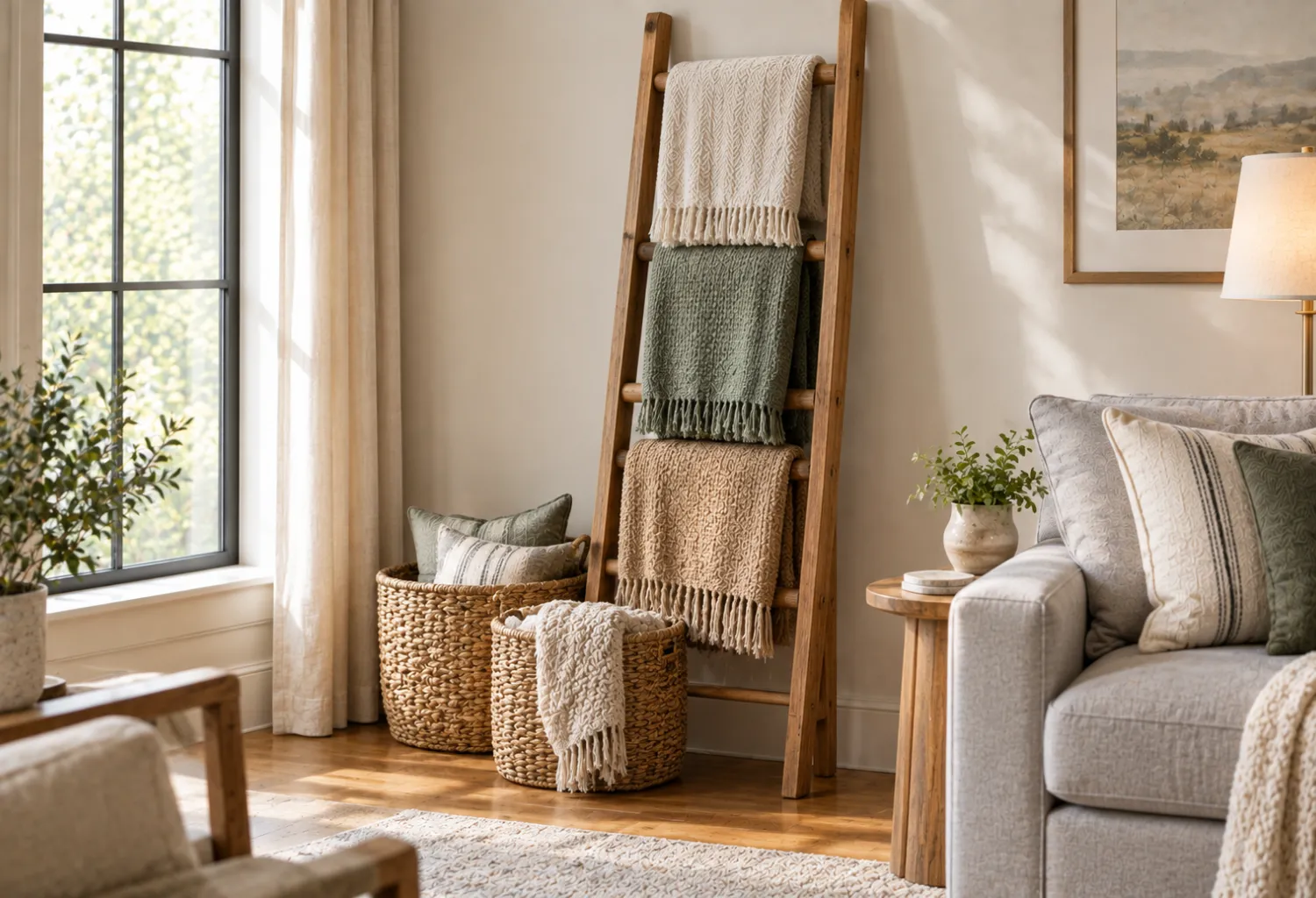
A blanket ladder provides an attractive way to display a few frequently used throws without turning the sofa into a pile of textiles.
Add one or two baskets near the bottom for smaller blankets, pillow covers, or reading materials. Choose woven or natural-fiber textures if the room already includes wood and neutral upholstery.
30. Floor-to-Ceiling Storage Wall
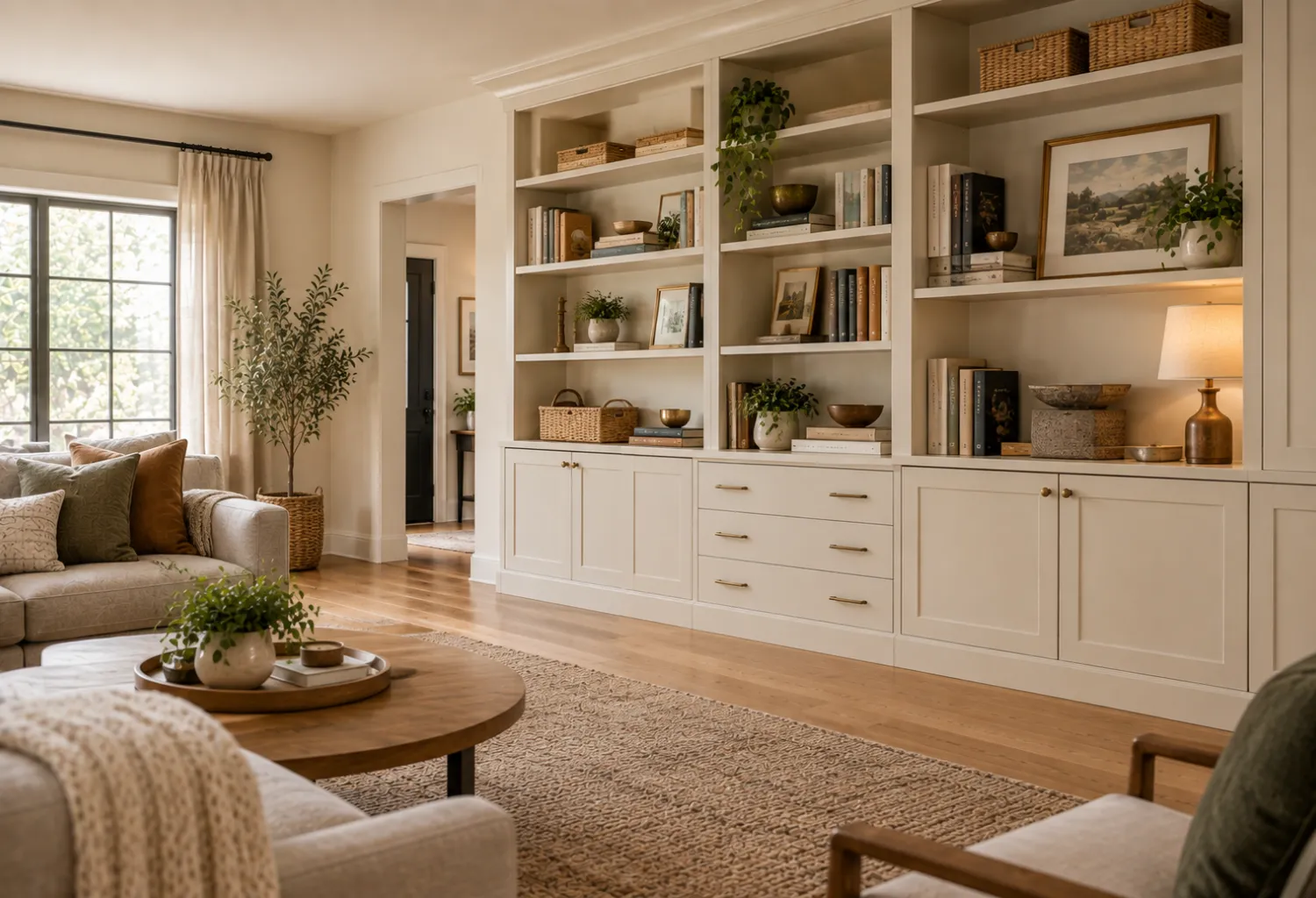
When a living room needs serious storage, a floor-to-ceiling storage wall can make the most of vertical space. Combine drawers and cabinets at the bottom with open shelves above.
Use closed sections for everyday clutter and reserve open sections for books, artwork, plants, and carefully selected accessories. Keeping the cabinetry in a color similar to the walls can make a large storage wall feel less imposing.
Conclusion
The best living room storage ideas are the ones that solve the clutter problems you actually have without making the room harder to use. A small space may benefit most from floating shelves, storage ottomans, narrow consoles, and vertical cabinets, while a larger room can handle built-ins, bookcases, or a dedicated storage wall.
Your decorating style matters, too. Woven baskets and natural wood suit relaxed interiors, painted cabinetry works beautifully in traditional spaces, and streamlined cabinets tend to fit contemporary rooms. Start with the items that create the most daily clutter, then choose storage that gives those belongings a clear home.
A well-organized living room does not need to look perfectly staged. It simply needs enough thoughtful storage to make everyday life easier while keeping the space comfortable and inviting.