18 Living Room Organization Ideas On A Budget That Work
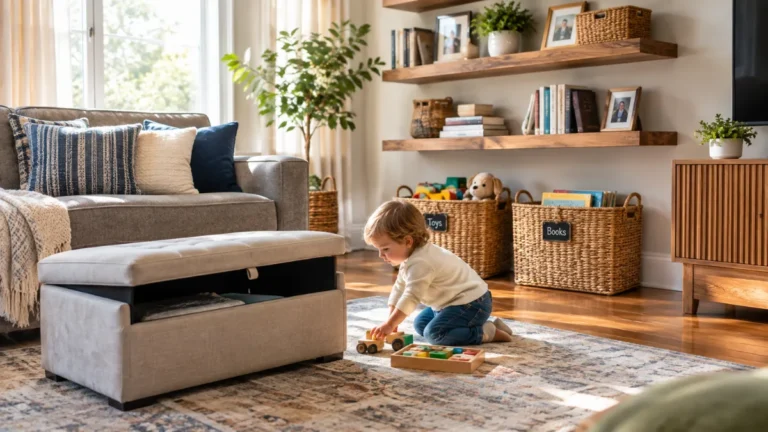
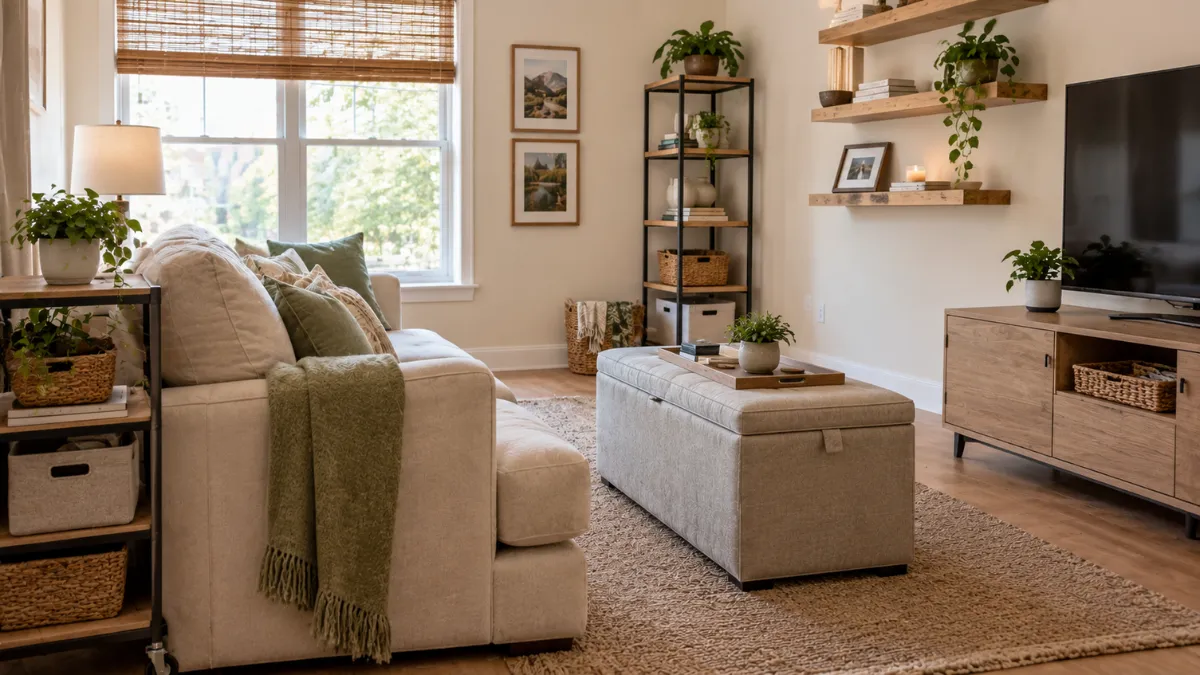
A tidy living room does not require expensive furniture or a large storage budget. These 18 Living Room Organization Ideas On A Budget focus on simple changes that help control clutter while keeping the room comfortable and personal. You’ll find ideas for unused corners, everyday items, small furniture, wall space, and low-cost storage. Whether you rent a small apartment or are working with a compact family room, these suggestions can help you organize without making the room feel crowded.
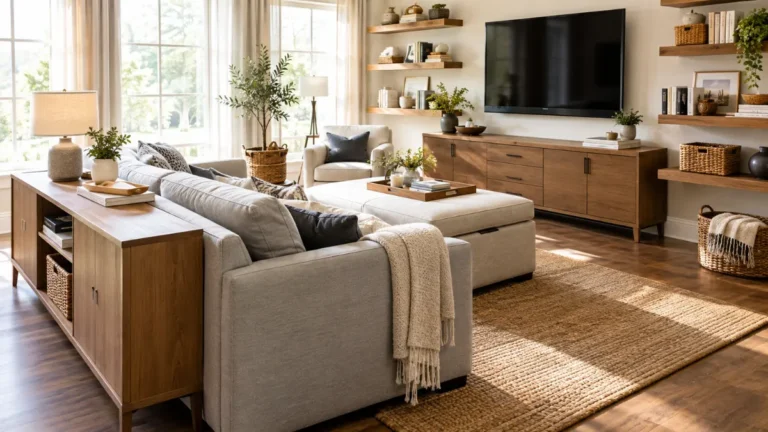
1. Woven Baskets Beside the Sofa
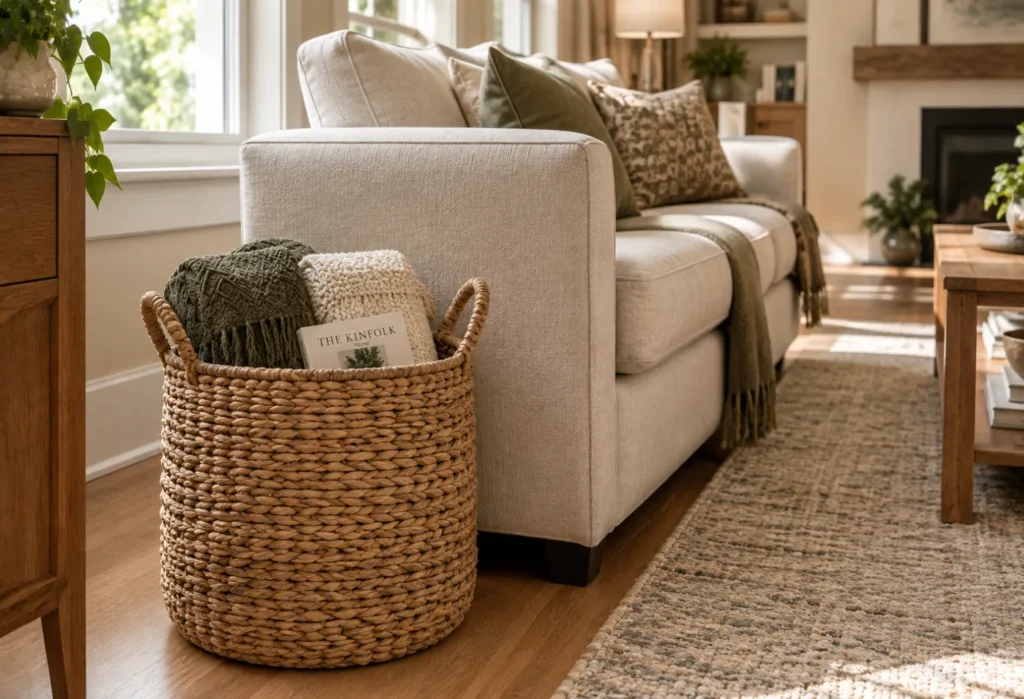
The space beside a sofa often becomes a dumping spot for blankets, magazines, toys, and chargers. A single woven basket gives those loose items a defined home without taking up much floor space. Its natural texture also works well with neutral upholstery, wood furniture, and soft textiles.
Choose a basket that is tall enough to hold larger items but narrow enough to leave the walking path clear. A basket around 10–14 inches wide is usually practical beside a sofa. Keep one category inside rather than mixing everything together, so it stays easy to maintain.
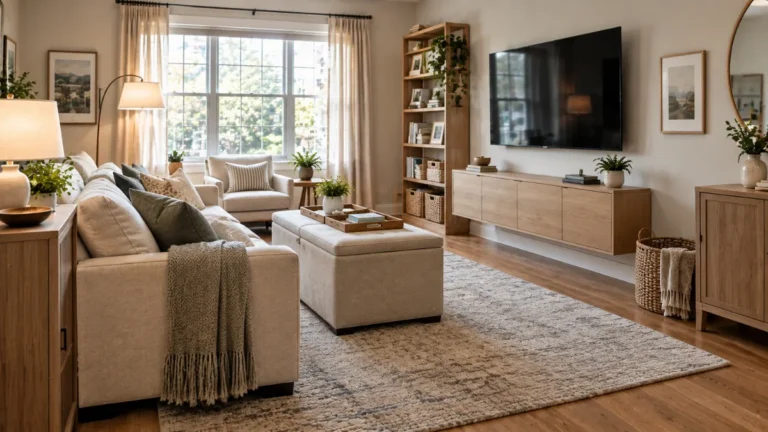
2. Storage Ottoman as a Coffee Table
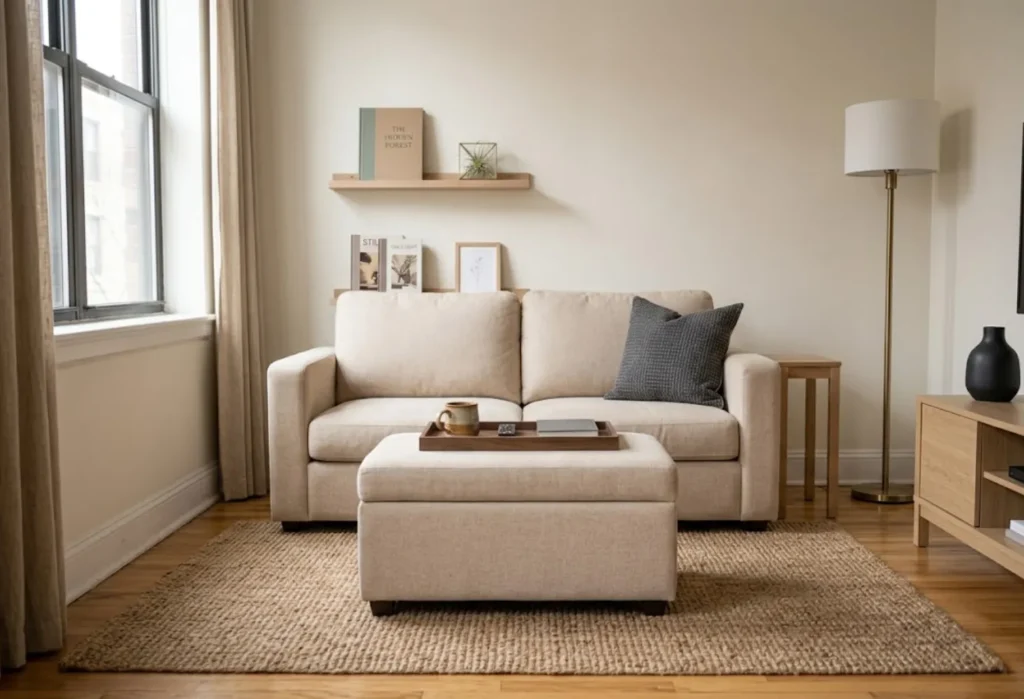
A traditional coffee table uses valuable floor space but may provide nowhere to hide everyday clutter. A storage ottoman can serve as a table, extra seating, and concealed storage in one piece. It works particularly well in smaller living rooms where every piece of furniture needs to earn its space.
Look for a firm, flat-topped ottoman with an interior compartment. A rectangular model can work better than a round one if your sofa faces a television or media unit. Use a tray on top for remotes and drinks, while blankets or board games stay hidden underneath.
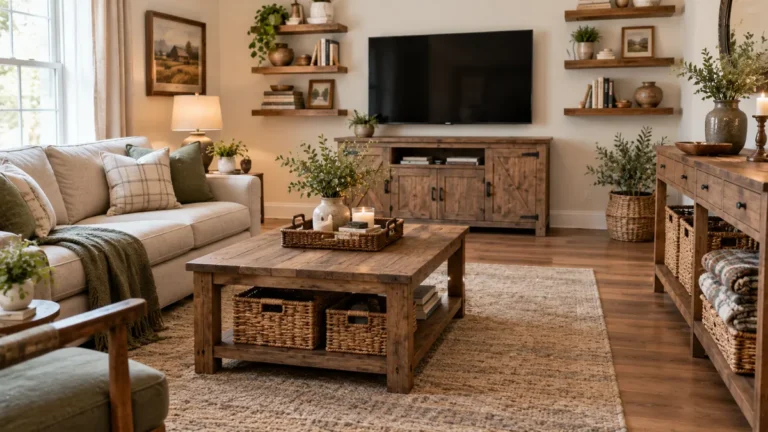
3. Floating Shelves Above the Sofa
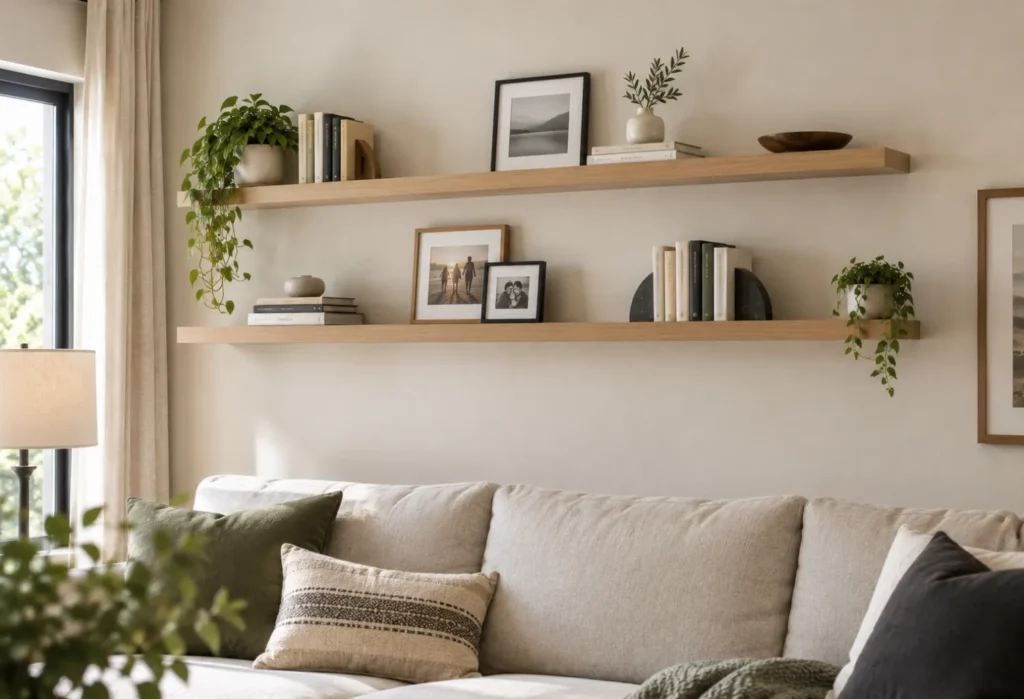
An empty wall above the sofa can become useful storage without adding another floor-standing cabinet. Two or three narrow floating shelves can hold books, framed photographs, small baskets, and a few decorative objects while keeping the floor open.
Keep the shelves shallow, preferably around 6–8 inches deep, so they do not visually overpower the seating area. Group books horizontally and vertically, then leave some open space between objects. Light oak, white, or painted shelves can blend with the wall instead of making the room look heavy.
4. Repurposed Wooden Crates
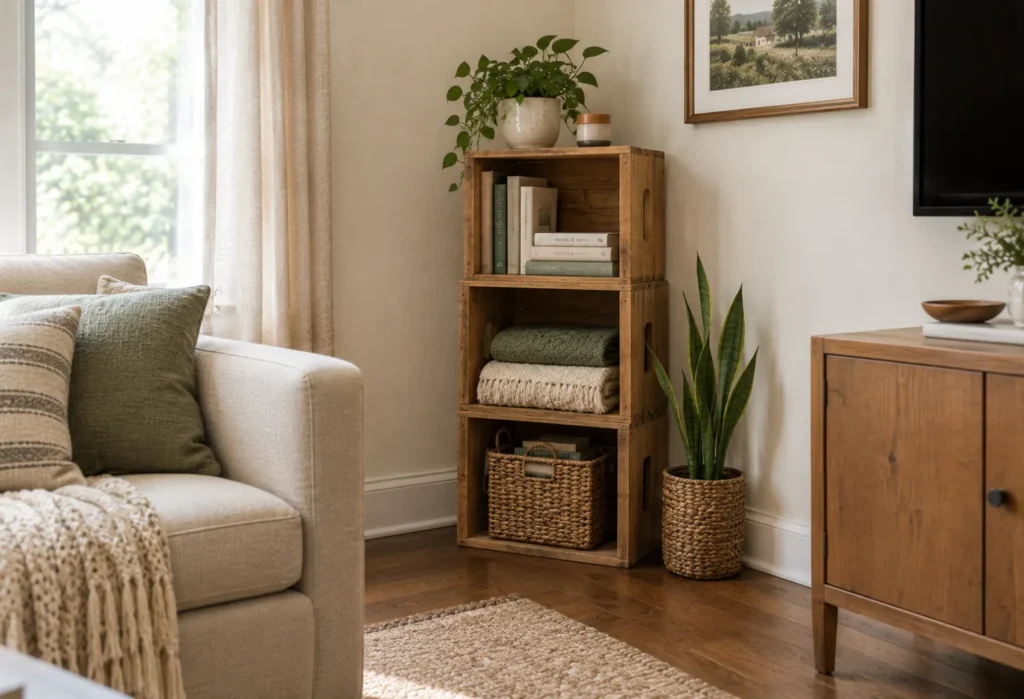
Buying specialized storage boxes can quickly add to a decorating budget. Old wooden crates offer a cheaper alternative and can be stacked into a simple storage unit for books, children’s items, magazines, or folded throws. Their imperfect wood grain can also add warmth to a modern or rustic room.
Stack two or three crates vertically and secure them if children or pets regularly use the room. Sand rough edges before bringing them indoors. Paint them in the same color as your wall or furniture for a cleaner appearance, or leave the wood natural if the room already has warm timber accents.
5. Slim Console Behind the Sofa
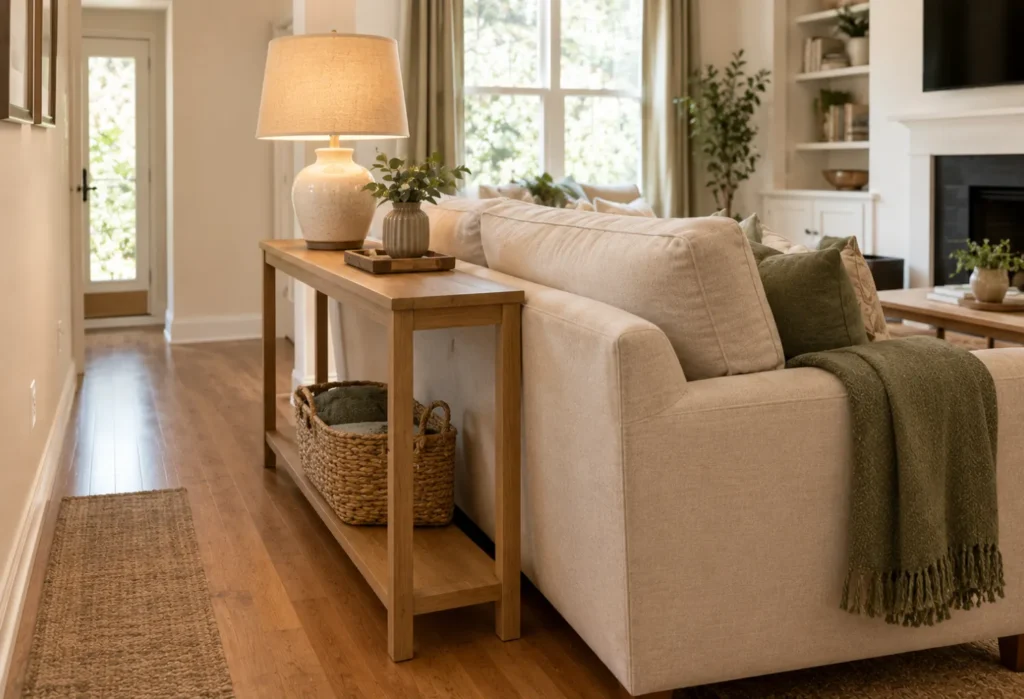
A sofa pushed against a wall can make the area behind it unusable. If the layout allows the sofa to sit slightly forward, a slim console can turn that narrow gap into useful storage for lamps, books, baskets, and small accessories.
Choose a console around 10–14 inches deep rather than a full-size cabinet. Keep its height close to the sofa back so it looks intentional. Avoid filling the surface completely; one lamp, a small tray, and a plant are often enough to provide function without creating another cluttered display.
6. One Basket for Remote Controls
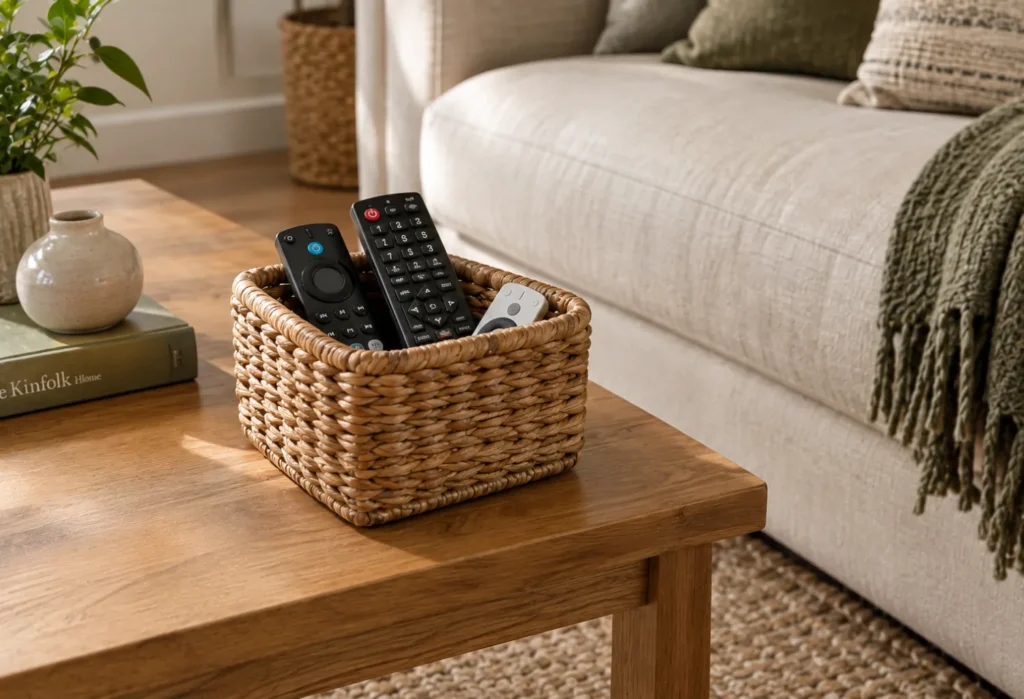
Remote controls are small, easy to lose, and surprisingly good at making a neat room look messy. A small basket or lidded box placed near the sofa keeps television, streaming, and gaming remotes together instead of scattered across cushions and tables.
Pick a container that is easy to reach from the main seating position. A small fabric bin, wooden box, or shallow ceramic container can work. If several people use the room, place it on the coffee table or media console rather than hiding it inside a cabinet.
7. Wall-Mounted Magazine Rack
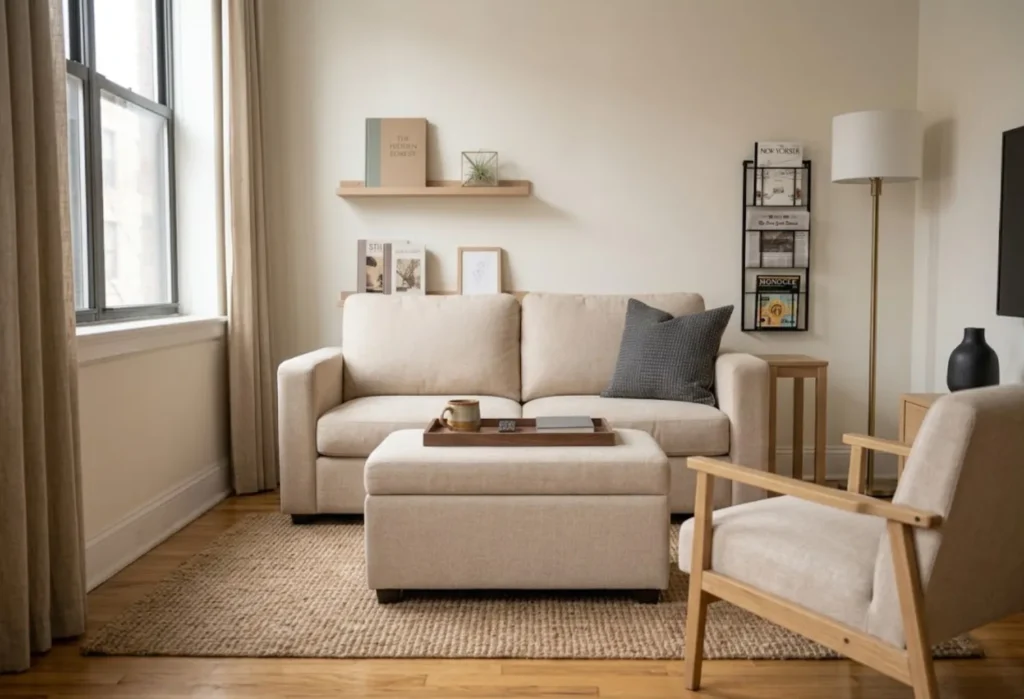
Magazines, newspapers, catalogs, and thin books can quickly pile up on a coffee table. A wall-mounted magazine rack moves that collection off the furniture while keeping current reading material visible and accessible.
Place the rack beside the sofa or near the reading chair rather than directly above a television. A metal rack suits a modern room, while leather or woven versions work nicely with softer furnishings. Limit it to current reading material and recycle old papers regularly so the organizer does not become another clutter zone.
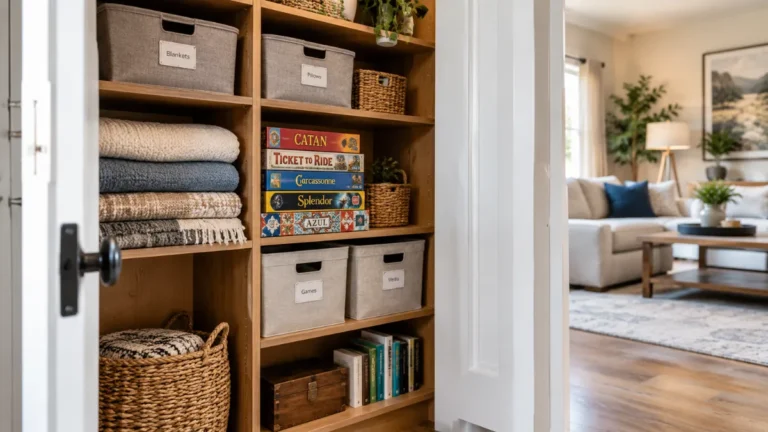
8. Baskets Inside an Open Bookcase
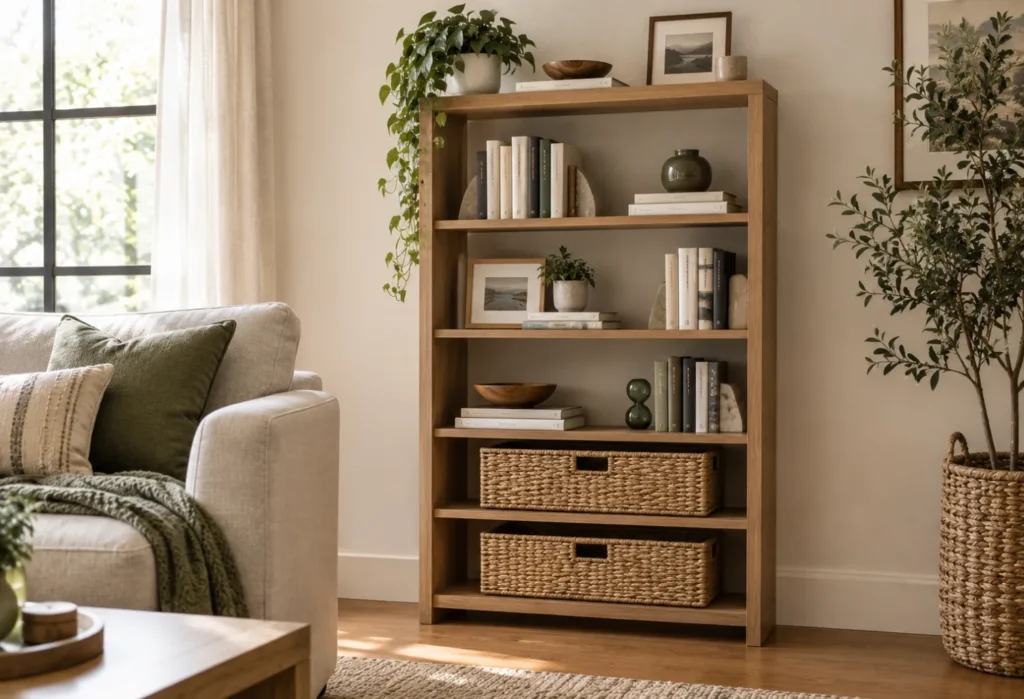
Open bookcases provide useful storage but can look untidy when every shelf contains loose objects. Adding inexpensive baskets to the lower shelves creates hidden storage while leaving the upper shelves available for books and decorative pieces.
Use matching or coordinated baskets on two or three lower shelves for a calmer look. Label them by category if several people share the room, such as games, electronics, blankets, or children’s supplies. Keep the baskets slightly smaller than the shelf width so they can be removed without scraping against the sides.
9. Behind-the-Door Storage
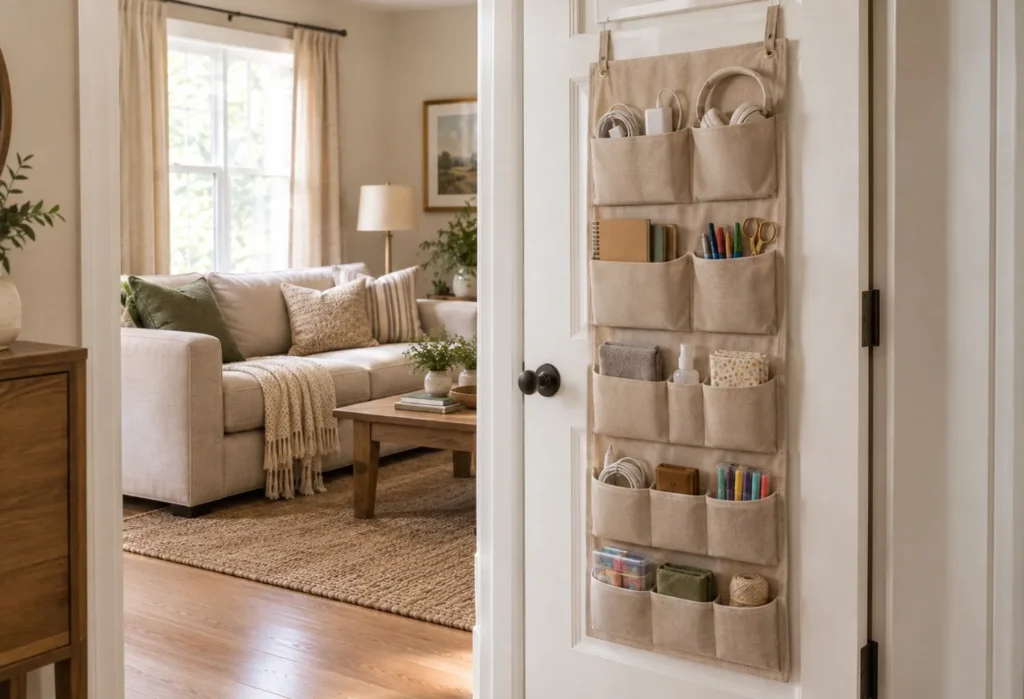
The back of a living room door is often completely unused. A slim hanging organizer can provide pockets for small items such as cables, craft supplies, cleaning cloths, headphones, or children’s activities without using additional floor area.
Choose a fabric or mesh organizer that does not make the door difficult to close. Keep heavier objects toward the bottom and lighter items near the top. This approach is especially useful in apartments where adding another cabinet would make an already narrow living room feel tighter.
10. A Dedicated Charging Station
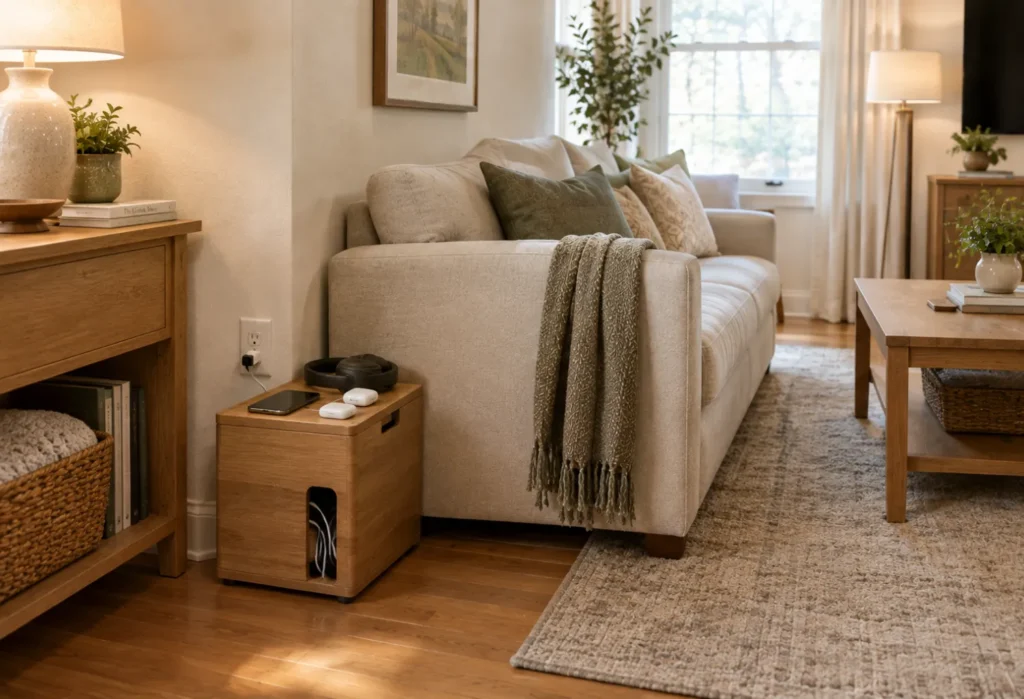
A real-world example makes the value of this idea clear: imagine a 10-by-12-foot living room where three people regularly charge phones, tablets, and headphones. Without a designated spot, cables can spread across the coffee table and floor. A small charging station can gather everything beside one outlet.
A simple lidded box with cable openings can hide power strips and chargers while devices sit on top. Choose a location near an existing outlet and avoid running extension cords across a walking path. The same principle works in larger rooms; the charging station simply needs to stay close to where devices are normally used.
11. Narrow Rolling Cart
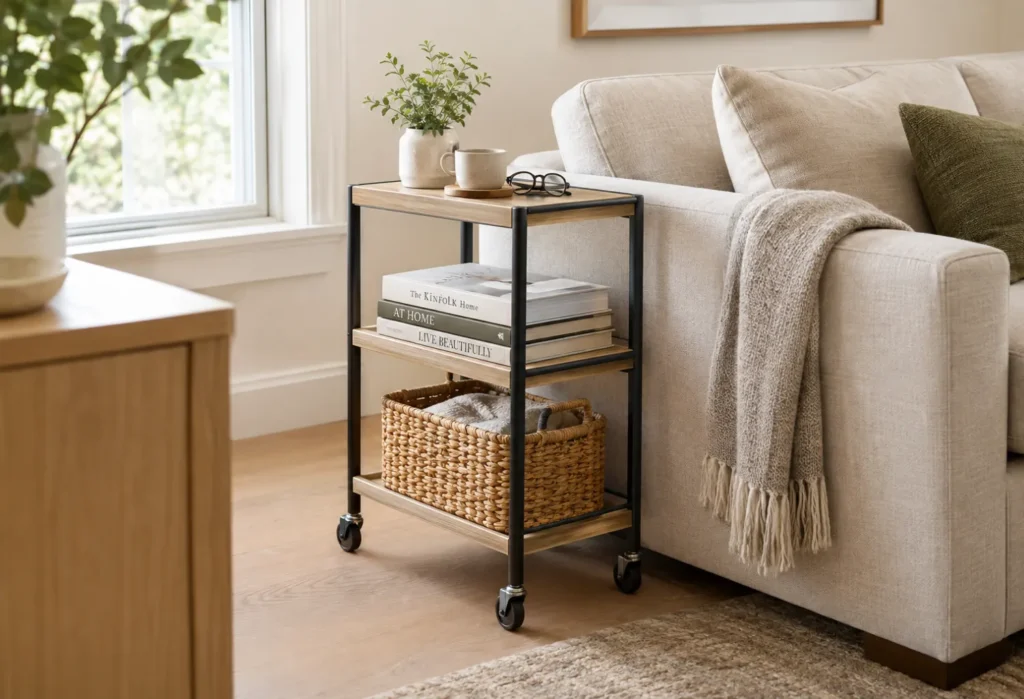
A small rolling cart can provide flexible storage without permanently occupying one section of the room. It can hold books, art supplies, game controllers, snacks, or office items and move beside the sofa when needed.
Look for a cart about 12–16 inches wide with two or three levels. Metal carts suit modern interiors, while wood versions feel warmer in traditional rooms. Keep the bottom level for heavier items and the top for things used daily. Because it rolls away easily, it is particularly useful in rooms that serve several purposes.
12. Curtain-Covered Open Storage
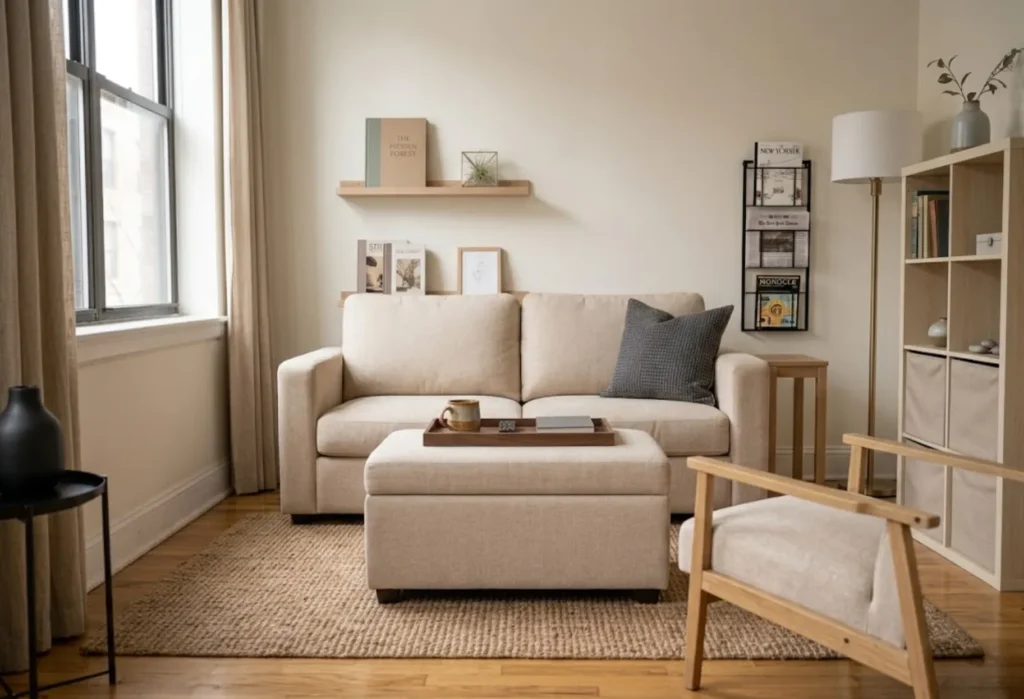
Open cube shelving is inexpensive and easy to find, but visible storage can make a living room look busy. Adding a simple fabric panel across selected sections gives you a low-cost way to conceal items while keeping the shelving itself accessible.
Choose fabric that relates to existing curtains, cushions, or upholstery rather than introducing a completely new pattern. A linen-look beige or soft gray panel can work with many color schemes. Cover only the lower sections and leave a few upper compartments open for books and carefully chosen decor.
13. Furniture With Built-In Drawers
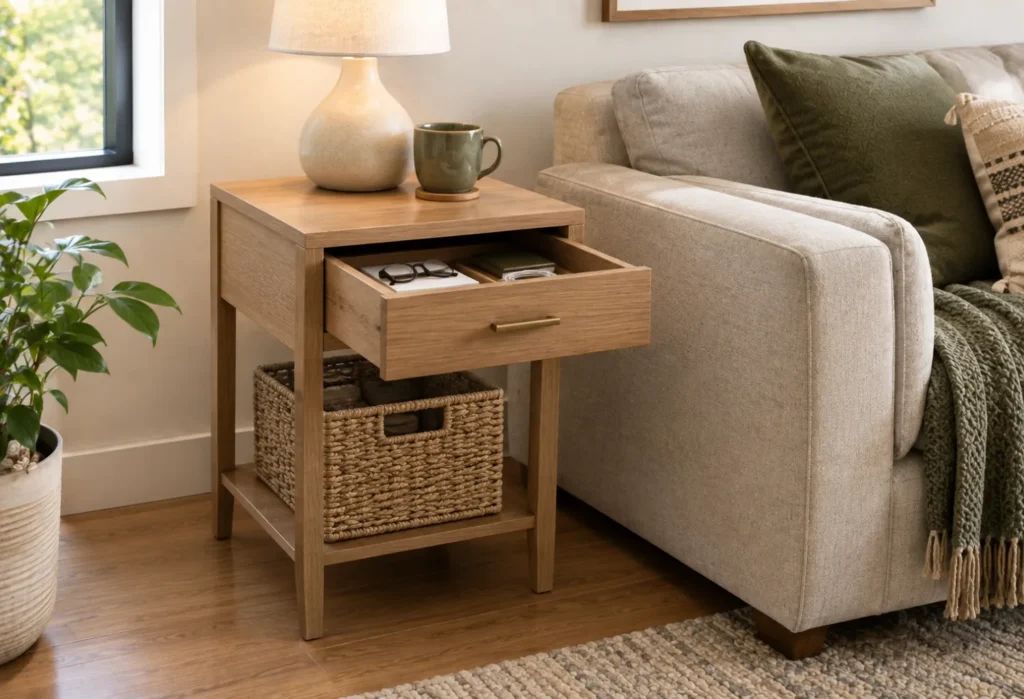
A side table with a drawer can solve a very specific storage problem: small everyday objects that need to be nearby but should not remain visible. Keys, reading glasses, chargers, notebooks, and remote controls can all disappear into one compact piece.
Look for a table that fits beside the sofa without blocking the arm or walkway. Around 18–24 inches wide is often enough for useful drawer storage. Avoid choosing a table simply because it has more drawers; the piece should still leave enough clearance for people to move comfortably around the seating area.
14. Under-Sofa Storage Boxes
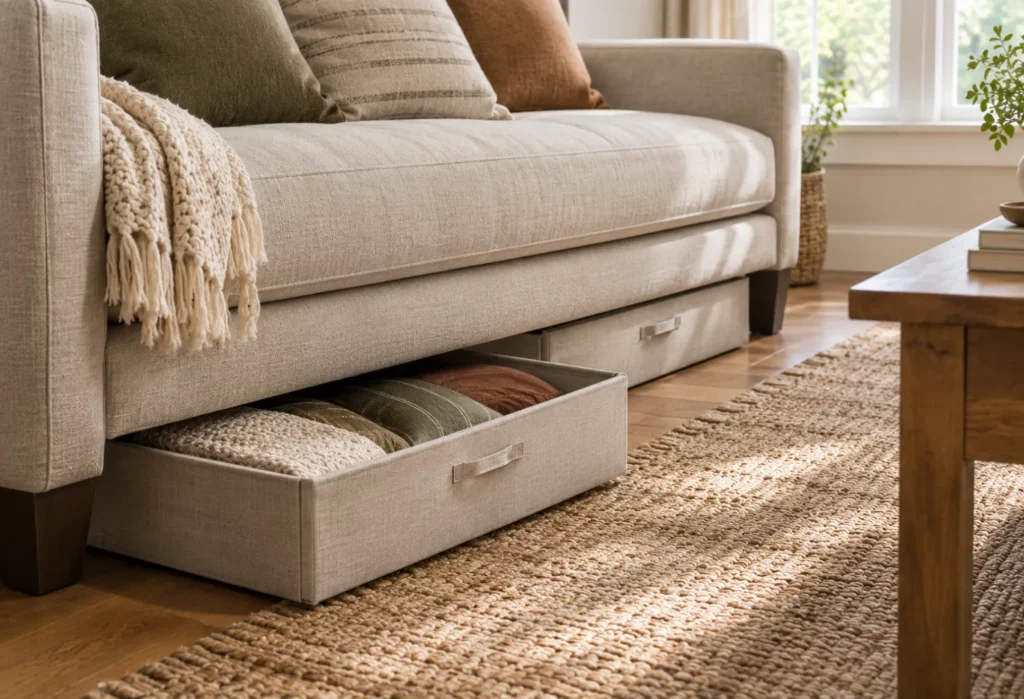
The space beneath a sofa can become useful storage if there is enough clearance. Low boxes or flat containers can hold seasonal cushions, spare throws, children’s toys, or rarely used accessories without taking up additional visible space.
Measure the clearance underneath the sofa before buying anything. Choose containers with handles so they can be pulled out easily, and use covered boxes if dust is a concern. Avoid overfilling the area because boxes that extend beyond the sofa can interrupt the clean furniture lines and create a trip hazard.
15. Matching Bins for Media Equipment
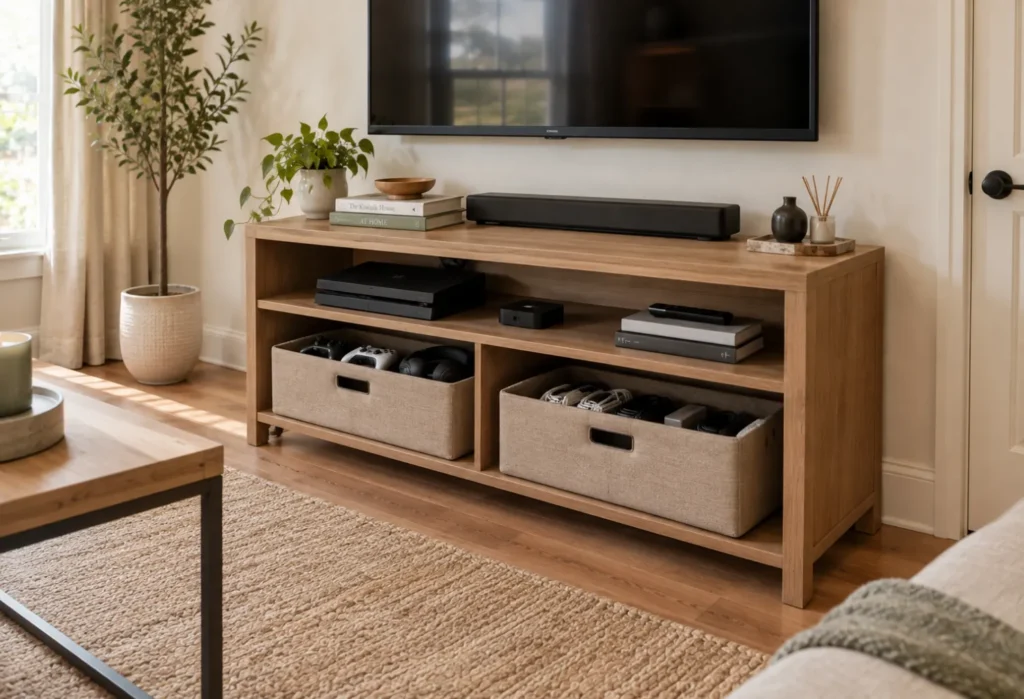
Television accessories often create visual clutter because streaming devices, controllers, headphones, and cables come in different shapes and sizes. A few matching bins can bring these smaller pieces together and make an entertainment area easier to manage.
Use one bin for controllers and another for cables or accessories rather than putting everything into one container. Neutral fabric, woven material, or matte finishes tend to blend with most media furniture. Keep ventilation openings clear around electronics and avoid placing heat-producing equipment inside closed bins.
16. A Small Corner Cabinet
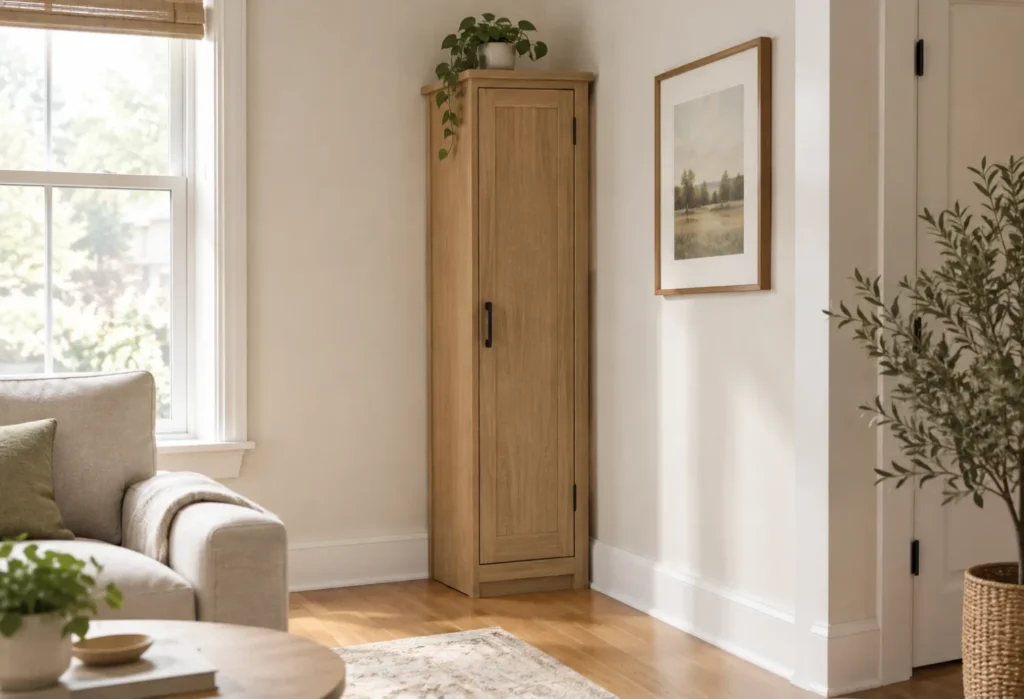
An awkward living room corner can become wasted space if standard furniture cannot fit properly. A narrow corner cabinet gives that difficult area a purpose while providing enclosed storage for items you do not want on display.
Measure both walls around the corner before shopping, including door and drawer clearance. A triangular or compact vertical cabinet can work better than a wide rectangular unit. Use the cabinet for less frequently accessed items so the door does not need to be opened constantly in a tight corner.
17. Decorative Boxes on the Coffee Table
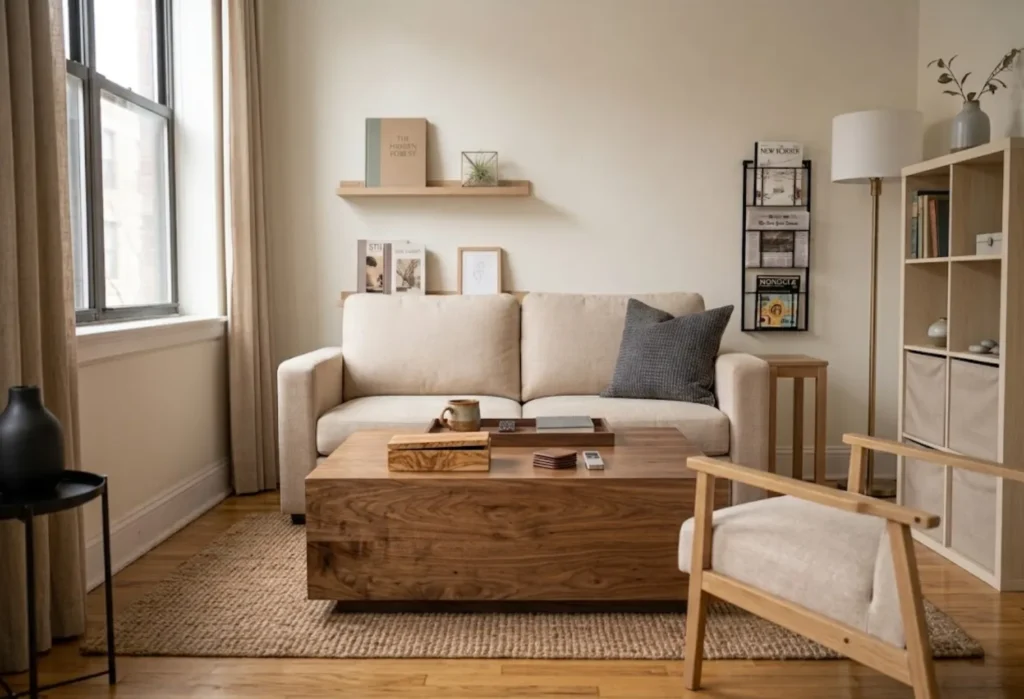
A coffee table can remain visually clean even if it needs to hold everyday necessities. Decorative boxes provide a simple place for matches, coasters, remote controls, pens, or small electronic accessories while doubling as part of the table styling.
Choose one or two boxes in materials already present in the room, such as wood, rattan, linen, or metal. Keep the colors restrained and avoid stacking too many containers. A wooden box paired with a ceramic vase and a small tray can create a balanced arrangement without filling the entire tabletop.
18. A Simple Decluttering Tray
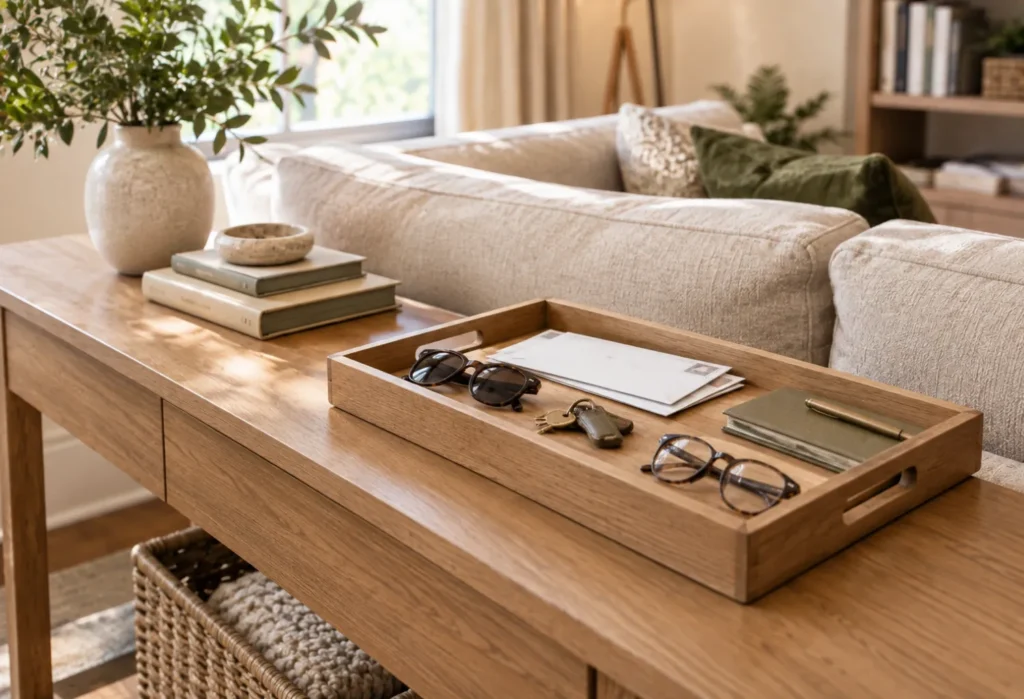
Sometimes the problem is not a lack of storage but the absence of one place for temporary items. A large tray on a console or coffee table can gather mail, keys, glasses, and other objects that would otherwise spread around the room.
Choose a tray with enough surface area for the items your household actually leaves out, but not so large that it takes over the furniture. Wood adds warmth, while black metal or natural rattan can suit more contemporary rooms. Empty it regularly so the tray remains a holding spot rather than a permanent pile.
5 Budget-Friendly Picks Worth Trying
| Idea | Best For | Why I Recommend It |
| Storage Ottoman | Small rooms | Combines seating, table space, and storage |
| Floating Shelves | Empty walls | Adds storage without using floor space |
| Charging Station | Cable clutter | Keeps everyday electronics organized |
| Under-Sofa Boxes | Seasonal items | Uses hidden space that is often wasted |
| Slim Rolling Cart | Flexible storage | Moves easily as the room changes |
Conclusion
Good organization does not have to make a living room look overly practical or expensive. The best 18 Living Room Organization Ideas On A Budget are the ones that match how you actually use the room. Start with the area causing the most clutter, then choose storage that fits your furniture, walking paths, and decorating style. A few thoughtful changes can make the room easier to live in without spending much.