15 Living Room Organization Ideas for a Neater Home
A small living room can feel crowded quickly, especially when books, blankets, remotes, toys, and everyday items have nowhere to go. These 15 Living Room Organization Ideas focus on practical storage without making the room feel overfilled. You’ll find simple furniture choices, clever use of wall space, hidden storage, and easy styling tricks that work for renters, families, and anyone trying to keep a compact room neat and comfortable.
1. Storage Ottoman
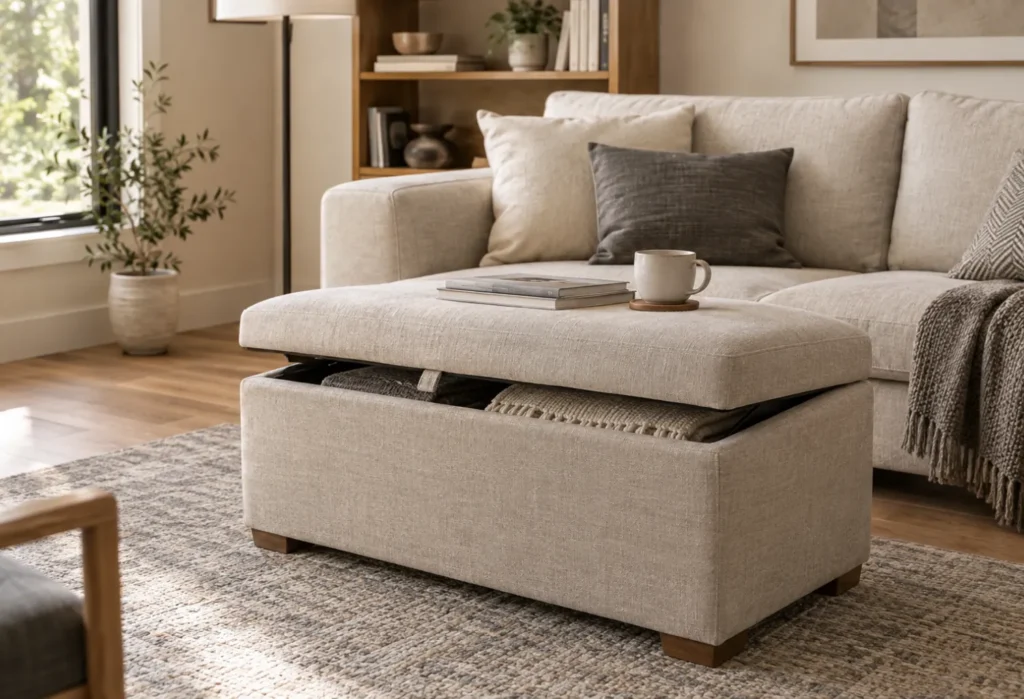
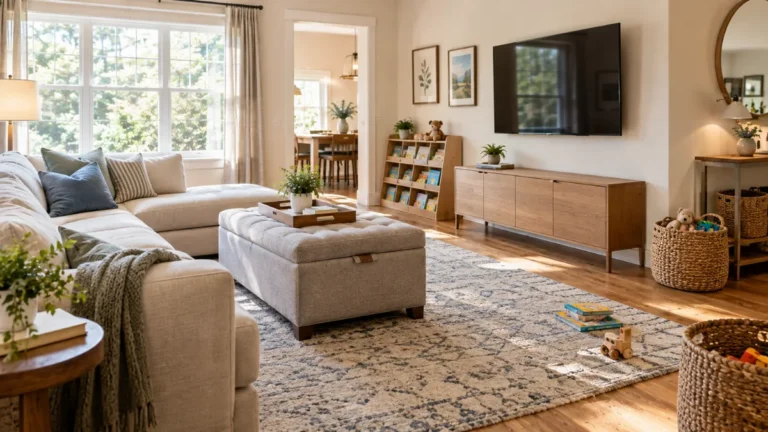
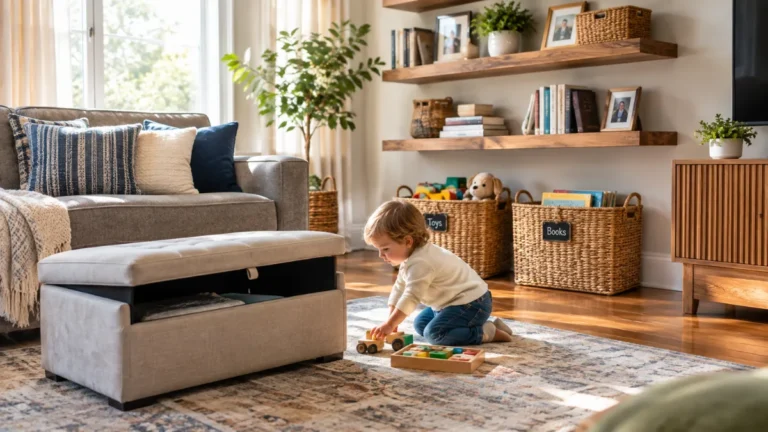
A storage ottoman gives a small living room two useful functions in one piece. It can serve as a footrest, extra seating, or a casual coffee table while hiding blankets, magazines, children’s toys, or gaming accessories inside. This keeps frequently used items close without adding another cabinet or basket to the floor.
Choose an ottoman with a firm, flat top if you want to use it as a table. A rectangular design works particularly well in front of a sofa because it follows the furniture’s shape. Avoid oversized pieces that leave too little walking space around the seating area.
2. Floating Wall Shelves
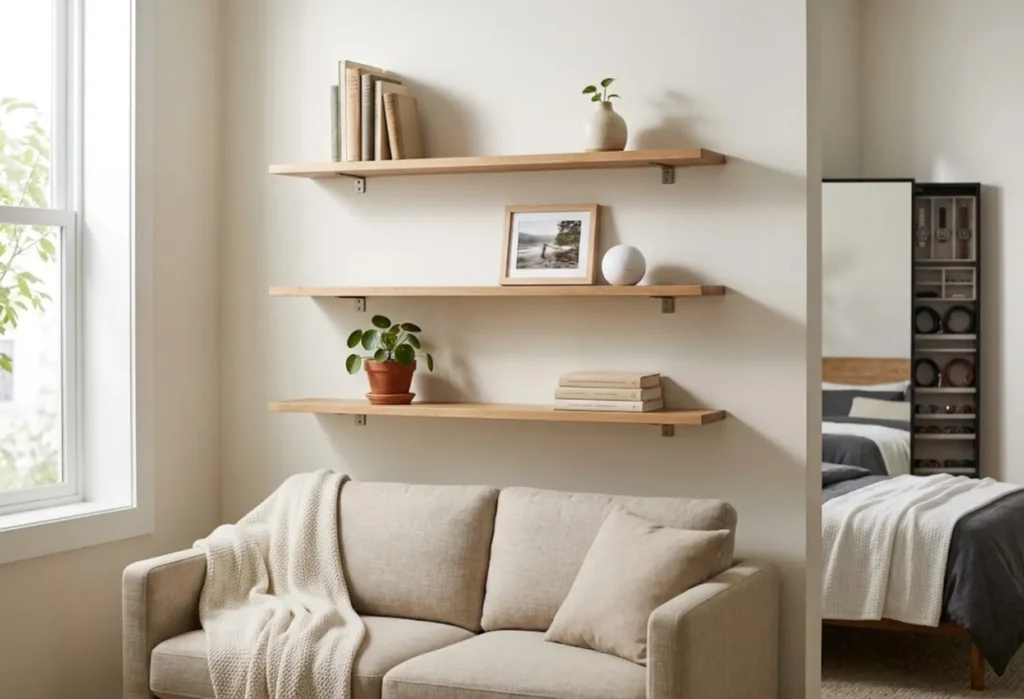
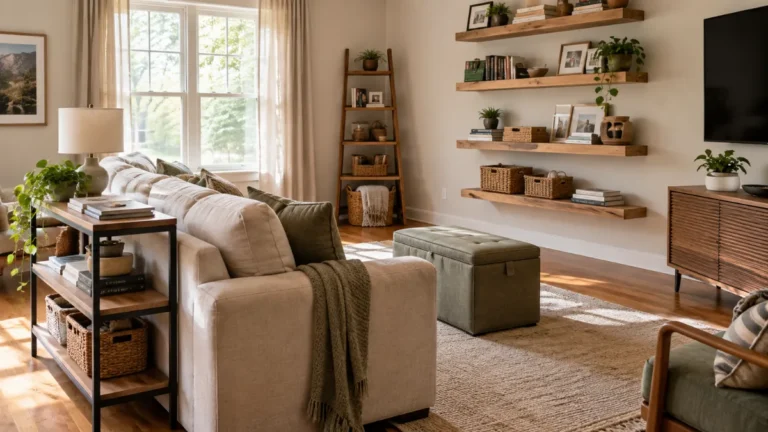
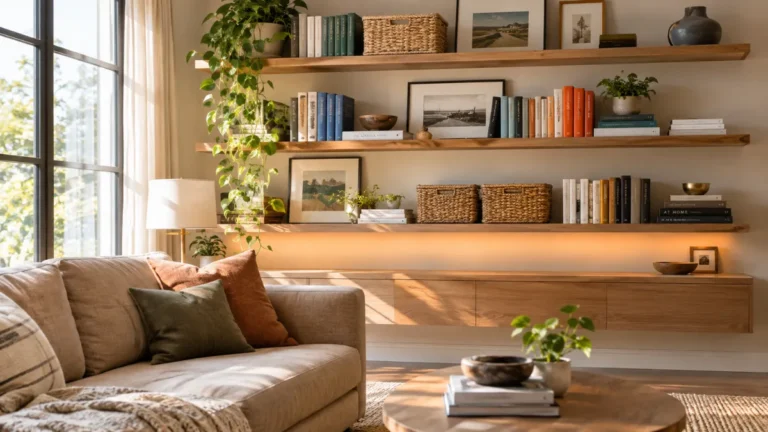
Empty wall space can provide valuable storage without taking up floor area. A few slim floating shelves can hold books, framed photographs, small plants, and decorative objects while keeping the lower part of the room open. This is especially useful beside a sofa or on a narrow wall that cannot accommodate a full bookcase.
Keep the shelves visually light by choosing natural wood, white, or a finish that matches existing furniture. Leave some open space between objects rather than filling every inch. For a balanced arrangement, mix vertical books with small horizontal stacks and one or two simple accessories.
3. Slim Console Table
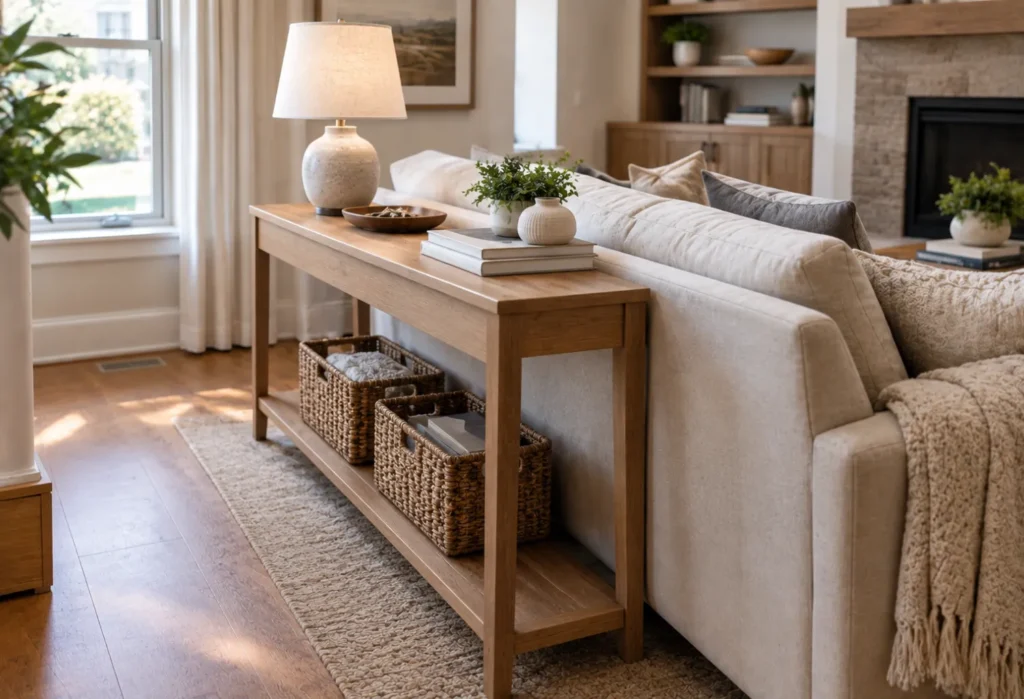
A narrow console table can solve the problem of a blank wall behind a sofa while providing a useful landing spot for everyday items. The surface can hold a small lamp, tray, books, or a charging station, while lower shelves or drawers provide discreet storage. Its shallow depth makes it suitable for tight rooms.
Look for a console around 10 to 14 inches deep if the walkway behind the sofa is limited. Measure the remaining passage before buying. A table that is too deep can make the room feel cramped and create an awkward route around the furniture.
4. Baskets Under Open Shelves
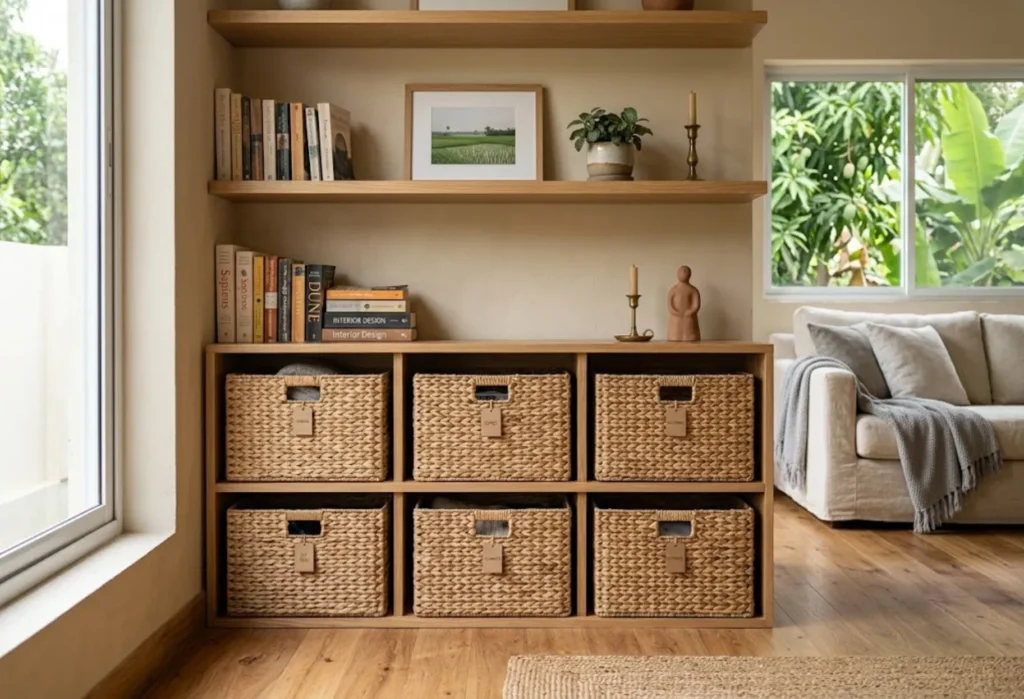
Open shelving often looks attractive but can become messy if small belongings are placed directly on every shelf. Matching baskets give those shelves a cleaner appearance while making it easy to group items such as chargers, toys, craft supplies, or extra linens. Natural woven baskets also add texture without requiring more wall decoration.
Use one basket for each category rather than mixing unrelated objects together. Rectangular baskets usually make better use of shelf depth than round ones. If the room already contains several wood tones, choose baskets in a neutral beige or soft gray to keep the storage visually consistent.
5. Wall-Mounted TV Cabinet
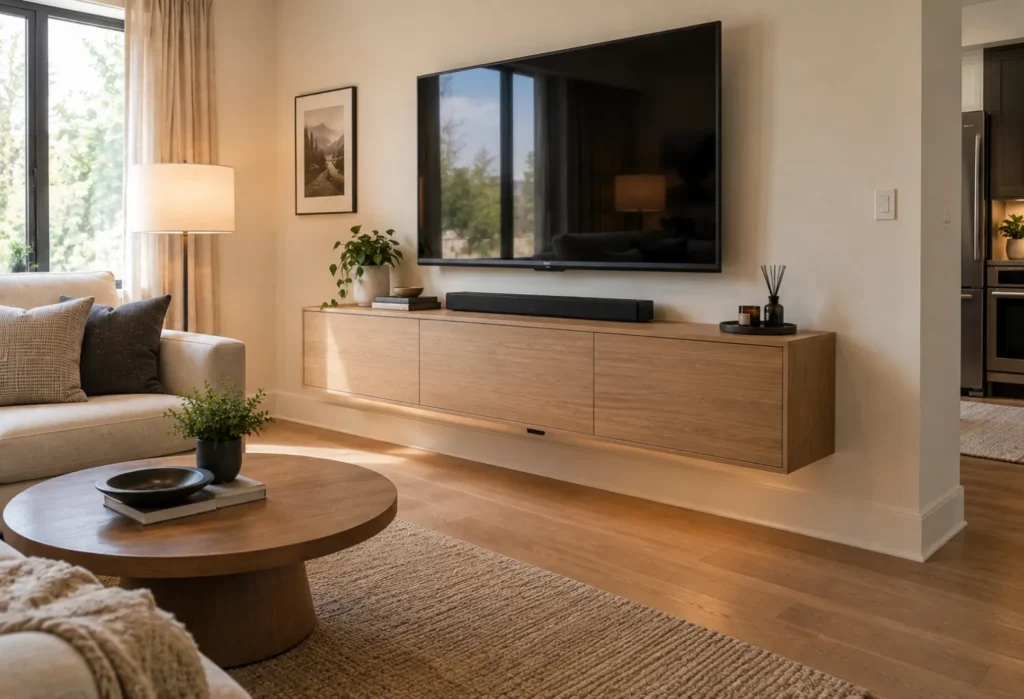
A wall-mounted TV cabinet keeps media equipment organized while freeing some floor area underneath. Closed compartments can hide game controllers, cables, remotes, DVDs, and other small electronics that tend to collect around the television. The open space below also makes the furniture arrangement feel less heavy.
Choose a cabinet that is wider than the television but not so large that it dominates the wall. Keep cable openings accessible and use simple cable clips behind the unit. Avoid displaying every device on the cabinet surface; keeping only the equipment that needs to be visible creates a calmer arrangement.
6. Sofa With Built-In Storage
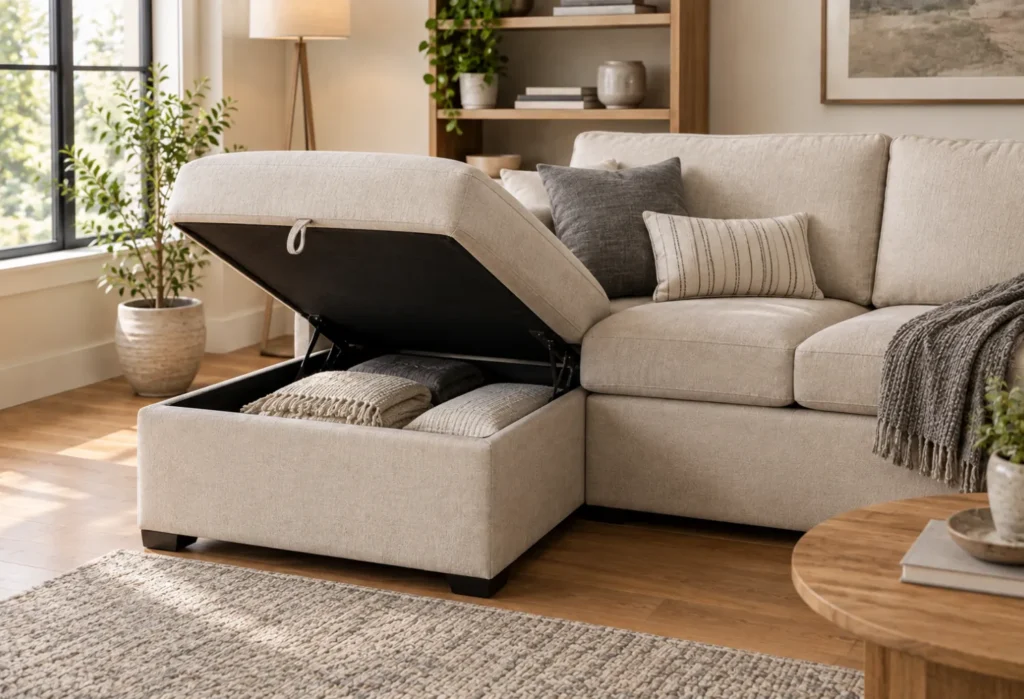
A sofa with storage beneath the seat can be especially useful in a compact living room where separate cabinets are difficult to fit. The hidden compartment provides a place for seasonal throws, spare cushions, children’s belongings, or rarely used items without changing the room’s footprint.
Check how the storage opens before purchasing. Lift-up seats need enough clearance to operate comfortably, while drawer-style compartments need open floor space in front. Choose durable upholstery in a color that works with the room’s existing rug and curtains rather than treating the sofa as a separate visual element.
7. Behind-the-Door Storage
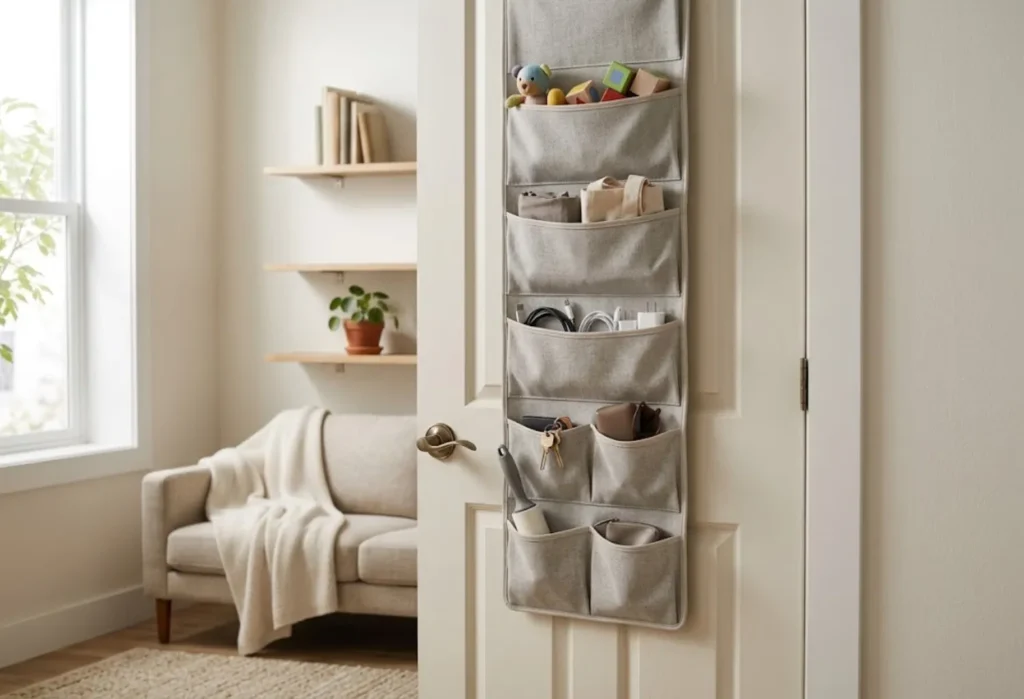
The back of a living room door is often overlooked, yet it can hold lightweight items without using valuable floor space. A slim hanging organizer can store small toys, pet accessories, craft materials, reusable shopping bags, or household items that otherwise end up on shelves.
Choose a door-mounted organizer that sits close to the door and does not interfere with the handle or nearby furniture. Fabric pockets are useful for lightweight belongings, while hooks work better for bags and small baskets. Keep heavier objects off the door so it remains easy to open and close.
8. Nesting Side Tables
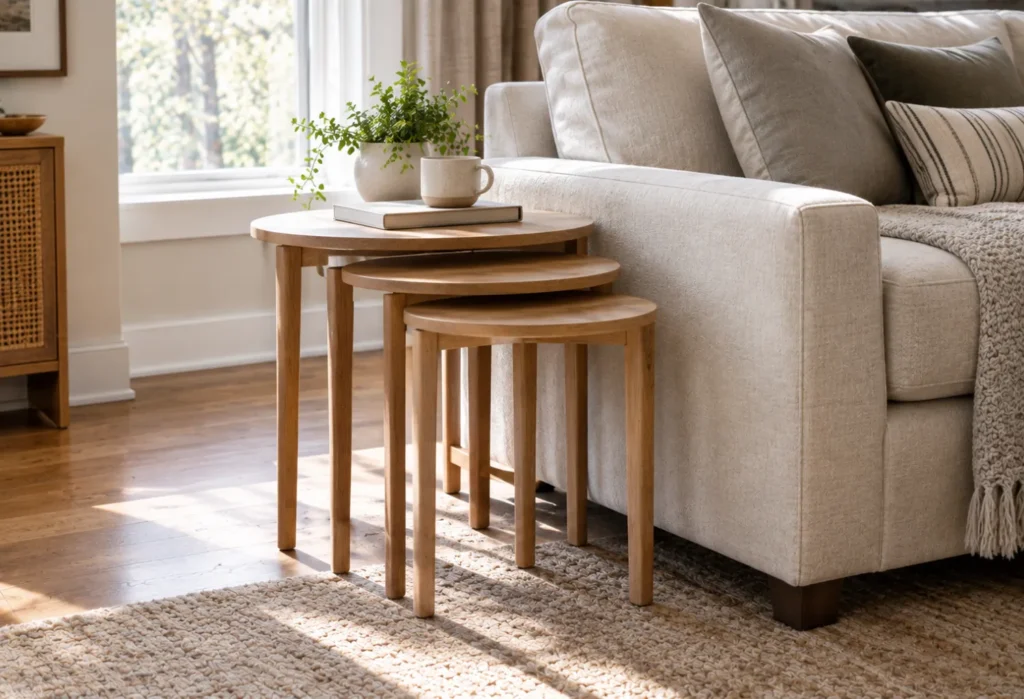
Nesting side tables provide flexible surface space without permanently occupying the footprint of two or three separate tables. Keep the smaller tables tucked underneath the largest one during normal use, then pull them apart when guests need extra places for drinks, books, or snacks.
Select tables with simple legs and relatively thin tops so the arrangement does not look bulky beside a sofa. Round nesting tables are particularly useful near tight walking paths because they have no sharp corners. Keep at least one table close enough to the sofa for comfortable everyday use.
9. A 10-by-12-Foot Living Room Layout
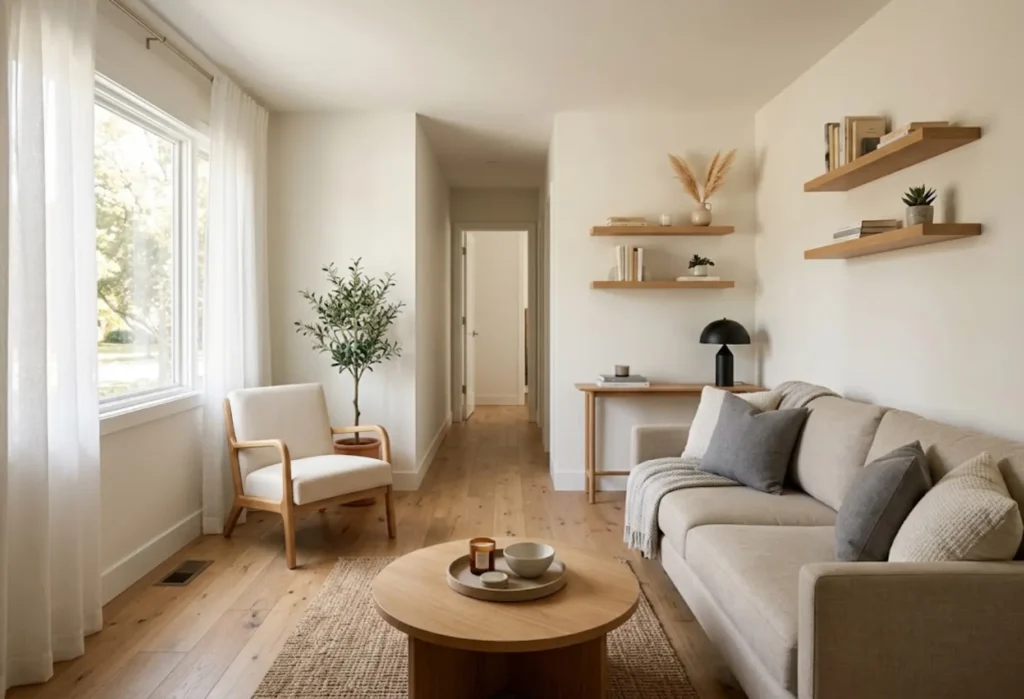
Imagine a 10-by-12-foot living room with a sofa against the long wall, one armchair near the window, and a narrow passage leading to the hallway. Adding a large bookcase would provide storage but make that passage feel tight. Instead, floating shelves above the sofa and a slim console behind it can use vertical and otherwise unused areas.
The useful lesson is to look at the room as a series of zones rather than trying to add storage wherever there is empty floor space. Keep the main walkway clear, place everyday items near where they are used, and reserve higher shelves for belongings accessed less often.
10. Drawer Dividers
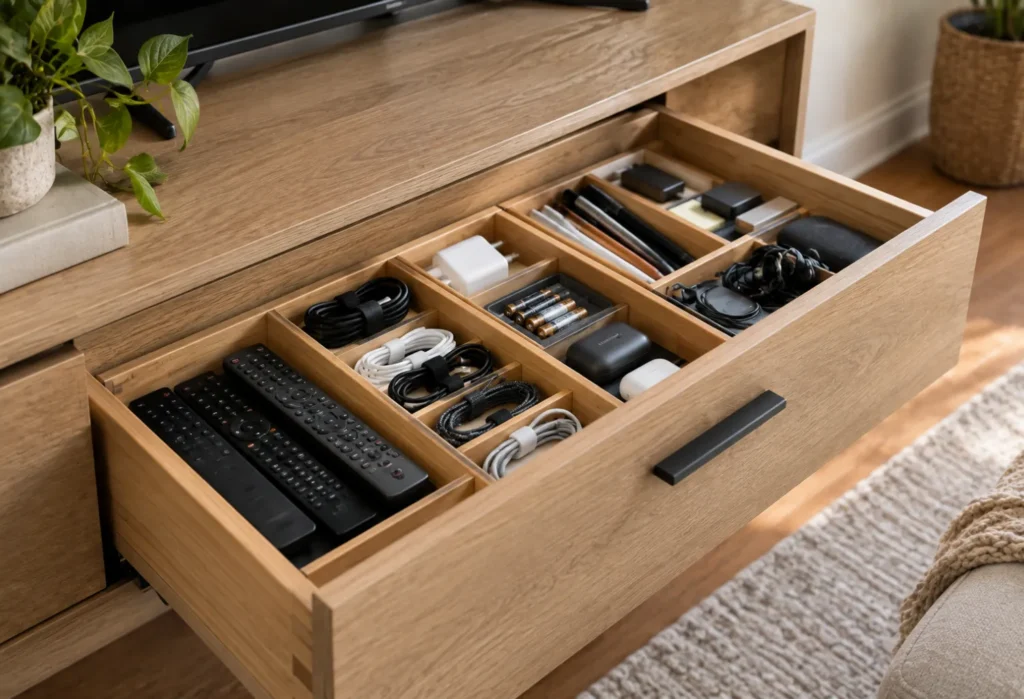
Small living room drawers can become difficult to use when remotes, charging cables, batteries, pens, and miscellaneous items collect together. Simple drawer dividers create separate sections, making it easier to find things without emptying the entire drawer each time.
Measure the inside of each drawer before choosing dividers. Adjustable bamboo or plastic versions are useful because they can be repositioned as your storage needs change. Give each section a clear purpose, such as remotes, electronics, or stationery, and avoid using the drawer as a catch-all.
11. A Large Area Rug
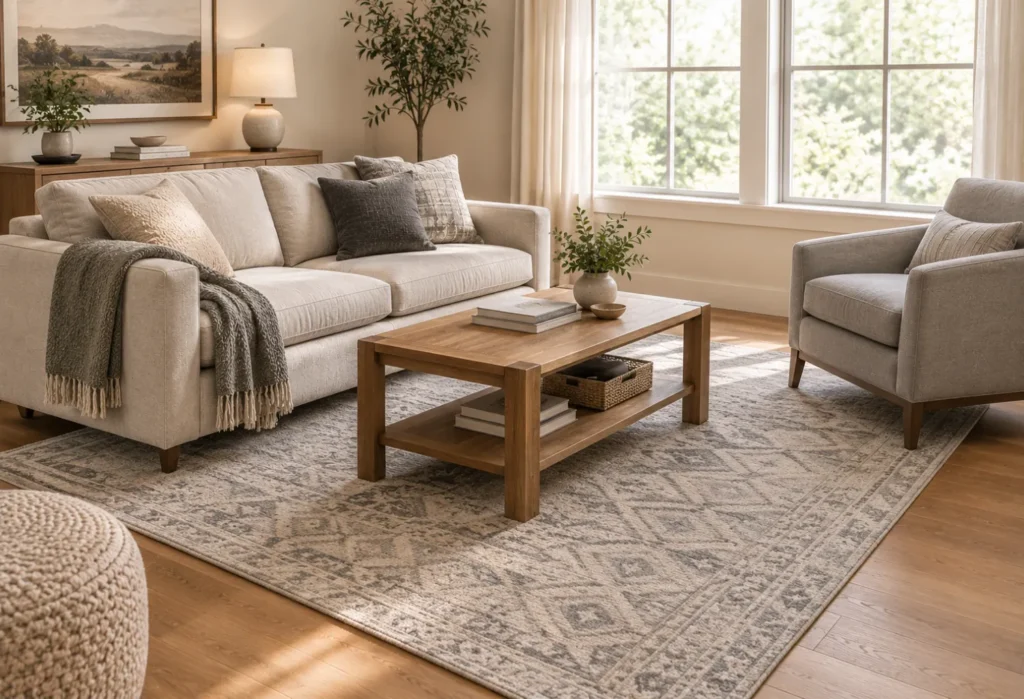
A properly sized area rug can help organize a small living room visually by defining the seating zone. Instead of making the furniture appear scattered across the floor, the rug connects the sofa, chair, and coffee table into one clear arrangement. A soft neutral pattern can add interest without making the room look busy.
Choose a rug large enough for at least the front legs of the main seating pieces to sit on it. Light beige, muted gray, cream, or gentle geometric patterns can work well in compact rooms. Avoid a tiny rug floating in the center, as it can make the furniture arrangement feel disconnected.
12. Cable Management Box
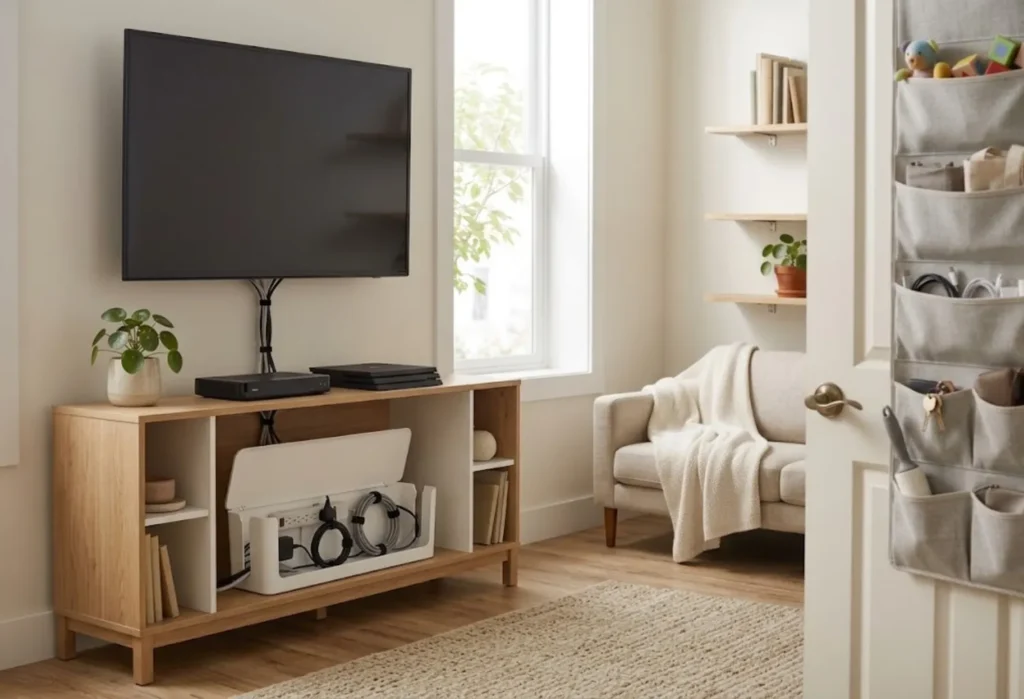
Visible cords can make an otherwise organized media area look untidy. A cable management box can conceal power strips and excess cable length while keeping the floor around the television or console easier to clean. This is particularly useful in living rooms with several charging devices.
Select a box with ventilation openings and enough room for the power strip without forcing cables into a tight bend. Label chargers if several look alike, and leave enough slack to safely move equipment when needed. Do not overload a single power strip simply to keep the area visually tidy.
13. Bookshelf With Closed Storage
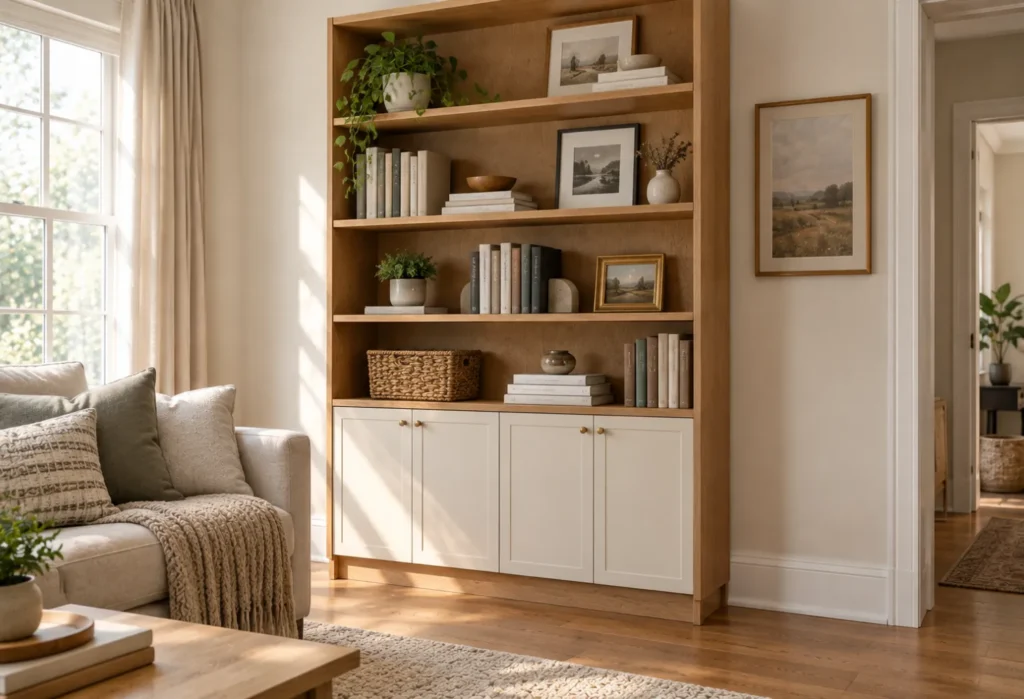
A bookshelf with a combination of open shelves and closed cabinets offers a useful balance between display and concealment. Books, artwork, and a few favorite objects can remain visible, while paperwork, electronics, toys, and less attractive supplies stay behind doors.
Choose a vertical unit if floor space is limited because it uses height rather than width. Keep the upper shelves lighter and place heavier storage lower down. A mix of warm wood and cream-colored cabinet doors can work nicely with neutral sofas and natural woven accessories.
14. Repurposed Wooden Crates
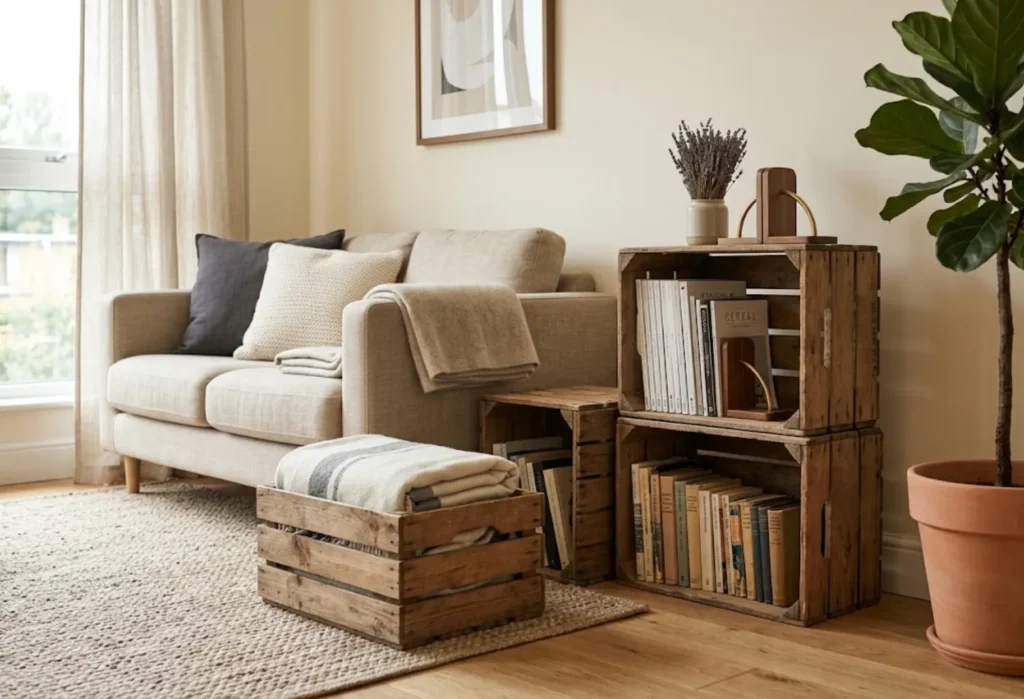
Wooden crates can provide inexpensive storage for books, magazines, blankets, or small accessories without requiring a traditional storage cabinet. Stacked safely beside a sofa, they can also create a casual side unit with an open, relaxed character.
Use sturdy crates with smooth surfaces and secure stacked pieces so they cannot shift easily. Sand rough edges before bringing them indoors. Keeping the wood natural works well with neutral upholstery, while painted crates can coordinate with an existing accent color without introducing another finish.
15. Entryway Drop Zone
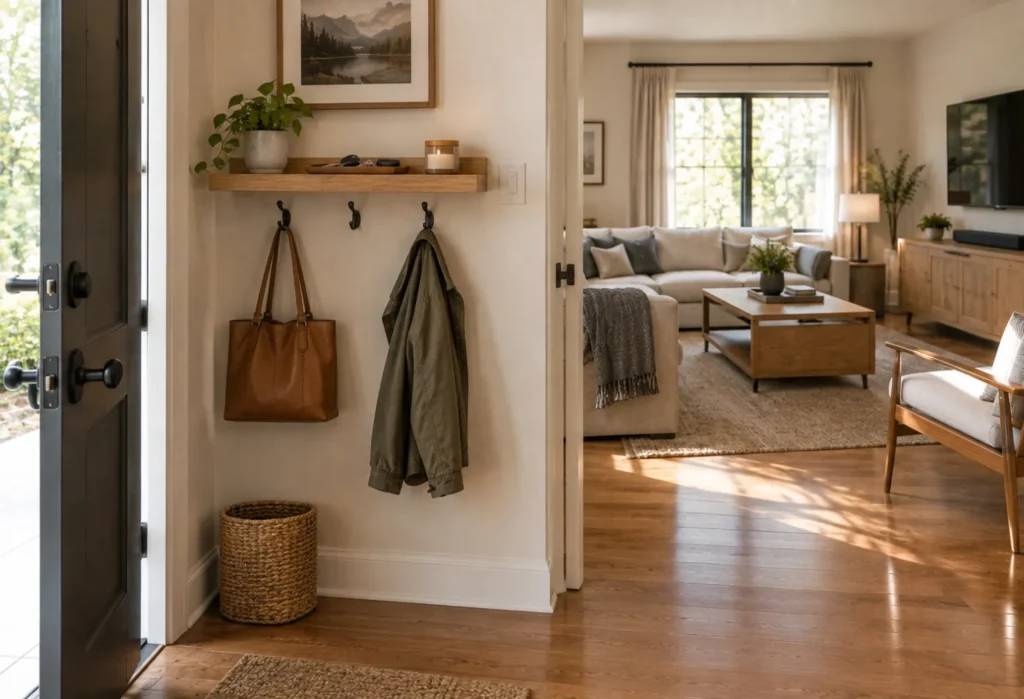
If the living room sits directly beside the main entrance, a small drop zone can prevent keys, bags, shoes, mail, and other daily items from spreading across the room. A narrow wall shelf with hooks underneath can give each category a defined place without requiring a full entryway cabinet.
Keep the setup compact and visually simple. A small tray can collect keys and loose items, while two or three hooks handle frequently used bags or jackets. Place the drop zone close to the entrance rather than beside the sofa, so belongings stop accumulating in the main seating area.
5 Best Ideas at a Glance
| Idea | Best For | Why I Recommend It |
| Storage Ottoman | Blankets and toys | Combines seating and storage |
| Floating Wall Shelves | Small floor plans | Uses vertical space |
| Slim Console Table | Narrow rooms | Adds storage with little depth |
| Wall-Mounted TV Cabinet | Media clutter | Hides electronics and cables |
| Cable Management Box | Visible cords | Keeps the media area tidy |
Conclusion
The best 15 Living Room Organization Ideas are the ones that match how your household actually uses the room. Start with the biggest source of clutter, then choose storage that fits the available floor and wall space. A few well-planned pieces can make a small living room easier to use while still leaving room for personal style, comfortable seating, and everyday life.