16 Living Room Storage Ideas for a Tidier, Stylish Home
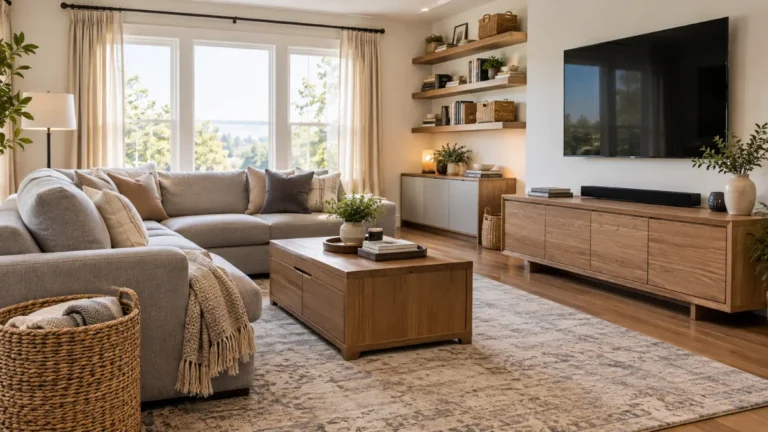
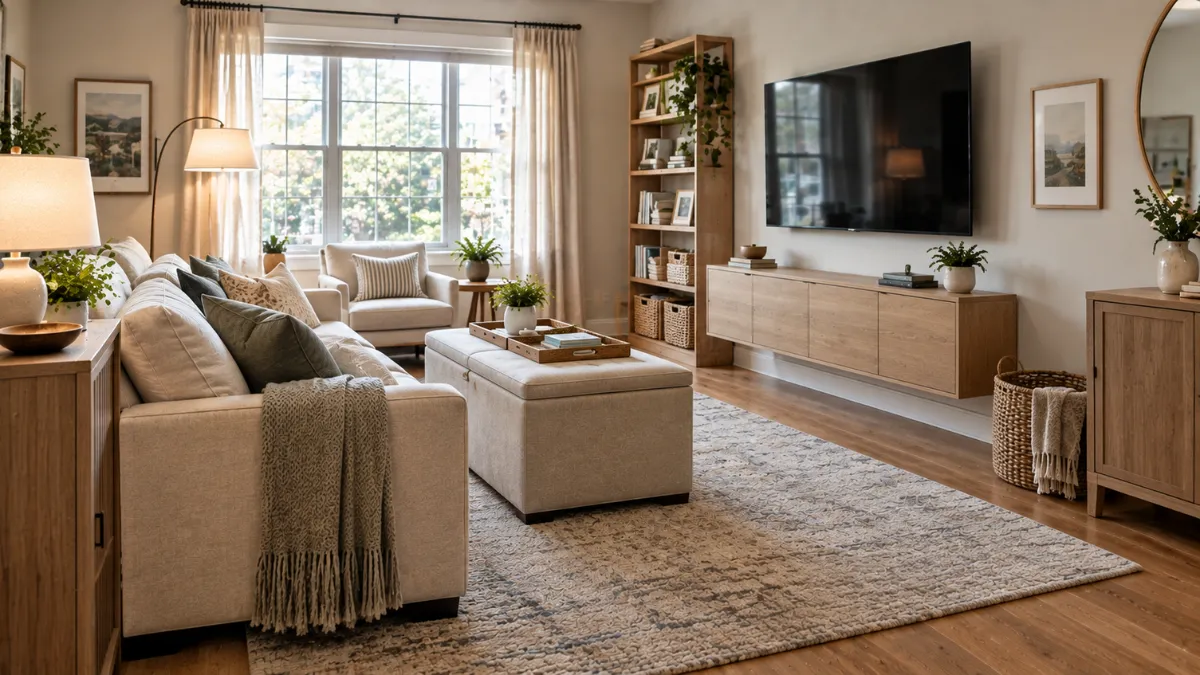
A small living room can feel crowded quickly, especially when books, blankets, electronics, and everyday items have nowhere to go. These 16 Living Room Storage Ideas offer practical ways to keep those essentials organized without making the room feel overfilled. From furniture with hidden compartments to smart wall storage, you’ll find options for renters, families, and homeowners who want useful storage that also fits their decorating style.
1. Storage Ottoman
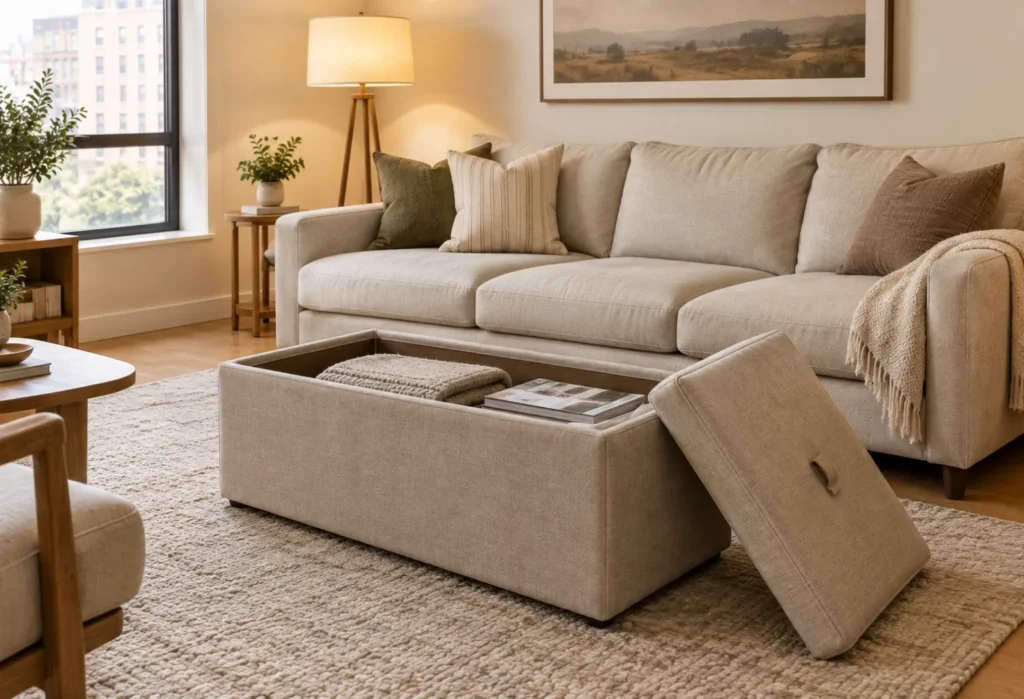
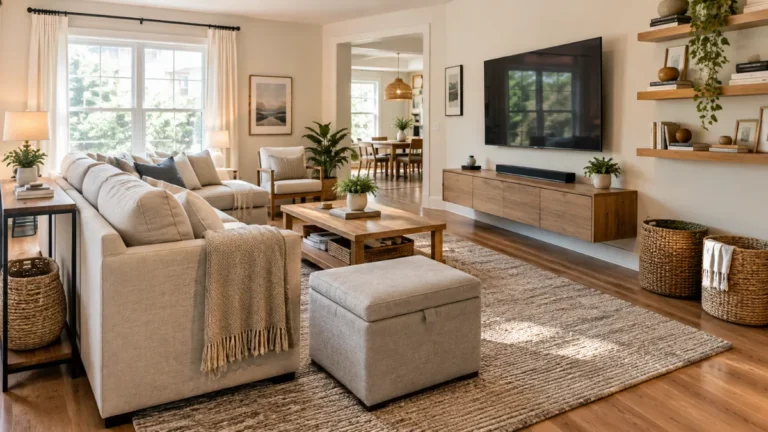
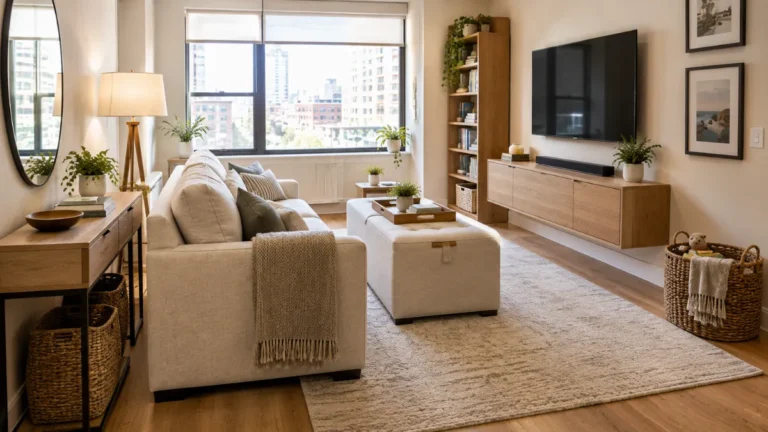
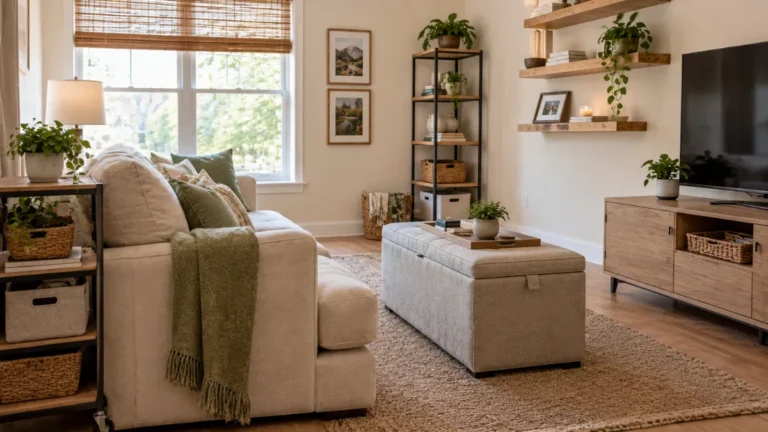
A storage ottoman gives a small living room two useful functions in one piece. It can serve as a footrest, extra seating, or a casual coffee table while hiding blankets, magazines, toys, and other items inside. Because it sits low, it keeps the visual center of the room relatively open.
Choose an ottoman that is proportional to your sofa and leaves comfortable walking space around it. A hinged lid is convenient for frequent use, while a removable top works well for less-accessed items. Look for textured fabric or natural leather if you want the piece to add visual interest.
2. Built-In Shelving
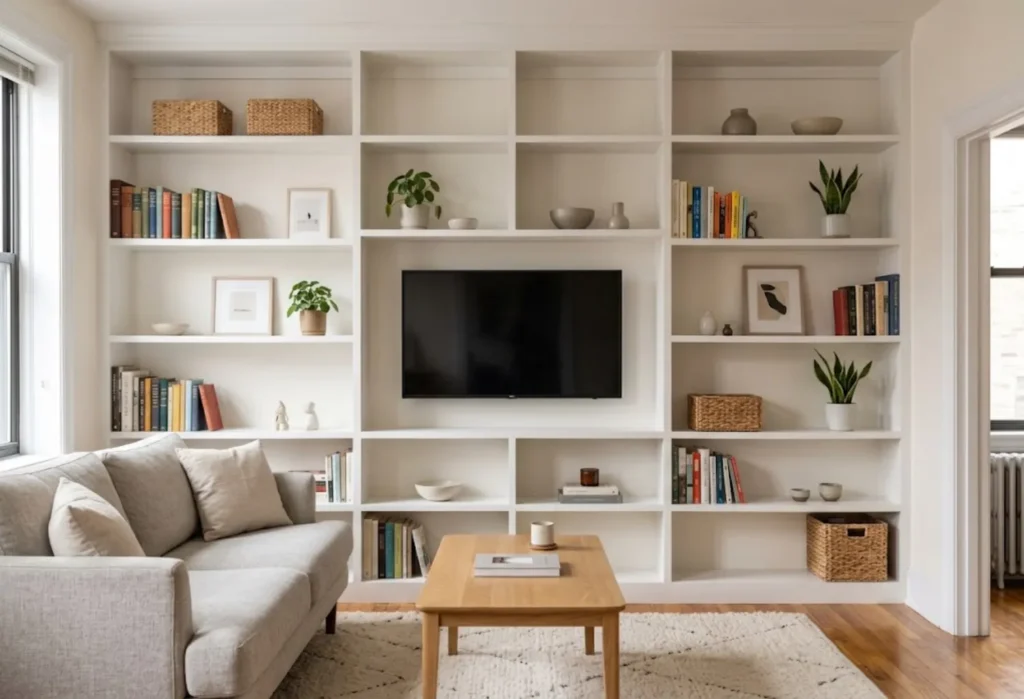
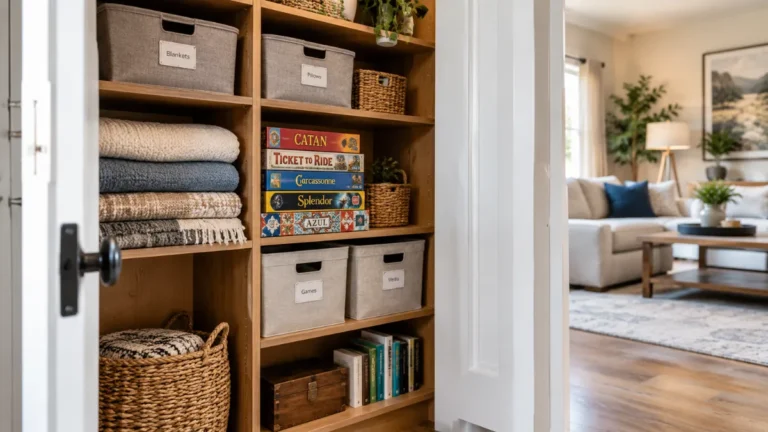
Built-in shelving makes use of vertical wall space that often goes unused. Instead of adding several separate cabinets or bookcases, a fitted unit can surround a television, fireplace, or doorway while providing dedicated places for books and accessories.
Keep the shelves visually balanced rather than filling every section. Combine books with framed artwork, small baskets, and a few decorative objects. Painting the shelving in the same color as the wall can make the unit feel more integrated, while natural wood adds warmth against white, cream, or muted green walls.
3. Lift-Top Coffee Table
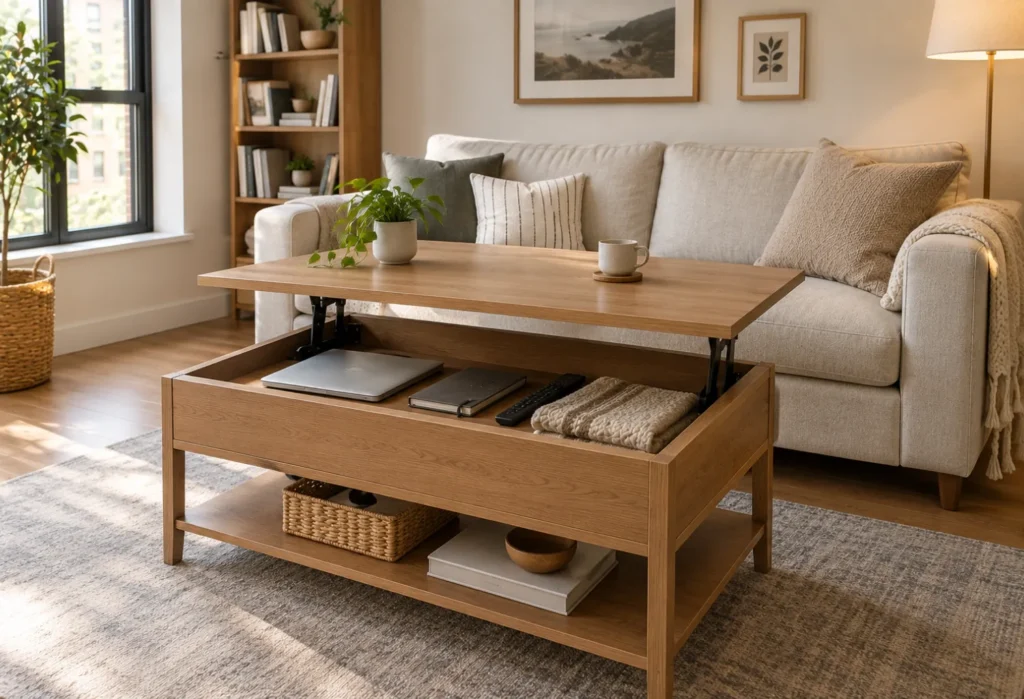
A lift-top coffee table provides concealed storage while giving you a practical surface for working, eating, or using a laptop. The top rises toward you, creating a comfortable temporary work surface without requiring a separate desk in a compact living room.
Choose a model with a smooth lifting mechanism and enough internal space for the things you regularly use. Keep the tabletop mostly clear so the room doesn’t look busy. Wood finishes work nicely with neutral upholstery, while a painted table can introduce a subtle color contrast.
4. Floating Cabinets
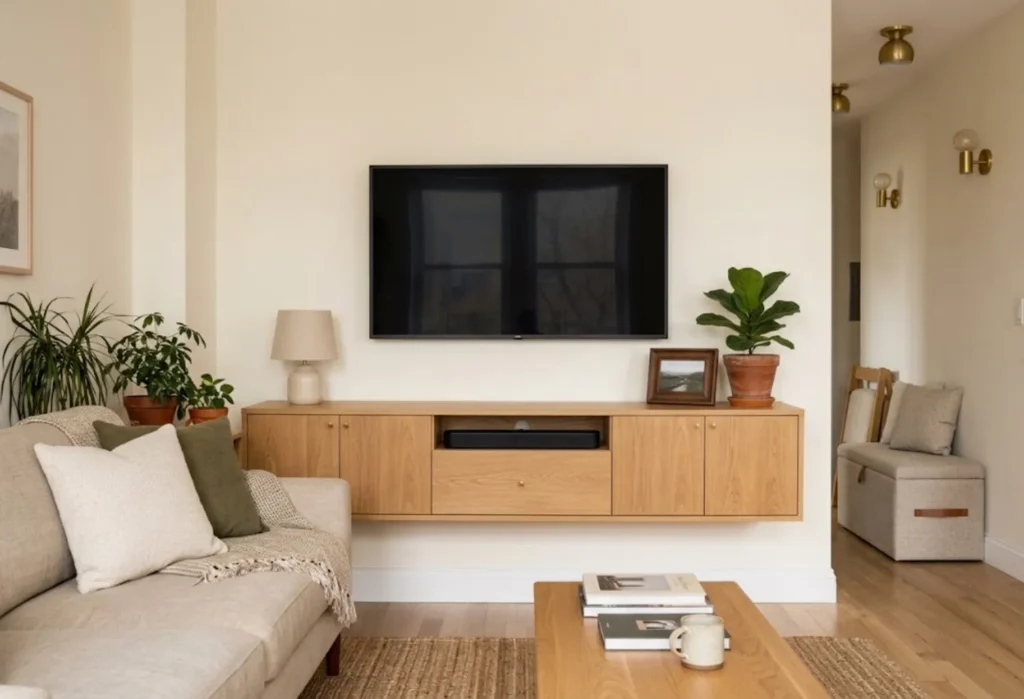
Floating cabinets keep storage off the floor, which helps maintain a clearer sightline across a small living room. They are particularly useful beneath a wall-mounted television or along a narrow wall where a traditional cabinet would make the floor feel crowded.
Mount the cabinet at a comfortable height and leave enough clearance above the floor for easy cleaning. Use closed doors for electronics, paperwork, and miscellaneous items that create visual clutter. A combination of warm oak cabinetry and a light wall can provide storage without making the room feel heavy.
5. Under-Sofa Baskets
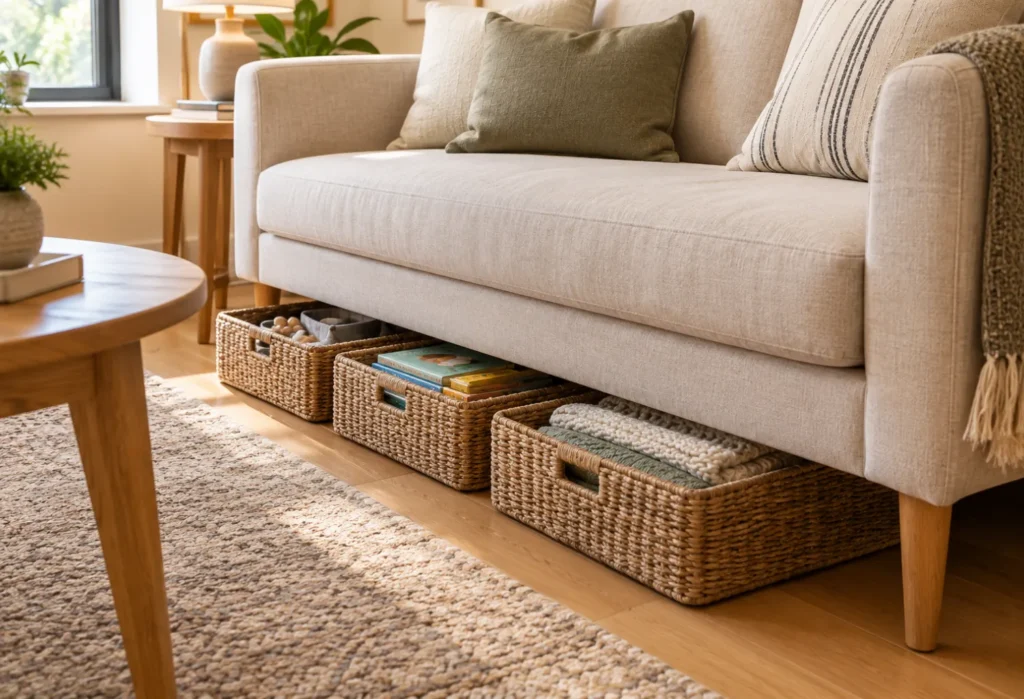
The empty space beneath a raised sofa can become useful storage with a few low-profile baskets. This is especially helpful for blankets, children’s toys, board games, or seasonal accessories that need to remain accessible but don’t need to stay visible.
Measure the clearance under the sofa before buying baskets. Choose containers that slide out easily without catching on the frame or rug. Woven seagrass, rattan, or fabric baskets can look intentional rather than improvised, especially when their color relates to nearby wood furniture or textiles.
6. Narrow Console Cabinet
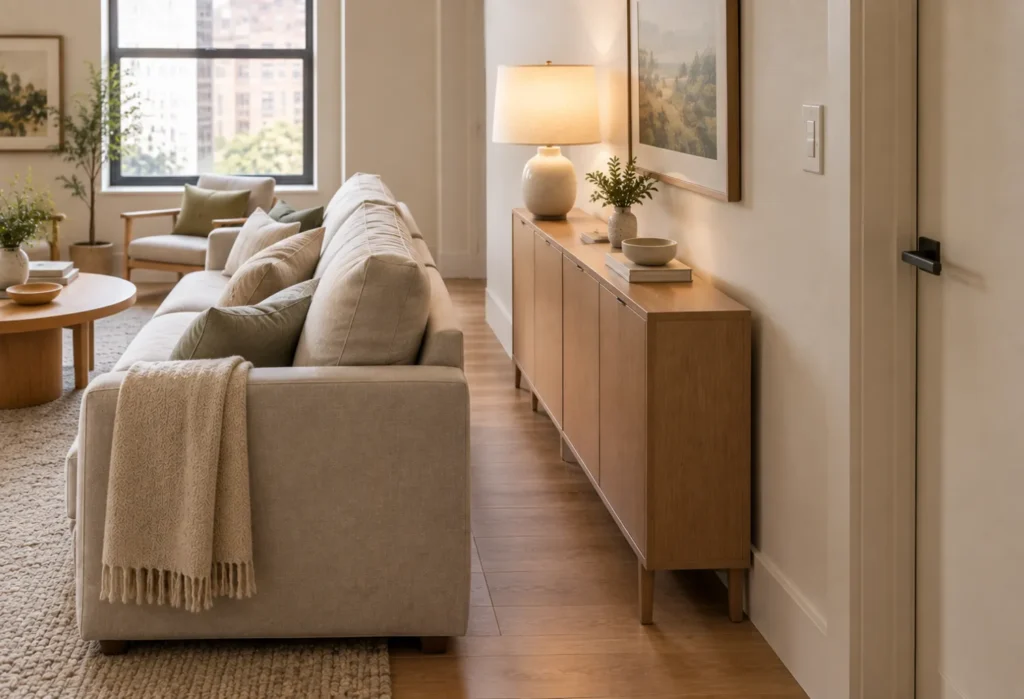
A narrow console cabinet can provide substantial hidden storage without taking up the floor area of a deep sideboard. It works particularly well behind a sofa, along a hallway-facing wall, or beneath artwork where a standard cabinet would project too far into the room.
Look for a cabinet around 12–16 inches deep if floor space is limited, while checking the manufacturer’s actual dimensions. Use the interior for chargers, games, documents, or household extras. Keep the top relatively simple with one lamp, a framed piece, or a small arrangement rather than several small objects.
7. Corner Bookcase
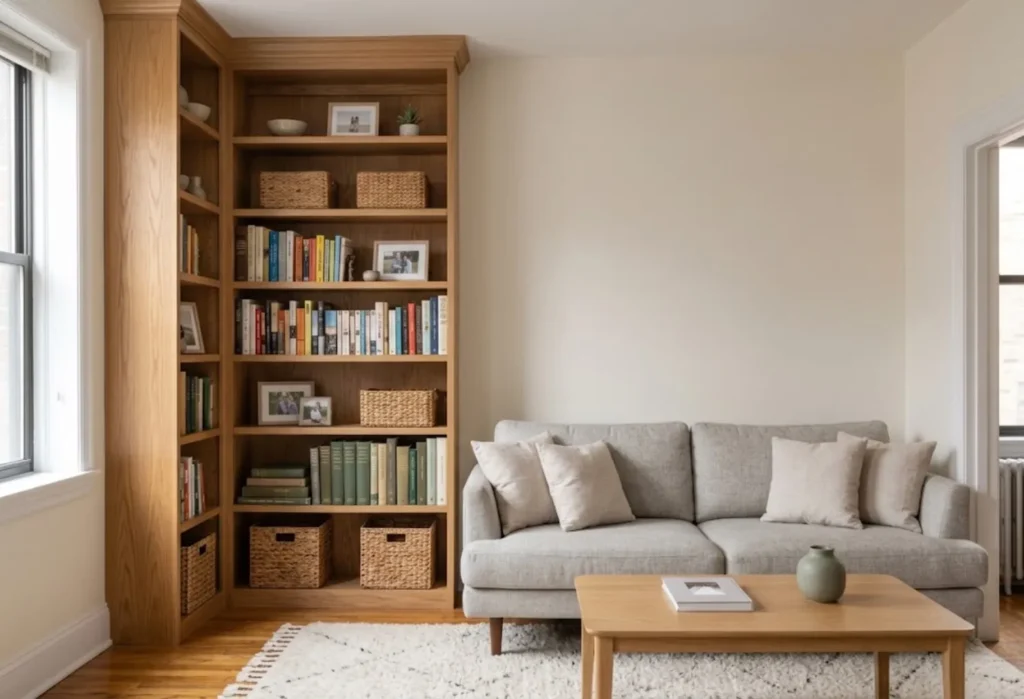
An unused corner can become valuable storage with a tall, narrow bookcase designed to fit close to two walls. This arrangement keeps books and display pieces contained in an area that might otherwise remain empty.
Choose a unit with a footprint that doesn’t interfere with doors, curtains, or the main walking route. Tall shelving draws the eye upward, so it can provide plenty of capacity without spreading across the room. Keep heavier books on lower shelves and lighter decorative pieces higher up for a balanced appearance.
8. Wall-Mounted Media Storage
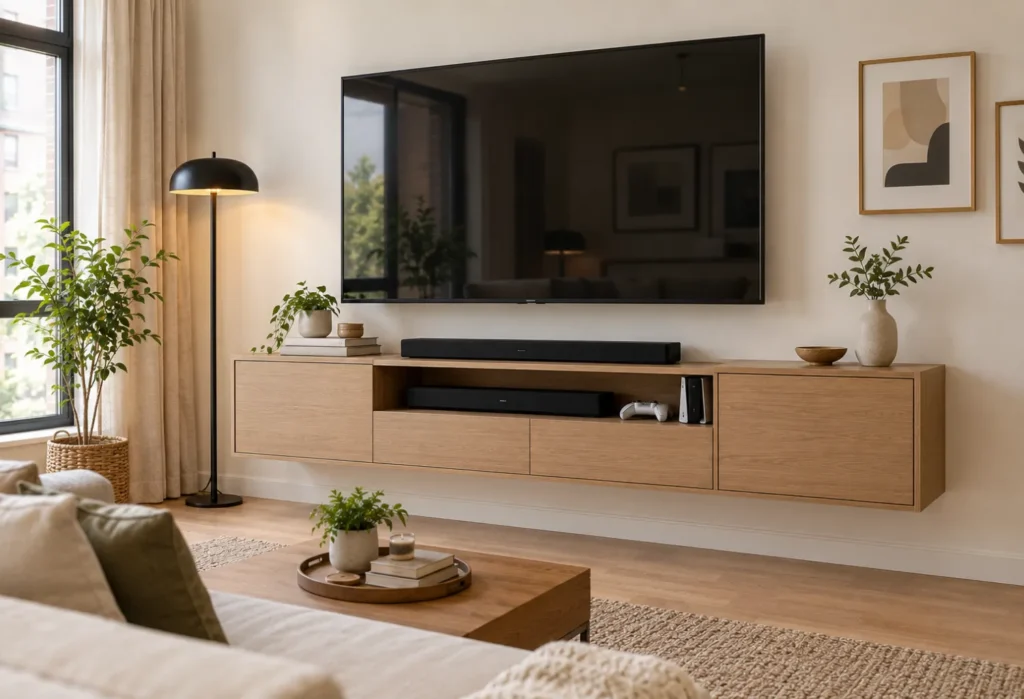
Wall-mounted media storage keeps gaming consoles, remotes, DVDs, controllers, and cables organized without requiring a bulky entertainment center. It can be especially useful in apartments where floor space is limited around the television.
Choose a cabinet with cable-management openings and adequate ventilation if electronics will be stored inside. Closed compartments are useful for hiding tangled cords, while one open section can hold a soundbar or frequently used device. Keep the unit visually aligned with the television so the wall feels organized rather than fragmented.
9. Storage Bench
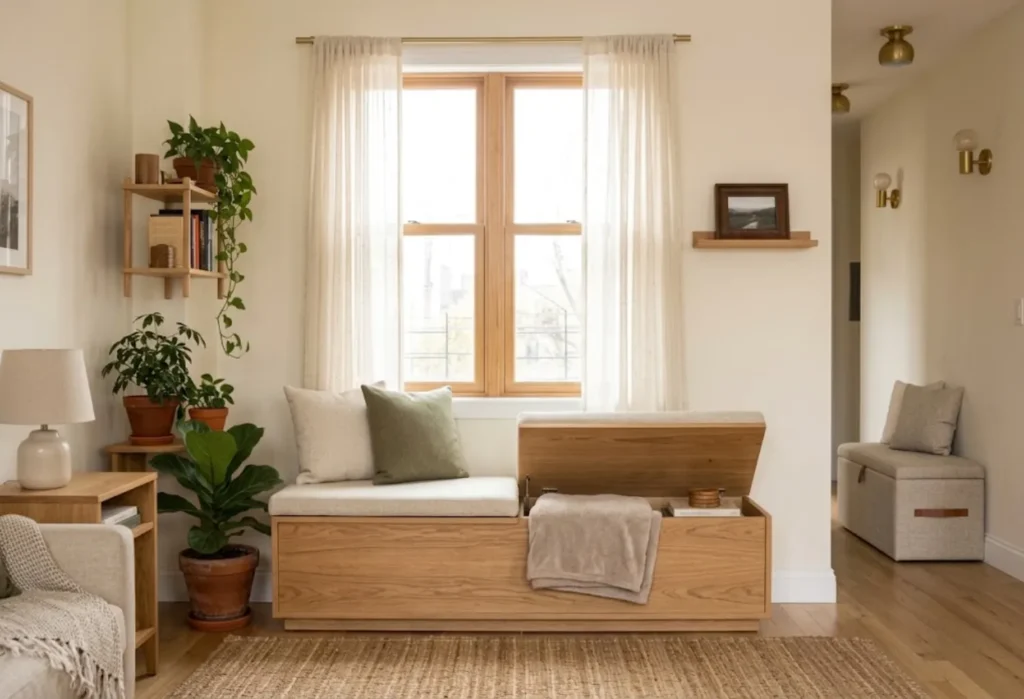
A storage bench can turn an otherwise unused wall or window area into both seating and concealed storage. In a living room, it can provide a place to sit while also holding toys, extra cushions, throws, or rarely used household items.
For comfortable seating, look for a bench roughly 17–19 inches high, depending on its cushion thickness. Place it beneath a window, along an empty wall, or near an entry point without narrowing the main walkway. Add a fitted cushion and a small number of pillows so it feels like part of the room rather than a storage box.
10. Repurposed Dresser
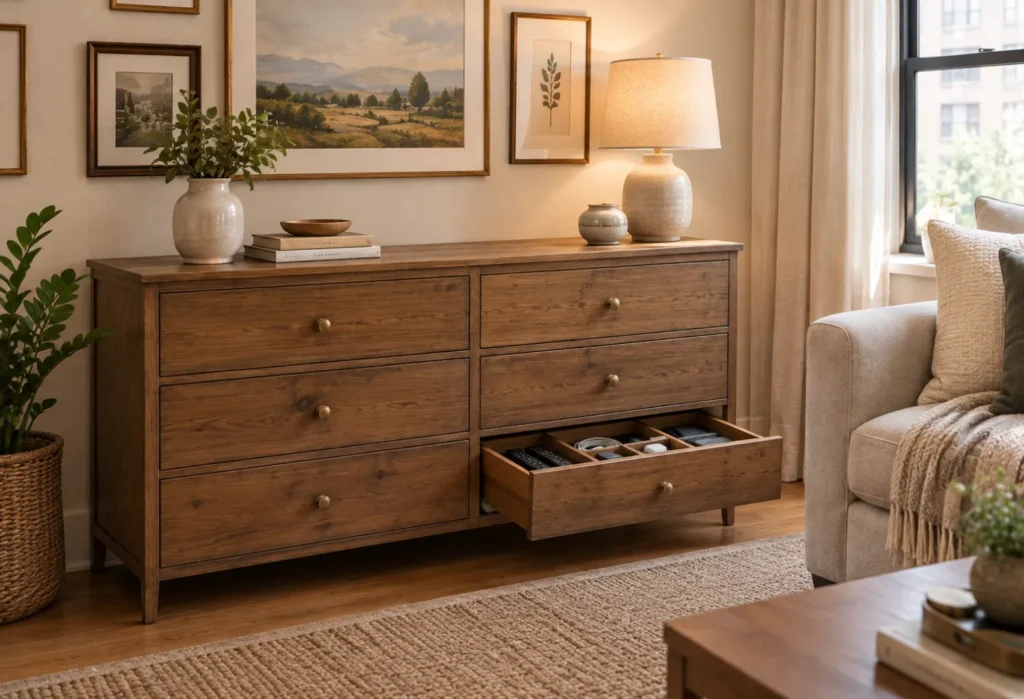
An old dresser can often provide more useful living-room storage than a purpose-built media cabinet. Its drawers are ideal for separating categories such as games, cables, craft supplies, paperwork, and children’s belongings.
Choose a dresser with a width that suits the wall and a depth that doesn’t obstruct movement. Before bringing it inside, check that the drawers open fully without hitting nearby furniture. Refinishing the piece in a soft neutral shade or leaving visible wood grain can help an older dresser work with contemporary sofas and lighting.
11. Built-In Window Seat
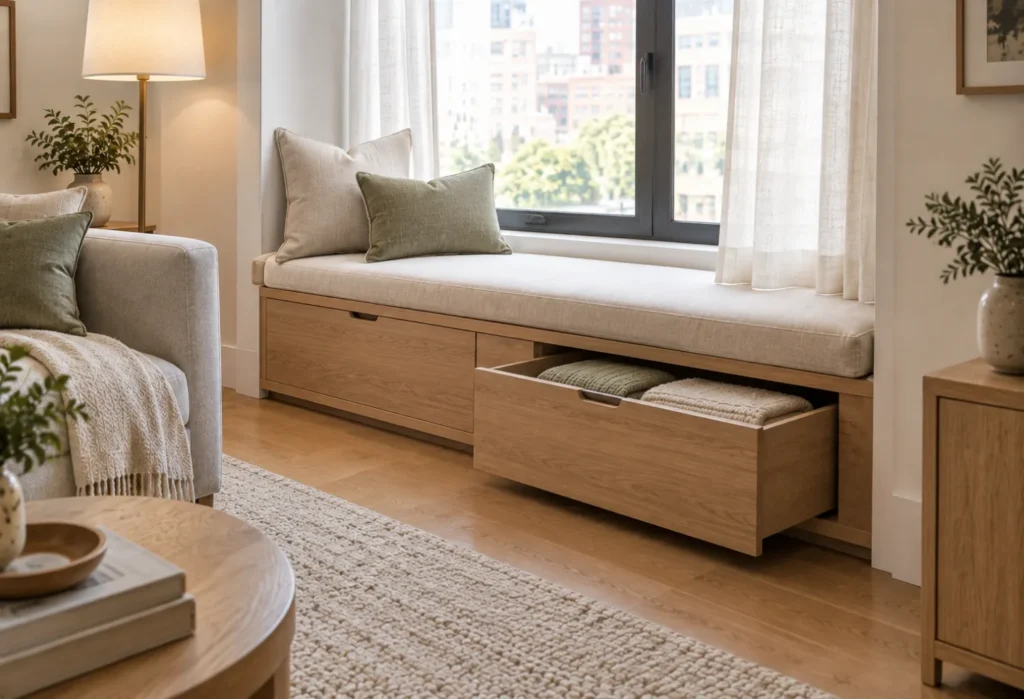
A window seat with a lift-up or drawer-based storage compartment can make productive use of an awkward window recess. Instead of leaving that area empty, the built-in structure creates seating and a generous place to store less frequently used items.
This option works best when the seat doesn’t block radiators, vents, or window operation. Use a durable cushion fabric and shallow pillows that won’t interfere with opening the window. Storage underneath is a good place for seasonal blankets, extra linens, or decorative accessories that aren’t needed every day.
12. Modular Cube Storage
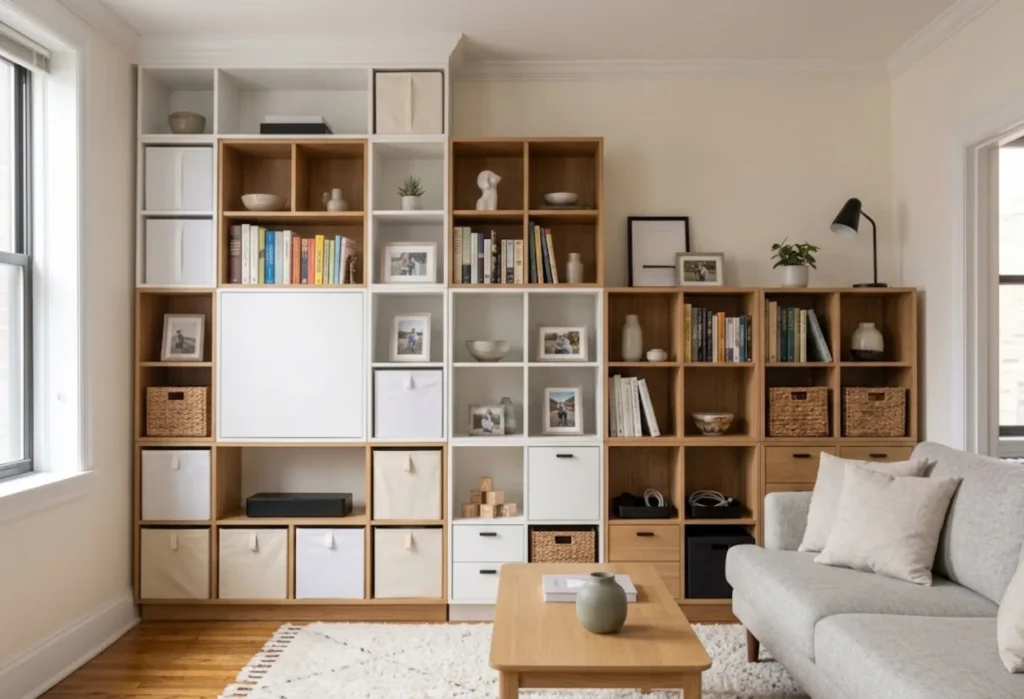
Modular cube storage offers flexibility because individual compartments can hold different types of belongings. Open cubes can display books and baskets, while fabric or wooden bins can conceal toys, cables, and small household items.
Choose a unit that fits the wall without extending into the walking path. For a more polished arrangement, don’t leave every cube open. Alternate books, baskets, and a few carefully selected objects. White or light oak works well in bright rooms, while darker finishes can create a stronger backdrop against pale walls.
13. Ladder Shelf
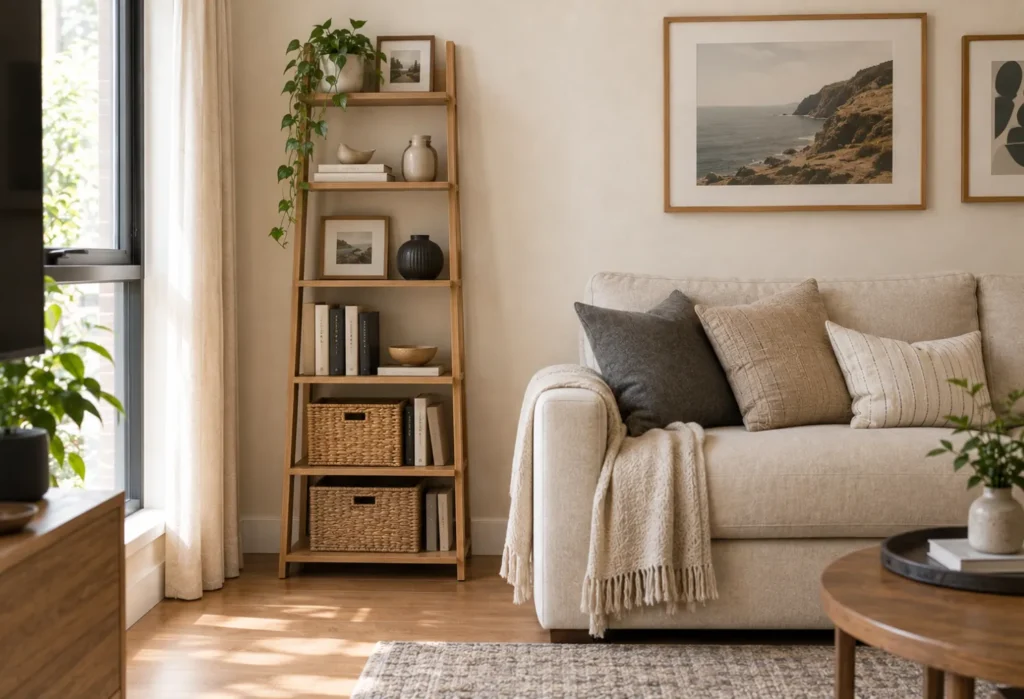
A ladder shelf provides vertical storage with a relatively small footprint. Its gradually narrowing shape makes it useful beside a sofa, reading chair, or television where a deeper bookcase could feel intrusive.
Use the lower shelves for heavier baskets or books and reserve the upper levels for lighter accessories. Avoid placing fragile objects where they can easily be knocked by passing furniture or curtains. A wood ladder shelf paired with cream textiles and black metal lighting can suit a simple modern or Scandinavian-inspired living room.
14. Sofa Arm Organizer
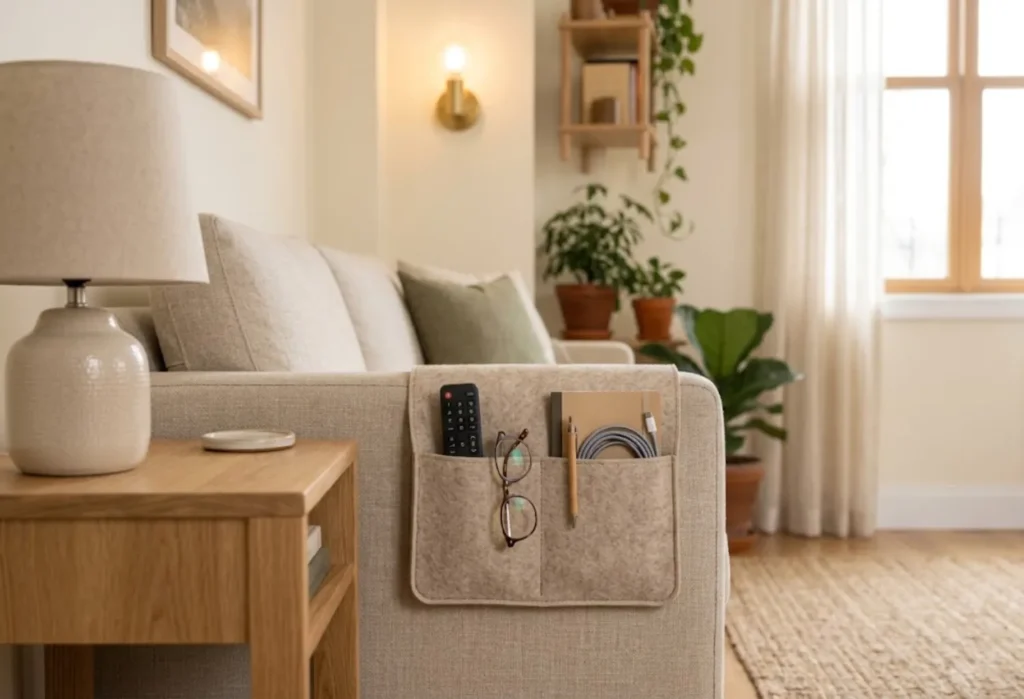
A sofa arm organizer is a simple solution for the small items that tend to collect on cushions and side tables. It can hold remote controls, reading glasses, notebooks, chargers, and other frequently used objects within easy reach.
Choose one with several pockets and a secure section that tucks beneath the seat cushion. Neutral canvas, felt, or leather-look materials are less visually distracting than bright patterns. This option is particularly useful when there isn’t enough room beside the sofa for a conventional end table.
15. Open-and-Closed Shelving
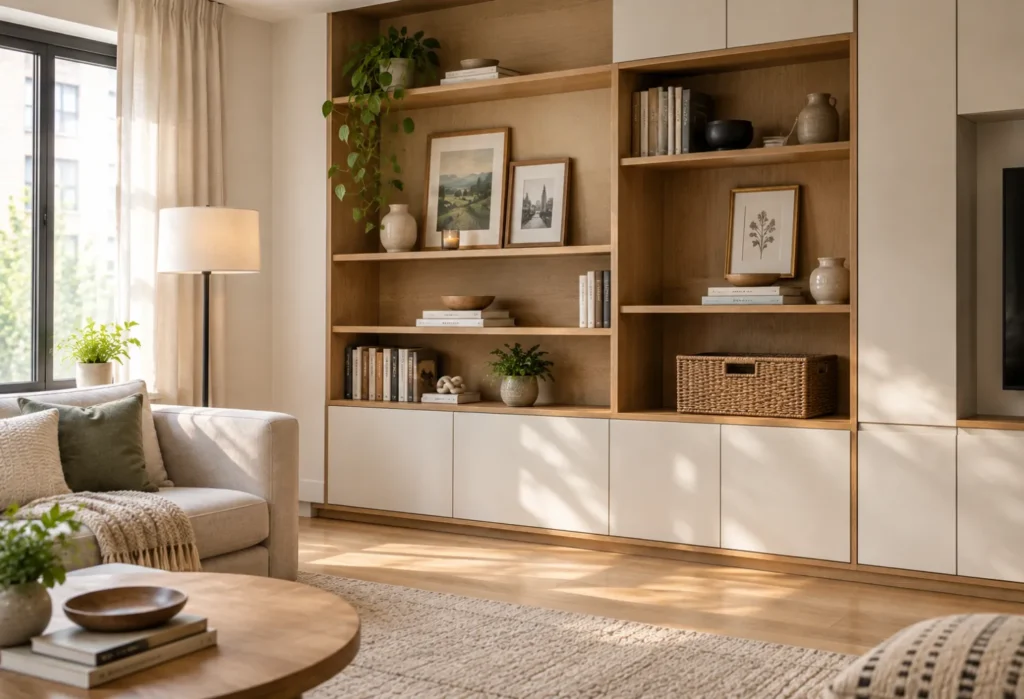
A shelving unit that combines open shelves with closed cabinets gives you flexibility over what remains visible. Display areas can hold books, artwork, plants, or ceramics, while enclosed sections keep less attractive household items out of sight.
Use the closed sections for cables, paperwork, toys, and extra electronics. Keep open shelves from becoming overloaded by leaving some space around each group of objects. A mix of light wood and matte white can keep the unit feeling airy, while black metal details add definition in a neutral room.
16. Built-In Stair Storage
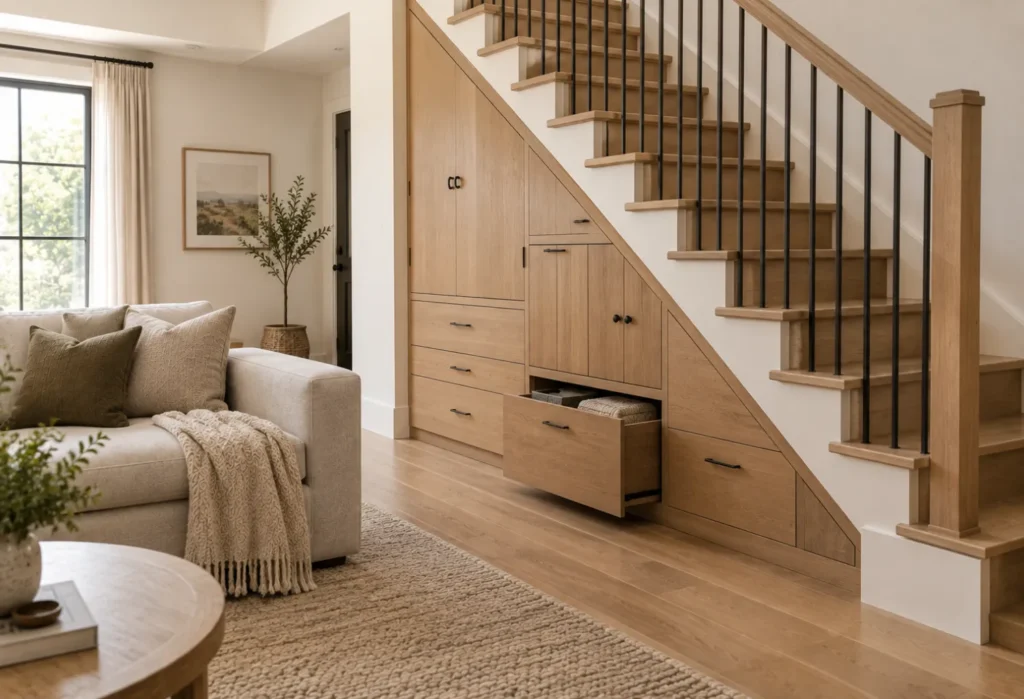
For a living room positioned beside an open staircase, the area underneath the stairs can become highly useful storage. Custom drawers, cabinets, or a combination of both can take advantage of an awkward triangular area that is otherwise difficult to furnish.
Use deeper sections for larger items and shallower drawers for small household belongings. Choose cabinet fronts that relate to the surrounding walls or flooring so the storage feels connected to the architecture. If custom work isn’t practical, several properly fitted freestanding cabinets can create a similar effect.
5 Most Useful Living Room Storage Ideas
| Idea | Best For | Why I Recommend It |
| Storage Ottoman | Small rooms | Seating, table, and storage in one |
| Floating Cabinets | Floor-space limits | Keeps storage off the floor |
| Lift-Top Coffee Table | Apartments | Adds hidden storage and workspace |
| Modular Cube Storage | Flexible organization | Easy to adapt as needs change |
| Narrow Console Cabinet | Tight walls | Useful storage with a shallow footprint |
Conclusion
The best storage solution depends on what your living room lacks most: floor space, hidden storage, display space, or flexible organization. These 16 Living Room Storage Ideas make it easier to match storage with your actual layout instead of forcing another bulky piece into the room. Start with the biggest clutter problem, then choose one solution that fits your furniture and daily routine.