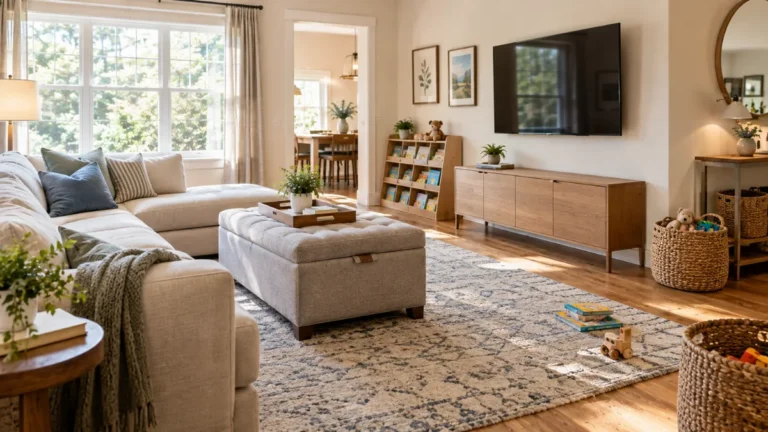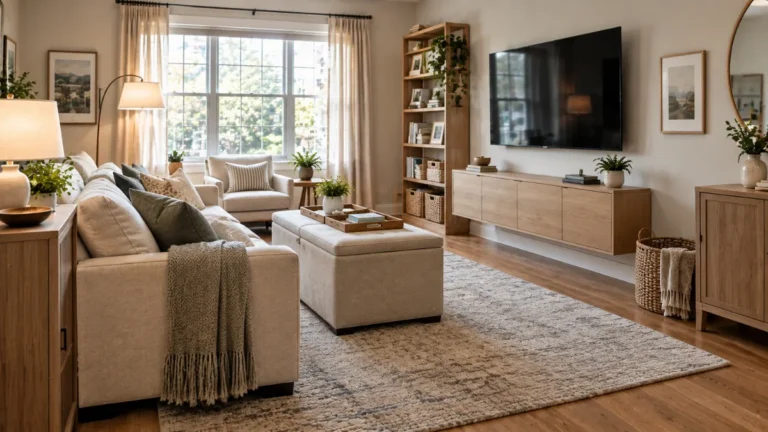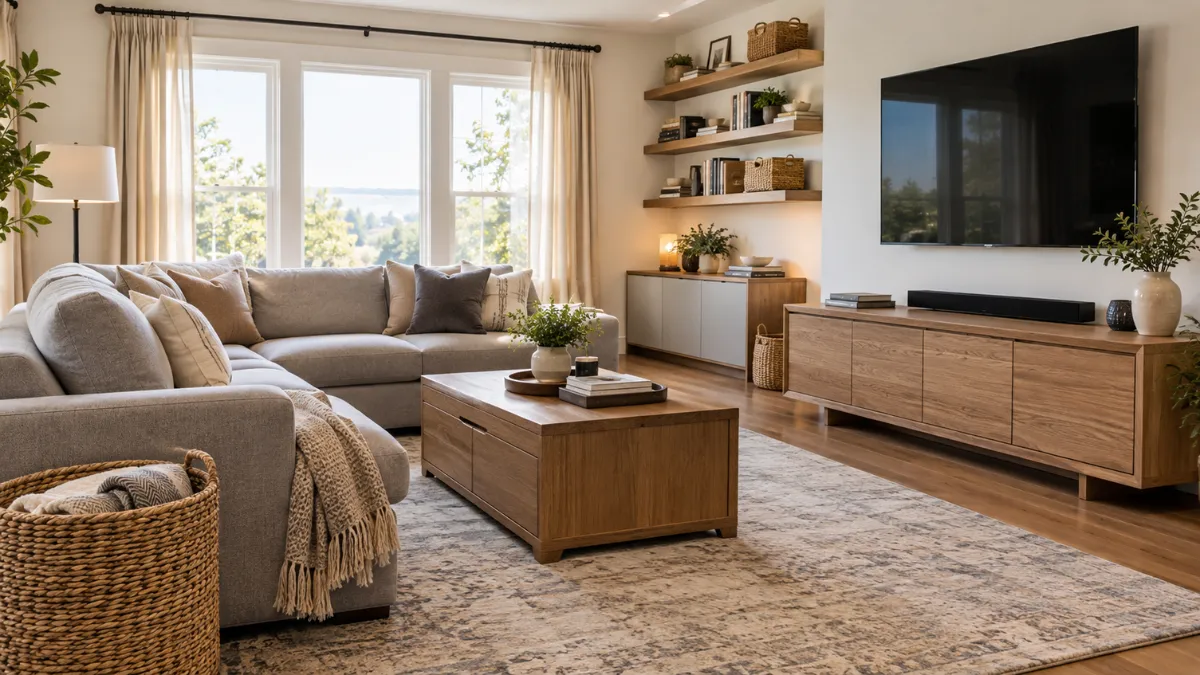
25 Living Room Organization Ideas for a Clutter-Free Home
A living room can look messy surprisingly fast. Blankets land on the sofa, remotes disappear into cushions, books pile up on tables, and everyday items somehow end up without a proper home. The good news is that getting organized does not mean filling the room with bulky storage furniture.
These 25 Living Room Organization Ideas For A Clutter-Free Home focus on practical storage, smarter furniture placement, and attractive ways to keep everyday belongings under control. Whether your living room is large, compact, modern, traditional, or somewhere in between, there are ideas here you can adapt without making the space feel crowded.
1. Storage Ottoman
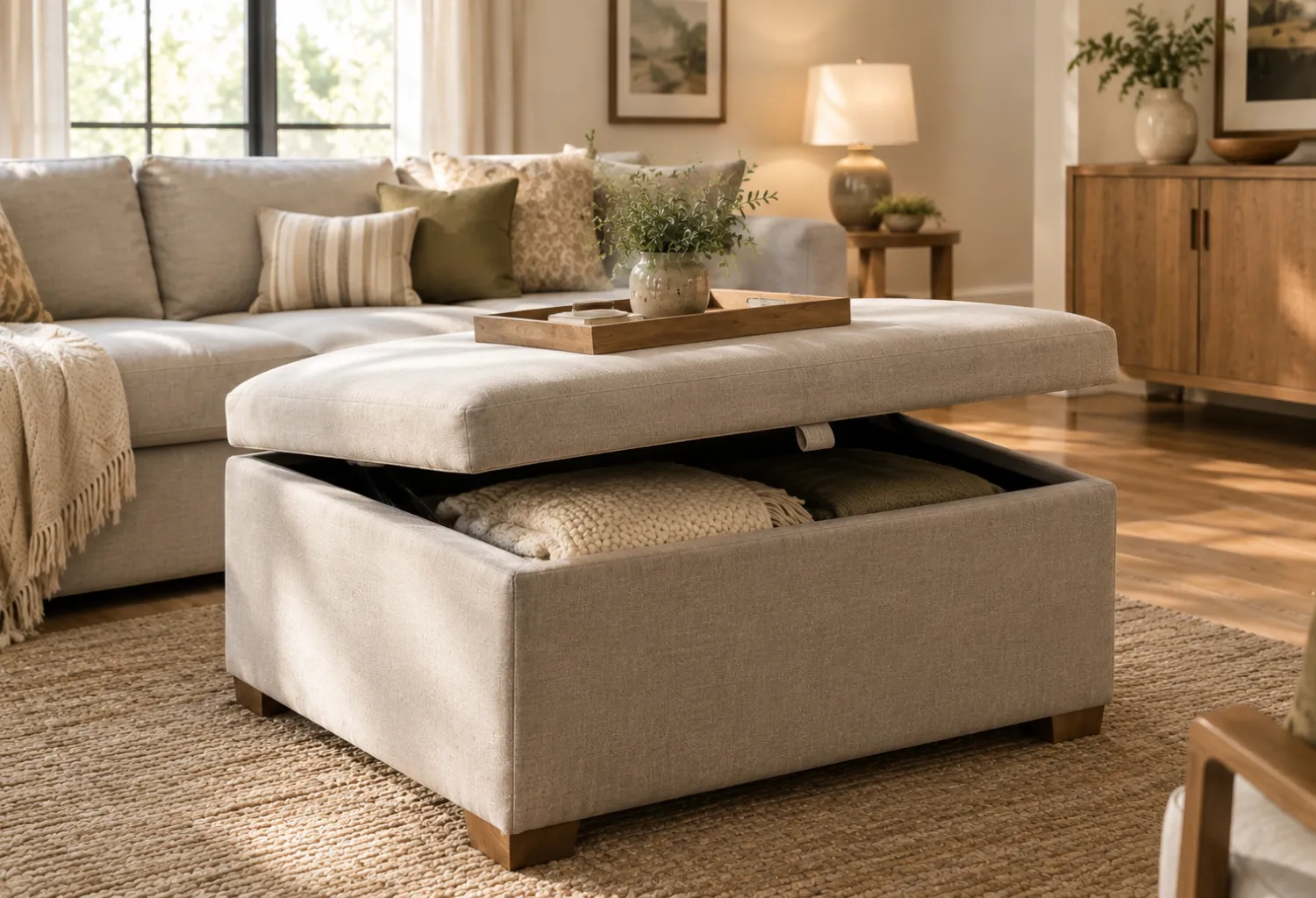
A storage ottoman is one of the easiest ways to add hidden organization without sacrificing comfort. Use the inside for throw blankets, pillows, board games, children’s toys, or extra remotes.
Choose an ottoman that works with your existing sofa rather than competing with it. A textured fabric can soften a modern room, while leather or faux leather works well in contemporary and transitional spaces.
For a small living room, choose a low-profile ottoman that can also function as a coffee table with a sturdy tray on top.
2. Built-In Media Storage
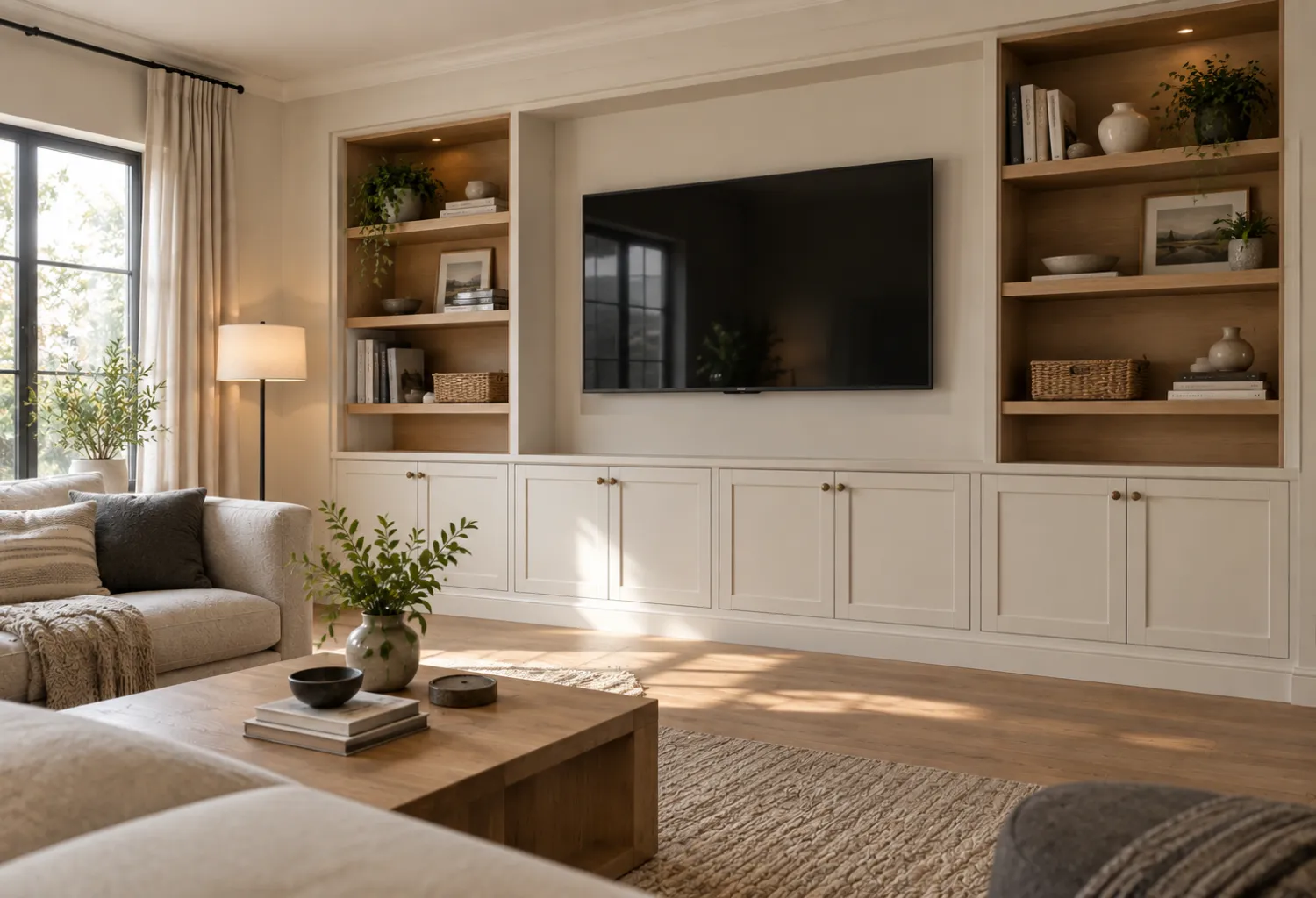
A built-in media wall can turn the area around the television into useful storage instead of leaving equipment scattered across the room.
Combine closed cabinets with a few open shelves. Keep gaming consoles, cables, manuals, and other less attractive items behind doors while using the open sections for books and carefully selected decor.
Warm white cabinetry with natural wood accents works especially well when you want storage to feel like part of the architecture.
3. Floating Wall Shelves
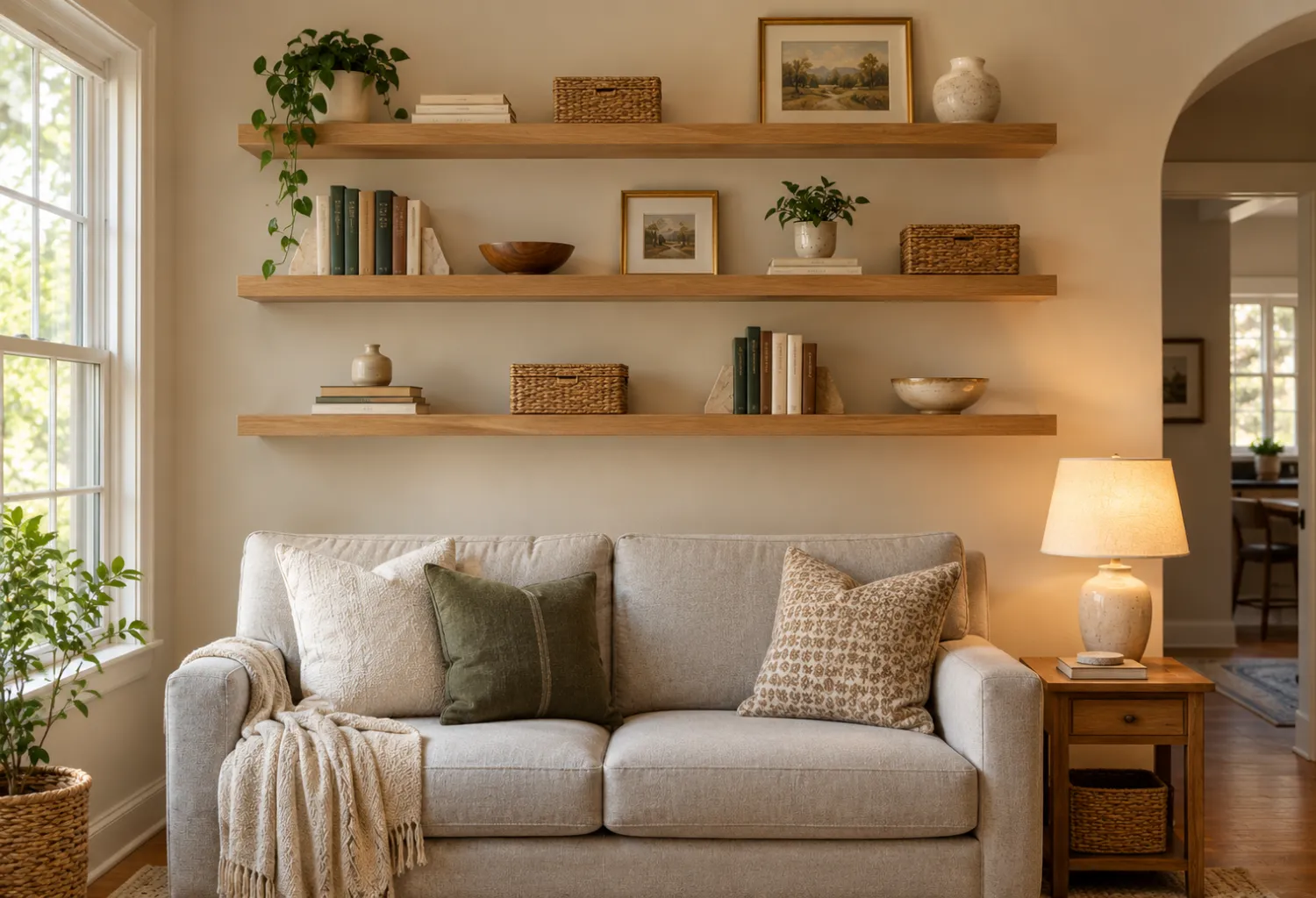
Floating shelves use vertical wall space while keeping the floor open. They are particularly useful when a traditional bookcase would make a small living room feel cramped.
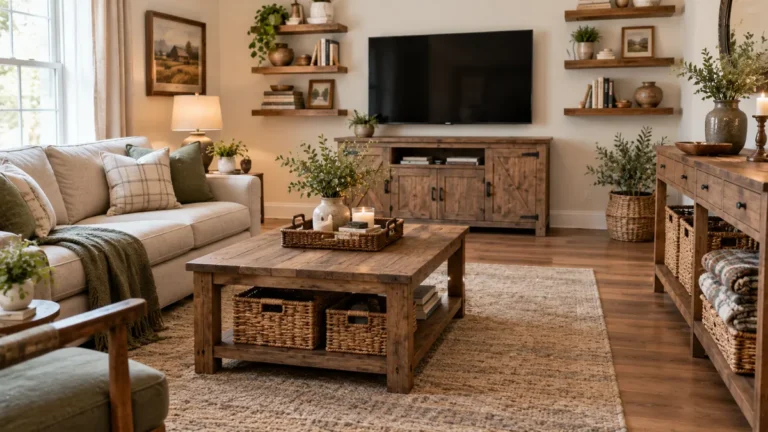
Use two or three shelves rather than covering the entire wall. Arrange books, small baskets, framed artwork, and a few decorative objects with enough empty space between them.
Keeping the color palette limited to two or three tones will make the shelves look organized rather than crowded.
4. Baskets Beside the Sofa
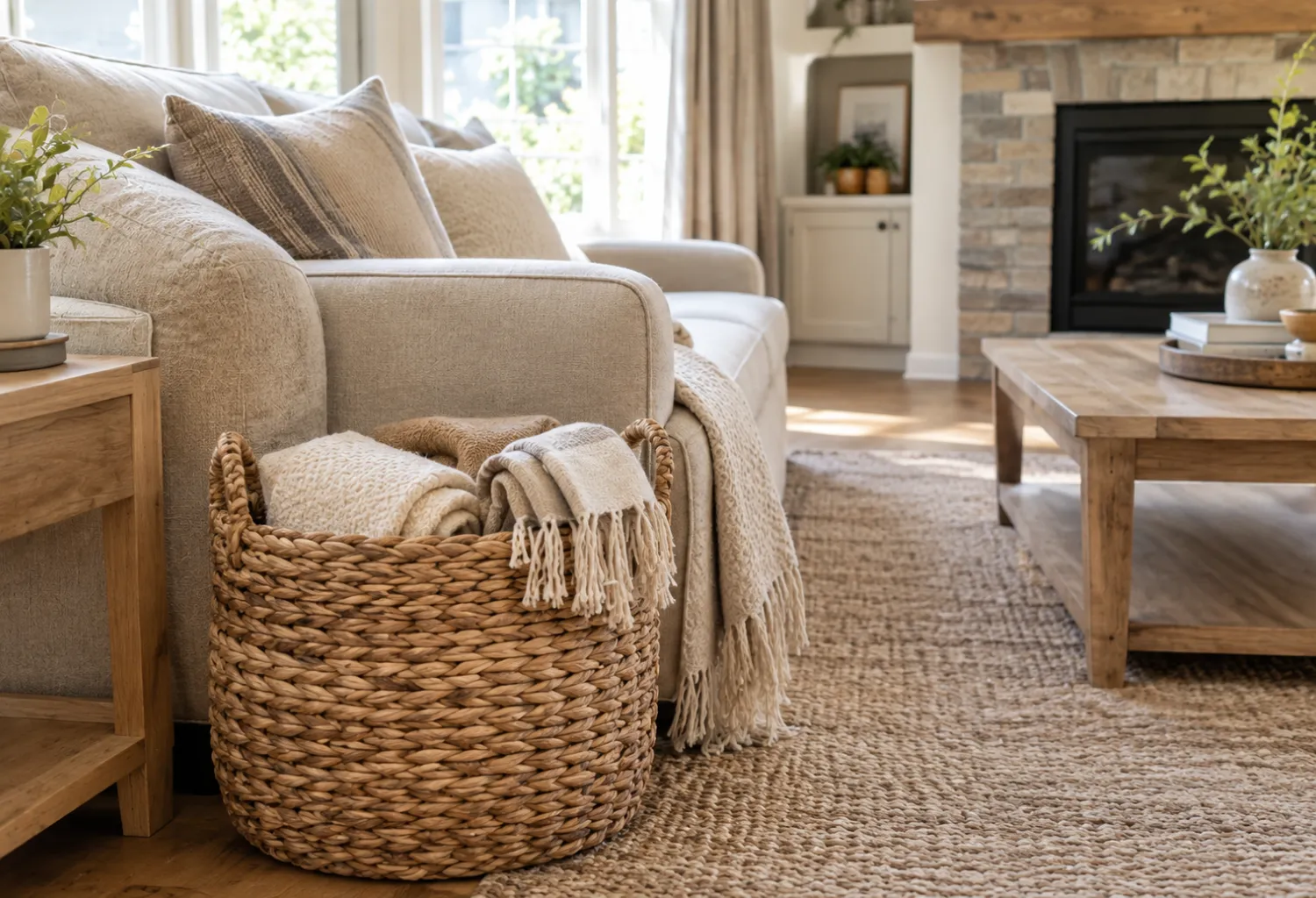
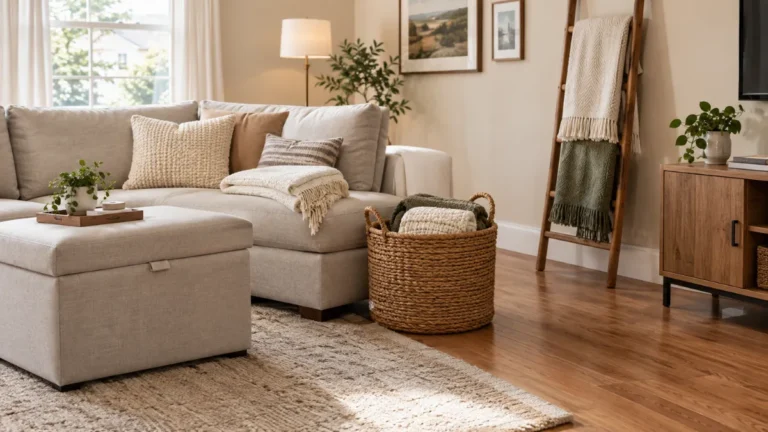
A large woven basket beside the sofa creates an attractive drop zone for blankets, pillows, magazines, and other soft items.
Look for baskets made from seagrass, water hyacinth, rattan, or similar natural materials. Their texture adds warmth to rooms dominated by smooth furniture and hard surfaces.
Choose a basket with a wide opening so putting things away takes seconds. Organization works best when storage is easier than leaving something on the floor.
5. Slim Console Table
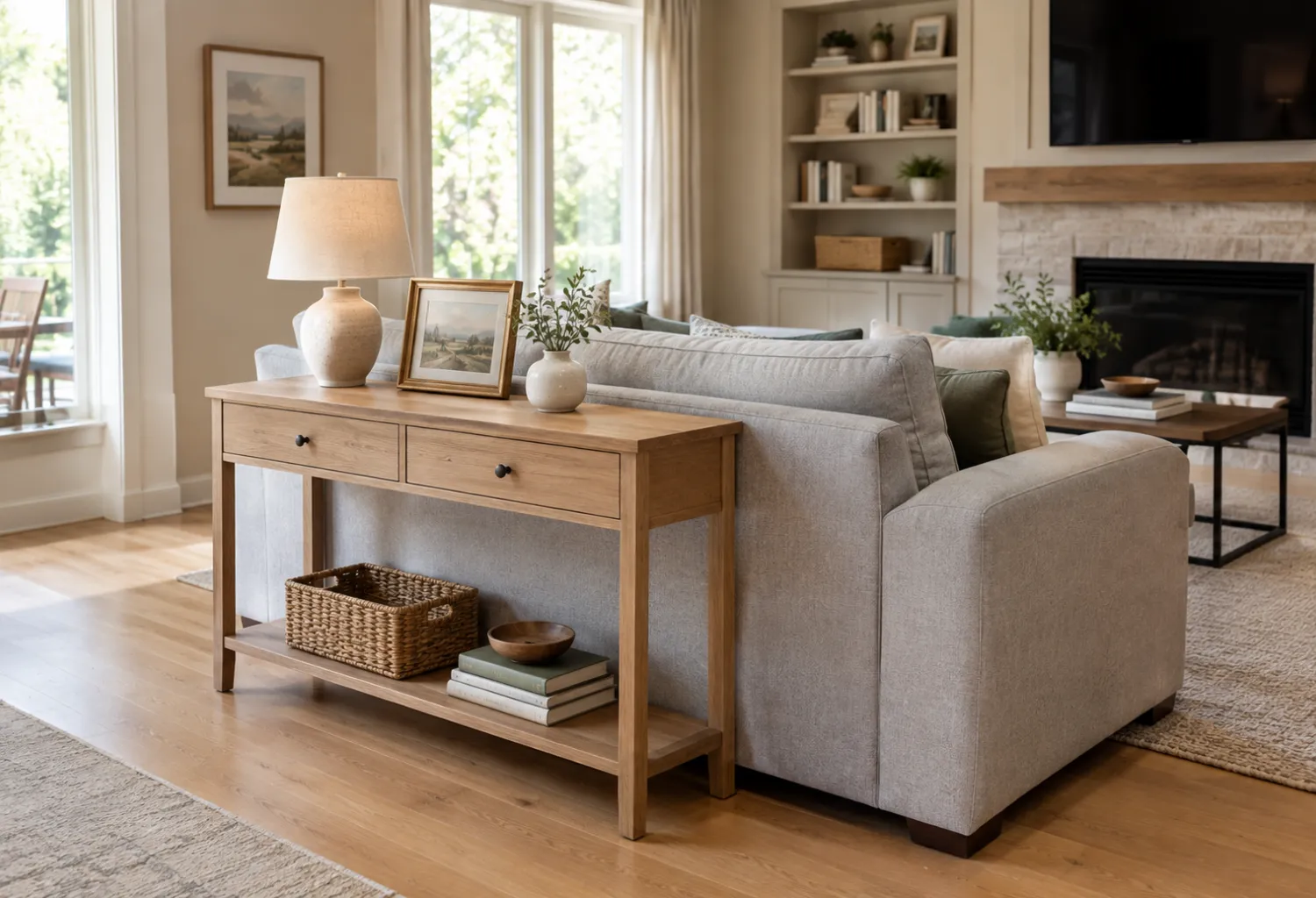
A narrow console table can provide valuable storage without taking up much floor space. Place one behind a sofa, along a long wall, or underneath a large piece of artwork.
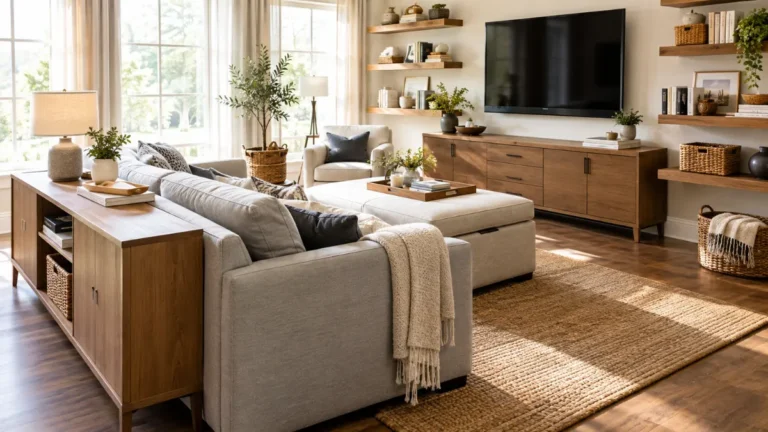
Choose a design with drawers or a lower shelf for small belongings. A console with closed drawers is especially helpful for keys, chargers, remotes, and other everyday items that tend to collect on nearby surfaces.
Keep the tabletop lightly styled with a lamp, small plant, or framed artwork rather than turning it into another storage pile.
6. Closed Storage Cabinets
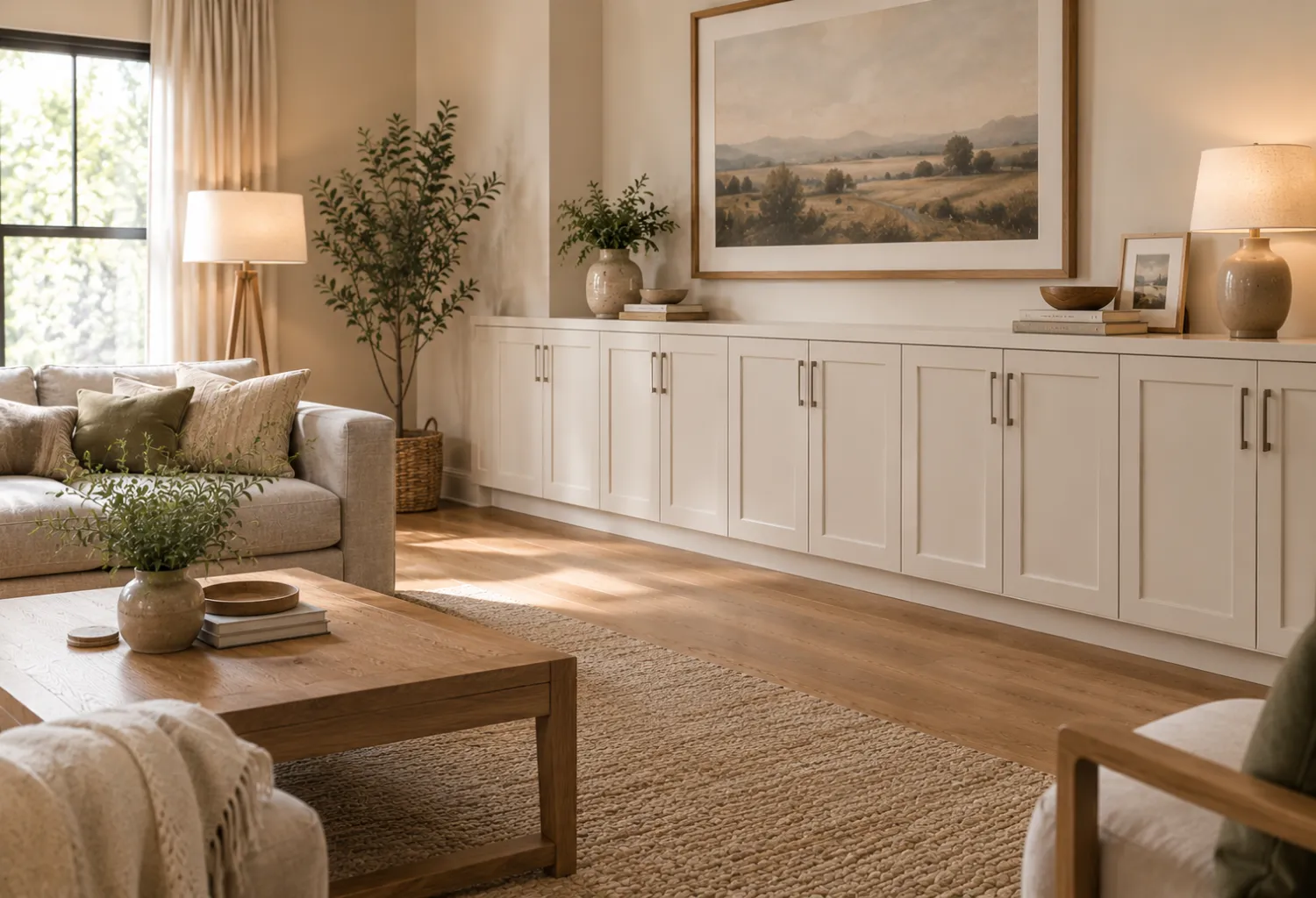
Closed cabinets are ideal when your main goal is a visually calm living room. They hide everything from children’s toys to electronics while giving the room a cleaner appearance.
For a traditional or transitional space, consider painted cabinetry in soft white, warm beige, or muted green. Modern rooms can benefit from simple flat-front doors in wood tones or matte finishes.
Use labeled bins inside if the cabinet holds several categories of belongings.
7. Sofa With Hidden Storage
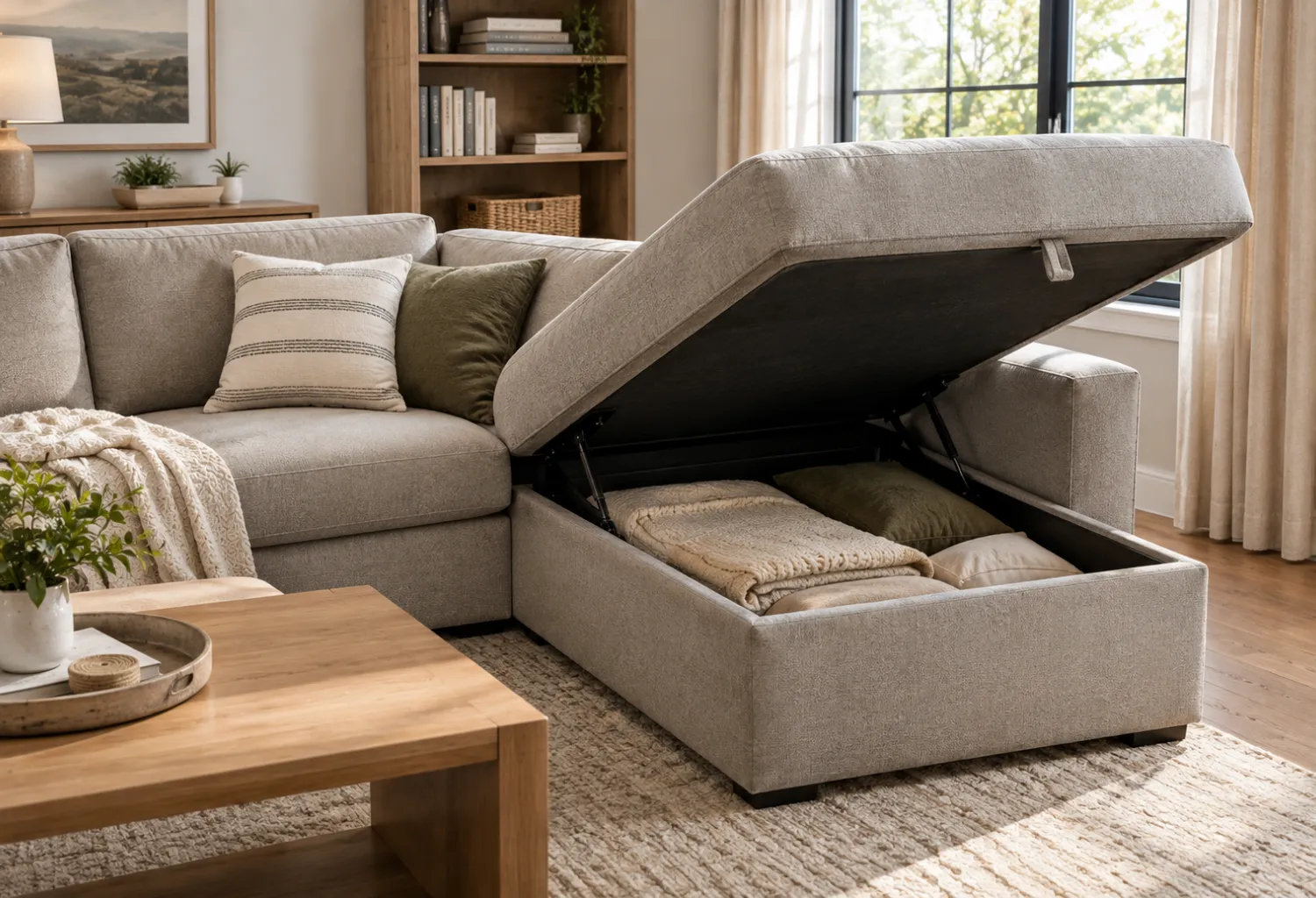
If you are buying new furniture, consider a sofa or sectional with built-in storage. Some designs include lift-up chaise compartments where you can store blankets, pillows, or seasonal accessories.
This is particularly useful in apartments and smaller homes where every piece of furniture needs to serve more than one purpose.
Keep frequently used items in the compartment so you are not constantly digging through it.
8. Wall-Mounted TV
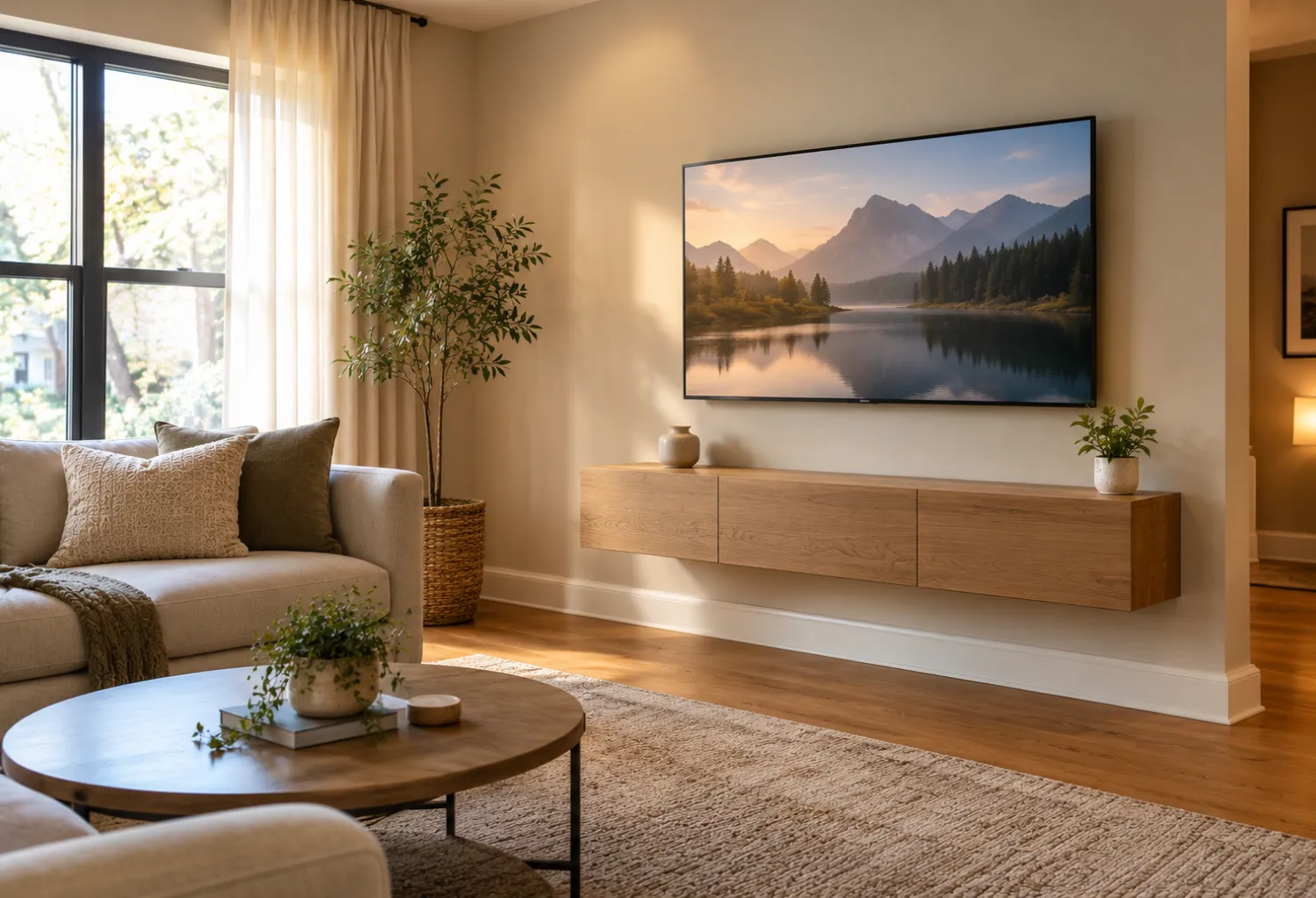
Mounting the television on the wall can free up valuable floor space and create opportunities for better organization underneath.
Use the area below it for a slim floating console or low cabinet. Cable-management channels can keep cords hidden instead of allowing them to hang visibly down the wall.
A simple arrangement of the television, low storage, and one or two decorative elements often looks cleaner than a crowded entertainment center.
9. Hidden Cable Management
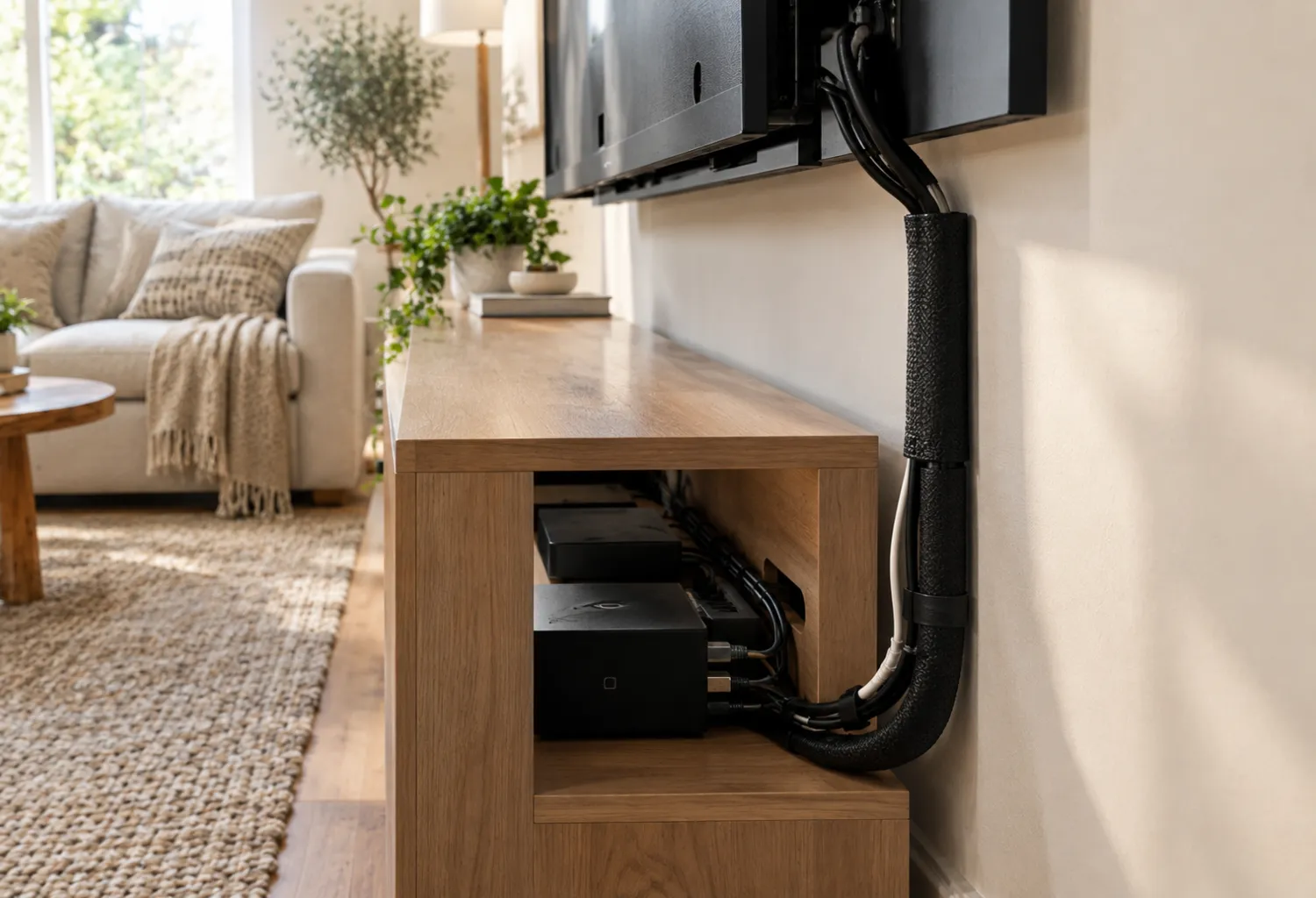
Loose cords can make even an organized living room look messy. Start by grouping cables according to the device they belong to, then use cable sleeves, clips, or a cable-management box to keep them contained.
Store excess cable length rather than allowing it to hang behind furniture. Labeling chargers and cables inside a small drawer can also prevent the familiar problem of searching through a tangled collection.
This small improvement can make a surprisingly noticeable difference.
10. Nested Coffee Tables
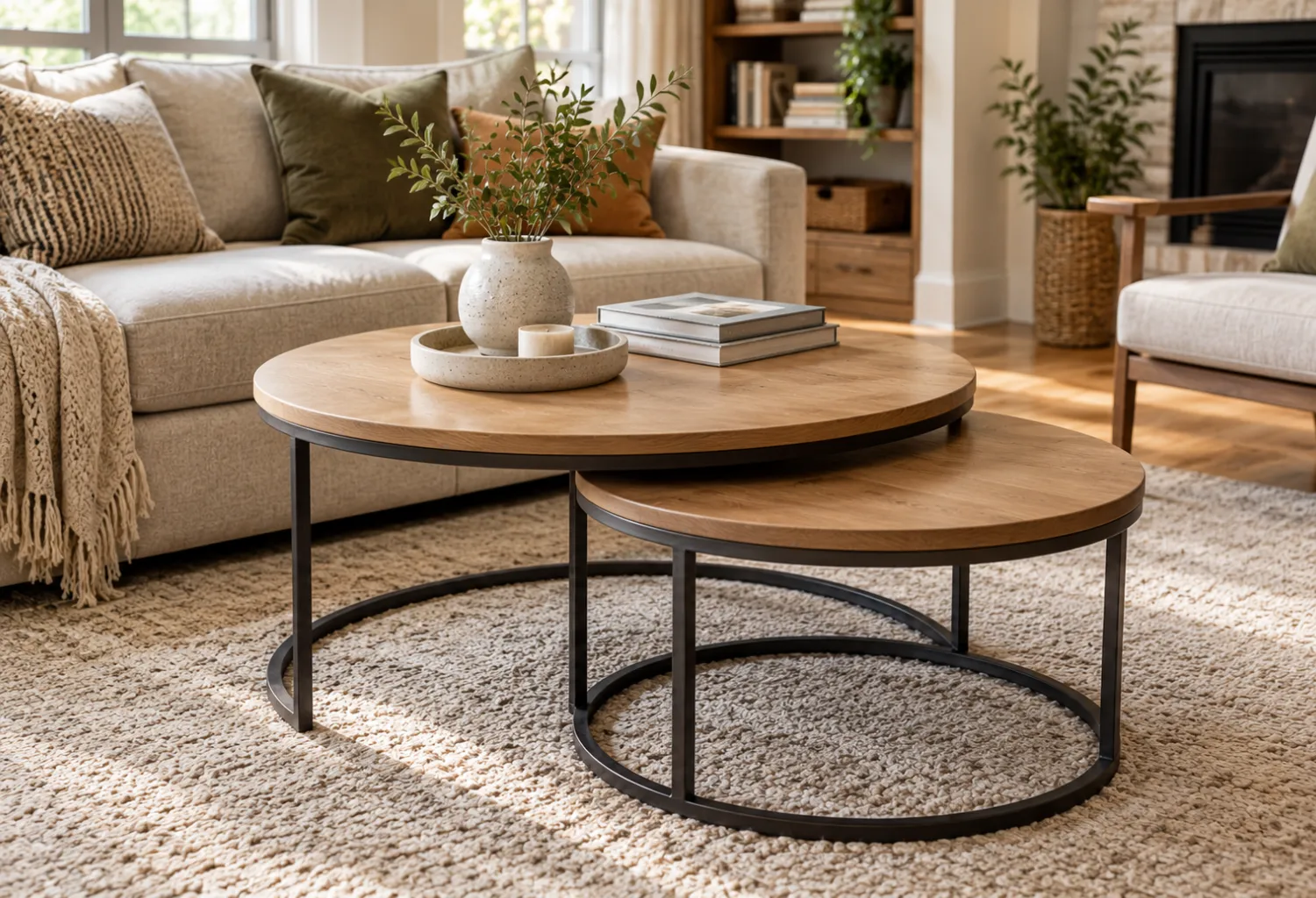
Nested coffee tables provide flexible surface space without permanently taking up the footprint of a large table.
Keep the smaller table tucked underneath when it is not needed. Pull it out when guests arrive or when you need another surface for drinks, snacks, or a laptop.
Choose tables with simple silhouettes so the arrangement remains visually light. Wood, oak, and warm natural finishes can balance rooms with upholstered furniture.
11. Storage Under the Coffee Table
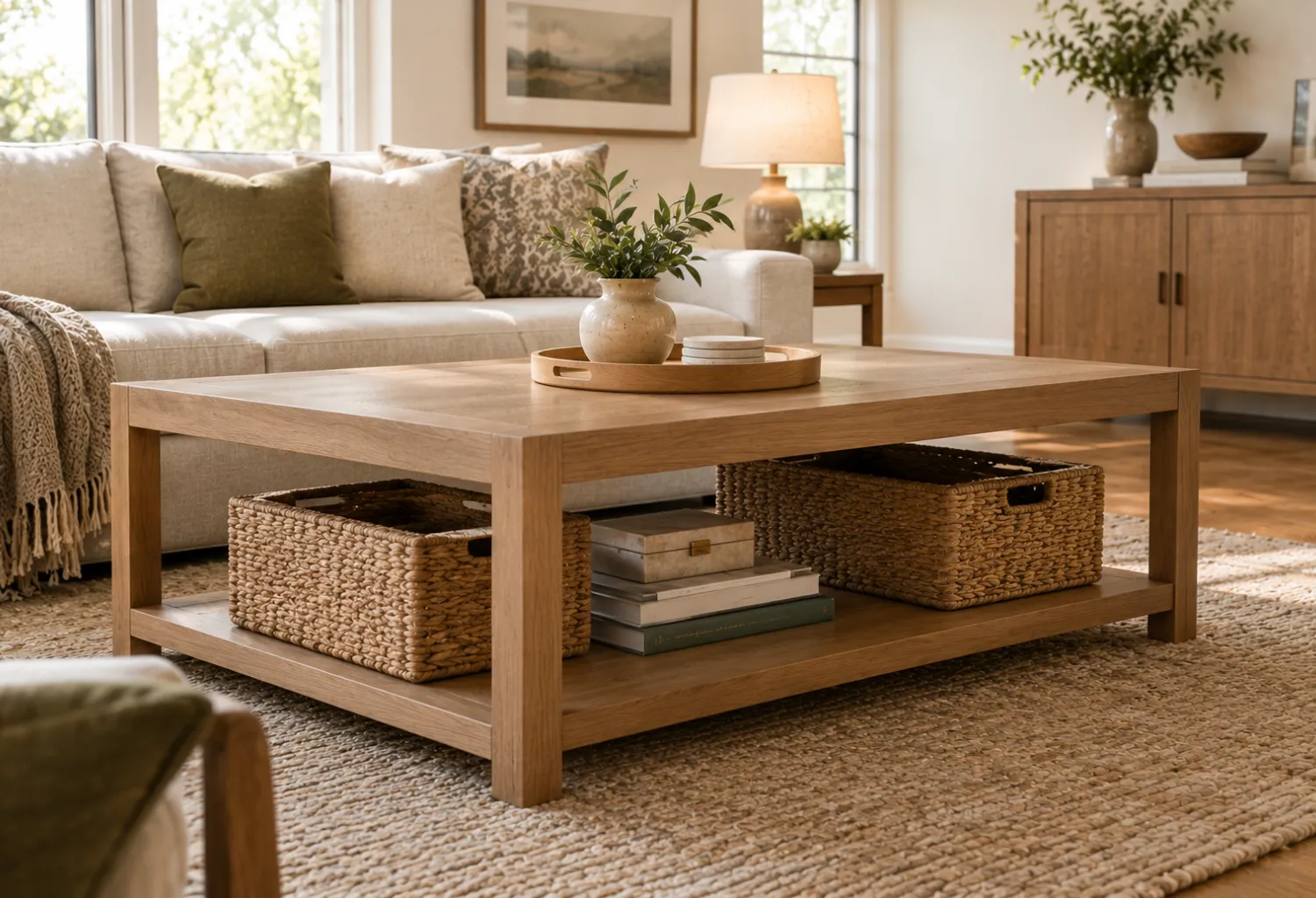
The space underneath a coffee table is often overlooked. Choose a design with a lower shelf or built-in compartment for books, baskets, magazines, or decorative boxes.
Use matching baskets to keep smaller items contained. Avoid filling the entire lower shelf because some empty space makes the furniture look intentional rather than overloaded.
A tray on the tabletop can also group remotes and small objects into one controlled area.
12. Bookcase With Baskets
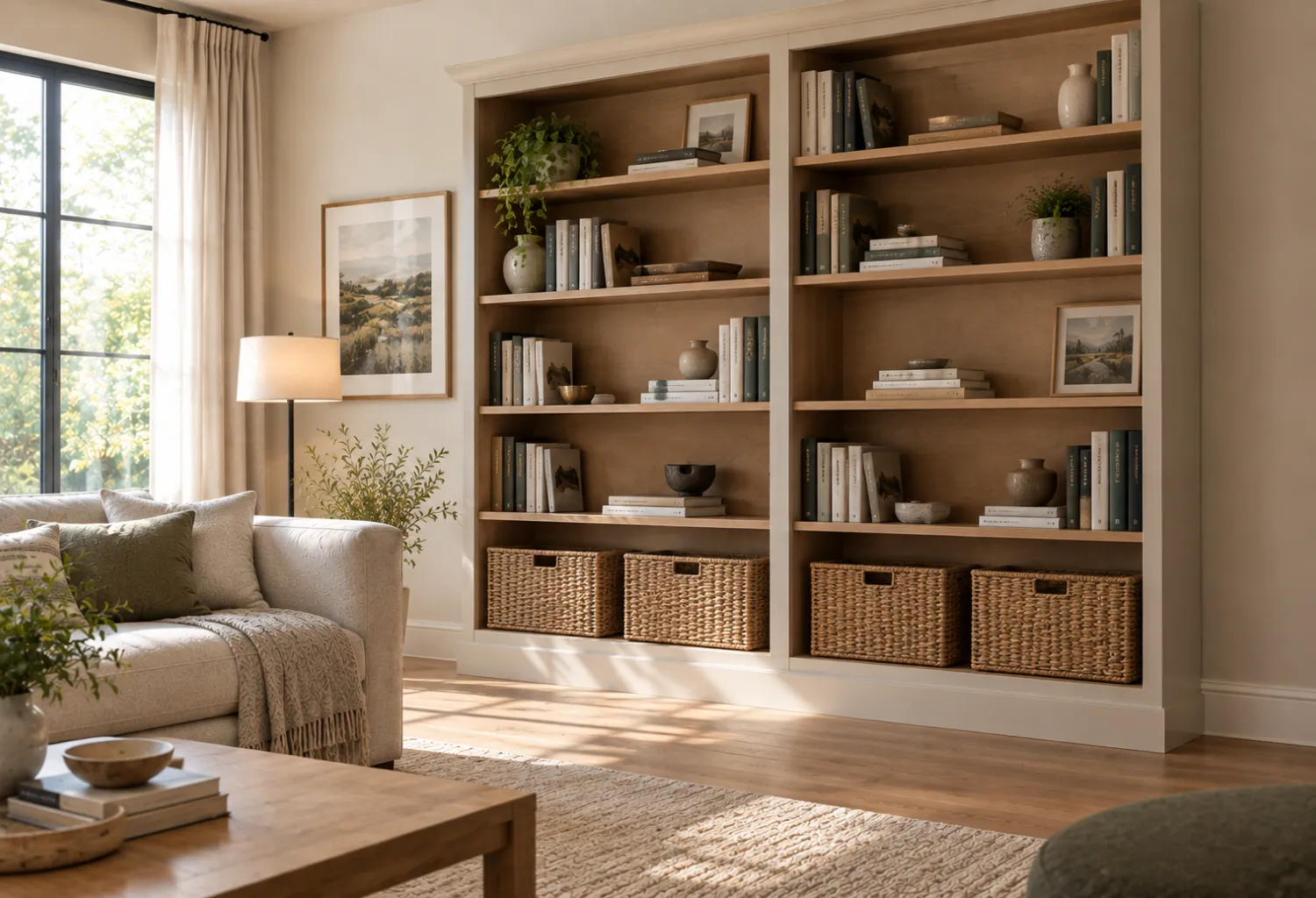
A bookcase does not have to hold books exclusively. Combine books with attractive baskets to create flexible storage for items that do not need to remain visible.
Use baskets on the lower shelves for toys, electronics, craft supplies, or miscellaneous living-room items. Reserve eye-level shelves for books and a few decorative pieces.
Keeping similar baskets together creates visual consistency even when the contents are completely different.
13. Window Seat Storage
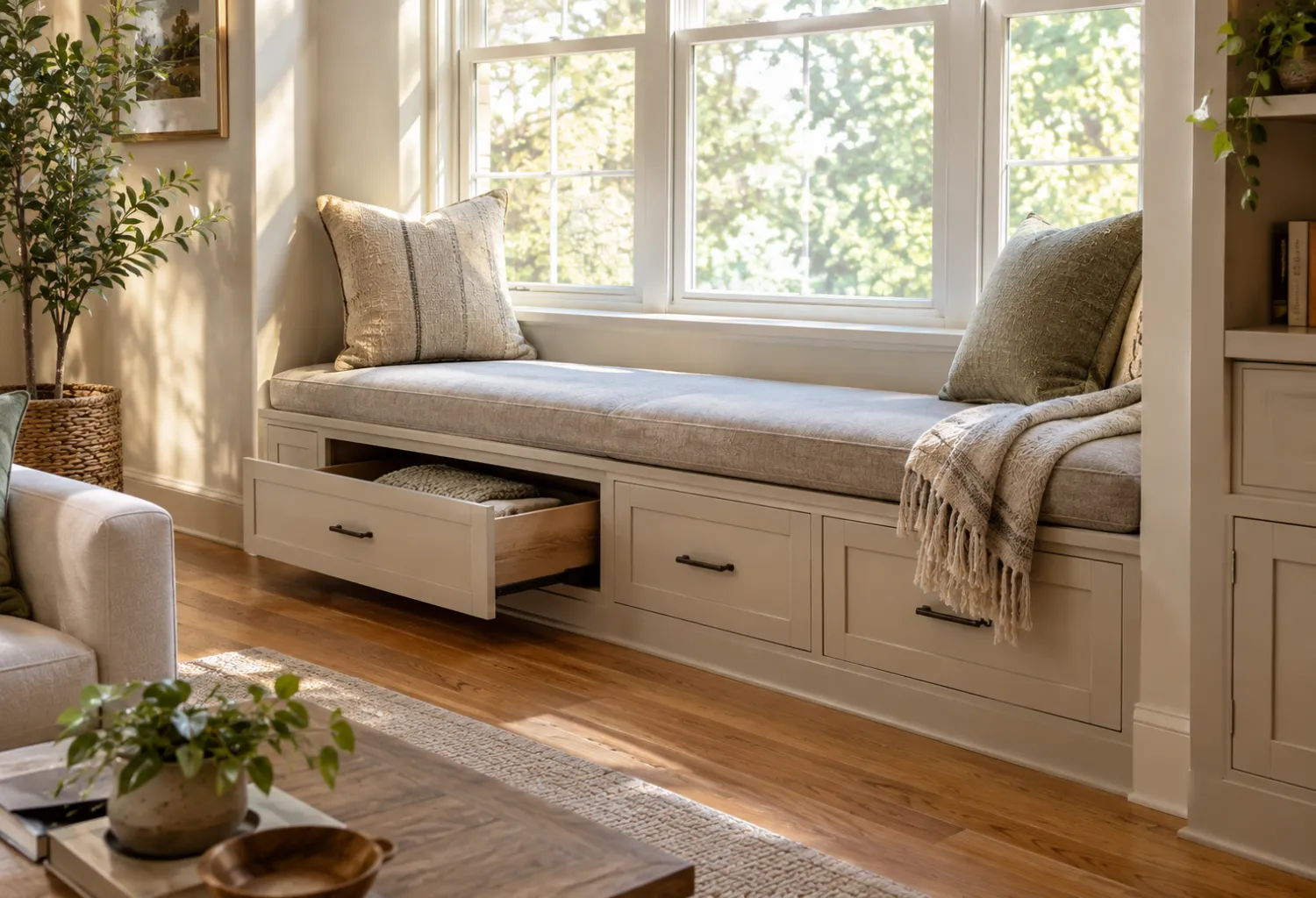
If your living room has a deep window ledge or built-in bench, use the space underneath for concealed storage.
Lift-up seats or drawers can hold seasonal textiles, children’s belongings, games, or extra pillows. Add a comfortable cushion and a few washable throw pillows to make the area useful as both seating and storage.
This works especially well in homes where unused architectural features can be converted into functional space.
14. Entry Drop Zone
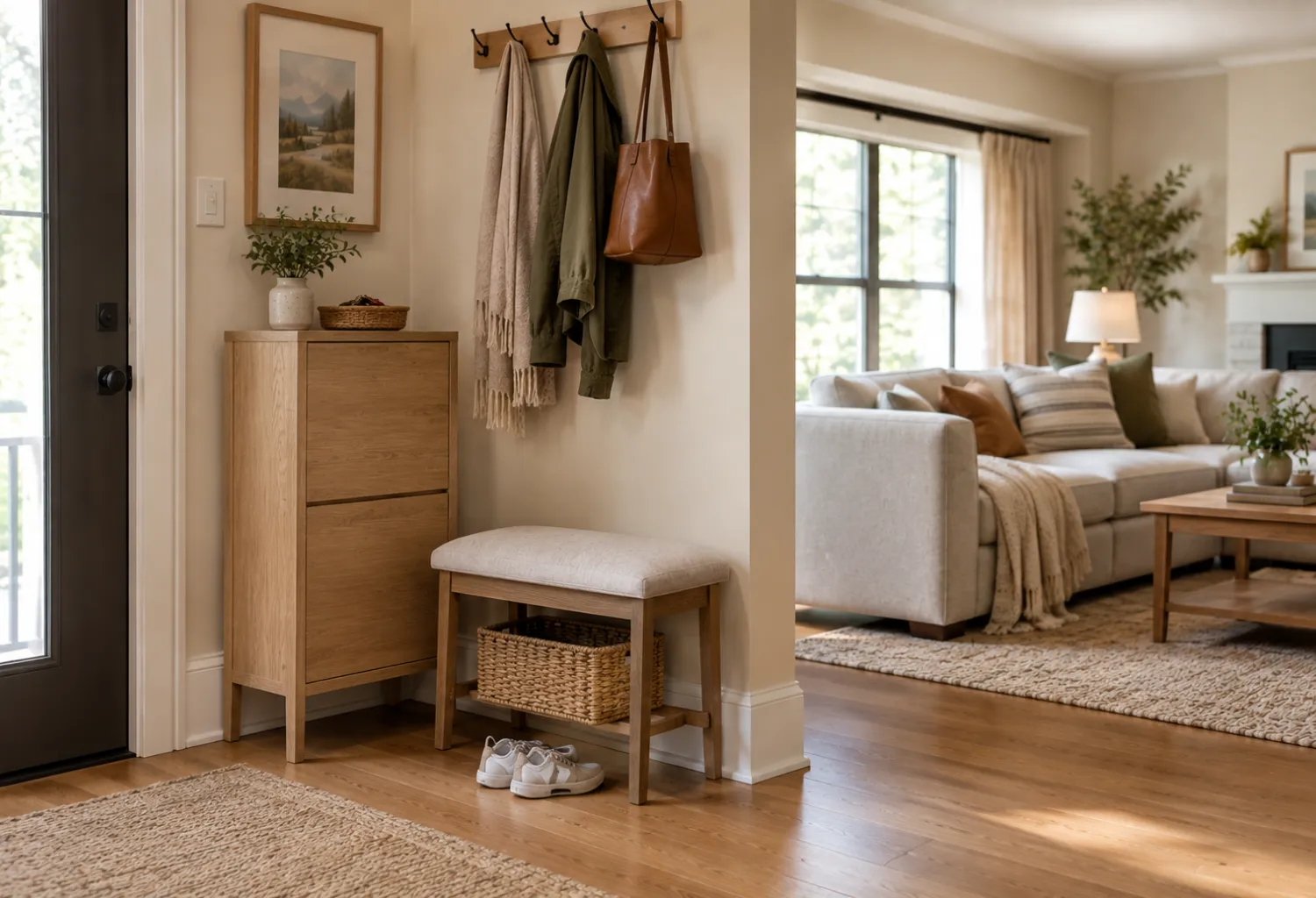
When the living room sits near the home’s main entrance, a small drop zone can prevent clutter from spreading throughout the room.
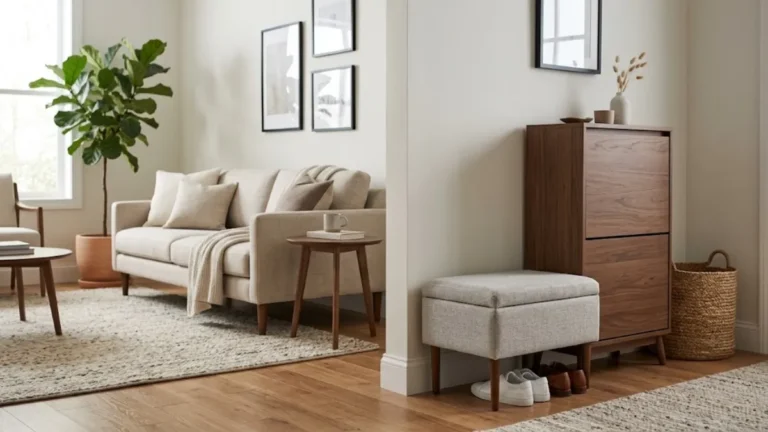
A narrow cabinet, wall hooks, or a compact bench can provide a designated place for bags, shoes, keys, and daily essentials.
Keep this area visually simple. One basket for small items and a few hooks may be enough to stop the entryway from becoming a collection point for everything.
15. Decorative Storage Boxes
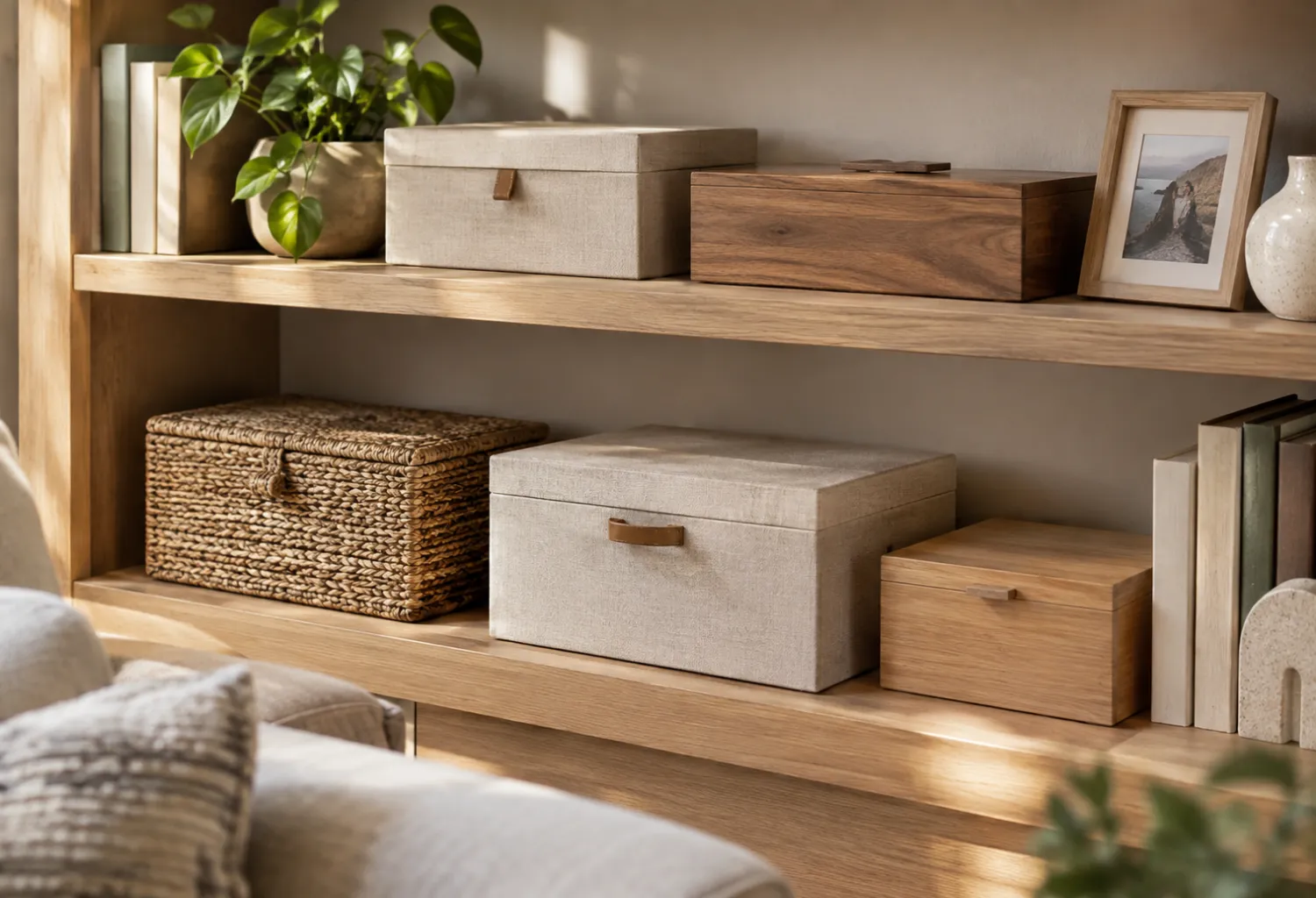
Decorative boxes are useful for smaller items that do not deserve a permanent place on display. Use them on bookshelves, consoles, or media cabinets.
They can hold remote controls, chargers, stationery, cards, small electronics, and other odds and ends.
For a polished look, choose boxes that coordinate with the room’s existing colors. Neutral linen, wood, woven, or matte-finish boxes work well across many decorating styles.
16. Wall-Mounted Cabinets
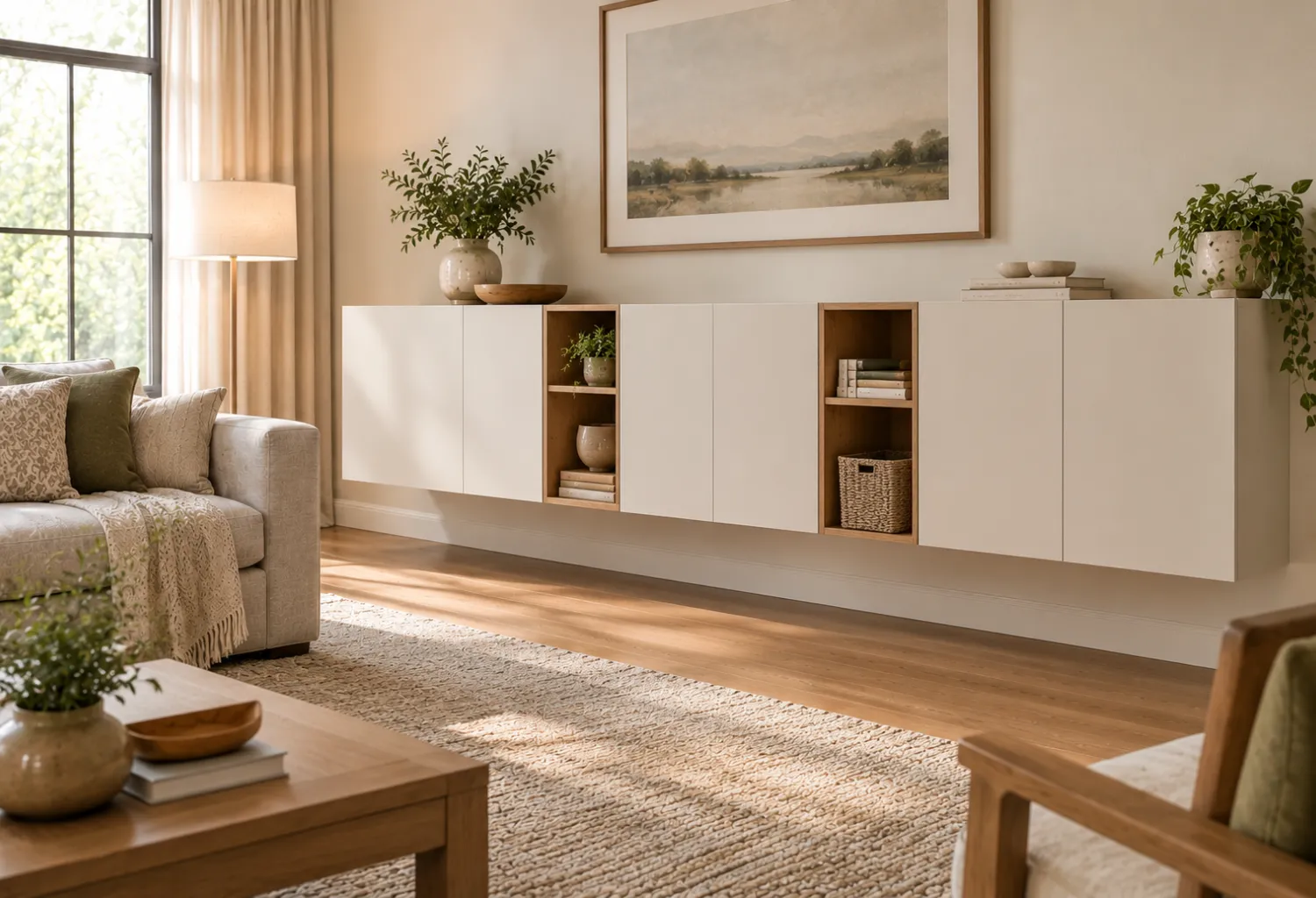
Wall-mounted cabinets provide enclosed storage while keeping the floor underneath clear. This can be especially useful in compact living rooms where floor space is limited.
Install them where they are easy to reach but do not interfere with artwork, windows, or seating.
A combination of white cabinetry and natural wood shelves can create a light Scandinavian-inspired look, while darker cabinetry can suit a more dramatic contemporary room.
17. Armchair Side Storage
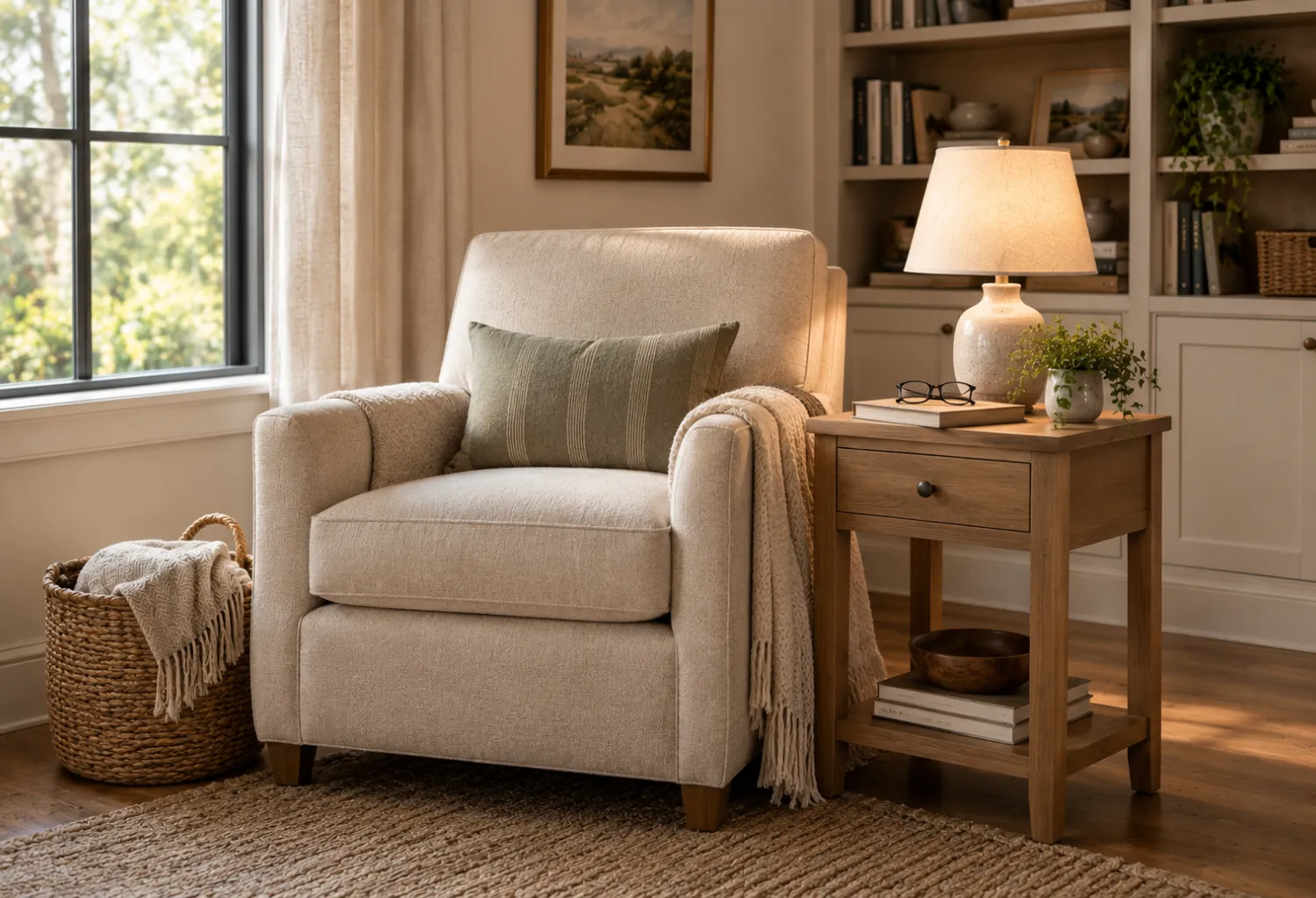
The area beside an armchair is easy to overlook. A small side table with a drawer or shelf can give books, reading glasses, chargers, and other personal items a proper home.
Choose a table that fits comfortably beside the chair without blocking the walkway.
A small table lamp also gives the corner a practical purpose and creates a softer layer of lighting for reading in the evening.
18. Toy Storage Zone
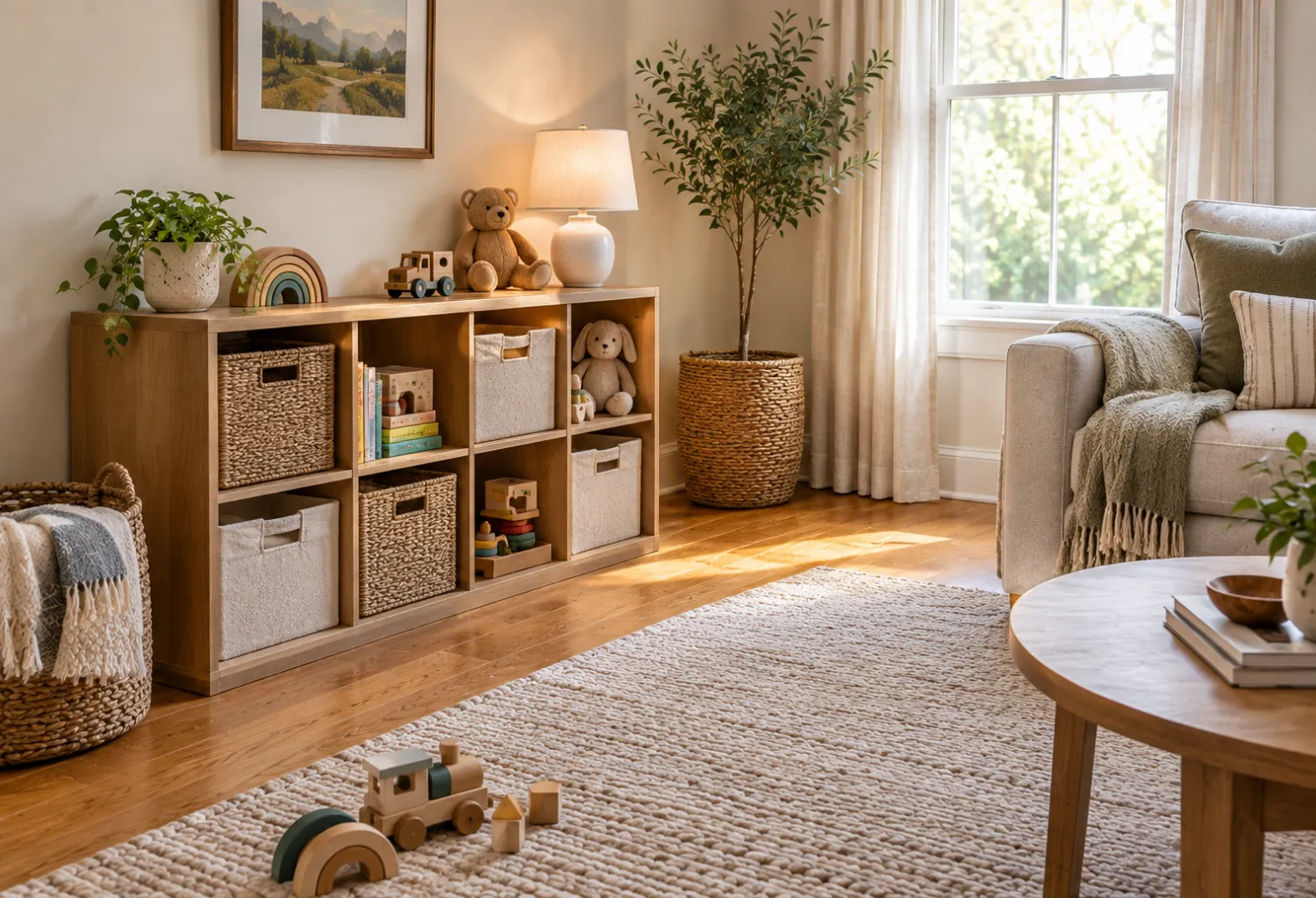
If children use the living room, creating a dedicated toy zone is often more realistic than expecting toys to stay out of the space.
Use low baskets, cube storage, or a storage bench that children can reach independently. Keep the most frequently used toys at their level and less-used items higher up.
Choose containers that coordinate with the room instead of relying on brightly colored plastic bins unless that look fits your decorating style.
19. Vertical Book Storage
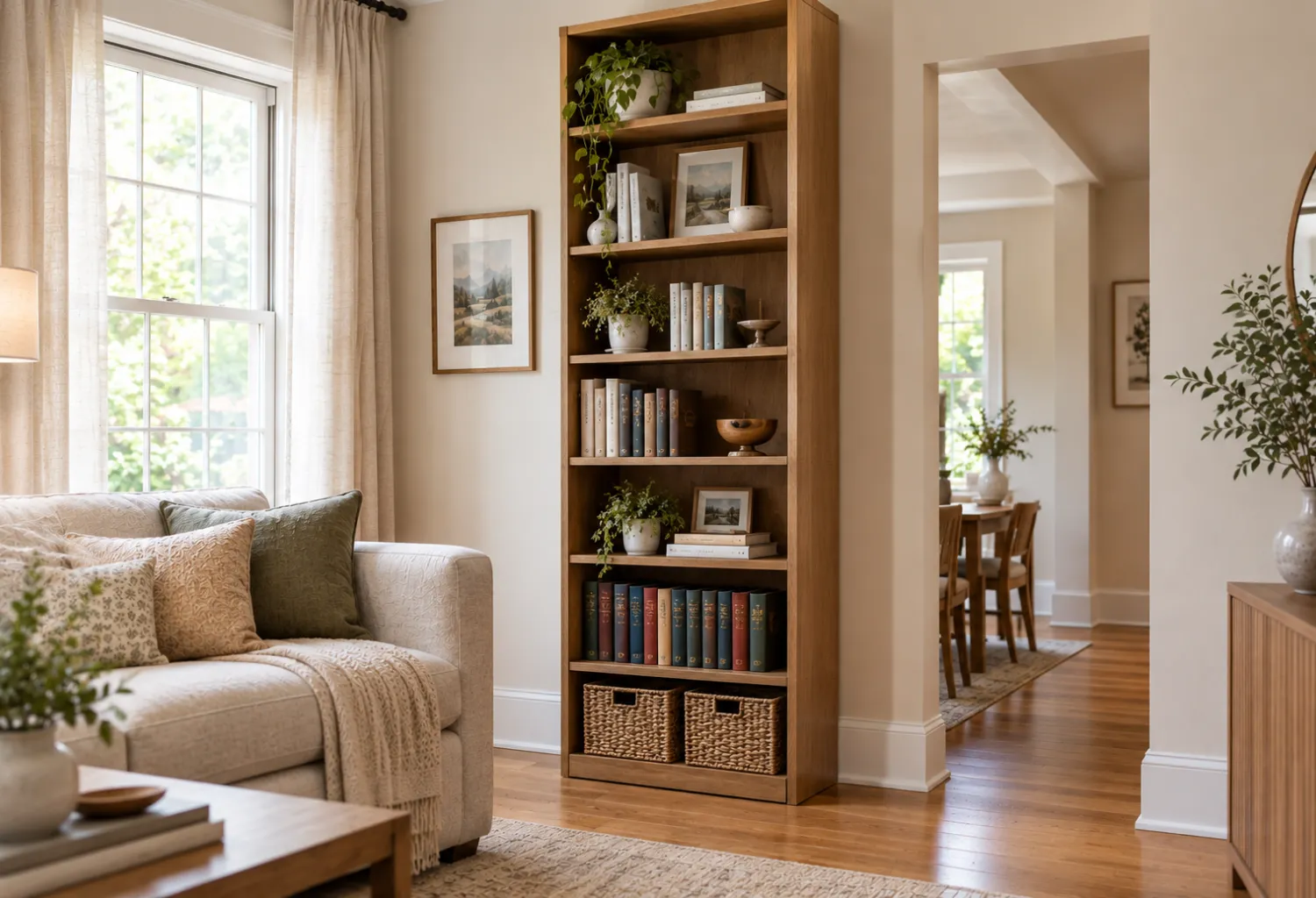
When floor space is limited, think upward. A tall, narrow bookcase can store a substantial collection while using only a small amount of floor area.
Place heavier books toward the bottom and lighter decorative pieces higher up. Leave some shelves partially open so the unit does not feel visually dense.
Tall storage can also draw the eye upward, making a room with a low ceiling feel more vertically balanced.
20. Under-Sofa Storage
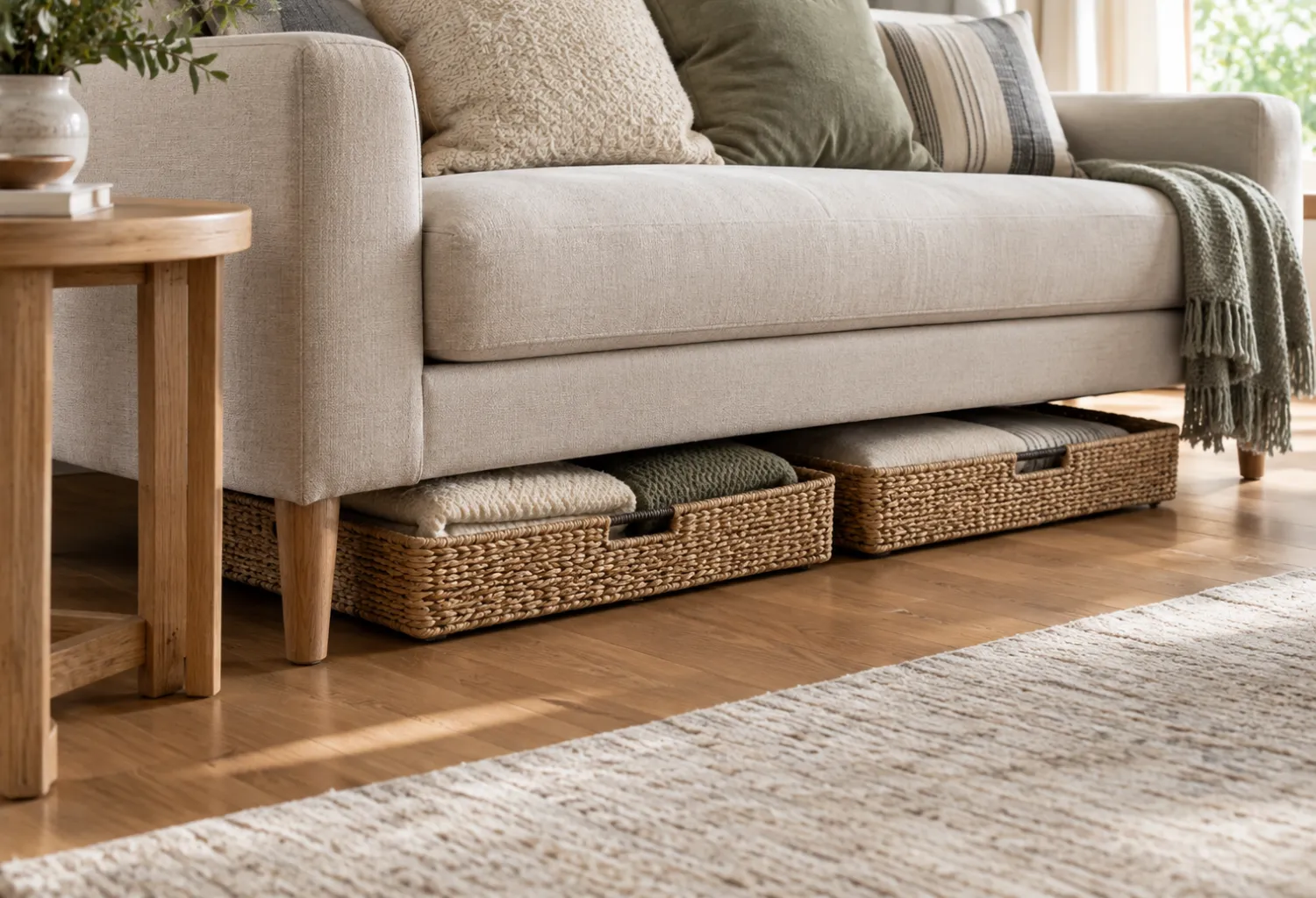
The space beneath some sofas can accommodate low-profile storage boxes or fabric containers. This is a useful location for items you do not need every day.
Use flat containers for seasonal throws, extra pillow covers, or infrequently used accessories.
Before buying anything, measure the clearance beneath the sofa carefully. Storage should slide in and out easily without damaging the flooring.
21. Organized Remote Station
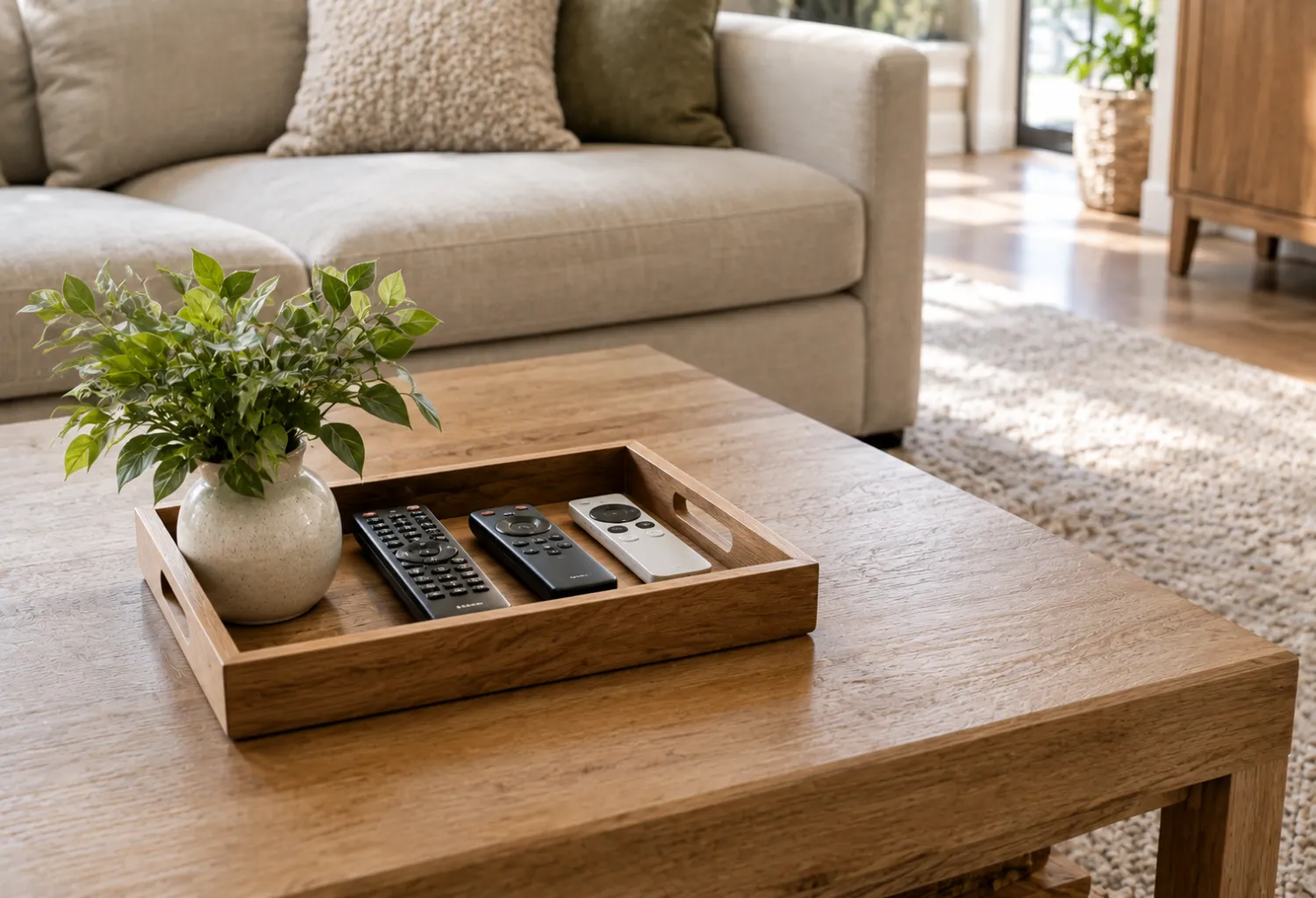
Remote controls are small, but they create instant visual clutter when scattered across the coffee table.
Give them one designated location, such as a small tray, decorative box, or compartment inside the coffee table.
If your household uses several remotes, label the compartments or keep them grouped by device. The best system is one everyone can understand without thinking about it.
22. Multi-Functional Storage Bench
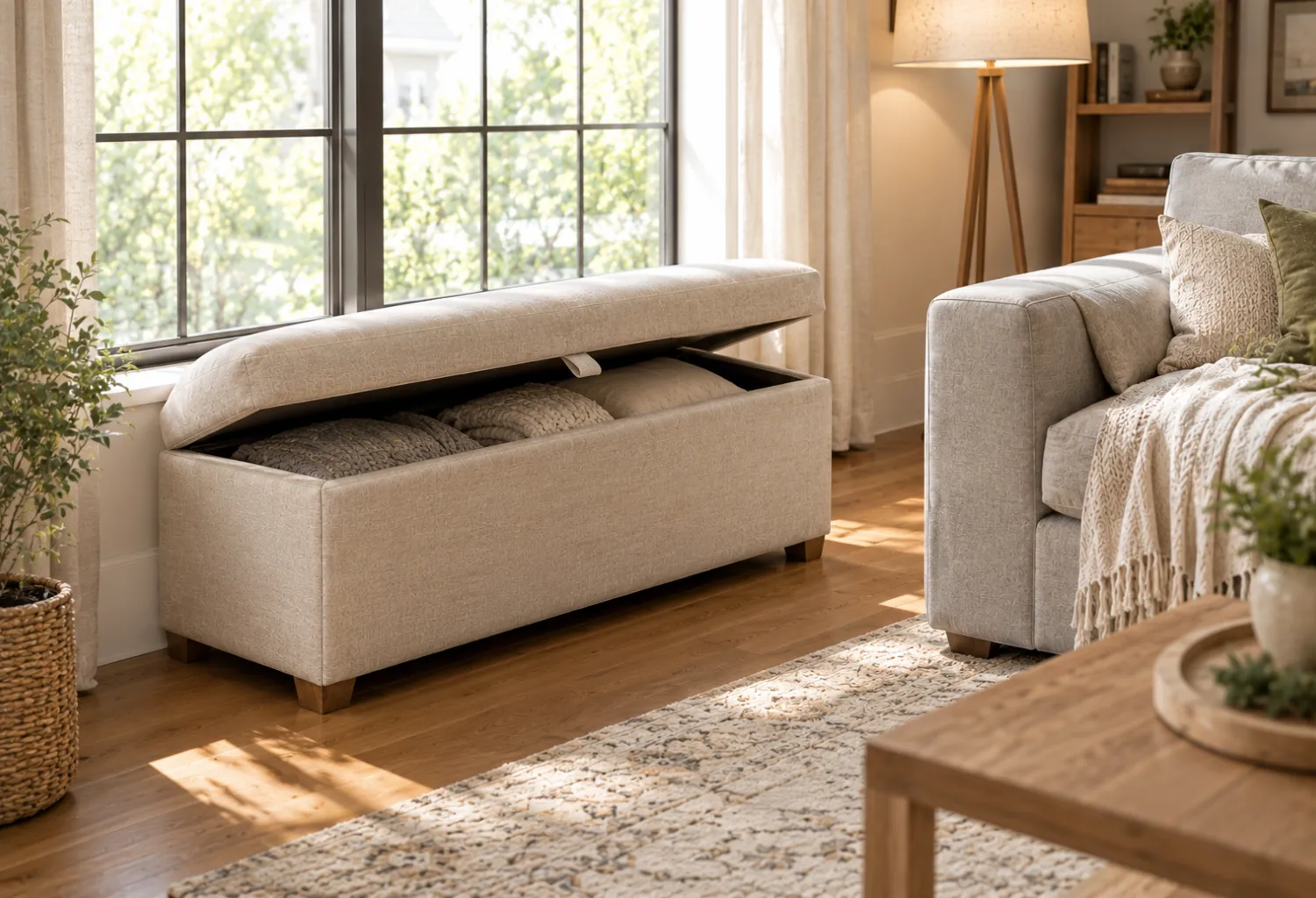
A storage bench can provide seating, organization, and visual balance in one piece. Place one beneath a window, along a wall, or near the entrance to the living room.
Use the interior for blankets, games, toys, or seasonal accessories.
Choose upholstery that complements the sofa without matching it exactly. A warm beige bench paired with a soft gray sofa, for example, can create a layered neutral palette without looking overly coordinated.
23. Decluttered Open Shelving
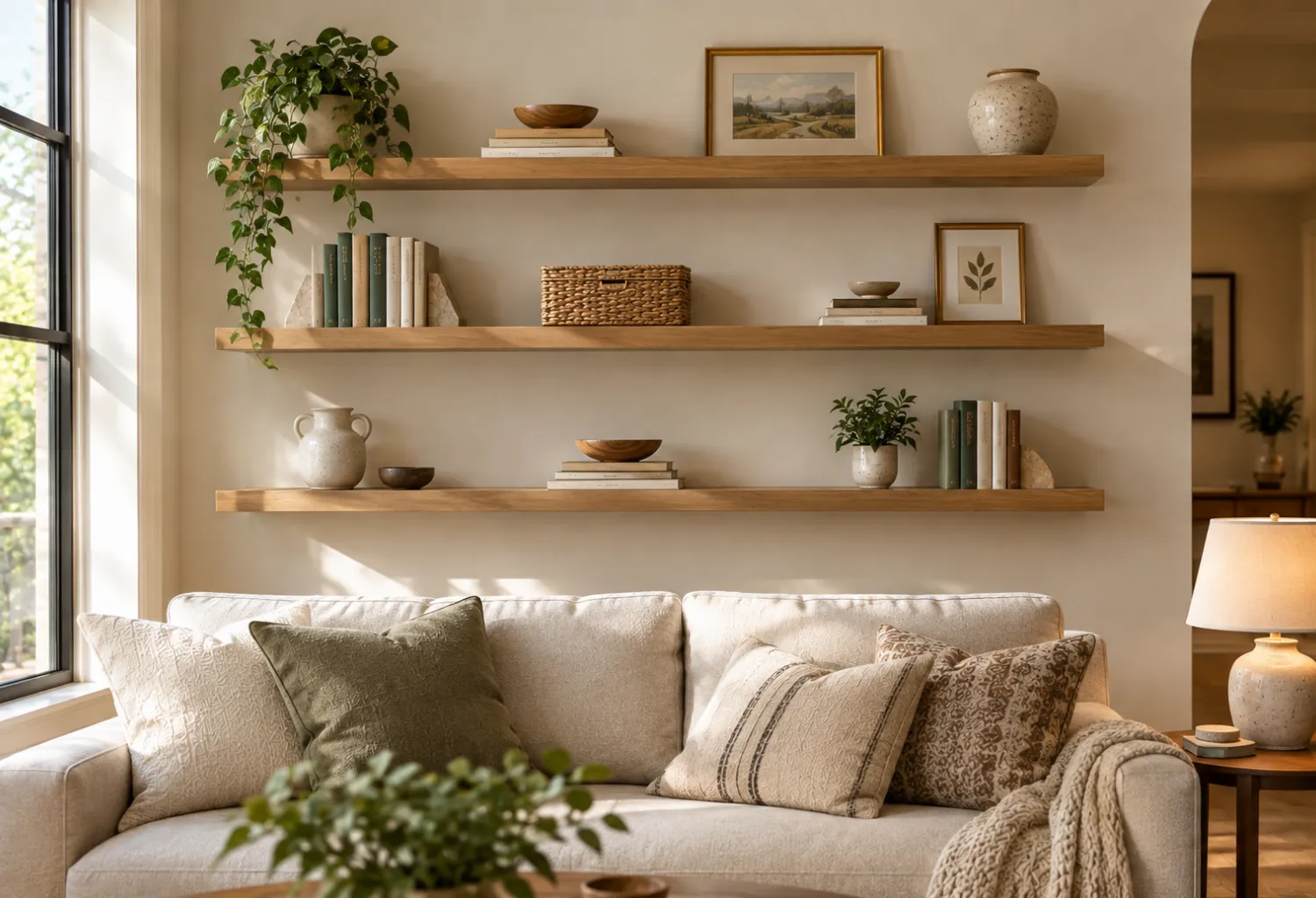
Open shelving works best when it is edited rather than completely filled. Treat each shelf as a small composition rather than a place to store everything.
Combine books, framed photos, baskets, plants, and a few meaningful objects. Leave some wall and shelf space visible.
If an item does not contribute to the room or serve a useful purpose, it probably does not need to occupy valuable display space.
24. Furniture With Dual Purpose
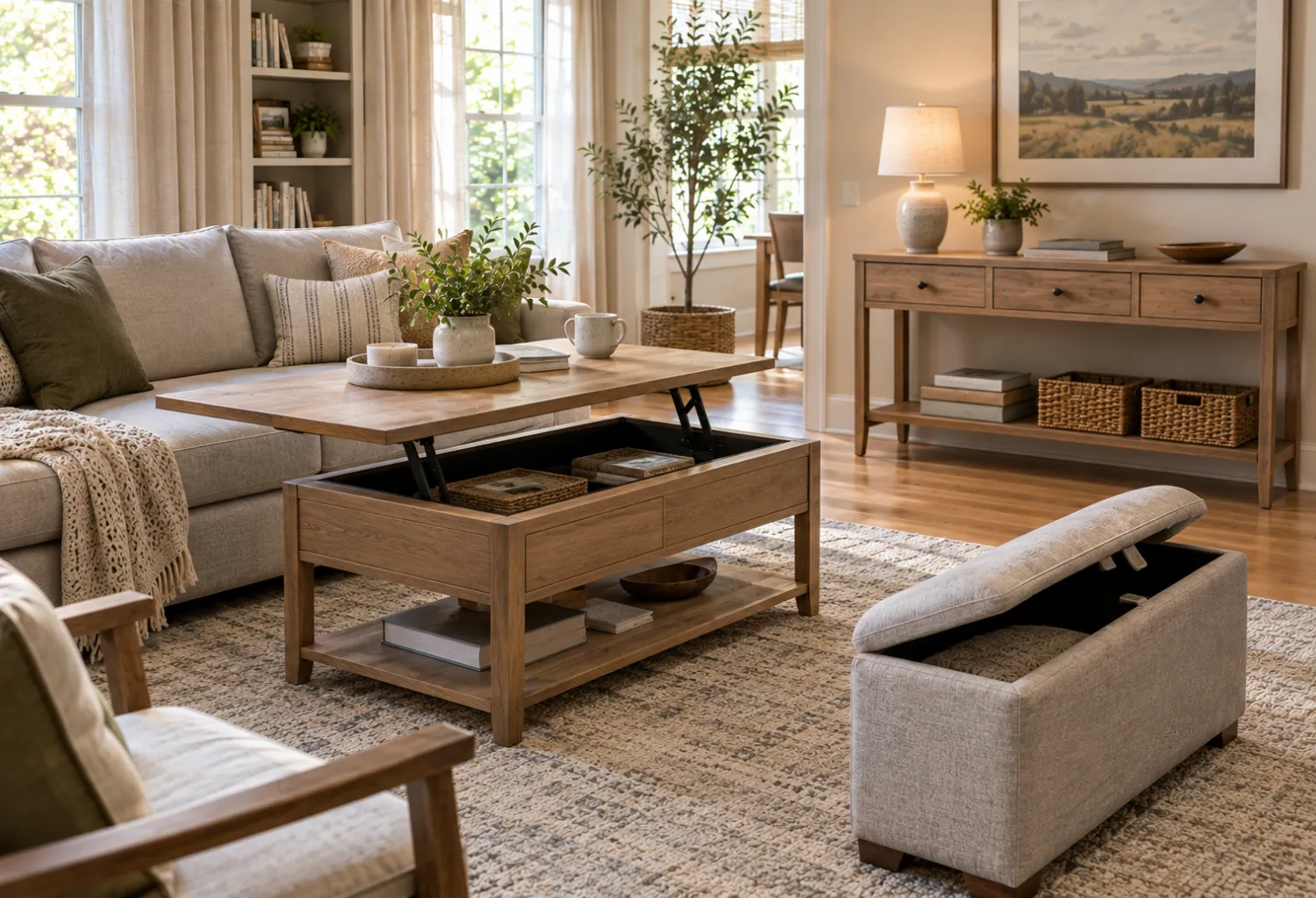
Choose furniture that solves more than one problem. A lift-top coffee table can provide hidden storage and a temporary work surface. A storage ottoman can act as seating, a footrest, and blanket storage. A console can provide both display space and drawers.
This approach is especially valuable in apartments, small homes, and multipurpose living rooms.
Instead of adding another storage piece whenever clutter appears, ask whether an existing piece can perform another function.
25. Dedicated Everyday Storage
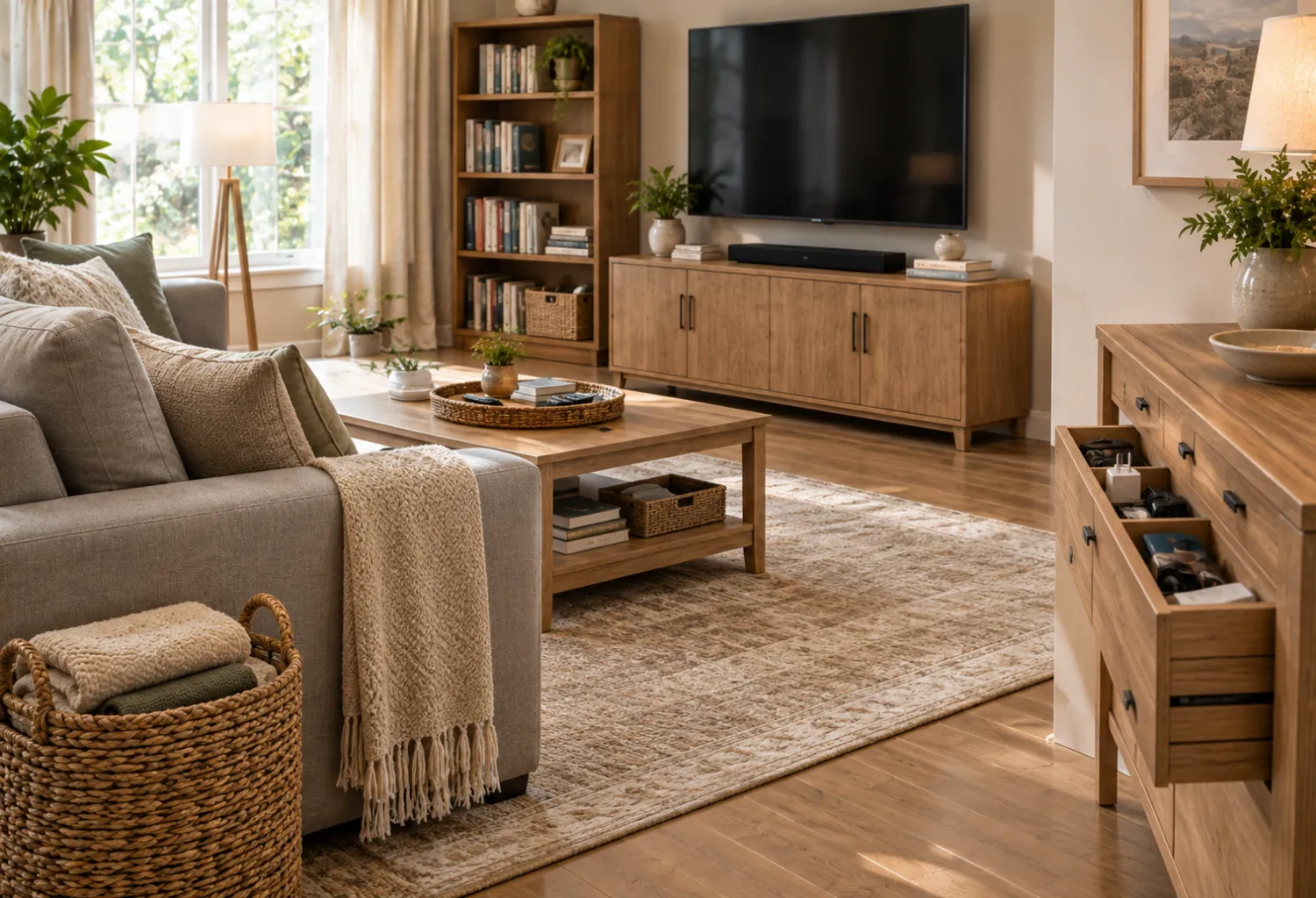
The most effective organization system is one that matches the way you actually use the room.
Create specific homes for the things that appear every day: blankets, books, chargers, remotes, toys, magazines, and small electronics. Keep frequently used items within easy reach and less-used belongings farther away.
The goal is not an empty living room. A comfortable home should still show signs of living. The difference is that everyday objects have somewhere to go when you are finished using them.
Conclusion
The best organization system depends on your space, style, and daily habits. A small apartment may benefit most from vertical shelves and dual-purpose furniture, while a larger family living room may need baskets, cabinets, and dedicated zones for toys and electronics.
You do not need to reorganize everything at once. Start with the area that becomes cluttered most often, give those items a convenient home, and build from there. With the right combination of storage and furniture placement, these 25 Living Room Organization Ideas For A Clutter-Free Home can help your living room feel calmer without making it feel overly styled or impersonal.