20 Living Room Toy Storage Ideas That Actually Work
Toys have a sneaky way of taking over the living room. One minute the floor is clear, the next you’re stepping on a plastic dinosaur. Good living room toy storage fixes that without turning your home into a daycare. These 20 ideas cover baskets, benches, hidden spots, and clever small-space tricks, so you can find something that fits your room and your kids.
1. Woven Baskets
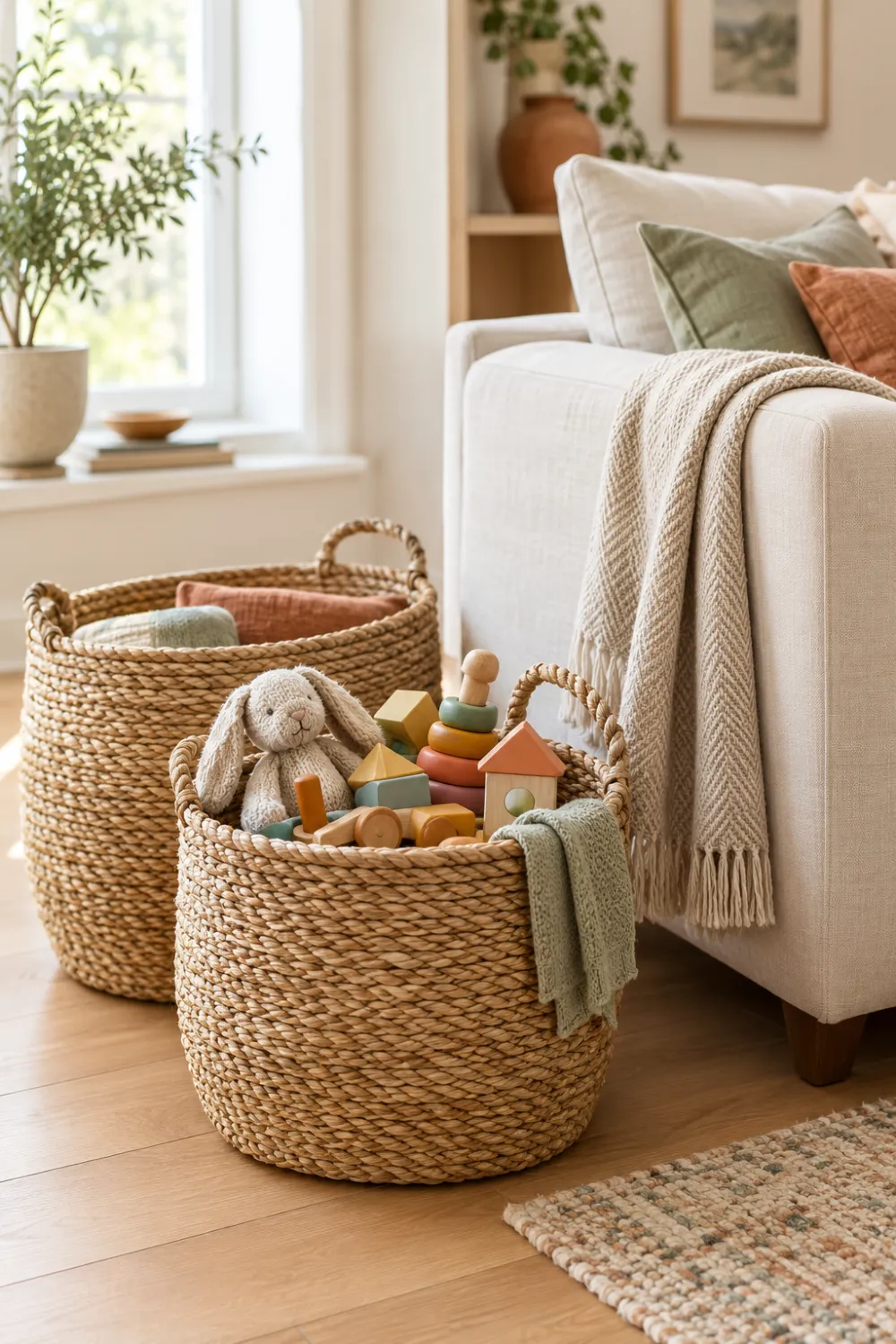
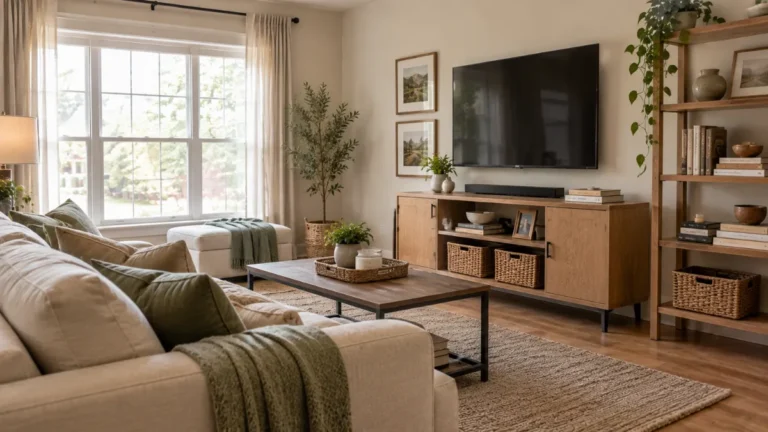
Baskets are the easiest place to start. Pick two or three large ones with sturdy handles and park them next to the sofa or under a console table. Natural seagrass or rope looks cozy and hides toy clutter well. Line the inside with a thin fabric liner if the weave is rough, so little fingers don’t snag. Toss-in cleanup takes about thirty seconds, which toddlers can actually manage.
2. Storage Ottoman
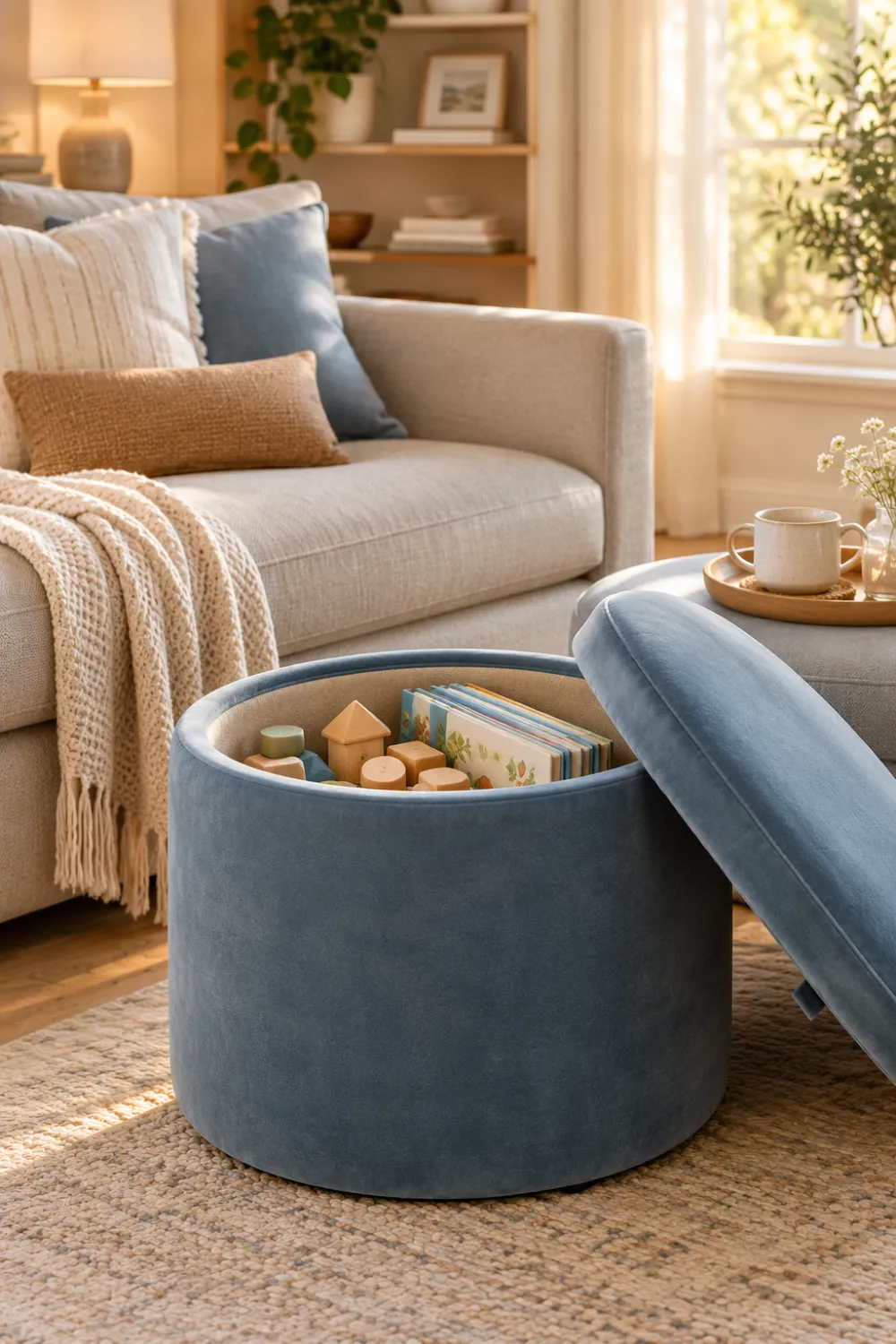
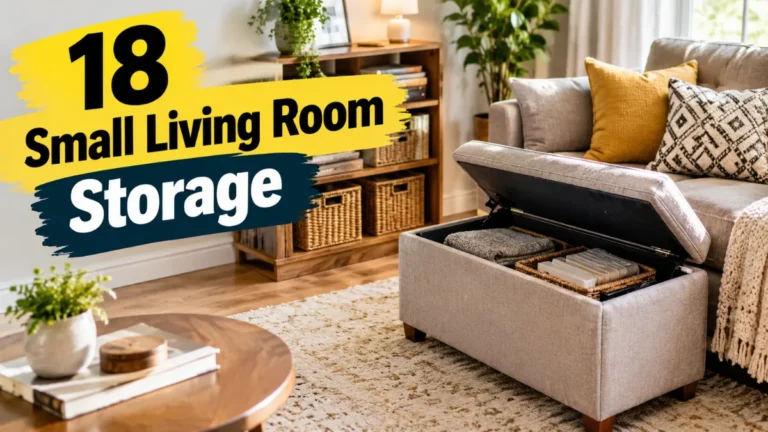
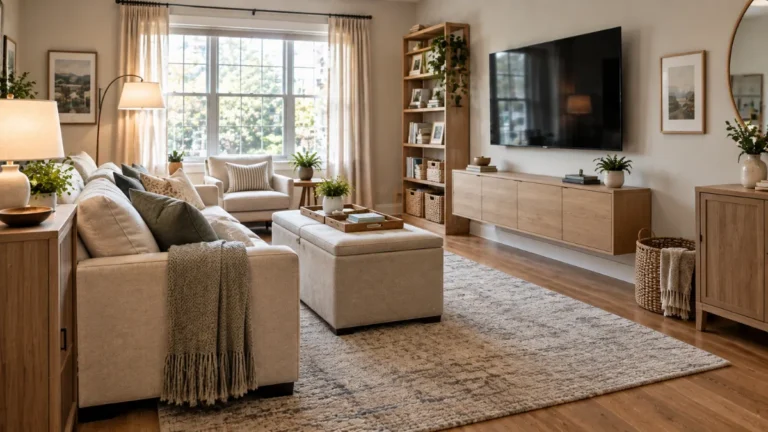
An ottoman does three jobs at once: footrest, extra seat, and toy hideaway. Lift the lid and everything from blocks to board books disappears. Choose one with a soft-close hinge or a removable tray top so fingers stay safe. A wipeable velvet or faux leather finish handles sticky hands better than linen. It also works well in the middle of the room as a coffee table stand-in.
3. Cube Shelf With Bins
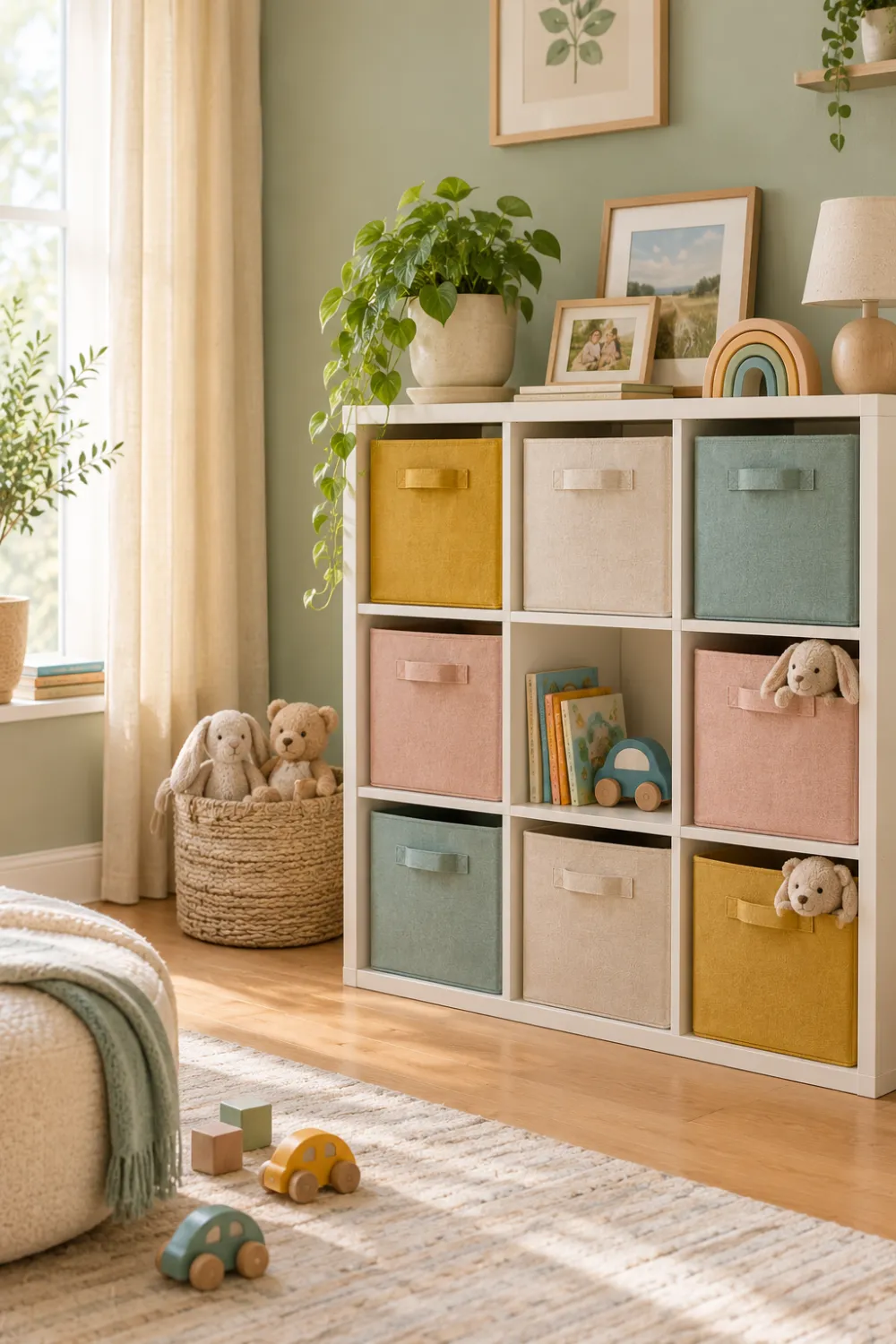
A cube shelf gives every toy type its own home. Cars in one bin, dolls in another, art supplies in a third. Fabric bins slide in and out easily, and kids learn quickly which cube is theirs. Keep the top row for things only grown-ups should reach. The top surface is also a great spot for a lamp-free display of photos or plants.
4. Storage Bench by the Window
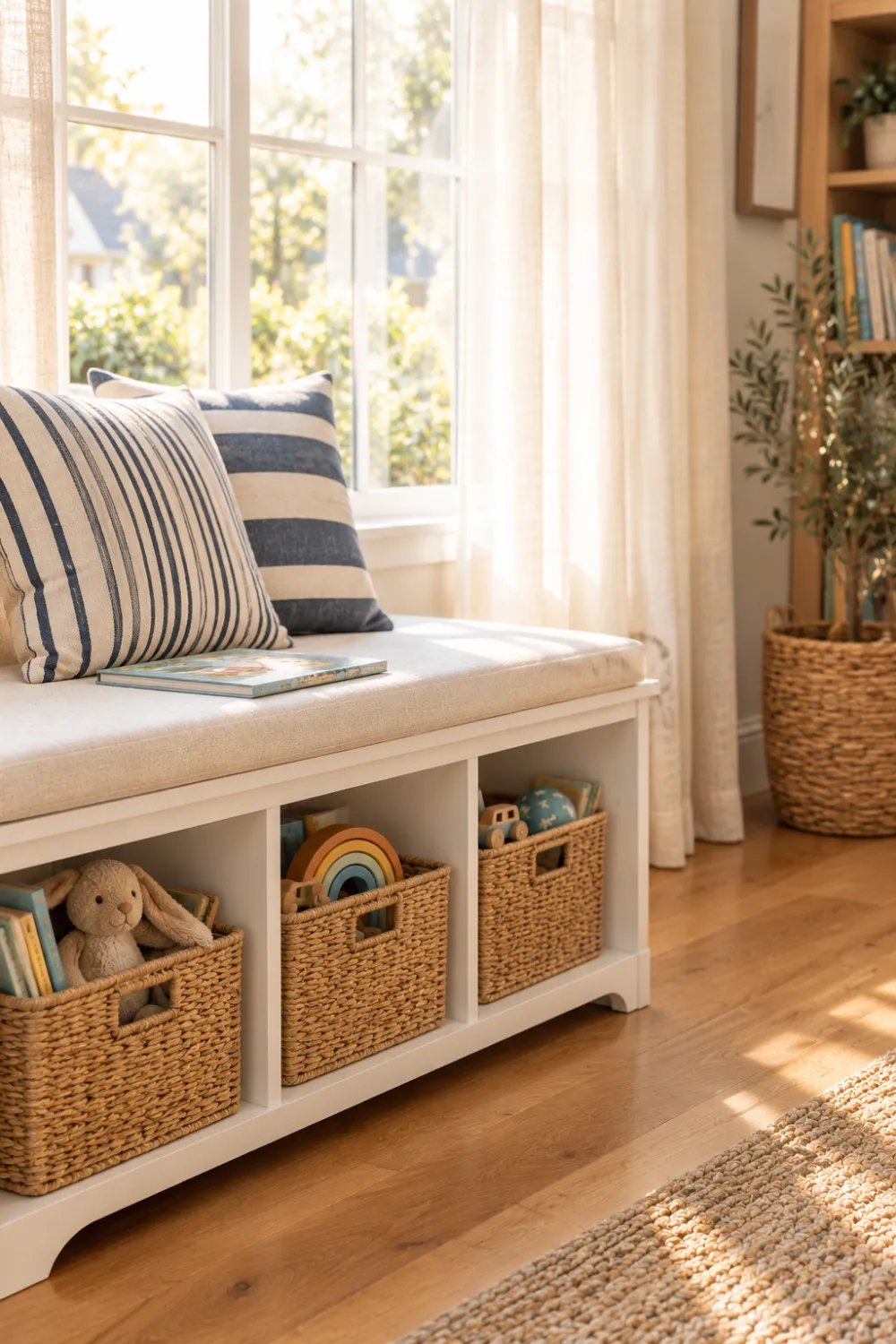
A bench under the window turns dead space into a reading nook and a toy bin. Add a couple of cushions and it becomes the best seat in the room. Look for one with open cubbies on the bottom and a hinged seat on top. Heavier toys go below, light stuffies go inside. Make sure the hinge has a safety stay so the lid can’t slam.
5. Under-Sofa Rolling Bins
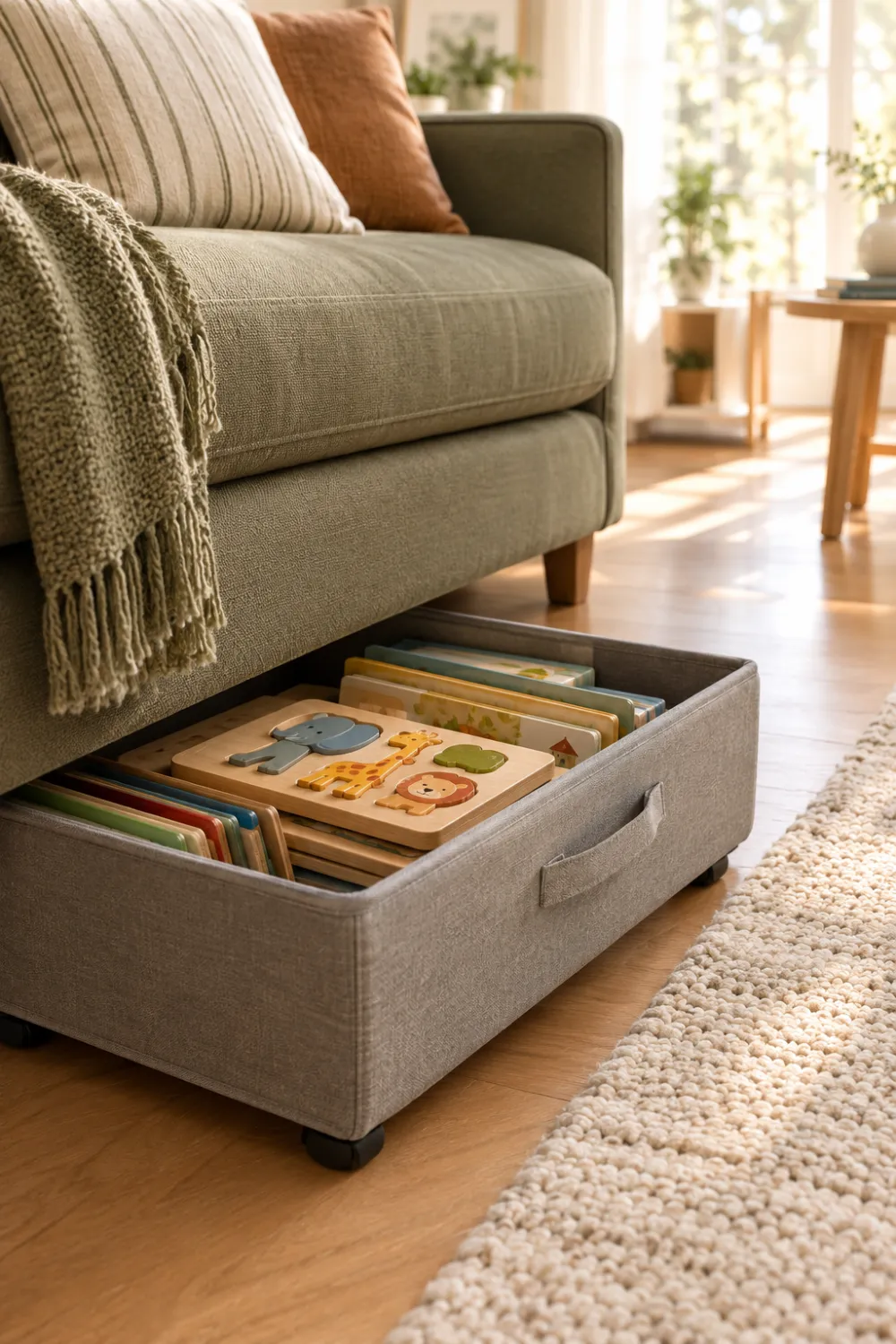
That gap beneath your sofa is free real estate. Flat plastic or fabric bins on wheels slide out for playtime and tuck away at night. Measure your sofa’s clearance first, because many have only four or five inches. They’re perfect for puzzles, flat games, and craft kits. Nobody even sees them, which makes this one great for tidy-minded parents.
6. Lidded Toy Chest

The classic chest still earns its spot, especially for bigger toys like trucks and building sets. Today’s versions look far better than the old painted boxes. Go for a wood or upholstered one that matches your living room furniture. Pick a lid with a slow-close or lift-off design, and drill small air holes if it’s big enough for a child to climb in.
7. Media Console With Doors
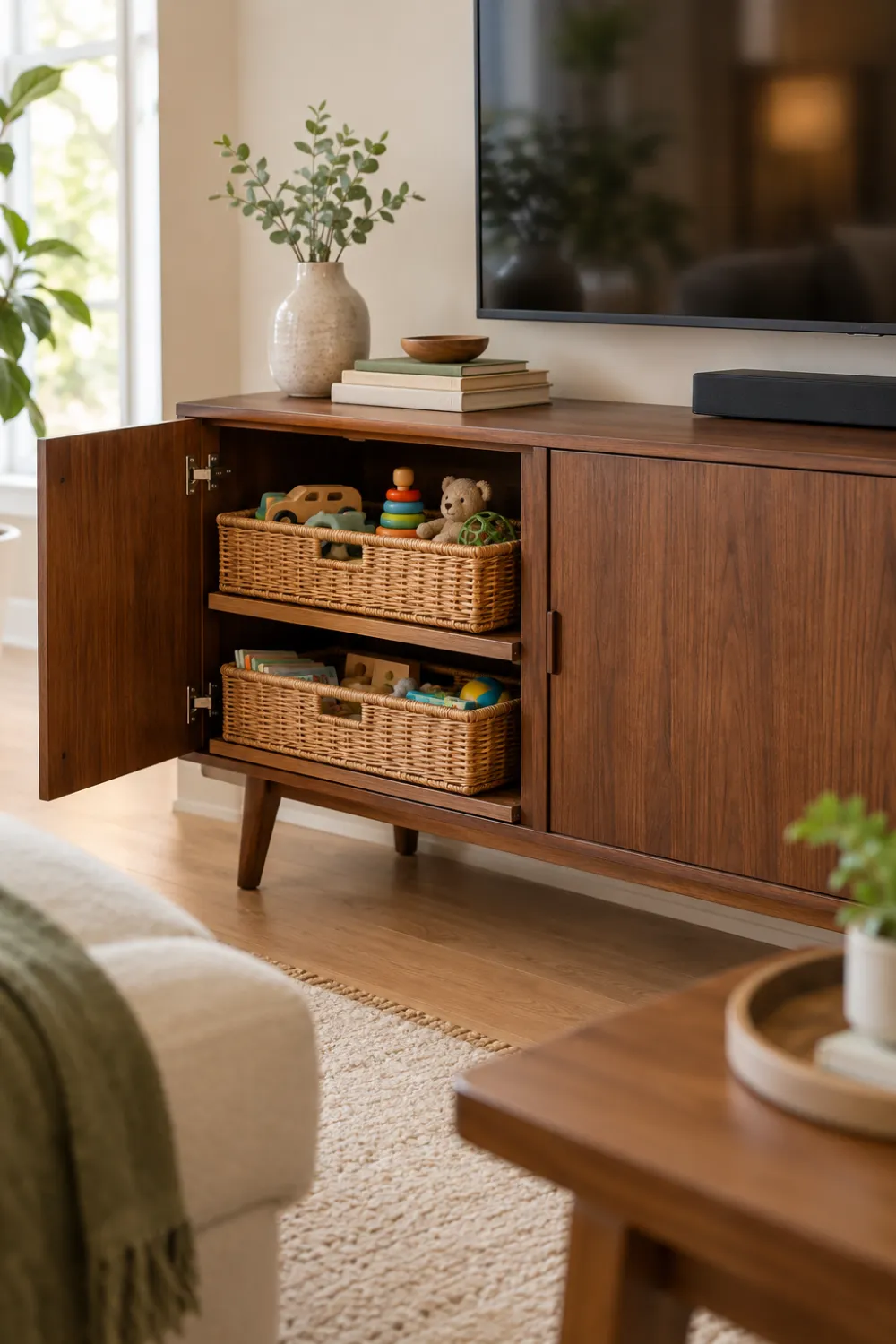
Your TV stand can double as a toy cabinet. Closed doors on the lower section hide a lot of mess, and you only see the clean front. Pull-out baskets inside make things easier to grab than stacking boxes. Keep remotes and cords on the upper shelf. When guests arrive, close the doors and the room looks grown-up again.
8. Wall-Mounted Ledges
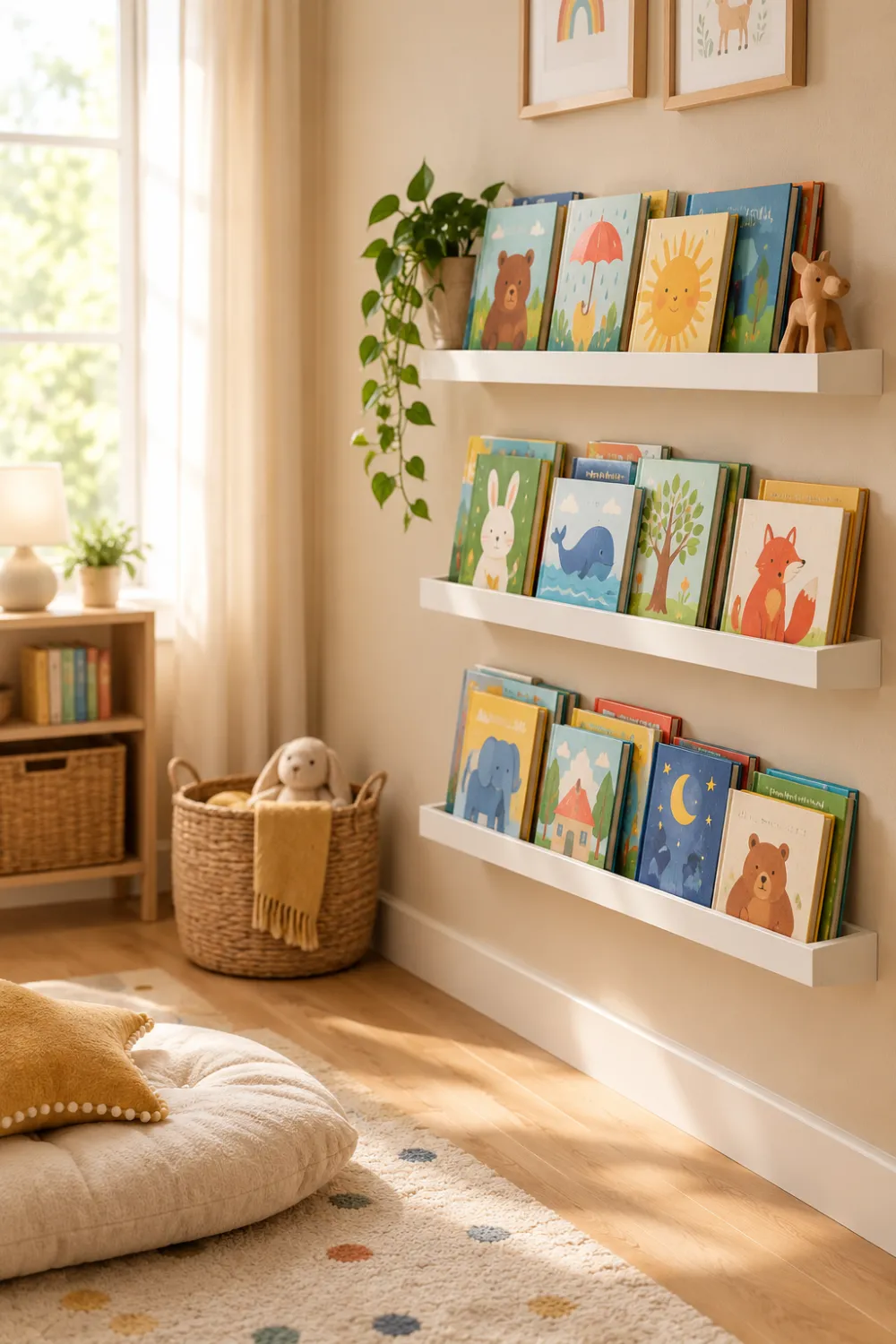
Picture ledges aren’t just for art. Mounted at kid height, they show off picture books with the covers facing out, which little ones love. Kids pick books more often when they can see the cover. Add a short row of ledges along one wall and you’ve got a mini library. Anchor them into studs, and keep a lip high enough that books don’t slide off.
9. Rolling Cart
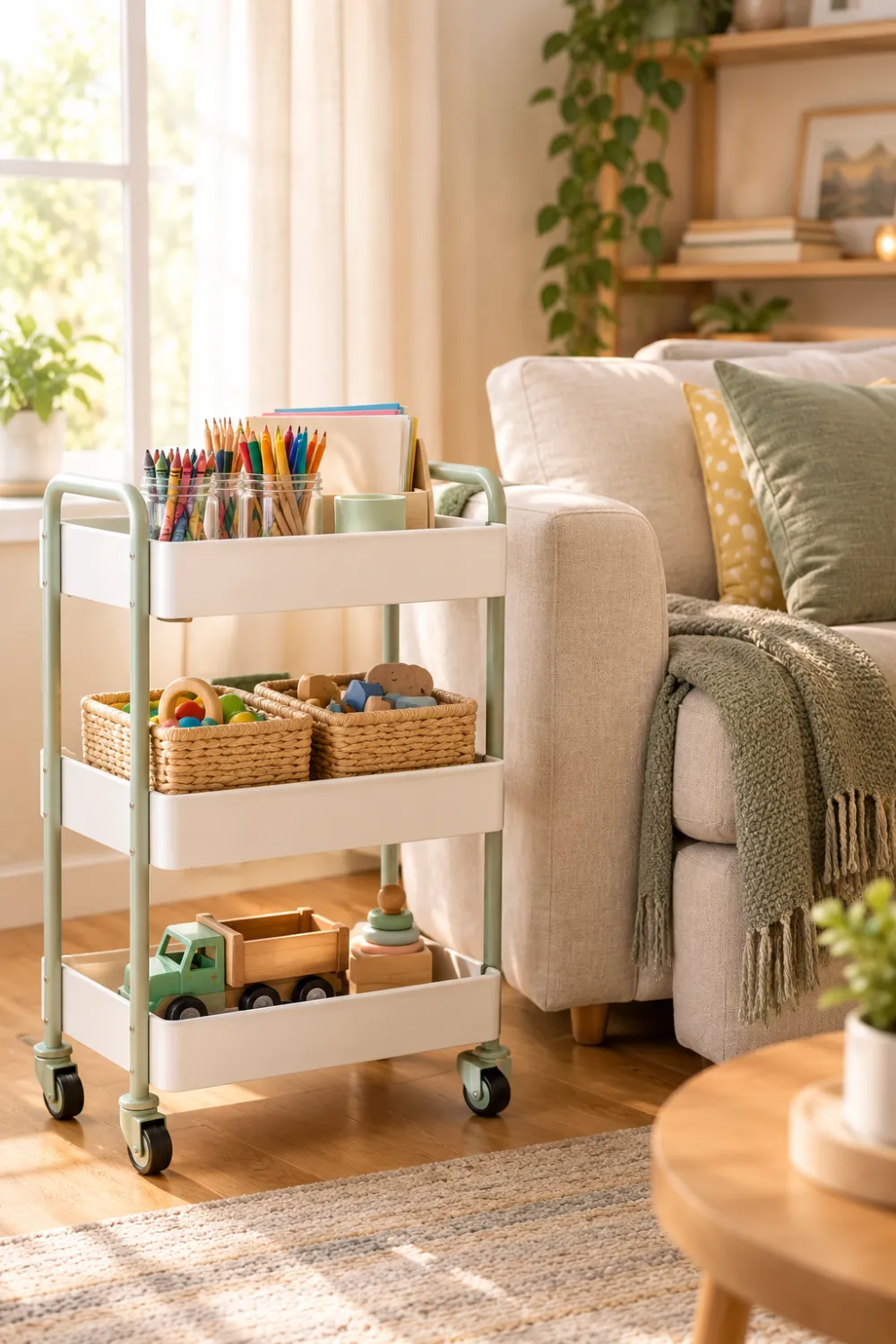
A three-tier rolling cart is a toy station you can move wherever play happens. Roll it next to the couch during the day, then park it in a corner after dinner. Use the top tier for art supplies, the middle for small toys, and the bottom for heavy ones. It’s also handy when you need to clear the floor fast for a visitor.
10. Hanging Stuffed Animal Net
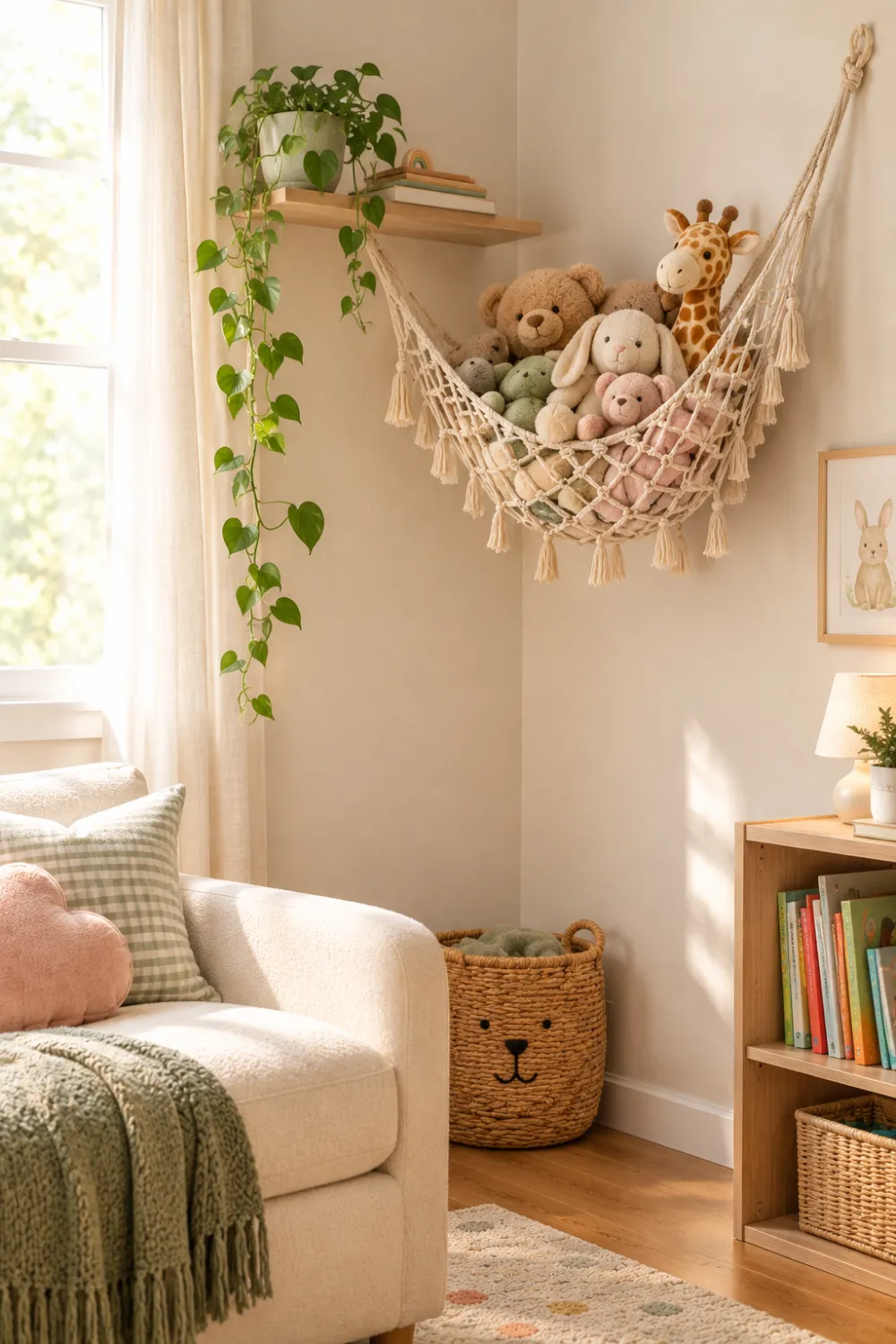
Stuffed animals multiply faster than anything else. A corner hammock net lifts them off the floor and turns them into décor. Mount it high in a corner using strong hooks, and stuff it loosely so animals stay put. Kids get a fun target for tossing, too. It works best for soft toys only, so skip hard plastic ones that could fall.
11. Console Table Behind the Sofa
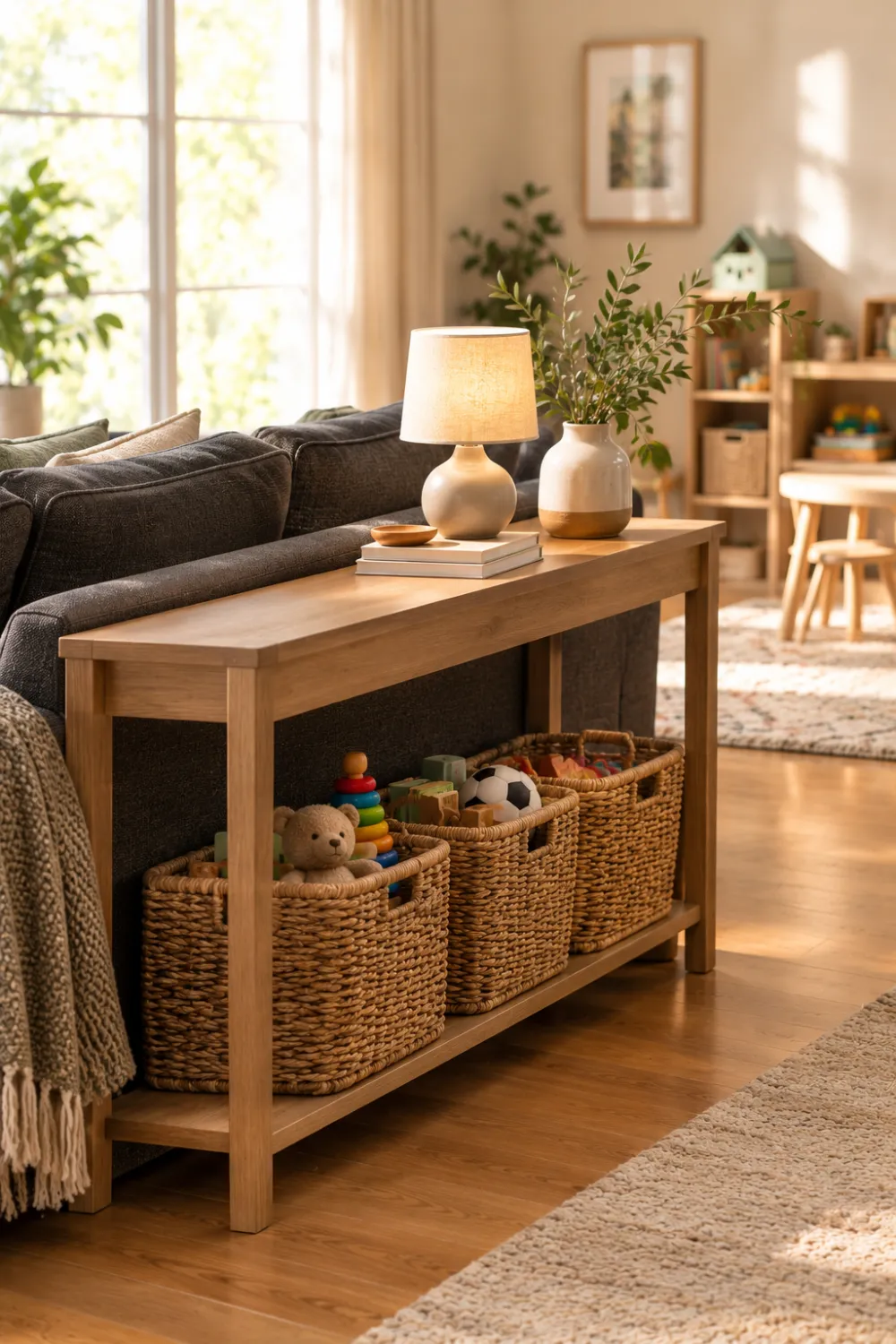
If your sofa floats in the room, the strip behind it is wasted space. A narrow console table with baskets beneath it hides a lot, and it also creates a clean divider between living and play zones. Pick a table about the same height as your sofa back. Label each basket with a picture, so even a three-year-old knows where Lego goes.
12. Pegboard Wall
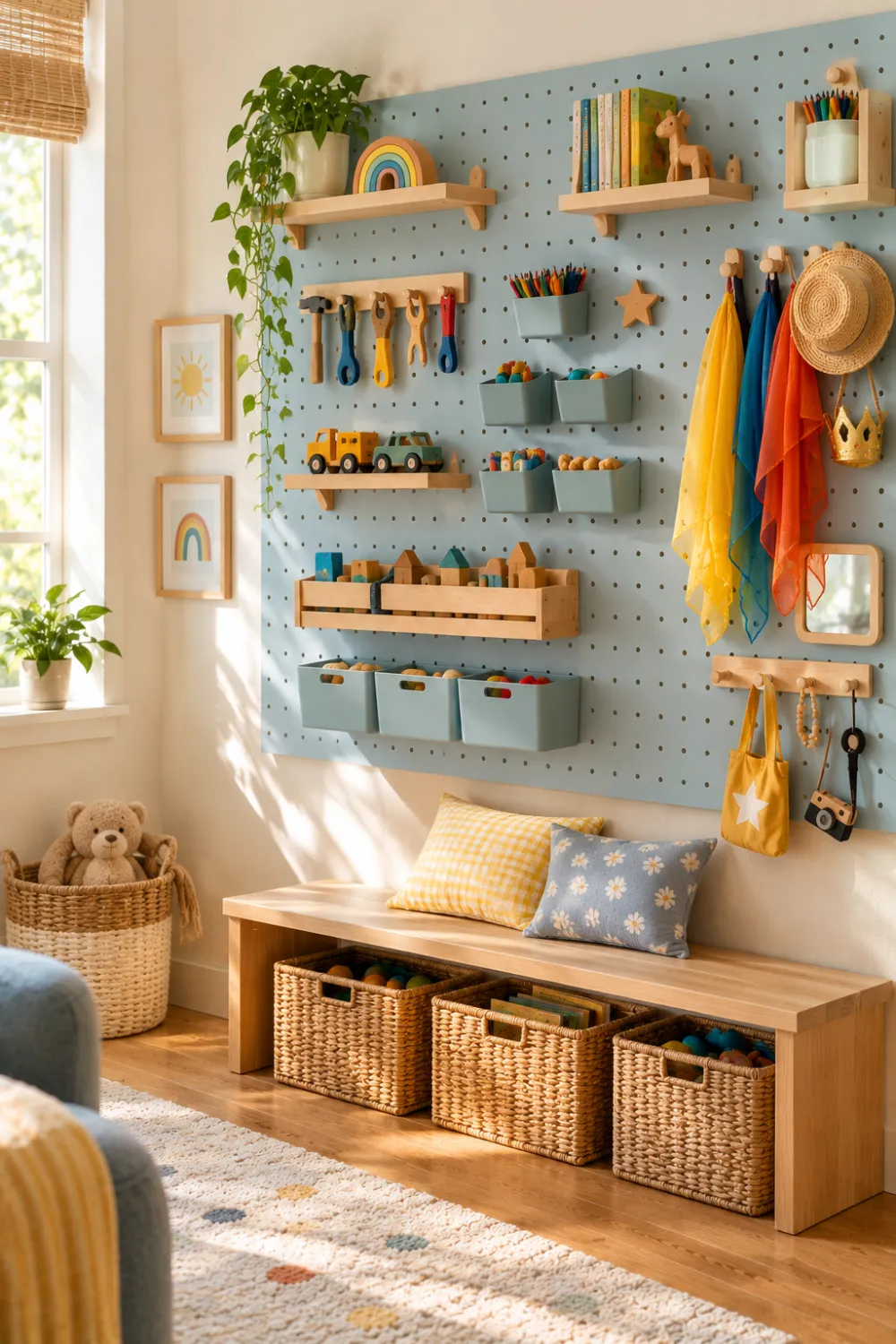
A pegboard works well for toys that hang, like play tool sets, dress-up accessories, or craft supplies. Paint it a bold color, or keep it white for a calm look. Add shelves, hooks, and small bins, and reorganize whenever interests change. It’s a surprisingly flexible way to keep floor space open, especially in apartments where every square foot matters.
13. Coffee Table With Drawers
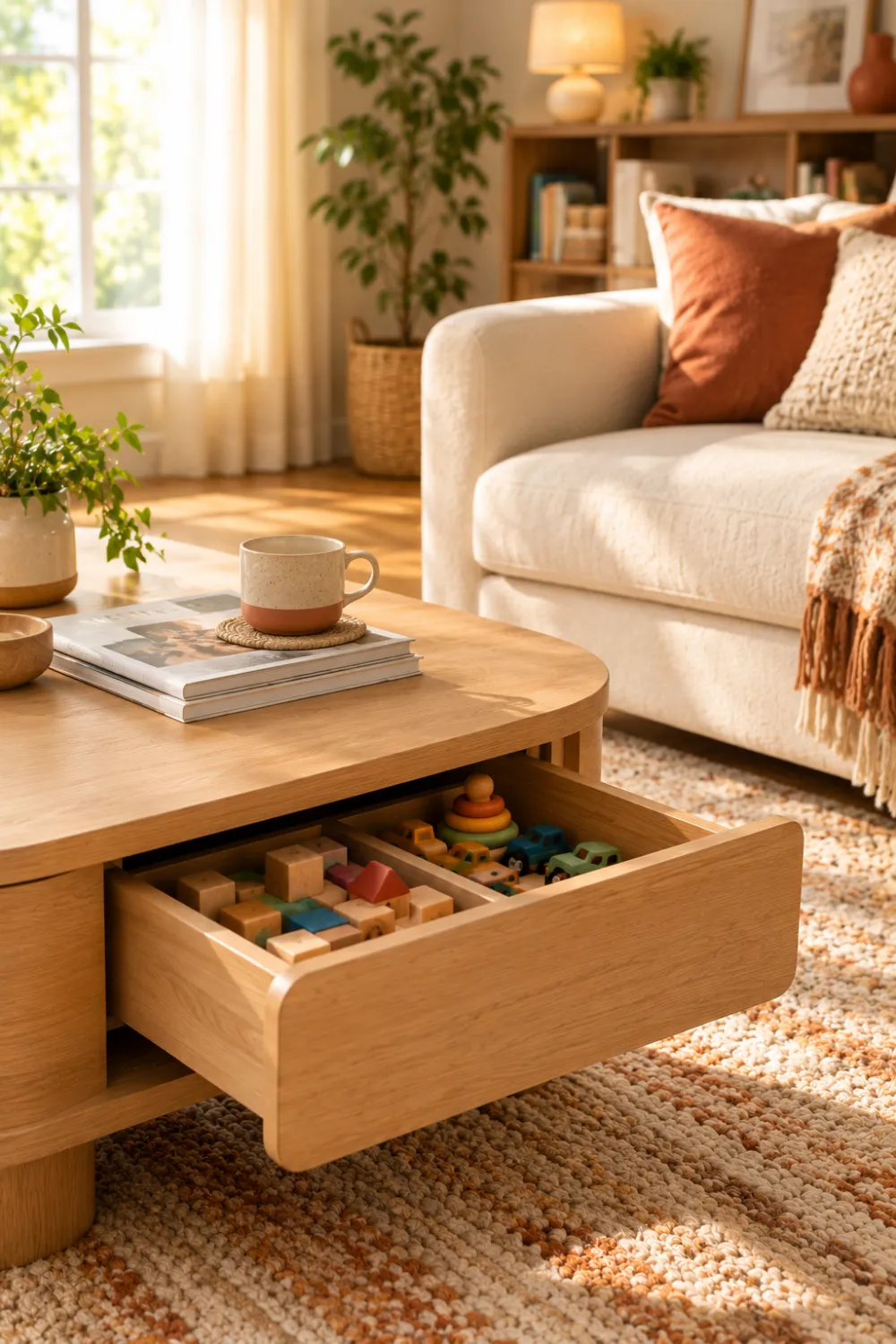
A coffee table with deep drawers keeps small toys within reach without feeling like a toy zone. Choose rounded corners if you have a crawler. Put blocks and cars in the lower drawers, and keep your own magazines and coasters up top. Kids can also use the surface as a mini play table, so the piece earns its keep twice.
14. Built-In Cabinets
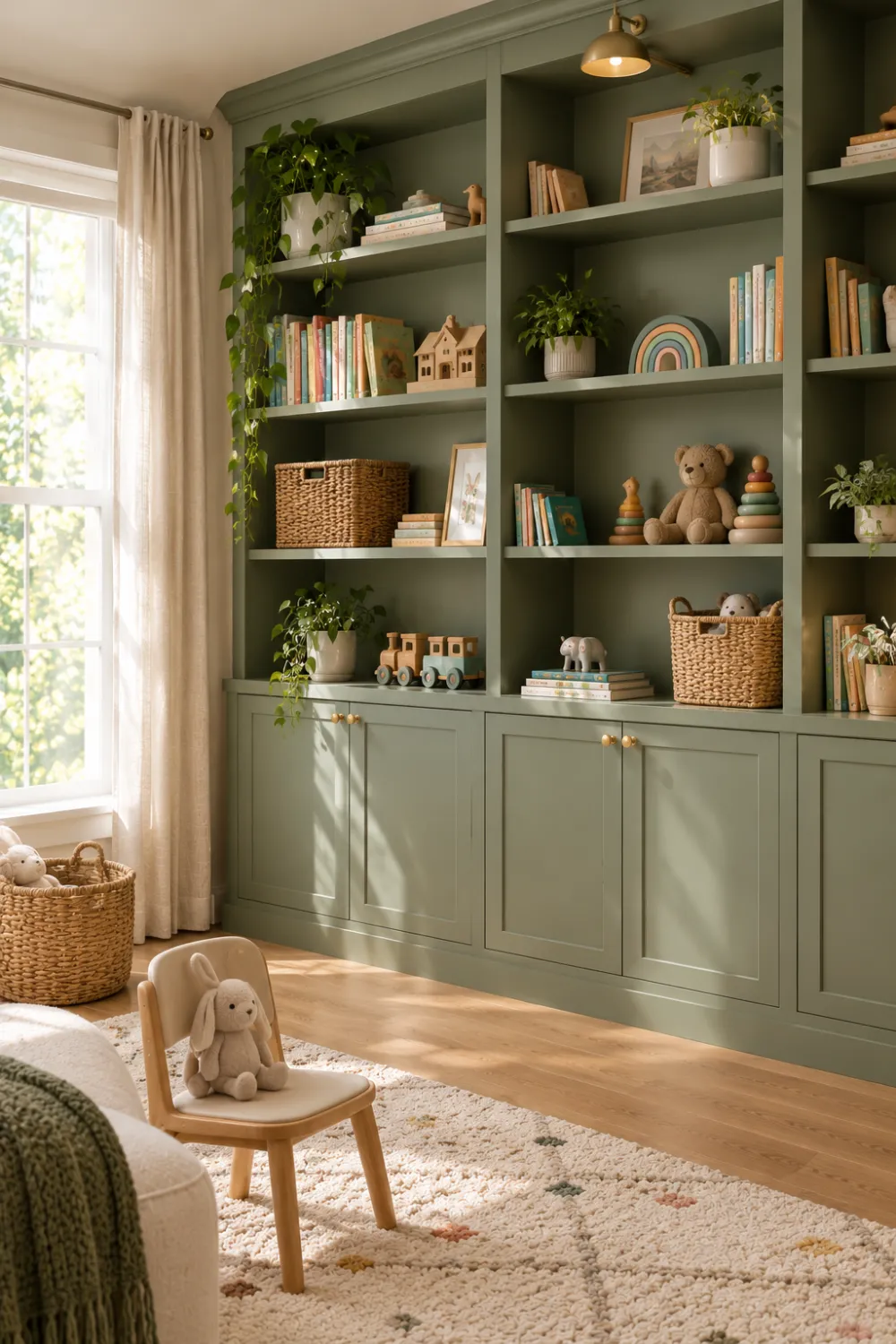
If you’re renovating, or you rent and can add freestanding units, built-ins offer a polished solution. Floor-to-ceiling cabinets on one wall hold hundreds of toys behind simple doors. Mix closed lower cabinets with open upper shelves for books and display pieces. Add push-latches instead of knobs for a cleaner look and fewer bumped heads.
15. Clear Bins With Picture Labels
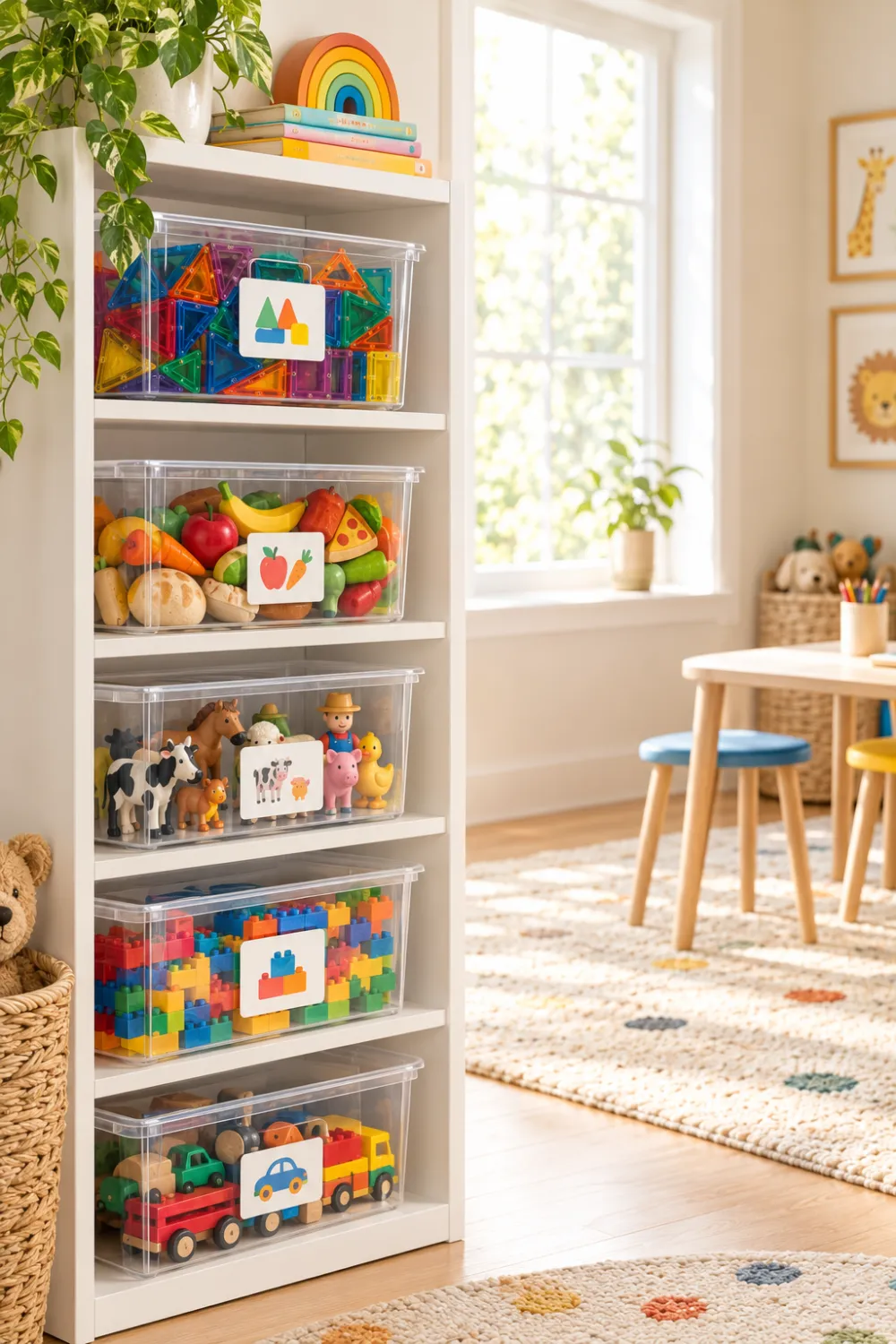
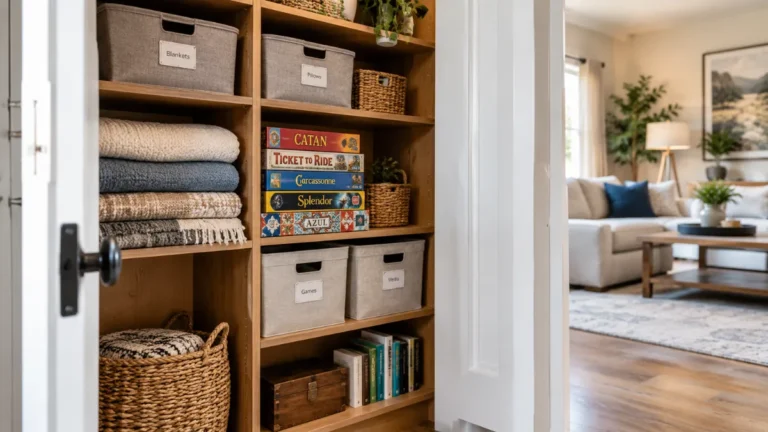
Clear bins let you see what’s inside, which cuts down on dumping everything out. Pair them with picture labels for non-readers, and word labels for older kids. Stack them in a closet-style cabinet or on open shelves. This system really shines for sets with lots of tiny pieces, like magnetic tiles or toy food, where a quick glance tells you if anything’s missing.
16. Toy Rotation Box
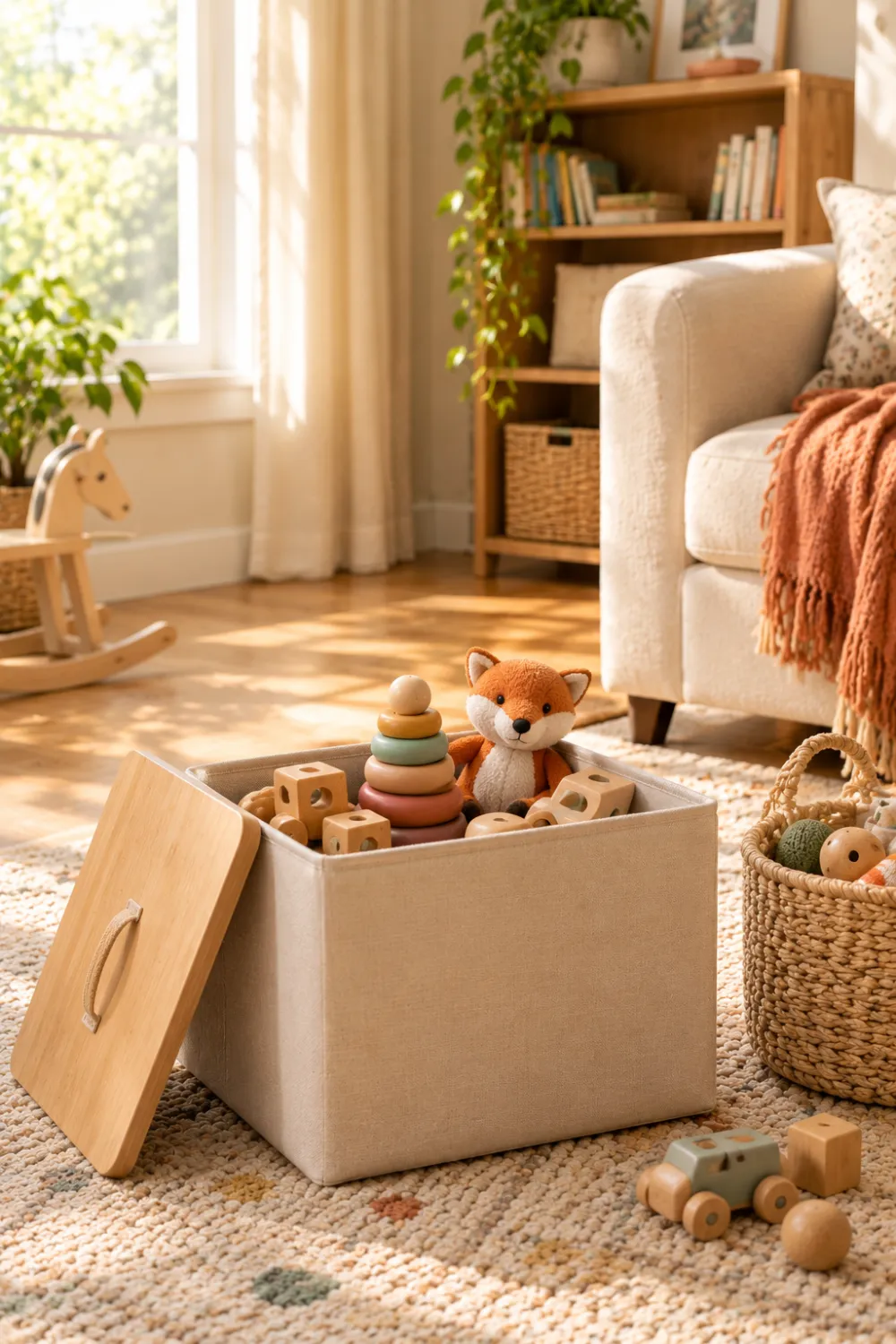
Sometimes the best storage isn’t in the living room at all. Keep a small selection of toys out and put the rest in a closed box in a closet. Swap them every couple of weeks. Kids act like they got new toys, and your living room stays cleaner. It also helps you spot which toys are never played with, so you can donate them.
17. Corner Shelf Tower
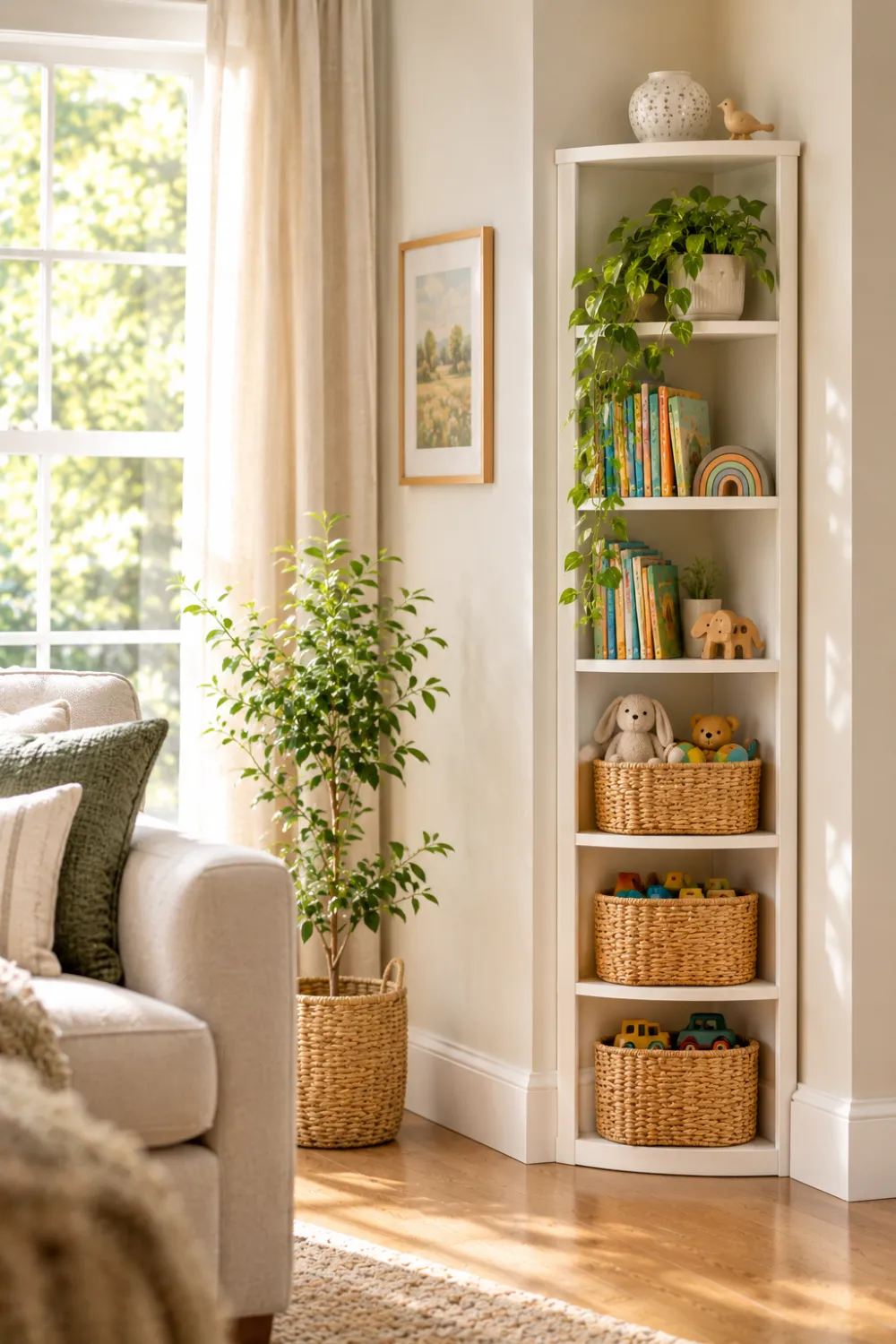
Corners are often ignored. A tall, narrow corner shelf uses that vertical space and keeps the floor clear. Use baskets on the lower shelves for kid access, and display fragile favorites higher up. Look for a model with a wall anchor, since tall furniture needs to stay put. It fits even in a small living room without crowding walkways.
18. Bean Bag Cover for Stuffies
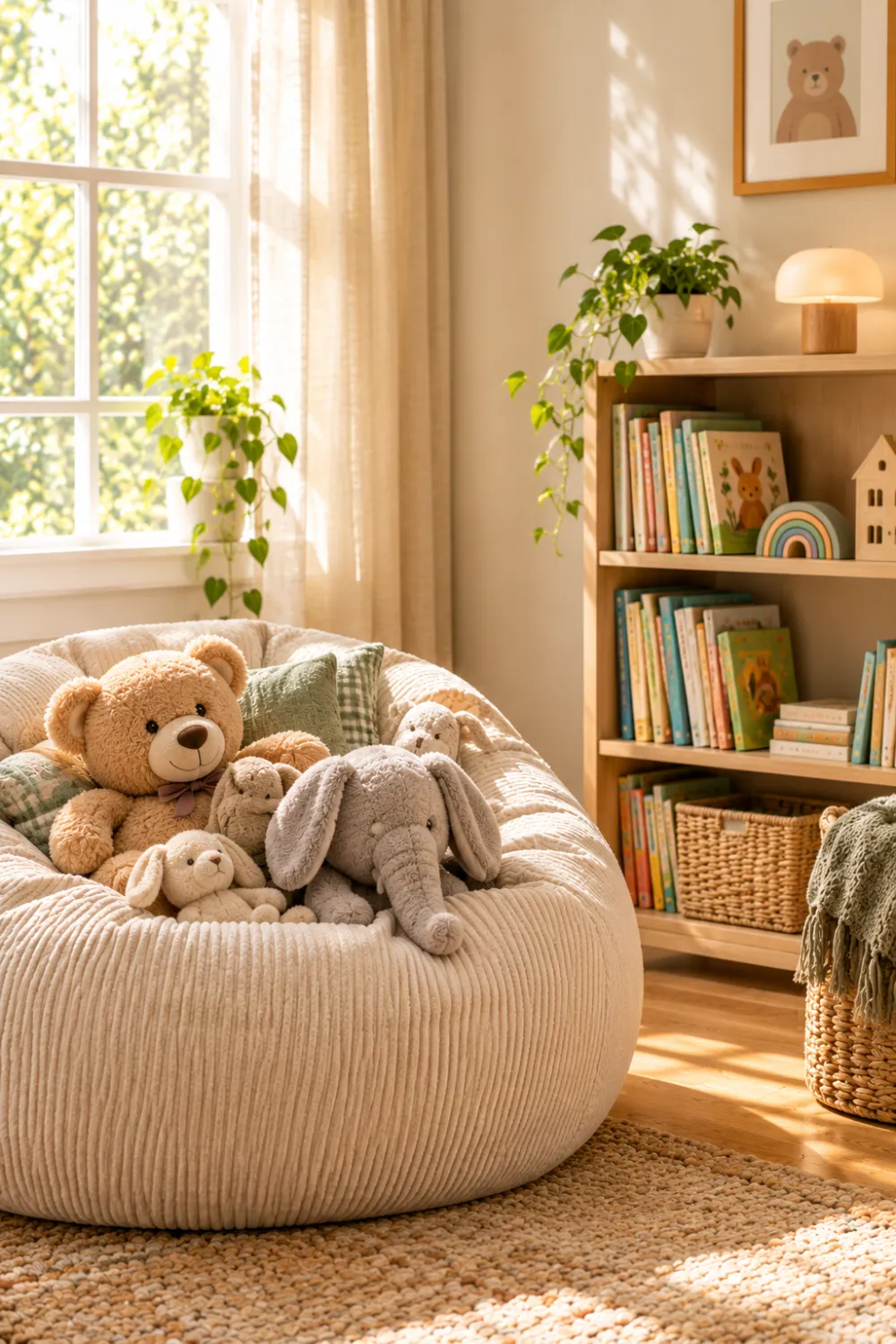
Here’s a fun one: buy an empty bean bag cover and fill it with stuffed animals instead of beans. You get a squishy seat and a storage spot in one. Kids can flop on it for reading time. Make sure the zipper is hidden or locked, so little hands can’t open it. Wash the cover now and then to keep dust down.
19. Bookshelf With Closed Bottom
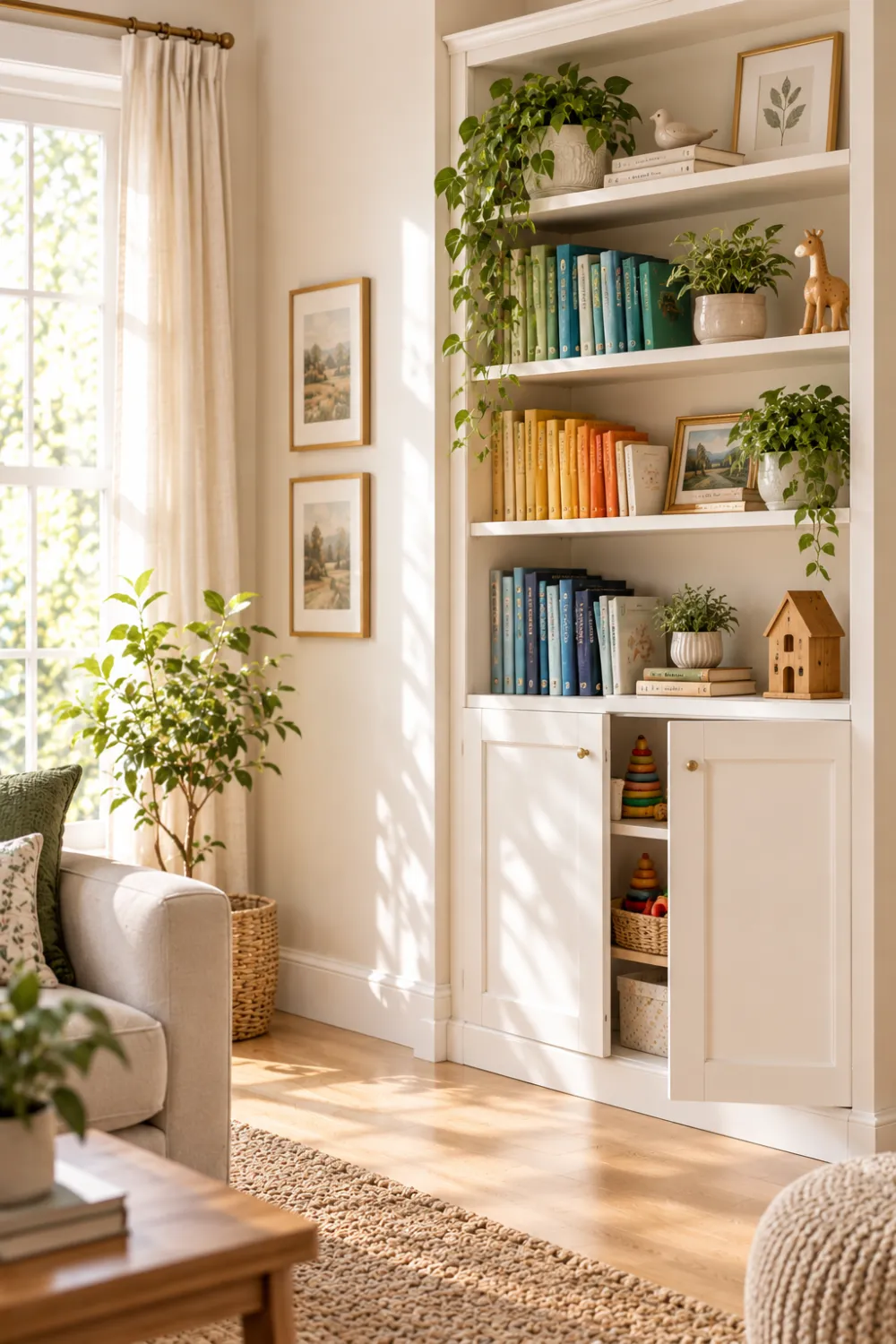
An ordinary bookshelf becomes kid-friendly when the bottom has cabinet doors. Books go on the upper shelves, and toys disappear into the lower cabinets. That split keeps the look balanced and calm. If your shelf has open bottoms, slide in matching baskets for the same effect. It works especially well in homes where the living room is also a reading room.
20. Drawstring Playmat Bag
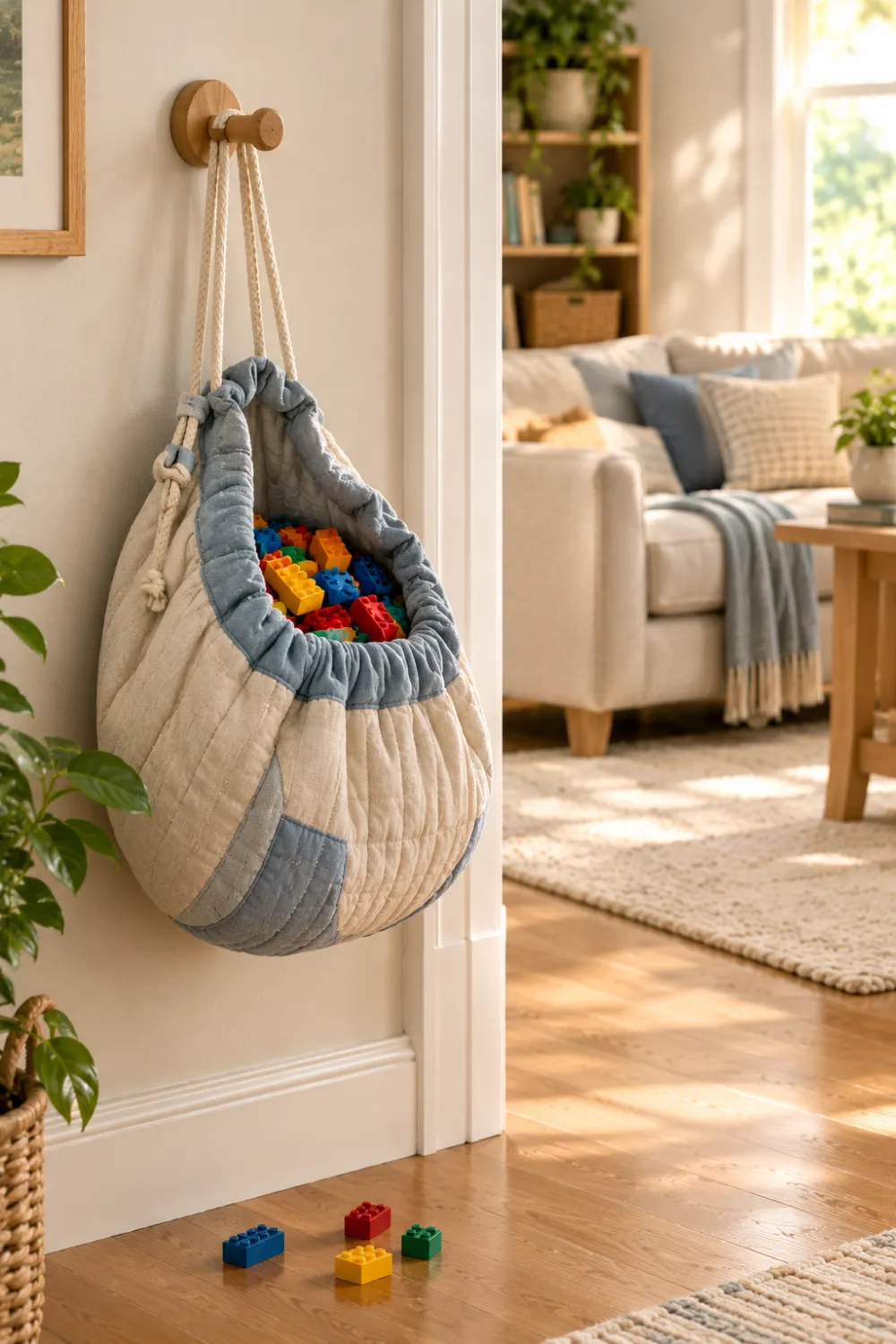
Floor play often means a mat and a mess. A drawstring playmat, where the edges pull up into a bag, lets you sweep Lego or marbles inside in seconds. Hang the bag on a hook behind a door, or tuck it in a basket. It’s a lifesaver for quick tidy-ups before guests, and it’s easy to take along on a trip to Grandma’s house.
Conclusion
The best living room toy storage is the kind your family will actually use. Think about your space, your kids’ ages, and how much tidying energy you have at the end of the day. Start with one idea, give it a week, and tweak as you go. A calmer, more playful living room is closer than you think.