15 Kids Room Shelving Ideas That Keep Clutter Under Control
Toys on the floor, books in a heap, and a stuffed bear wedged behind the bed. Sound familiar? The right kids room shelving ideas can turn that chaos into a space your child actually enjoys tidying. Below, I’ve gathered 15 shelf ideas that work in real homes, from tiny bedrooms to shared rooms. Some are cheap and quick. Others take a weekend. Pick what fits your space.
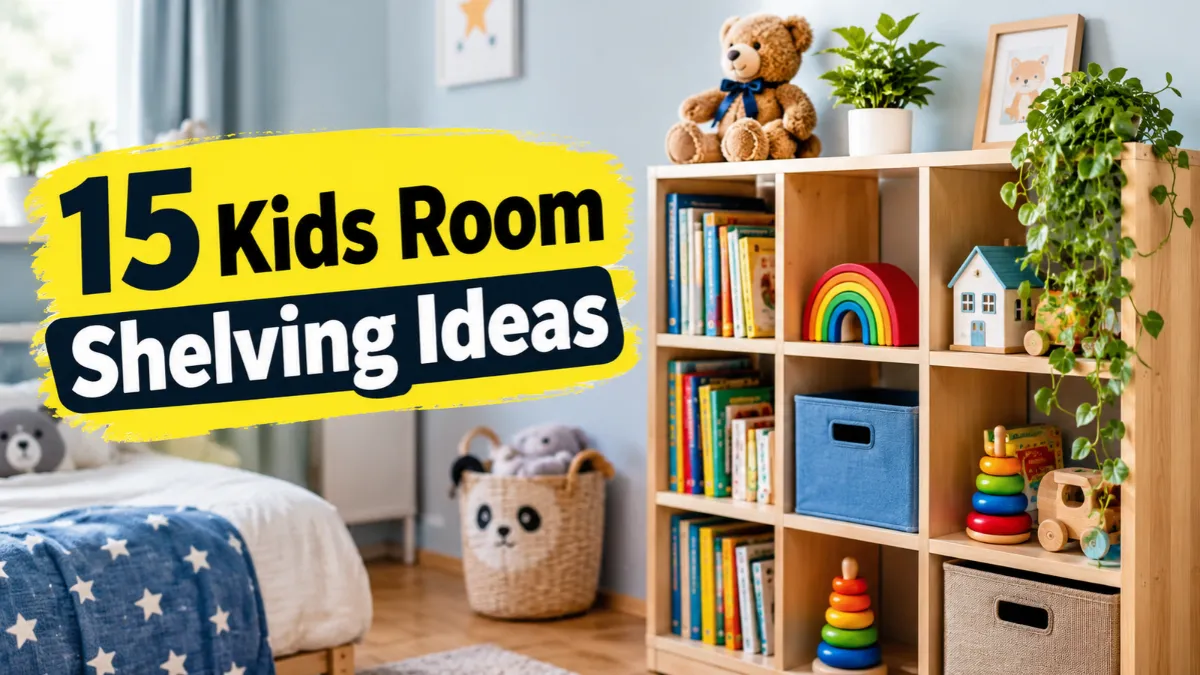
1. Low Open Cubby Shelves
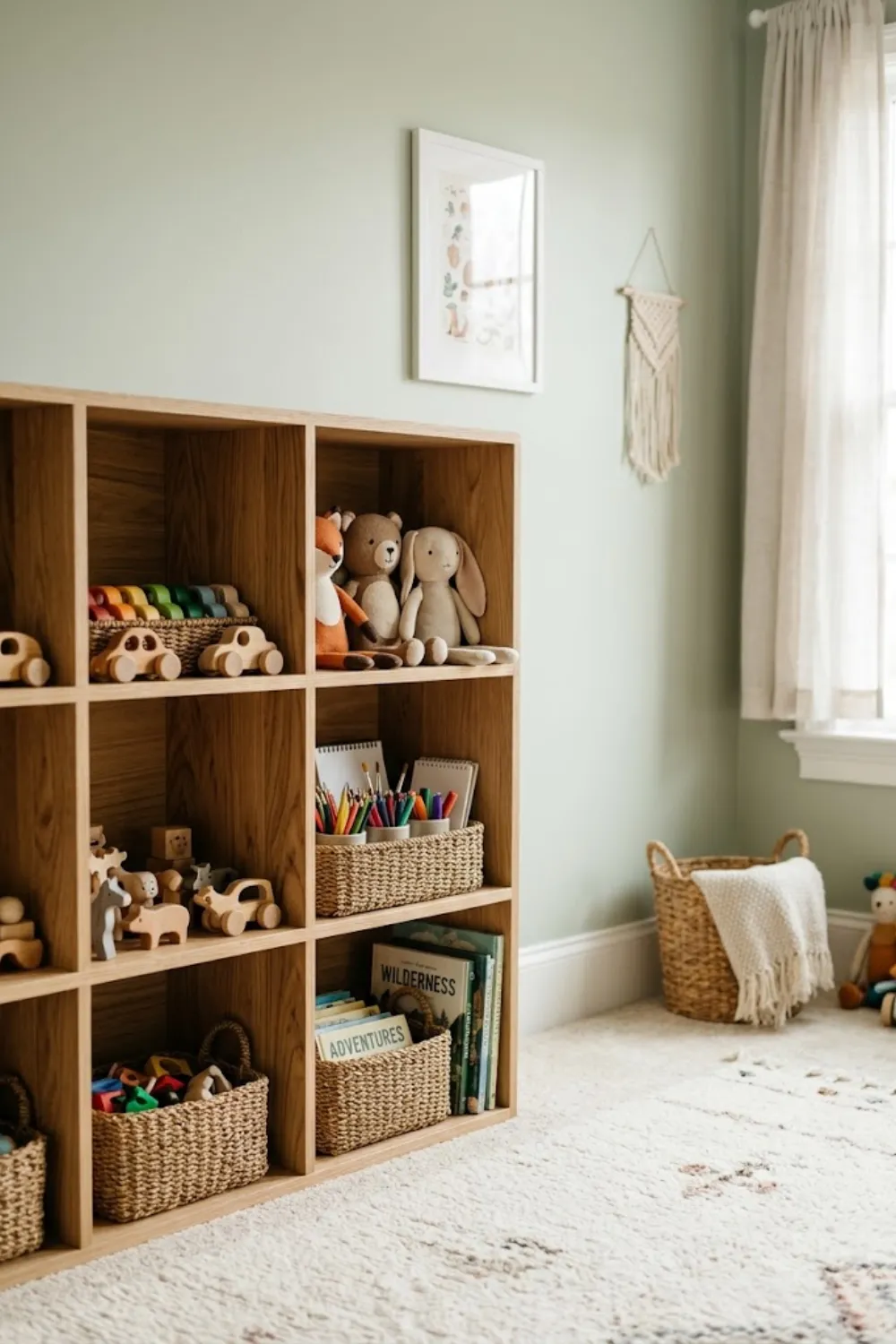
Kids put things away when they can reach them. That’s the whole secret here. A low cubby unit, about waist height on your child, lets them grab a puzzle or return a toy without asking you for help.
Keep one category per cubby: cars in one, dolls in another, art supplies in a third. Skip the lids. Open storage is faster, and speed is what makes a kid actually do it.
2. Front-Facing Book Ledges
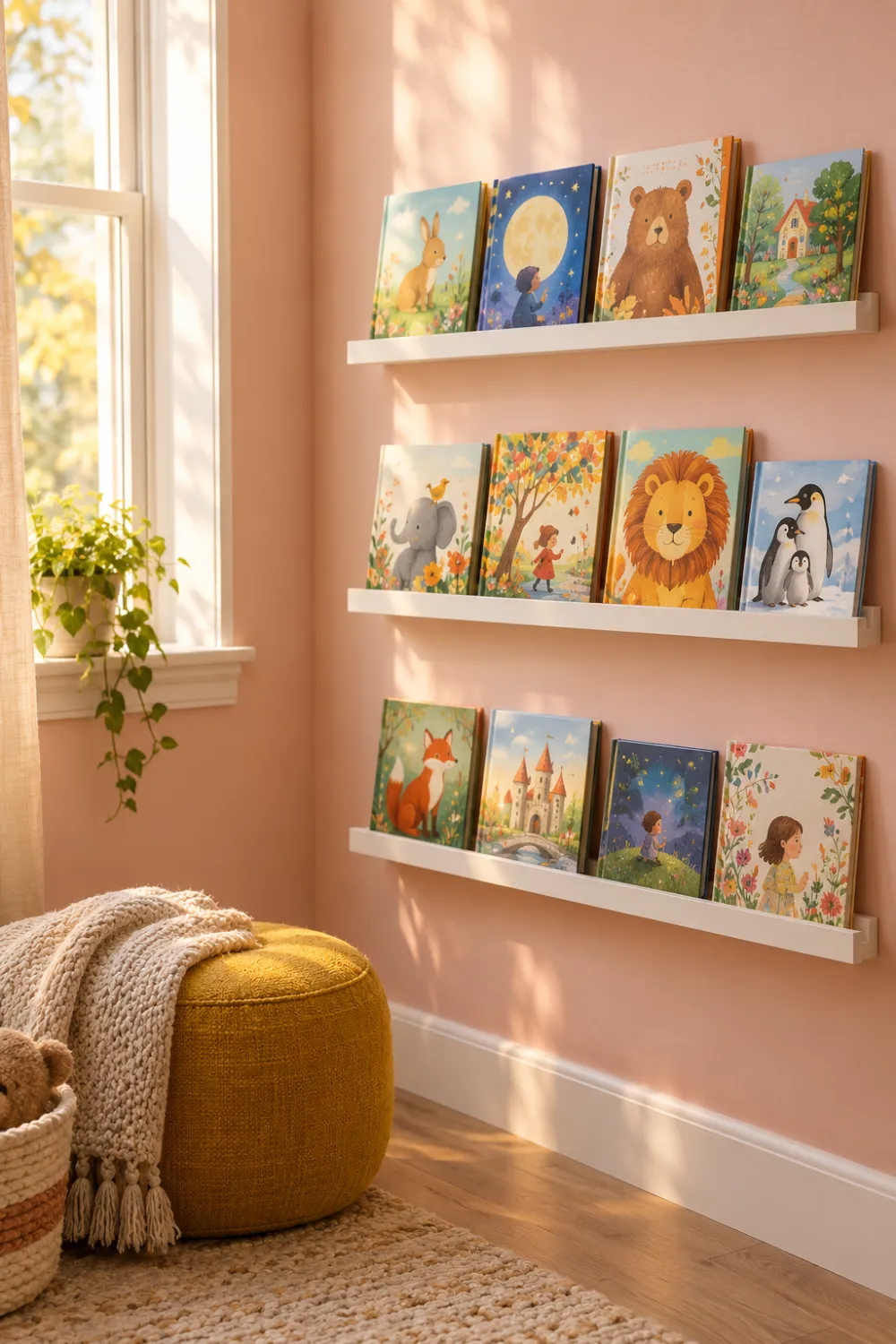
Picture a shelf only two or three inches deep, mounted at a kid’s eye level. Books sit with their covers showing, like tiny bookstore displays.
Children choose books by the cover, not the spine. When they can see the cover, they pick up books more often. Mount two or three ledges in a row near the reading corner. Rotate the books every few weeks so the display always feels fresh.
3. Cube Storage With Fabric Bins
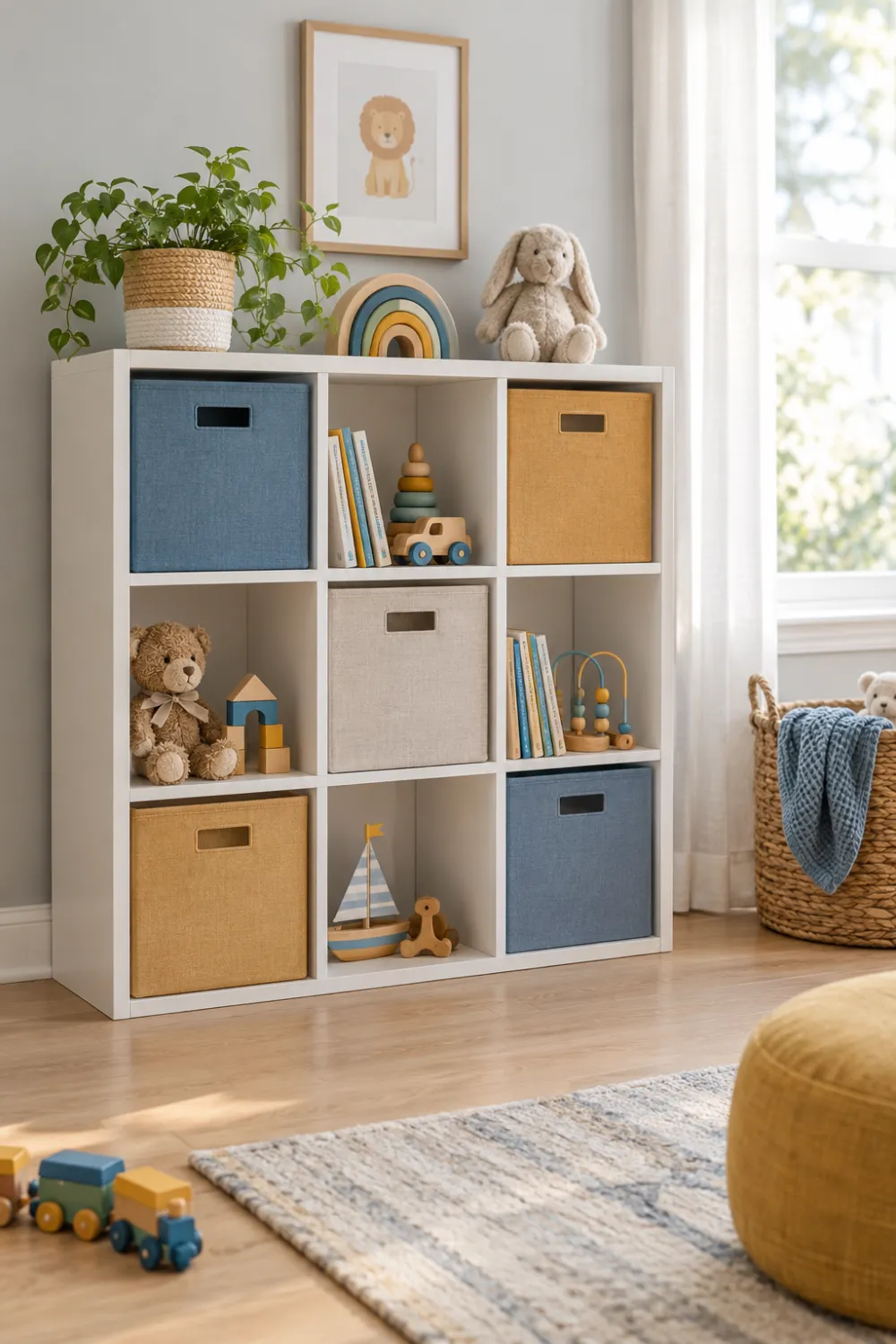
This one is a classic for a reason. A square grid, usually 2×3 or 3×3, gives you a mix of open cubes and hidden bins.
Put the pretty or favorite things in open cubes. Hide the messy stuff in fabric bins, like loose blocks or tangled dress-up pieces. Pick bins in two or three colors rather than ten. The shelf looks calmer, and cleanup becomes a simple “everything in the blue bin” game.
4. Floating Display Shelves
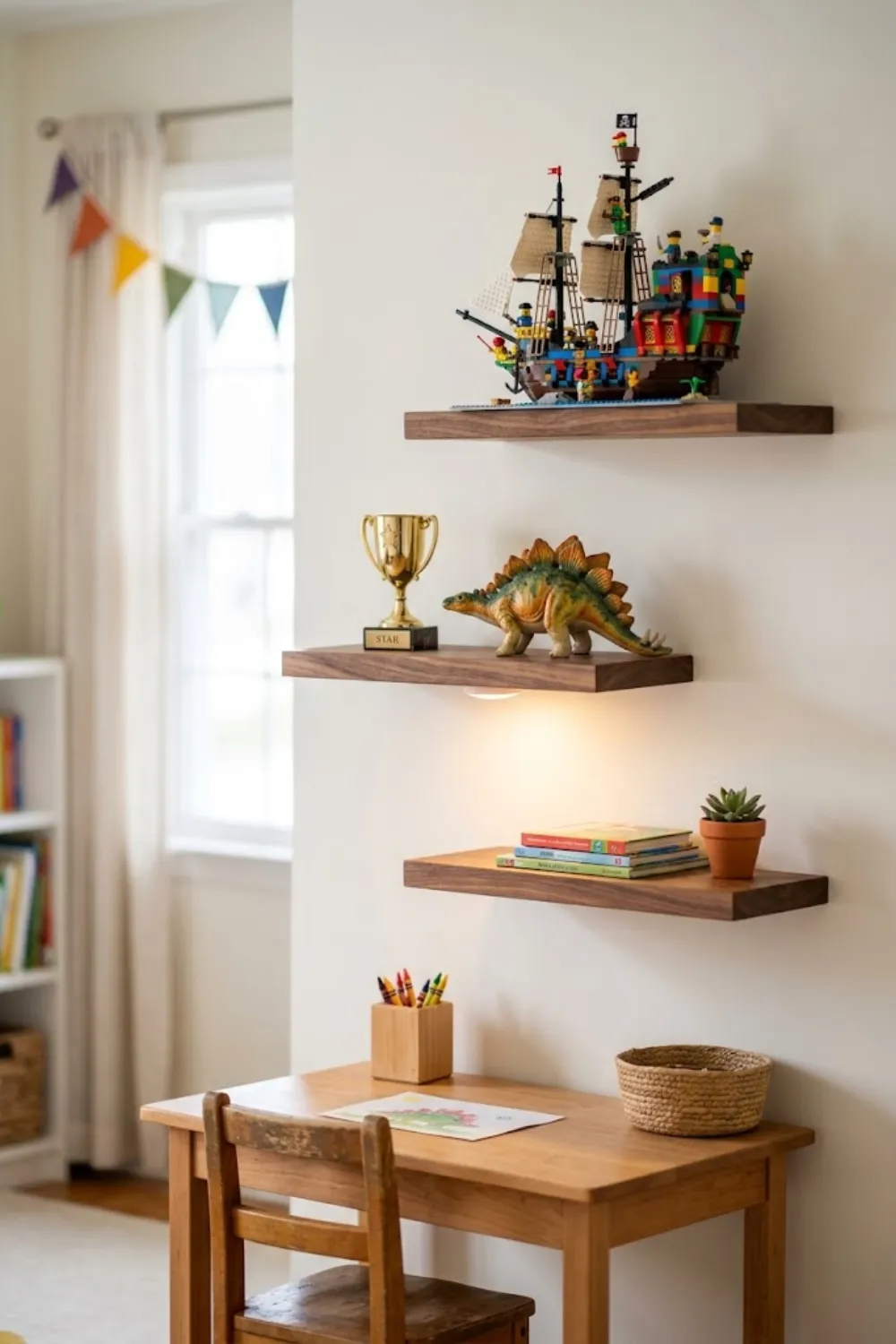
Some things your kid made deserve a spot of honor. A Lego build, a trophy, a clay dinosaur. Floating shelves mounted high enough to be safe from little hands give them that spot.
Set them above the desk or along one wall in a staggered pattern. Add a small puck light underneath, and a simple shelf starts to feel like a mini museum. Your child will notice that their work matters.
5. Headboard Shelf
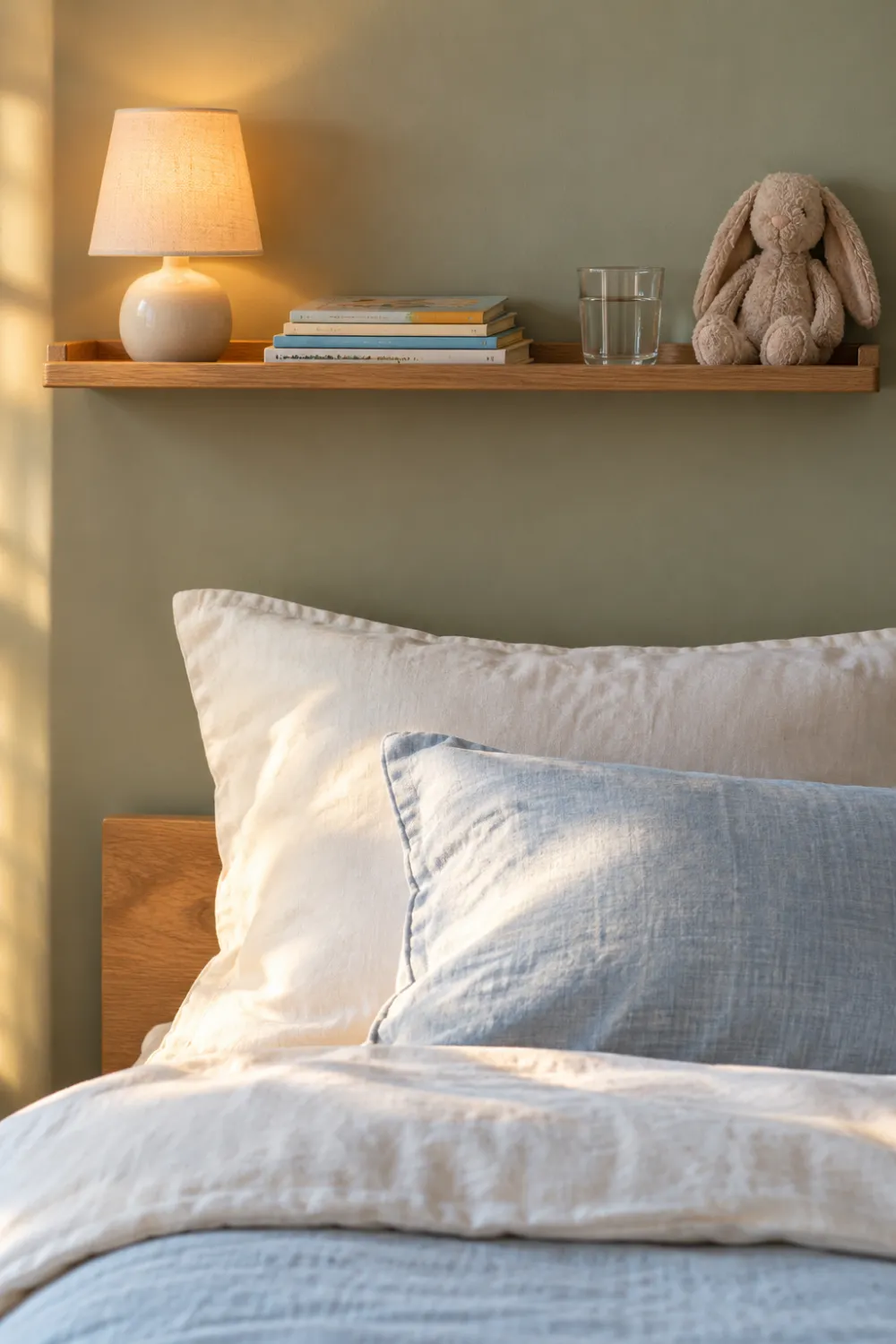
Wasted wall space is common right above the bed. A long, narrow shelf behind the pillow handles it nicely.
It holds a lamp, a glass of water, a few bedtime books, and a favorite stuffed animal. Look for one with a small lip on the front edge so nothing slides off. This works best for kids around six and up, who are past the “everything gets thrown” stage.
6. Bookcase Window Seat
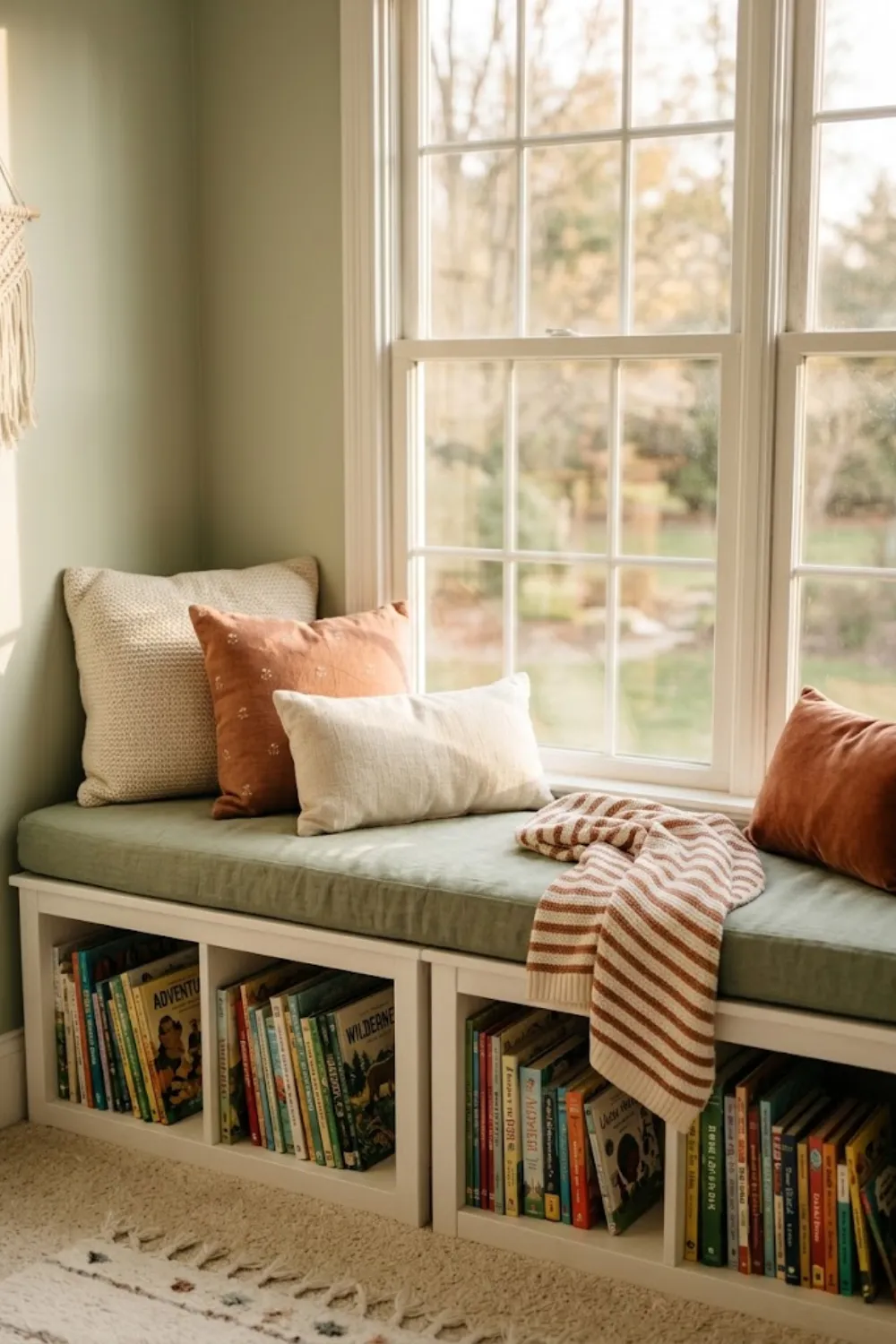
If your child’s room has a window, this idea earns its keep twice. Build or buy low bookcases and place them on either side of the window, then lay a long cushion across the top.
You get a cozy reading nook plus a lot of hidden storage. The cushion height is the part to plan carefully. Keep it around 16 to 18 inches so it’s comfy to sit on. Add a few pillows and you may never see your kid on the couch again.
7. Leaning Ladder Shelf
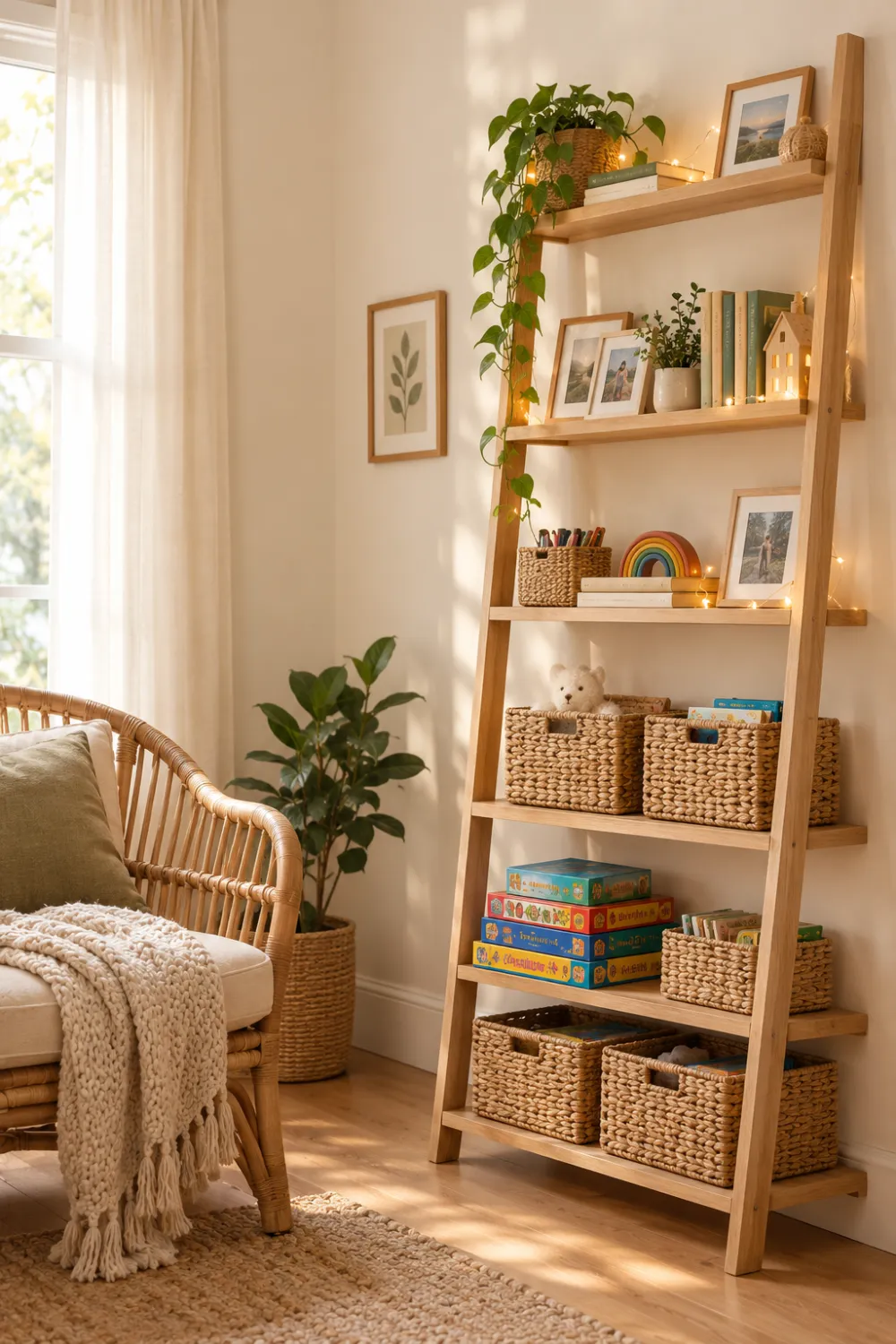
A ladder shelf takes up very little floor space because it climbs the wall instead. The slim steps get narrower toward the top, so it feels light even when it’s full.
It suits small bedrooms really well. Use the wide bottom shelves for heavier things like baskets and board games. Keep the top for plants, small photos, or a string of fairy lights. One safety note: always screw it to the wall, since leaning units can tip.
8. Pegboard Wall With Shelves
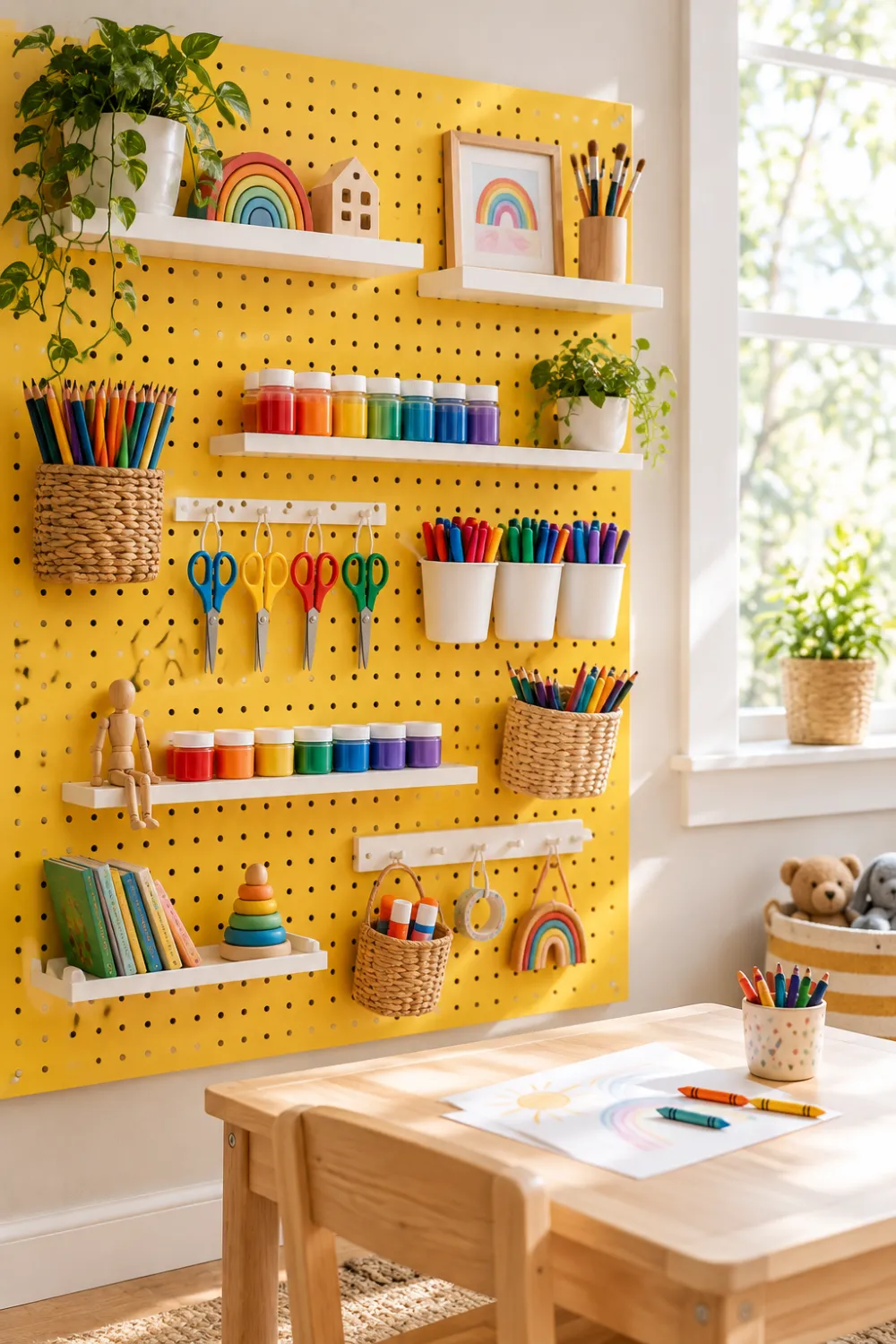
Pegboard is like a wall you can rearrange. Add small shelves, hooks, and baskets, then move them around as your kid’s hobbies change.
It’s great for a craft-loving child. Hang scissors and markers within reach, and put a tiny shelf for paint pots at the right height. Paint the board a bright color first. A plain gray board feels like a garage, but a yellow or teal one feels like part of the room.
9. Bunk Bed Shelves
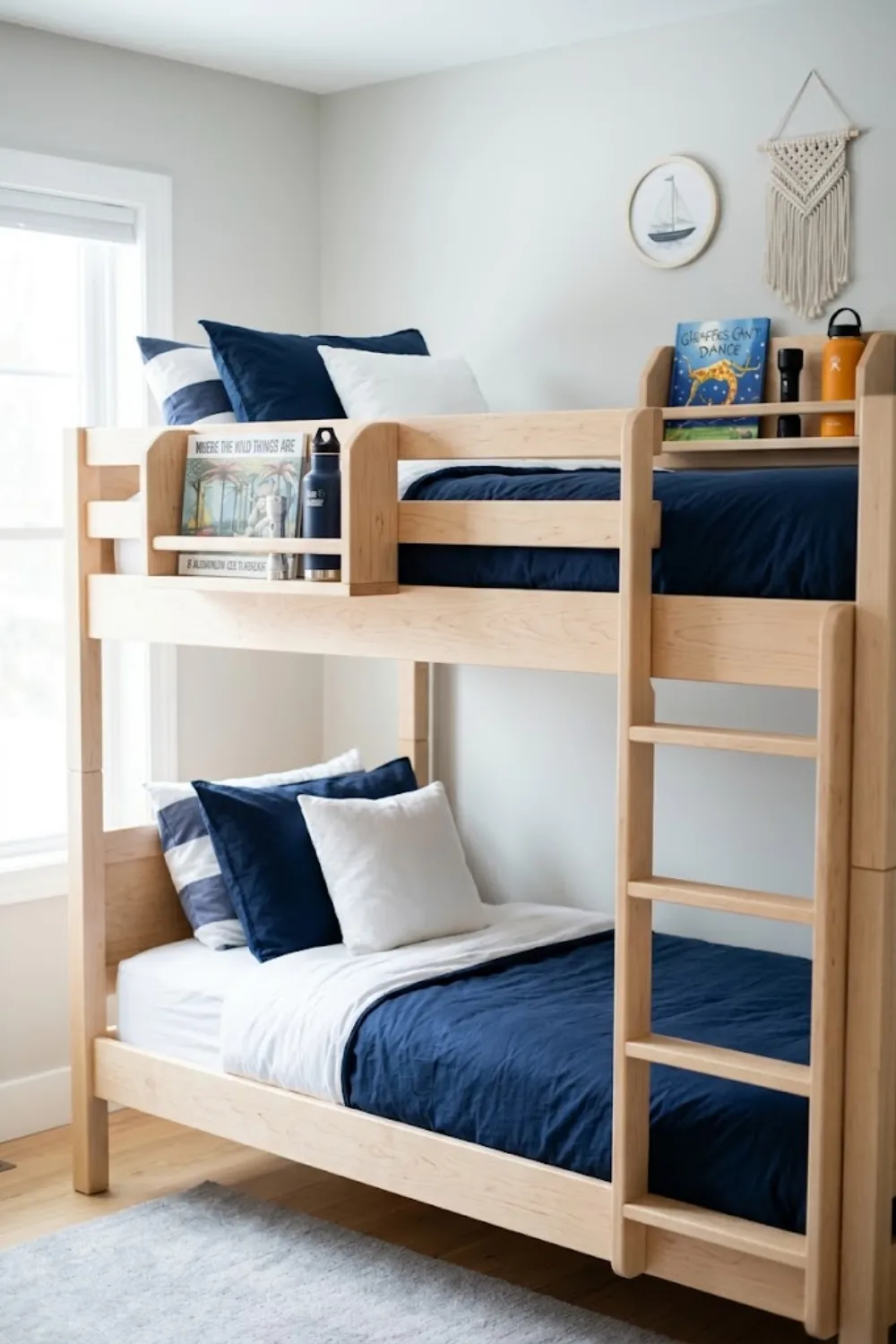
Bunk beds eat up floor space less than two beds, but they give kids almost nowhere to put things. Clip-on or built-in shelves along the bed frame fix that.
Each child gets a small shelf for a book, a flashlight, and maybe a water bottle. Label them, or give each kid a color, to avoid arguments. For the top bunk, pick a shelf with a back panel so little items can’t drop through onto the sleeper below.
10. Rolling Shelf Cart
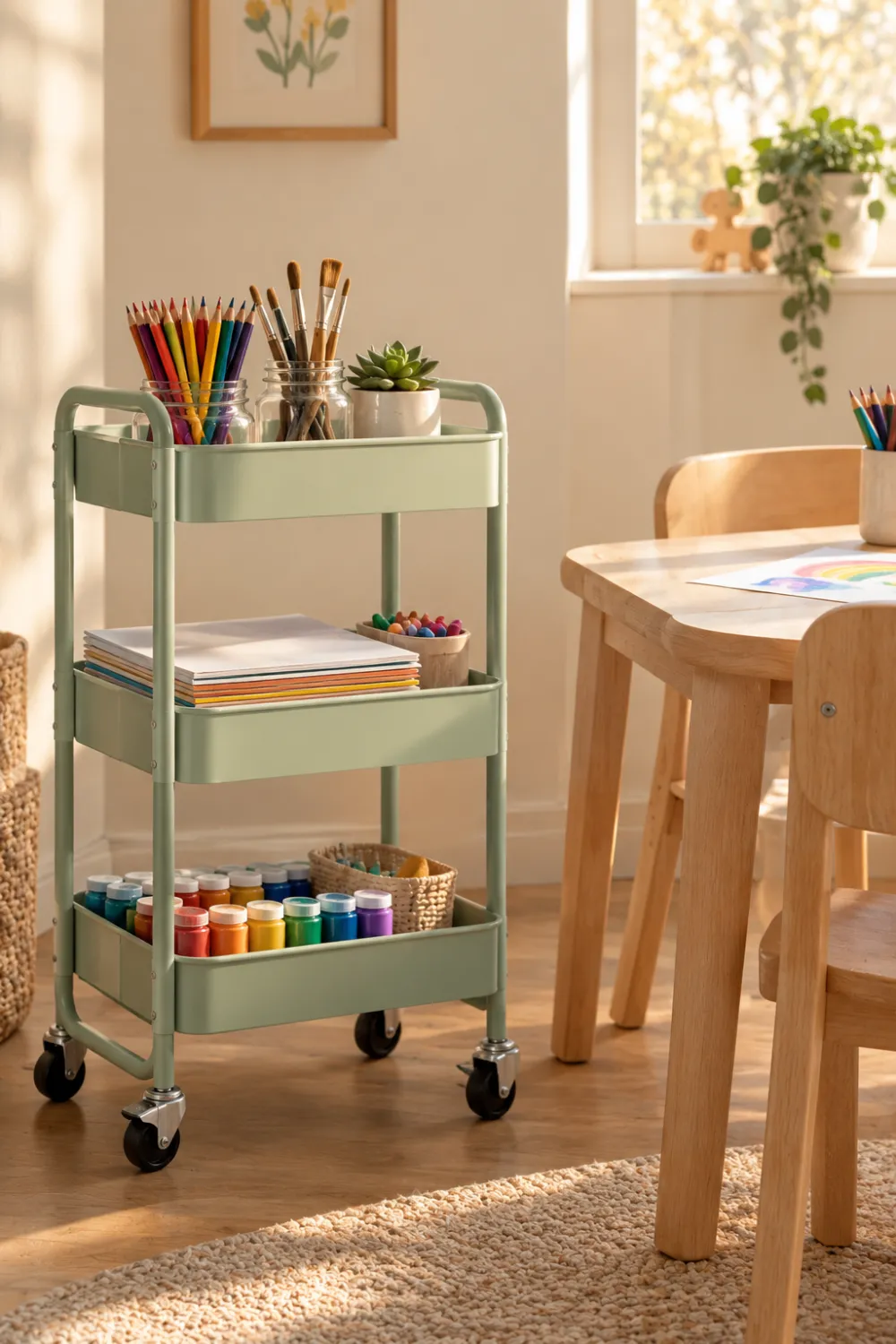
Not every shelf needs to stay put. A slim rolling cart with three tiers can follow your child from the art table to the play rug and back.
It’s a smart pick for rented homes, since there’s nothing to drill. Use it as a craft station, a mini library, or a snack-and-drawing cart. When company comes over, roll it into the closet. Pick one with locking wheels so it stays still when it should.
11. Closet Shelf Makeover
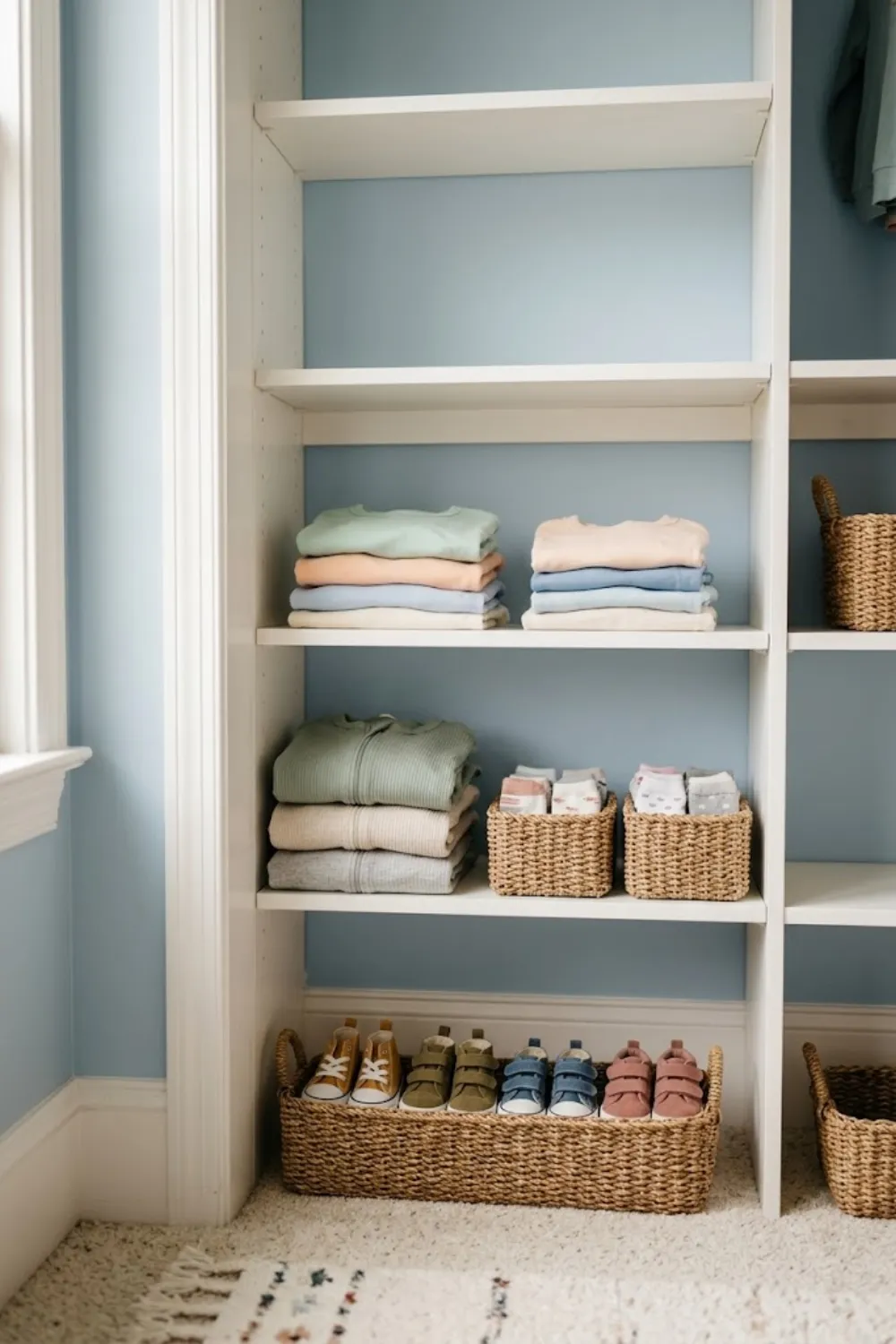
Most kids’ closets have one high shelf and one rod, which is great for adults and useless for children. Add a few adjustable shelves at a lower height, and suddenly the closet works for your kid.
Stack folded shirts on one shelf, pajamas on another, and put shoes in bins at the bottom. A child who can reach their own clothes can start dressing themselves. That’s a bigger win than it sounds on a busy school morning.
12. Corner Shelves
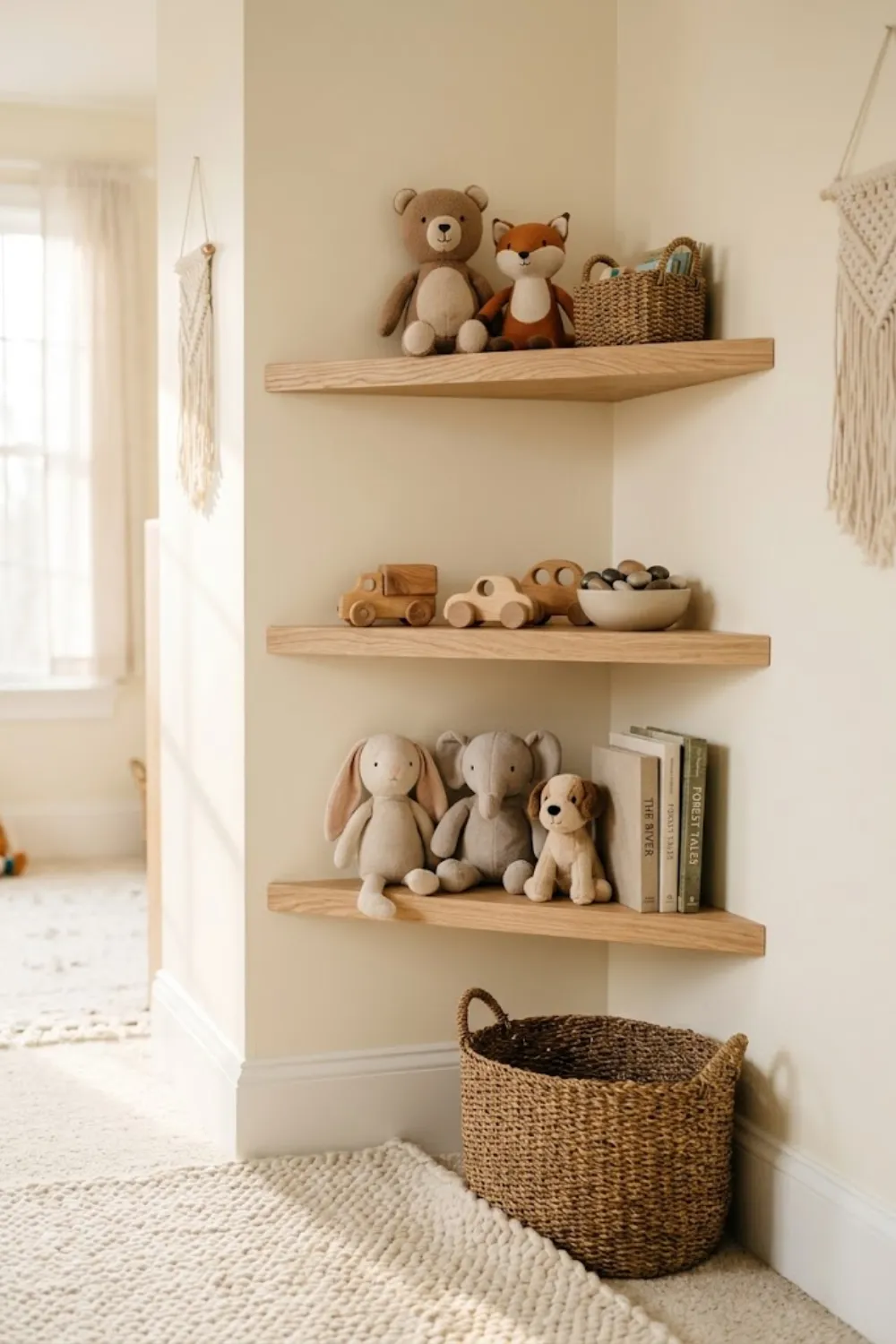
Corners are the most ignored part of any room. A set of triangular or L-shaped shelves tucks right into them and gives you vertical storage without stealing wall space.
Use them for small, light things like plush toys, little cars, or a collection of rocks. Keep the heavier items lower down. Because corner shelves stay out of the walking path, they’re especially nice in narrow rooms where every inch counts.
13. Picture-Labeled Shelves
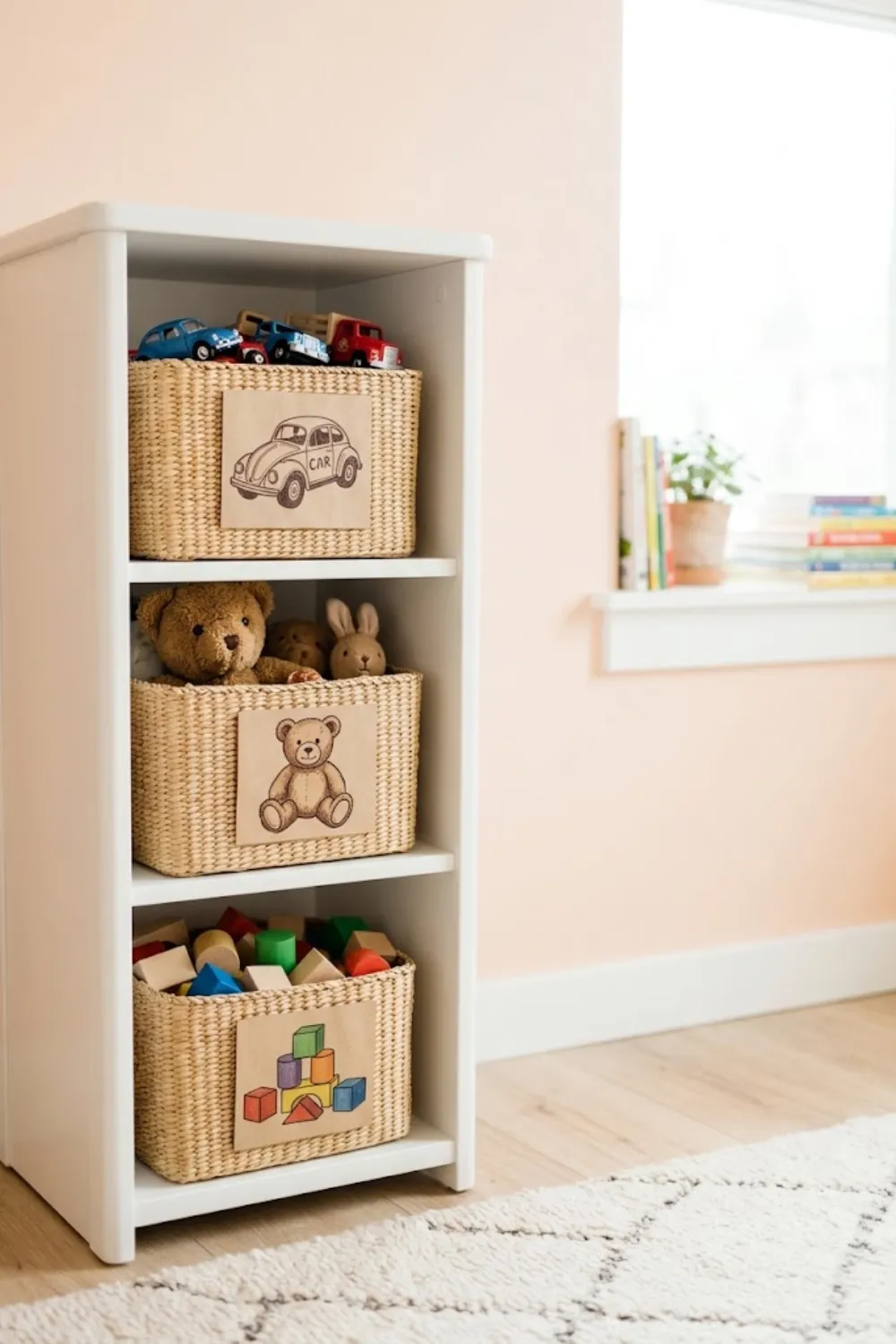
For a toddler or preschooler who can’t read yet, words won’t help. Pictures will. Stick a photo or simple drawing of the toy category on the front of each shelf or bin.
A little car picture means cars go here. A teddy bear means stuffies. Kids learn the system in a day or two and often enjoy being “in charge” of cleanup. When your child learns to read, swap in word labels and keep the picture beside them.
14. Desk Hutch Shelf
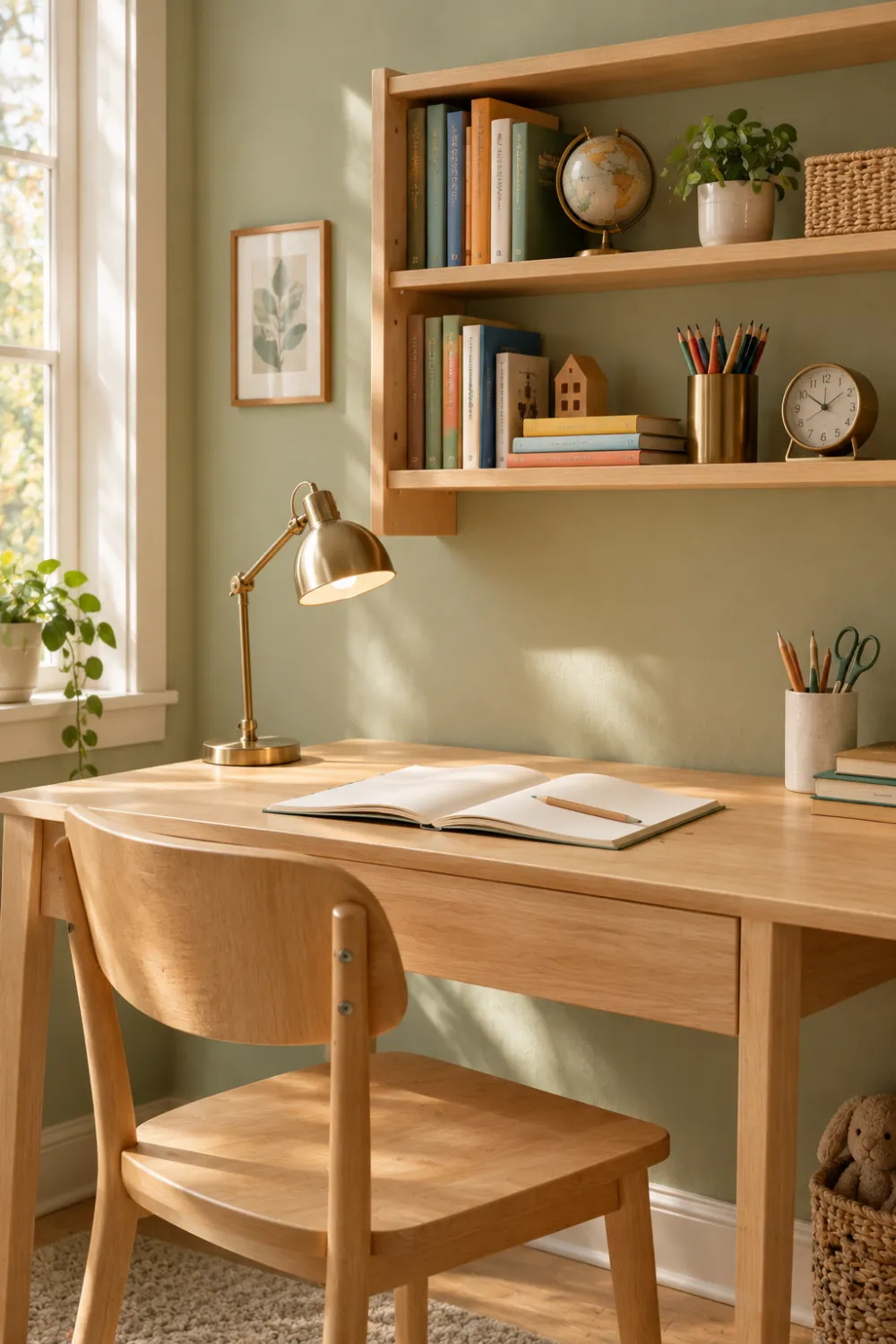
If there’s a study desk in the room, the wall behind it is prime shelving territory. A hutch, or a simple pair of shelves above the desk, keeps supplies close while the desk surface stays clear.
Put textbooks and a dictionary on one shelf, then pencils, a lamp, and a small clock on another. Homework gets easier when everything has a place. And with the desktop clear, there’s room to actually spread out and work.
15. Adjustable Growing-Up Shelves
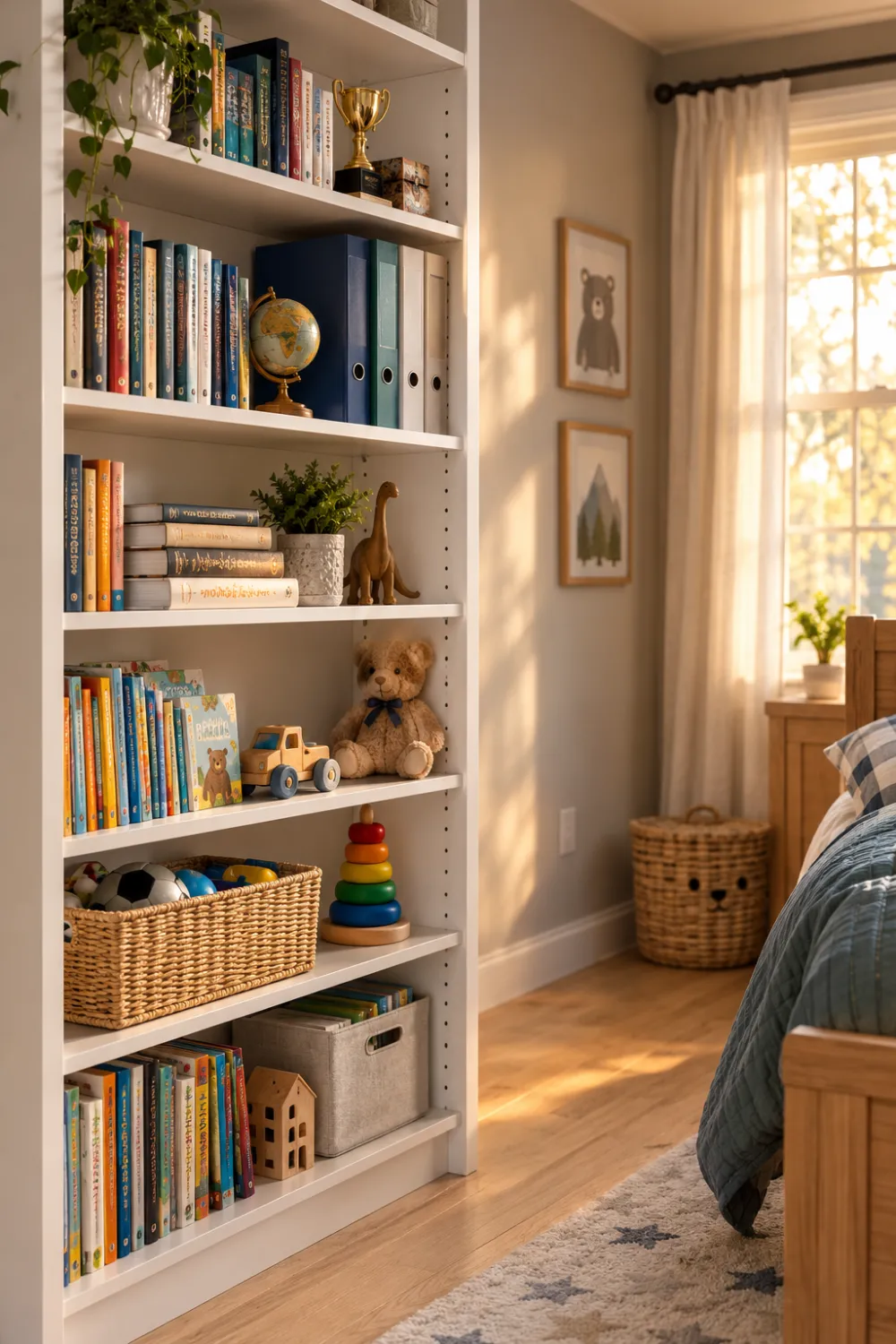
Kids change fast. A shelf that suits a three-year-old can feel babyish at eight. Adjustable shelving, with holes or tracks that let you move each board up or down, solves that.
Start with low boards for toys and picture books. Later, shift them for novels, trophies, and school binders. It costs a bit more at first, but you’ll skip buying new furniture every few years. That makes it one of the smartest picks on this list.
Conclusion
The best kids room shelving ideas are the ones your child can actually use. Start with how they play and read, then pick shelves at their height. Mix open shelves for favorites with bins for the mess. Anchor everything to the wall, and don’t worry about perfection. A room that works for your kid will always look pretty good too.