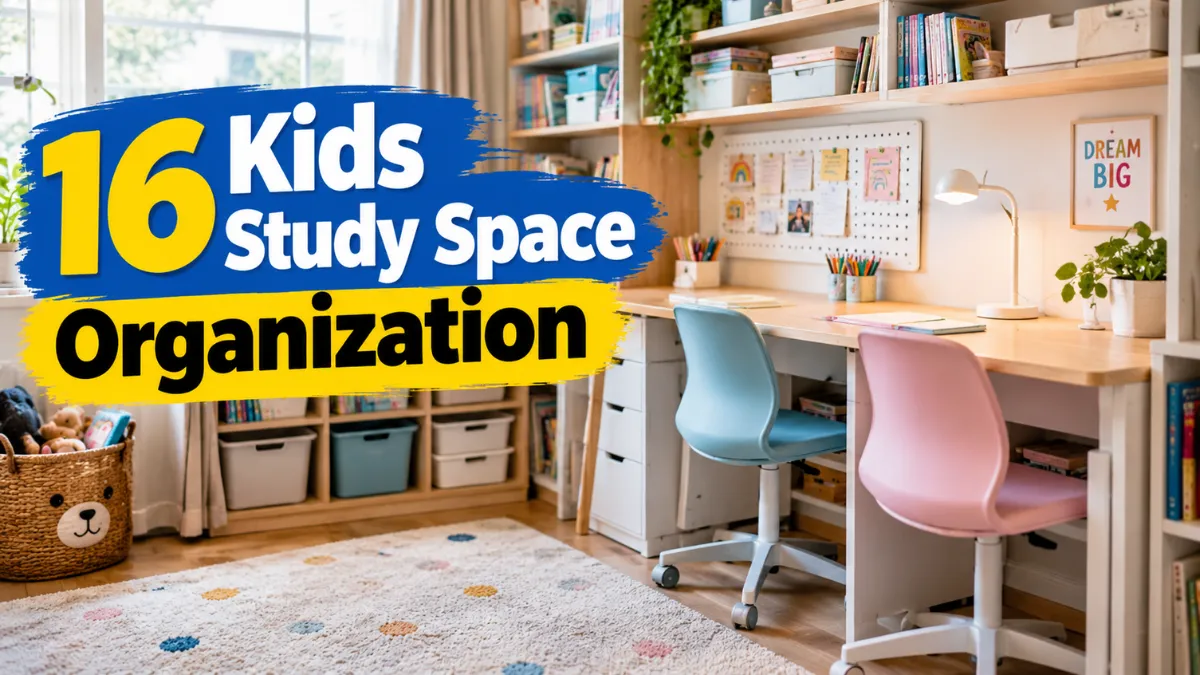
16 Kids Study Space Organization Ideas That Actually Work
Homework time shouldn’t start with a ten-minute hunt for a pencil. A little kids study space organization goes a long way, even in a tiny corner of the bedroom. These 16 ideas are simple, budget-friendly, and easy for kids to maintain. From pegboards to rolling carts, you’ll find something that fits your child, your space, and your everyday routine, so studying feels calmer.
1. Pegboard Command Wall
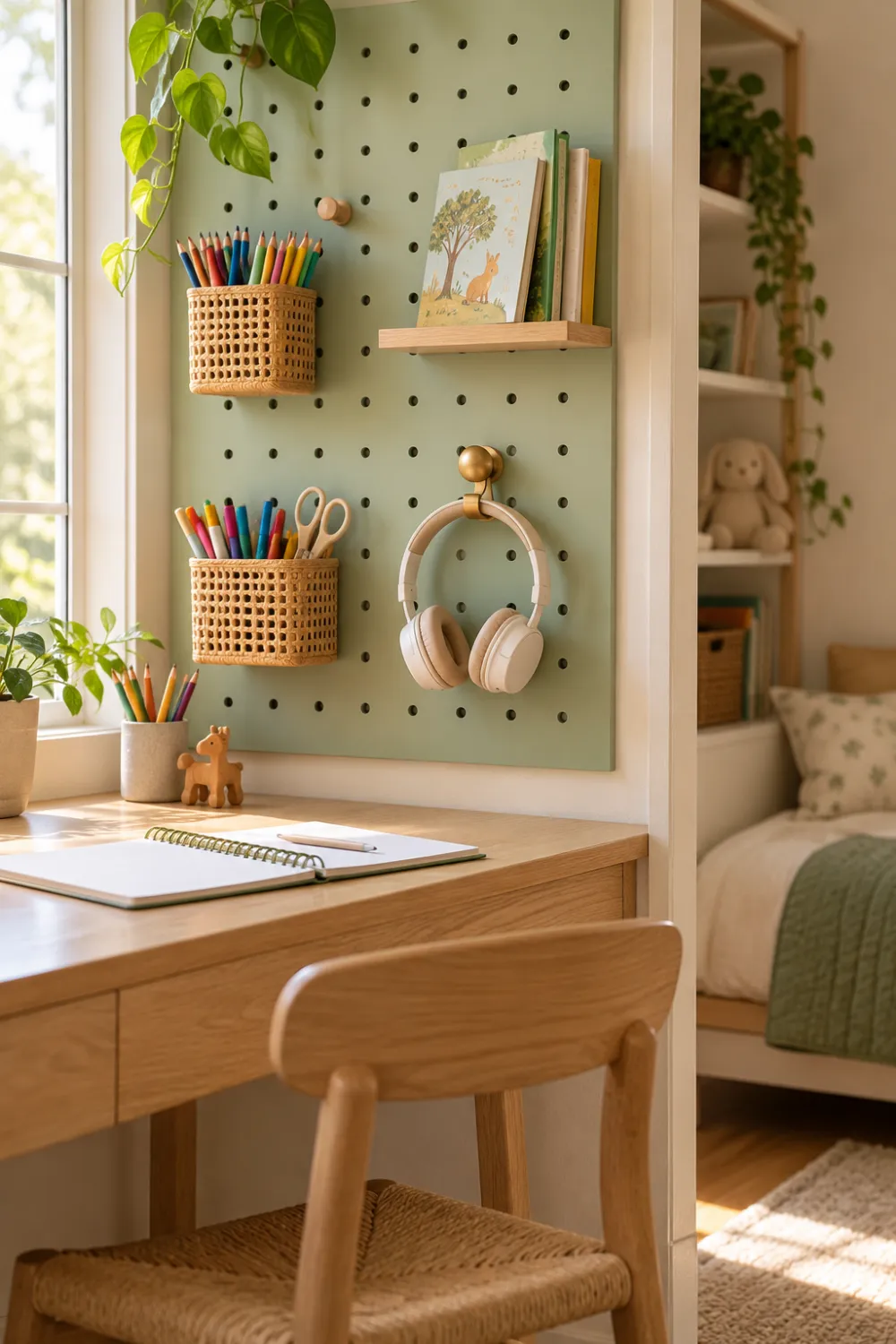
A pegboard turns blank wall space into storage. Hang small baskets for markers, hooks for headphones, and a little shelf for a dictionary. The best part is that you can move everything around as your child grows. Let your kid pick where each item goes. They’ll remember the spots, and putting things back becomes much easier.
2. Rolling Supply Cart
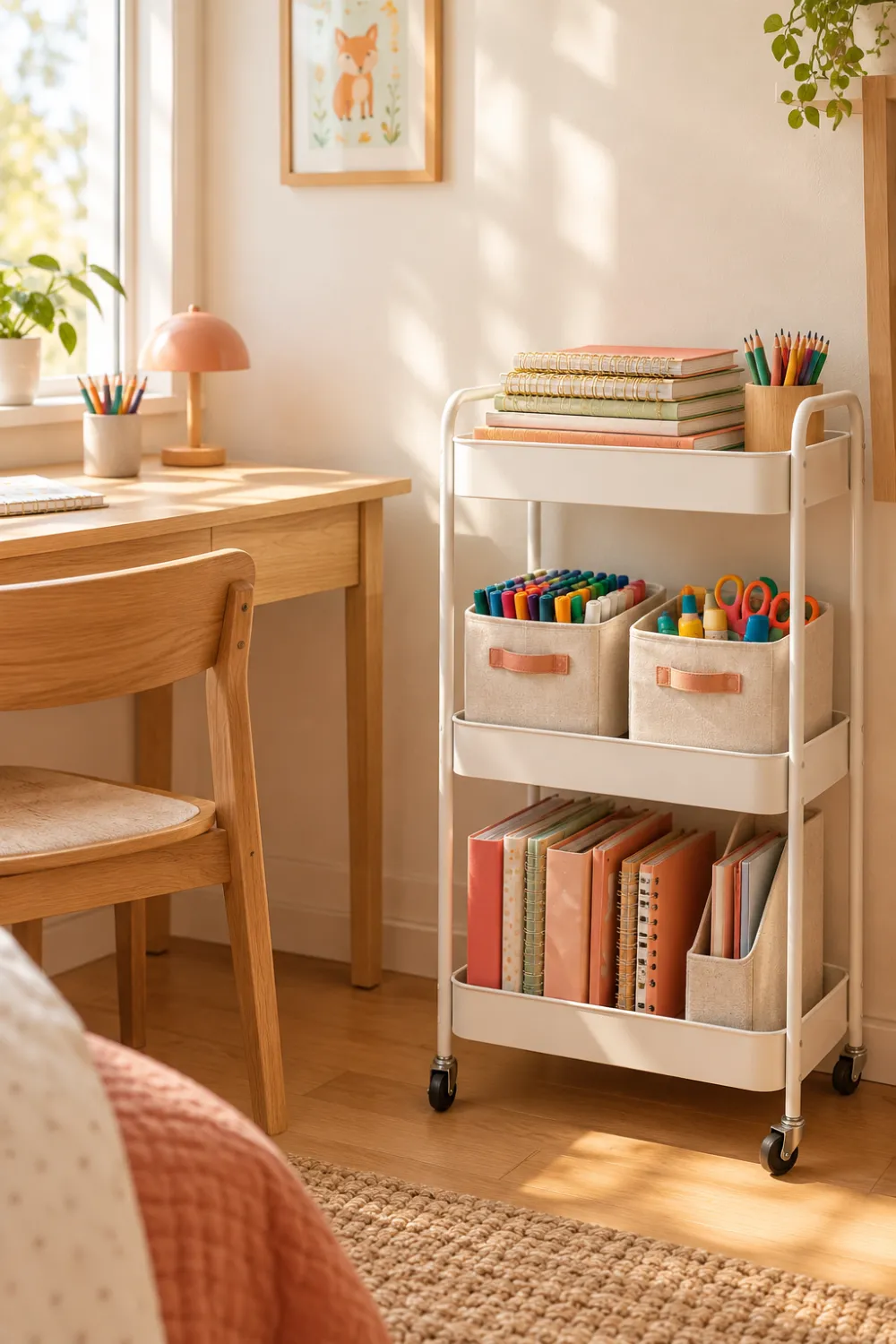
A three-tier rolling cart is a lifesaver in small rooms. Put paper and notebooks on top, art supplies in the middle, and spare folders at the bottom. Roll it beside the desk during homework, then tuck it into a corner afterward. Label each tier with a picture or word so younger kids know exactly where things belong.
3. Drawer Dividers
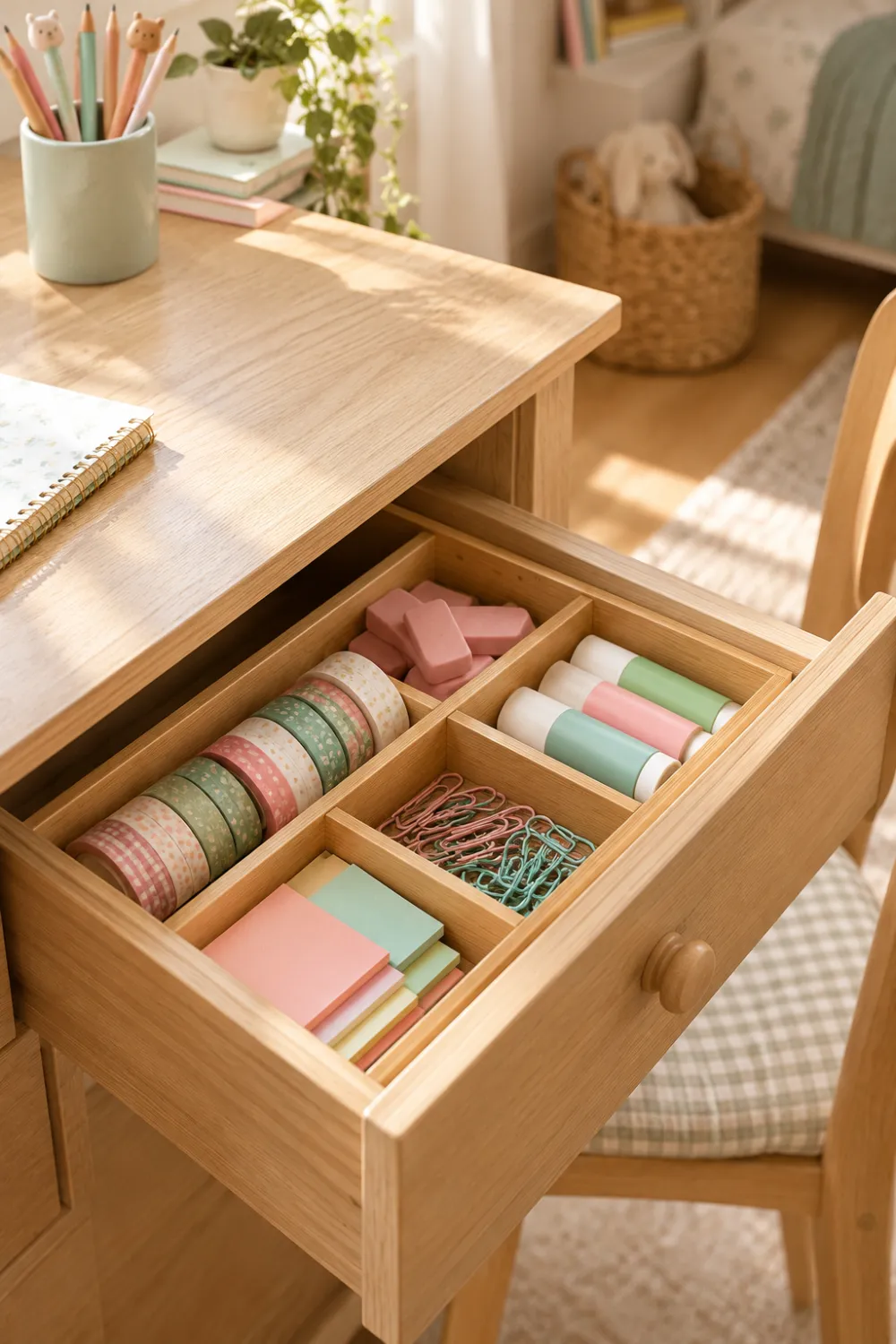
Desk drawers become chaos fast. Cheap plastic trays or even cut-up cardboard boxes can fix that. Give tape, erasers, glue sticks, and sticky notes their own little compartments. When every item has a home, kids stop dumping everything out just to find one thing. It’s a quick fix that takes about ten minutes.
4. Jar Pencil Station
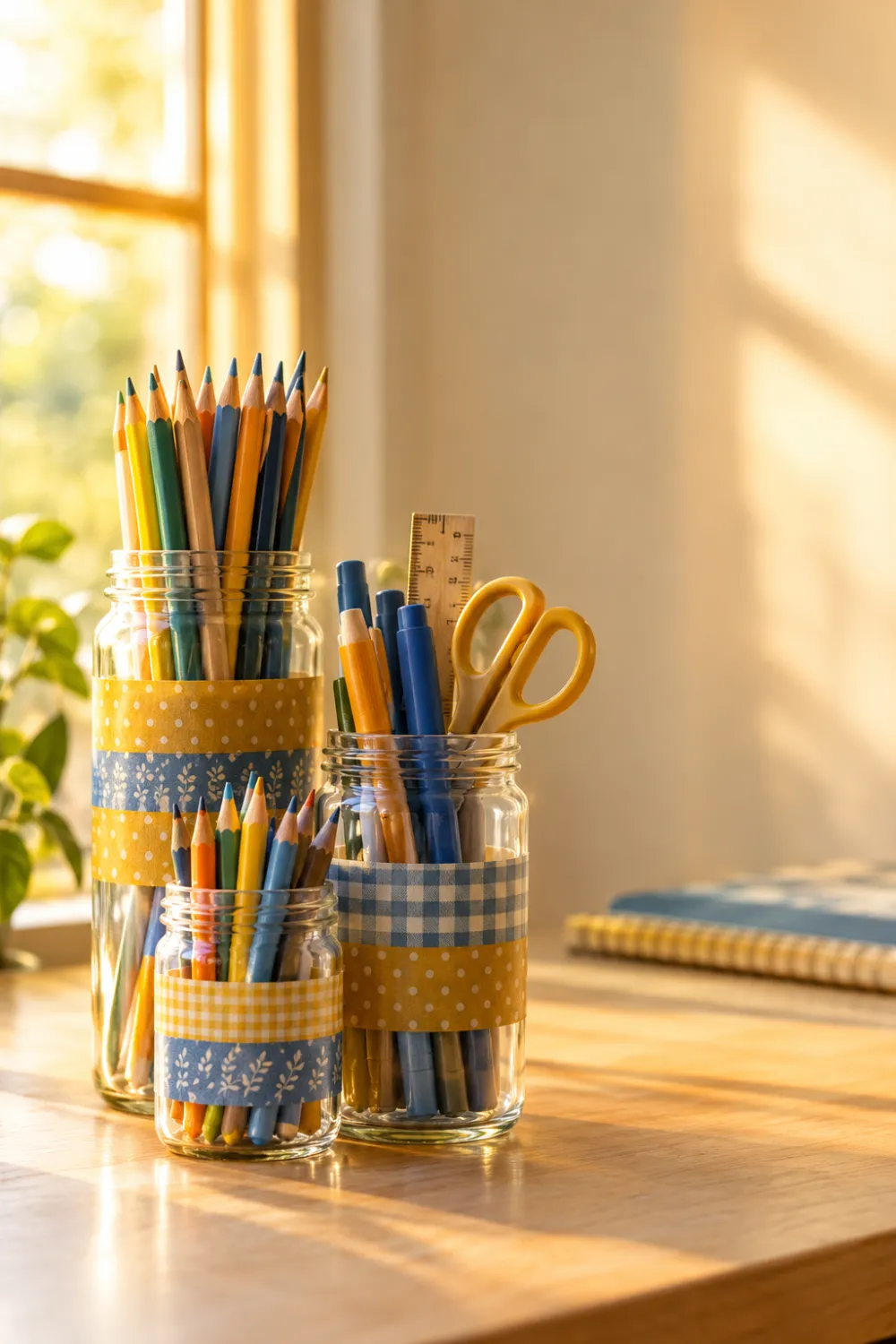
Skip the fancy organizer and use clean jars or tin cans. Sort pencils in one, pens in another, and scissors and rulers in a third. Kids love decorating them with washi tape or paint, which makes the station feel like theirs. Keep the jars at the front of the desk so a pencil is always within reach.
5. Floating Shelf Above the Desk

When the desk is small, go up. One floating shelf holds reference books, a globe, or a plant without eating into work space. Keep the heavier items on the lower shelf and lighter things higher. Mount it at a height your child can reach without stretching. That way it stays useful and doesn’t turn into a dust collector.
6. Portable Study Caddy
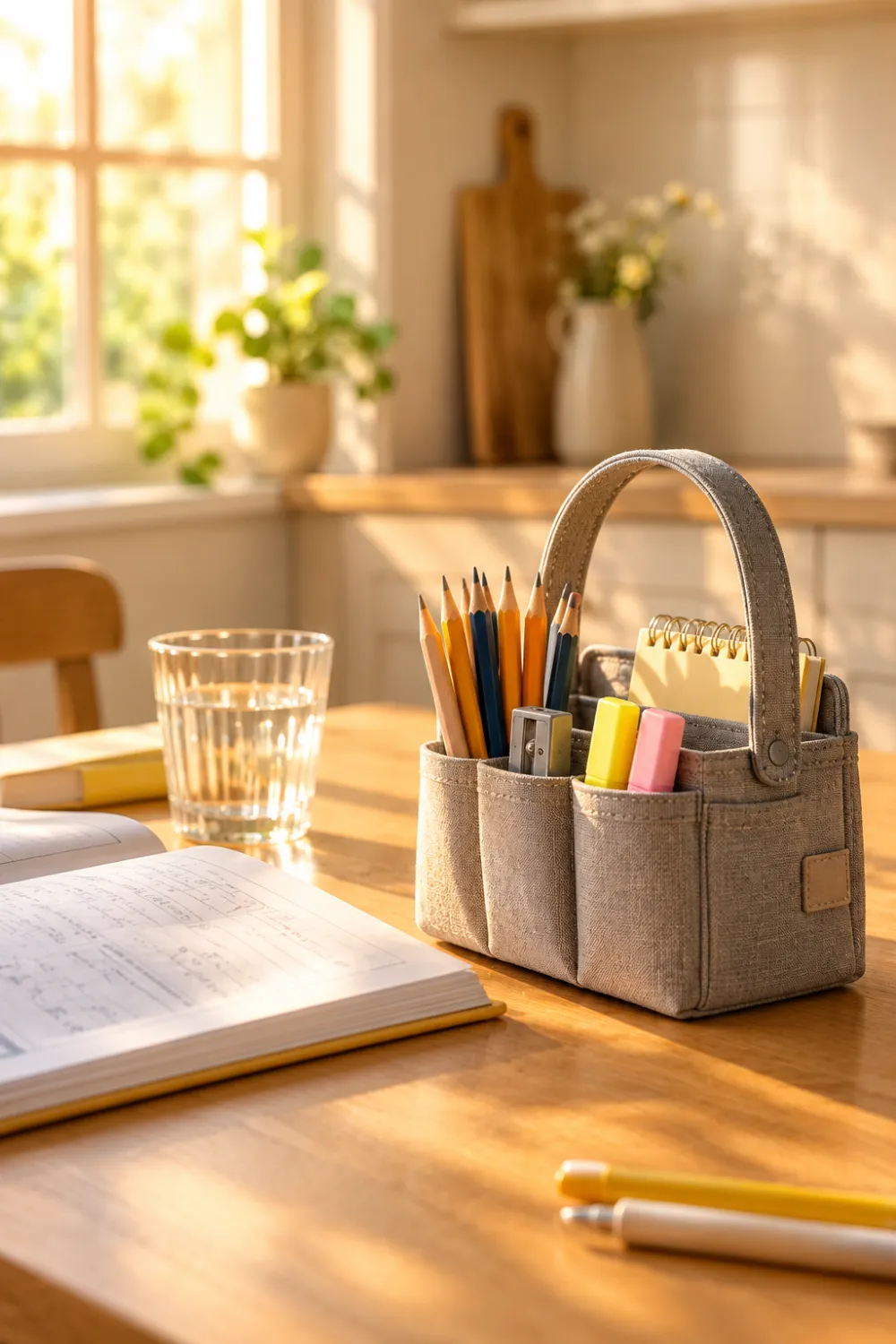
Not every child studies at a desk. Some prefer the kitchen table or the living room floor. A handled caddy, like the ones made for cleaning supplies, holds pencils, a pencil sharpener, highlighters, and a small notepad. Your child grabs it, studies anywhere, and carries it back when done. It’s perfect for homes without a dedicated study room.
7. Color-Coded Subject Bins
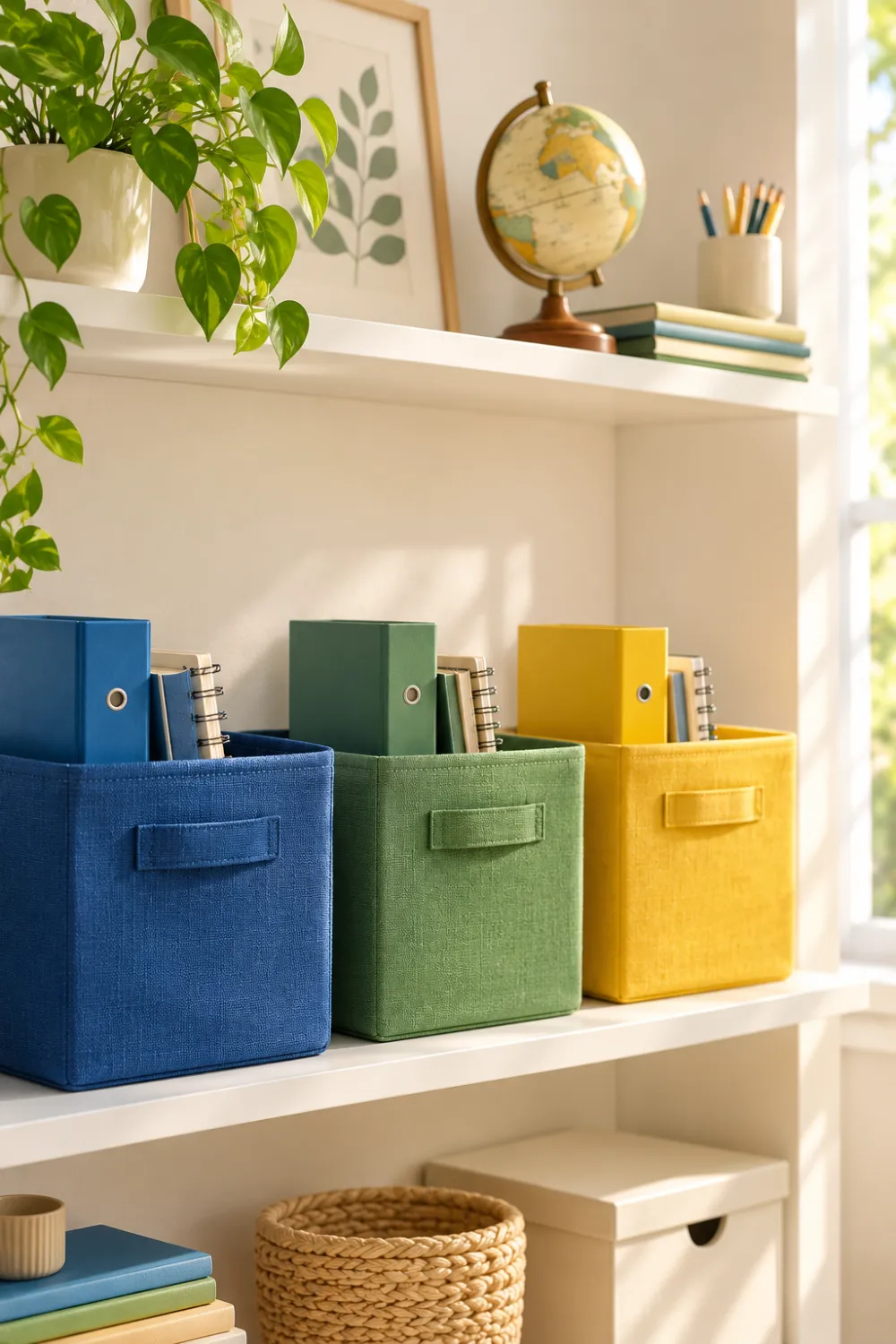
Give each subject its own color. Math gets blue, science gets green, and reading gets yellow. Match the bin, the folder, and the notebook cover to that color. In the morning, your child can pack their bag in seconds just by grabbing what’s in today’s colors. This works especially well for kids who lose track of papers.
8. Weekly Planner Wall
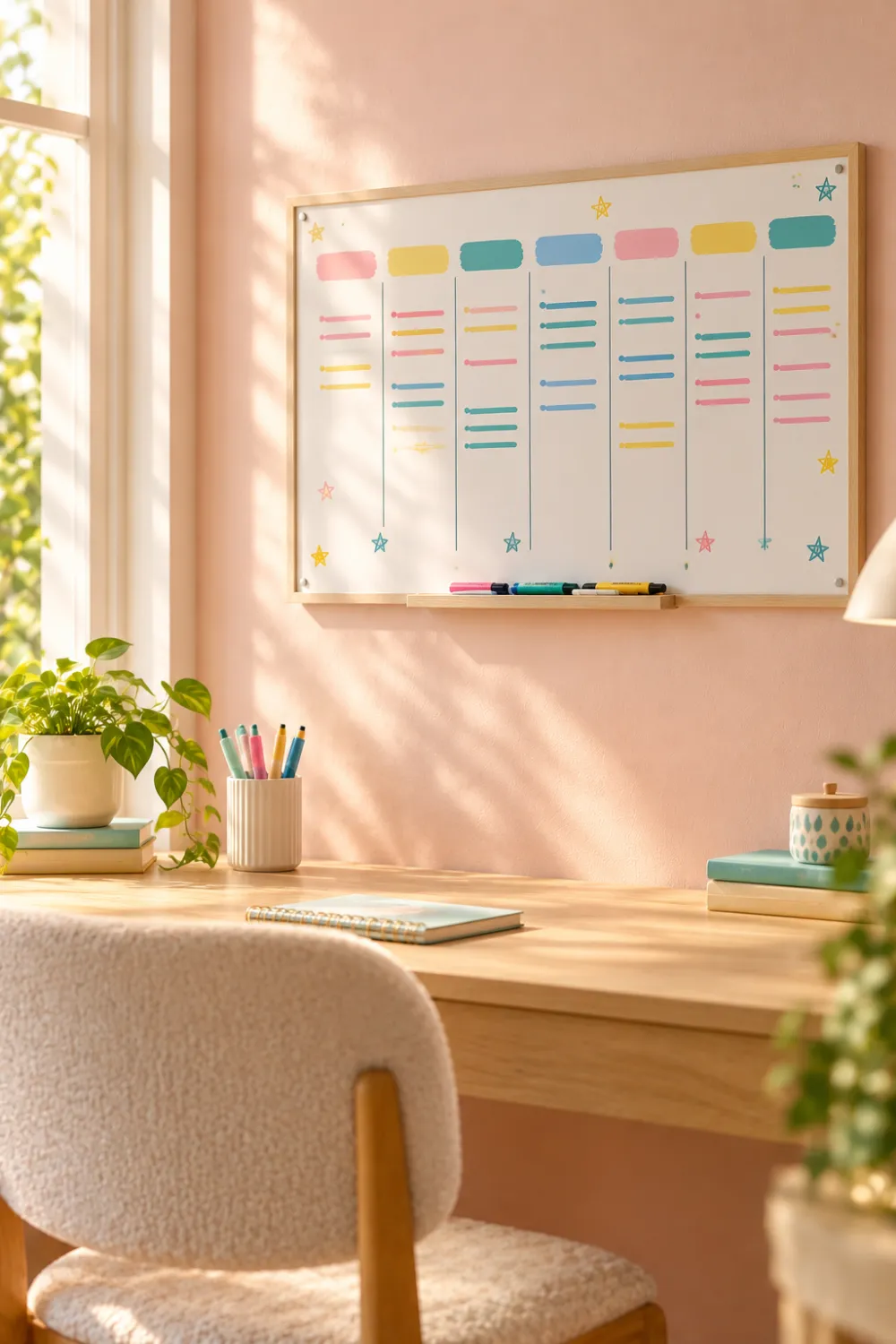
A large dry-erase calendar or a simple sheet of paper taped to the wall helps kids see their week. Write down tests, project due dates, and activities. Use a different marker color for each child if you have more than one. Seeing the week at a glance means fewer last-minute panics and fewer “I forgot!” moments.
9. Magnetic Board for Papers
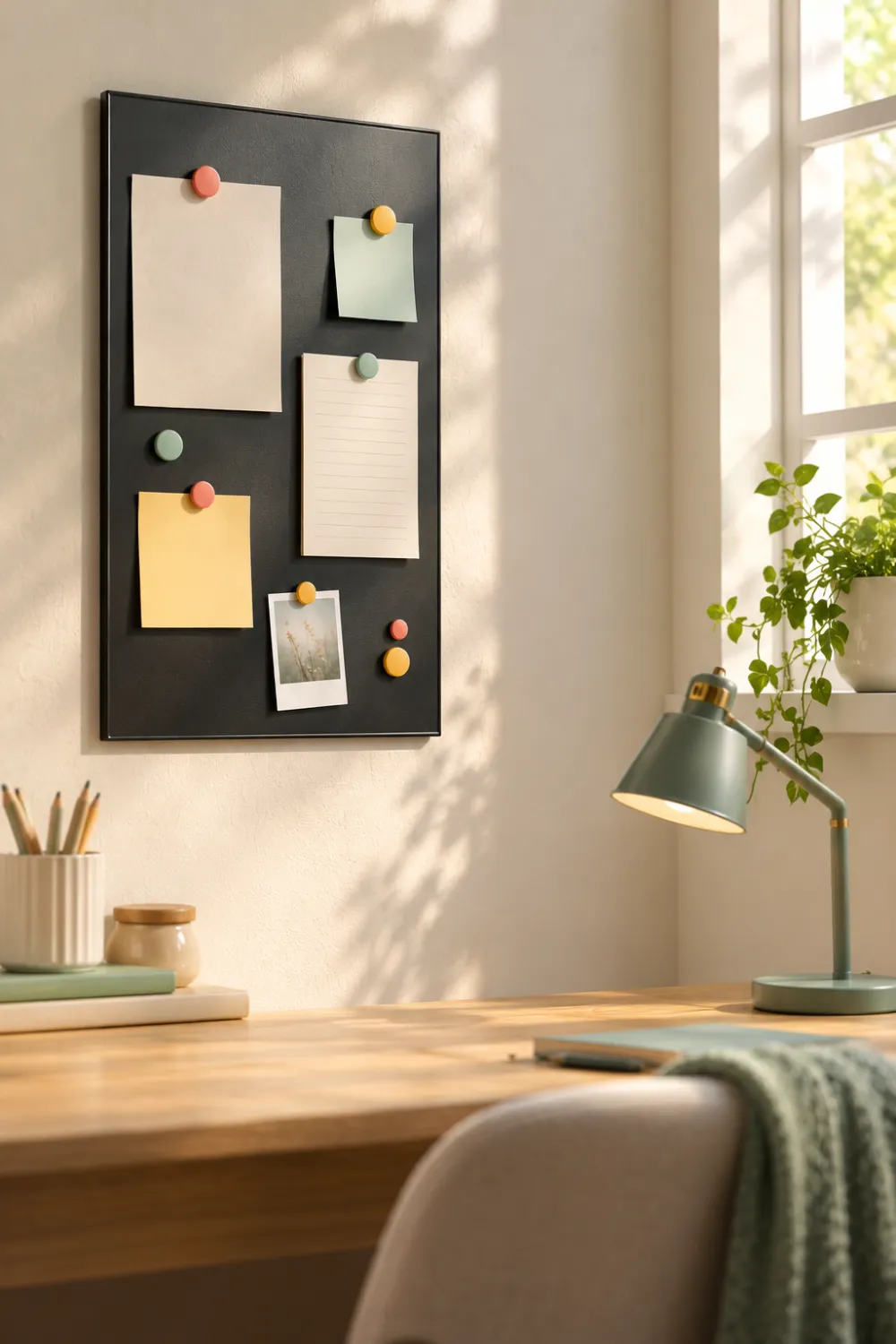
Permission slips, spelling lists, and school flyers love to vanish. A magnetic board or even a metal baking sheet mounted on the wall keeps them visible. Use colorful magnets to hold the papers you want to see. Only keep what’s current, and clear the board every Sunday so it never turns into clutter.
10. Paper Inbox Trays
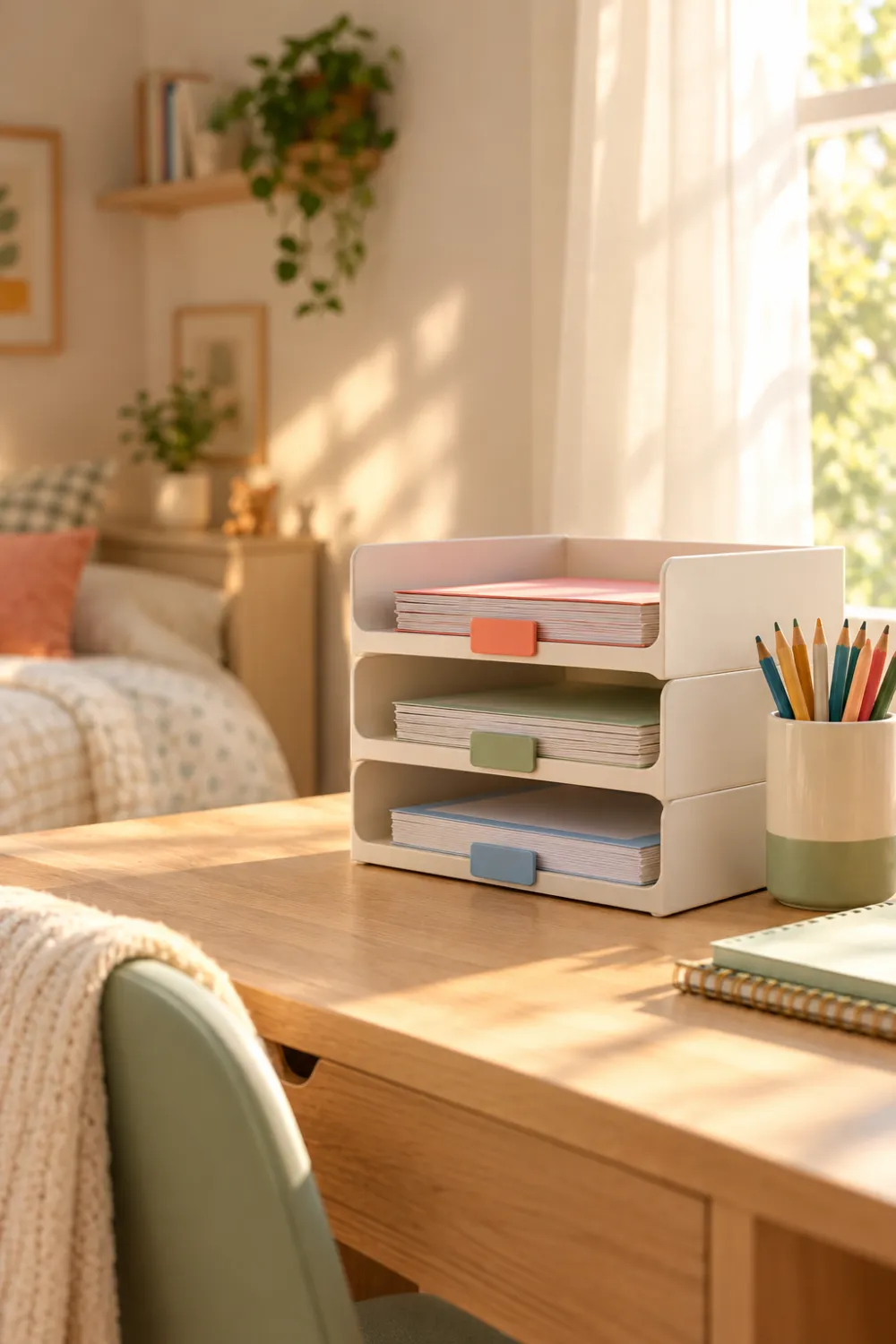
Stack three simple trays on the desk and label them “To Do,” “Done,” and “Show Mom or Dad.” Finished worksheets go in the middle tray, and anything that needs a signature goes in the last. It gives kids a clear flow for their paperwork. Plus, you’ll never again find a signed form crumpled at the bottom of a backpack.
11. Charging Corner
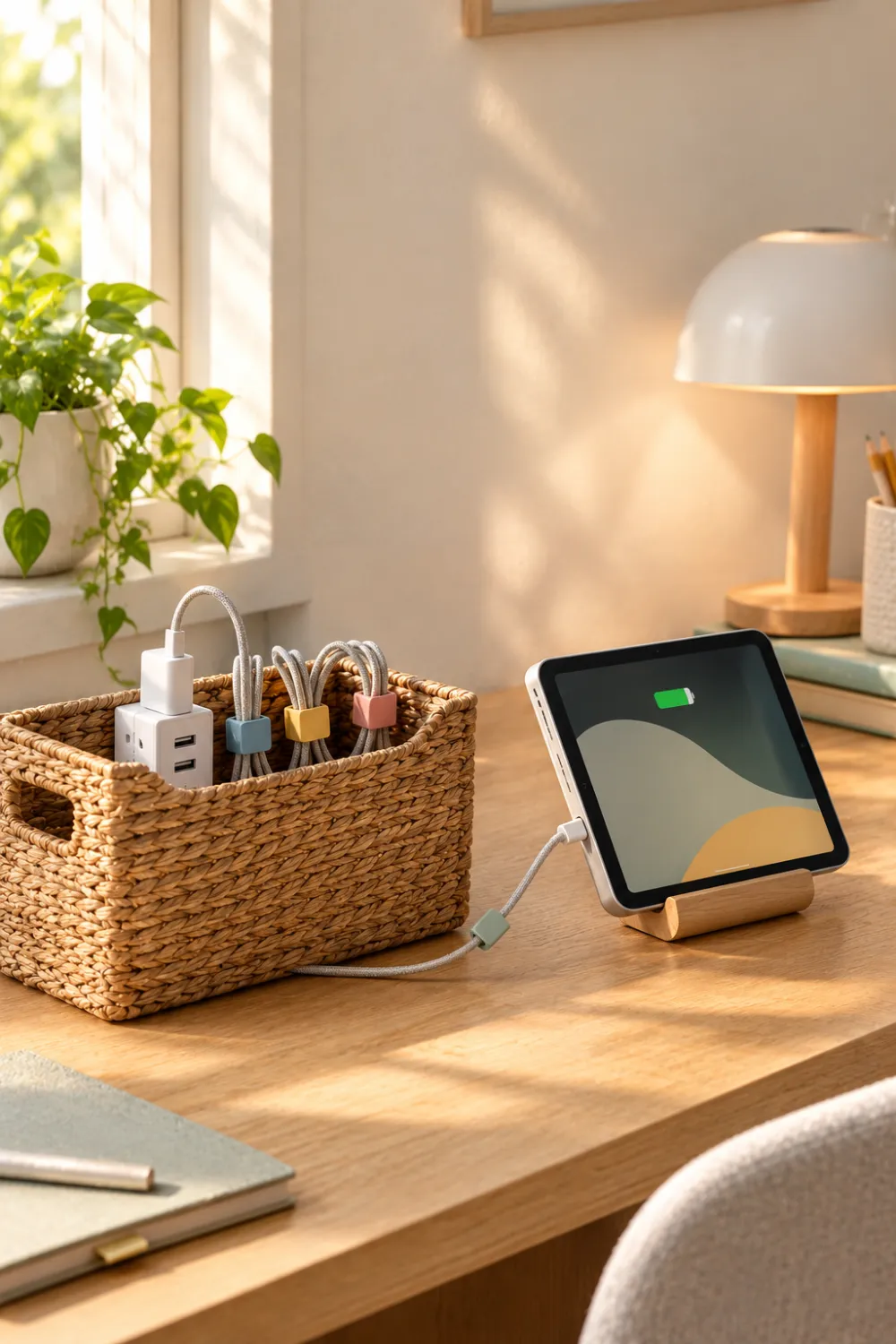
Tablets, e-readers, and laptops need a spot to recharge. Set up a small basket with a power strip hidden inside, or use a cord organizer clipped to the desk edge. Label each cable with a bit of tape so nobody mixes them up. This keeps cords off the floor and keeps your child’s devices ready whenever study time starts.
12. Closet Study Nook
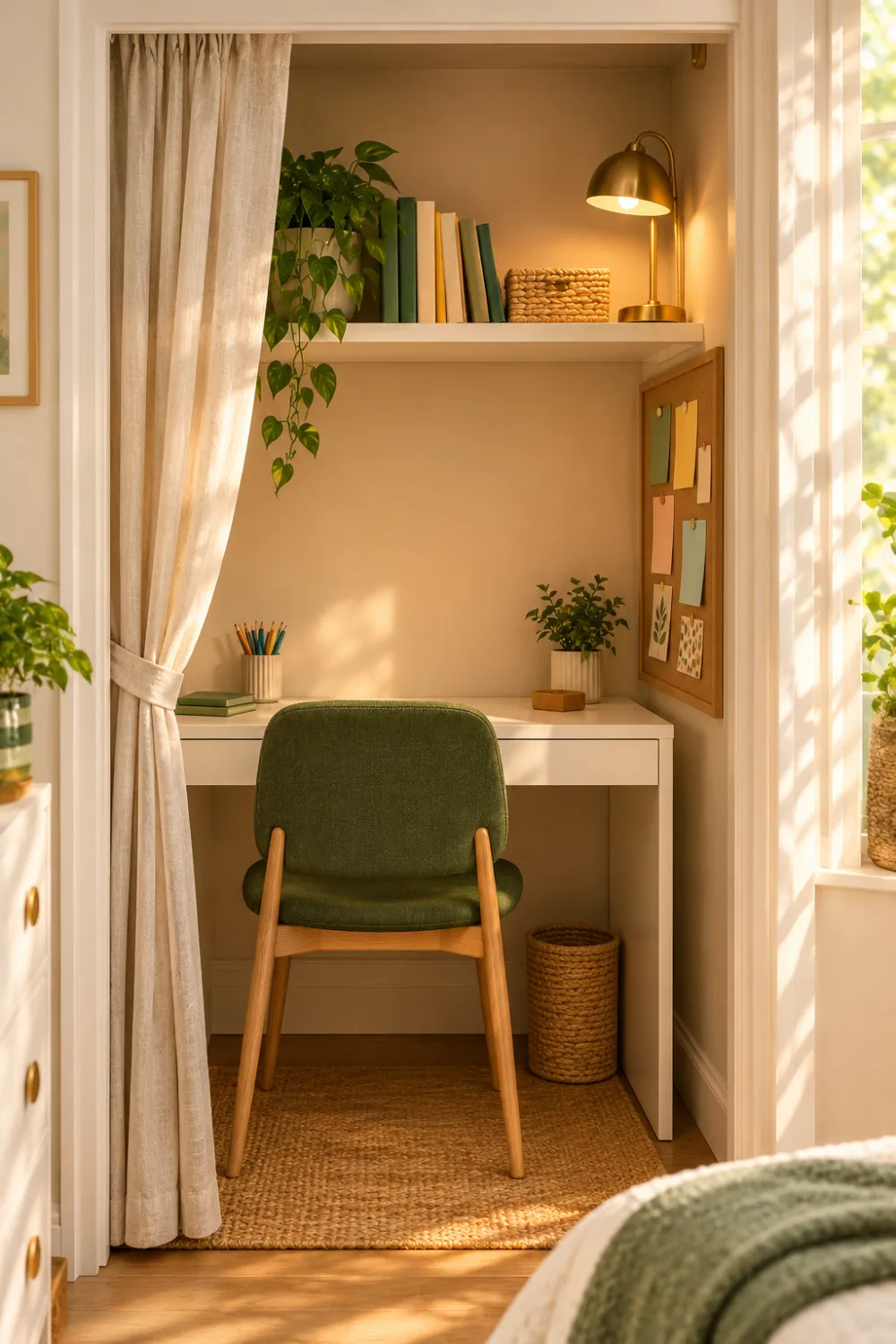
If you’re short on space, remove the closet doors and slide a narrow desk inside. Add a shelf above, hang a small lamp, and use the side walls for hooks and corkboard. When homework is over, you can close a curtain across the opening. It’s a clever way to give a child their own little study cave.
13. Cube Shelf Library
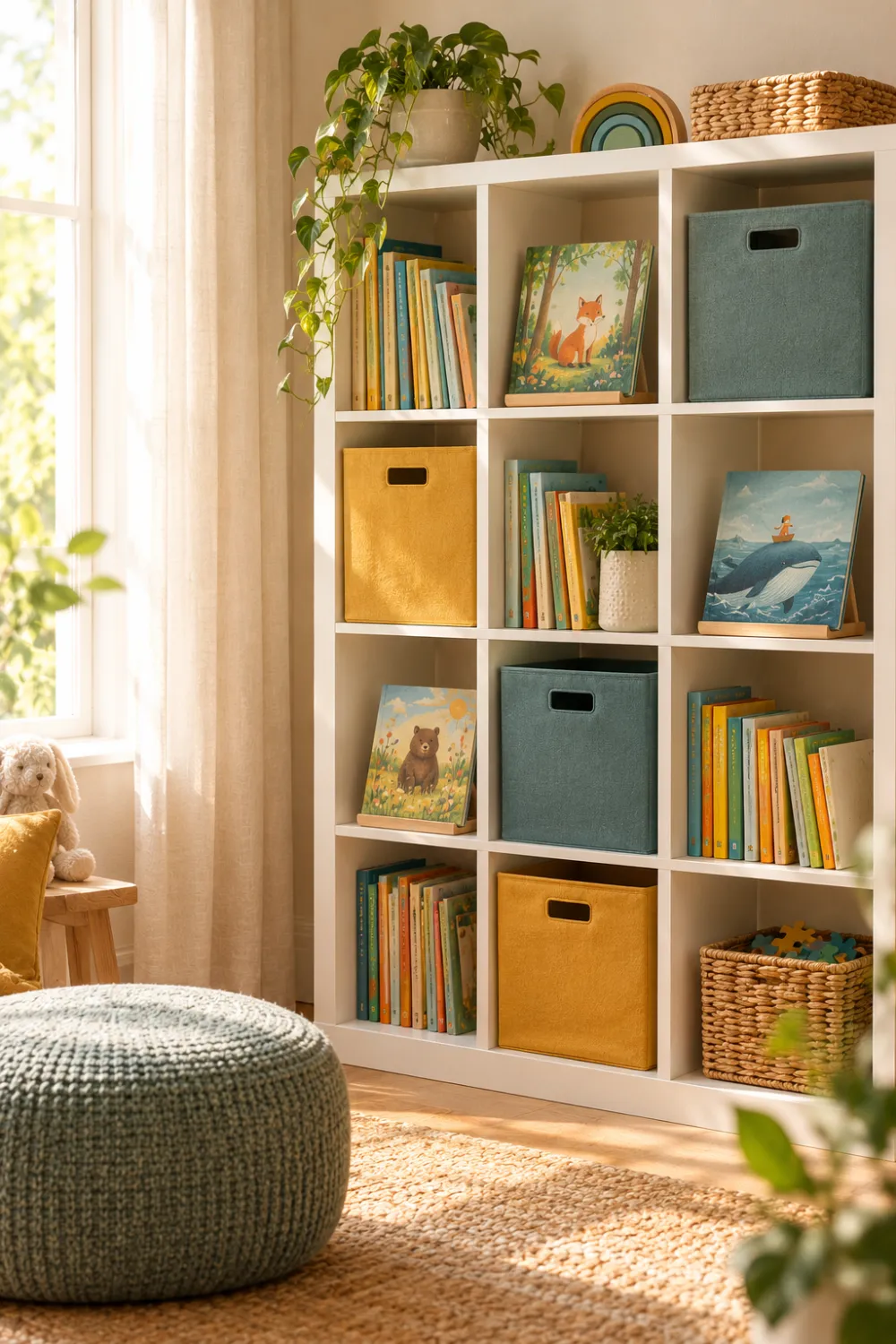
A cube shelf lets kids sort books in a way that makes sense to them. Fill some cubes with books and use fabric bins in others for puzzles or supplies. Place their current reading books at eye level and the rest higher or lower. Kids are far more likely to read when books are easy to see and grab.
14. Shared Table Zones
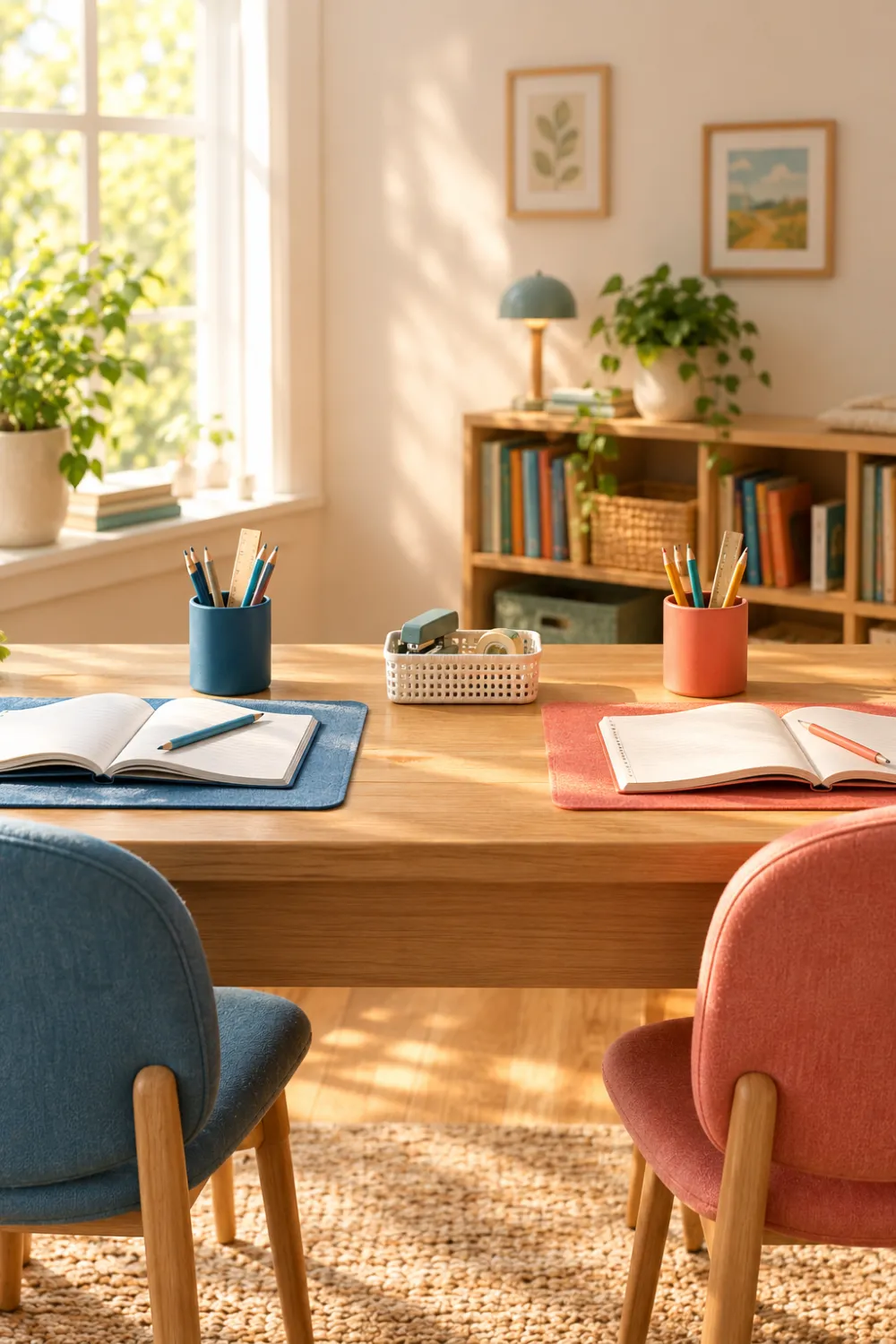
When siblings share a study table, tape a line down the middle or use two different colored placemats to mark each child’s side. Give each kid their own caddy and drawer. It cuts down on the “that’s my eraser!” arguments. If they study together, add one shared basket in the center for items everyone uses, like a stapler.
15. Lamp and Timer Spot

Good lighting makes a big difference in focus. Place an adjustable desk lamp on the side opposite your child’s writing hand to avoid shadows. Next to it, set a small visual timer for focus sessions. Twenty minutes of work and a five-minute break is a rhythm many kids find easy to follow, and the timer does the nagging for you.
16. Five-Minute Reset Basket

End every study session with a quick reset. Keep one basket on the desk where loose items go first, then sort them back to their homes. Set a song and make it a game: tidy before it ends. Doing this daily keeps the space ready for tomorrow and teaches kids a habit that will help them well beyond homework.
Conclusion
The best kids study space organization is the one your child will actually use. Start with one or two ideas that solve your biggest daily frustration, whether that’s lost pencils or messy papers. Let your kid help choose and set things up. Small changes add up fast, and soon studying will feel less like a chore and more like a routine.