15 Bedroom Organization Ideas Closet for a Tidier Room
A crowded closet can make an entire bedroom feel harder to use, even when the room itself is fairly spacious. These 15 Bedroom Organization Ideas Closet solutions focus on practical storage, easier access, and a cleaner visual balance. They work for homeowners and renters alike, whether you have a walk-in closet, a small reach-in, or only a compact wardrobe. With smart placement, useful accessories, and a few simple styling choices, you can make everyday organization much easier.
1. Double Hanging Rods
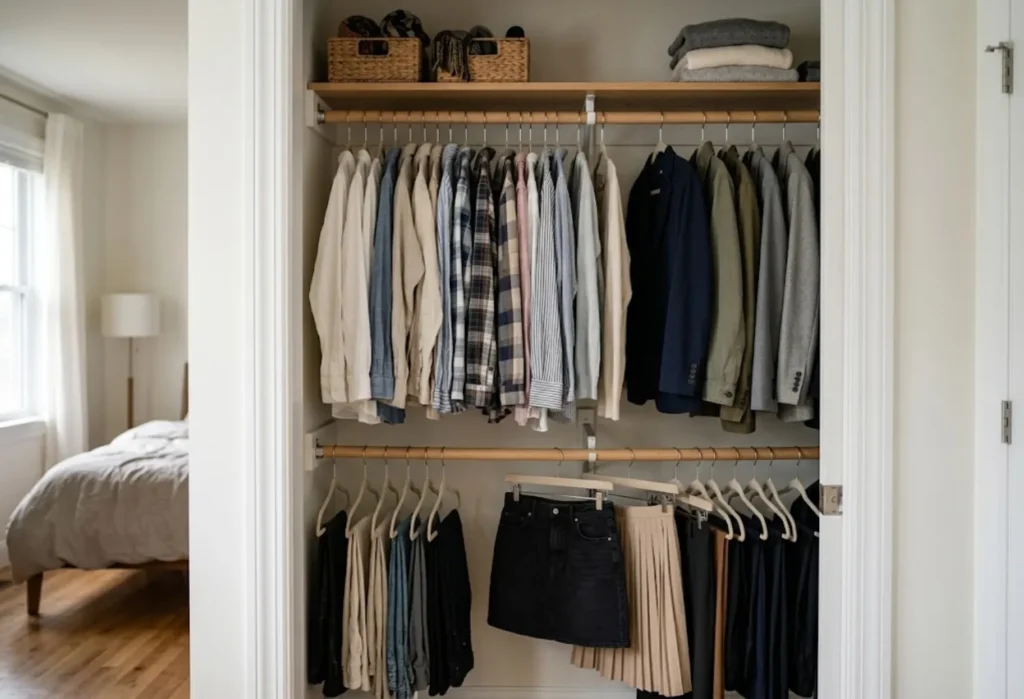
A single hanging rod often leaves a large amount of unused vertical space above or below your clothes. Adding a second rod creates two levels for shirts, skirts, folded trousers, and shorter garments. This is especially useful in a small bedroom closet where adding another cabinet may not be possible.
Place the upper rod high enough for comfortable access and keep the lower rod at a practical height for daily clothing. Avoid using two rods if most of your wardrobe contains long dresses or coats, since they need more vertical clearance.
2. Matching Slim Hangers
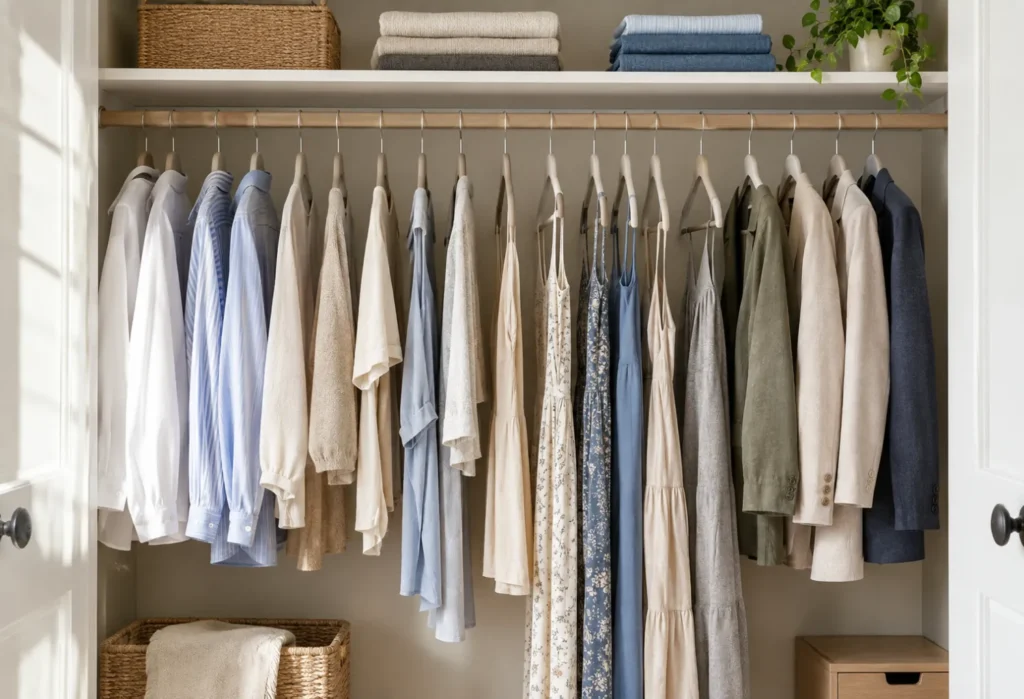
Bulky hangers can quickly consume valuable closet width, leaving clothes squeezed together. Slim matching hangers take up less room and also create a cleaner visual line across the closet. A consistent hanger color, such as black, white, or natural wood, can make the wardrobe look more orderly.
Choose sturdy velvet or slim metal hangers that can support your clothing without bending. Keep heavier jackets and coats on stronger hangers, while everyday shirts and blouses can use thinner versions.
3. Shelf Baskets
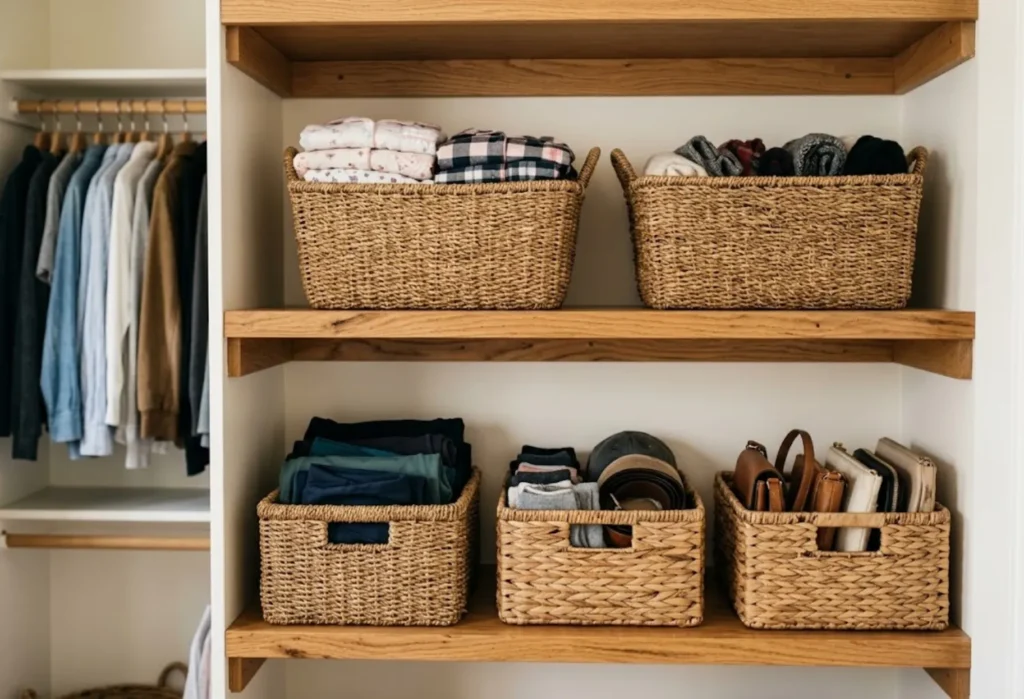
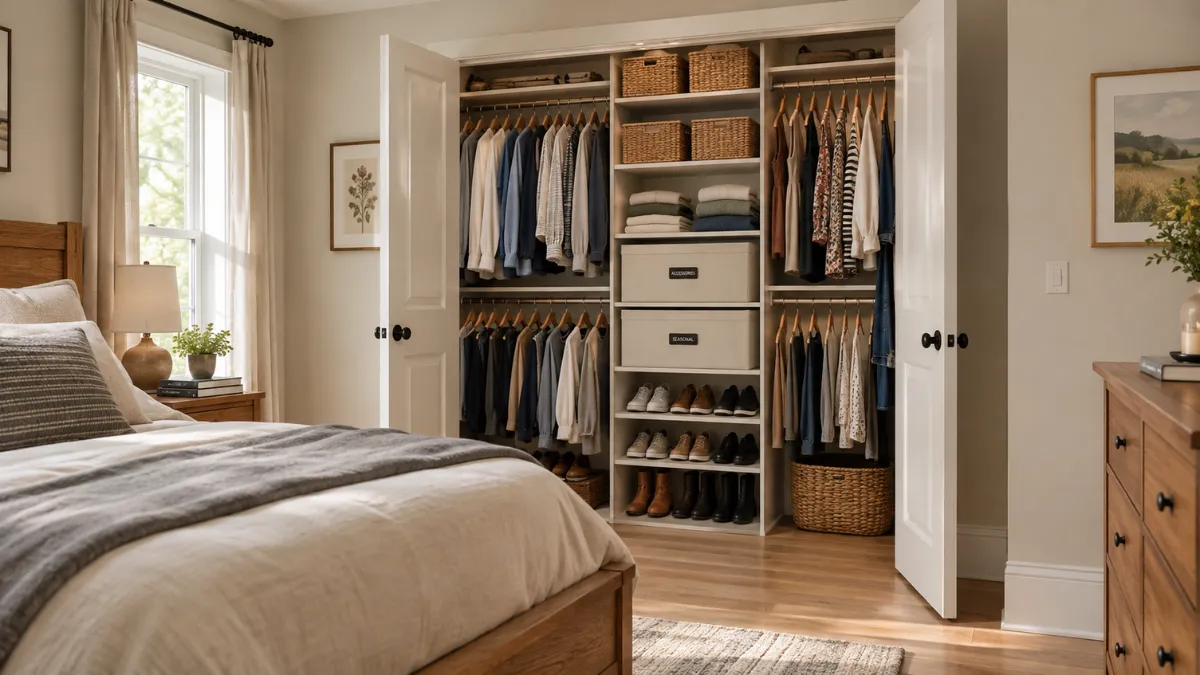
Open shelves are useful, but loose clothing and accessories can make them look messy quickly. Woven, fabric, or wire baskets give small items a defined home while keeping the closet visually calmer. They work well for scarves, handbags, workout clothing, pajamas, or seasonal accessories.
Use similar baskets along one shelf for a coordinated look. Labeling them can also save time, particularly if several family members share the bedroom. Leave a little space between baskets so you can pull them out without disturbing the neighboring items.
4. Closet Door Storage
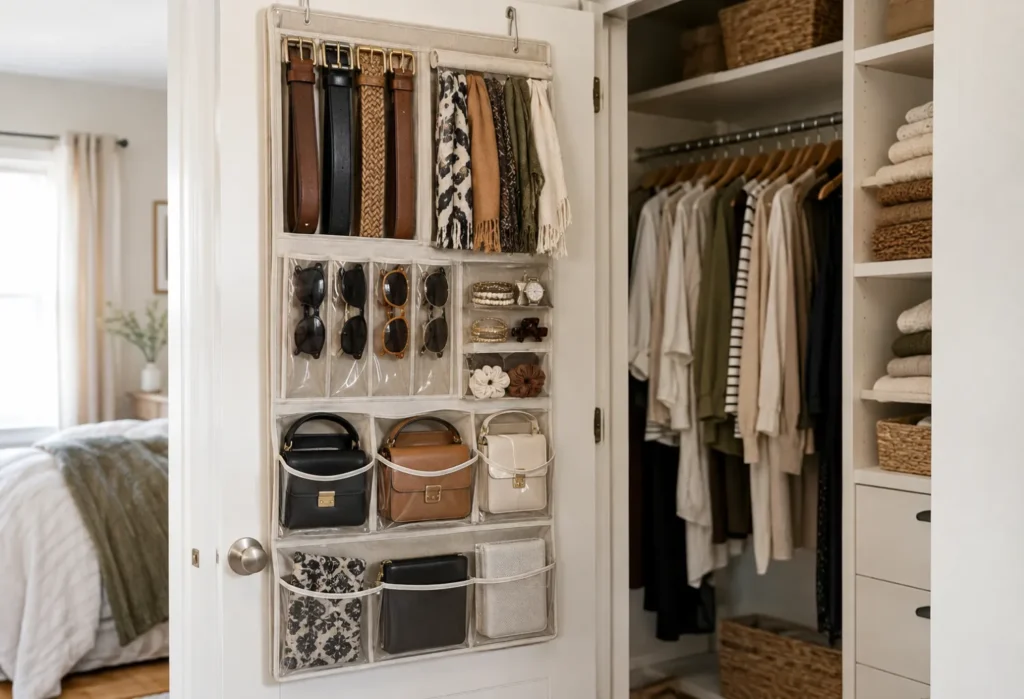
The back of a closet door is often forgotten storage space. A hanging organizer can hold shoes, belts, scarves, jewelry, hair accessories, or small handbags without taking up floor area. For a narrow bedroom closet, this can provide surprisingly useful extra capacity.
Choose an organizer that matches the door’s construction and does not prevent it from closing properly. Clear pockets work especially well for small accessories because you can see everything at a glance. Keep heavier items near the bottom to prevent the organizer from becoming unbalanced.
5. Drawer Dividers
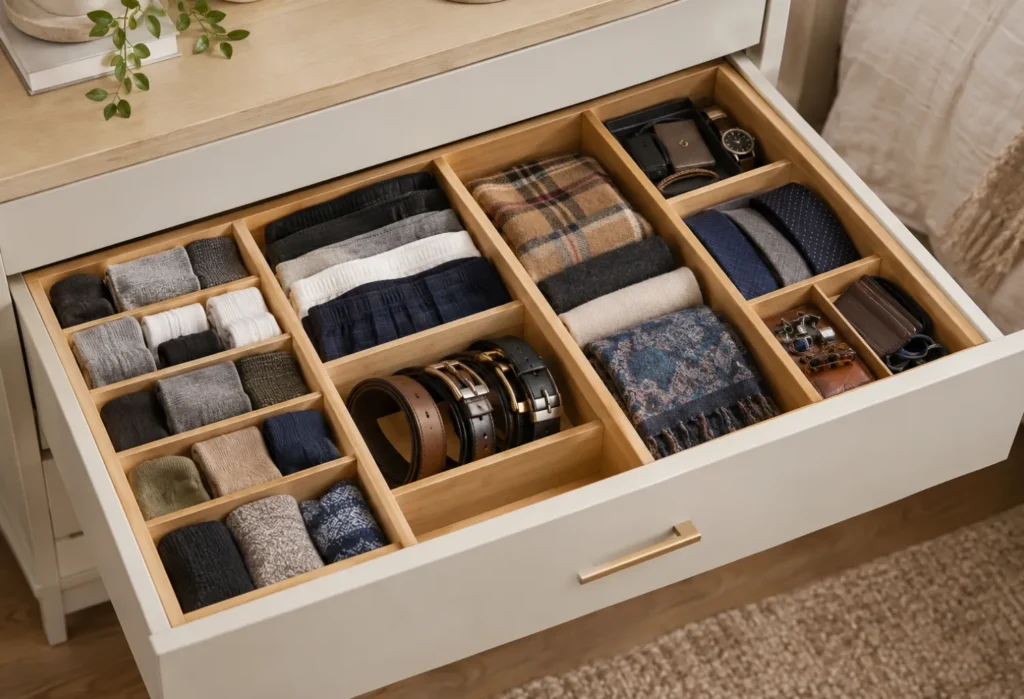
A large bedroom drawer can become a jumble of socks, underwear, belts, and other small pieces. Drawer dividers separate these categories so every item has a specific section. They also make it easier to see what you own instead of digging through one crowded compartment.
Adjustable bamboo, plastic, or fabric dividers are useful because they can fit different drawer sizes. Keep frequently used items toward the front and less-used pieces farther back. Avoid filling every section completely; a little breathing room makes the drawer much easier to maintain.
6. Corner Shelving
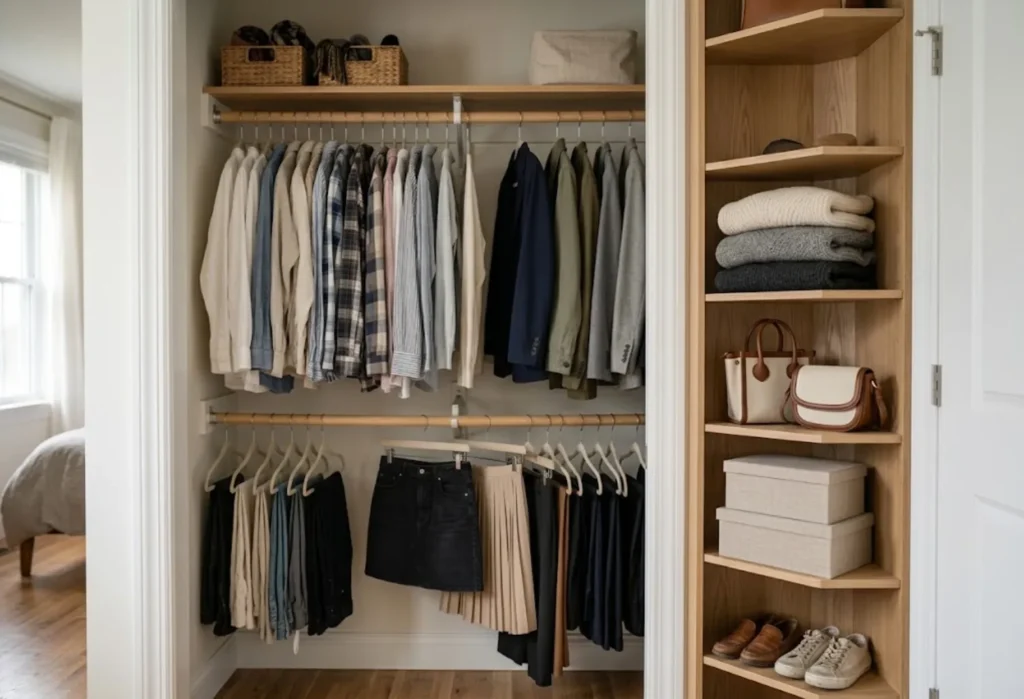
A difficult closet corner can become useful storage with a narrow corner shelving unit. It provides a place for folded sweaters, handbags, boxes, or decorative storage baskets without interfering with the main hanging area.
Look for shelves that are shallow enough to preserve walking and reaching space. In a walk-in closet, placing corner shelves at waist and eye level makes everyday items easier to grab. Neutral wood, white laminate, or matte black shelving can also complement the bedroom’s existing furniture.
7. Under-Bed Storage
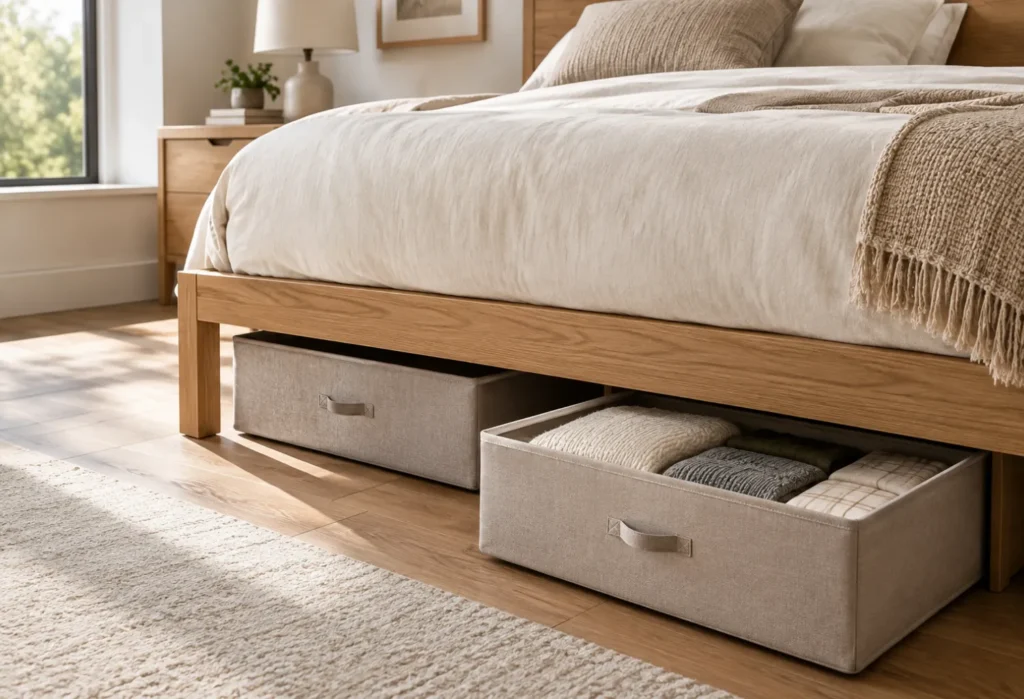
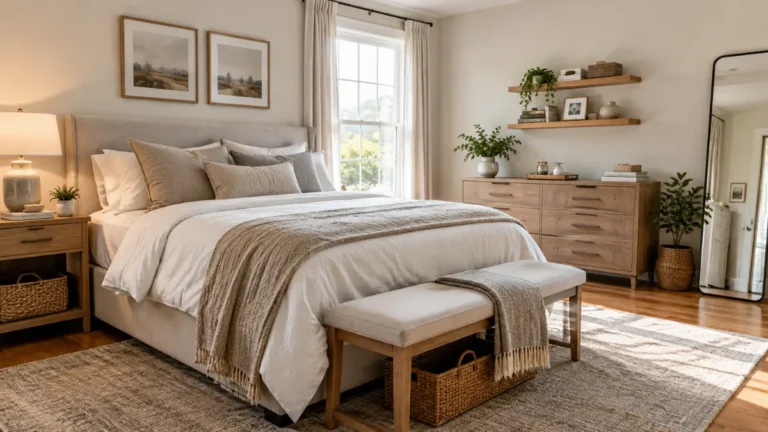
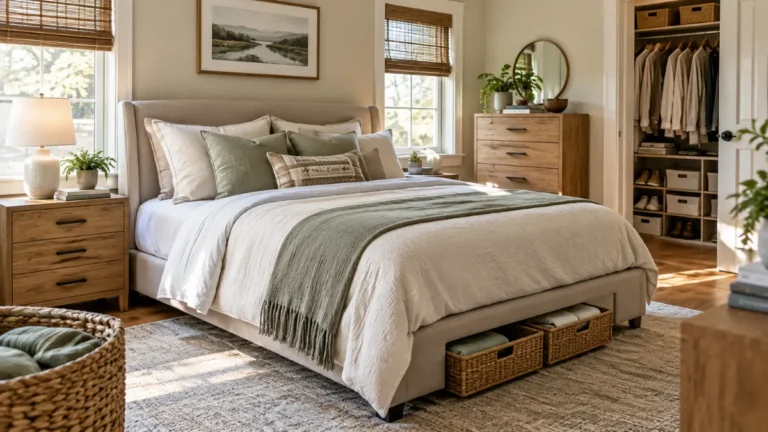
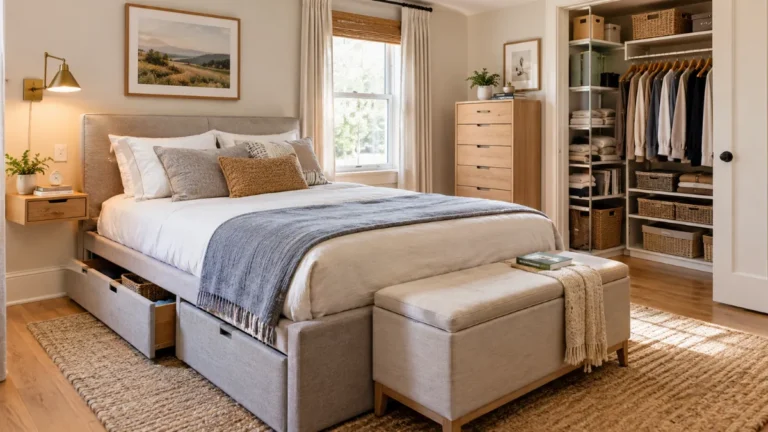
Not every bedroom item needs to live inside the closet. The space beneath the bed is ideal for seasonal clothing, spare bedding, shoes, or luggage. Low-profile boxes and fabric containers keep these belongings protected while making use of an otherwise wasted area.
Choose containers with handles or smooth wheels so they can be pulled out easily. Clear boxes are helpful for items you access regularly, while opaque fabric bins can keep rarely used belongings out of sight. Avoid storing damp or freshly worn clothing under the bed.
8. Open Clothing Rack
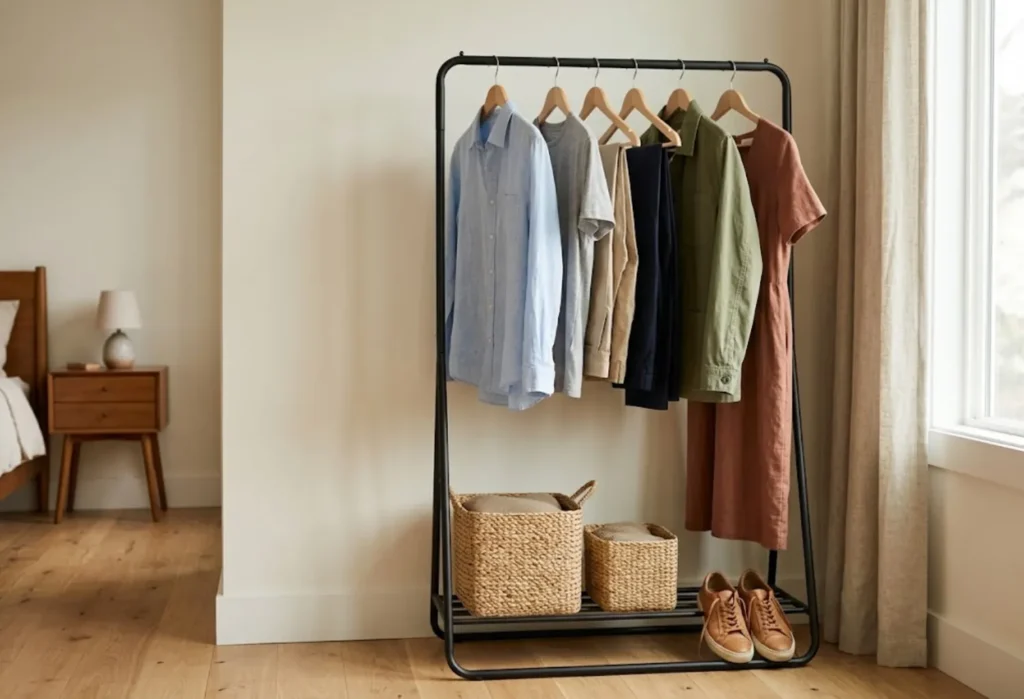
A compact clothing rack can solve a storage shortage without requiring built-in closet work. It works particularly well in bedrooms where the existing wardrobe is too small for everyday clothing or where a renter cannot install permanent shelving.
Choose a simple metal or wood rack that fits the room’s style rather than an oversized commercial-looking unit. Keep only your most-used clothing on it and use matching hangers for a tidy appearance. Position it against an empty wall while leaving enough clearance for comfortable movement around the bedroom.
9. Seasonal Clothing Bins
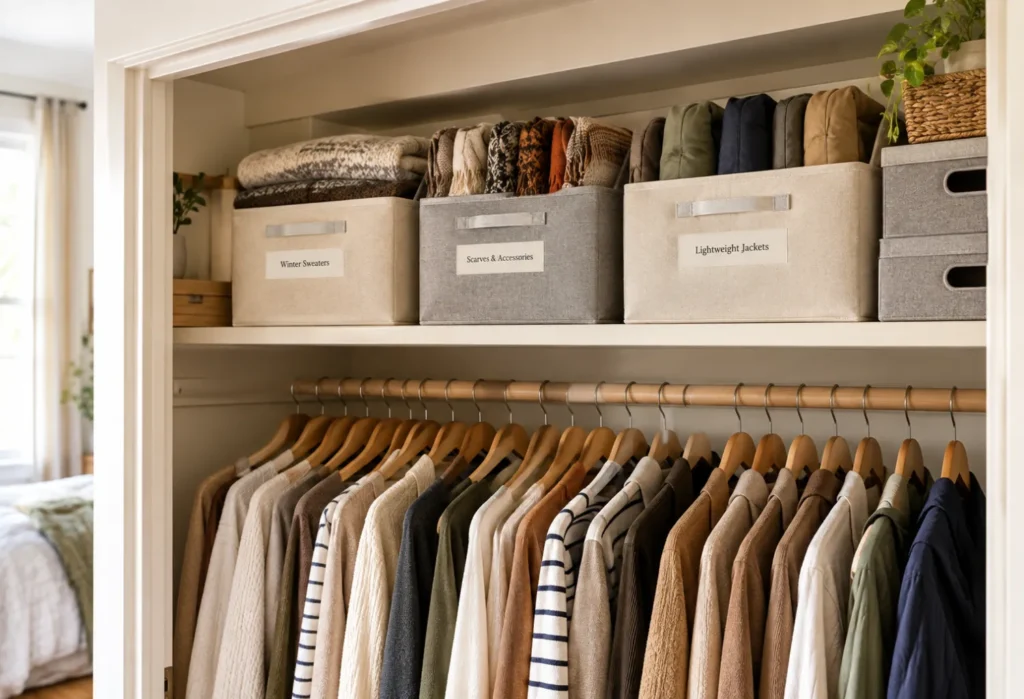
Keeping every type of clothing in the main closet can make the wardrobe feel permanently overcrowded. Seasonal bins allow winter coats, heavy sweaters, swimwear, or summer clothing to move out of the active storage area when they are not needed.
Use breathable fabric containers for suitable clothing and clearly label each bin. Store them on high shelves, under the bed, or in another dry storage area. Before packing clothes away, make sure they are clean and completely dry to avoid unpleasant odors or fabric damage.
10. Pull-Out Accessories Tray
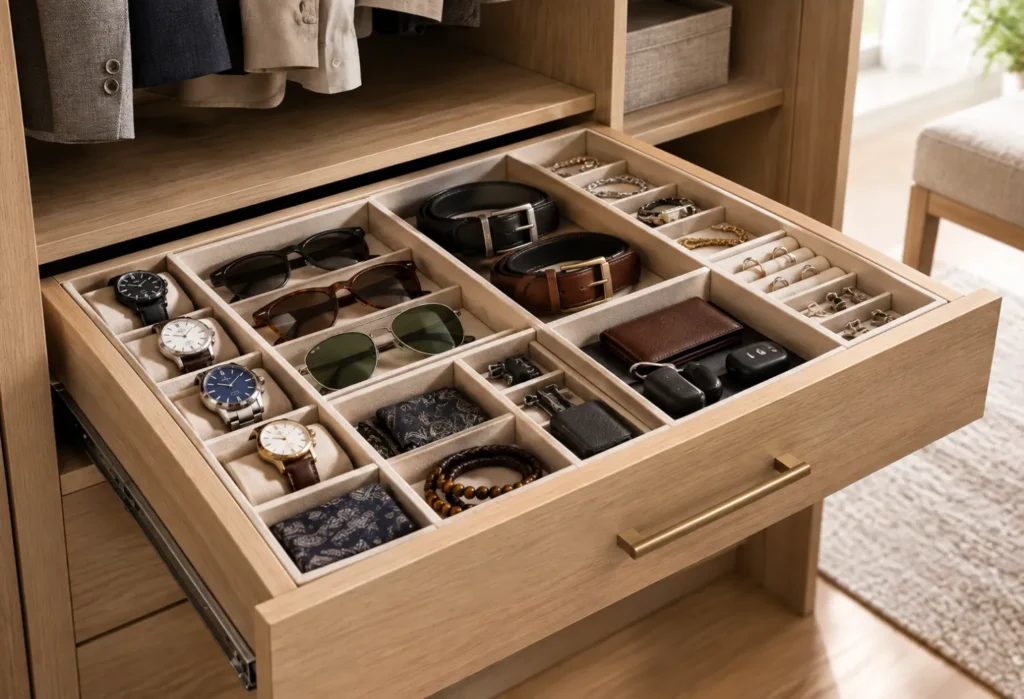
Small accessories can disappear inside deep drawers or crowded boxes. A shallow pull-out tray gives watches, sunglasses, jewelry, ties, and other small pieces a dedicated location while keeping them easy to reach.
For a built-in closet, a narrow sliding tray can fit beneath shelves or between hanging sections. Choose divided compartments for delicate pieces and keep frequently worn accessories toward the front. If installation is not practical, a divided jewelry tray inside an existing drawer offers a simple alternative.
11. Color-Coded Clothing
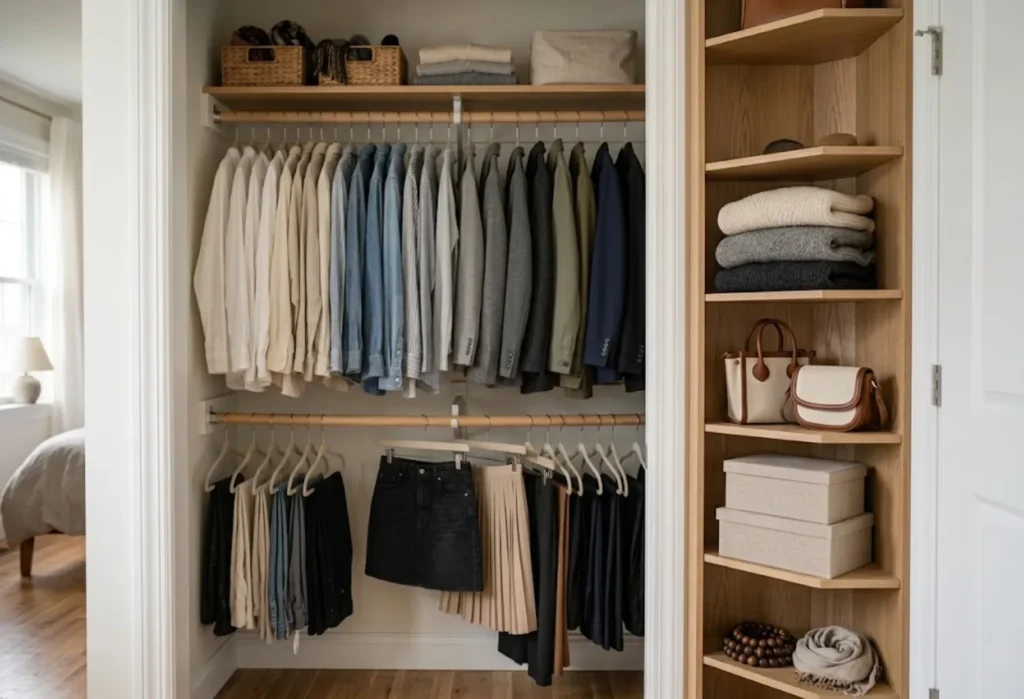
A closet can look cluttered even when everything is technically organized. Arranging clothing by color creates a stronger visual order and makes individual pieces easier to find. Soft neutrals, denim, whites, and darker shades can form natural groups without requiring additional storage products.
You can also combine color grouping with clothing type, such as arranging shirts by color before moving to trousers and jackets. Keep the system simple enough to maintain. If you spend more time reorganizing the closet than choosing clothes, the method is probably too complicated.
12. Floating Closet Shelf
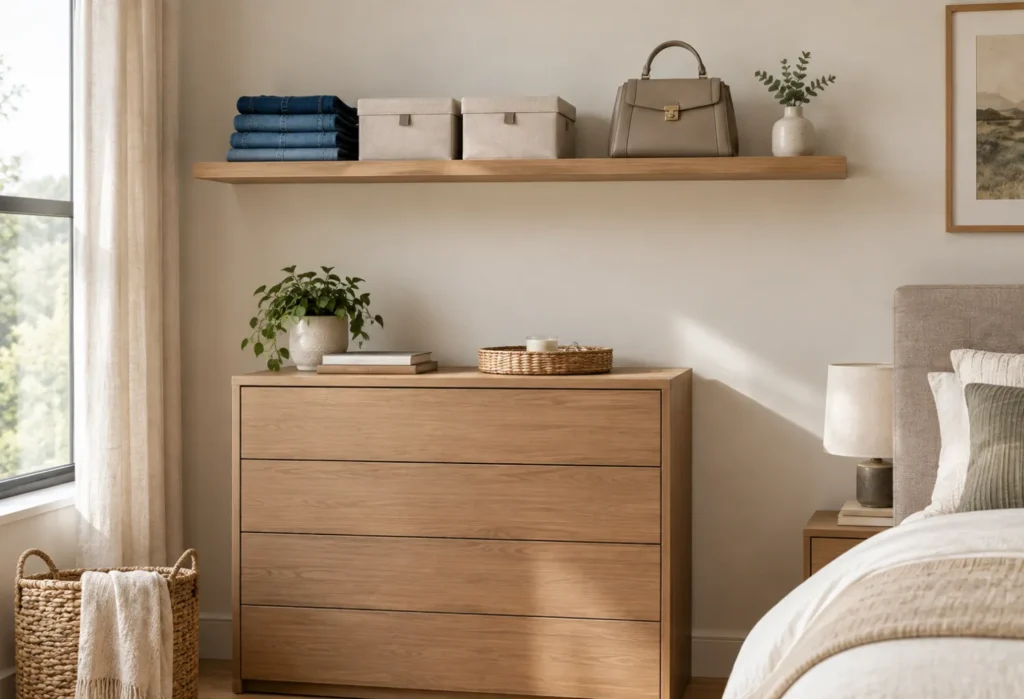
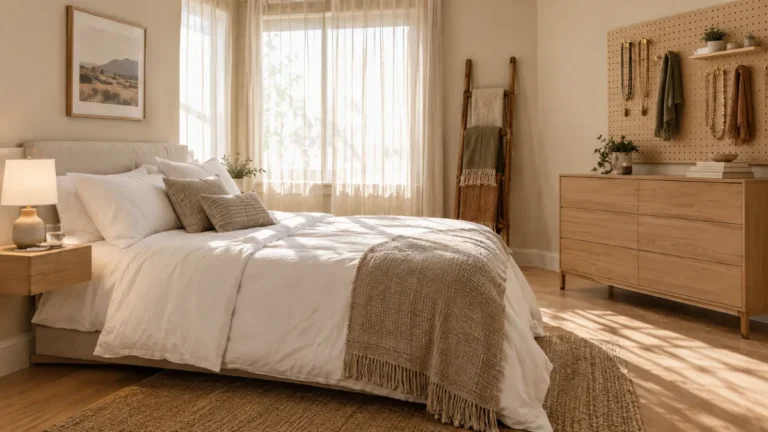
A floating shelf can provide extra storage above a dresser, wardrobe, or unused section of wall. It is useful for folded jeans, handbags, storage boxes, or a few attractive accessories that do not need to be hidden away.
Use a shelf depth that suits the available wall space without making the bedroom feel crowded. Natural oak works nicely with cream and beige bedrooms, while white shelving suits lighter interiors. Keep decorative pieces limited so the shelf remains a useful storage area rather than another place for clutter.
13. Shoe Rack by Category
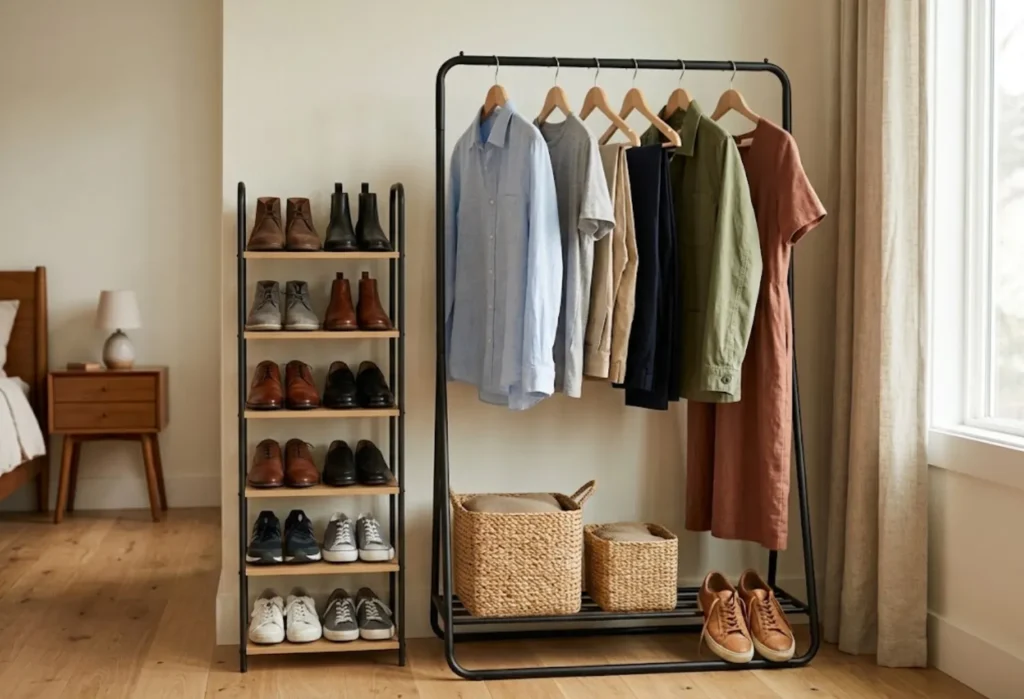
Shoes scattered across the bedroom floor quickly reduce usable walking space. A compact rack keeps footwear together and makes it easier to separate everyday sneakers, work shoes, boots, and special-occasion pairs.
Choose a vertical rack if floor space is limited, or a low bench-style unit if you want a place to sit while putting shoes on. Keep frequently worn shoes at an easy-to-reach level and store occasional pairs higher up. Avoid pushing the rack directly against a door or closet opening.
14. Mirror With Hidden Storage
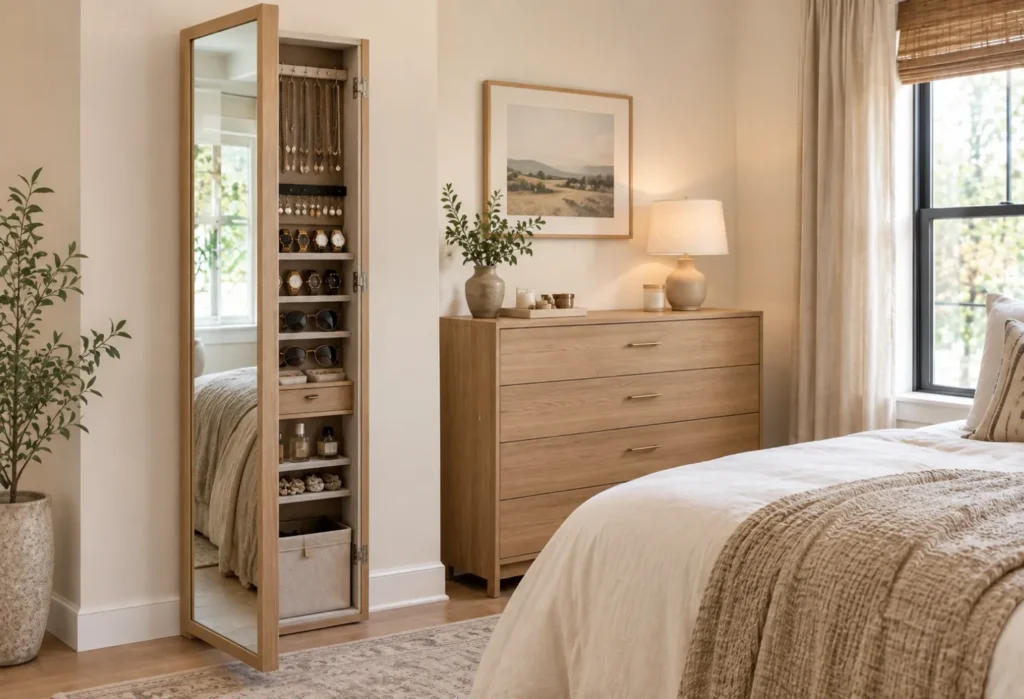
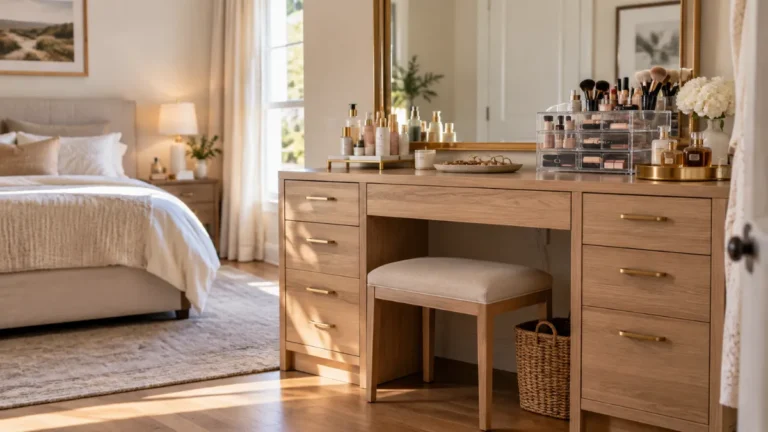
A full-length mirror with a shallow storage cabinet behind it can combine two bedroom functions in one piece. It provides a useful dressing mirror while creating concealed space for jewelry, cosmetics, watches, or other small accessories.
This option is particularly useful in bedrooms where wall and floor space are limited. Choose a slim profile and position the mirror where natural light reaches it, if possible. A simple wood or white frame can blend with the bedroom rather than making the storage piece feel visually heavy.
15. Labeled Closet Zones
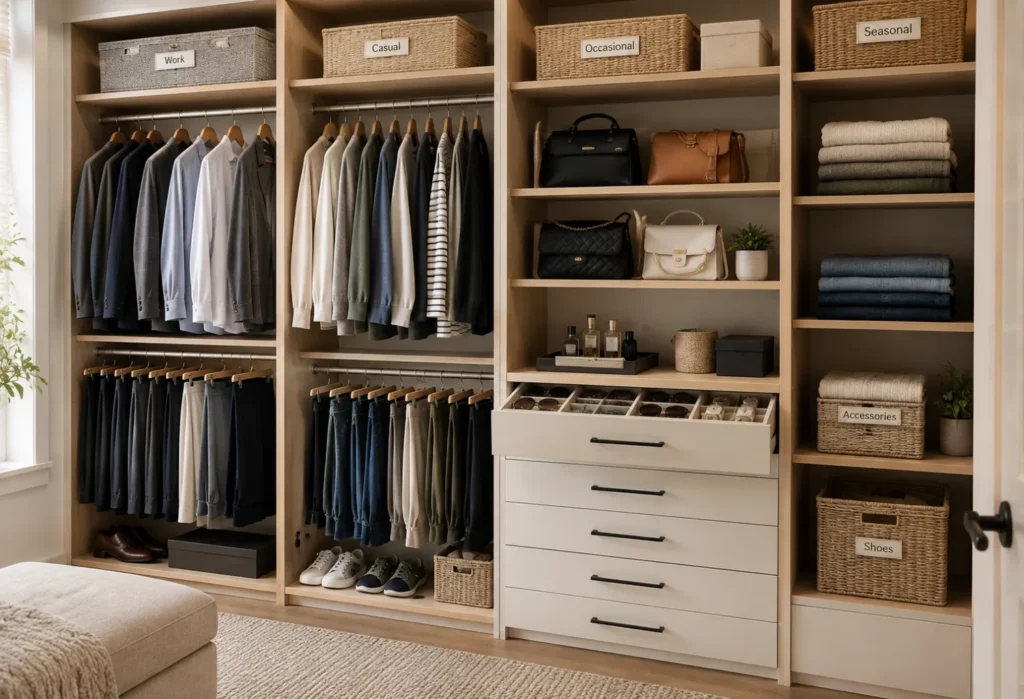
A closet becomes easier to maintain when each section has a clear purpose. You might reserve one area for work clothes, another for casual pieces, a shelf for bags, and a drawer for smaller accessories. This creates a straightforward system rather than relying on memory.
Keep the categories broad enough that putting something away takes only a few seconds. Small labels on baskets and shelves can help, especially in shared bedrooms. Leave the most accessible space for items you use every week and move occasional belongings toward the top or back.
5 Most Useful Closet Organization Ideas
| Idea | Best For | Why I Recommend It |
| Double Hanging Rods | Small closets | Uses vertical space efficiently |
| Shelf Baskets | Open shelving | Controls loose clothing and accessories |
| Closet Door Storage | Narrow closets | Adds storage without using floor space |
| Under-Bed Storage | Small bedrooms | Frees up valuable closet room |
| Labeled Closet Zones | Busy wardrobes | Makes daily organization easier |
Conclusion
The best 15 Bedroom Organization Ideas Closet approach is the one that fits how you actually use your bedroom. Start with the biggest source of clutter, whether that is hanging clothes, shoes, accessories, or seasonal items. Then add storage that uses overlooked space without making the room harder to move through. A few well-chosen changes can make the closet easier to manage every day.