20 Bedroom Organization Ideas For Couples That Actually Work
Sharing a bedroom with your partner means sharing closet space, nightstands, dresser drawers, and honestly, a lot of opinions about where things belong. It’s one thing to organize a room for one person, but two people with two sets of clothes, two skincare routines, and two very different ideas of “tidy” can turn a bedroom into a daily negotiation. The good news is that a few smart organization ideas can turn that shared space into something that feels calm, balanced, and genuinely comfortable for both of you. Here are 20 bedroom organization ideas for couples that go beyond generic decluttering advice and actually solve the real problems of sharing a room.
1. His and Hers Nightstands With Distinct Storage
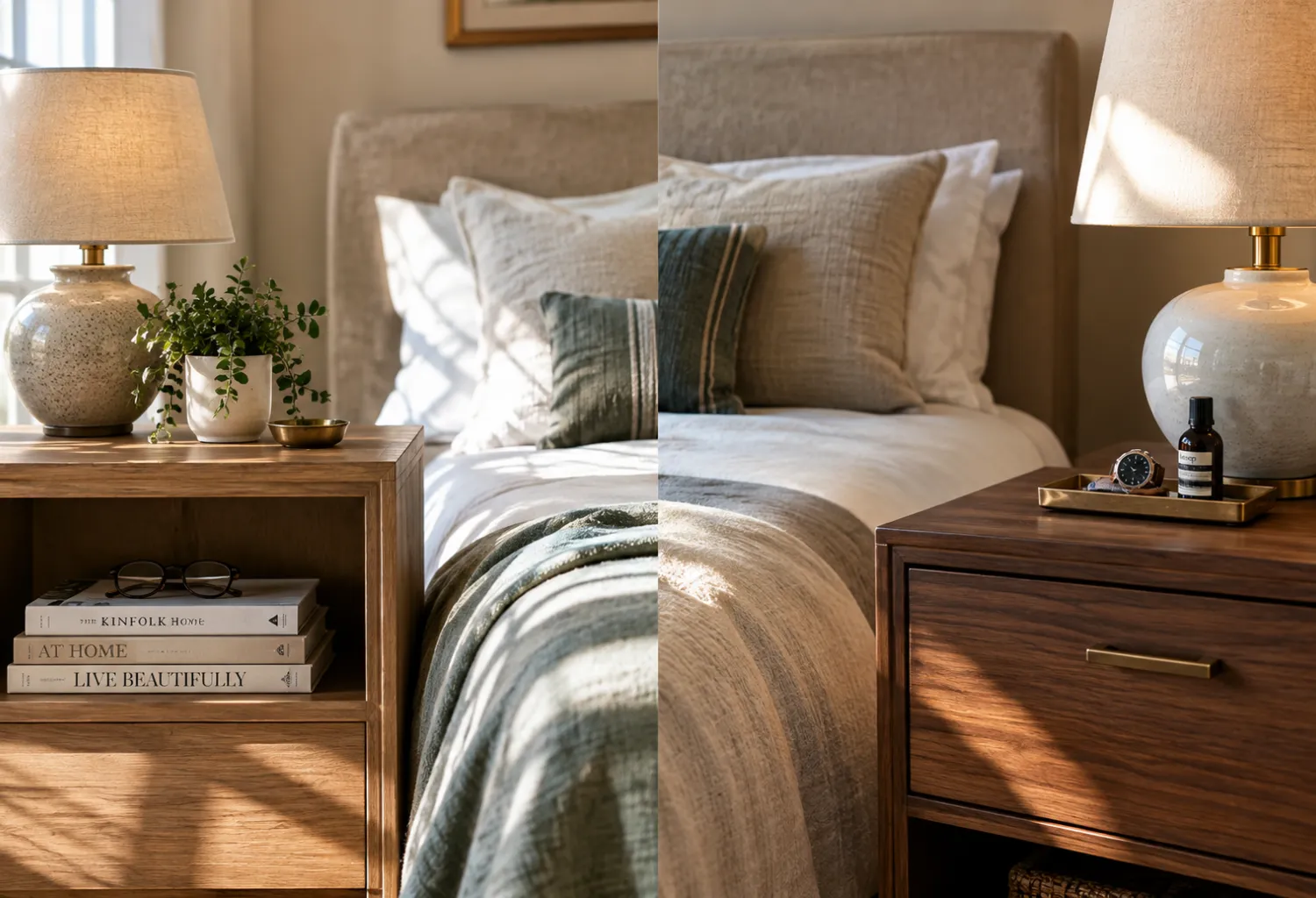
Matching nightstands look nice in photos, but they don’t always work in real life. Instead, give each person a nightstand that fits how they actually use it. If one partner reads before bed, a nightstand with an open shelf for a stack of books works better than one with only closed drawers. If the other charges a phone and keeps skincare products nearby, a nightstand with a drawer plus a small tray on top handles that better. They don’t need to match perfectly, just coordinate in color or material so the room still feels intentional.
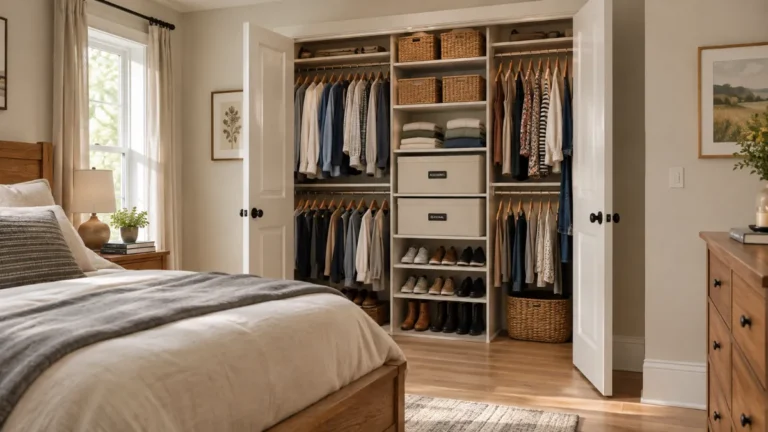
2. Divided Closet Zones

If you’re sharing one closet, split it down the middle or split it by category instead of letting clothes creep into each other’s space. One practical approach is hanging clothes on one side and folded storage (shelves or bins) on the other, with each partner claiming a section of both. Use closet dividers or small labeled tags on the rod so it’s obvious at a glance where each person’s clothes start and stop. This alone eliminates a surprising number of “whose shirt is this doing over here” moments.
3. Dresser With Individual Drawers Per Person
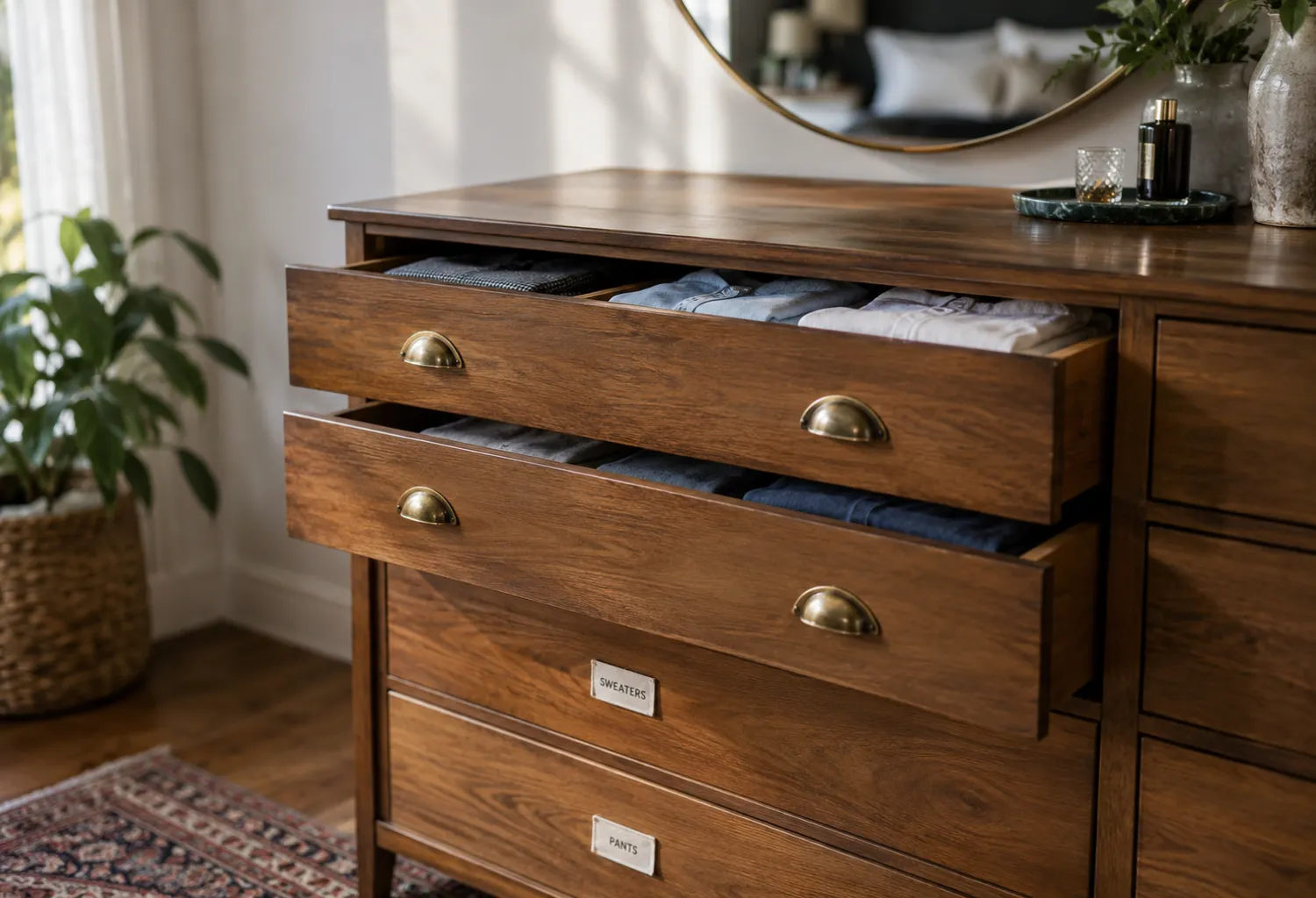
A single shared dresser works best when each drawer has a clear owner. Instead of mixing socks, undershirts, and pajamas across both people’s belongings, assign specific drawers to each partner from the start. A simple system, like top two drawers for one person and bottom two for the other, keeps things predictable so nobody has to ask where their own clothes went.
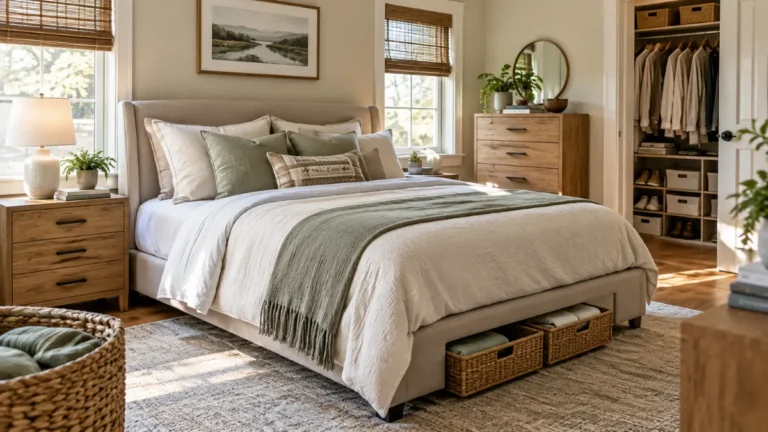
4. Under-Bed Storage for Off-Season Items
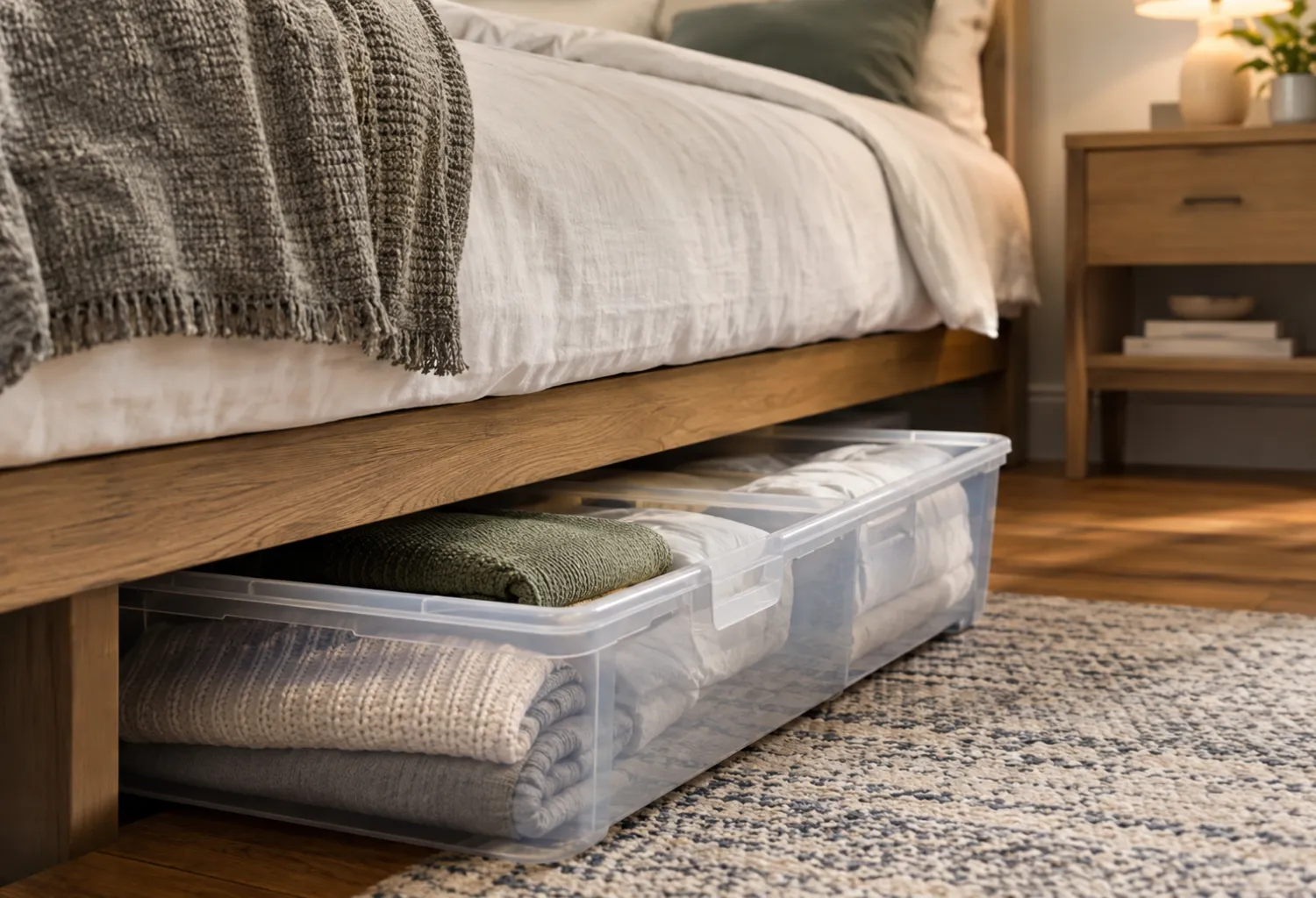
Bedrooms shared by two people fill up fast with seasonal clothing, extra bedding, and shoes that don’t have a home yet. Under-bed storage bins with lids solve this without taking up any visible floor space. Clear bins work well because you can see contents without opening them, while fabric bins in a neutral tone like oatmeal or charcoal blend more quietly into the room if the bed frame sits low.
5. A Shared Command Station Near the Door
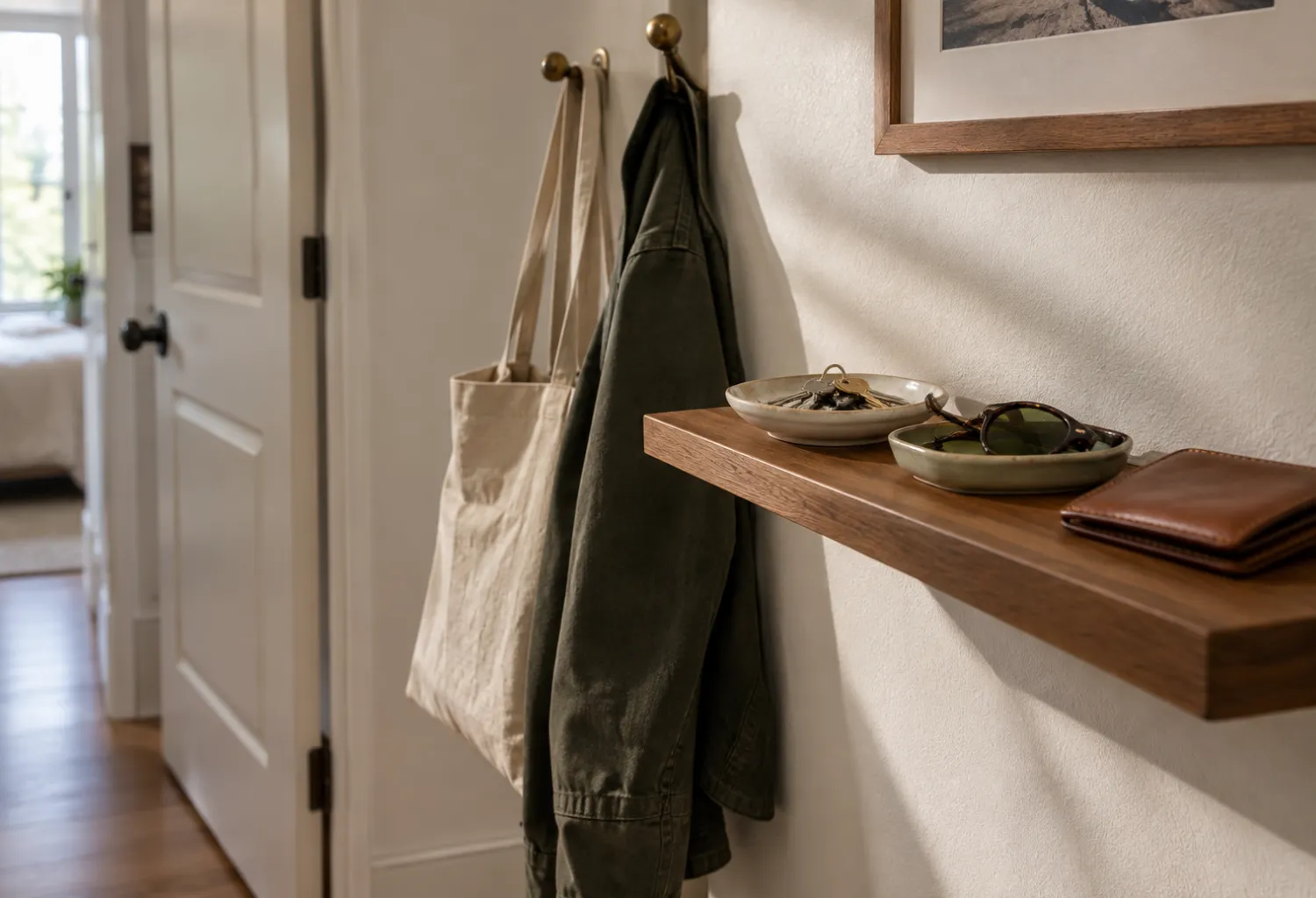
Keys, wallets, sunglasses, and everyday carry items tend to pile up on whatever surface is closest to the door. Instead of letting that happen randomly, install a small shelf, a wall-mounted tray, or a slim console table right by the bedroom entrance. Add two small dishes or hooks, one for each person, so both partners have a designated spot to drop and grab essentials without cluttering the dresser or nightstand.
6. Vertical Wall Storage to Free Up Floor Space
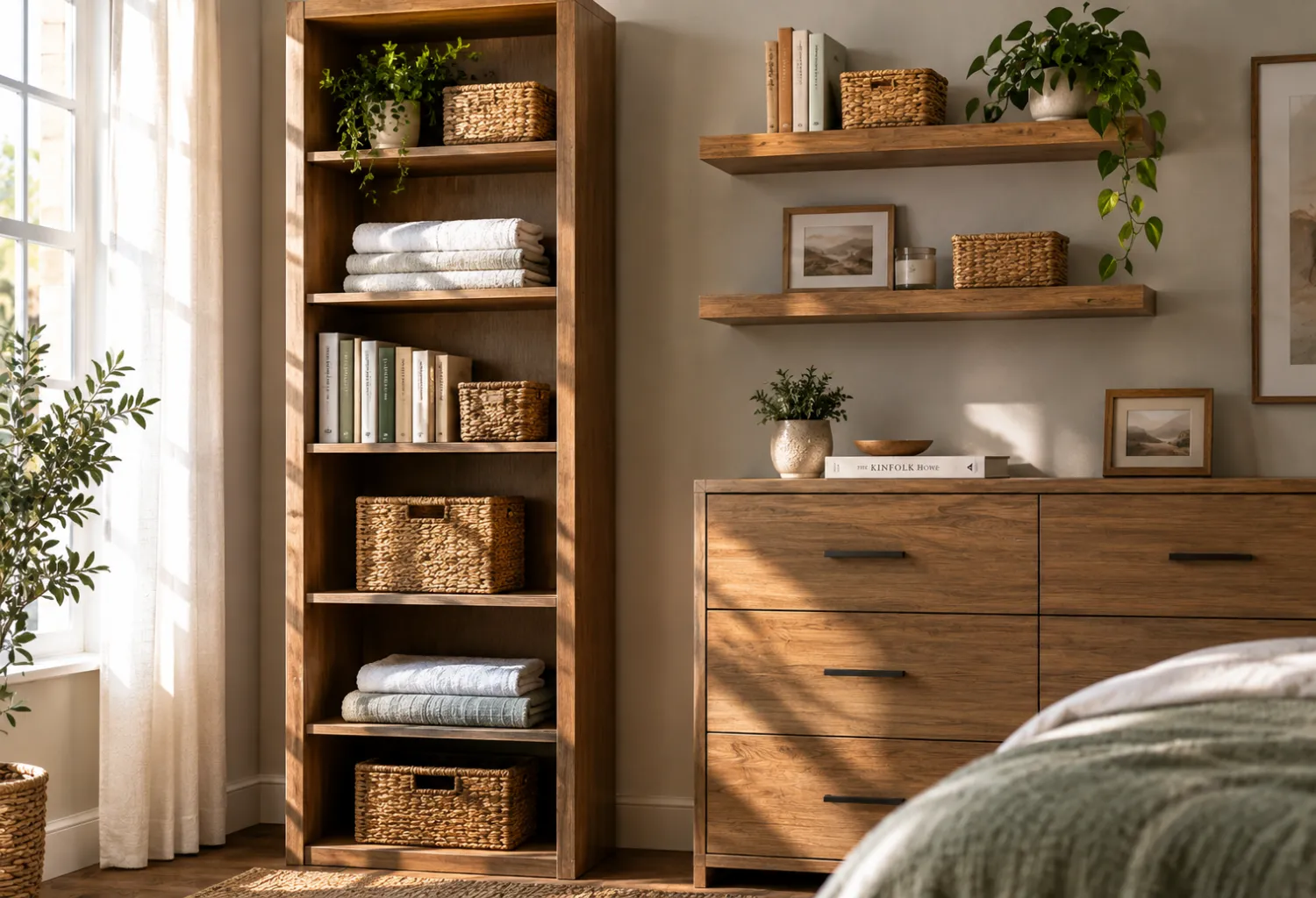
Shared bedrooms often feel tighter simply because there are two people’s belongings competing for the same square footage. Going vertical solves this without adding furniture that eats up walking space. Floating shelves above the dresser, a tall narrow bookcase in a corner, or a wall-mounted jewelry organizer near the closet all use height instead of floor area, which keeps the room feeling open even with two people’s things in it.
7. Matching Baskets for Laundry, Sorted by Person
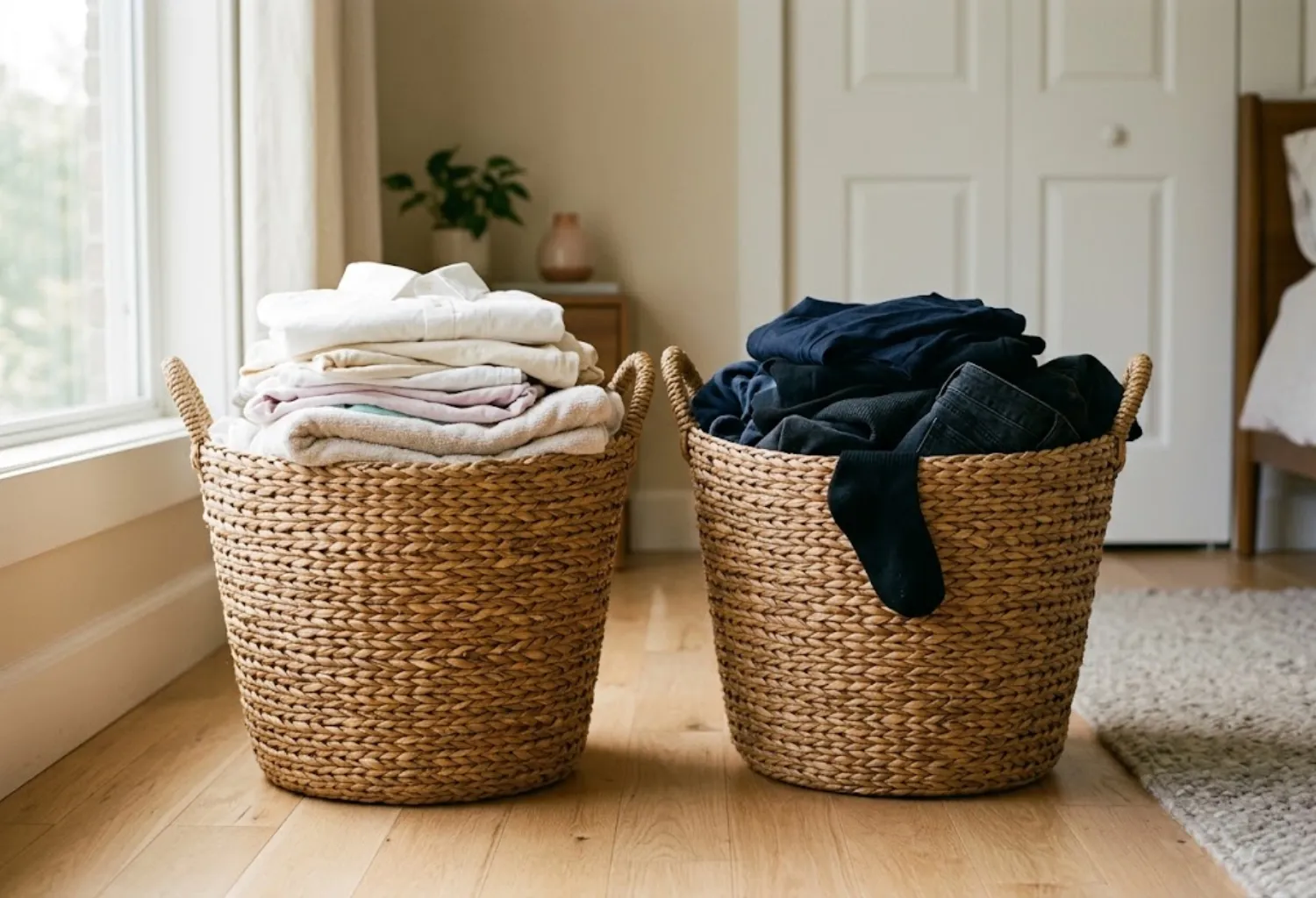
One shared laundry basket usually turns into a guessing game about whose clothes are whose once wash day arrives. Two matching baskets, one per person, placed side by side in the closet or a corner, keep laundry sorted from the start. Woven baskets in a natural fiber like seagrass add texture to the room while staying functional, and choosing two of the same style keeps things visually calm instead of looking like mismatched clutter.
8. A Shared Charging Drawer
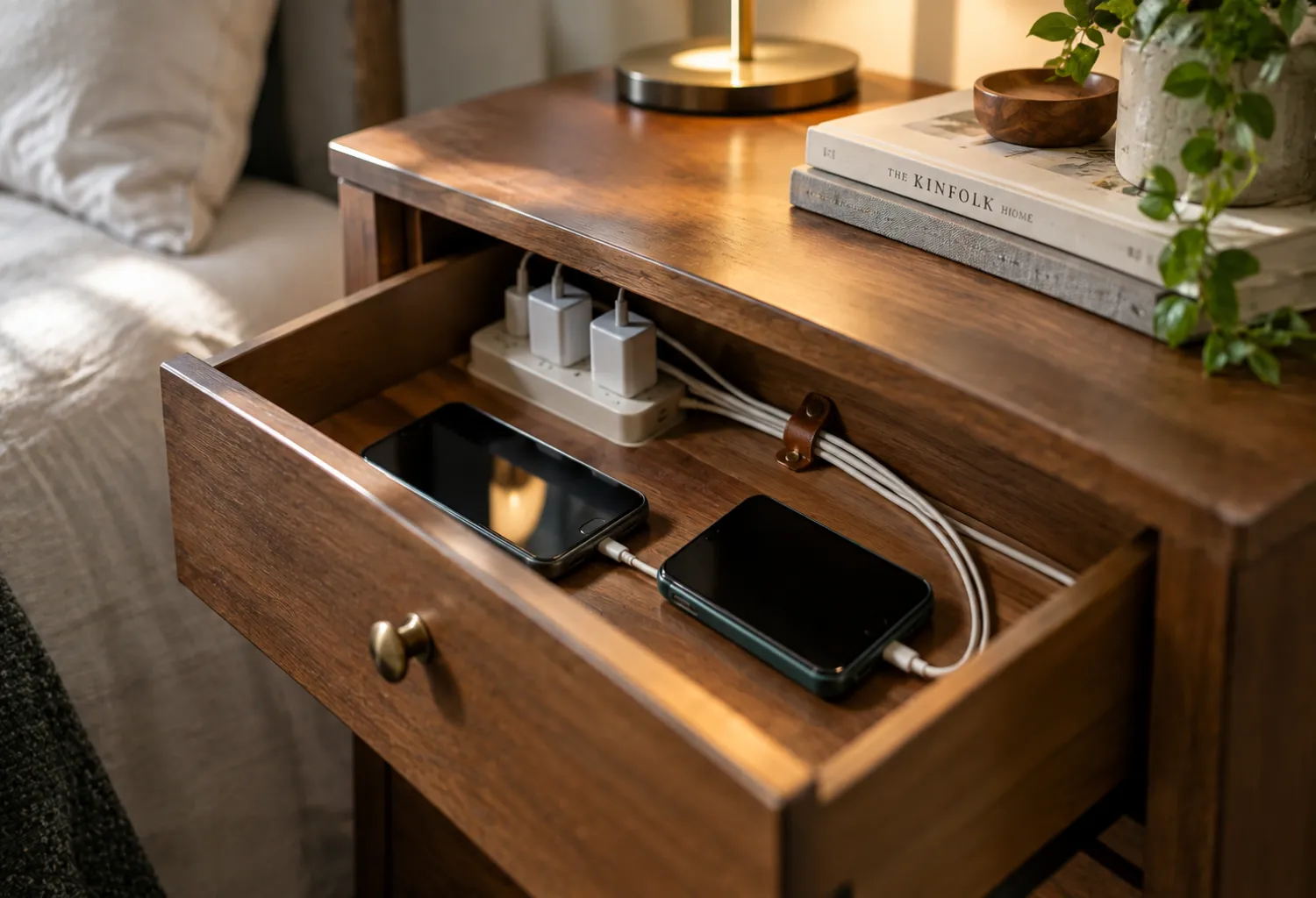
Phone chargers, tablets, and cords are one of the biggest sources of nightstand clutter in a shared bedroom. A drawer with a built-in cutout for a power strip, or a simple charging station tucked inside a nightstand drawer, keeps cords out of sight while still being accessible. This works especially well in smaller bedrooms where every visible surface needs to look intentional rather than functional-but-messy.
9. Double Mirror Setup for Getting Ready Together
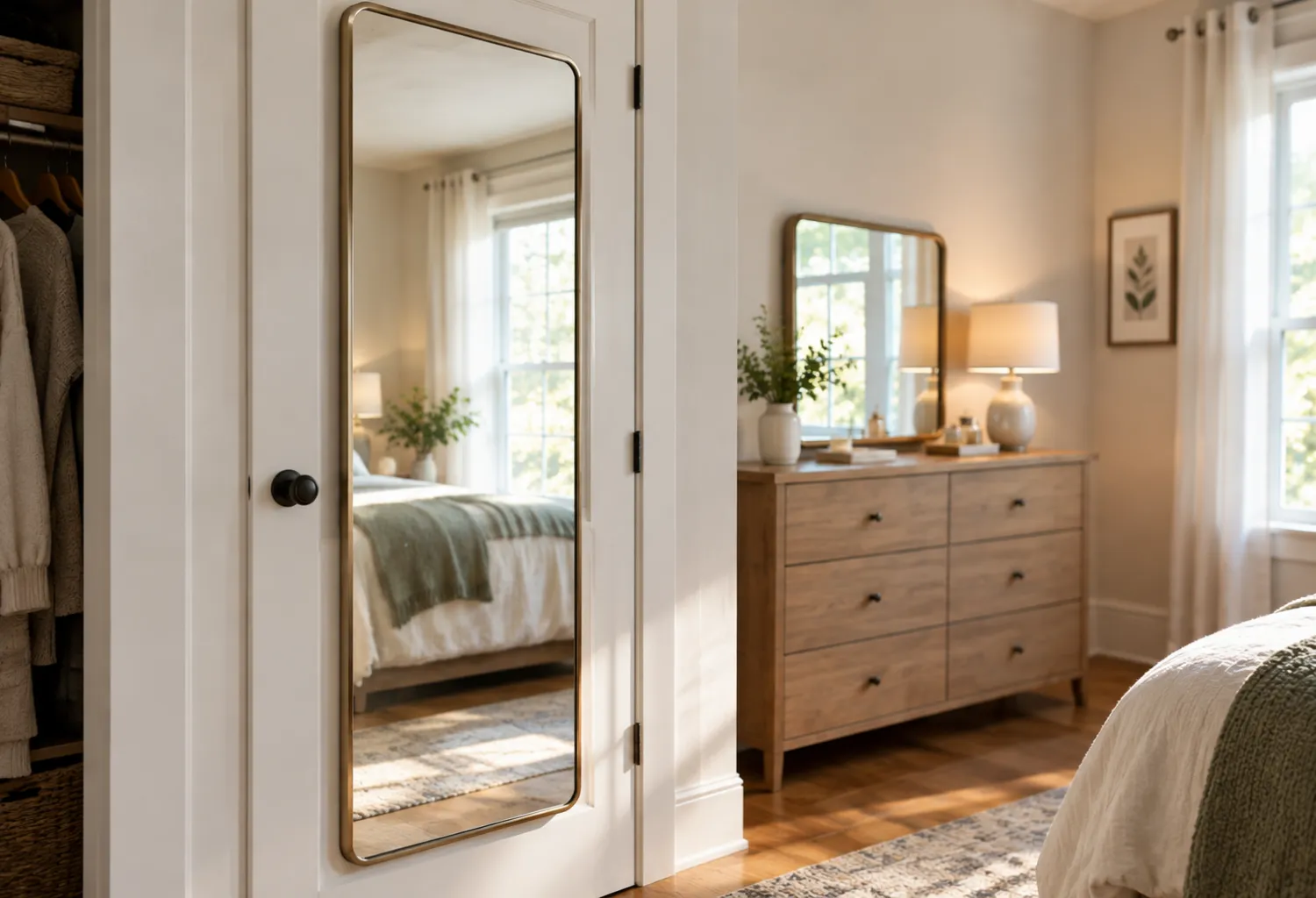
Getting ready at the same time is a lot easier with two mirrors instead of one shared full-length mirror everyone waits for. A full-length mirror on the back of the closet door paired with a smaller vanity mirror on the dresser lets both people get dressed without stepping on each other’s routine. This also adds light-reflecting surfaces to the room, which helps smaller bedrooms feel brighter and more open.
10. A Neutral Color Palette With Personal Accent Layers
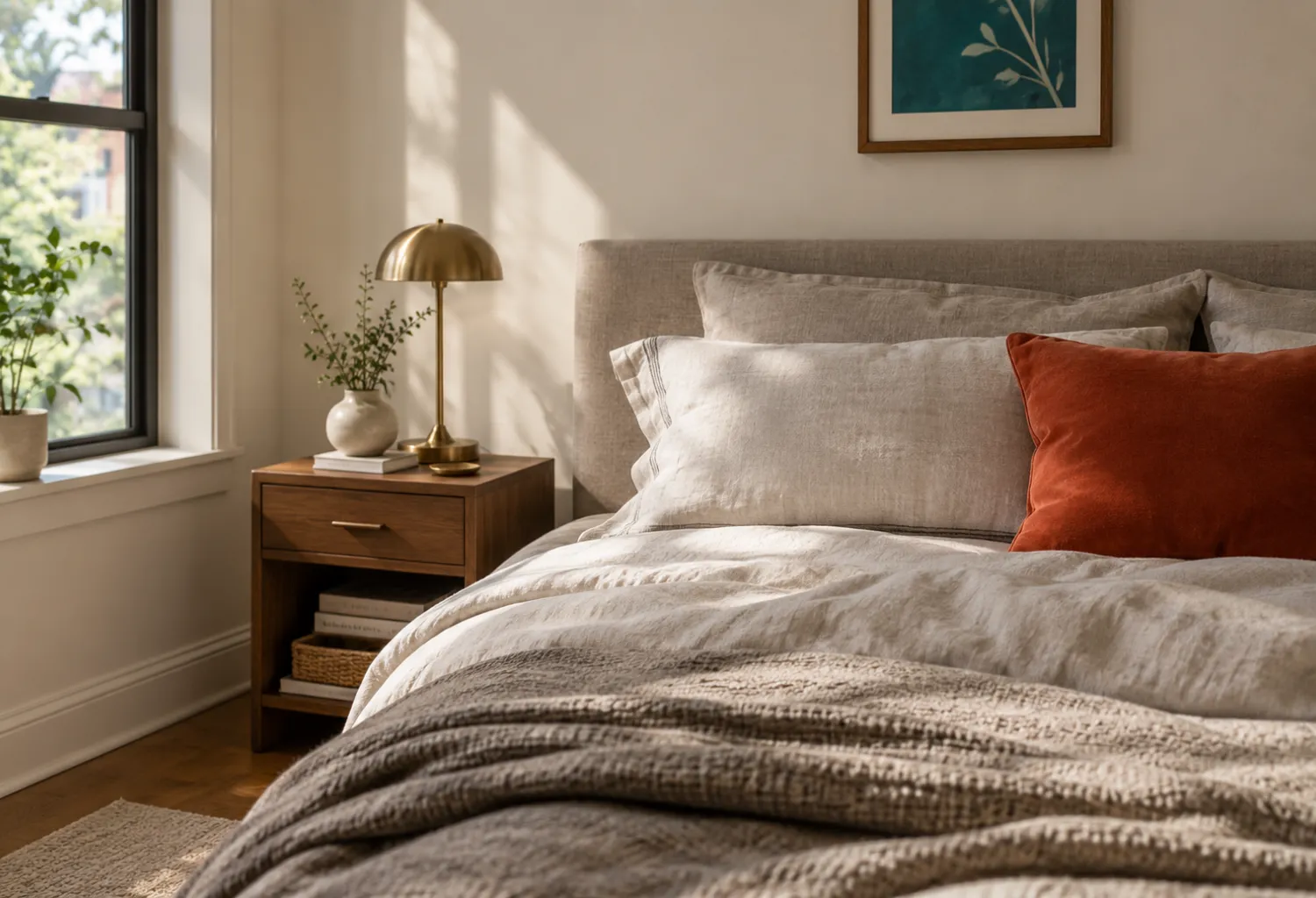
Two people often have different color preferences, and forcing one aesthetic onto both partners rarely feels comfortable long-term. A better approach is choosing a neutral base, like warm white walls, soft greige bedding, or natural wood tones, and then layering in each person’s personality through smaller accents. One partner’s favorite color might show up in a throw pillow or reading lamp, while the other’s shows up in artwork or a blanket at the foot of the bed. The result feels balanced instead of like one person’s taste took over the room.
11. Labeled Bins Inside the Closet
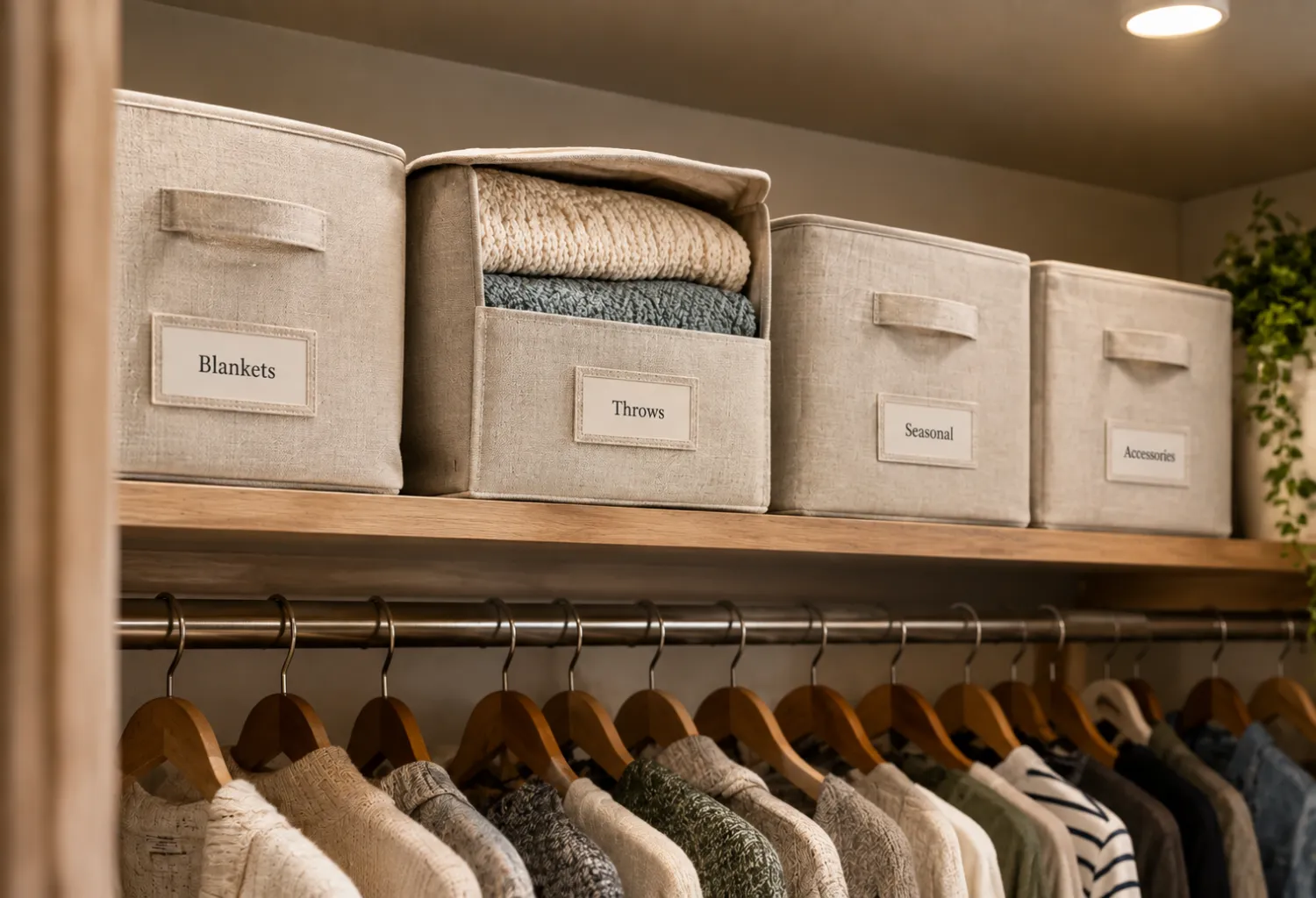
Closet shelves above hanging clothes tend to become a dumping ground for everything from extra blankets to old shoeboxes. Clear or labeled bins turn that same shelf into organized storage instead. Label bins by category, like “extra bedding,” “winter accessories,” or “shoes off-season,” so both partners know exactly where to put things back, which keeps the system working long after the initial organizing day.
12. A Shared Reading Nook With Separate Seating
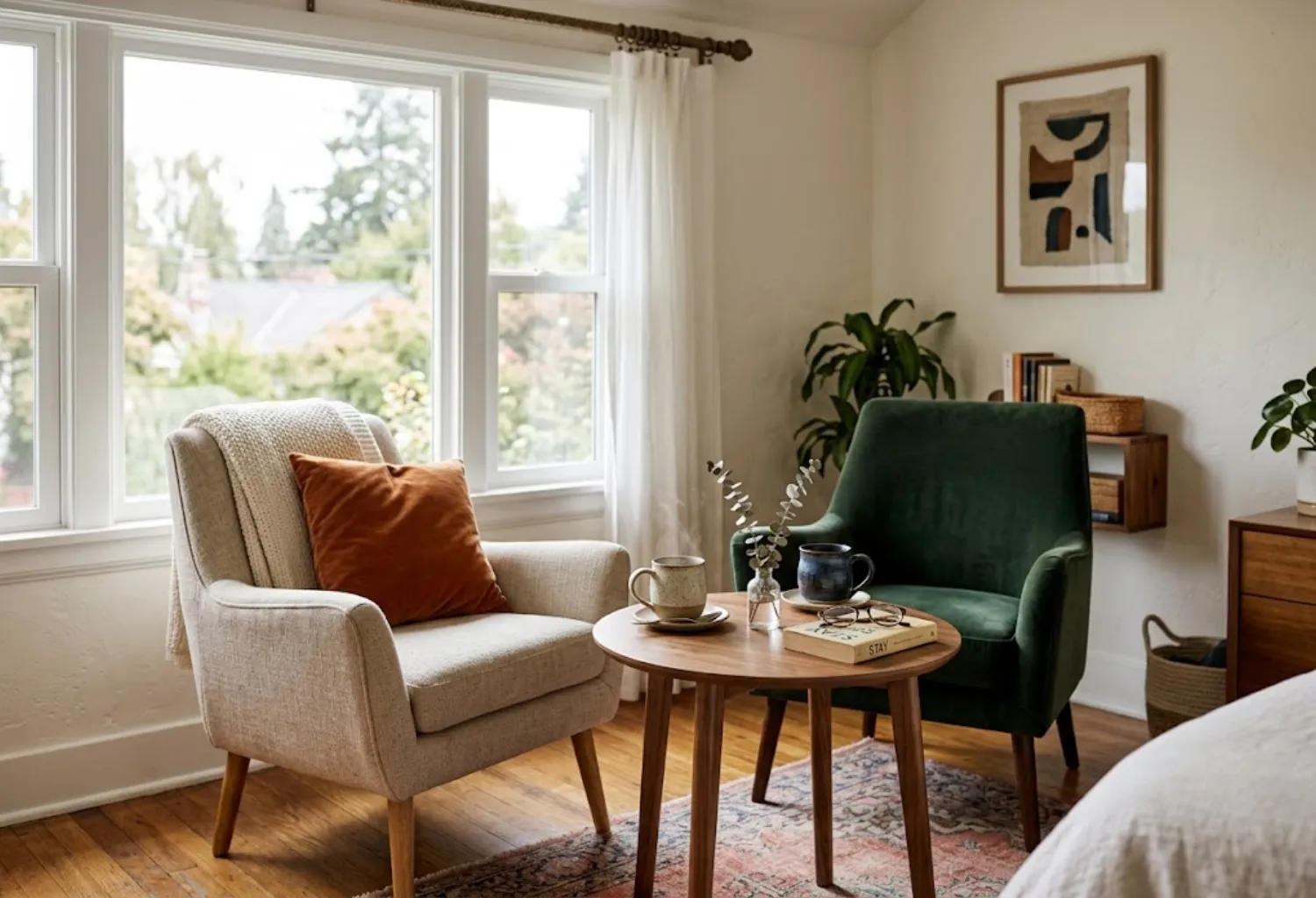
If space allows, a small reading corner gives both partners a spot to unwind without needing to be in bed to do it. Two accent chairs, or one chair and one small bench, positioned near a window with a shared side table in between, creates a spot for morning coffee or evening reading. This works particularly well for couples with different sleep schedules, since one person can wind down in the nook without disturbing the other.
13. Behind-the-Door Storage for Small Items
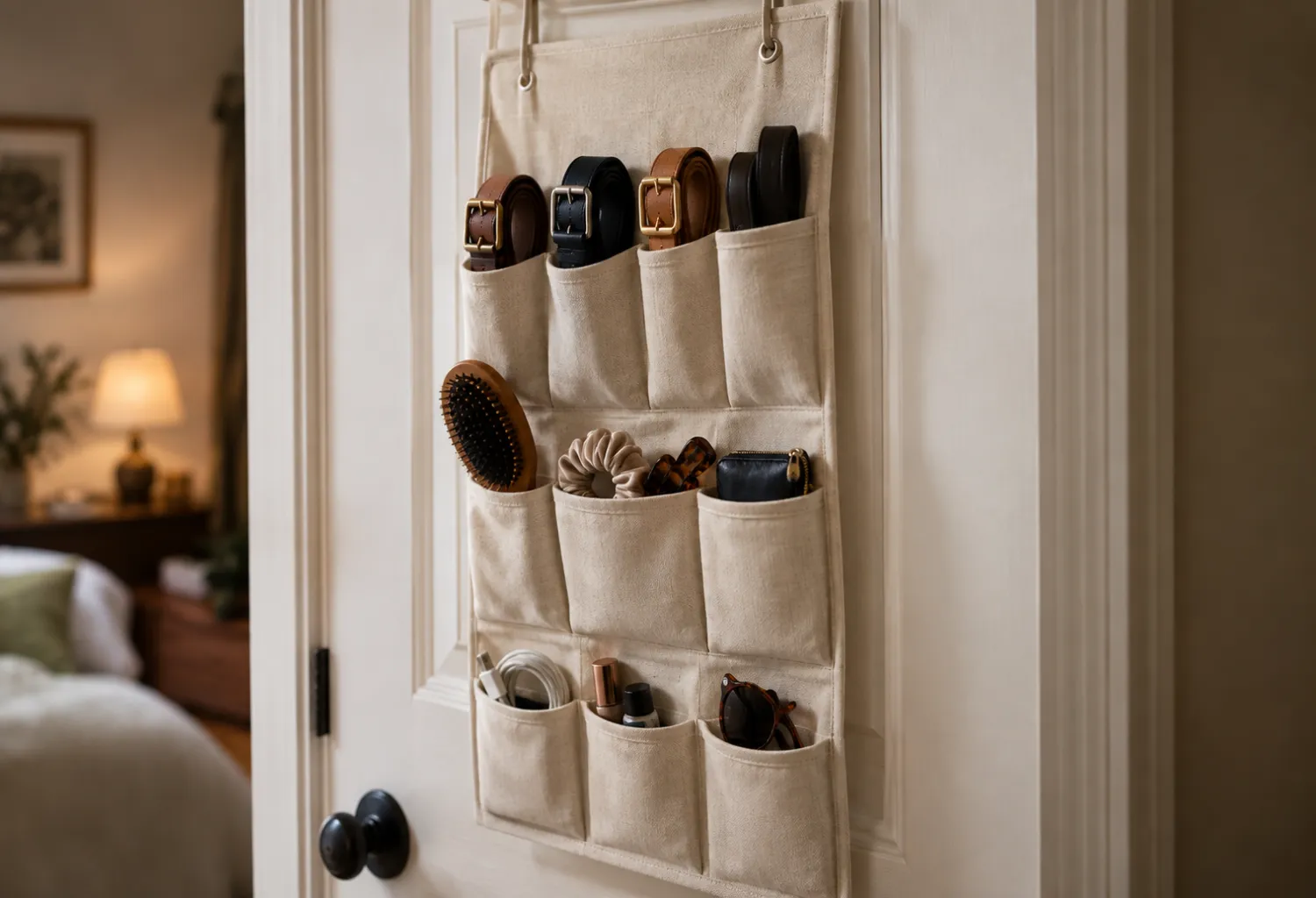
The back of the bedroom door is one of the most overlooked storage spots in a shared room. An over-the-door organizer with pockets works well for smaller items like hair accessories, belts, or phone accessories that would otherwise clutter a dresser top. Choose one with a canvas or fabric finish rather than clear plastic if you want it to blend into the door instead of standing out.
14. Two Distinct Reading Lights
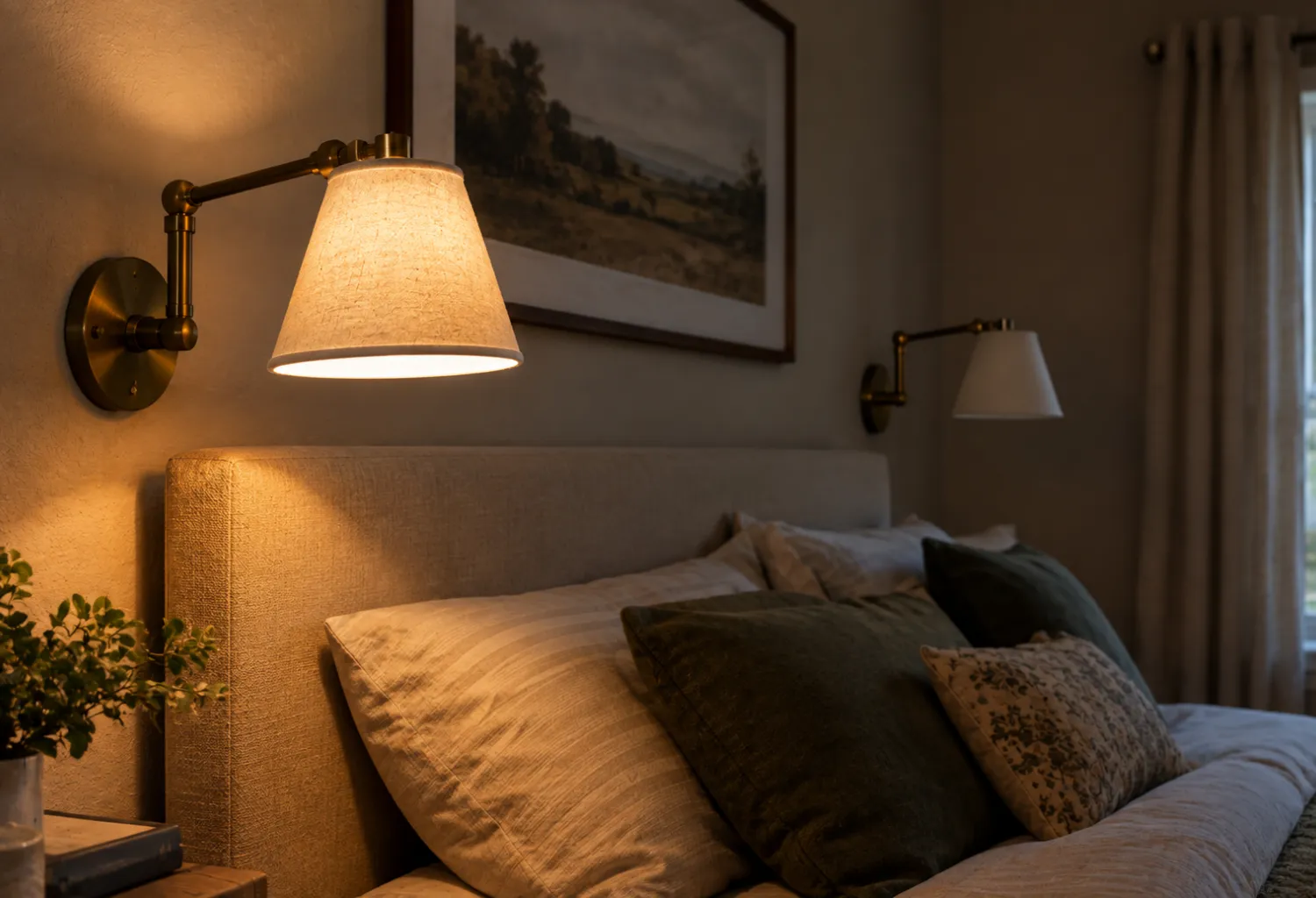
When one partner wants to read and the other wants to sleep, a single overhead light or lamp creates an obvious conflict. Individual reading lights, either clip-on lamps attached to the headboard or small wall-mounted swing-arm lights above each side of the bed, let one person read with focused light while the other sleeps in the dark. This small change solves one of the most common nightly disagreements in shared bedrooms.
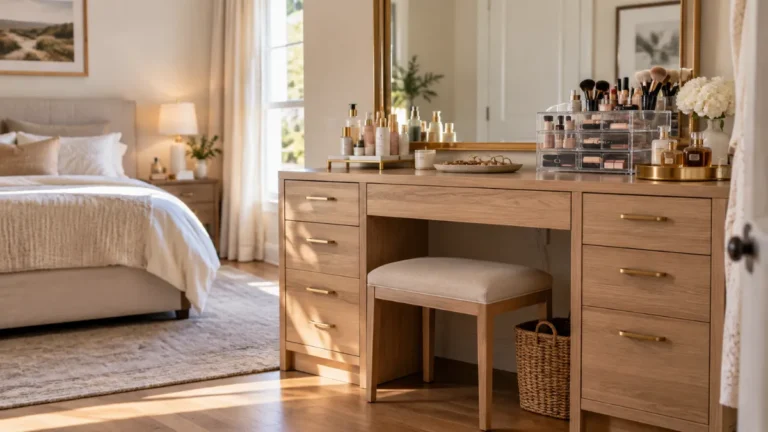
15. A Shared Dresser Top With Defined Zones
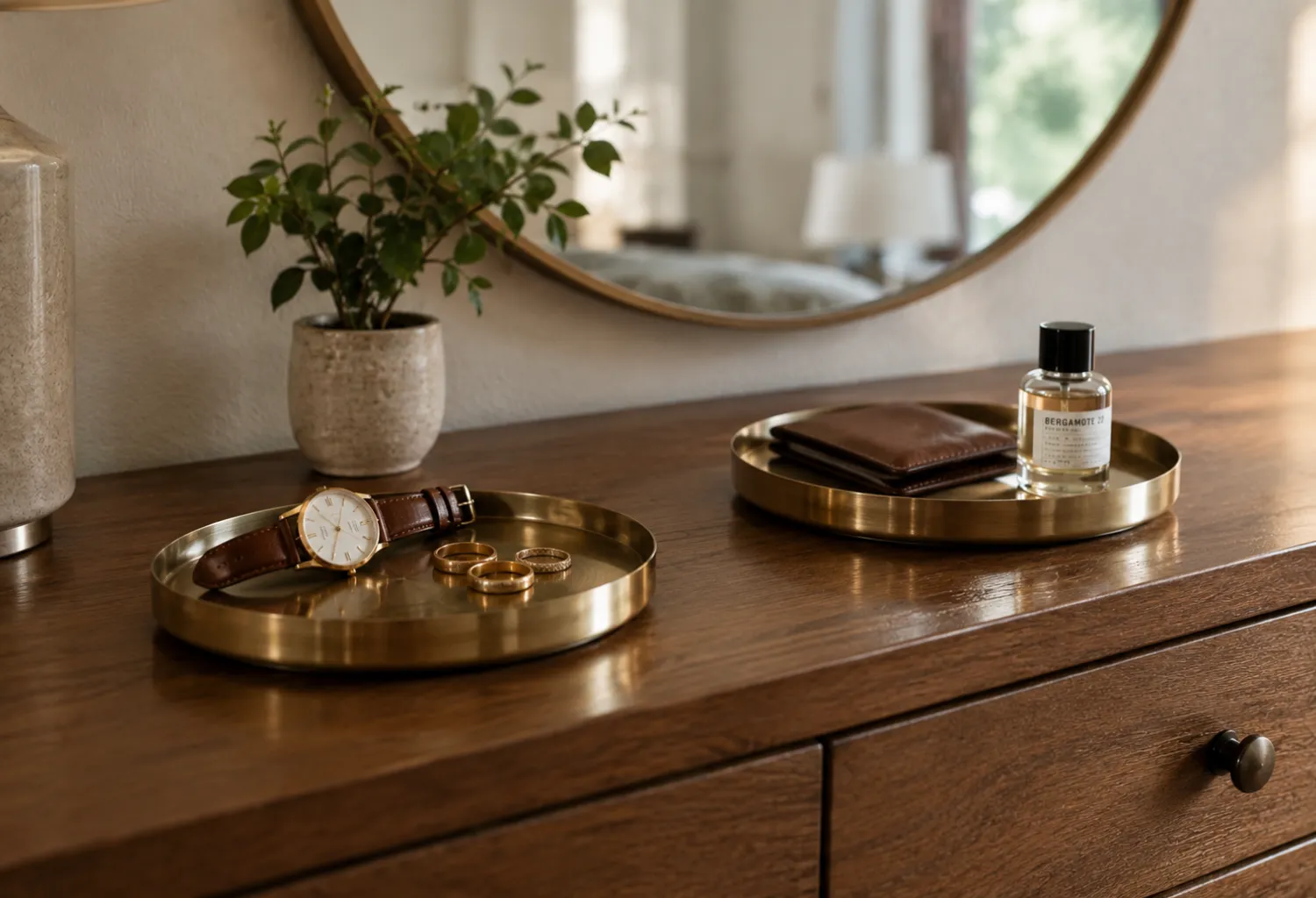
Even with individual drawers, dresser tops tend to become shared surfaces that get cluttered fast. Instead of leaving it open territory, divide the surface visually using trays. One tray holds one partner’s daily items, like watches, rings, or wallet, while a second tray on the opposite side holds the other partner’s essentials. This keeps a shared surface functional without either person’s things spreading into the other’s space.
16. Wall-Mounted Hooks for Robes and Bags
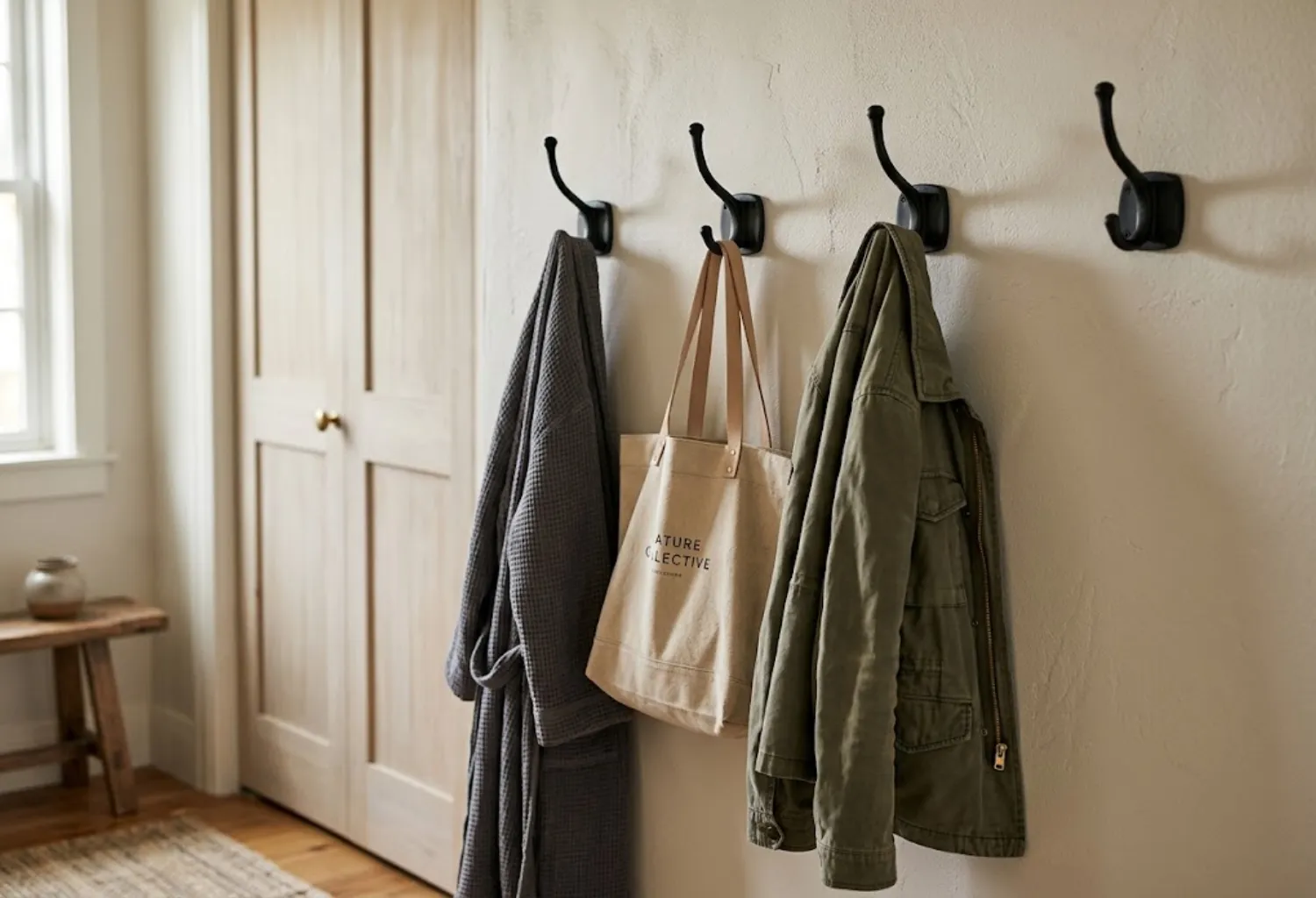
Robes, bags, and jackets often end up draped over chairs or door handles simply because there’s no proper place for them. A row of wall-mounted hooks near the closet, sized for two, gives both partners a dedicated spot to hang these items without creating visual clutter on furniture. Matte black or brushed brass hooks add a small design detail while solving a genuinely practical problem.
17. A Bench at the Foot of the Bed for Daily Overflow
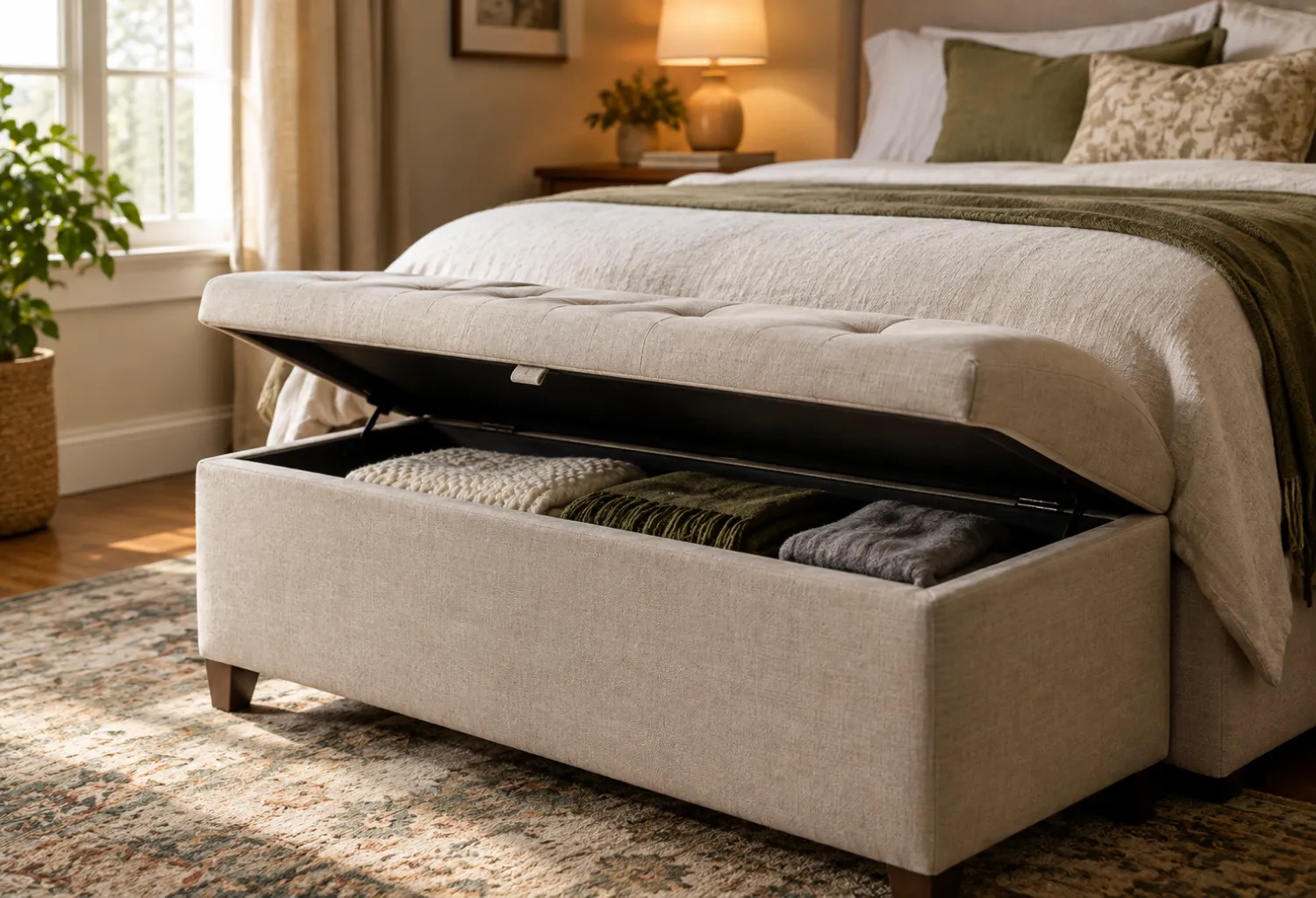
A storage bench at the end of the bed does double duty by giving both partners a spot to sit while getting dressed and a place to stash extra blankets, out-of-season pillows, or shoes that don’t have a home yet. Choose one with a lift-top lid rather than open shelving if you want the storage hidden, or one with cubbies underneath if visible baskets fit the room’s style better.
18. Separate Jewelry and Accessory Storage
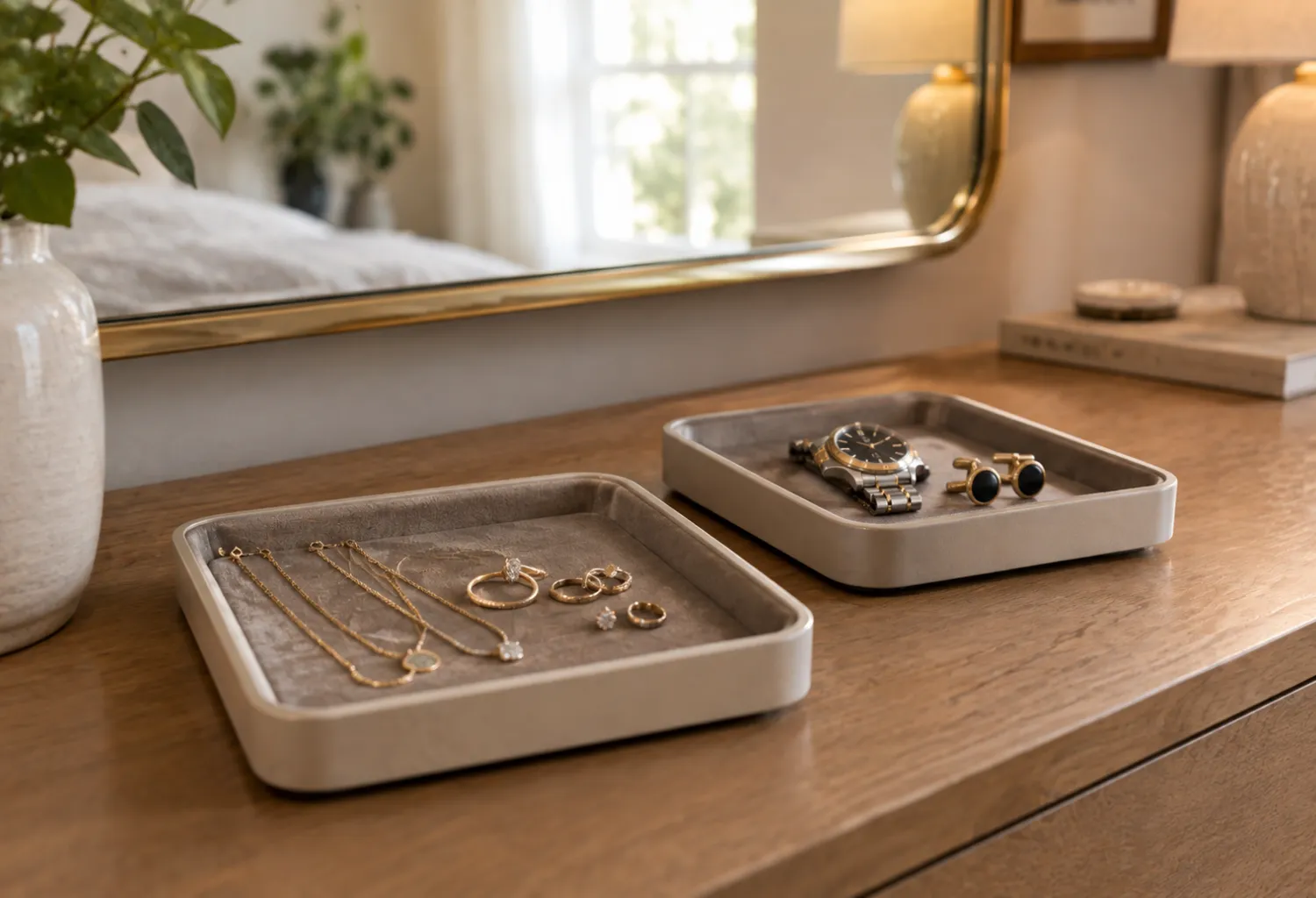
Combining two people’s jewelry, watches, or small accessories into one dish or box almost always leads to tangled chains and mismatched pairs. A two-tiered jewelry stand, or simply two separate small trays placed on opposite sides of the dresser, keeps each partner’s accessories untangled and easy to find without either person digging through the other’s things.
19. A Shared Vision Board or Memory Wall
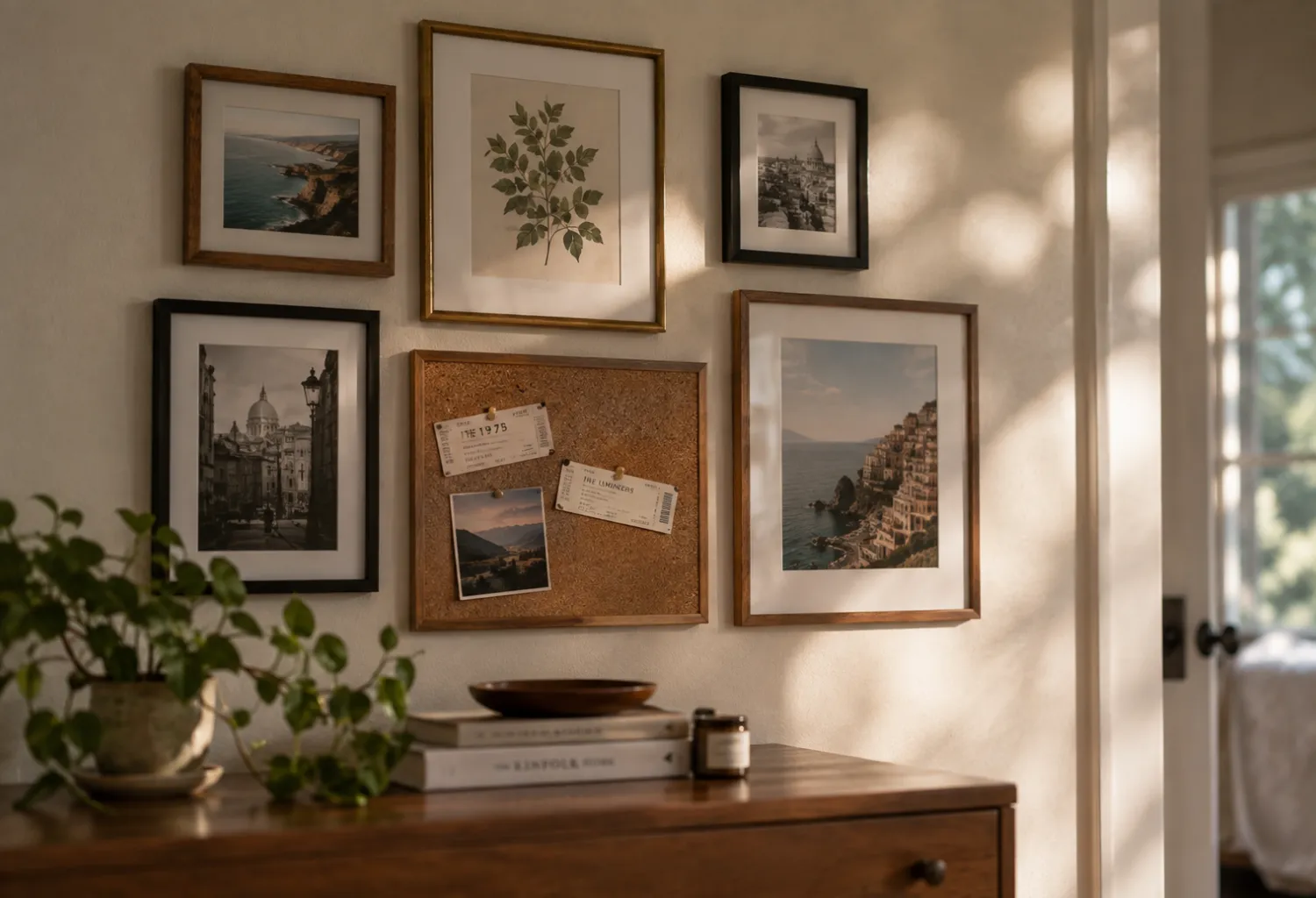
Not every organization idea has to be purely functional. A small gallery wall or cork board dedicated to photos, ticket stubs, or shared mementos gives the room a personal touch that reflects both partners rather than just one person’s decorating style. Keep it contained to one wall or a defined cluster of frames so it reads as an intentional design feature rather than random clutter.
20. A Weekly Reset Routine for the Whole Room
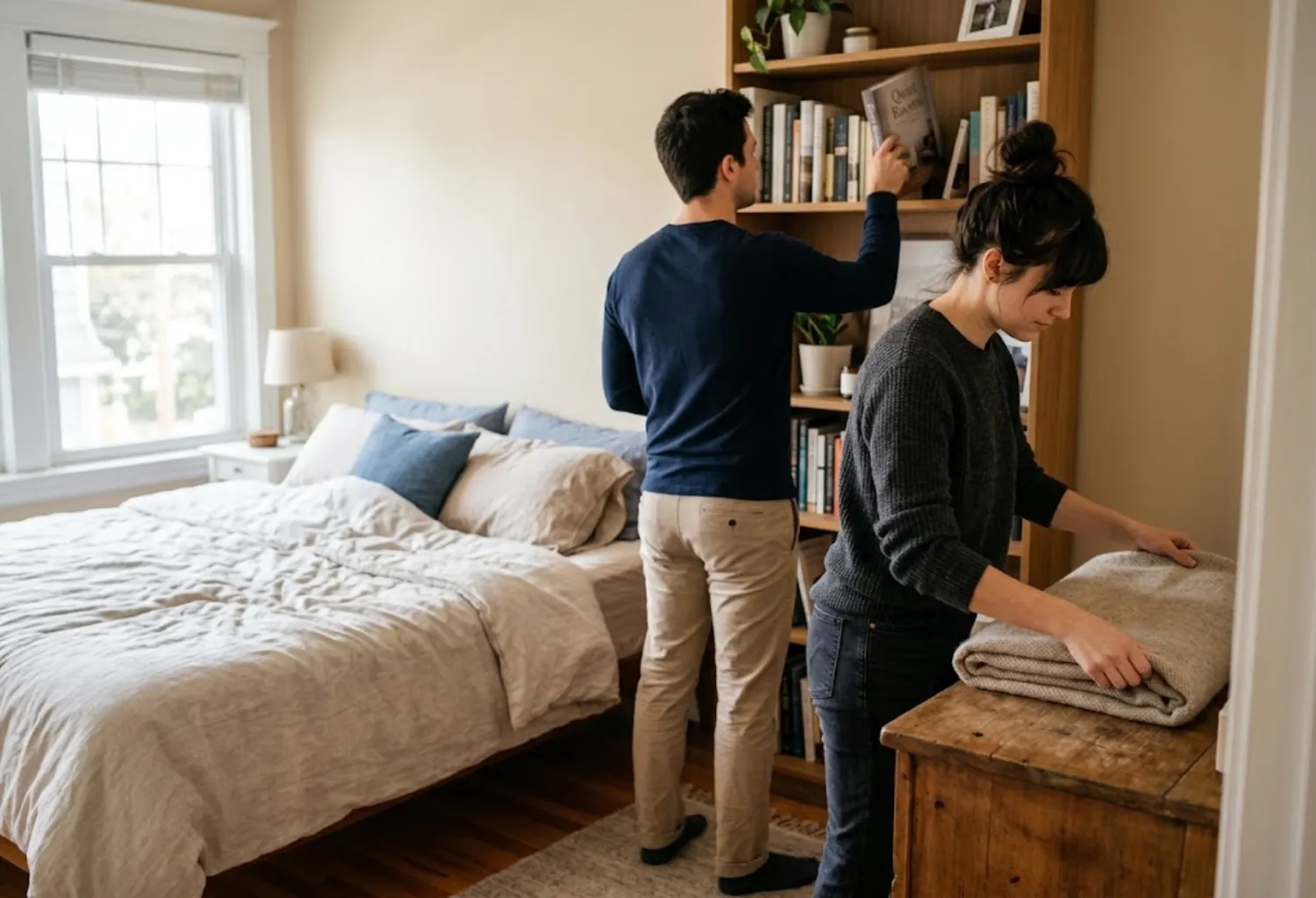
Organization systems only work if they’re maintained, and a shared bedroom collects clutter twice as fast as a solo one. Setting aside ten or fifteen minutes together once a week, whether that’s Sunday evening or Friday morning, to put stray items back in their designated spots keeps the whole system from falling apart. This is less about a specific storage product and more about a shared habit that keeps every other idea on this list actually working over time.
Conclusion
Not every one of these bedroom organization ideas for couples will fit your space or your routine, and that’s completely fine. A small bedroom might benefit most from vertical storage and under-bed bins, while a larger room has more room for a reading nook or a full memory wall. The ideas that involve dividing space clearly, like separate closet zones, individual nightstands, and defined dresser drawers, tend to solve the most common day-to-day friction for couples sharing a room. Start with whichever ideas address your biggest pain points right now, whether that’s tangled cords, mismatched laundry, or simply not having enough surface space, and build from there. A shared bedroom doesn’t need to look like a showroom to feel organized; it just needs a system that makes sense for both people living in it.