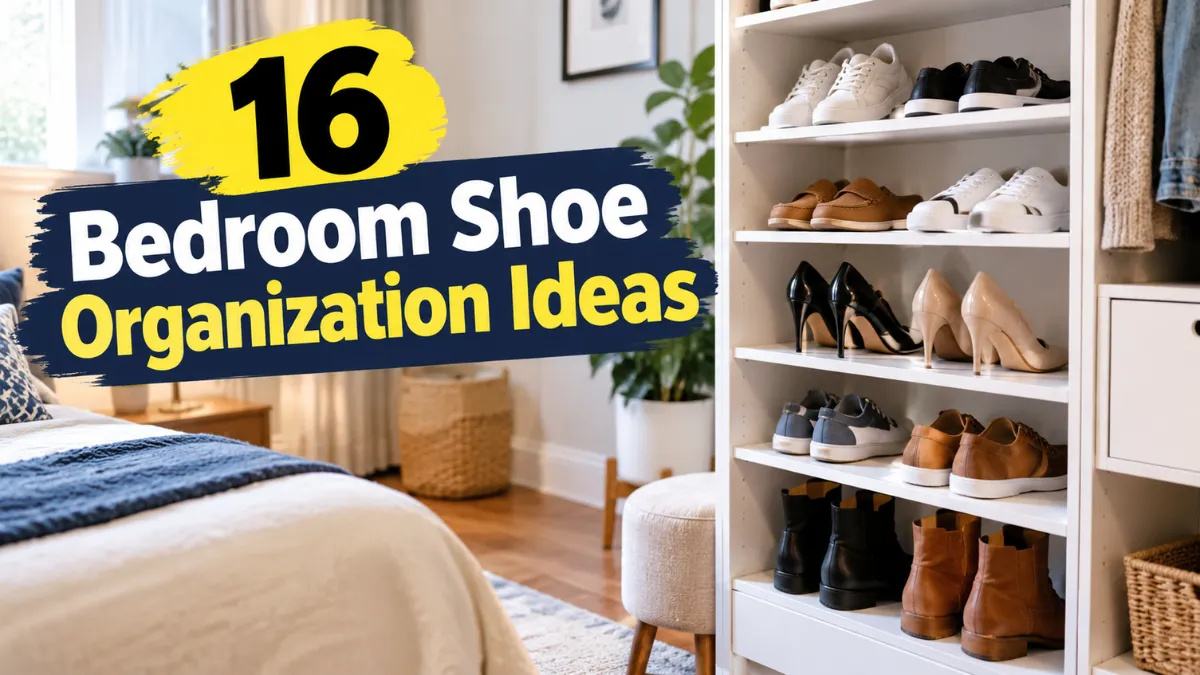
16 Bedroom Shoe Organization Ideas for a Tidy Space
Shoes have a funny way of taking over a bedroom, even when the rest of the room is neat. The good news is that you don’t need a huge closet to keep them under control. These Bedroom Shoe Organization Ideas use overlooked spaces such as the back of a door, under the bed, closet walls, and even the foot of the bed to keep shoes easy to find and off the floor.
1. Under-Bed Shoe Storage
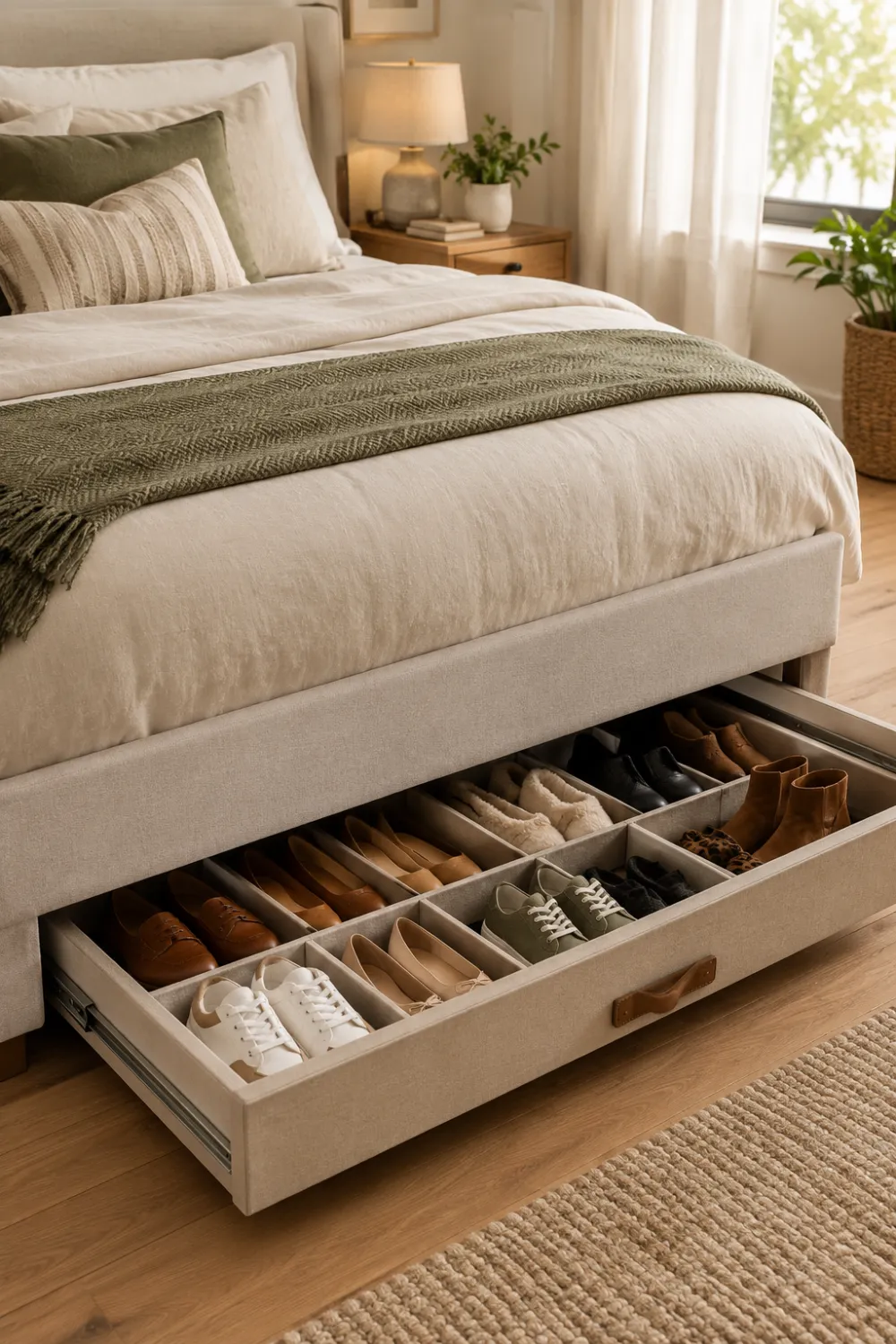
The space beneath your bed can hold more shoes than you might expect. Use a shallow organizer with dividers to separate pairs and keep them protected from dust. It works especially well for seasonal shoes or pairs you don’t wear every day. Choose a container with handles or wheels so you can pull it out without moving the bed.
2. Inside-the-Door Shoe Organizer
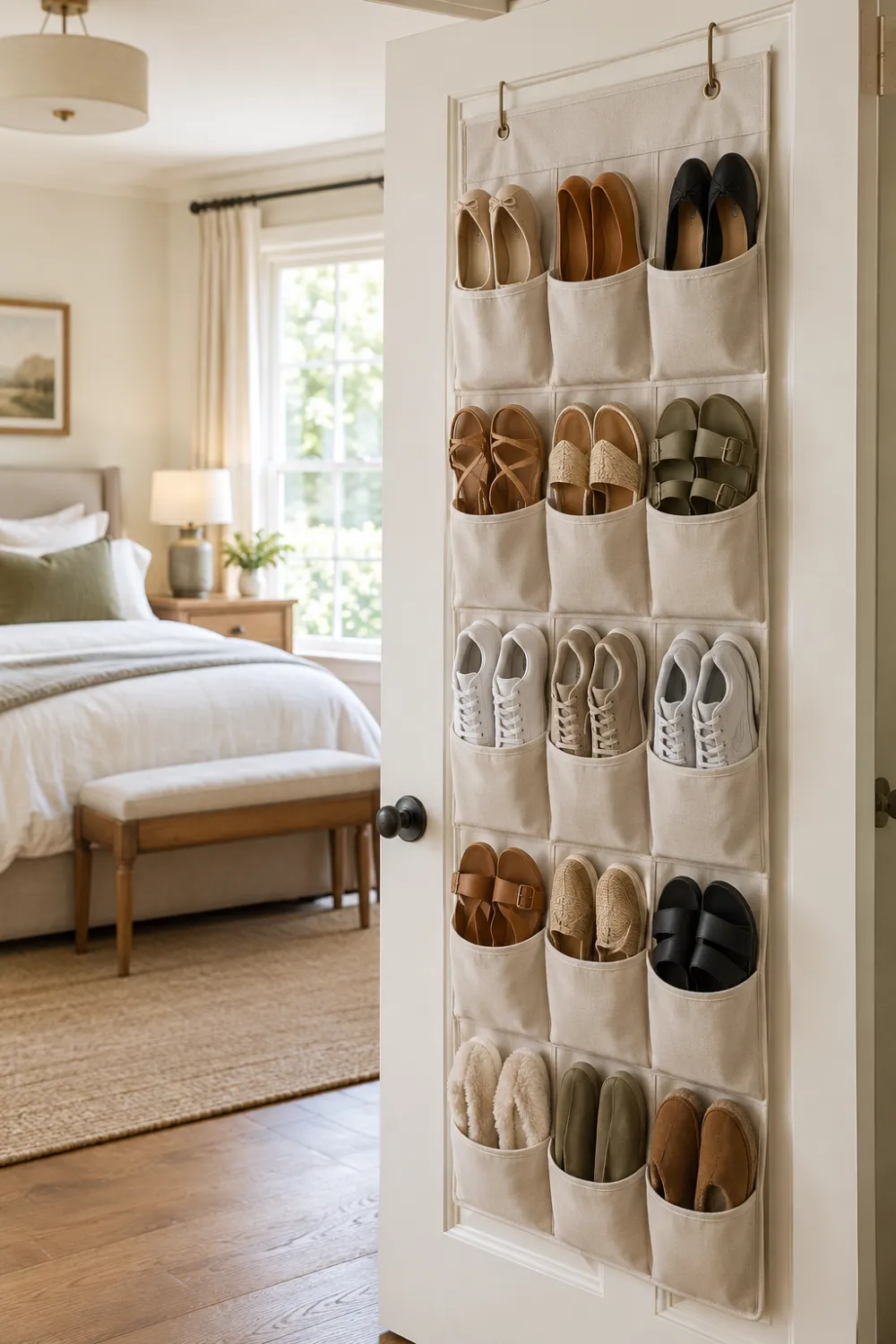
The back of a bedroom or closet door is useful storage space that often goes completely unused. A hanging organizer with individual pockets can hold flats, sandals, slippers, and lightweight sneakers while keeping the floor clear. Clear pockets make it easier to spot a pair quickly.
3. Slim Tilt-Out Shoe Cabinet
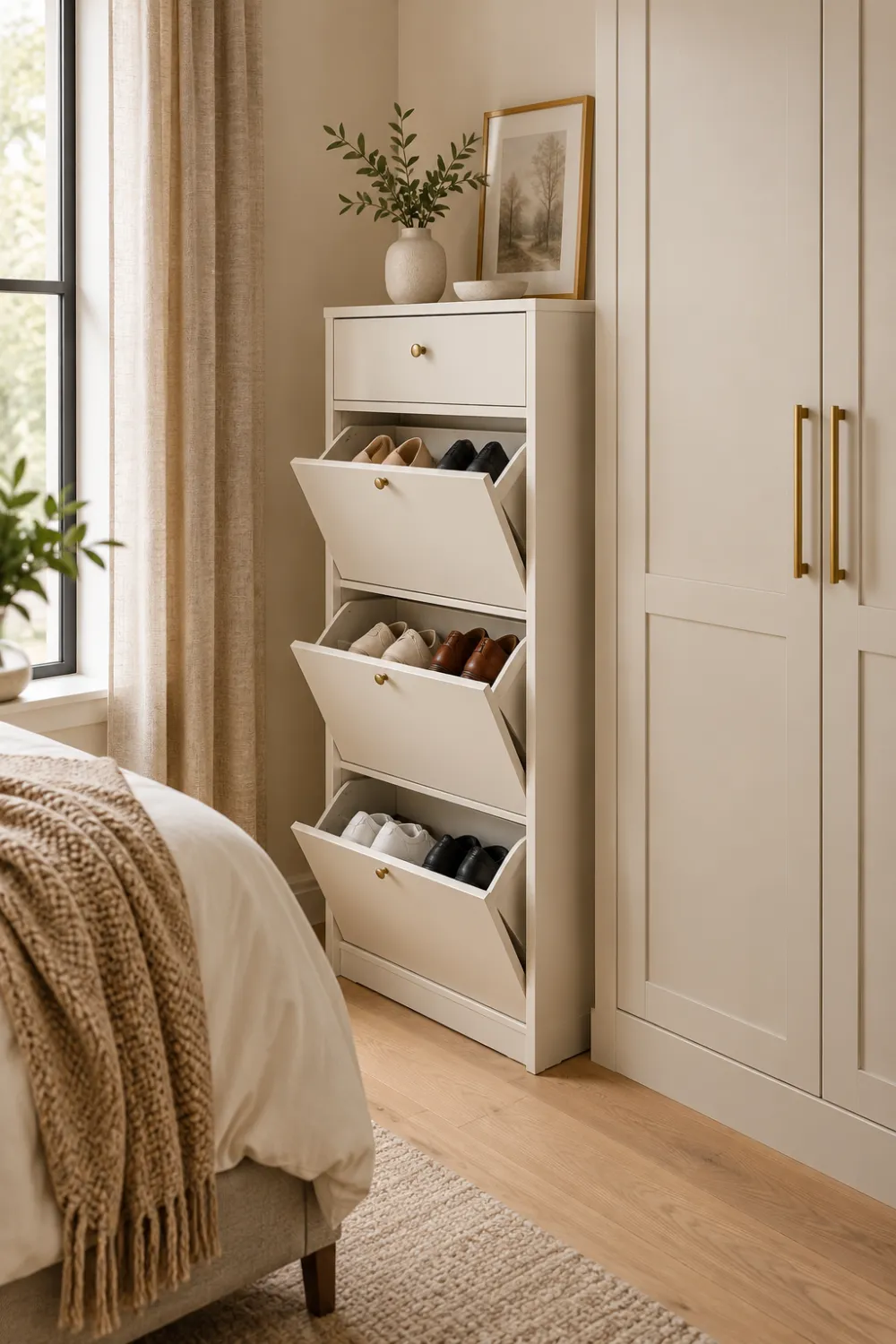
A narrow tilt-out cabinet is a smart choice when floor space is tight. Its shallow design can sit against a bedroom wall without making the room feel crowded. Keep everyday shoes in the easiest-to-reach compartments and less-used pairs higher up. The flat top can also hold a small lamp, framed photo, or tray for keys.
4. Shoe Storage at the Foot of the Bed
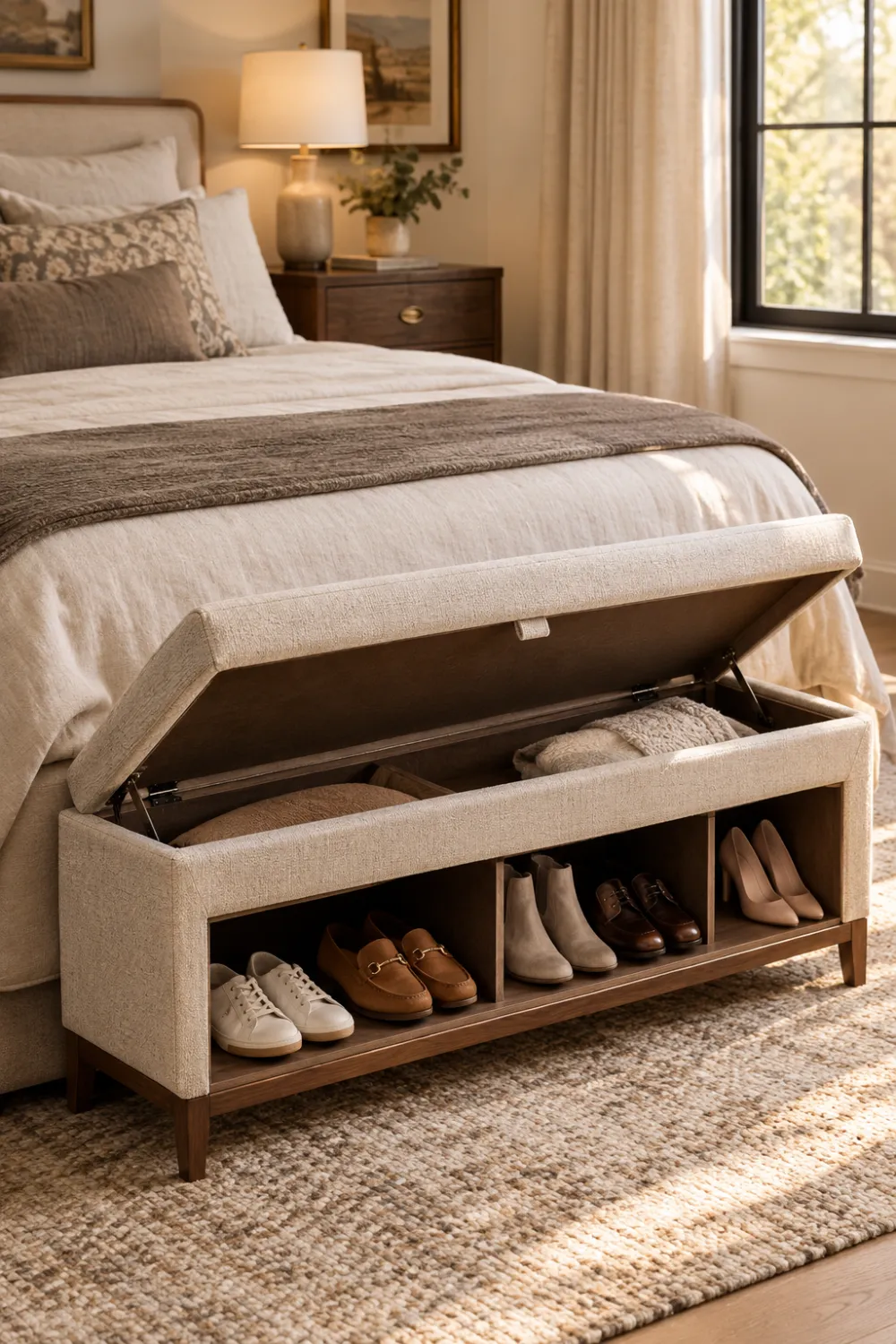
Turn the empty space at the foot of your bed into a useful shoe station with a storage bench. Choose one with cubbies underneath or a lift-up seat for hidden storage. It gives you a comfortable place to sit while getting dressed and keeps frequently worn shoes close without scattering them around the room.
5. Open Closet Shoe Shelves
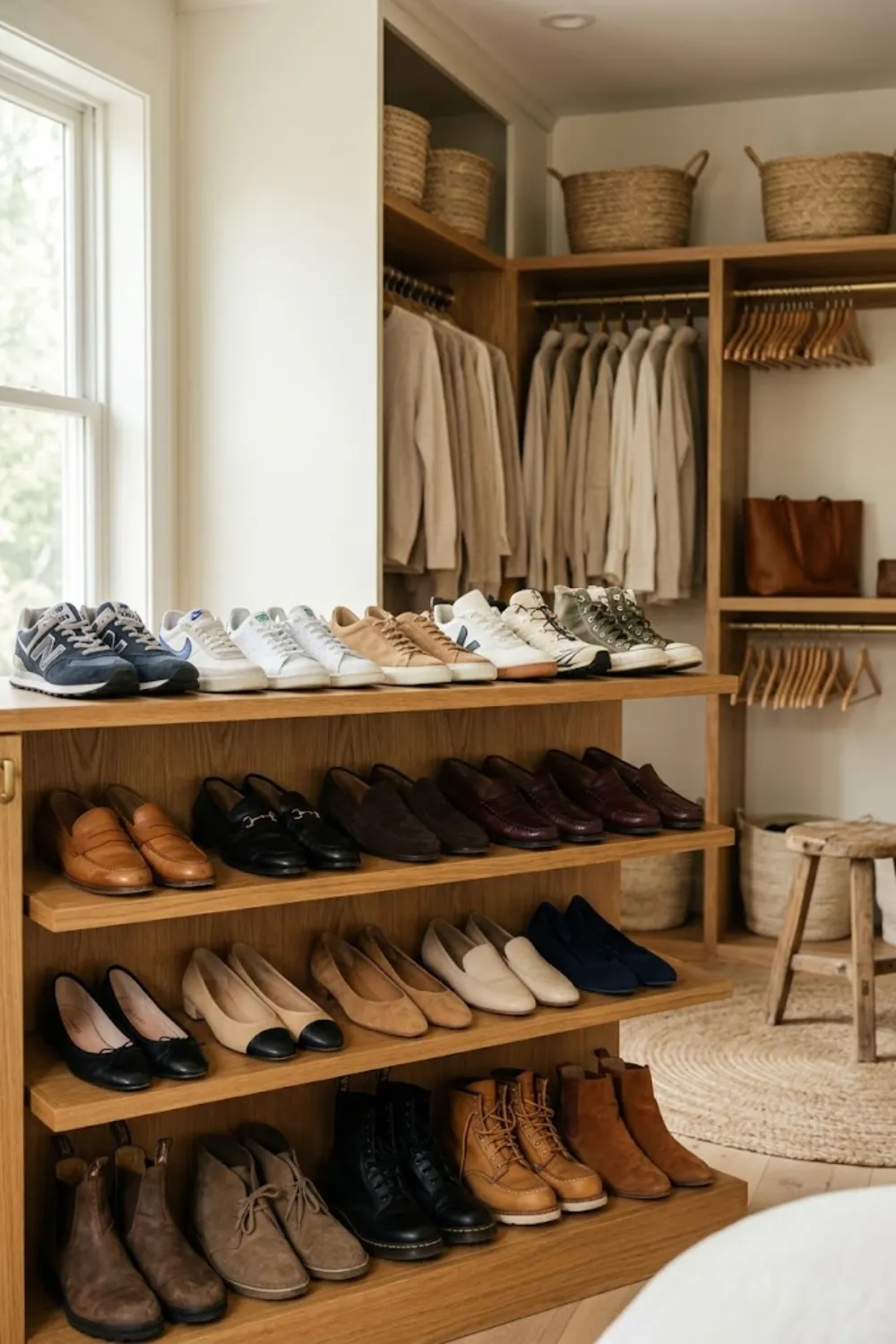
If your closet has unused space near the bottom, add low shoe shelves instead of leaving pairs in a loose pile. Open shelves let you see what you own without pulling boxes apart. Arrange everyday shoes at eye or hand level and reserve lower shelves for boots or occasional footwear. Dedicated open storage can also make a large collection easier to browse.
6. Clear Shoe Boxes
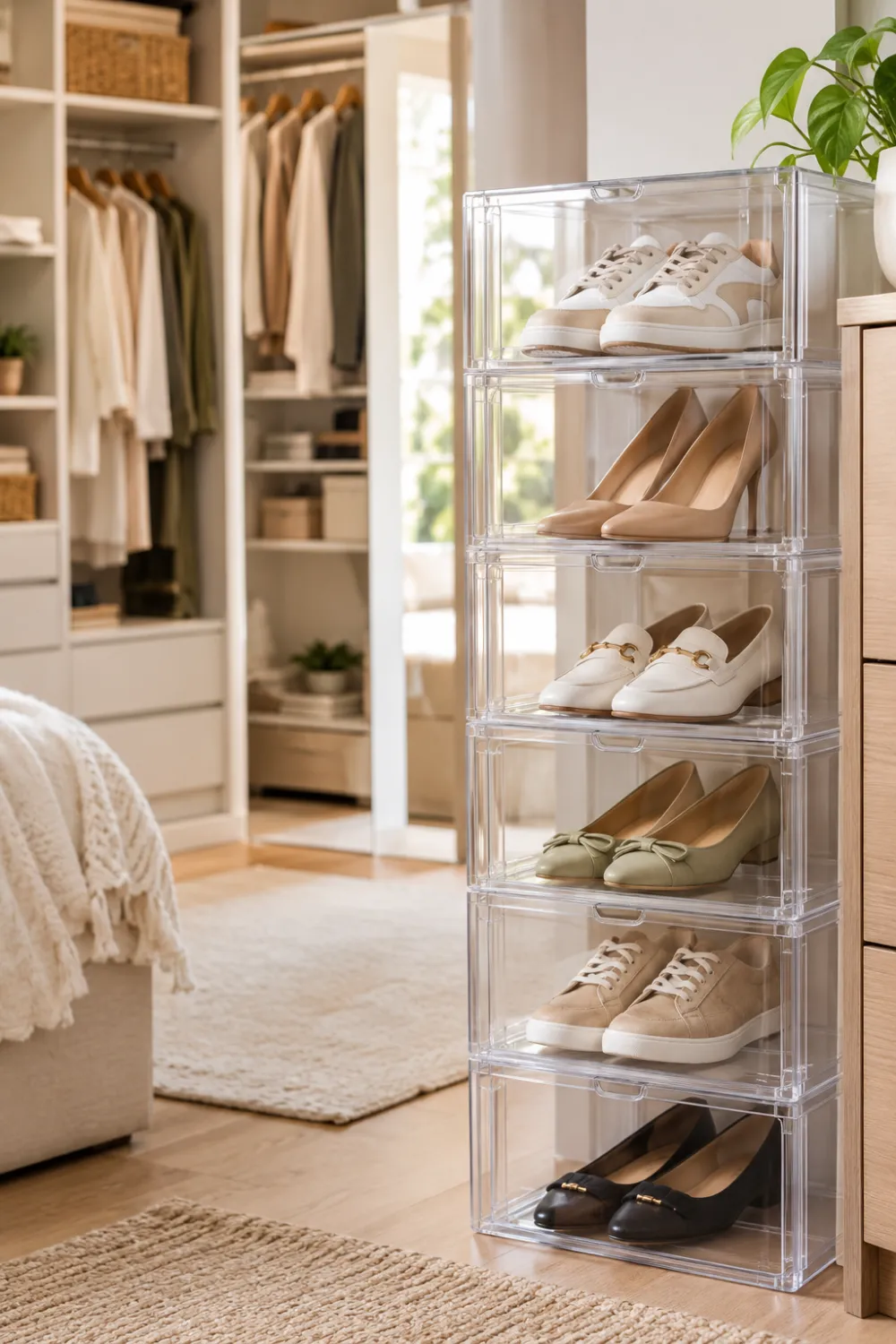
Clear boxes are handy when you want shoes protected but still visible. Stack matching boxes inside the closet or along a shelf, placing the pairs you wear most often within easy reach. Front-opening designs are particularly convenient because you can access a lower pair without removing everything above it.
7. Cube Storage Shoe Grid
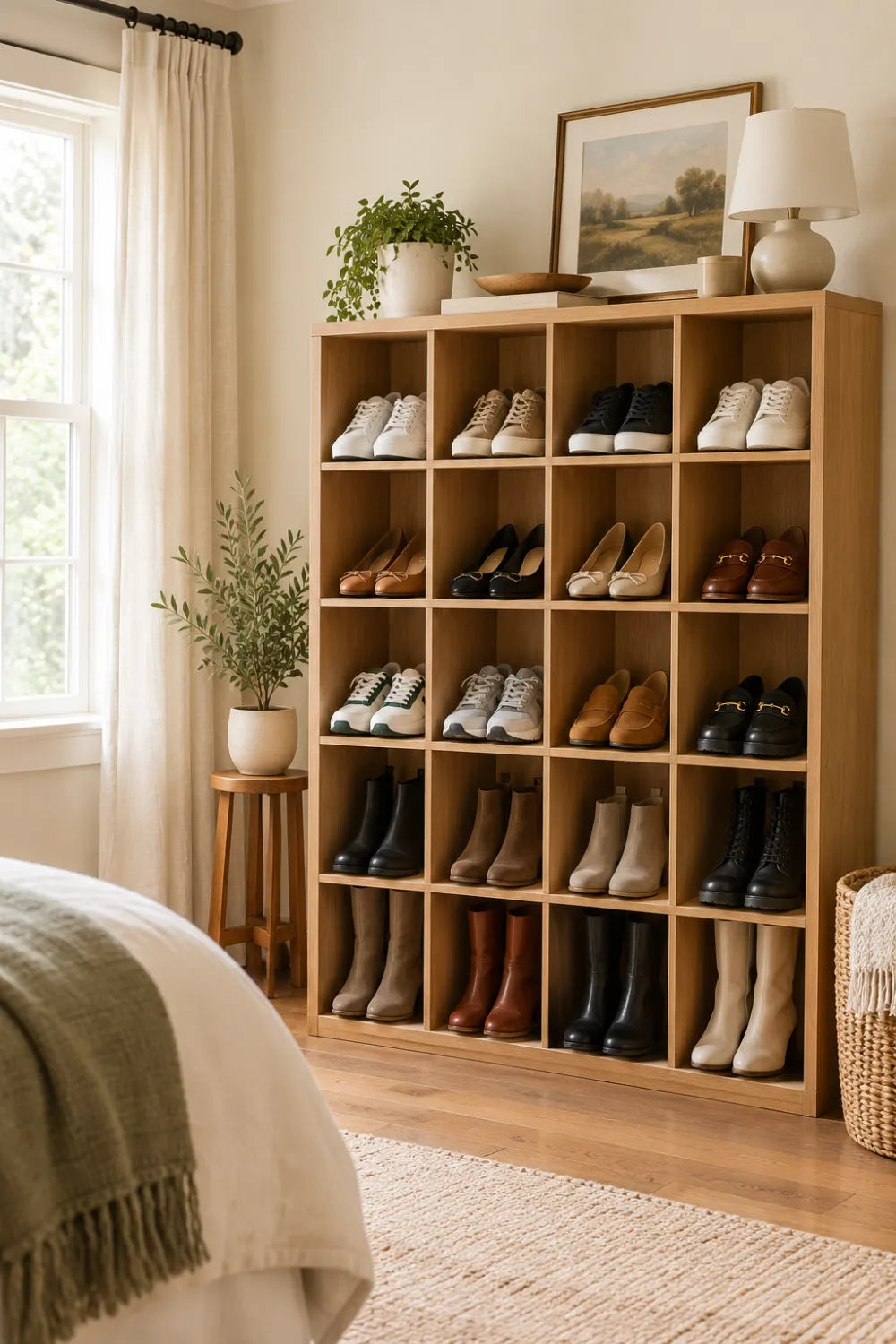
A cube organizer gives each pair its own defined space. Use larger cubes for sneakers and boots, while smaller footwear can share a compartment with a simple divider. This works well along a bedroom wall or inside a walk-in closet. If the organizer has an unfinished top, use it for a small basket, folded clothing, or a few everyday accessories.
8. Rolling Shoe Rack
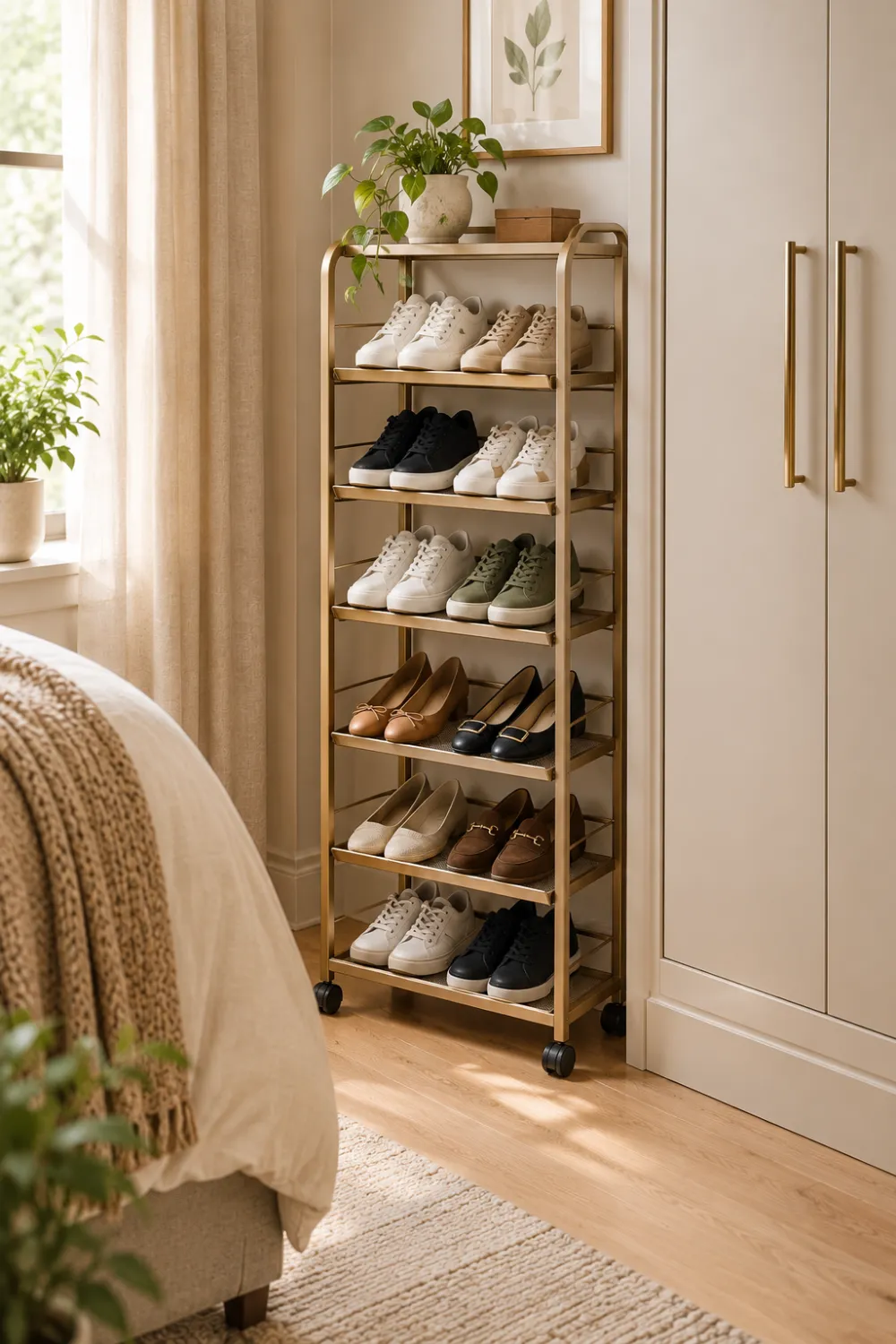
A rolling rack is useful when your shoe collection needs to move between spaces. Keep it beside the closet when choosing an outfit, then roll it back into the closet when you want the bedroom floor clear. This option works particularly well when you have more floor space than closet space and want easy access to many pairs.
9. Wall-Mounted Shoe Rack
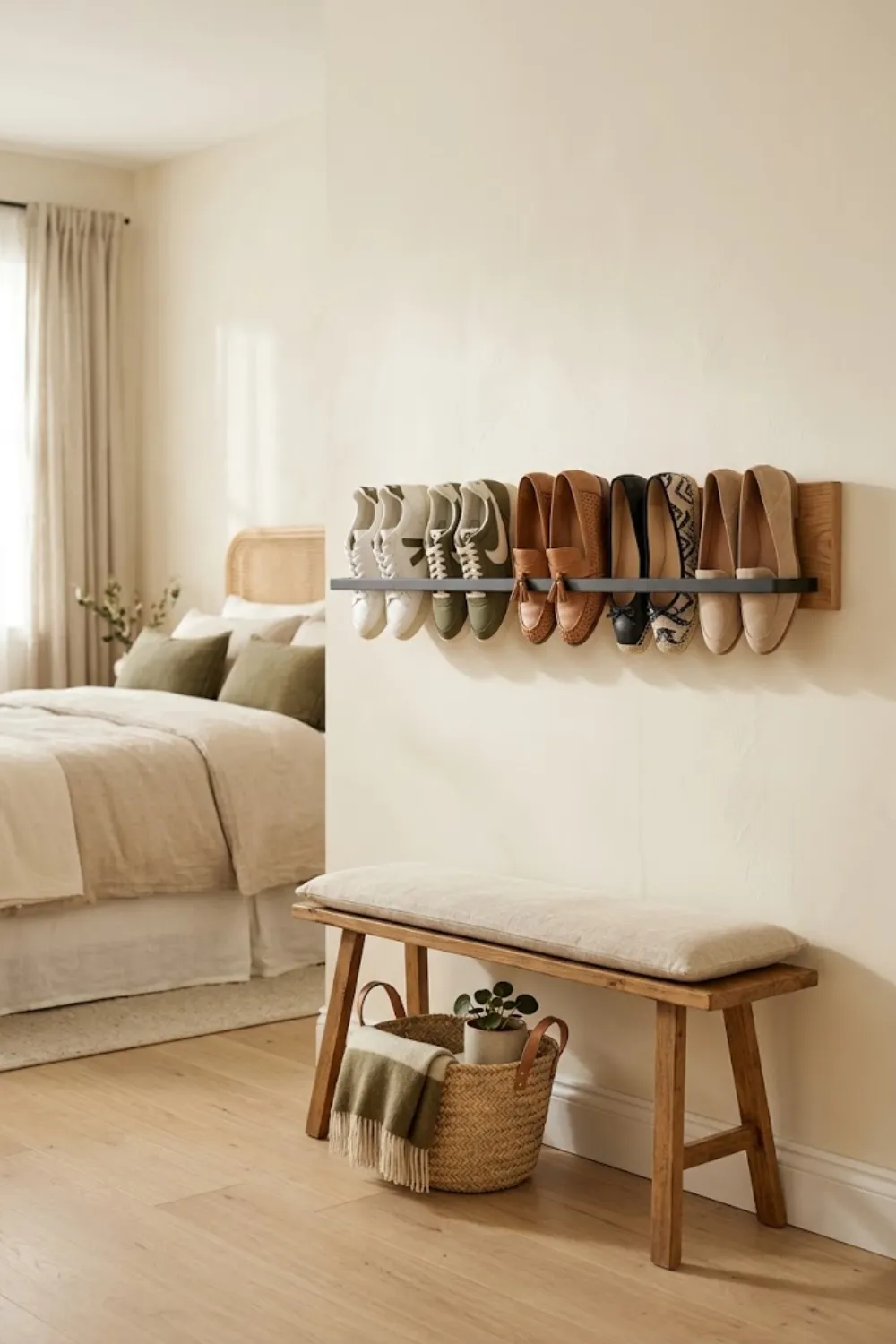
Make use of vertical wall space with a wall-mounted rack. It keeps shoes off the floor while giving each pair a visible place to stay. Install one inside a walk-in closet, along a dressing area, or on a bedroom wall that would otherwise remain empty. Keep the most-used pairs at a comfortable height so the rack stays practical rather than purely decorative.
10. Hanging Shoe Organizer in the Closet
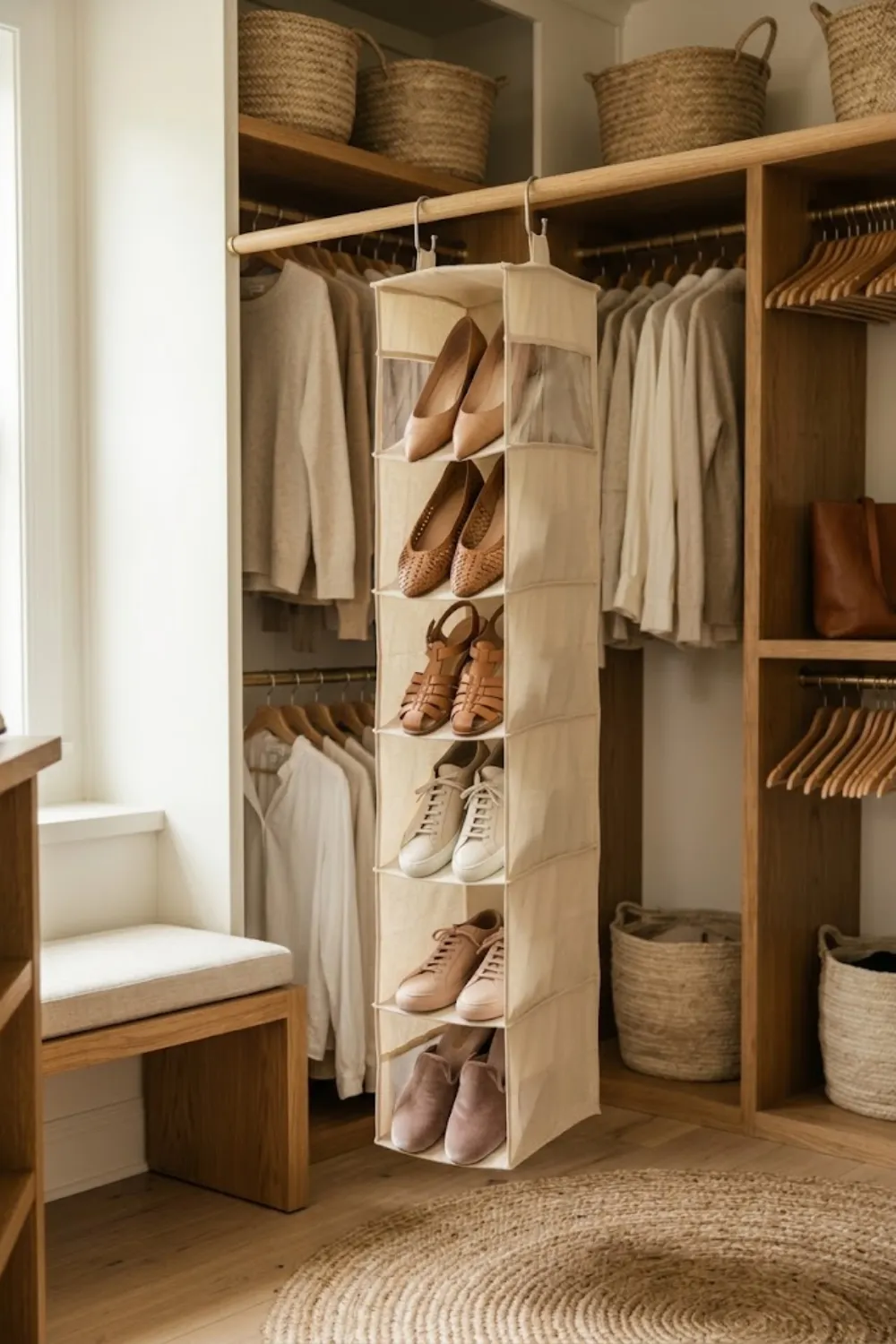
If your closet has a strong hanging rod, use some of that vertical space for shoes. A hanging organizer creates several compartments without taking up another section of the closet floor. It is especially useful for flats, sandals, slippers, and other lightweight footwear. Keep heavier shoes on shelves so the hanging organizer doesn’t become difficult to manage.
11. Narrow Shoe Cabinet Beside the Wardrobe
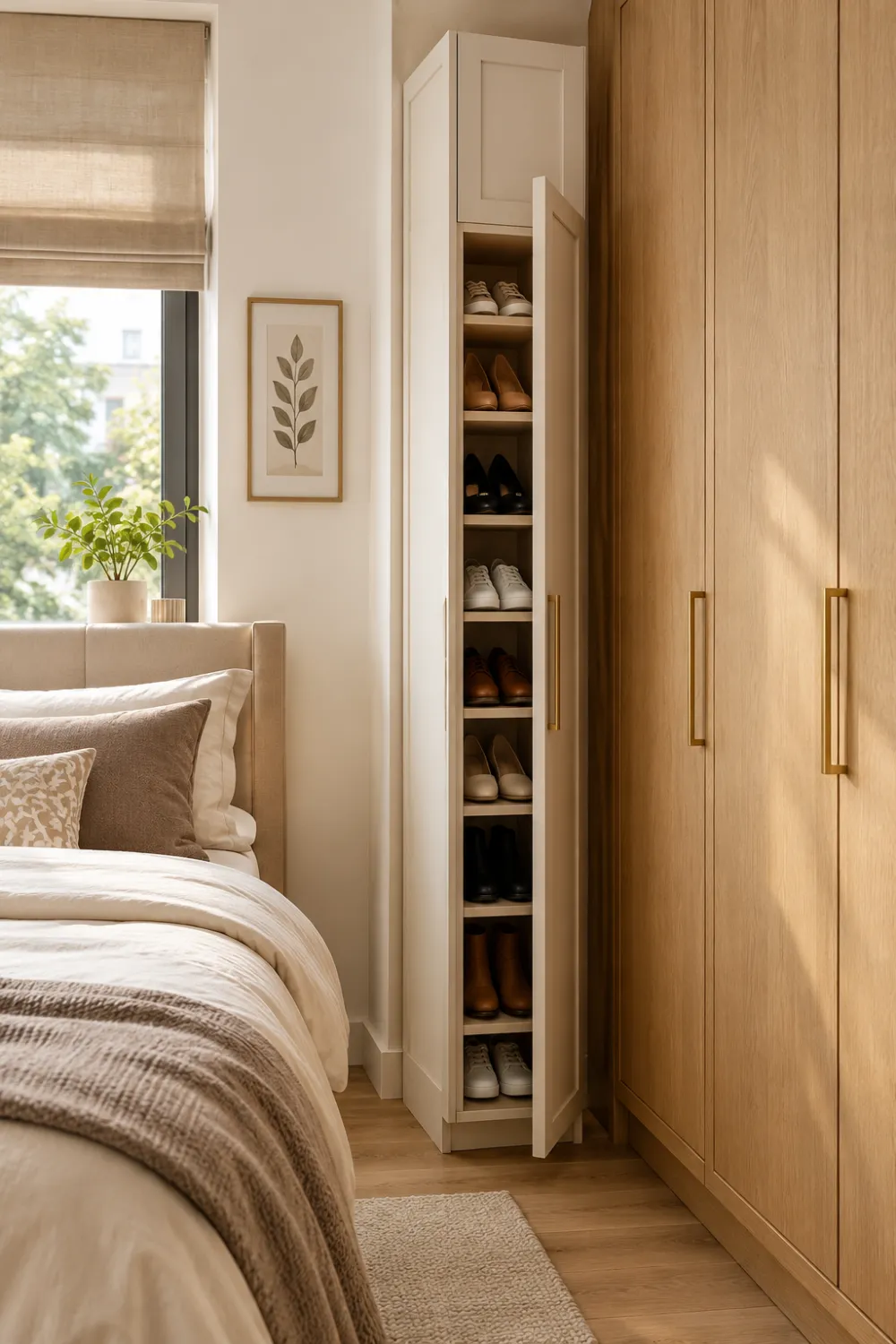
A narrow cabinet can fit into the small gap beside a wardrobe or dresser. Look for a shallow design with doors that keep the shoes hidden when the cabinet is closed. This is a good choice when you want the bedroom to look calm and uncluttered rather than having an open rack on display.
12. Bedroom Shoe Pegboard
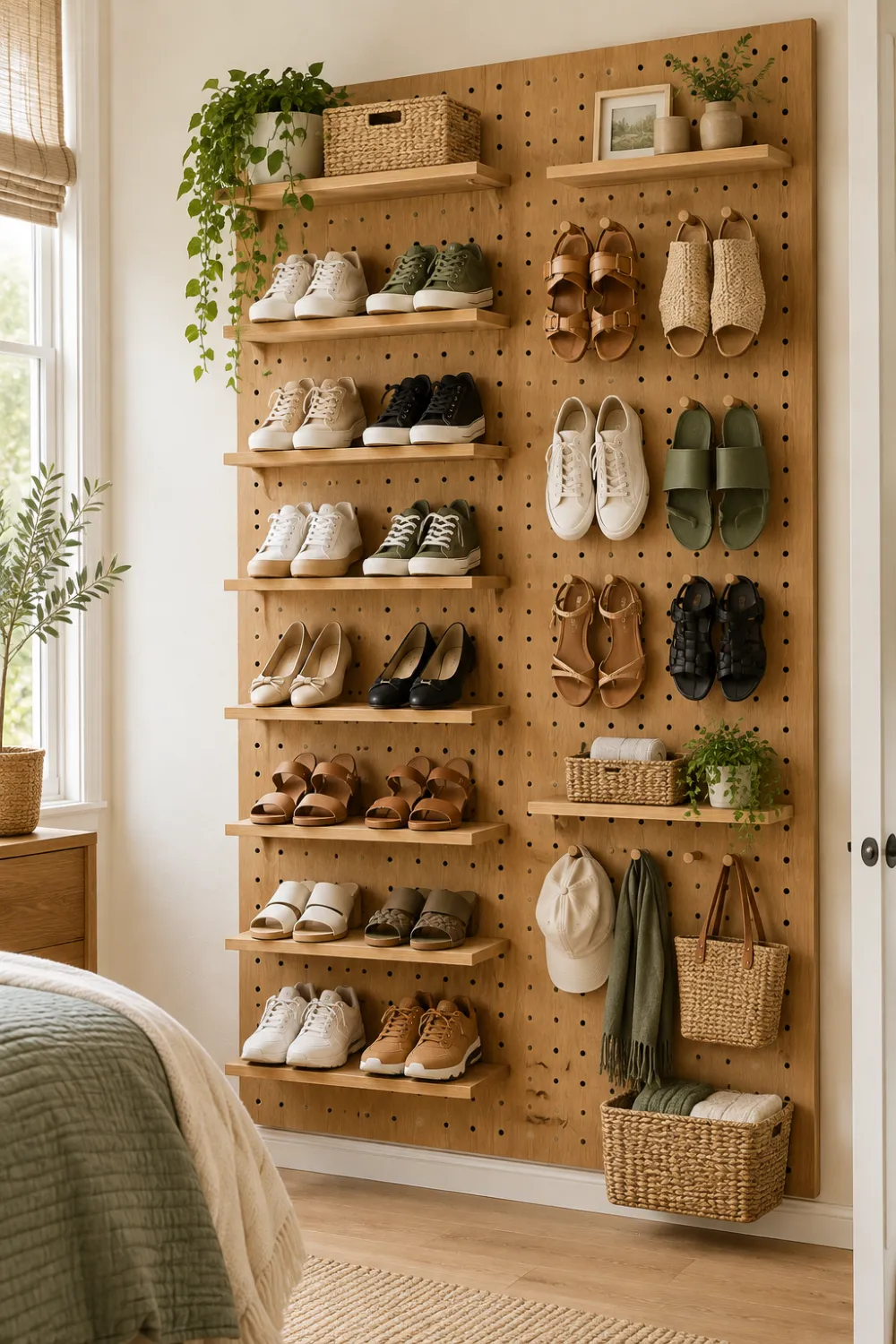
A pegboard can turn an unused wall section into flexible shoe storage. Add hooks, small shelves, or angled supports based on the types of footwear you own. It works particularly well for a casual bedroom, dressing corner, or closet where you want to change the arrangement later. You can also extend the system to hold bags, hats, or other accessories.
13. Shoe Baskets for Everyday Pairs
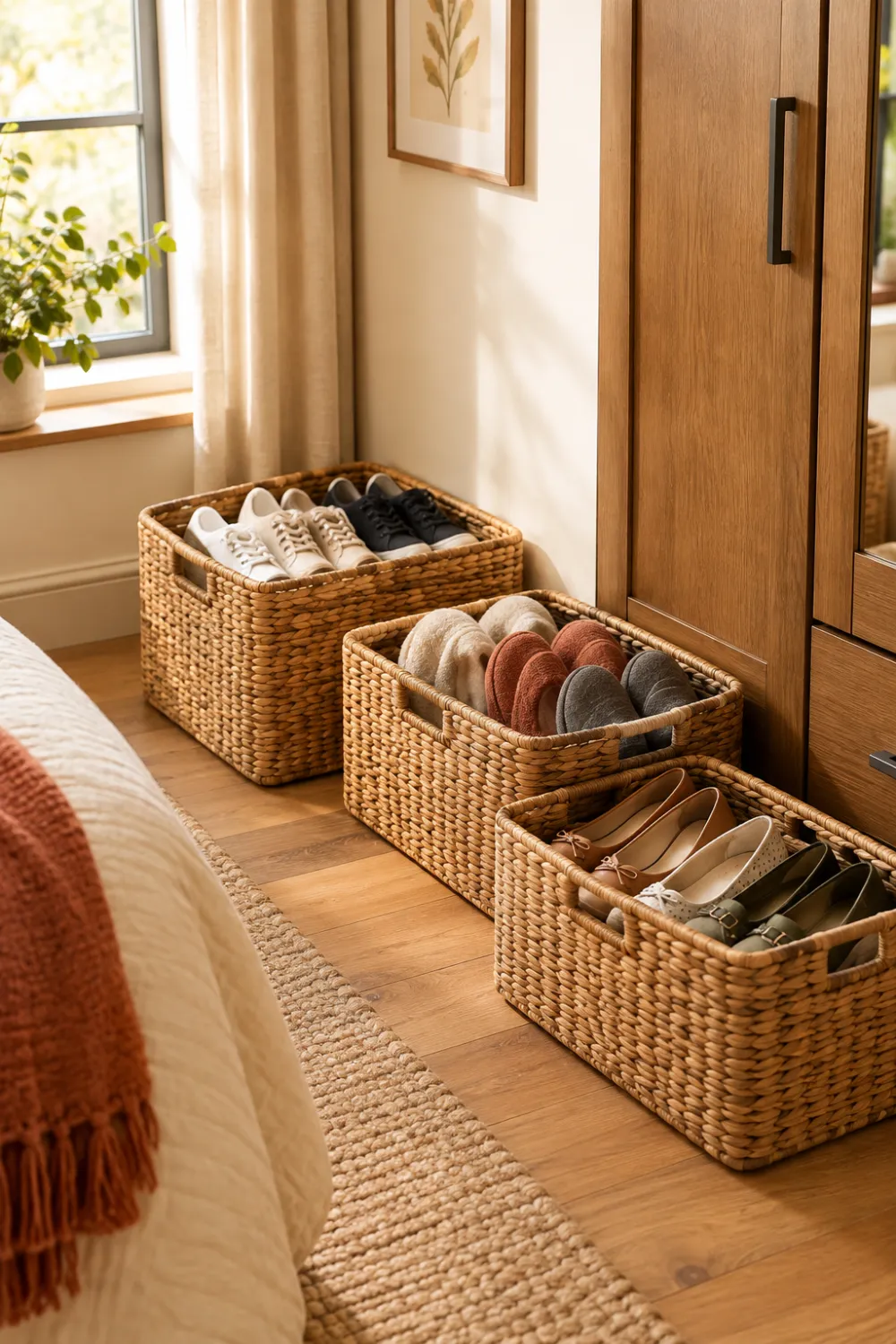
Not every shoe needs its own compartment. Place a few sturdy baskets near the wardrobe for everyday slippers, sneakers, or casual shoes. Use one basket per person or separate them by type to prevent the usual mixed-up pile. Choose baskets that are wide enough for the shoes to sit naturally rather than forcing pairs on top of each other.
14. Seasonal Shoe Rotation
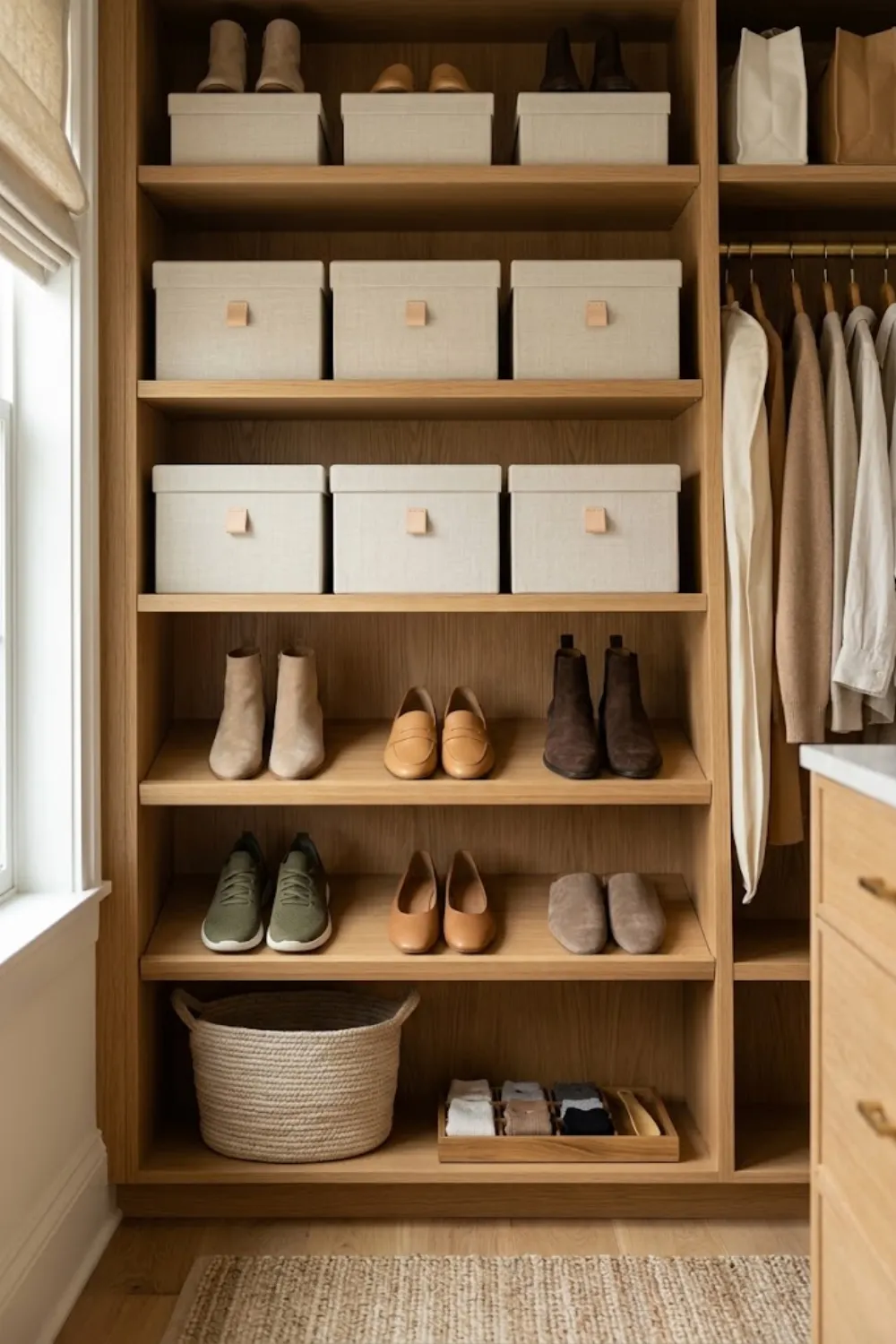
Instead of keeping every pair within arm’s reach, rotate shoes according to the season. Store winter boots or rarely worn formal shoes in under-bed containers or higher closet storage, then bring everyday seasonal footwear forward. This reduces visual clutter and leaves your easiest storage areas available for shoes you actually wear regularly.
15. Dedicated Shoe Shelf Above Short Hanging Clothes
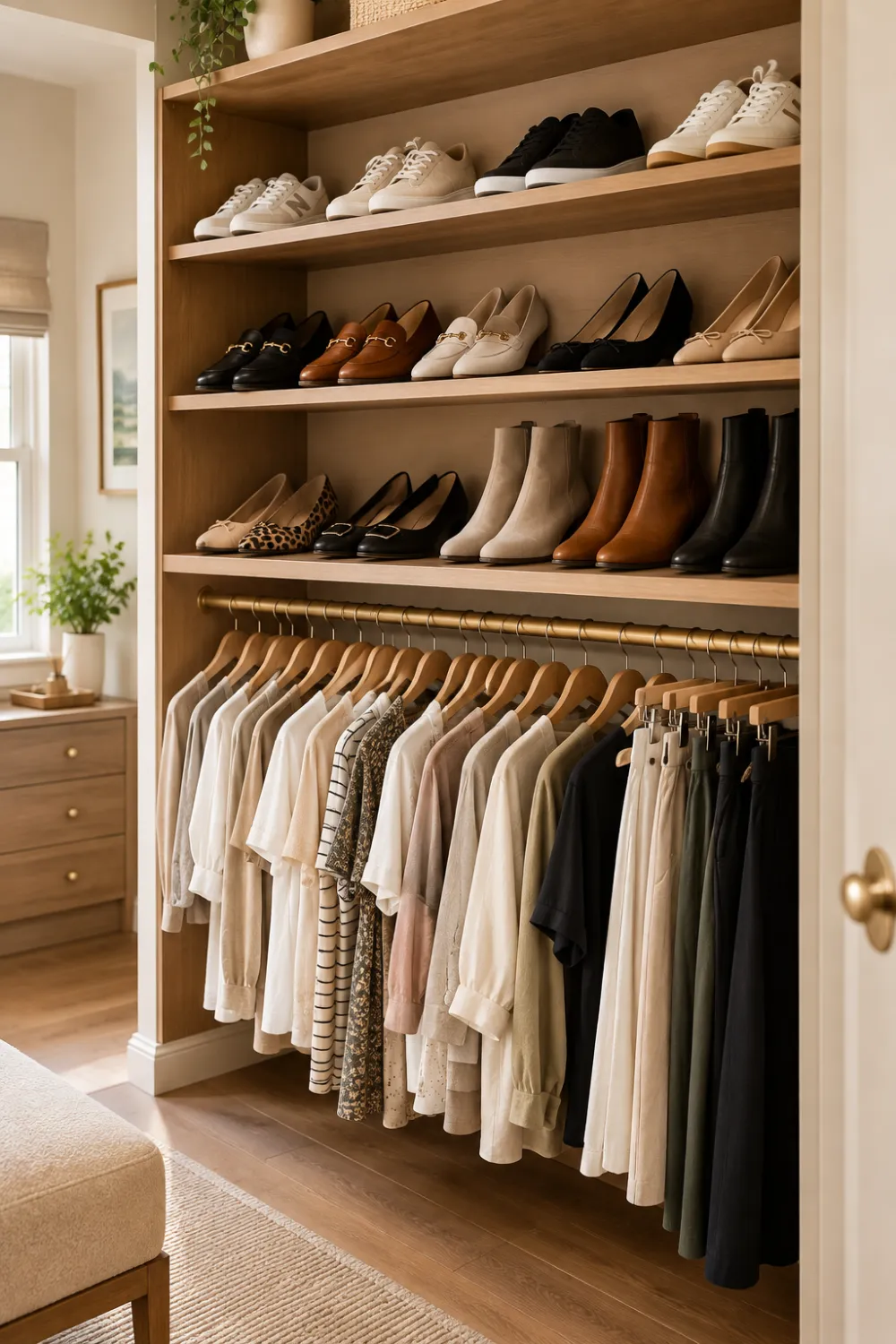
Look at the unused space above shorter clothes in your closet. Adding one or two shelves there can create a convenient home for shoes without taking away hanging space. Keep shoes in pairs and arrange them toe-out so you can identify them quickly. This makes use of vertical closet space that otherwise tends to become wasted air.
16. Boutique-Style Shoe Display
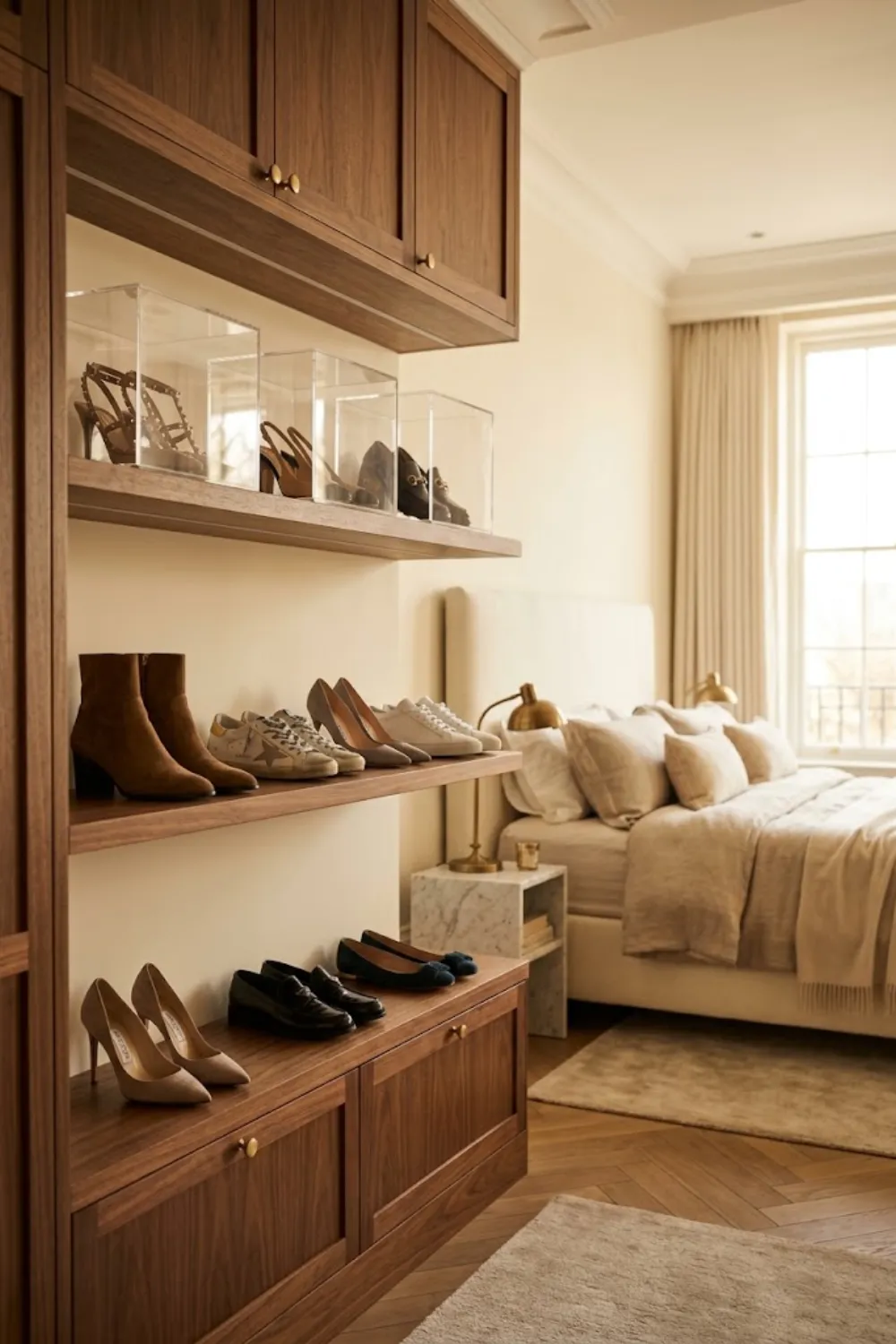
If you enjoy seeing your shoe collection, turn storage into part of the bedroom design. Arrange favorite shoes on open shelves or in clear boxes, leaving a little space between groups instead of packing every shelf completely full. Keep everyday pairs lower and special footwear higher. The result feels more like a small personal dressing display than ordinary storage.
Conclusion
The best Bedroom Shoe Organization Ideas are the ones that fit how you actually use your shoes. If floor space is limited, look upward or under the bed. If you want everything visible, try open shelves or clear boxes. Start with your most-used pairs, give them a practical home, and let the rest of your storage system grow around that routine.