17 Aesthetic Living Room Organization Ideas for Small Spaces
A well-organized living room can still feel personal, warm, and visually interesting. These 17 Aesthetic Living Room Organization Ideas are designed for apartments, smaller homes, and rooms where every inch matters. You’ll find practical storage choices, smart furniture placement, color ideas, and simple styling details that keep clutter under control without making the room feel bare. Whether your style is modern, natural, classic, or relaxed, there are ideas here you can adapt easily.
1. Open Wood Shelving
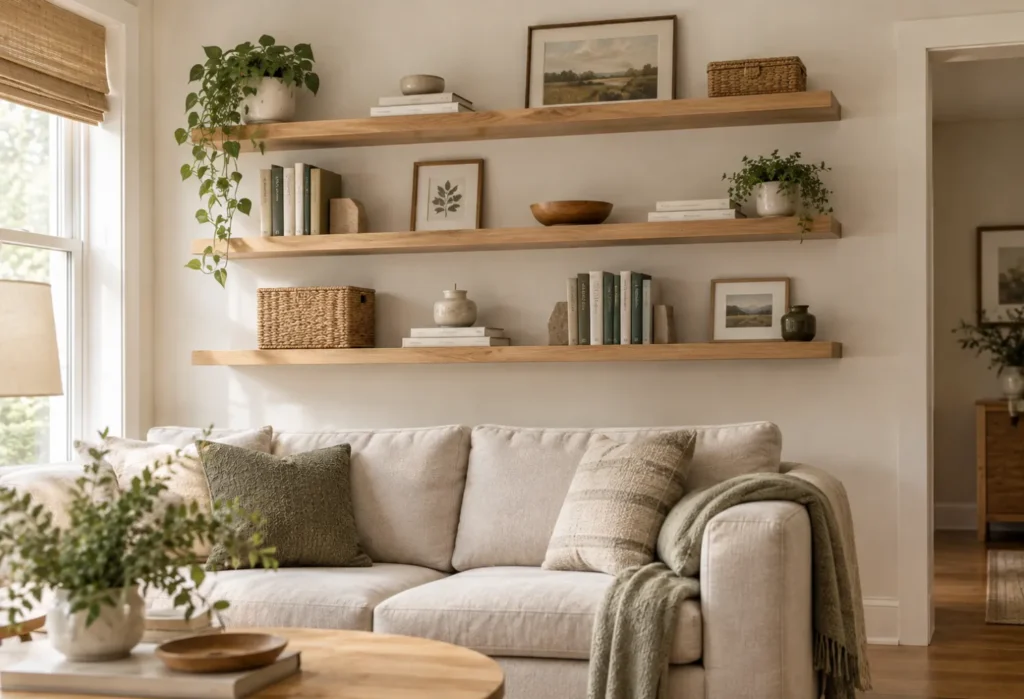
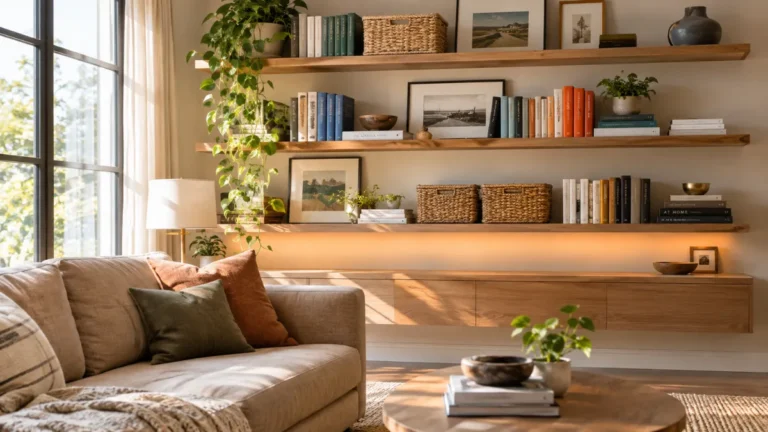
Open wood shelves give a living room useful storage without making the walls feel heavy. Unlike a large closed cabinet, they leave portions of the wall visible, which can help a compact room feel more open. Use them for books, small baskets, framed artwork, and a few decorative objects rather than filling every shelf.
Choose shelves in natural oak, walnut, or another finish that works with your existing furniture. Keep some sections partly empty and group smaller items together. A mix of books, ceramics, and woven baskets creates texture while keeping everyday belongings contained.
2. Soft Neutral Storage Baskets
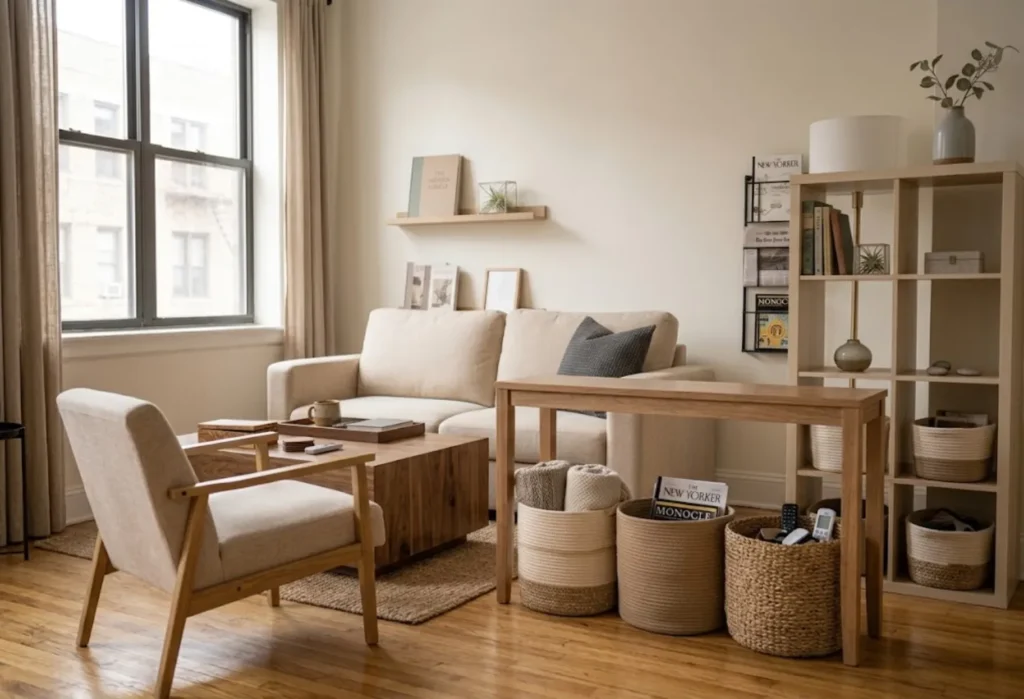
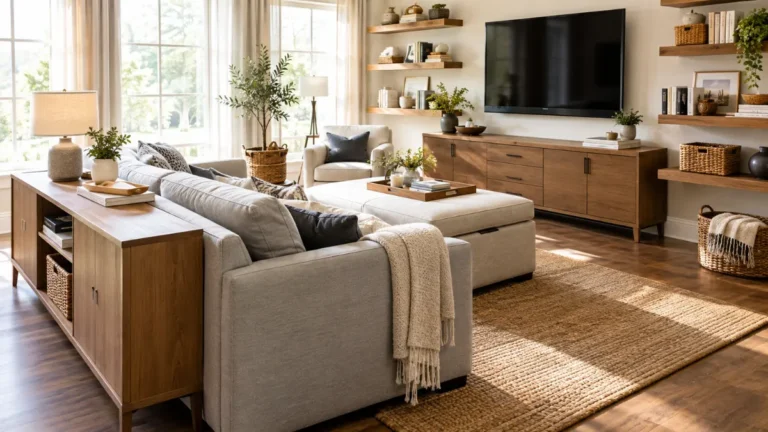
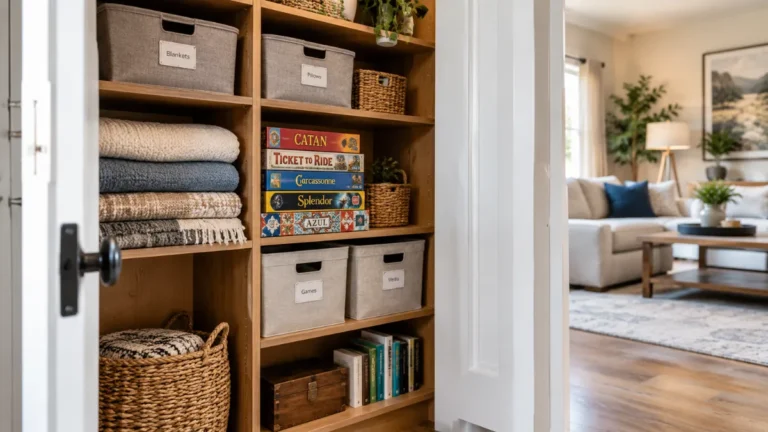
Loose blankets, magazines, toys, and remote controls can quickly make a small living room look untidy. Matching storage baskets give these everyday items a defined home while adding a softer visual element than plastic containers. Woven baskets work especially well beside sofas, under consoles, or on lower shelves.
For a calm look, stay with two or three related tones such as cream, beige, and light brown. Choose baskets with enough depth to hold what you actually use, but avoid oversized pieces that crowd the floor or block nearby furniture.
3. Slim Media Console
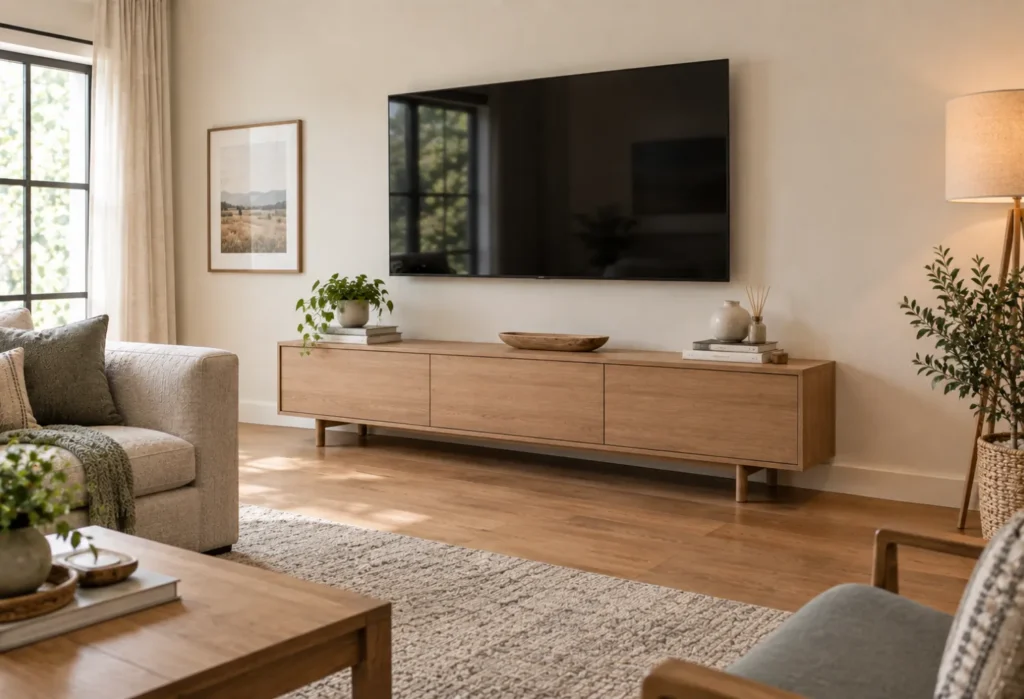
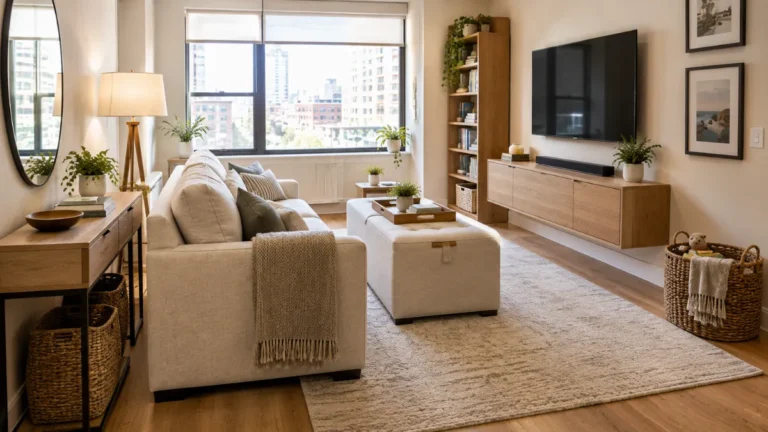
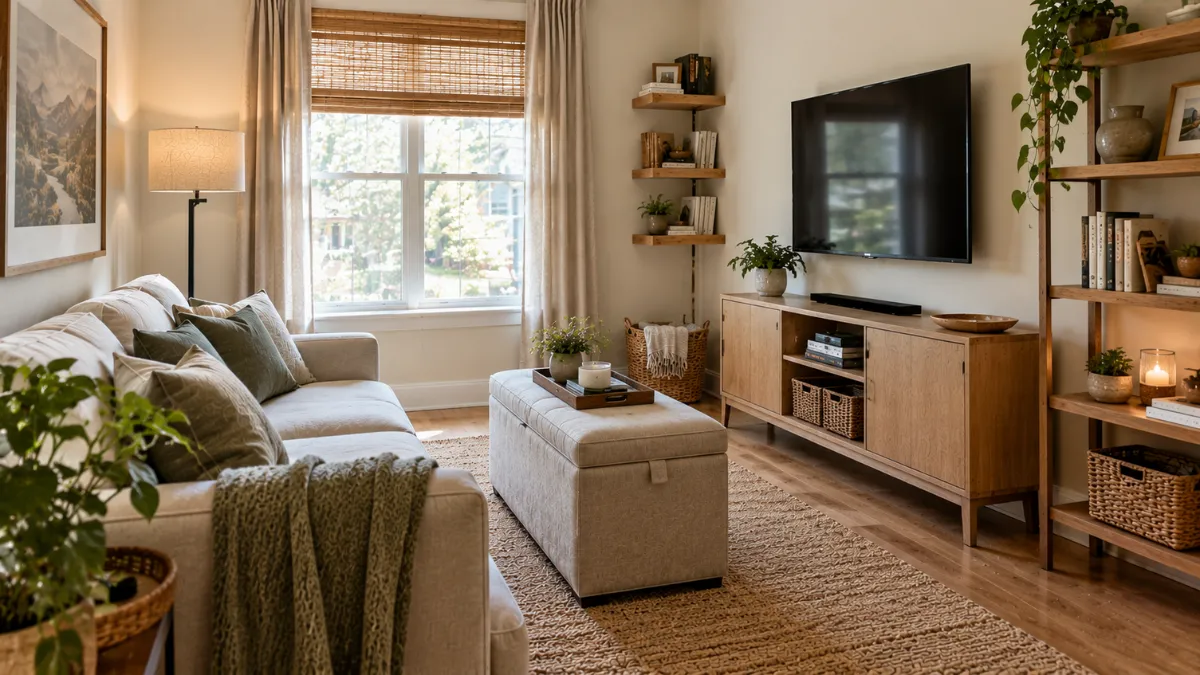
A bulky entertainment unit can take up valuable floor space and make the television wall look crowded. A slim media console provides a place for electronics, games, books, and small accessories while keeping the furniture footprint controlled. Models with drawers or doors are particularly useful for hiding cables and less attractive items.
Look for a console that is slightly wider than the television and relatively shallow. A low profile usually works better in a compact room because it leaves more visible wall area above the furniture. Leave a little breathing room around the sides rather than pushing it tightly into a corner.
4. One Large Art Arrangement
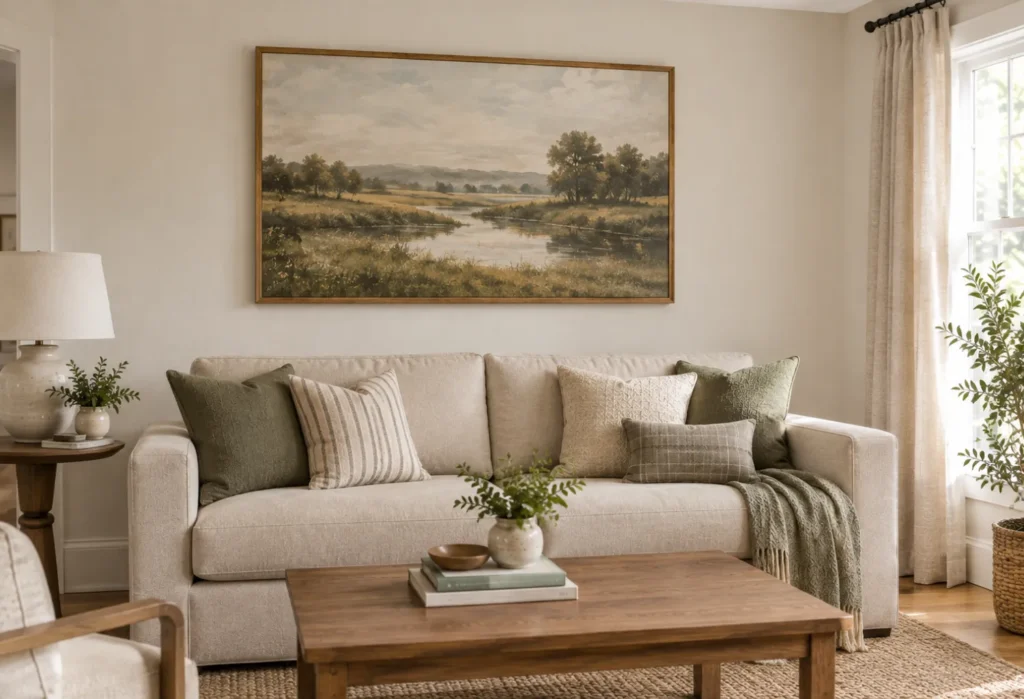
Several small frames scattered across a wall can sometimes make a compact living room feel visually busy. One larger artwork arrangement gives the eye a clear focal point and can make the wall feel more intentional. This works especially well above a sofa or a low storage console.
Try a large landscape print, a simple abstract piece, or a coordinated pair of oversized frames. Warm neutrals, muted greens, soft blues, and natural wood frames are easy to combine with many living room palettes. Keep the artwork centered with the main furniture rather than simply centering it on the entire wall.
5. Storage Ottoman
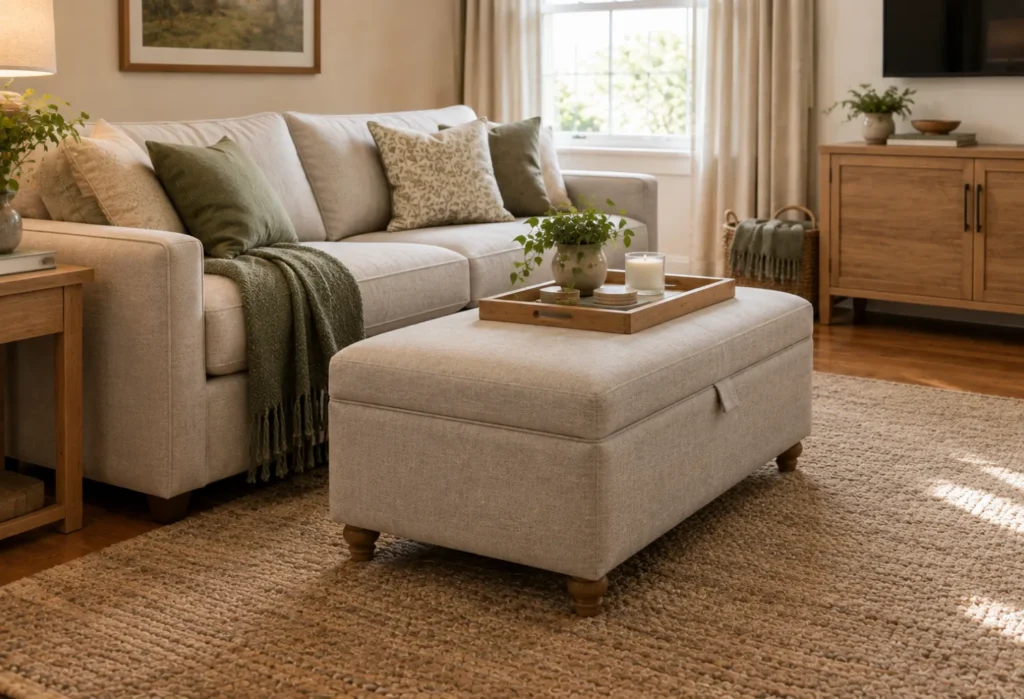
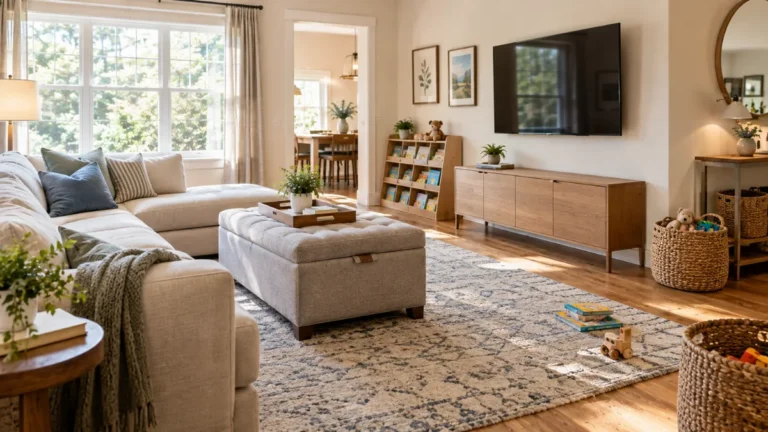
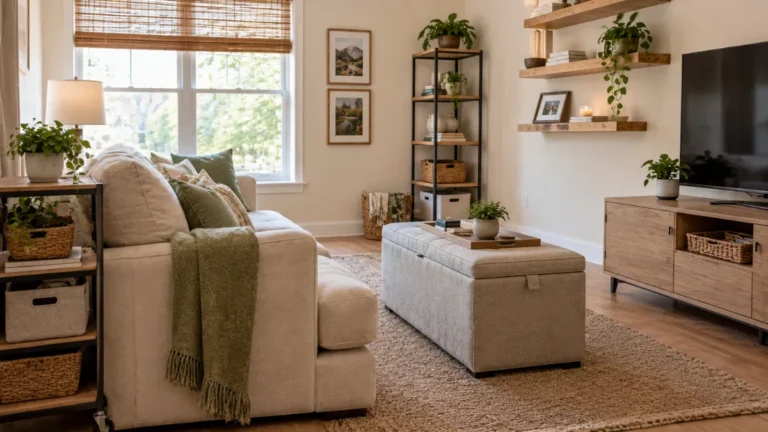
A storage ottoman can serve as seating, a footrest, a coffee table, and hidden storage in one piece. This is useful in rooms where there is no space for several separate furniture items. Blankets, board games, extra cushions, or children’s belongings can disappear inside when the room needs to look tidy.
Choose a rectangular ottoman if your sofa is long, or a compact square version for a smaller seating arrangement. A fabric top adds softness, while a wooden or upholstered design can coordinate with the room’s existing materials. Avoid an ottoman so large that it makes the main walking path difficult to use.
6. Layered Warm Lighting
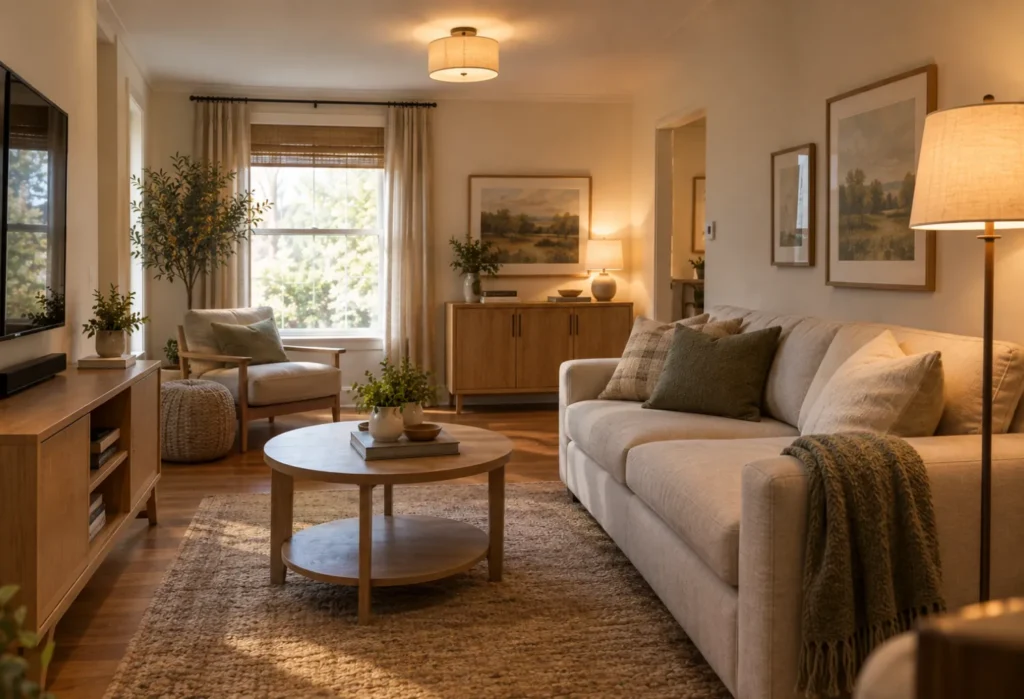
A single ceiling fixture can leave a living room looking flat, especially in the evening. Using a floor lamp, table lamp, or small wall light in addition to the main fixture creates different levels of light and makes the room easier to use. It also lets you keep brighter overhead lighting off when you want a softer setting.
Warm white bulbs pair nicely with beige upholstery, natural wood, cream walls, and muted green accents. Place a floor lamp beside a sofa or reading chair, while a small lamp can sit on a console. Keep cords tucked behind furniture so the lighting arrangement doesn’t introduce new visual clutter.
7. Floating TV Shelf
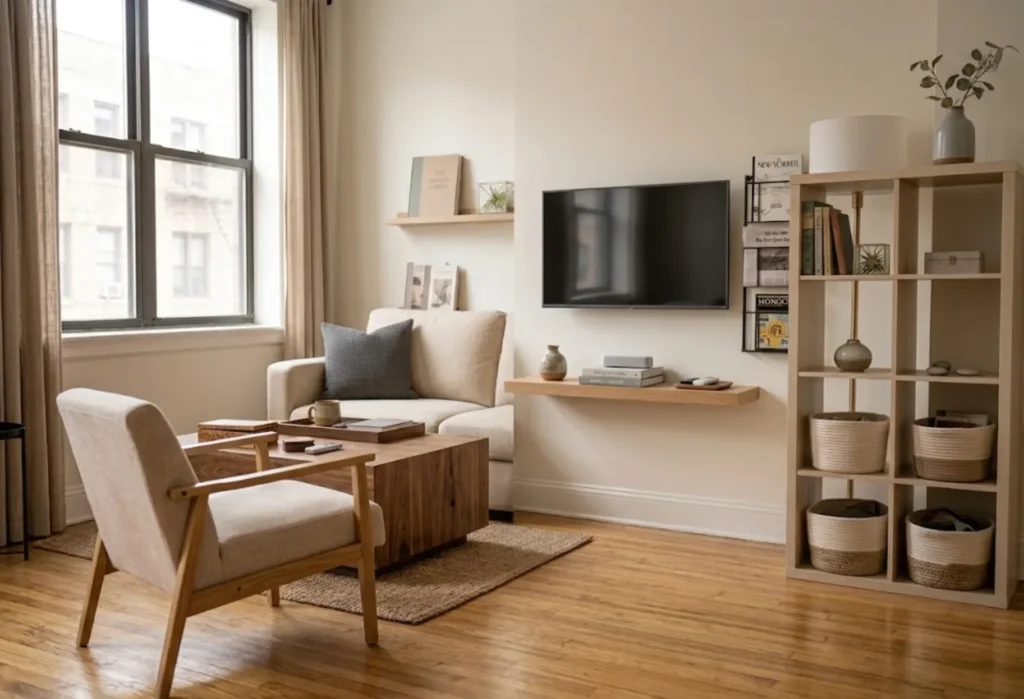
A floating shelf below or beside the television provides a useful landing spot for small electronics and accessories without adding another piece of floor-standing furniture. Because the floor remains visible underneath, the arrangement can feel lighter than a conventional media cabinet.
Use a shelf deep enough for the devices you need, but not deeper than necessary. Hide cables with a proper cable-management system and avoid turning the shelf into a display for every small object you own. One or two decorative pieces beside the electronics are usually enough.
8. Matching Closed Cabinets
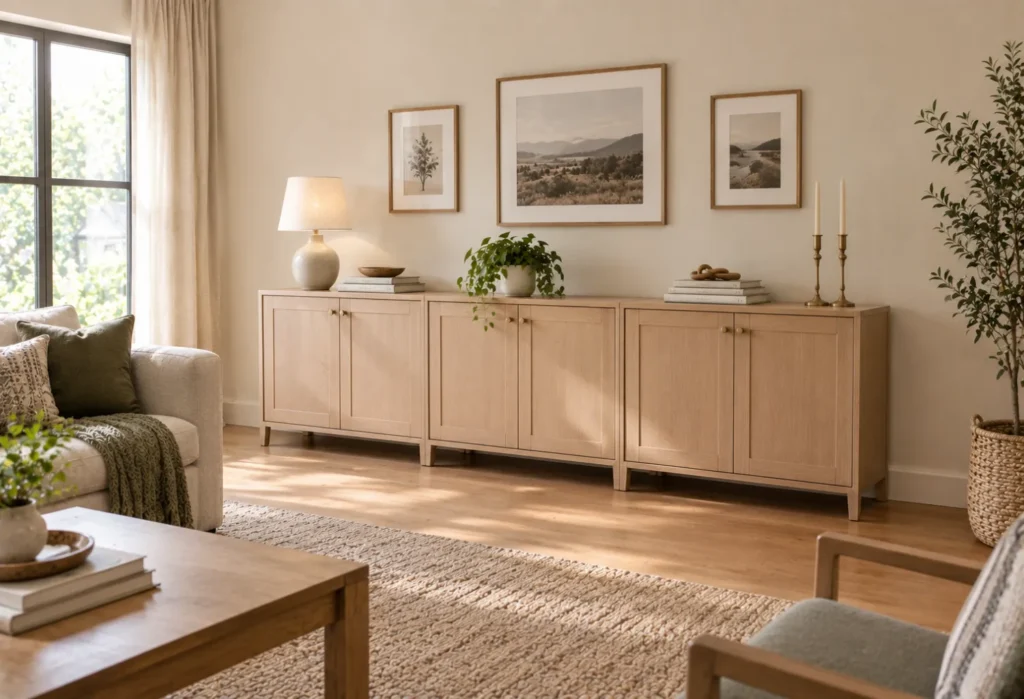
Open storage is useful, but not everything needs to be on display. Matching closed cabinets can hide paperwork, chargers, games, pet supplies, and other items that contribute to visual clutter. Using similar cabinet fronts creates a cleaner wall appearance than several unrelated storage pieces.
For a small living room, consider narrow cabinets with simple doors and a finish that blends with the wall or nearby furniture. Light oak, warm white, or soft gray can keep the furniture visually quiet. Make sure doors can open fully without hitting the sofa, coffee table, or another piece.
9. A 10-by-12-Foot Living Room Layout
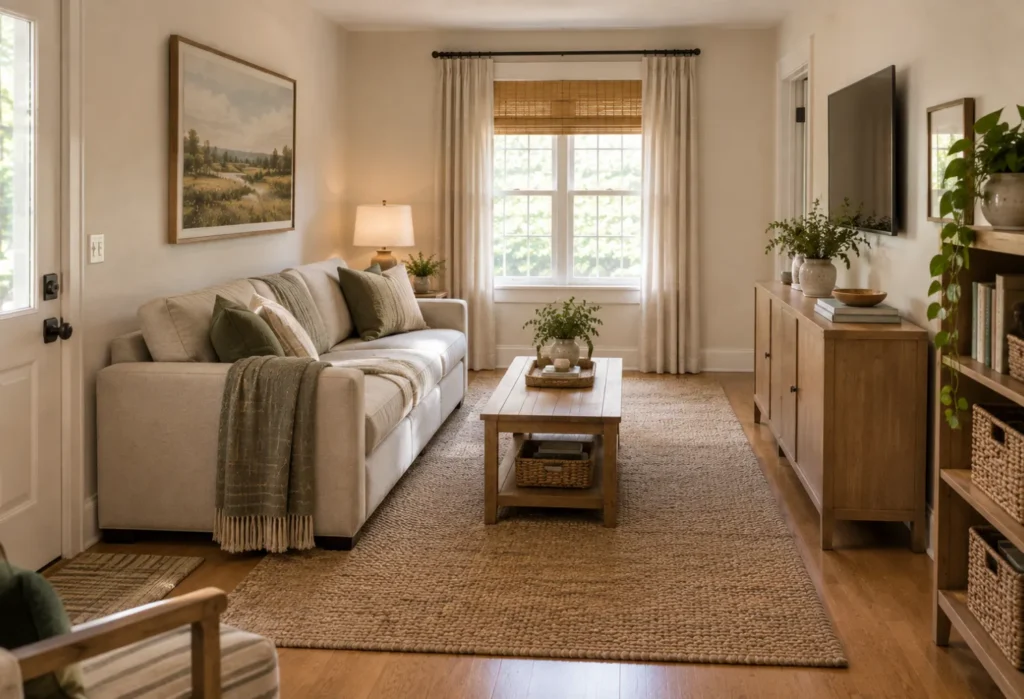
Imagine a 10-by-12-foot living room with a sofa against the longer wall, a doorway near one corner, and a window opposite the sofa. Instead of adding a large coffee table and separate storage cabinet, use a narrow rectangular table, a slim console, and baskets underneath an open shelf. The main walkway stays clear.
This arrangement shows how organization depends on movement as much as storage. In your own room, mark the walking routes first and place larger furniture around them. Then add storage where unused wall or corner space remains, rather than filling the floor and trying to work around it.
10. Coordinated Book Display
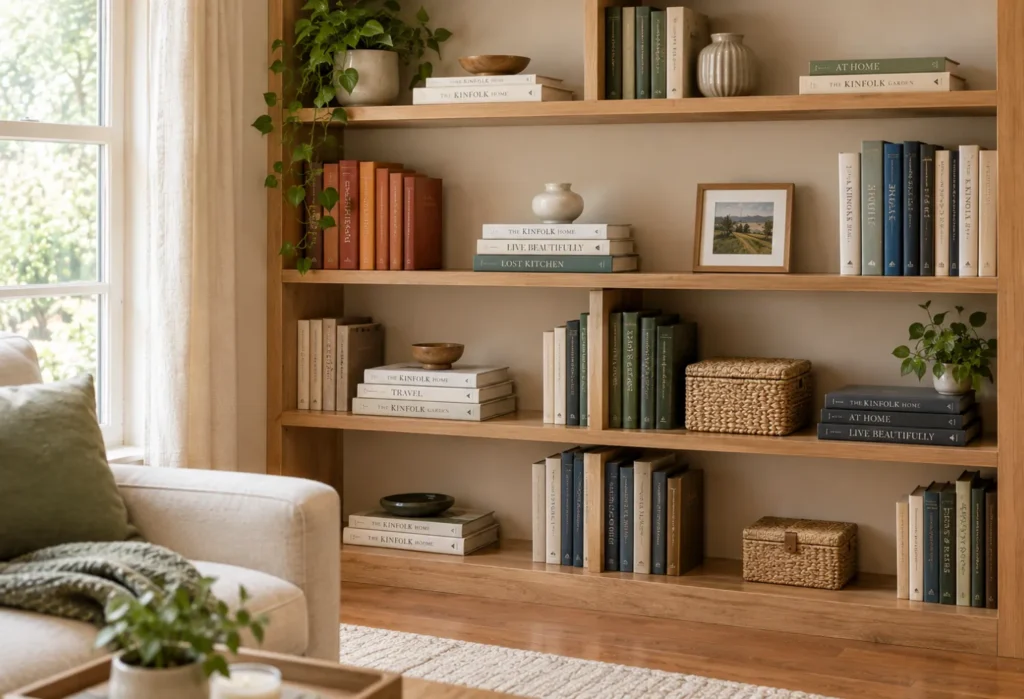
Books can become attractive living room decor when their colors and placement are considered rather than stacked randomly. A coordinated display gives shelves visual structure while keeping reading material easy to reach. Mix vertical rows with a few horizontal stacks to avoid a rigid appearance.
If your collection has many bright covers, place some books with their spines facing inward or group stronger colors together. Add a small plant, ceramic object, or framed photo to one section, leaving the remaining shelf space open. The result feels collected without looking overcrowded.
11. Narrow Corner Cabinet
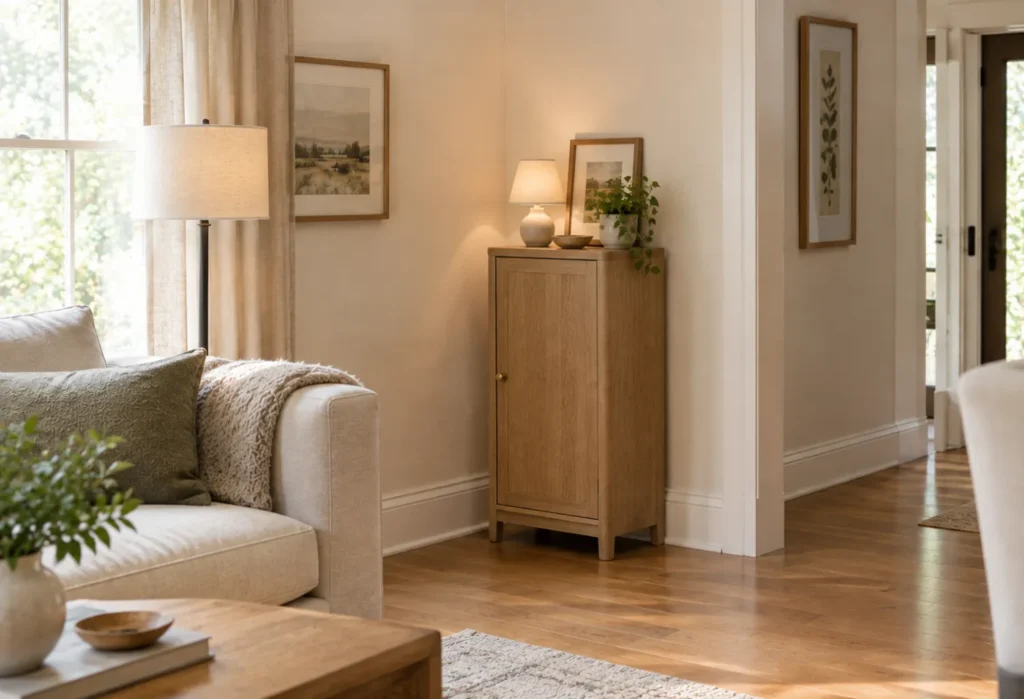
An unused corner can become valuable storage with a narrow cabinet designed specifically for tight spaces. It can hold items such as games, candles, extra electronics, or small household supplies without competing with the main seating area.
Measure both the width and depth of the corner before buying. A cabinet that looks slim online may project too far into the room. Rounded edges can also be helpful near a busy walkway. Choose a finish that relates to your sofa, flooring, or other wood tones so the piece feels connected to the room.
12. Neutral Color-Zoned Storage
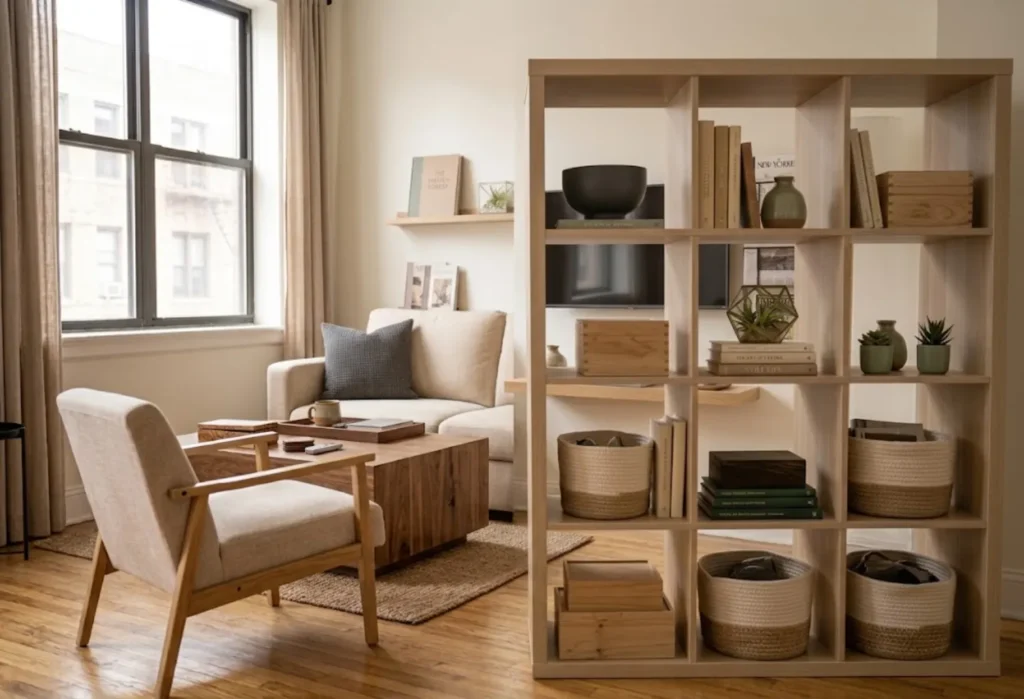
Using color to organize storage can make a collection of different objects look more unified. Instead of buying matching containers for everything, group items by similar tones. Cream baskets, natural wood boxes, beige books, and muted green accessories can create a quiet visual rhythm.
This approach works particularly well on open shelving. Keep stronger colors in smaller amounts and let neutral shades occupy most of the visible storage. The room will still have personality, but individual objects won’t compete for attention across every shelf.
13. Wall-Mounted Cabinets
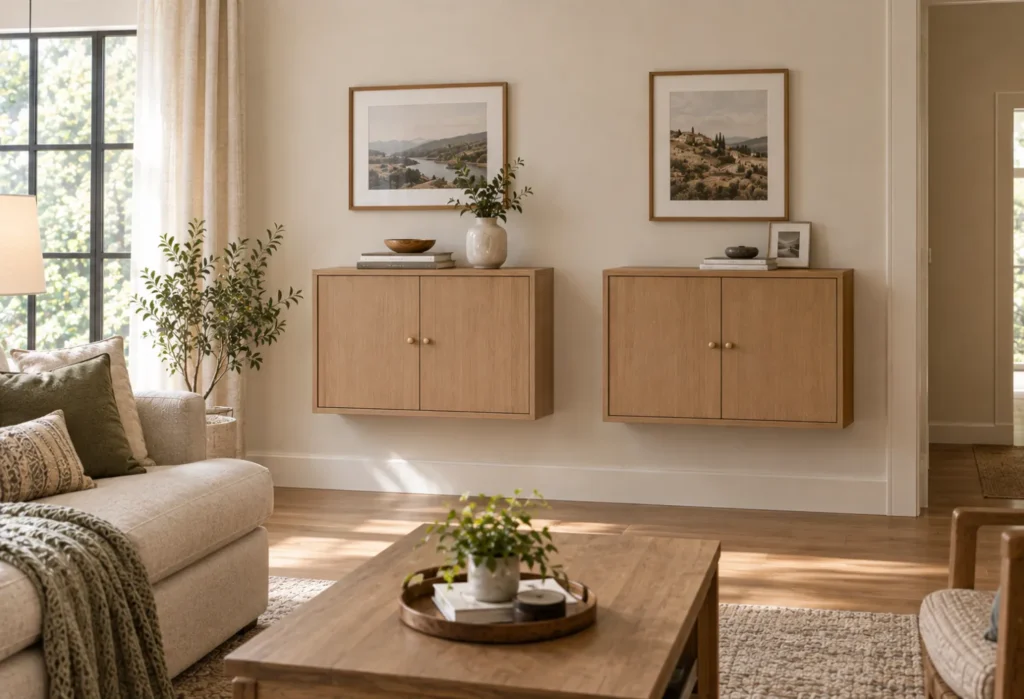
Wall-mounted cabinets move storage upward, leaving more visible floor beneath them. This can be especially helpful in a compact living room where a floor cabinet would interfere with circulation. They also provide enclosed space for objects you want nearby but don’t want visible.
Install them at a comfortable height above furniture and check the wall structure before mounting. Two smaller cabinets can sometimes work better than one very wide unit. Keep the top surface relatively clear so the wall doesn’t become another crowded display area.
14. Sofa-Arm Side Table
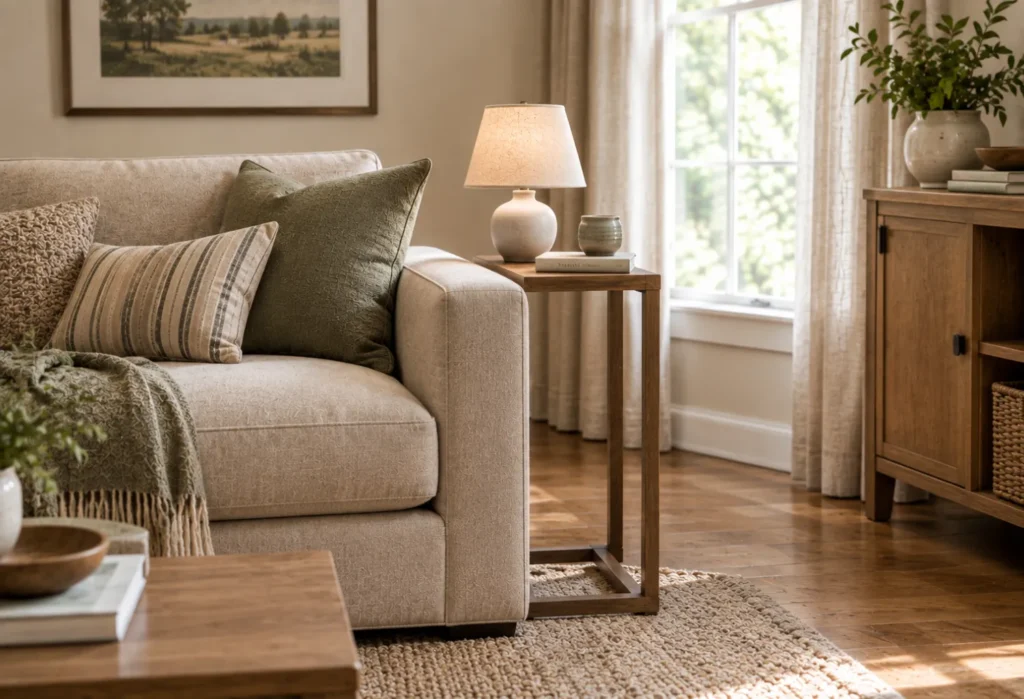
A small side table beside the sofa can prevent common clutter from spreading across coffee tables, cushions, and nearby shelves. It gives you one defined place for a lamp, drink, book, or remote. In a small room, this can be more practical than adding another larger table.
Look for a table around the height of the sofa arm so items are easy to reach. A slim C-table can slide partially under the sofa, while a small round table can soften a room filled with rectangular furniture. Leave enough space to sit comfortably without bumping into it.
15. Concealed Cable Storage
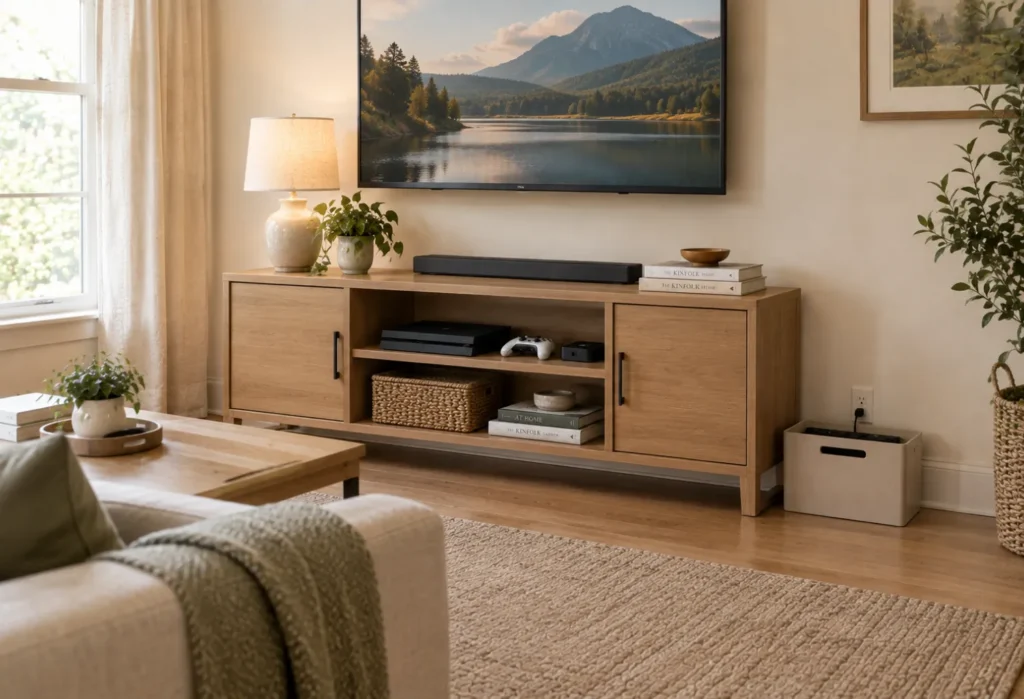
Television wires, charging cables, and power strips can make even a carefully organized room look unfinished. Concealing them behind furniture or inside cable-management boxes keeps the media area visually cleaner and makes dusting easier.
Use cable clips, sleeves, or a small covered box suited to the equipment you have. Keep ventilation openings clear around electronics and avoid tightly bending power cords. Labeling chargers inside a nearby drawer can also stop loose cables from collecting on the floor.
16. Large Mirror With Hidden Storage
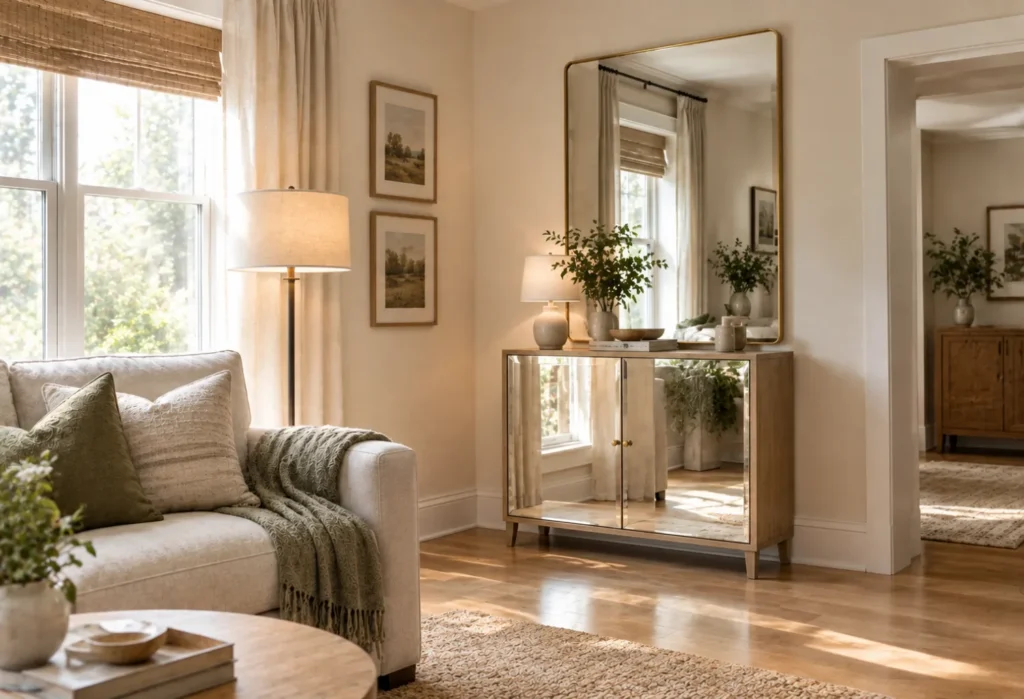
A mirror can make a compact living room feel brighter by reflecting daylight and nearby light sources, while a mirrored cabinet can add useful storage at the same time. This combination works particularly well on a wall that receives natural light from a nearby window.
Choose a frame that matches the room’s material palette, such as natural wood, brushed metal, or simple painted trim. Avoid placing the mirror where it reflects a cluttered shelf or television screen. The reflection should ideally show a pleasant part of the room or bring more light into a darker area.
17. Low Basket Station
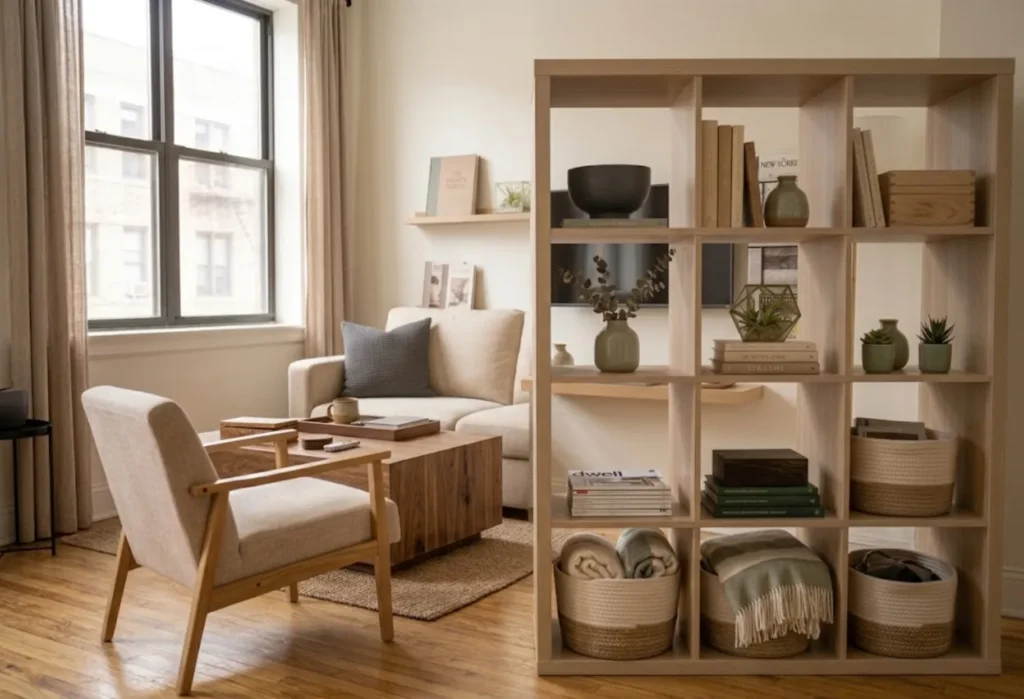
A low basket station creates one dedicated place for items that tend to move around the living room. Use it for children’s toys, throw blankets, magazines, or frequently used accessories. Keeping the containers low makes them easy to reach while maintaining a clean sightline across the room.
A long, low shelf with two or three baskets can work beneath a window or along an otherwise unused wall. Choose baskets that are similar in shape but not necessarily identical. Leave a little space between the baskets and nearby furniture so the storage area remains easy to access.
5 Most Useful Ideas at a Glance
| Idea | Best For | Why I Recommend It |
| Slim Media Console | Electronics and clutter | Uses little floor depth |
| Storage Ottoman | Flexible storage | Combines several functions |
| Open Wood Shelving | Display and storage | Adds useful vertical space |
| Wall-Mounted Cabinets | Small floor plans | Keeps storage off the floor |
| Concealed Cable Storage | Media areas | Removes distracting visual clutter |
Conclusion
The best 17 Aesthetic Living Room Organization Ideas are the ones that solve a real problem while fitting naturally with your decorating style. Start with the biggest source of clutter, then choose storage that suits your available floor and wall space. Add lighting, artwork, textures, and color only after the practical pieces are working. A few thoughtful choices can make a small living room easier to live in and nicer to look at.