16 IKEA Kids Room Organization Ideas That Actually Work
Toy bins overflowing, socks everywhere, and art supplies on every surface. Sound familiar? The good news is that IKEA kids room organization doesn’t need a big budget or a weekend of hard work. These 16 ideas use simple, affordable pieces that kids can actually use themselves. Some are quick wins, others are small projects. Pick what fits your space, and your room will feel calmer fast.
1. TROFAST Toy Wall

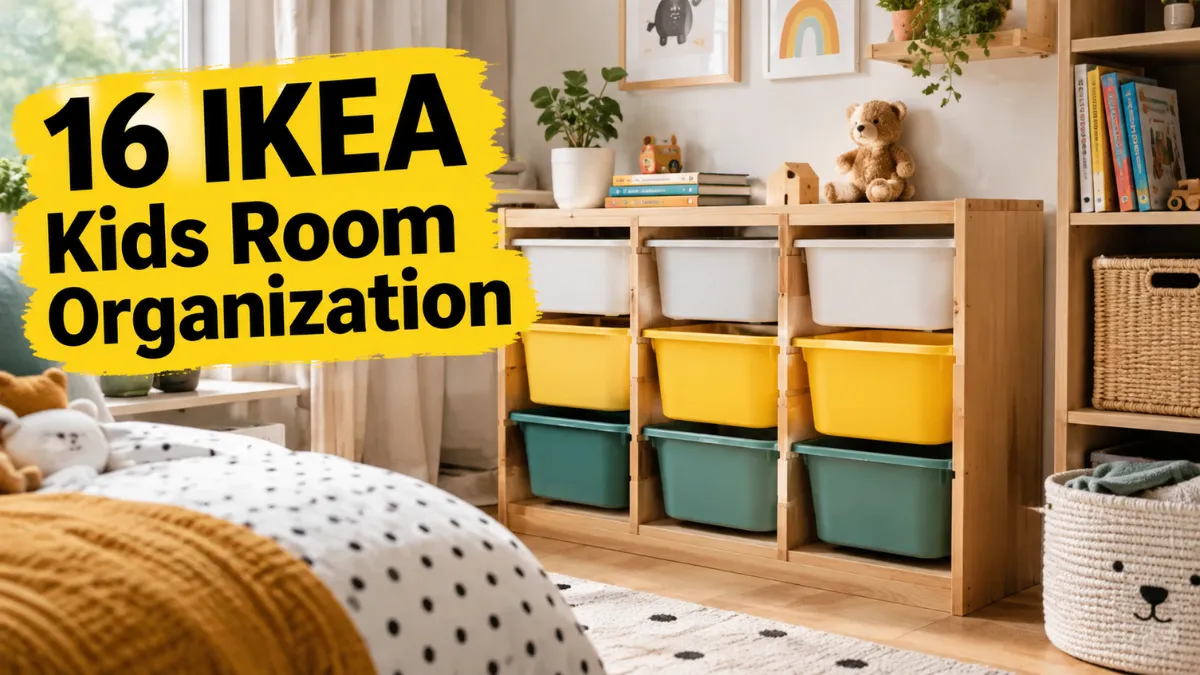
If you only pick one idea from this list, make it this one. TROFAST is a simple frame with plastic bins that slide in and out like drawers. Kids can pull out a bin, dump the toys, and slide it back when they’re done.
Build the frame low so little hands can reach everything. Use the shallow bins for puzzles and cars, and the deep ones for blocks and bigger toys. Mix white frames with colorful bins if you want some fun without chaos.
2. KALLAX Cube Shelves
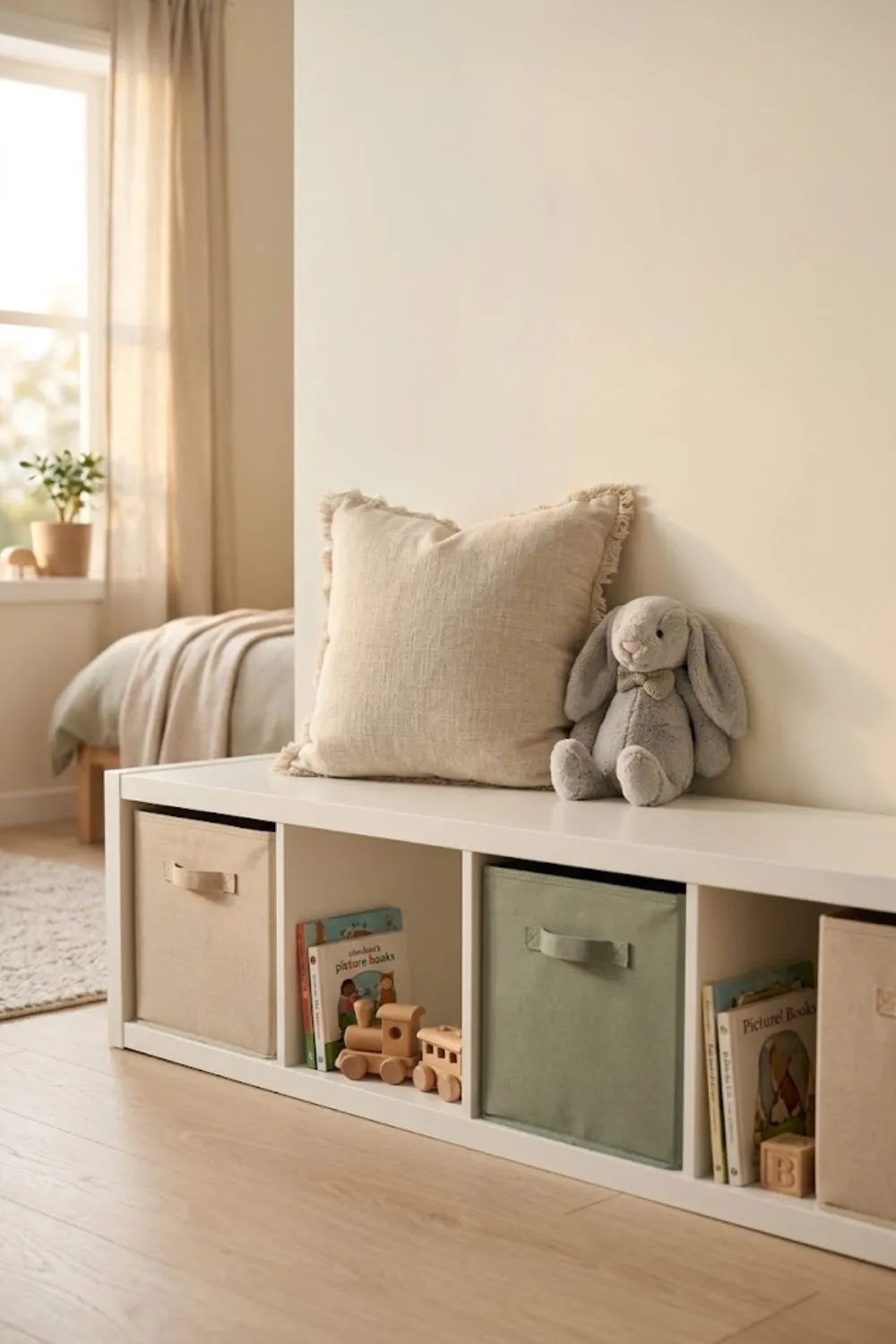
KALLAX is a grid of open squares, and it’s one of the most flexible pieces IKEA makes. Turn it on its side and you get a long, low shelf that doubles as a bench. Turn it upright and you have a bookcase.
Fill some cubes with fabric boxes and leave others open for display. Kids love knowing “the blue box is for trains.” Put a cushion on top of a low unit and you’ve got a reading seat for free.
3. Picture Ledge Books

Kids choose books by their covers, so spines on a shelf don’t help much. Slim ledges like MOSSLANDA let you show books face-out, and they take almost no space.
Hang a row at kid height, about shoulder level for your child. Keep only 8 to 10 books out at a time. Swap them every few weeks and the “new” books feel like a surprise. It also keeps the shelf from turning into a pile.
4. SKÅDIS Craft Wall
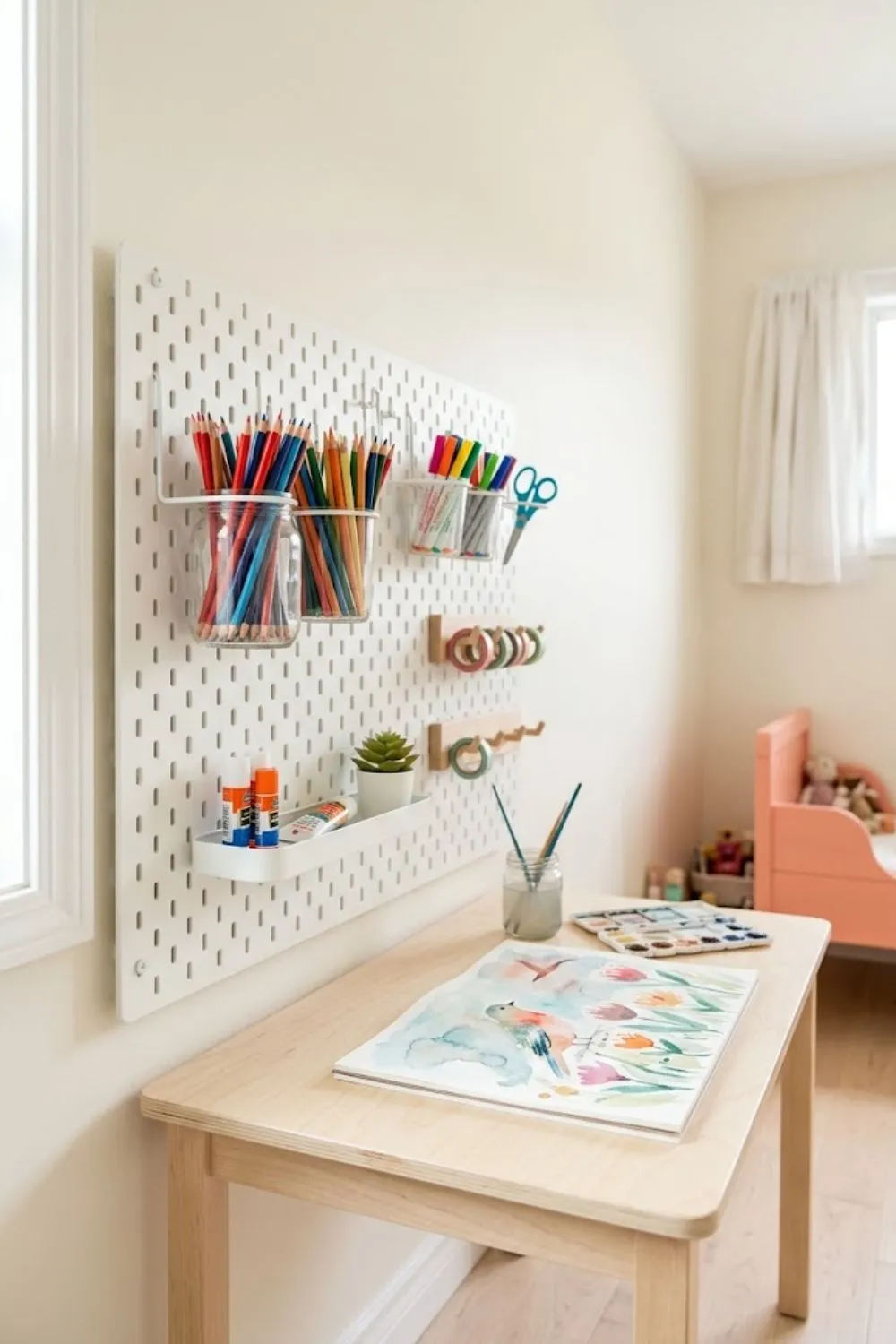
A pegboard might sound like a garage thing, but SKÅDIS works beautifully for art supplies. Hang little containers for markers, crayons, and scissors. Add a shelf for glue and a hook for tape.
The best part is that everything is visible. Kids see what they have and put it back where it belongs. Place it above a desk, and you can move the pieces around as their hobbies change.
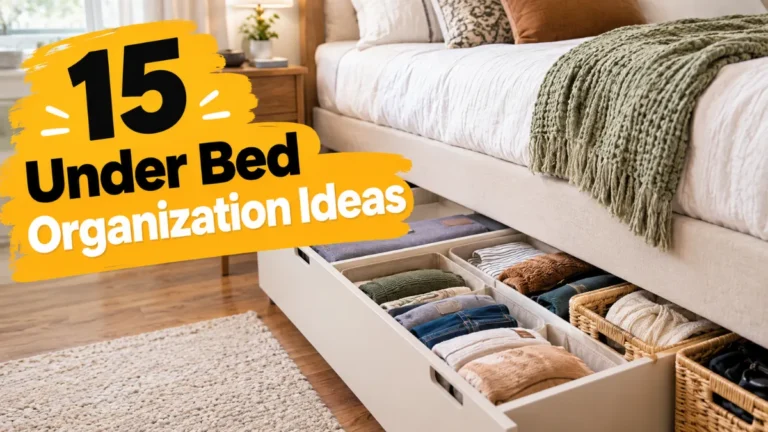
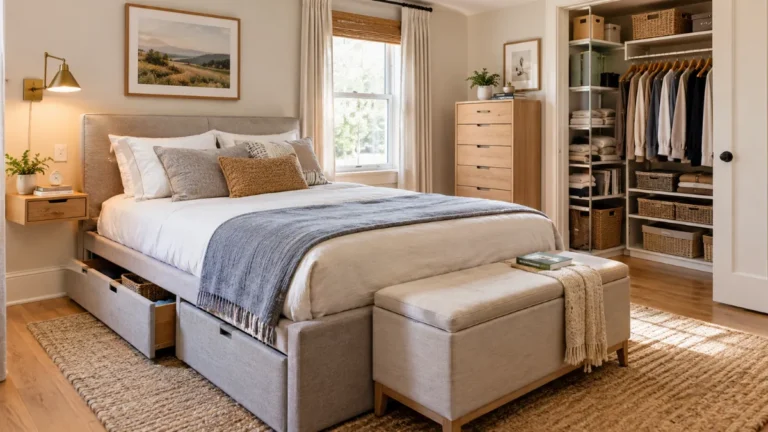
5. Under-Bed Boxes

The space under a bed is prime storage that most rooms waste. Flat, wheeled boxes like SKUBB or similar low bins slide out easily and don’t need lifting.
Use one for off-season clothes, one for spare bedding, and one for toys that don’t get daily play. Choose boxes with lids if dust bothers you. If your child’s bed sits very low, measure the gap first so the boxes actually fit.
6. Dress-Up Rack
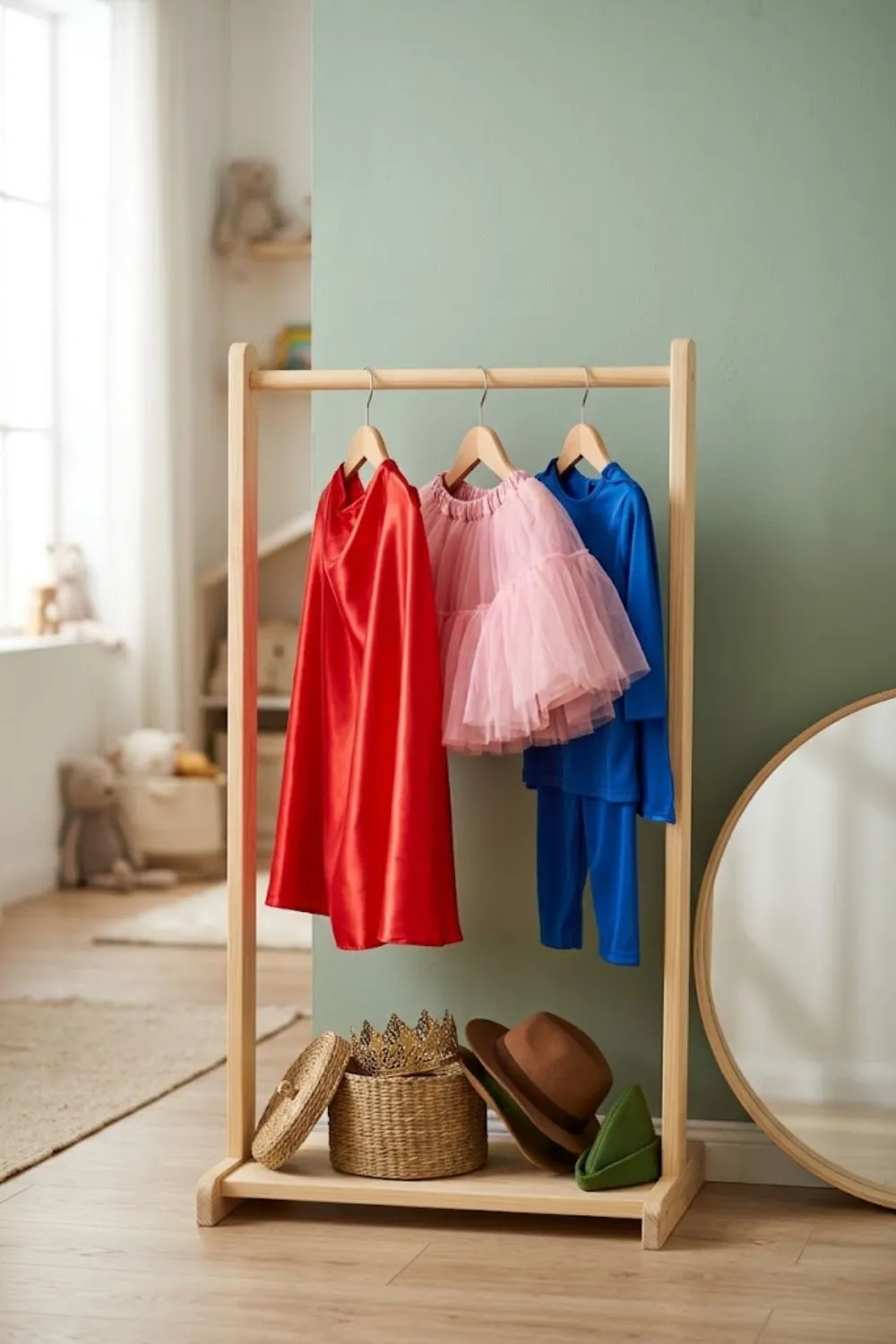
Costumes get thrown on the floor in a heartbeat. A small open clothes rack, like the kid-friendly MULIG, gives them a proper home. Hang capes, tutus, and superhero outfits on child-sized hangers.
Put a basket underneath for hats, masks, and shoes. Now dressing up feels like a little boutique, and cleanup is as easy as “hang it back up.” Keep it next to a mirror, and you’ve made a favorite corner.
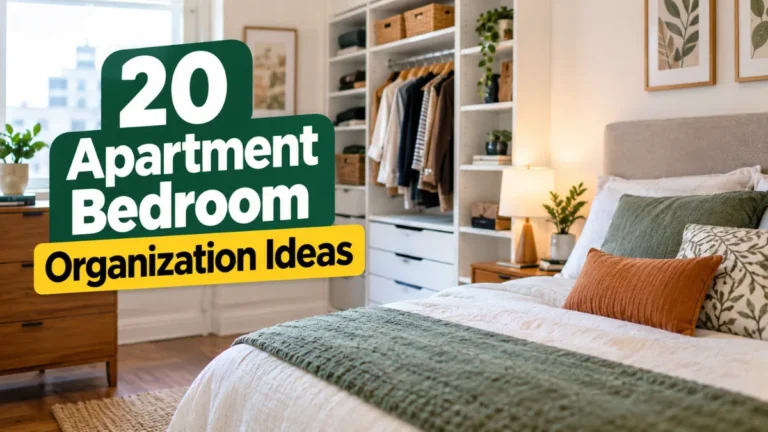
7. Kid-Height Closet
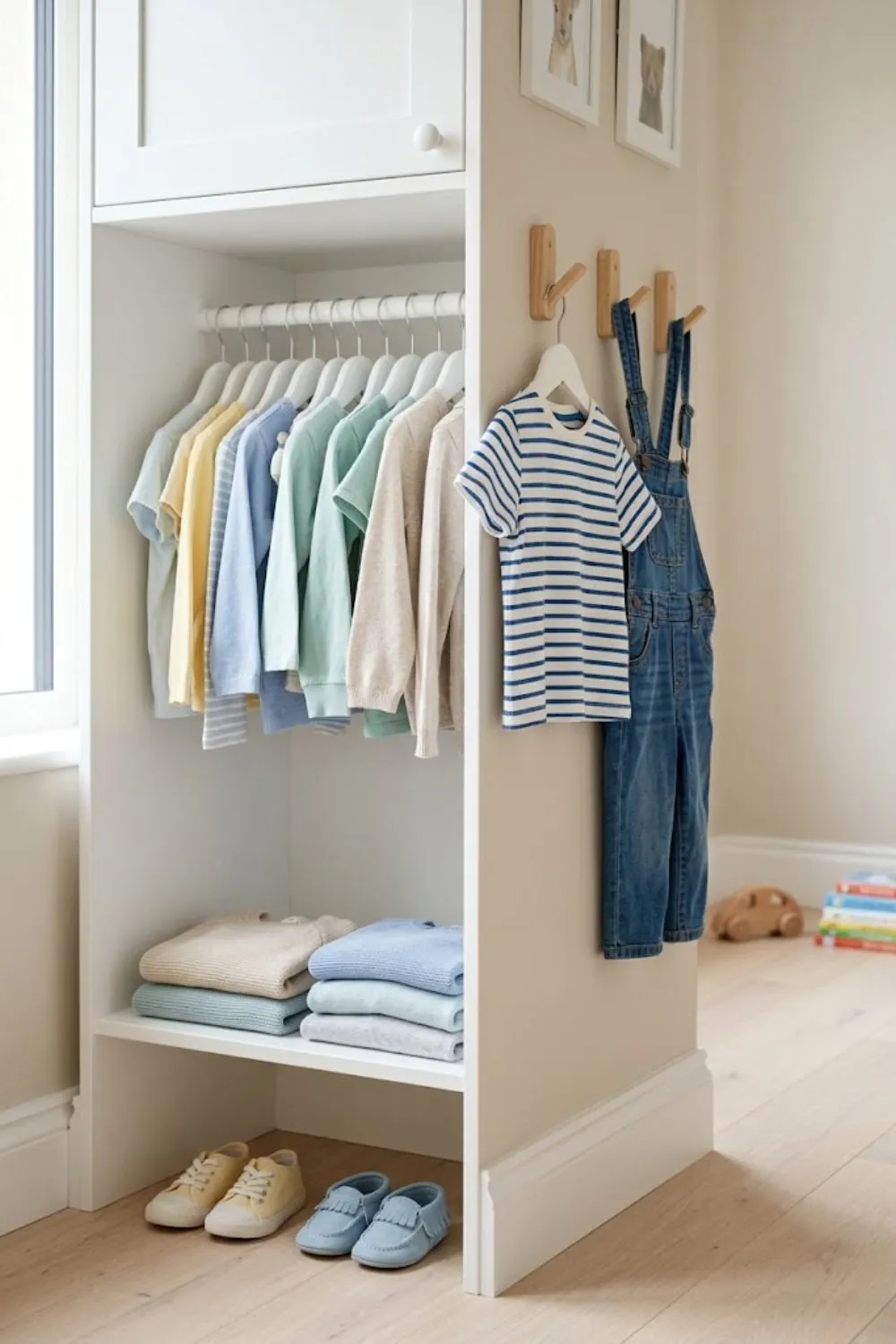
Most closets are built for adults, which means kids can’t reach anything. Lower the hanging rod, or add a second one at their height. If you have a PAX or similar system, the adjustable parts make this easy.
Put everyday clothes at the bottom and special-occasion outfits up high. Add a few hooks for tomorrow’s outfit. Suddenly, your child can pick and put away their own clothes, and that’s a win for everyone.
8. Art Trolley
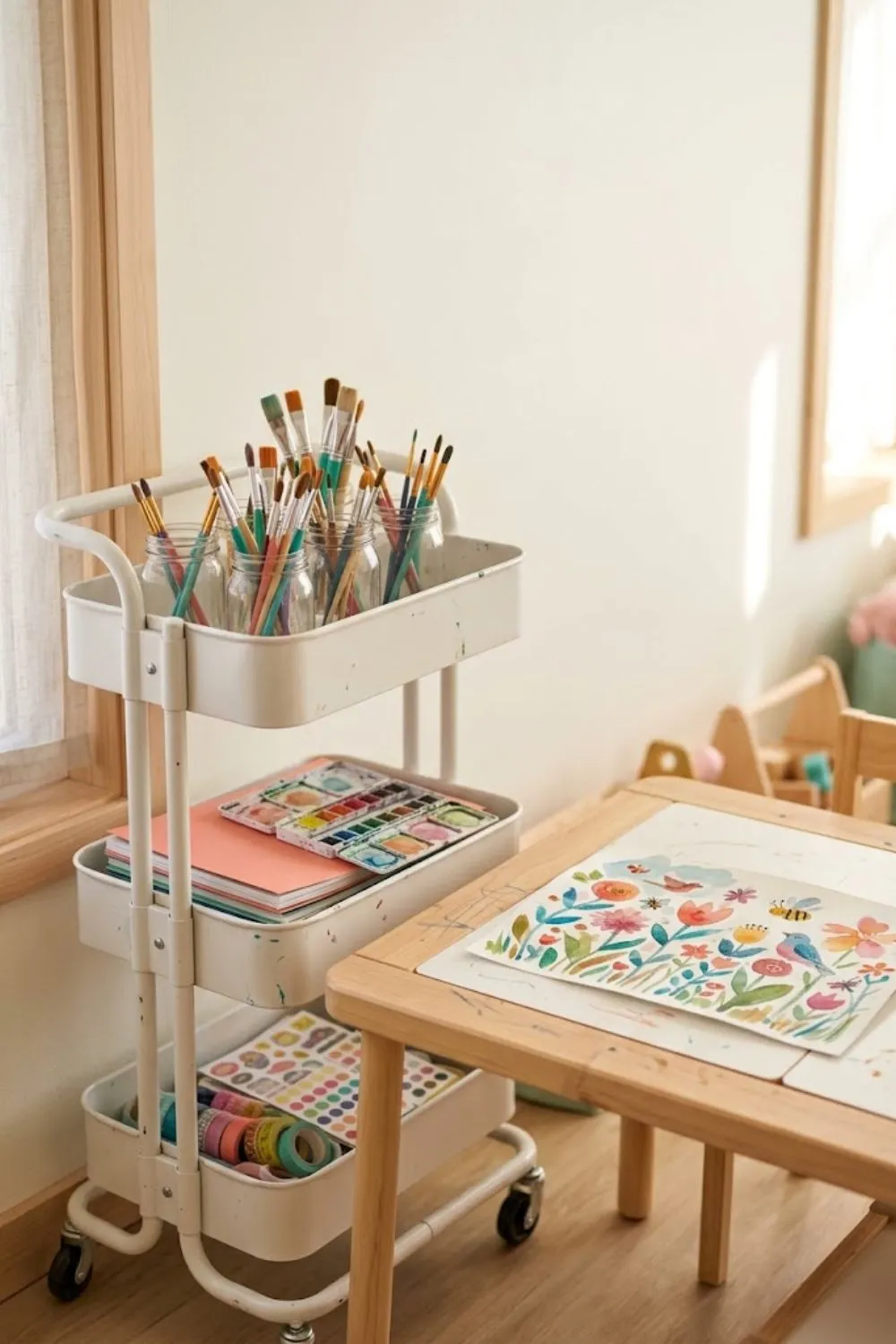
A rolling cart is a small studio you can park anywhere. The three-tier RÅSKOG trolley fits paper on one shelf, paints and brushes on another, and stickers or tape on the third.
Roll it to the table when it’s craft time, then back to the corner when you’re done. It also keeps scissors and glitter out of the way on days when you’d rather not see them. Add a little bin for scraps, and the mess stays contained.
9. Study Corner
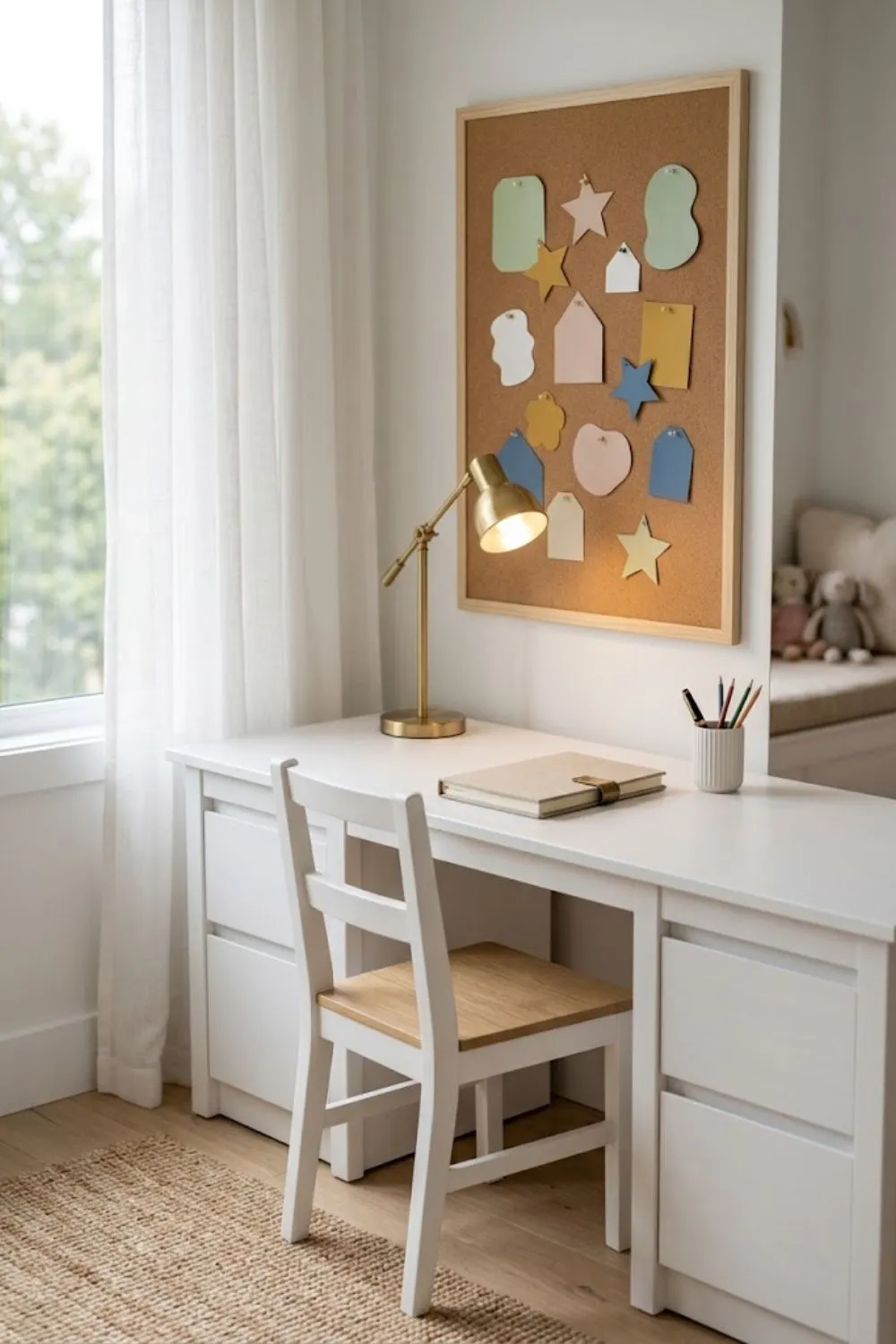
When homework starts, kids need a spot that feels like theirs. A simple desktop on a pair of drawer units, such as ALEX, gives you a desk with built-in storage. No hunting for pencils.
Put it near a window if you can. Keep only today’s things on top, and use the drawers for the rest. A small lamp and a pin board for reminders finish the setup. It doesn’t need to be fancy, just calm and consistent.
10. Toy Rotation Bins
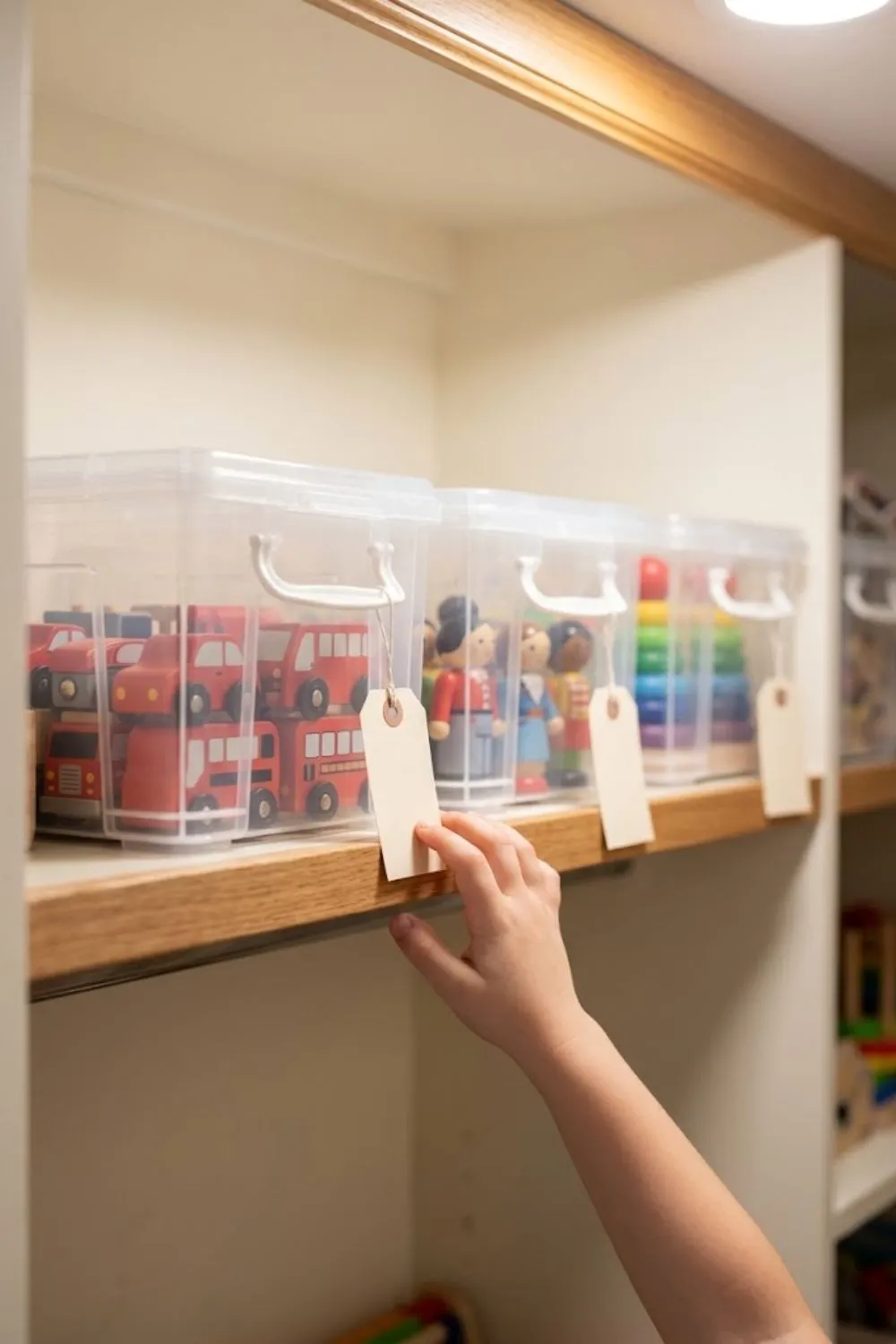
Here’s a trick many parents swear by: don’t show every toy at once. Store half in clear SAMLA boxes on a high closet shelf, and rotate them every couple of weeks.
Old toys feel brand new, and the floor stays clearer. Label each box by theme, like “vehicles” or “dolls,” so swapping takes a minute. If your child asks for a stored toy, bring it out. This isn’t about taking things away, just about giving them room to breathe.
11. LEGO Display Shelf
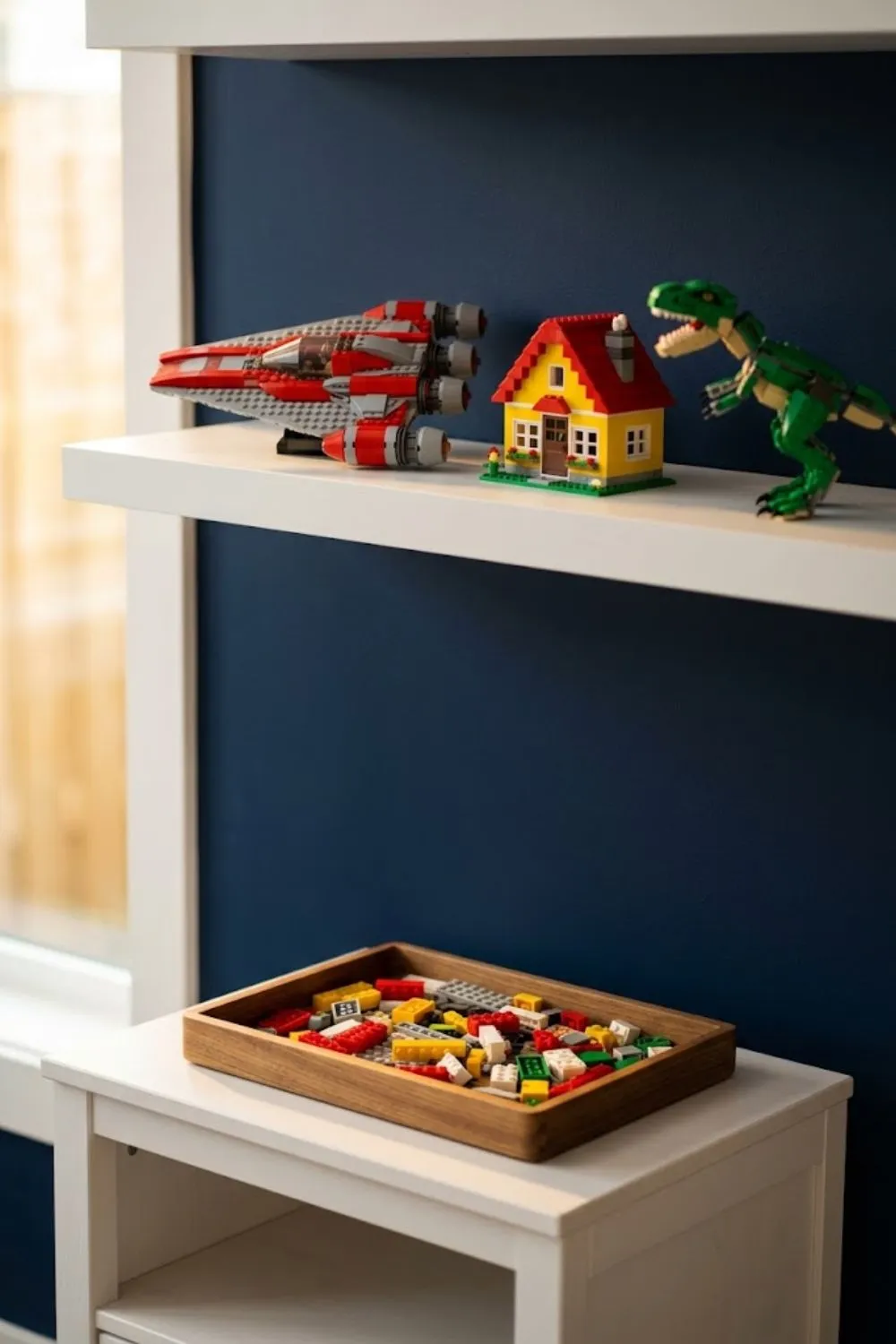
Finished builds deserve a place to be proud of. A simple wall shelf, like a LACK, lets kids show off their spaceships without them getting crushed in a bin.
Put it high enough to keep little siblings away, but low enough for the builder to reach. Keep loose bricks in a separate shallow tray on the floor or under the bed. When the shelf is full, it’s a gentle sign to take one apart and start something new.
12. Plush Toy Basket
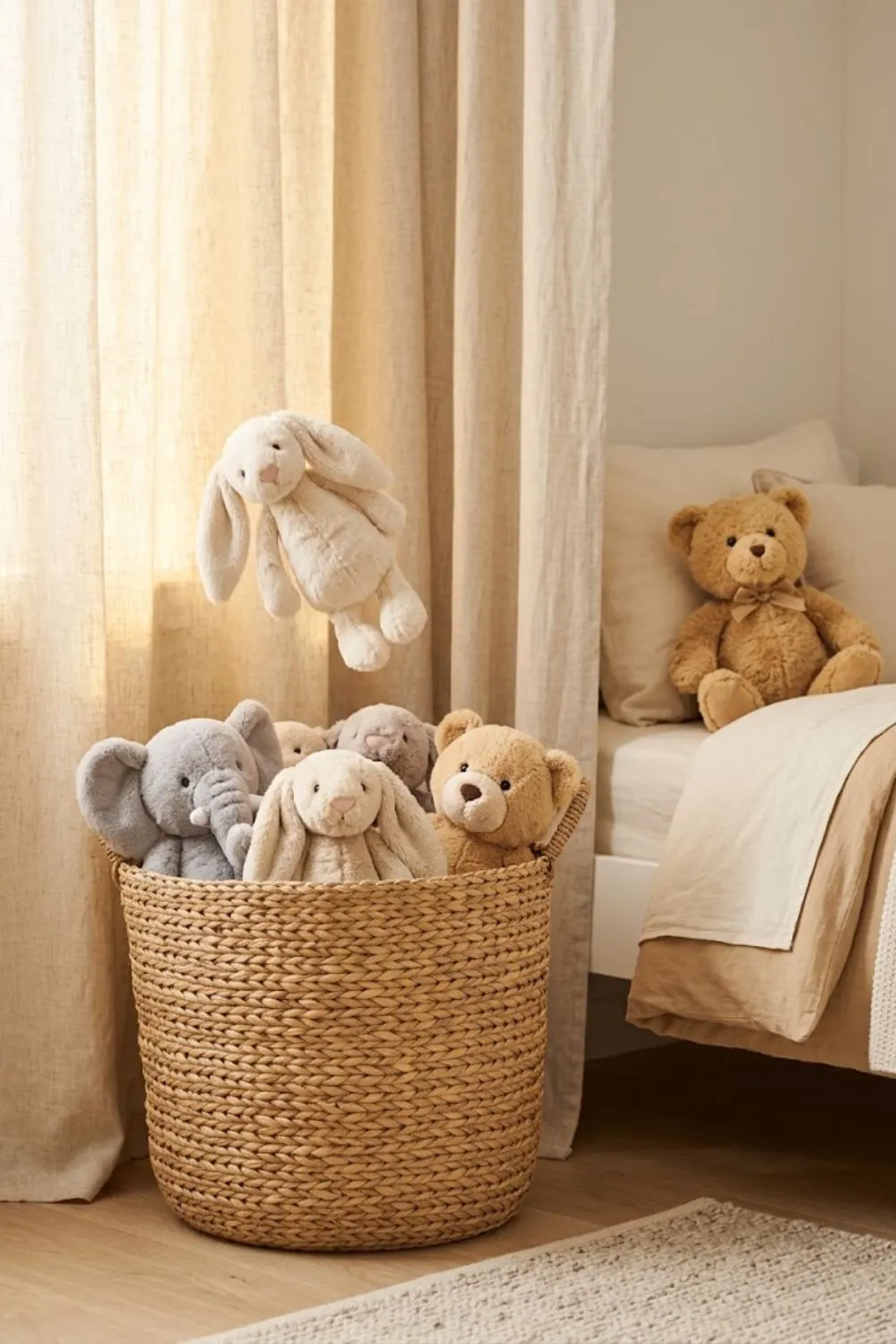
Stuffed animals multiply in ways nobody can explain. A big, open basket in the corner makes tidying a game of tossing them in. Soft woven ones, like BRANÄS, look nice and don’t scratch walls.
Pick one with a wide opening, because kids won’t fiddle with lids. If the pile keeps growing, try the “one in, one out” rule, and donate the extras. Keep their favorites on the bed so they never get buried.
13. Backpack Hooks
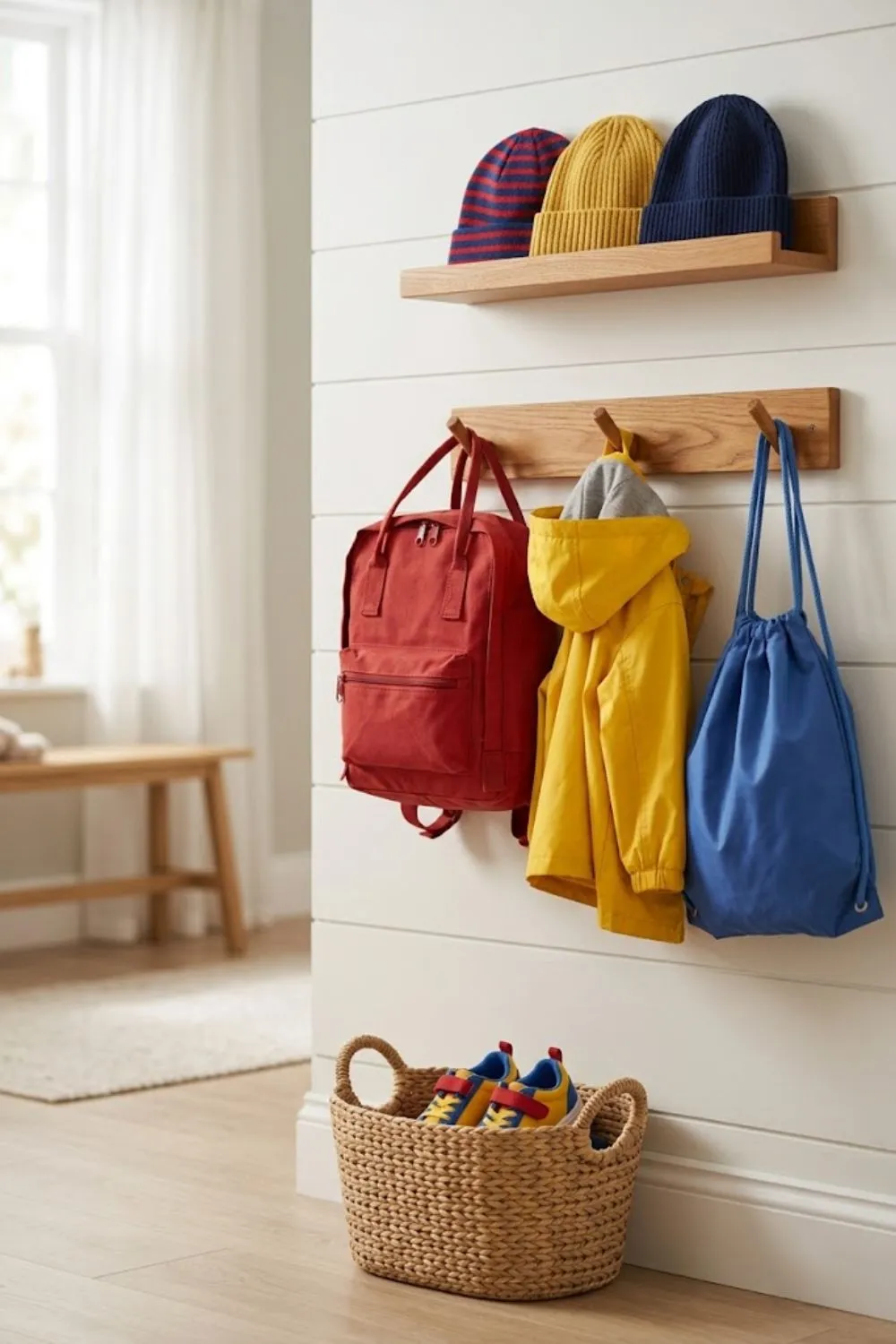
School bags are the sneakiest source of clutter. A hook rail by the door, like KUBBIS, gives every bag, jacket, and gym bag a place to hang.
Mount hooks at your child’s height, not yours. One hook per kid, one color per kid, and the morning rush gets easier. Add a small shelf above for hats, and a basket below for shoes. If the room is tiny, the back of the door works just as well.
14. Bedtime Book Nook
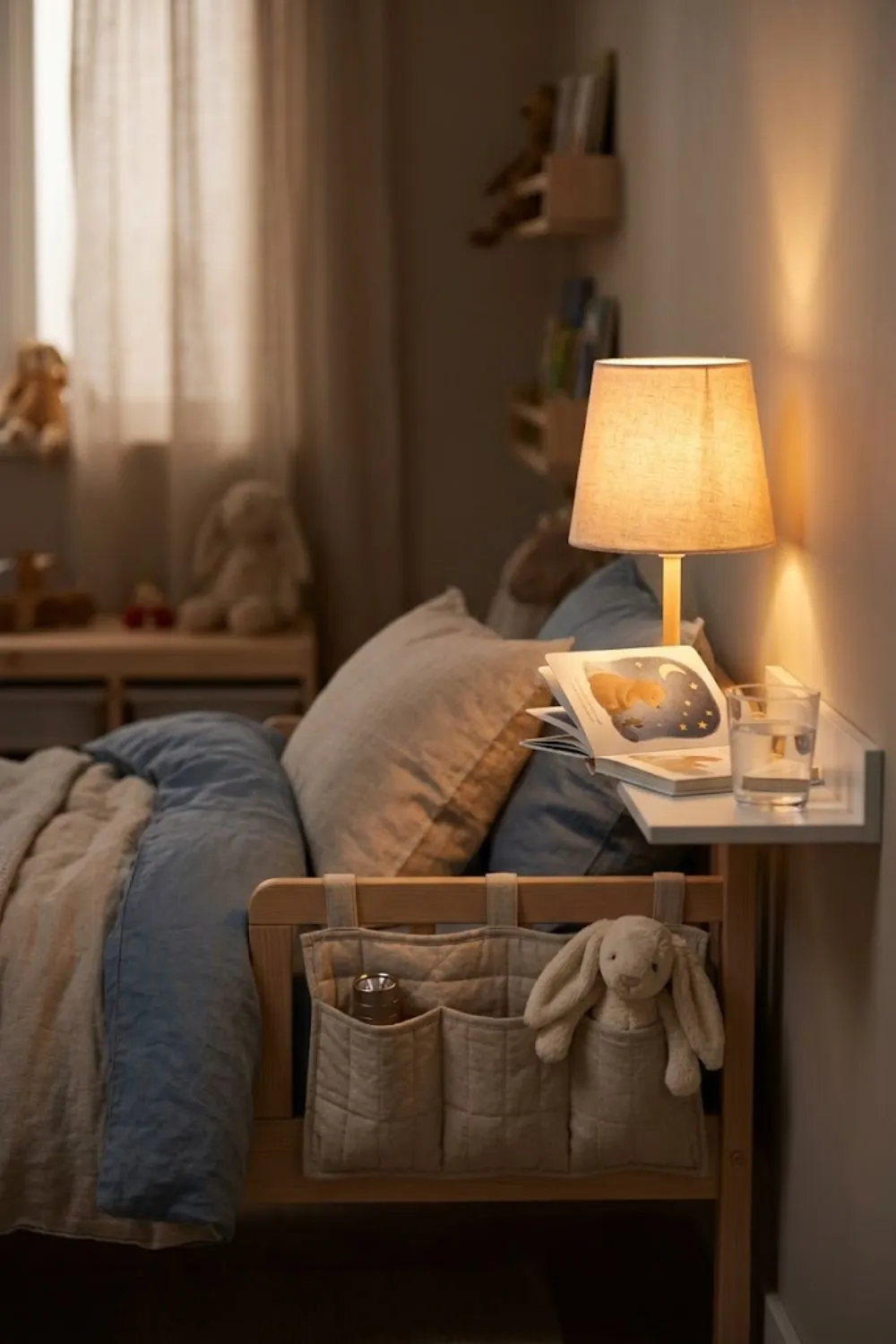
The bedside should be small, quiet, and ready for stories. Use a slim shelf or a narrow side table with just three things: a lamp, tonight’s book, and maybe a glass of water.
Skip the clutter. Kids settle down faster when the space around the bed feels peaceful. Hang a small fabric pocket on the bed frame if they like having a flashlight or a favorite toy close by. Bedtime gets smoother when everything has its spot.
15. Shared Room Zones

Two kids in one room can get messy fast. Give each child a clear zone, even if it’s just one shelf, one bin, and one set of hooks. Use a different color for each: blue boxes for one, green for the other.
A low shelf unit like KALLAX works as a divider that still lets light through. Share the big stuff, like the play rug and book basket. Having a spot that’s truly “mine” cuts down on arguments more than you’d expect.
16. Picture Labels
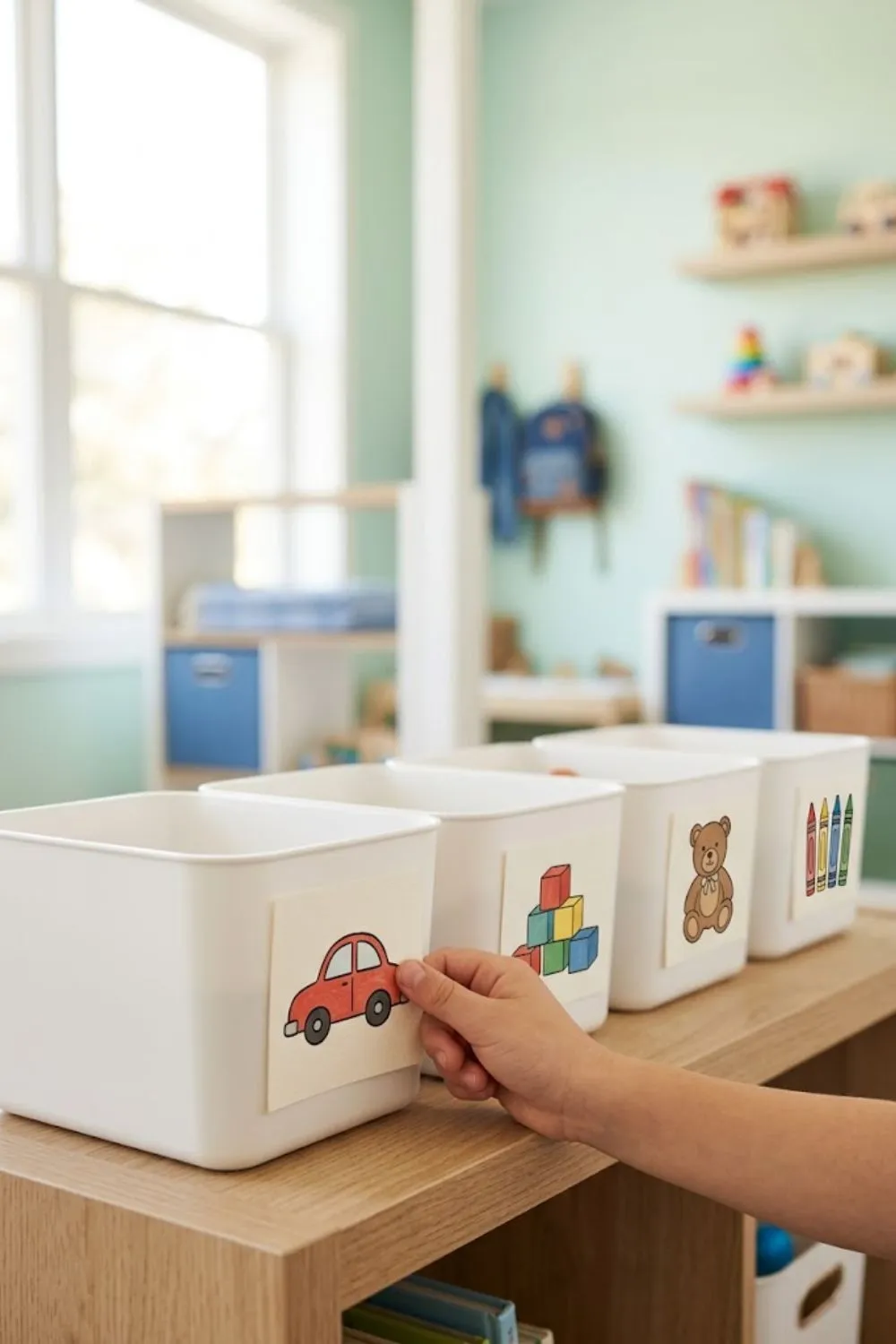
Kids who can’t read yet can still sort. Stick a photo or a simple drawing on each bin: a car for cars, a block for blocks. Print them at home and tape them on, or draw them with the kids.
It turns cleanup into a matching game, and little ones feel proud when they get it right. As they learn to read, add words next to the pictures. It’s a tiny step that makes every other idea on this list work better.
Conclusion
The best IKEA kids room organization setup is the one your child will actually use. Start small. Maybe one low shelf, one set of hooks, or a few labeled bins. Watch what gets used, then build from there. Rooms change as kids grow, and IKEA’s modular pieces change with them. A little tidy-up routine will do the rest.