15 DIY Living Room Organization Ideas for a Tidy Home
A tidy living room does not require expensive furniture or a complete makeover. These 15 DIY living room organization ideas focus on simple ways to use walls, corners, furniture, baskets, and everyday materials more effectively. They work well for renters, families, and anyone dealing with limited floor space. Each idea combines practical storage with thoughtful styling, so your living room can stay organized while still feeling personal, comfortable, and inviting.
1. Floating Wood Shelves
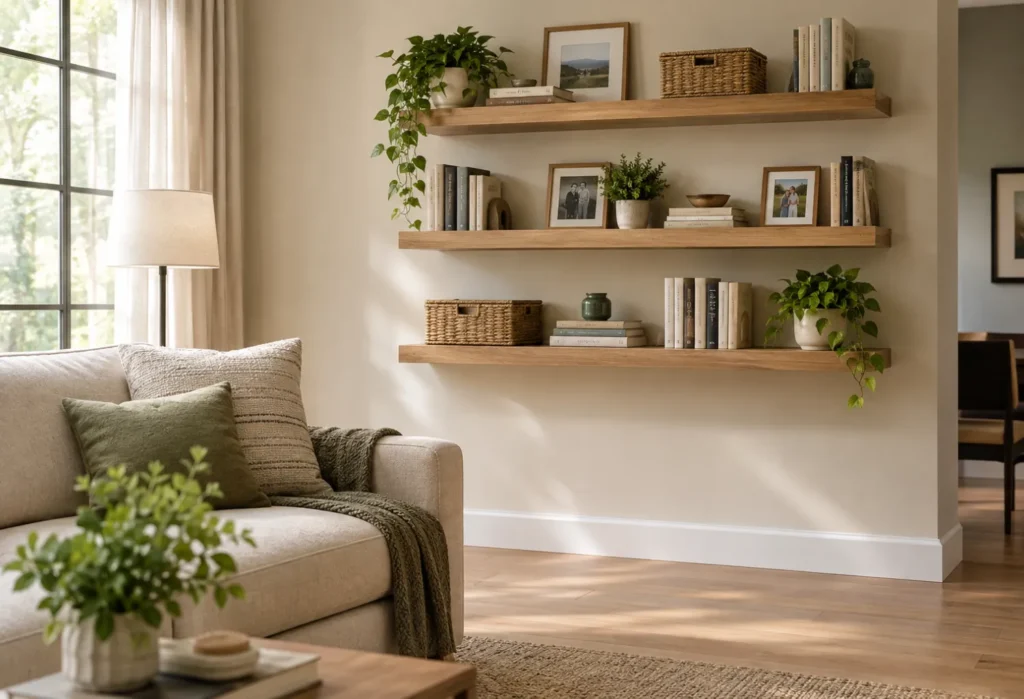
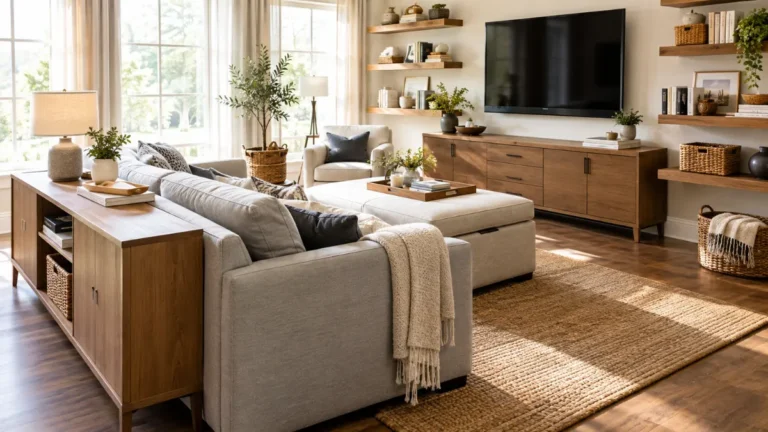
Floating wood shelves make use of vertical wall space without taking up valuable floor area. They are especially useful beside a sofa, above a media console, or in an empty corner where a bulky cabinet would feel crowded. A few carefully spaced shelves can hold books, framed photos, small plants, and baskets for everyday items.
Choose shelves in natural oak, walnut, or painted wood based on your existing furniture. Keep heavier objects on lower shelves and leave some open space between accessories so the wall does not look overloaded.
2. Rolling Storage Crates
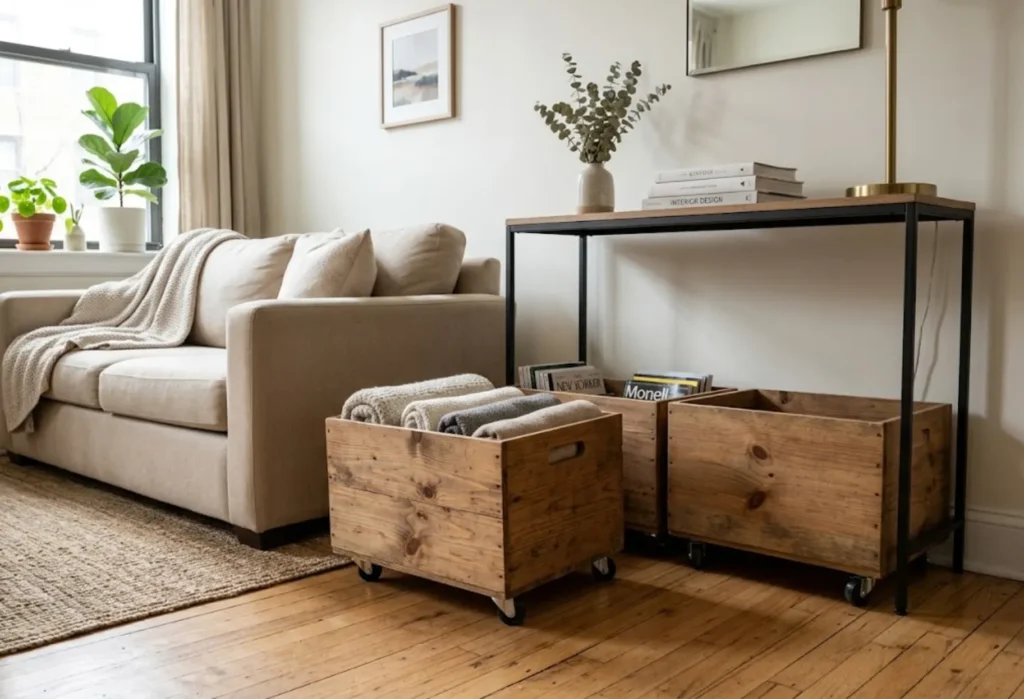
Wooden crates can become inexpensive rolling storage that slides under a console table, sofa, or open shelving unit. They are useful for blankets, children’s toys, magazines, or items that need to be close but not visible. Adding casters makes the crates easier to pull out without moving other furniture.
Sand the wood first, then use a clear finish, soft white paint, or a muted stain. Check the crate height against the available clearance before adding wheels, and avoid filling them so heavily that they become difficult to move.
3. Pegboard Media Wall
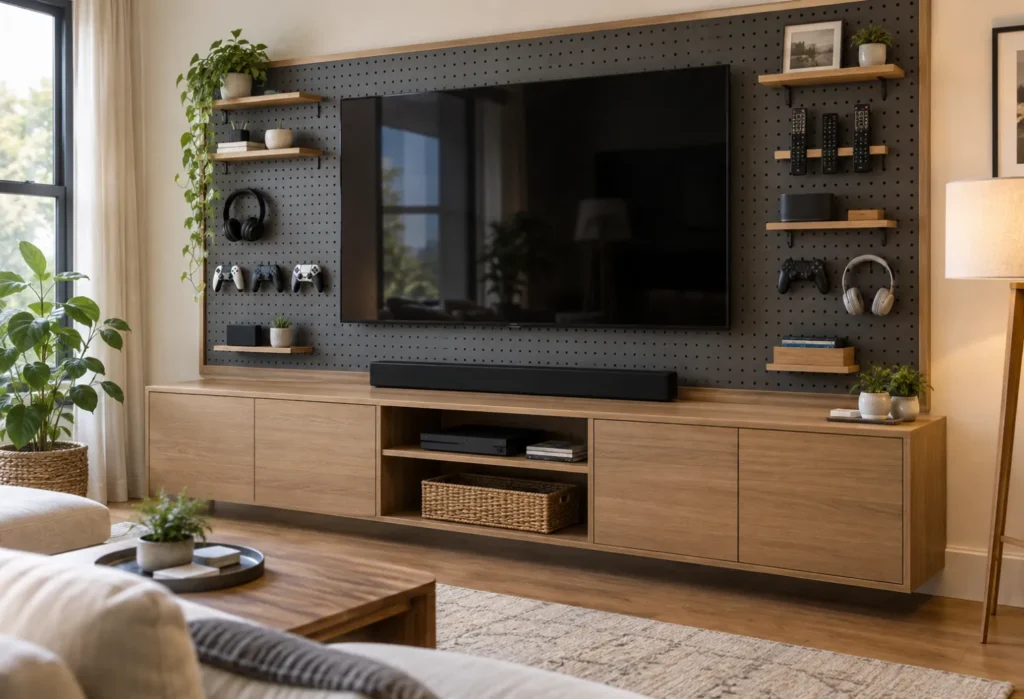
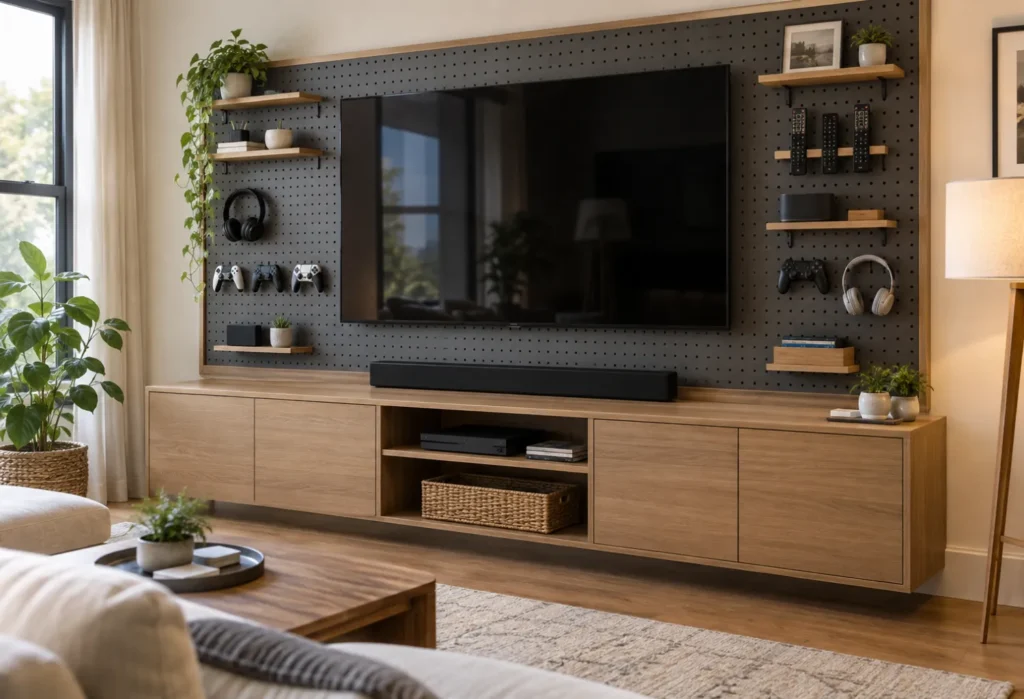
A pegboard can turn an unused section of wall into flexible storage around the television or media area. Small shelves, hooks, and holders can keep remotes, game controllers, headphones, and small accessories together instead of scattered across the coffee table.
Paint the pegboard to blend with the wall for a quiet look, or choose a contrasting shade for more definition. Leave enough space around the television and avoid placing hooks where cables will become tangled or visible from the main seating area.
4. Ottoman With Hidden Storage
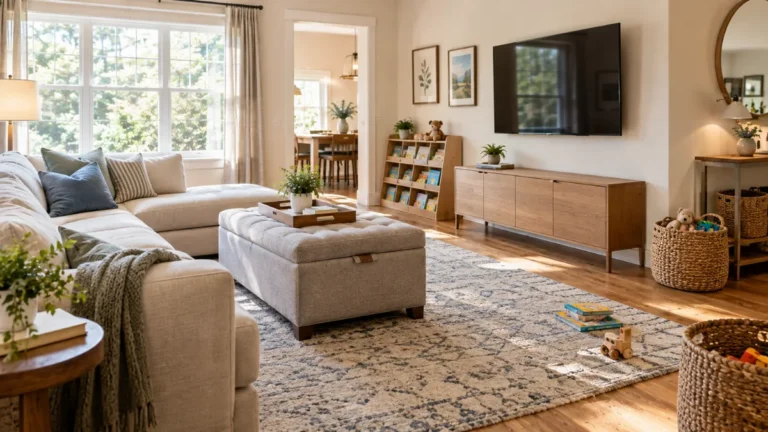
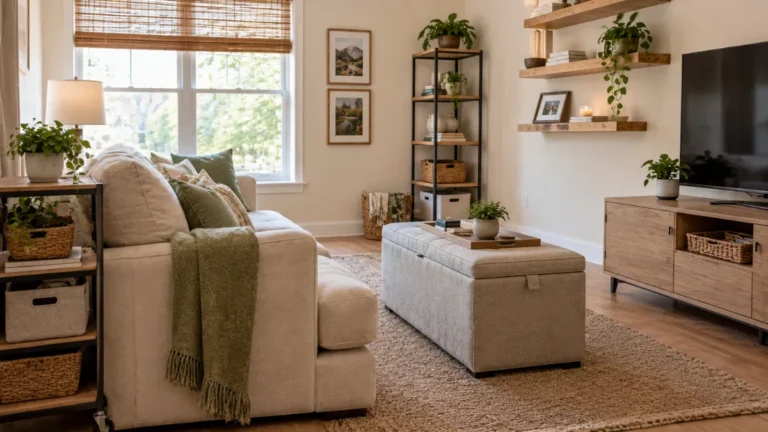
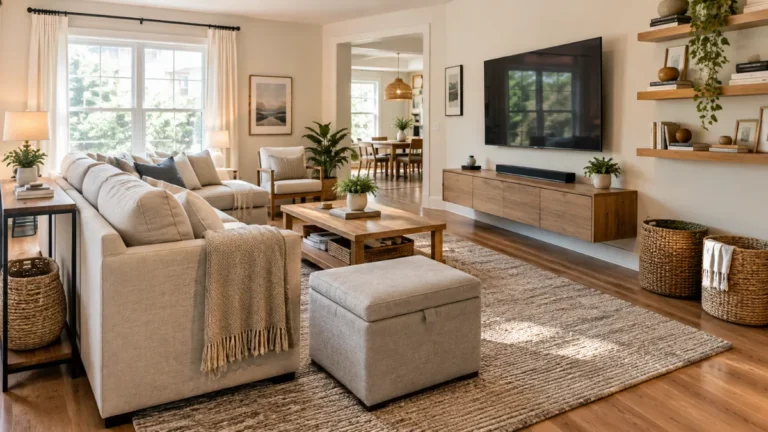
A DIY storage ottoman gives a living room both extra seating and a place to hide frequently used items. Instead of leaving throws, books, or children’s belongings on chairs and sofas, they can disappear inside the hinged top. This works particularly well in rooms where there is no space for another cabinet.
A sturdy plywood box topped with firm foam and durable fabric can serve as the base. Keep the ottoman slightly smaller than the sofa width so it can move easily, and use a lid with safe hinges that will not slam shut.
5. Behind-Sofa Console Shelf
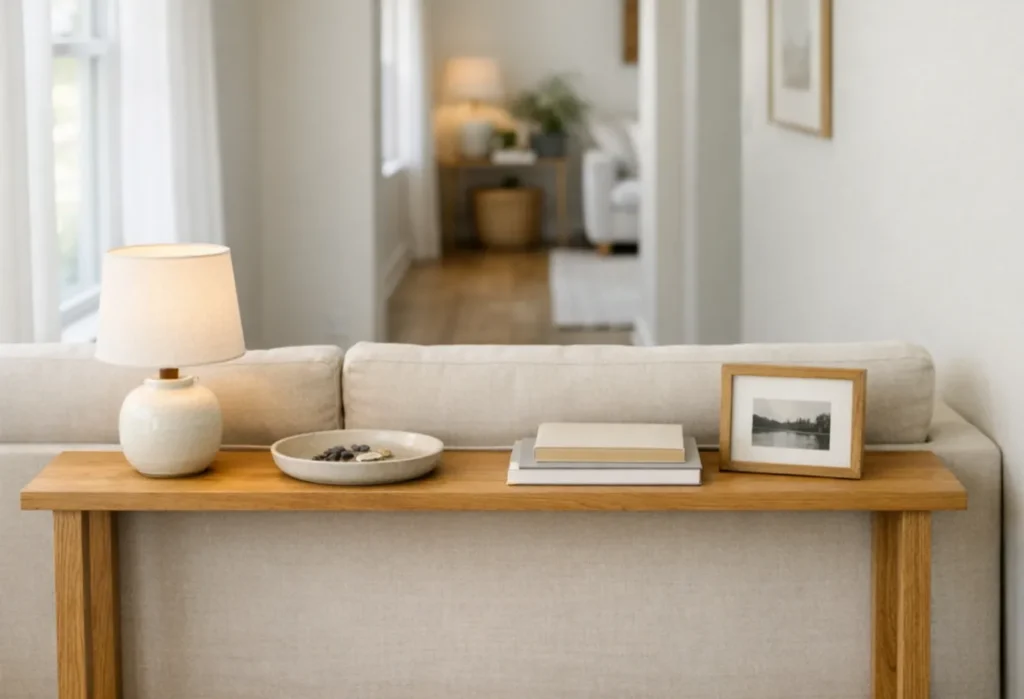
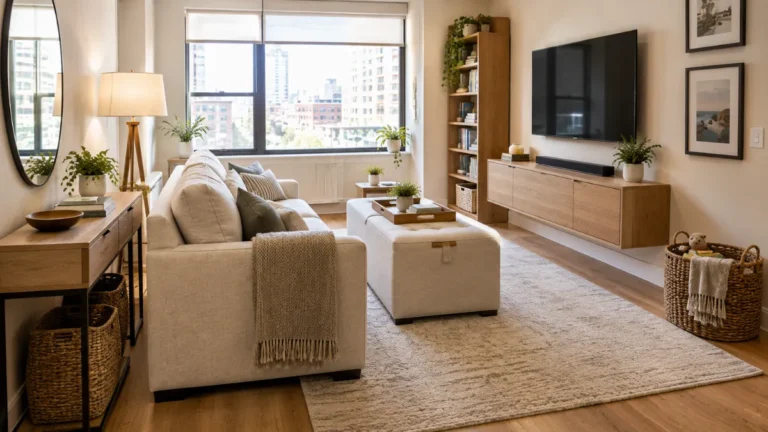
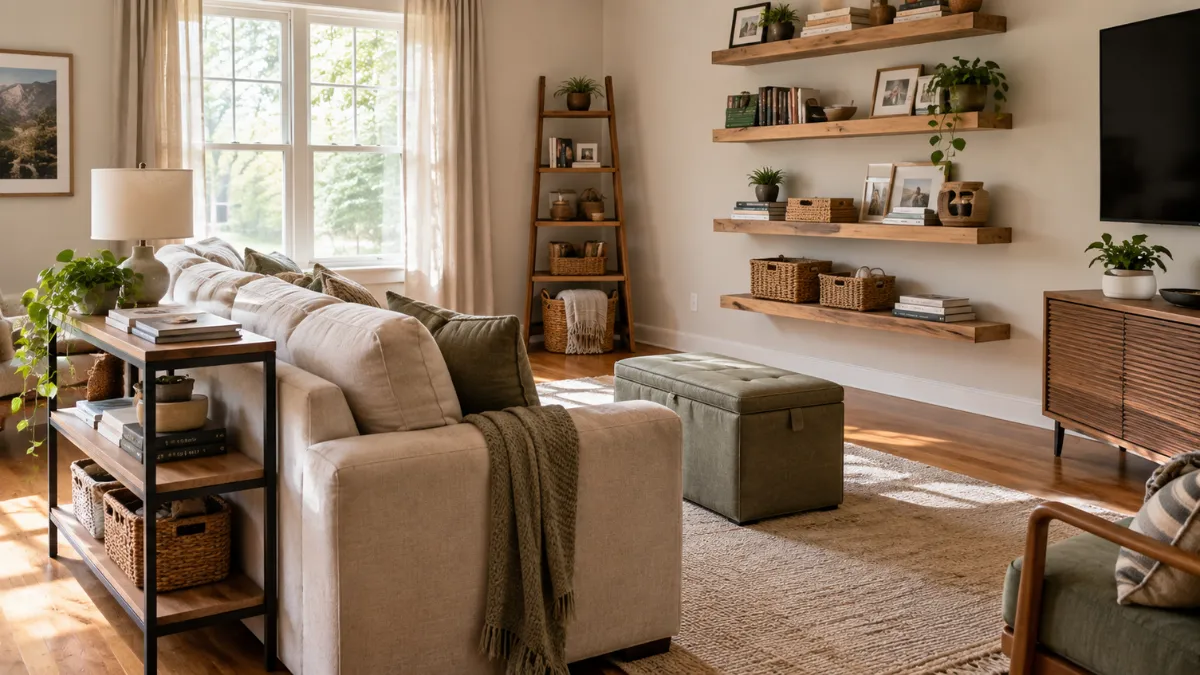
A narrow DIY console shelf behind the sofa can use a strip of otherwise wasted space for storage and display. It gives you a convenient surface for lamps, books, framed artwork, or a small tray without requiring another full-size table.
Keep the depth modest, especially if the sofa sits near a walkway. A slim wooden top with simple legs or wall supports is usually enough. Leave a comfortable passage behind the sofa and avoid sharp corners if people regularly walk through the area.
6. Basket Wall Storage
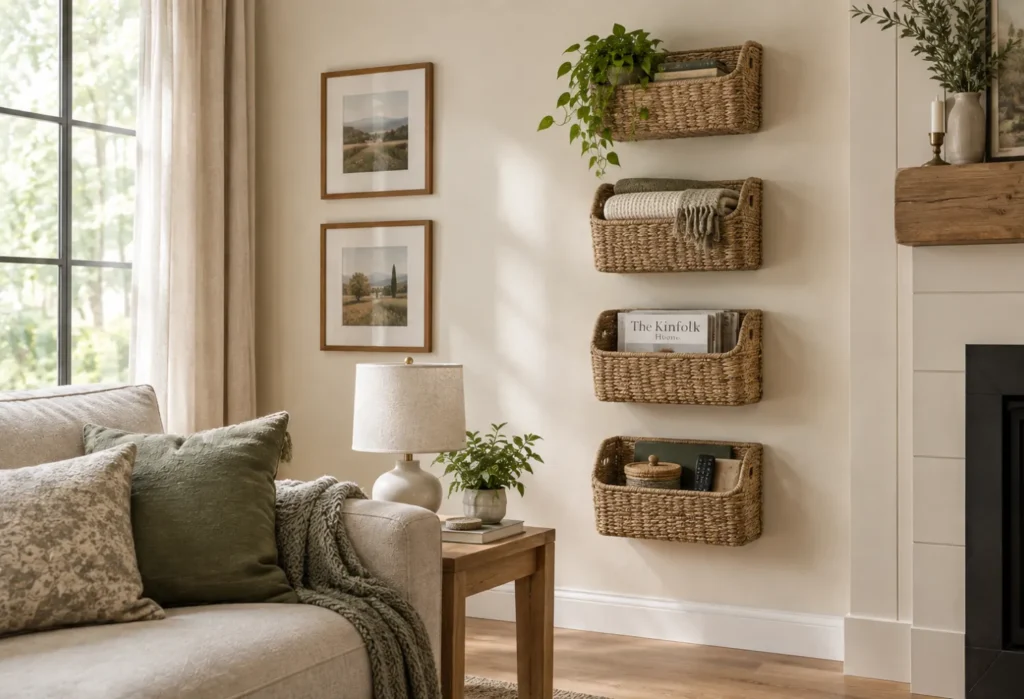
Baskets mounted directly on the wall can provide lightweight storage while adding natural texture to a plain living room. They work nicely for magazines, small throws, children’s books, or decorative objects that otherwise collect on open surfaces.
Use baskets in similar natural tones such as seagrass, rattan, or woven cotton for a calm appearance. Mount them at different heights only if the wall is large enough to handle the arrangement; on a narrow wall, a simple vertical row usually looks cleaner.
7. Repurposed Drawer Organizer
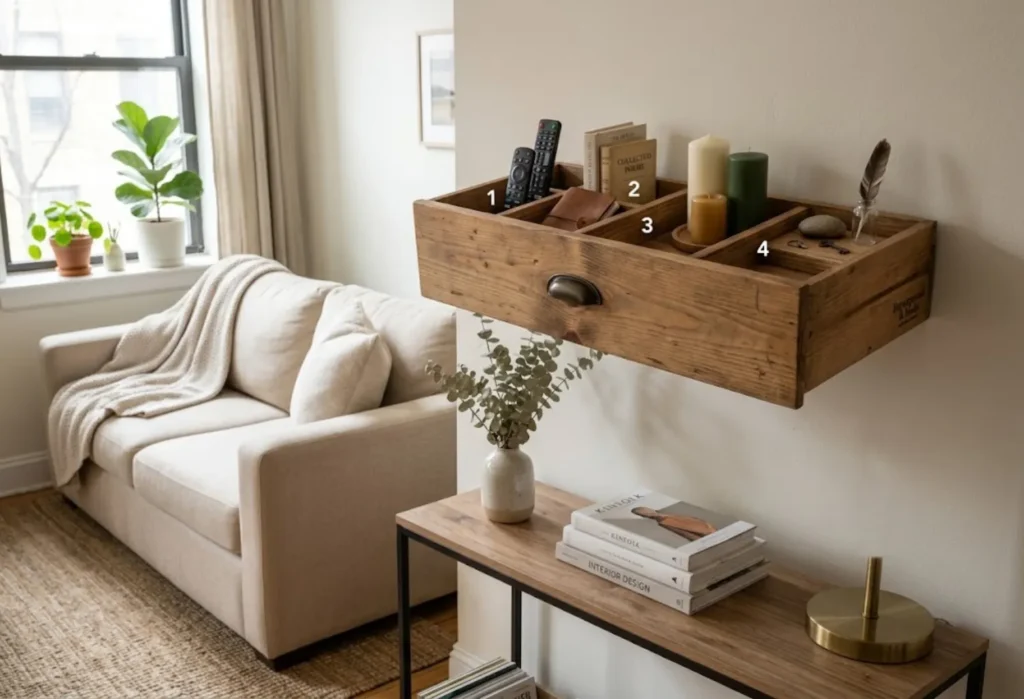
An old dresser drawer can become a useful wall-mounted organizer for small living room accessories. Rather than throwing away a damaged dresser, remove the drawer, repair its surface, and turn it into a shallow display and storage box for remotes, books, candles, or small electronics.
Paint the drawer to match your wall or keep the original wood finish if it works with your furniture. Add small dividers inside if you need separate sections, and use secure wall anchors because even shallow storage becomes heavy once filled.
8. DIY Cord-Hiding Box
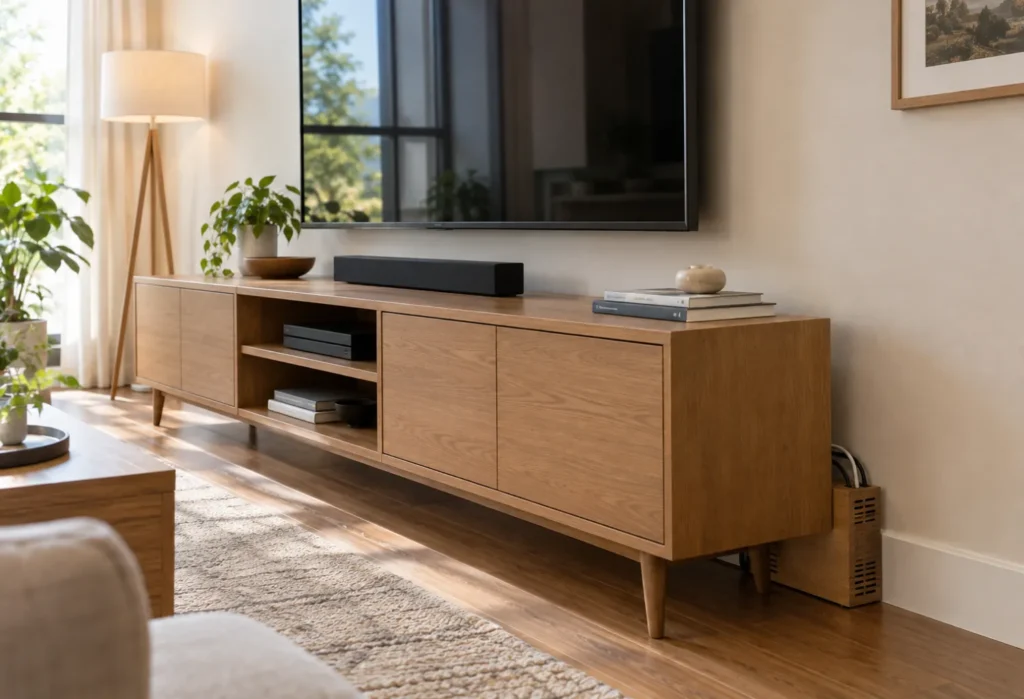
A simple wooden or decorative storage box can hide the power strips and excess cables that often make a living room media area look messy. Keeping those cords contained also makes it easier to clean around the television stand without moving several loose cables.
Choose a box large enough for the power strip and leave ventilation openings on the sides or back. Never completely seal electrical equipment inside an airtight container, and keep the box away from heat-producing devices.
9. Corner Ladder Shelf
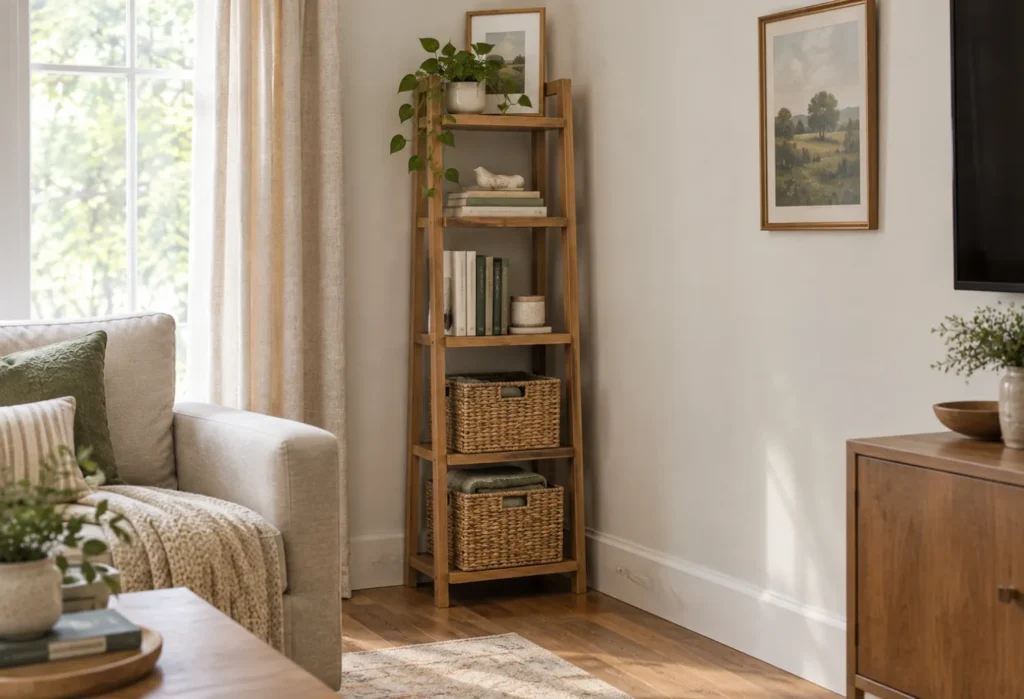
A narrow ladder shelf can make an awkward living room corner useful without visually filling the entire area. Its open sides allow light to pass through, while the staggered shelves provide spots for books, plants, baskets, and small decorative pieces.
Look for a design around 10–14 inches deep if floor space is tight. Place heavier storage baskets on the bottom shelves and lighter accessories higher up. Secure a tall ladder-style shelf to the wall so it cannot tip.
10. A 10-by-12-Foot Living Room
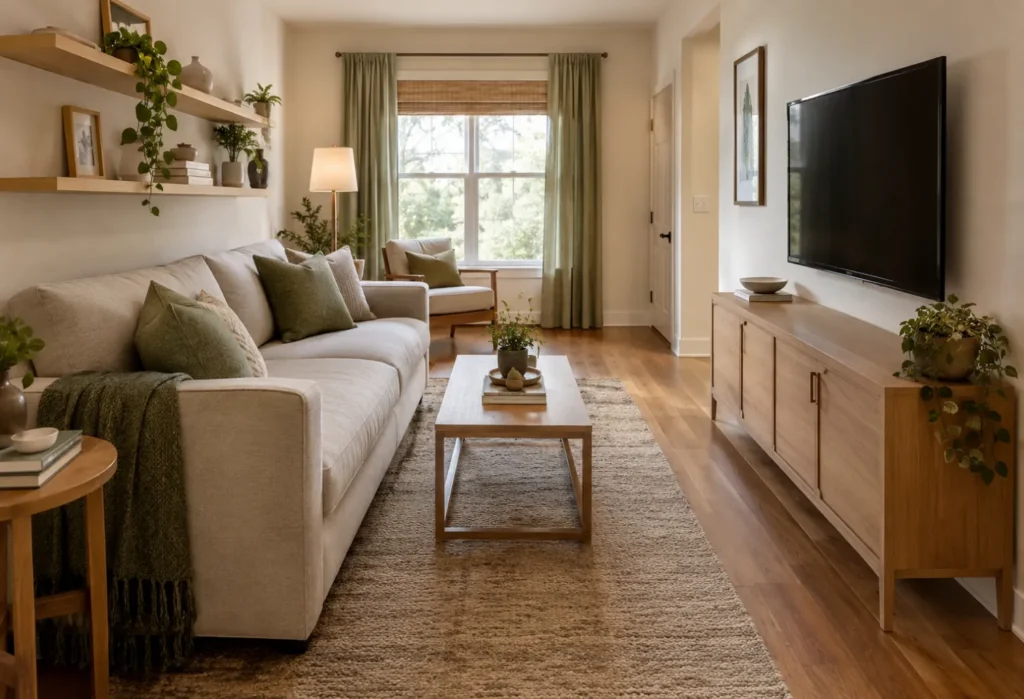
Picture a 10-by-12-foot living room with a sofa against one long wall, a television opposite it, and only a narrow walkway near the entry. Adding another cabinet would make the path feel tighter, so a wall-mounted shelf above the sofa becomes the more practical choice.
This layout shows why organization should follow the room’s circulation pattern. In a similarly sized room, keep storage shallow, use vertical surfaces, and reserve the center floor area for movement rather than filling it with storage furniture.
11. DIY Coffee Table Basket Shelf
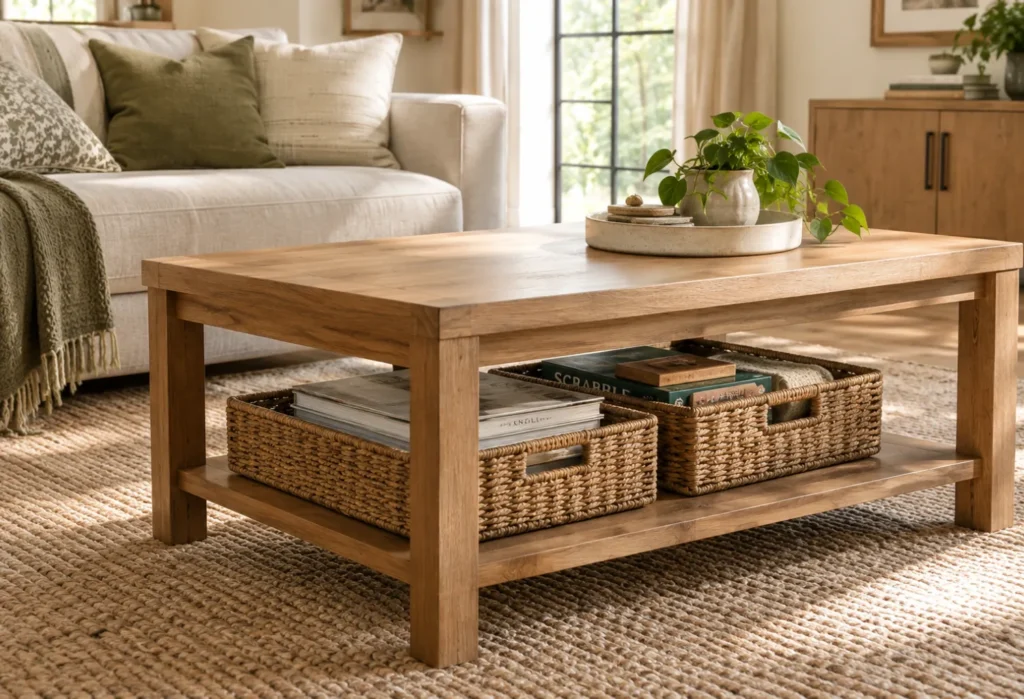
A simple lower shelf added beneath a coffee table creates a dedicated home for items that otherwise stay scattered across the tabletop. It can hold board games, magazines, remote controls, or a small basket for everyday accessories while keeping the upper surface available for drinks and decoration.
Use a wooden panel that sits securely between the table legs and matches the existing finish. Leave enough clearance for knees and feet, and choose baskets that can slide out without scraping the floor.
12. Wall-Mounted Book Ledges
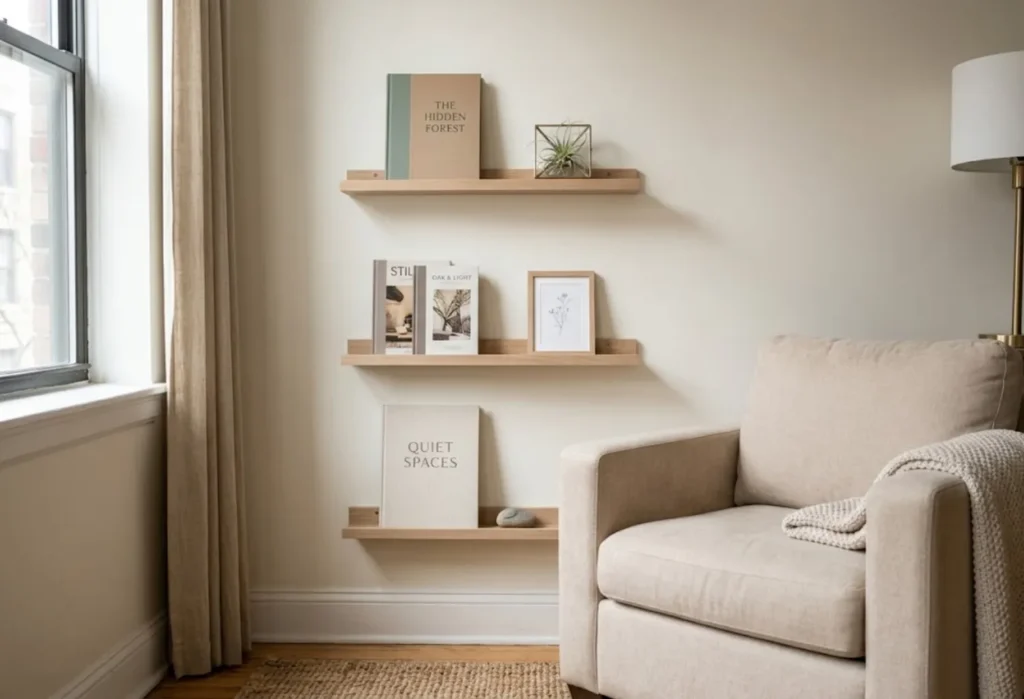
Slim picture ledges can hold a small collection of favorite books without requiring a large bookcase. Their shallow profile is helpful in compact living rooms, especially beside a reading chair or on a narrow wall that cannot accommodate deep furniture.
Install two or three ledges vertically rather than spreading them across an entire wall. Display books with their covers facing outward for color and visual interest, but keep the collection limited so the ledges remain easy to use.
13. Furniture Leg Storage Bins
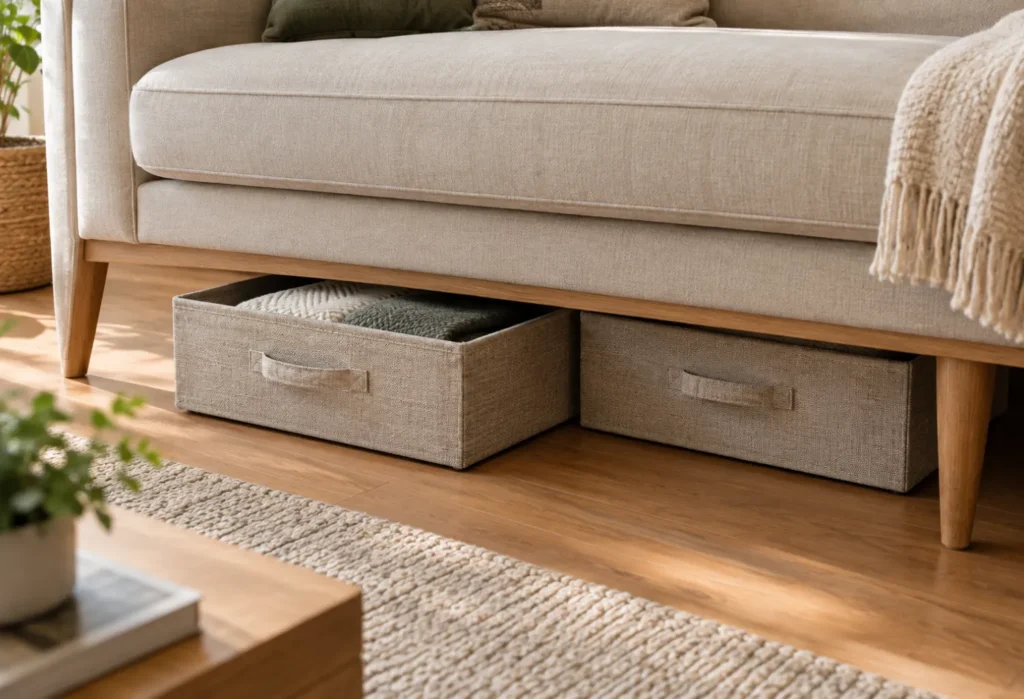
Low fabric or woven bins can turn the unused space beneath certain sofas or console tables into discreet storage. This is a good option for homes where floor space is limited but there is several inches of clearance under existing furniture.
Measure the full opening before buying or making the bins, including the distance between furniture legs. Choose bins with handles so they pull out easily, and use matching neutral fabrics if you want them to blend into the room rather than stand out.
14. DIY Entryway-to-Living-Room Drop Zone
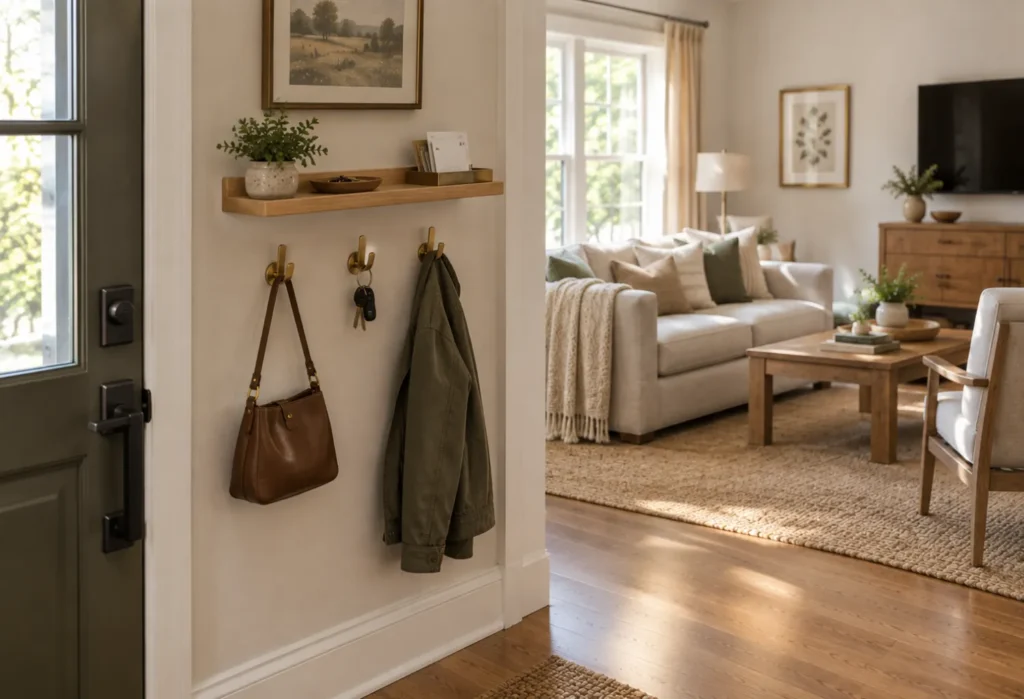
A small drop zone near the living room entrance can prevent keys, mail, sunglasses, and bags from spreading onto nearby furniture. A narrow wall shelf paired with hooks gives each frequently used item a defined place without taking over the room.
Keep the arrangement compact and close to the entrance rather than beside the main seating area. A wood shelf, brass hooks, and a small tray can add warmth while keeping everyday items contained and easy to find.
15. Repurposed Wooden Crate Side Table
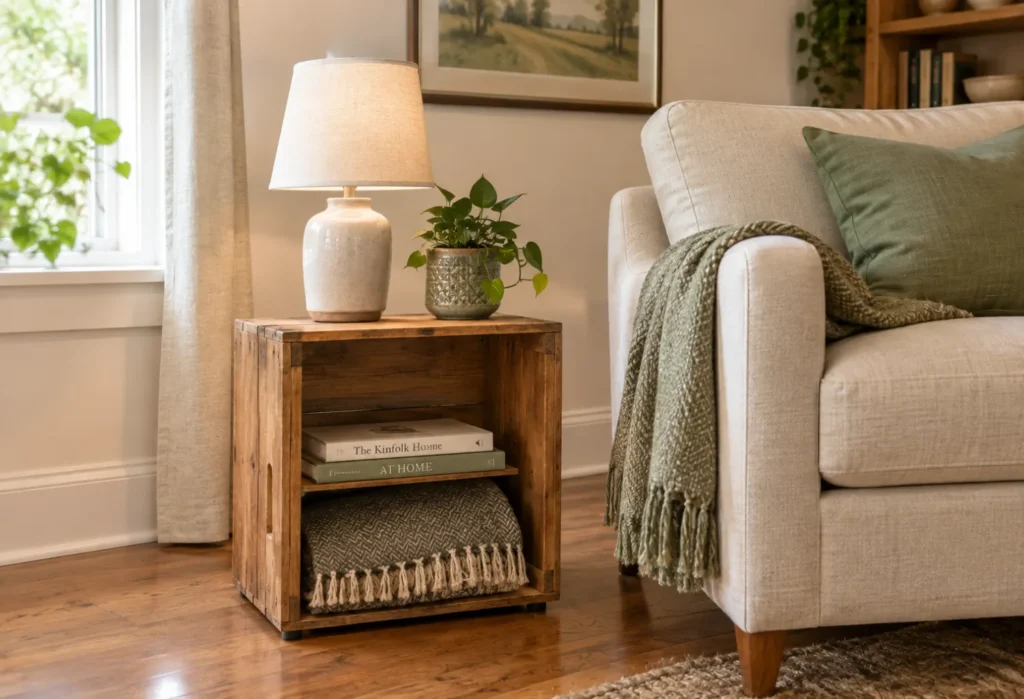
A wooden crate can work as a compact side table with built-in storage. The open interior provides space for books, blankets, or baskets, while the top creates a surface for a table lamp, plant, or drink.
Stack two crates only if they can be joined securely; one crate is often enough beside a sofa or chair. Add a smooth wood top if you want a more finished surface, and use felt pads underneath to protect hard flooring.
5 Best Ideas to Start With
| Idea | Best For | Why I Recommend It |
| Floating Wood Shelves | Small rooms | Uses vertical space |
| Storage Ottoman | Families | Seating plus hidden storage |
| Behind-Sofa Console Shelf | Narrow layouts | Adds storage without blocking the room |
| Cord-Hiding Box | TV areas | Controls visible cable clutter |
| Corner Ladder Shelf | Empty corners | Adds useful storage with a small footprint |
Conclusion
The best DIY living room organization ideas are the ones that fit the way your household actually uses the room. Start with the biggest source of clutter, then choose a solution that uses an overlooked wall, corner, or piece of furniture. A few well-planned DIY additions can keep everyday items under control while leaving your living room comfortable and easy to enjoy.