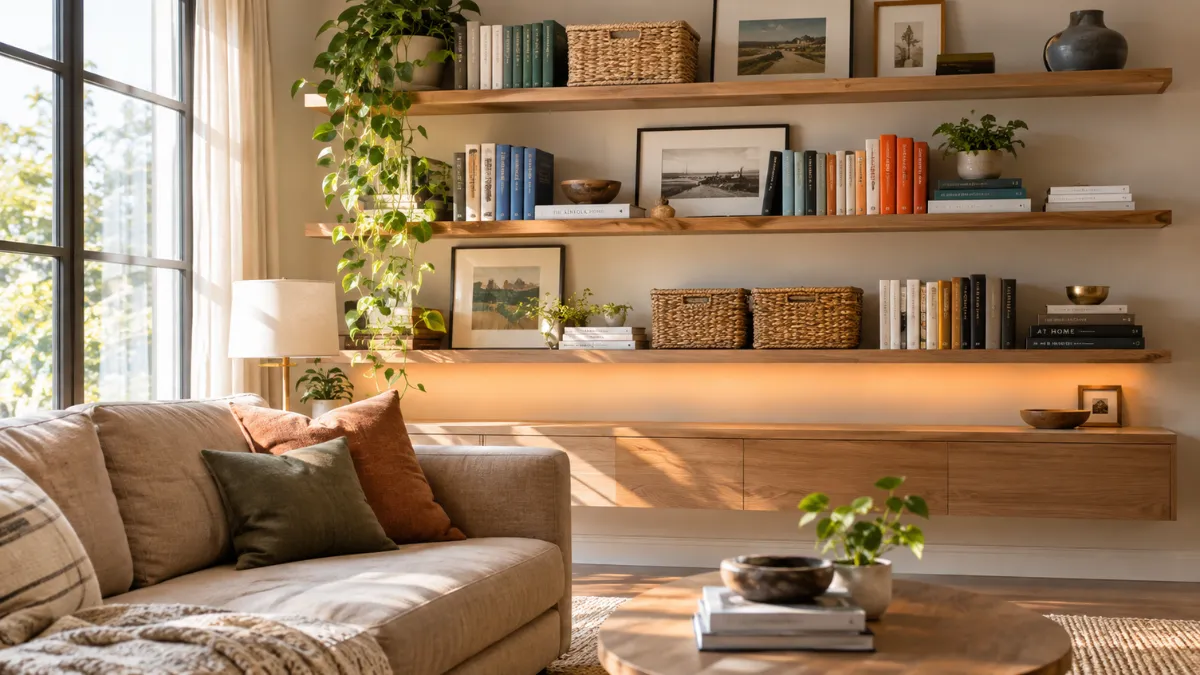
18 Living Room Shelf Organization Ideas That Actually Work
A living room shelf can be the tidiest surface in the house or the one that quietly collects everything. These 18 living room shelf organization ideas are written for renters and homeowners working with limited square footage, where a shelf has to hold real things and still look good. You’ll find layout fixes, storage swaps, lighting tricks, and styling rules you can copy this weekend, whatever your space or decorating style.
1. Floating Shelves Above the Sofa
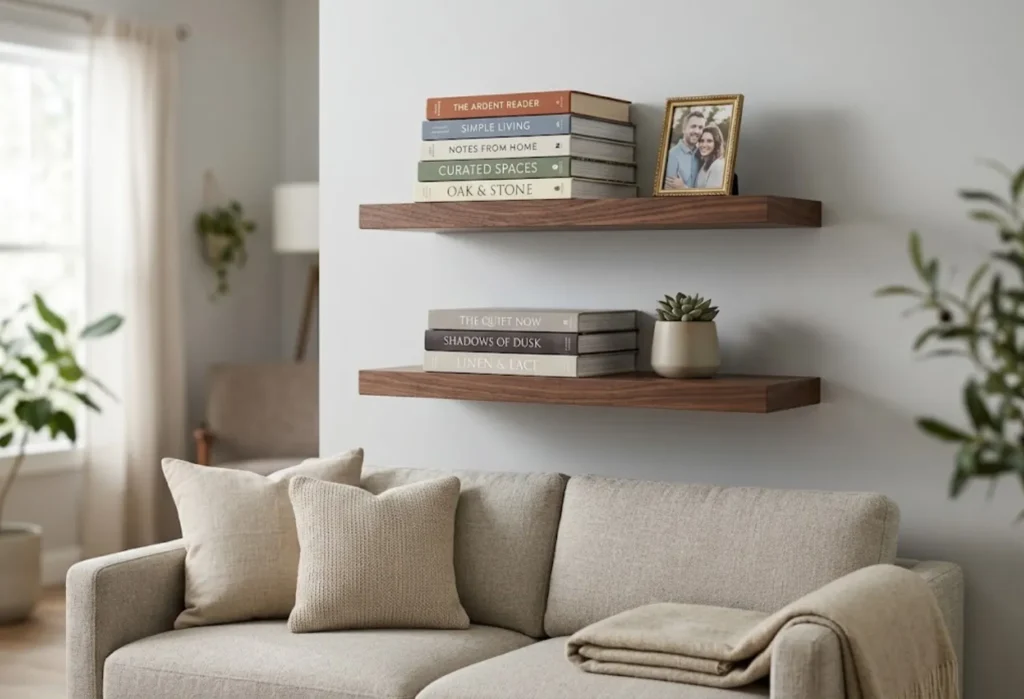
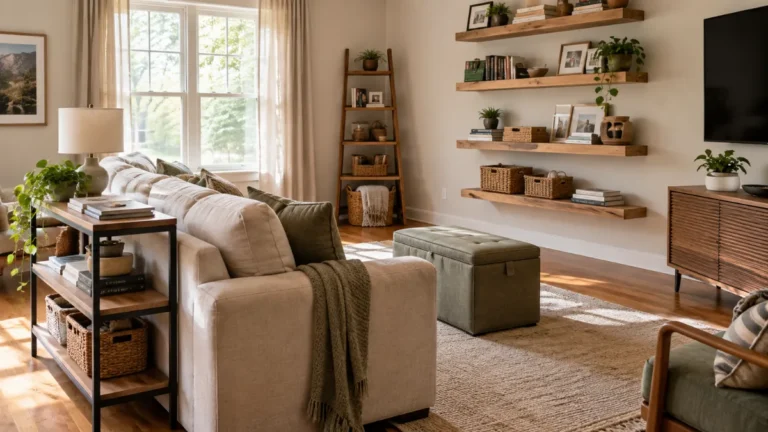
In a small living room, the wall above the sofa usually sits empty while books, speakers, and photo frames crowd the TV stand or stack up on the floor. Two or three floating shelves on that wall give you real storage without costing a single inch of walking space.
Hang the lowest shelf about 10 to 12 inches above the sofa back so nobody knocks their head on it, and keep the depth under 8 inches so it doesn’t loom over anyone sitting. Anchor into studs the weight of books adds up faster than people expect.
2. Books Grouped by Color
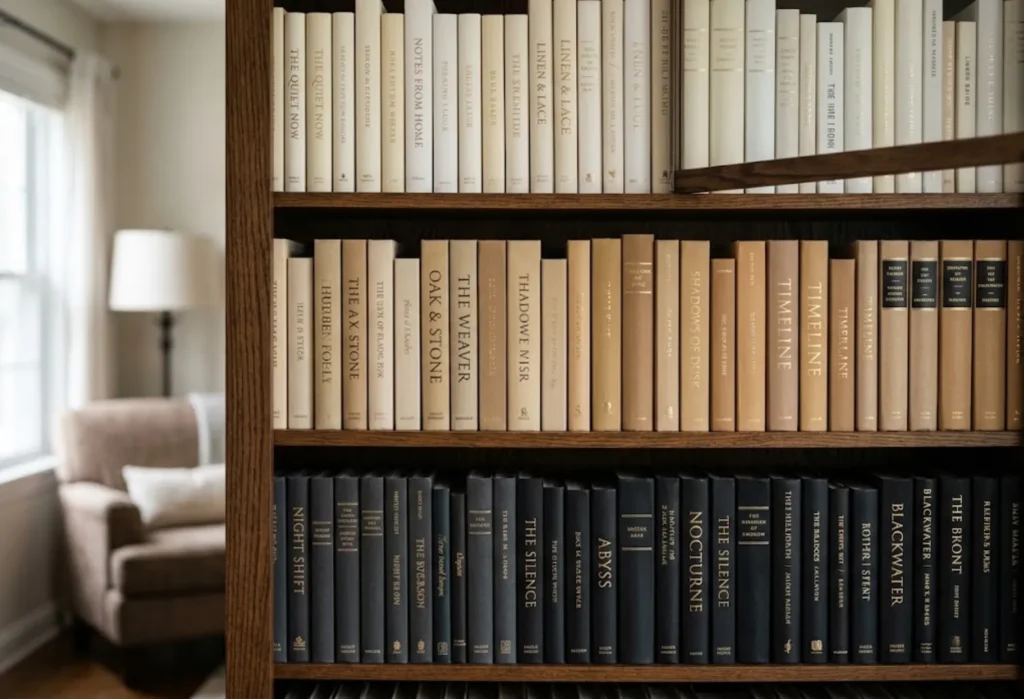
A shelf of mismatched spines makes the eye stop and read every title, and in a tight room that scanning registers as clutter. Sorting books into blocks of color turns the whole unit into a few calm bands instead of forty separate objects competing for attention.
Keep the blocks generous six or seven books minimum per color and let neutrals like cream, tan, and black take the largest share. Save loud reds or oranges for one small block near the middle, where they read as an accent rather than noise.
3. Woven Baskets on the Lower Shelves
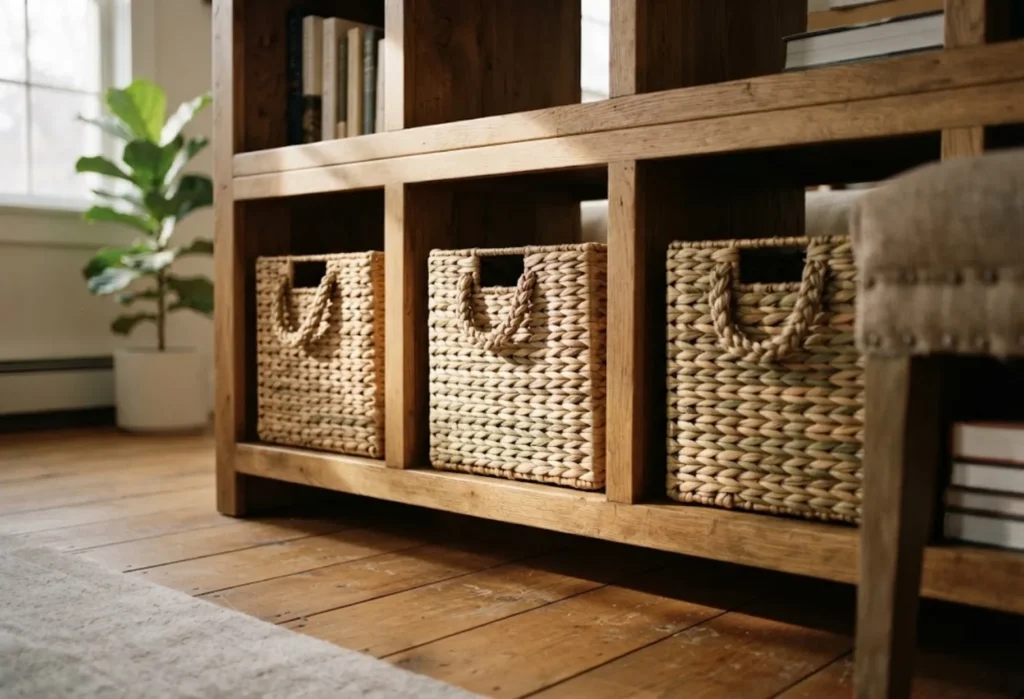
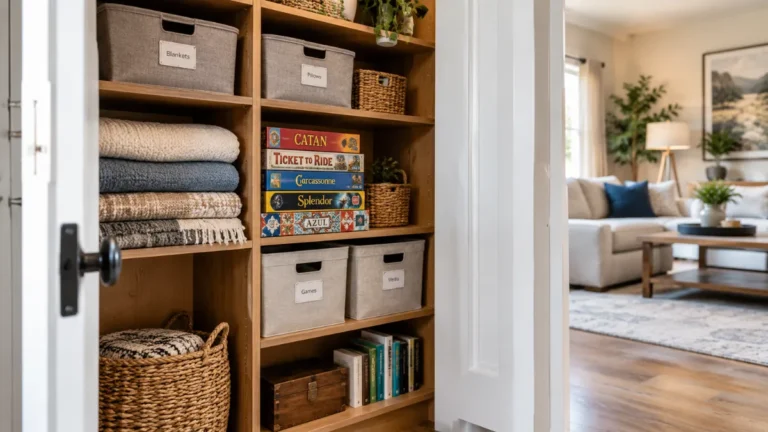
Open lower shelves are where a small living room usually falls apart: chargers, mail, kids’ things, the stuff you set down without thinking. Baskets close that off visually while still letting you grab what’s inside in a second, which a cabinet door never quite manages as quickly.
Measure your shelf height and subtract an inch baskets wedged in tight are miserable to pull out. Seagrass and rattan bring texture against painted wood, and a matching set across one row looks noticeably calmer than a mix of styles.
4. A Narrow Corner Ladder Shelf
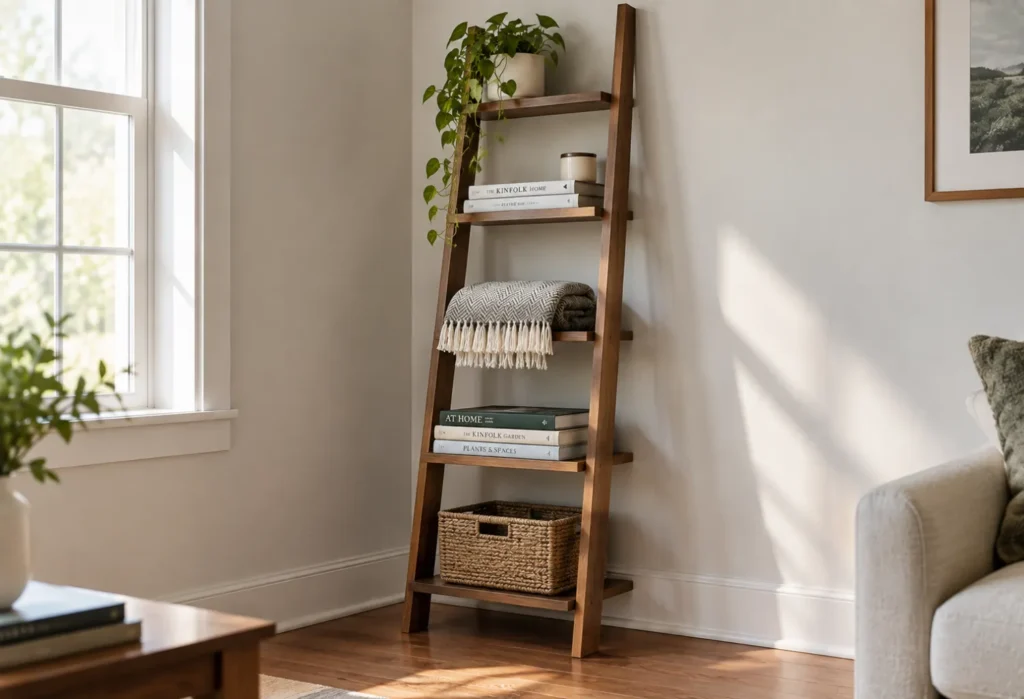
Corners in small living rooms tend to hold nothing but a lamp cord and dust. A leaning ladder shelf fills that dead angle with four or five tiers of storage while keeping its footprint tiny, since it only meets the floor at two points instead of covering a full rectangle.
Look for one under 20 inches wide with the deepest tier at the bottom, and load the heavy items low. Avoid leaning it against a wall with baseboard heating or an outlet you still need to reach behind.
5. Painted or Papered Shelf Backing
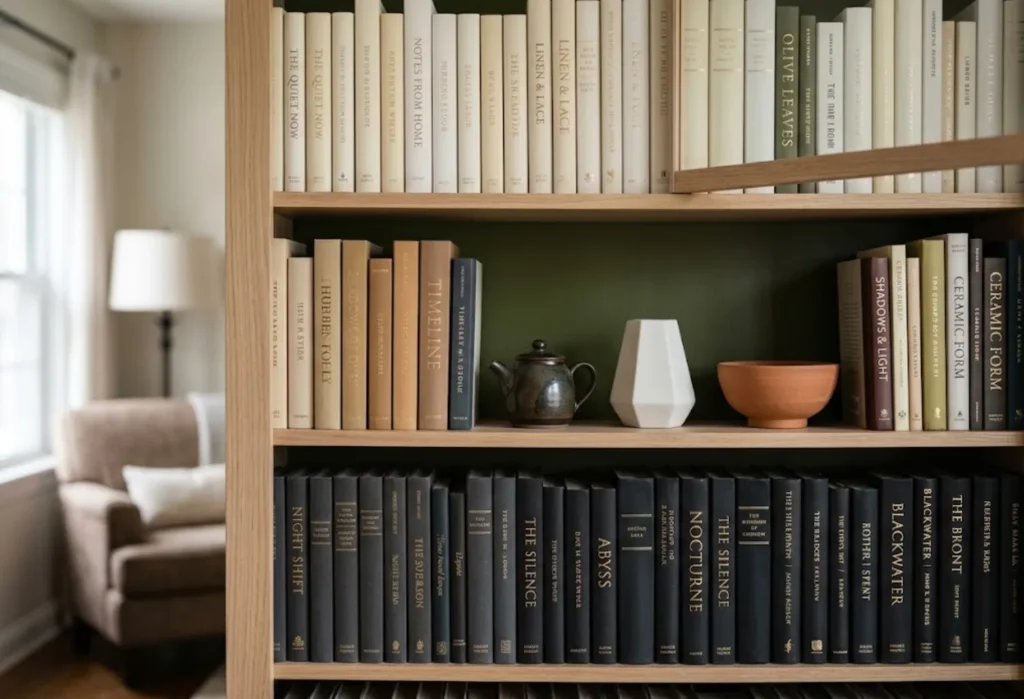
When the back of a bookcase is the same white as the wall, the shelves melt into the room and everything on them floats in a vague blur. Painting that backing a deeper shade olive, clay, ink blue frames each object and makes the unit read as a chosen feature instead of storage you settled for.
Use one color across all the backs and keep the frame itself light, so the contrast does the work. Peel-and-stick wallpaper in a small repeating pattern is the rental-friendly version.
6. Two Half-Height Units Instead of One Tall Bookcase
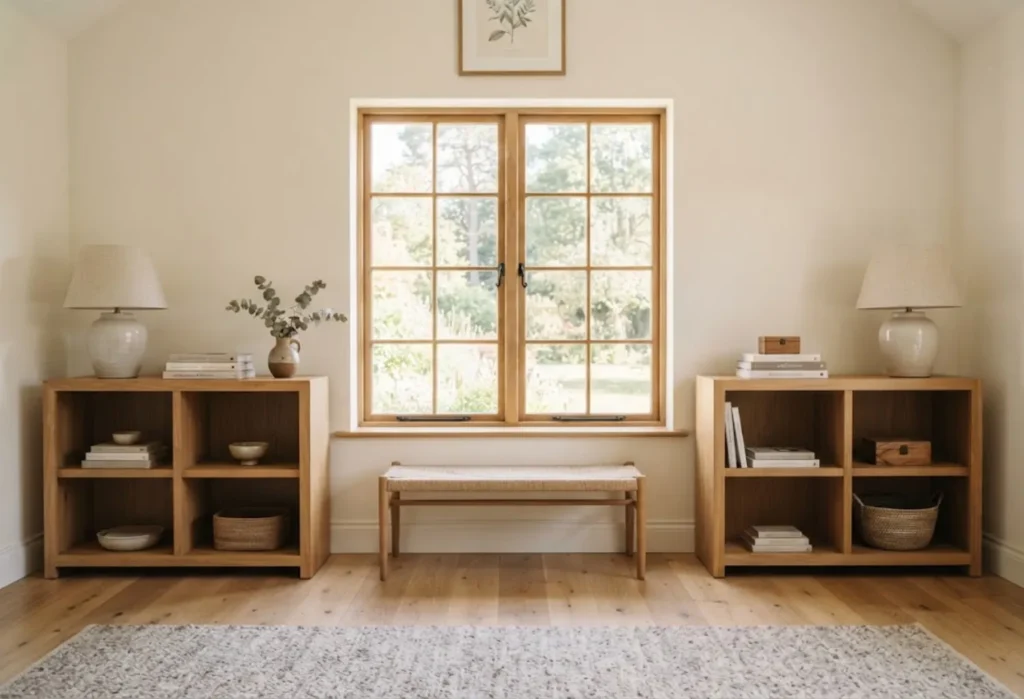
The instinct in a small room is to go tall and narrow to save floor space. But one towering bookcase makes a single wall feel heavy and leaves the rest of the room looking bare and unfinished. Two low units spread the same storage across the room and hand you two usable surfaces on top.
Keep both around 30 to 36 inches high, roughly level with your sofa arm. Placing them on either side of a window or doorway makes the whole layout look planned rather than improvised.
7. One Shelf Left Empty
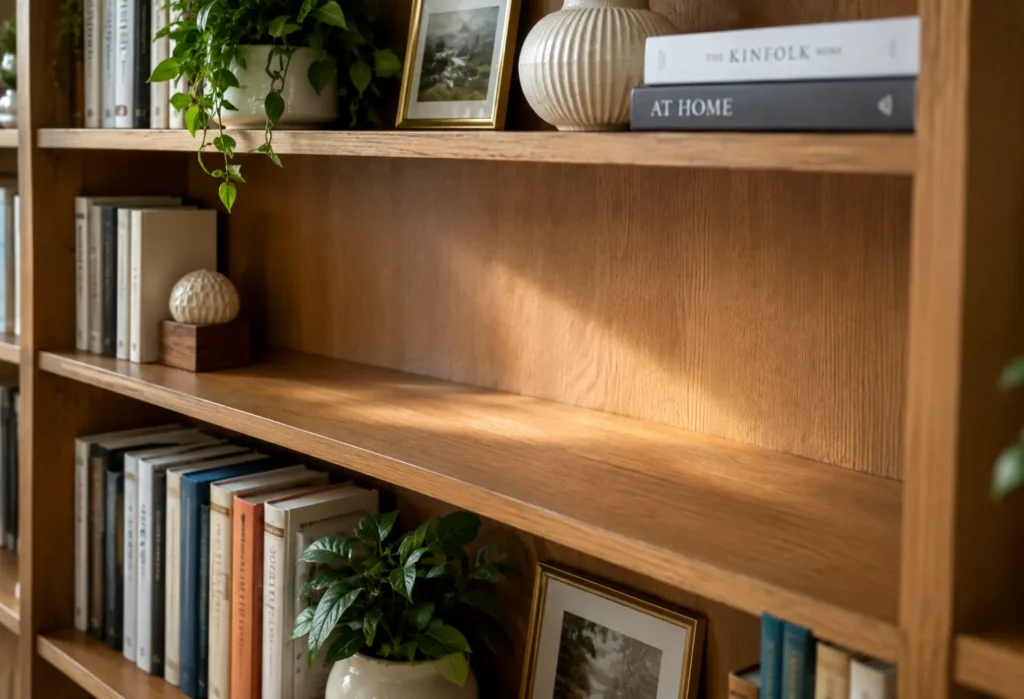
Packing every shelf full is what makes a small living room feel airless, even when the contents are neatly arranged. Leaving one shelf genuinely empty not styled with a lone vase, actually empty gives the eye somewhere to rest and the wall a bit of breathing room.
Pick a shelf at or just above eye level, since that’s the one people look at first. In practice it also becomes the landing spot for things that come home and haven’t found a permanent place yet.
8. Picture-Ledge Shelves for Art
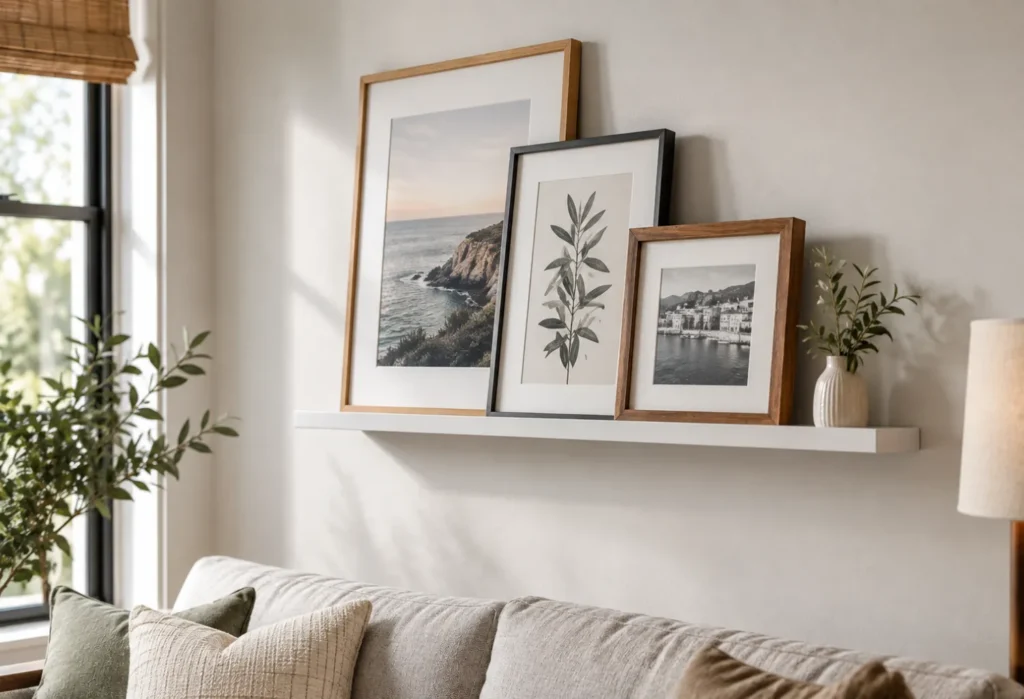
A picture ledge does something a standard shelf can’t: it holds framed art at a depth of only three or four inches, so you can fill a wall with pictures without anything jutting into a narrow walkway or catching a shoulder on the way past.
Look for ledges with a raised front lip, and buy the longest single piece that fits the wall rather than joining two short ones. Lean frames in layers a large piece at the back, a smaller one overlapping in front.
9. Lidded Boxes for Remotes and Cables
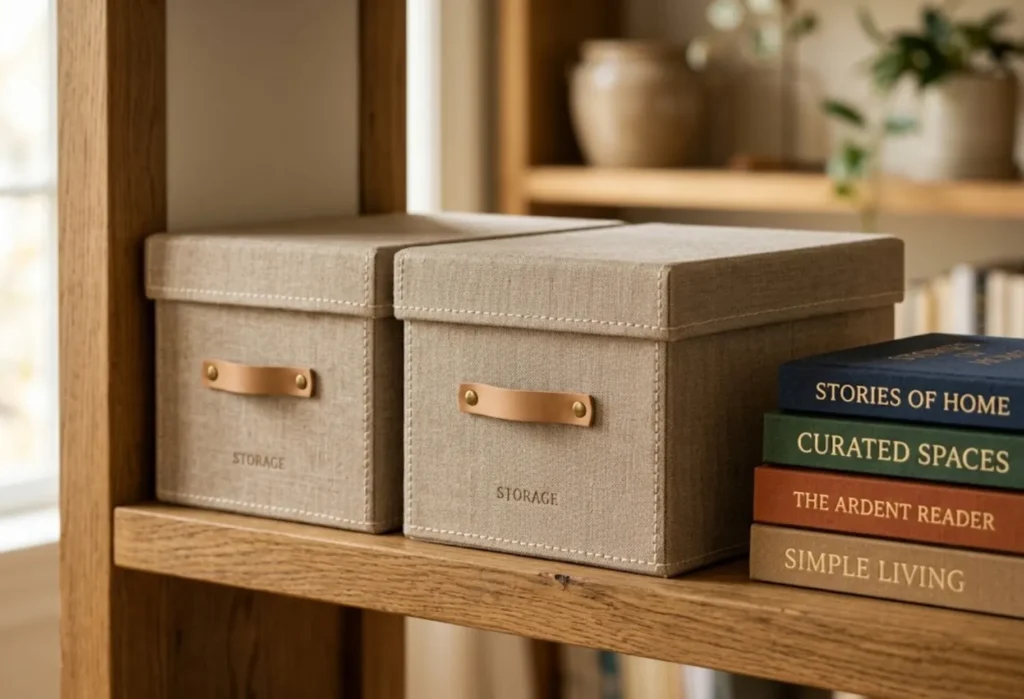
Most people deal with remotes, chargers, and batteries by assigning them a drawer across the room, then leaving everything out on the shelf anyway because the drawer is too far to bother with. A lidded box on the shelf itself keeps the mess two feet from the sofa and out of sight.
Use two boxes rather than one: daily items in the first, spares and cables in the second. Rigid fabric or lacquered boxes hold their shape under a stack better than woven ones.
10. Warm Strip Lighting Under Each Shelf
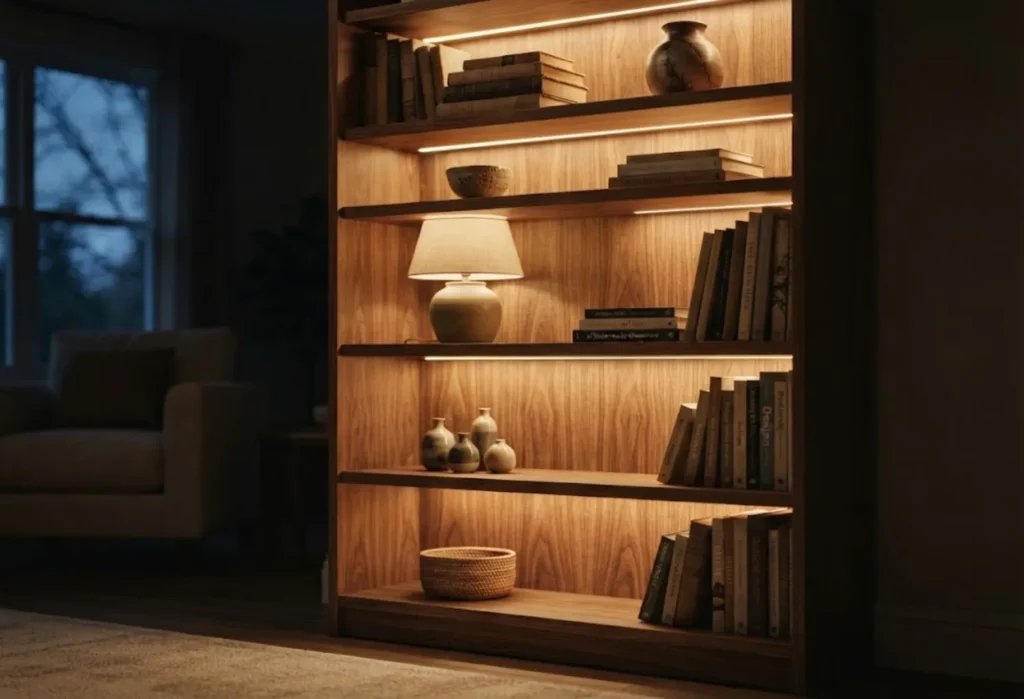
Small living rooms often run on one ceiling fixture, which flattens a shelf unit into a dark rectangle after sunset. A thin LED strip tucked under the front lip of each shelf lights objects from above and pushes the wall behind them back, so the room reads deeper than its measurements suggest.
Choose something around 2700K — cooler white drains the warmth out of wood and book covers. Mount the strip behind the lip so you see the glow and never the diodes themselves.
11. A Bookcase Used as a Room Divider
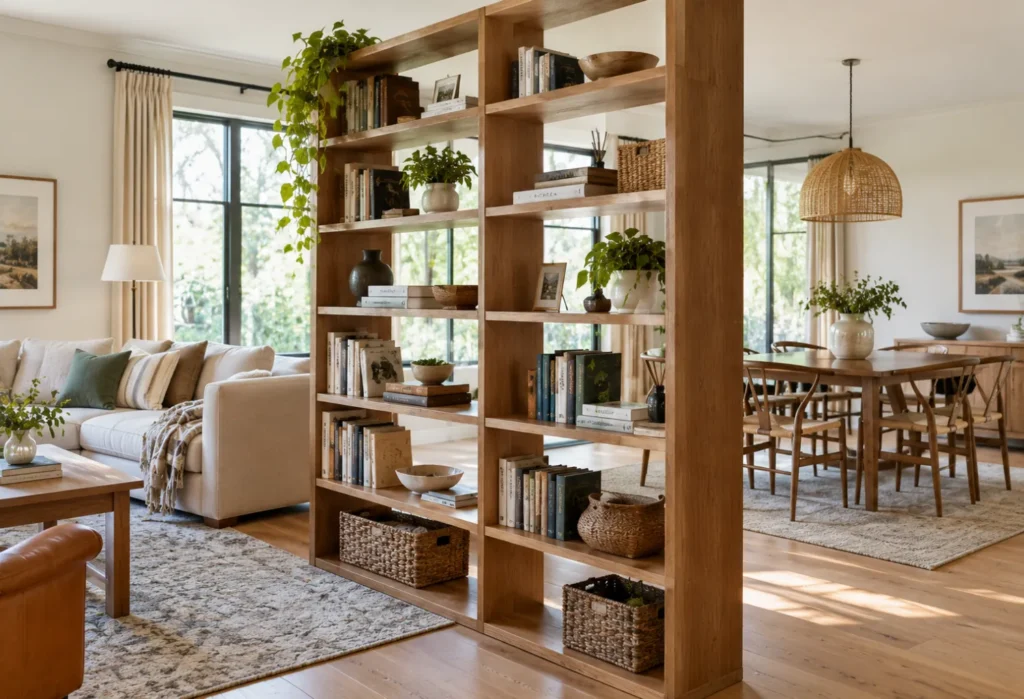
In a studio or an open living-dining space, the usual move is a folding screen or a hanging curtain to split the zones, which costs you floor space and returns no storage at all. An open-backed bookcase draws the same line while holding books and baskets on both faces.
Keep it under about 48 inches tall so sightlines stay open across the room, and style both sides so neither reads as the back of furniture. Load the weight low, and bracket it to the floor if small children are around.
12. Books Stacked Flat and Upright in the Same Row
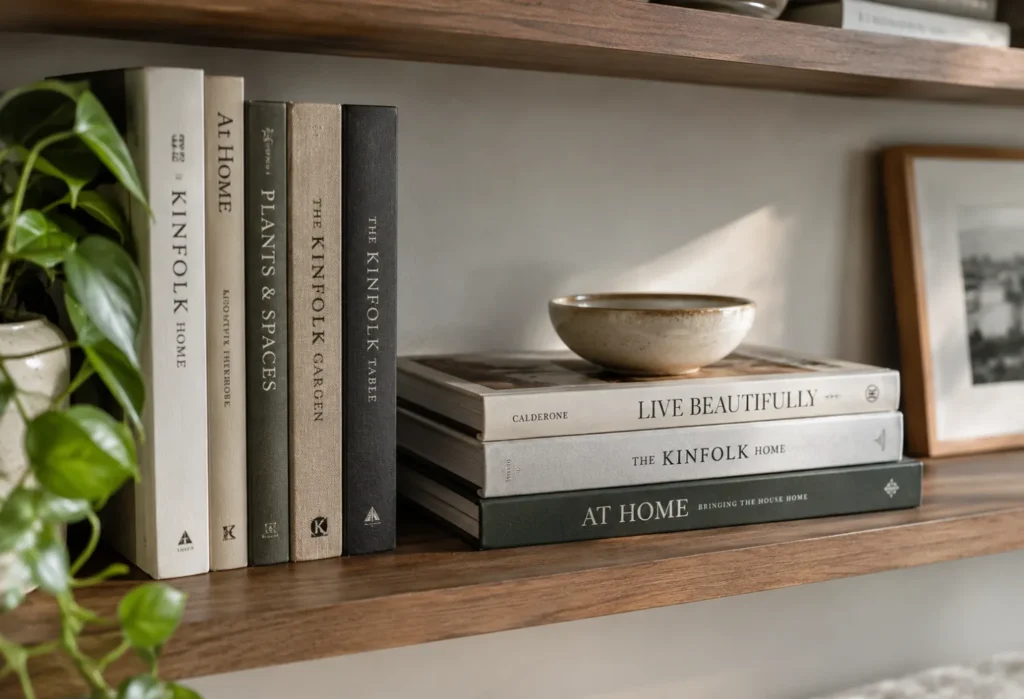
A row of books all standing to attention gives you one flat line across the shelf tidy, but it tells the eye nothing and can look like a library overflow shelf. Alternating upright groups with a horizontal stack creates small steps and gaps that make the row look arranged rather than crammed.
Treat the flat stacks as pedestals: a small bowl, a candle, or a framed photo sitting on top. Two or three per shelf is plenty before it starts reading as a pile.
13. Shelving Built Around the Doorway
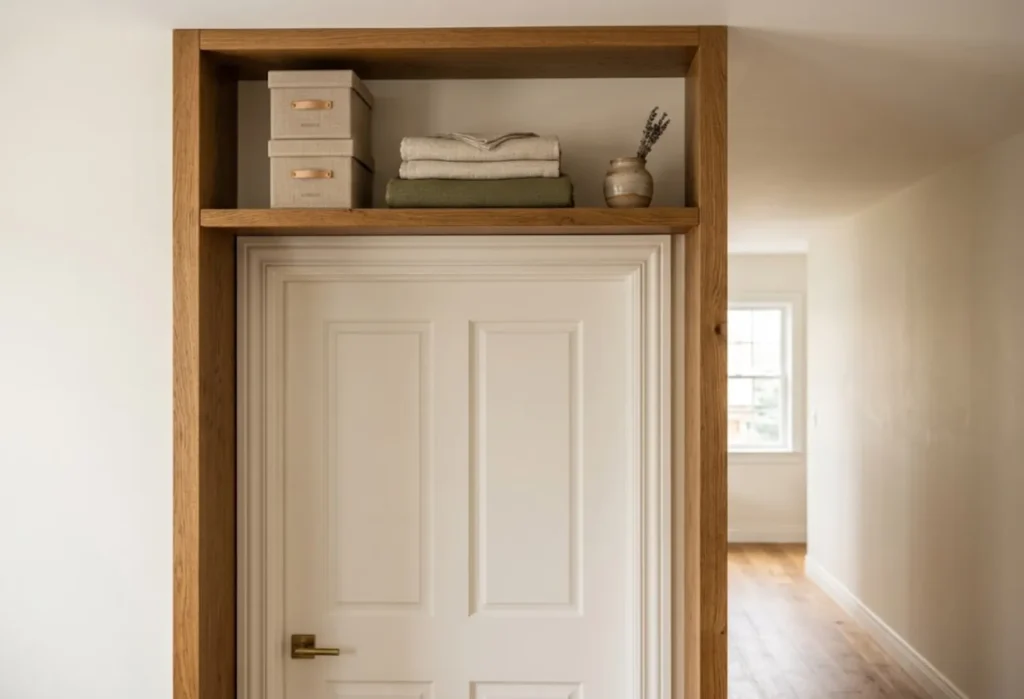
The band of wall above and beside an interior door is dead space in nearly every small living room. A shallow shelf running over the frame and down one side turns that outline into working storage, and the vertical run pulls the eye upward, which makes a low ceiling feel taller than it is.
Hold the depth to six inches or less so the door swings freely. Reserve the over-door section for things you rarely reach for archives, seasonal pieces, spare blankets.
14. Trailing Plants on the Top Shelf
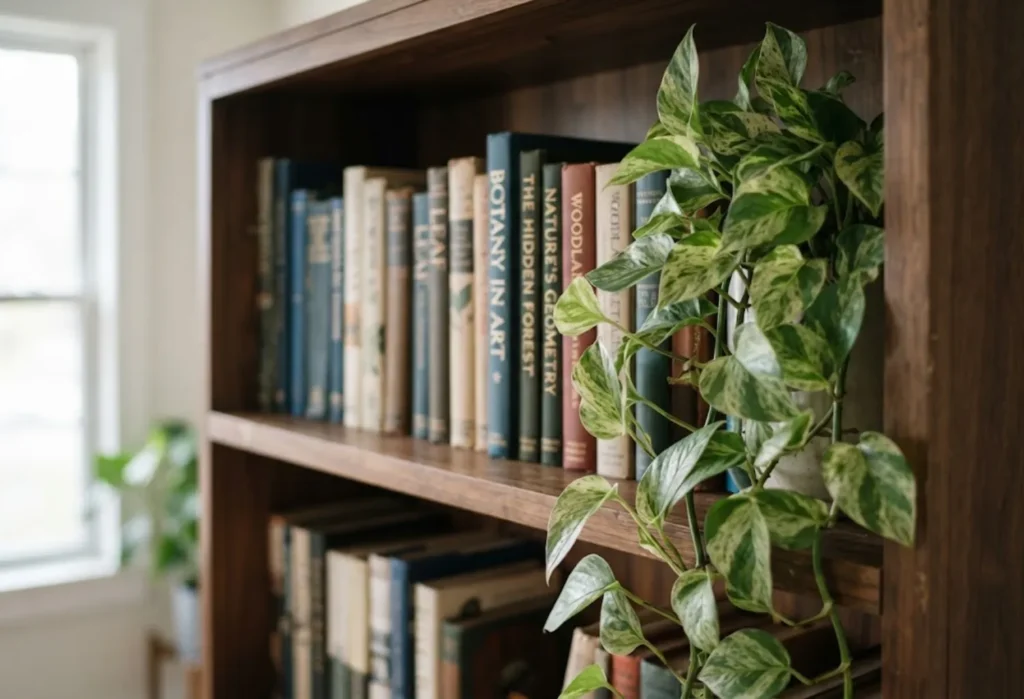
Hard shelf edges and stacked rectangles give a small room a boxy, gridded look that gets more obvious the fuller the shelves are. One pothos or string-of-hearts spilling over the top shelf breaks that grid with a soft vertical line, and since the growth hangs down, it uses no shelf surface at all.
One or two trailing plants per unit is the limit before it turns into a curtain. Use a cachepot or a saucer, and pick a shelf getting indirect light from a window.
15. A Shallow Shelf Behind the Sofa
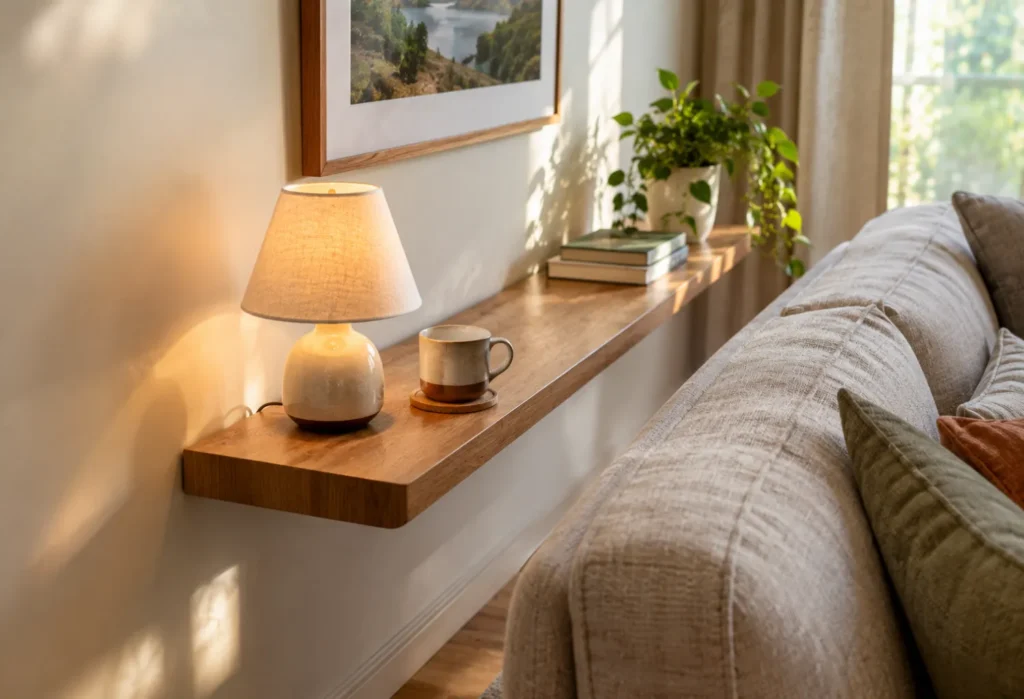
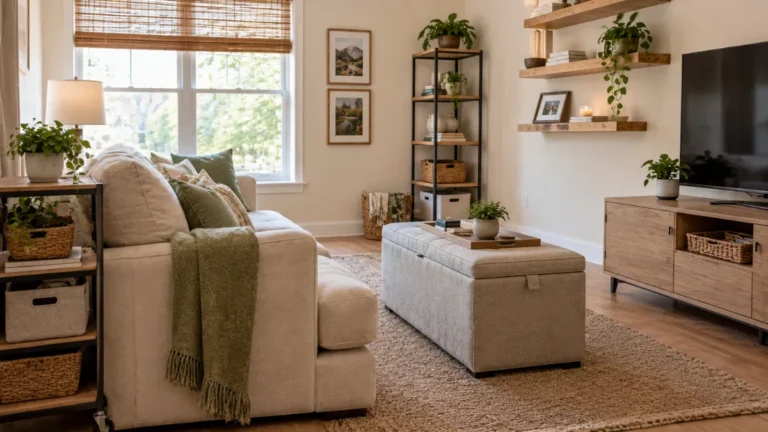
Pulling a sofa off the wall in a small room leaves an awkward gap behind it that collects dust and dropped remotes. A console-depth shelf, 8 to 10 inches deep, fills that gap and gives you a surface for a lamp or a drink without a side table eating into the floor beside your seat.
Match the shelf height to the sofa back within an inch either way. A wall-mounted version beats a legged console here nothing to vacuum around.
16. Accessories Grouped in Threes
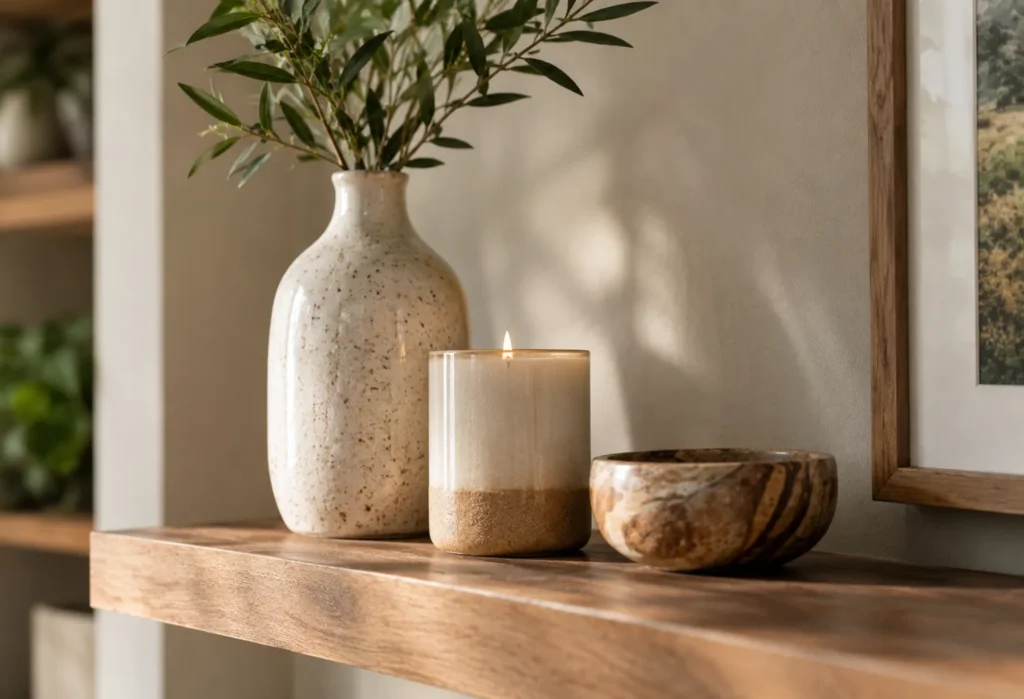
Objects spaced evenly along a shelf read as scattered, and in a small room scattered reads as busy no matter how nice each piece is. Clustering accessories in threes gives the eye one thing to take in instead of six, which quiets the whole unit down.
Vary the heights clearly something tall, something mid-height, something low and wide and slip one rounded shape in among angular ones. Keep it to a single group per shelf and leave the rest of the surface open, or the clusters start competing.
17. The 12-Inch Shelf Problem
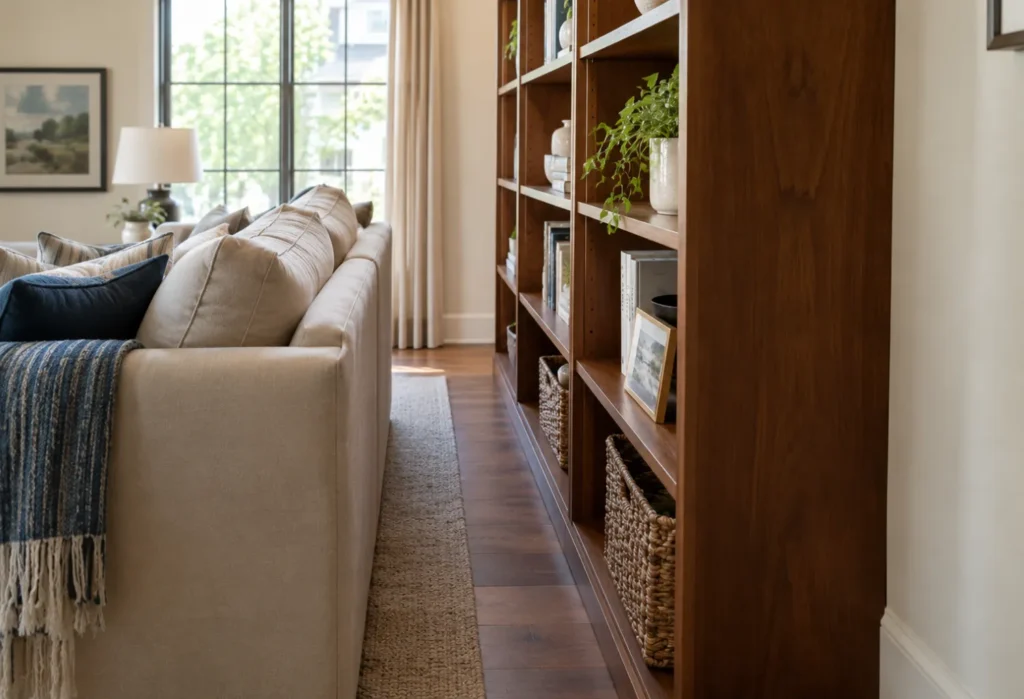
A living room I worked on measured 11 by 13 feet, with about 30 inches of walkway between the sofa and the long wall. The owner had installed standard 12-inch-deep shelves along that wall, and the whole room read like a corridor people turned sideways to get past the sofa.
Swapping to 7-inch shelves gave back five inches of walkway and still held everything except a handful of oversized art books. In a room under roughly 12 feet wide, measure the walkway first and let that number set your shelf depth.
18. A Seasonal Rotation Bin
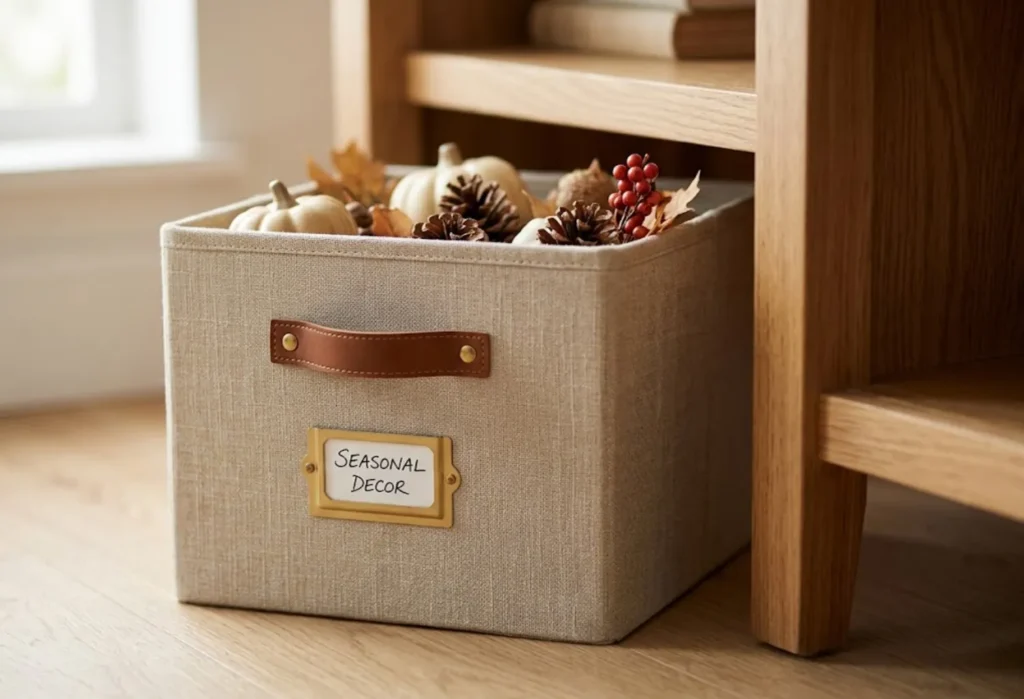
The usual habit is to keep everything on display year-round and squeeze holiday pieces in alongside it. Shelves get denser every December and never fully recover. Keeping one labeled bin off the shelf and swapping pieces in and out lets the display change without the total volume ever creeping upward.
Let the bin set the cap whatever fits inside is what’s off-duty. Swap twice a year rather than four times, and photograph each arrangement before you take it apart so rebuilding it later takes minutes.
Quick Comparison: 5 Ideas Worth Starting With
| Idea | Best For | Why I Recommend It |
| Floating shelves above the sofa | Rooms with no spare floor space | Adds storage without narrowing the walkway |
| Baskets on the lower shelves | Households with daily clutter | Hides the mess but keeps it reachable |
| One shelf left empty | Shelves that already feel packed | Costs nothing and instantly calms the unit |
| Picture-ledge shelves | Narrow walls and tight passages | Displays art at only 3–4 inches deep |
| Under-shelf strip lighting | Rooms with one ceiling light | Makes the wall recede and the room read deeper |
Wrapping Up
Pick based on what your room is actually struggling with. If the floor is full, go vertical with wall-mounted options. If the shelves are full but the room still feels heavy, work on spacing, color, and light instead of adding storage. Most of these living room shelf organization ideas take an afternoon, and you can stop after one or two. Start with the shelf that bothers you most.