15 Bedroom Organization Ideas For Kids That Actually Work
Keeping a kid’s bedroom tidy can feel like a losing battle, but the right setup makes a real difference. These 15 bedroom organization ideas for kids focus on smart storage, clever furniture placement, and simple systems your child can actually maintain. Whether you’re working with a tiny shared room or a space that just needs better flow, you’ll find practical solutions that look good and keep clutter off the floor.
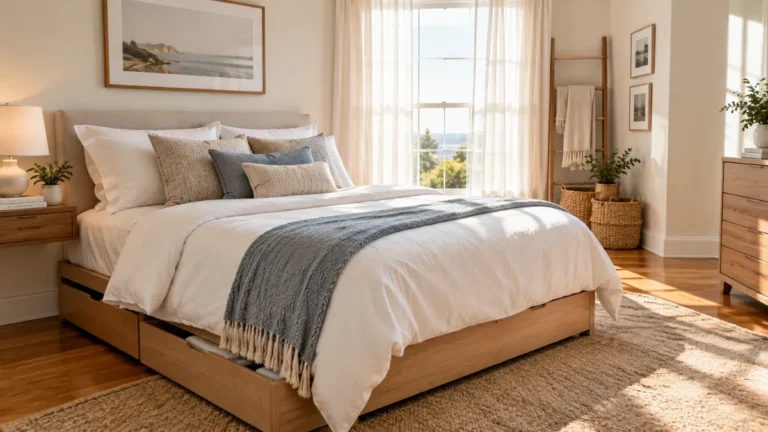
1. Under-Bed Storage Bins
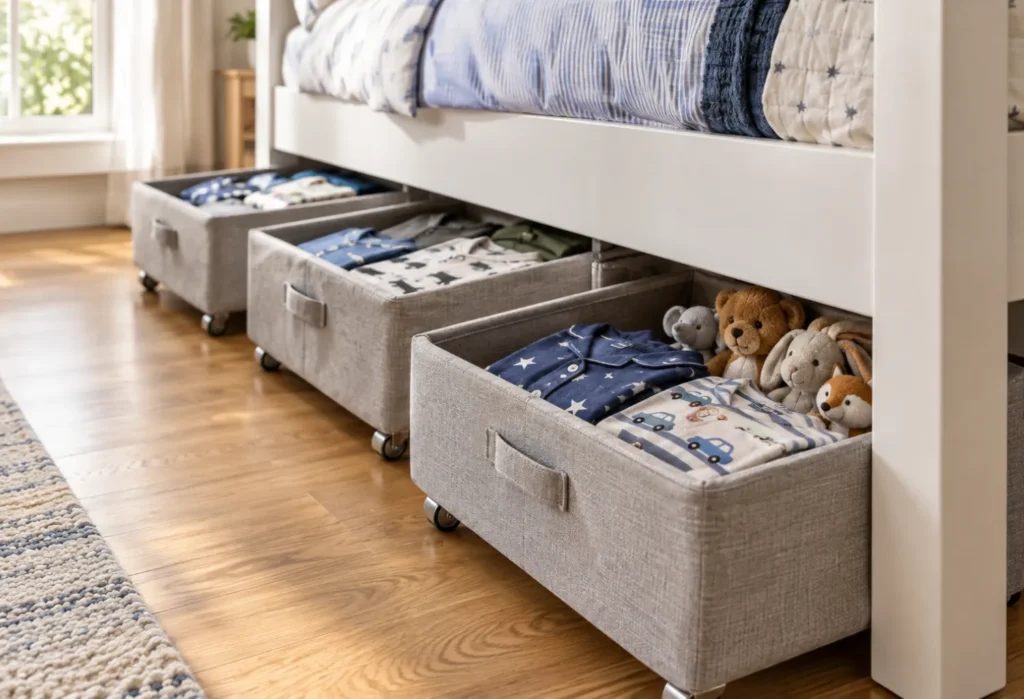
The floor space in a kid’s room disappears fast once toys, shoes, and laundry start piling up. Sliding shallow bins under the bed frame reclaims that dead zone without eating into the walking path between the bed and the closet door.
Choose bins on small casters so your child can pull them out independently. Stick to a height under six inches for standard bed frames, and pick a neutral fabric that blends with the bed skirt or dust ruffle.
2. Color-Coded Toy Baskets
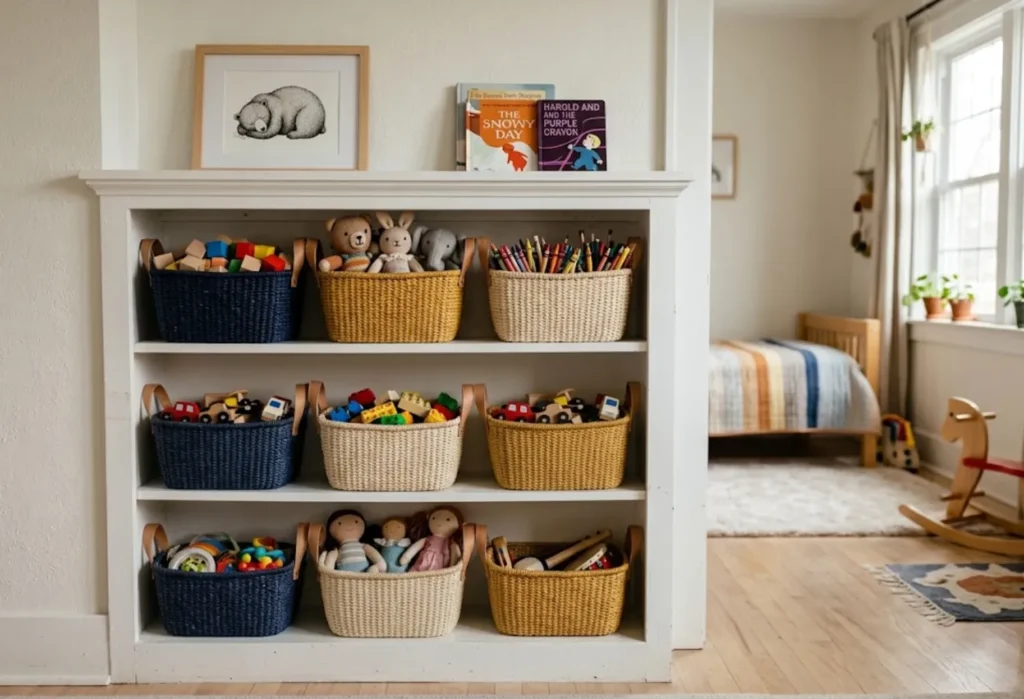
Grouping toys by color in matching woven baskets gives the eye a clear pattern to follow, which makes even a full shelf look intentional rather than chaotic. The repetition of color reads as calm order, especially against a white or light wood backdrop.
Try a three-tone palette say, navy, mustard, and cream in seagrass or cotton rope baskets. Assign each color to a category like blocks, stuffed animals, and art supplies so cleanup stays intuitive.
3. Wall-Mounted Book Ledges
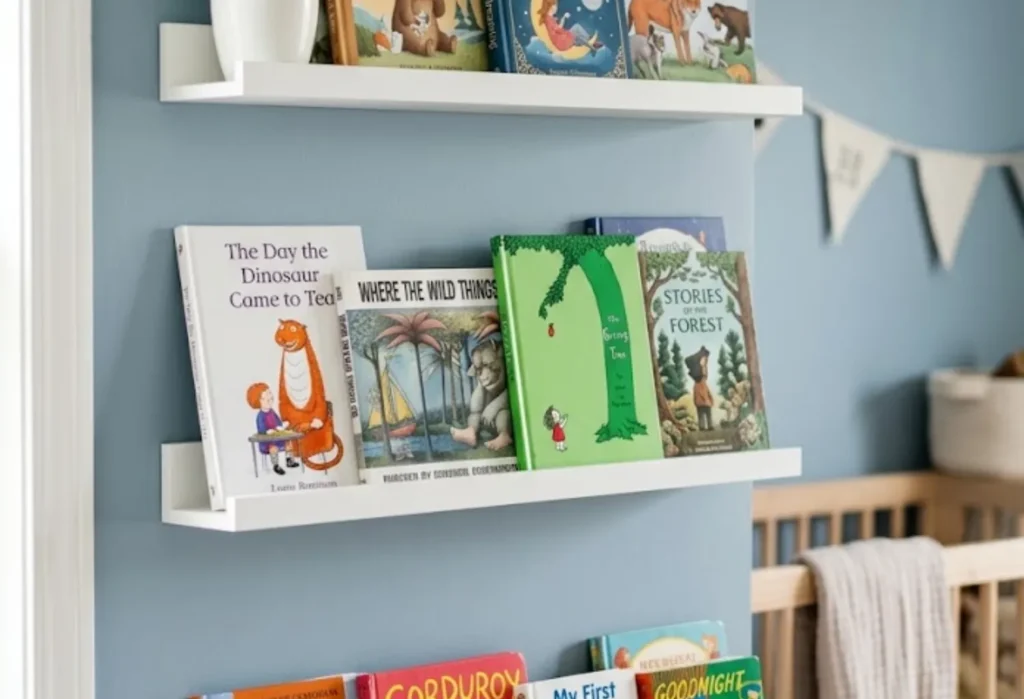
Narrow picture ledges mounted on the wall display books cover-out, which grabs a child’s attention far better than a traditional spine-out bookshelf. They take up zero floor space and turn an empty wall into a rotating gallery of favorite reads.
Look for ledges with a raised front lip at least two inches tall so paperbacks don’t slide off. Install them at your child’s eye level roughly three to four feet from the floor for easy reach.
4. Over-the-Door Shoe Organizers for Supplies
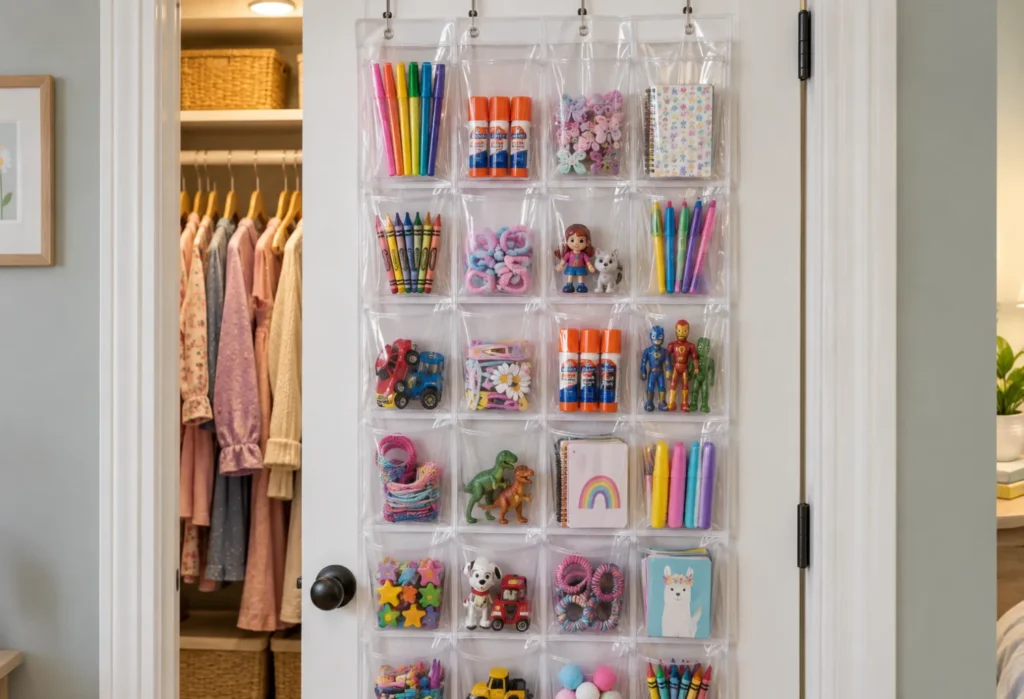
Most families buy expensive plastic drawer units for small items like markers, hair ties, and action figures, but those take up precious floor space. A clear-pocket shoe organizer hung on the back of the closet door does the same sorting job for a fraction of the cost and zero footprint.
Pick one with at least 24 pockets in a transparent material so your child can see what’s inside each slot. Use a tension rod or over-the-door hooks to keep it flat against the door.
5. Loft Bed with Desk Underneath
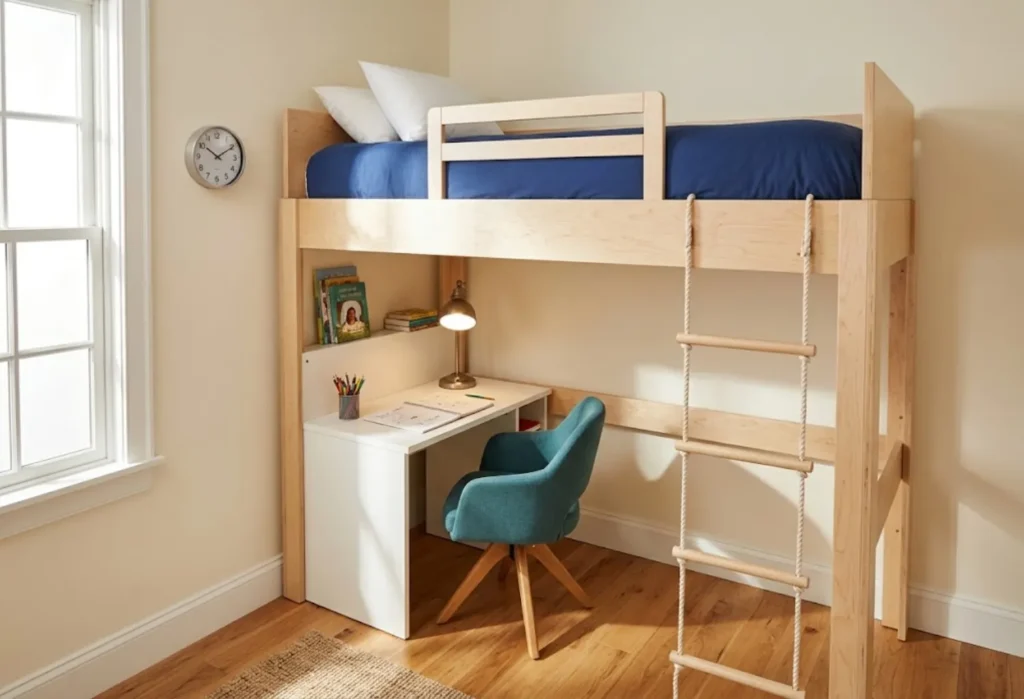
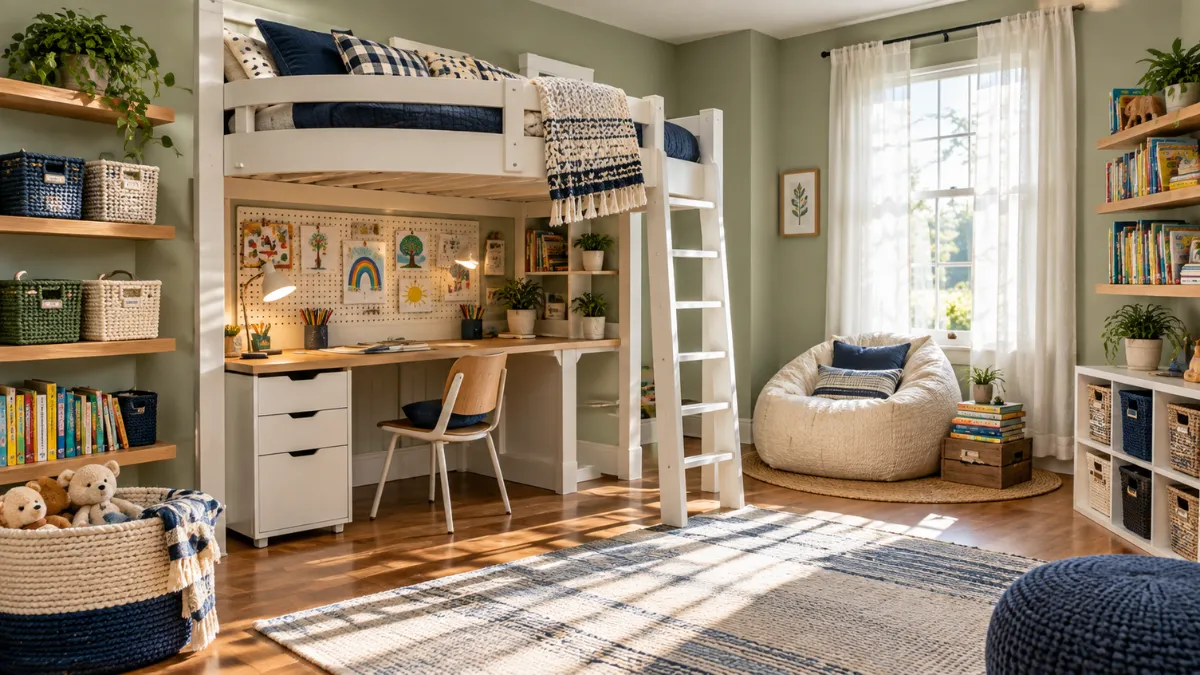
In a small bedroom, fitting both a bed and a homework station often means one blocks the other. A loft bed lifts the sleeping area high enough to tuck a full desk and chair underneath, giving you two functional zones in the footprint of one.
Make sure the ceiling height is at least eight feet so there’s comfortable headroom both above and below. Choose a metal or light wood frame to keep the structure from feeling heavy in the room.
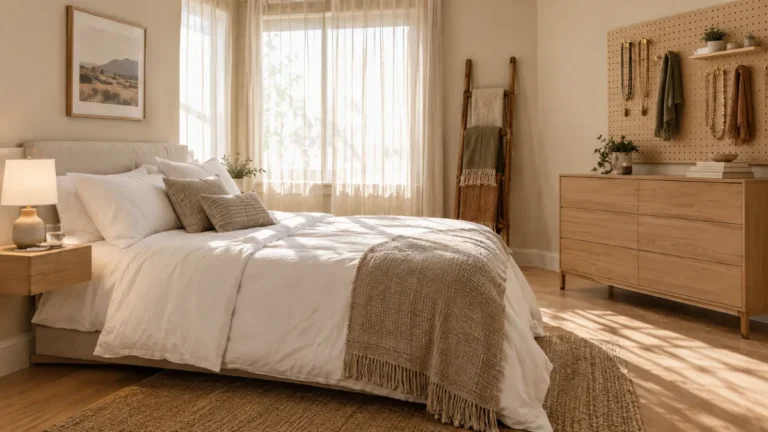
6. Pegboard Wall for Art and Accessories
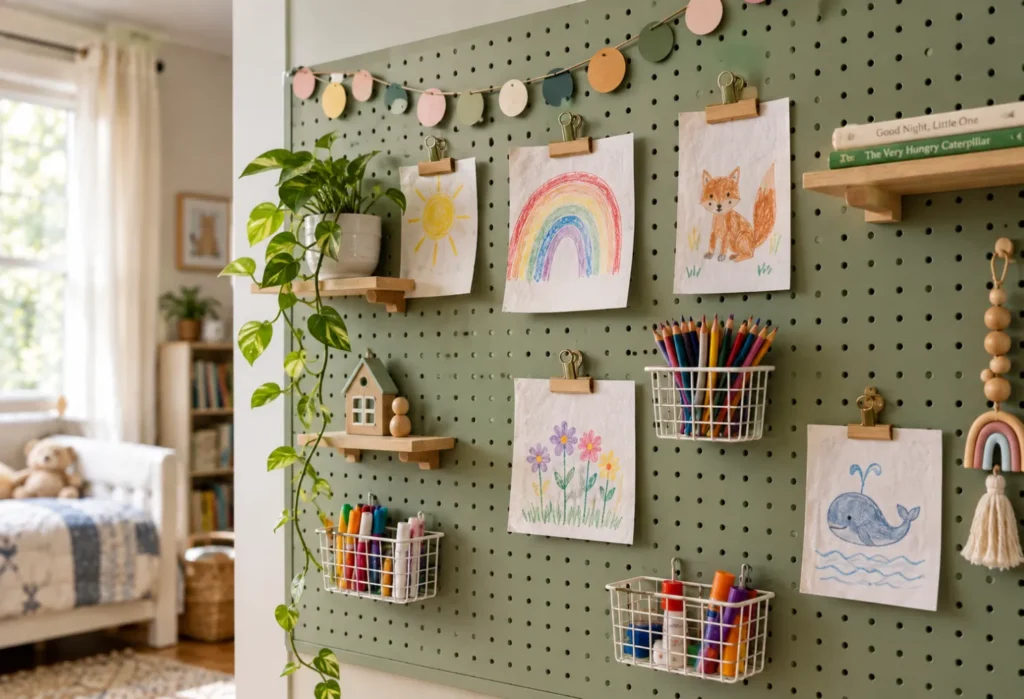
A pegboard covered in clipped artwork, hanging plants, and small shelves breaks up a flat wall and draws the eye upward, which makes a low-ceilinged room feel taller. The grid pattern adds visual texture without the commitment of wallpaper.
Paint the pegboard a soft sage or warm blush to coordinate with the room’s bedding. Use a mix of wooden pegs, small metal baskets, and binder clips to hang drawings at varying heights for a layered look.
7. Rolling Cart for Craft Supplies
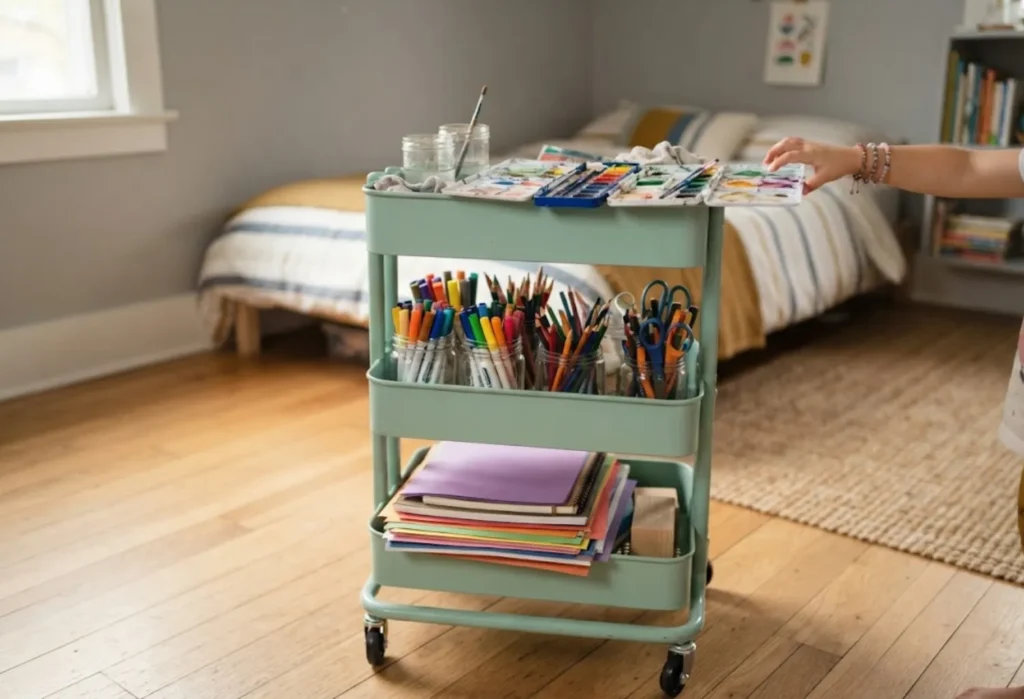
A three-tier rolling cart works as a mobile craft station that moves wherever your child is working bedroom floor, play rug, or even the kitchen table. Unlike a fixed desk drawer, it keeps supplies visible and contained in one spot that travels with the project.
Go for a cart with deep top trays and a sturdy handle. A powder-coated steel frame in white or mint green resists paint stains and wipes clean easily after messy afternoons.
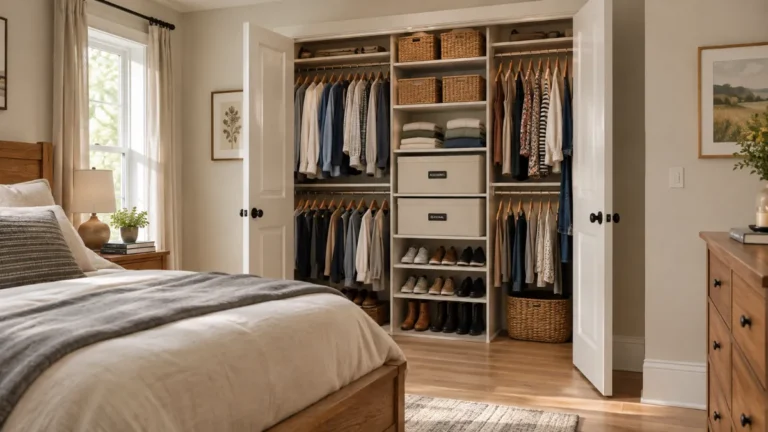
8. Hanging Closet Organizers
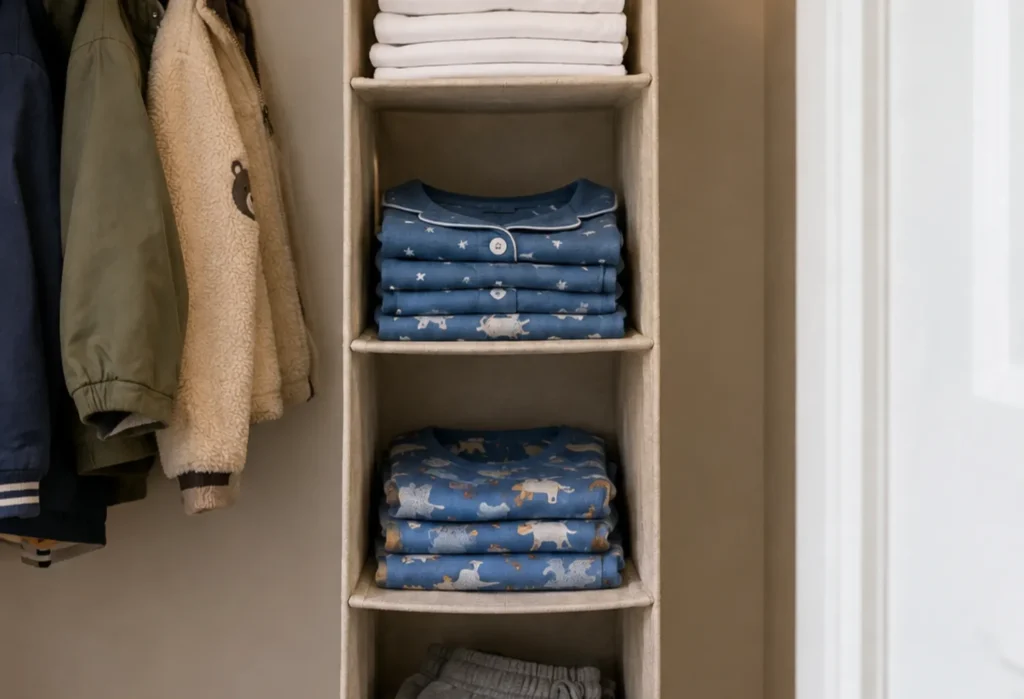
Stacking folded clothes on a high closet shelf means your kid can’t reach them, so everything ends up on the bedroom floor instead. A fabric hanging organizer with six cubbies drops down from the closet rod and puts sweaters, pajamas, and jeans right at child height.
Choose a canvas or linen organizer that matches the closet’s interior color. Load heavier items like jeans in the bottom cubbies to keep the whole unit from sagging to one side.
9. Corner Reading Nook with Baskets
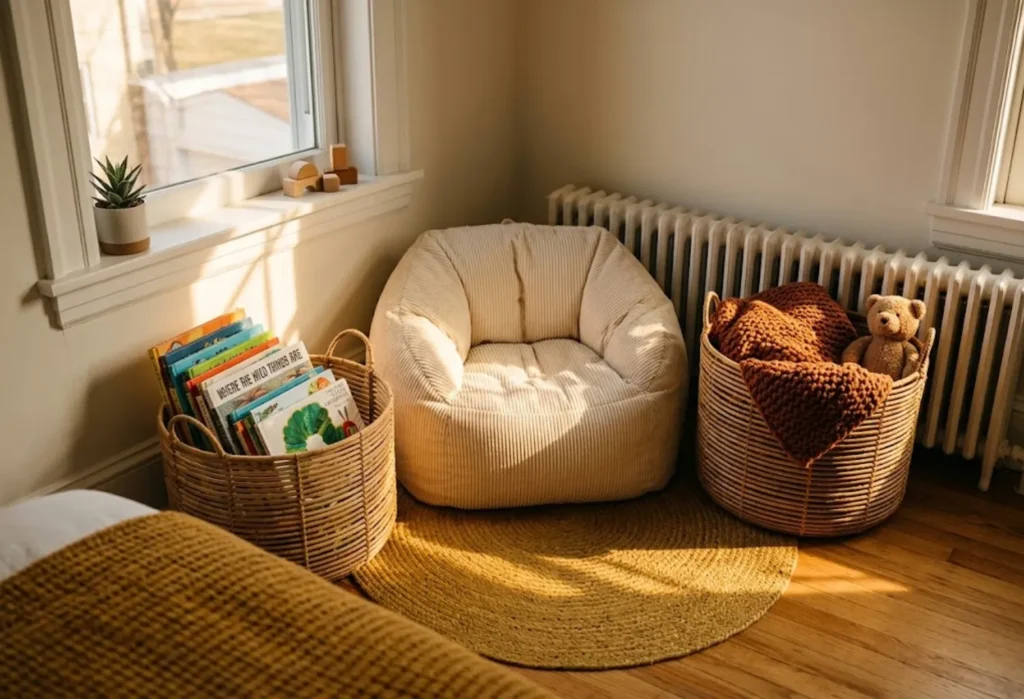
I once helped a family with a 10-by-10 room shared by two kids where the only unused space was an awkward corner between the window and a radiator. We placed a small beanbag chair there with two round woven baskets beside it one for books, one for blankets and it became the most-used spot in the room.
Look for dead corners in your own layout, even narrow ones. A floor cushion and a single basket can turn wasted square footage into a favorite retreat.
10. Labelled Drawer Dividers
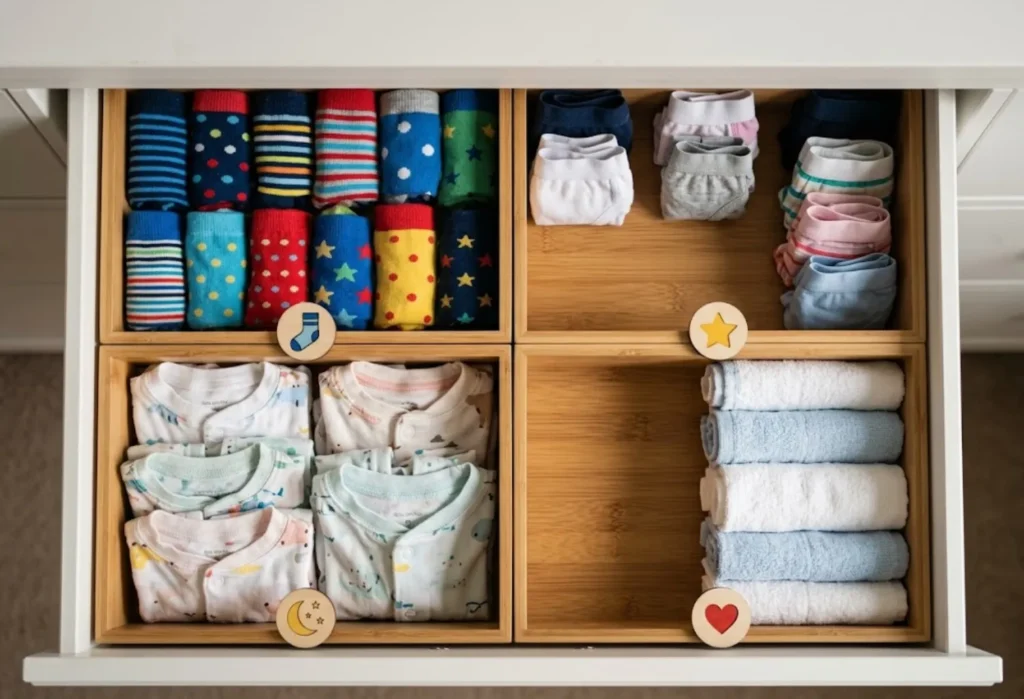
Deep dresser drawers turn into junk pits fast when socks, underwear, and pajamas get tossed in together. Adjustable bamboo dividers break each drawer into neat sections so your child can find what they need without dumping the whole thing out.
Measure the drawer interior before buying most adjustable dividers fit widths between 12 and 18 inches. Add simple picture labels for younger kids who can’t read yet, like a sock icon or a star for pajamas.
11. Floating Shelves Above the Bed
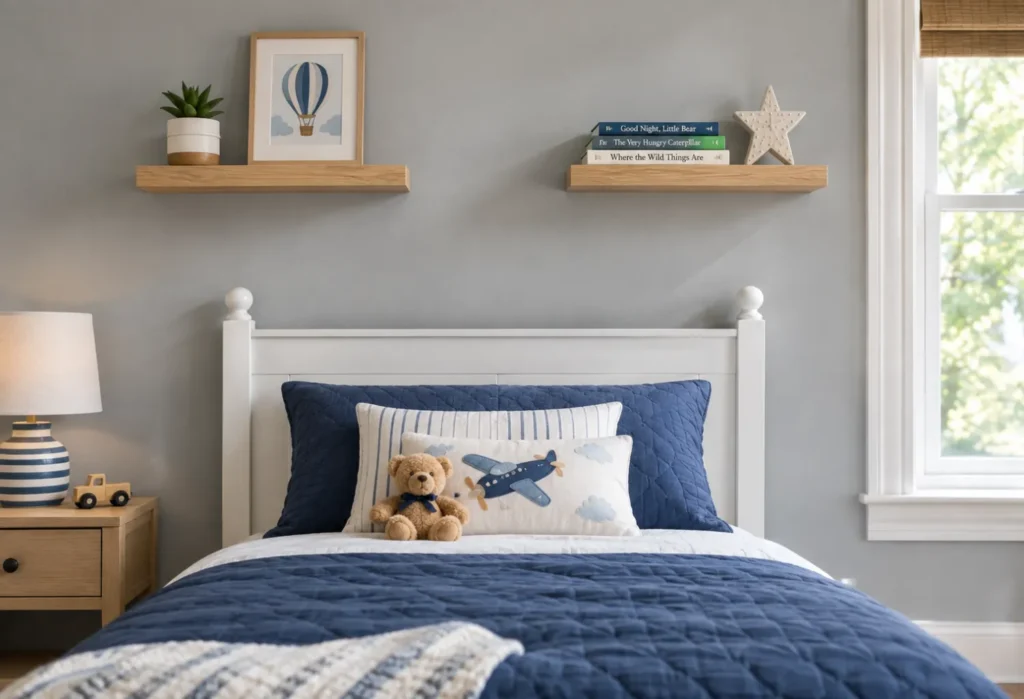
A pair of floating shelves mounted above the headboard pulls the eye up and creates a focal point that makes the bed area feel anchored and complete. The horizontal lines also widen a narrow wall visually, which helps in rooms that feel boxy.
Keep the styling light a small potted succulent, a framed print, and a stack of two or three books per shelf. Use warm wood tones like oak or walnut against a cool-painted wall for gentle contrast.
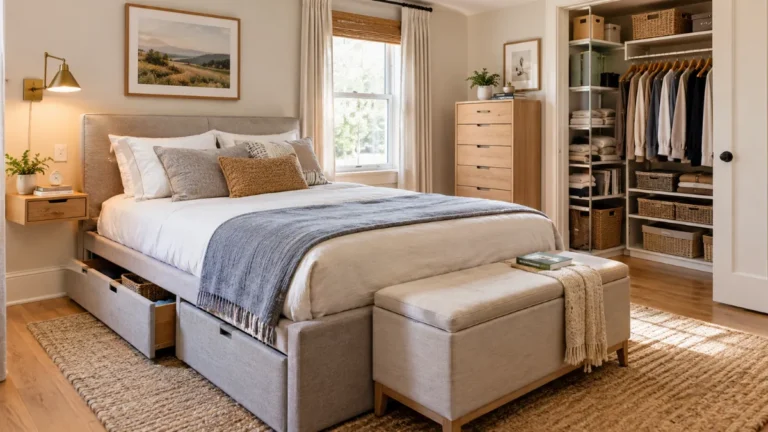
12. Storage Ottoman at the Foot of the Bed
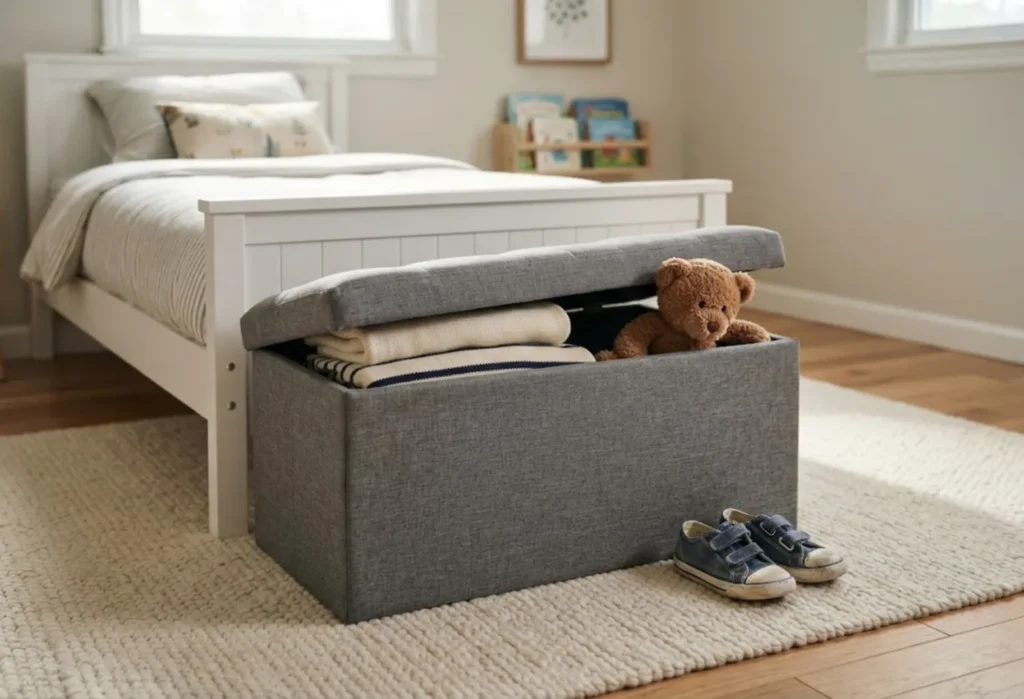
A storage ottoman at the foot of the bed doubles as a seating spot for putting on shoes and a hidden bin for extra blankets or out-of-season clothes. It fills an awkward gap that usually just collects clutter without adding another bulky piece of furniture to the room.
Pick a rectangular shape roughly two-thirds the width of the bed. A linen or cotton-blend upholstery in a mid-tone gray or navy hides scuff marks from little feet better than white.
13. Repurposed Spice Racks for Small Toys
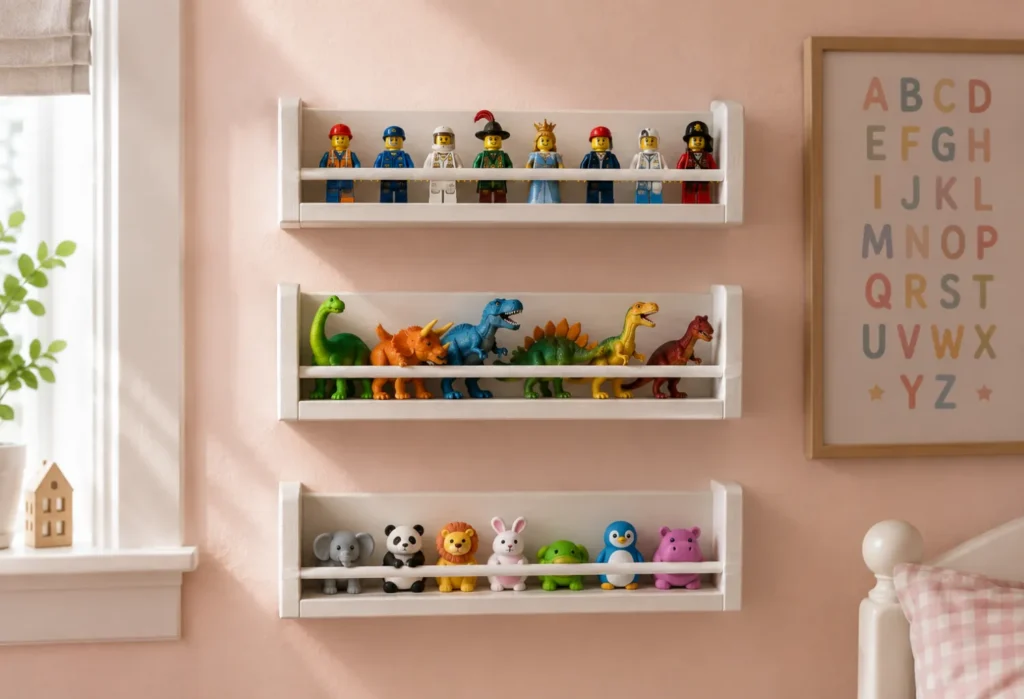
Tiny toys like LEGO minifigures, erasers, and Polly Pockets usually end up in a jumbled bin where nothing can be found. Mounting inexpensive wooden spice racks on the wall gives each small item its own visible row, like a miniature display case.
Buy three or four matching racks in unfinished pine and paint them to match the room’s trim color. Mount them at your child’s height near the play area so they can grab and return pieces independently.
14. Bunk Bed with Built-In Drawers
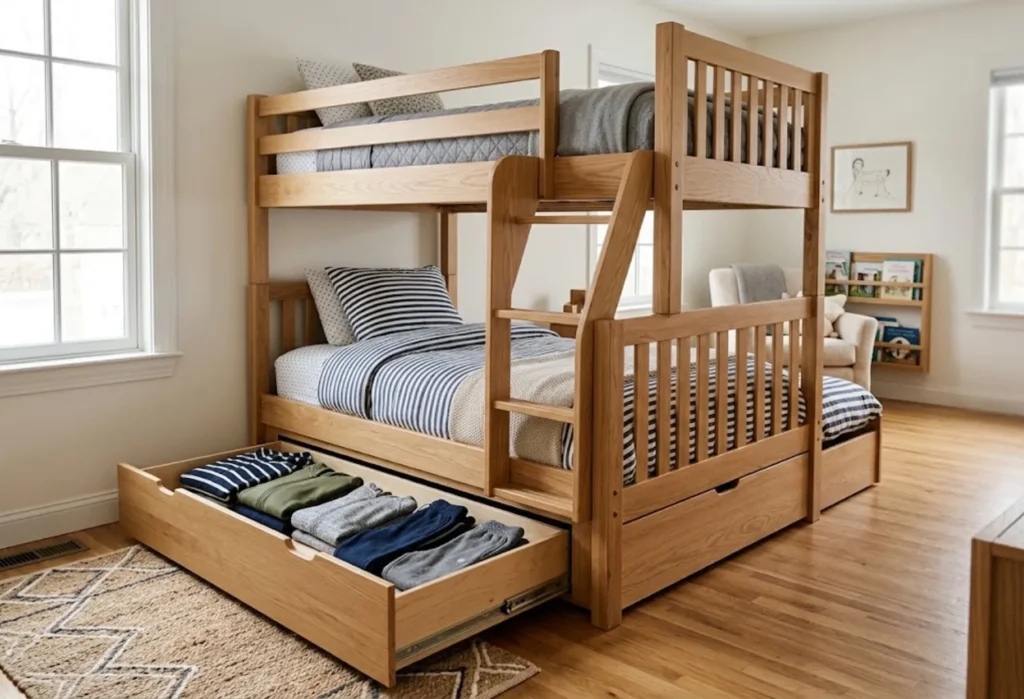
Shared kids’ rooms often lack enough dresser space for two wardrobes, which means clothes migrate to chairs and floor piles. A bunk bed with wide pull-out drawers built into the base replaces the need for a separate dresser entirely.
Check that the drawers extend fully on metal glides cheap plastic tracks jam under the weight of folded jeans. Look for drawers at least eight inches deep to handle bulkier items like hoodies and sweatpants.
15. Canvas Hanging Pocket Organizers
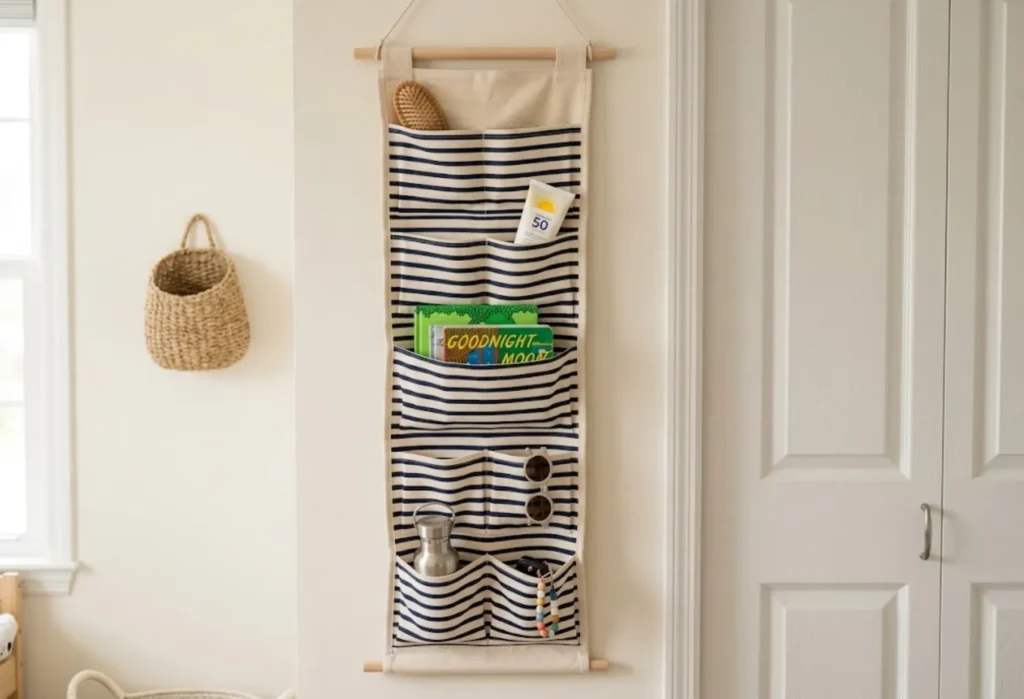
A tall canvas pocket organizer hung beside the closet door adds soft texture and a pop of pattern to an otherwise plain wall. The vertical columns of pockets create a rhythm that makes the room feel more layered and finished, not just functional.
Choose a natural canvas with a simple stripe or dot print that picks up a color already in the bedding. Use the pockets for everyday grab-and-go items like sunscreen, hairbrushes, and library books.
Quick Comparison
| Idea | Best For | Why I Recommend It |
| Under-Bed Storage Bins | Rooms with zero closet space | Uses dead space you already have |
| Loft Bed with Desk | Tiny shared bedrooms | Doubles usable floor area |
| Wall-Mounted Book Ledges | Encouraging independent reading | Displays covers at child eye level |
| Rolling Craft Cart | Kids who create everywhere | Moves with the mess |
| Hanging Closet Organizers | Short kids, tall shelves | Puts clothes within reach |
Conclusion
The best bedroom organization ideas for kids are the ones your child will actually use on their own. Start with the spots that frustrate you most the overflowing drawers, the toy-covered floor and pick one or two solutions that fit your room’s layout. Small changes add up quickly, and a tidier room usually means a calmer bedtime routine for everyone.