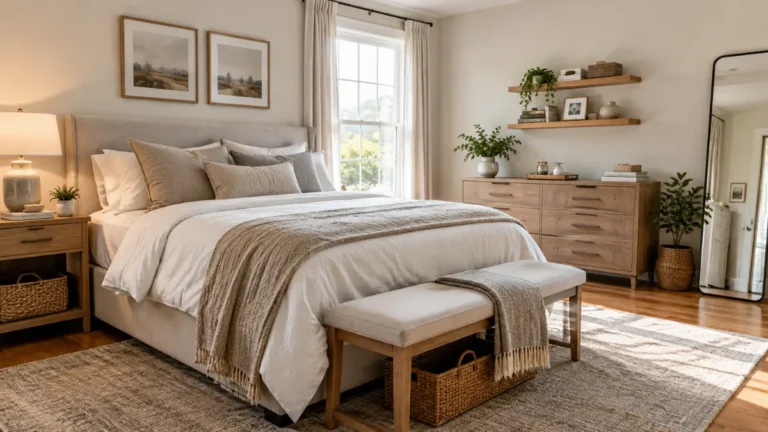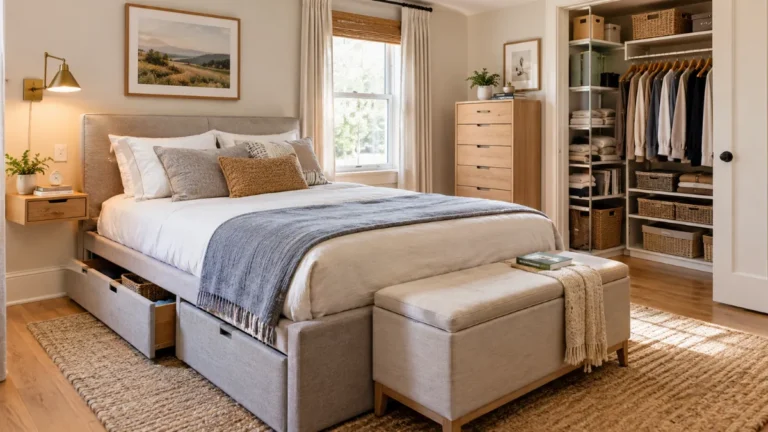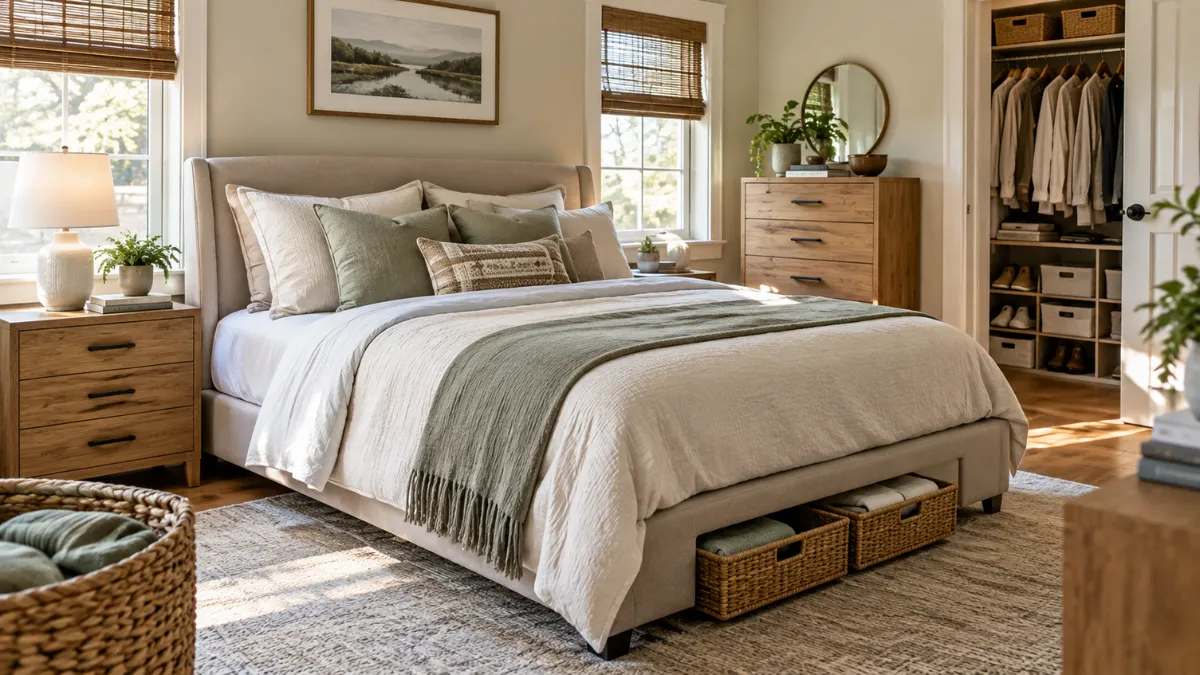
20 Bedroom Organization Ideas for a Cleaner, Calmer Space
A bedroom can become cluttered surprisingly quickly. Clothes collect on chairs, nightstands fill with small items, and storage seems to disappear no matter how carefully the room is arranged. The good news is that better organization does not always require a larger bedroom or expensive furniture.
These 20 Bedroom Organization Ideas focus on practical storage, smarter furniture placement, and simple styling choices that can make everyday life easier. From under-bed storage to better closet systems, there are options for small bedrooms, rental spaces, master bedrooms, and shared rooms.
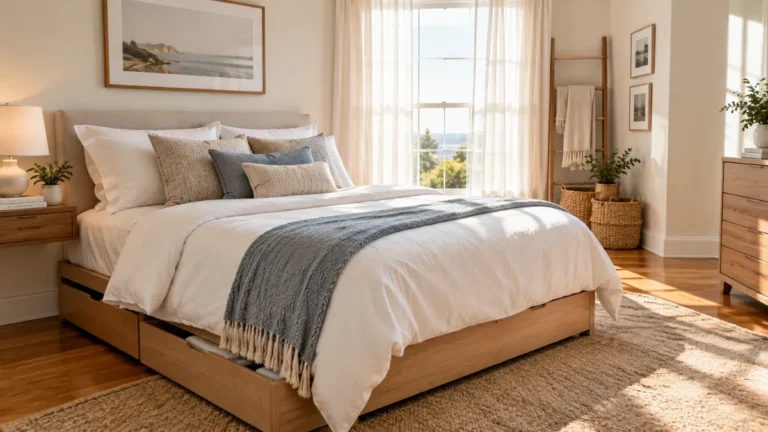
1. Under-Bed Storage Drawers
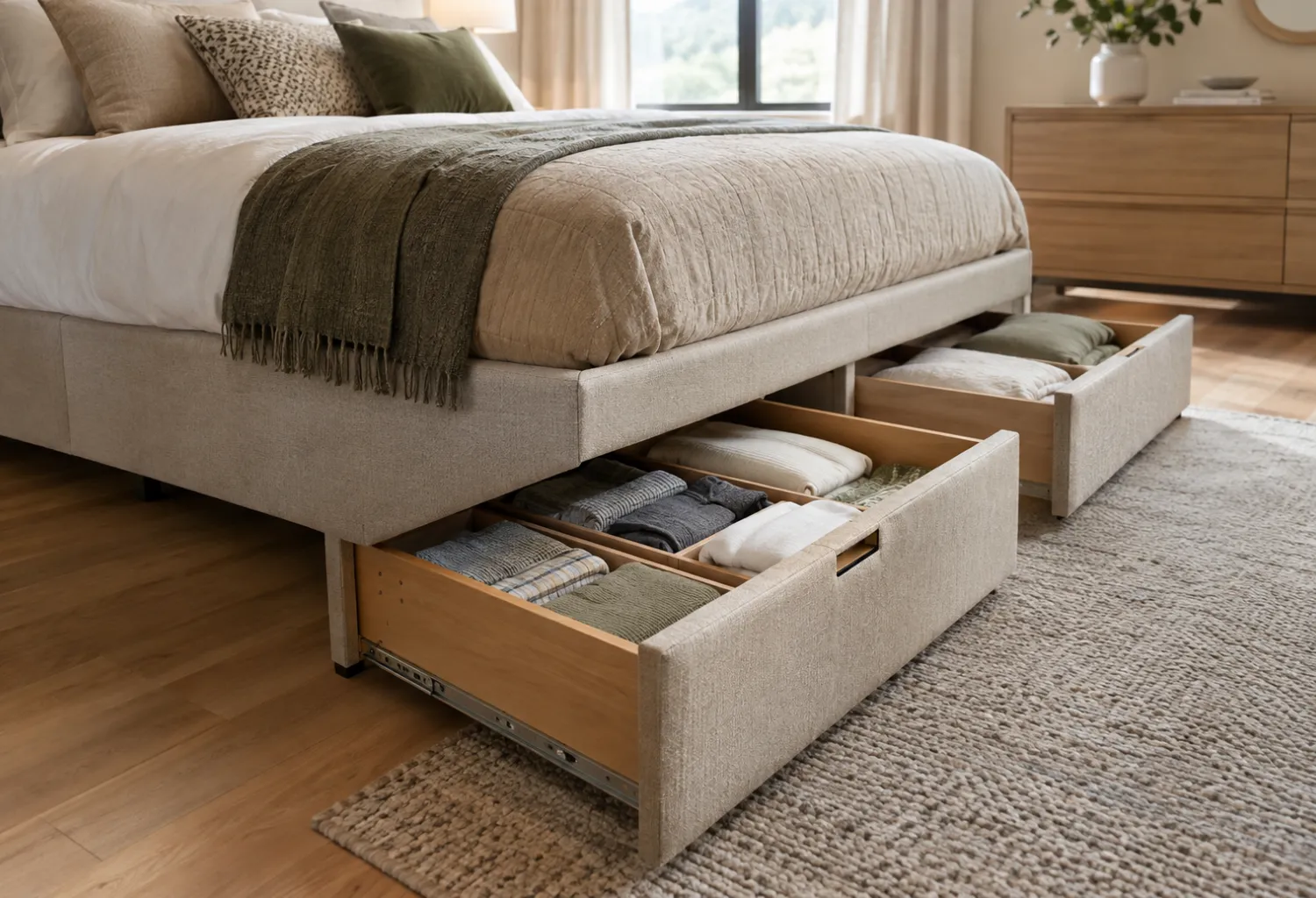
The space beneath a bed is often one of the most useful storage areas in the room. Instead of letting it collect dust, use low-profile drawers or rolling containers for items you do not need every day.
Store seasonal clothing, extra bedding, shoes, handbags, or luggage underneath. Choose containers with lids if the area tends to collect dust. Matching fabric or woven storage boxes can also give the room a more finished look when they are partially visible.
2. Built-In Closet Shelving
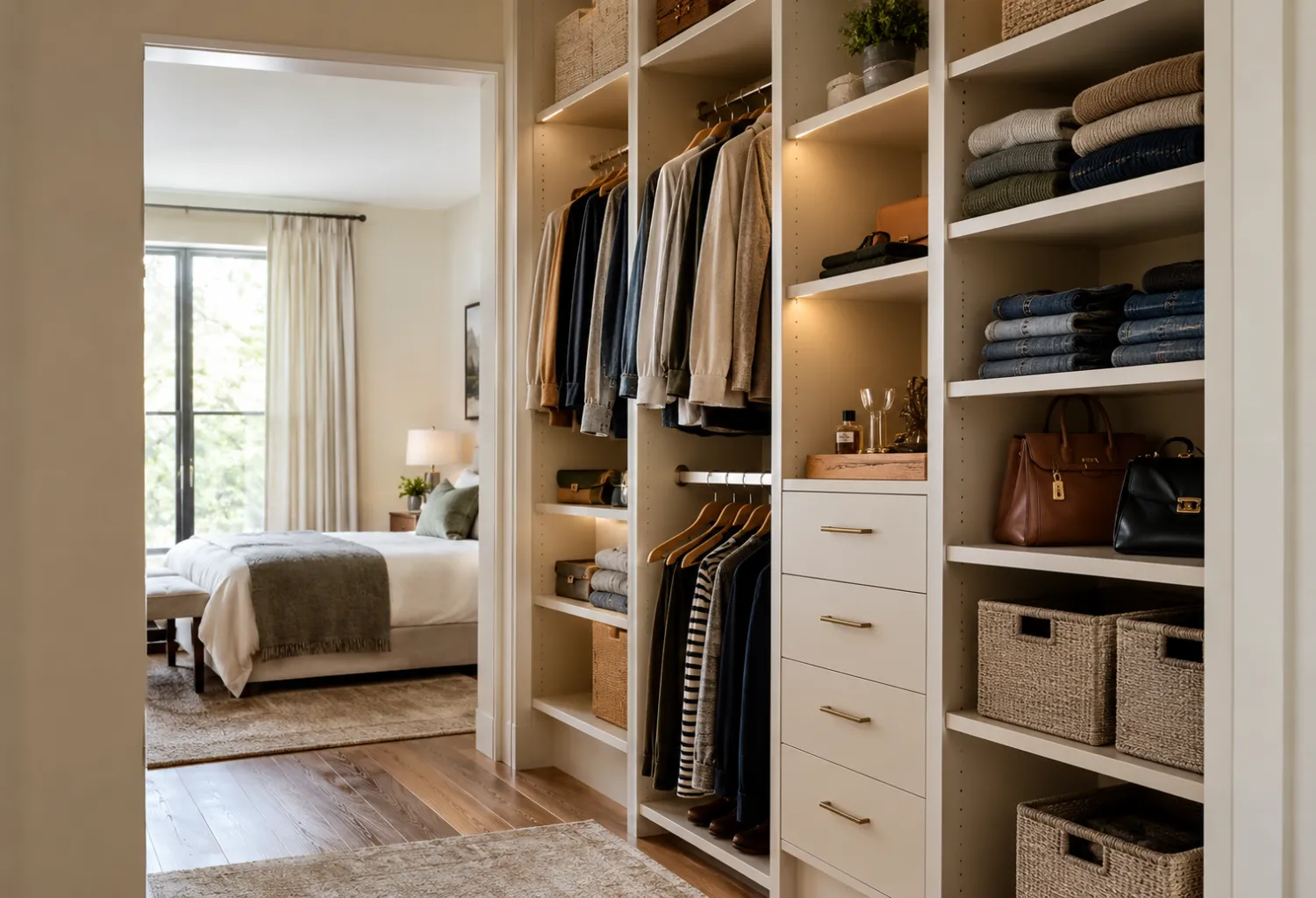
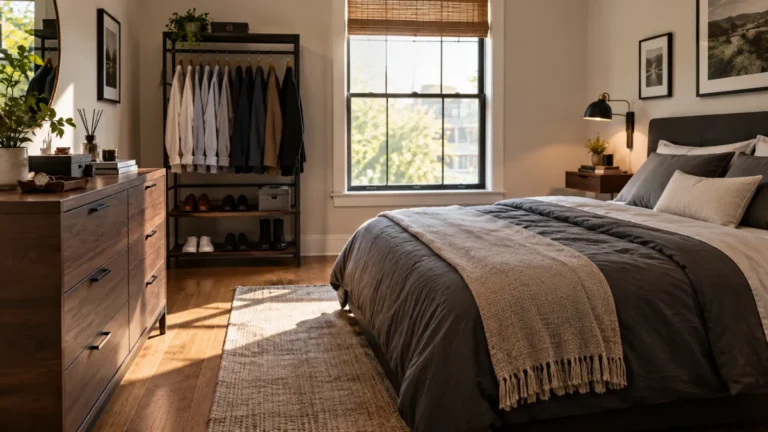
A closet becomes much more useful when it has dedicated spaces for different types of clothing. Add shelves above hanging rods for folded sweaters, jeans, handbags, or storage baskets.
For a small closet, use the vertical space rather than adding bulky furniture to the bedroom. Adjustable shelving is especially useful because it can be changed as your storage needs change.
3. Nightstand With Drawers
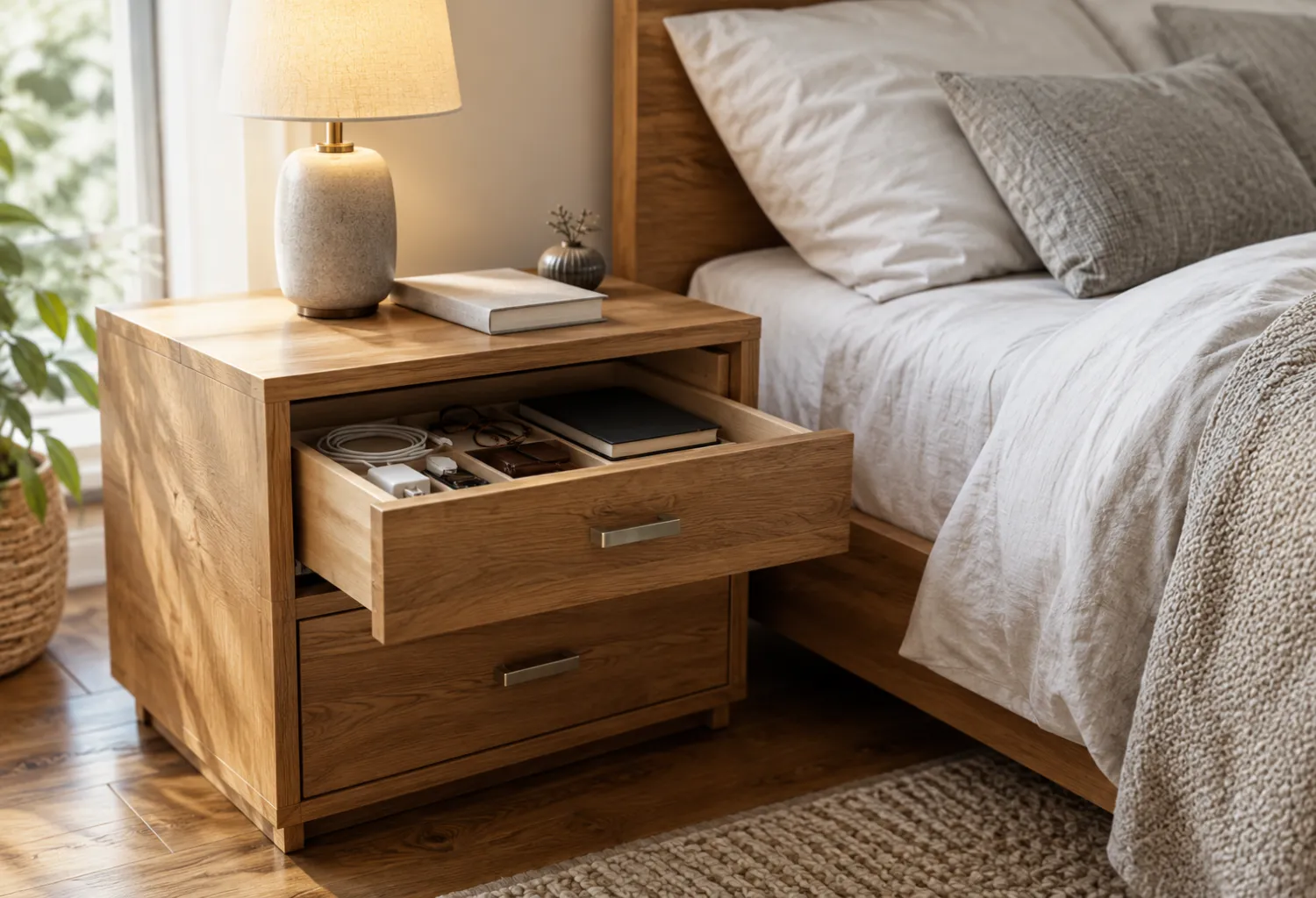
An attractive nightstand can also solve a surprising amount of bedroom clutter. Choose a design with at least one or two drawers instead of an entirely open table.
Keep everyday essentials such as reading glasses, chargers, medications, notebooks, or headphones inside the drawers. Leave the tabletop mostly clear with only a lamp, small decorative object, or book.
4. Floating Bedside Shelf
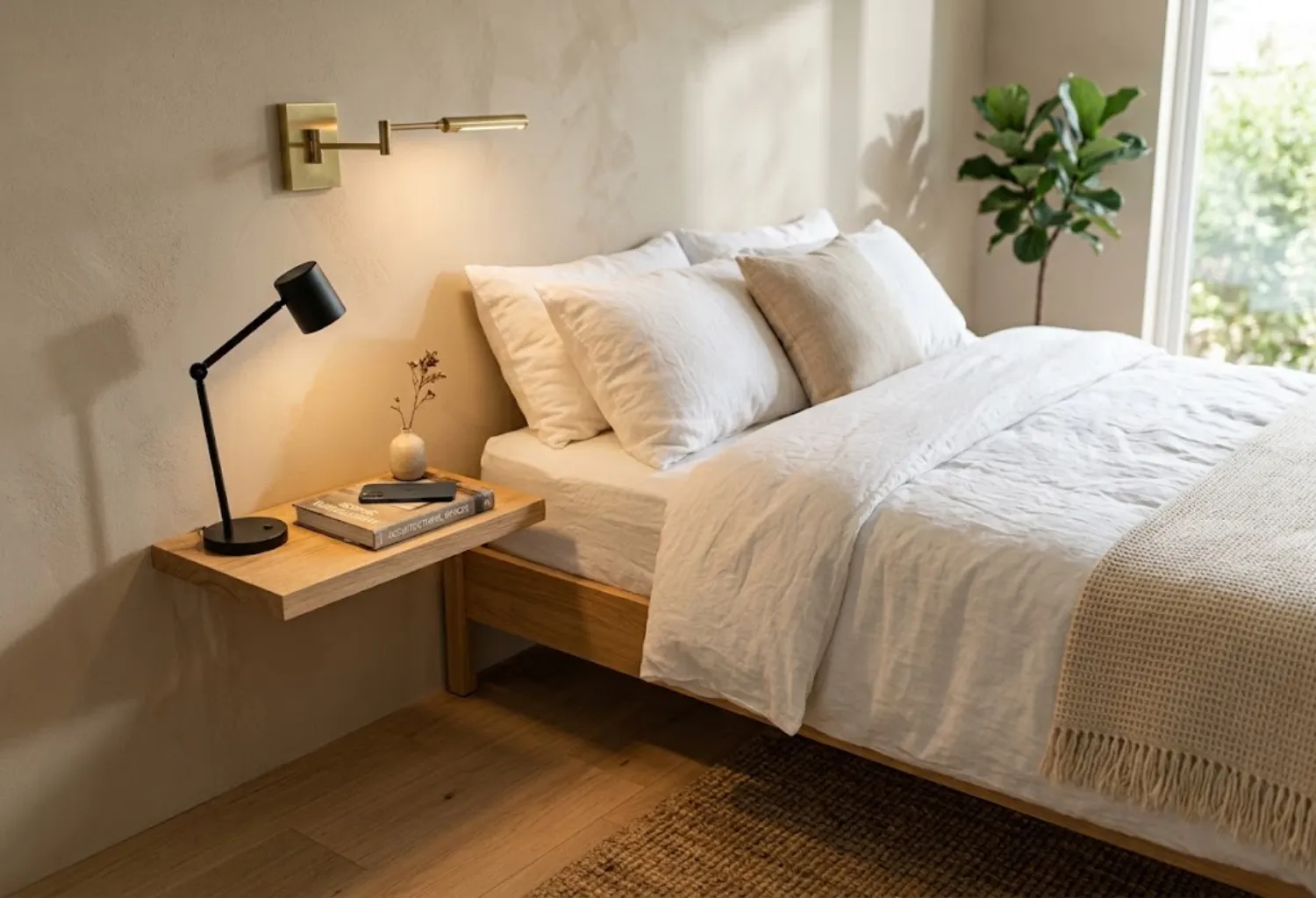
When floor space is limited, a floating bedside shelf can provide storage without taking up valuable walking space.
A slim wood shelf mounted beside the bed works well in small bedrooms. Pair it with a wall-mounted reading light to eliminate the need for a traditional table and create a cleaner, more open layout.
5. Matching Storage Baskets
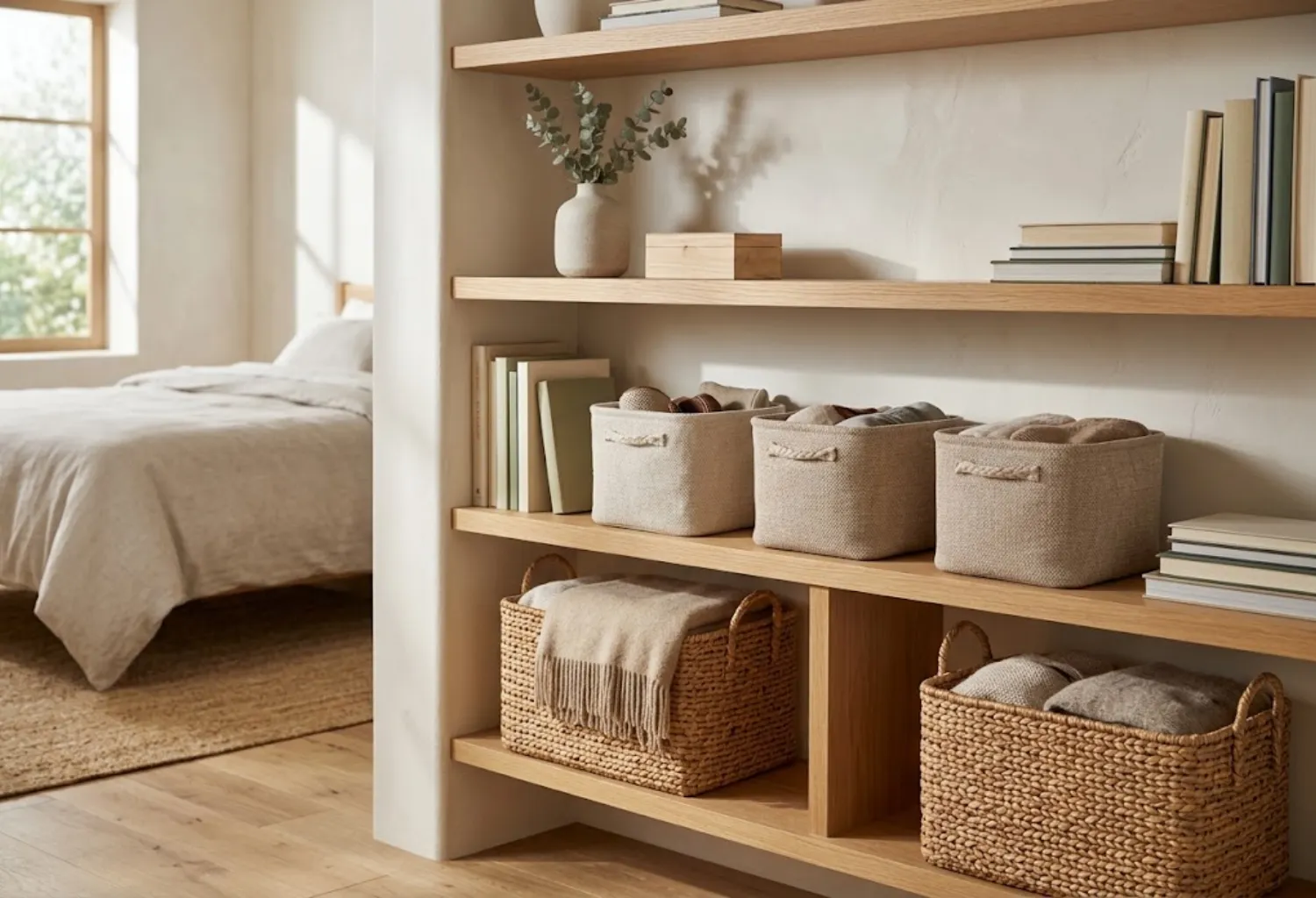
Storage baskets are useful when you want organization to look intentional rather than purely functional. Place matching baskets on open shelves, inside a closet, or underneath a console.
Natural woven baskets work particularly well with neutral bedrooms featuring white, beige, warm wood, and soft green tones. Fabric bins can create a softer look in bedrooms with upholstered furniture.
6. Closet Door Organizers
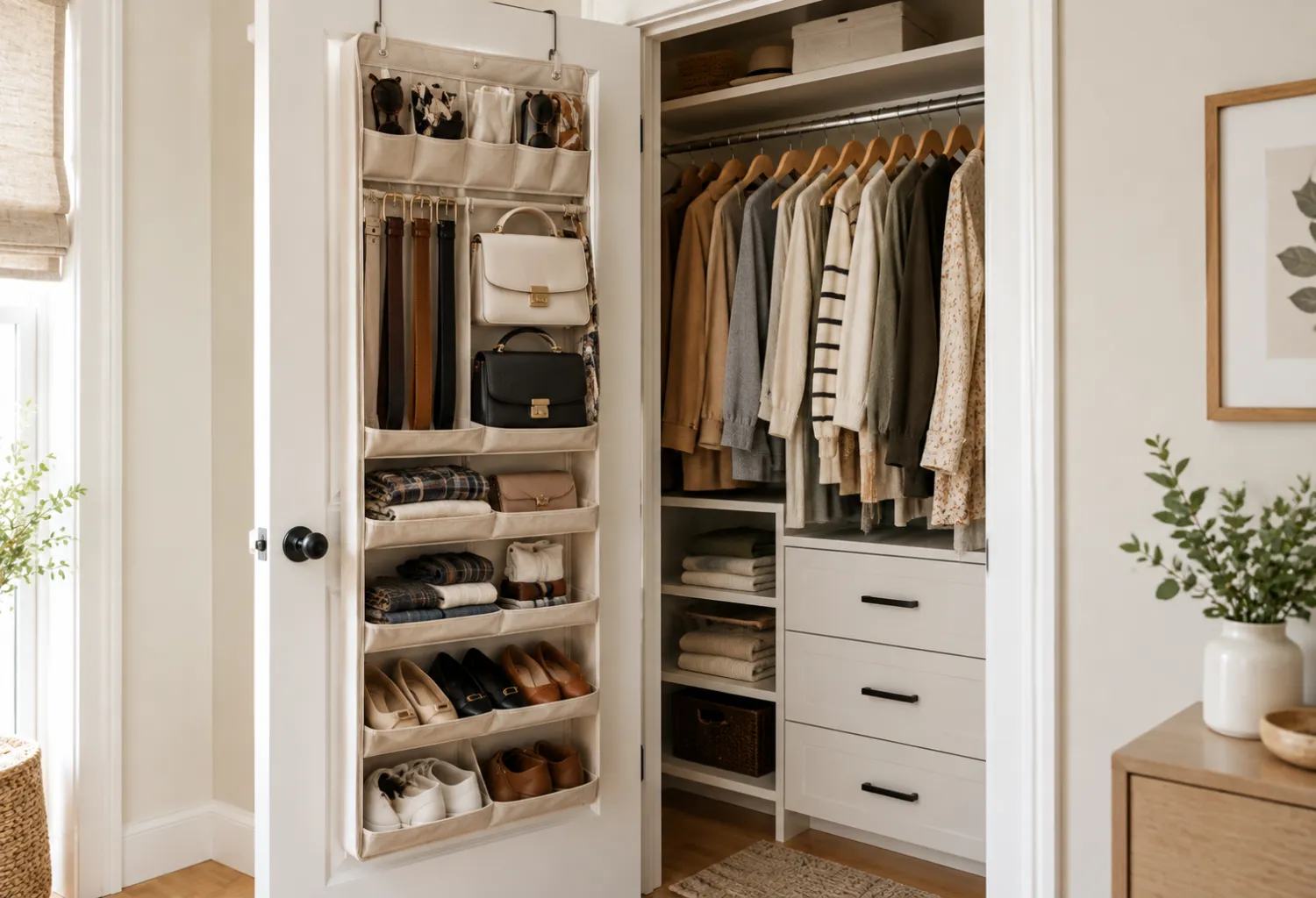
The back of a closet door is an overlooked storage opportunity. An over-the-door organizer can hold accessories, scarves, belts, small handbags, shoes, or folded items.
This approach is especially helpful in apartments and older homes where closet space is limited. Choose a slim organizer so the door can still close properly.
7. Slim Dresser for Narrow Walls
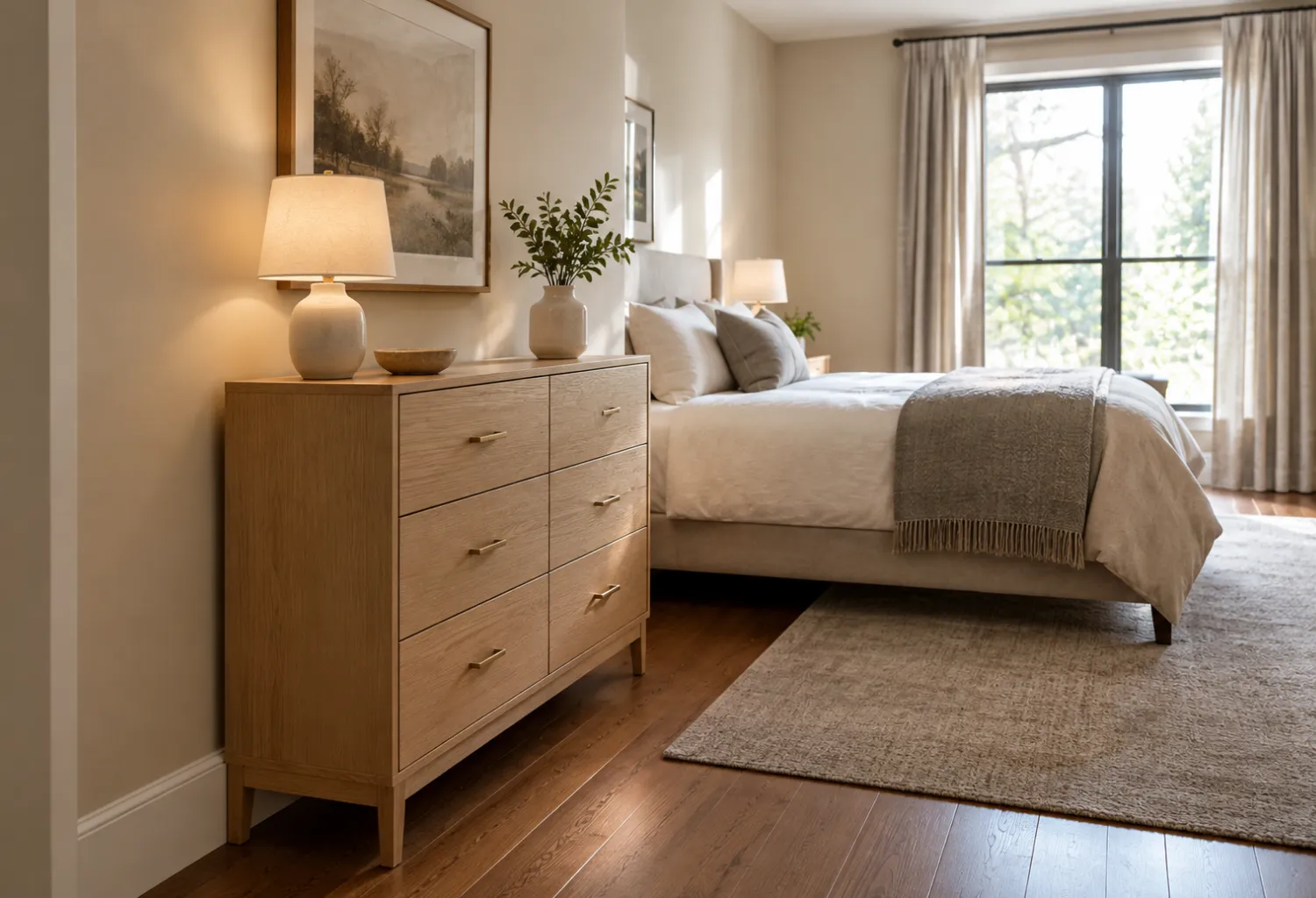
A large dresser can make a bedroom feel crowded, particularly when the room has limited walking space. A narrow dresser provides useful drawer storage without overwhelming the layout.
Position it against the longest available wall, leaving enough clearance for drawers to open comfortably. Light wood or white finishes can help a compact bedroom feel more spacious.
8. Vertical Bookcase Storage
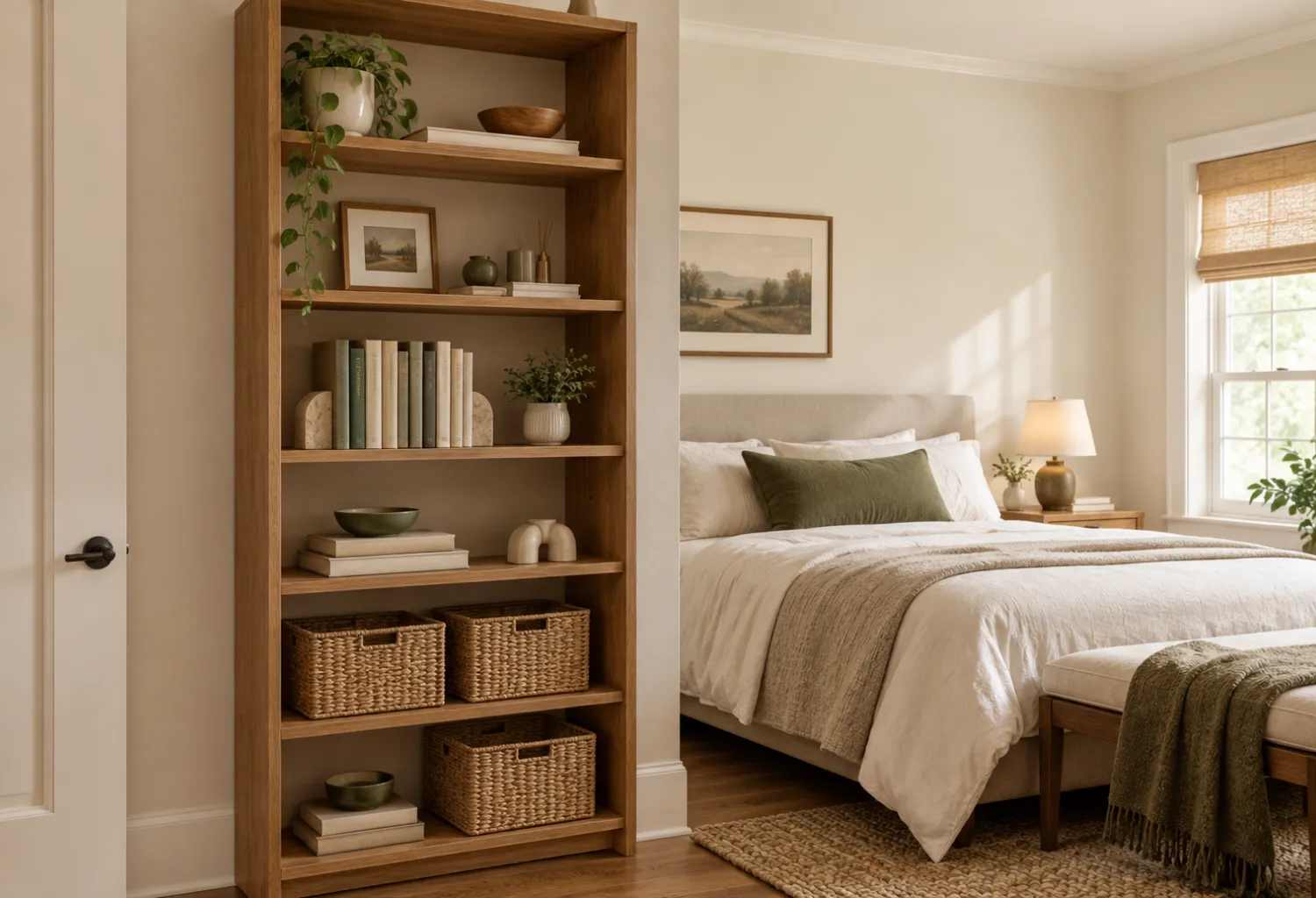
A tall bookcase can provide considerably more storage than a short shelving unit while using the same amount of floor space.
Use the lower shelves for baskets and closed containers, middle shelves for books, and upper shelves for a few carefully selected accessories. Avoid filling every shelf completely so the arrangement still feels calm.
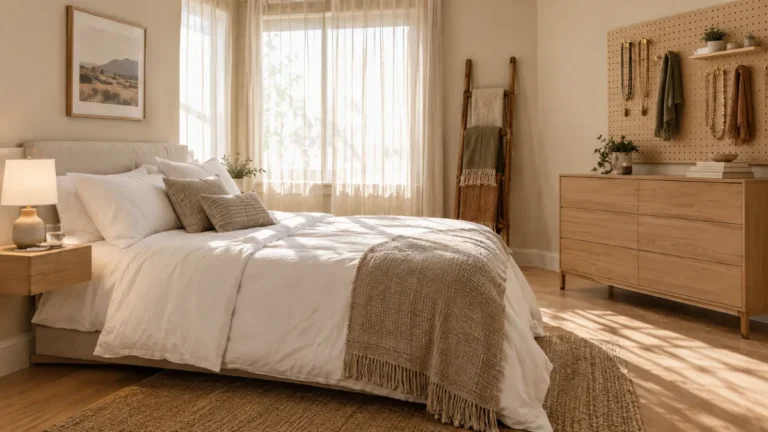
9. Jewelry Wall Organizer
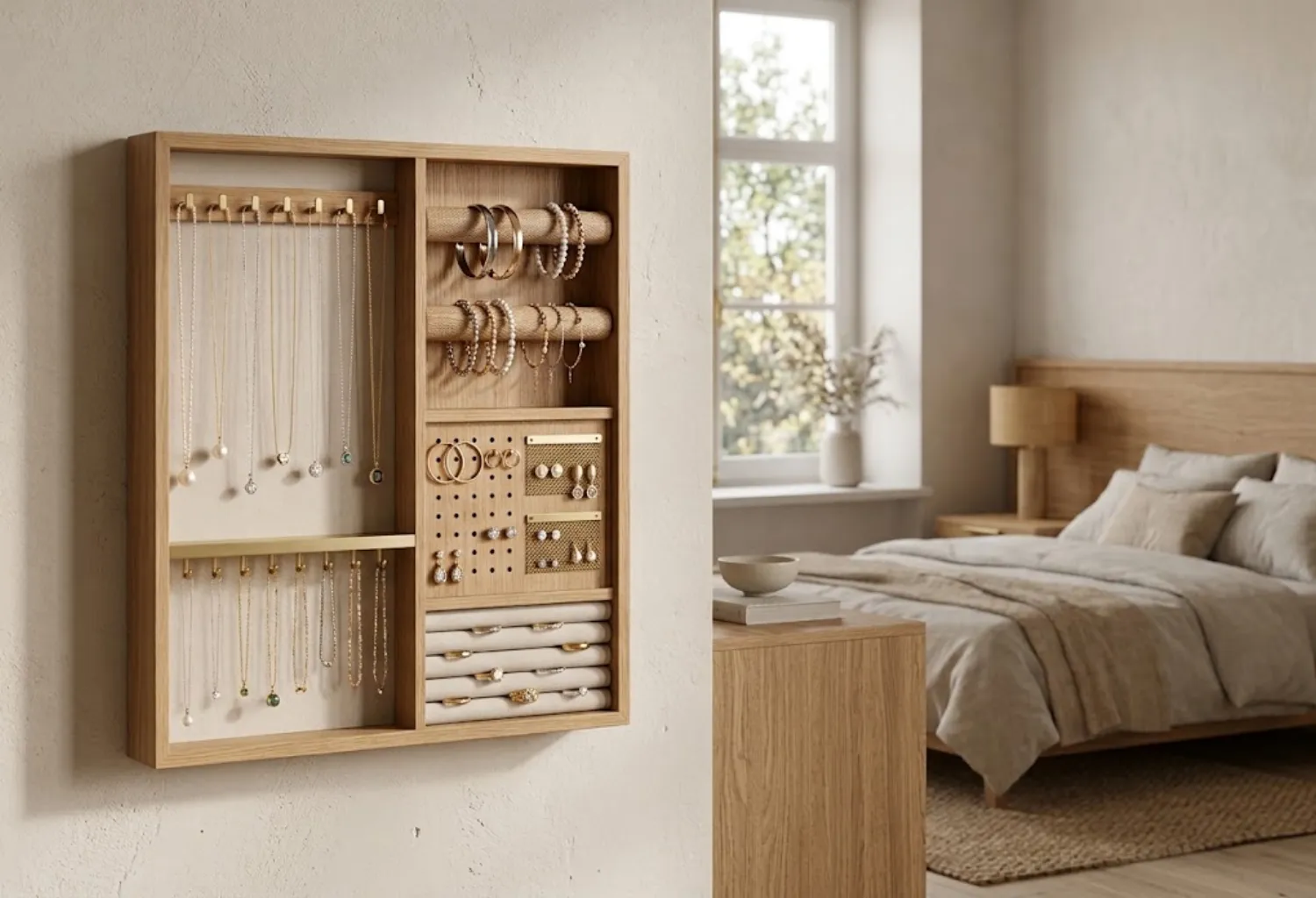
Jewelry can quickly become tangled when it is stored in a drawer. A wall-mounted jewelry organizer keeps necklaces, bracelets, and earrings visible and easier to access.
A framed organizer can even become part of the bedroom decor. Choose a finish that coordinates with nearby hardware, such as brushed brass, matte black, or natural wood.
10. Storage Bench at the Foot of the Bed
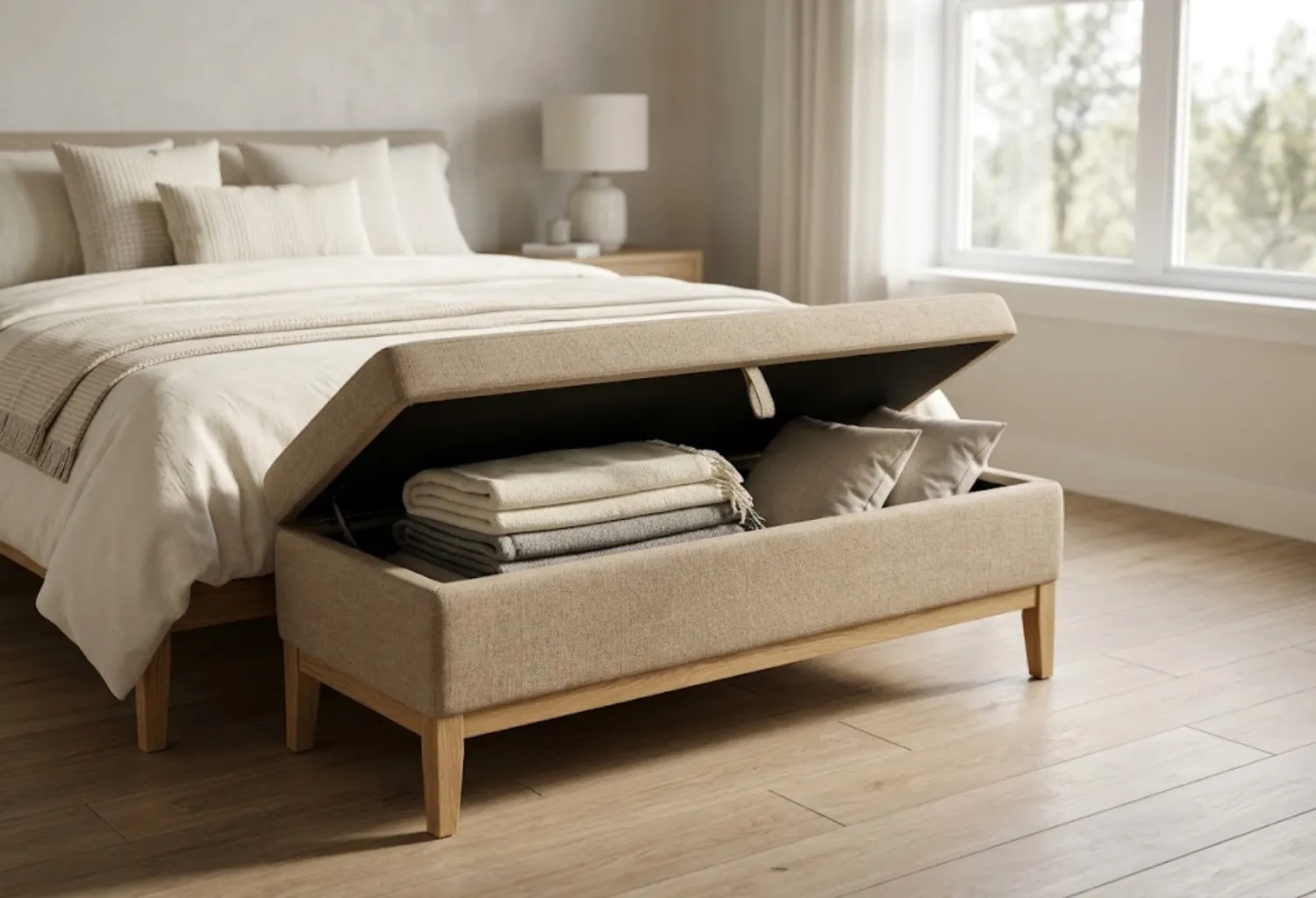
A storage bench at the foot of the bed offers both seating and hidden organization. Look for a design with a lift-up seat or internal compartment.
Use it for extra blankets, pillows, seasonal accessories, or rarely used clothing. Keep the bench proportionate to the bed so there is still comfortable walking space around it.
11. Drawer Dividers
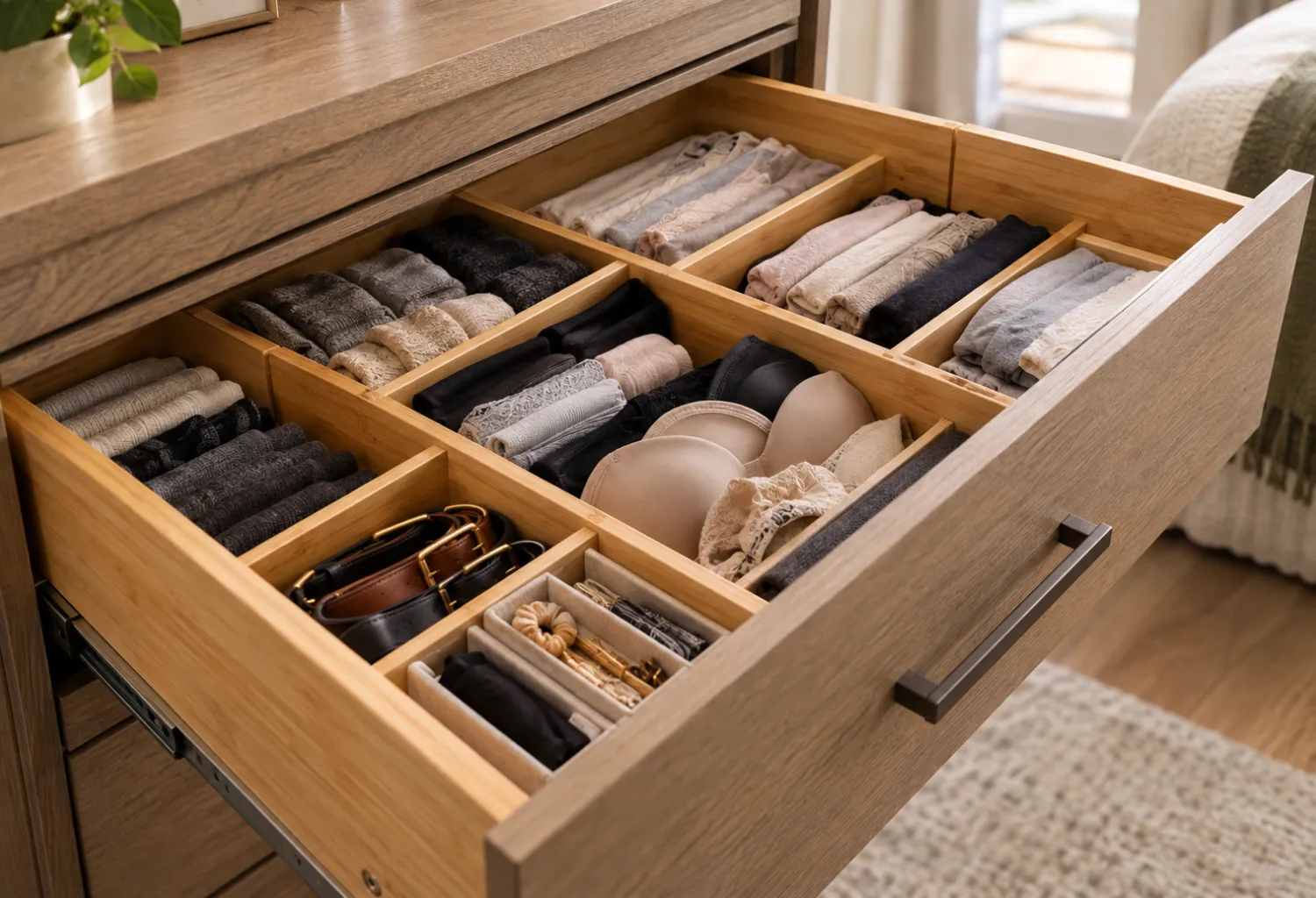
Bedroom drawers often become messy because different items end up sharing the same space. Drawer dividers create simple zones for socks, underwear, accessories, and smaller clothing.
Adjustable bamboo or plastic dividers work well because they can be repositioned as needed. For a more polished system, use several matching compartments throughout the dresser.
12. Wall-Mounted Hooks
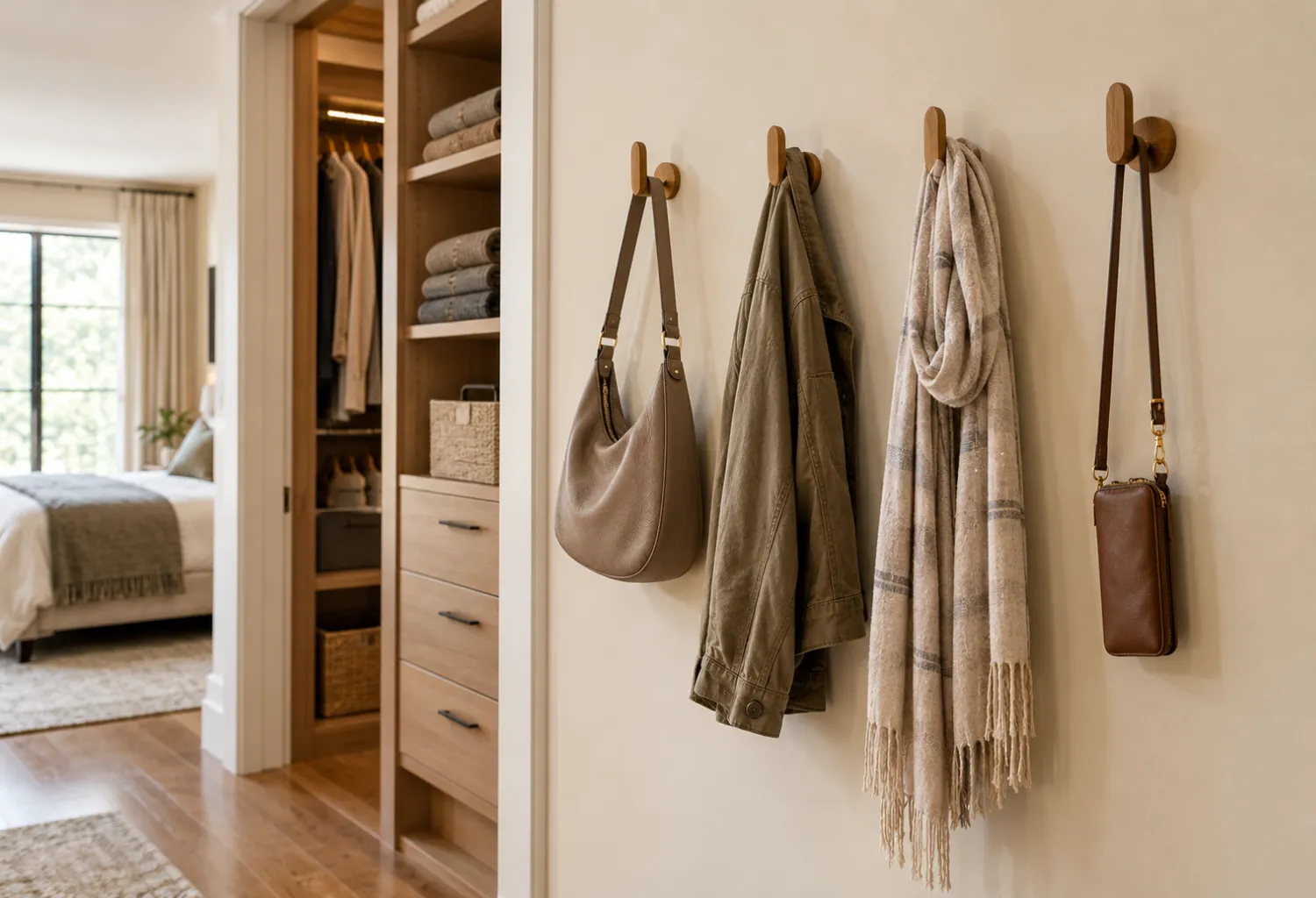
A few strategically placed hooks can prevent clothing, bags, and accessories from ending up on a chair or floor.
Install hooks near the closet or behind the bedroom door for frequently used items. A row of simple wood or metal hooks can also look decorative when evenly spaced and coordinated with the room’s hardware.
13. Seasonal Clothing Rotation
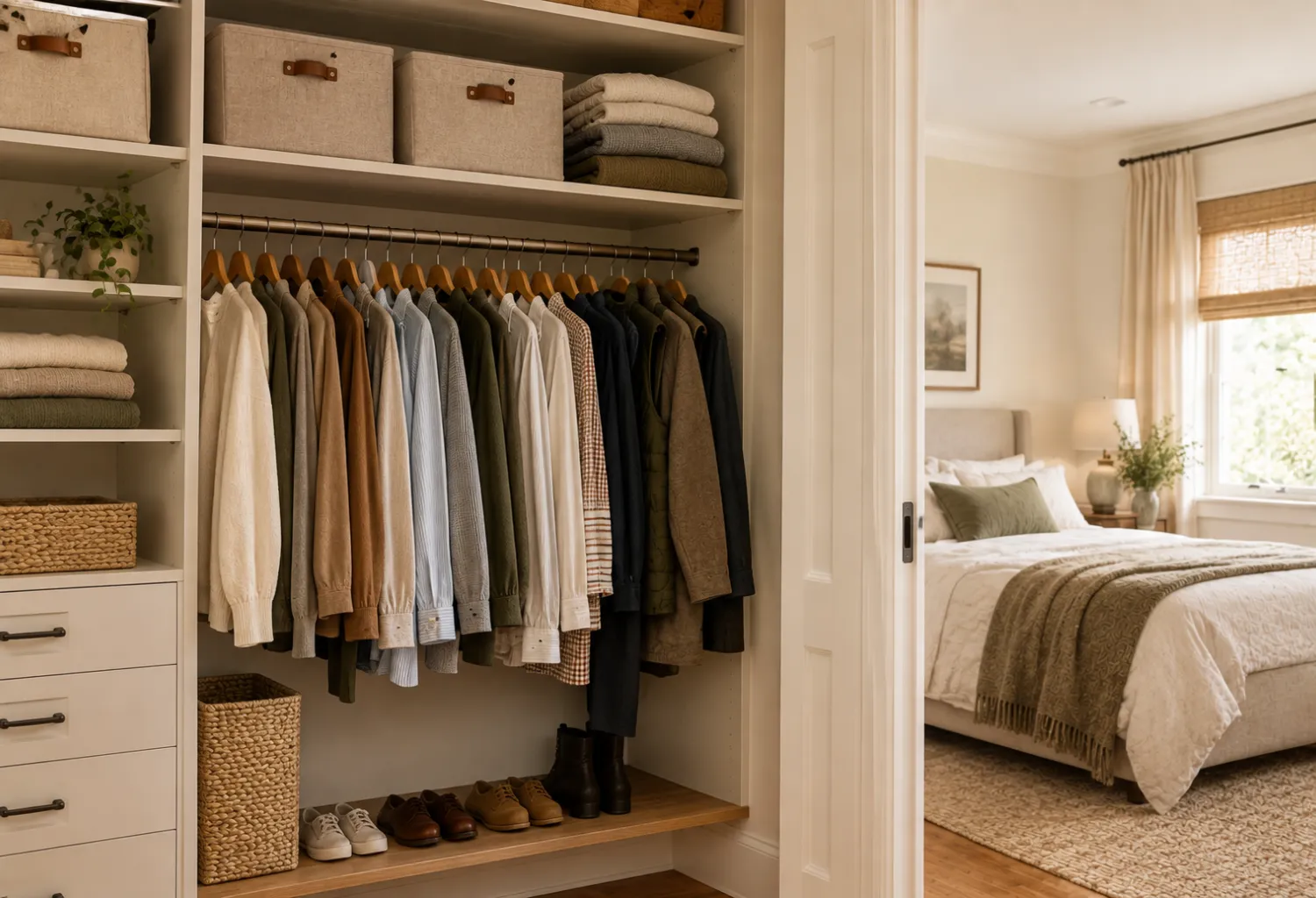
Not every piece of clothing needs to occupy your primary closet year-round. Rotate clothing according to the season and move less-used pieces into under-bed containers, high shelves, or another suitable storage area.
In warmer months, store heavy coats and thick sweaters away. During colder months, reverse the process. This creates more breathing room in the closet and makes everyday clothing easier to see.
14. Hidden Hamper Cabinet
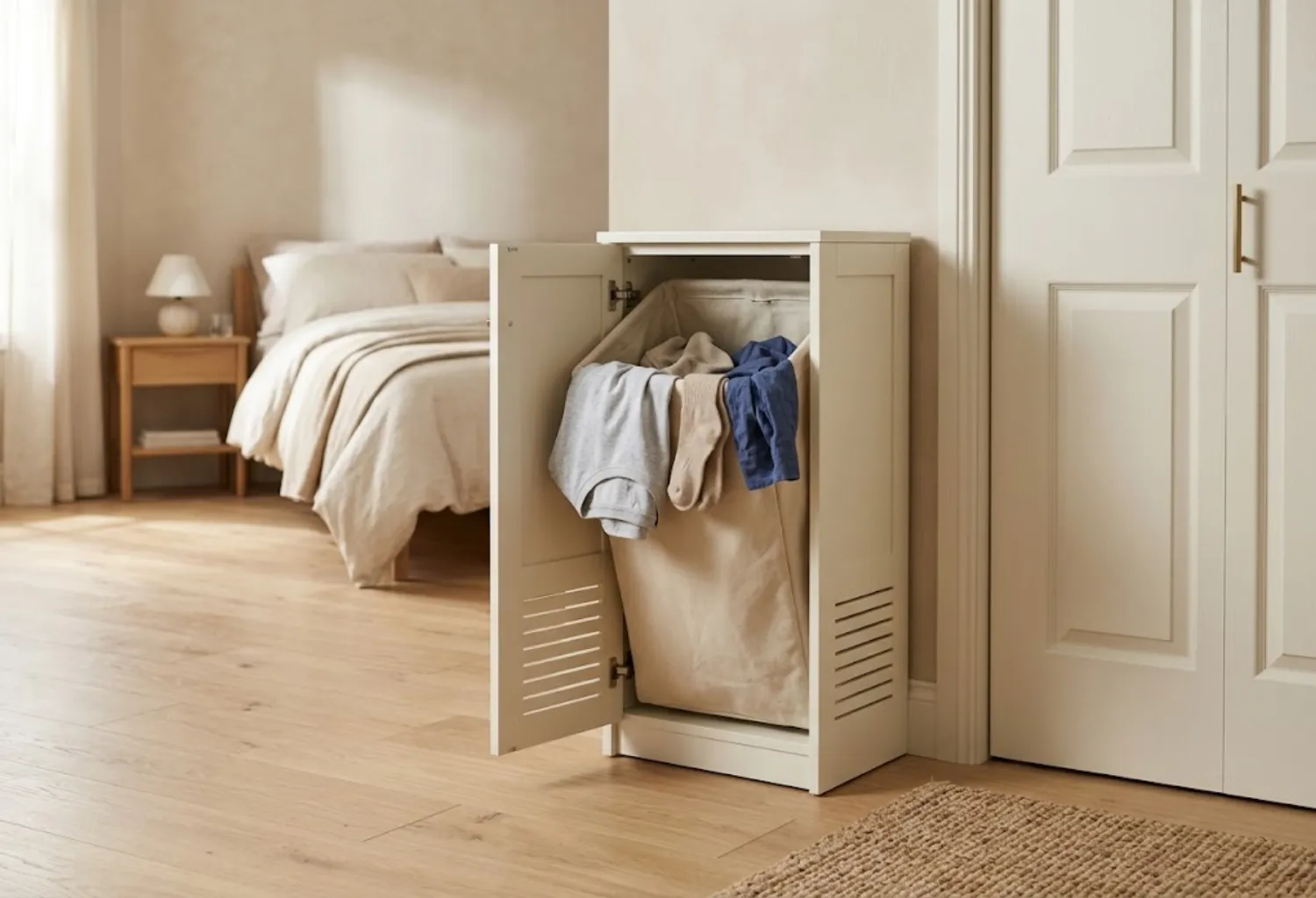
A laundry hamper does not need to become a visual focal point. A narrow hamper cabinet or lidded basket can keep dirty clothes contained while maintaining a neat appearance.
Place it near the closet or bathroom entrance so laundry naturally goes into the hamper instead of accumulating on the floor. Ventilated designs are useful when storing damp towels or workout clothes.
15. Charging Station Drawer
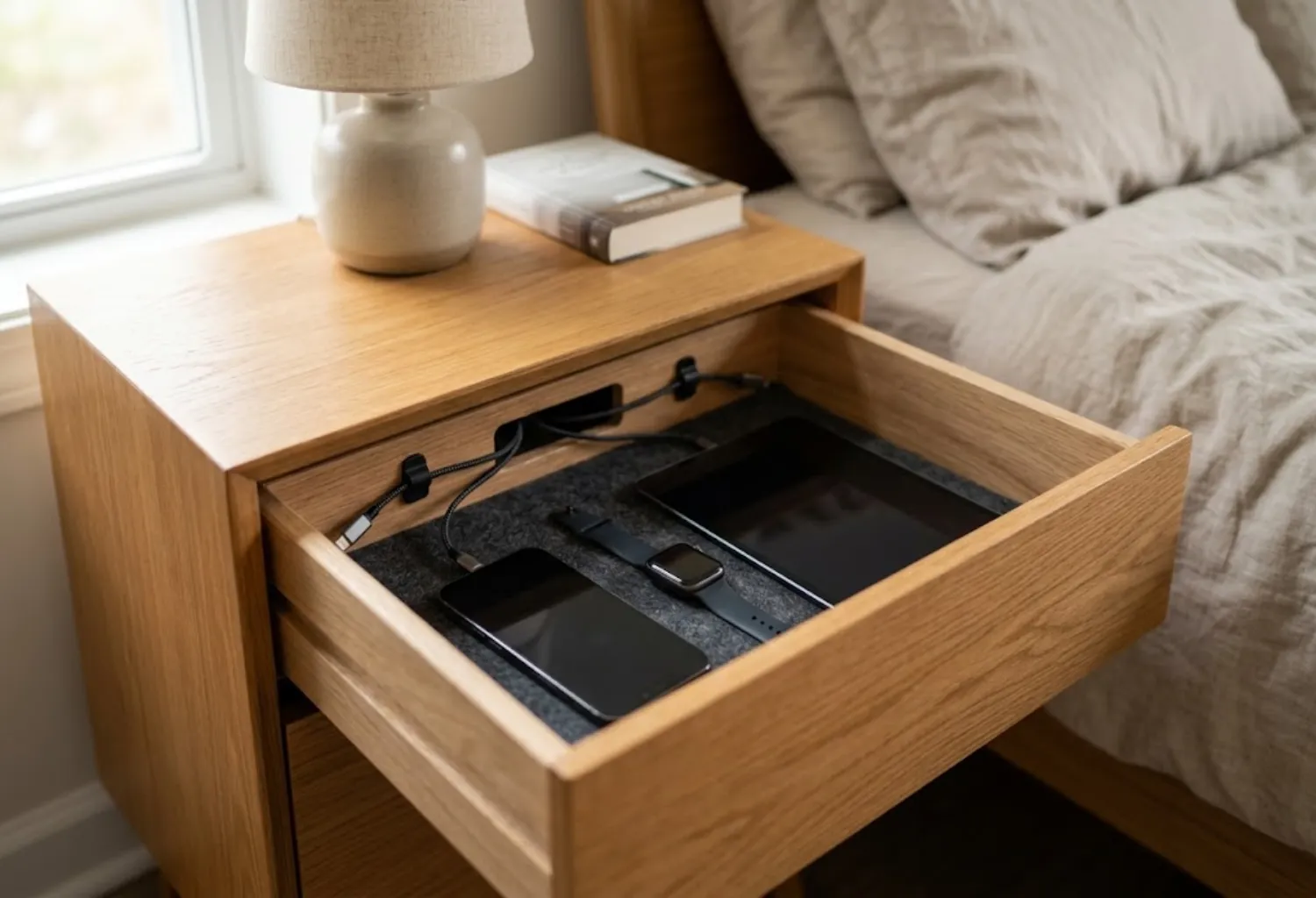
Phones, watches, tablets, and charging cables can create visual clutter around a nightstand. A dedicated charging drawer gives these items a specific home.
Use a nightstand or dresser drawer with a cable-management opening, or create a simple charging area inside an existing drawer. Keep cables separated with small clips so they do not become tangled.
16. Over-the-Door Shoe Storage
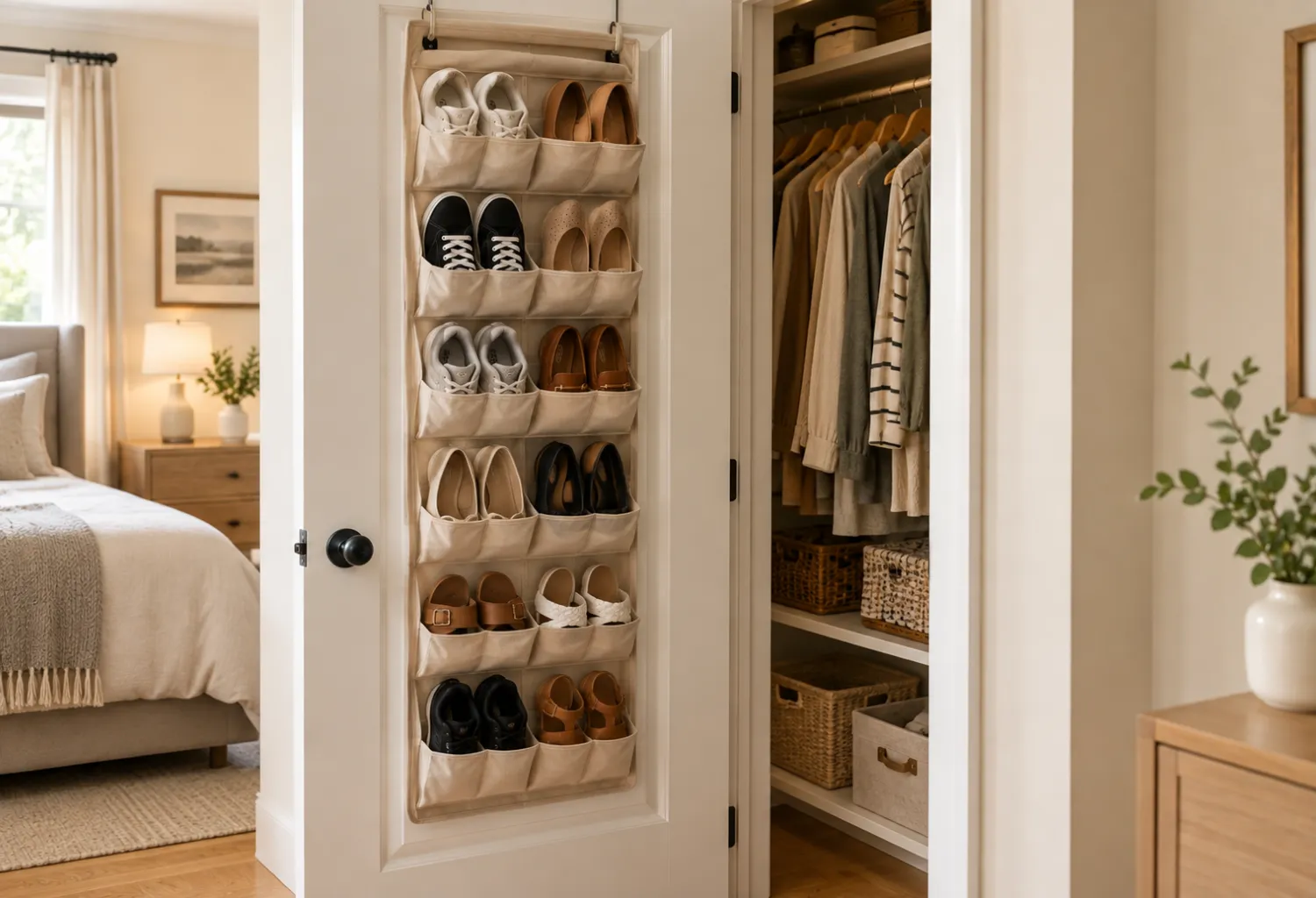
Shoes can quickly consume valuable closet floor space. An over-the-door shoe organizer uses vertical space and keeps pairs together.
Use clear pockets when you want to see everything quickly, or choose a fabric organizer for a softer appearance. Keep the most frequently worn shoes at comfortable eye or hand level.
17. Open Shelf for Everyday Items
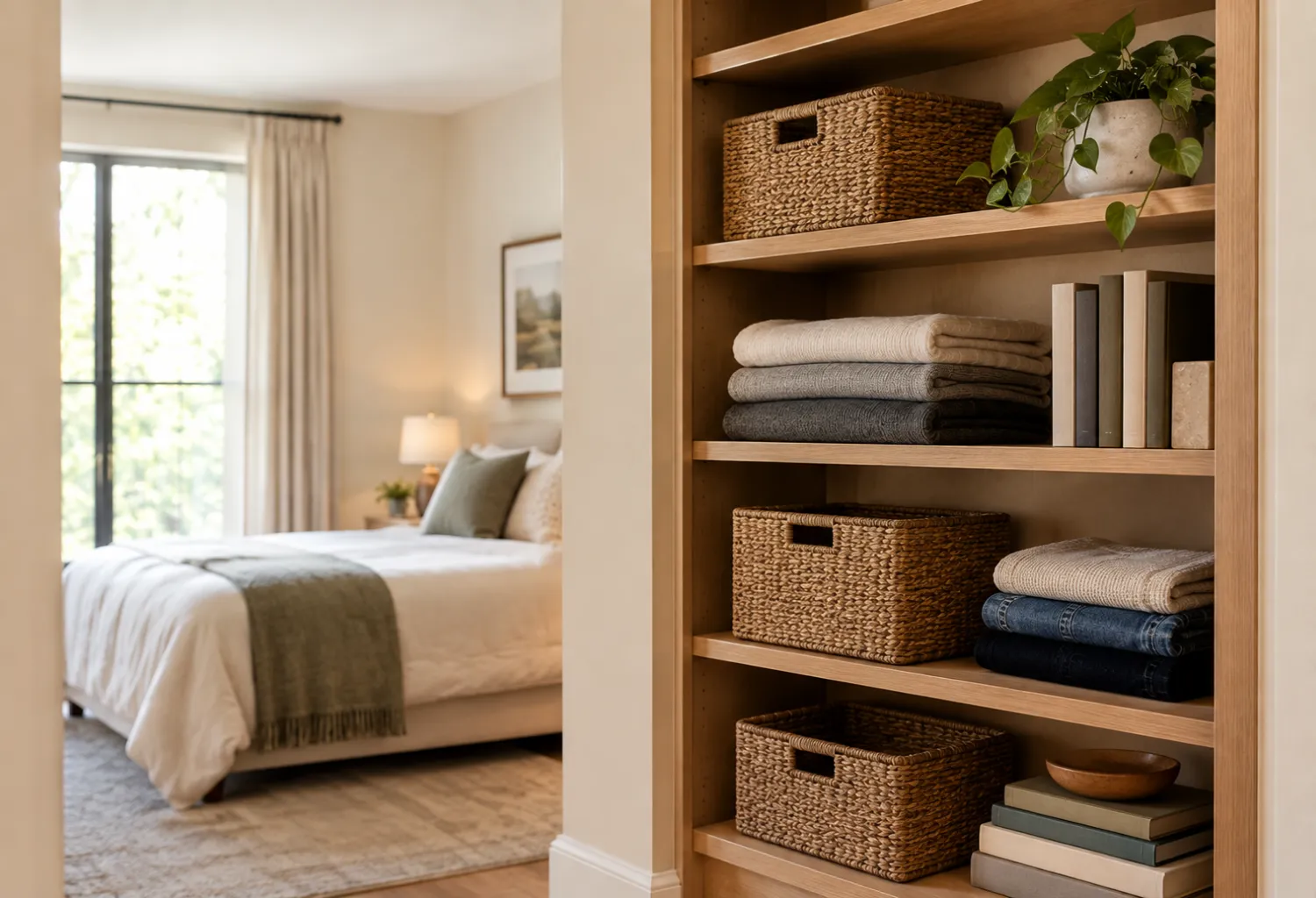
Open shelving works best when it is reserved for things you actually use or enjoy seeing. A small shelf beside the closet can hold folded everyday clothes, baskets, books, or a few decorative accessories.
Limit the number of visible items. A combination of folded textiles, natural baskets, and a small plant can make the storage area feel like part of the room’s design rather than an exposed closet.
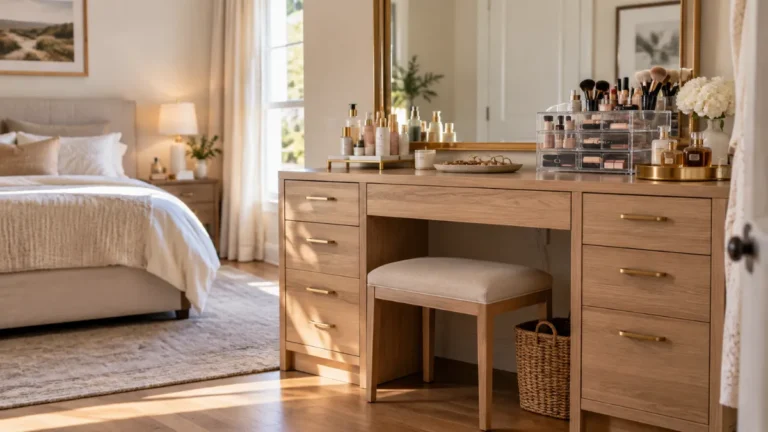
18. Decluttered Dresser Top
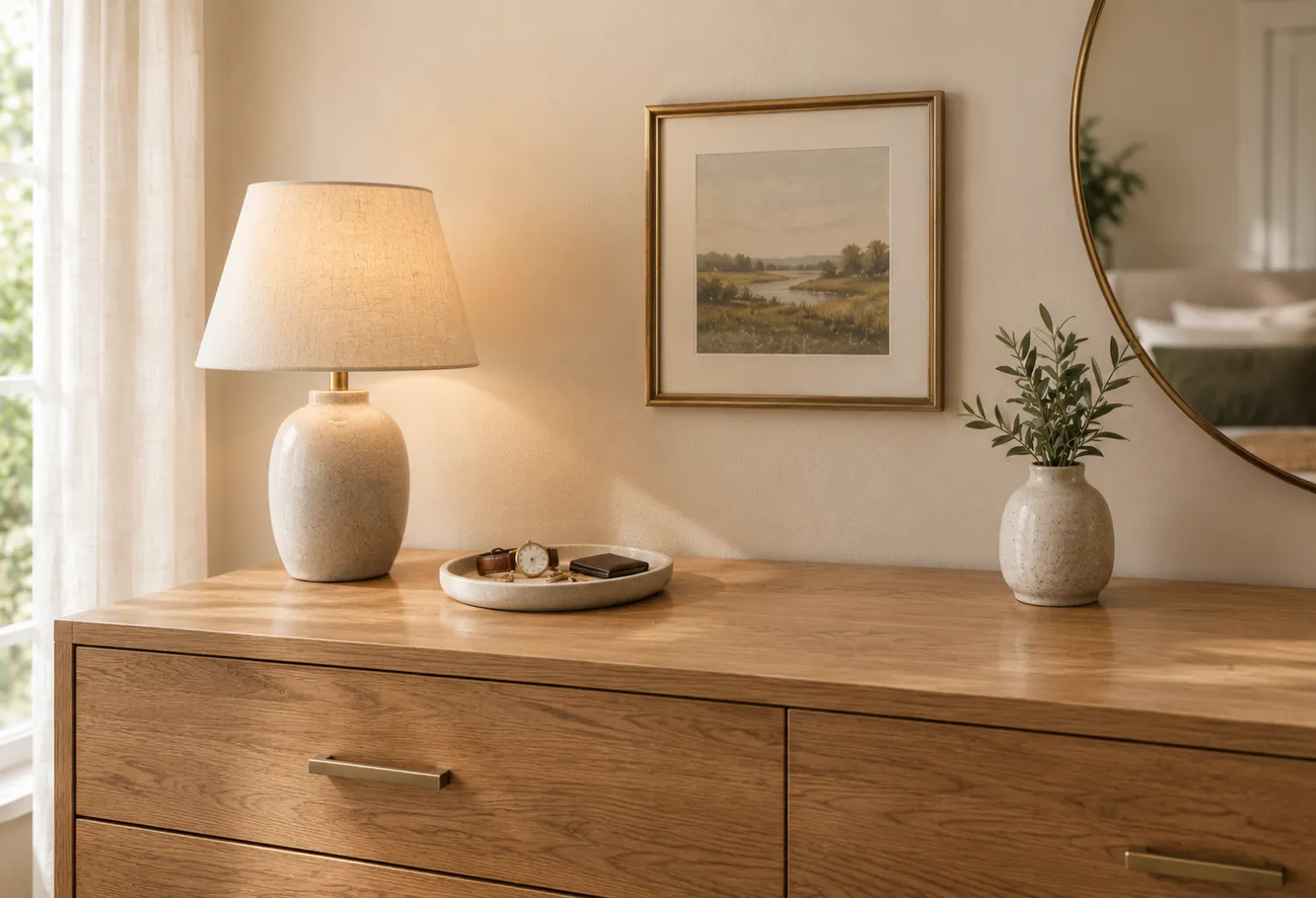
A dresser can become a collection point for everything from mail to cosmetics. Keeping the top intentionally simple makes the entire bedroom feel more organized.
Use one tray for frequently used small items and leave enough open surface around it. A table lamp, small framed artwork, or simple vase can provide decoration without sacrificing useful space.
19. Corner Storage Cabinet
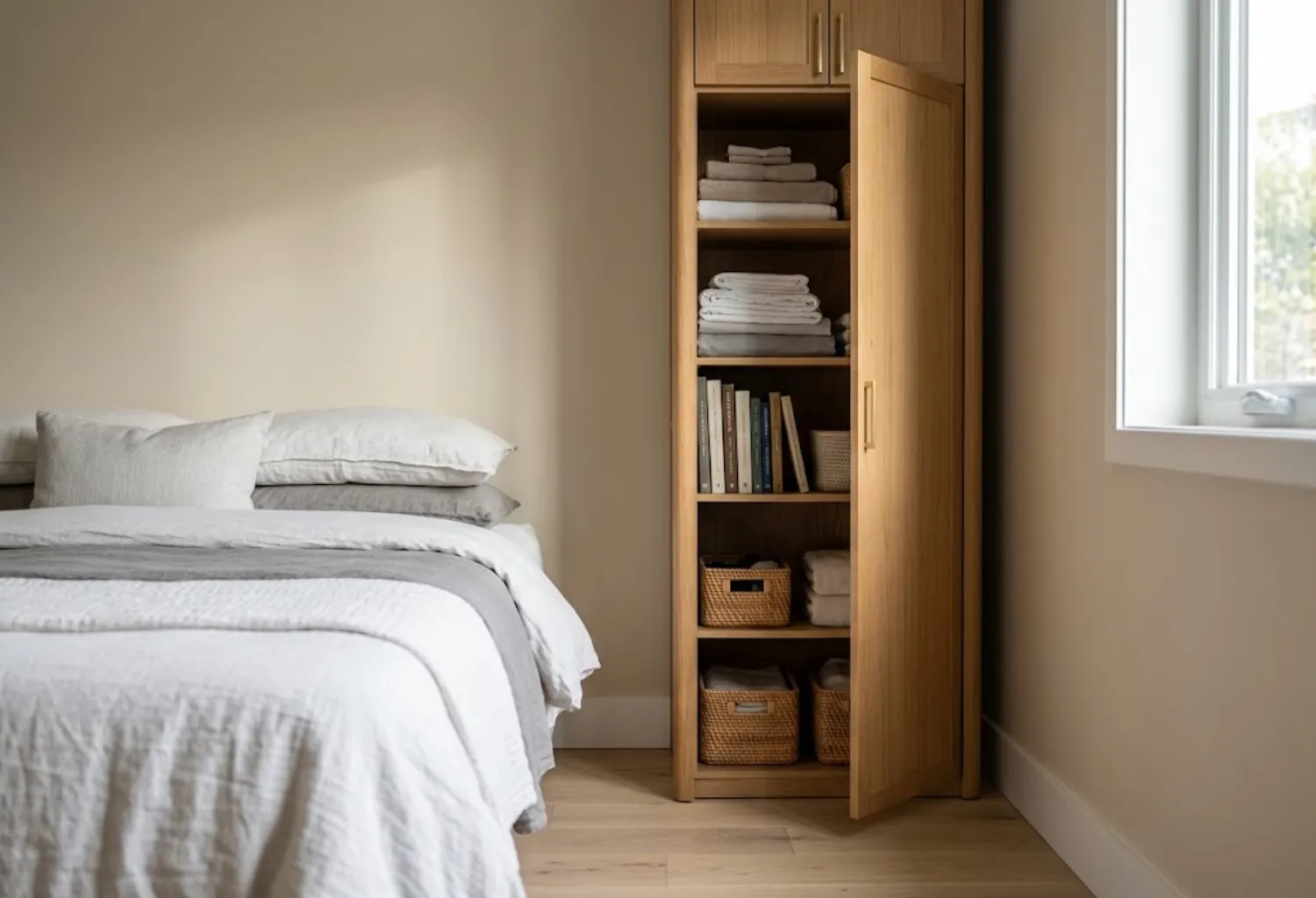
Awkward bedroom corners can become valuable storage zones with the right furniture. A narrow corner cabinet can hold accessories, extra linens, books, or personal items without taking over the room.
Choose a cabinet with doors if you want to hide clutter. In a traditional or transitional bedroom, a wood cabinet adds warmth, while a simple painted cabinet can work well in a modern space.
20. One-In, One-Out Storage Habit
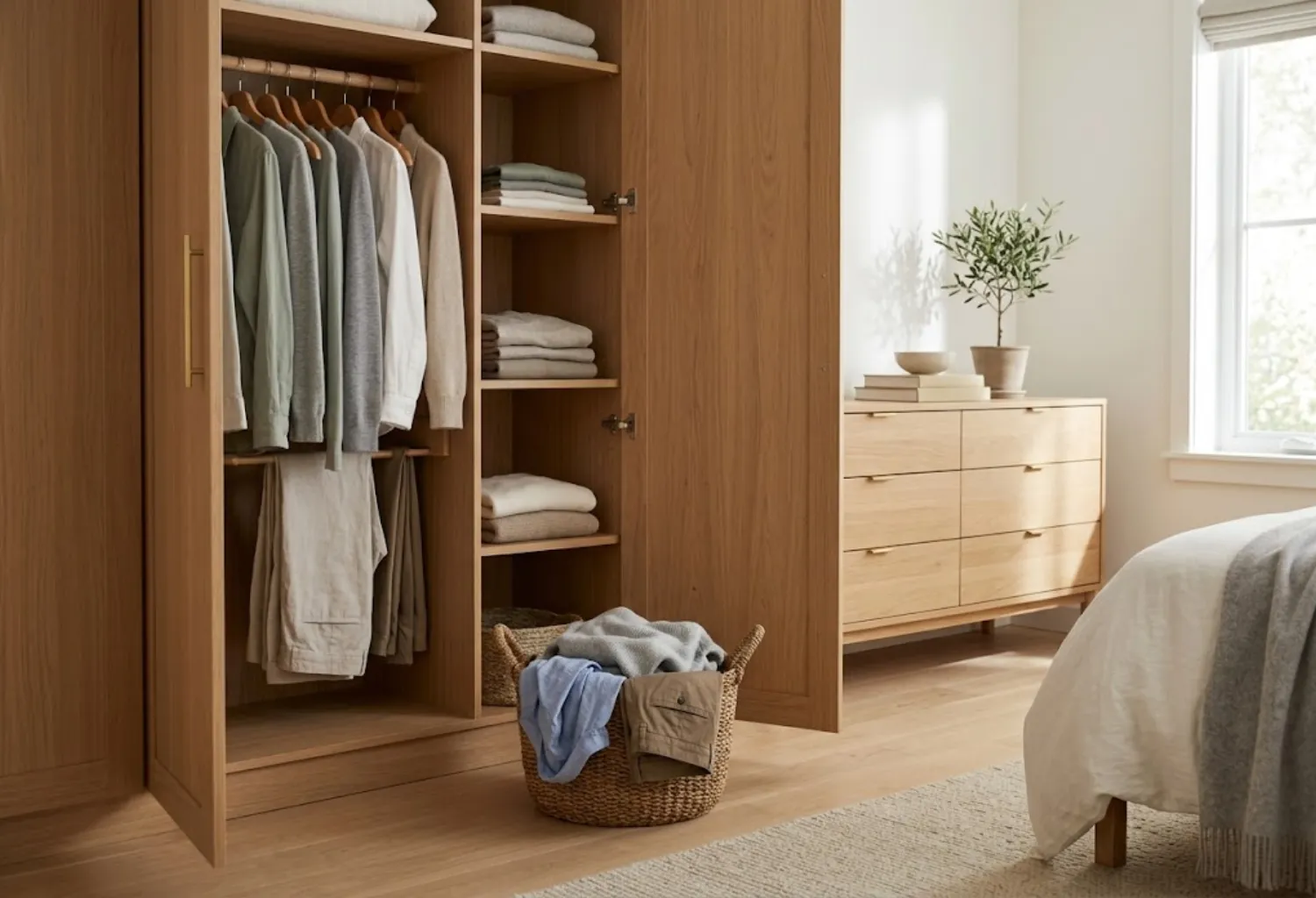
Good organization is easier to maintain when new belongings do not constantly increase the amount of clutter. A simple one-in, one-out habit can help control clothing and accessories.
When a new sweater, pair of shoes, or handbag comes into the bedroom, consider whether an older item is no longer useful. This does not mean removing something every time you buy something, but it creates a useful pause before storage spaces become overcrowded.
Conclusion
The best 20 Bedroom Organization Ideas are not necessarily the most expensive or complicated ones. The right choice depends on your room size, storage limitations, daily routine, and decorating style.
A small bedroom may benefit most from vertical shelving, floating storage, and under-bed containers. A larger bedroom might have room for a storage bench, dresser, and dedicated closet system. Whichever ideas you choose, focus on giving frequently used items an easy-to-reach home while keeping less-used belongings out of the way.
A well-organized bedroom should still feel comfortable and personal. When storage works naturally with the furniture and decor, keeping the room tidy becomes much easier.