19 Kitchen Drawer Organization Ideas That Actually Work
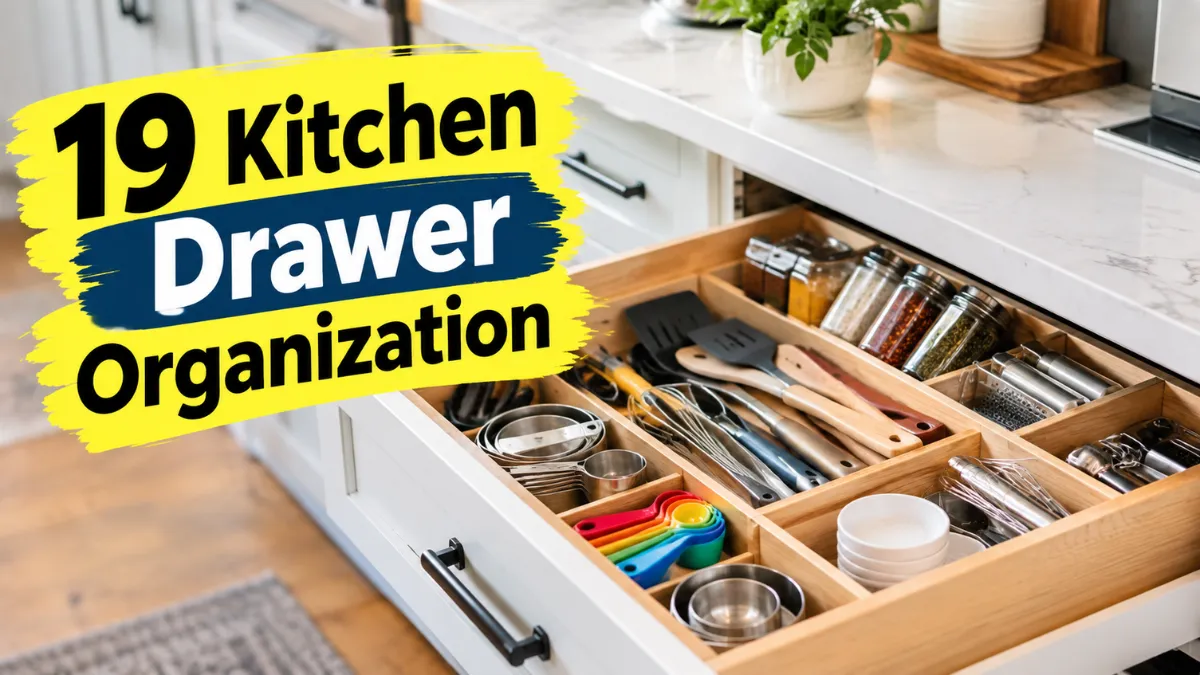
Everyone has that one kitchen drawer where spatulas, takeout menus, and mystery keys go to hide. Good kitchen drawer organization fixes that without a big budget or a full remodel. Below are 19 ideas I’ve leaned on for years, from simple dividers to clever vertical storage. Pick a few, try them this weekend, and watch your busiest drawers finally start working for you.
1. Adjustable Cutlery Tray
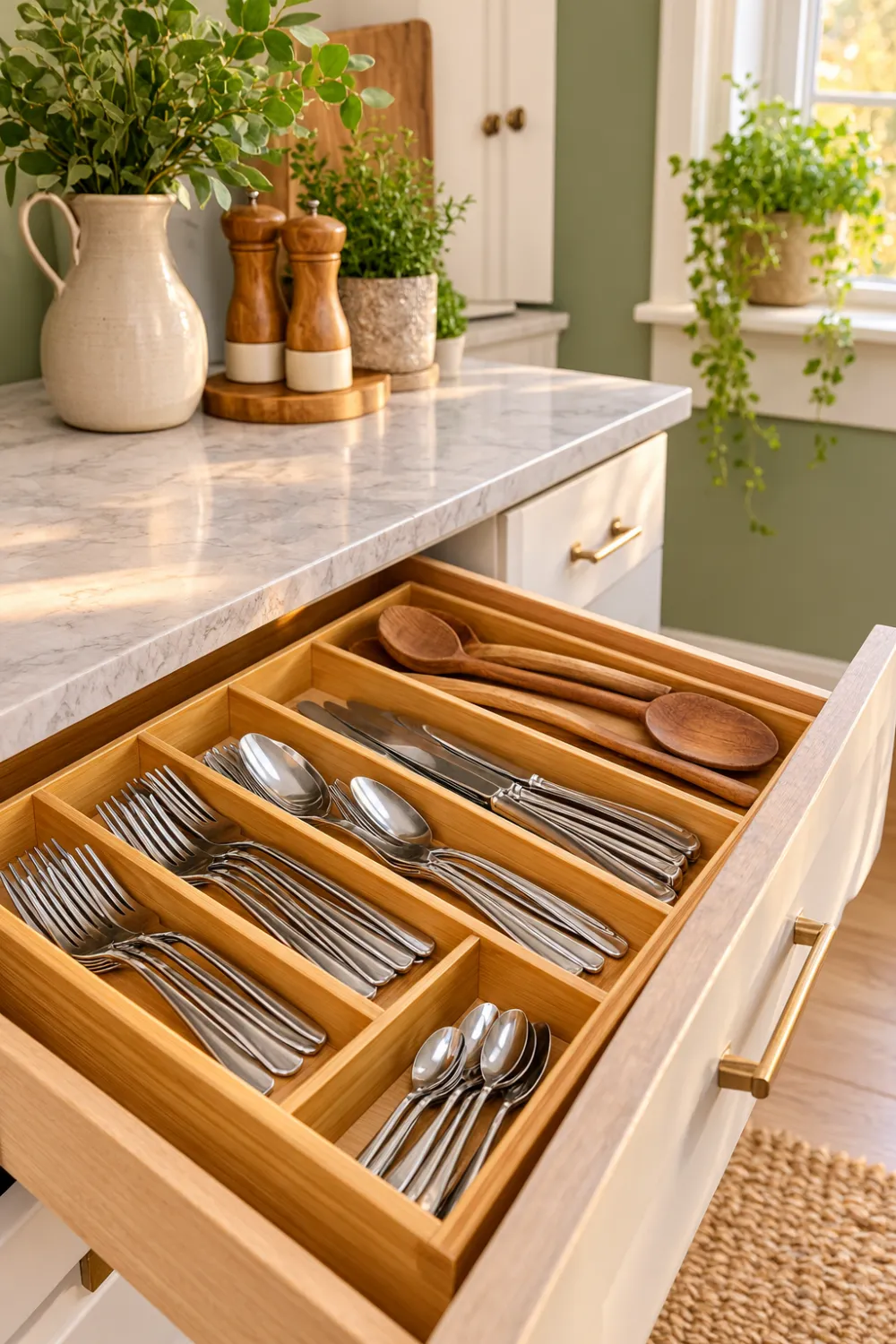
Start with the drawer you open most. An expandable bamboo or plastic tray slides wider or narrower, so it fits almost any drawer. Measure your drawer width first, then buy a tray that stretches just past it. Use the slots for forks, spoons, and knives. If you have extra space, give the long end to serving spoons. It’s a small switch, but it ends the daily rattle.
2. Utensil Zones
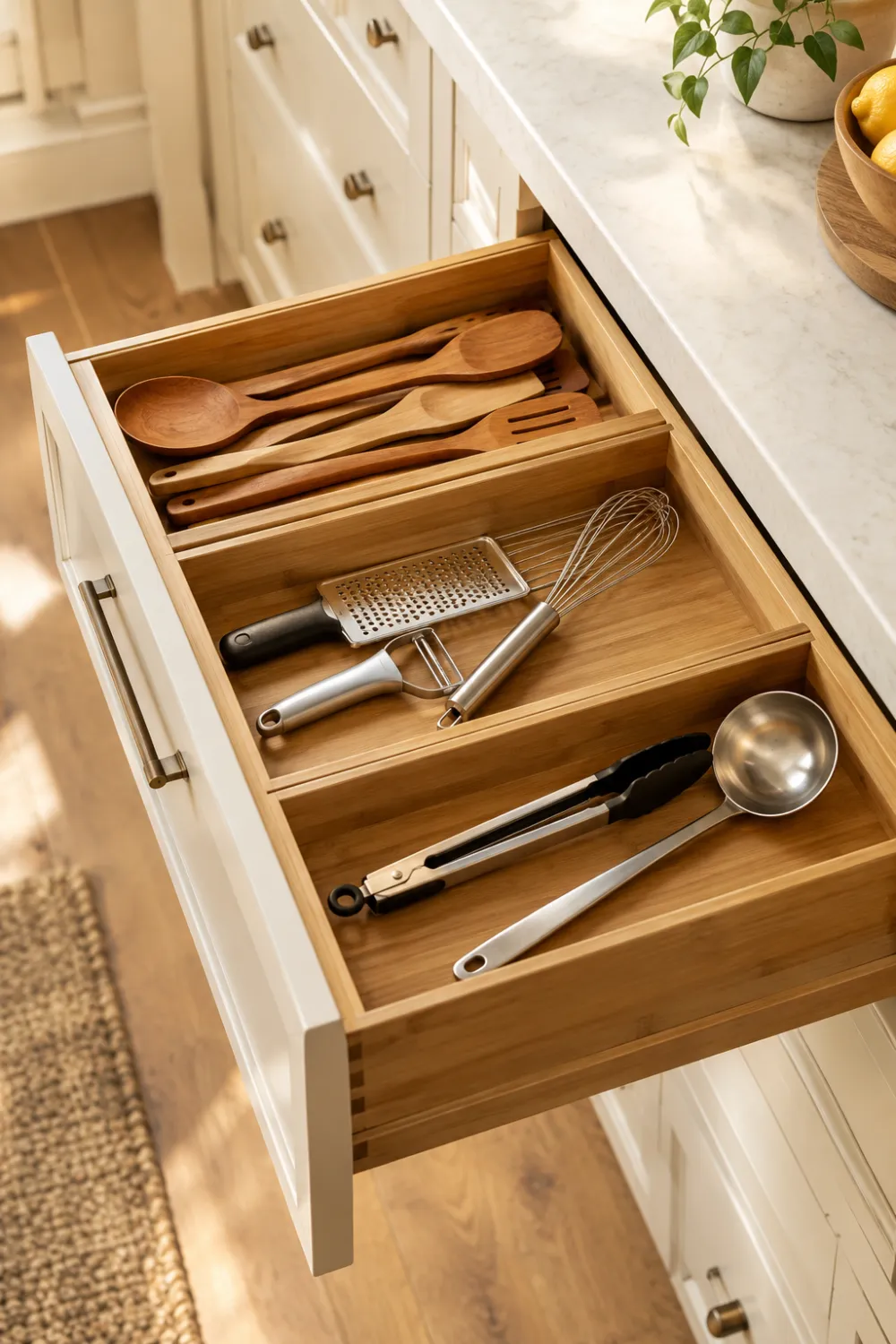
Group tools by what you do with them, not by what they look like. Keep stirring and flipping tools together, then peelers and graters, then tongs and ladles. Cooking becomes faster because your hand knows where to go. Use two or three medium trays instead of one giant one. If a tool hasn’t left the drawer in a year, donate it and free up room.
3. In-Drawer Knife Block
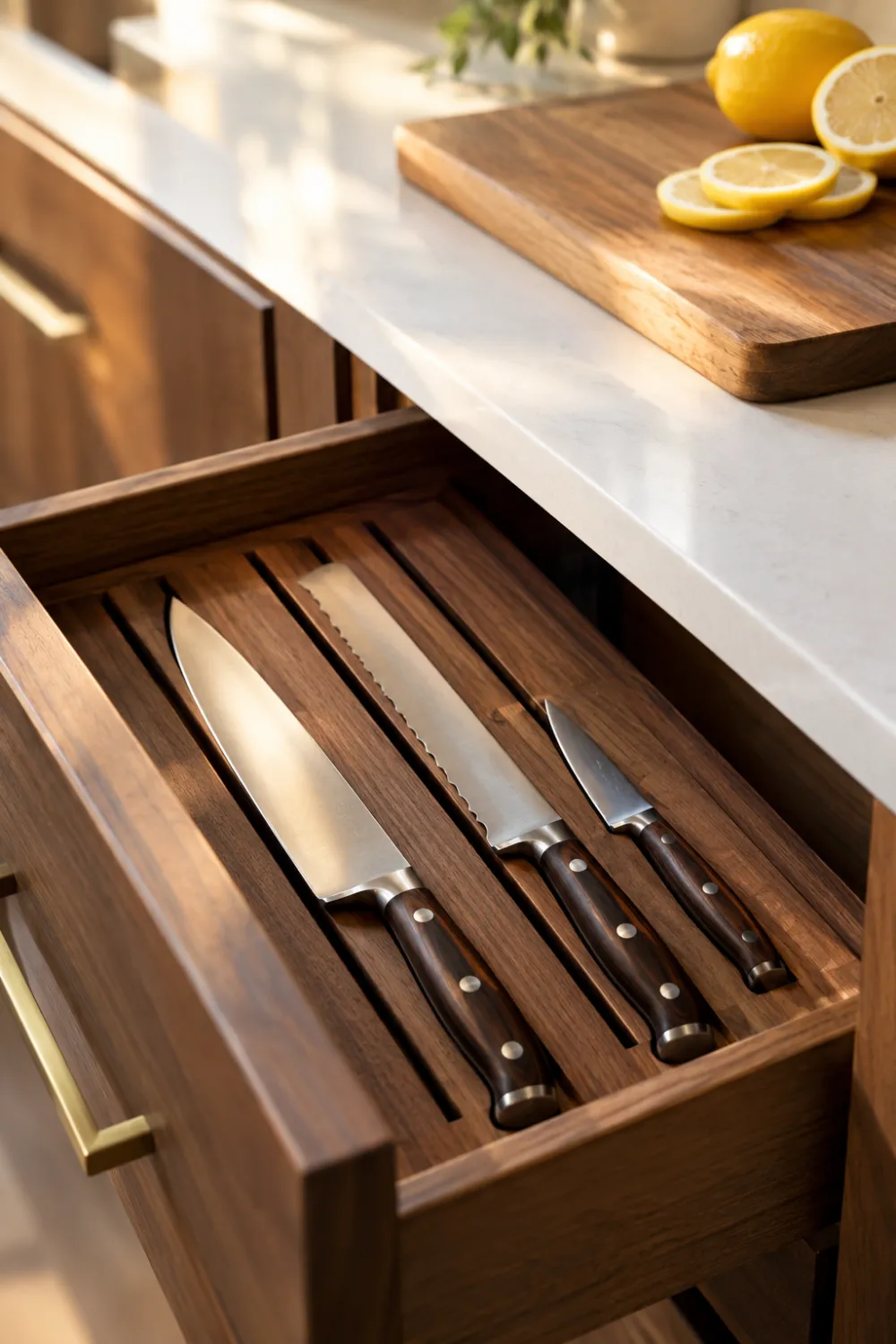
Loose knives in a drawer are hard on blades and fingers. A slotted in-drawer knife block holds them flat, blades protected, handles easy to grab. It also frees up counter space, which is a big win in small kitchens. Choose one that fits your longest knife, usually the bread knife. Place it in a shallow drawer near your cutting board, and keep it away from little hands.
4. Angled Spice Inserts
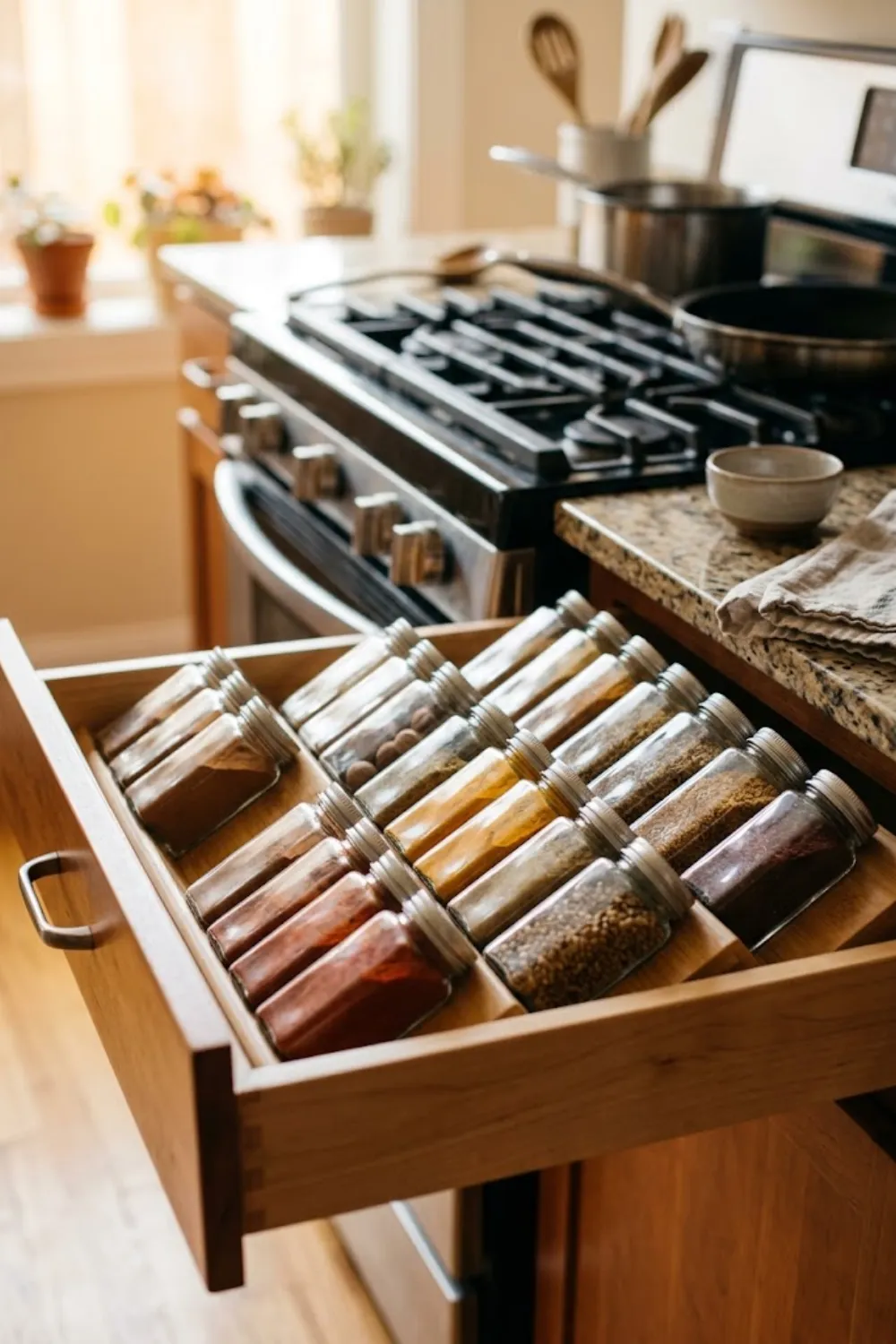
Spice jars lie flat and hide behind each other. A tiered or angled insert tilts them up so every label shows at a glance. This works best in a wide, shallow drawer close to the stove. Sort jars alphabetically or by use, like baking spices on one side and savory on the other. Same-size jars look tidy, but you don’t have to buy new ones. Just keep the labels facing up.
5. Pot Lid Dividers
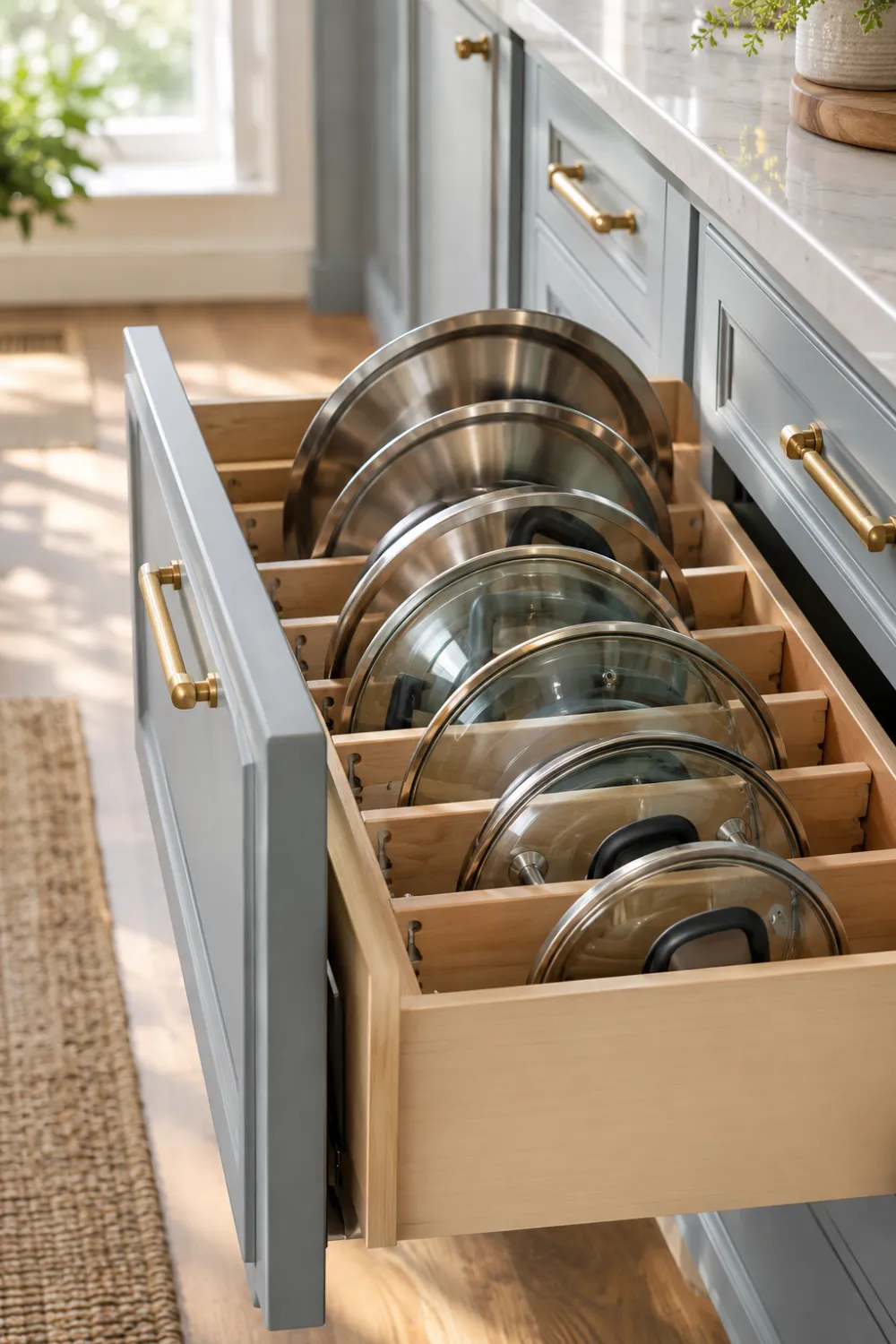
Lids slide around, clang, and never match their pots. Fix this with adjustable dividers, or a lid rack set inside a deep drawer. Stand the lids on their edges, largest at the back. You can see every size without digging. Store the pots right below in the same cabinet for an easy pair-up. If your lids keep getting lost, ask yourself whether you still use the pot.
6. Container and Lid Pairing
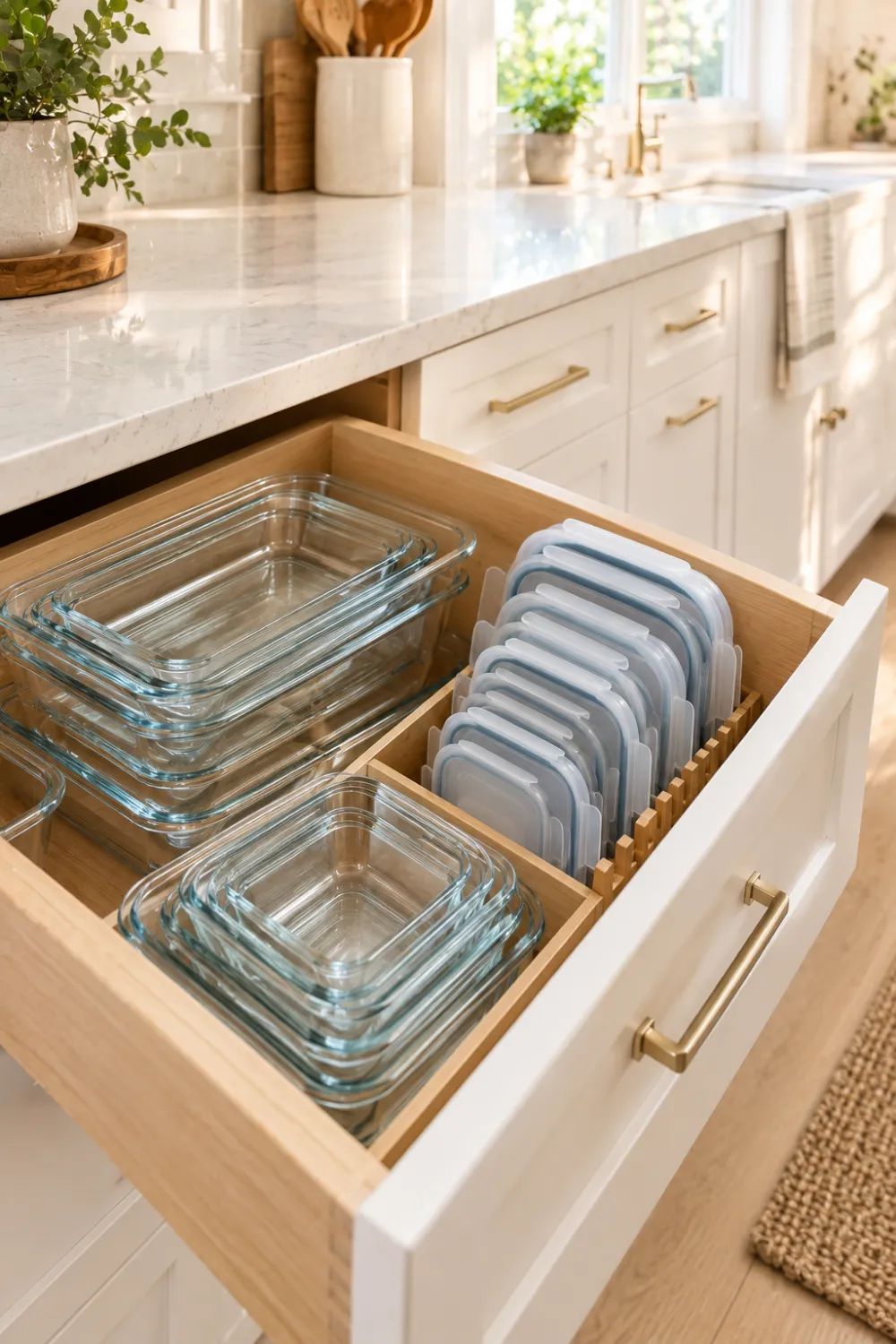
Few things annoy more than a lid-less container. Dedicate one deep drawer to food storage. Nest containers by size on one side and stand the lids upright in a divider or file-style rack on the other. Stick with one or two brands so the lids fit more than one container. Once a month, pull out any container with a warped lid or no match.
7. Foil and Wrap Drawer
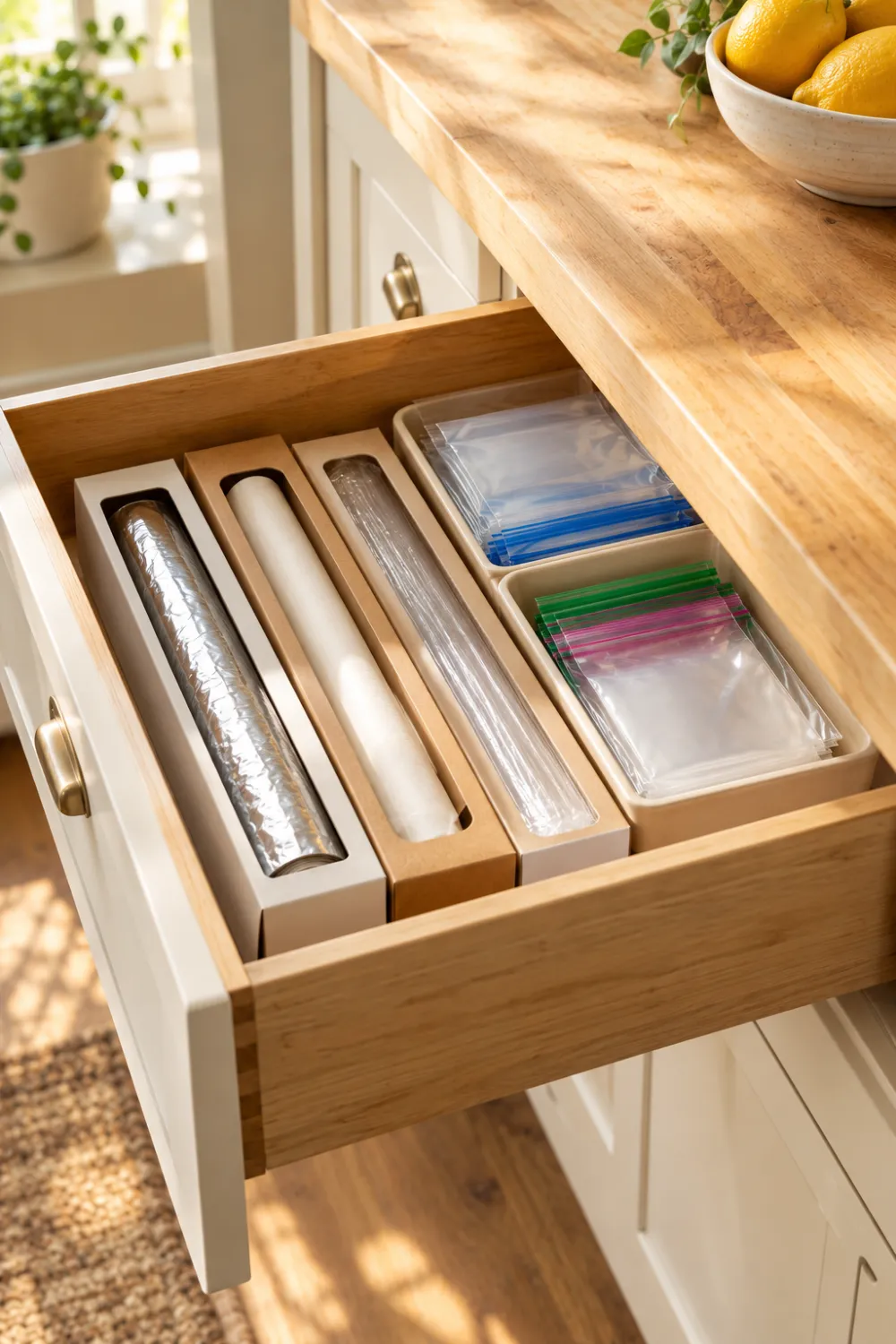
Boxes of foil, parchment, and cling wrap are awkward and love to roll away. Give them a wide, shallow drawer and lay the boxes side by side, labels up. A small tray corralling sandwich bags and freezer bags keeps those from sliding around. You can also mount a wall-style dispenser inside the drawer front. It’s a great spot for this stuff because you grab it while cooking, so keep it close to your prep area.
8. Junk Drawer Zones
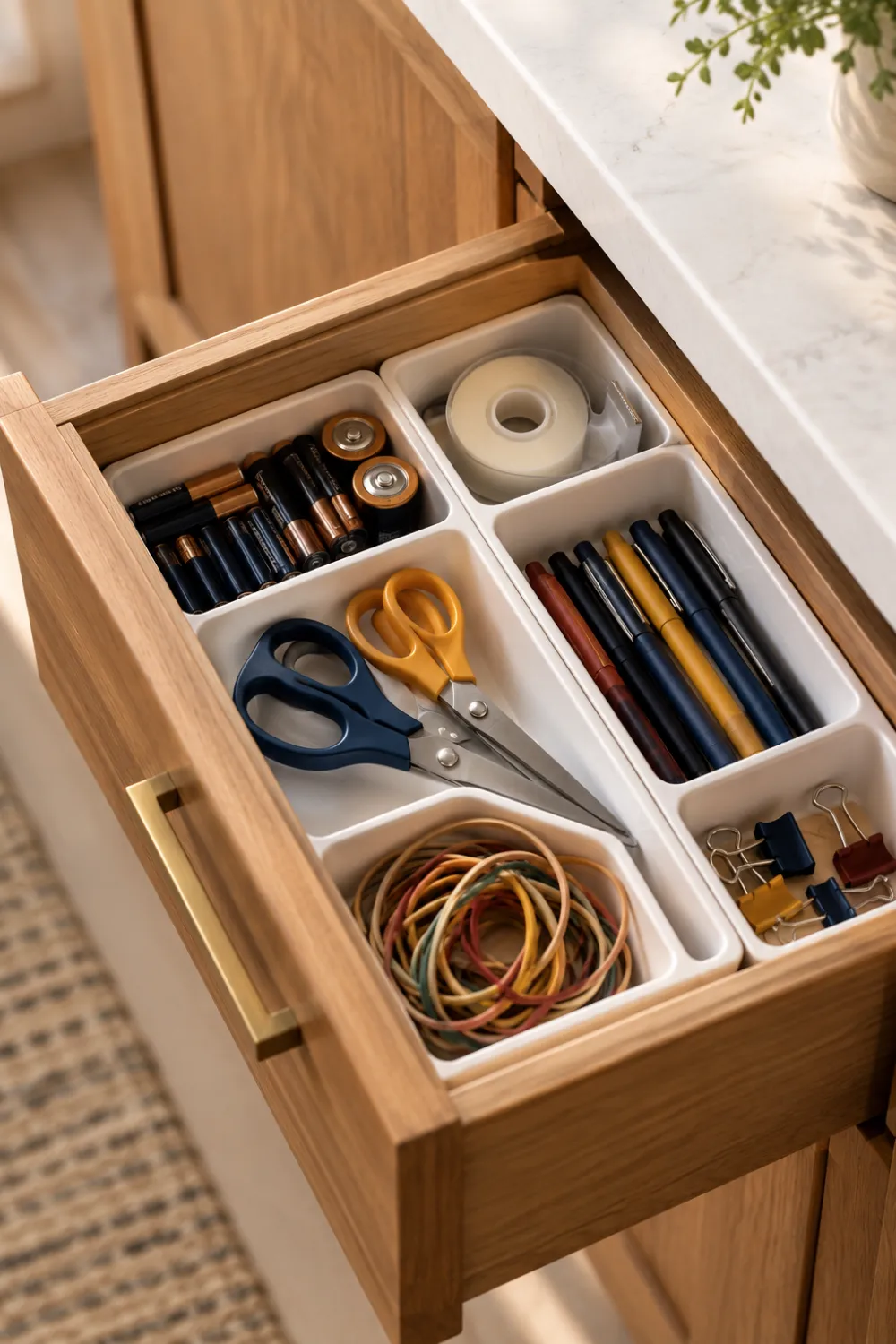
Every home needs one. The trick is to give your junk drawer structure. Use small trays for batteries, tape, scissors, pens, and takeout chopsticks. Keep a tiny bin for rubber bands and twist ties. Set a rule that anything that doesn’t fit its zone gets thrown out or moved. Do a quick reset every few months. It stays a junk drawer, just a cooperative one.
9. Baking Tools Drawer
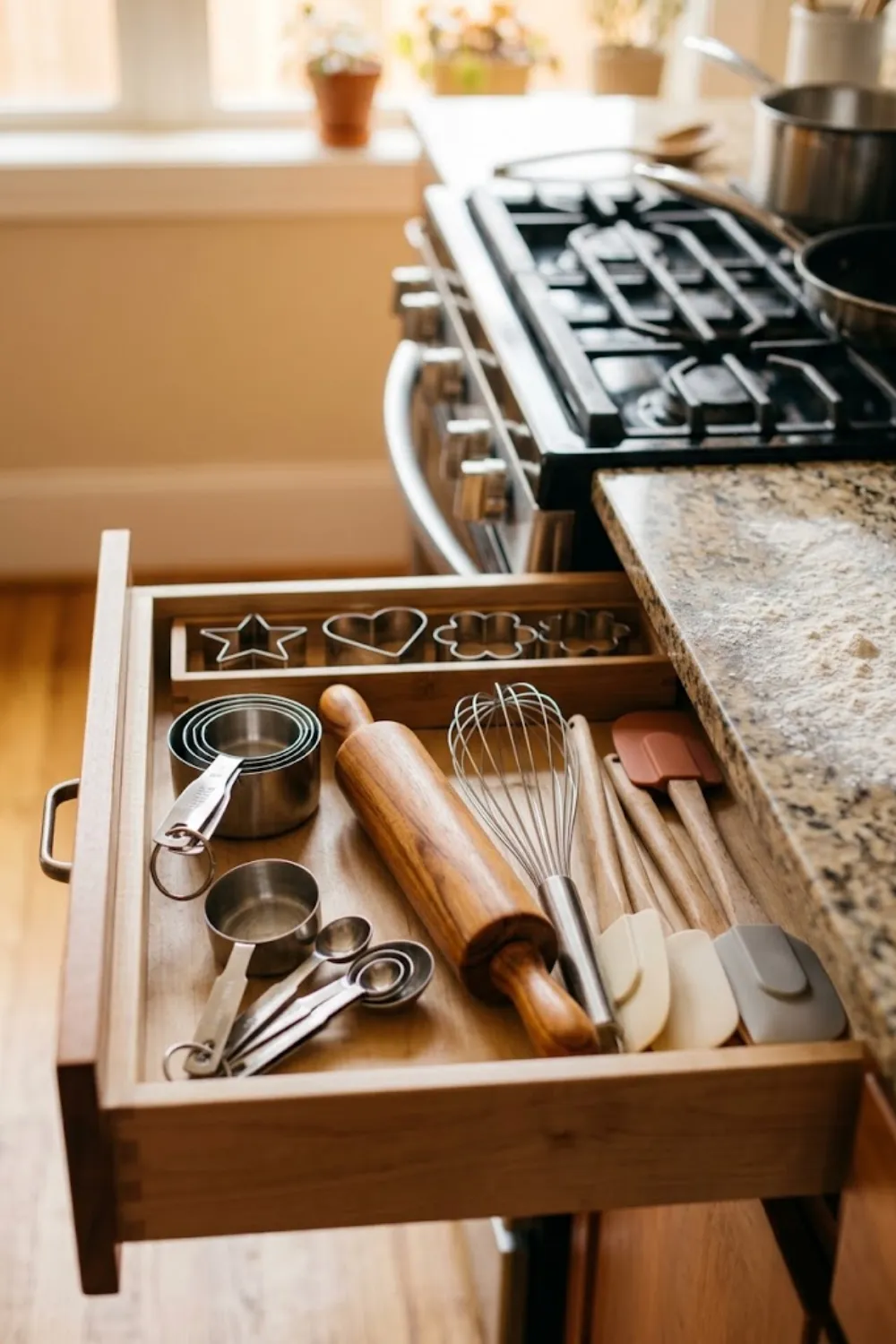
If you bake, a dedicated drawer saves you from hunting through three cabinets. Nest measuring cups and spoons together, then keep rolling pins, whisks, spatulas, and piping tips in separate dividers. Add a slim tray for cookie cutters. Place it near your mixer or main prep counter. You’ll go from “where’s the whisk?” to mixing in minutes. Group seasonal cutters in a small box so the drawer doesn’t get crowded.
10. Peg Boards for Dishes
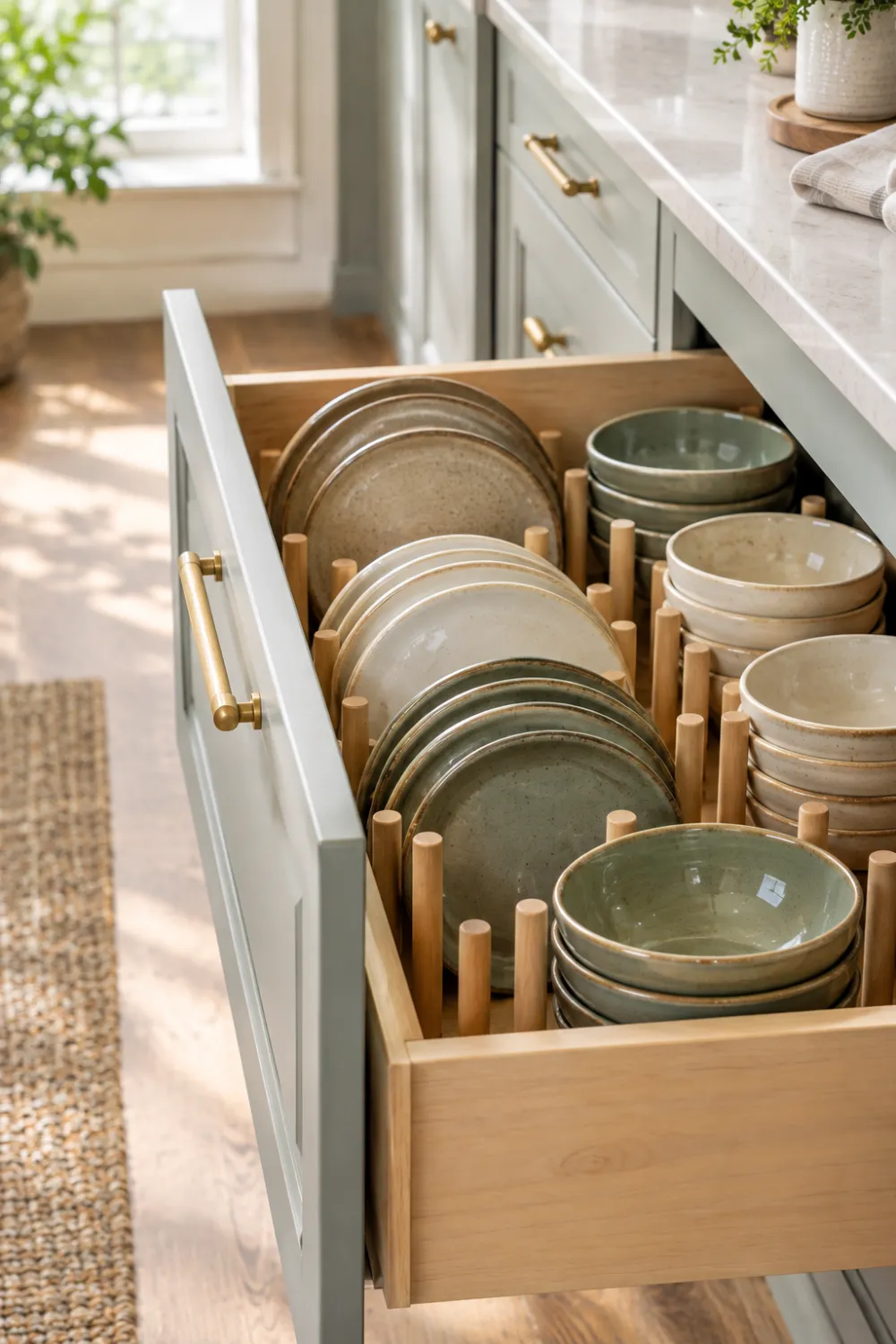
Plates and bowls fit surprisingly well in deep drawers when you use a peg system. Adjustable pegs hold dishes upright like a dish rack, so nothing stacks or chips. Lighter plates are best. Make sure your drawer slides can hold the weight. This is a great fix for lower cabinets where reaching up is hard, and it works for people with limited mobility. Rearrange the pegs any time your dishes change.
11. Coffee and Tea Drawer
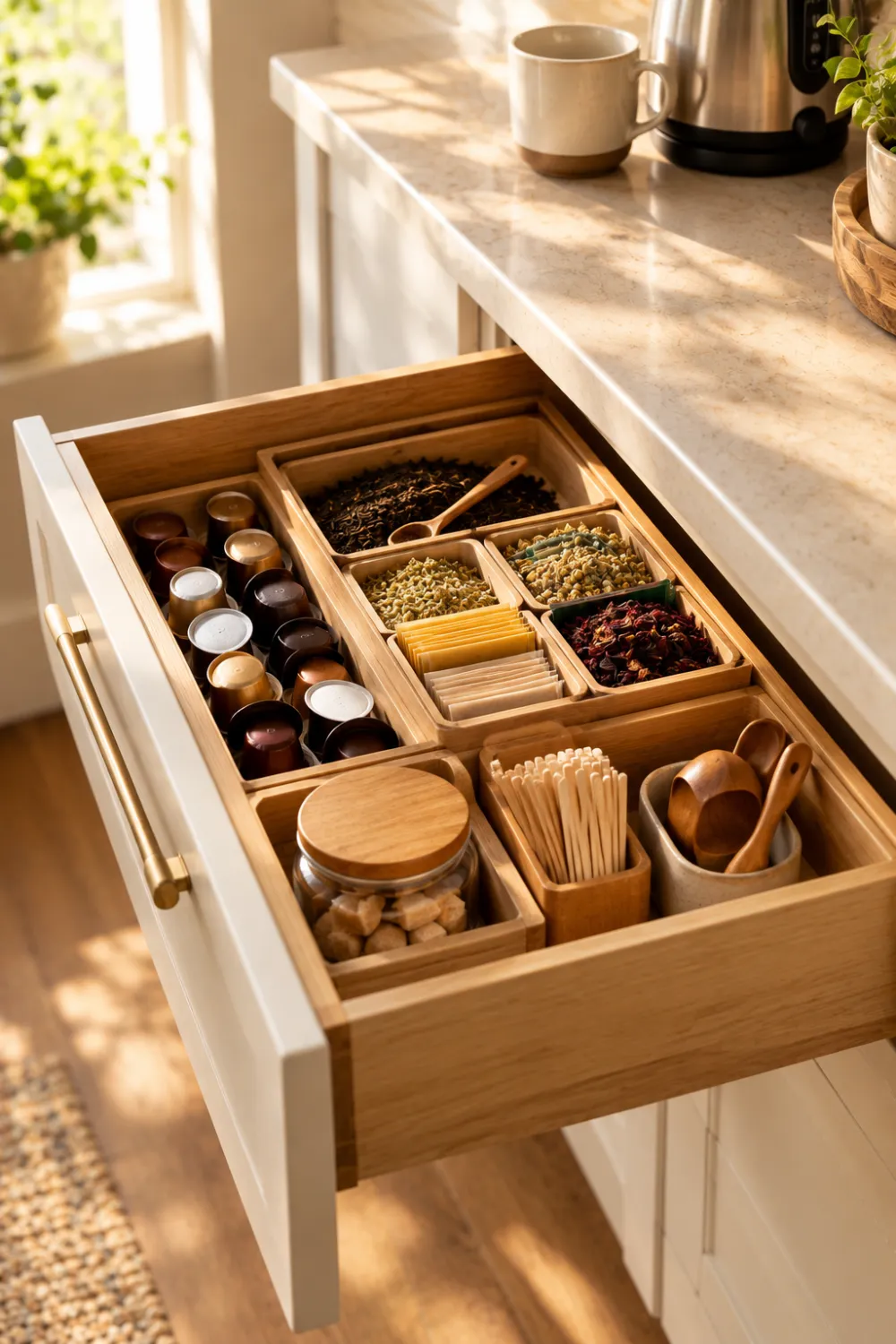
Build a tiny coffee station inside a drawer. Use a shallow insert for pods or filters, and small bins for tea bags sorted by type. Add a space for stir sticks, a scoop, and sweeteners. Keep it near your kettle or machine so your morning stays smooth. Clear containers help you spot when you’re running low. Guests will love finding everything in one spot too.
12. Drawer Liners
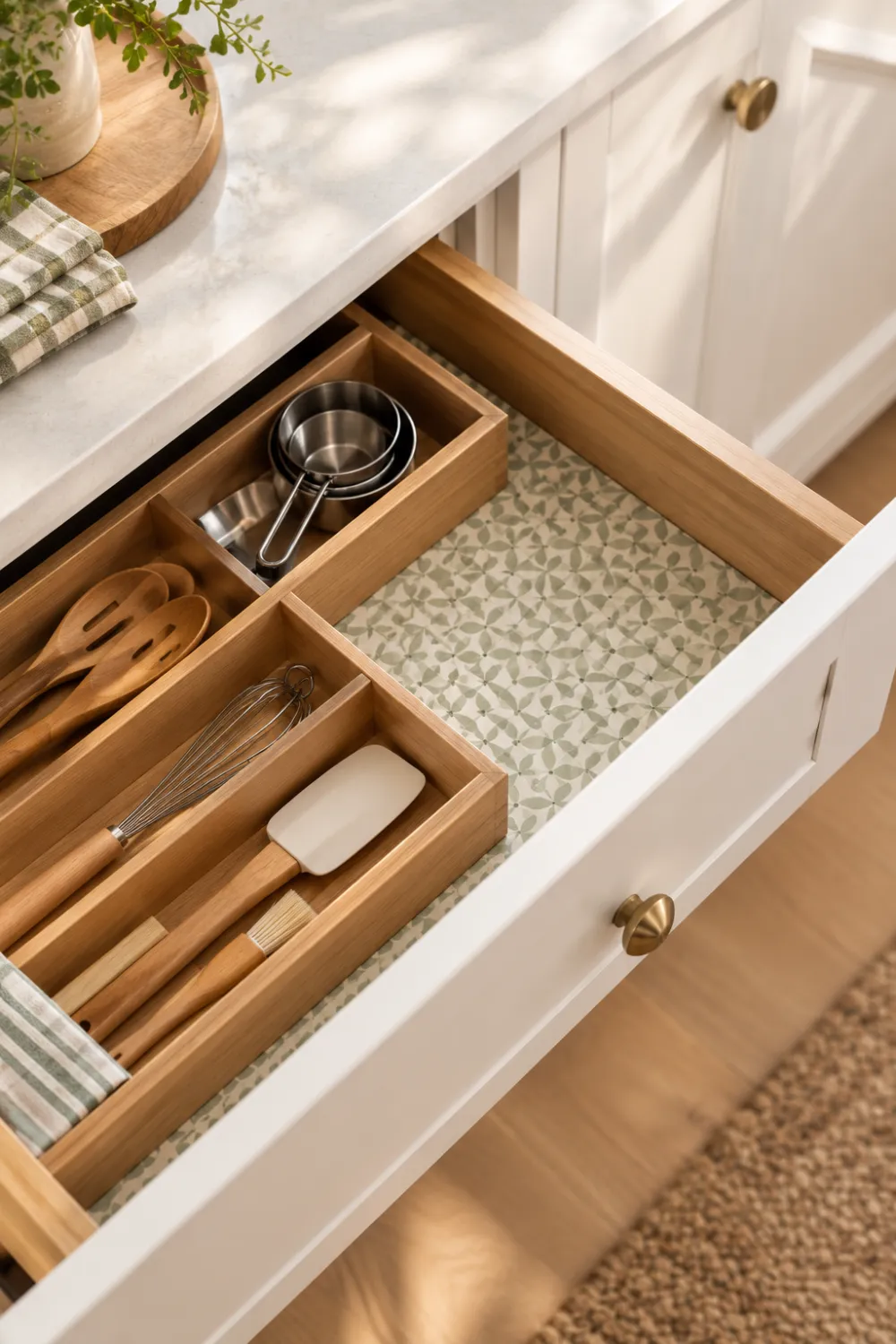
Liners seem boring, but they do real work. A non-slip liner keeps trays from shifting each time you open the drawer. Cut it to size with scissors, and choose a washable one so crumbs wipe right off. Pick a pattern you like, since you’ll see it every day. Pairing a liner with an insert makes the whole drawer feel finished. Replace it when it gets stained or curled.
13. Small Bins and Trays
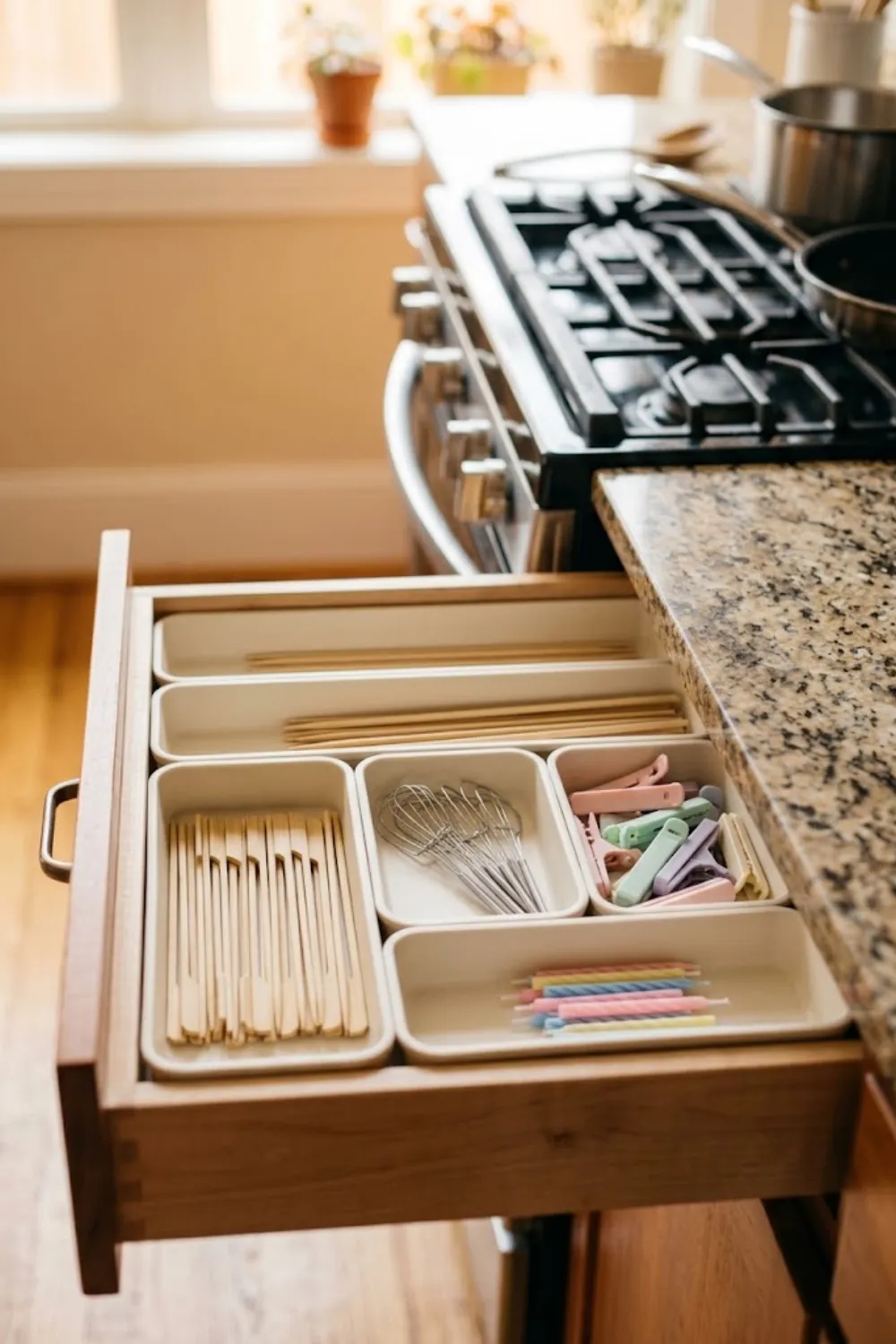
You don’t need to spend much. Shallow bins, small baskets, or even clean jar lids do the job. Use them to hold odds and ends like skewers, cake testers, bag clips, and birthday candles. Check that your pieces fit with no gaps, so nothing slides around. Mix and match until it feels right. If you can, pick the same color so it looks calm when you open the drawer.
14. Tiered Inserts

Tiered or two-level organizers double your storage in a deep drawer. Keep everyday tools on the top level and less-used gadgets underneath. Think peelers up top, melon baller and garlic press below. Make sure the top tray slides smoothly, so you don’t have to remove it to reach the bottom. This works best when the drawer is at least four inches deep. Test it with the drawer closed before you commit.
15. Labels
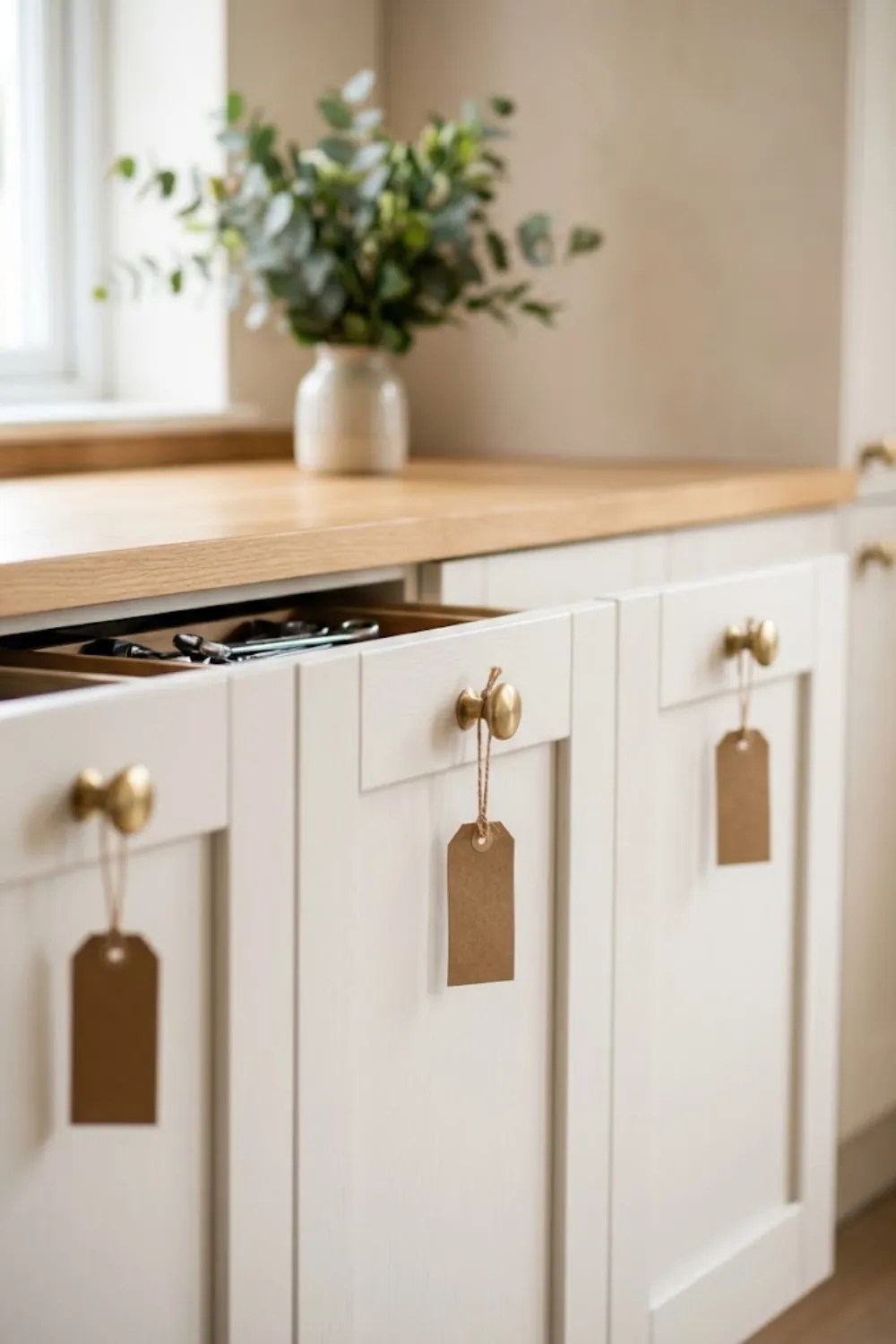
Labels sound fussy, but they help everyone in the house put things back. Stick a small label on the drawer front or inside edge. Use a label maker, masking tape, or a chalk marker. Be specific, like “Baking” or “Foil and Bags” instead of “Misc.” This is especially useful if multiple people cook. It also helps you notice when a drawer starts collecting things it shouldn’t.
16. Snack Drawer
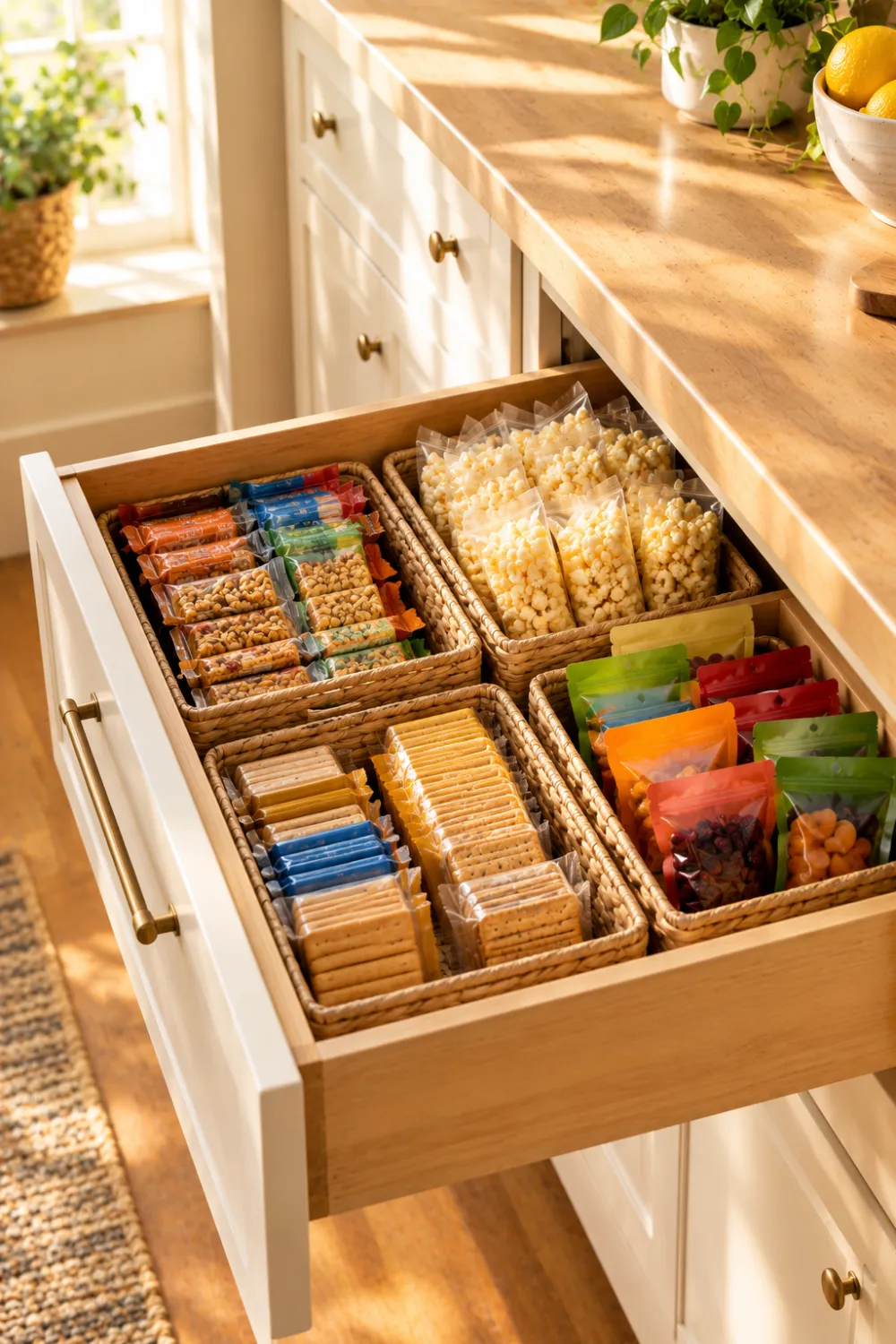
A snack drawer keeps granola bars, popcorn, and crackers out of the pantry chaos. Use low bins to sort by type, and stand bags upright so you can see what’s left. Keep it at a comfortable height for whoever grabs snacks most. Put the newest items at the back so older ones get eaten first. If you have kids, this drawer cuts down on constant “what can I have?” questions.
17. Kid-Friendly Drawer
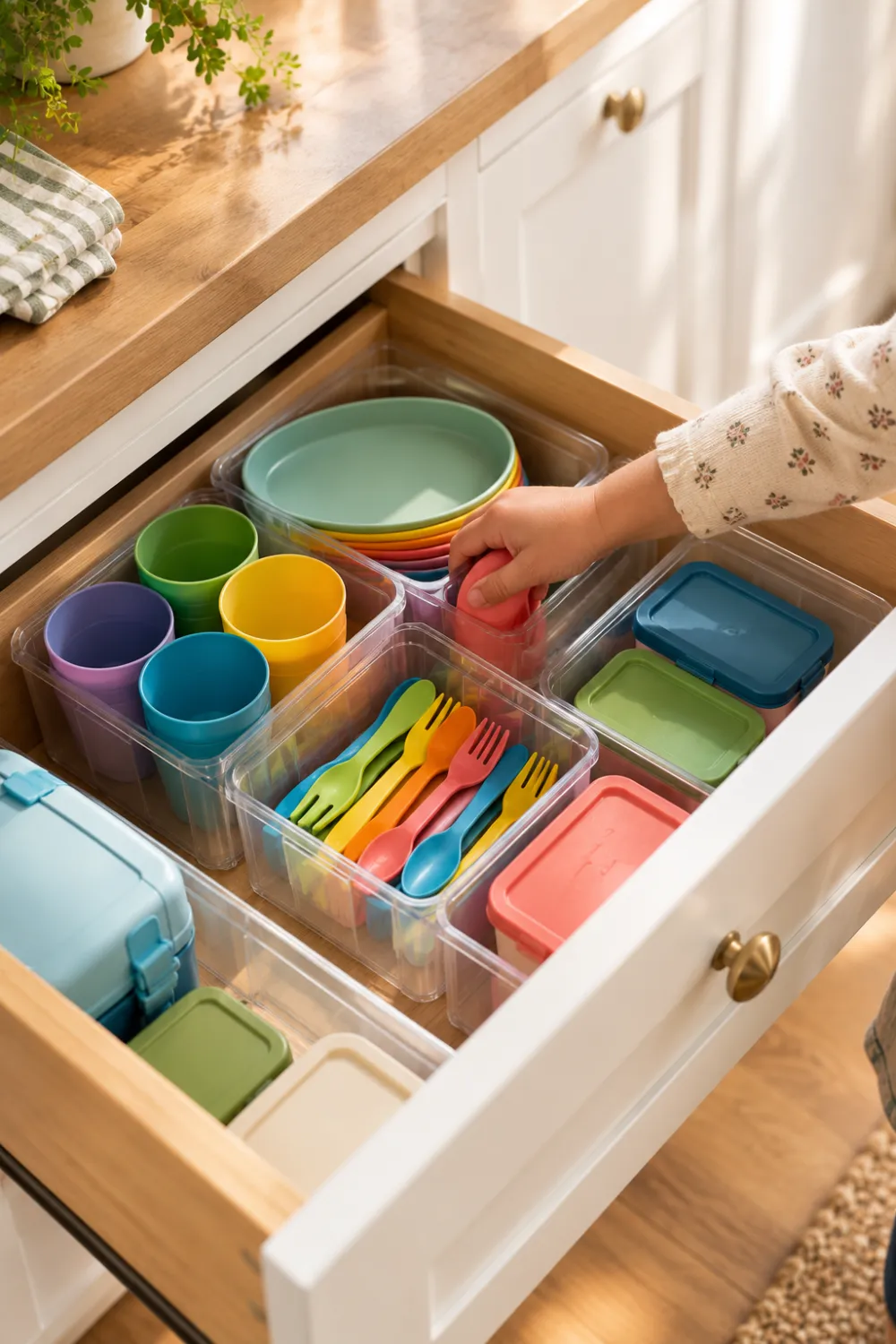
Give kids a low drawer they can open themselves. Fill it with plastic cups, small plates, colorful utensils, and lunch containers. Kids can set the table or pack their own snacks, and you stop being the middleman. Use clear bins so younger kids know where things go. Keep sharp or breakable items well out of reach. Over time it builds real independence.
18. Magnetic Strips
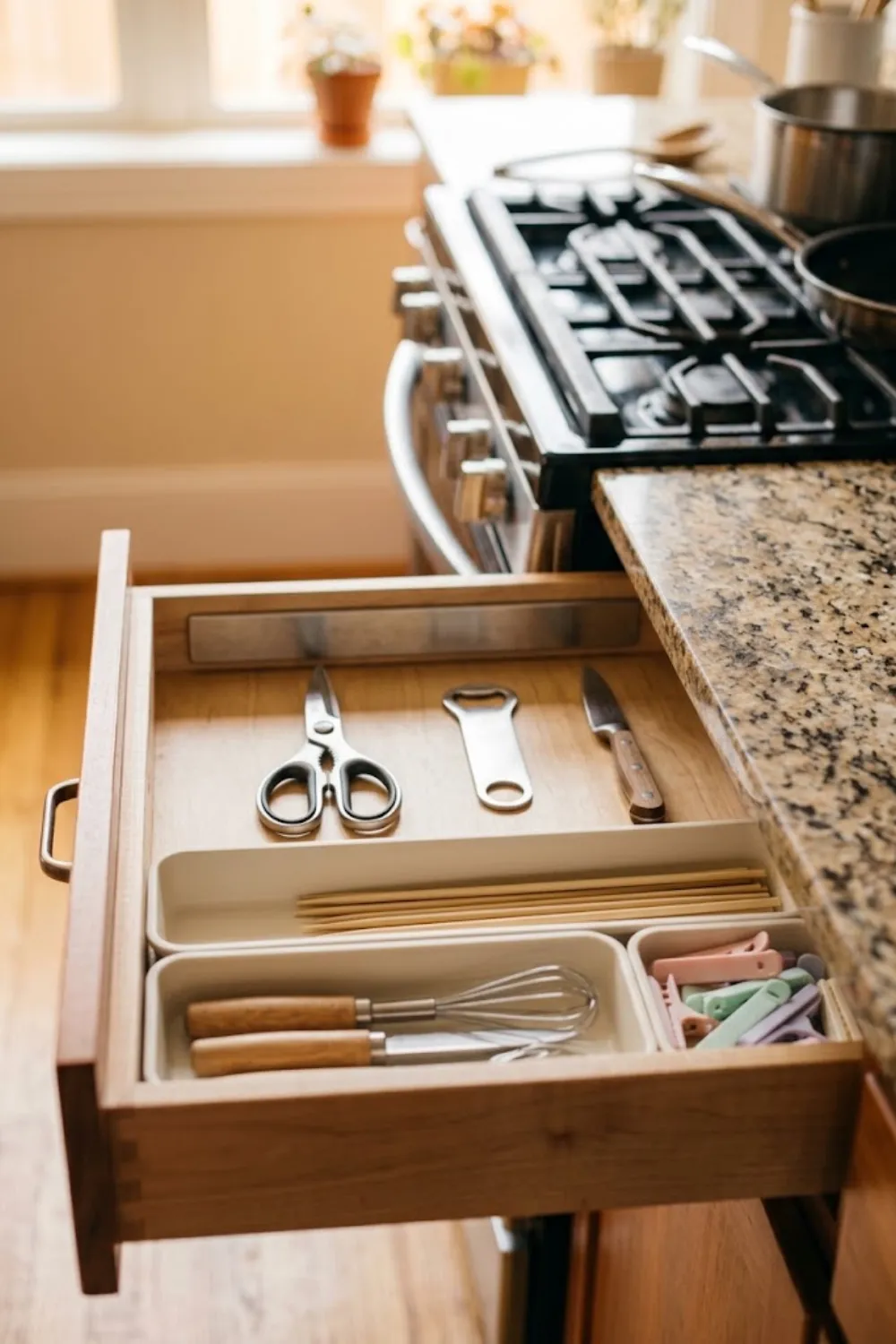
Metal tools can live on the inside of a drawer front or a thin side panel. Stick a magnetic strip in place, then attach items like scissors, bottle openers, or small knives. Check that the magnet is strong and your tools are heavy enough to be held securely. This works well in shallow drawers with wasted vertical space. It frees up the main tray for bulkier items.
19. Takeout Condiment Bin
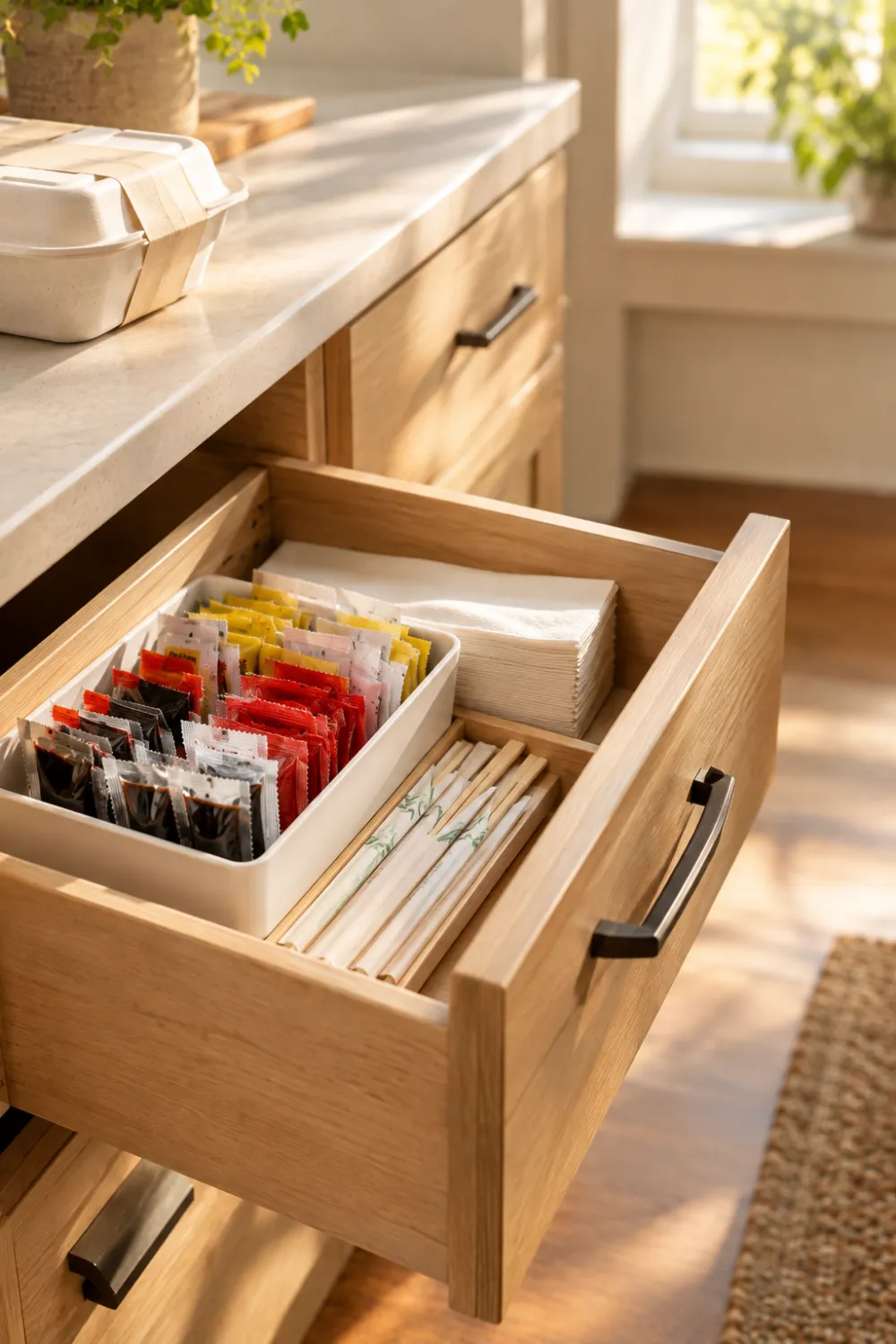
Those little soy sauce and ketchup packets pile up fast. Give them a small bin of their own, along with napkins and chopsticks. Skip the bin and you’ll find sauce at the bottom of every drawer. Toss anything you know you won’t use, and do a quick sweep every few weeks. It’s a tiny idea, but it keeps your main drawers clean and your takeout nights easy.
Conclusion
The best kitchen drawer organization is the kind you’ll actually keep up. Start with the drawer that annoys you most, and choose the idea that fits what you own, not what looks prettiest online. Measure first, buy less than you think you need, and tweak as you go. A small change today can make tomorrow’s cooking feel much calmer.