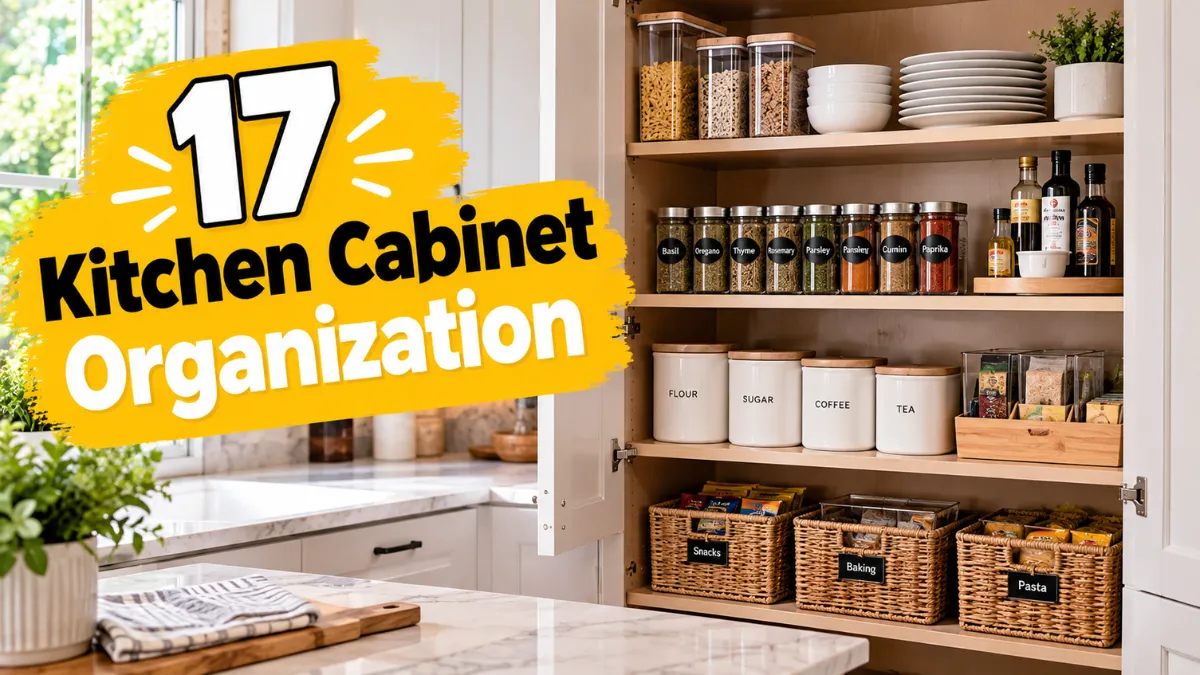
17 Kitchen Cabinet Organization Ideas That Actually Work
Ever opened a cabinet and had a lid fall on your foot? Been there. Most kitchen cabinets get messy because nothing has a real home. The good news is that smart kitchen cabinet organization doesn’t need a full remodel. Here are 17 practical ideas, from cheap tricks to small upgrades, that make cooking easier and cleanup faster. Pick a few that fit your space and start there.
1. Pull-Out Shelves
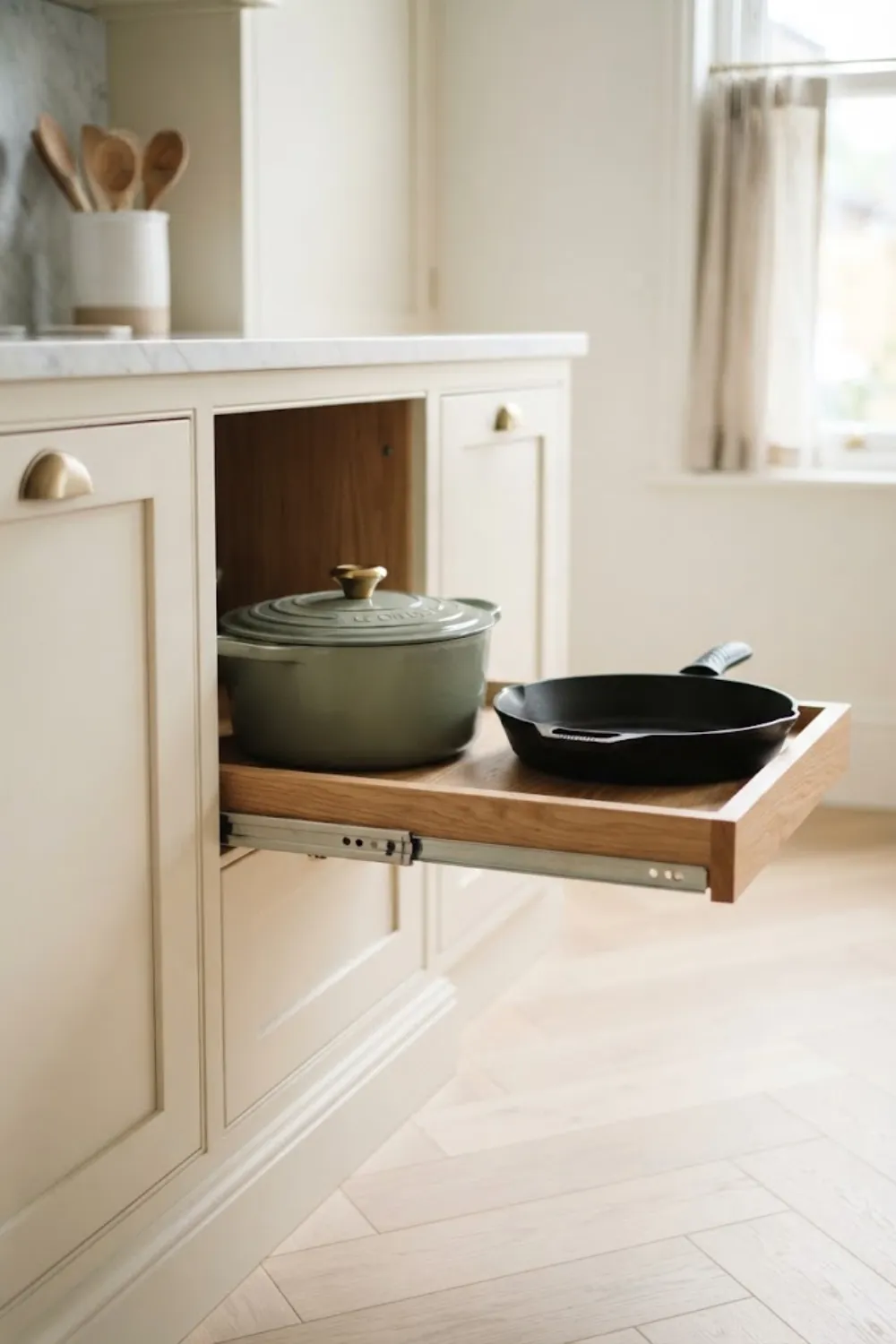
Deep lower cabinets are where good pans go to be forgotten. Pull-out shelves fix that by sliding the whole back of the cabinet to you. No more kneeling on the floor with a flashlight. You can buy slide-in versions that clamp onto existing shelves, so you don’t need a carpenter. Measure your cabinet opening first, especially the width inside the door frame. Put your heaviest things here, like stockpots and the stand mixer.
2. Vertical Dividers for Pans and Trays

Stacked baking sheets are loud, heavy, and impossible to pull from the bottom. Turn them on their sides instead. A simple tension rod or a slotted divider keeps sheet pans, cutting boards, and cooling racks standing like files in a drawer. You grab what you need without lifting anything else. A narrow cabinet next to the oven is perfect for this. It uses height you were probably wasting anyway.
3. Can Risers
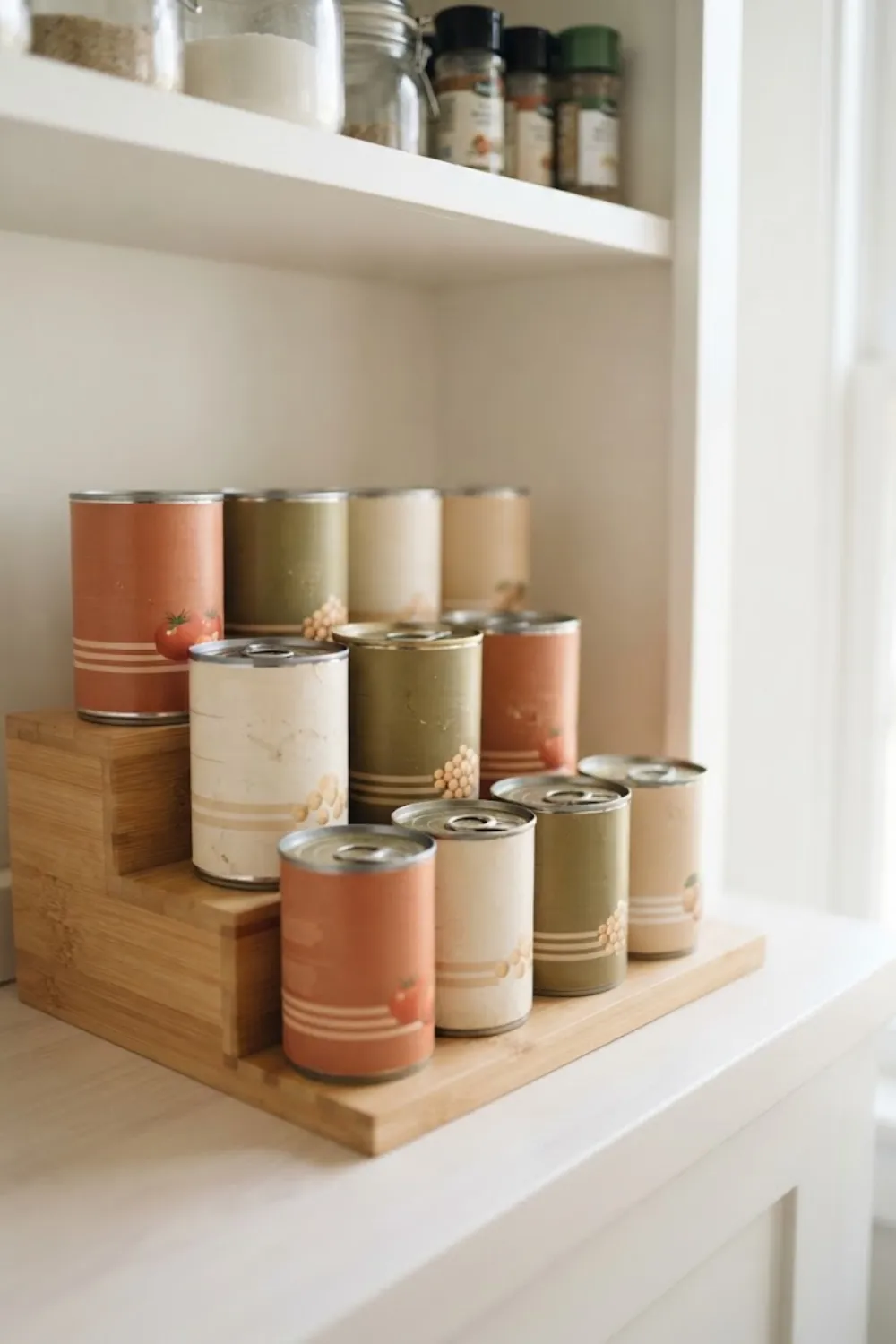
Canned goods hide in the back row, and then you buy a fourth can of chickpeas. Step-style risers lift each row a little higher, so you see every label at a glance. Choose a riser with two or three levels, depending on your shelf height. Keep soups on one step and tomatoes and beans on another. It sounds small, but it makes grocery lists much easier to write.
4. Door-Mounted Racks
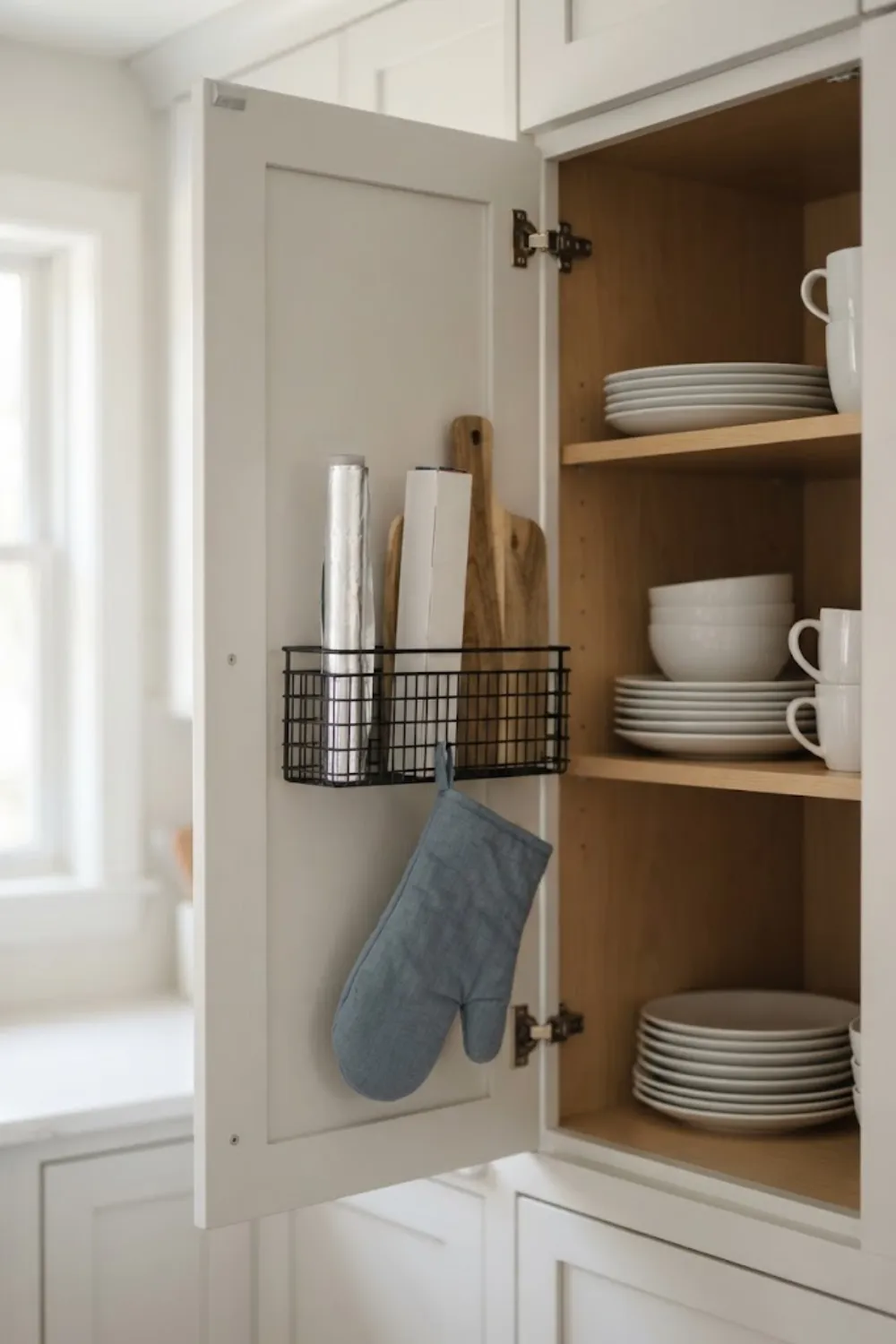
The inside of your cabinet door is free real estate. Slim racks can hold foil, cling wrap, cutting boards, or even oven mitts. Check the clearance before you buy, because a rack that’s too deep will stop the door from closing or hit the shelf inside. Look for ones that hang over the door with no screws if you rent. Just keep the weight light so the hinges don’t strain.
5. Corner Lazy Susan
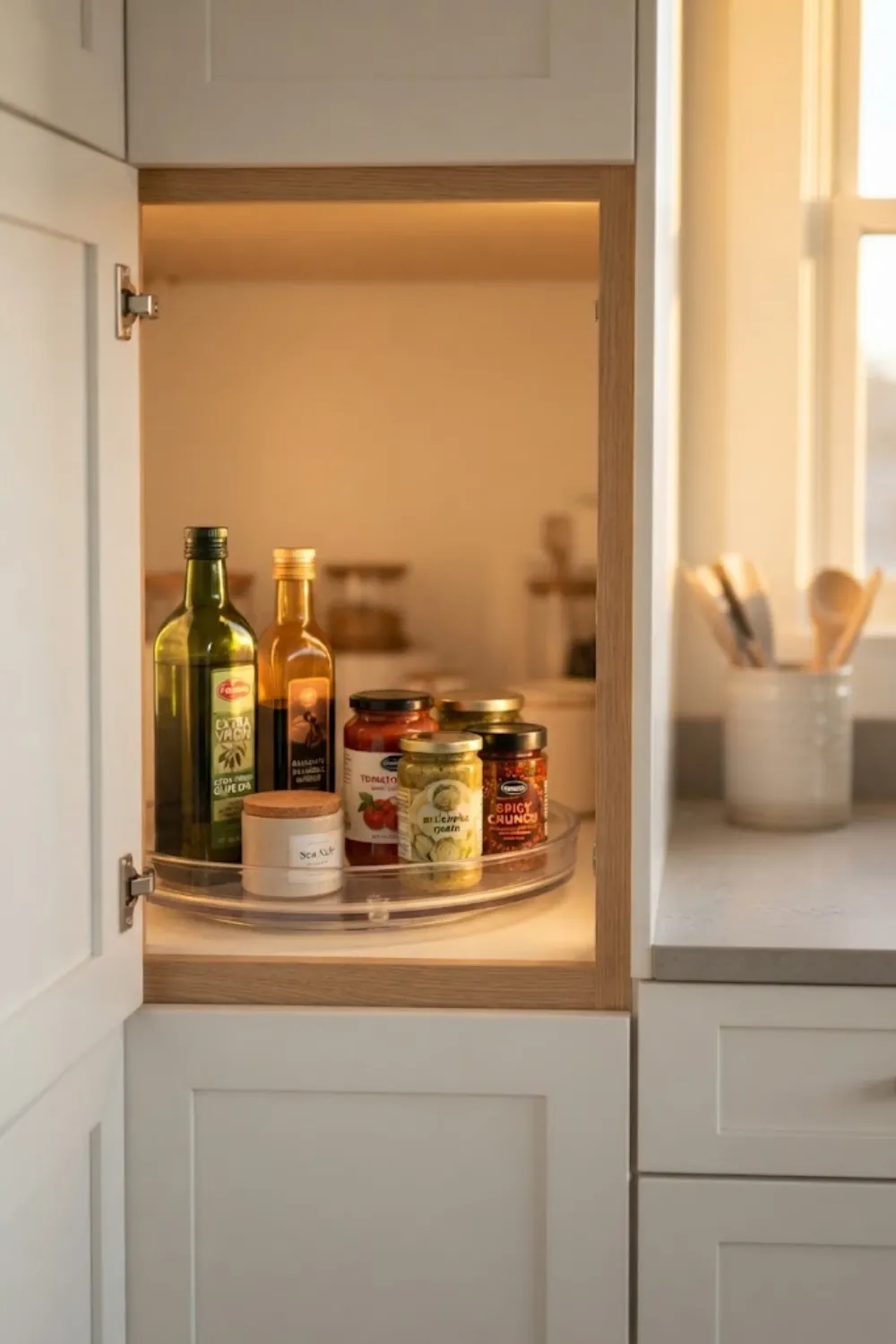
Corner cabinets are famous for swallowing things. A lazy susan spins that dead space into something useful. Pick one with a raised lip so bottles and jars don’t slide off when it turns. Oils, vinegars, and sauces work well here since they’re tall and awkward elsewhere. If your corner opening is narrow, look for a kidney-shaped one that fits the curve of the door.
6. Clear Bins for Snacks
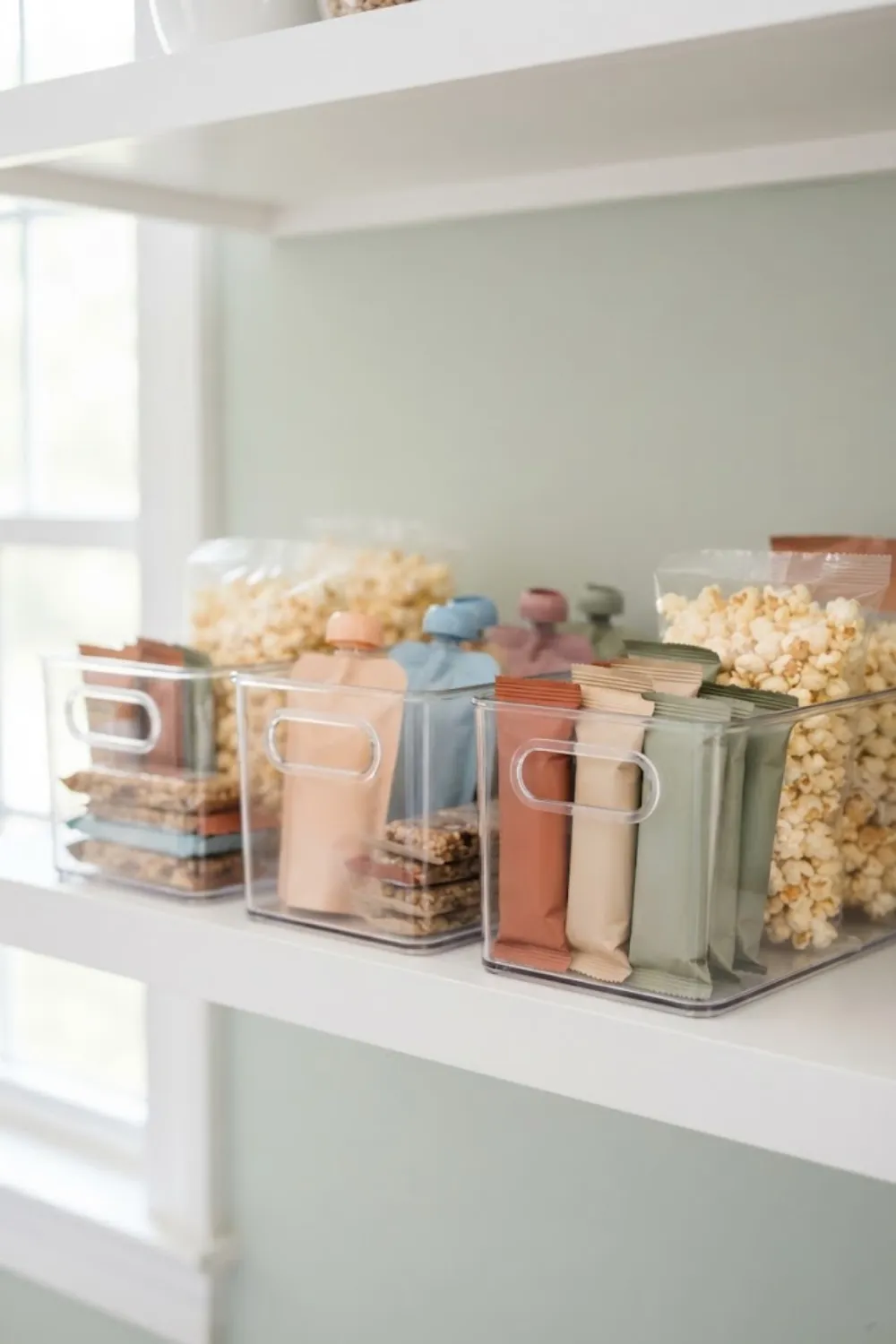
If your kids (or you) raid the same cabinet every afternoon, give it some structure. Clear bins group granola bars, chips, and fruit pouches so nothing gets crushed at the bottom. You can see what’s low at a glance. Bins with handles let you pull out a whole category in one go. Put a “grab first” bin at eye level, and the snack hunt gets much shorter.
7. Under-Shelf Baskets
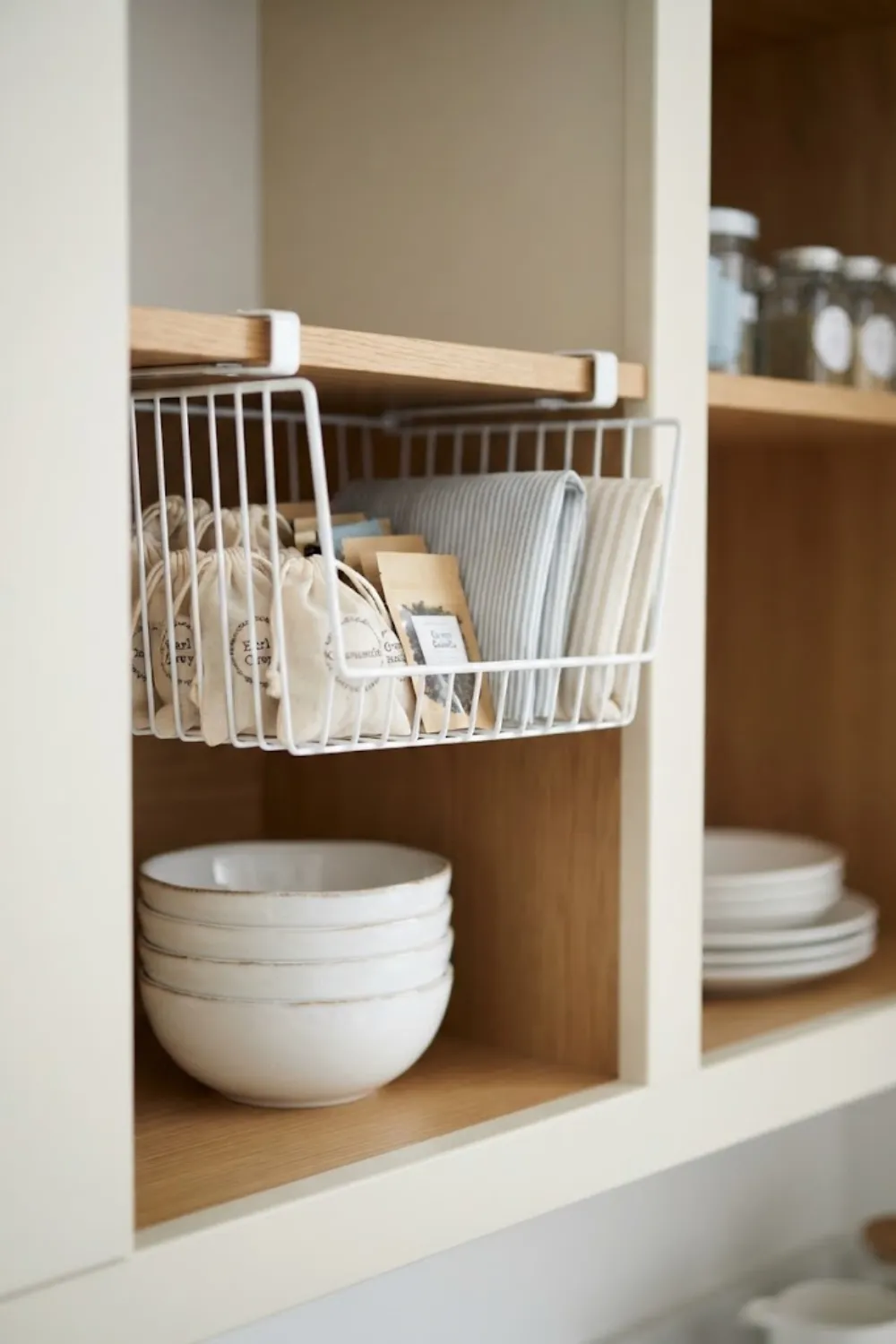
Look at the gap between your shelves. There’s often a few inches of air above your plates or bowls. Clip-on baskets hang from the shelf above and turn that gap into extra storage. They’re great for tea bags, small packets, or dish towels. No tools needed, which is a big plus. Just make sure the basket doesn’t block the items on the shelf below it.
8. Pot Lid Rack
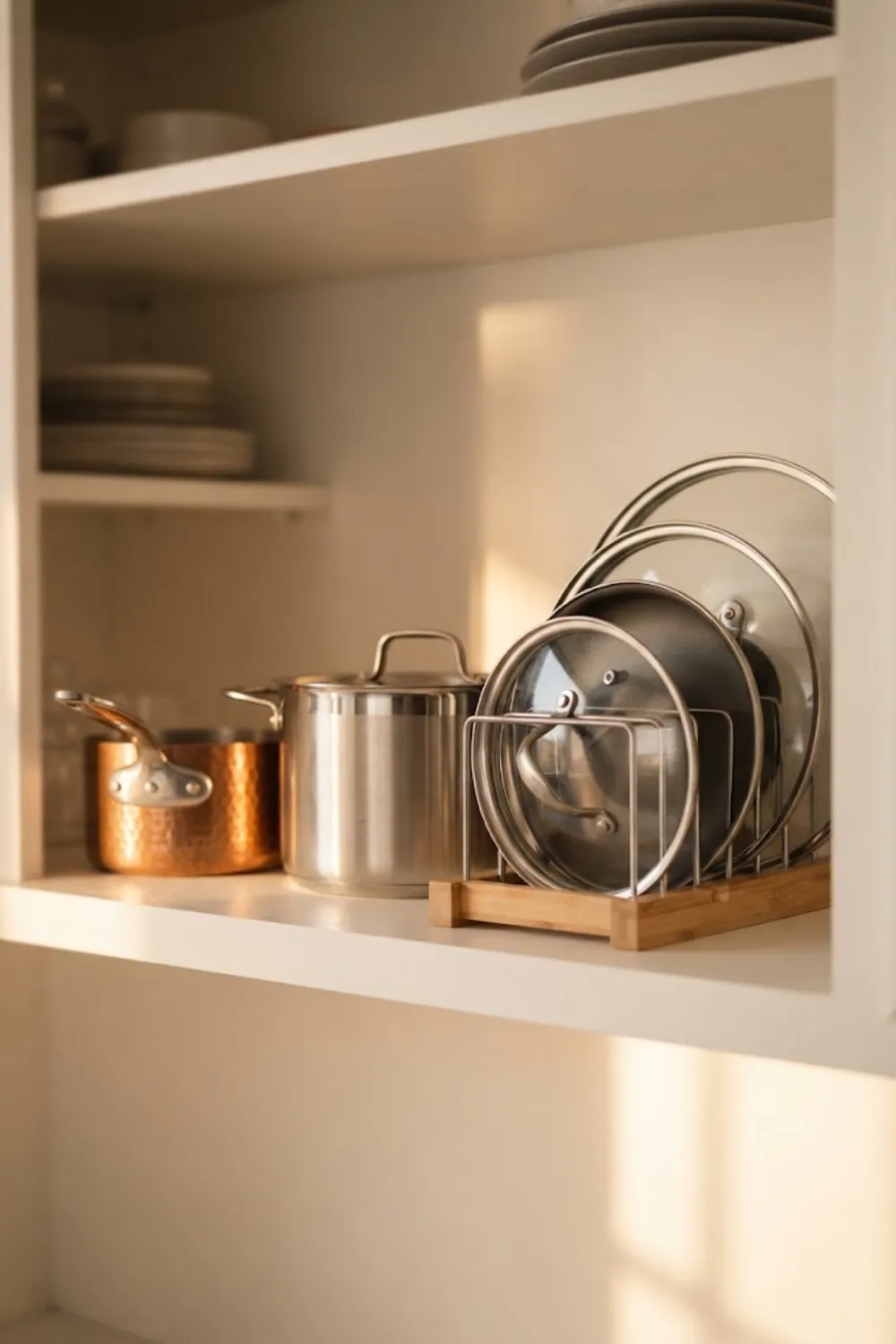
Lids are the worst-behaved item in any kitchen. They slide, clatter, and never match the pot you’re holding. A narrow rack that holds them upright, like a toast rack, ends the chaos. You can mount it inside a door or set it on the shelf beside your pots. Sort them by size, smallest to largest, and finding the right one takes two seconds.
9. Spice Cabinet Layout
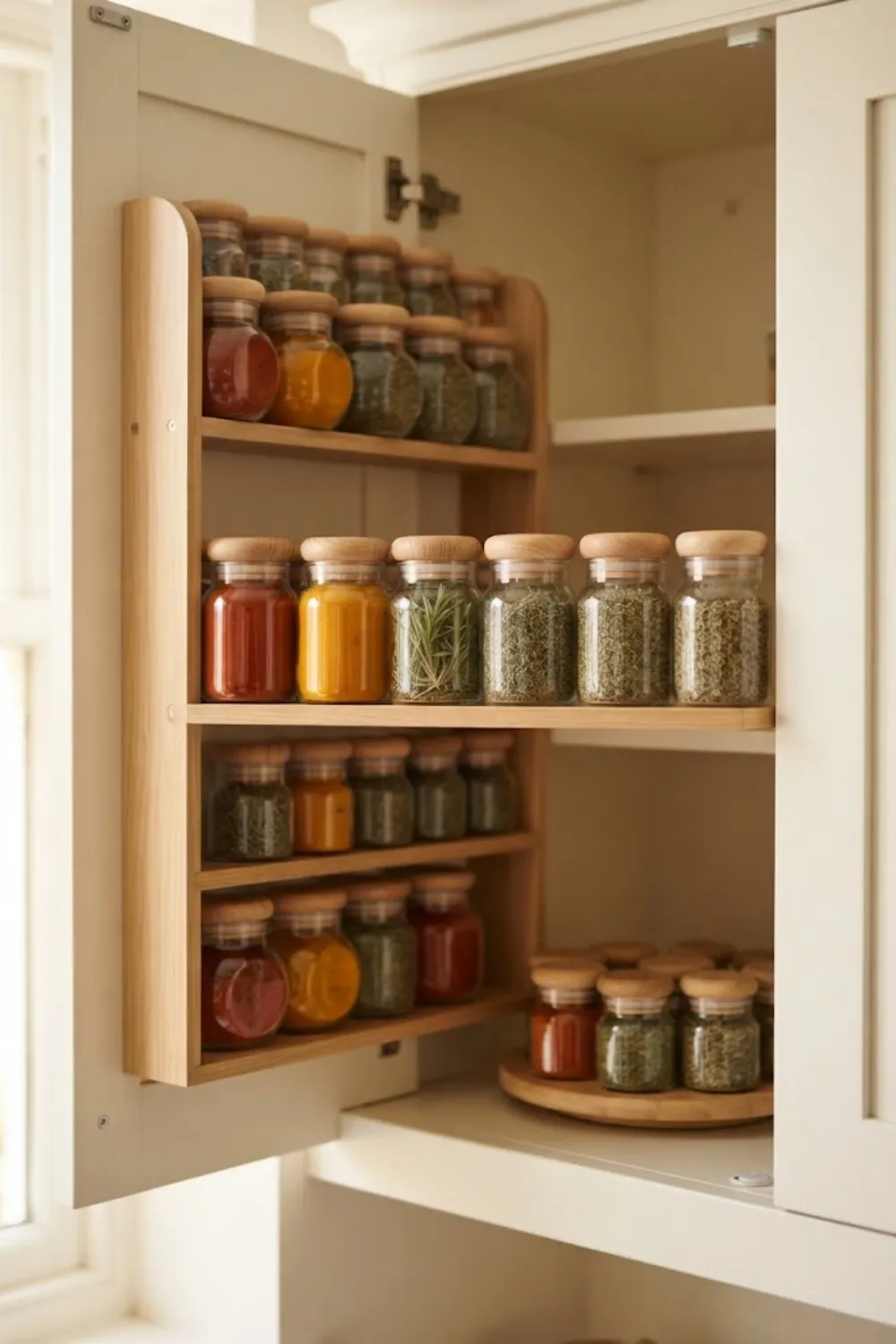
Spices deserve a plan, because a jumbled pile slows down every recipe. Try tiered shelves or a small turntable so each jar faces forward. Decide on one system and stick with it. Alphabetical works for some people. Grouping by cuisine, like baking, Mexican, and Indian, works better for others. Store them away from the stove if you can, since heat fades flavor faster than you’d think.
10. Baking Basket

Baking supplies are scattered by nature: sprinkles here, vanilla there, a measuring cup somewhere else. Collect the small stuff in one sturdy basket and keep it on a single shelf. When the urge to bake hits, you pull out one thing instead of ten. Add a small label inside for the items you reach for most. Flour and sugar can live in airtight canisters right beside it.
11. Foil and Bag Storage
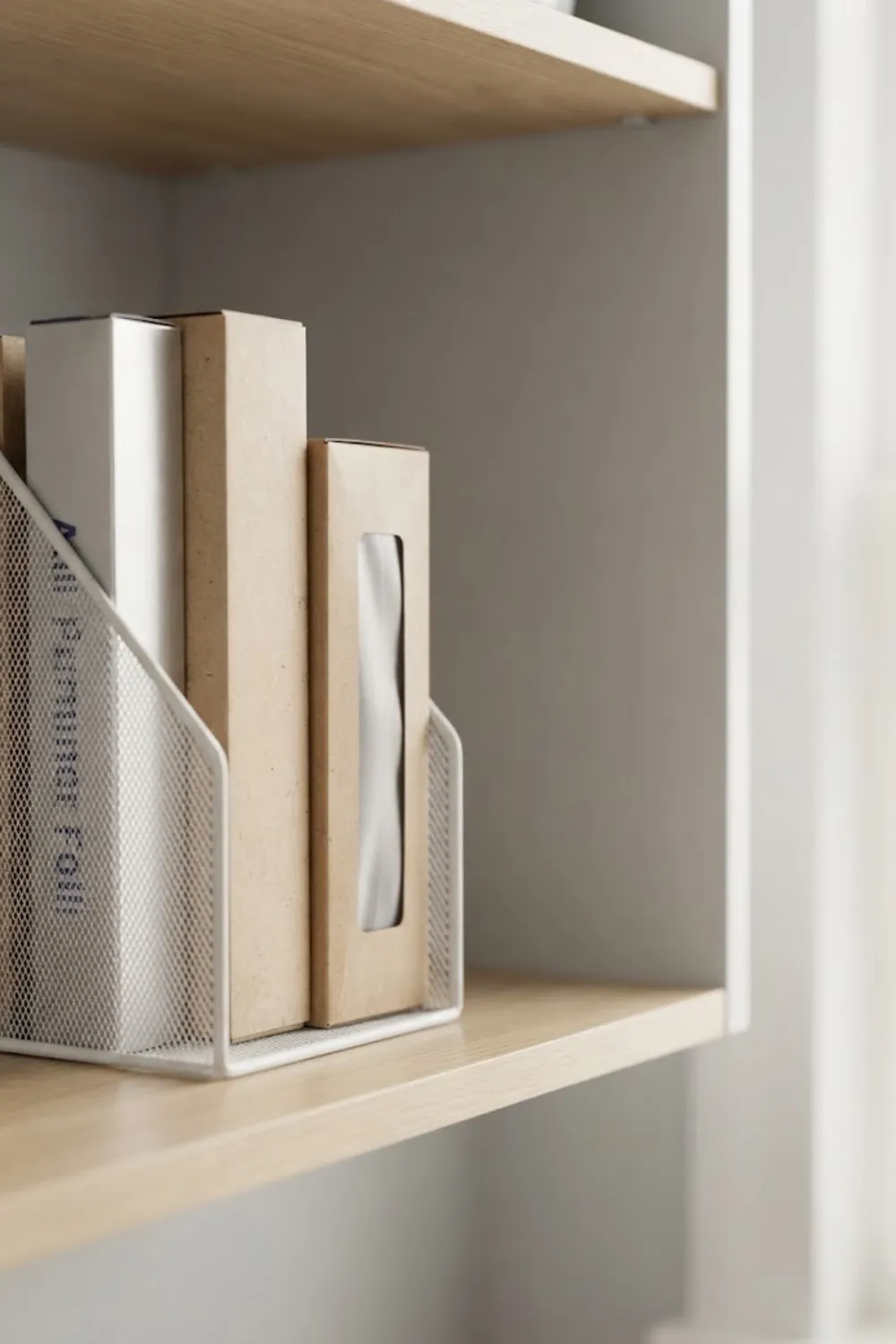
Boxes of foil, parchment, and zip bags love to tumble out the second you open the door. Give them a vertical home instead. A small plastic file holder or a magazine rack works perfectly, no fancy product needed. Slot each box in standing up, and the labels face you. It takes about five minutes to set up. It also frees a surprising amount of drawer space.
12. Mug and Glass Zone
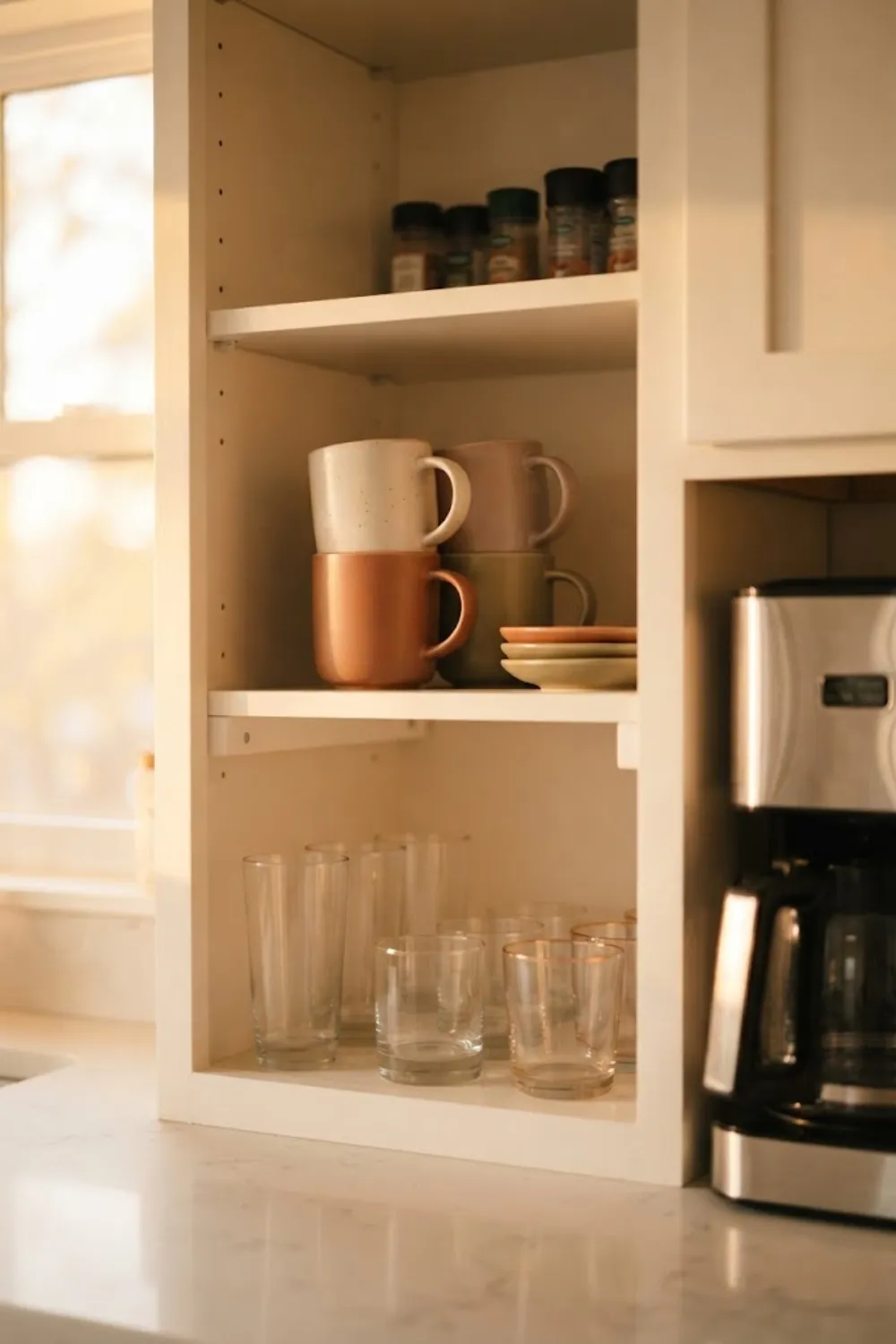
Put your cups where you actually use them, which is usually near the coffee maker or fridge. Short, stackable mugs can go two high with a small shelf insert. For glasses, group by size so tall ones don’t hide the small ones. If your kids drink often, move their cups to a lower shelf they can reach. It cuts down on “Mom, I need water” interruptions.
13. Under-Sink Setup
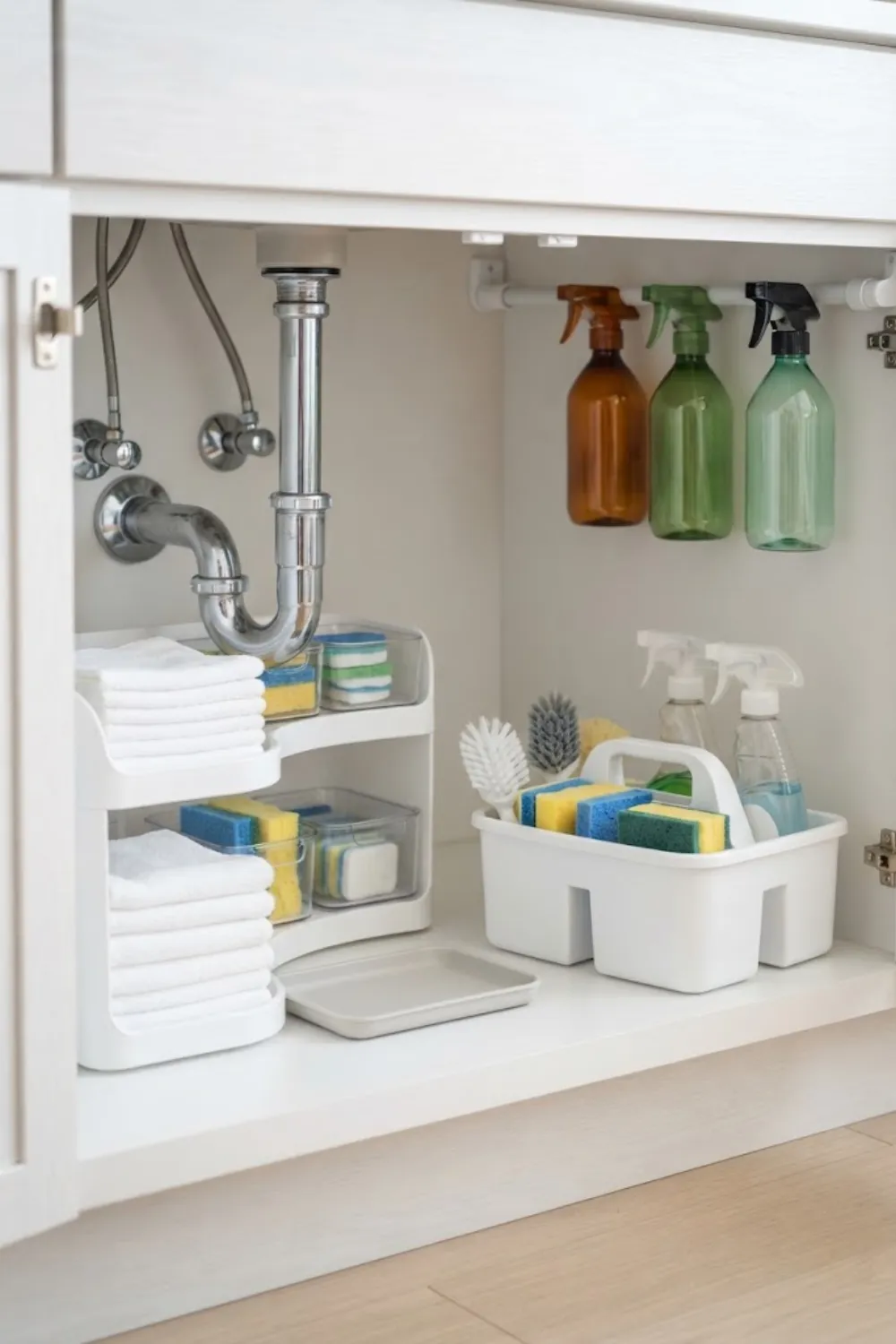
The cabinet under the sink is tricky because the pipes are right in the middle. Look for a U-shaped organizer that fits around them. Add a small caddy for sprays and sponges, so you can carry cleaning supplies from room to room. Stand a tension rod across the top and hang spray bottles by their triggers. Keep a small tray at the bottom to catch any drips.
14. Food Container Bins
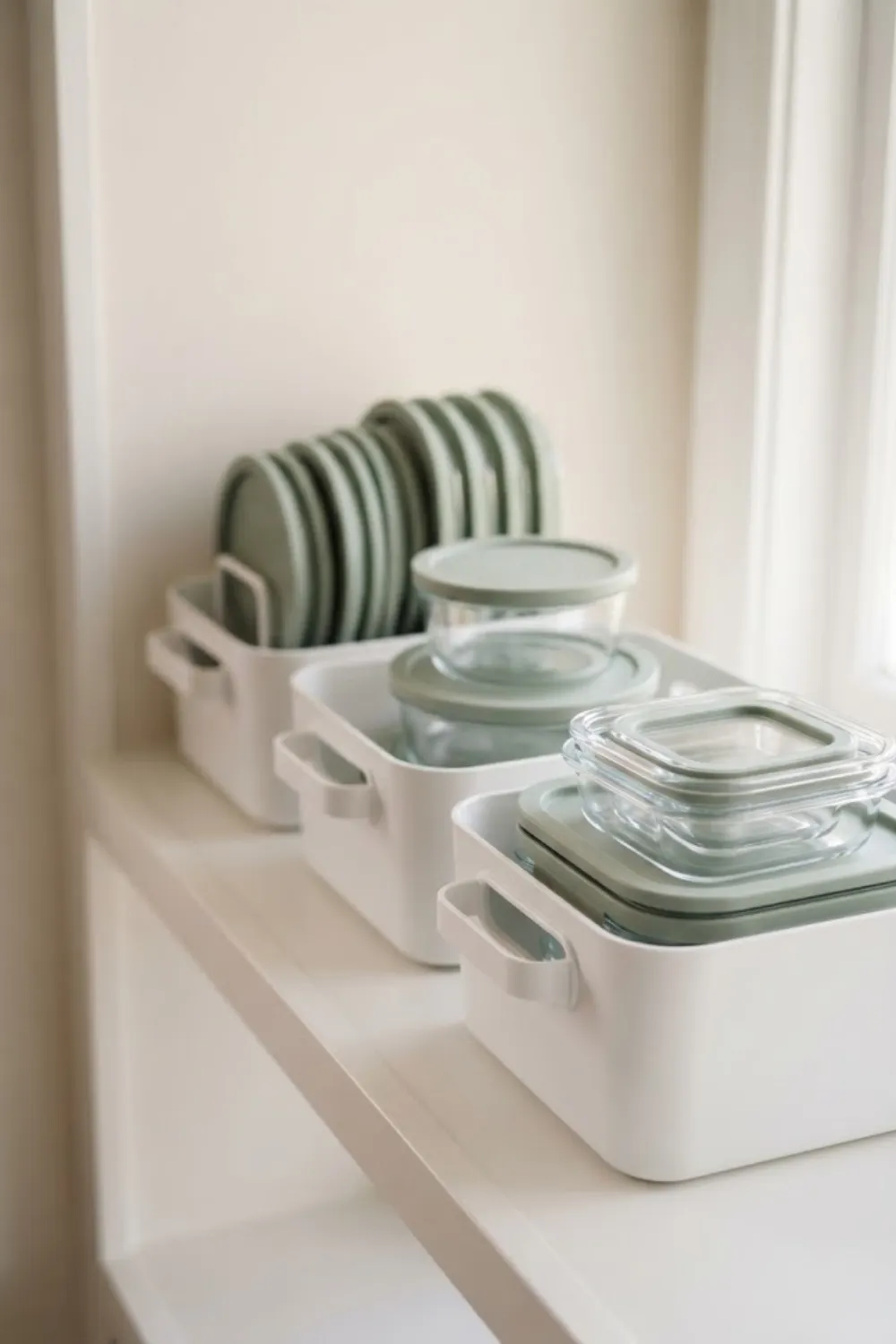
Plastic containers and mismatched lids cause more kitchen rage than almost anything else. Try sorting by shape. Rounds go in one bin, squares in another, and all the lids stand upright in a third. Toss any container that has lost its partner. You’ll be surprised how many you can let go. What’s left will nest neatly, and meal prep gets less annoying.
15. Shelf Liners
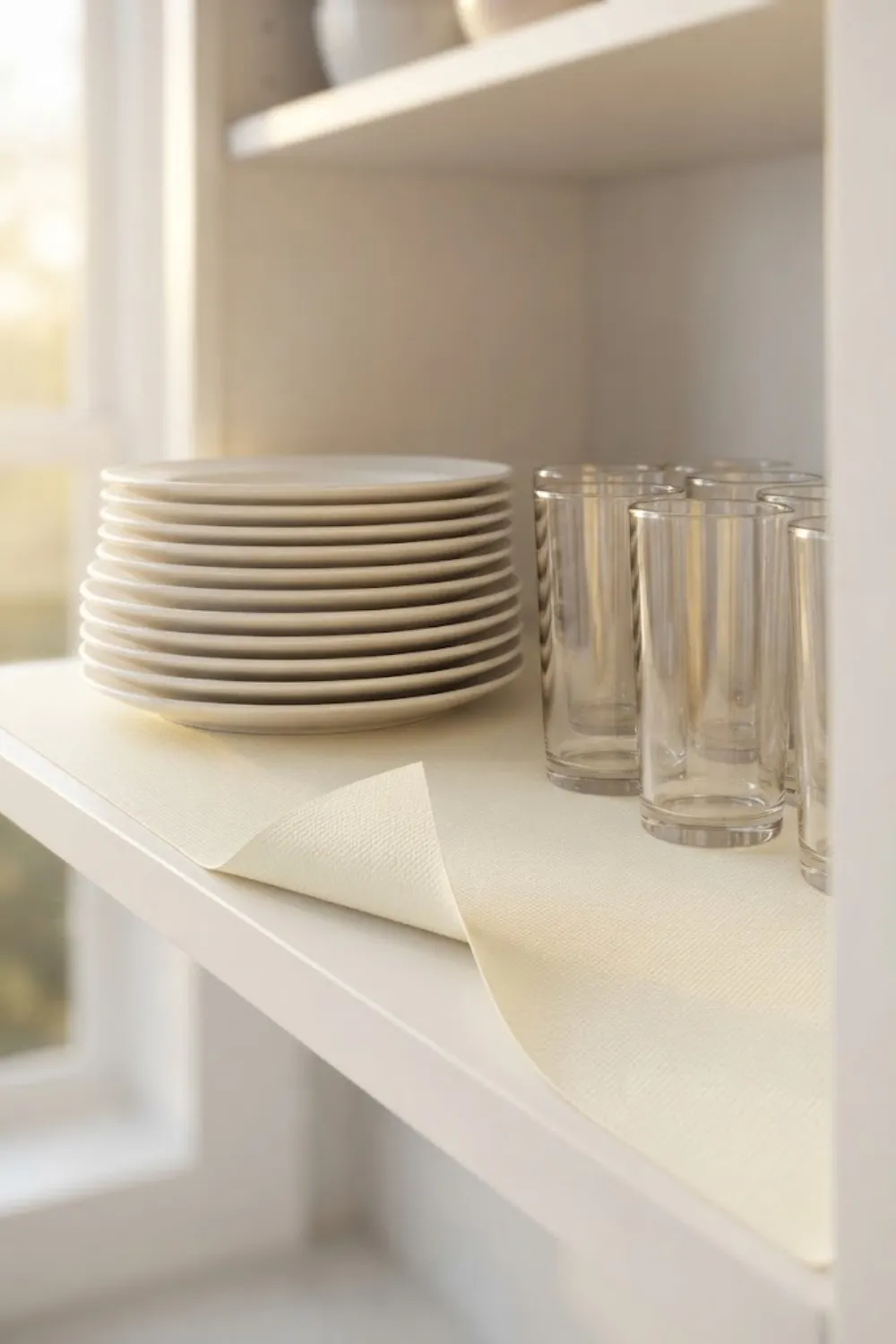
This one is not exciting, but it matters. Non-slip liners stop plates from sliding and glasses from clinking. They also catch crumbs and spills, so cleanup is a quick wipe or a shake. Pick a washable, textured type rather than the sticky kind, which can be hard to remove later. A light color makes dark corners look brighter. It’s a cheap upgrade that makes cabinets feel finished.
16. Plate Racks
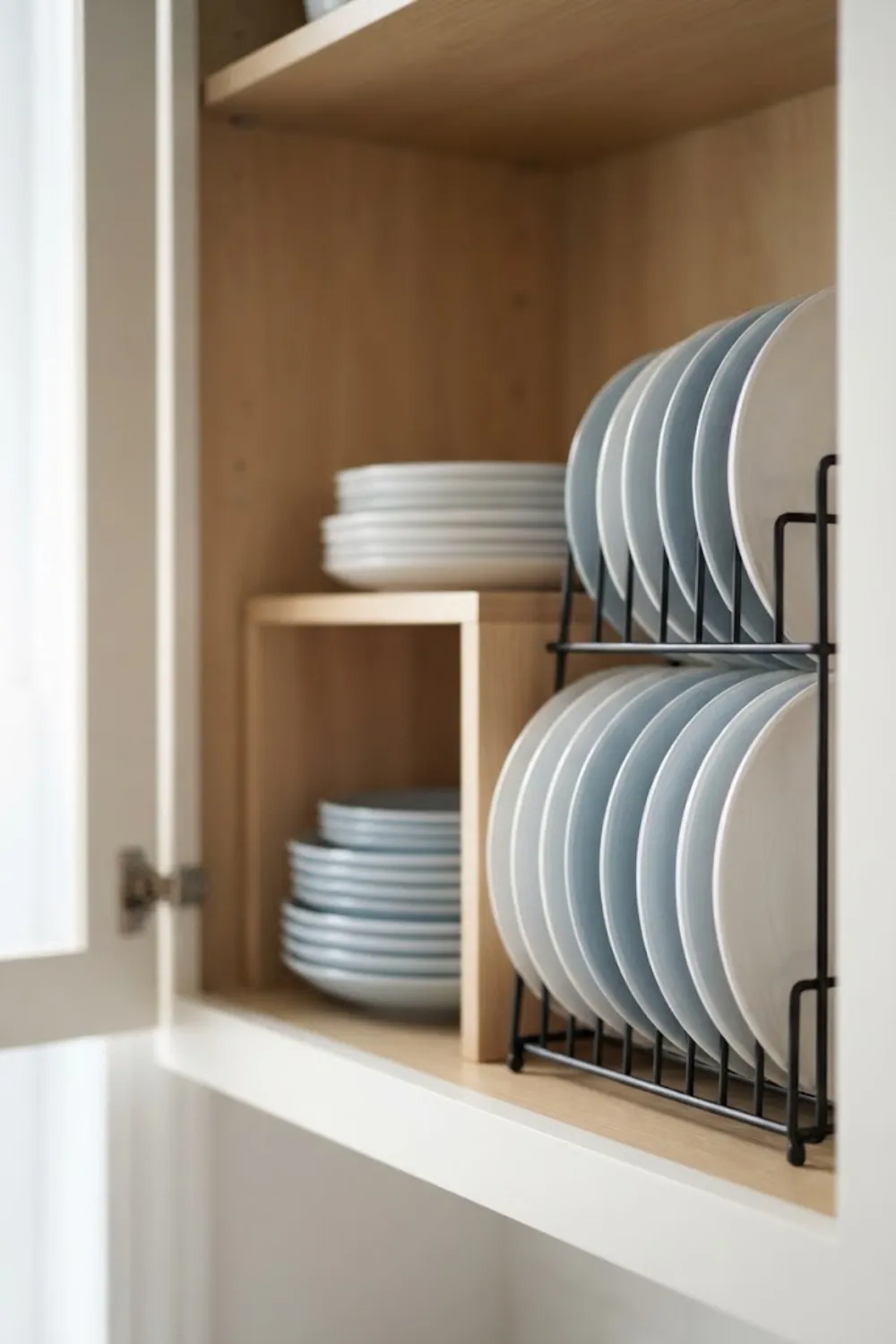
Tall stacks of plates are heavy, and the bottom ones rarely get used. A rack that holds plates on their edge lets you grab one without lifting the rest. Another option is a two-level shelf insert that splits your dinner and salad plates. This works best in deeper cabinets. If you have lots of dishes, keep only your daily set at hand and store guest sets higher up.
17. Cooking Zones
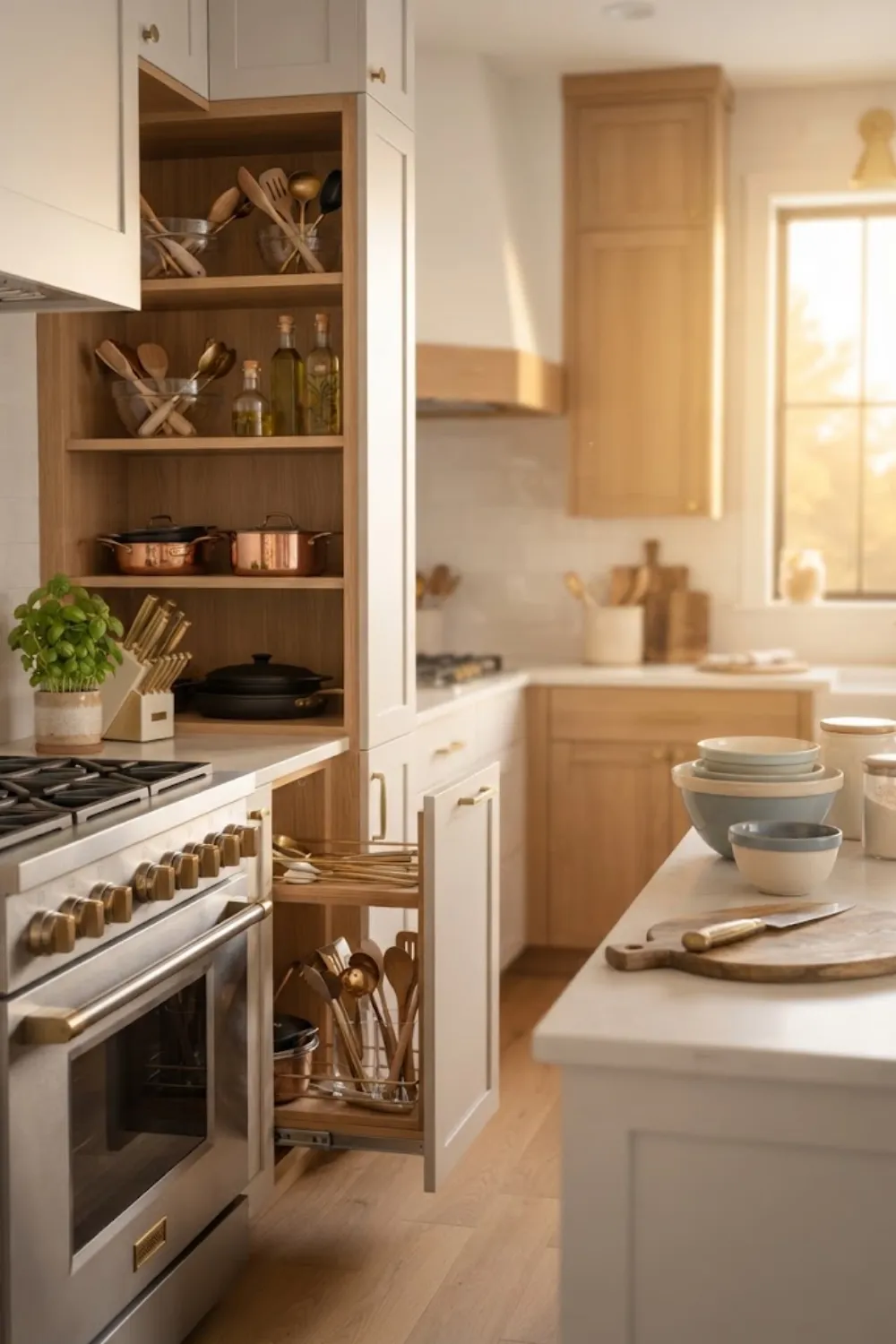
Here’s the idea that ties the rest together. Instead of organizing by item, organize by task. Keep pots, oils, and spatulas near the stove. Put mixing bowls and baking tools near the prep area. Store plates close to the dishwasher. When everything lives near where you use it, you take fewer steps and put things away without thinking. It’s also the easiest system to keep up long term.
Conclusion
The best kitchen cabinet organization is the kind you’ll actually keep up. Don’t try all 17 ideas at once. Start with the cabinet that annoys you most, whether that’s the pot pile or the spice avalanche. Use what you already have first. Small wins add up fast, and your future self will thank you.