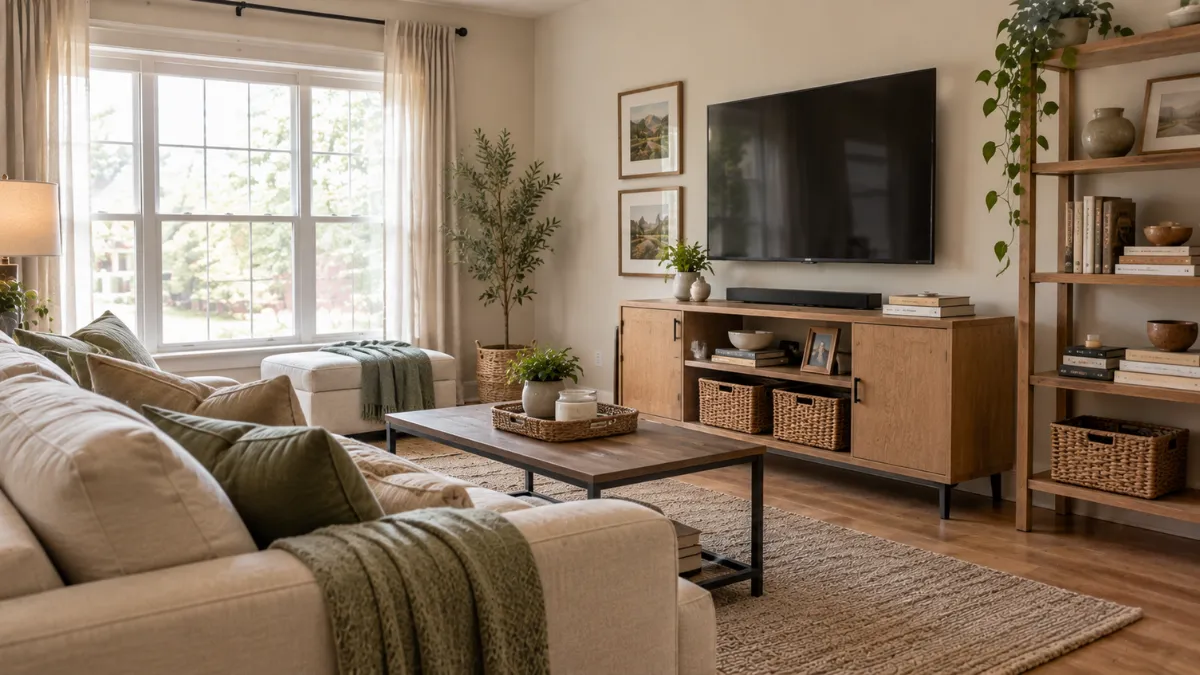
16 Living Room Rack Organization Ideas for a Tidy Home
A living room rack can do much more than hold a television or a few decorative pieces. With the right arrangement, it can store everyday items, display favorite objects, and keep a small room from feeling crowded. These 16 Living Room Rack Organization Ideas are designed for homeowners and renters who want practical storage without giving up style. You’ll find ideas for books, baskets, electronics, wall decor, plants, and other essentials that often create visual clutter.
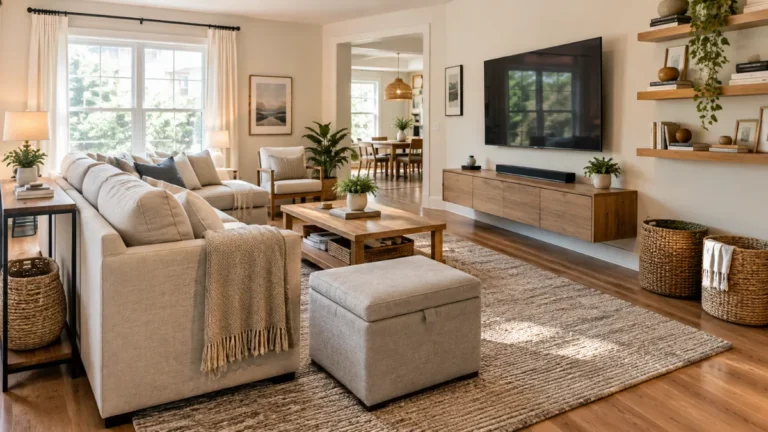
1. Open Shelves With Woven Baskets
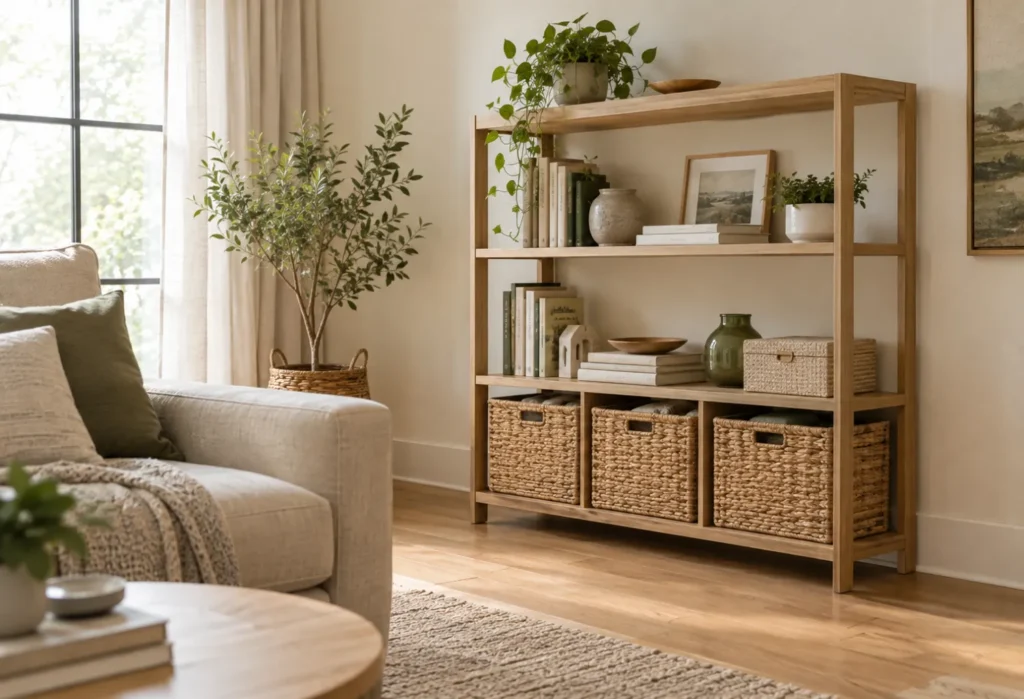
Open shelving keeps a living room rack visually light, but small items can quickly make the shelves look messy. Woven baskets solve that problem by giving loose belongings a defined place while adding natural texture to the furniture.
Choose two or three matching baskets in beige, tan, or soft gray. Use them for remotes, chargers, children’s items, or extra cables. Keep the upper shelves more decorative and place the baskets on lower shelves where they are easy to reach.
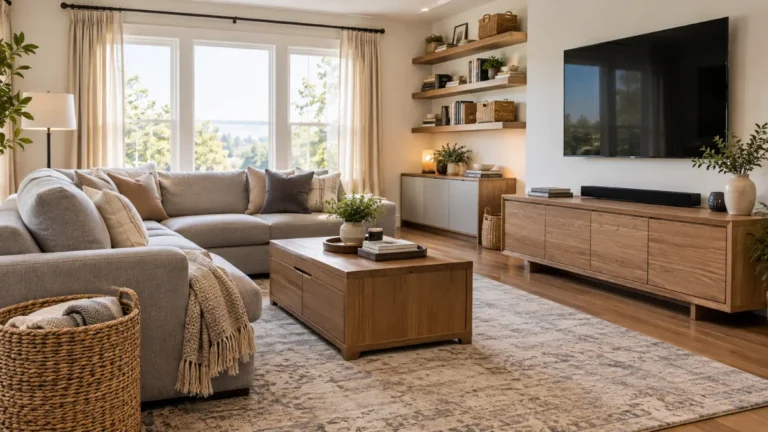
2. Closed Cabinets for Everyday Clutter
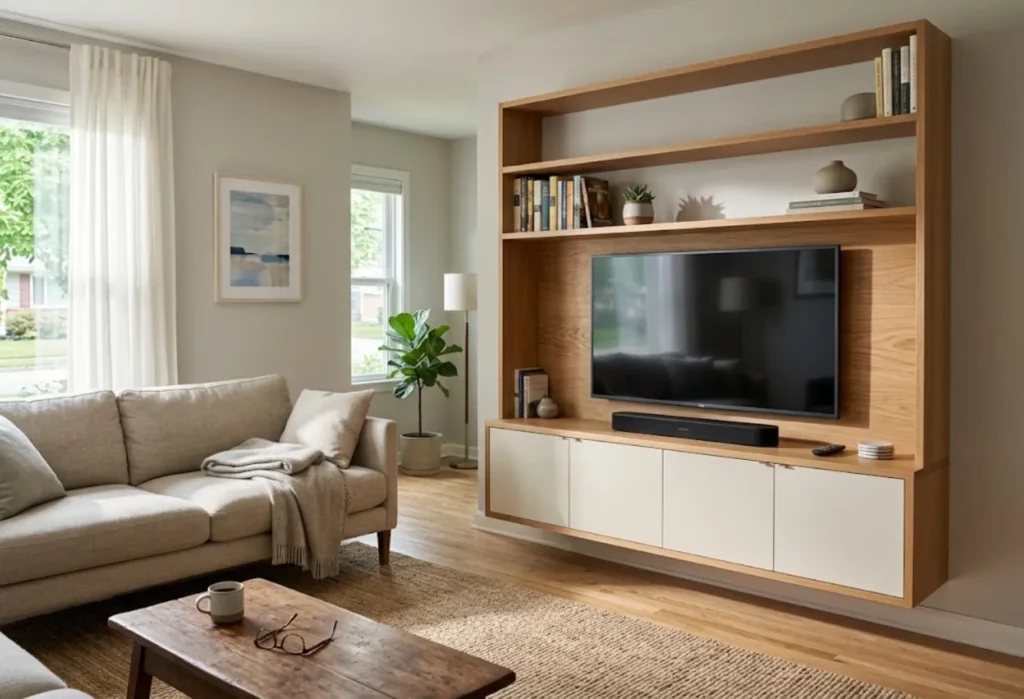
Open racks are attractive, but not everything in a living room deserves to stay visible. Closed cabinets are especially useful for hiding paperwork, gaming accessories, spare batteries, and other practical items that can make the room look untidy.
If you’re choosing a new rack, look for cabinet doors with simple fronts and limited hardware. White, warm oak, or matte charcoal can work well with many interiors. Keep frequently used items in the easiest-to-access cabinet rather than pushing them into difficult-to-reach corners.
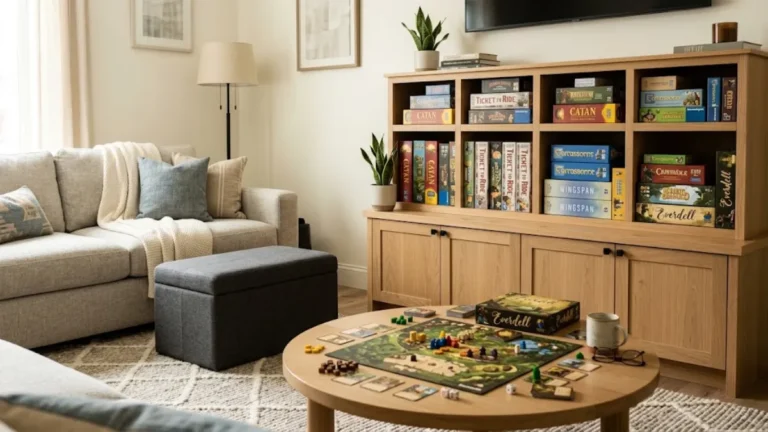
3. A Balanced Book-and-Decor Display
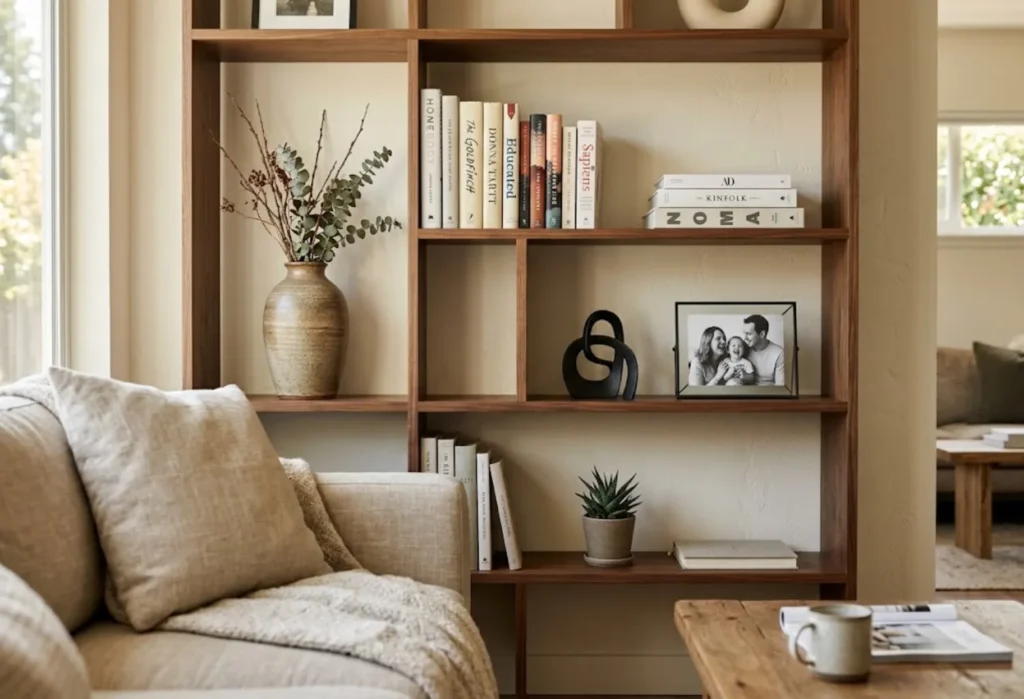
A rack filled entirely with books can feel visually heavy, particularly in a compact living room. Mixing books with a few carefully chosen objects creates more breathing room and gives the shelves a relaxed appearance.
Group books in small horizontal and vertical stacks rather than lining every shelf edge to edge. Add a ceramic vase, framed photograph, or small sculpture beside one group. Leaving some shelf space empty is useful because the open areas separate the different collections.
4. Floating Rack for a Narrow Wall
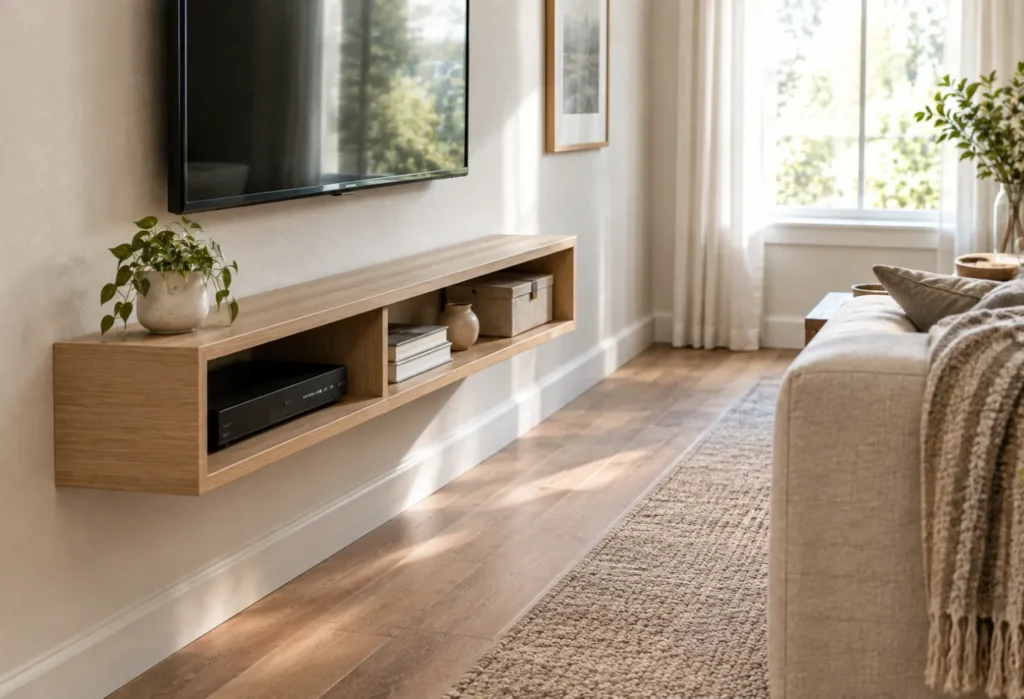
A floor-standing rack can take up valuable floor space in a narrow living room. A wall-mounted rack provides storage and display space while leaving the floor underneath open, which can make the walking area feel less restricted.
For a compact wall, choose a shallow design rather than a deep entertainment unit. Keep heavier objects on the lower section and lighter decor above. Mount the rack at a comfortable height so the television and stored items remain practical rather than forcing everything too high.
5. One Color Family for Shelf Accessories
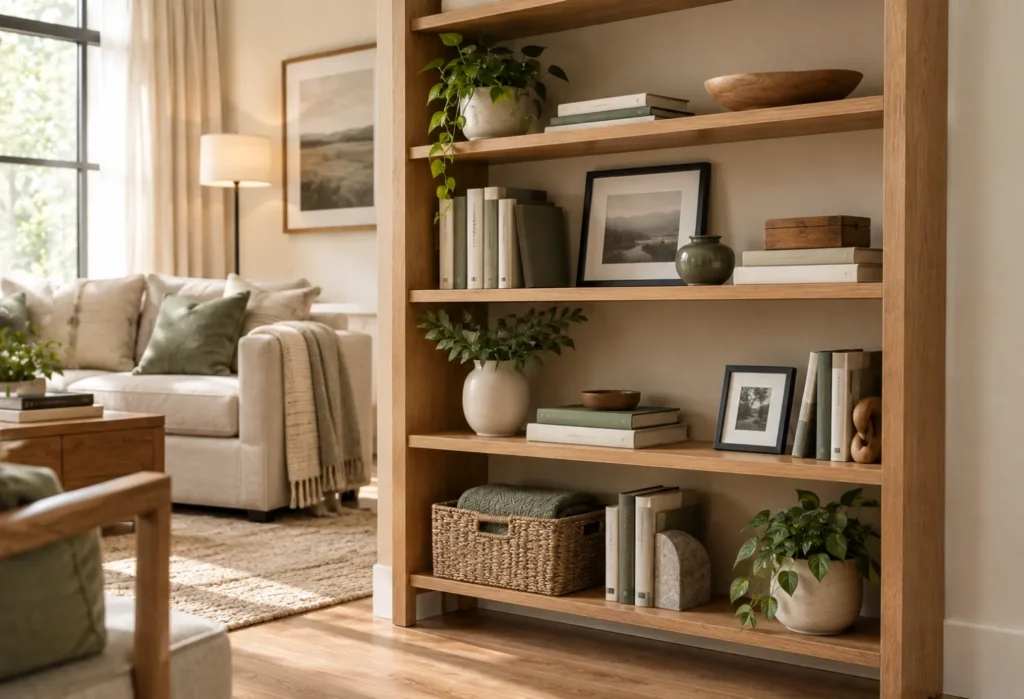
A rack can look disorganized even when every object has a place if the accessories have too many unrelated colors. Using a limited color family helps the eye read the shelves as one composition instead of a collection of separate objects.
Try combining cream, warm wood, muted green, and soft black for a natural modern room. Repeat one or two of those tones in picture frames, books, vases, or small boxes. The rack will still have variety, but the color relationship keeps it visually controlled.
6. Vertical Storage for a Small Living Room
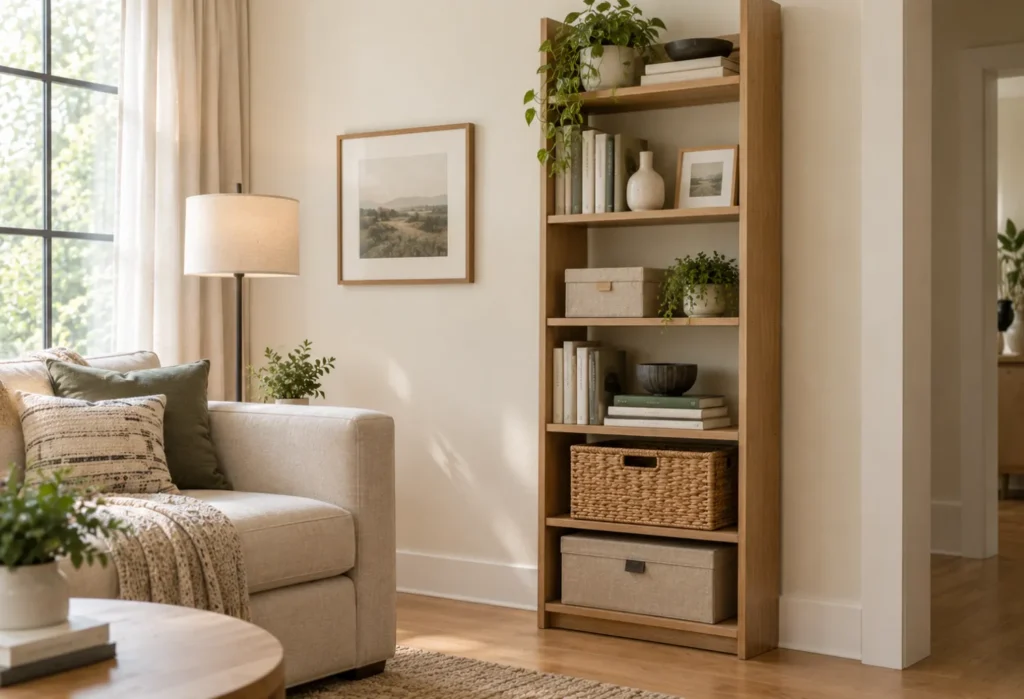
A short rack may leave useful wall space above it completely unused. A taller, narrower storage unit makes better use of vertical space without spreading furniture across the floor.
Look for a rack that is noticeably taller than it is wide, especially if your room has limited floor area. Store less frequently used items on the highest shelves and keep daily essentials around waist or chest level. Avoid placing heavy objects high up where reaching them becomes awkward.
7. Dedicated Space for Electronics
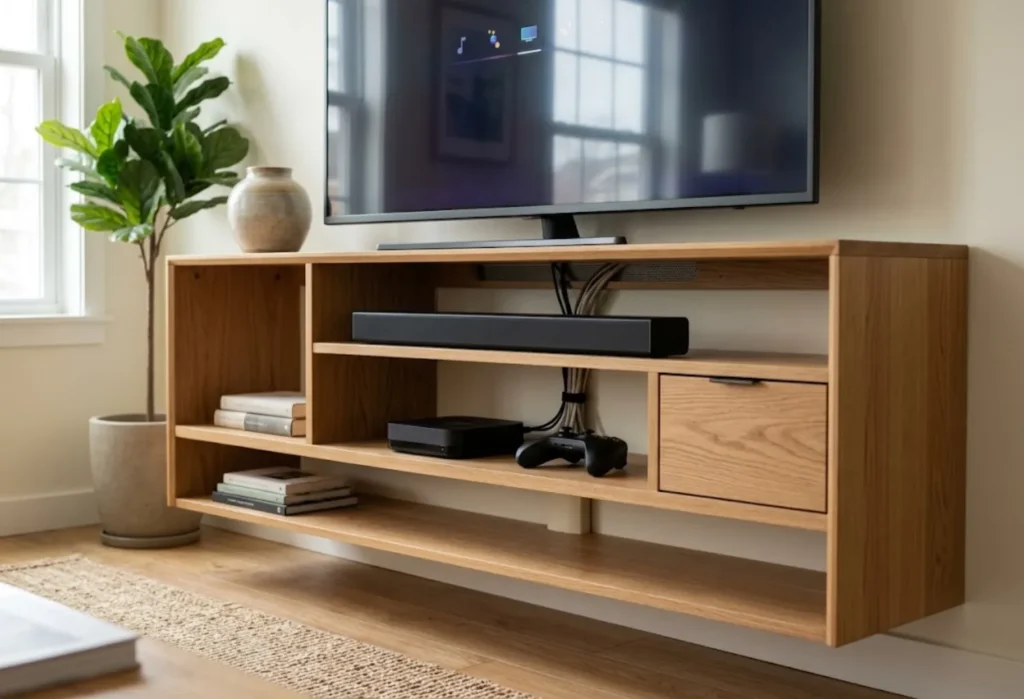
Television equipment often creates a tangle of remotes, controllers, streaming devices, and cables. Giving electronics their own section makes the rack easier to maintain and prevents these small objects from spreading across other shelves.
Keep the television, soundbar, and media devices grouped together instead of separating them across the rack. Use a small cable box or discreet cable-management channel behind the unit. Leave ventilation space around devices that produce heat, and avoid packing electronics tightly into closed compartments.
8. A Rack With a Plant Corner
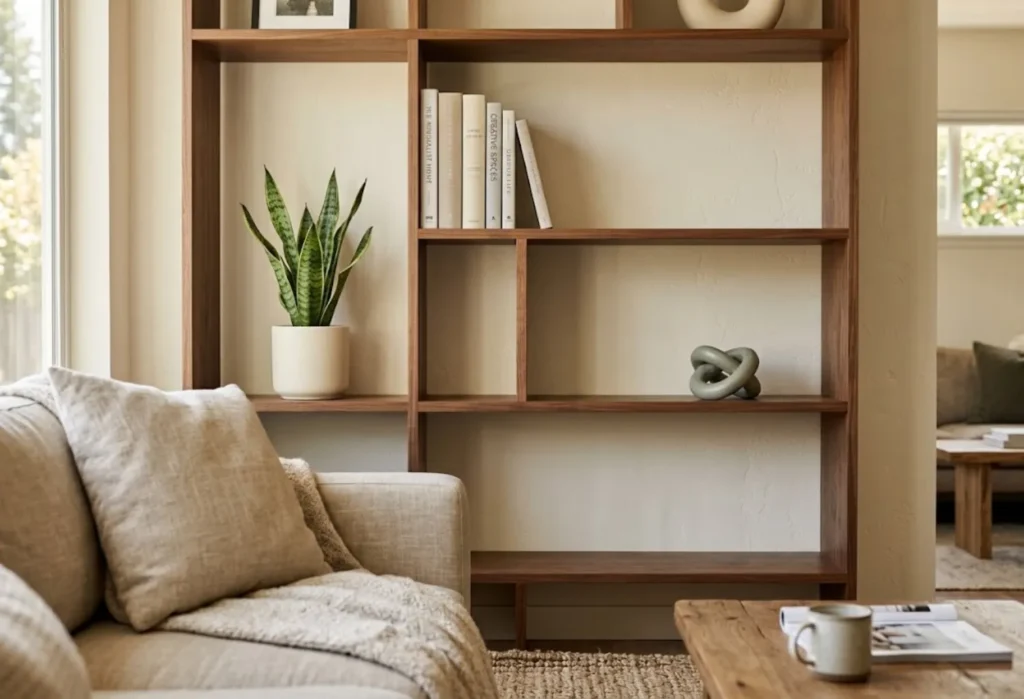
A small plant can soften the hard lines of a wooden or metal living room rack. It also gives one section of the furniture a natural focal point without requiring additional floor space.
Choose a compact plant with a controlled shape, such as a pothos, snake plant, or small rubber plant. Place it toward one side rather than directly in the center. A simple ceramic planter in cream, terracotta, or muted green can connect the plant with the room’s existing colors.
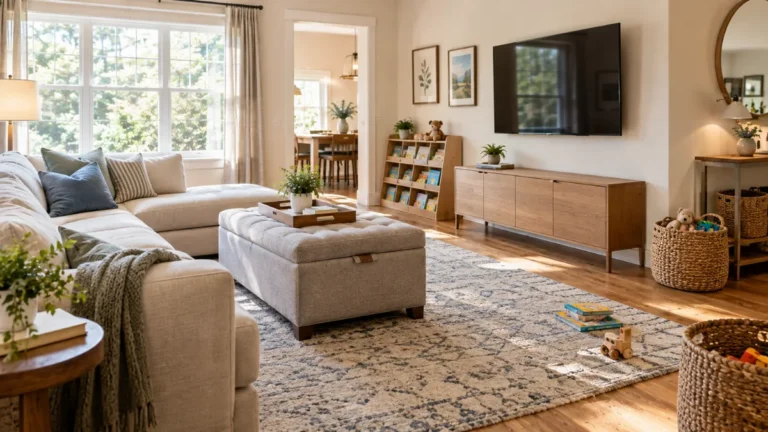
9. Bins for Family Essentials
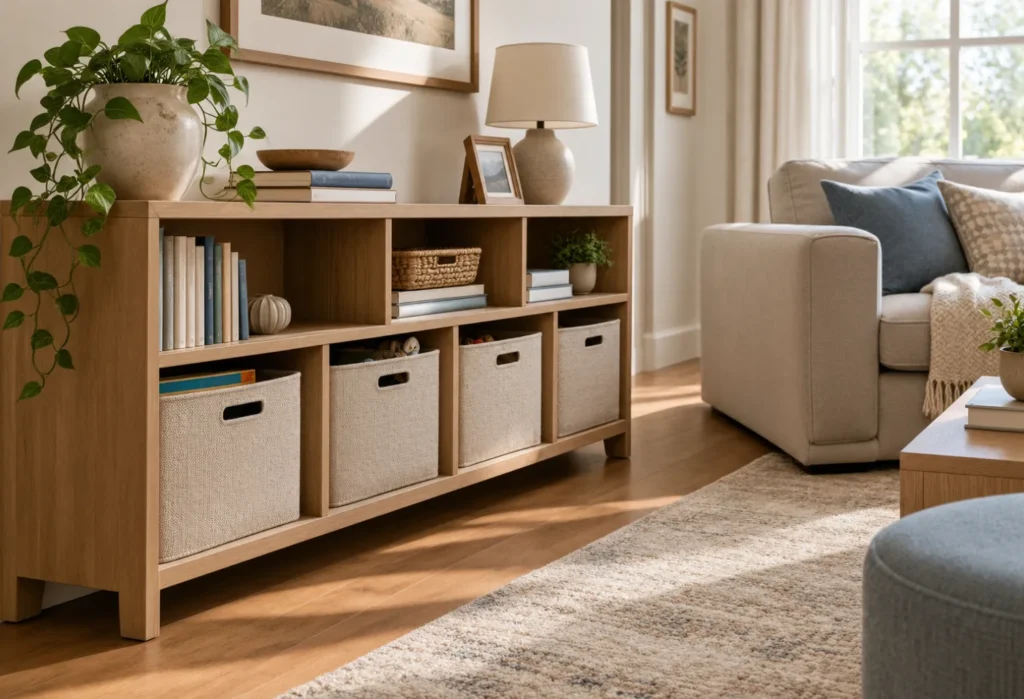
Families often need quick storage for toys, blankets, books, and miscellaneous items. Instead of allowing these belongings to occupy the sofa or floor, labeled bins can turn lower rack shelves into practical family storage.
Choose sturdy fabric or woven bins that fit completely inside the shelf opening. One bin might hold remote controls and chargers, while another handles children’s books or small toys. Keep labels simple so everyone in the household can return things to the correct location.
10. A Symmetrical Rack Arrangement
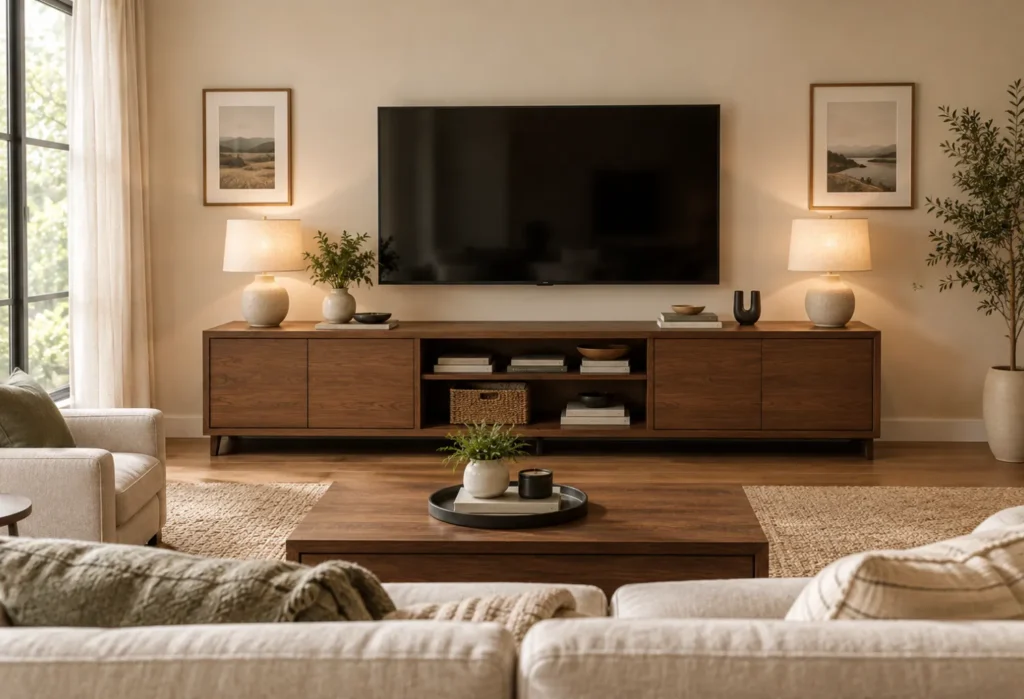
Symmetry works particularly well if the rack sits beneath a television or along a visually prominent wall. Matching objects on opposite sides create a stable composition, making the furniture look intentional rather than randomly filled.
Try placing similarly sized lamps, baskets, or decorative objects at both ends of the rack. The center can remain dedicated to the television or a larger focal piece. Exact matching isn’t necessary; similar height, shape, or color is enough to create visual balance.
11. Adjustable Shelves for Changing Needs
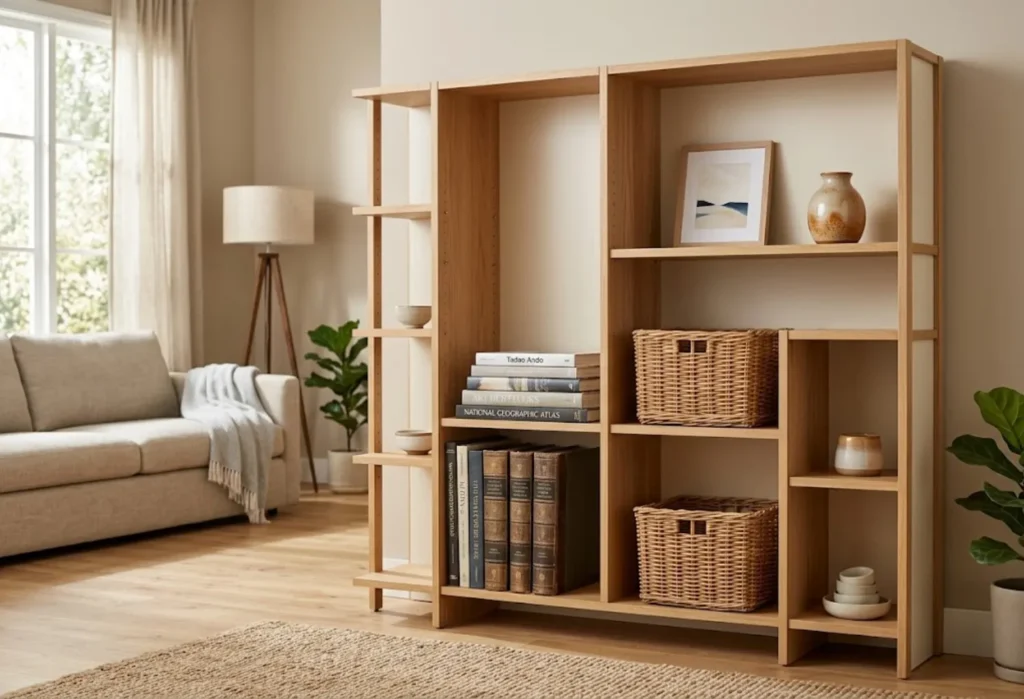
Fixed shelves can become frustrating when your storage needs change. Adjustable shelving allows the same rack to accommodate tall books, baskets, speakers, framed art, or larger decorative objects over time.
If you’re buying a rack, check how easily the shelf pins can be moved and whether the shelves feel stable at different heights. Keep taller openings for items that genuinely need them. Avoid creating large empty spaces simply because the shelf positions haven’t been adjusted to match what you actually store.
12. A Hidden Charging Station
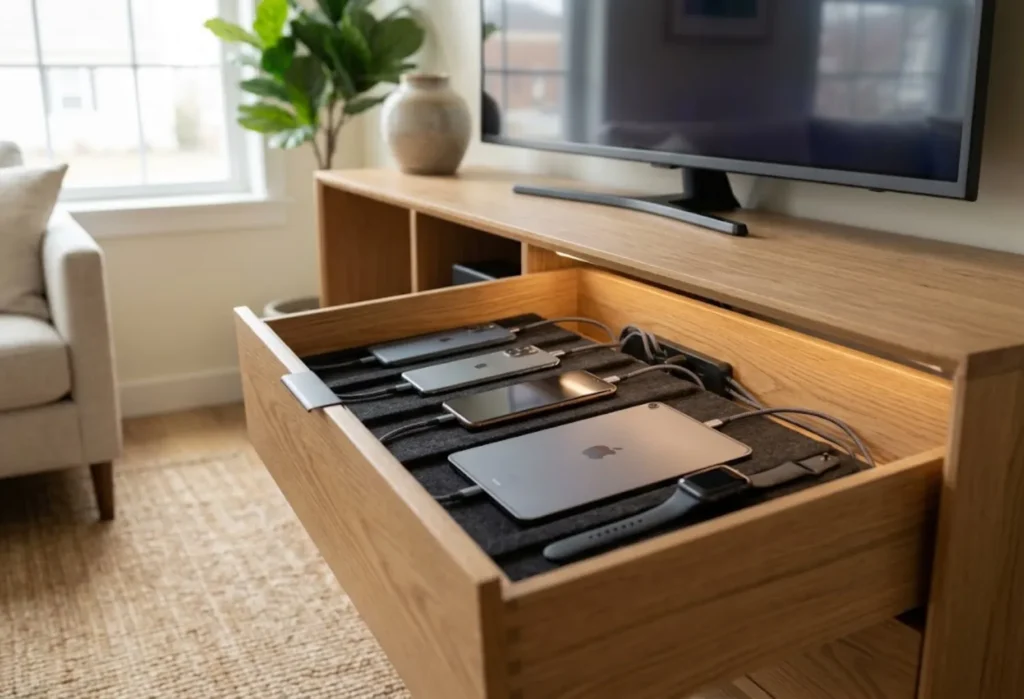
Phones, tablets, watches, and other devices can create a messy collection of chargers around the television area. A hidden charging section keeps these everyday essentials accessible without allowing cables to dominate the rack.
Choose a lower cabinet or drawer near an electrical outlet and place a compact power strip inside if ventilation and safety allow. Use short charging cables where possible and label them by device. Keep power equipment away from liquids and avoid overloading the outlet or power strip.
13. Mix Wood With Black Metal
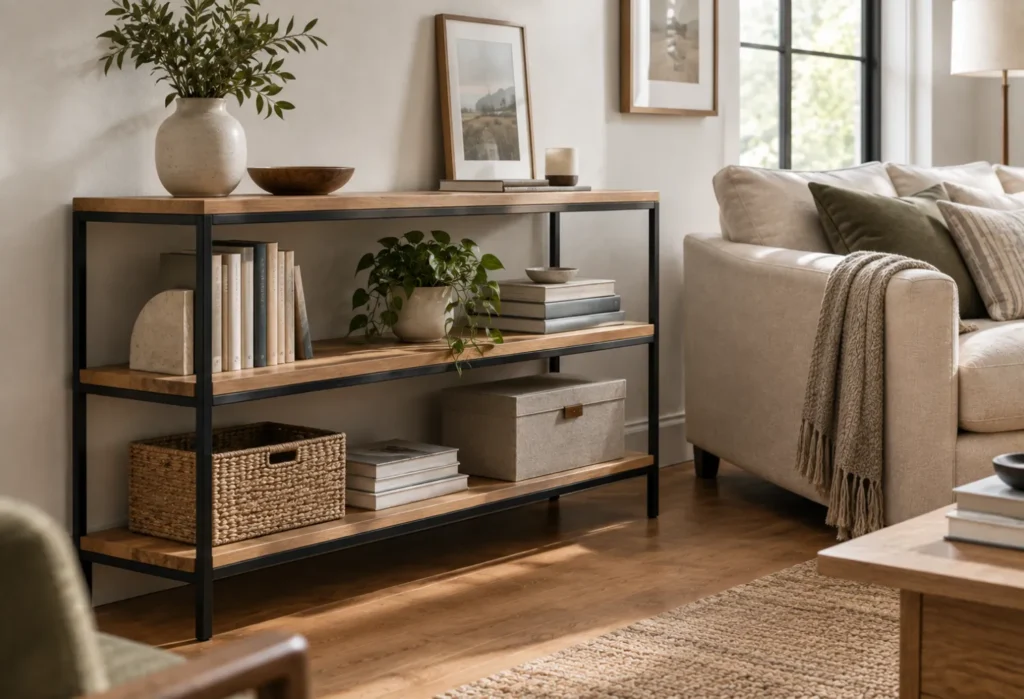
A combination of warm wood and black metal gives a living room rack a clean industrial or modern look without making the furniture feel overly heavy. The contrast also helps simple shelves stand out against a pale wall.
Use warm oak or walnut tones for the shelves and a slim black frame for the structure. Keep accessories restrained, such as neutral books, ceramic pieces, and one framed print. This pairing works especially well in rooms with white, cream, gray, or muted green walls.
14. Use the Rack as a Reading Station
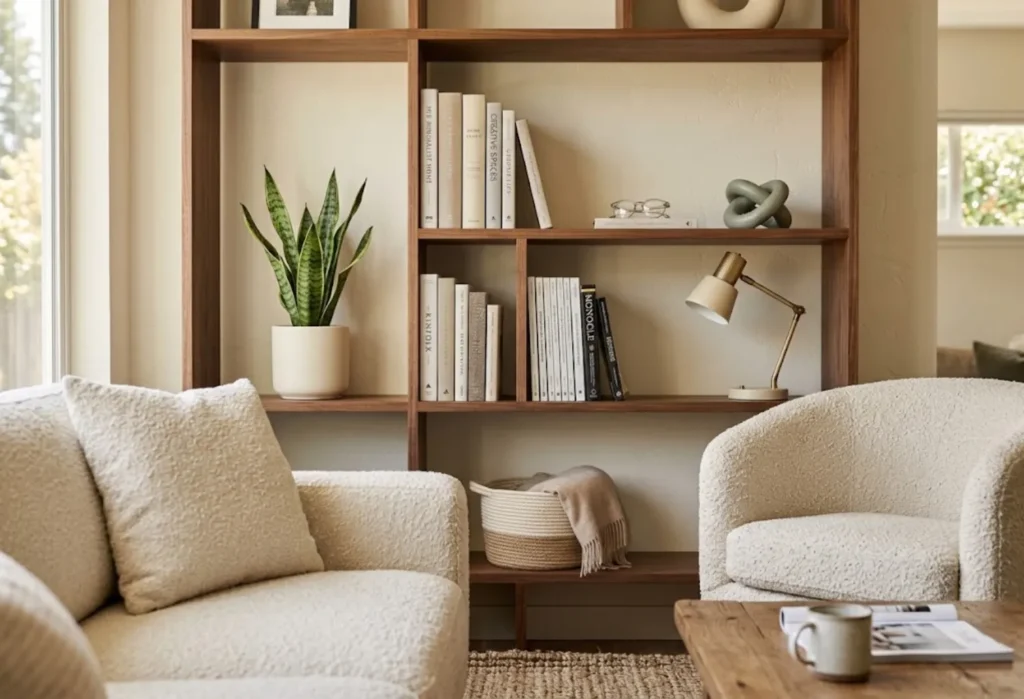
A living room rack can support a small reading area if books and reading accessories are organized together. This is particularly useful when there isn’t enough space for a separate bookcase.
Reserve one or two shelves for current books, magazines, and a reading lamp or small light. Place the rack near an armchair rather than behind the main seating if possible. A small basket underneath can hold a throw or reading glasses without adding another piece of furniture.
15. Layered Frames on One Shelf
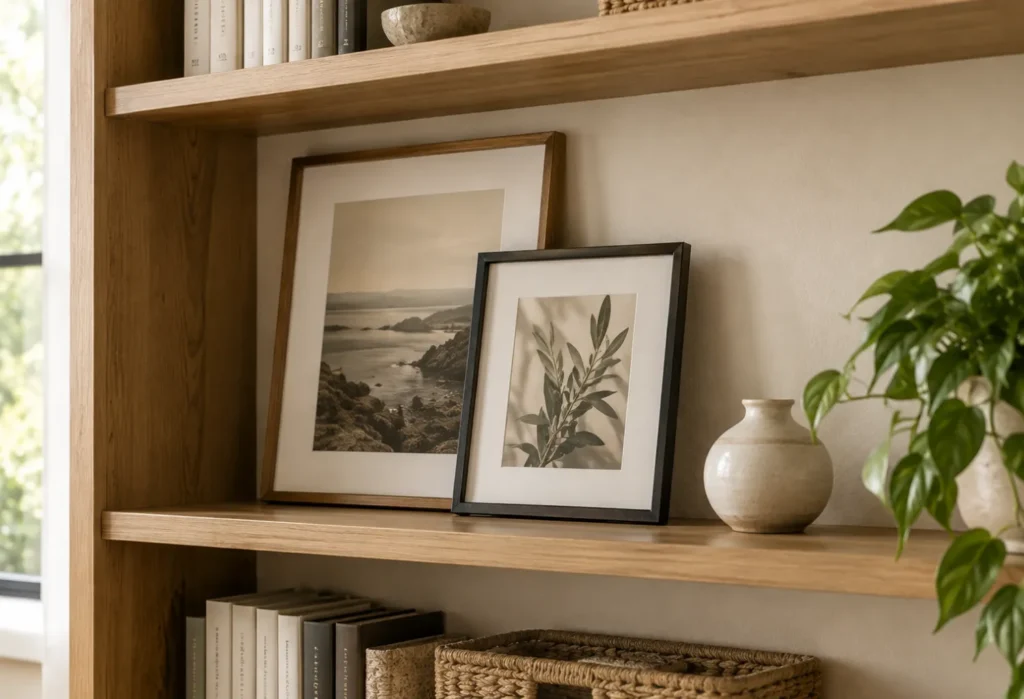
Too many individual frames scattered across a rack can make the display look busy. A small layered collection creates a more intentional focal point while using very little shelf space.
Place one larger frame toward the back and lean a smaller frame slightly in front of it. Keep the photographs or artwork within a related color palette. Leave the neighboring area relatively open so the layered frames have enough visual space around them.
16. Low Rack With Open Floor Space
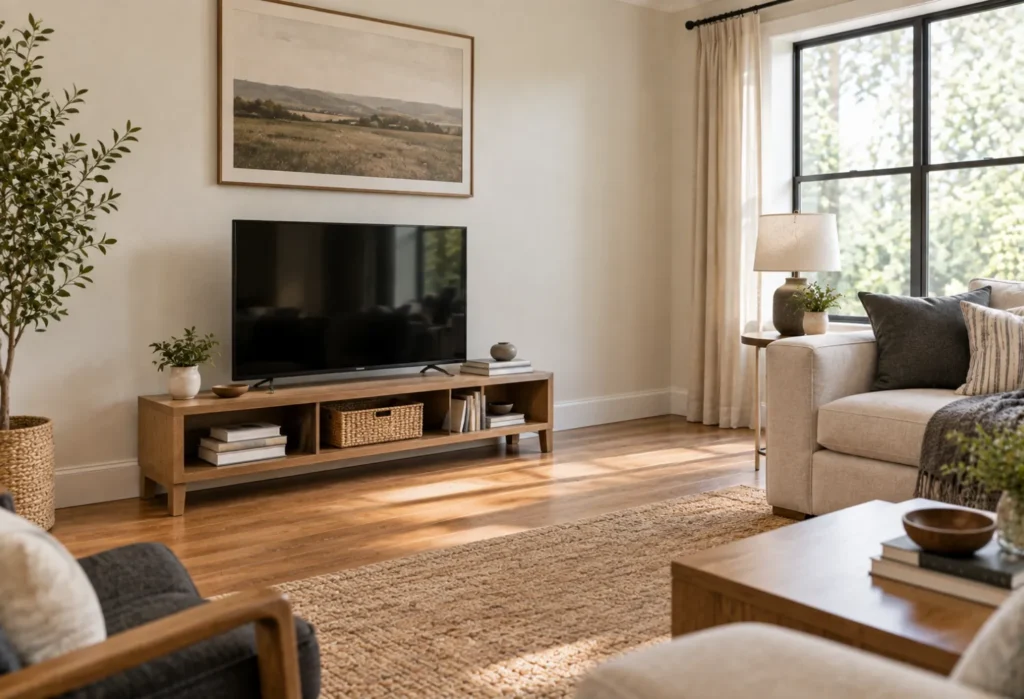
A low-profile rack can be a smart choice for living rooms where visual openness matters more than maximum storage. Keeping the furniture close to the floor leaves more uninterrupted wall above it and can make a compact room feel less crowded.
Choose a rack with enough depth for the television equipment and storage you actually need, but avoid an oversized entertainment center. Pair it with wall-mounted artwork above and keep the floor around it clear. This arrangement works especially well with light-colored walls and simple furniture.
5 Most Useful Living Room Rack Ideas
| Idea | Best For | Why I Recommend It |
| Woven Baskets | Small loose items | Hides clutter while adding texture |
| Closed Cabinets | Everyday household clutter | Keeps practical items out of sight |
| Vertical Storage | Small rooms | Uses wall height efficiently |
| Hidden Charging Station | Electronics | Controls cables and devices |
| Low Rack | Compact layouts | Preserves open floor space |
Conclusion
The best Living Room Rack Organization Ideas depend on what your rack needs to do every day. Choose baskets or cabinets if clutter is the main concern, vertical storage if floor space is limited, or a low rack if you want a more open layout. Once storage has a clear purpose, leave some space for decoration so the rack feels organized rather than overfilled.