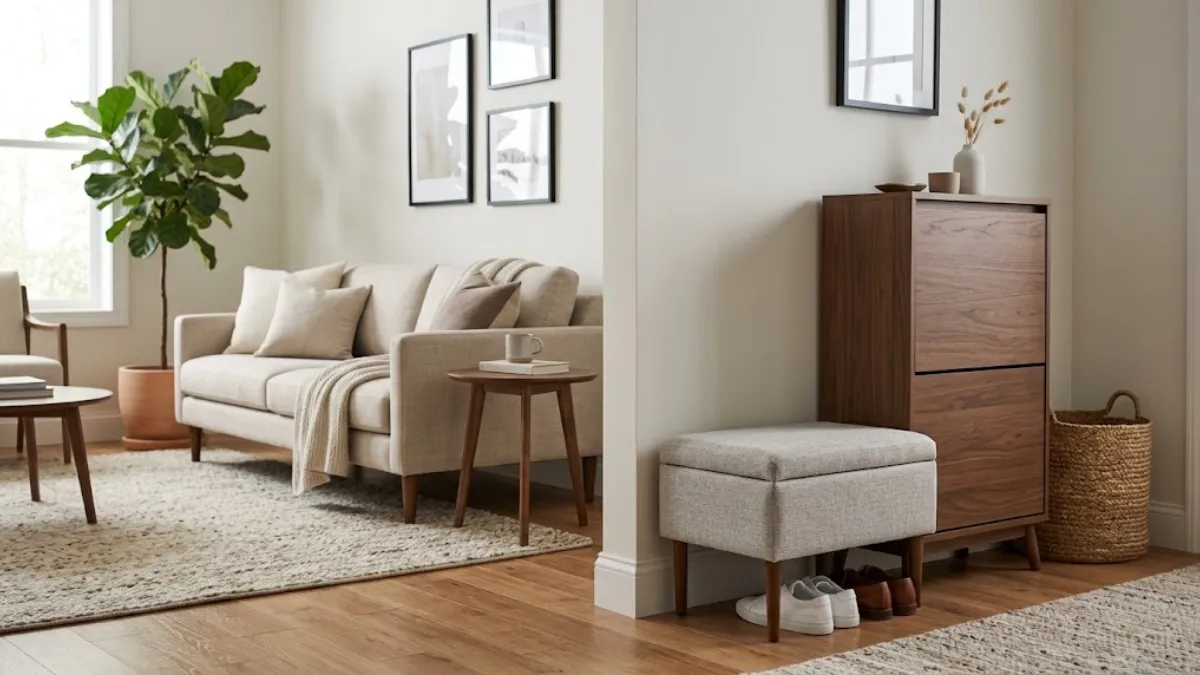
20 Shoe Organization Ideas for Living Room Spaces
Shoes can quickly make a living room feel messy, especially when the entryway is small or the household comes and goes throughout the day. The challenge is keeping everyday footwear close without turning the room into a visible shoe rack.
These 20 Shoe Organization Ideas For Living Room spaces balance storage with good-looking furniture, smart placement, and practical everyday access. Some work especially well for small rooms, while others blend naturally into modern, traditional, or cozy interiors.
1. Slim Entryway Shoe Cabinet
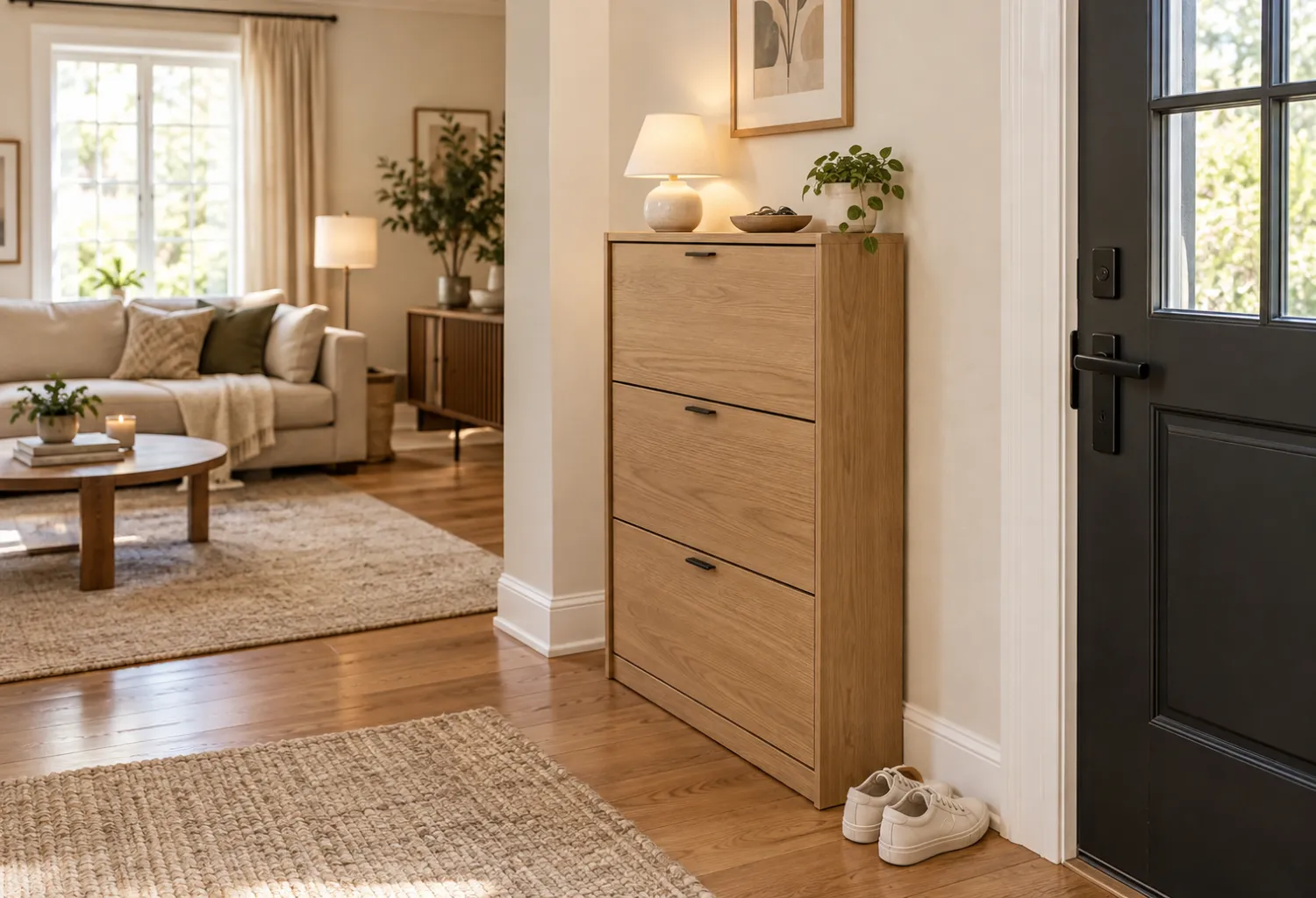
A slim shoe cabinet is one of the easiest ways to keep footwear contained without taking up much floor space. Choose a narrow model with flip-down compartments and place it against the wall nearest the main entrance.
White, light oak, or warm walnut finishes work especially well in living rooms because they look more like furniture than dedicated shoe storage. Style the top with a small lamp, framed artwork, or a shallow catchall tray.
2. Storage Bench With Shoe Compartments
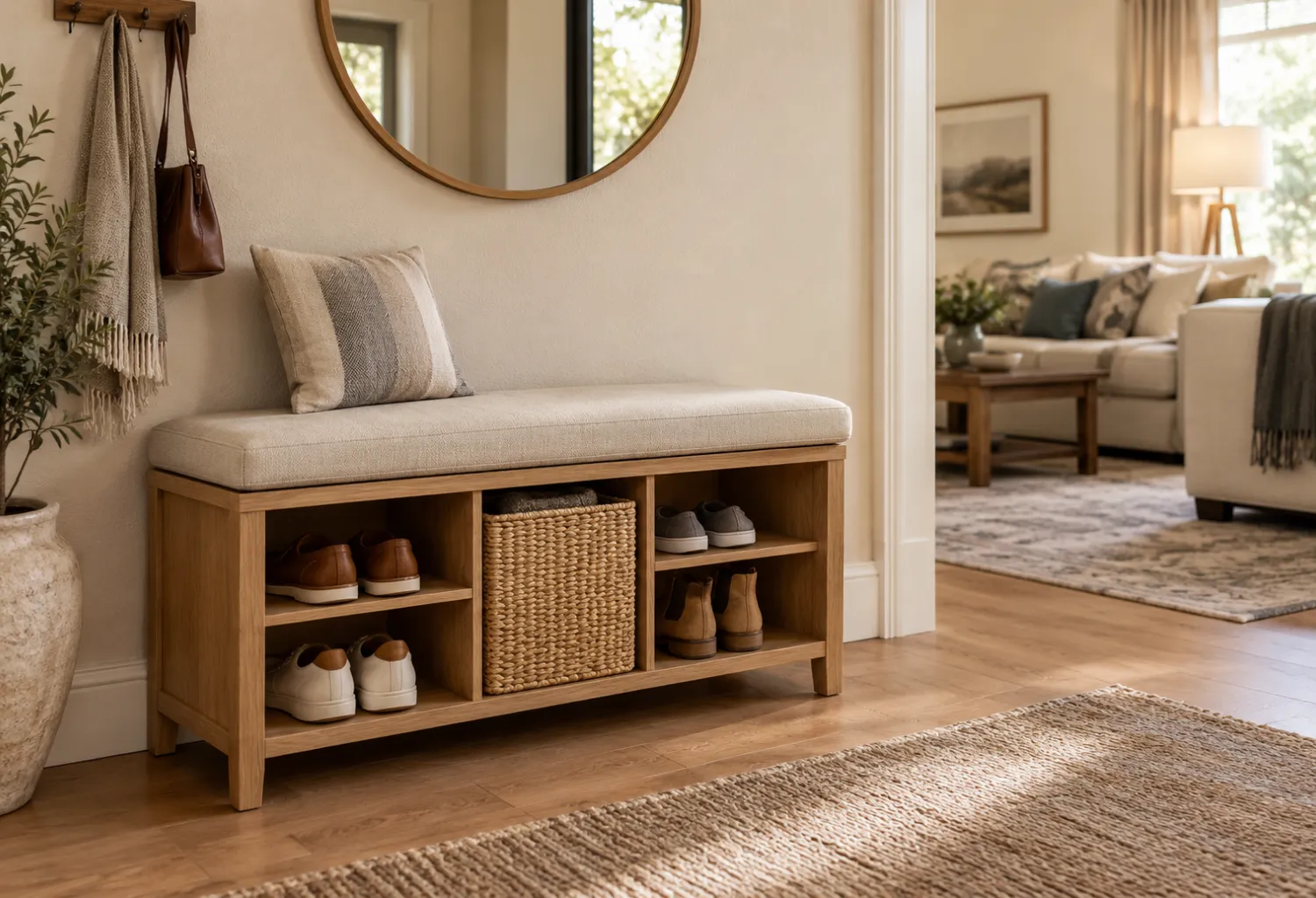
A storage bench can solve two problems at once: seating and shoe organization. Position it along an entry wall or beside the living room door so there is a natural place to sit while putting on or removing shoes.
Look for a bench with open cubbies underneath or a lift-up seat. Woven baskets can soften the appearance of open storage while keeping less attractive footwear hidden.
3. Built-In Window Seat Storage
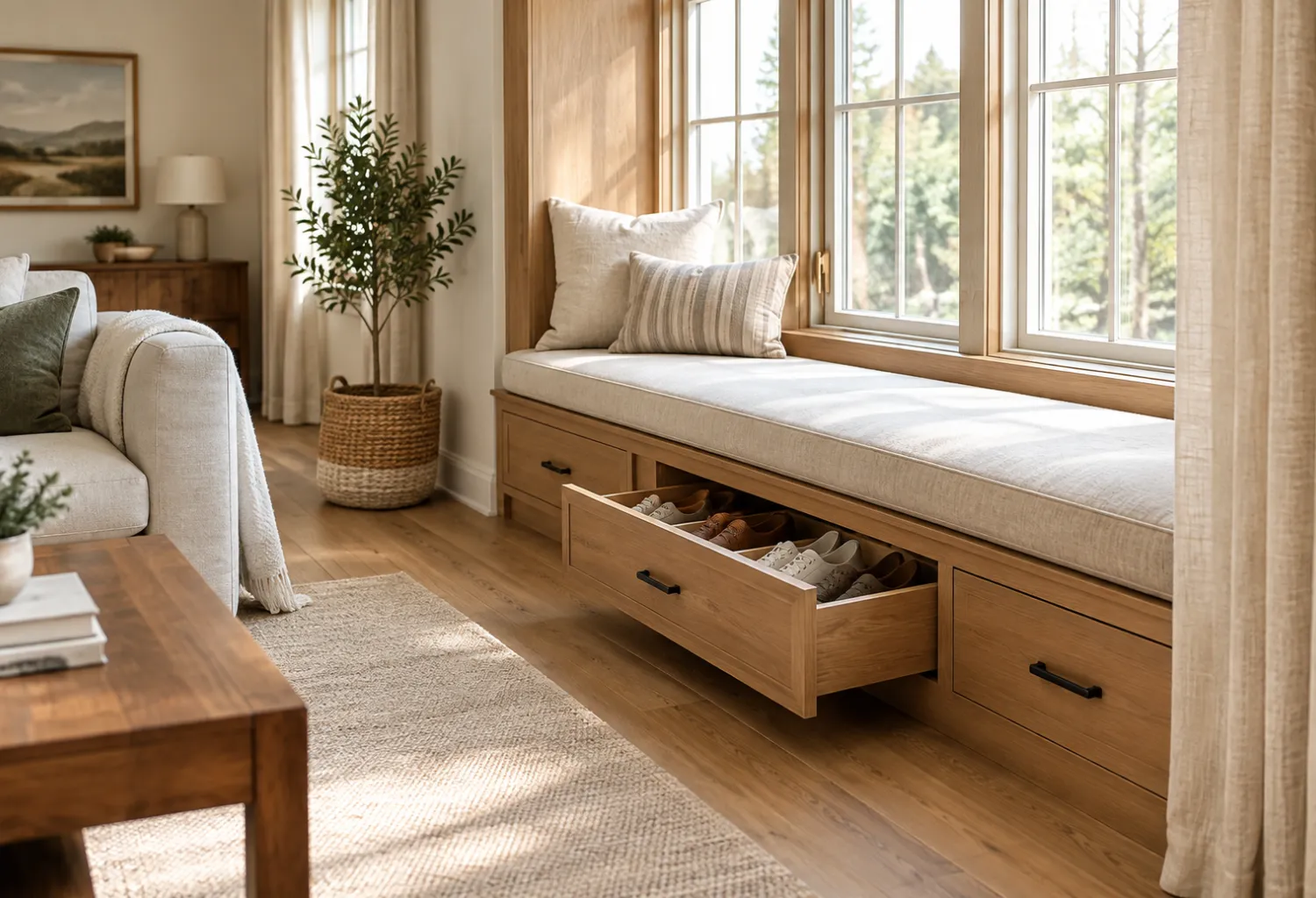
If your living room has a window seat, the space underneath can become useful shoe storage. Drawers or hinged compartments can hold everyday shoes without adding another piece of furniture.
This option works particularly well in homes where floor space is limited. Keep the visible seat cushion coordinated with the room’s existing upholstery so the storage feels like part of the architecture.
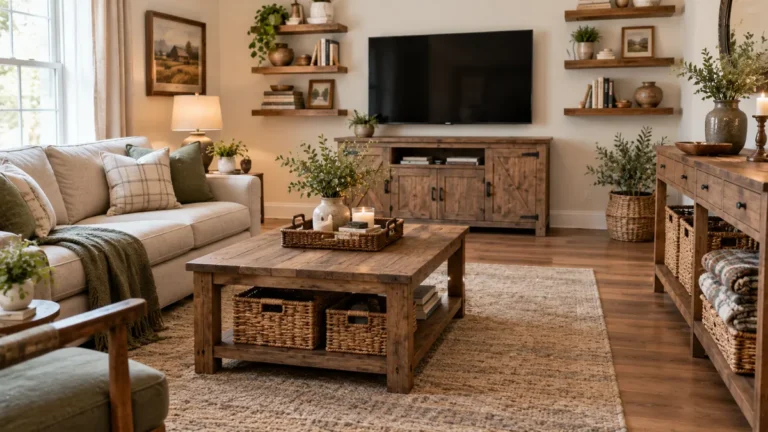
4. Woven Baskets Under a Console
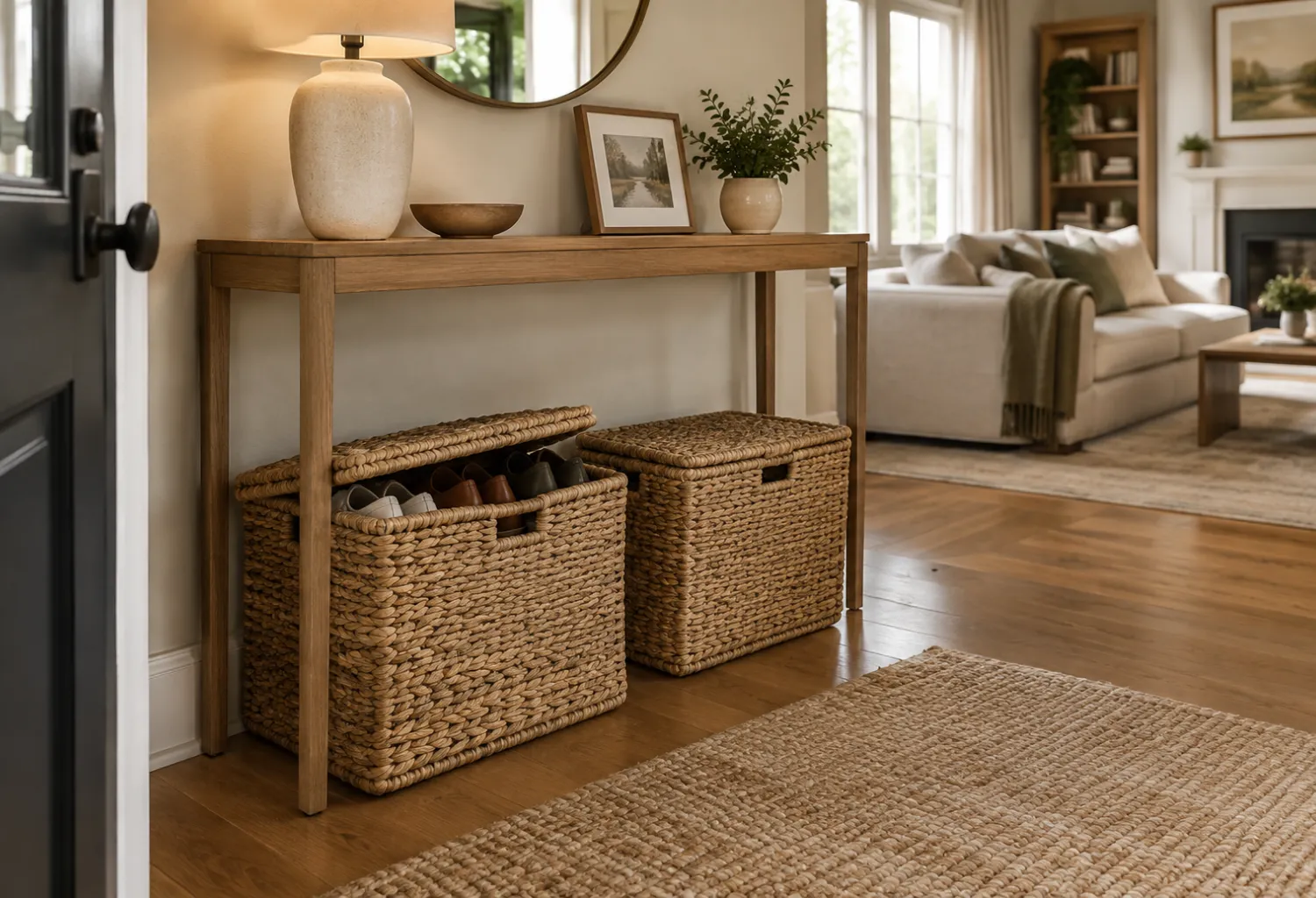
A console table can provide discreet shoe storage when paired with attractive baskets underneath. Choose two or three baskets that fit neatly between the console legs rather than filling the entire area.
Natural seagrass, water hyacinth, or rattan brings texture to a neutral living room. Use one basket for frequently worn shoes and another for seasonal pairs to prevent the area from becoming overcrowded.
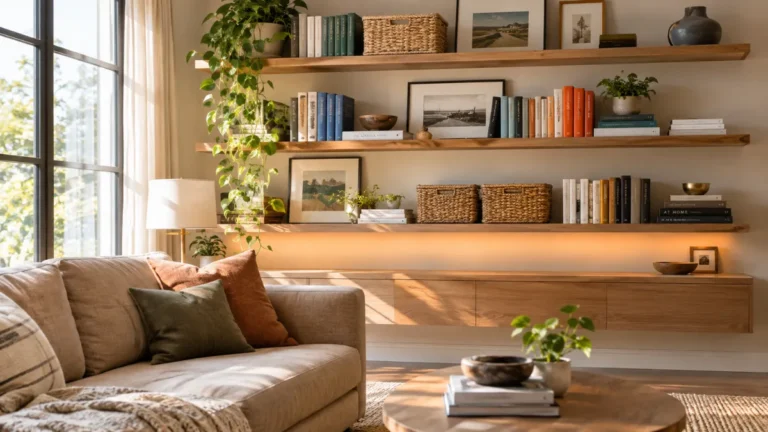
5. Floating Shoe Cabinets
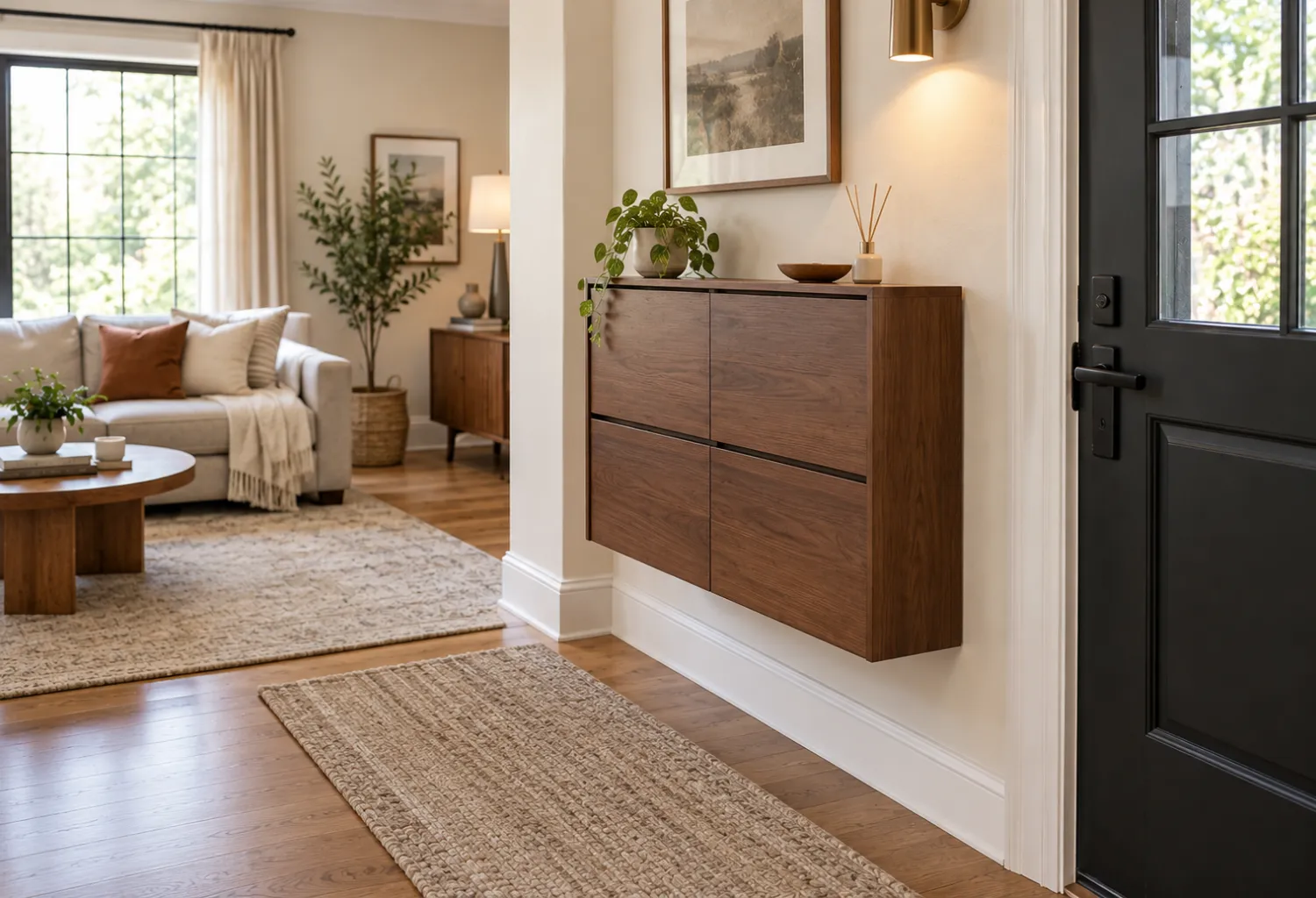
Wall-mounted shoe cabinets keep the floor underneath completely clear, which can make a small living room feel more spacious. They are particularly useful when you want storage without creating a bulky visual block.
Mount the cabinet at a comfortable height and leave enough clearance underneath for easy cleaning. A wood-finish cabinet against a soft white or beige wall can blend beautifully with modern interiors.
6. Ladder Shelf Shoe Storage
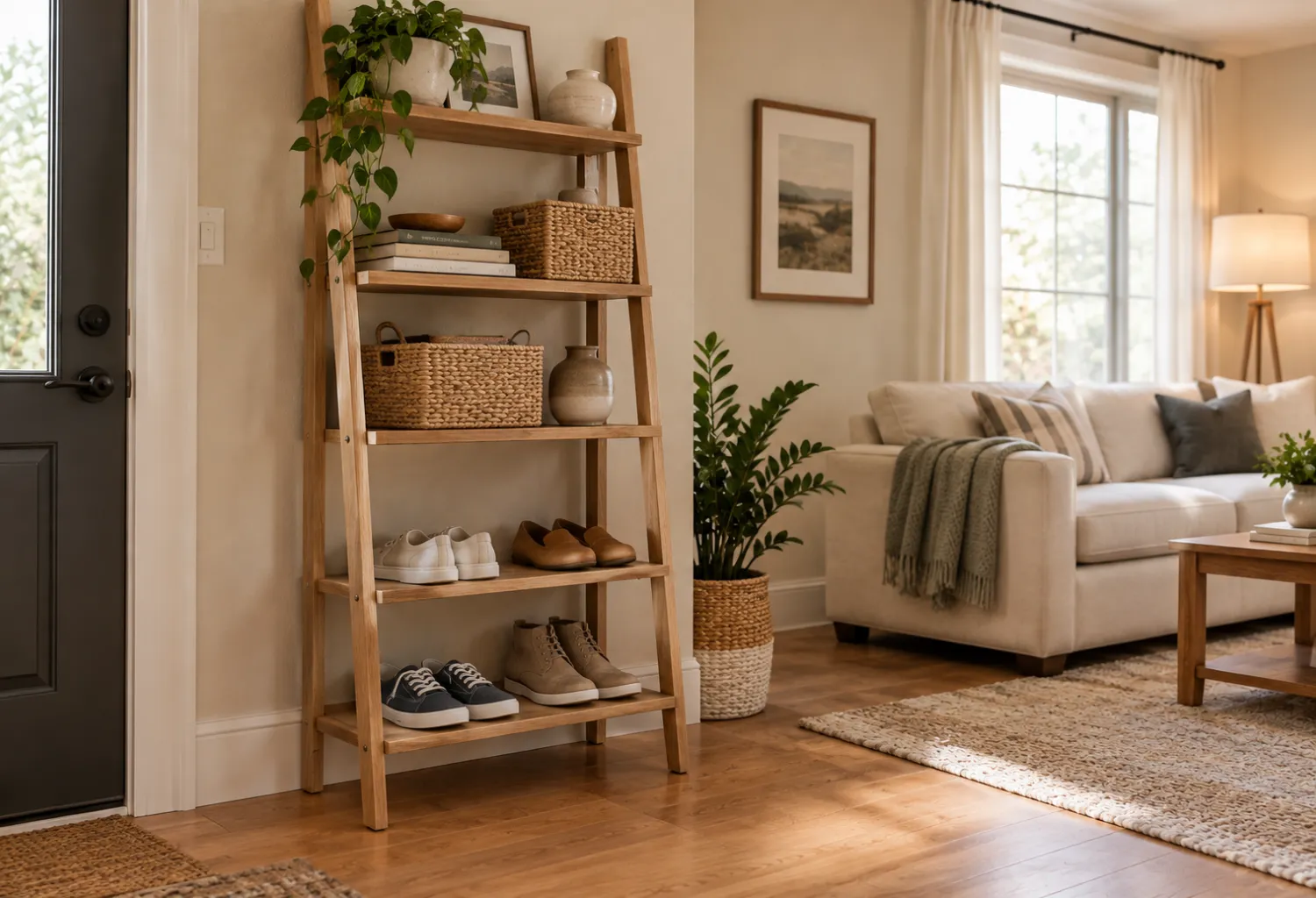
A leaning ladder shelf can work surprisingly well for casual shoe storage. Use the lower shelves for shoes and reserve the upper levels for baskets, books, or decorative objects.
This approach is best for attractive everyday footwear rather than a large collection. Keep the display edited so the shelf looks intentional instead of resembling an open closet.
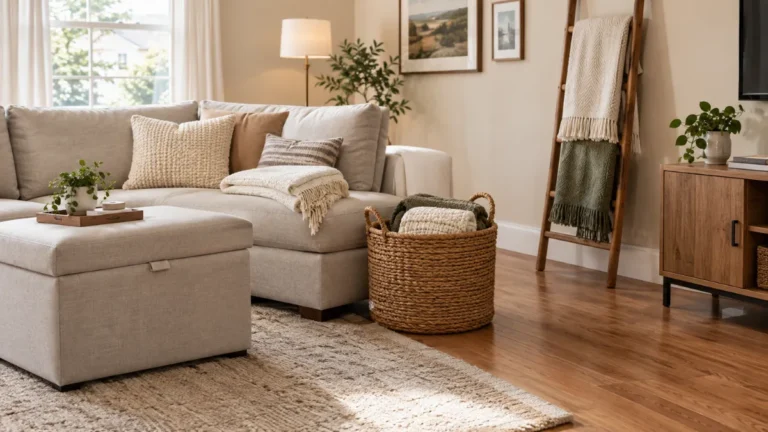
7. Ottoman With Hidden Shoe Storage
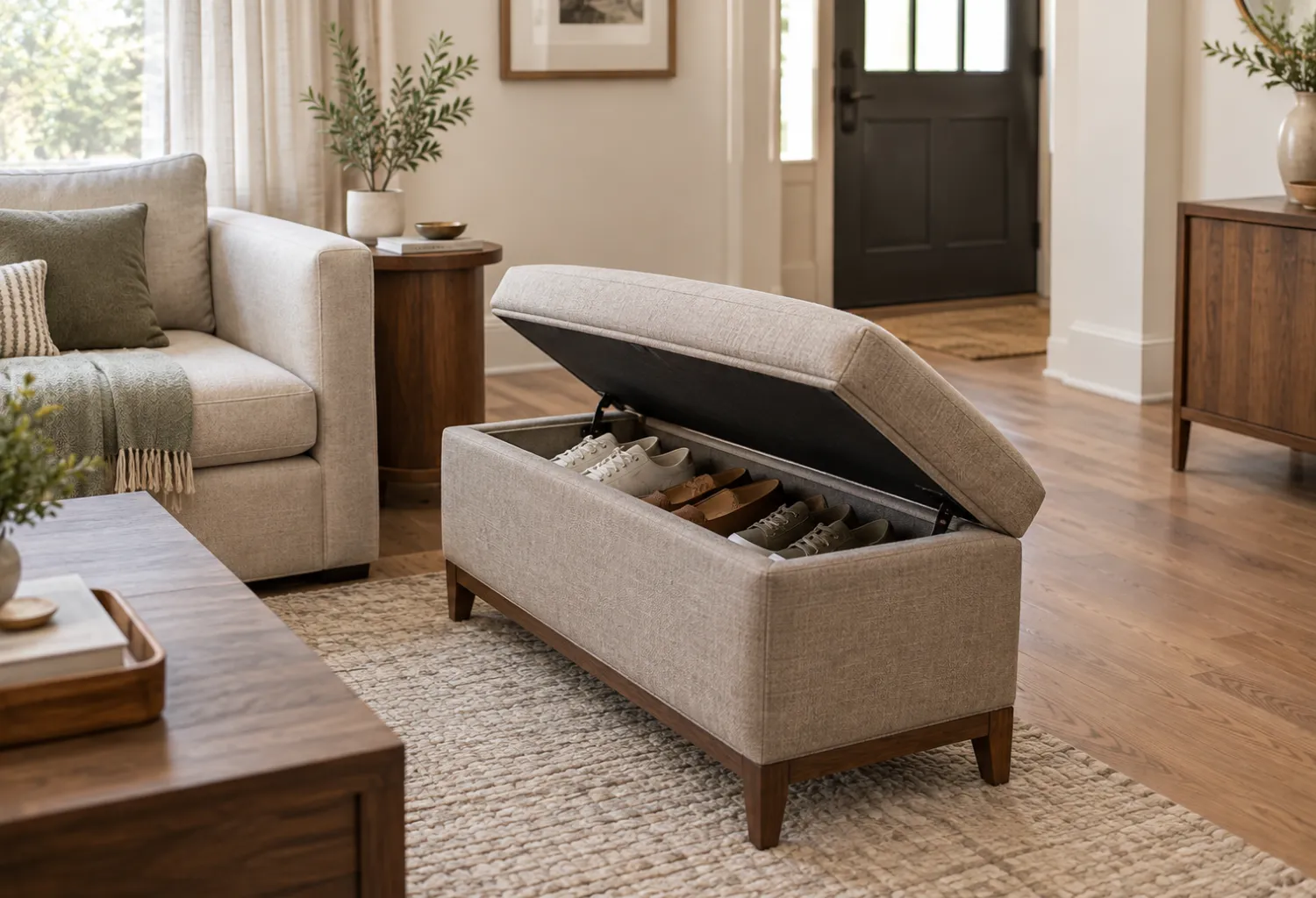
A storage ottoman offers a particularly discreet solution because the shoes disappear completely inside. Place it near the sofa or living room entrance where it can also serve as extra seating or a footrest.
Choose a fabric that relates to your existing sofa or accent chair. A neutral upholstered ottoman is especially easy to incorporate into a warm, comfortable living room.
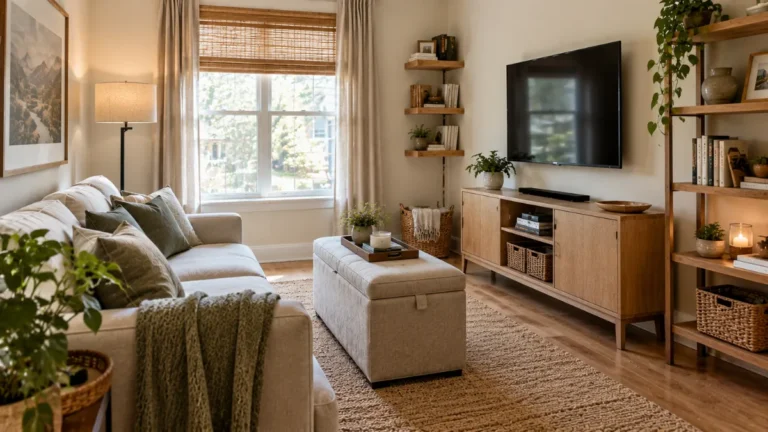
8. Shoe Drawers Inside a Media Console
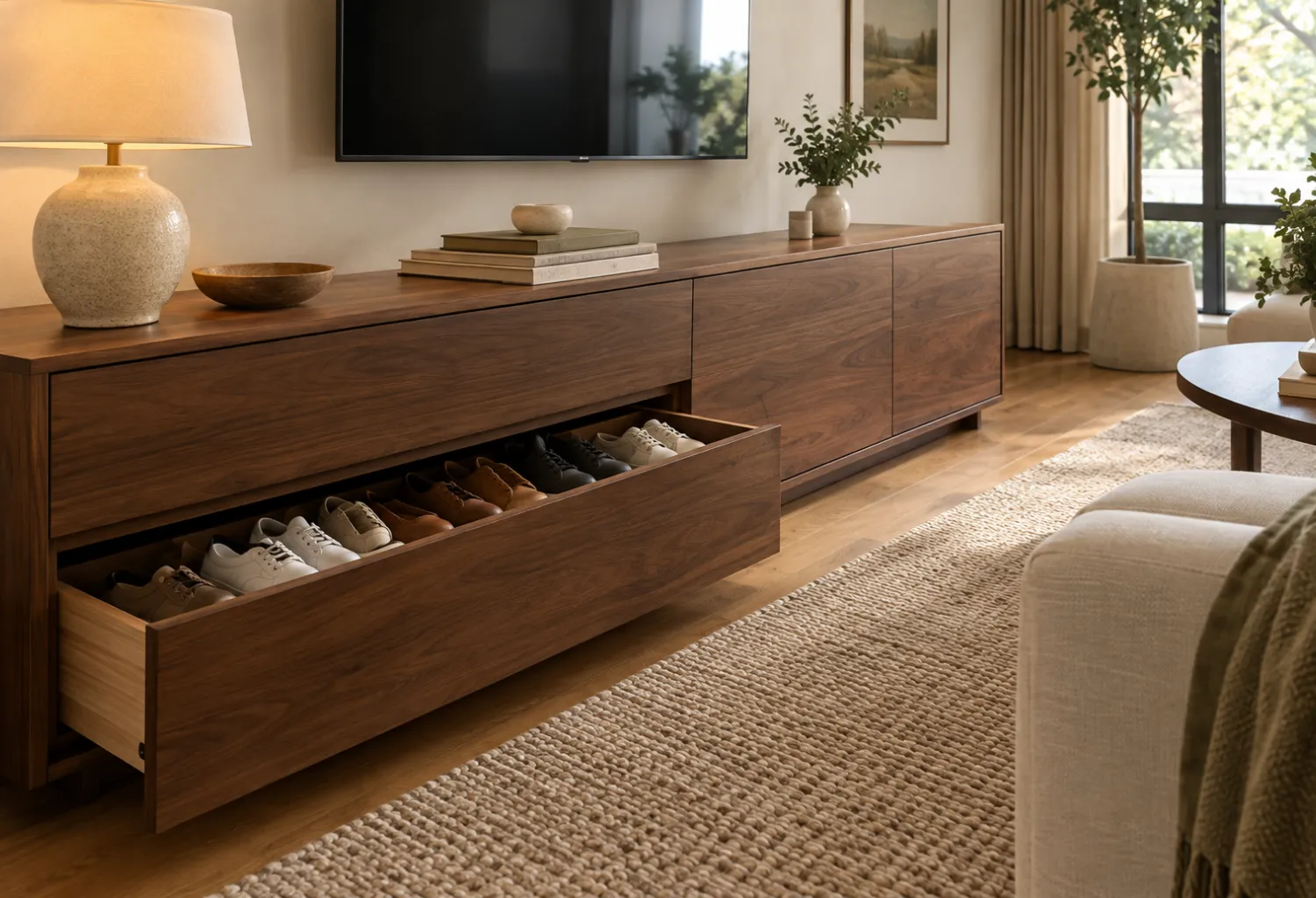
If your living room already has a large media console, consider using a lower cabinet section for shoes. This works best for footwear used frequently rather than long-term storage.
Keep shoes inside closed compartments so they do not compete visually with the television area. Adjustable shelves can make the space more useful for different shoe heights.
9. Narrow Shoe Rack Behind the Sofa
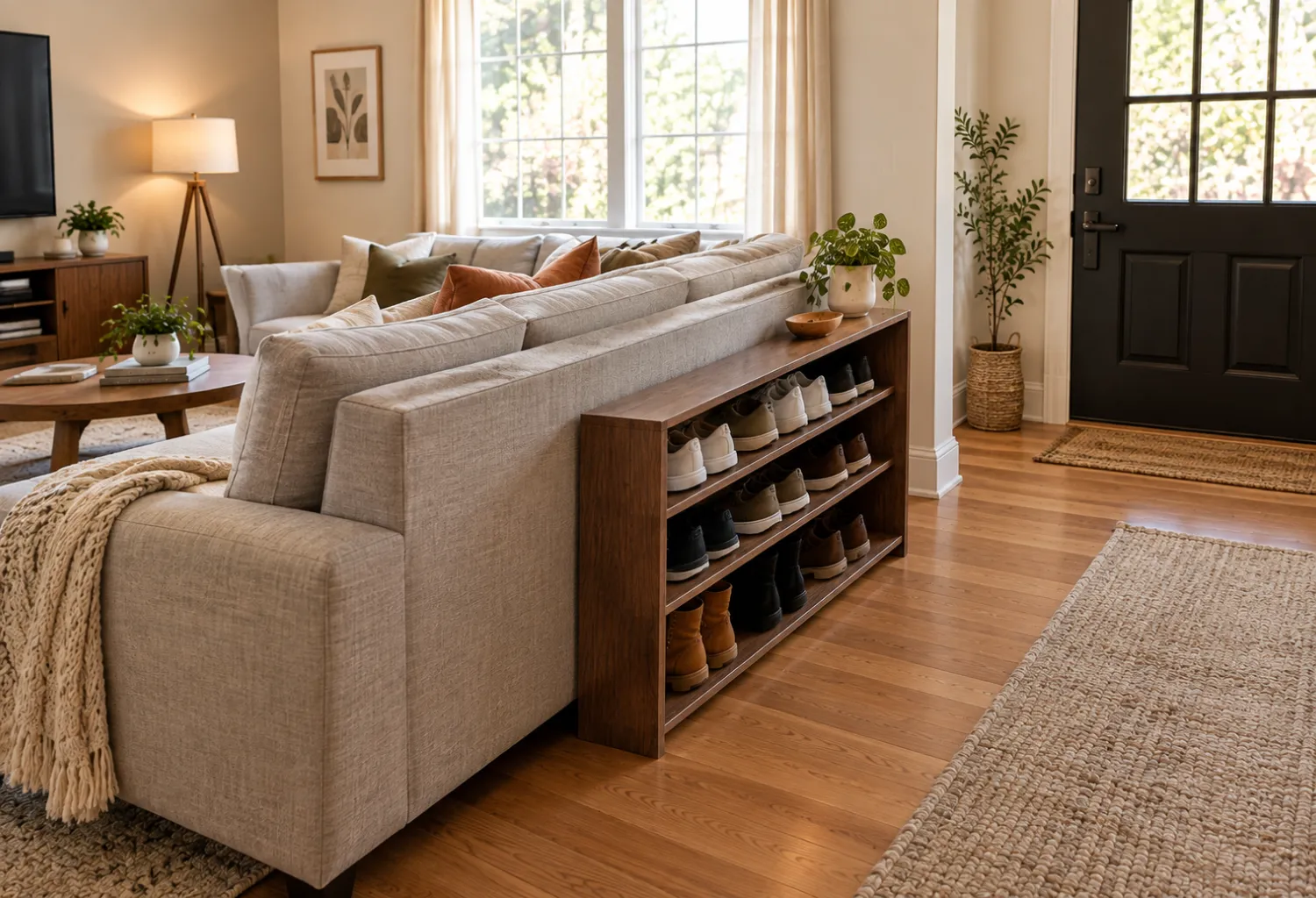
The space behind a sofa is often overlooked. A low, narrow shoe rack can fit into this unused zone when the sofa is positioned away from the wall.
Choose a rack that stays below the sofa’s back height so it remains visually quiet. This is particularly useful in open-plan rooms where the sofa already acts as a divider between living and entry areas.
10. Closed Storage Cabinet Near the Door
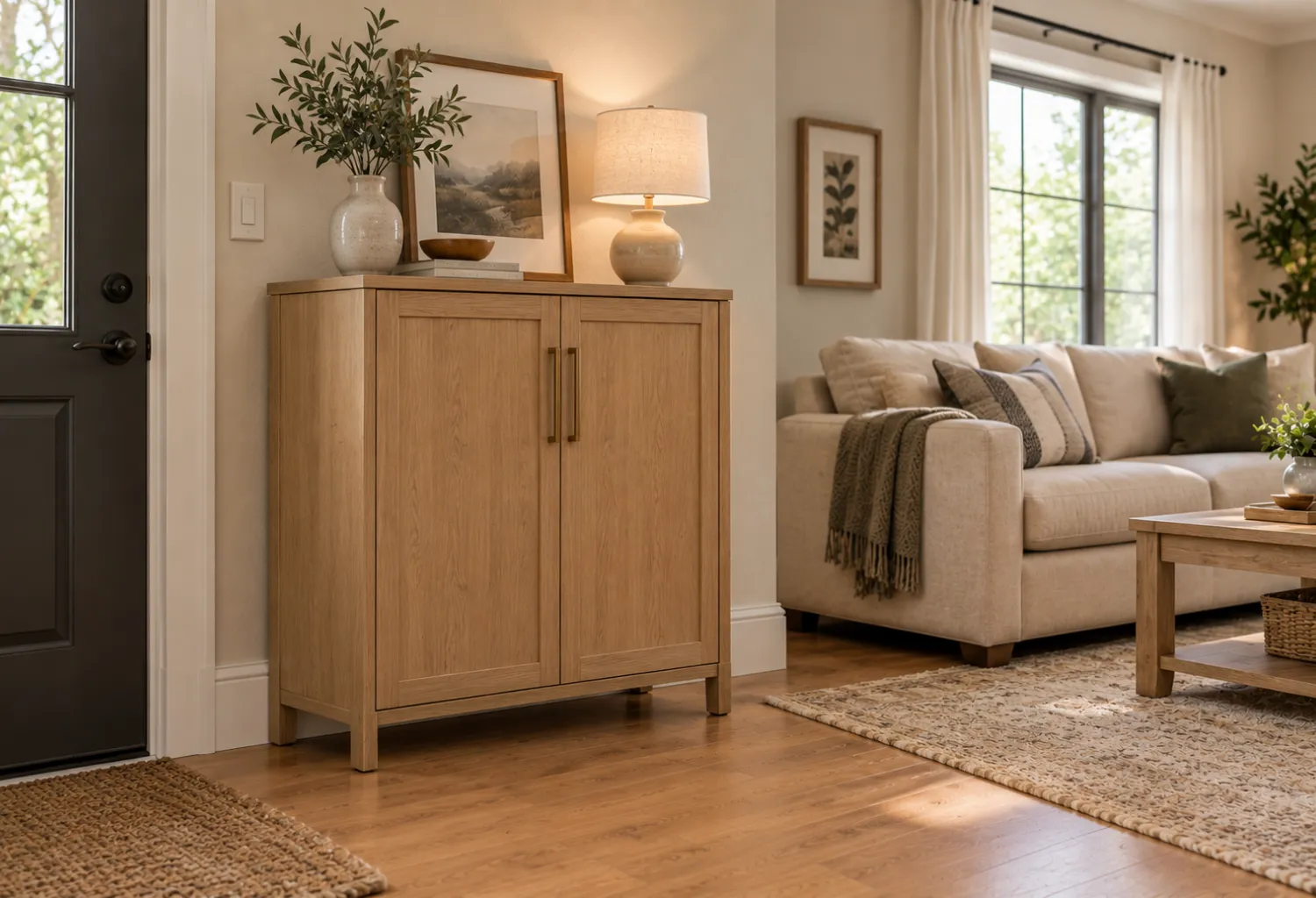
A regular closed cabinet can become excellent shoe storage without looking like a shoe organizer. Place it close to the entrance and use adjustable shelves to accommodate sneakers, flats, boots, and sandals.
For a cohesive look, match its finish to another major element in the room, such as the coffee table, console, or shelving. Closed doors also help keep visual clutter under control.
11. Under-Stair Shoe Storage
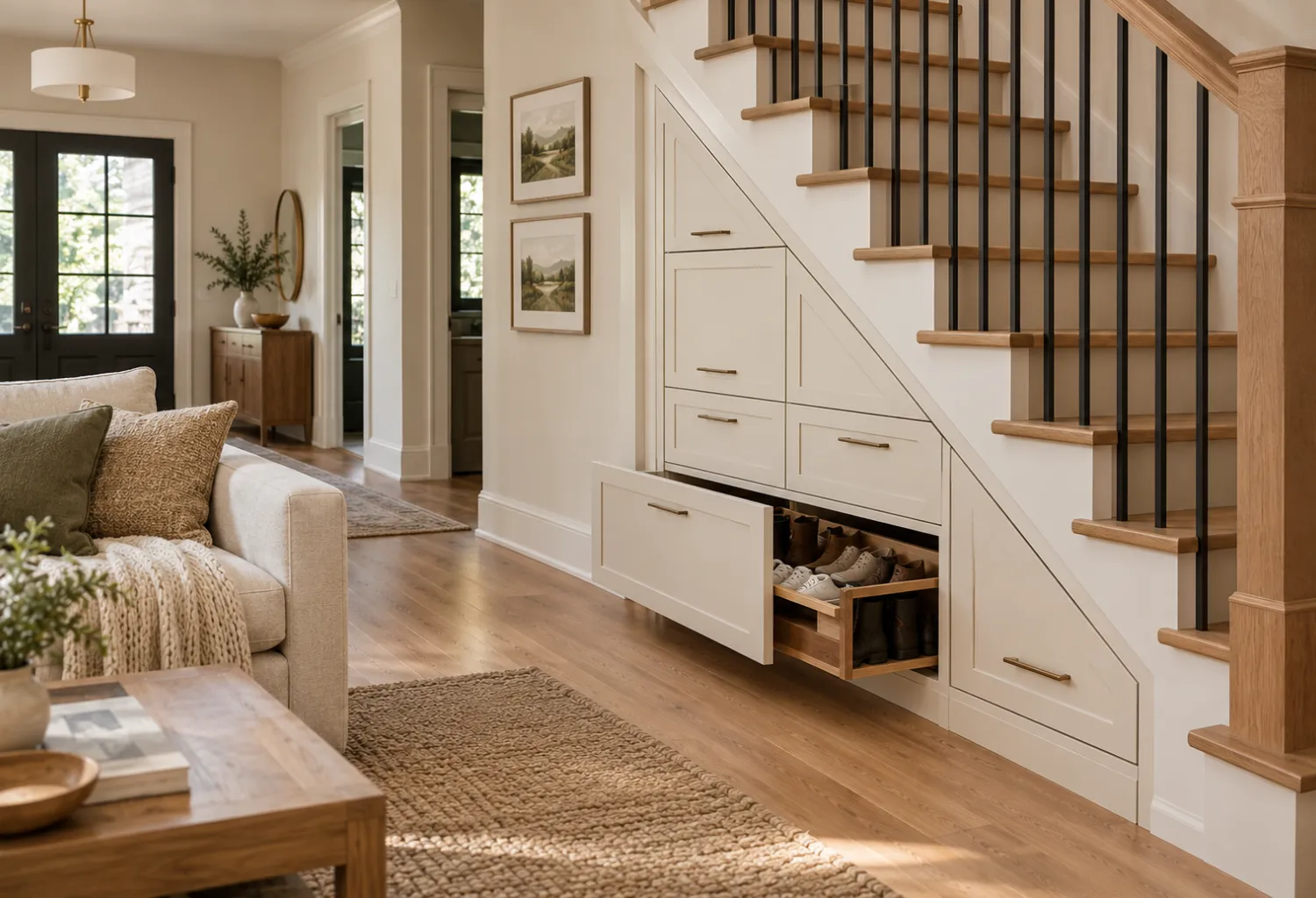
In living rooms with stairs, the space beneath the staircase can provide valuable shoe storage. Built-in drawers, pull-out cabinets, or open cubbies can turn an awkward area into a highly functional storage zone.
Closed drawers create the cleanest appearance, while open cubbies work well for households that need quick daily access. Add warm lighting inside deeper compartments if visibility is an issue.
12. Decorative Cubby Storage
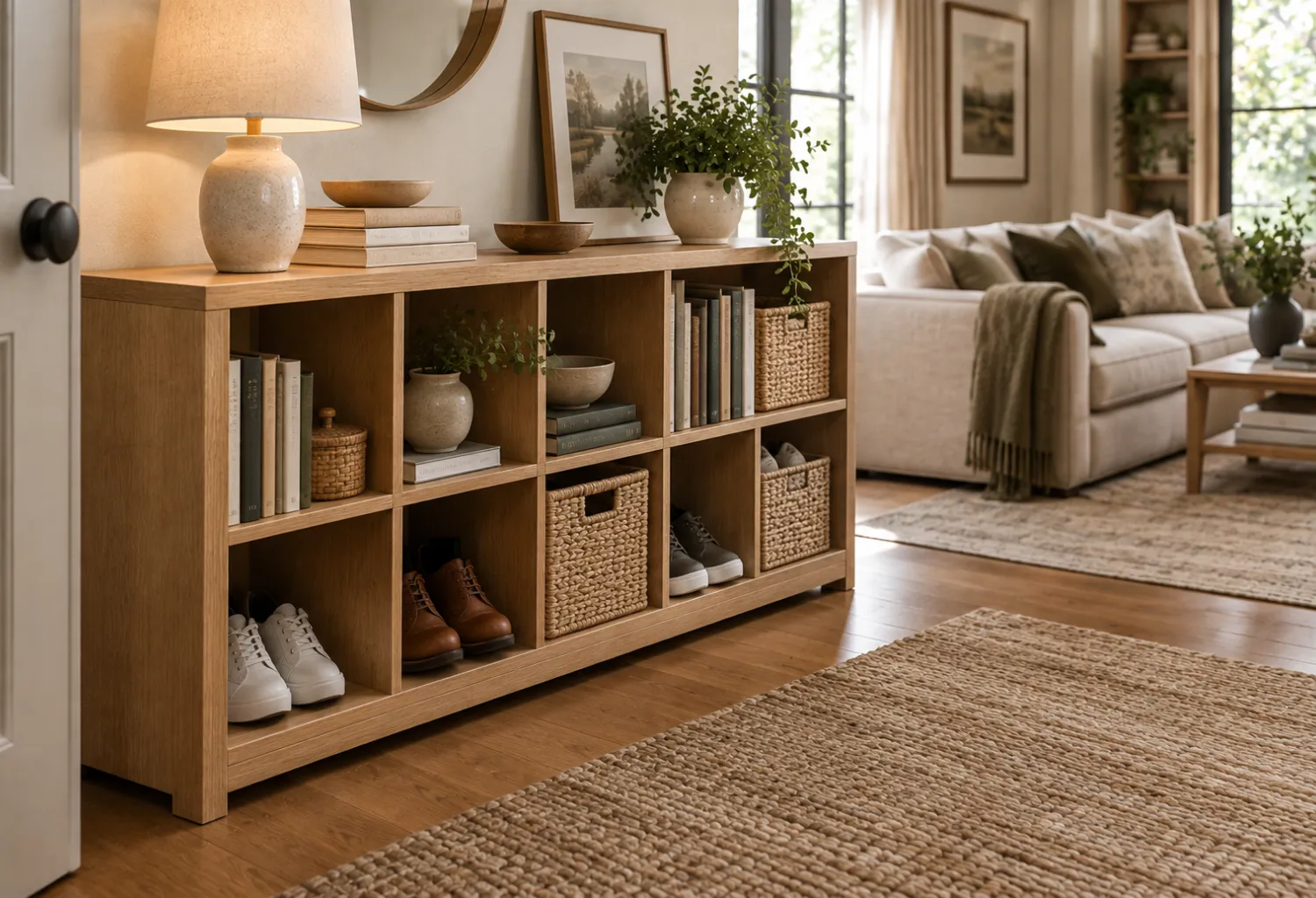
A cubby unit can keep shoes organized while giving the living room a flexible storage system. Assign individual compartments to household members or separate everyday shoes from occasional footwear.
For a softer look, alternate shoe compartments with fabric or woven baskets. A light wood cubby paired with cream, beige, or charcoal baskets can complement a relaxed contemporary room.
13. Pull-Out Shoe Drawers
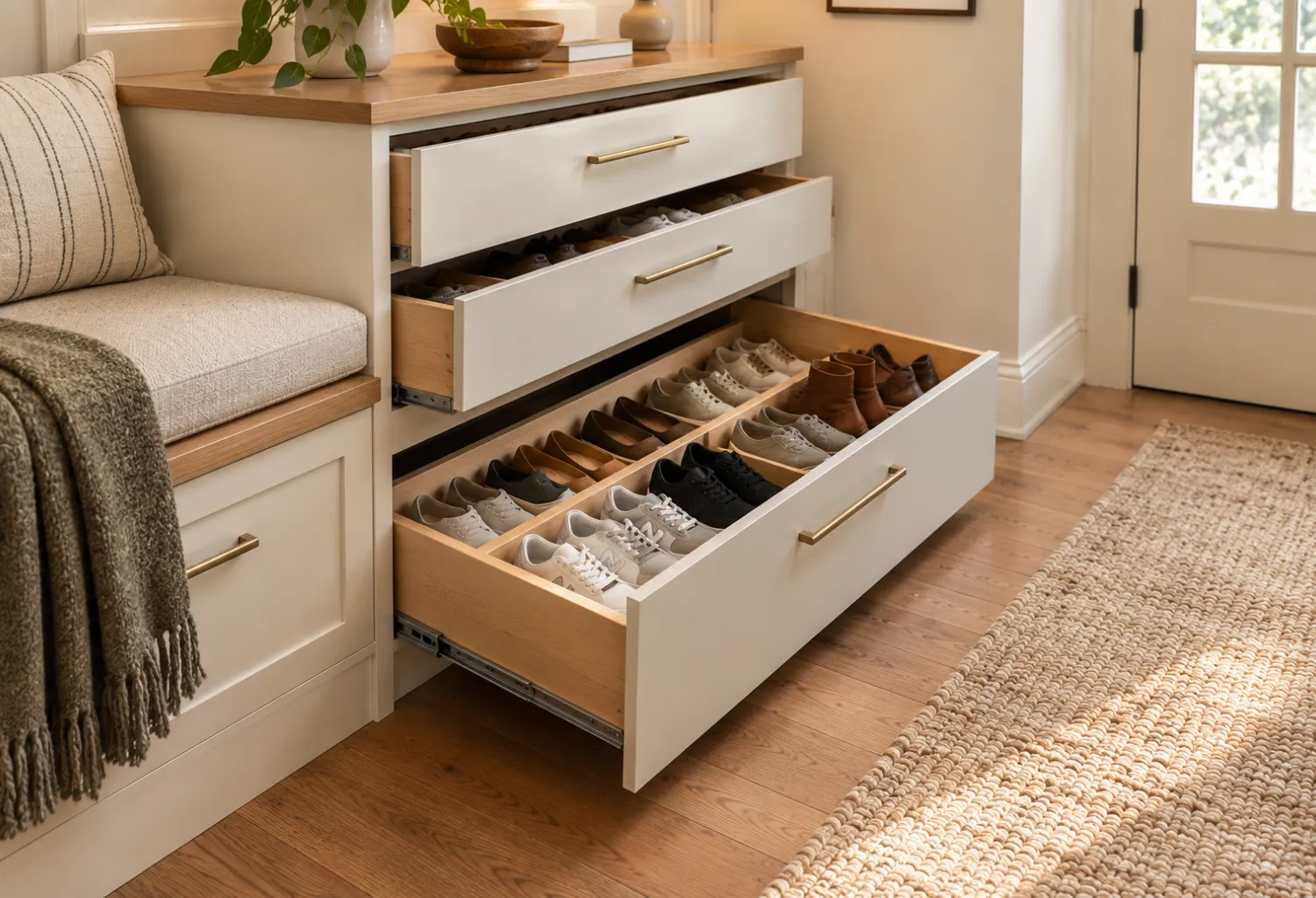
Pull-out drawers make deeper storage much easier to use because you can see the entire contents at once. They are especially useful inside built-in cabinets or custom entryway furniture.
Use one drawer for sneakers, another for flats or sandals, and a taller compartment for boots. This type of organization works well when several people share the same storage area.
14. Shoe Storage Inside an Entry Closet
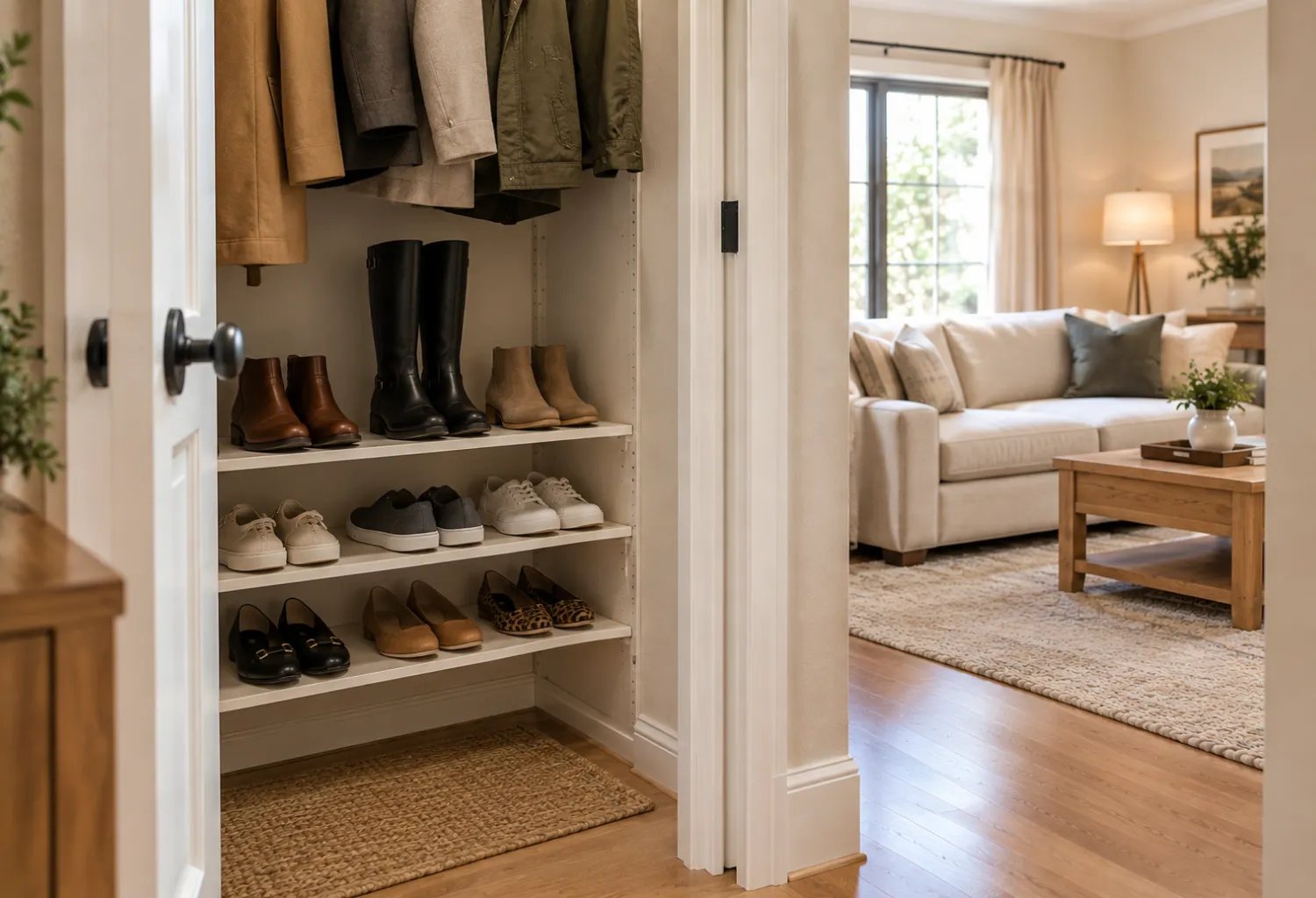
If your living room has a coat or entry closet, dedicate the lower portion to shoes. Adjustable shelving lets you customize the space according to the footwear you actually own.
Keep the most frequently worn pairs toward the front and less-used shoes higher up or farther back. A small floor mat inside the closet can also help contain dirt and moisture.
15. Open Wood Shoe Bench
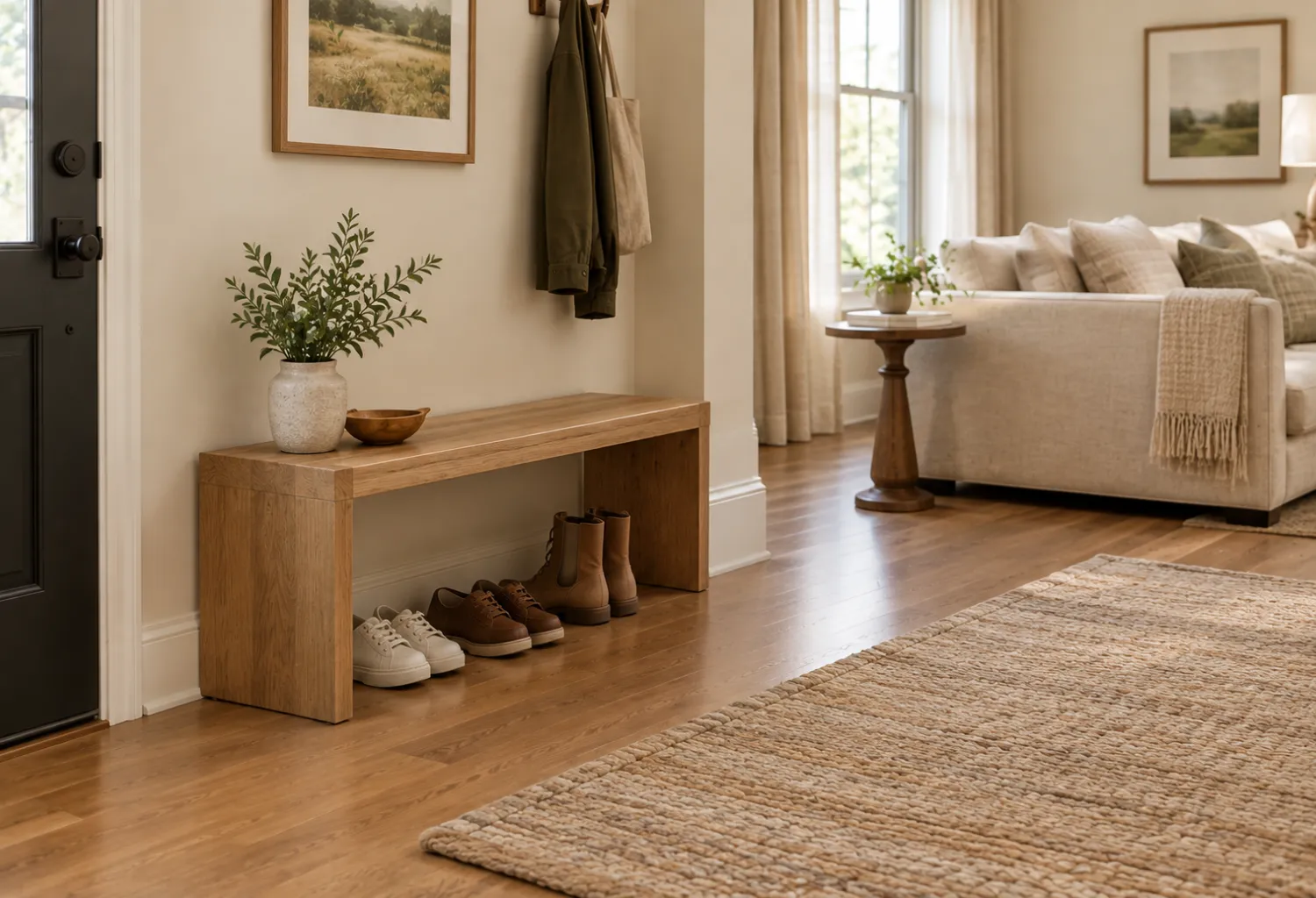
For homes where shoes are put on and removed in the living room, an open wood bench can make the process more convenient. The space underneath provides an easy place for a small number of everyday pairs.
Choose a bench with a simple profile so it does not visually compete with the sofa. A solid oak or walnut finish can add warmth to rooms dominated by upholstery and painted surfaces.
16. Rattan Storage Cabinet
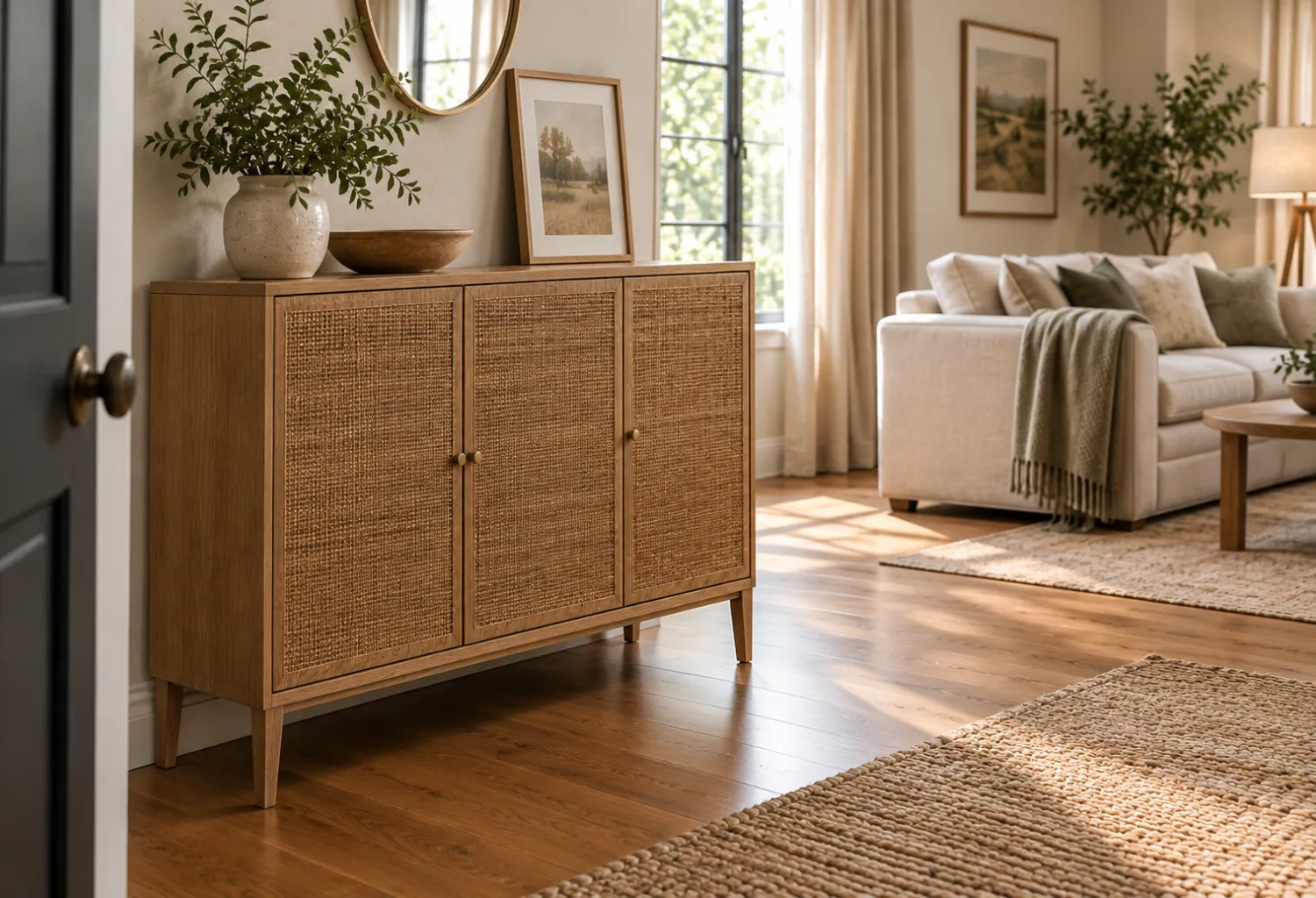
A rattan-front cabinet can hide shoes while adding natural texture to the room. The woven doors soften the appearance of practical storage and work particularly well with coastal, bohemian, organic modern, and relaxed interiors.
Keep the cabinet near the entrance and style the top with only a few pieces, such as a ceramic bowl, small plant, or framed print. This keeps the storage functional without making it look overly utilitarian.
17. Rolling Shoe Cart
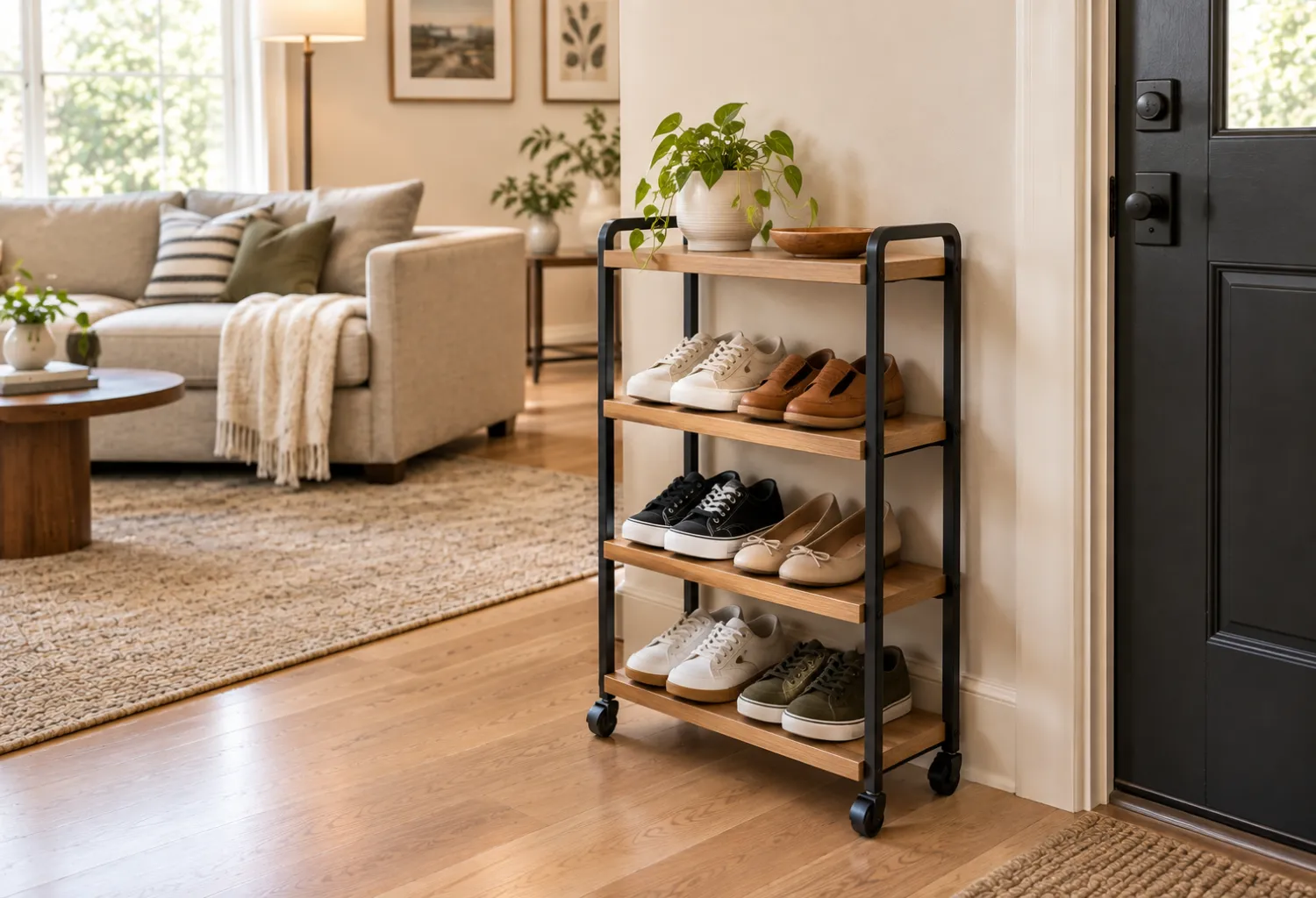
A compact rolling cart is useful when shoe storage needs to move between spaces. It can sit near the entrance during busy periods and be tucked beside a cabinet or closet when you want the room to look cleaner.
Choose a slim metal or wood cart with several tiers. Because the storage remains visible, reserve it for attractive everyday shoes and keep the number of pairs limited.
18. Basket Storage Inside a Bookcase
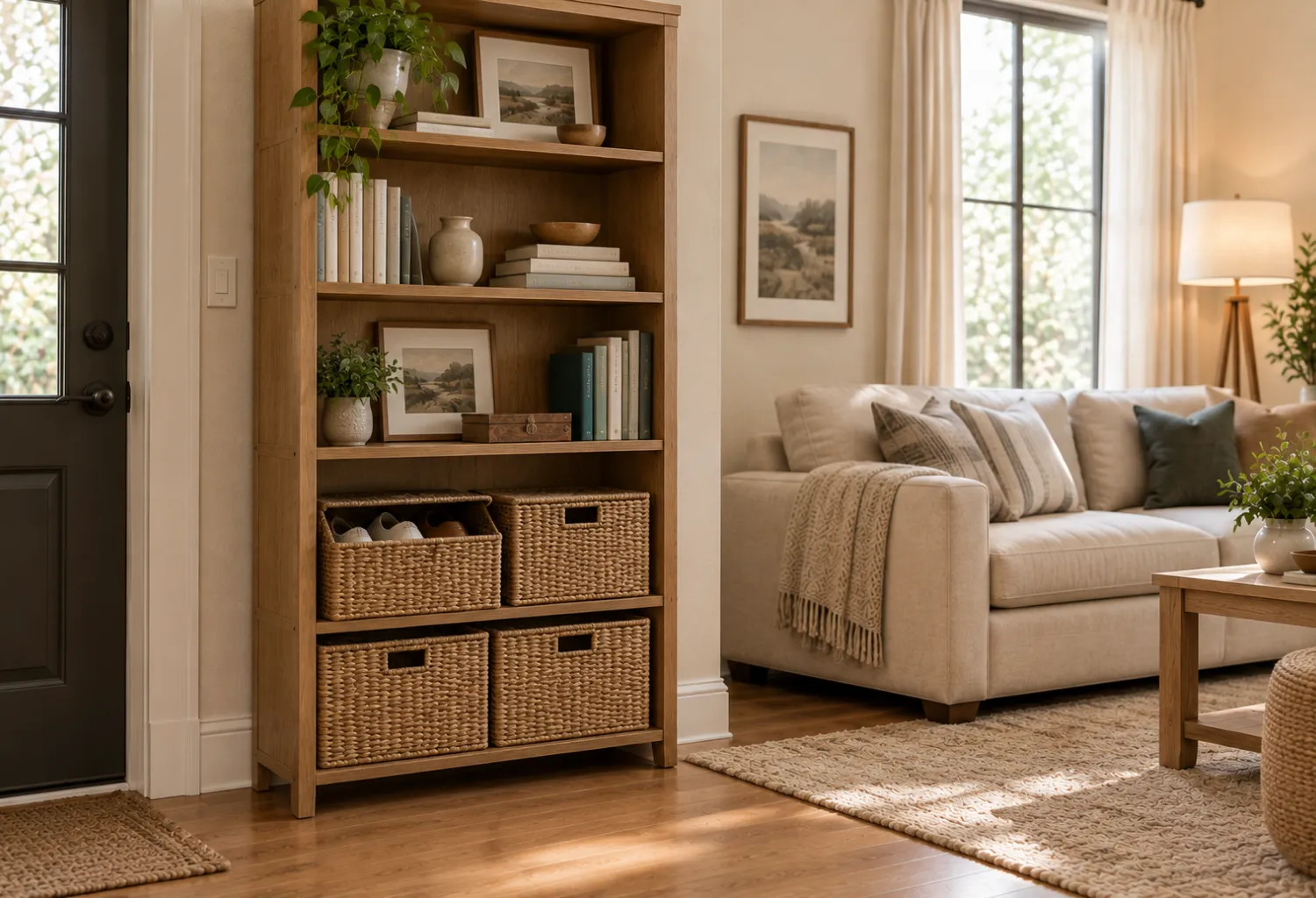
A bookcase does not have to be used exclusively for books. Lower shelves can hold large baskets containing shoes while the upper shelves display books, artwork, plants, and accessories.
This creates a more balanced furniture arrangement than a dedicated shoe rack. Use matching baskets so the lower section reads as coordinated storage rather than miscellaneous containers.
19. Hidden Shoe Drawer in a Console
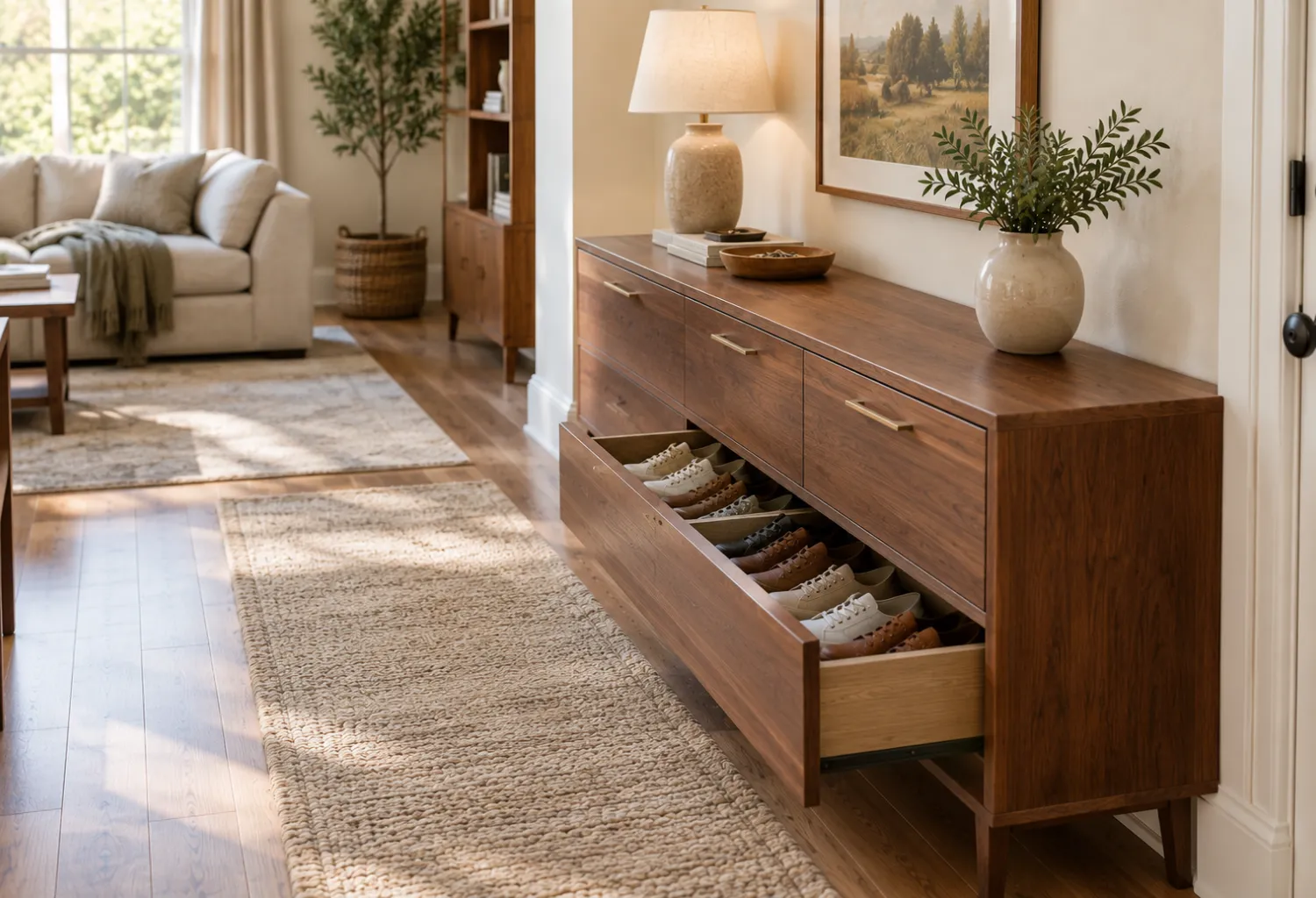
A console with deep drawers can provide convenient hidden storage for shoes while maintaining a polished entry area. Reserve one or two drawers for footwear that gets worn regularly.
This solution is particularly effective when the living room already has a console. Instead of introducing another storage piece, you simply make better use of furniture you already own.
20. Custom Built-In Entry Storage
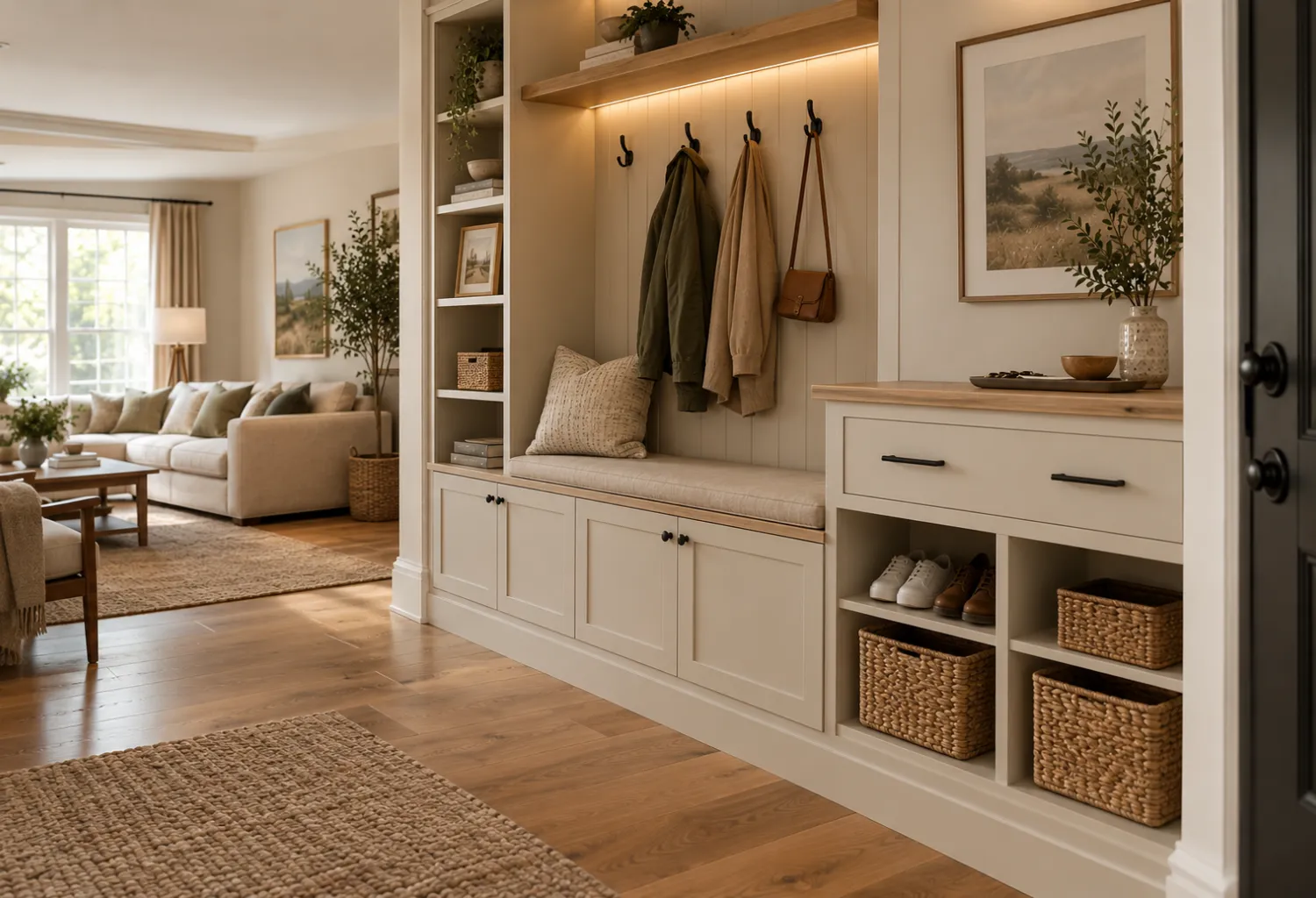
For a permanent solution, custom built-in storage can combine shoe compartments, hooks, drawers, and seating in one compact area. It is especially valuable in homes where the living room doubles as the main entry point.
Use closed cabinets for shoes you want completely hidden and open cubbies for the pairs used every day. Matching the built-in to the wall color can make the entire storage zone feel quieter and more spacious.
Conclusion
The best shoe storage solution depends on how much footwear you need to keep nearby, how much floor space you have, and how visible you want the storage to be. A slim cabinet or floating unit suits smaller living rooms, while benches, baskets, and ottomans add storage without sacrificing comfort.
For a larger household, built-ins, drawers, or compartmentalized cabinets provide better long-term organization. Whatever approach you choose, the most successful Shoe Organization Ideas For Living Room spaces keep everyday footwear accessible while making the storage feel like a natural part of the room.