21 Kids Bedroom Organization Ideas for a Tidier Room
Every parent knows the moment: you step on a tiny block, and suddenly the whole room feels like too much. Good kids bedroom organization doesn’t need a big budget or a weekend-long overhaul. It just needs systems a child can actually follow. These 21 ideas are practical, easy to set up, and made for real messy rooms, real small spaces, and real kids.
1. Toy Rotation Bins
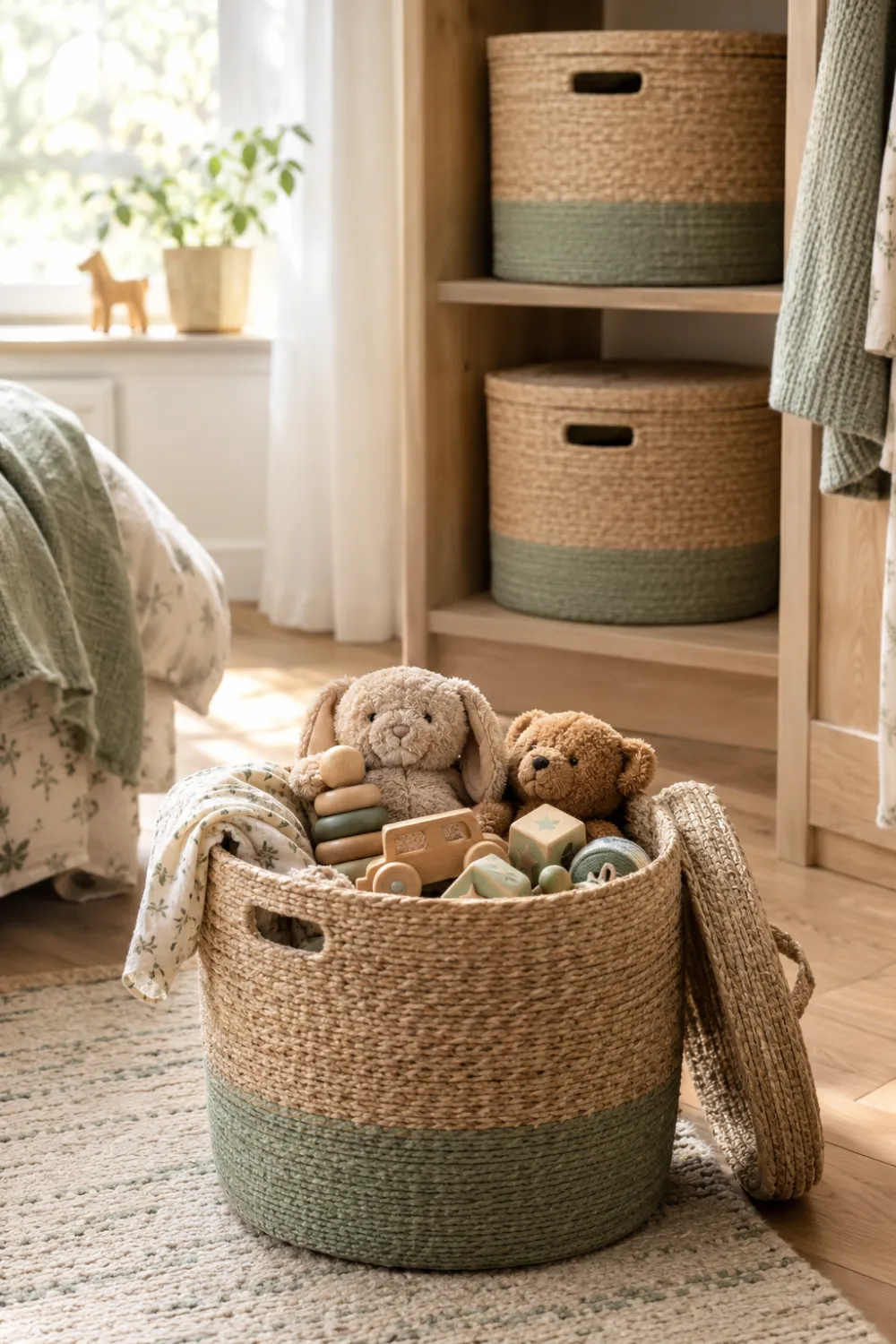
Kids don’t need every toy out at once. Pack most of them into three or four lidded bins and keep only one bin in the room. Swap them every couple of weeks. The room stays calmer, and old toys feel brand new when they come back. Store the extra bins on a high closet shelf.
2. Picture Labels
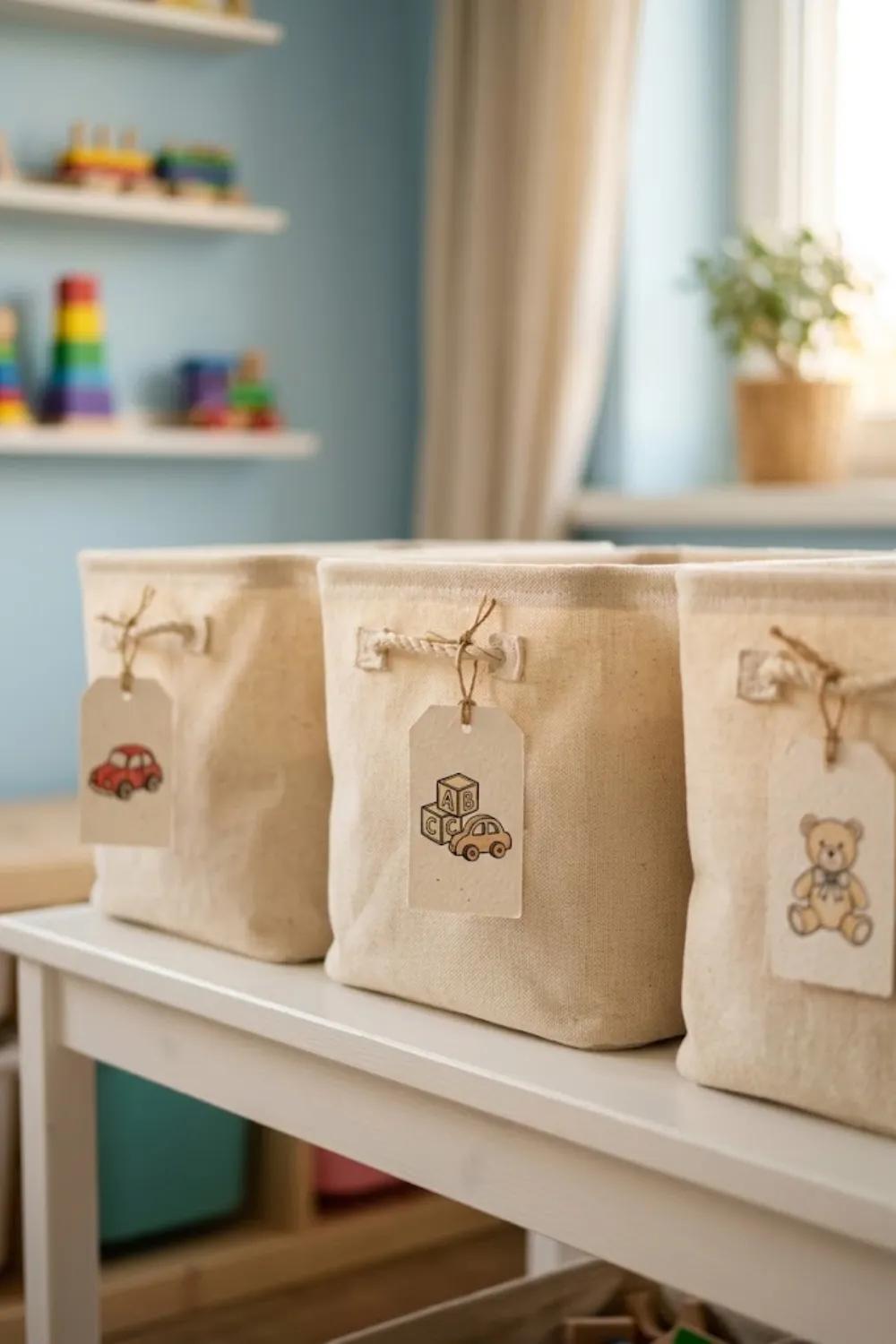
Young kids can’t read yet, so words on a bin won’t help. Stick a photo or simple drawing on the front instead: a car for vehicles, a block for building toys. Cleanup becomes a matching game. Print the pictures on sticker paper, or just tape on a cutout from the toy’s box.
3. Under-Bed Rolling Drawers
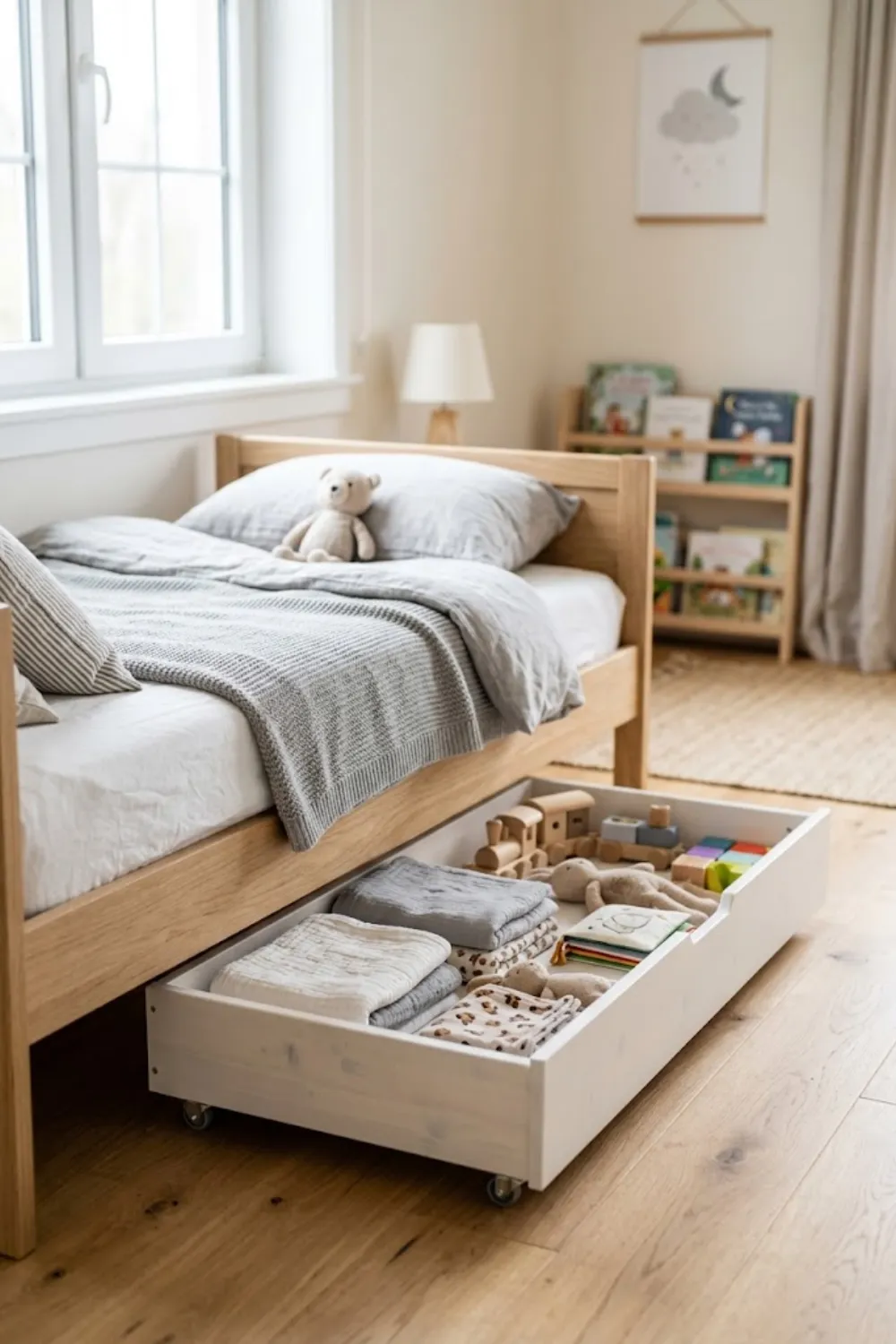
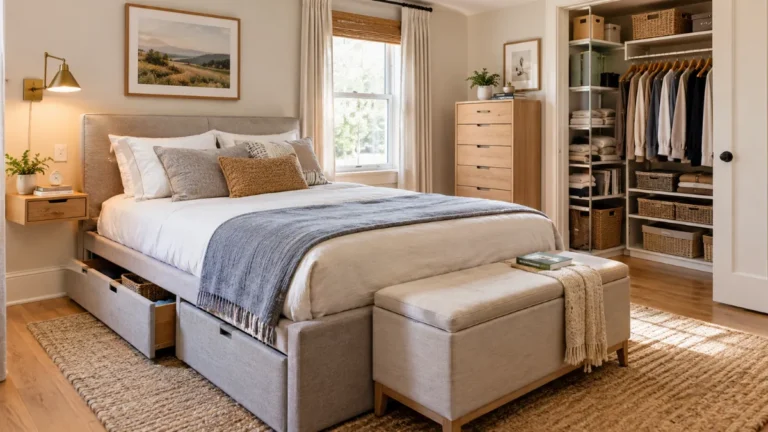
The space under a bed is wasted in most kids’ rooms. Slide in shallow rolling drawers and you gain a hidden toy closet. Choose ones with wheels so even a five-year-old can pull them out alone. They also work well for spare bedding or out-of-season clothes.
4. Cube Shelf with Fabric Bins
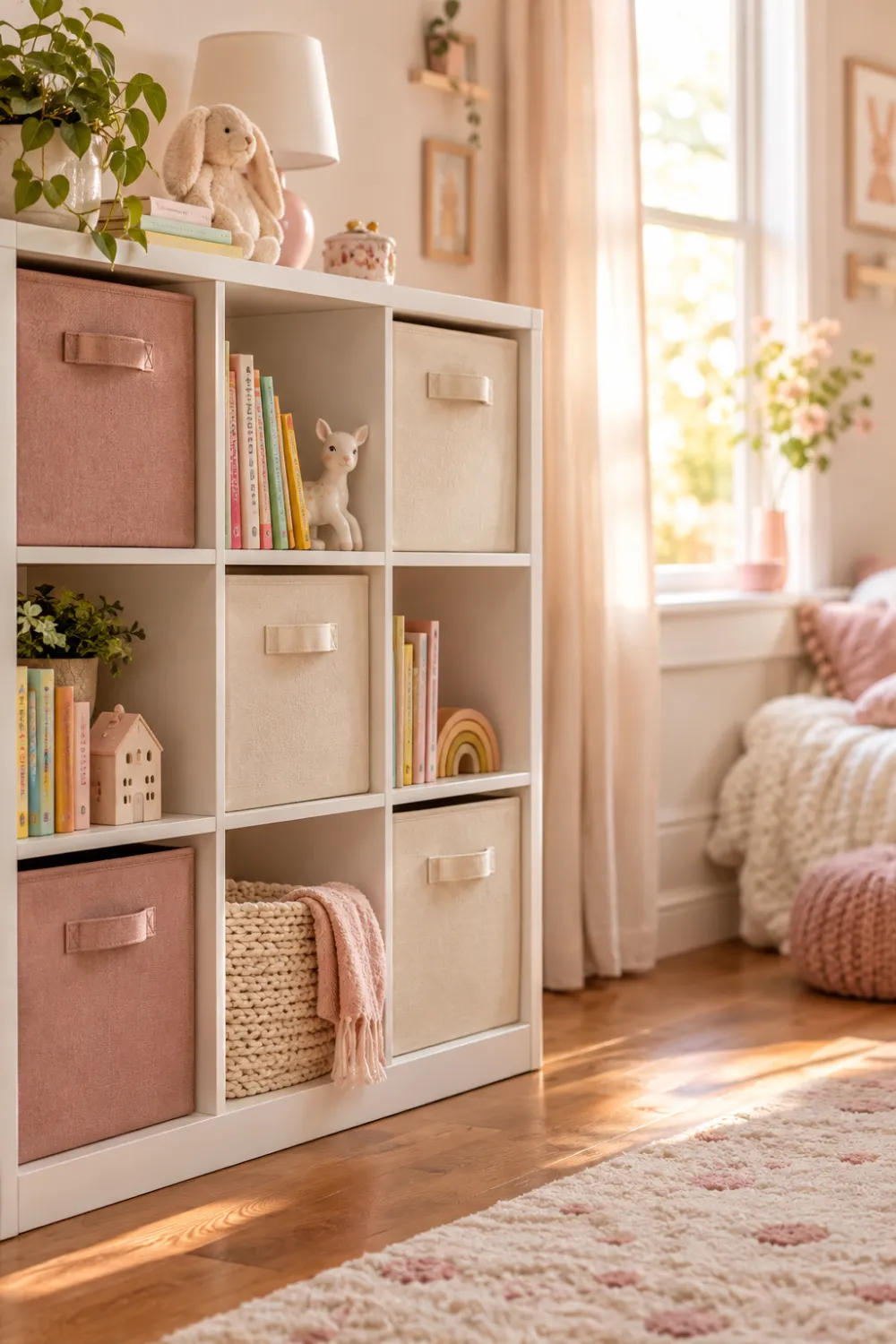
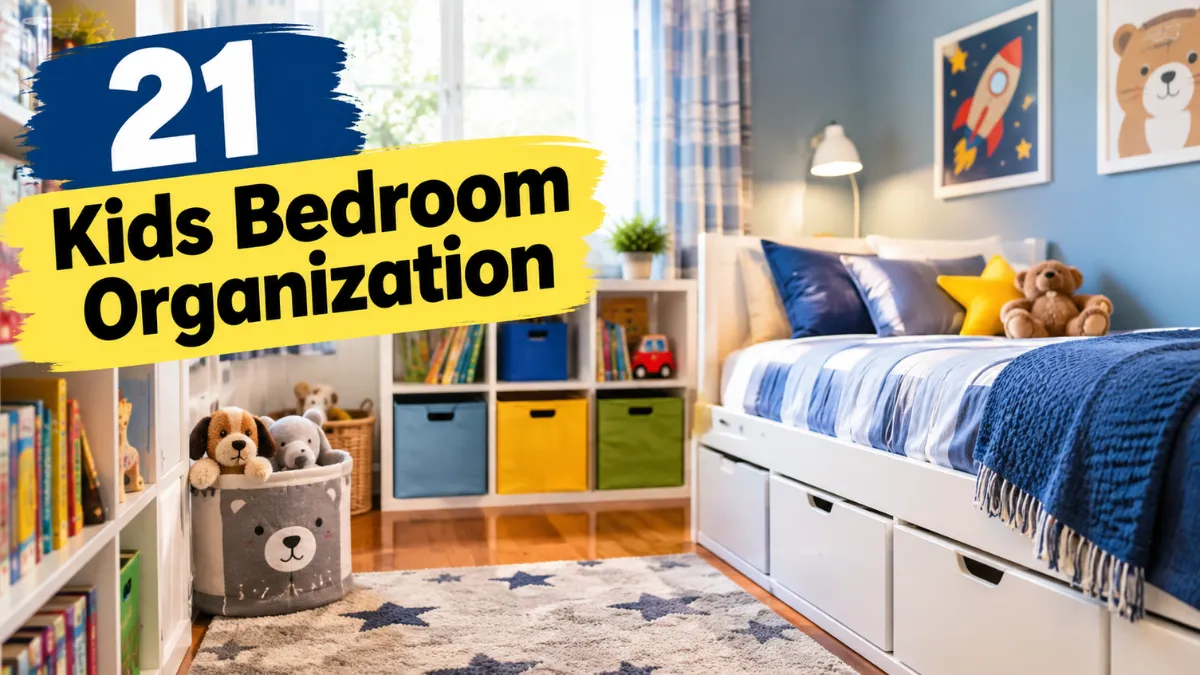
A cube shelf is the most useful piece you can put in a kids’ room. Fill some cubes with fabric bins and leave a few open for favorite books or a display piece. Pick bins with handles, because little hands need something to grip. Anchor the shelf to the wall so it can’t tip.
5. Hanging Closet Organizer
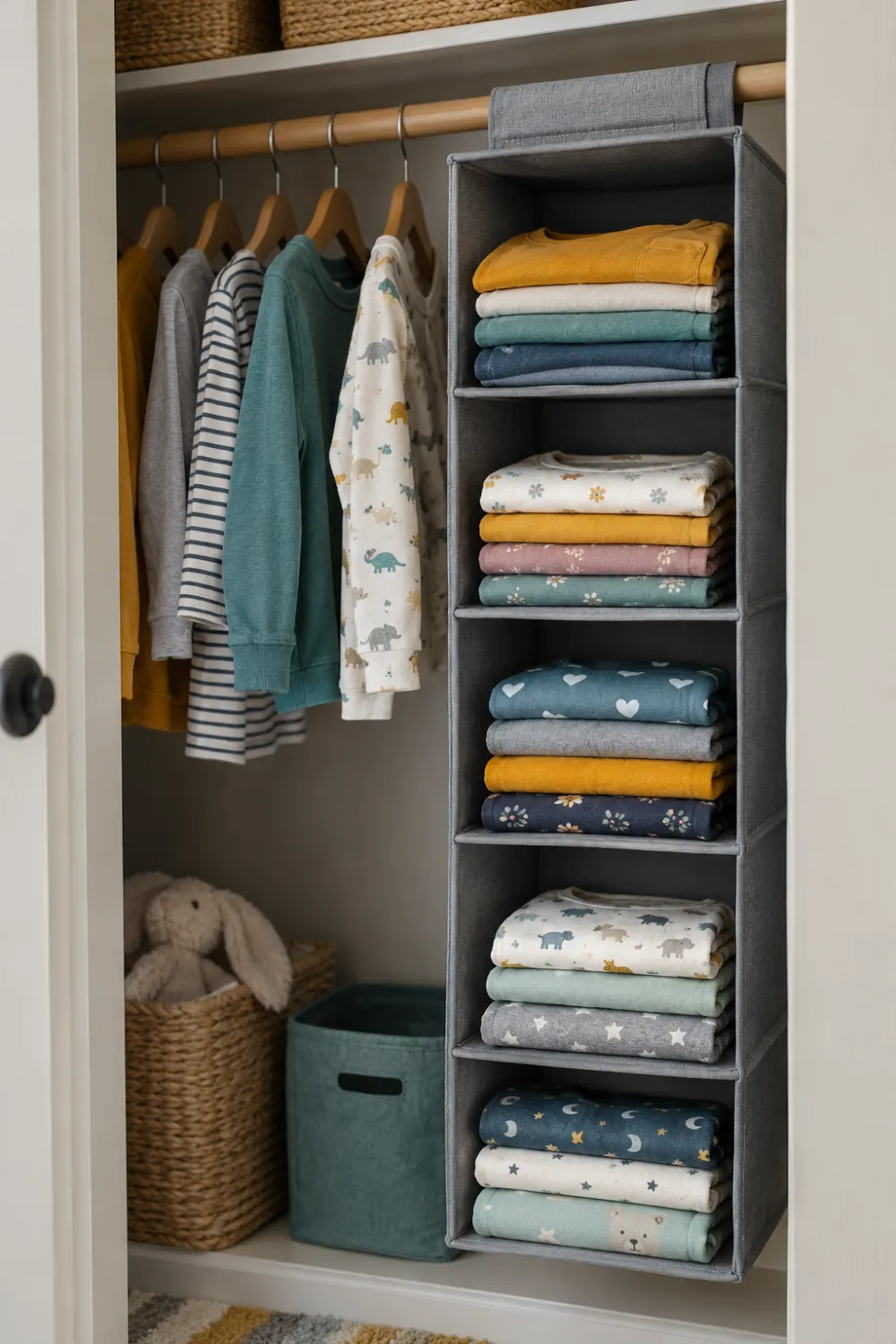
Those fabric shelves that hang from the closet rod are great for folded tees, leggings, and pajamas. They turn dead vertical space into a mini dresser. This one shines in small rooms where a full dresser won’t fit. Just keep each shelf for one type of clothing so nothing gets lost.
6. Lowered Closet Rod
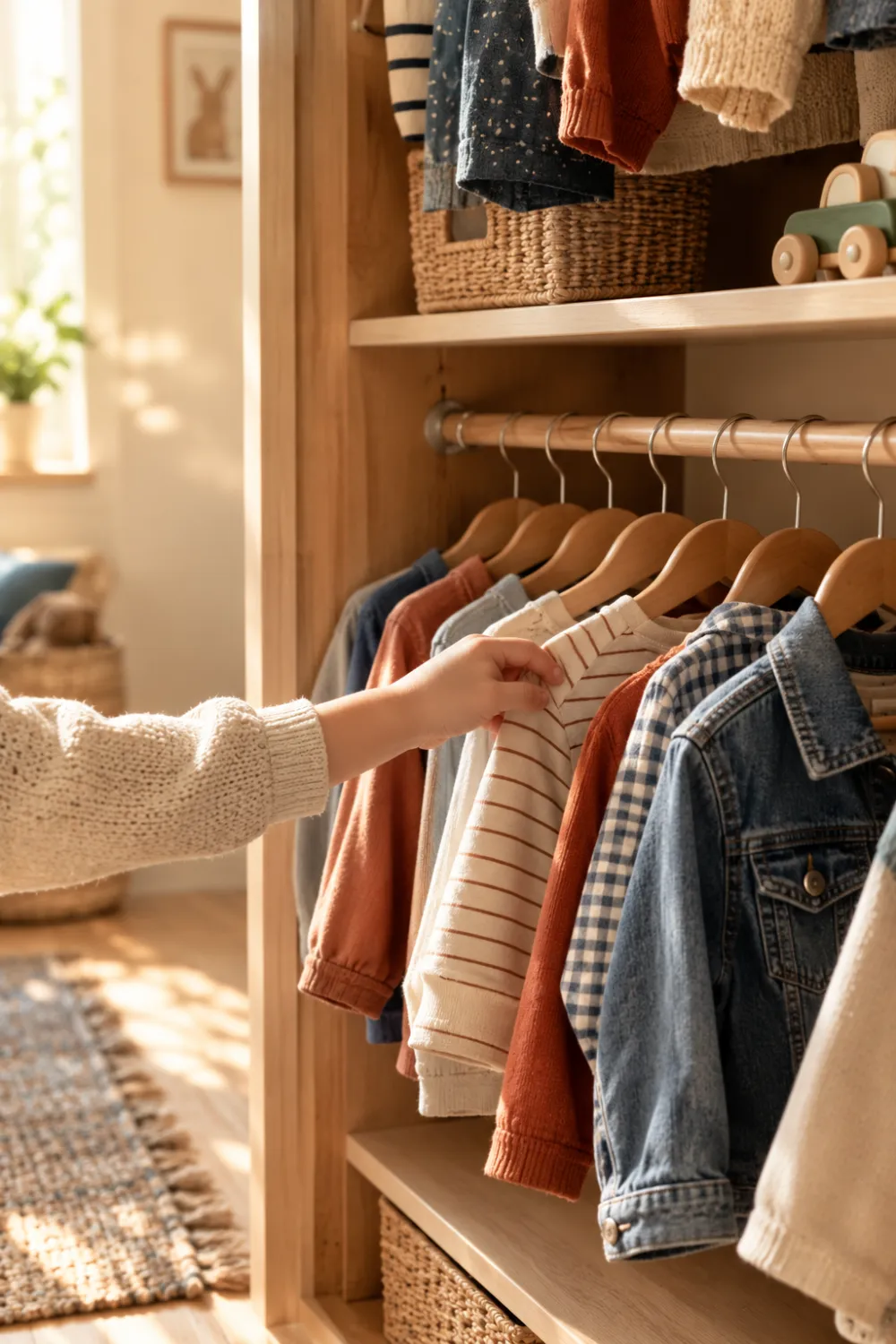
If your child can’t reach their clothes, you’ll be the one getting dressed-for-school requests all morning. Drop a second rod to about 36 inches, or add a tension rod low in the closet. Now they can hang up their own jackets and pick their own shirts. It’s a small change that builds real independence.
7. Weekly Outfit Bins
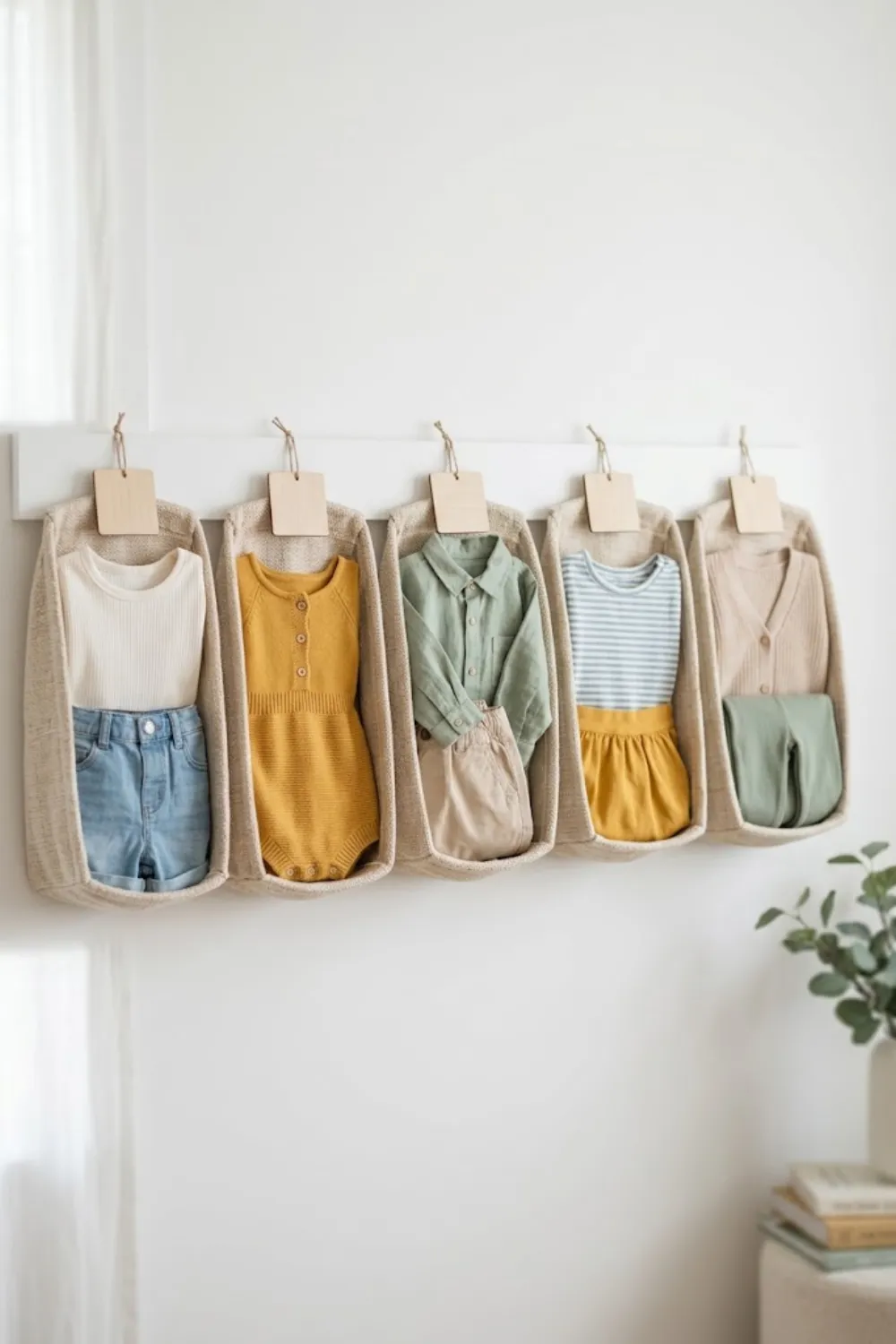
School mornings go sideways fast. On Sunday, let your child pick five outfits and place each in a labeled bin or hanging cubby, Monday through Friday. No more fights over what to wear. It works especially well for kids who take forever to decide.
8. Front-Facing Book Ledges
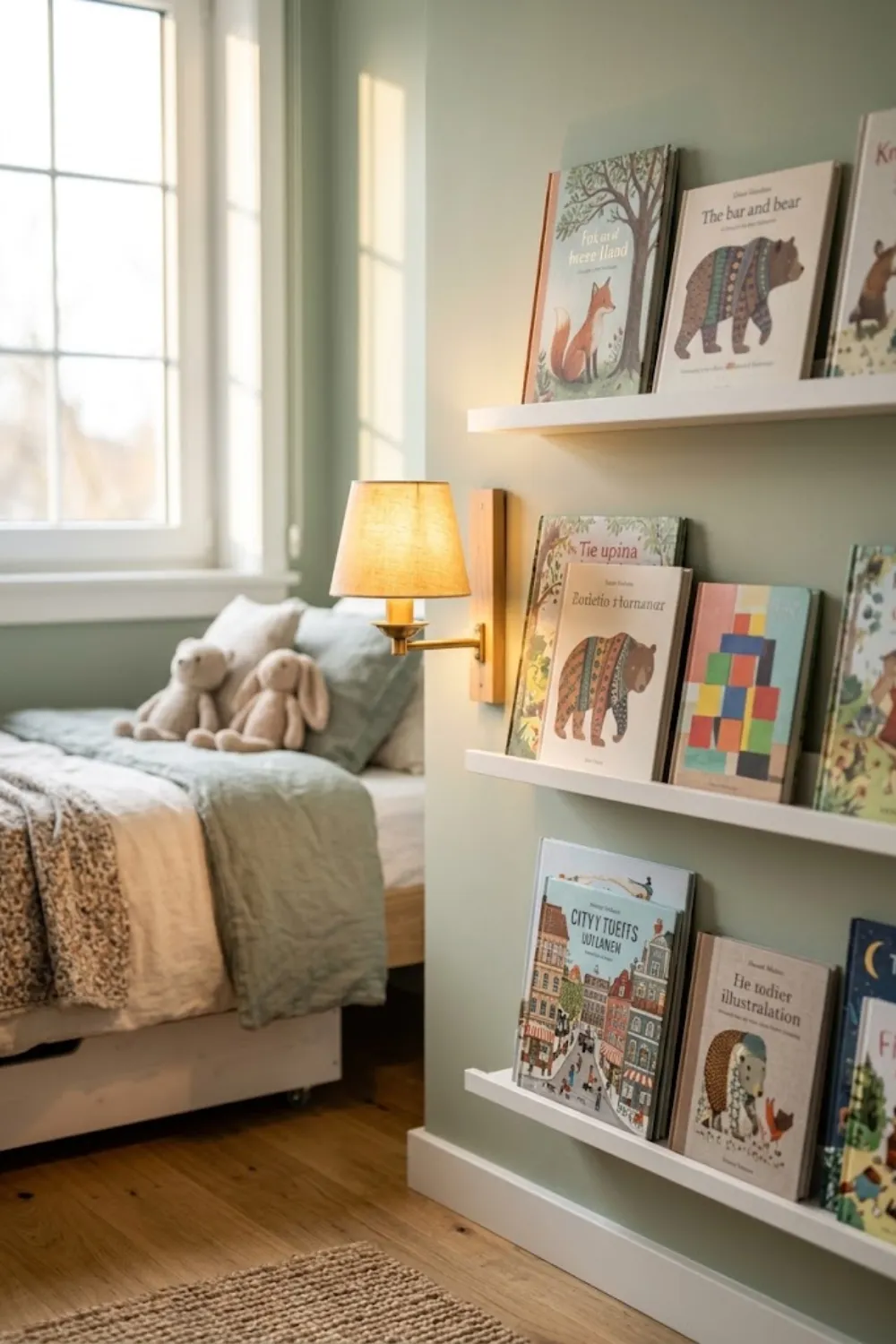
Books stacked spine-out on a shelf rarely get picked. Mount narrow picture ledges on the wall so the covers face forward. Kids choose by the cover, so they actually read more. Place them low, near the bed, and a bedtime story corner appears almost by accident.
9. Stuffed Animal Hammock
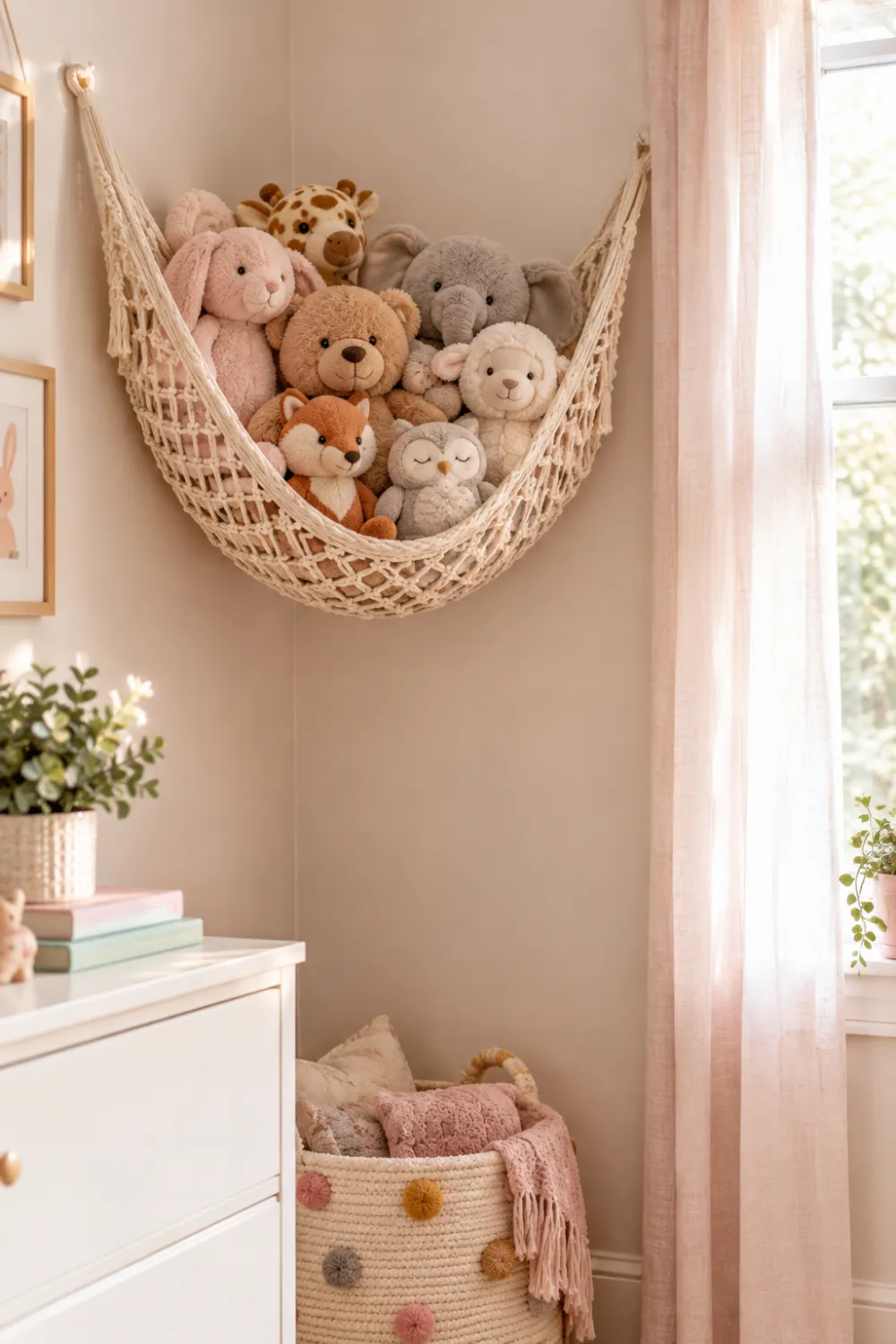
Plush toys multiply like rabbits. A corner hammock lifts them off the bed and floor and turns the pile into decor. Hang it up high in a corner, with the net anchored in two wall studs if you can. Kids love seeing their whole crew in one place.
10. Art Supply Cart
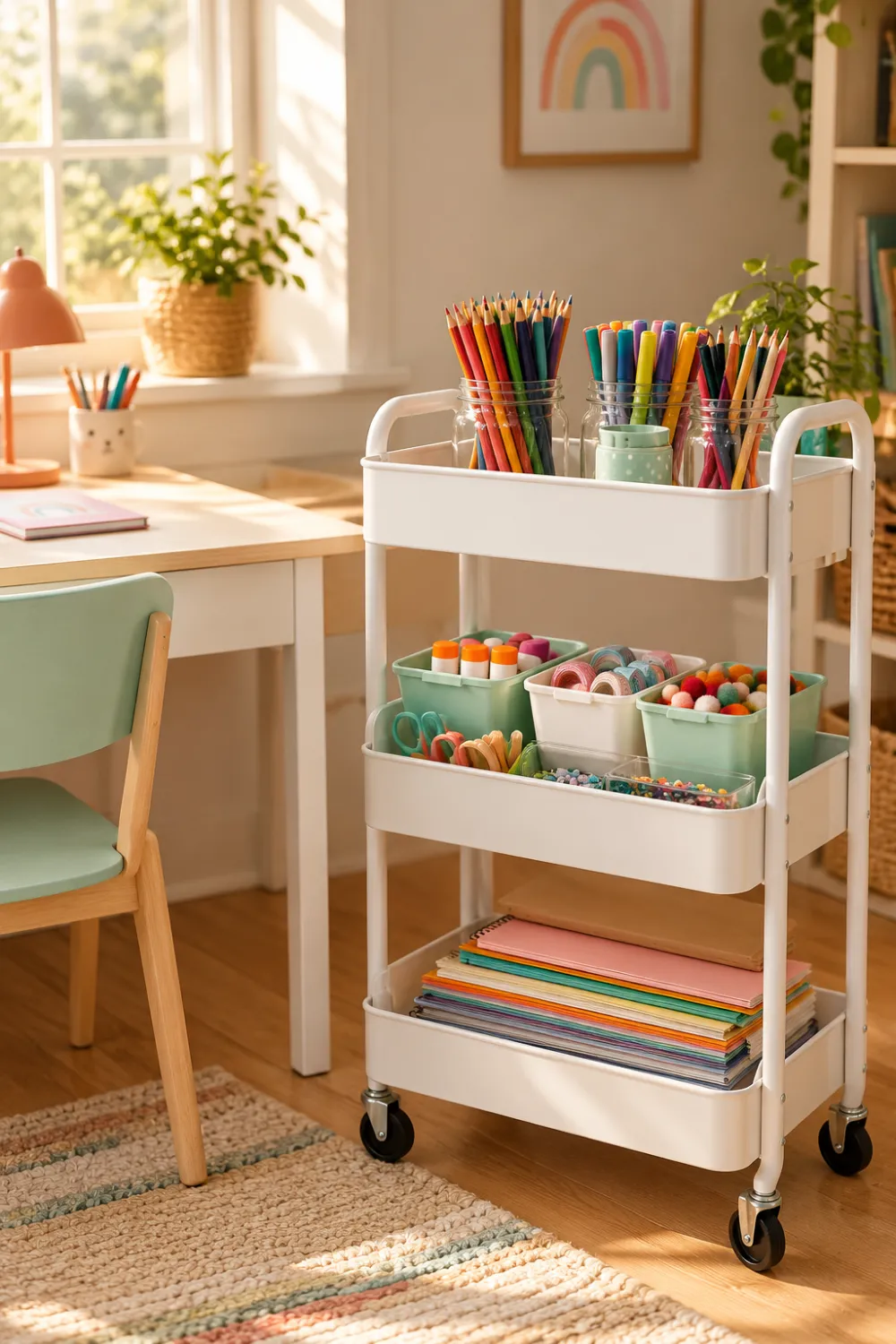
A rolling three-tier cart is perfect for crayons, markers, paper, and stickers. Your child can wheel it to the desk or the floor, then roll it back when they’re done. Group items by tier: drawing on top, crafts in the middle, paper on the bottom. Everything has a home.
11. Over-the-Door Shoe Pockets
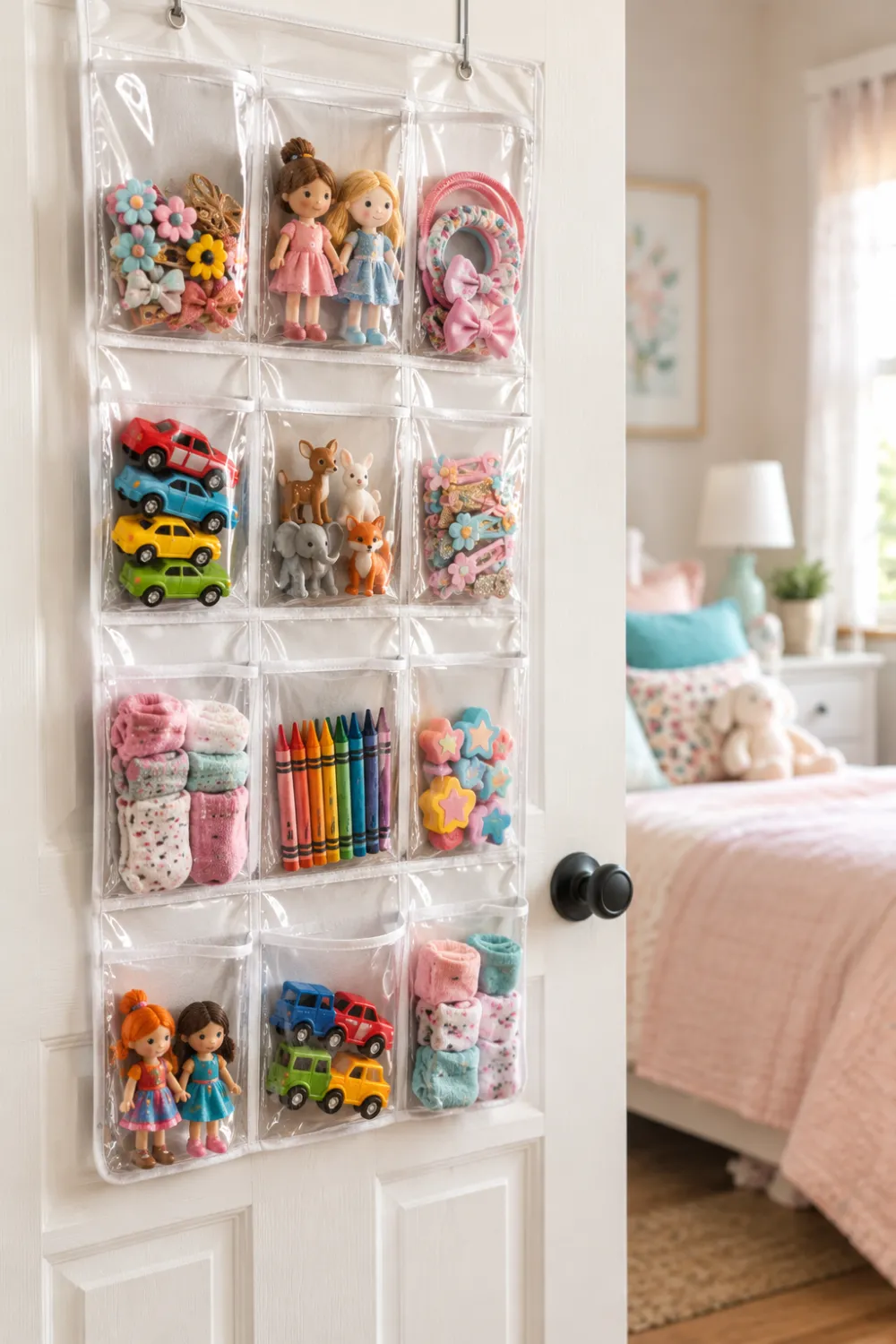
Clear shoe pockets aren’t just for shoes. Use them for hair clips, small dolls, toy cars, socks, or art supplies. The clear front lets kids spot what they want at a glance. It costs very little and takes about two minutes to hang.
12. Building Block Tray
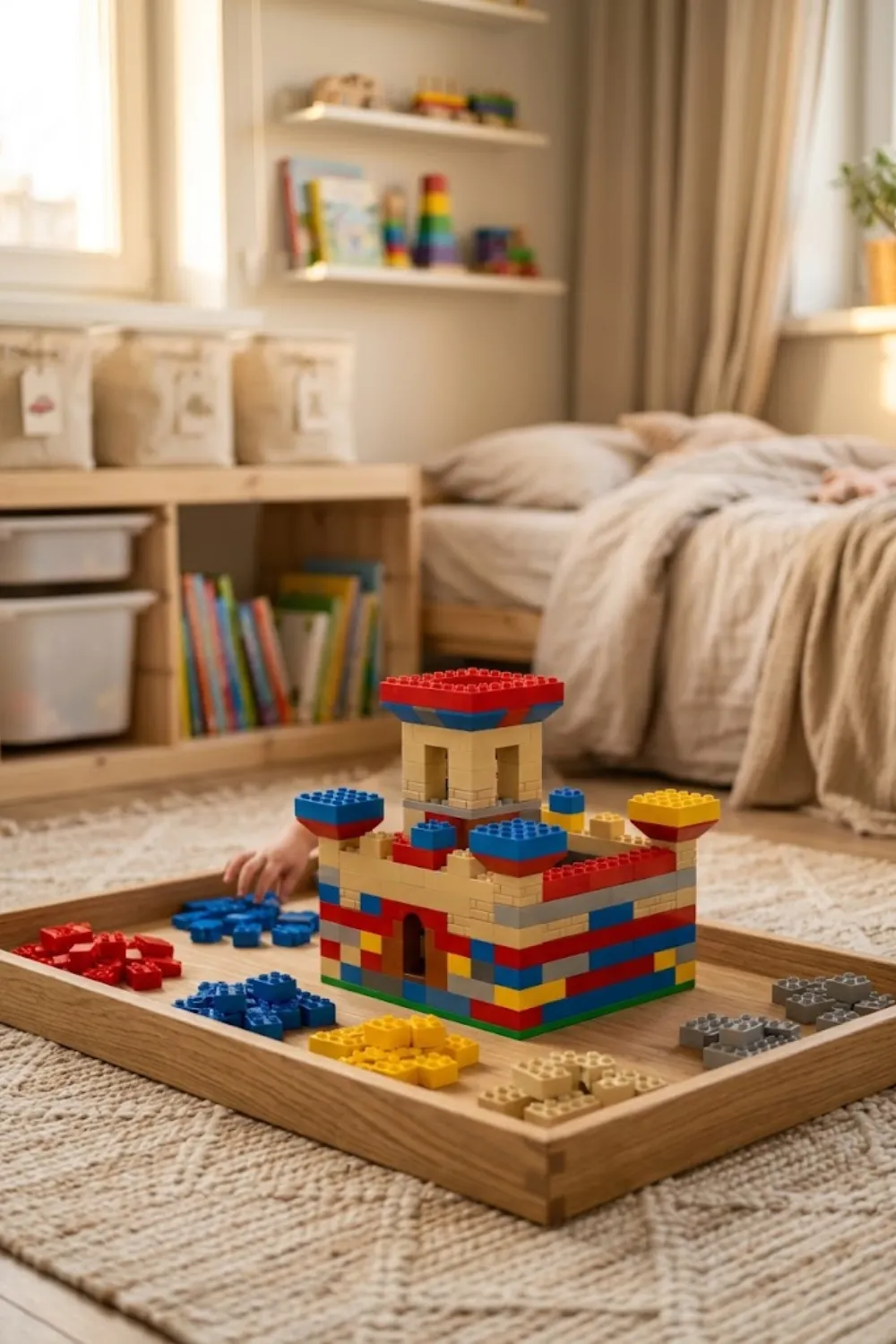
Lego and block builds are hard to clean up because kids want to keep them. Give them a large tray with a raised edge. They can build on it, slide it under the bed, and pick it up later without losing a single piece. A lidded version protects finished creations from little siblings.
13. Bunk Bed Caddy
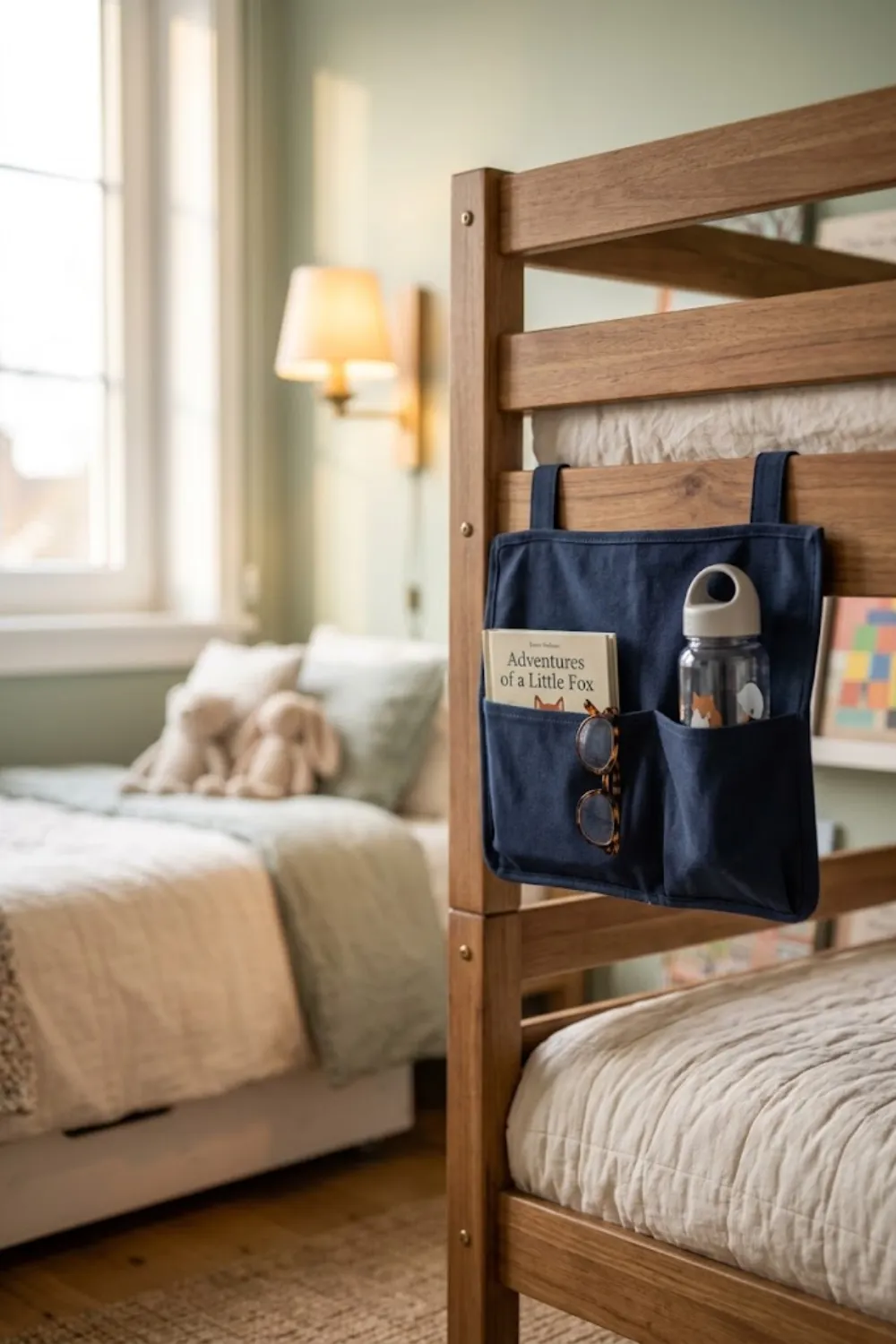
Kids with bunk beds often have nowhere to put a book, glasses, or a water bottle at night. A clip-on caddy that hangs from the bed rail solves it. Choose one with a couple of pockets so each child has their own. Bedtime gets smoother when everything is within reach.
14. Pegboard Wall
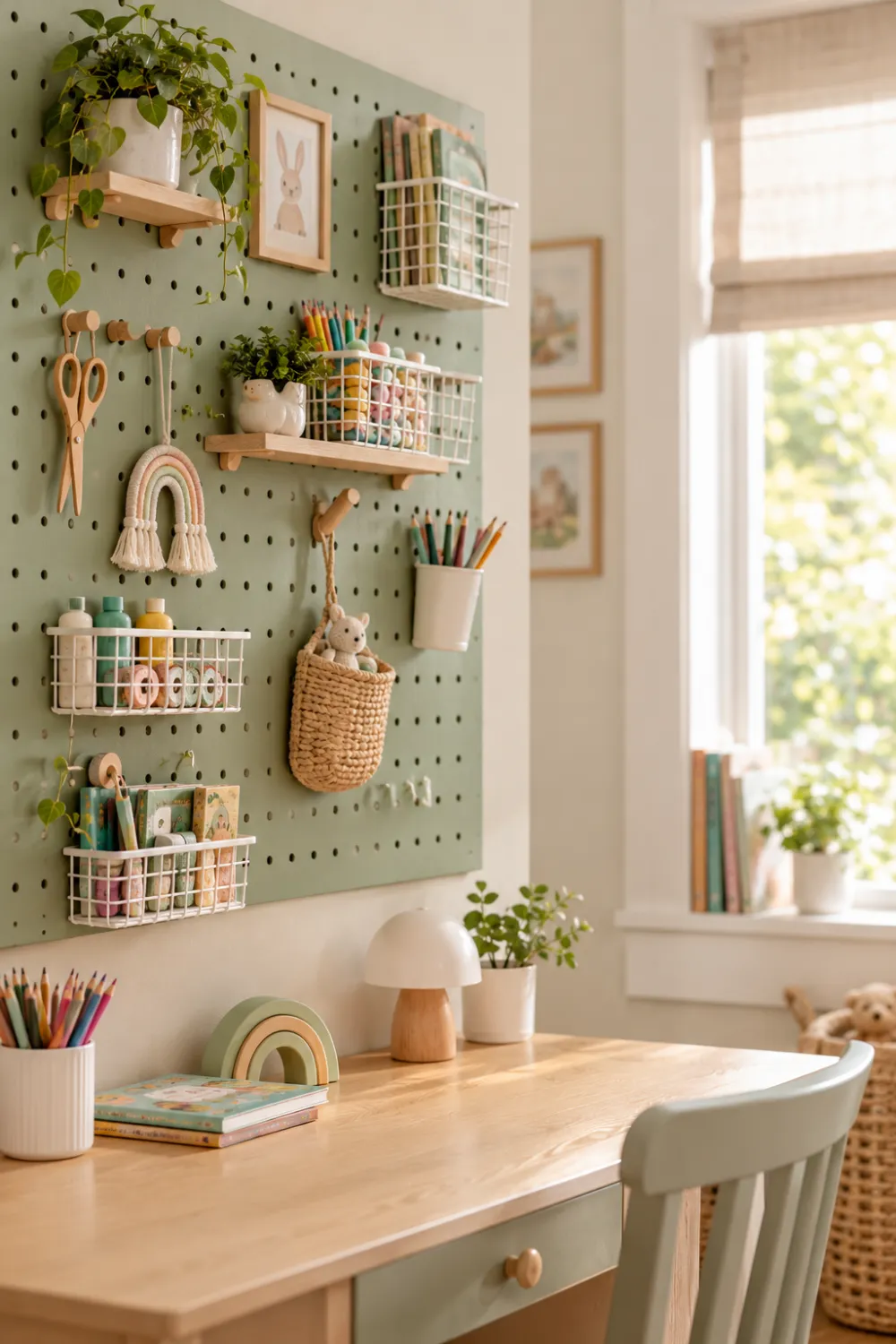
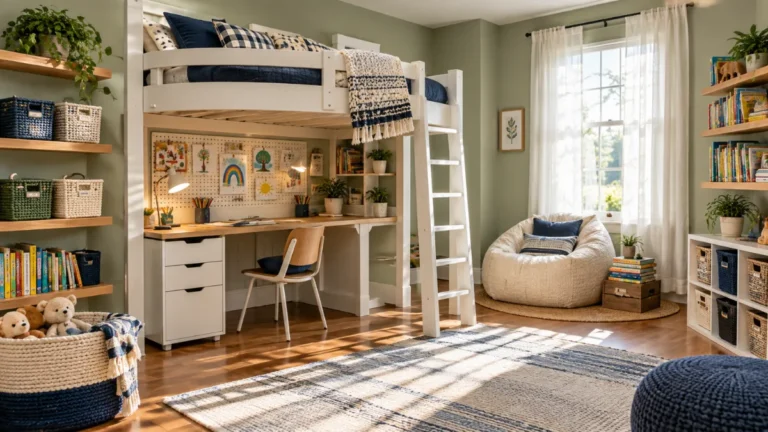
A pegboard is a flexible wall that grows with your child. Hang baskets, hooks, and small shelves today, then rearrange them when interests change. Paint the board a fun color for a decor bonus. It’s ideal for crafts, school gear, or a young collector’s treasures.
15. Kid-Height Hook Rail
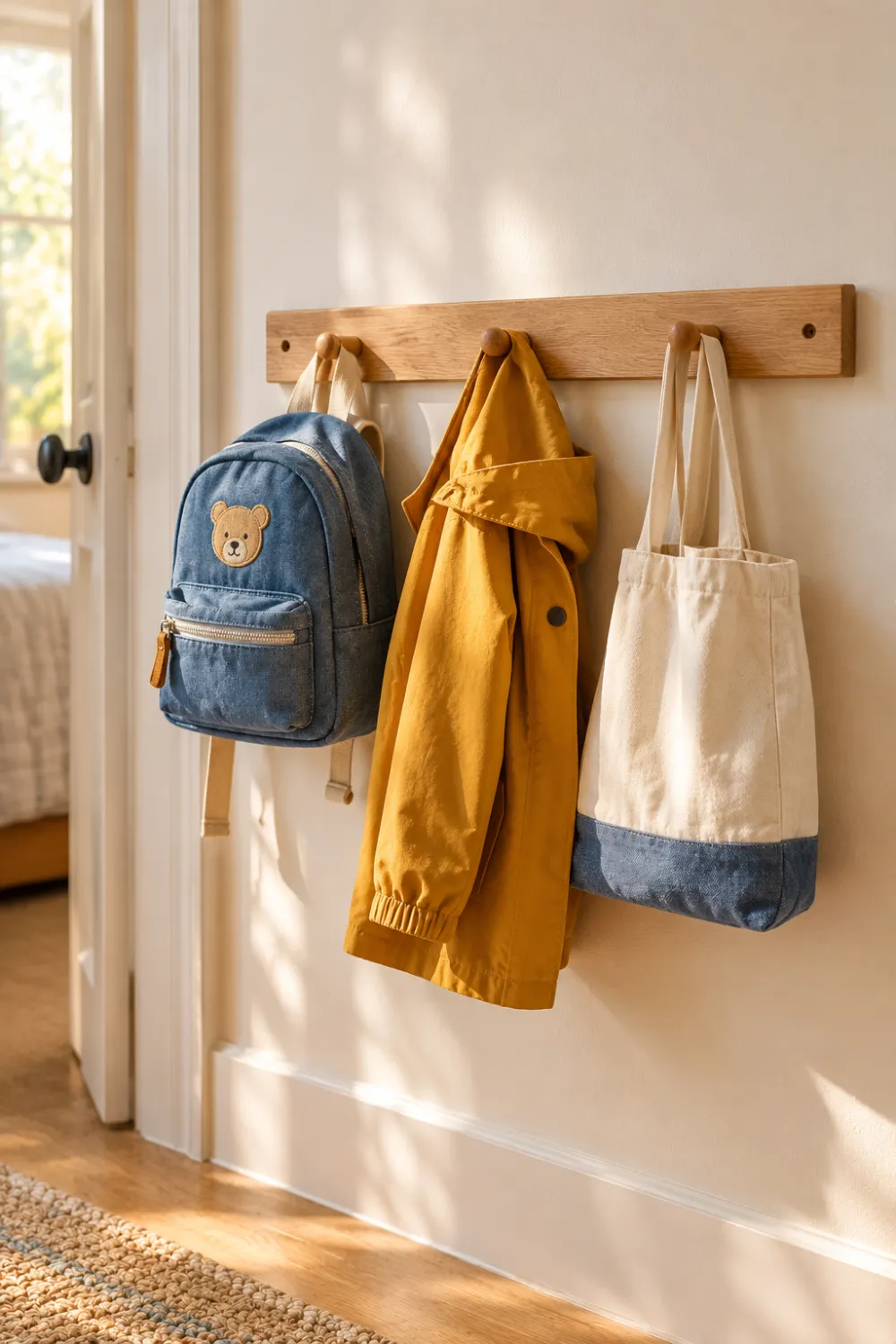
Mount a simple wooden rail with hooks at your child’s shoulder height. Backpacks, jackets, and bags finally have a spot that isn’t the floor. Add a name label above each hook if two kids share the room. Place it near the door so the habit forms naturally.
16. Storage Bench
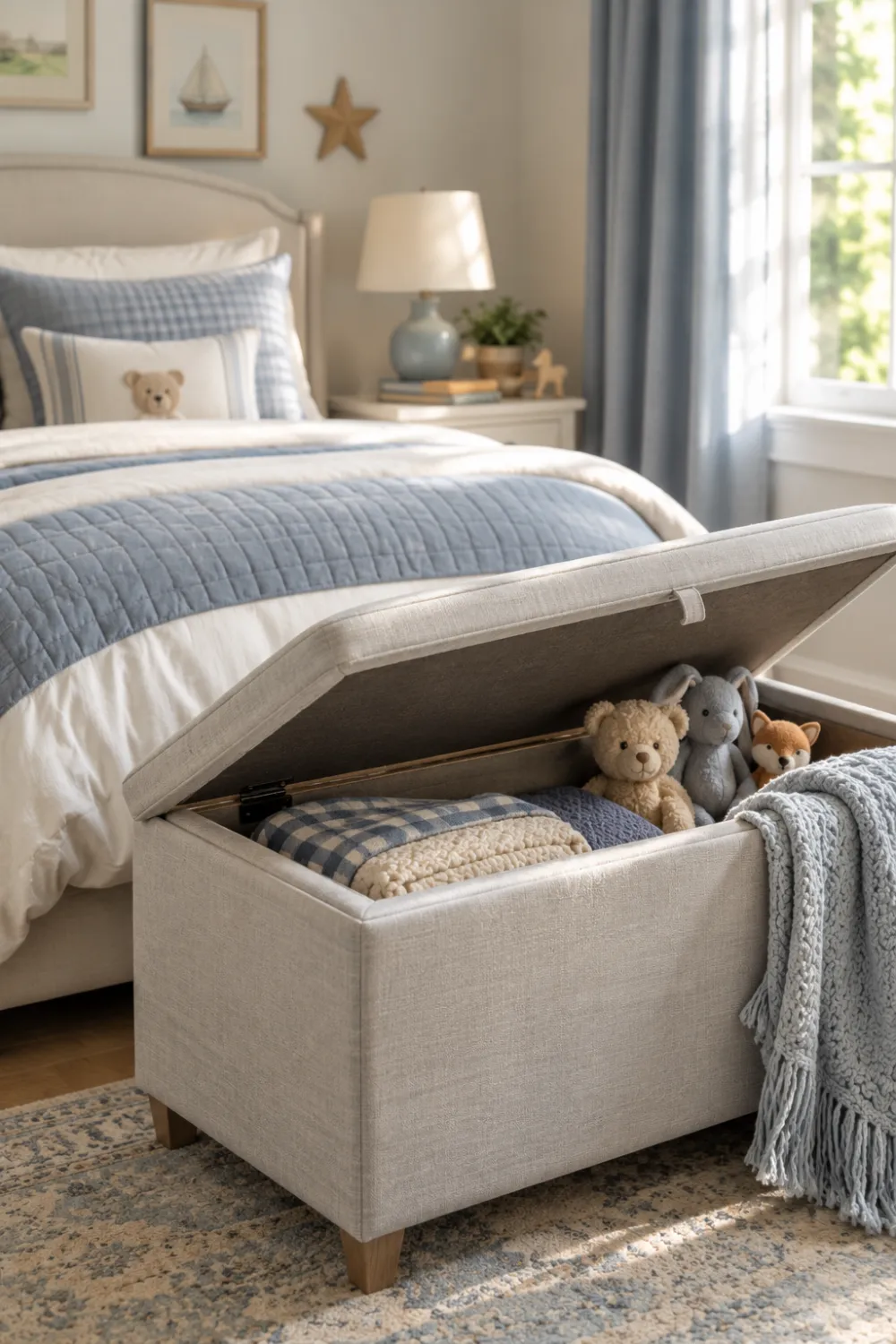
A bench at the foot of the bed doubles as a seat and a toy chest. Look for a model with a soft-close lid or a lift-up top that won’t slam on small fingers. It works well for blankets, dress-up clothes, or sports gear. It also tidies the end of the bed in a single move.
17. Backpack Drop Zone
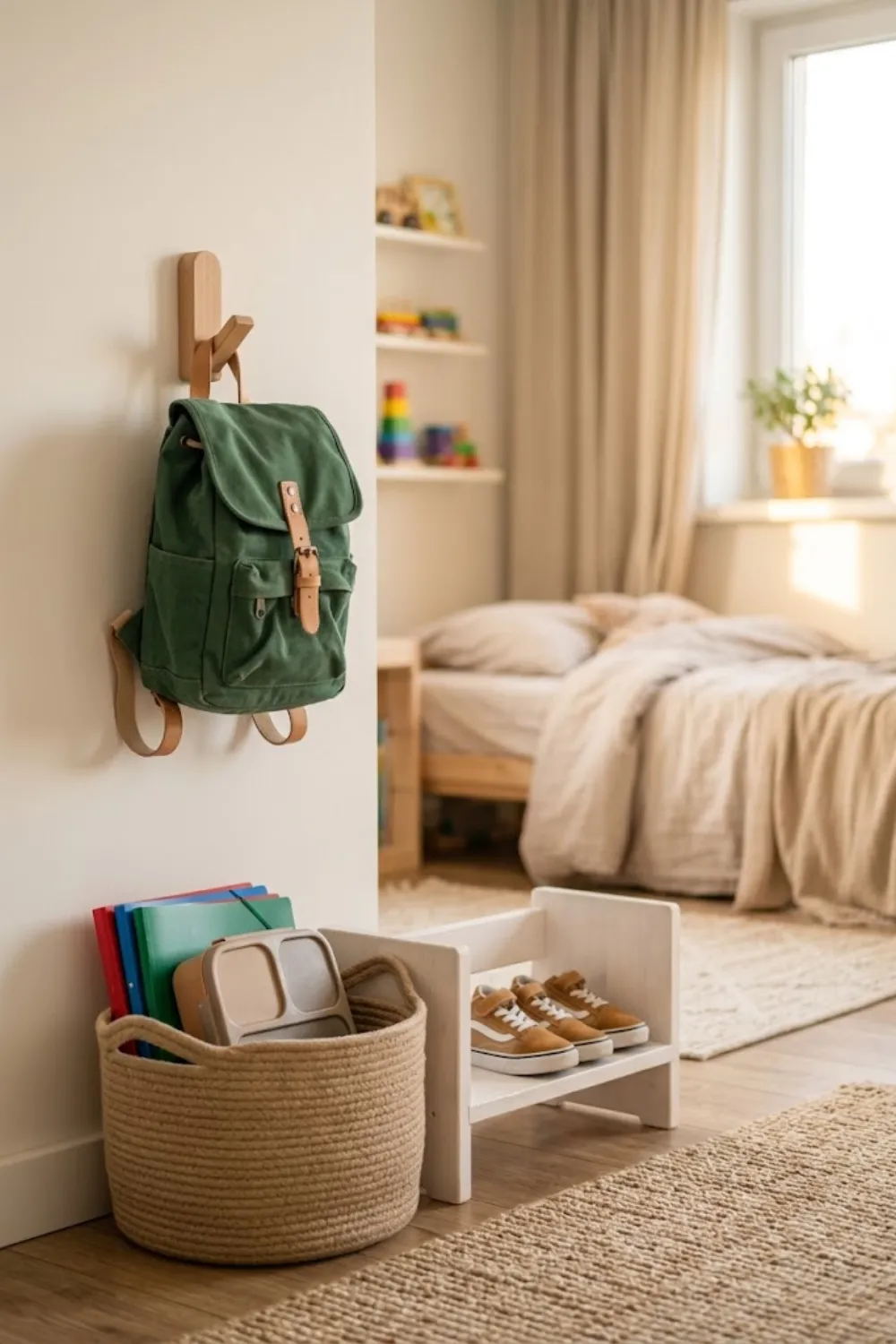
Give school stuff its own landing spot. A small basket on the floor, a hook above, and a shelf for shoes are enough. The rule is simple: bag goes here when you walk in. Homework folders, lunch boxes, and permission slips stop wandering around the house.
18. Drawer Dividers
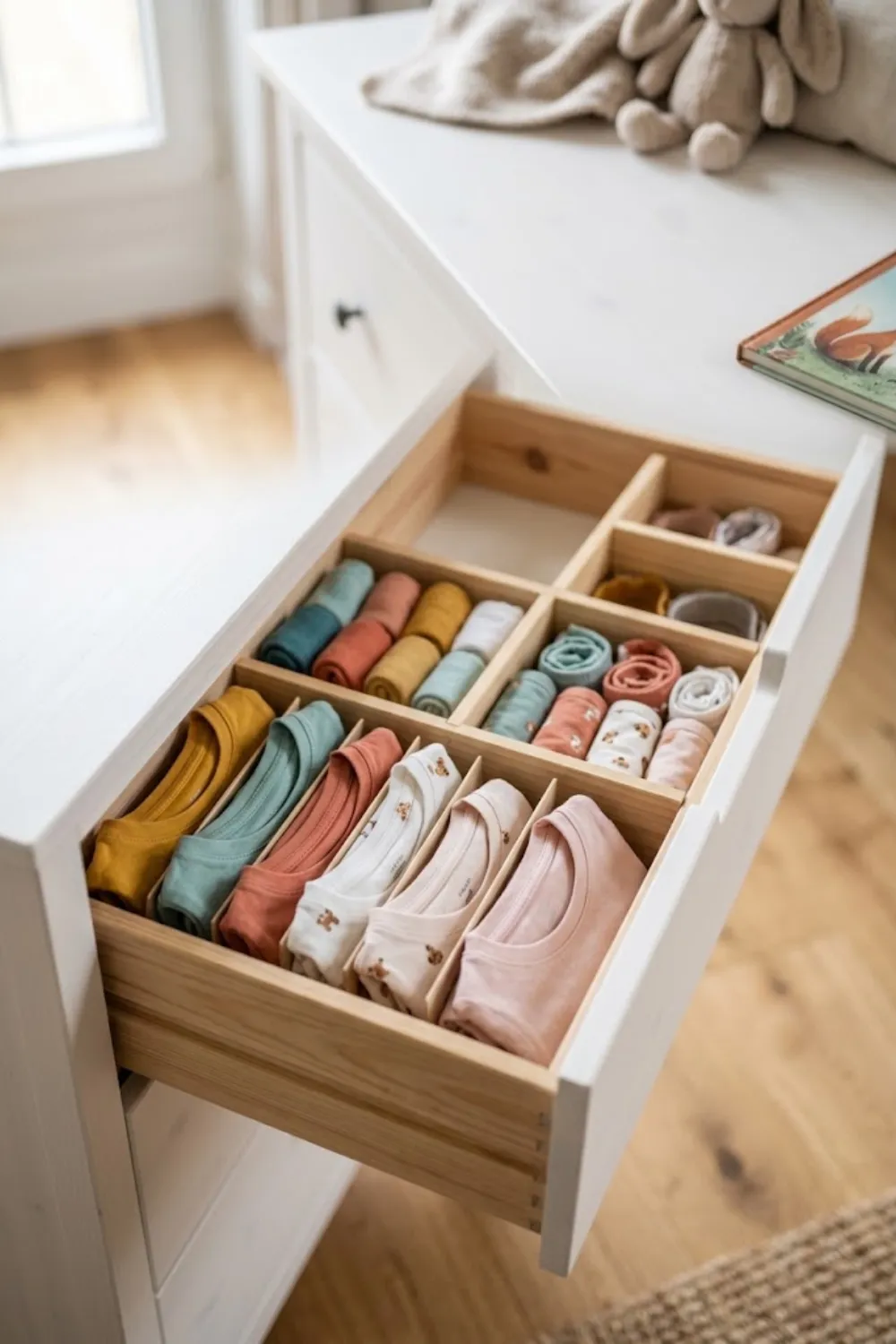
Kids’ dresser drawers turn into a tangle of socks and shirts in about a day. Slide in cheap dividers or small boxes to make sections: socks here, underwear there. Folding clothes upright, file-style, helps your child see everything at once. It makes finding things easy and putting them back easier.
19. Artwork Memory Box
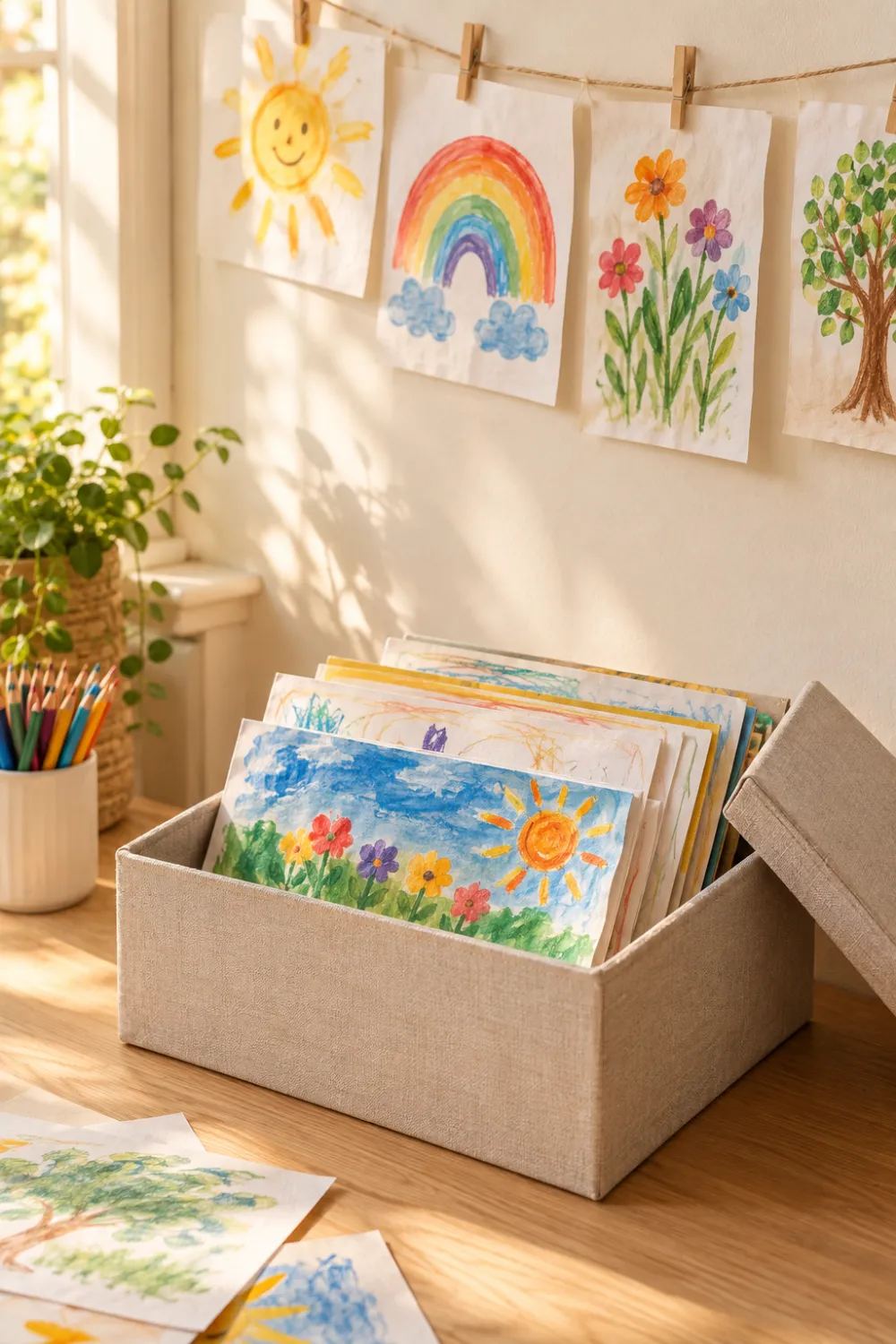
Kids make a lot of art, and you can’t keep every piece. Give your child one flat box for their favorites. When it’s full, they choose what stays. The rest can be photographed or hung on a string with clips. You keep the memories without the paper mountain.
20. Two-Compartment Hamper
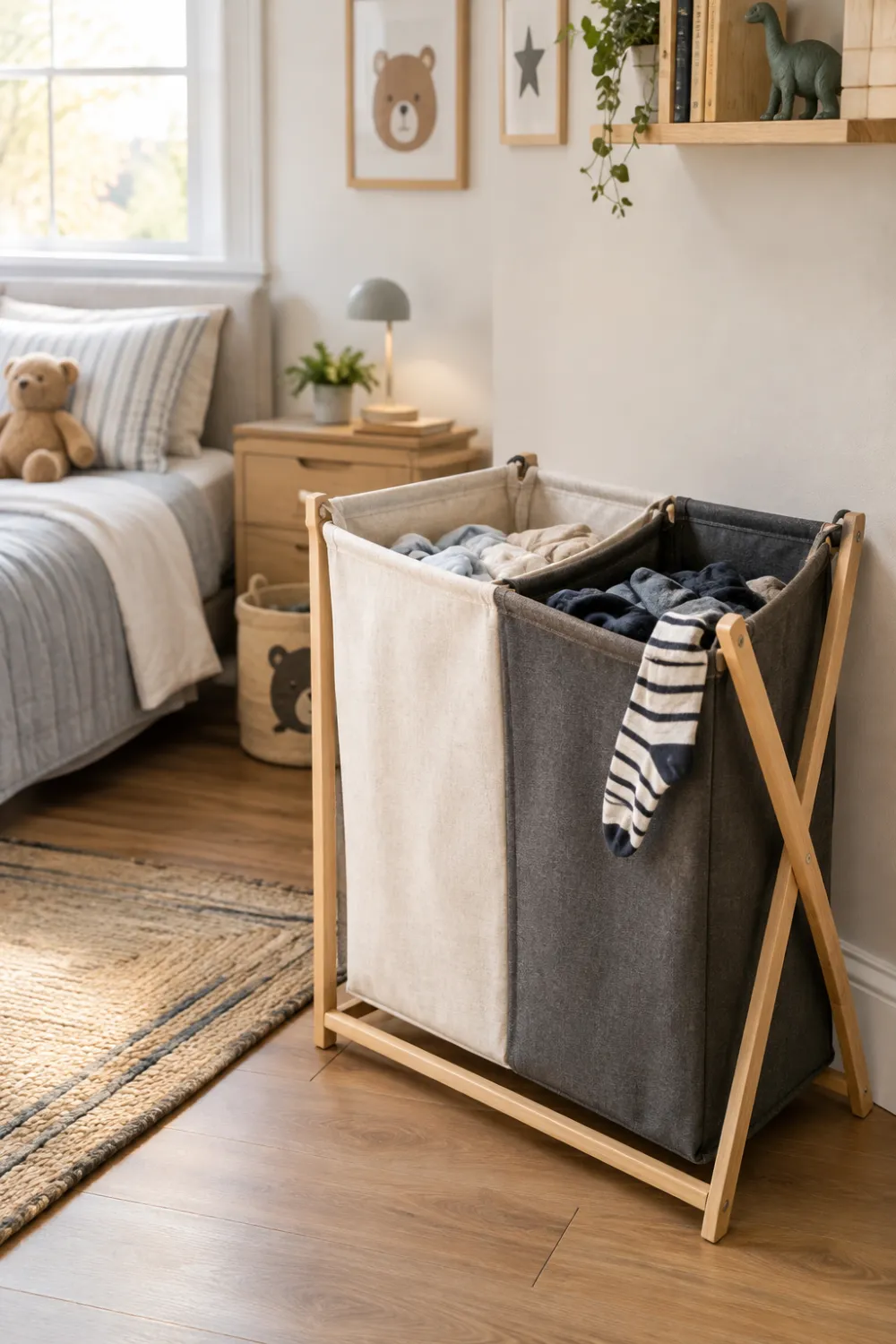
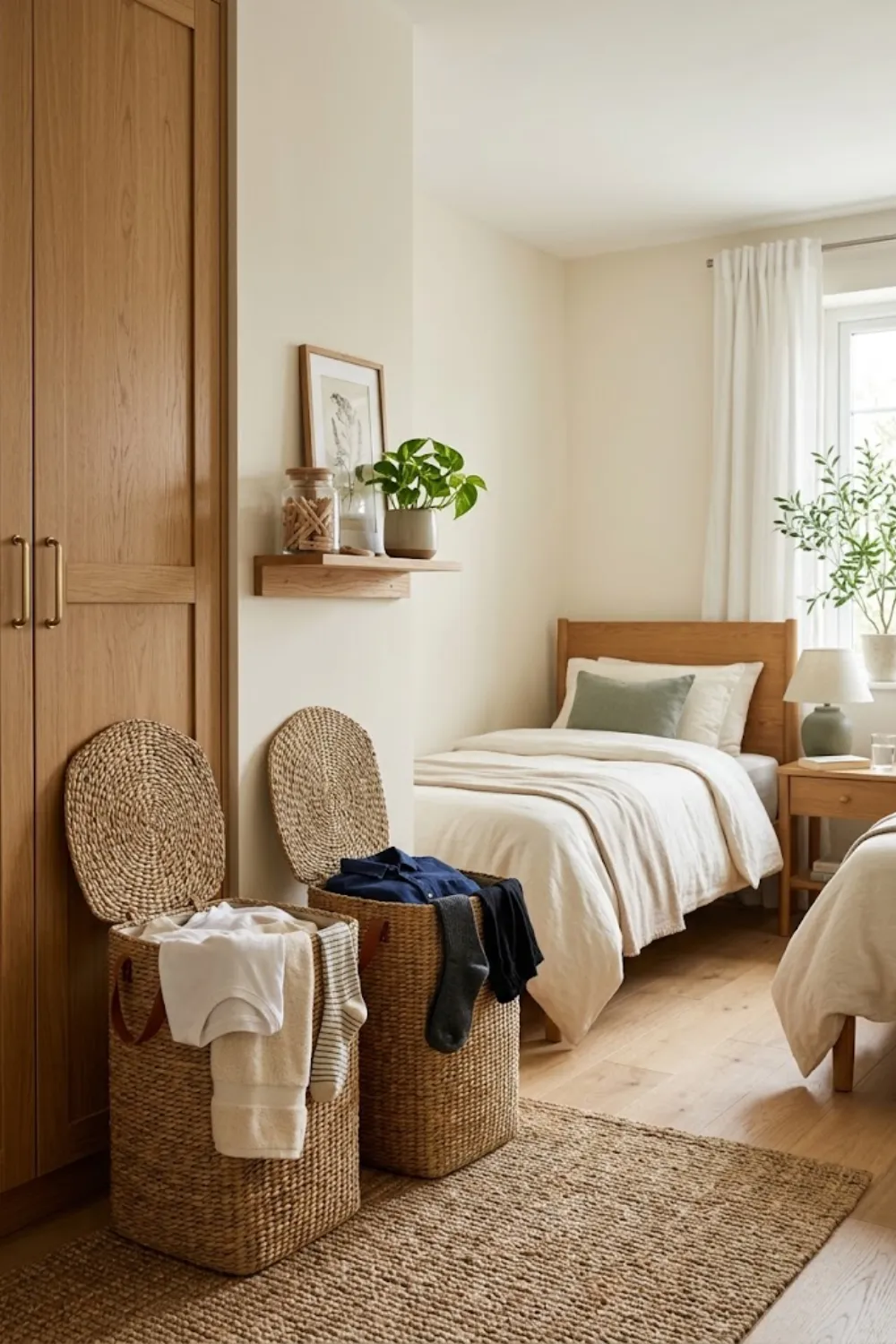
A hamper with separate sections lets kids sort lights and darks as they toss. A bag-style sorter on wheels is easy to carry to the laundry room. Hang it on the back of the door to save floor space. Even young children can learn this one.
21. Room Zones
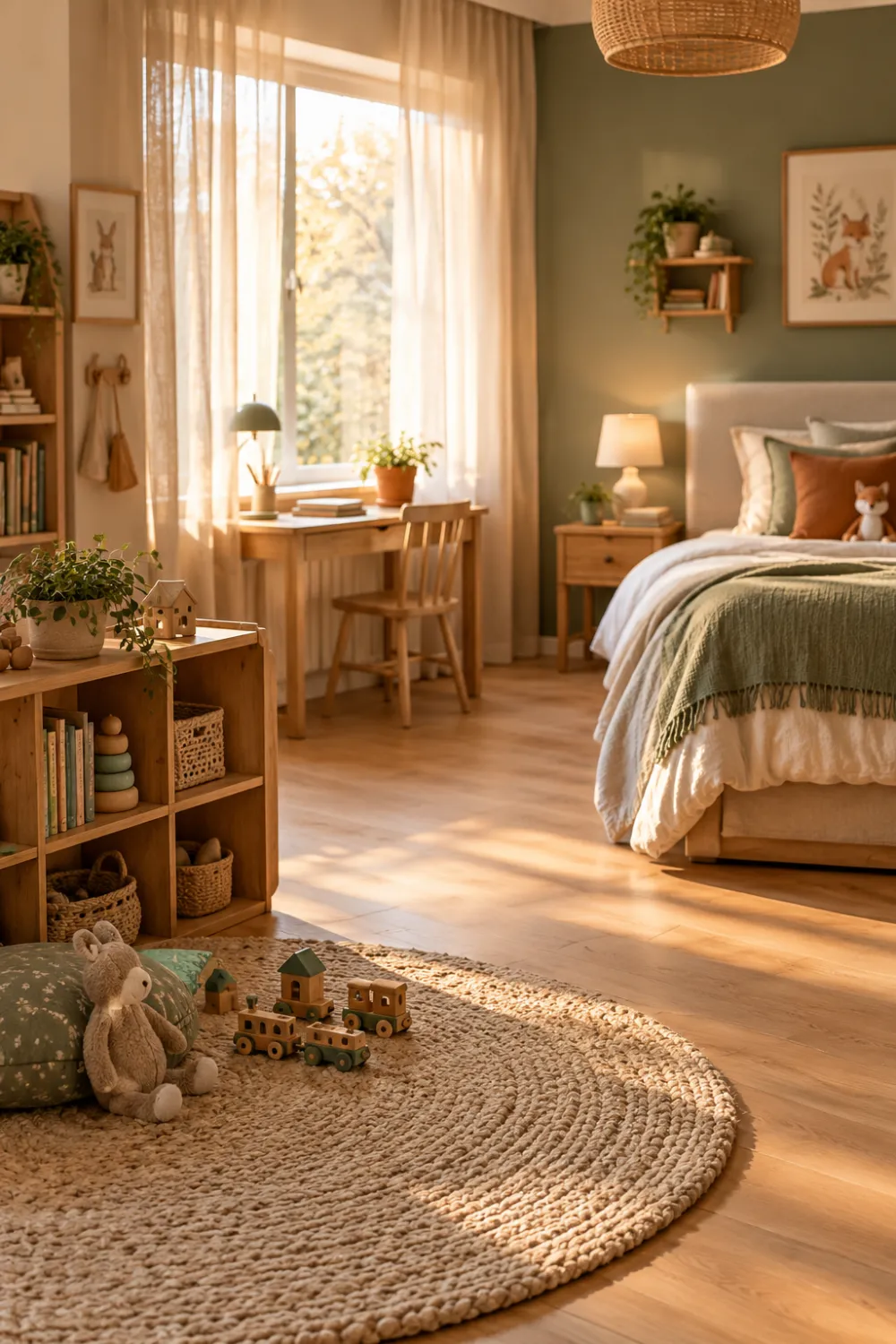
Think of the room as three small areas: sleep, play, and study. Use a rug, a shelf, or even a piece of tape on the floor to mark each one. Toys stay in the play zone, and the bed stays clear for sleeping. Kids understand a space better when each spot has a job.
Conclusion
The best kids bedroom organization is the kind your child will actually use. Start with the one spot that frustrates you most, whether that’s toys, clothes, or school gear, and fix only that. Let your kid help pick bins or labels. Small wins add up fast, and soon tidying up feels less like a chore and more like a habit.