15 Blanket Organization Ideas Living Room: Easy & Stylish Tips
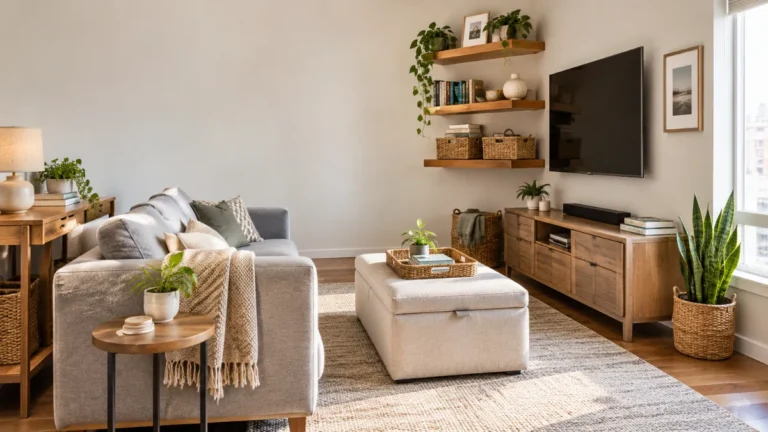
Blankets make a living room more comfortable, but a few casually tossed throws can quickly make the space look crowded. These 15 Blanket Organization Ideas Living Room solutions cover baskets, furniture, shelves, cabinets, and simple storage tricks that work in both small apartments and larger homes. Whether you prefer modern, farmhouse, traditional, or relaxed decor, these ideas can help keep blankets within easy reach without letting them take over your seating area.
1. Woven Basket Beside the Sofa
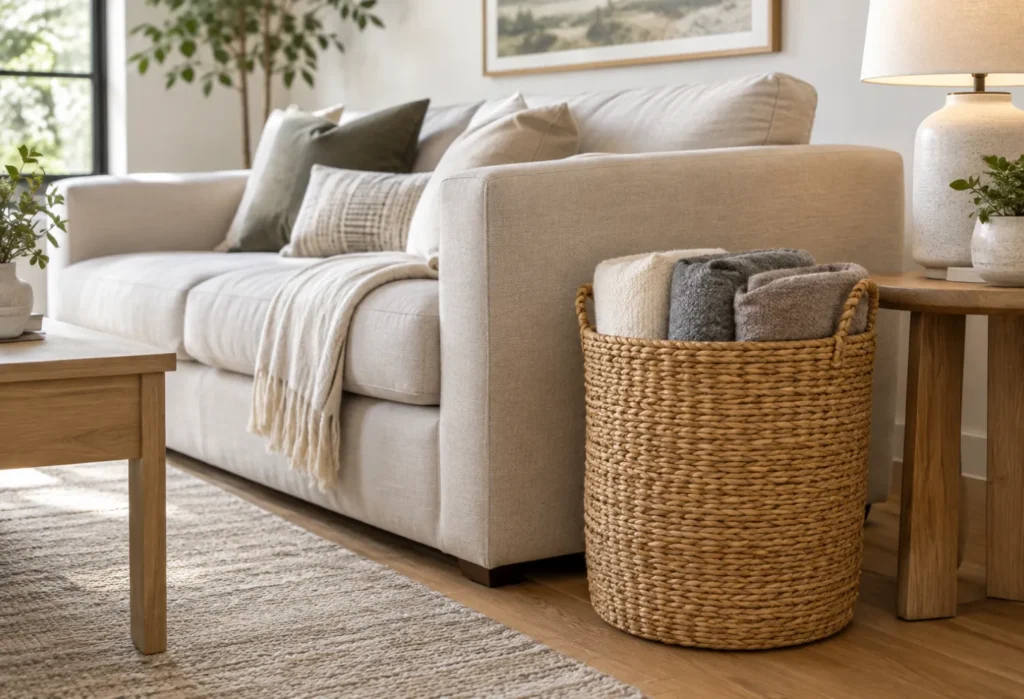
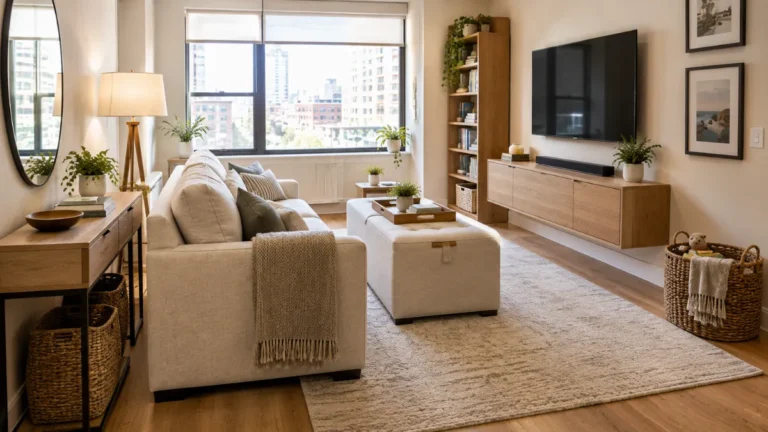
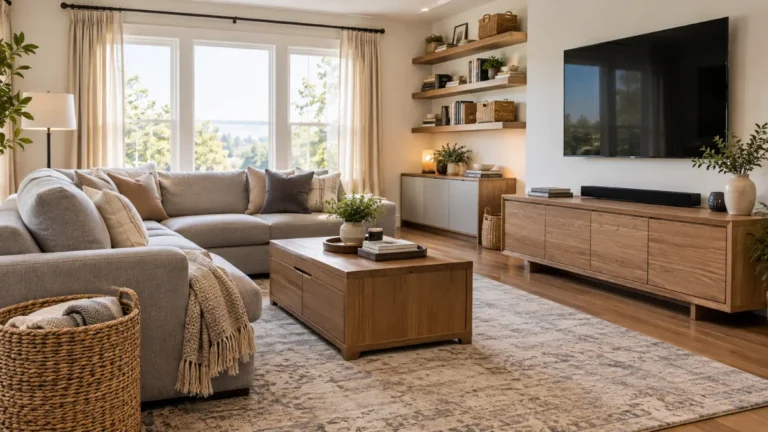
A woven basket beside the sofa gives blankets a defined home without taking up much visual space. Instead of spreading throws across the couch, you can fold two or three into one container and keep the seating area clear. The natural texture also works nicely with neutral upholstery, wood furniture, and soft textiles.
Choose a basket tall enough to hold folded throws without allowing them to spill over the rim. A narrow, round basket works well beside an armrest, while a rectangular basket can fit neatly between the sofa and a side table.
2. Storage Ottoman With Hidden Space
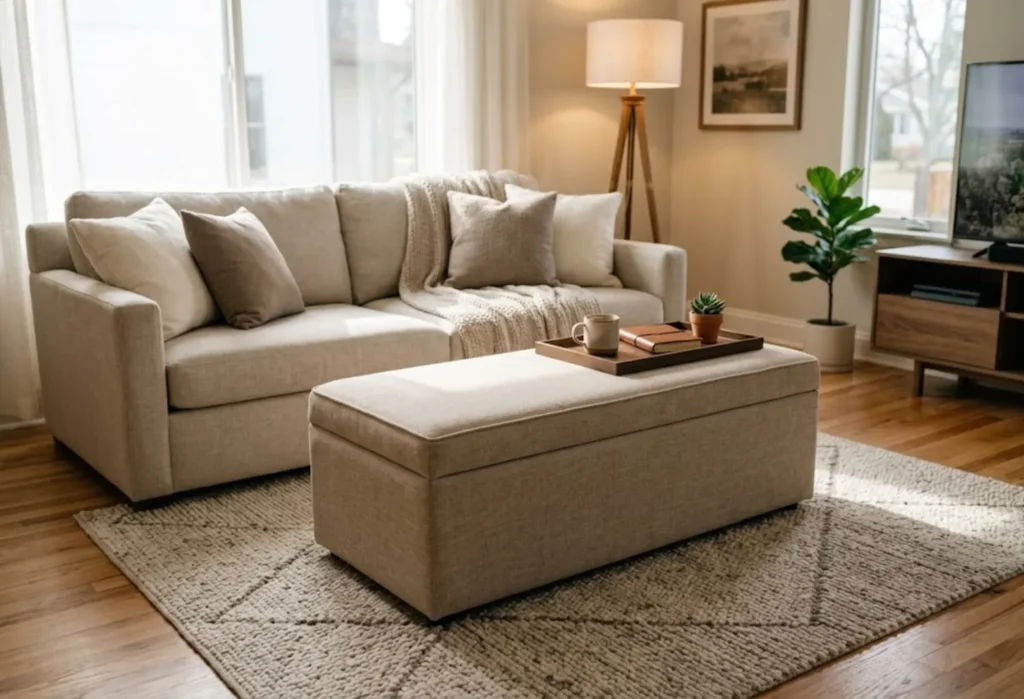
A storage ottoman can replace a separate coffee table and blanket container, which is especially useful in a compact living room. The closed top keeps throws completely out of sight while providing a place to rest your feet or set down a tray.
Look for an ottoman with enough interior depth for several folded blankets. A rectangular model around 36 to 48 inches wide can work in front of many sofas, but leave enough clearance for people to walk comfortably around it.
3. Open Shelf Blanket Baskets
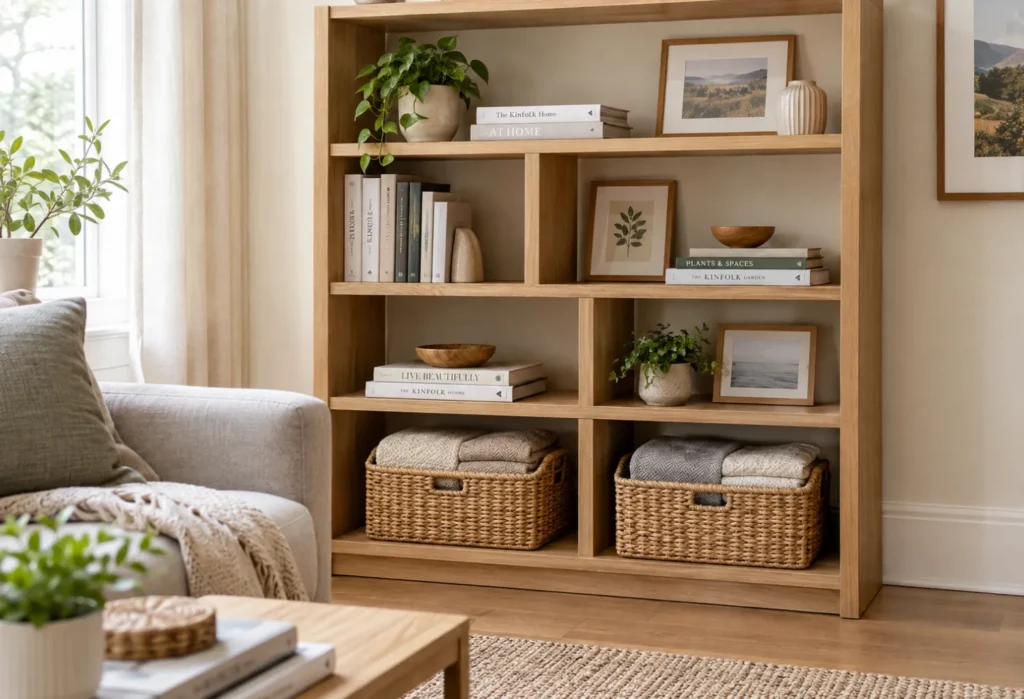
Open shelving can turn blanket storage into part of the room’s decoration. Place folded throws inside two or three matching fabric or woven baskets on the lower shelves, leaving the upper shelves for books, framed artwork, or small accessories.
Keep the blanket baskets on the lower portion so they are easy to reach. Choose baskets in colors close to your furniture, such as oatmeal, beige, gray, or natural rattan. This keeps the shelves visually organized without making them look overly matched.
4. Blanket Ladder in an Empty Corner
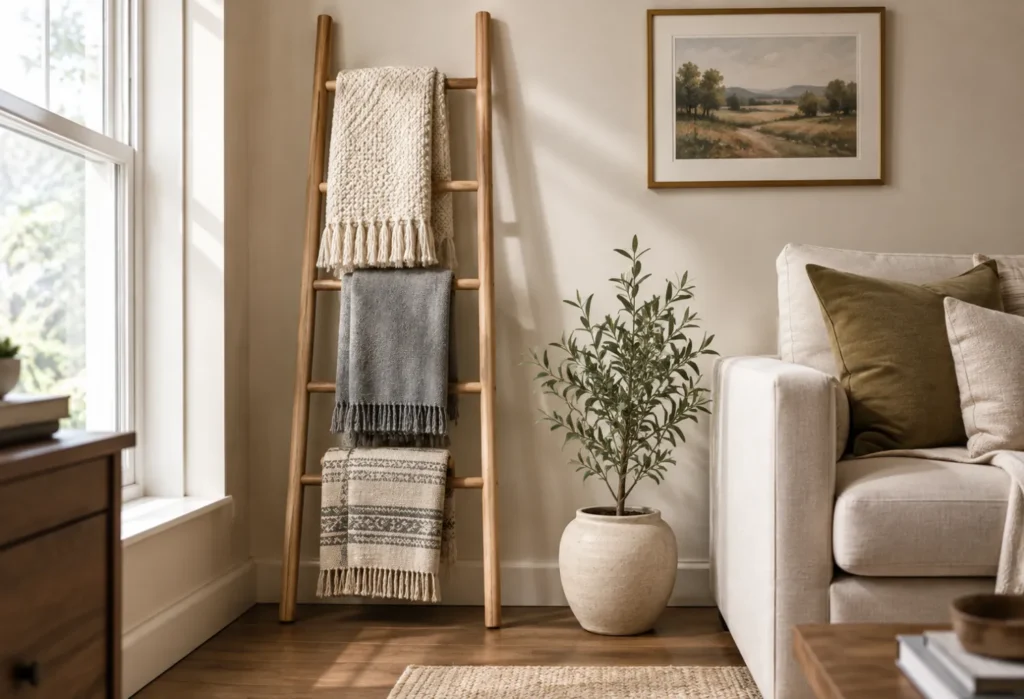
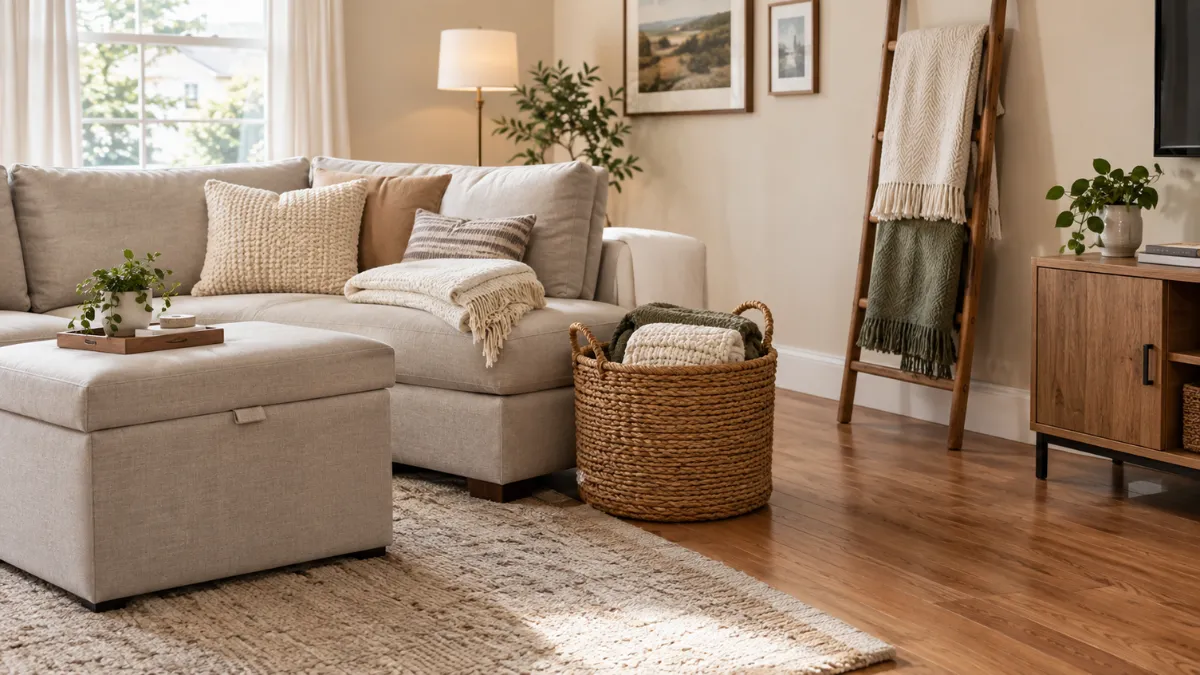
A blanket ladder uses vertical space rather than valuable floor area. It can fill a narrow corner that would otherwise remain unused while allowing several throws to stay visible and accessible. Draped blankets also introduce layers of fabric and pattern near plain walls.
A ladder about 5 to 6 feet tall usually provides useful hanging space without overpowering a modest room. Lean it against a wall beside the sofa rather than directly behind a main walkway. Keep only a few blankets on the rungs so the display remains light.
5. Under-Sofa Rolling Storage
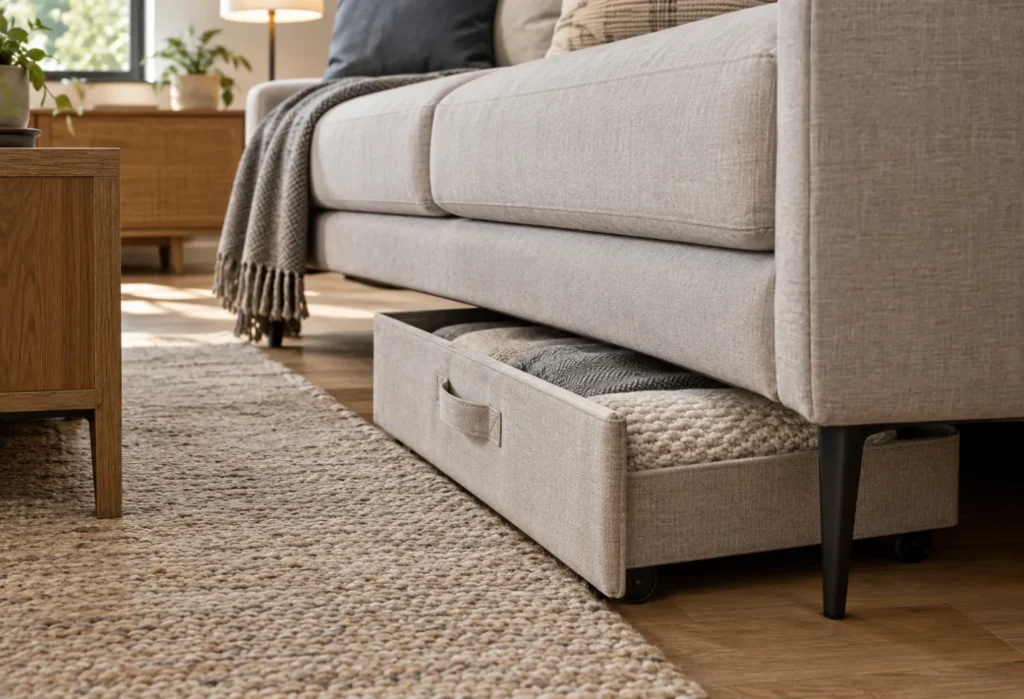
The space beneath a sofa often becomes a collection point for dust, toys, magazines, and misplaced items. Low rolling storage boxes can turn that overlooked area into a discreet blanket compartment while keeping the floor above clear.
Measure the height from the floor to the bottom of the sofa before buying a container. Choose a shallow box with smooth wheels or a fabric drawer that can slide easily. Avoid stuffing blankets into a container that barely fits, because it will become difficult to pull out.
6. Slim Cabinet Near the Seating Area
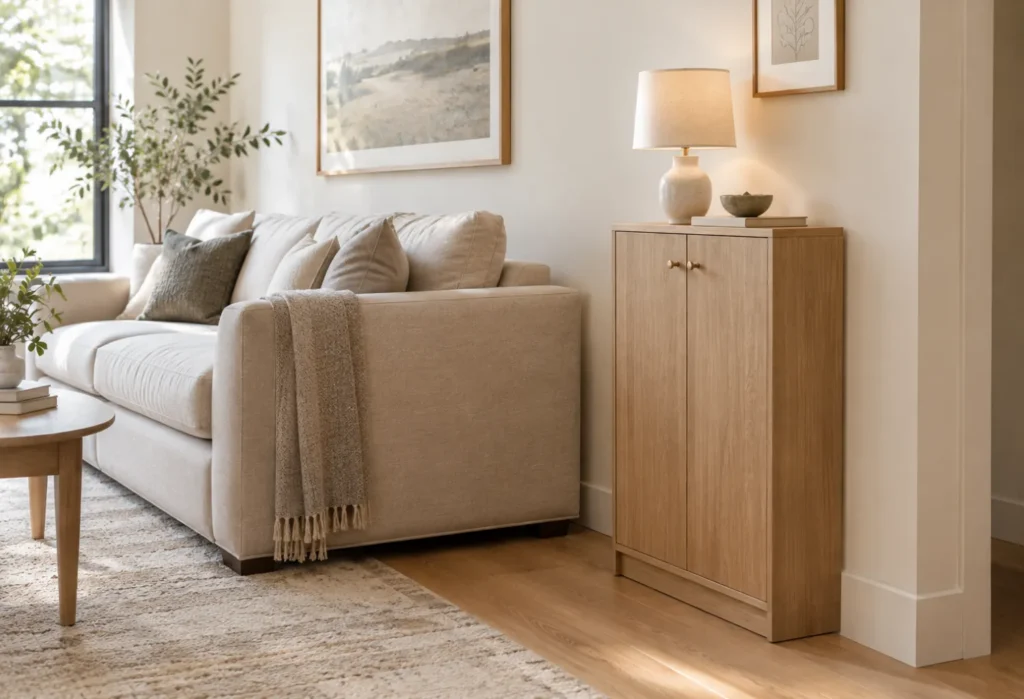
A narrow cabinet can provide dedicated blanket storage without requiring a large piece of furniture. In a small living room, it can sit against an unused wall and store throws behind closed doors, leaving the sofa and floor free from extra items.
Choose a cabinet roughly 12 to 16 inches deep if floor space is limited. A light oak finish can complement warm neutral interiors, while a painted white or muted green cabinet works well with traditional or farmhouse rooms. Keep the top surface lightly decorated with one lamp or a small arrangement.
7. Sofa Arm Storage Caddy
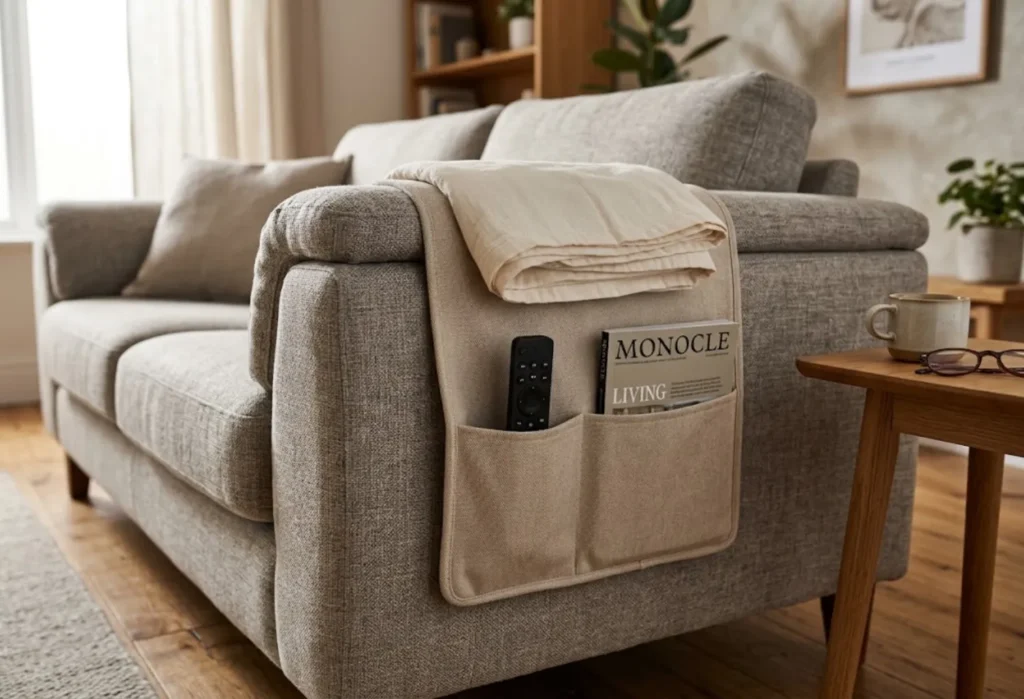
A sofa arm caddy is useful when there is no room for a basket or cabinet beside the seating. It hangs over the arm and creates pockets for a folded throw, remote controls, magazines, or other small living-room essentials without adding another piece of furniture.
Choose a caddy made from sturdy cotton, felt, or quilted fabric that coordinates with the sofa. Keep the blanket compartment limited to one lightweight throw so the arm does not look bulky. This option is particularly helpful for renters who cannot add permanent storage.
8. Built-In Window Seat Storage
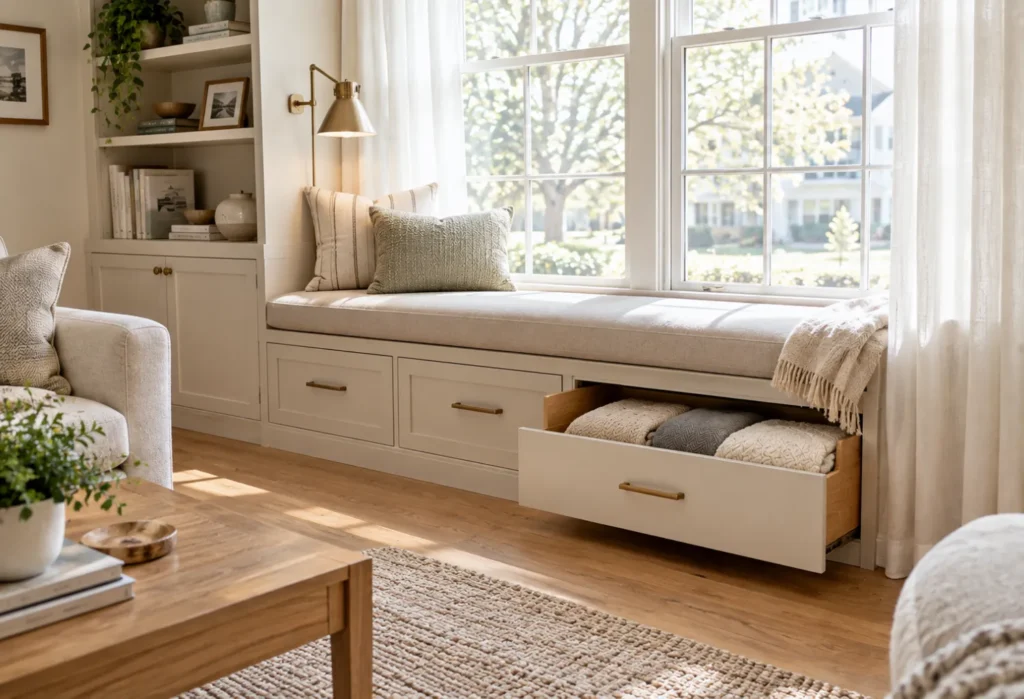
A window seat with a lift-up or drawer-style base can provide generous blanket storage while serving as additional seating. The hidden compartment makes use of the area beneath the seat rather than adding furniture elsewhere in the room.
Use the storage for seasonal or extra blankets that do not need to stay visible every day. For a cleaner look, select upholstery that relates to the sofa and curtains. A seat cushion in cream, taupe, or soft gray can connect the storage piece with the rest of the room.
9. Small Bench With Baskets Below
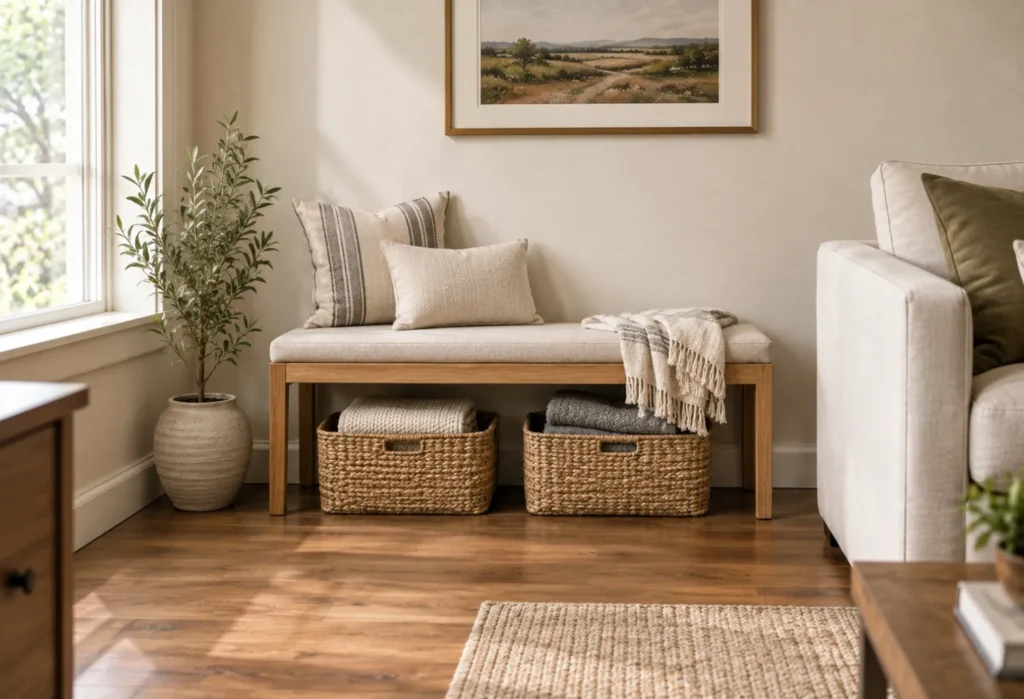
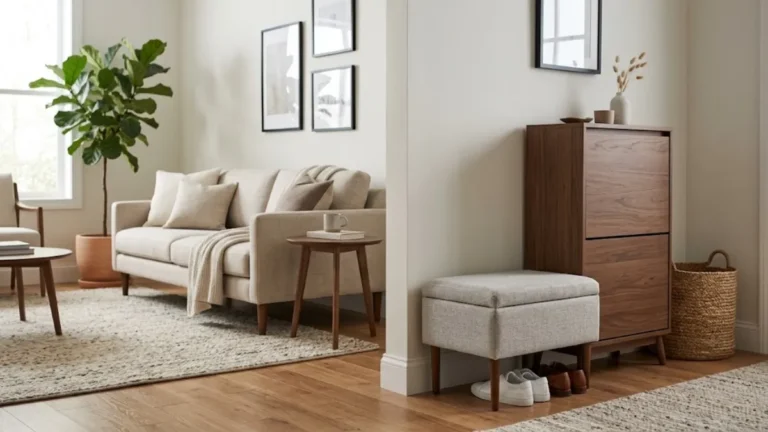
A compact bench can provide both seating and an organized place for blankets underneath. In a living room with an unused wall section or entry-side corner, this combination makes better use of the footprint than a decorative bench with no storage.
Choose a bench that leaves enough room underneath for two low baskets. Fabric bins create a softer look, while woven baskets bring natural texture. Keep each basket assigned to a simple category, such as everyday throws in one and seasonal blankets in the other.
10. Closed TV Console Storage
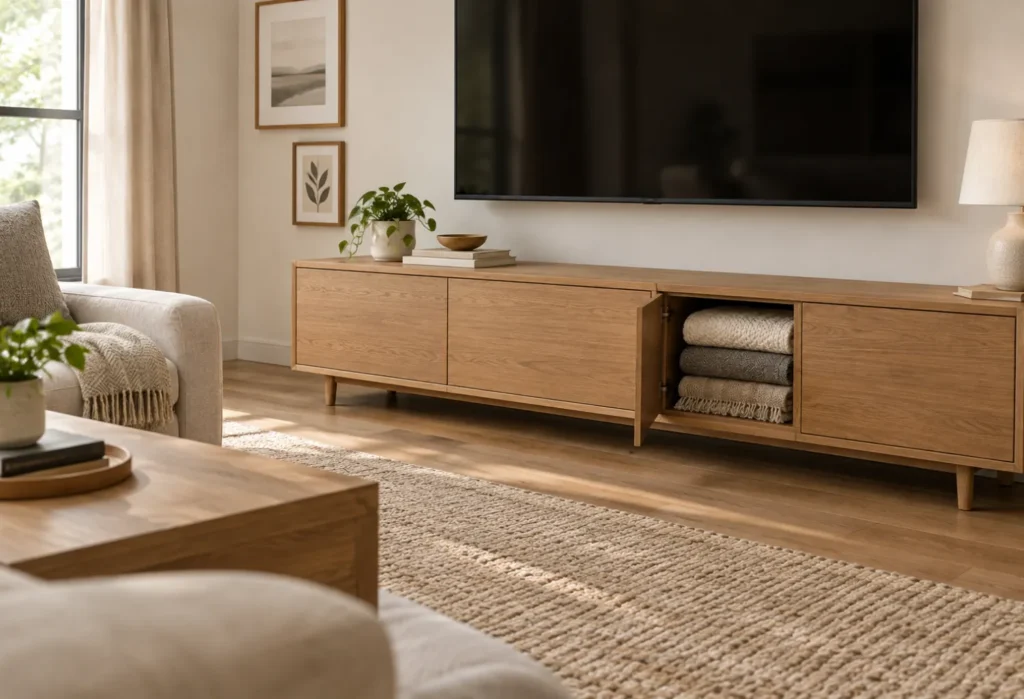
A TV console with enclosed cabinets can hide blankets in a location that already belongs to the living room. This is helpful if the space beside the sofa is occupied by lamps, plants, or walking paths and cannot accommodate another storage piece.
Reserve one cabinet for blankets rather than mixing them with electronics, cables, and miscellaneous items. Fold the throws into compact rectangles and stack them horizontally. A console with clean lines and a warm wood finish can also balance a large television visually.
11. Decorative Trunk as Blanket Storage
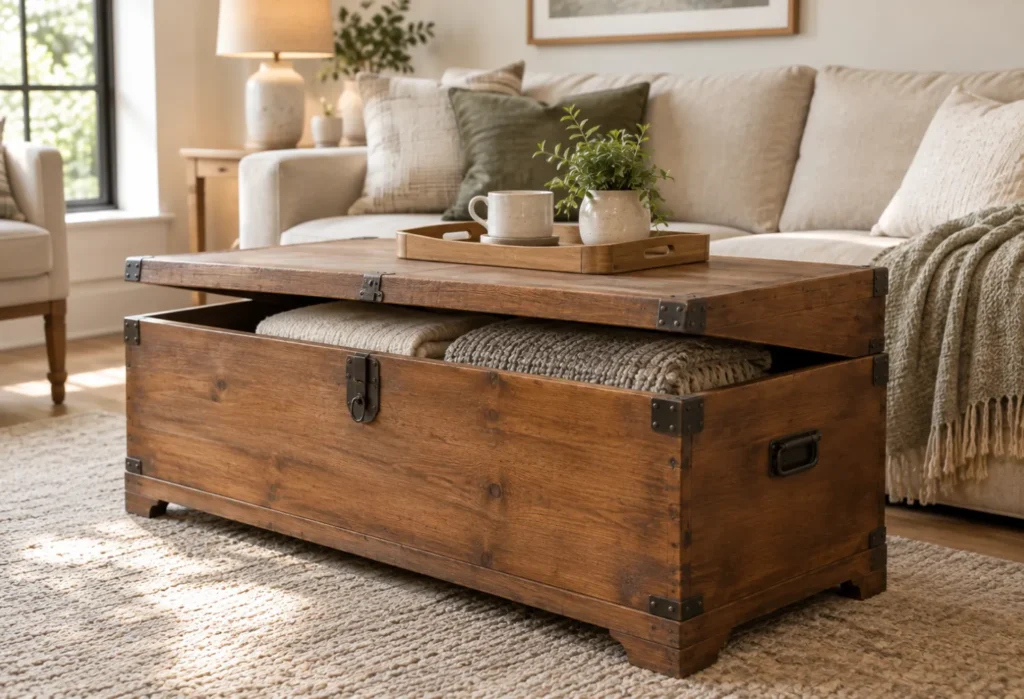
A decorative trunk can replace a conventional coffee table while providing a generous hidden compartment for bulky blankets. It works particularly well in rooms with vintage, rustic, coastal, or collected interiors where a piece with visible character feels appropriate.
Choose a trunk that is sturdy enough to function as a table if you plan to place a tray on top. Leave enough clearance around it for comfortable movement. For safety and convenience, avoid storing blankets so tightly that opening the lid becomes difficult.
12. Floating Cabinet Above a Low Console
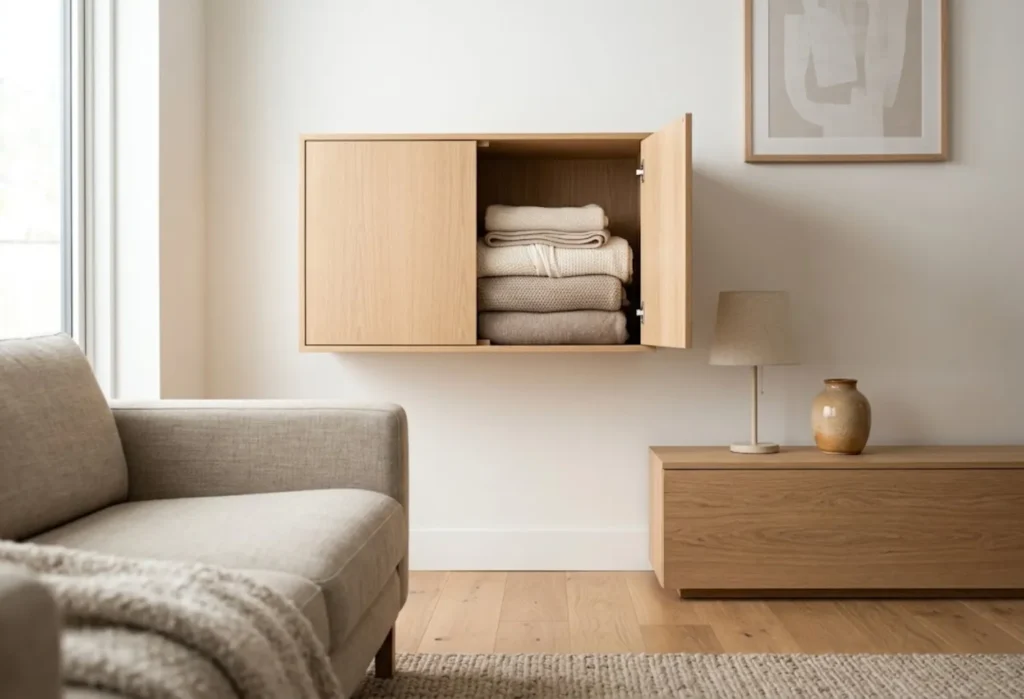
Wall-mounted storage makes use of vertical space while keeping the floor open. A shallow floating cabinet can hold folded blankets above a low console, giving the room additional storage without introducing another floor-standing unit.
Keep the cabinet relatively narrow and visually light so it does not dominate the wall. Warm white, pale oak, or a finish matching the console can help it blend into the room. Mount it high enough to avoid head bumps but low enough that the blankets remain practical to retrieve.
13. Color-Coded Blanket Baskets
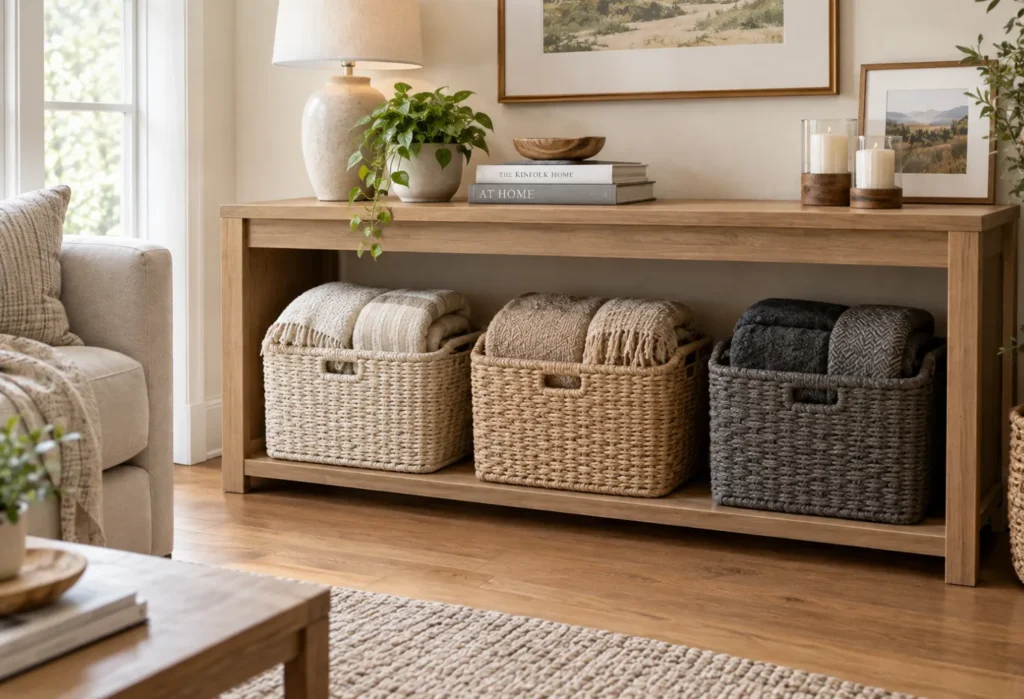
Color-coding can make a collection of blankets easier to organize while adding a controlled layer of color to the living room. Instead of putting every throw into one oversized basket, separate them by use or season using different but related containers.
For example, use cream and beige baskets for everyday throws and a darker basket for heavier winter blankets. Keep the color palette connected to existing pillows, curtains, or artwork. This approach works best when the baskets remain simple and the room does not already have many competing colors.
14. Repurposed Wooden Crate Storage
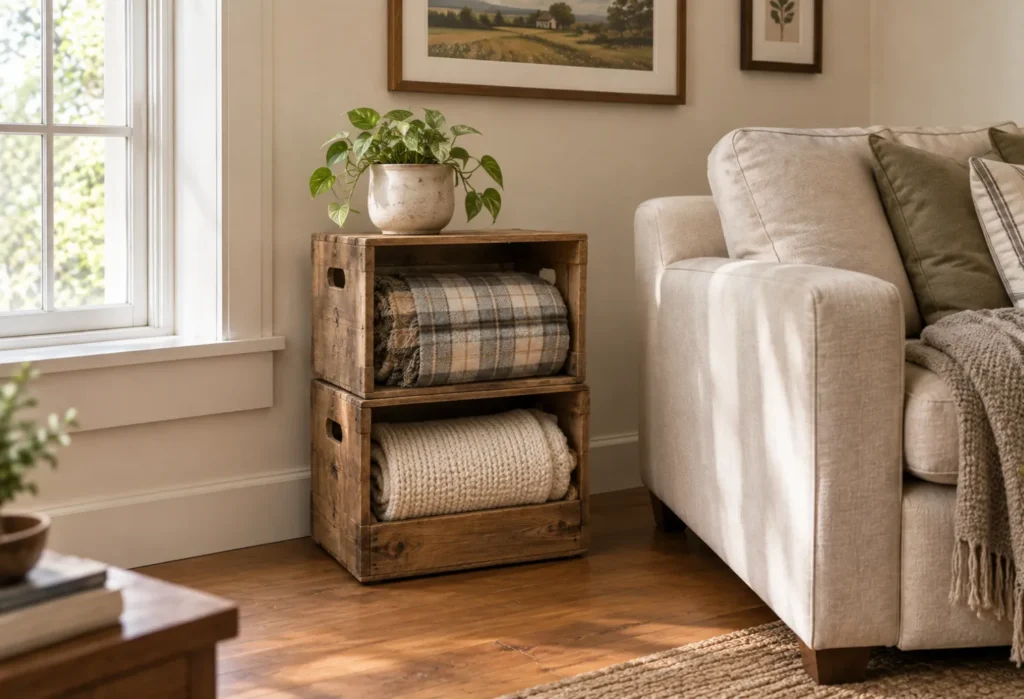
Wooden crates offer an inexpensive way to create open blanket storage, especially for casual or farmhouse-style rooms. A single crate beside the sofa can hold rolled throws, while two stacked crates can create a small vertical storage unit.
Sand and finish unfinished crates before bringing them indoors, particularly if the wood is rough. Place a felt pad underneath to protect hardwood or laminate flooring. Keep the arrangement stable and avoid stacking crates high enough to become a tipping hazard.
15. Matching Baskets Inside a Bookcase
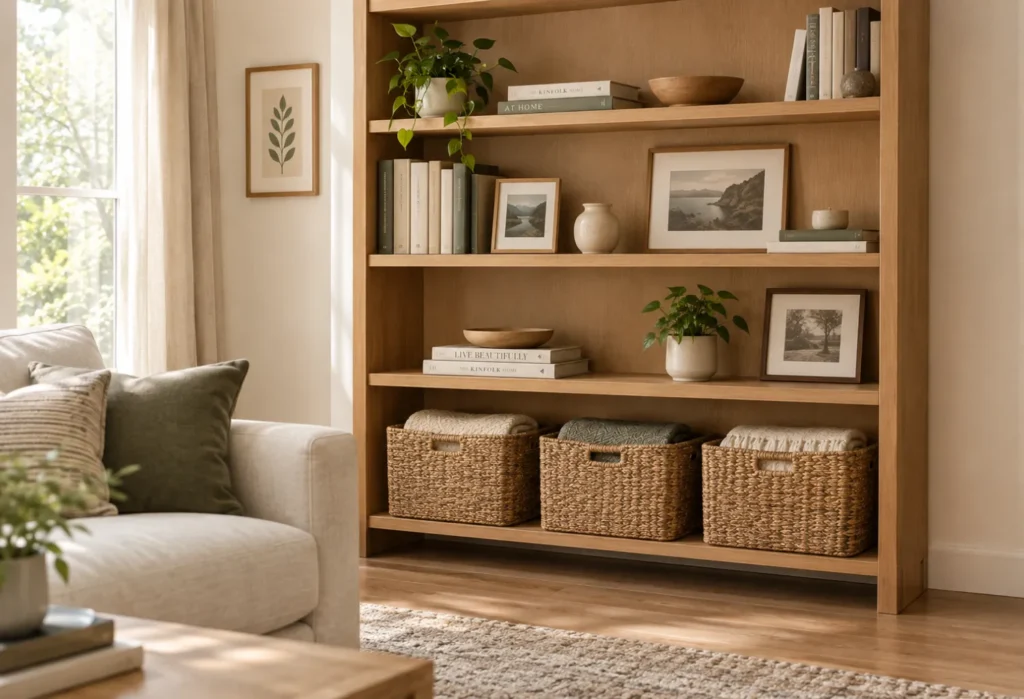
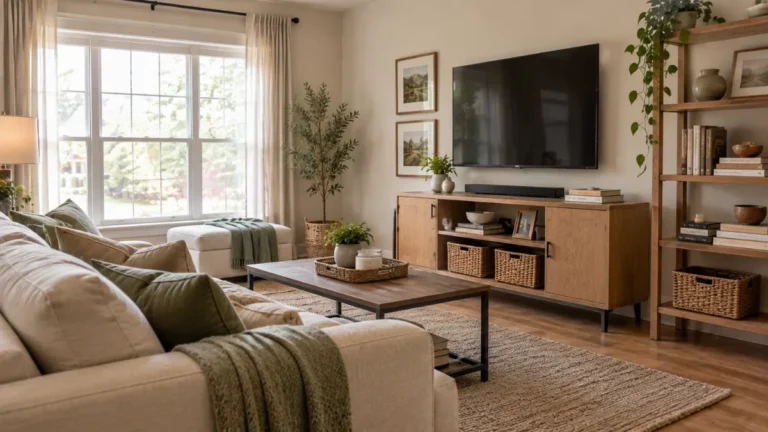
A bookcase can store blankets without making them look like an afterthought. Use matching baskets on the bottom shelves for throws, while books, framed photos, plants, and decorative objects occupy the upper sections. This creates a balanced combination of practical and decorative storage.
Choose baskets that fit the shelf width with a little breathing room around them. Three identical baskets often look more orderly than several unrelated containers. For a softer appearance, combine woven baskets with neutral textiles and keep the remaining shelves relatively uncluttered.
5 Best Blanket Organization Ideas at a Glance
| Idea | Best For | Why I Recommend It |
| Storage Ottoman | Small rooms | Combines seating, foot support, and storage |
| Woven Basket | Everyday throws | Simple, accessible, and decorative |
| Under-Sofa Storage | Tight floor plans | Uses otherwise wasted space |
| Slim Cabinet | Larger blanket collections | Keeps everything hidden and organized |
| Bookcase Baskets | Decorative storage | Combines blankets with books and accessories |
Conclusion
The best Blanket Organization Ideas Living Room solutions depend on how much floor space you have and whether you want blankets visible or hidden. Baskets and ladders suit everyday throws, while ottomans, cabinets, and trunks work better for concealed storage. Pick the option that fits your furniture layout first, then match its material and color to your existing decor for a natural result.