15 Kitchen Pantry Organization Ideas That Actually Work
Ever bought a third jar of cumin because you couldn’t find the other two? A messy pantry costs you money and patience. The good news is that small, smart changes fix most of it. These kitchen pantry organization ideas work for tiny cupboards and walk-in pantries alike. Some cost almost nothing, and a few take ten minutes. Pick what fits your space and start there.
1. Clear Canisters
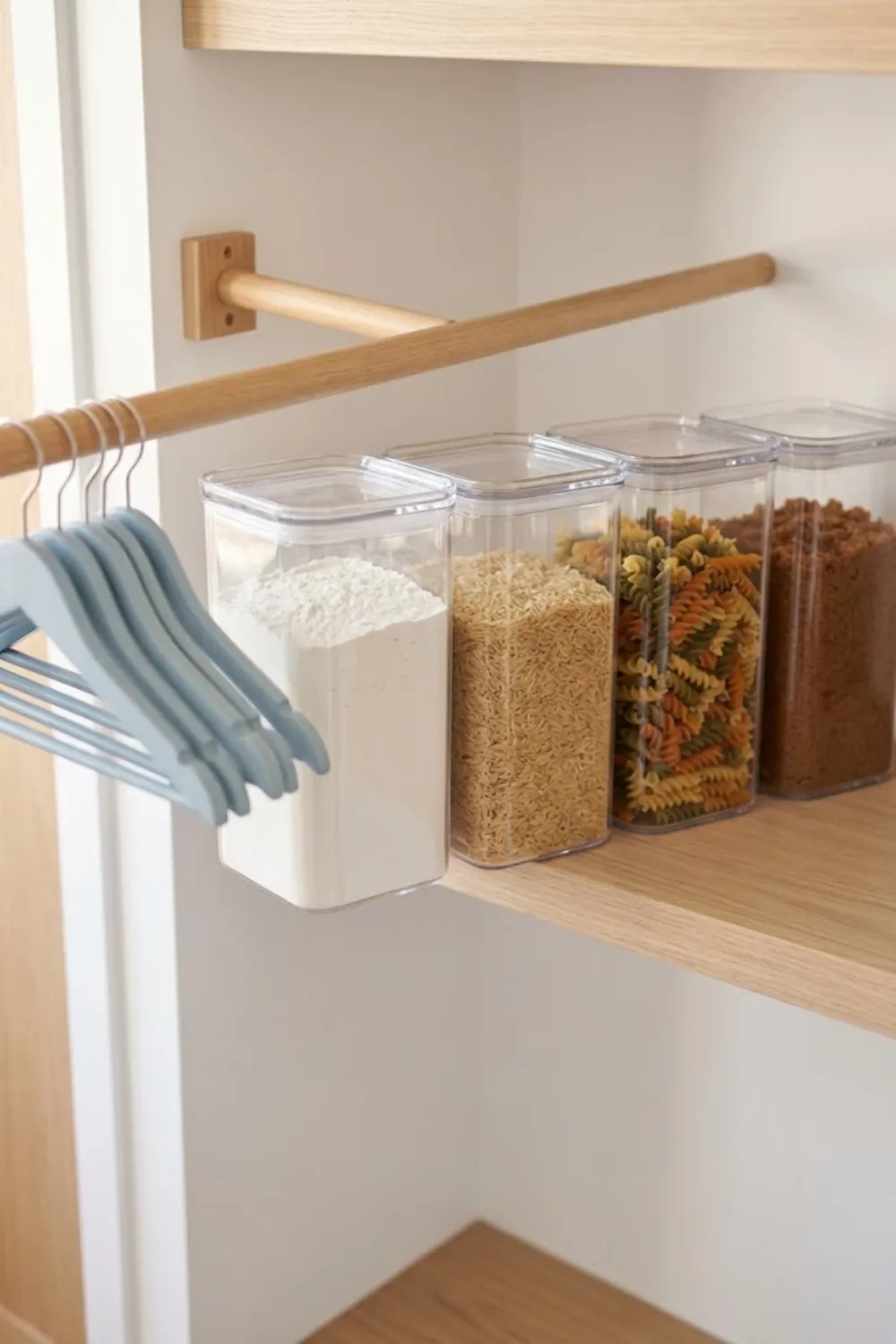
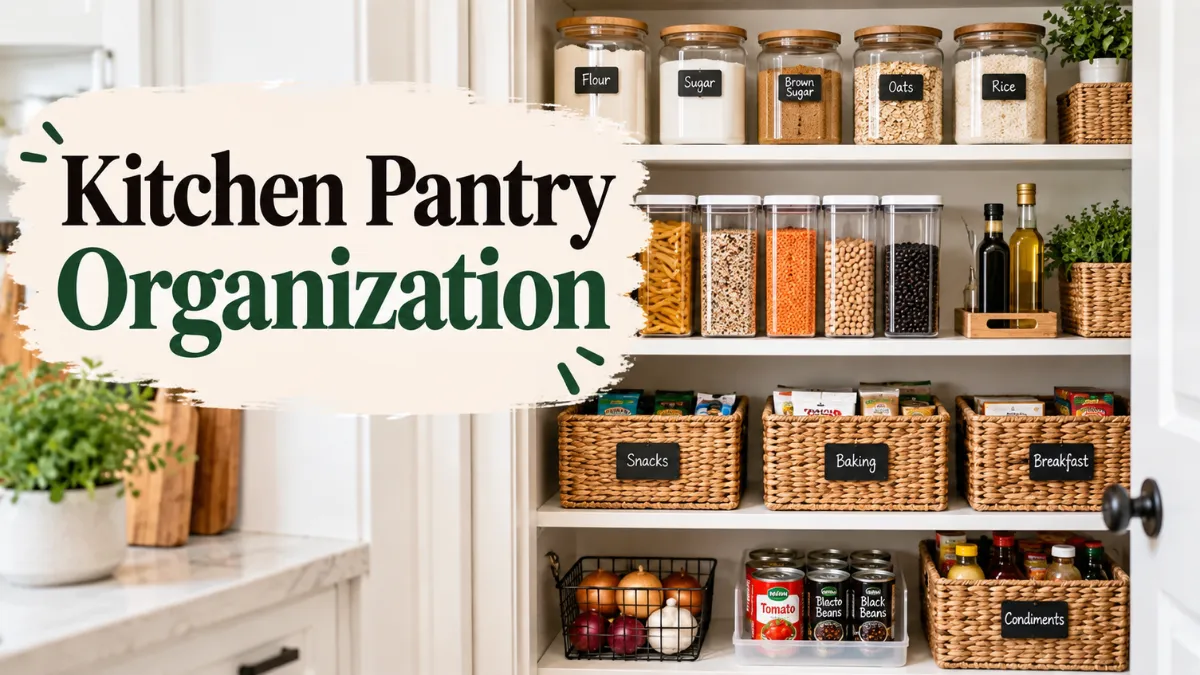
Decanting flour, sugar, rice, and pasta into clear airtight containers is the classic move for a reason. You can see what’s running low at a glance, and the food stays fresher. Stick with square or rectangular canisters. They waste less space than round ones. Tape the cooking instructions or expiry date to the bottom so you don’t lose that info.
2. Lazy Susan Turntables
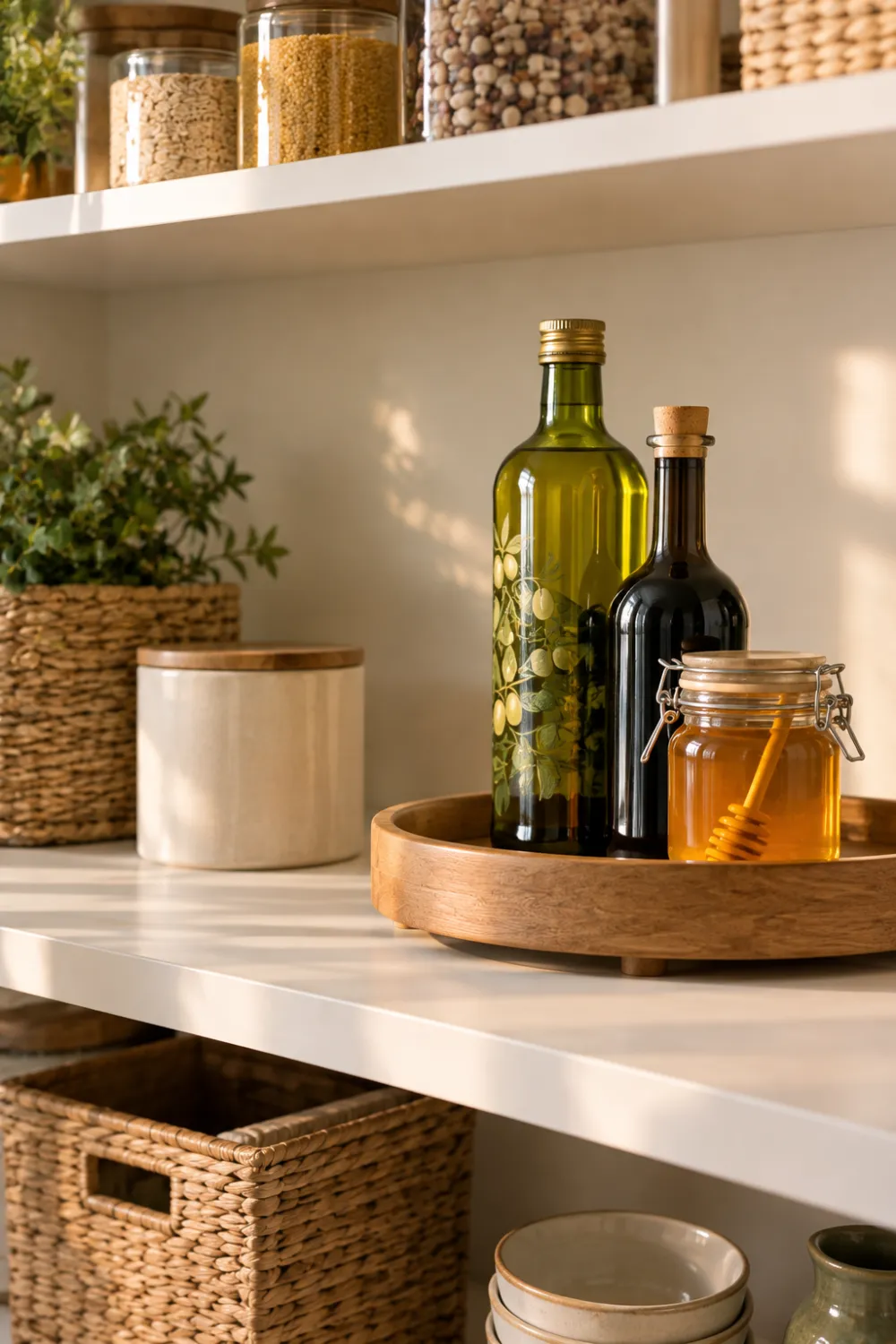
Deep shelves are where bottles go to be forgotten. A simple turntable fixes that. Park your oils, vinegars, and sauces on one and give it a spin. Everything comes to you, and nothing gets lost in the back. A low-sided one keeps small bottles from sliding off. Use a second one for jars of honey, jam, and nut butter.
3. Door-Mounted Spice Racks
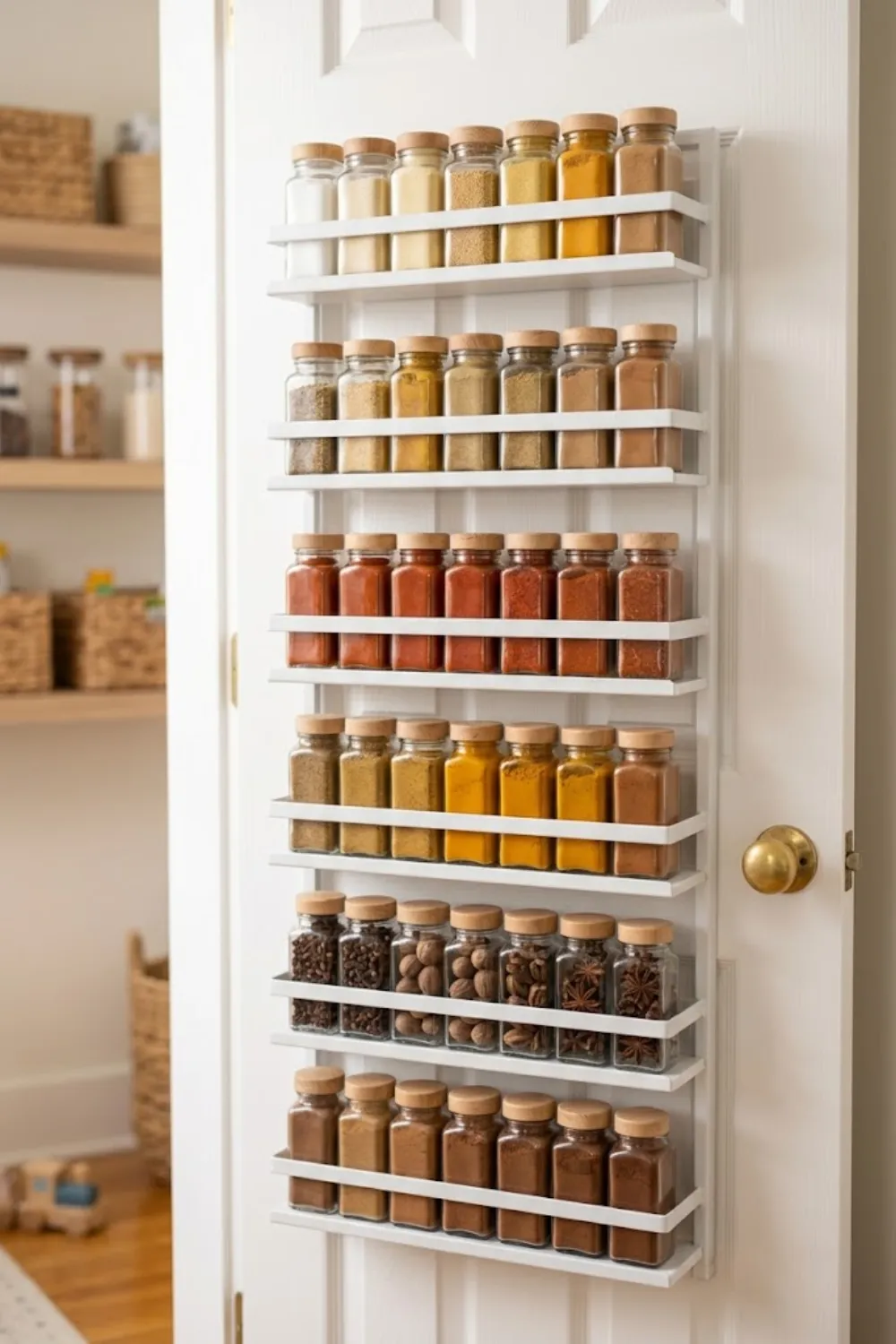
The inside of your pantry door is free real estate. Add a narrow rack with a front lip and you’ve got an instant spice shelf at eye level. Put the spices you reach for weekly on the middle rows. Save the top and bottom rows for the occasional ones, like cardamom or saffron. It also clears a whole shelf for something else.
4. Can Risers

Stack cans flat and you can only see the top one. Tiered risers fix that by lifting each row a little higher than the one in front. Now you can read every label without moving a thing. They’re great for canned tomatoes, beans, and broth. A pull-down can dispenser works well for households that go through a lot of cans.
5. Pull-Out Wire Baskets
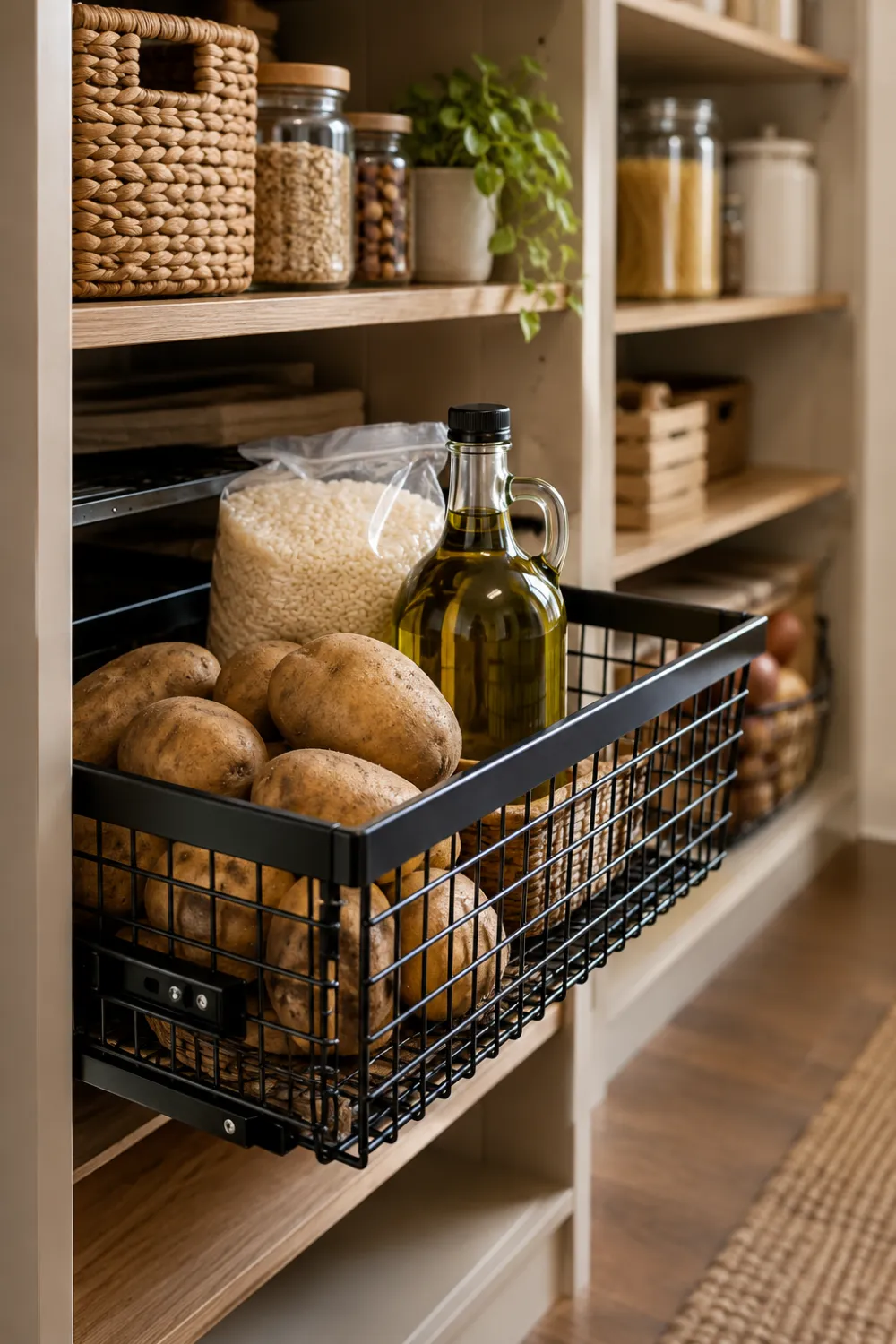
Reaching into the back of a deep shelf is a pain, and this solves it. Slide-out baskets turn a dark corner into something you can actually use. They work well for heavy items like bags of potatoes, big jugs of oil, or bulk rice. Measure your shelf depth and width before buying. Some baskets need a few extra inches of clearance to glide smoothly.
6. Zone Shelving
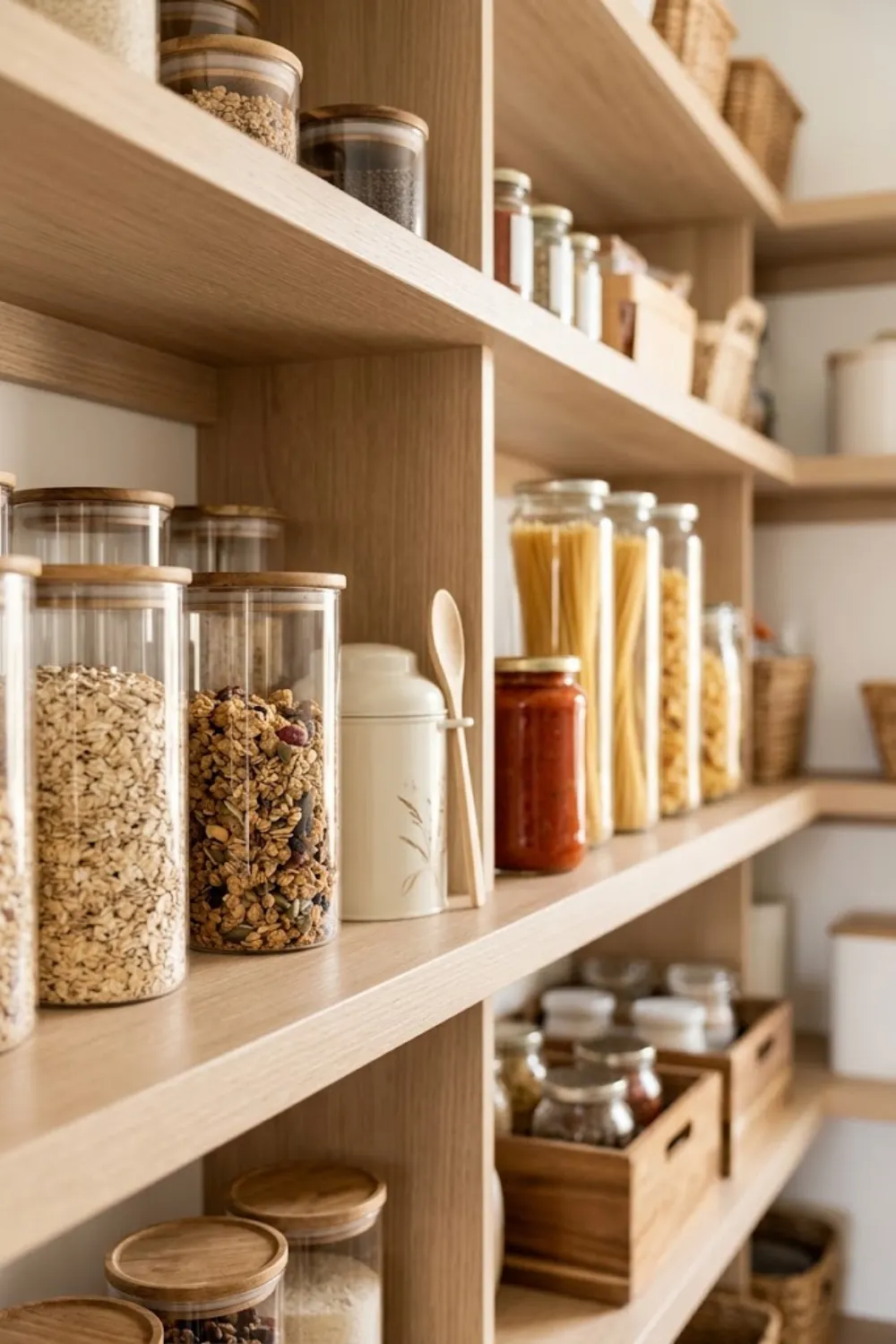
Sort by how you cook, not just by food type. Give breakfast items one shelf, with cereal, oats, and tea together. Give pasta night another, with pasta, sauce, and canned tomatoes side by side. When you’re making dinner, you grab from one spot instead of hunting across three shelves. It also makes it obvious when you’re out of something. Start with just two or three zones and see what feels natural.
7. Snack Bins
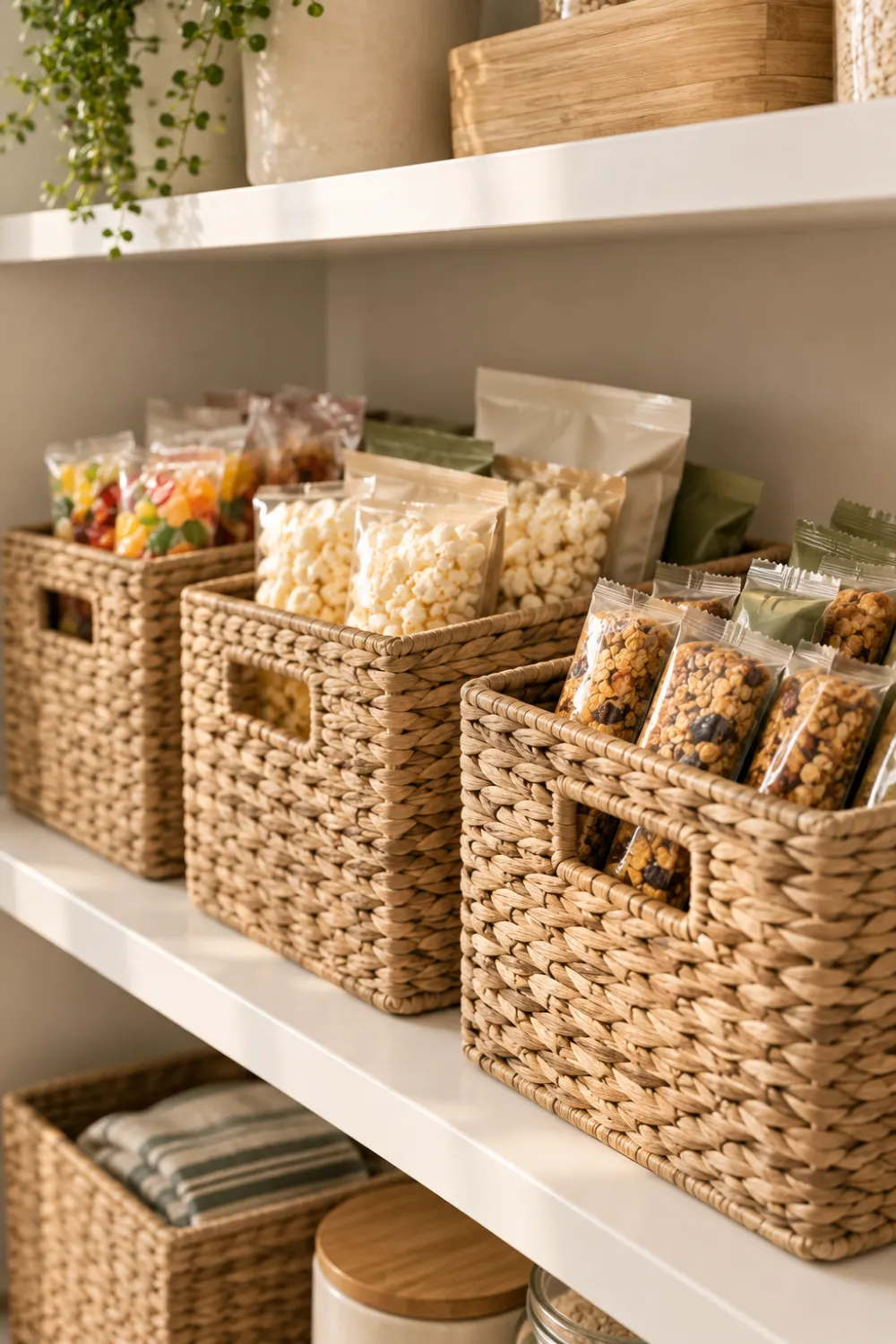
Loose granola bars and chip bags create instant chaos. Toss them into open bins instead. One bin for crunchy things, one for sweet things, one for the quick grab-and-go stuff. Handles make them easy to pull down, and a tidy bin hides the mess from view. Hand the bin to someone and they can pick a snack without digging through the whole shelf.
8. Kids Low Shelf
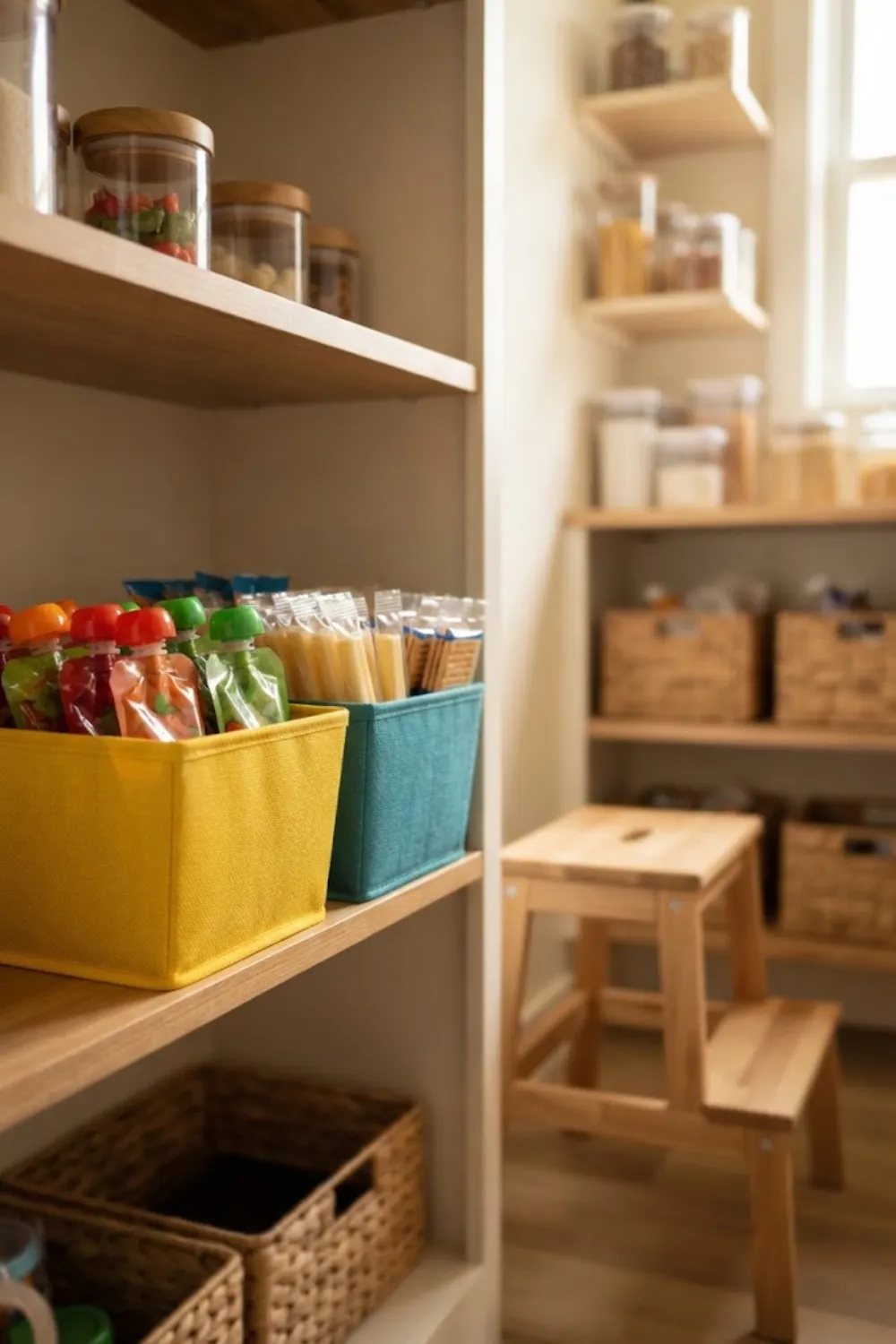
If kids are always asking you for snacks, give them their own shelf at their height. Fill it with pre-approved options like fruit pouches, crackers, and cheese sticks. They feel independent, and you stop being the snack dispenser. Use a bright bin so they can spot it easily. Put anything you’d rather they skip, like candy or sugary cereal, up high.
9. Baking Corner
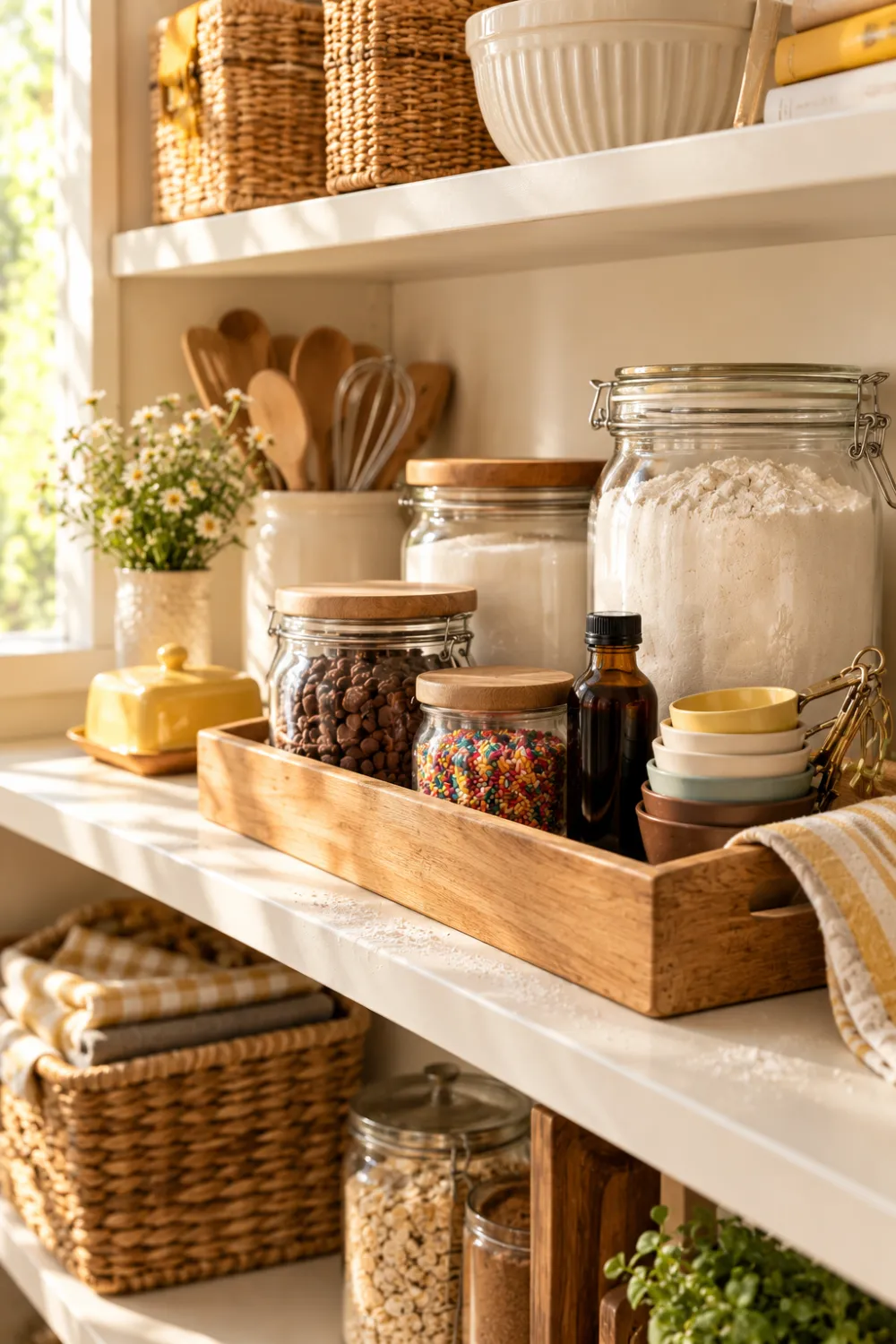
Baking supplies are a pain when they’re scattered. Pick one shelf or one shallow bin for flour, sugar, baking powder, vanilla, sprinkles, and chocolate chips. When the urge to bake hits, you pull out one container and you’re ready. Keep measuring cups and spoons clipped together nearby. A small tray under the vanilla and food coloring keeps drips contained.
10. Produce Bins
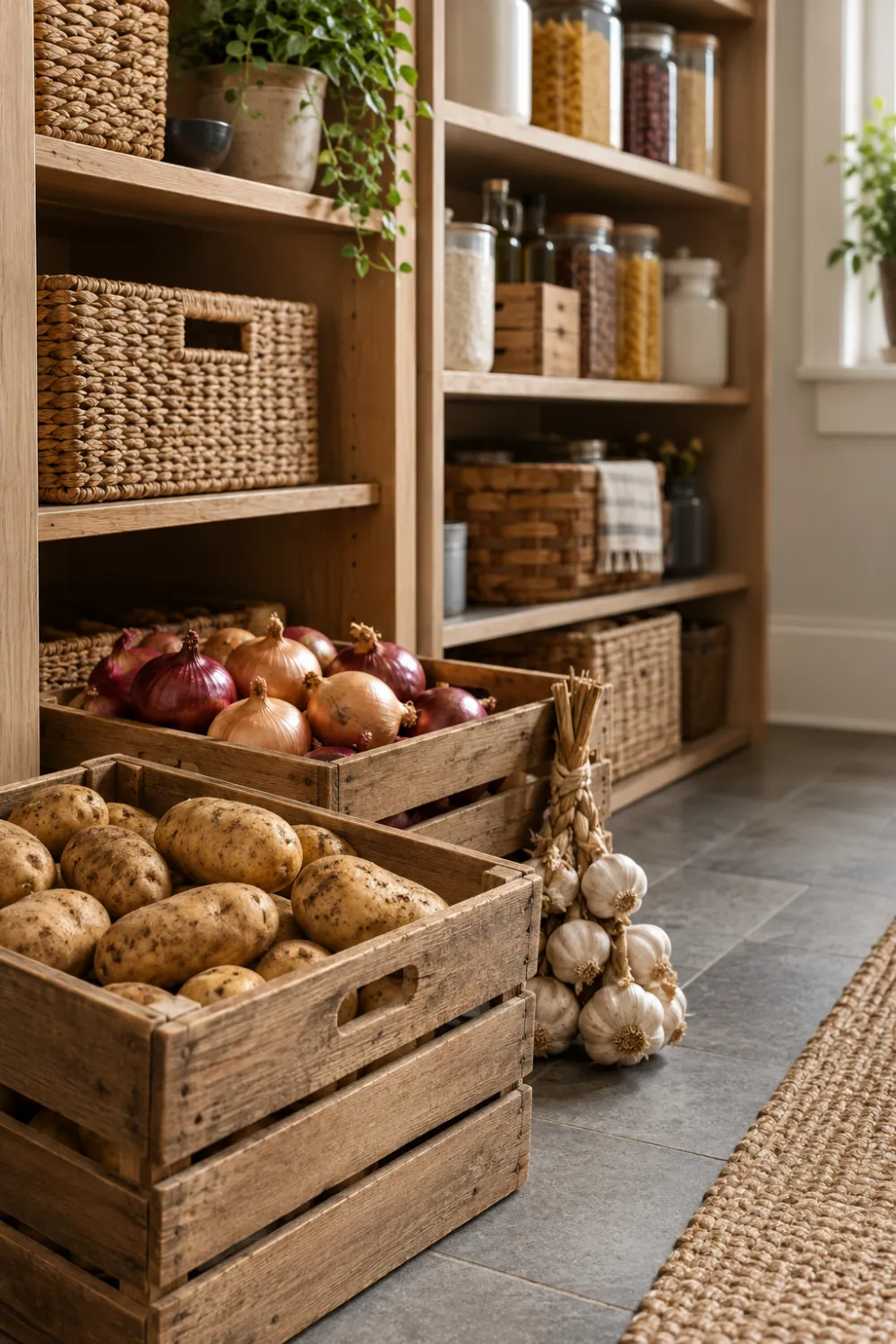
Potatoes, onions, and garlic like cool, dark, ventilated places, which makes a pantry perfect for them. Use open wire or wooden crates so air can move through. Keep onions and potatoes in separate bins, because they spoil faster when stored together. Check the bins every week or so and toss anything soft. It’s easier than discovering a surprise months later.
11. Under-Shelf Baskets
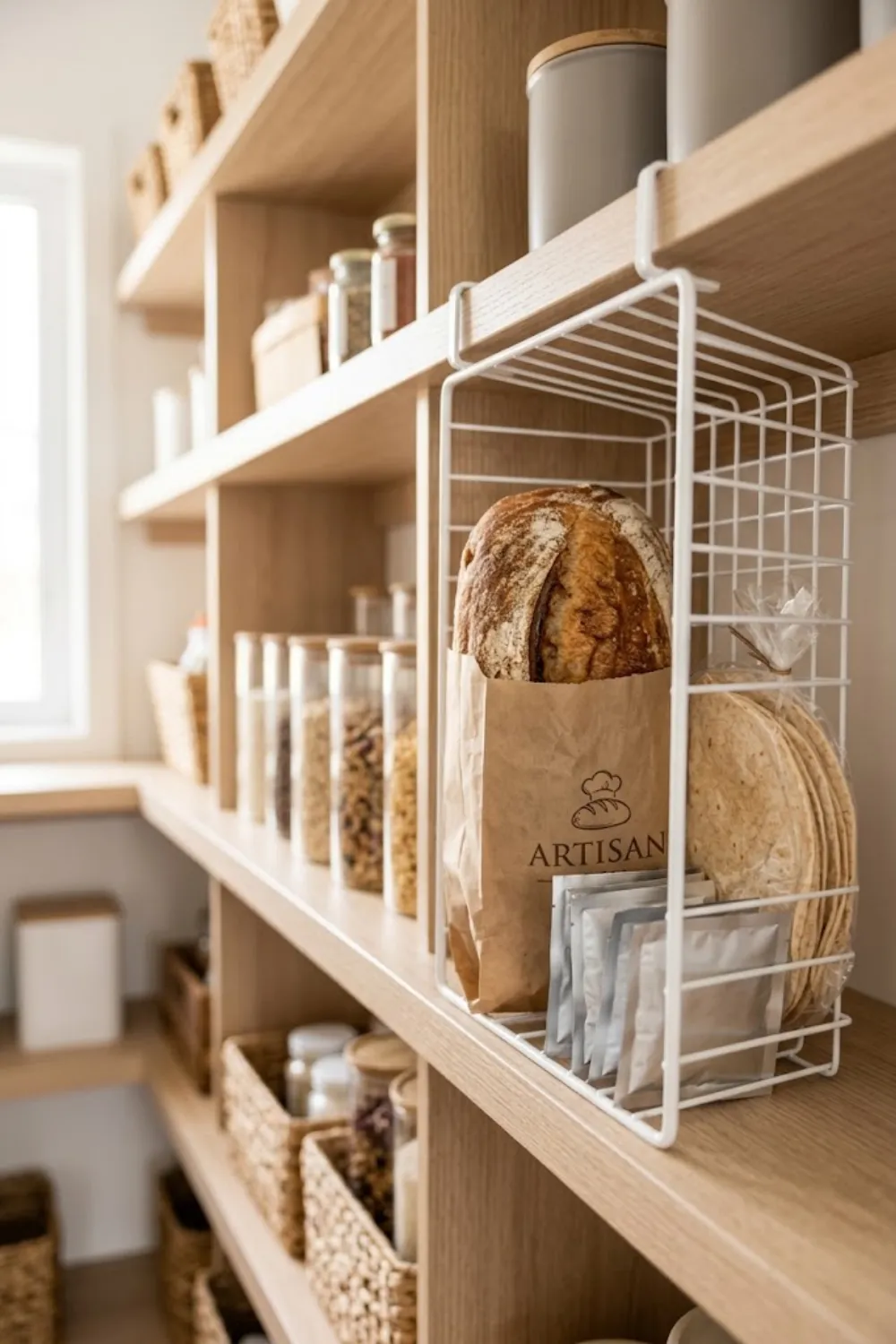
Look at the empty space between your shelves. Under-shelf baskets hook right onto the shelf above and add a whole new storage layer. They’re ideal for lightweight stuff like bread, tortillas, bagged snacks, or packets of seasoning mix. They cost very little, and you don’t need any tools. Just check that the shelf above can hold a little extra weight.
12. Tray Storage
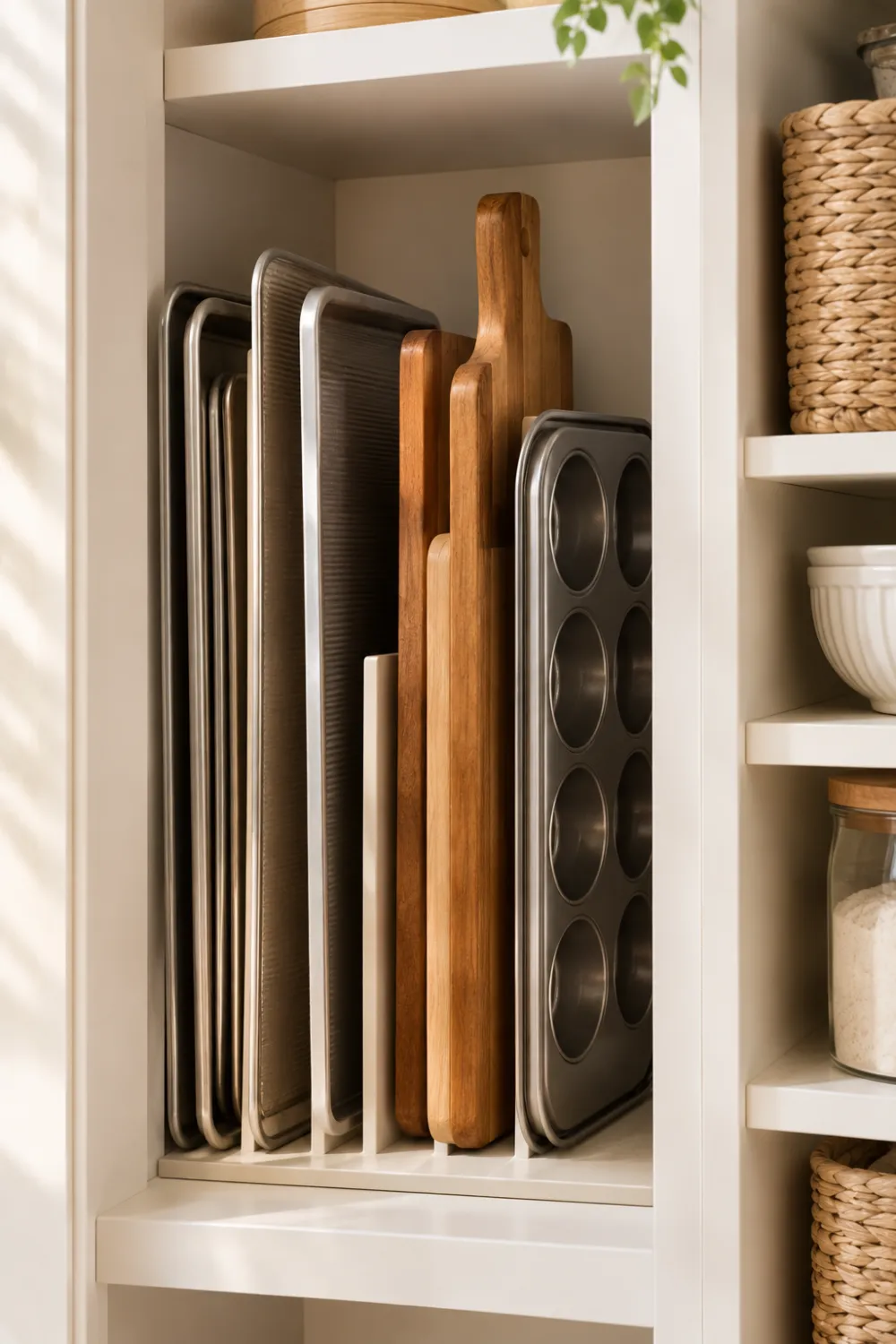
Baking sheets, cutting boards, and muffin tins are awkward to stack and annoying to pull out. If your pantry has a spare vertical slot, line them up on their sides, like files in a cabinet. A couple of tension rods or a simple divider keeps them from toppling. You can slide out exactly the one you need. It also frees up cabinet space in the kitchen.
13. Pantry Inventory Whiteboard

Stick a small whiteboard or magnetic list on the pantry door. When you use the last of something, jot it down right then. At the store, you snap a photo and you’re done. No more buying a duplicate bag of rice because you forgot you had one. Keep a marker on a string so it never goes missing.
14. Backstock Shelf
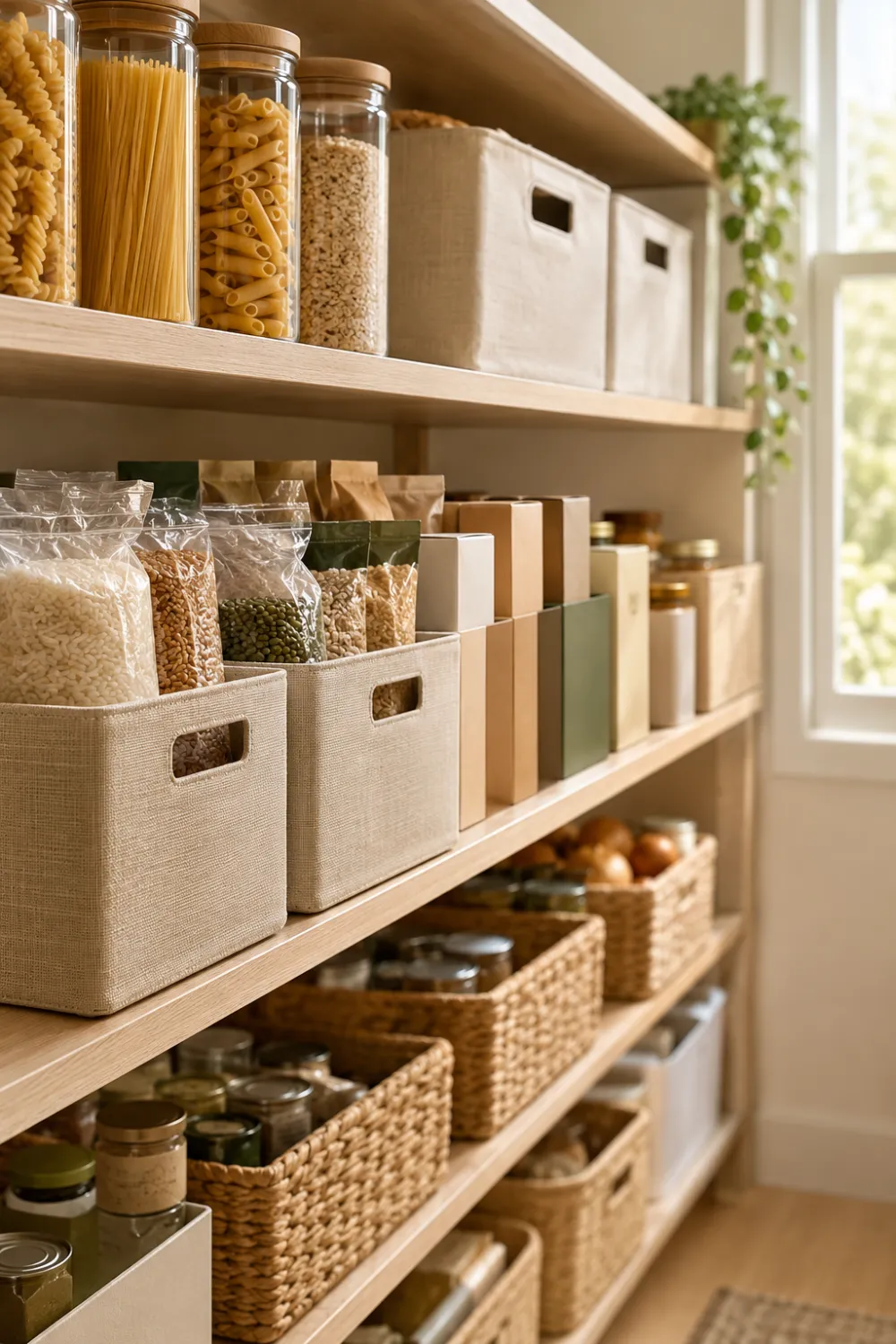
Buy in bulk? Give the extras their own spot, ideally a high shelf or the floor of the pantry. Keep only one of each item in your main, easy-reach area. When it runs out, grab a replacement from backstock. Place new items behind older ones so the oldest food gets used first. It keeps the main shelves calm and your food from expiring.
15. Simple Labels
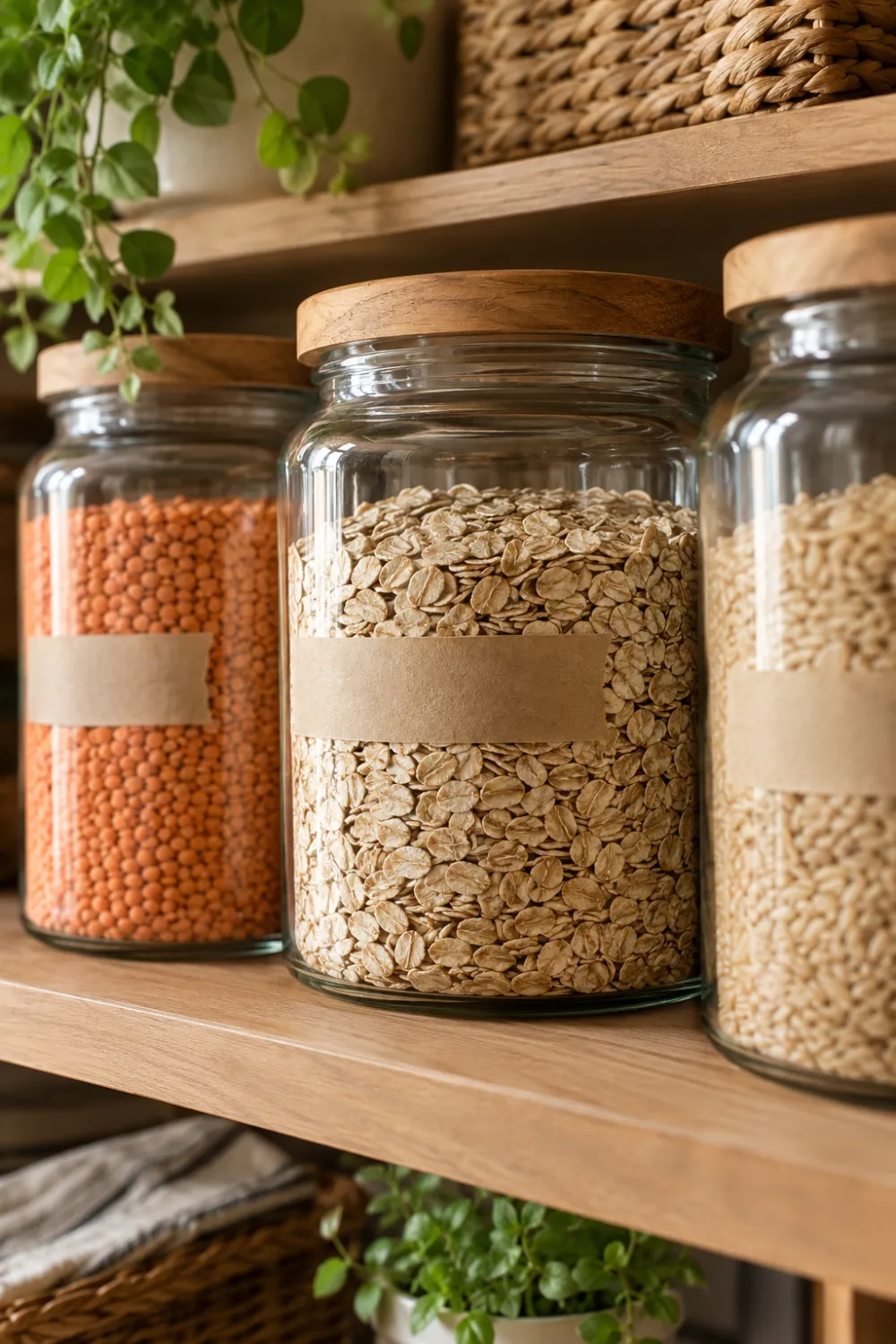
Labels sound fussy, but they make a pantry easy for everyone to use. You don’t need a fancy label maker. Masking tape and a marker work fine. Label the shelf edge, the bin, or the jar, wherever your eye lands first. Include the expiration date on decanted items. The first time someone else puts the groceries away correctly, you’ll be glad you did it.
Conclusion
The best kitchen pantry organization ideas are the ones you’ll actually keep up. Start with your biggest annoyance, whether that’s lost spices or toppled cans, and fix just that. Then add one idea at a time. Your pantry doesn’t need to look like a magazine photo. It just needs to work for your household, one easy-to-grab shelf at a time.