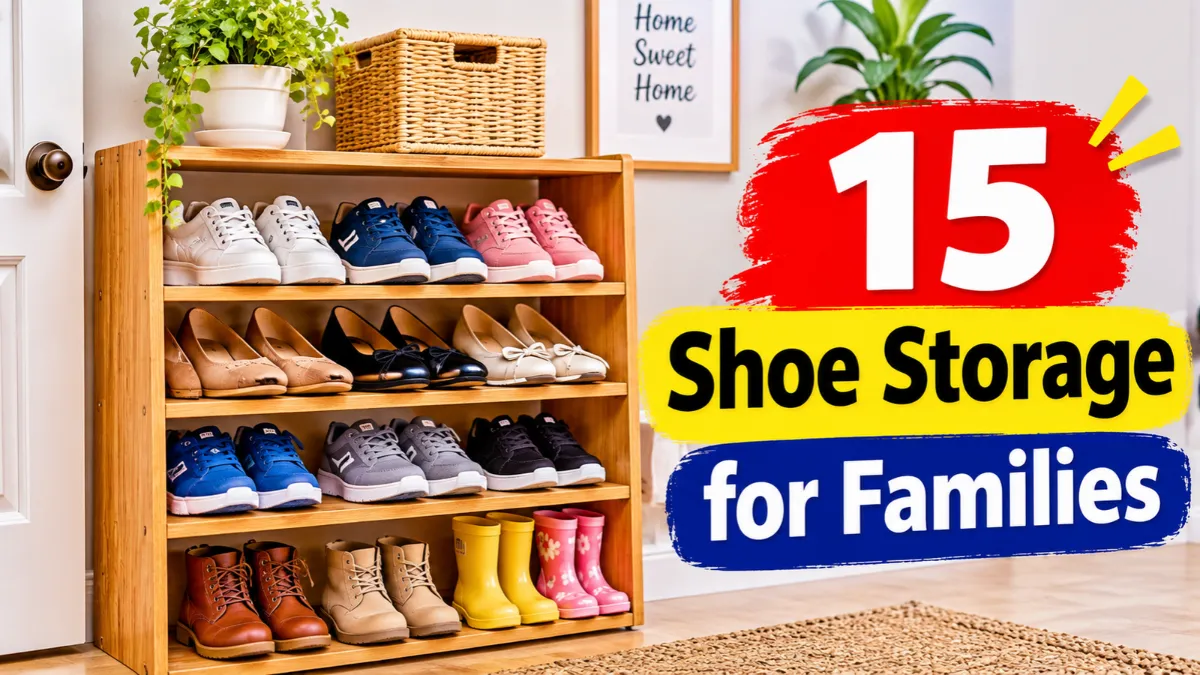
Shoe Storage for Families: 15 Ideas That Actually Work
Shoes have a way of multiplying by the front door. Muddy sneakers, tiny rain boots, one lonely flip-flop. Good shoe storage for families isn’t about fancy furniture. It’s about giving every pair an easy, obvious home. Below, you’ll find 15 ideas for tight hallways, big households, and everything between, so you can pick what fits your space and your people.
1. Entryway Cubby Bench
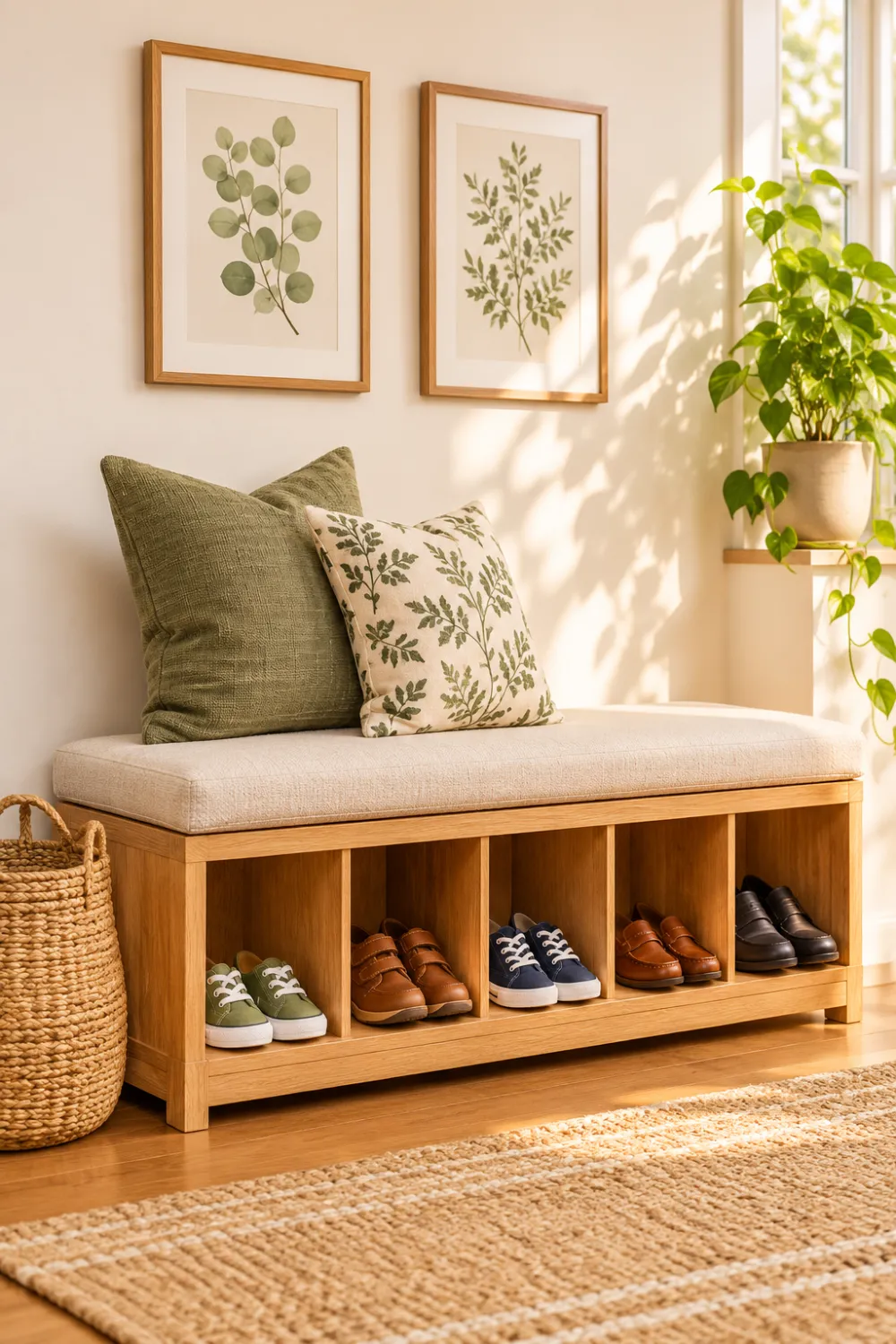
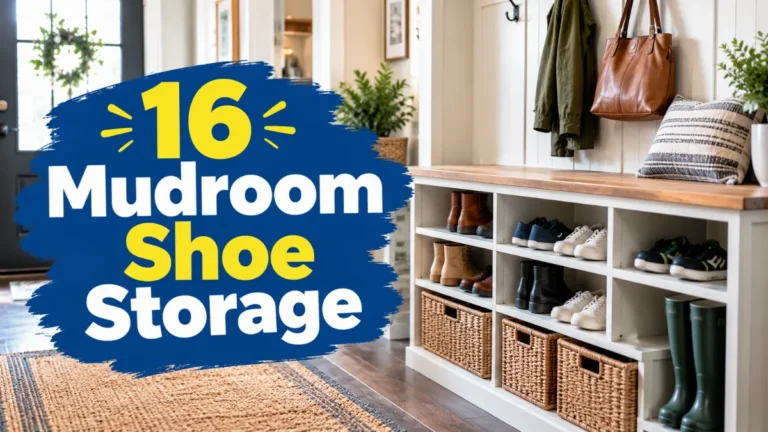
A bench with open cubbies does two jobs at once. Everyone sits down to pull their shoes off, then slides them straight into a slot. Give each family member one cubby, and arguments about “whose shoes are these?” mostly disappear. Choose a bench with a bit of height inside the cubbies, since sneakers and school shoes are bulkier than you’d think. Add a cushion on top and it becomes the spot where everyone actually lands.
2. Over-the-Door Organizer

If floor space is tight, look up. A hanging pocket organizer on the back of a closet or pantry door holds a surprising number of pairs, and it costs very little. It works best for kids’ shoes, slippers, and flats, because heavy boots tend to sag the pockets. Hang it low enough that little ones can reach the bottom rows themselves.
3. Tilt-Out Shoe Cabinet

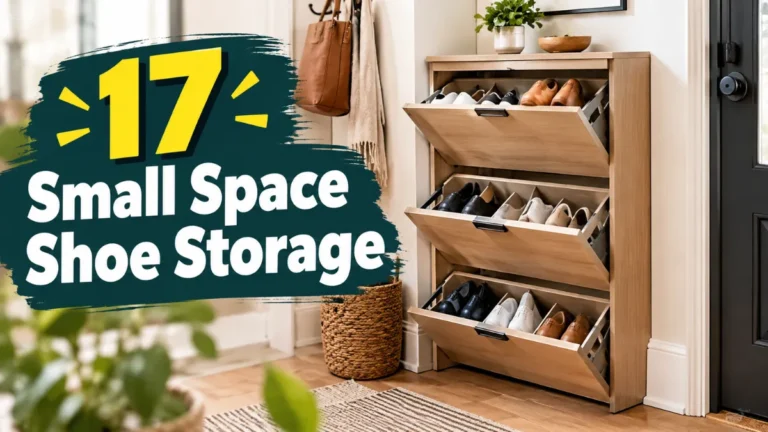
Those skinny cabinets with flip-down drawers look like slim dressers, but they hide a lot of shoes. Each drawer tips open to show two or three pairs lined up neatly. They’re great for narrow hallways because they stick out only about 7 to 12 inches. The closed doors also keep the visual clutter away, which helps if the entryway is the first thing guests see.
4. Low Baskets for Kids
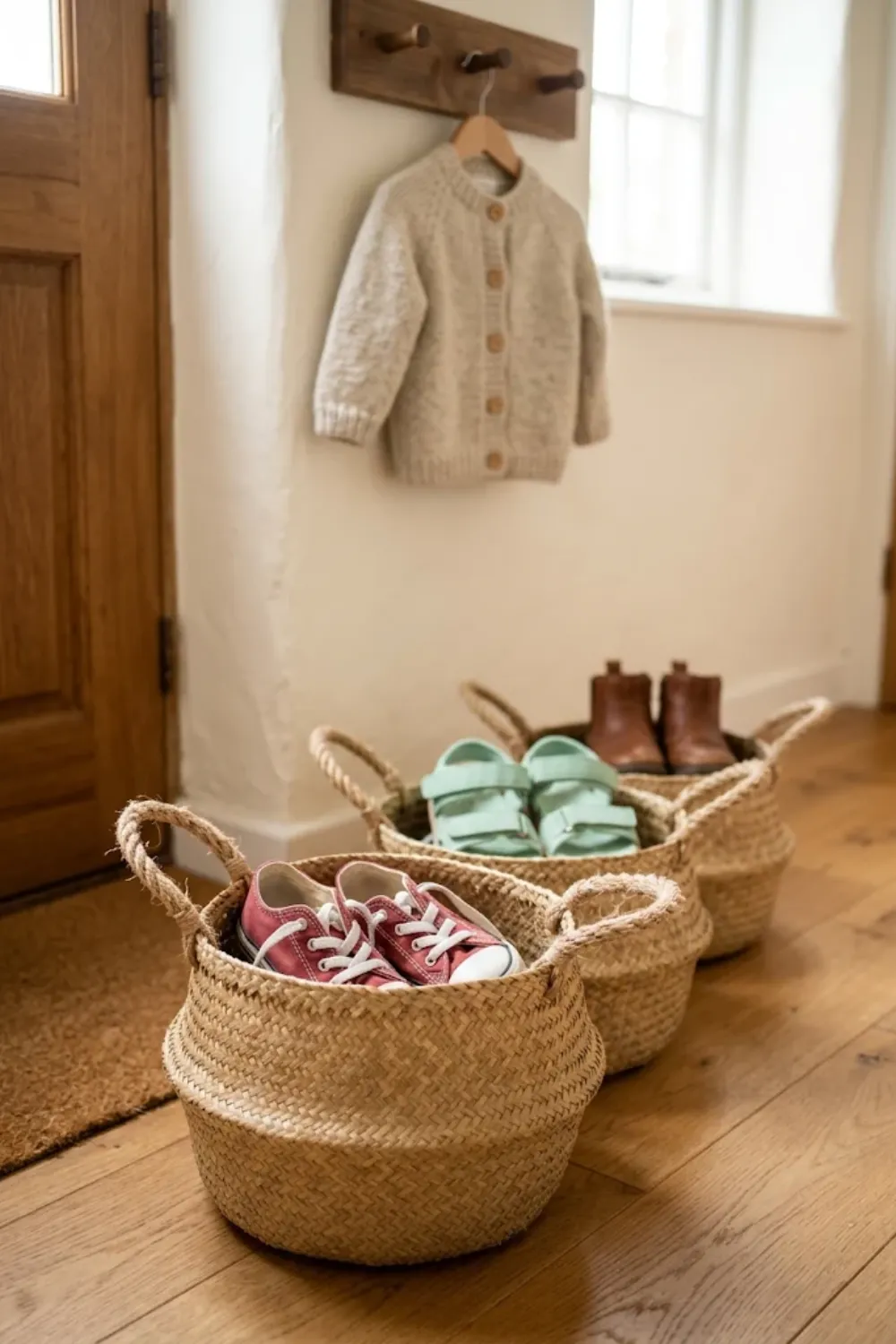
Toddlers and young kids can’t manage a fussy shoe rack, but they can toss shoes into a basket. Set one wide, low basket per child near the door and let them drop their shoes in. It won’t look perfectly styled, and that’s fine. Kids learn the habit fast when the rule is just “shoes go in your basket.” Pick baskets with sturdy handles so you can carry them out for a quick sort.
5. Boot Tray Station
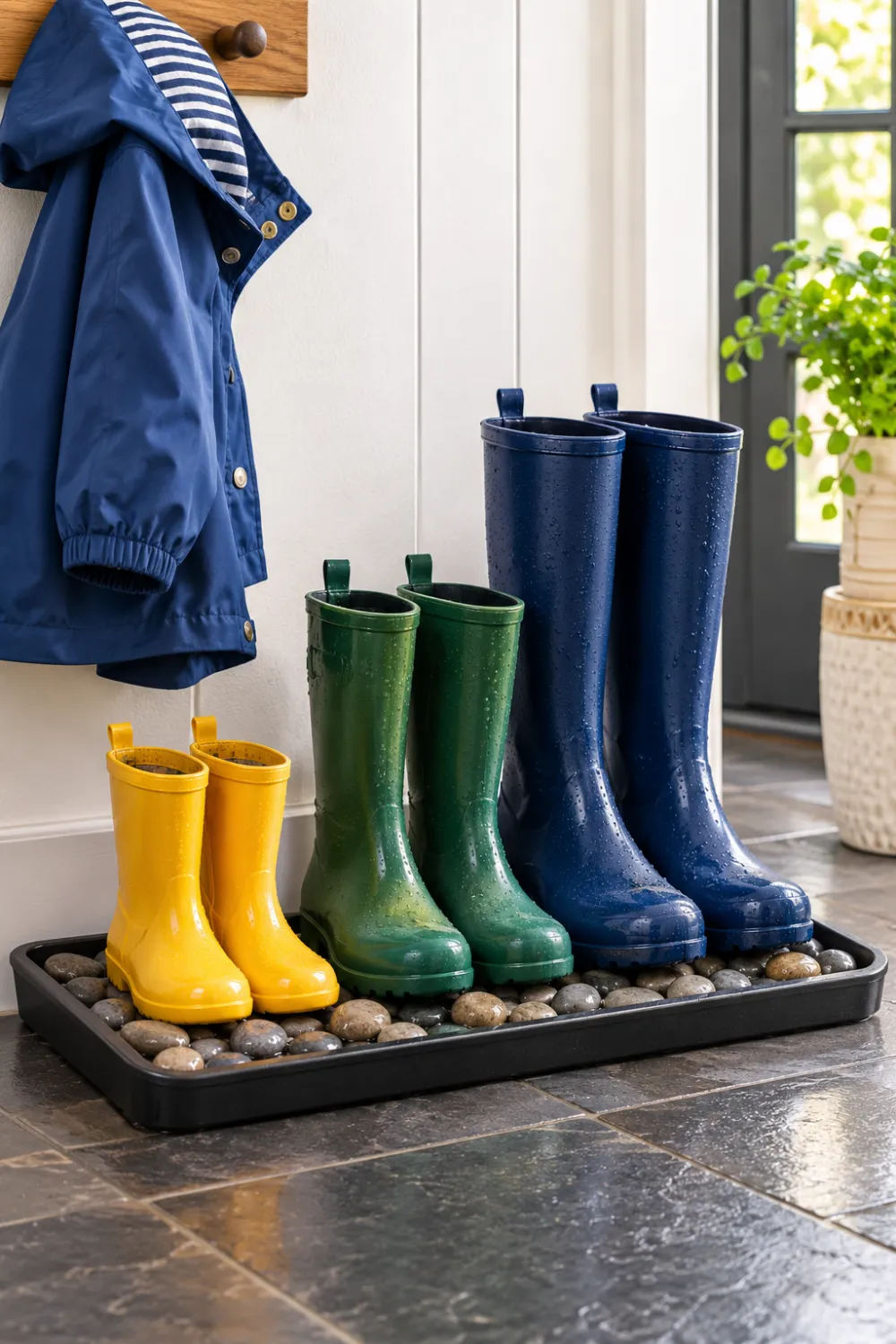
Wet and muddy shoes need their own plan. Set a rubber boot tray with raised edges by the door, then line up rain boots, snow boots, and gardening shoes on top. Melting snow and puddles stay on the tray instead of your floor. Add a layer of smooth river rocks if you’d like the water to drain away from the soles. Wipe it down weekly, and it does its job.
6. Under-Stair Drawers

That awkward triangle under the staircase is wasted space in many homes. Pull-out drawers built into it can swallow a whole family’s shoes. Because the drawers glide out, you can see every pair without crouching or digging. If you’re not up for a custom build, a carpenter can often do this in a day or two. It’s a smart pick for homes where the stairs are right by the entrance.
7. Wall Shoe Ledges
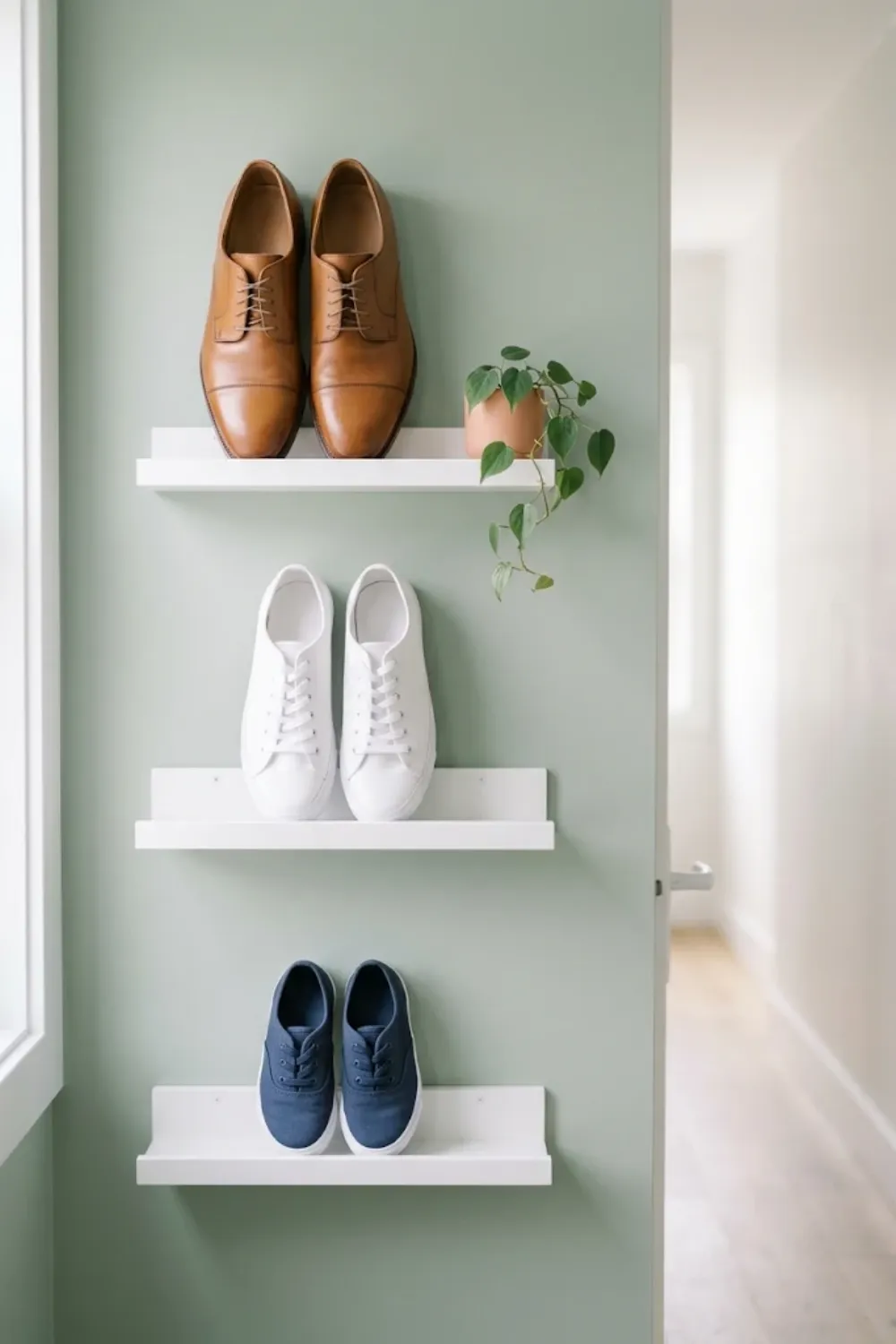
Narrow picture ledges mounted on the wall can hold shoes toe-out, almost like a gallery. This only works well for a handful of pairs, so it suits the shoes you wear most often. Think daily sneakers or dress shoes for work. It keeps those pairs off the floor and within easy reach. Mount them at different heights if your family includes both kids and adults.
8. One Shelf Per Person

Sometimes the simplest rule wins. In a bedroom closet or hallway wardrobe, give each person one shelf or one section of the rack, and keep their shoes only there. When a shelf gets full, it’s a clear signal to donate a pair. This also helps with older kids, since the space is clearly theirs to manage. Label the shelves with names if you want to make it even more obvious.
9. Seasonal Rotation Bins
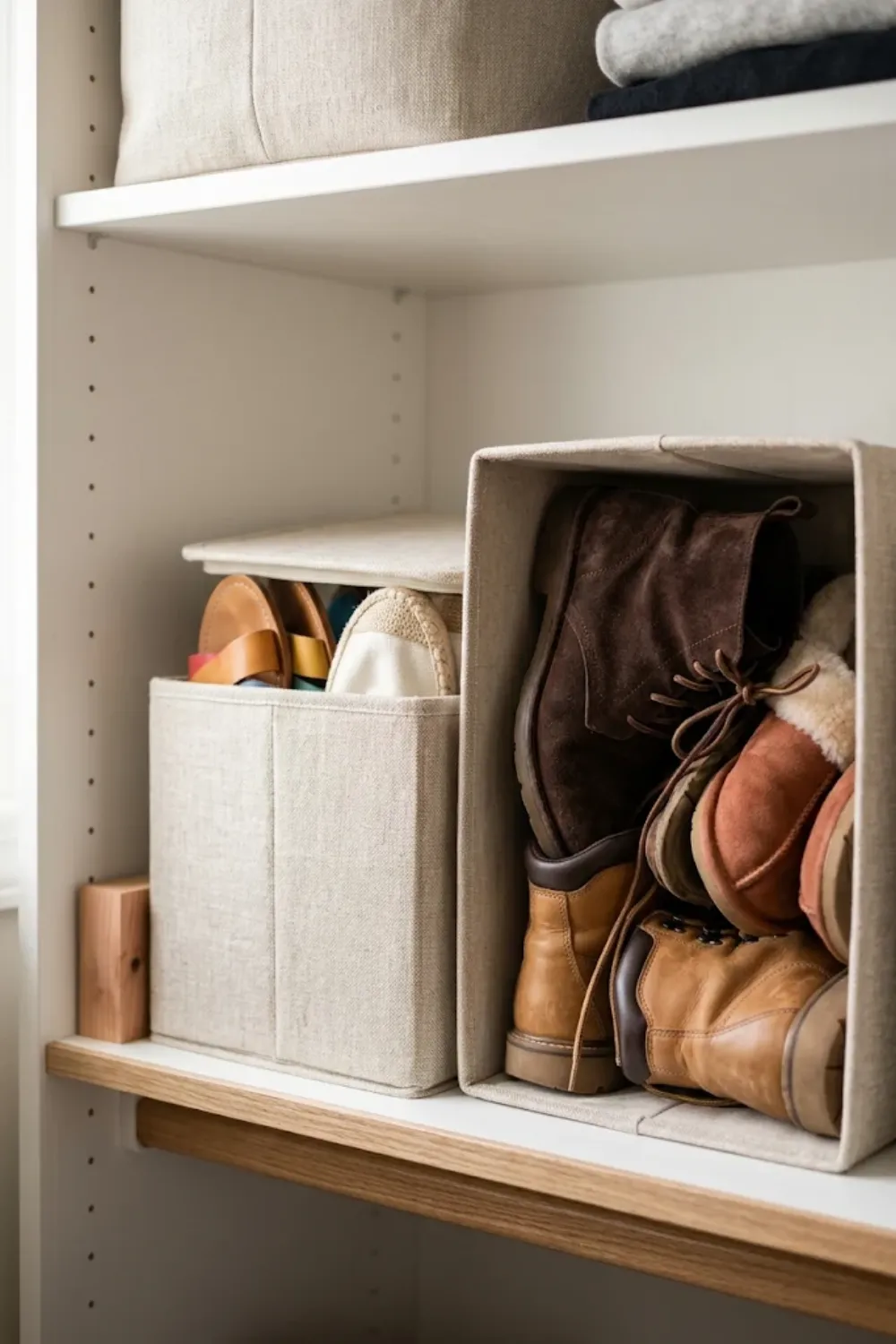
Do you really need sandals and snow boots within arm’s reach at the same time? Probably not. Keep the current season’s shoes by the door and store the rest in labeled bins on a high shelf or in the closet. Twice a year, swap them. It’s also a natural moment to check which pairs your kids have outgrown. You end up with a calmer entryway and a lot more room.
10. Garage Shoe Rack
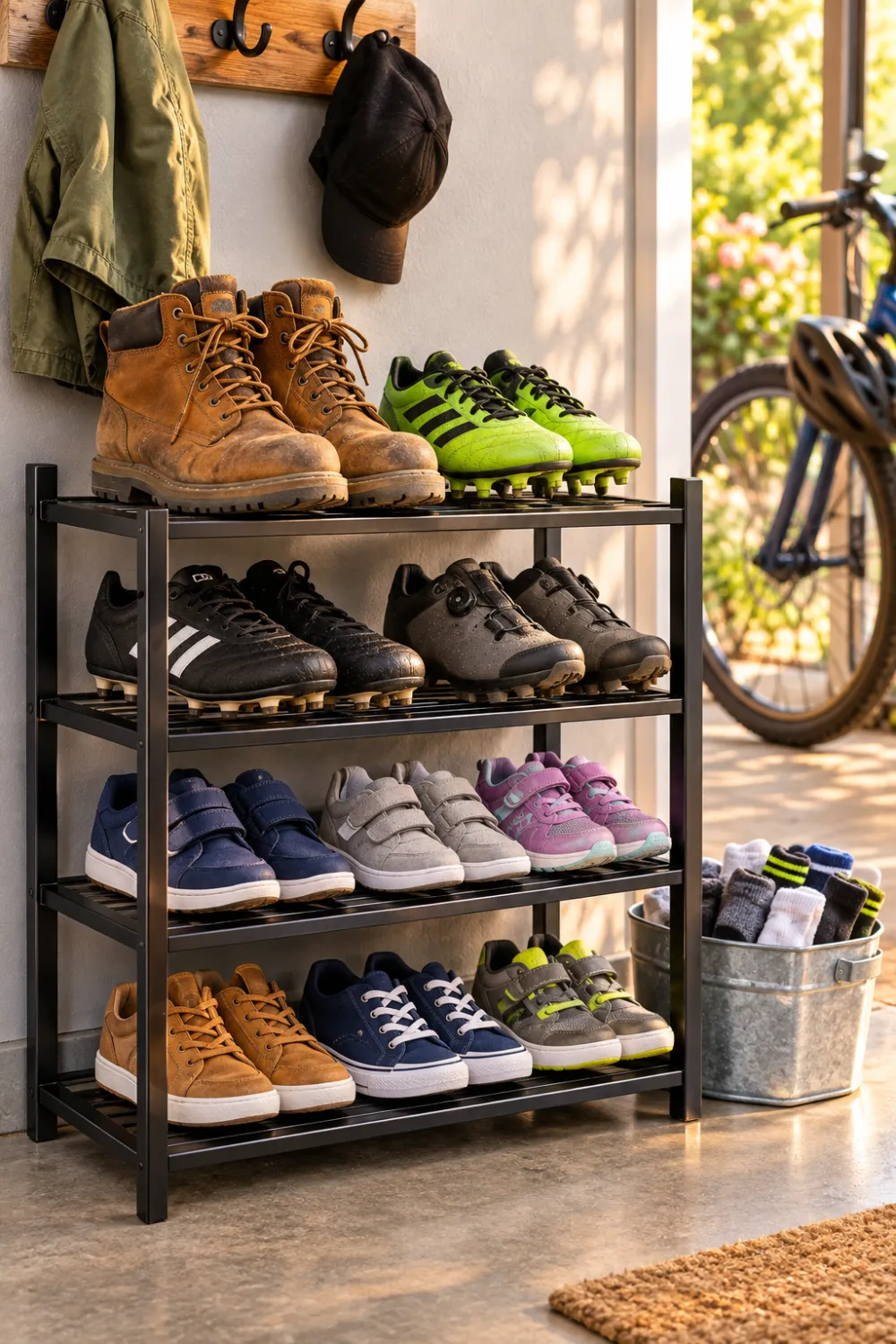
If your family walks in through the garage, put the shoe storage there. A sturdy metal or plastic rack handles dirty work boots, cleats, and bike shoes without bringing dirt into the house. Choose one with open slats so dust and dirt fall through. Keep a small bin nearby for muddy socks. It’s a lifesaver for sporty families and anyone who works outdoors.
11. Under-Bed Shoe Boxes

Flat, lidded boxes slide under beds and use space that’s usually empty. This is a good home for dressy shoes, off-season pairs, and anything you wear only now and then. Clear boxes let you see what’s inside, but even plain ones work if you stick a photo or label on the end. Just don’t use this spot for everyday shoes, because you’ll stop bothering to dig them out.
12. Pegboard Shoe Wall
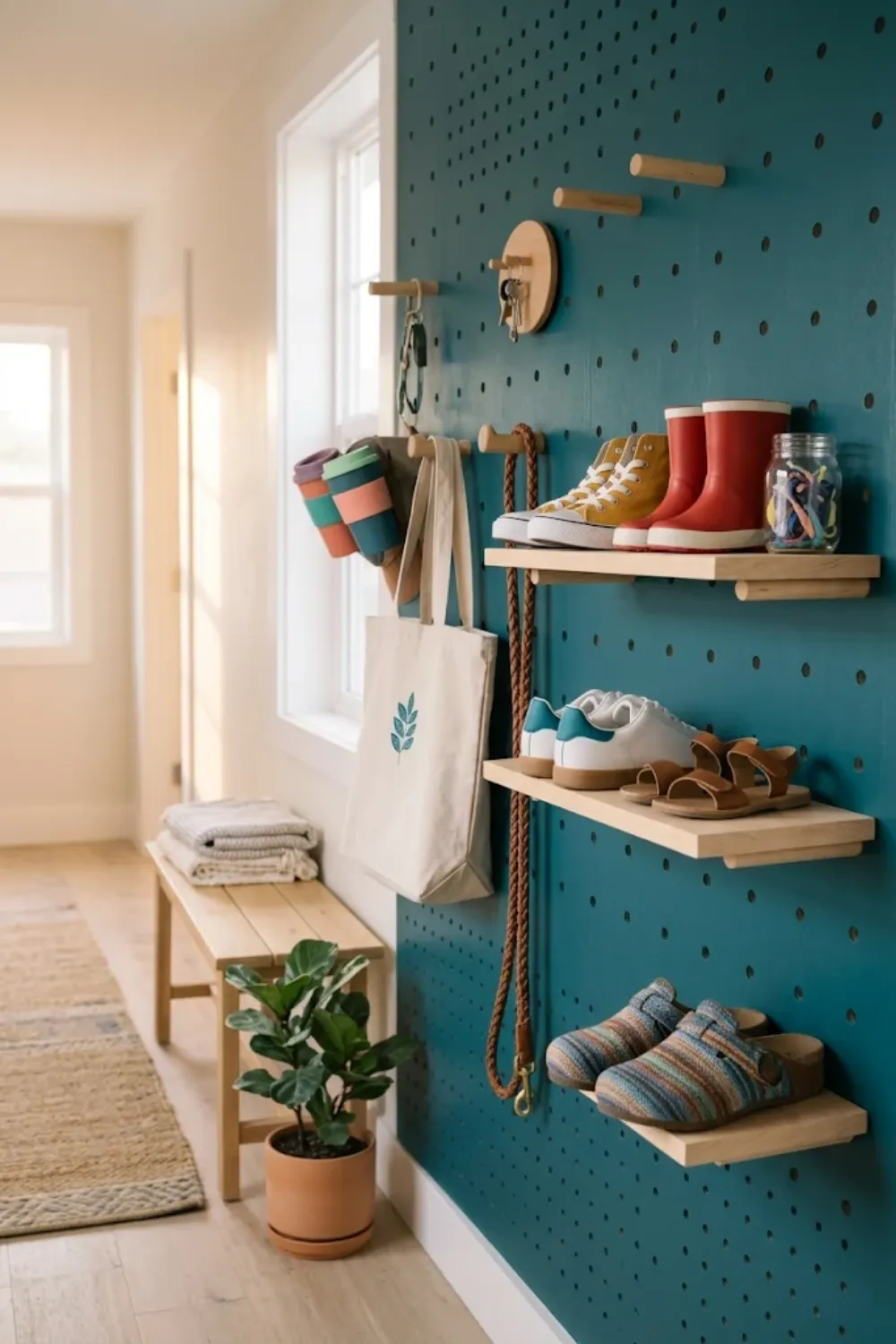
A pegboard turns a blank wall into flexible storage. Use pegs and small shelves to hold shoes, then rearrange them whenever your needs change. It’s especially handy in a laundry room or mudroom, where you can also hang bags and dog leashes. Paint the board in a bright color for a playful look. As the kids grow, you can lower or raise the pegs.
13. Mudroom Lockers
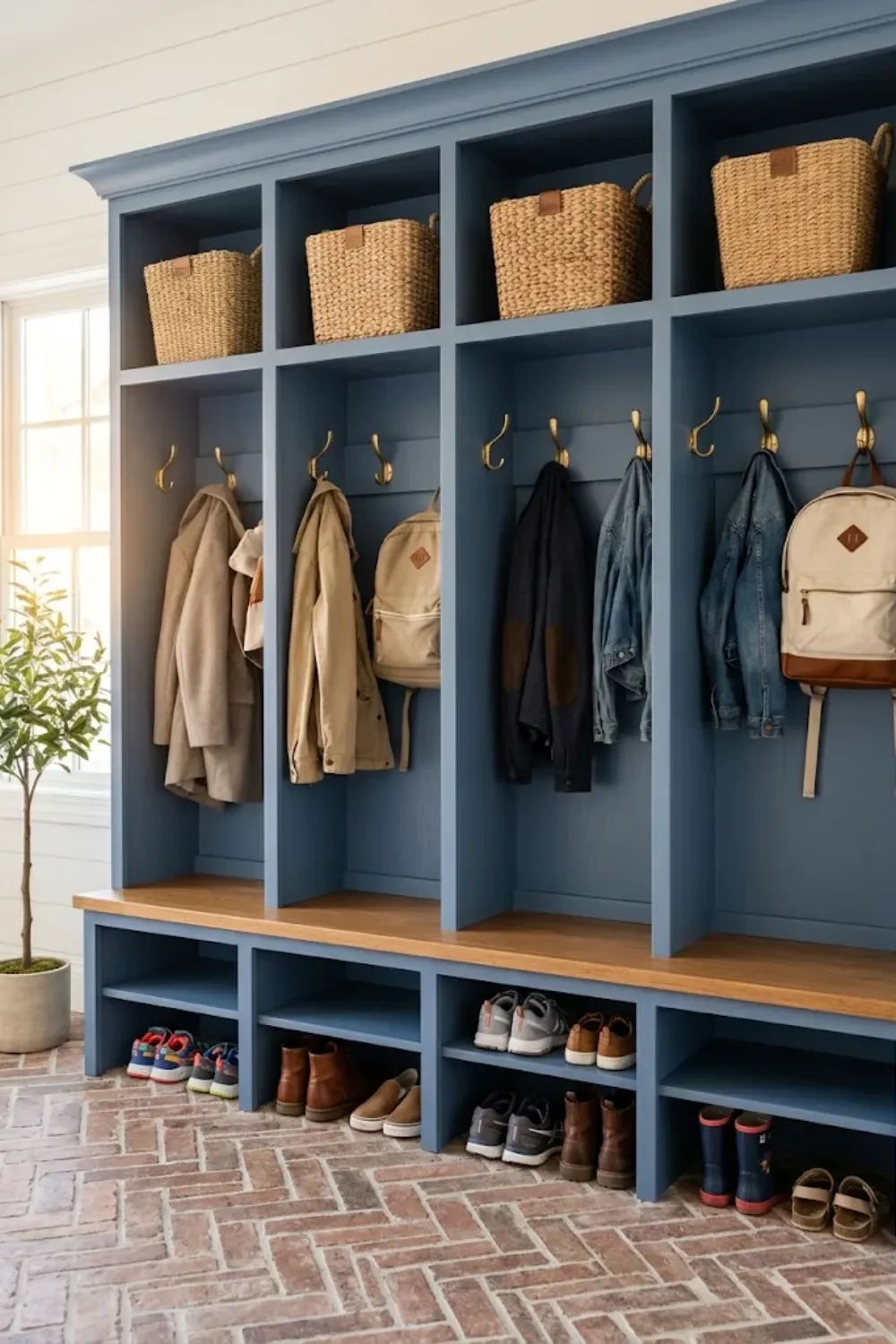
If you’ve got the room, lockers give each family member a full personal zone. Shoes sit on the bottom shelf, while coats, backpacks, and hats go above. There’s no need to remember where anything goes, since each locker answers the question for you. Ready-made locker units are available, or you can DIY with simple cubbies and hooks. This is the dream setup for larger families with a busy school-morning rush.
14. Ladder Shelf
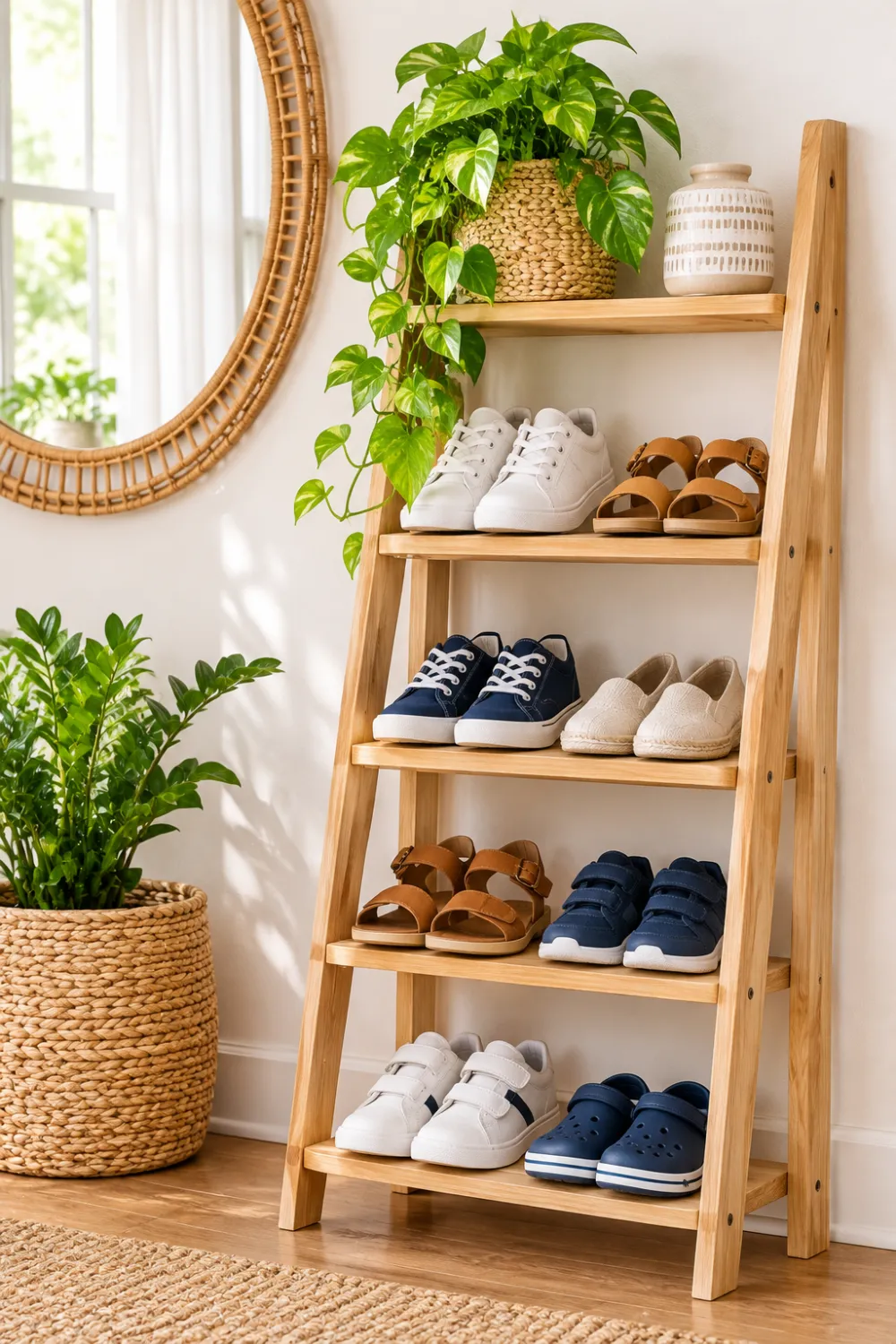
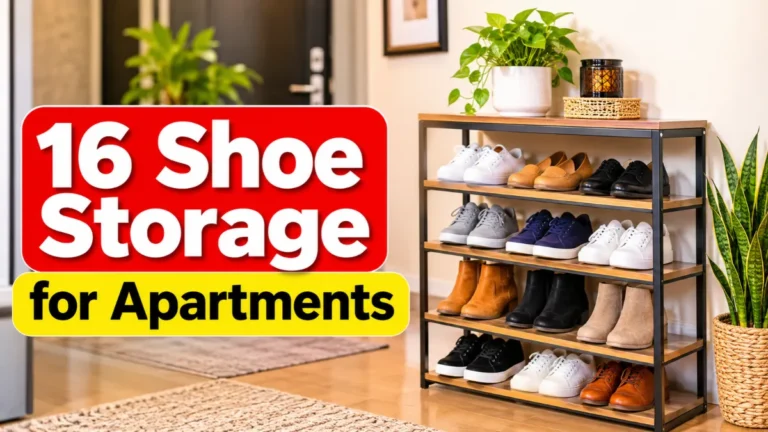
A leaning ladder shelf is a light, freestanding option that needs no drilling. It’s good for renters and for small entryways, since it leans against the wall and takes up little floor space. Each rung holds a few pairs, and the open look keeps a narrow space from feeling heavy. Keep it to the shoes you’re actually wearing right now, so it never turns into a pile.
15. Rolling Shoe Cart
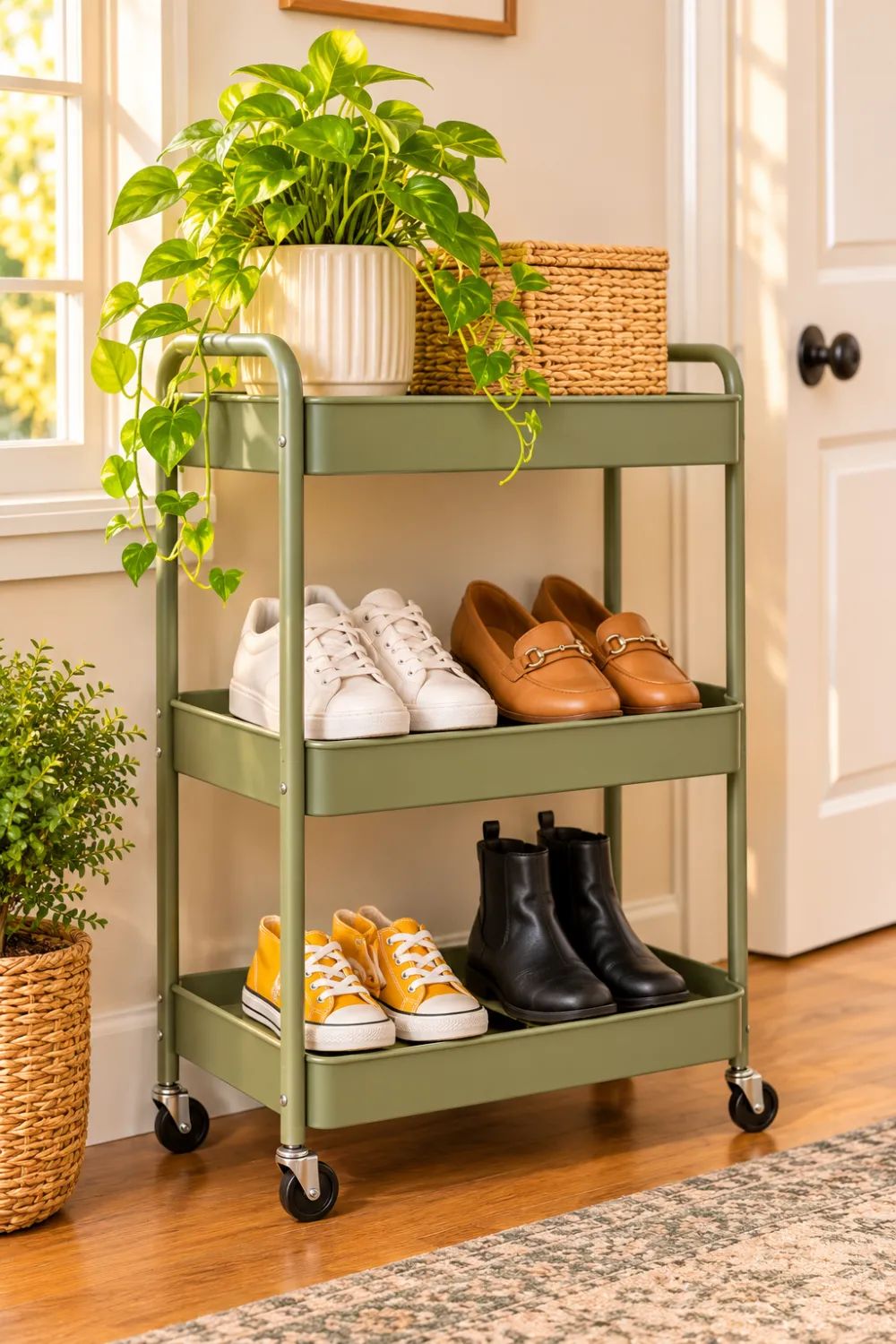
A narrow cart on wheels is wonderfully flexible. Roll it out for guests or big gatherings, then tuck it into a closet when you don’t need it. It’s also great for families who share the shoe area with a pantry or laundry nook. Pick a cart with at least three tiers and a lip around each shelf, so shoes don’t slide off when you move it.
Conclusion
The best shoe storage for families is the kind everyone actually uses. Start with one small spot, like a tray, a bench, or a few hooks, and see what sticks. Think about who needs the easiest access, how much floor you can spare, and how messy your weather gets. Fix that one corner, and the rest tends to follow.