19 Kids Closet Organization Ideas That Actually Last
Kids outgrow clothes, toys, and interests faster than any closet can keep up. One week it’s tiny sneakers everywhere, the next it’s a pile of school uniforms on the floor. Good kids closet organization fixes that without a full remodel. These 19 ideas are simple, budget-friendly, and easy for little hands to manage. Pick a few, try them this weekend, and watch mornings get calmer.
1. Lower Hanging Rod
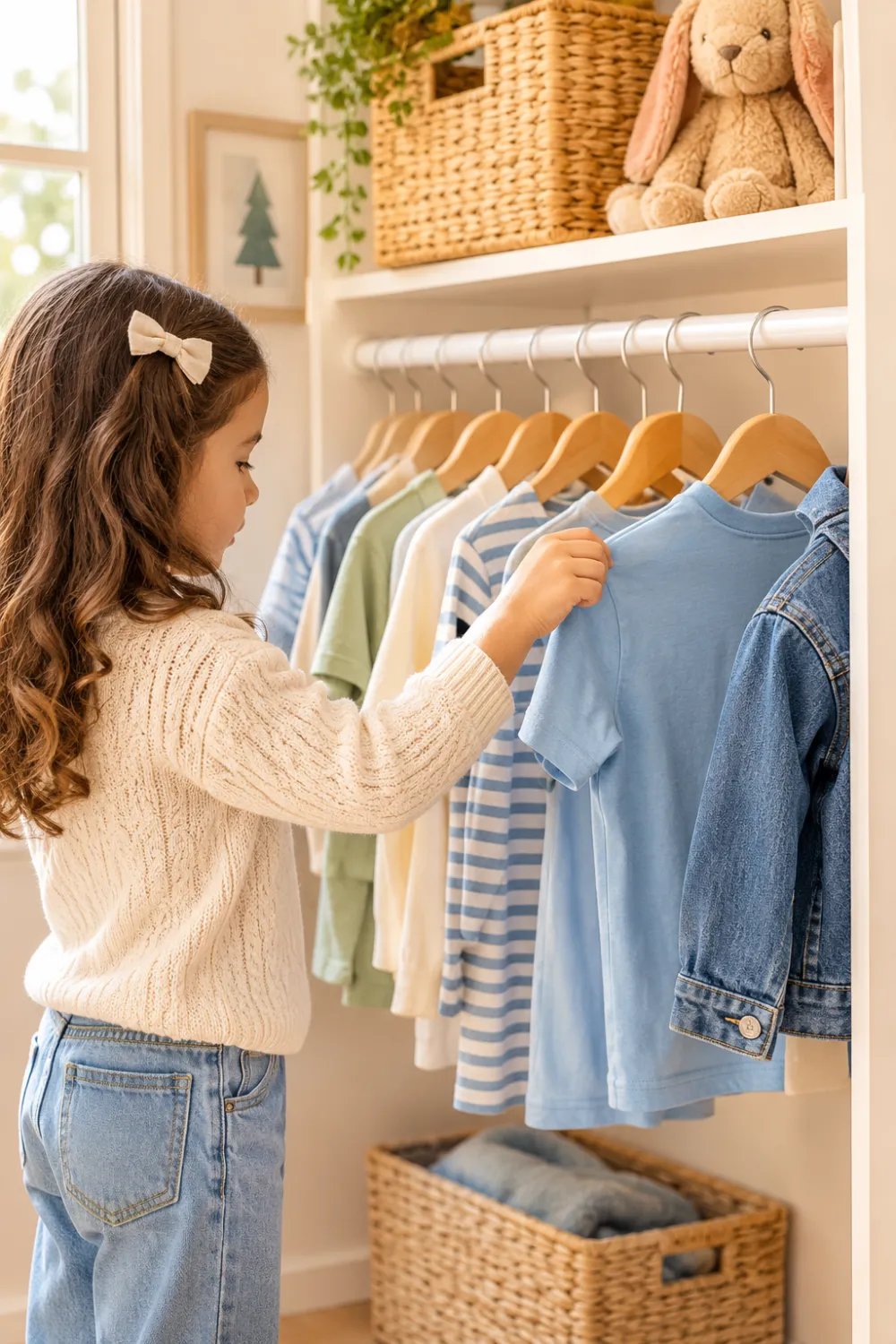
If your child can’t reach the rod, they can’t hang anything up. Lower it to about 36 to 40 inches for school-age kids, or use a second rod on adjustable hangers. Most closet rods rest on simple brackets, so it’s often a ten-minute job. Kids feel proud when they can grab a shirt and hang it back themselves. Just plan to move it up as they grow.
2. Double Rod Hanging
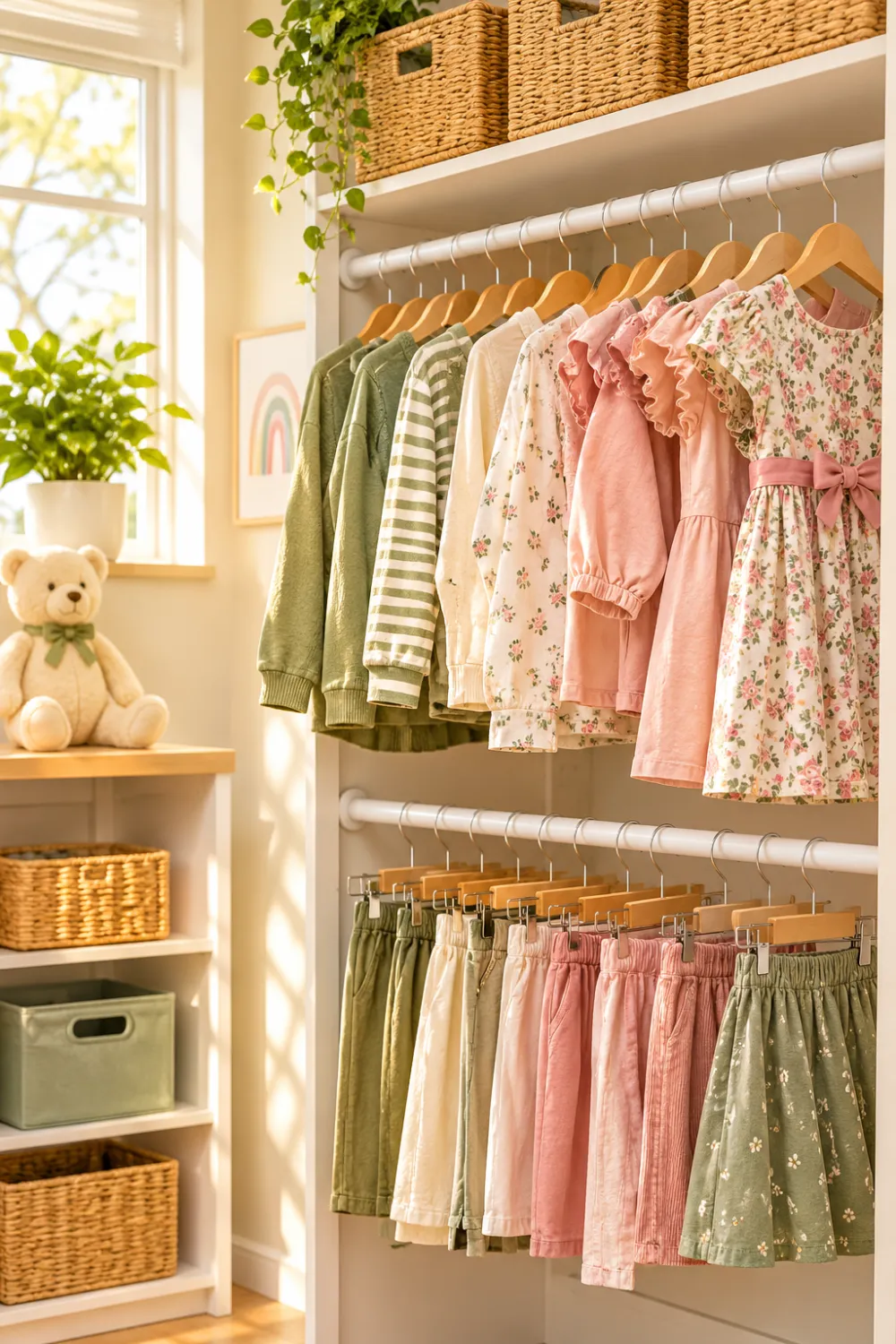
Kids’ clothes are short, so a single tall rod wastes a lot of space. Stack two rods, one near the top and one halfway down, and you nearly double your hanging room. Tops go up high, pants and skirts go below. An adjustable closet rod kit costs very little and fits most standard closets. It’s one of the biggest upgrades you can make.
3. Color-Coded Hangers
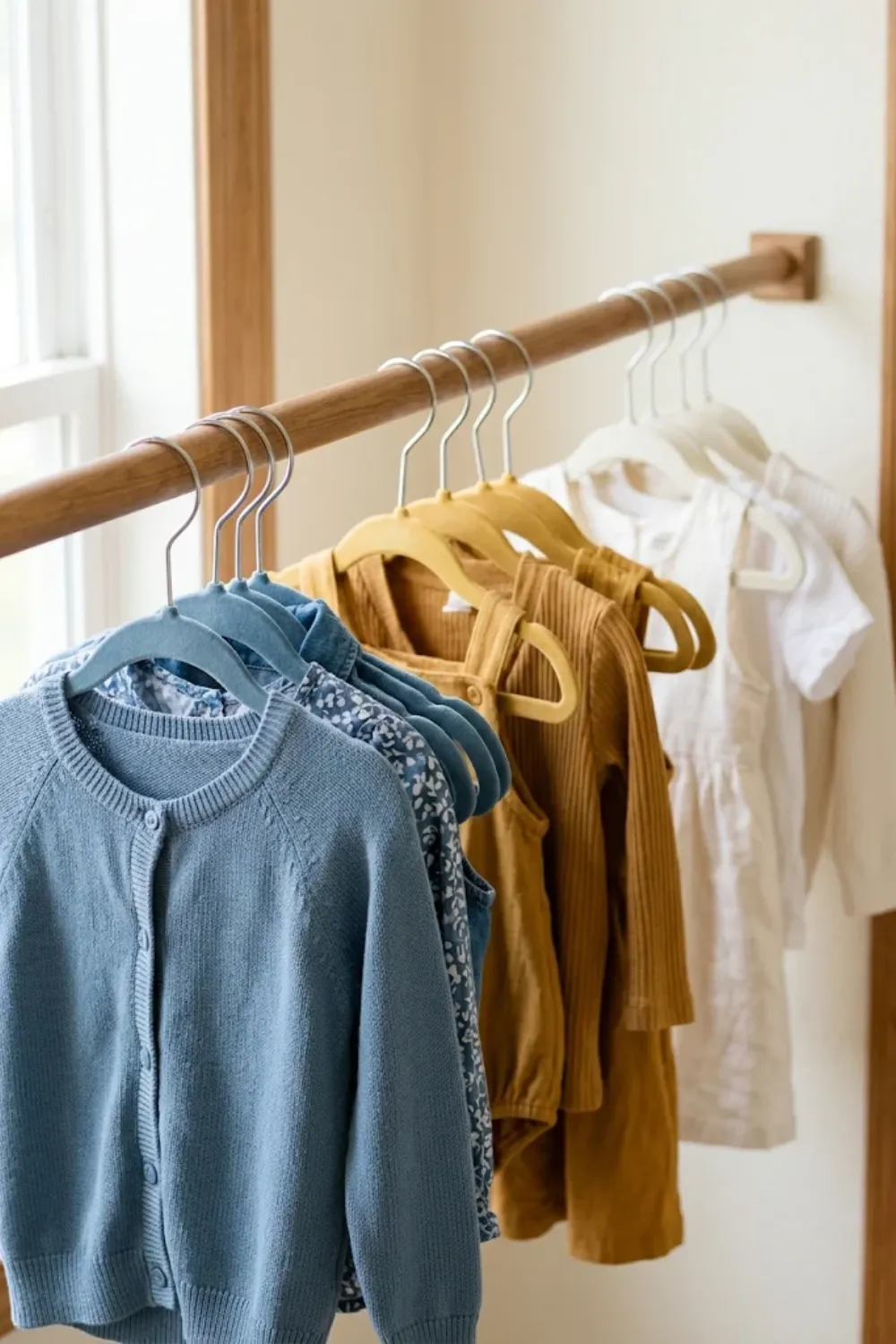
Give each child their own hanger color, and sibling mix-ups disappear. Blue for one, white for another, and so on. It also helps when laundry gets folded in a hurry, because everyone knows whose shirt is whose. Slim velvet hangers work well here because clothes stay put instead of sliding to the floor.
4. Picture Labels
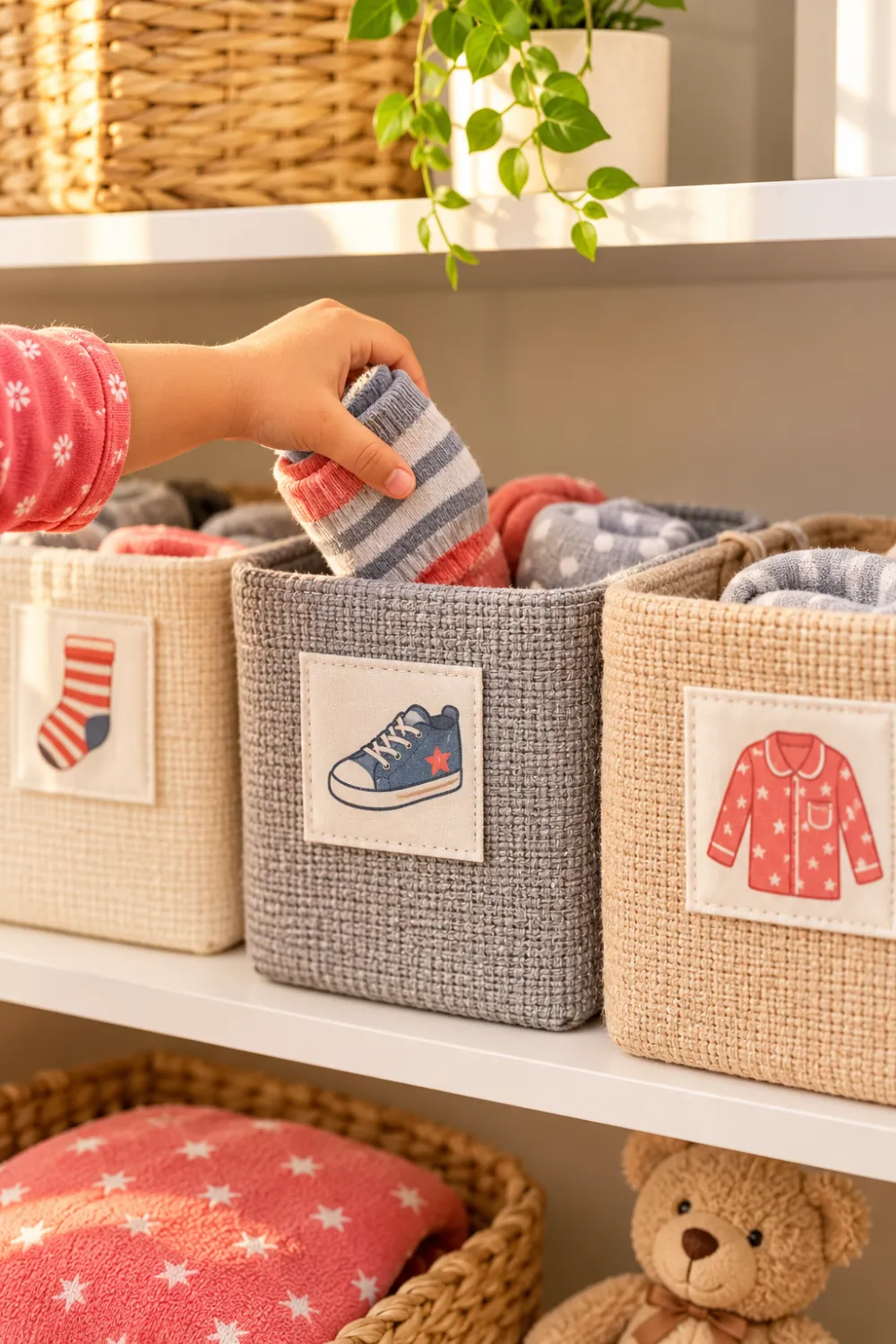
Words don’t help a three-year-old, but pictures do. Snap a photo of the item that belongs in each bin, or print a small icon of socks, shoes, or pajamas. Tape or clip it to the front. Toddlers and preschoolers can put things away on their own, which is the whole point. Older kids can switch to word labels.
5. Weekday Outfit Hangers
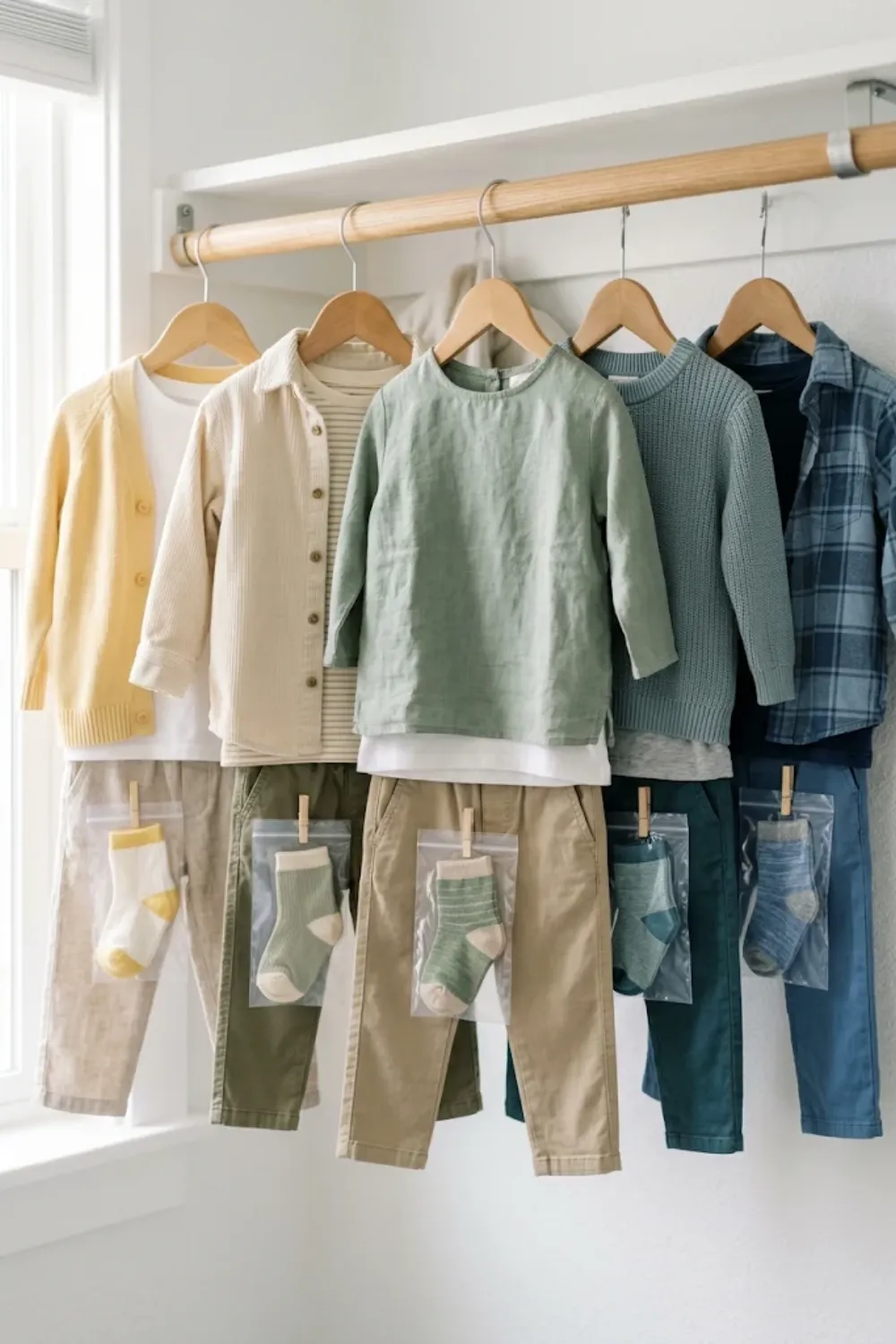
Sunday is the magic hour for this one. Pick five outfits together, then hang each one complete with pants, top, and even socks tucked in a small bag. Label the hangers Monday to Friday or use five simple tags. School-morning arguments about what to wear fade fast, and kids get a little say in the plan, so they’re more likely to buy in.
6. Over-the-Door Shoe Pockets
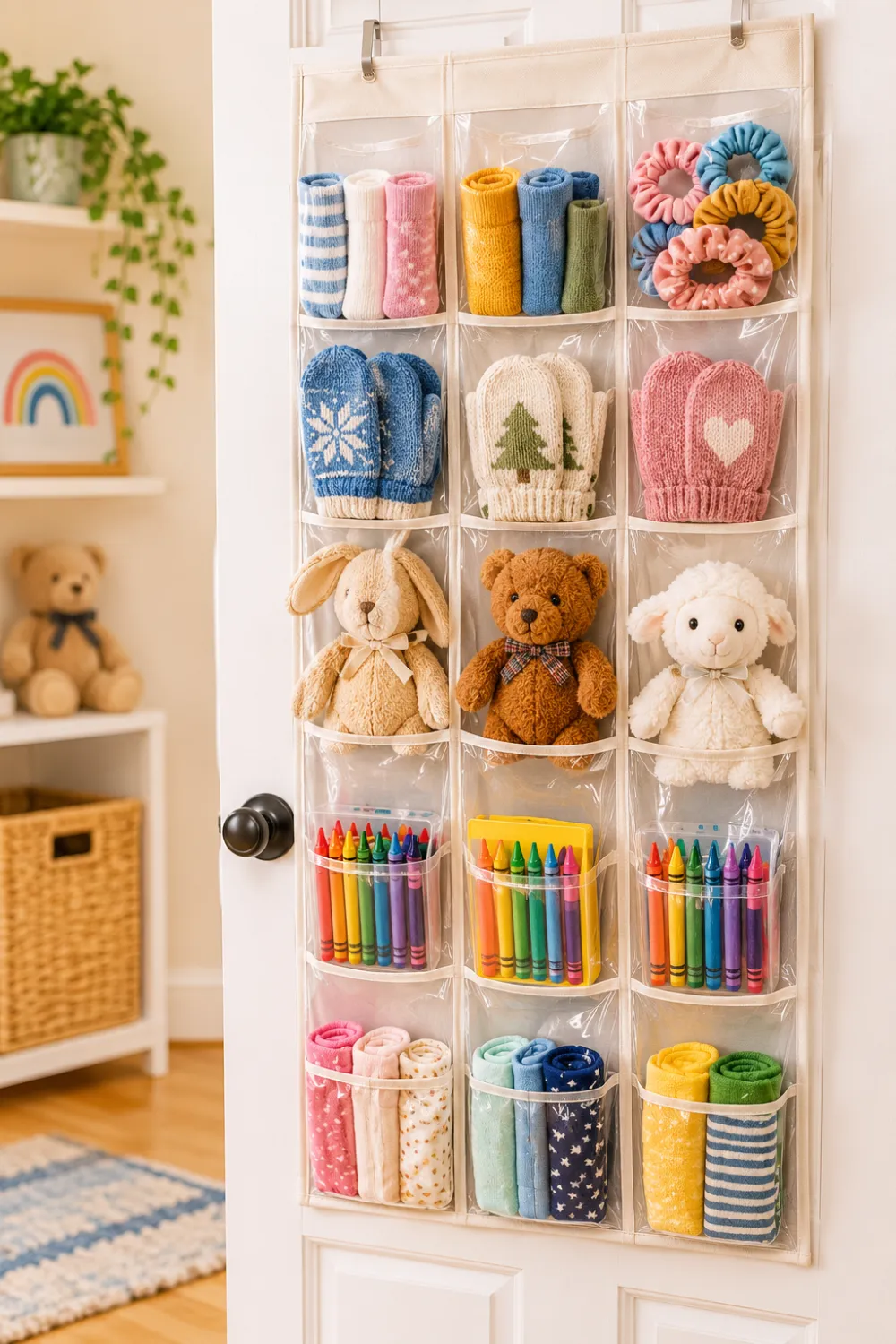
These are far more useful than just for shoes. Clear pockets hold socks, hair ties, mittens, small toys, or art supplies, and kids can see exactly what’s inside. Hang one on the closet door and you gain a whole storage wall without touching any floor space. Choose sturdy fabric pockets if your child loves yanking things in and out.
7. Fabric Cube Bins
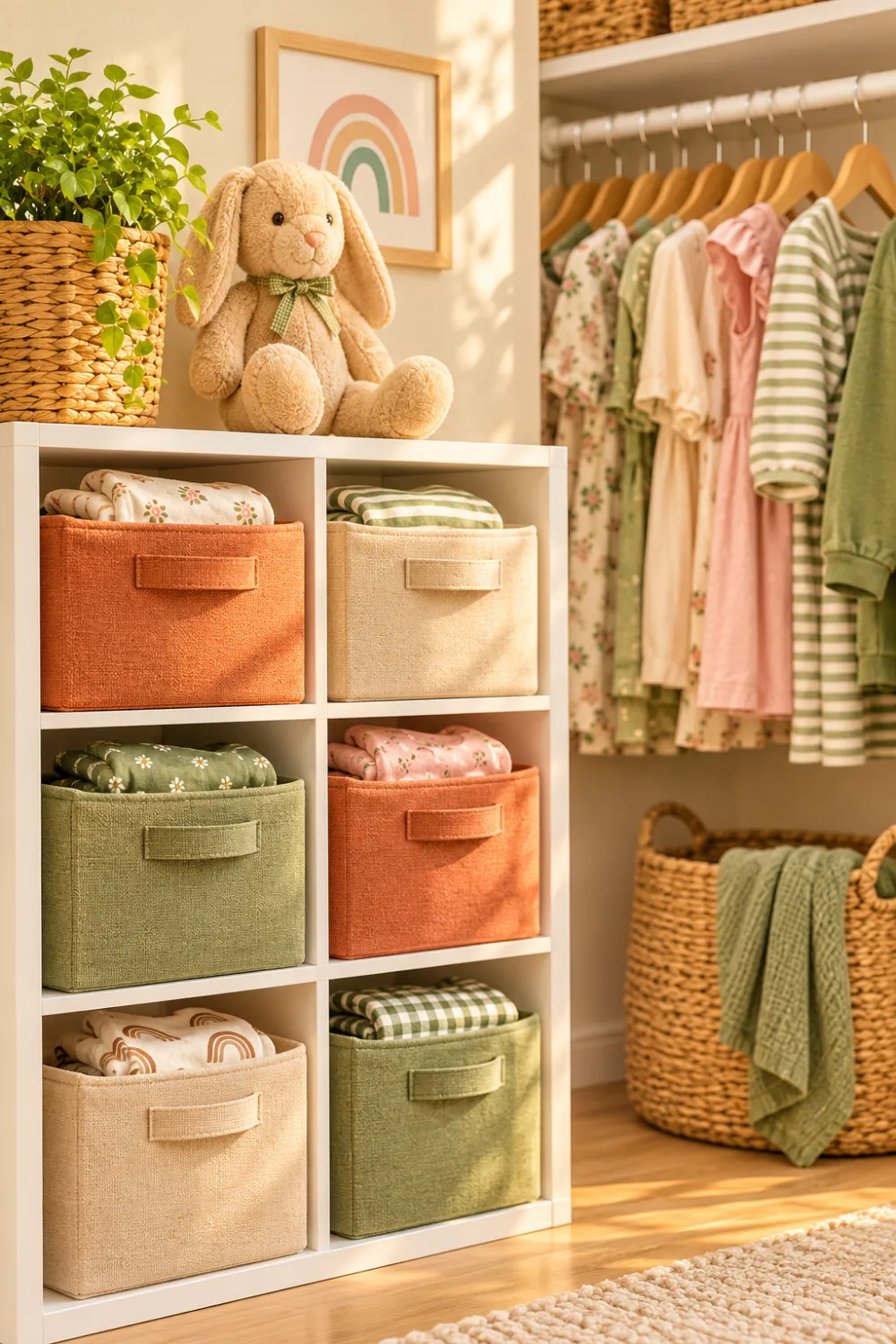
Cube shelves are a closet favorite for a reason. Slide in fabric bins and sort by type: tees in one, pajamas in another, swimsuits in a third. Pick bins with handles so kids can pull them out alone. Soft fabric is gentle on little fingers, and the shelf doubles as a place for stuffed animals on top.
8. Hanging Shelf Sections

A hanging canvas organizer with built-in shelves can turn one rod into a mini dresser. Folded jeans, sweaters, and leggings sit in neat cubbies, and nothing has to be pulled from a stack. It’s especially handy in rental homes or small closets where you can’t add built-in drawers. Look for ones with a stiff base so the shelves don’t sag.
9. Outgrown Clothes Bin
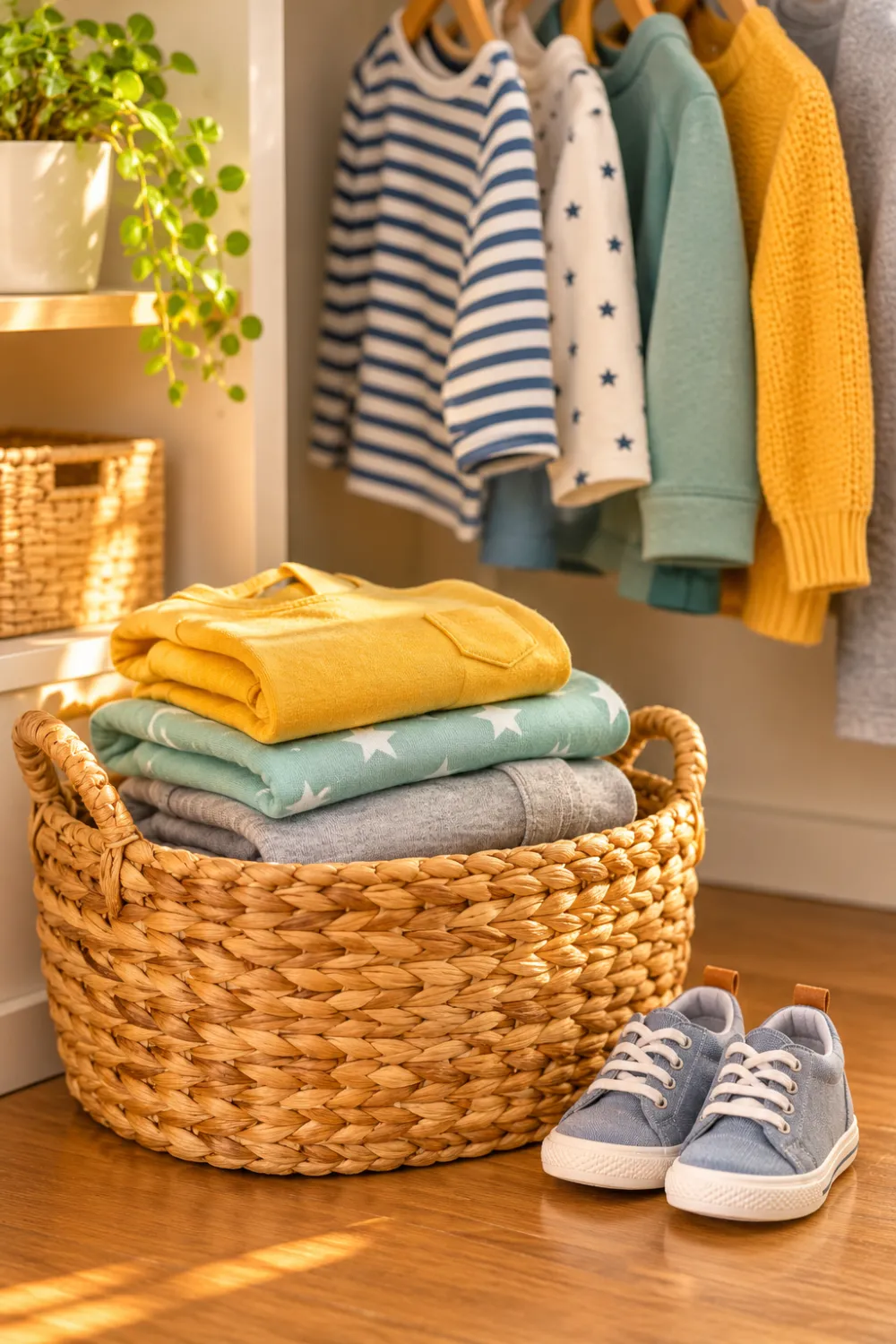
Kids can outgrow pants before you’ve finished washing them. Keep a labeled bin or bag on the closet floor just for things that no longer fit. The moment you spot a tight shirt, it goes in. When the bin fills up, you donate or pass it on. This tiny habit stops too-small clothes from sneaking back into the daily pile.
10. Low Shoe Cubbies
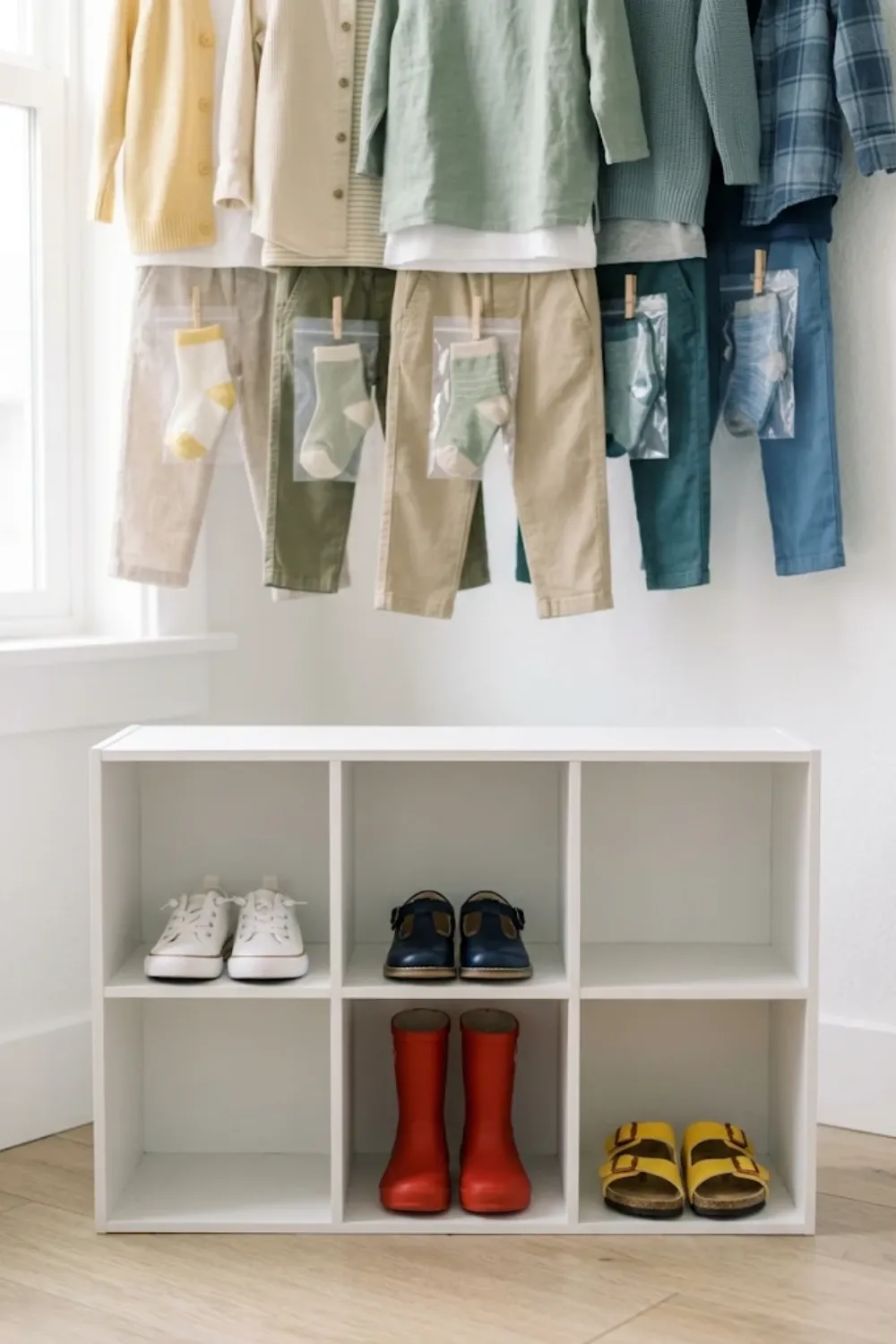
A short shoe rack or a row of low cubbies on the floor gives every pair a home. Pick something shallow so shoes don’t get buried behind each other. For a family with several kids, assign one cubby per child and keep daily shoes up front. Rainy-day boots and sports cleats can live on a bottom shelf nearby.
11. Backpack Hooks
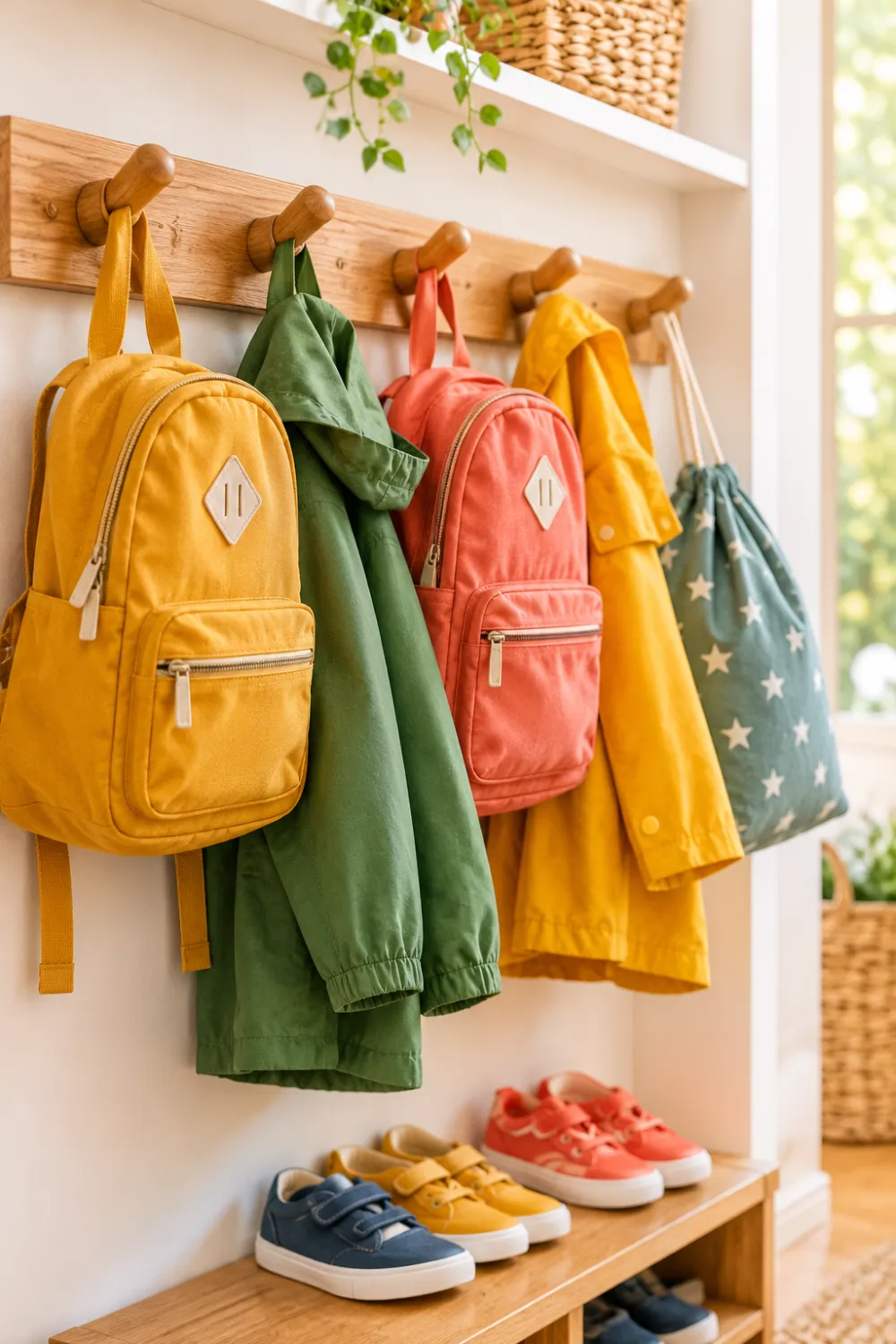
Backpacks are the biggest clutter magnet after school. Screw a row of sturdy hooks inside the closet door or on a side wall at your child’s height. Each hook becomes a spot for a backpack, jacket, or swim bag. If you can’t drill, adhesive hooks rated for heavy loads work for lighter bags. Landing zones like this keep the entryway cleaner too.
12. Drawer Dividers
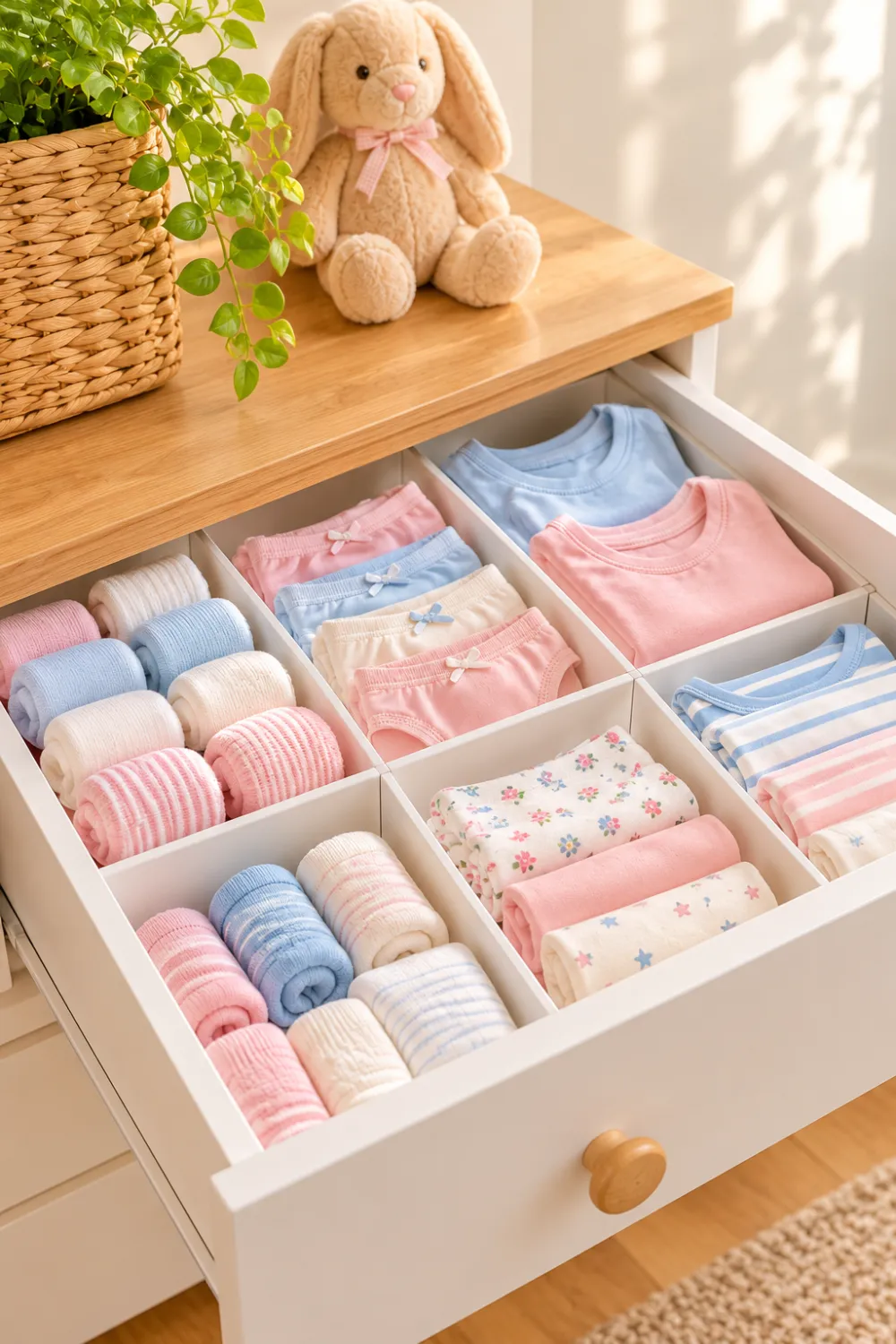
Closet drawers without dividers turn into tangled messes in about a day. Slide in simple dividers or small boxes to create lanes for underwear, socks, tees, and shorts. Kids can see their options and pick without wrecking everything underneath. Shoe boxes work as free dividers if you’re keeping costs low.
13. Stuffed Animal Hammock

Stuffed animals multiply quietly. A corner hammock or net hung high in the closet lifts them off the floor and turns the pile into a cute display. Kids still see their favorites, and tossing one up is half the fun. Choose a mesh style so everything stays visible and airy.
14. Seasonal Swap Boxes

Winter coats don’t need prime space in July. Pack off-season clothes into clear bins or zippered storage bags and slide them to the top shelf. Swap them out twice a year, and use that moment to check what still fits. Label the front clearly with the season and size so you never open the wrong box.
15. Hair Accessory Board
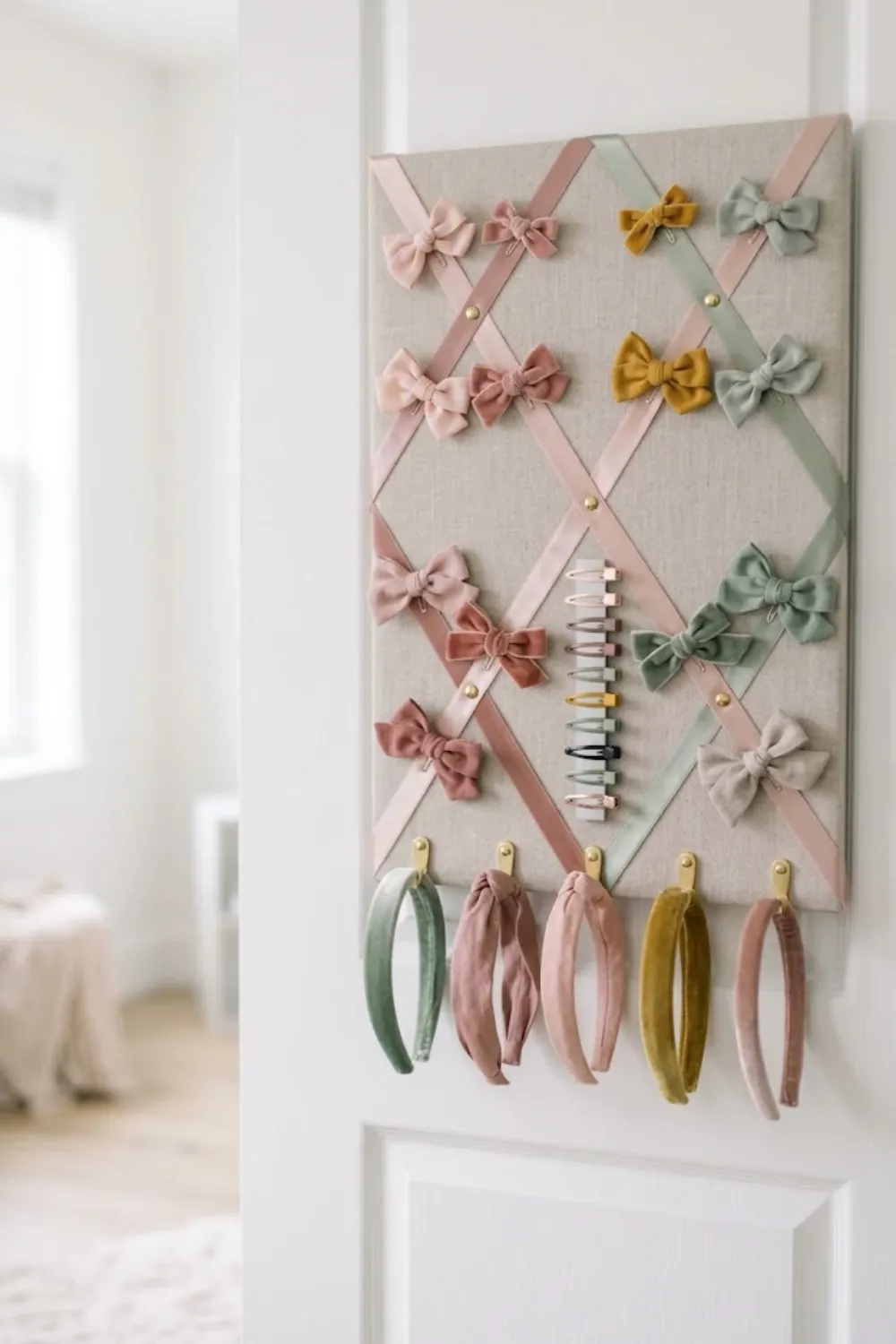
Clips, headbands, and scrunchies vanish in drawers. Mount a small corkboard, ribbon board, or pegboard inside the door. Clip bows to ribbon, hang headbands on pegs, and stick small clips along a magnetic strip. Your child can pick an accessory in seconds, and your bathroom drawers will thank you.
16. Built-In Hamper
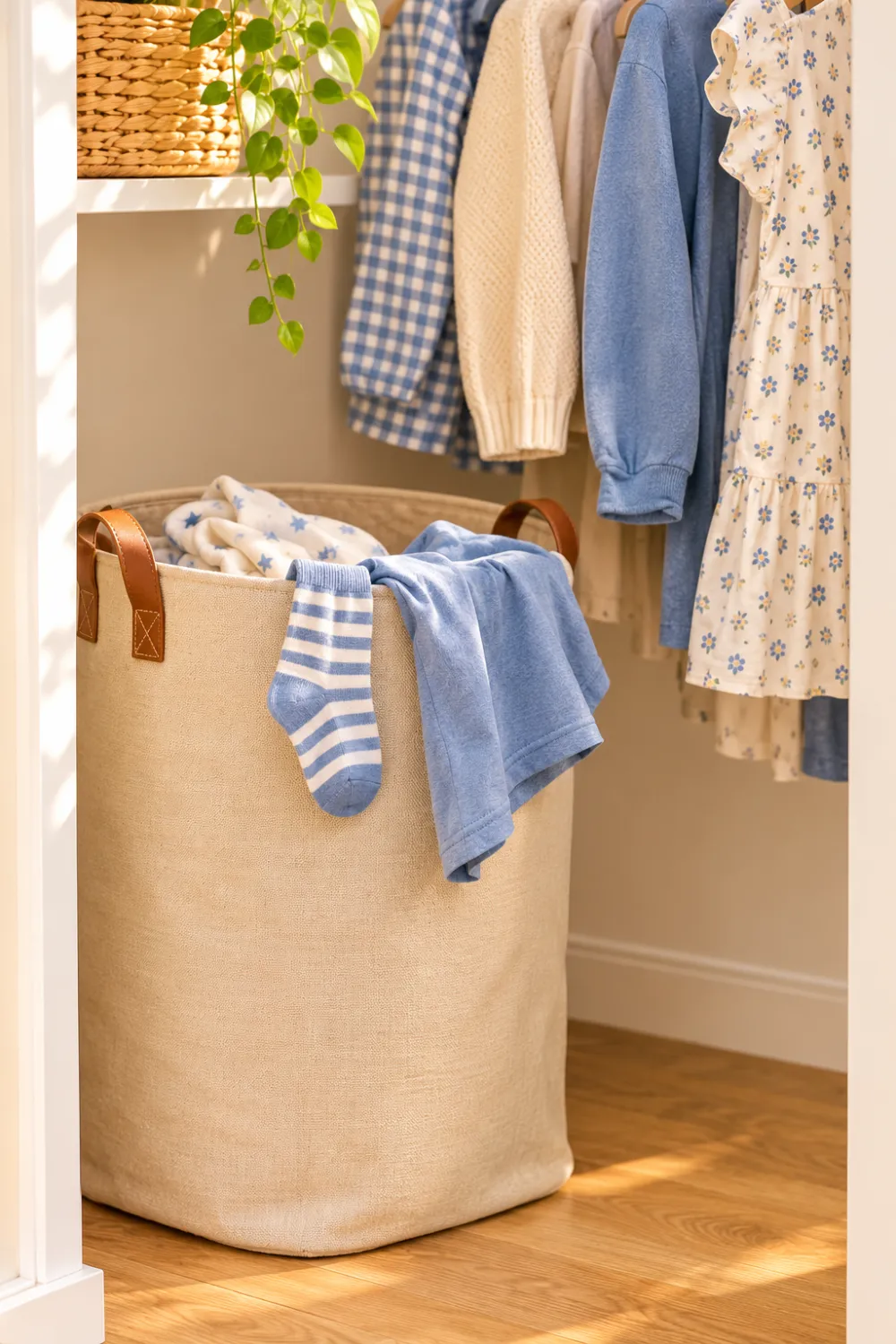
Clothes pile up where there’s nowhere to put them. Tuck a slim hamper or a hanging laundry bag right inside the closet, low enough for kids to reach. Dirty clothes go straight in as soon as they come off. You’ll find far fewer socks on the floor, and laundry day starts with one grab instead of a hunt.
17. Hand-Me-Down Shelf

If you pass clothes between siblings or cousins, give them a dedicated shelf or bin. Sort by size, like 5T, 6, 7, and label each one. When a younger child hits the next size, you already know where to look. No more digging through the attic or guessing what’s saved. It also makes shopping gaps easy to spot.
18. Art and Paper Box
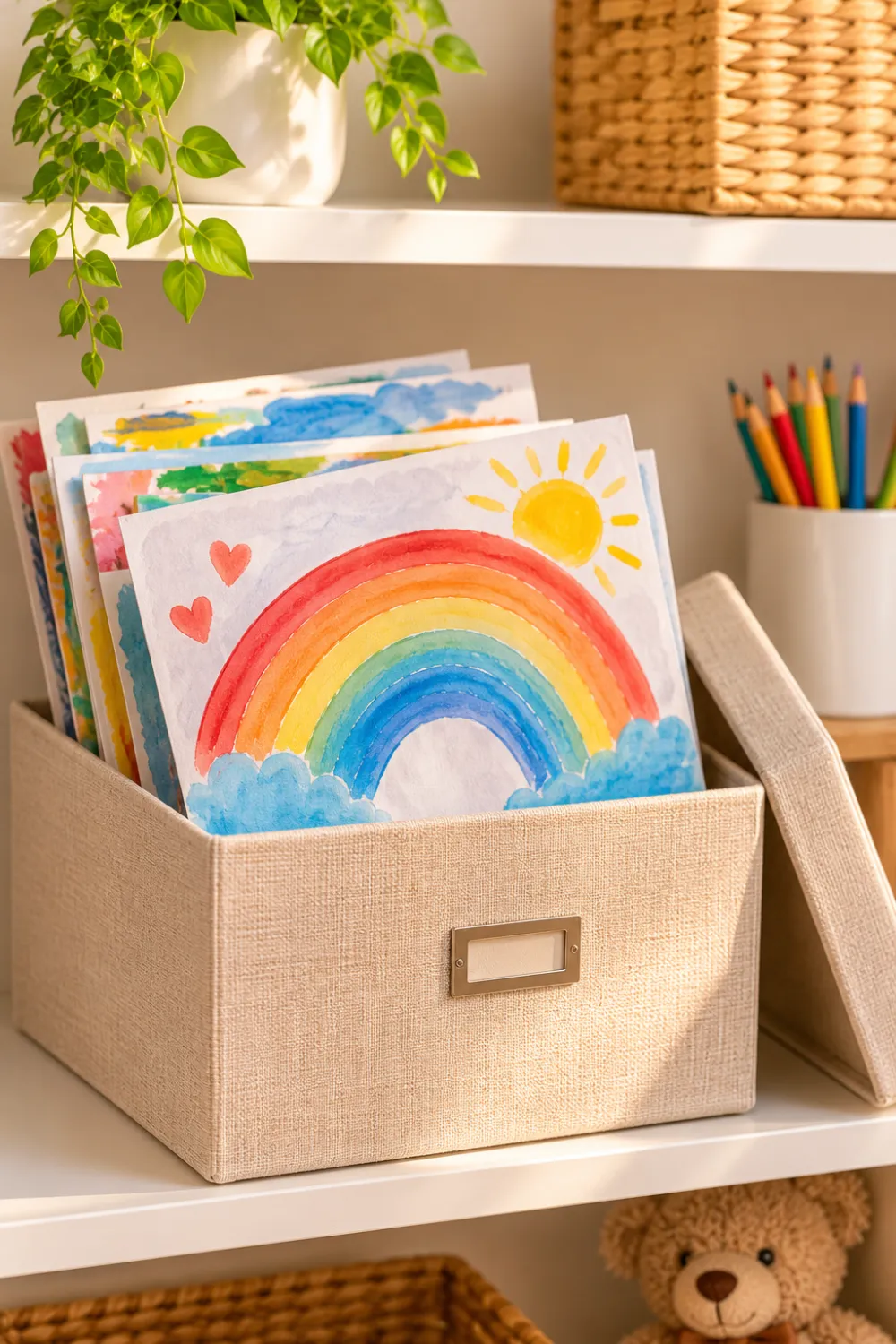
School papers and drawings pile up fast, and you can’t keep everything. Give each child one box, bin, or large folder in the closet for their favorites. When it’s full, you pick the best together and let the rest go. It teaches kids that special things get kept, and it protects your counters and fridge from overflow.
19. Clear Bin Toy Zone

For closets that double as toy storage, clear bins are the way to go. Group by type, such as blocks, cars, dolls, or craft supplies, so kids can see what’s inside. Keep the heaviest bins low and the lightest up high. Rotate a few bins out every month to keep toys feeling fresh without buying anything new.
Conclusion
The best kids closet organization is the kind your child will actually use. Start with the problem that annoys you most, whether that’s the shoe pile, the messy drawers, or the morning rush. Fix that one spot first. Then add another idea when you’re ready. Small changes stack up fast, and soon the closet will feel easier for everyone.