16 Shoe Storage for Apartments Ideas That Save Space
Shoes pile up fast, and apartment entryways are rarely built for them. One day it’s two pairs by the door, the next you’re hopping over sneakers to get to the kitchen. The good news? Smart shoe storage for apartments doesn’t need a big budget or a bigger floor plan. These 16 ideas work in tiny hallways, closets, and even behind doors.
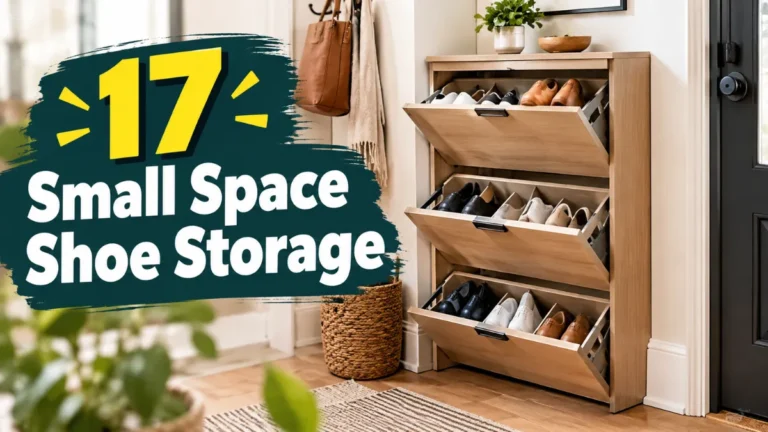
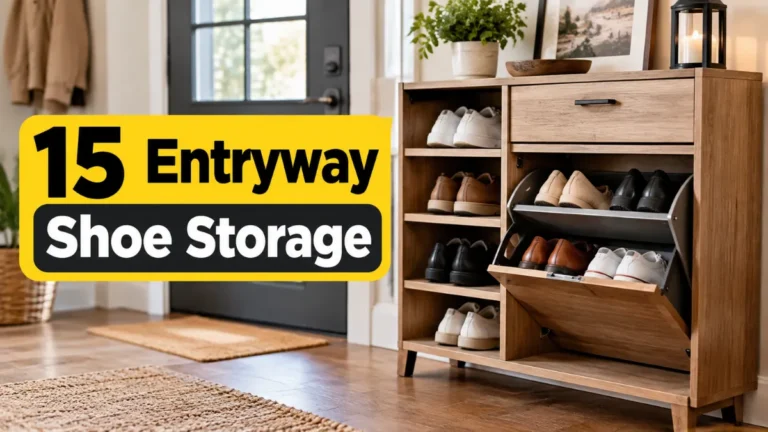
1. Tilt-Out Shoe Cabinet
This one looks like a slim dresser, but each drawer flips open at an angle to show tilted shelves of shoes. Most are only 7 to 9 inches deep, so they fit in hallways where nothing else will. A three-drawer unit holds about 12 pairs. Pick one with a flat top and you get a spot for keys, mail, and a small plant too.
2. Over-the-Door Organizer
Your front door, closet door, or bedroom door is wasted space. A clear pocket organizer hangs on the back and holds 12 to 24 pairs without drilling a single hole. It works best for flats, sandals, and kids’ shoes. Skip it for chunky boots, since the pockets sag. Check that your door still closes before you load it up.
3. Storage Bench
A bench gives you a seat for lacing up and a hidden spot for shoes in one piece. Look for open cubbies if your shoes are usually dry, or a lift-top lid if you want a tidier look. Keep the pairs you wear daily in the cubbies. Toss the occasional ones in a basket underneath. It’s a great fit for entryways that feel bare.
4. Picture Ledge Shelves
Here’s a trick that surprises people. Narrow picture ledges, the kind meant for framed art, can hold shoes on their sides, toes out. Stack two or three rows along a wall and you’ve made a display. Sneakers and flats suit it best. Mount them into studs, since shoes are heavier than they look. Leave about 8 inches between rows.
5. Under-Bed Drawers
If your bedroom has any gap under the bed, you have a free shoe closet. Shallow rolling drawers slide out easily and keep dust off your shoes. Measure the clearance first, because many bed frames sit lower than you’d guess. This spot is perfect for off-season pairs and dressy shoes you don’t need every morning.
6. Stackable Closet Shelves
Most apartment closets waste the floor, stuffing shoes into a messy heap. Stackable shelves turn that heap into two or three neat tiers. You can add or remove units as your collection changes, which is handy if you move often. Place heavier boots on the bottom and lighter flats on top. It’s quick to set up and costs very little.
7. Hanging Shoe Shelves
These fabric shelves hang from your closet rod like a vertical ladder, with space for six to ten pairs. They’re great when your closet floor is already full of laundry baskets or luggage. They also free up the floor so you can vacuum easily. Pick a sturdy version with a reinforced top, so it doesn’t slump after a few weeks.
8. Boot Tray with Low Rack
Wet shoes are the real problem in rainy or snowy months. Put a rubber boot tray right inside the door, then add a low two-tier rack above it for dry pairs. The tray catches puddles and salt, so your floors stay clean. Choose a tray with a raised lip, and rinse it out once a week. It’s very practical for renters with hardwood floors.
9. Pegboard Wall
A small pegboard panel can hold shoes using peg hooks, with heels hanging by their backs or sneakers resting on angled pegs. You can rearrange it whenever your shoe mix changes. Paint it the same color as your wall and it nearly disappears. Self-adhesive or leaning boards work for renters who can’t drill. Great for people with lots of heels or sandals.
10. Rolling Cart
A slim three-tier utility cart is a surprisingly good shoe rack. Wheel it into a closet corner, beside the couch, or out of sight behind a door. Use the top shelf for shoes you’re wearing this week, and the lower ones for backups. It’s also useful when you have guests, because you can roll everything out of the way in seconds.
11. Clear Drop-Front Boxes
Stackable boxes with a fold-down front let you see each pair without unstacking anything. Sneaker collectors love them because they keep shoes dust-free and looking good. Stack them five high against a wall and you’ve got a tidy tower. They cost more than a basic rack, so save them for the pairs you really care about.
12. Tension Rod Shelf
Wedge a tension rod between two walls or inside a cabinet, then rest the heel of each shoe over it. The toe stays on the floor, and you get a double row in the same space. It’s an ideal fix for under-sink cabinets turned into entry storage, or a narrow closet nook. No tools, no holes, and it takes two minutes to set up.
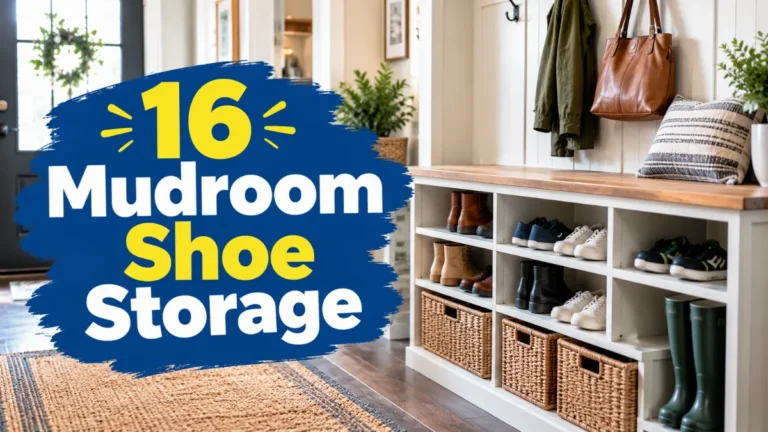
13. Console Table with Baskets
If you want your shoe storage to look like decor, try a narrow console table with baskets tucked underneath. Woven baskets hide the clutter, and you can label them by person or season. Lay a mirror or tray on top and the entryway feels finished. This works best for casual shoes, since baskets don’t hold shape for tall boots.
14. Ladder Shelf
A leaning ladder shelf takes up very little floor space, since it’s narrow at the top and wider at the bottom. Slide a pair onto each rung, then use the lowest shelf for boots. Because it just leans on the wall, there’s nothing to install. It’s a nice choice for open-plan studios, where your shoe storage is visible from the couch.
15. Rotating Shoe Tower
Think of a lazy Susan, but tall. A rotating tower spins to bring any pair to you, and it holds 20 or more in a footprint about the size of a dinner plate. It’s perfect for a tiny corner with a big collection. Pick one with a stable base so it doesn’t wobble, and keep the heaviest pairs near the bottom.
16. Seasonal Swap Bin
You don’t need every shoe within reach all year. Keep about six to eight pairs out, and store the rest in a labeled bin on a high shelf or under the bed. When the weather changes, swap them. Wash and dry each pair before boxing it up. This habit shrinks your everyday storage needs, and it works alongside nearly every idea above.
Conclusion
The best shoe storage for apartments is the one you’ll actually use every day. If your entryway is tight, go vertical with doors or walls. If floor space is fine, pick a bench or cabinet. Start with one idea, give it a week, and tweak from there. Your shoes will find a home, and you’ll get your floor back.