19 Walk-In Closet Organization Ideas That Actually Work
Walk-in closets promise so much space, yet they fill up fast. One minute you have room to breathe, the next you’re digging through piles for a single belt. The right walk-in closet organization ideas can change that. Here are 19 practical ones, from smart shelving tricks to small daily habits, that make getting dressed feel easy again, whatever your closet size.
1. Double-Hang Rods
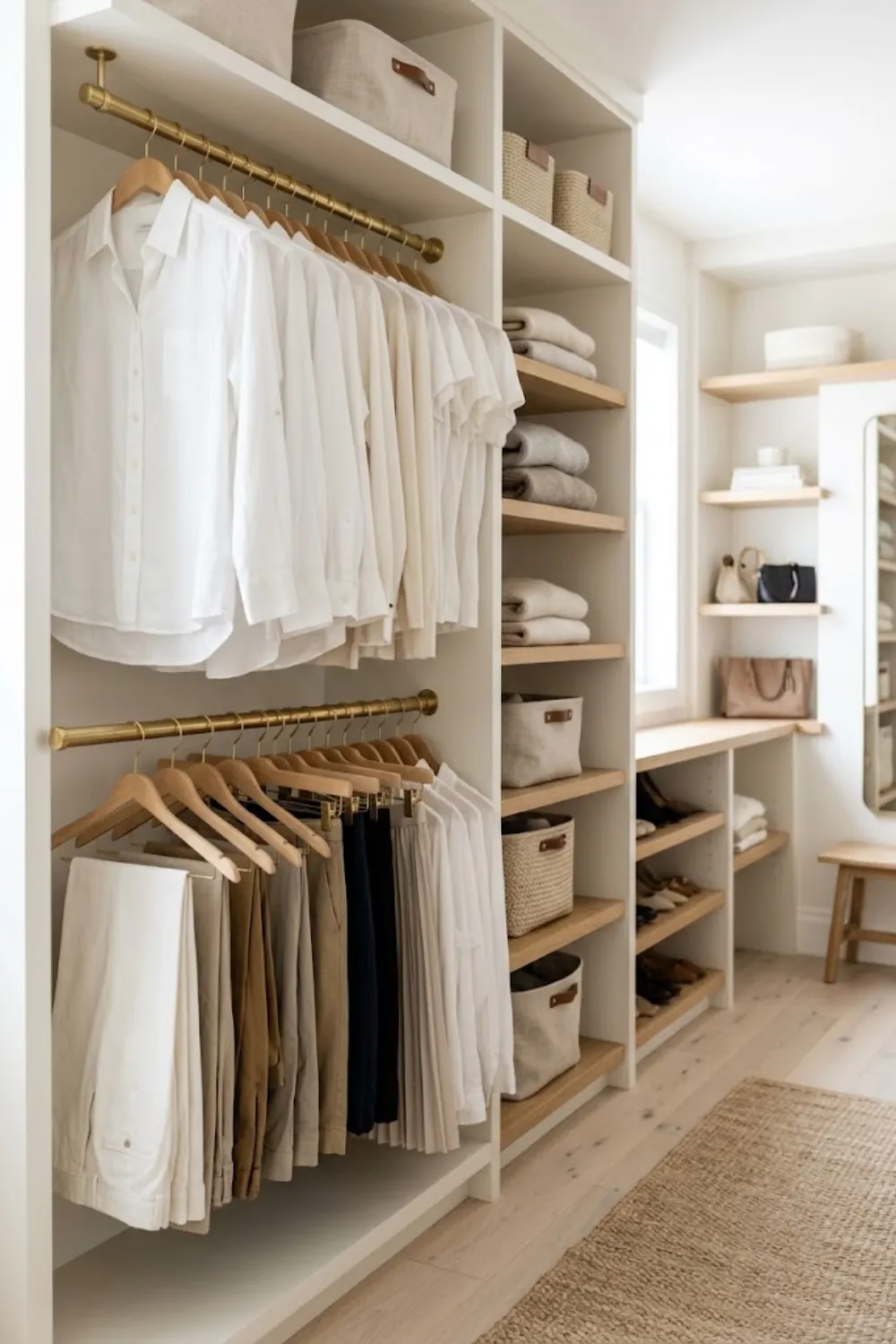
Most closets waste the space under short items. Shirts, folded pants, and skirts only need about 40 inches of height. Install one rod at roughly 40 inches and another at 80, and you’ve nearly doubled your hanging space. Keep dresses and long coats on a single tall rod at one end so they don’t drag on the floor.
2. Color-Coded Hanging
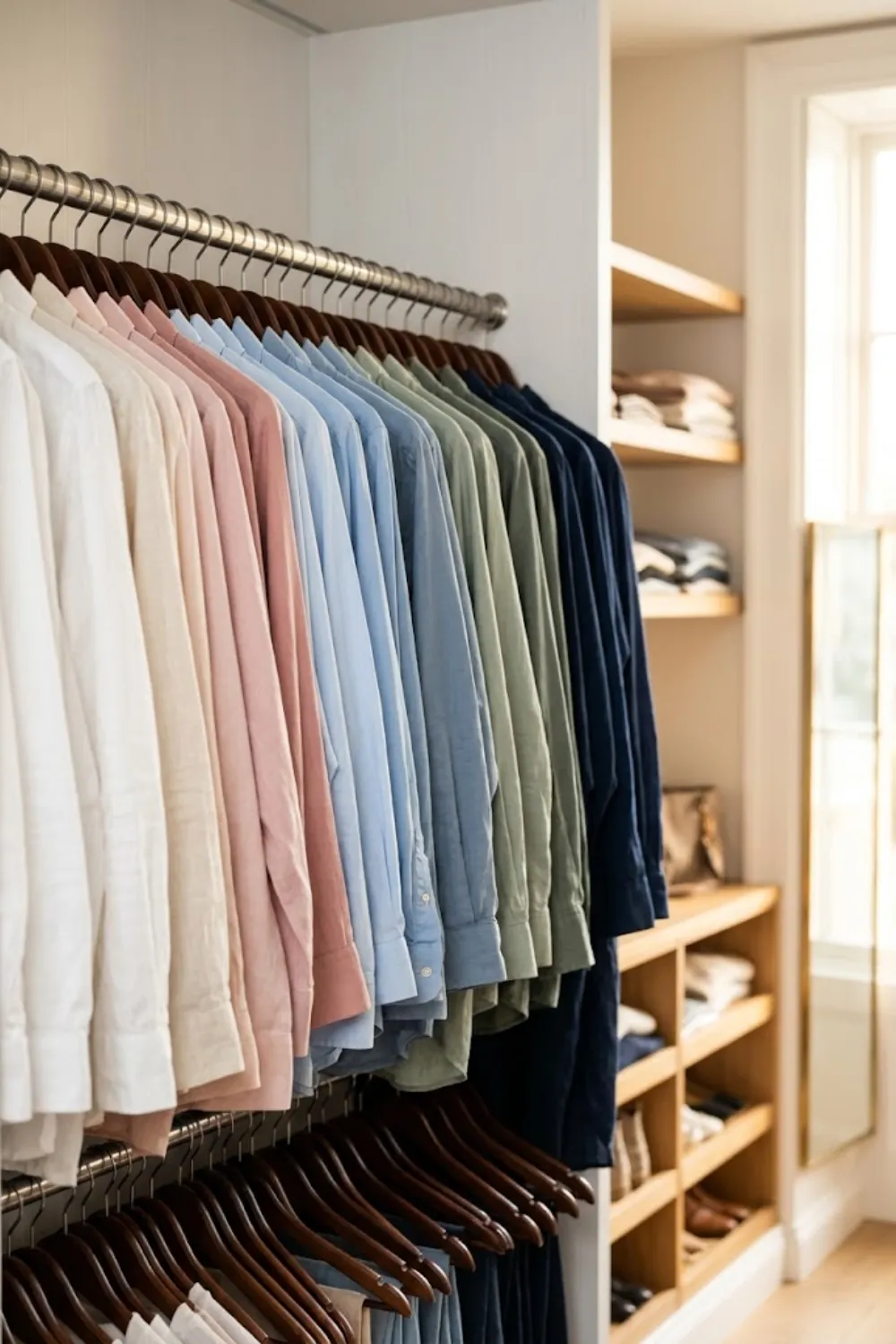
Sort by type first (shirts, pants, jackets), then arrange each group from light to dark. It looks great, but the real benefit is speed. You can spot your navy cardigan in two seconds instead of flipping through every hanger. Keep sleeve lengths together too, so short sleeves and long sleeves each get their own zone.
3. Angled Shoe Shelves
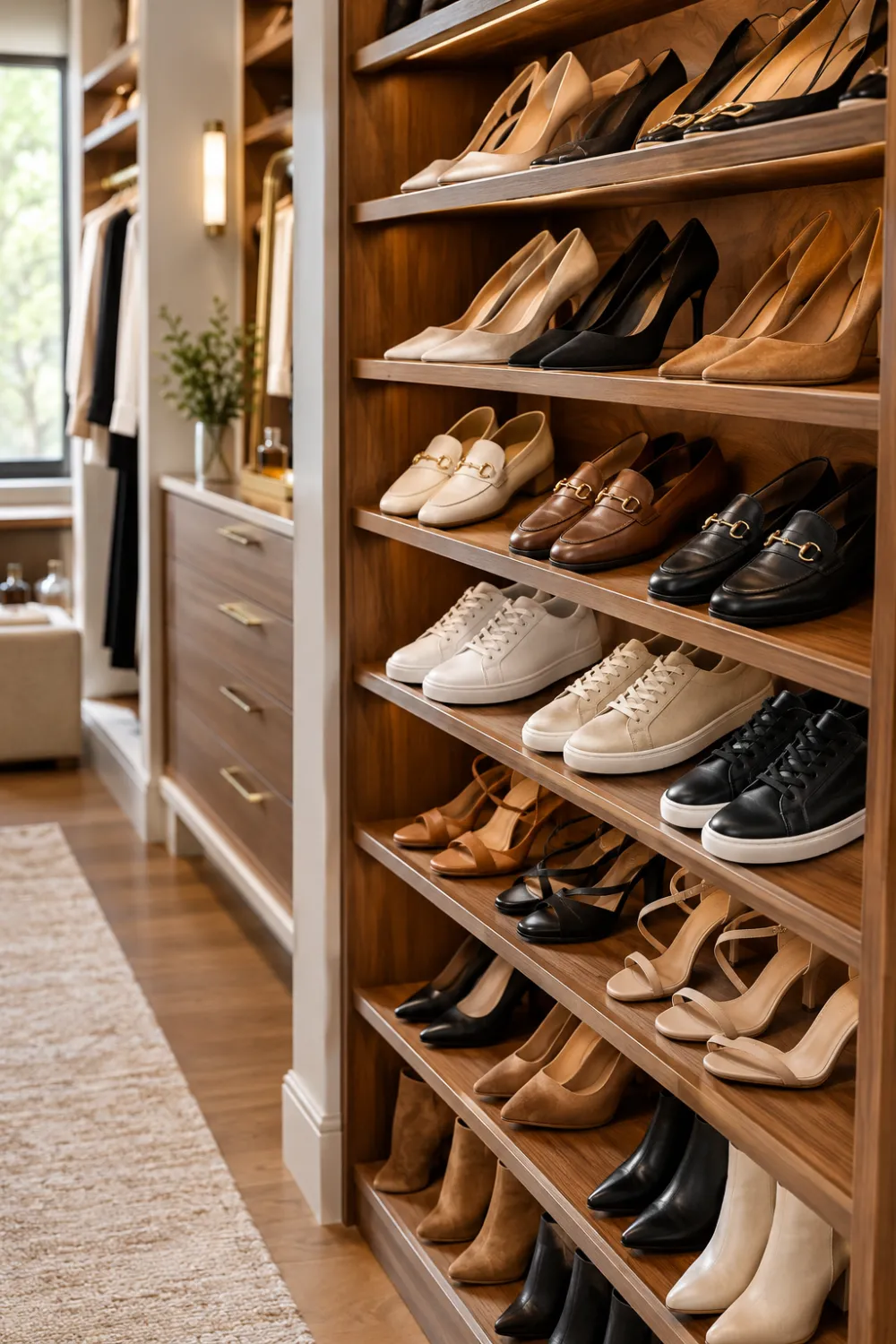
Flat shelves hide the toes of your shoes and waste vertical space. Angled shelves tilt each pair toward you, so you see everything at a glance. They also let you fit more pairs on a wall. Put everyday shoes at eye level and save the top and bottom rows for dress shoes and rarely worn pairs.
4. Center Island With Drawers
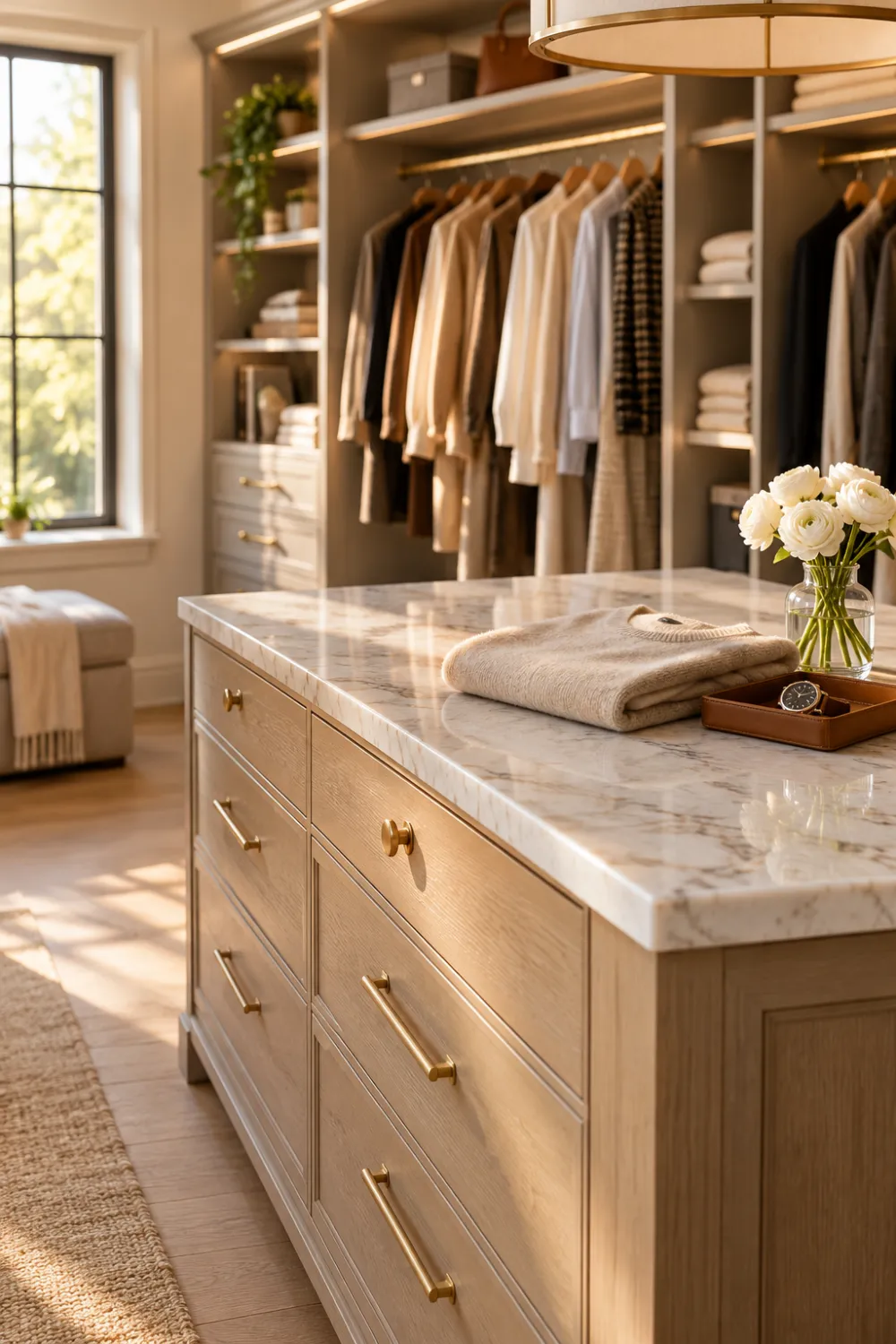
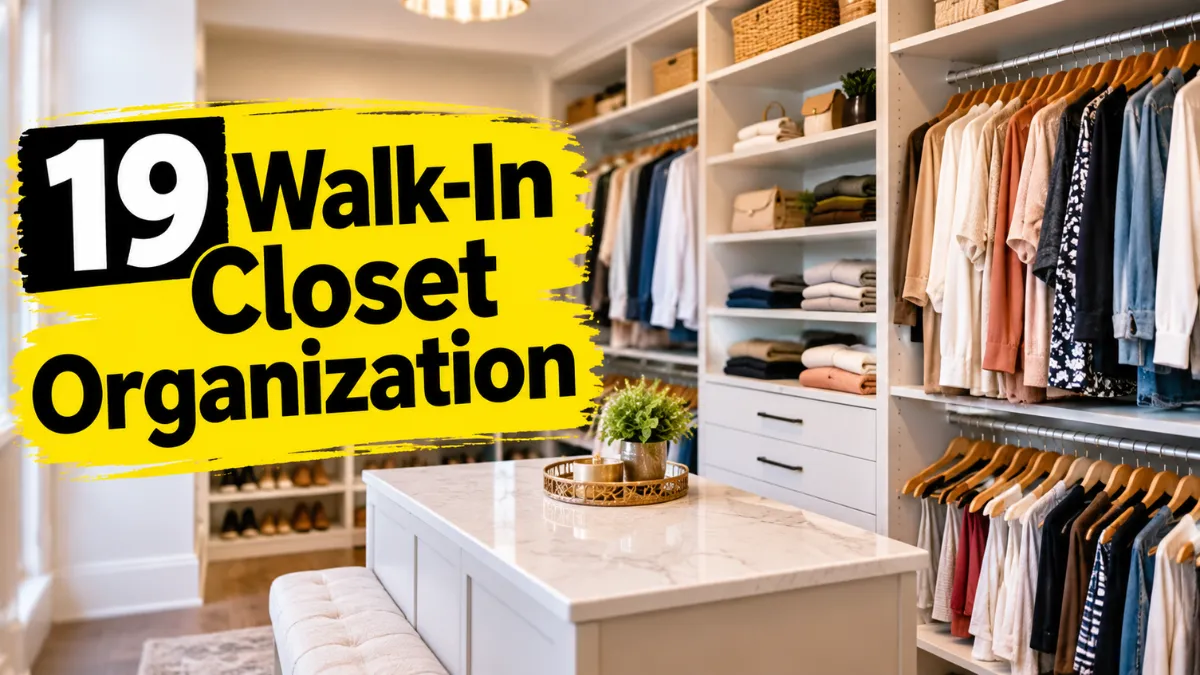
If your closet is at least 7 feet wide, a freestanding island is worth it. The drawers hold folded items, and the flat top becomes your landing spot for packing or laying out tomorrow’s outfit. Choose a height around 36 inches so it feels like a counter. Leave at least 3 feet of walking space on all sides.
5. Slim Velvet Hangers
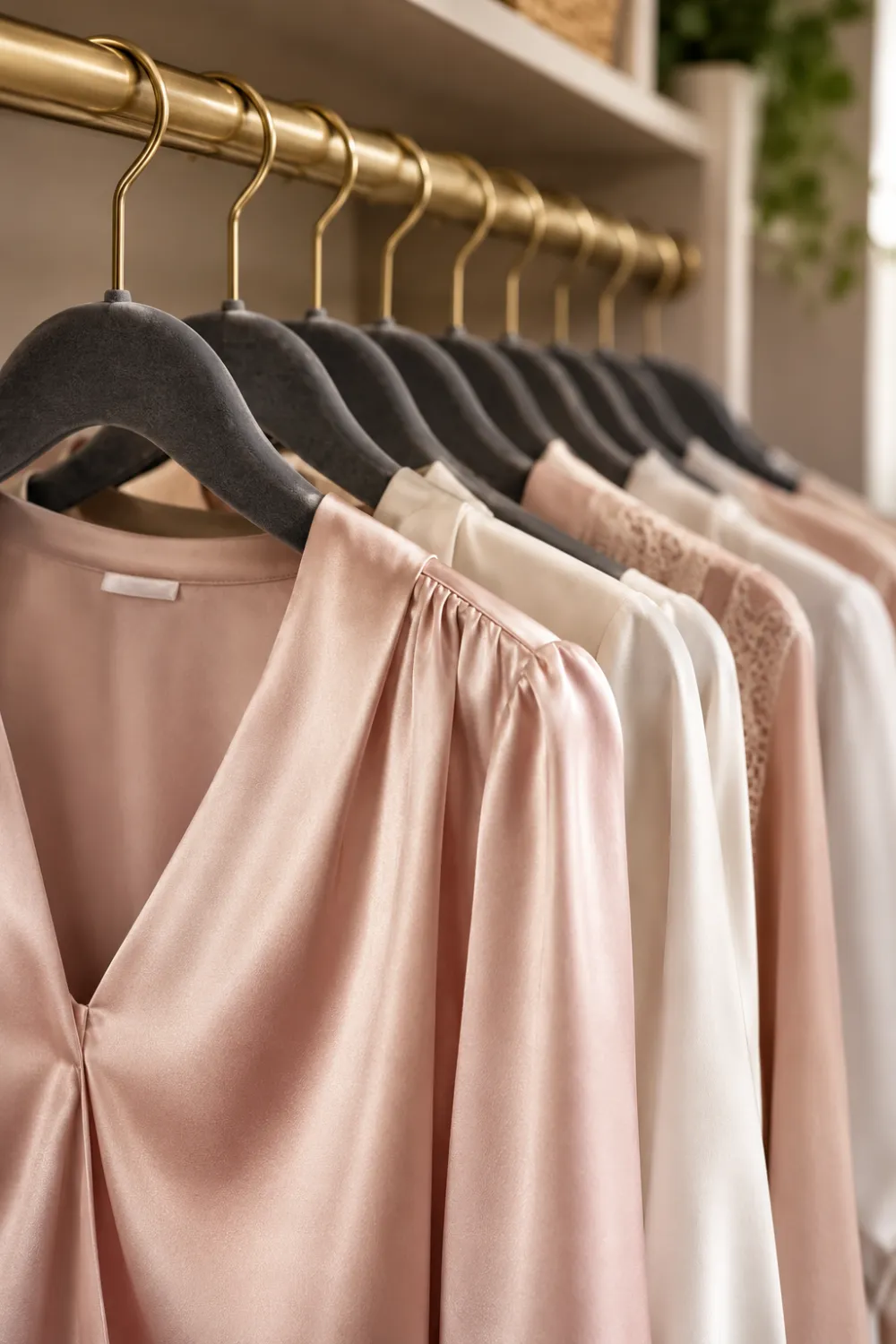
Swapping bulky plastic and wooden hangers for thin velvet ones can free up several inches on a rod. The soft surface also keeps silky tops and wide-neck sweaters from sliding off. Buy one style in one color and the whole closet instantly looks calmer. Replace hangers in batches if your budget is tight.
6. Shelf Dividers for Sweaters
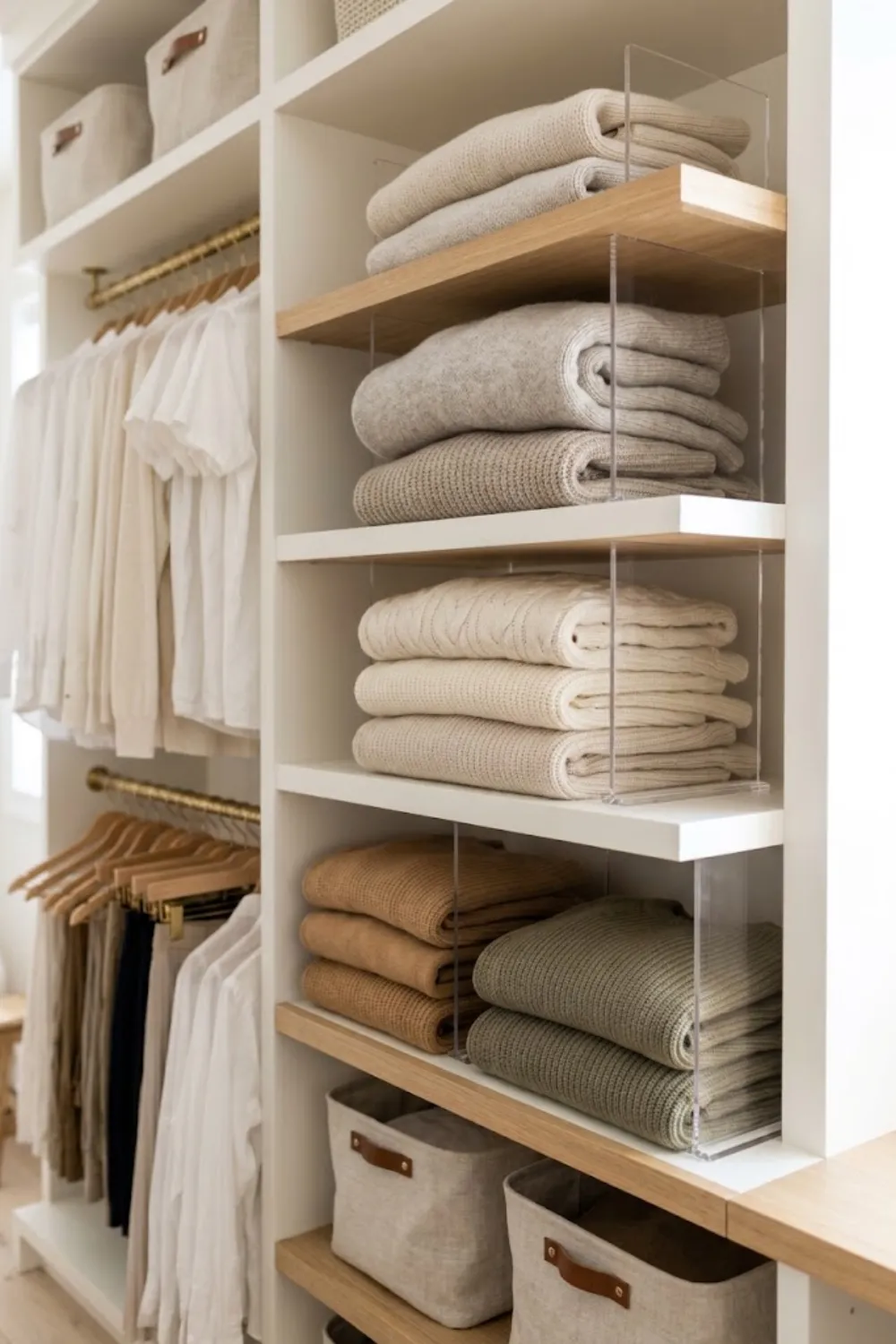
Knits flop over and topple into each other, which is how a neat stack becomes a mess. Acrylic or wooden dividers slide onto the shelf and hold each pile upright. Fold sweaters into rectangles and stack no more than five high. A tidy stack means you’ll actually wear the one at the bottom.
7. Wall Hooks for Bags
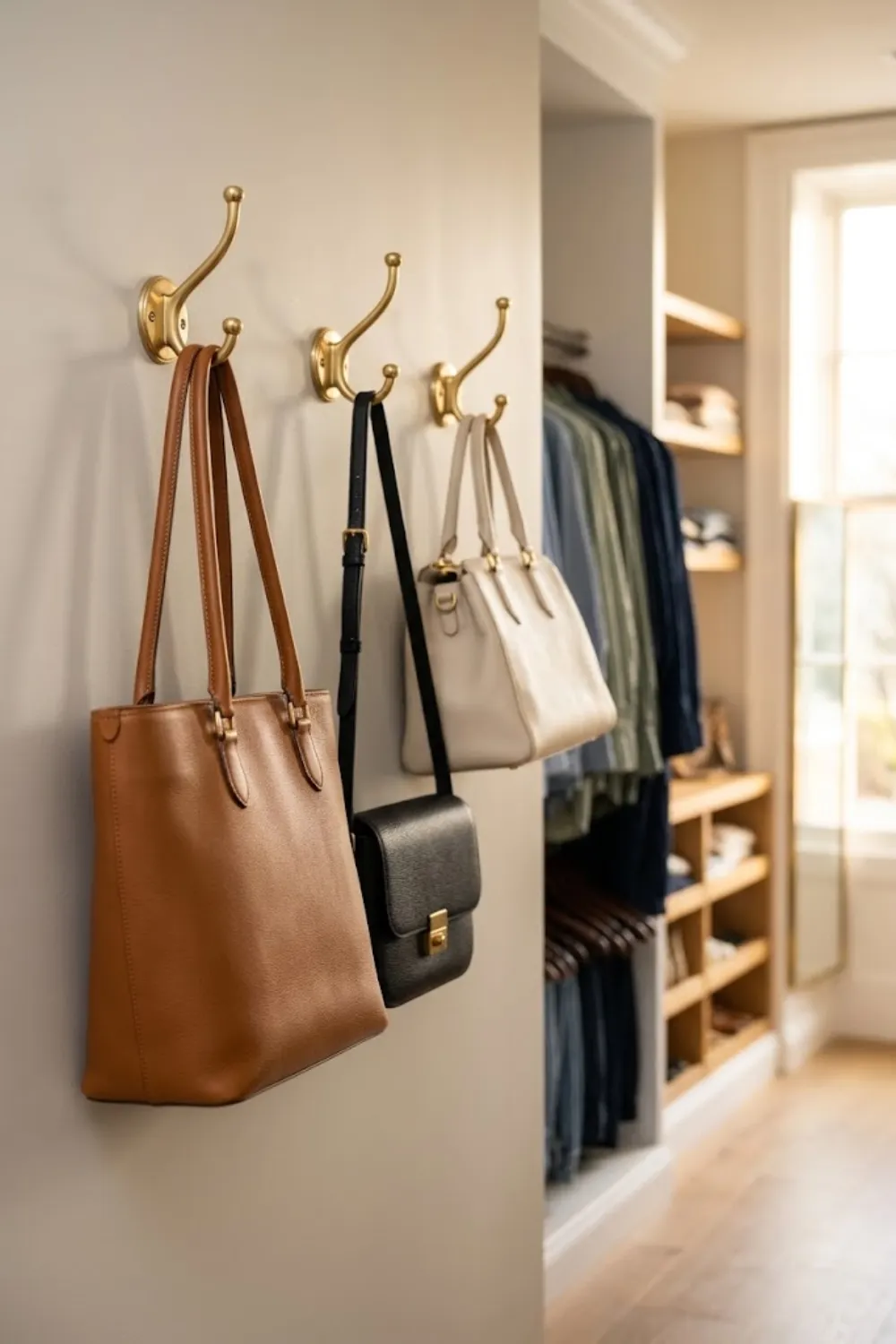
Handbags stuffed onto a shelf lose their shape fast. Mount sturdy hooks at the end of a wall and hang totes, crossbody bags, and backpacks by their straps. You can see every option, and nothing gets crushed. Stuff structured bags with tissue paper first, and keep your two or three favorites hanging at eye level.
8. Pull-Out Belt and Tie Racks
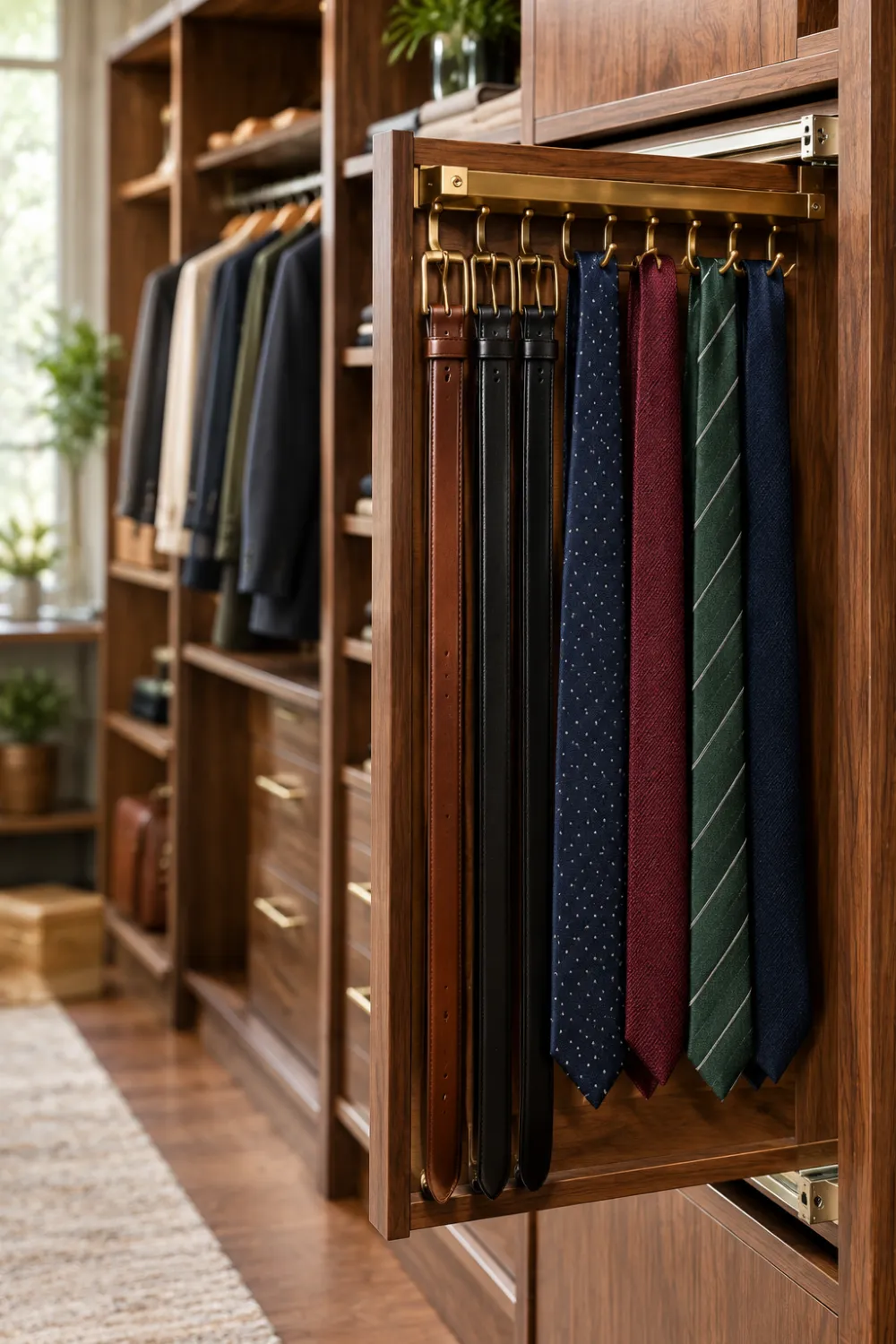
Belts and ties tangle when tossed in a drawer. A slim pull-out rack tucks beside your hanging section and slides out when you need it. Each belt gets its own hook, and ties hang side by side. It takes only about six inches of width, so it fits even in tight gaps next to a shelving tower.
9. Glass-Front Jewelry Drawer

A shallow drawer with a glass top turns jewelry into a mini display. Use velvet-lined inserts to separate rings, earrings, and watches so nothing scratches. Necklaces do best on a small hook board mounted nearby. If you wear the same five pieces daily, keep them in a small dish on top and store the rest inside.
10. Seasonal Swap Zone
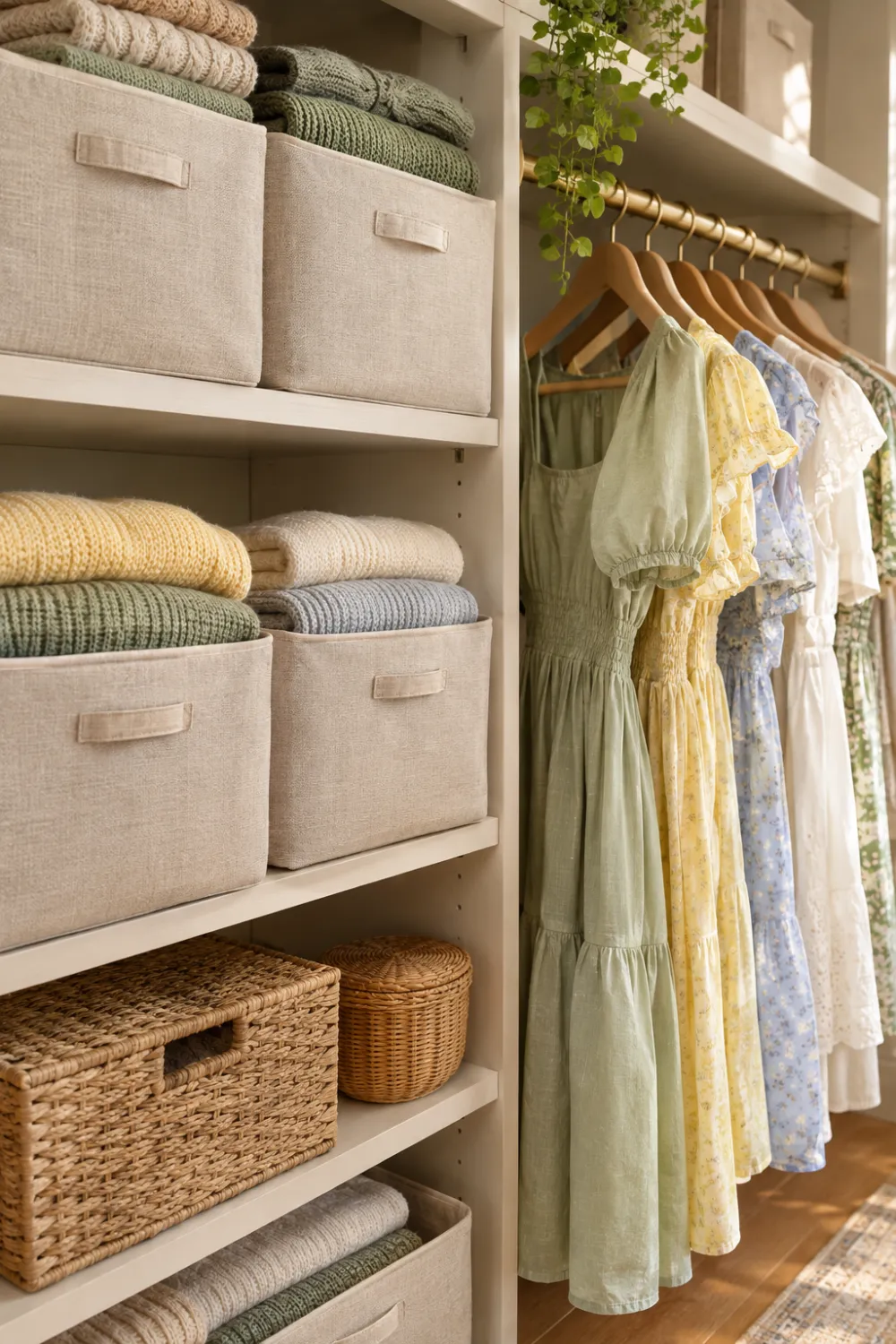
Your winter coats don’t need prime real estate in July. Pick the highest shelf or the far end of the rod as your off-season zone. Twice a year, swap the contents with what’s currently in use. Use breathable fabric bins, not plastic, to protect knits. The swap is also a great moment to donate anything you didn’t wear.
11. Back-of-Door Storage
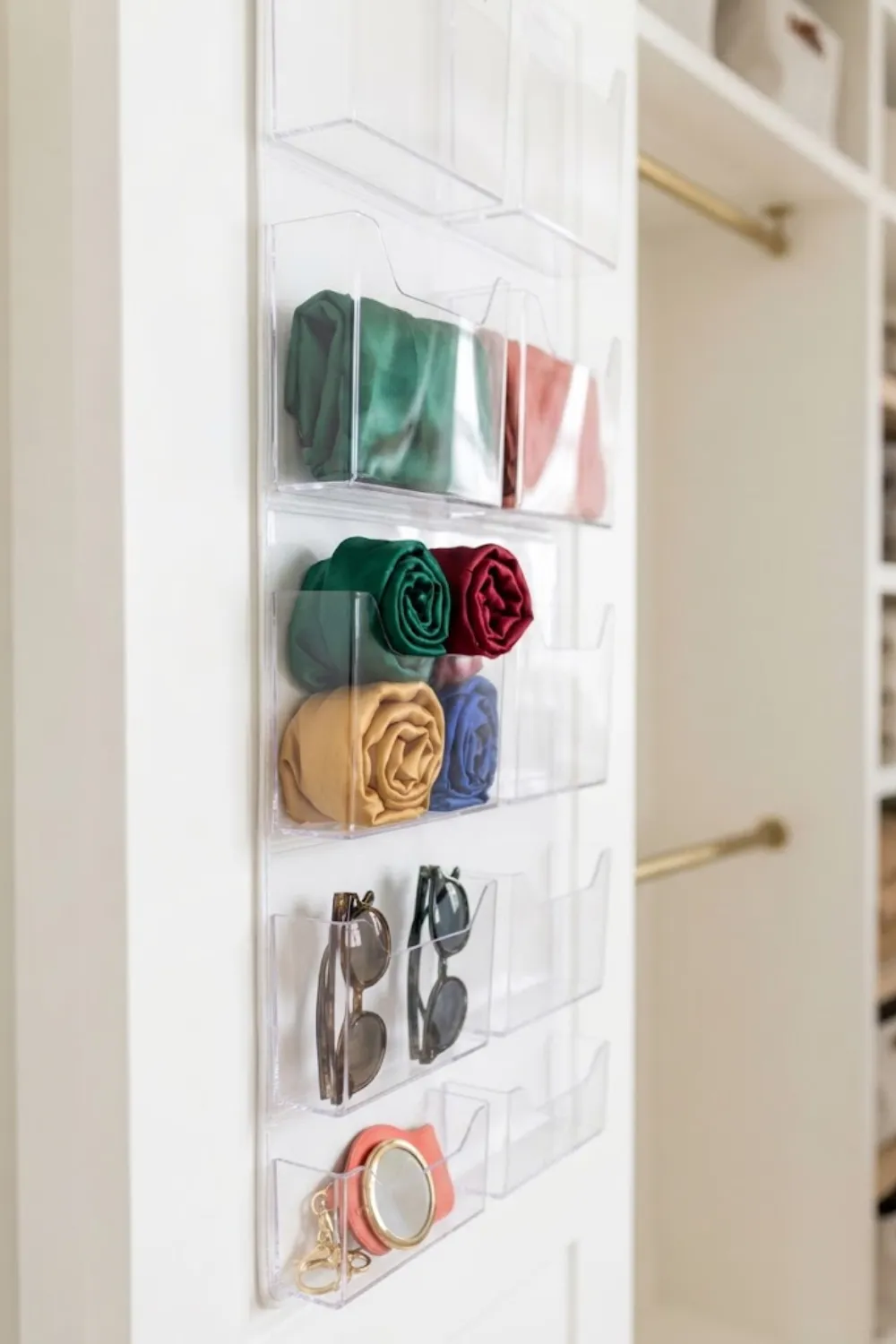
The closet door is free storage most people ignore. A narrow over-the-door organizer can hold scarves, sunglasses, or small accessories. Clear pockets work best because you can see exactly what’s inside. If your door swings into the closet, check clearance first, so the pockets don’t bump your hanging clothes.
12. Hamper Corner
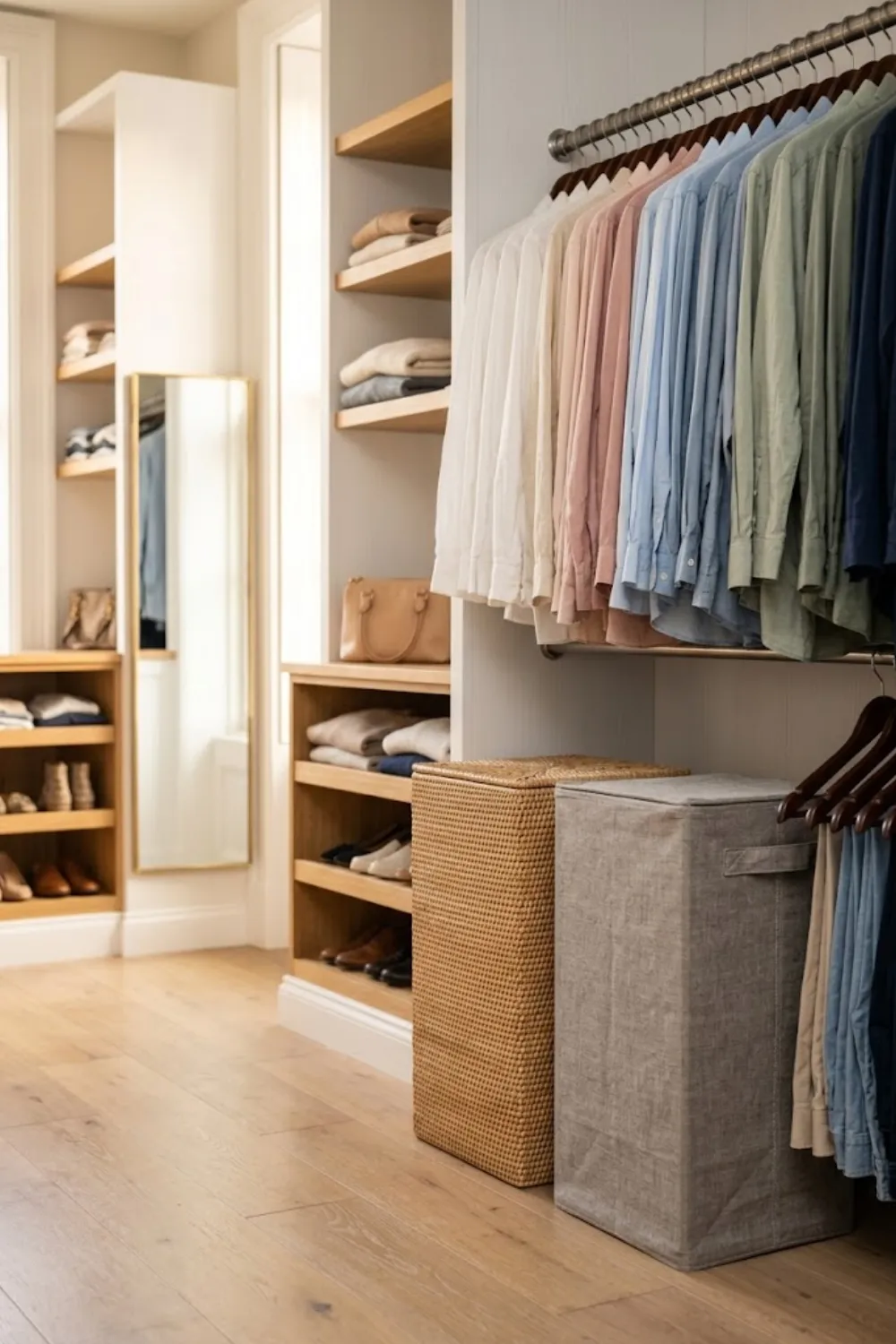
Dirty clothes on the floor can ruin a pretty closet fast. Give laundry a dedicated corner with a tall, slim hamper or a pair of fabric bins. Use one for darks and one for lights, and laundry day gets easier. Pick a lidded or breathable style so odors stay put, and place it near the door.
13. Drawer Dividers for Socks and Underwear
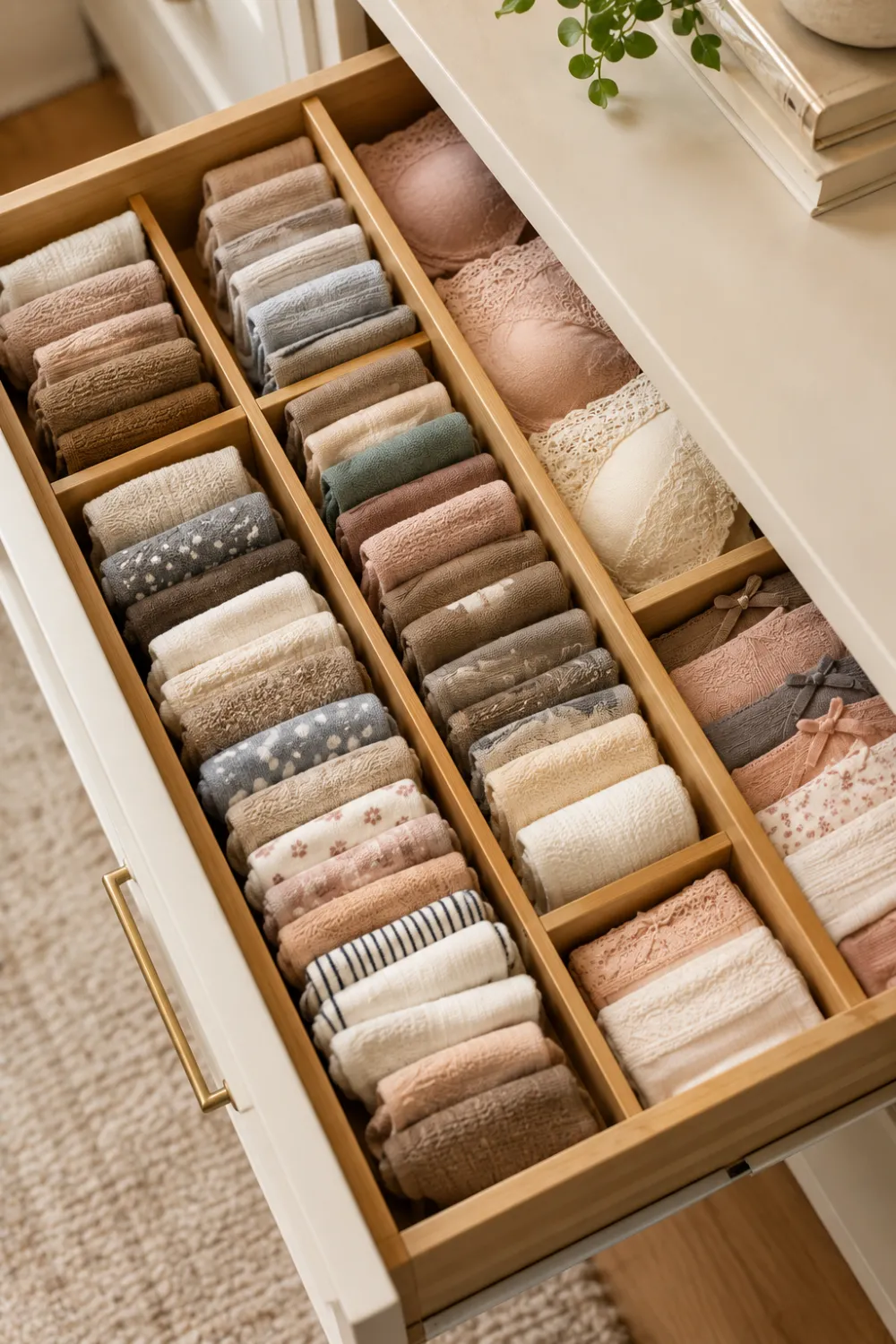
Small items turn into chaos when they share one big drawer. Adjustable bamboo dividers create compartments sized to what you own. Fold socks in pairs and stand them upright, like files in a cabinet. Give bras and underwear their own sections. When you can see everything from above, you stop buying duplicates.
14. Warm LED Strip Lighting
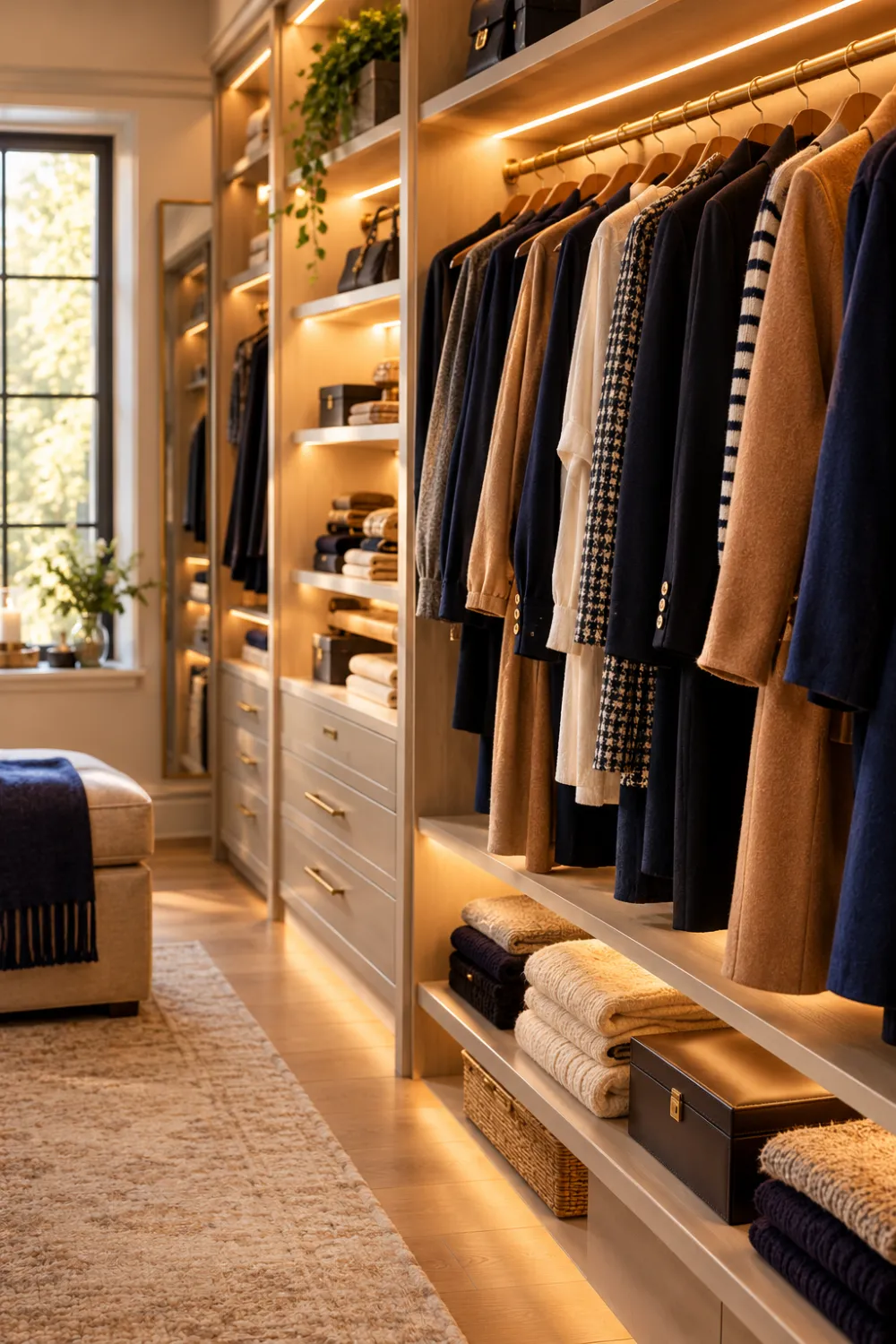
Closets are often dim, which makes dark navy and black look identical. Stick-on LED strips under shelves and along rods fix that cheaply. Look for a warm white tone that shows true colors, and pick motion-sensor ones so the lights flick on as you walk in. No wiring is needed for battery or plug-in versions.
15. Full-Length Mirror Wall
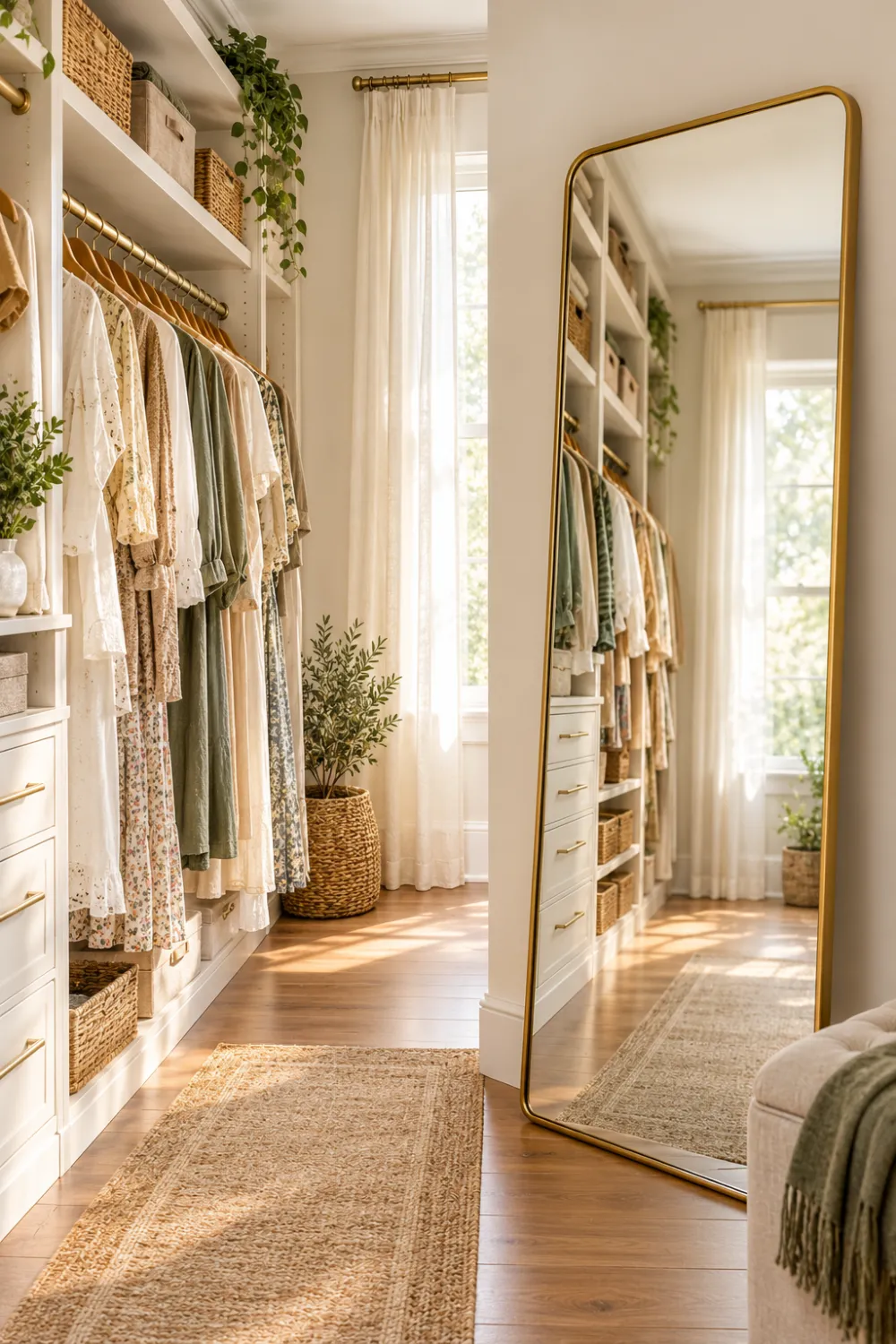
A big mirror does two jobs: it lets you check outfits without leaving the closet, and it makes the room feel wider. Mount one on a blank wall or lean a tall one against it. Place it where natural light or your LED strips hit you evenly, so you see colors the way they’ll look outside.
16. Hat Display Shelf
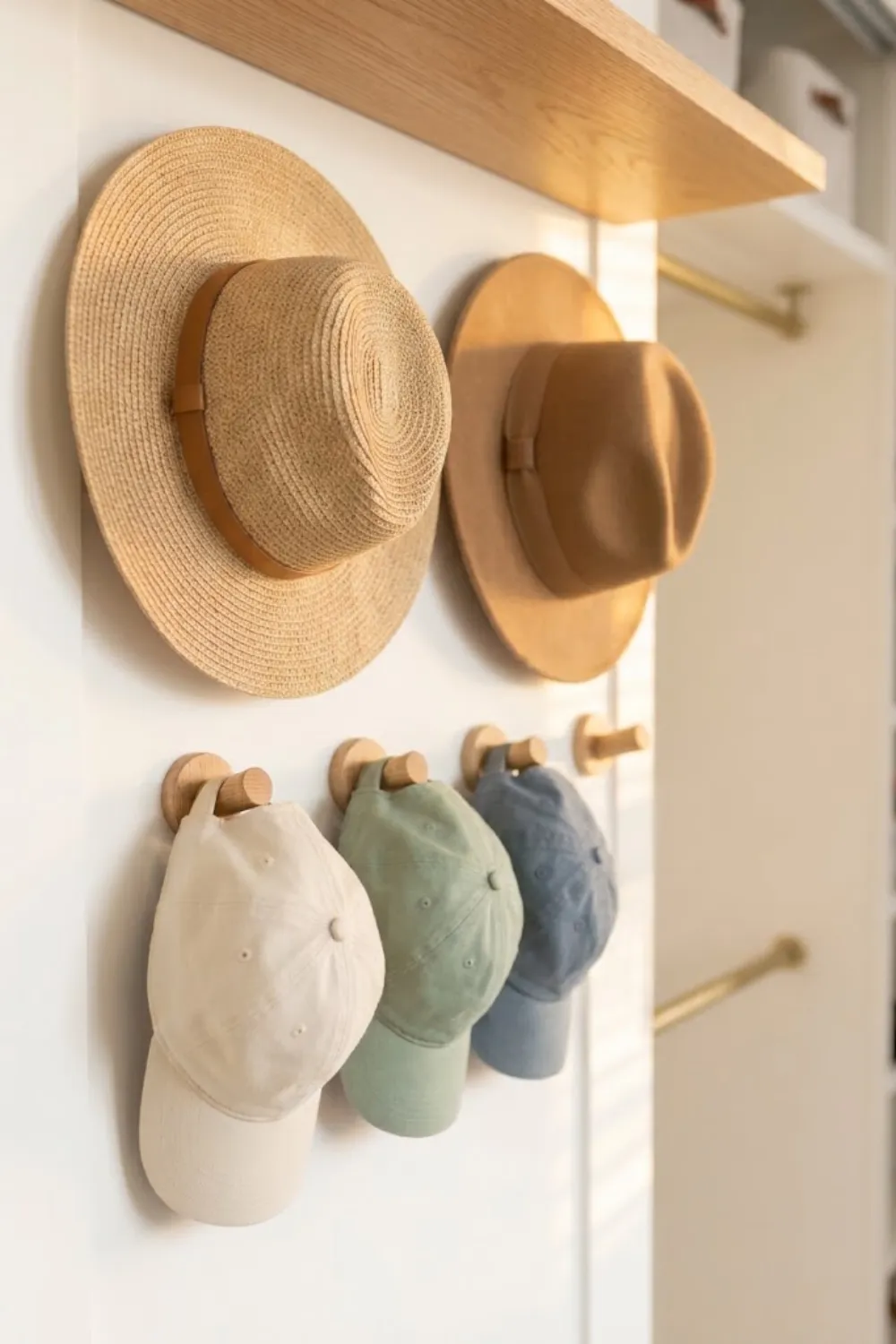
Hats are bulky, and stacking them can crush the brims. Dedicate a high shelf or a row of wall pegs to them. Baseball caps can sit side by side in a single row, while wide-brim hats do best on their own pegs. Seeing them lined up makes it easy to grab the right one on the way out.
17. Labeled Bins for Top Shelves
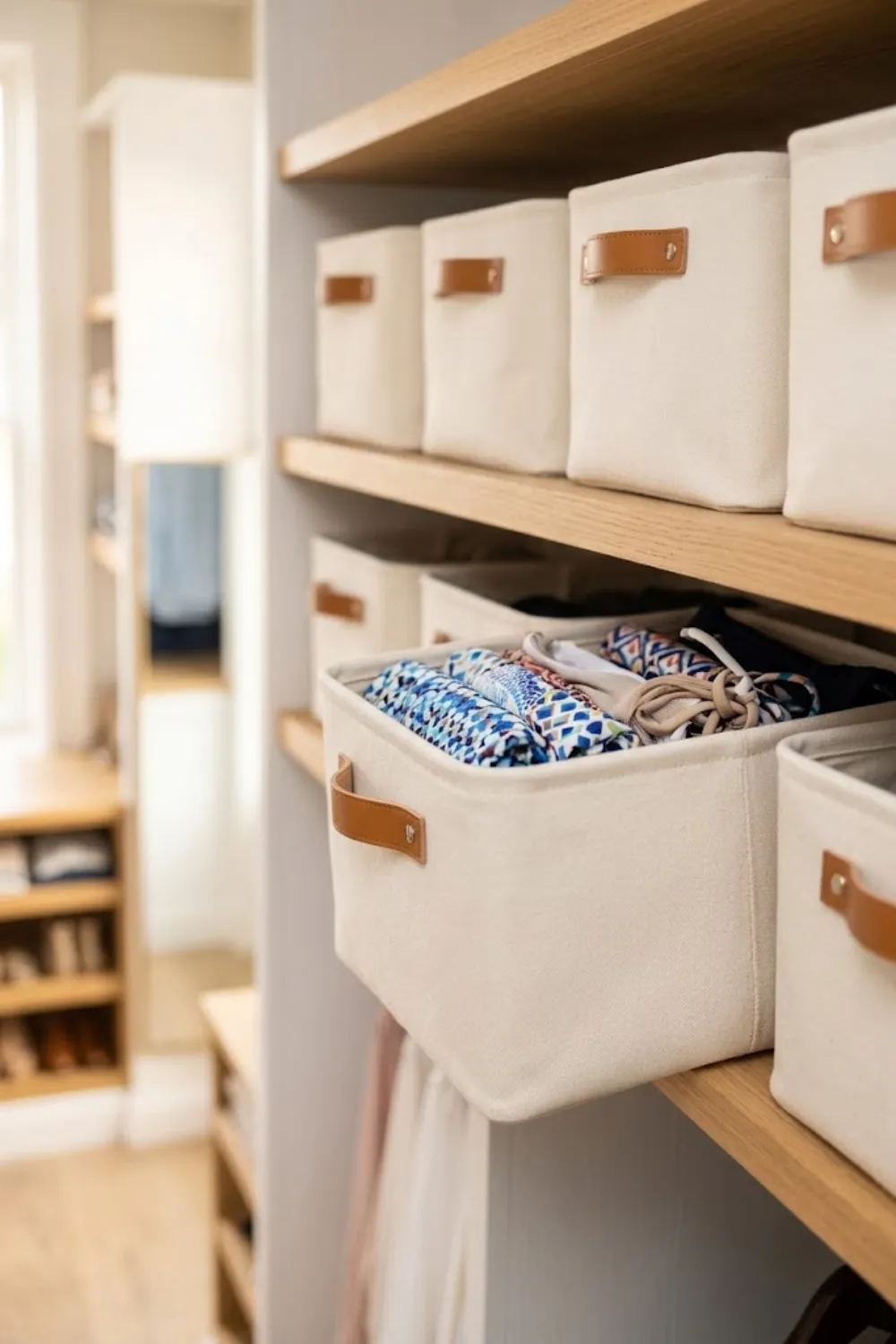
The top shelf is perfect for things you need only sometimes: extra bedding, travel gear, or formal wear. Use matching bins with simple labels like “Swimwear” or “Gym Gear” so you’re not pulling down every box. Pick bins with handles, since you’ll be reaching up. Keep the heaviest items on lower shelves.
18. Steamer Station
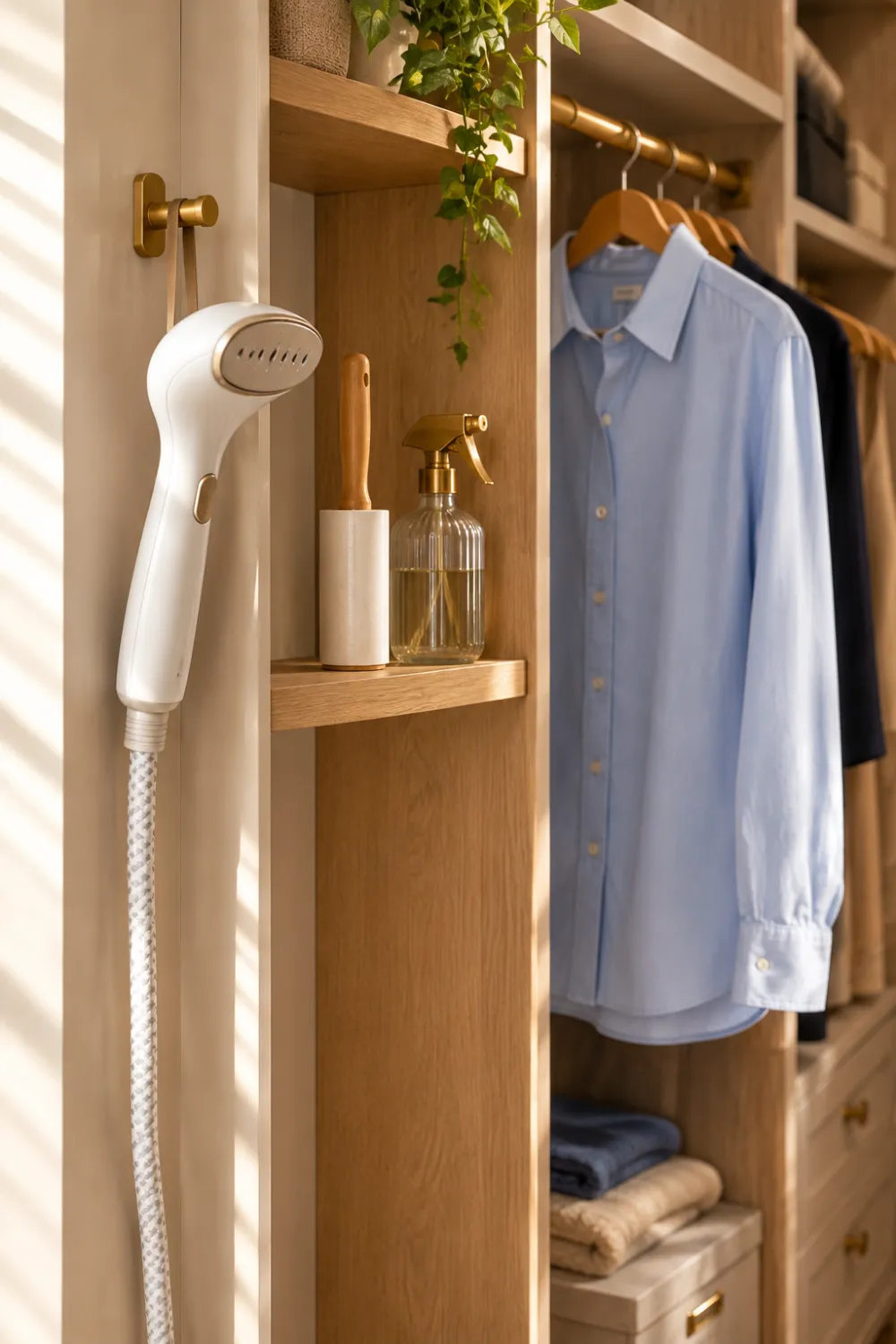
Wrinkles are easier to handle when the tool is already in the closet. Mount a hook for a handheld steamer and keep a small shelf or caddy nearby for lint rollers and fabric spray. Spend two minutes steaming a shirt before you head out, and you’ll skip the ironing board entirely. It’s a tiny upgrade that saves real time.
19. Small Seating Bench
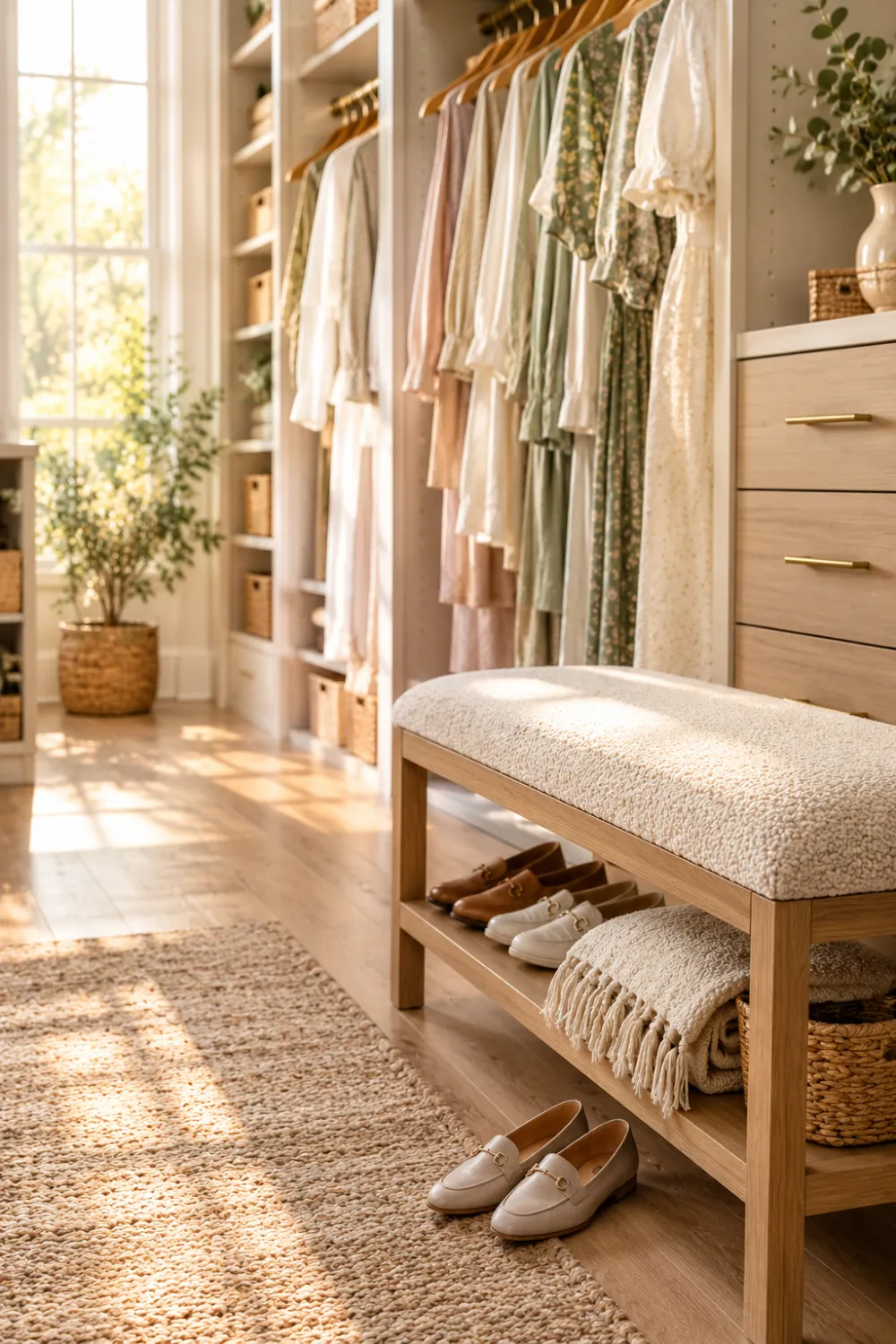
A narrow bench gives you somewhere to sit while you put on shoes, which beats balancing on one foot. Choose one with storage underneath for extra shoes or folded throws. If your closet is tight, a slim ottoman works just as well. Aim for about 18 inches high so it’s comfortable for most people.
Conclusion
The best walk-in closet organization ideas are the ones that fit how you actually get dressed. Start with whichever problem annoys you most, whether that’s shoes, shelves, or tangled accessories. Fix that one area first, then add more as you go. Small changes add up, and soon your closet will feel like it was made for you.