20 Shoe Storage Ideas to Tame Your Entryway Pile-Up
Shoes have a sneaky way of taking over. One pair by the door turns into six, and suddenly you’re hopping over sandals just to leave the house. The good news? Fixing it doesn’t take a big budget or a renovation. These shoe storage ideas cover tiny apartments, busy family entryways, and packed closets, so you can find a setup that actually fits your space and your habits.
1. Over-the-Door Pocket Organizer
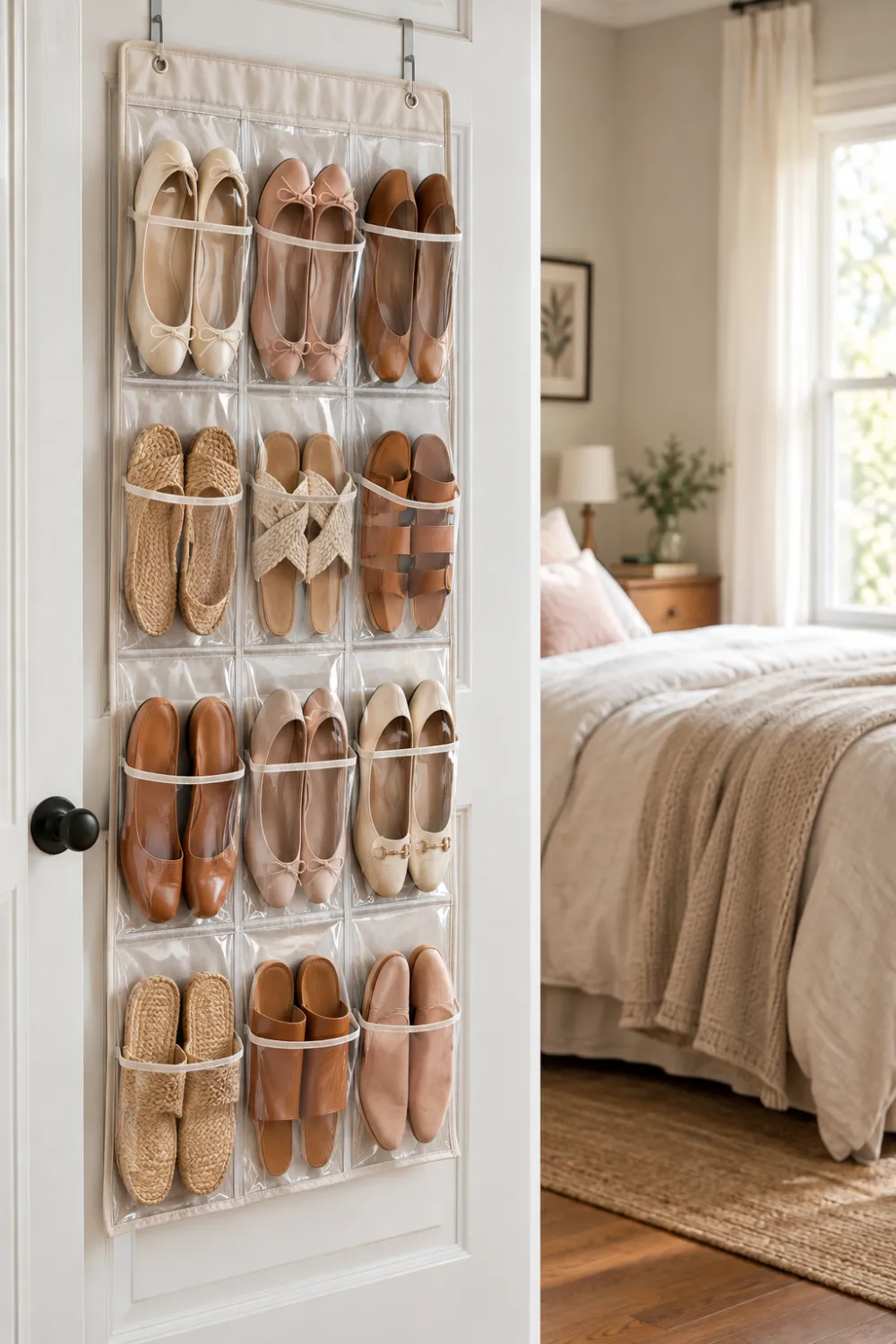
This is the easiest win on the list. Hang a clear pocket organizer on the back of a closet or bedroom door, and each pocket holds one pair. No tools, no drilling, and it’s usually cheap.
It works best for flats, sandals, kids’ shoes, and slippers. Chunky boots won’t fit. Choose one with sturdy hooks so the door still closes smoothly.
2. Slim Tilt-Out Cabinet
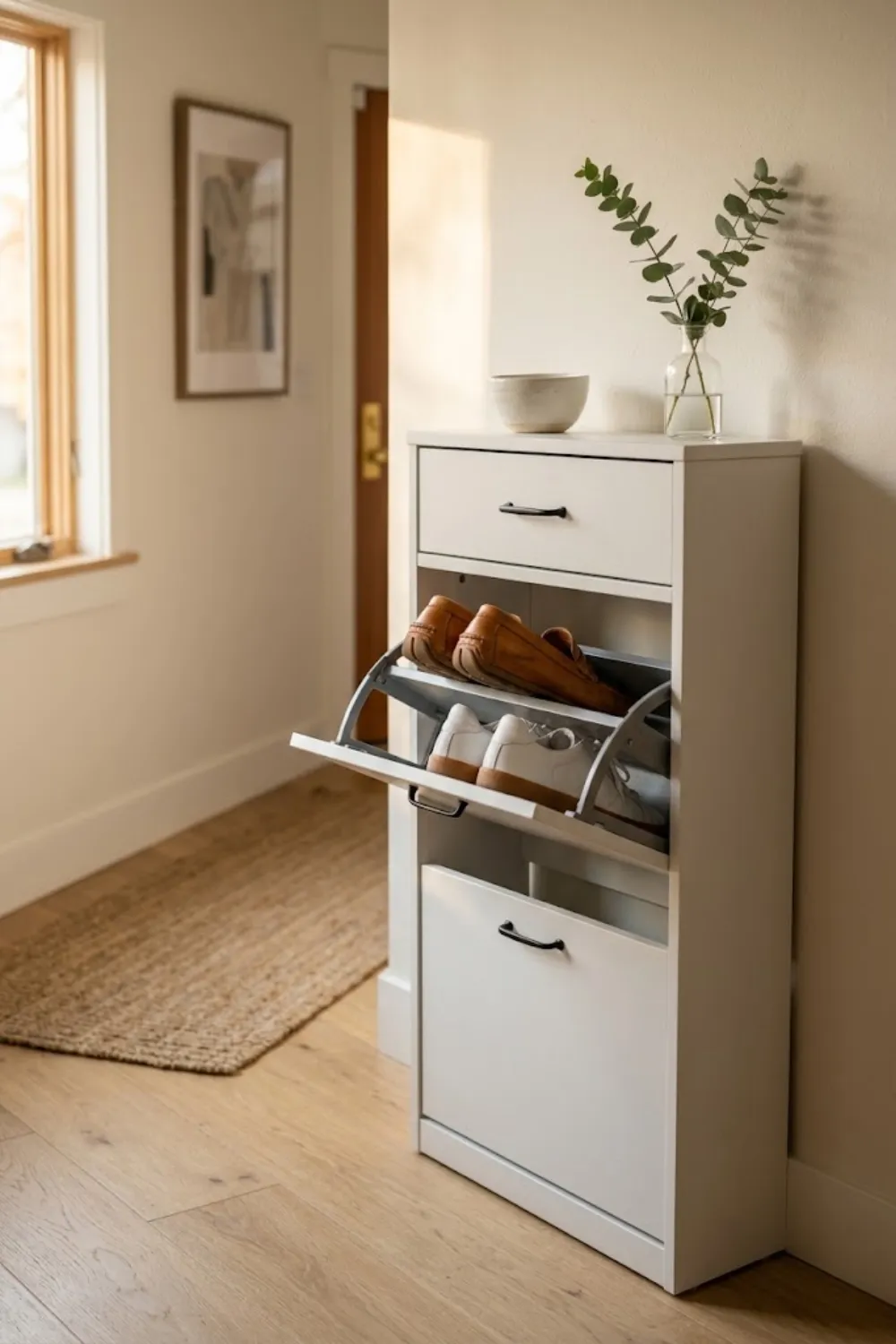
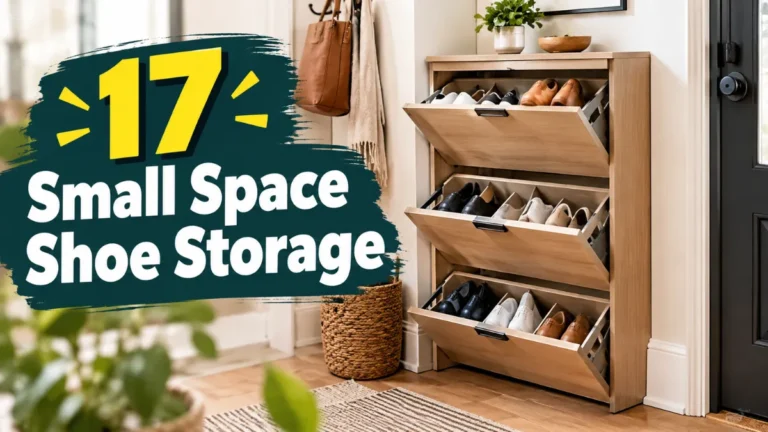
Tilt-out cabinets look like a plain narrow dresser, but the front drawers flip open to reveal angled shelves. Your shoes stay hidden, and the entryway looks tidy even on a messy day.
They’re only about 7 to 8 inches deep, so they fit in tight hallways. Most hold three to four pairs per drawer. Pick one with a flat top and you get a spot for keys and mail too.
3. Entryway Bench with Cubbies
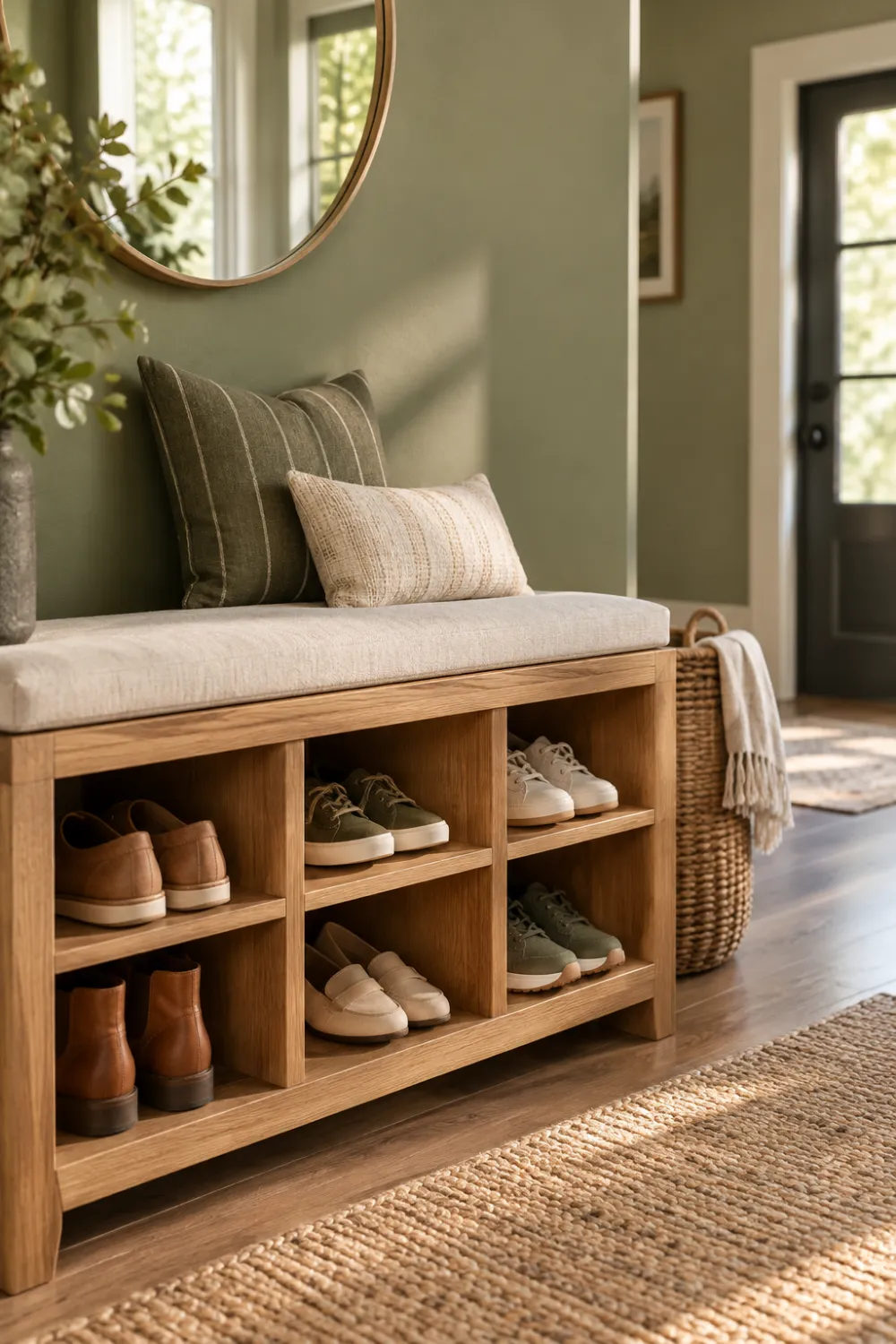
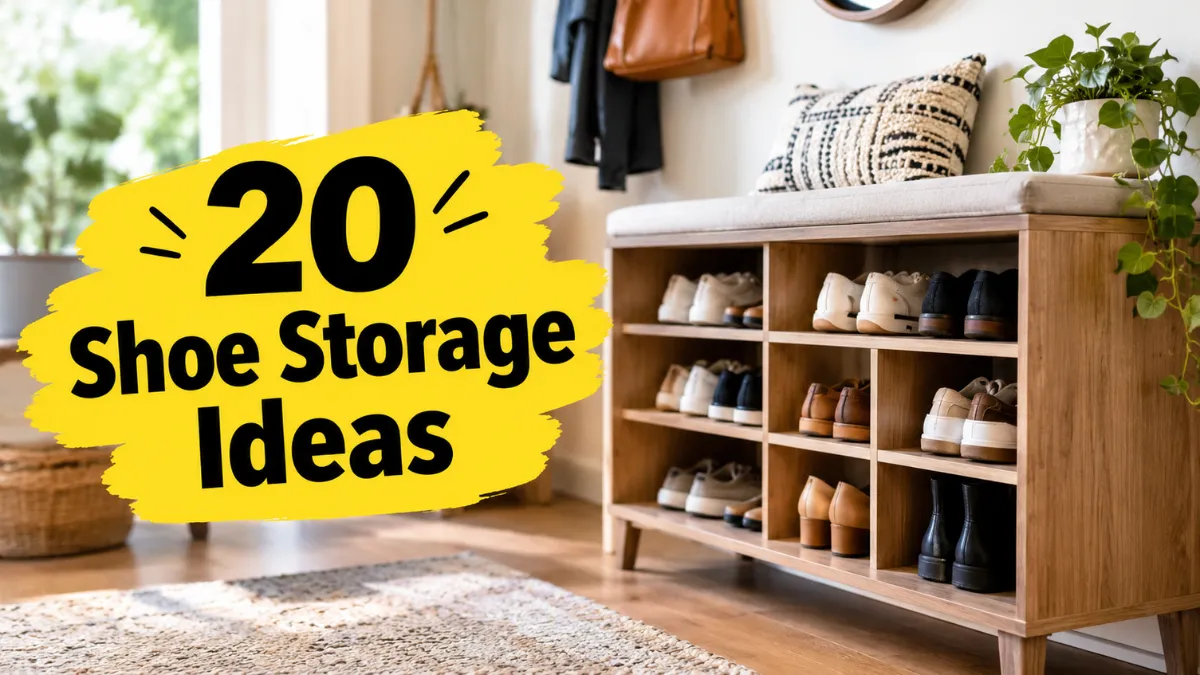
You need a place to sit when you put shoes on, so why not store them right below? A bench with open cubbies gives you both. Slide the pairs you wear daily into the slots.
Add a flat cushion on top and a basket for out-of-season pairs. Look for one with a closed back if your entry wall is freshly painted. Muddy toes will thank you.
4. Stackable Shoe Cubes
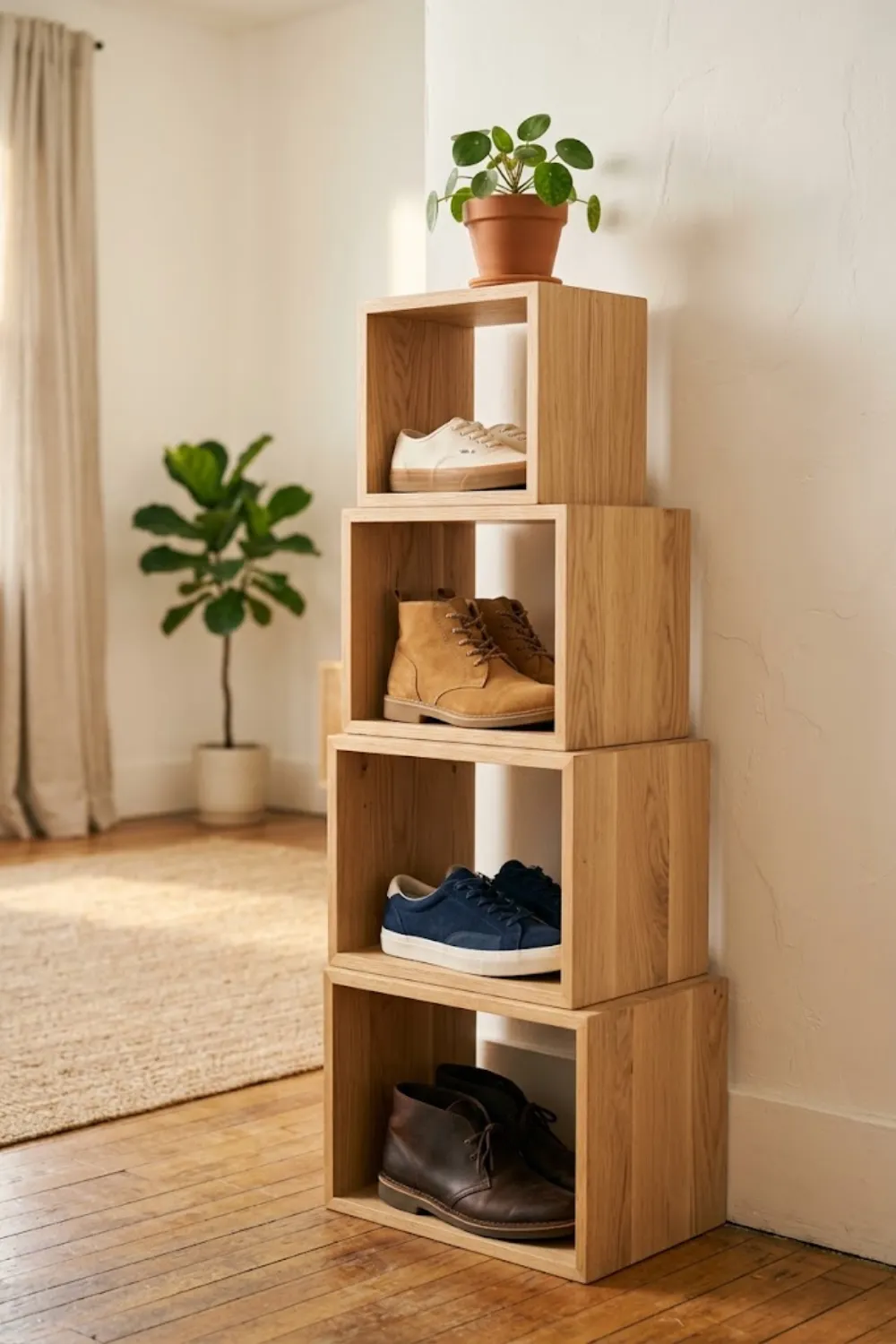
Think of these as building blocks. Each cube holds a pair or two, and you stack them as high as your wall allows. Start with four and add more as your collection grows.
Wood or sturdy plastic works well. If you rent, they’re great because nothing gets screwed into the wall. Rearrange them later into a different shape when you move.
5. Closet Shelf Dividers and Risers
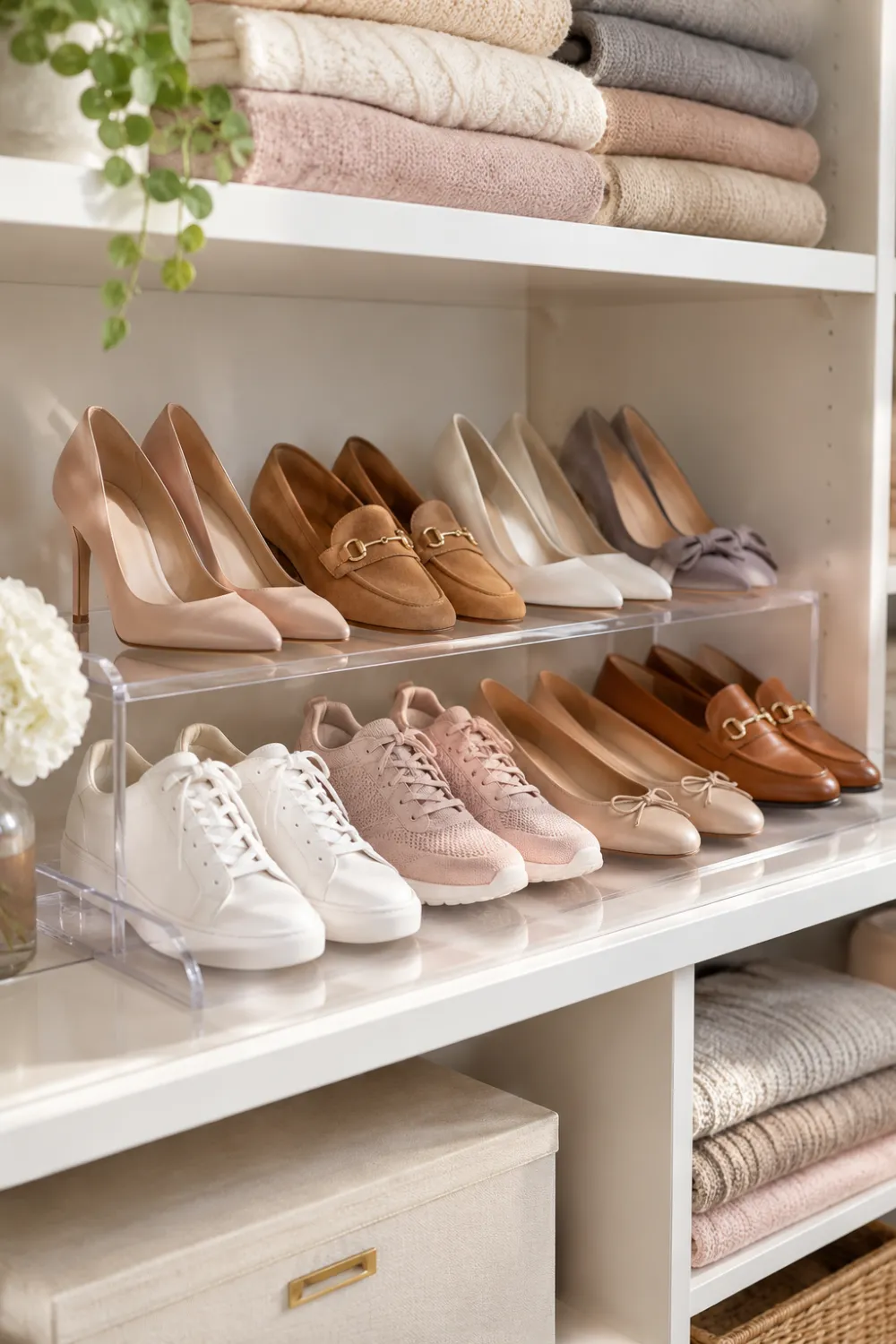
Most closet shelves waste vertical space. A simple riser, or a small step shelf, lets you place one pair behind another and still see both.
Put your most-worn pairs in front. Save the back row for dressier shoes you wear less often. It’s a small change, but it can nearly double what one shelf holds.
6. Under-Bed Shoe Drawers
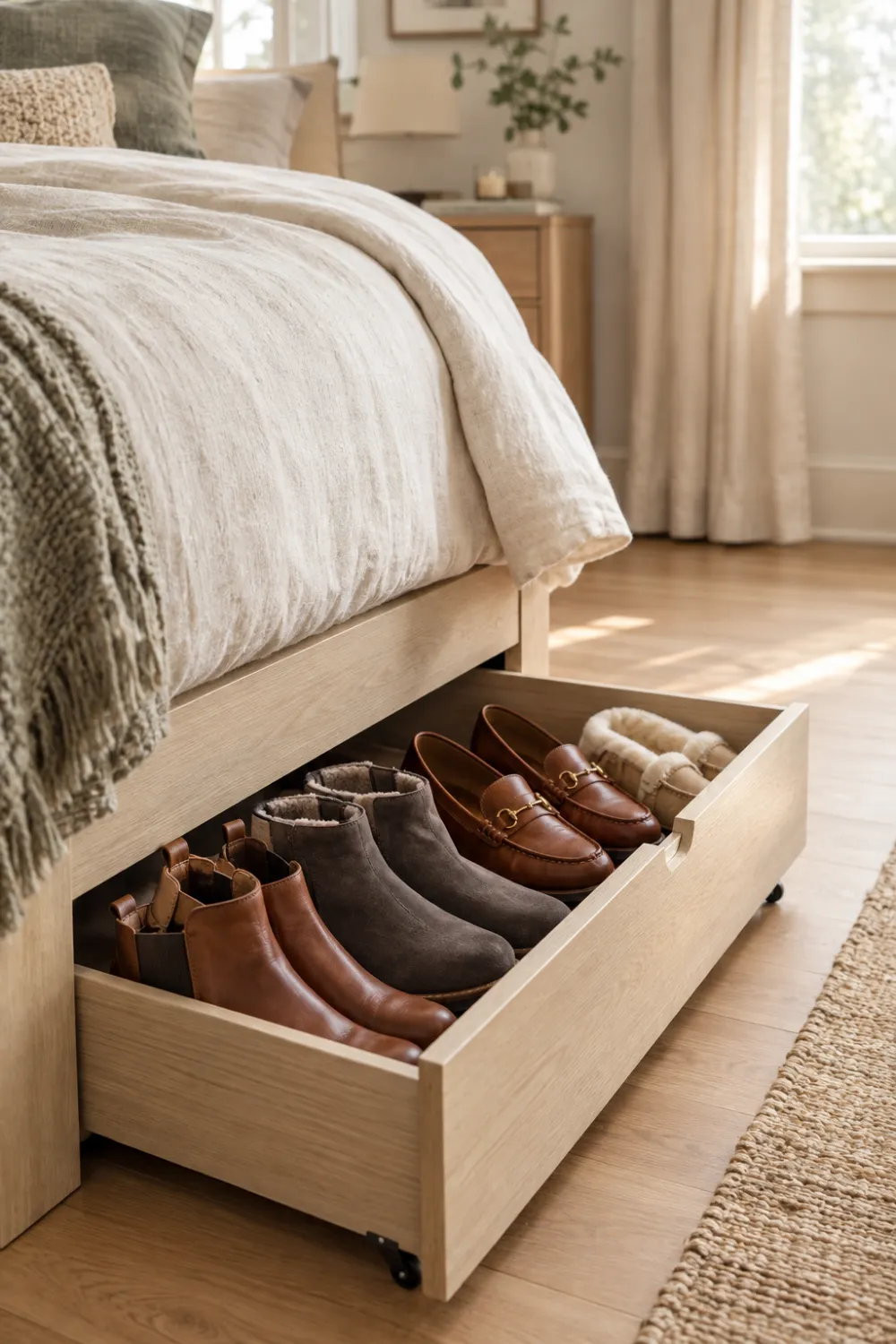
The space under your bed is basically free storage. Flat, low drawers on wheels roll out easily and keep dust off your shoes.
This is perfect for off-season pairs like winter boots in summer. Measure the gap between your bed frame and the floor first. A few inches’ difference decides which style will fit.
7. Wall-Mounted Shoe Ledges
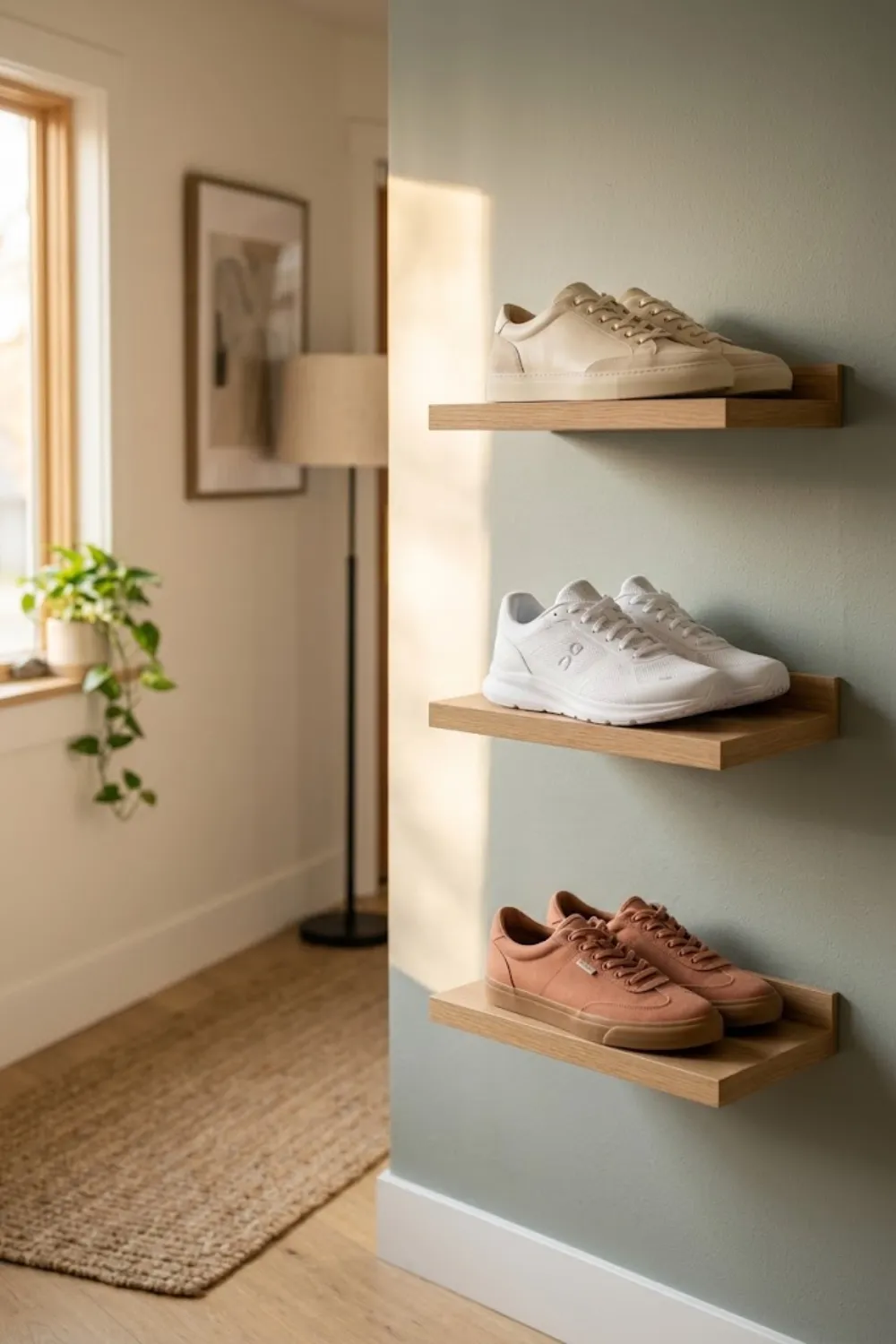
Narrow floating ledges turn a bare wall into a shoe display. Each shelf only needs to be about 4 inches deep, and the shoes sit toe-out or side-on.
It’s a great fit for sneaker lovers who want to show off their favorites. Hang them in a straight line at eye level, or stagger them for a more playful look. Just be sure to anchor into studs or use heavy-duty wall anchors.
8. Rolling Shoe Cart
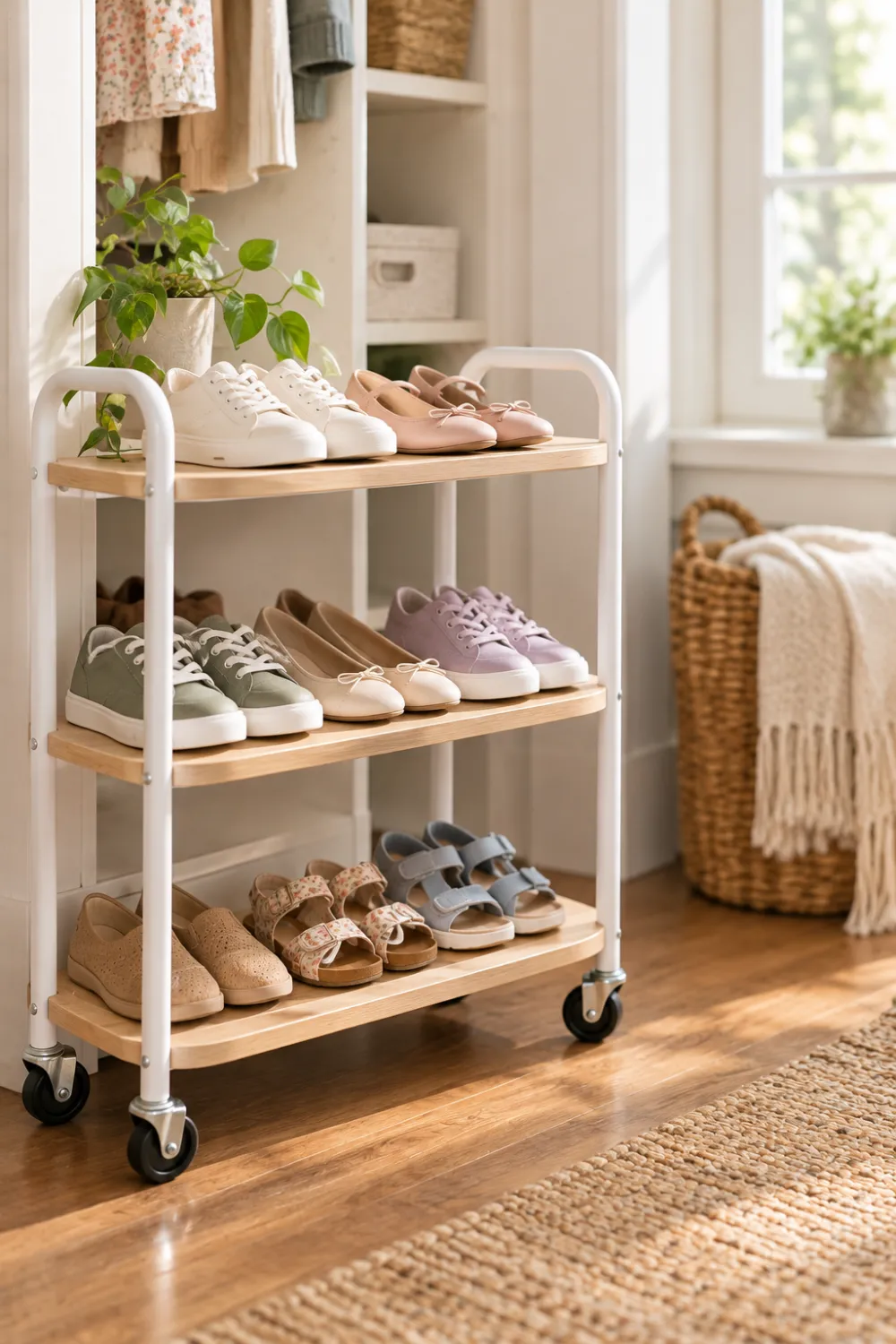
A narrow cart with wheels and open shelves can live in a closet corner or beside the front door. When guests come, roll it out of sight.
It’s especially handy in homes where everyone’s shoes change daily. Kids can grab theirs from the lower shelf without help, and you can wheel it to the mudroom when it’s cleaning day.
9. Hanging Fabric Shelves

These soft, zip-up shelves hang from your closet rod and give you several layers of storage in a very small footprint. Each shelf holds a couple of pairs.
They’re a smart pick when you have rod space but no floor space. Choose breathable fabric so shoes don’t trap moisture, and add a sturdy hook so the whole thing doesn’t sag under the weight.
10. Boot Racks and Shapers

Boots flop over, crease, and take up awkward room. A boot rack, which holds them upside down by the shaft, solves all three problems at once.
If you have tall leather boots, use inserts or shapers inside to keep them upright. Store them in a closet corner where their height won’t block other shelves, and the leather will hold its shape for years.
11. Cabinet Door Racks
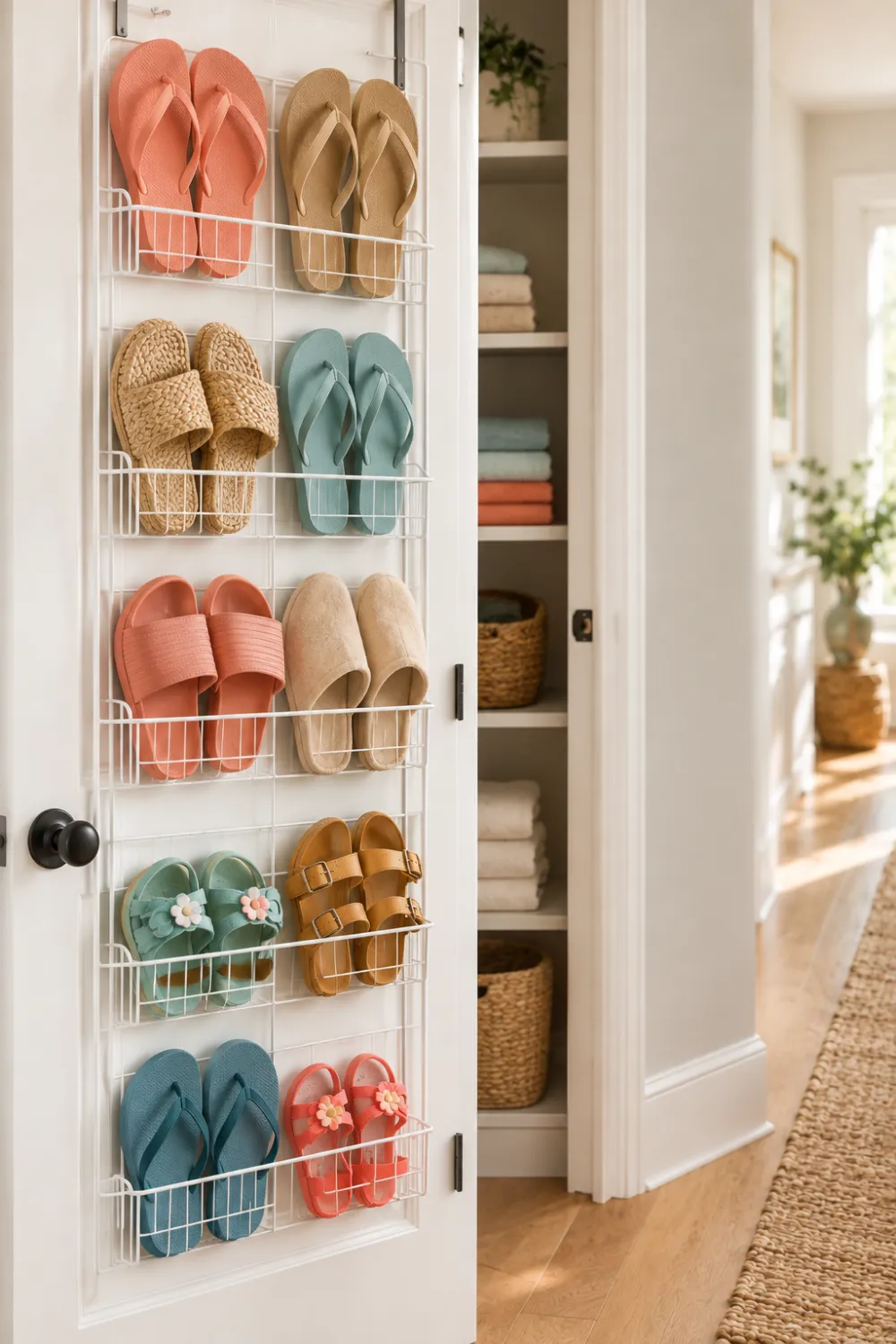
Open the cupboard under your sink or in your hallway closet and check the inside of the door. It’s often wasted space. Small slim racks or hooks can hold flip-flops, slippers, or kids’ sandals there.
It keeps pairs off the floor and out of sight. Just make sure the door can still close fully before you screw anything in.
12. Clear Drop-Front Boxes
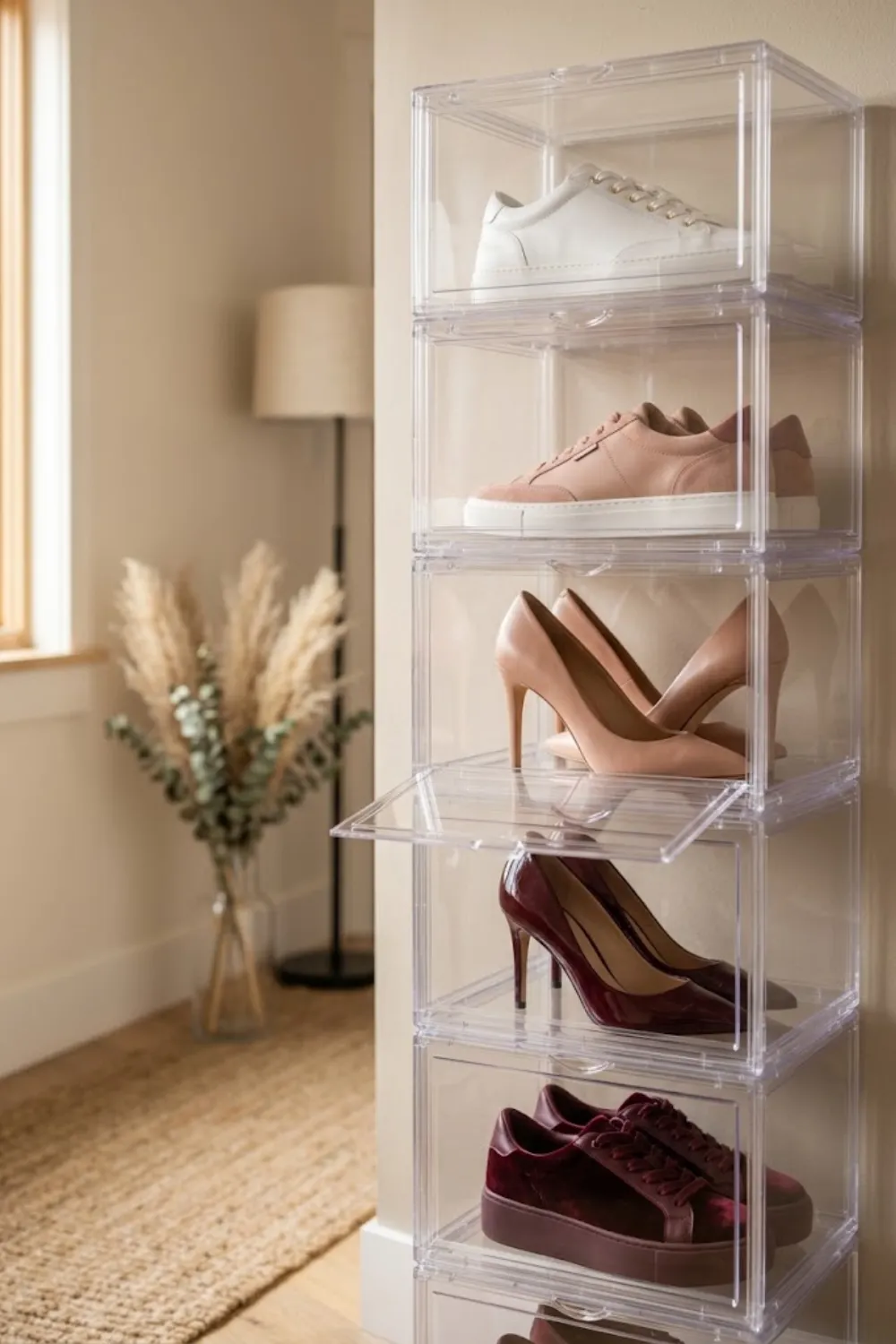
If you love sneakers or special-occasion heels, clear boxes with a drop-front door let you see each pair while keeping dust away. You can stack them like a tidy shoe wall.
They’re pricier than most options, but worth it for pairs you care about. Face them forward and organize by color, and the stack starts to look like a little shop display.
13. Under-the-Stairs Shoe Nook
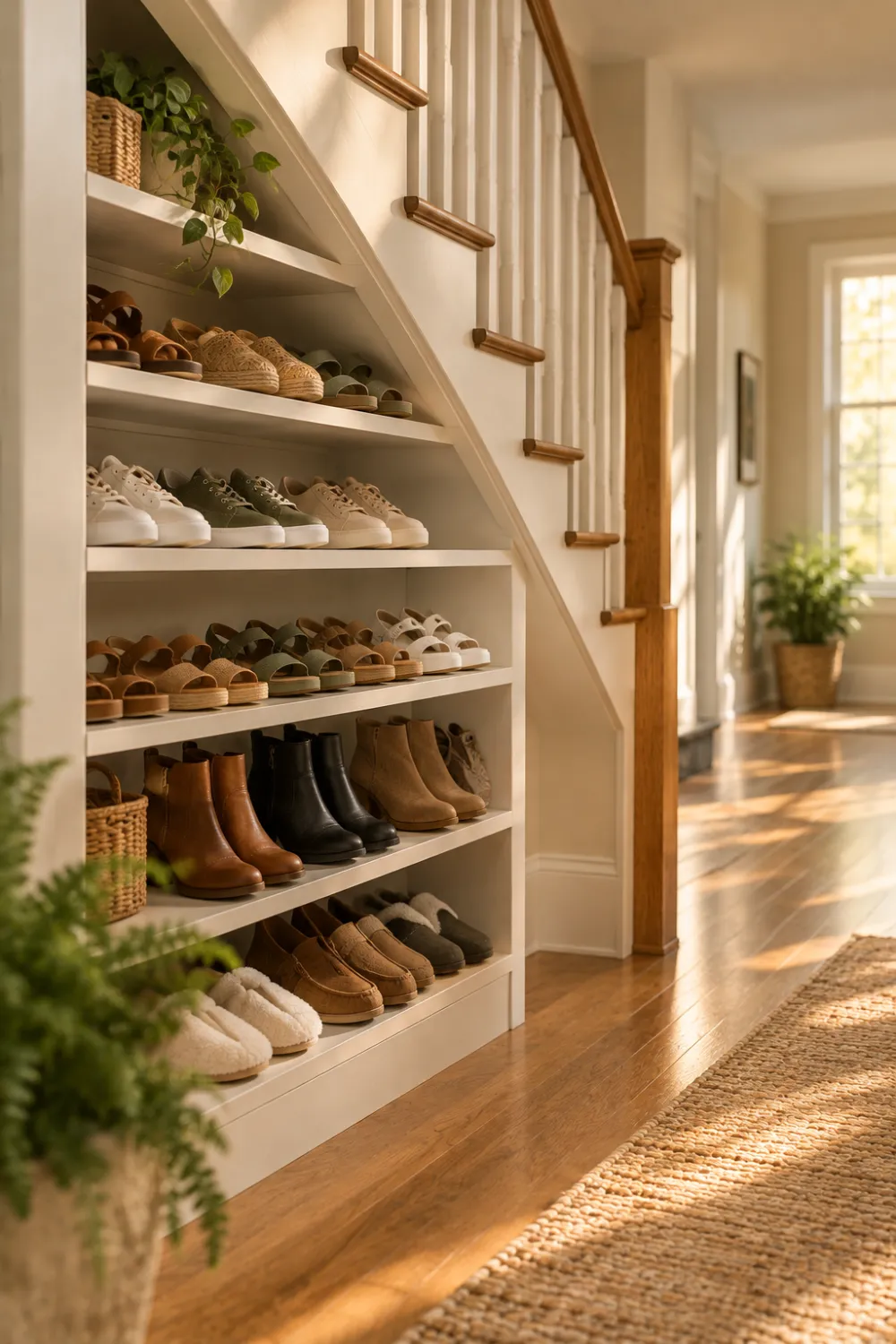
The triangle space under a staircase is awkward for most things, but it’s great for shoes. Build or buy angled shelves that follow the slope of the stairs.
The low end holds boots and slippers, while the tall end handles sandals. If it has a door, even better. Everything stays hidden, and the hallway looks cleaner right away.
14. Baskets by the Door

For kids, nothing beats a basket. No sorting, no pairing, just toss and go. Give each family member their own labeled basket, and shoes stop scattering across the floor.
Use wire or woven baskets with handles so little hands can drag them. It’s not the neatest system, but it’s the one that most children will actually keep up.
15. Leaning Ladder Shelf
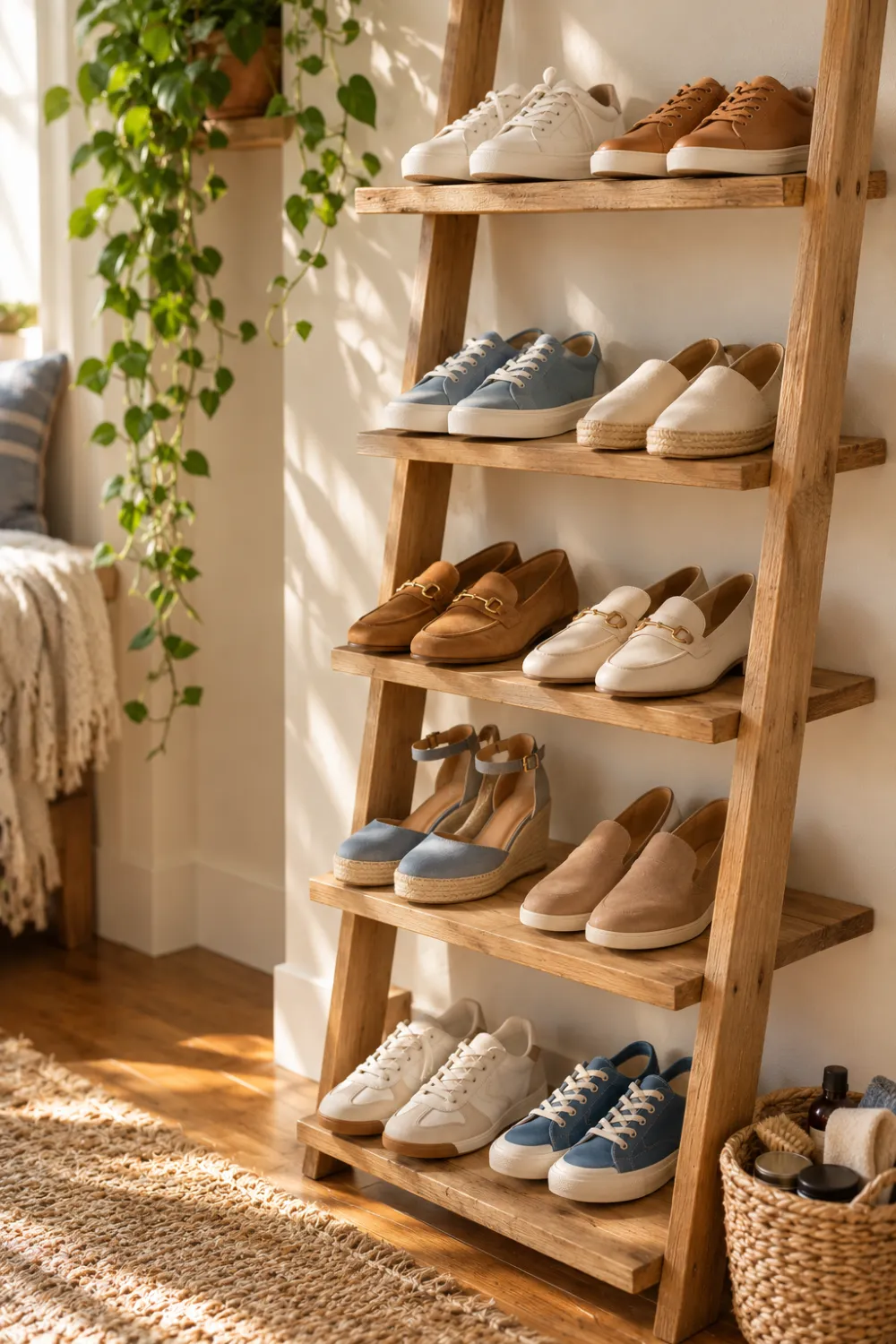
A ladder shelf leans against the wall, so there’s no installation involved. Each step holds a few pairs, and the open frame feels light even in small rooms.
It suits casual homes with a bit of character. Pick one with wide, flat rungs so the shoes sit securely, and add a small basket at the bottom for socks or shoe-care items.
16. Garage Shoe Station
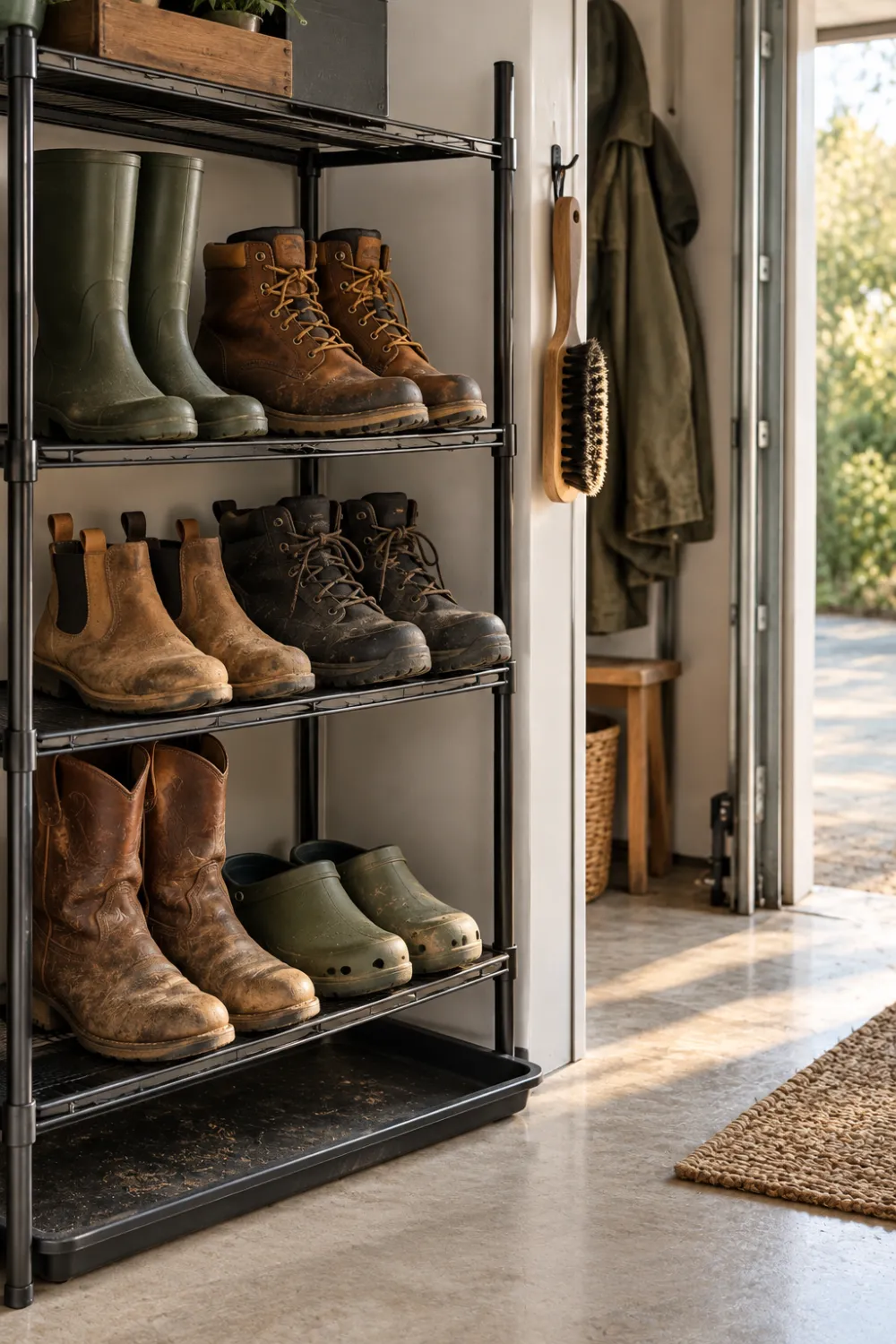
Muddy cleats, work boots, and garden clogs probably shouldn’t walk through your living room. Set up a simple metal rack near the garage entrance and make it the dirty-shoe zone.
Use a rubber tray on the bottom shelf to catch dirt. Hang a stiff brush on a nearby hook. Family members will quickly learn to kick shoes off there before coming inside.
17. Mudroom Lockers

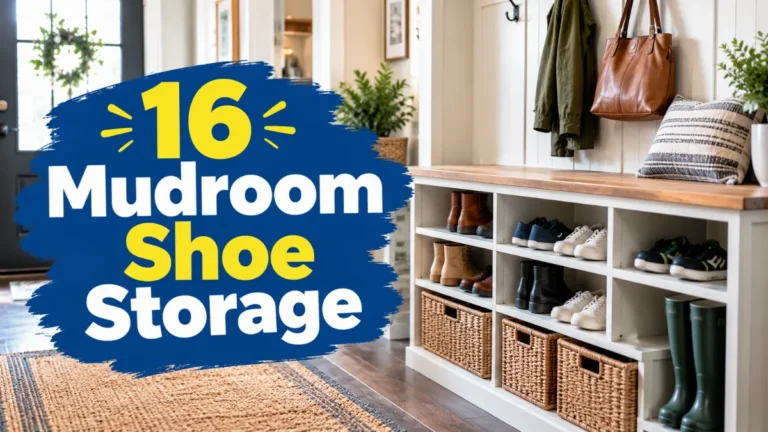
If you have the room, lockers are the gold standard for busy families. Each person gets a cubby with a bench seat, hooks for bags above, and a space below for shoes.
The key is giving every person their own space. Arguments about whose shoe is whose disappear. You can buy ready-made units or ask a carpenter to build them to fit.
18. Boot Trays for Wet Shoes
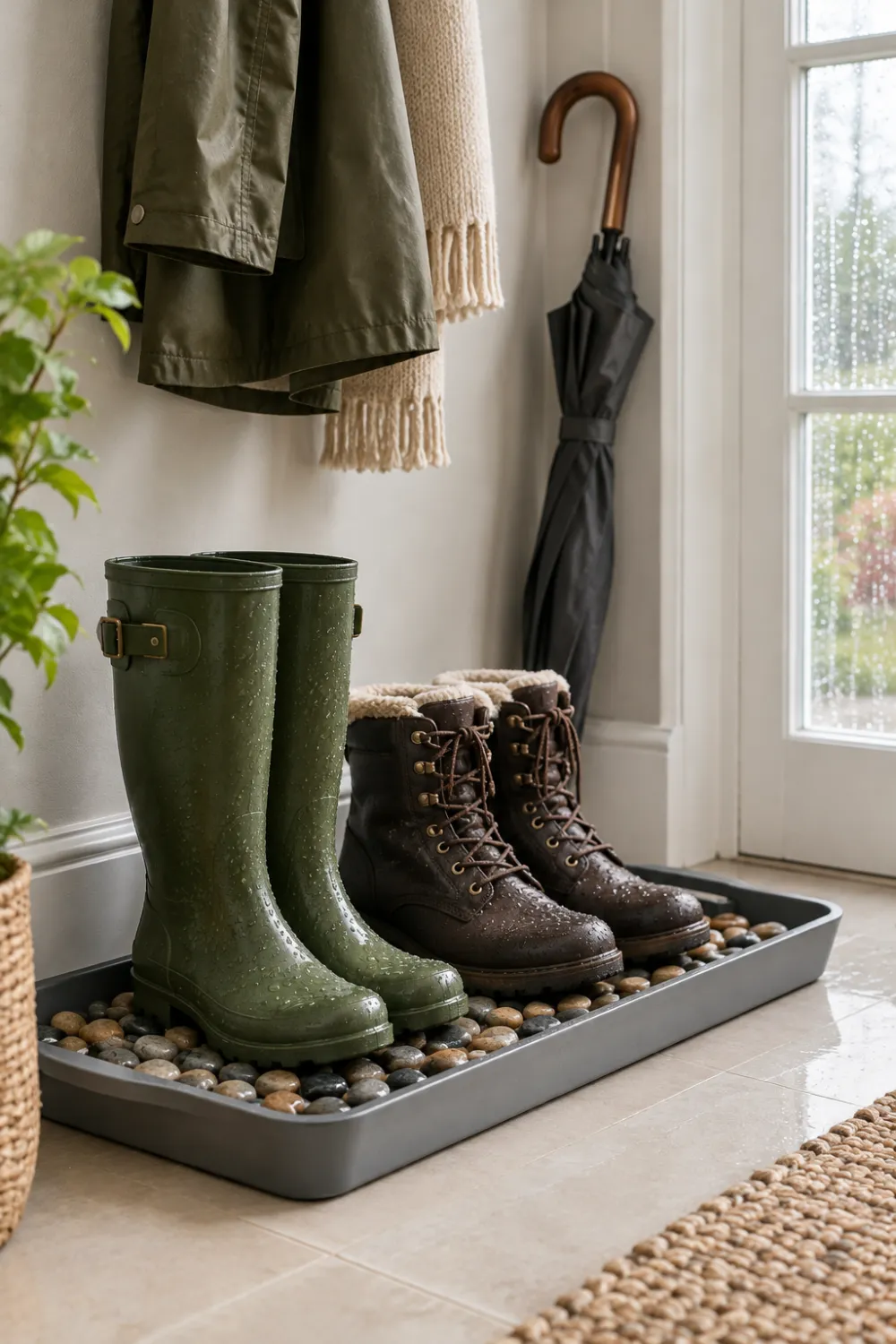
Rain, snow, and slush make a mess fast. A shallow, waterproof boot tray with a raised lip keeps puddles contained and floors dry.
Pick a wide one so a whole family’s shoes fit side by side. Add a layer of pebbles inside so water drains away from the soles. In wet seasons, this tiny item can save your floors.
19. Wooden Crates
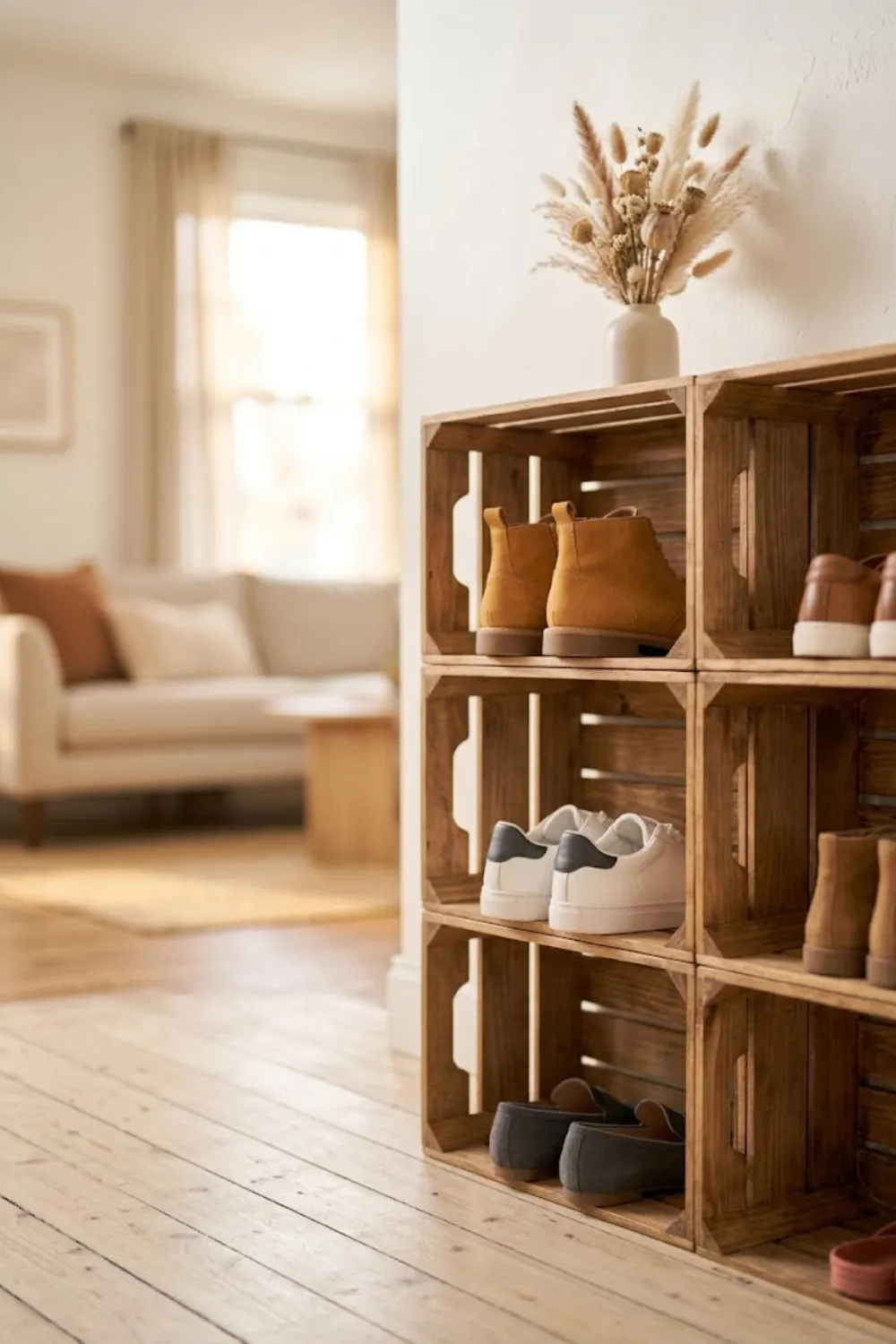
Stack a few wooden crates on their sides and you’ve got a rustic, budget-friendly shoe shelf. Sand the edges and add a coat of paint or stain to match your decor.
Screw the crates together so the stack stays steady. It’s a fun weekend project, and you can customize the size to suit your hallway or bedroom corner.
20. Seasonal Rotation Boxes
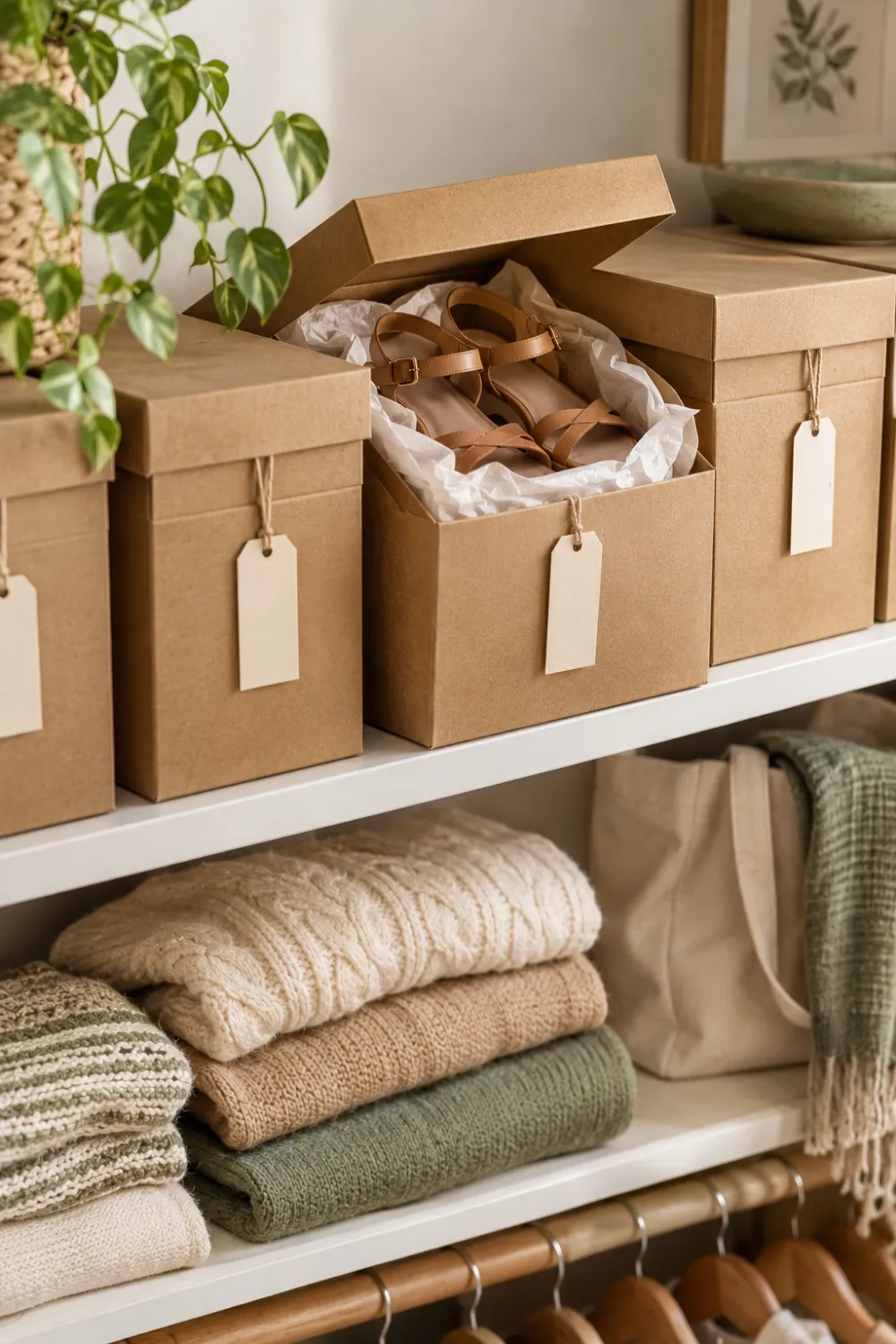
Most of us wear only a handful of pairs at any time of year. Pack your off-season shoes in labeled boxes and store them on a high shelf or in the attic.
Swap them twice a year when the weather changes. It gives you more room in your daily storage, and your everyday shoes stay easier to find.
Conclusion
The best shoe storage ideas are the ones you’ll actually use every day. Think about where your shoes land when you walk in, how many pairs you own, and how much space you can spare. Start with one small fix, like a bench or a door organizer. Once the clutter clears, you’ll wonder why you waited so long.