18 Closet Organization Ideas That Actually Make Mornings Easier
Ever stood in front of a full closet and still felt like you had nothing to wear? You’re not alone. The fix is rarely a bigger closet. It’s a smarter setup. These closet organization ideas cover small spaces, shared closets, and everything in between, from simple hanging tricks to clever door storage, so you can find something that fits your space and your habits.
1. Double Hanging Rods
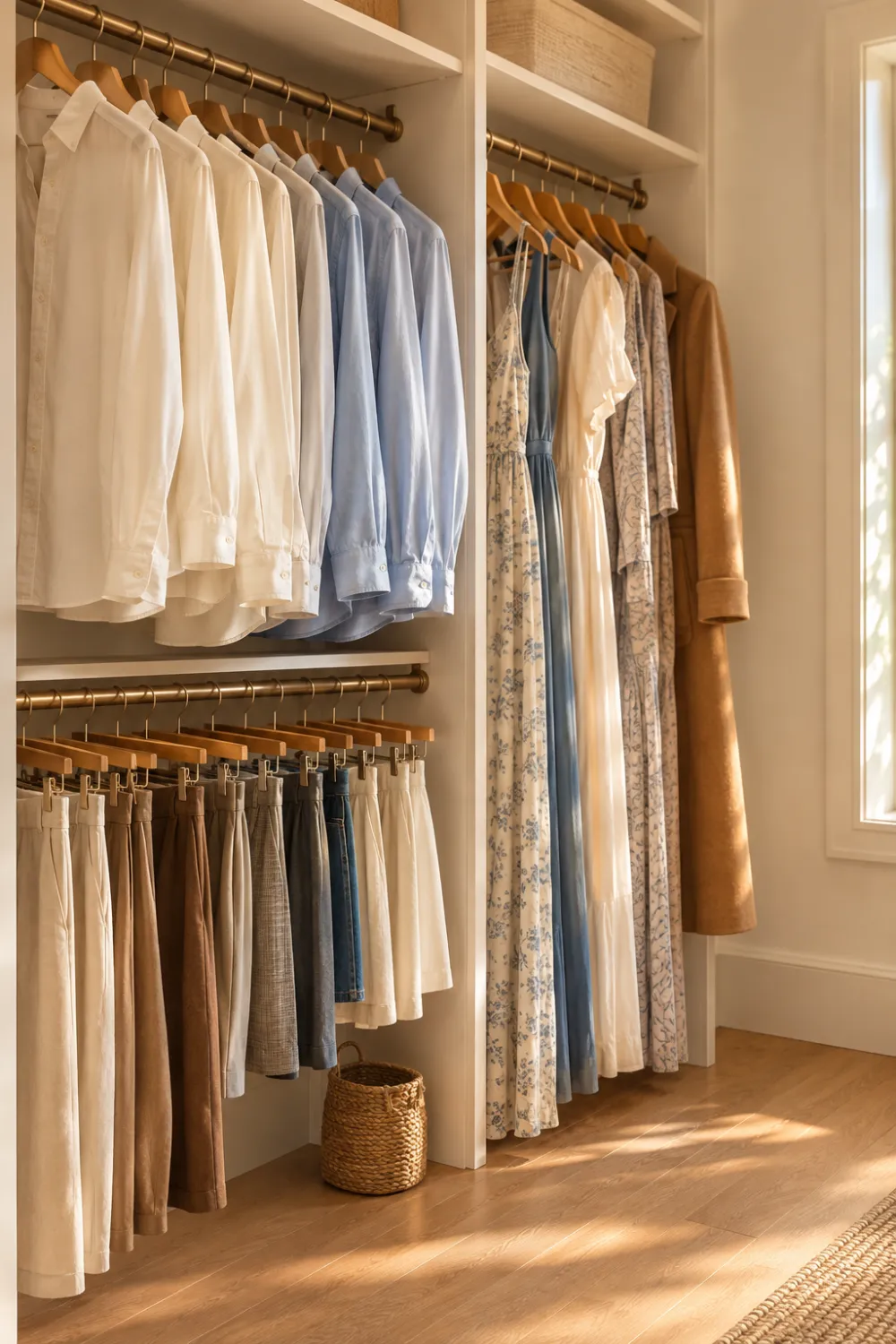
Most closets waste the space under short items. Shirts, skirts, and folded pants only need about half the height of a full rod. Add a second rod below the first and you nearly double your hanging room. Adjustable hanging rod kits work well if you can’t drill, because they hang from the existing rod. Keep long dresses and coats on a separate, taller section so they don’t drag.
2. Color-Coded Rows
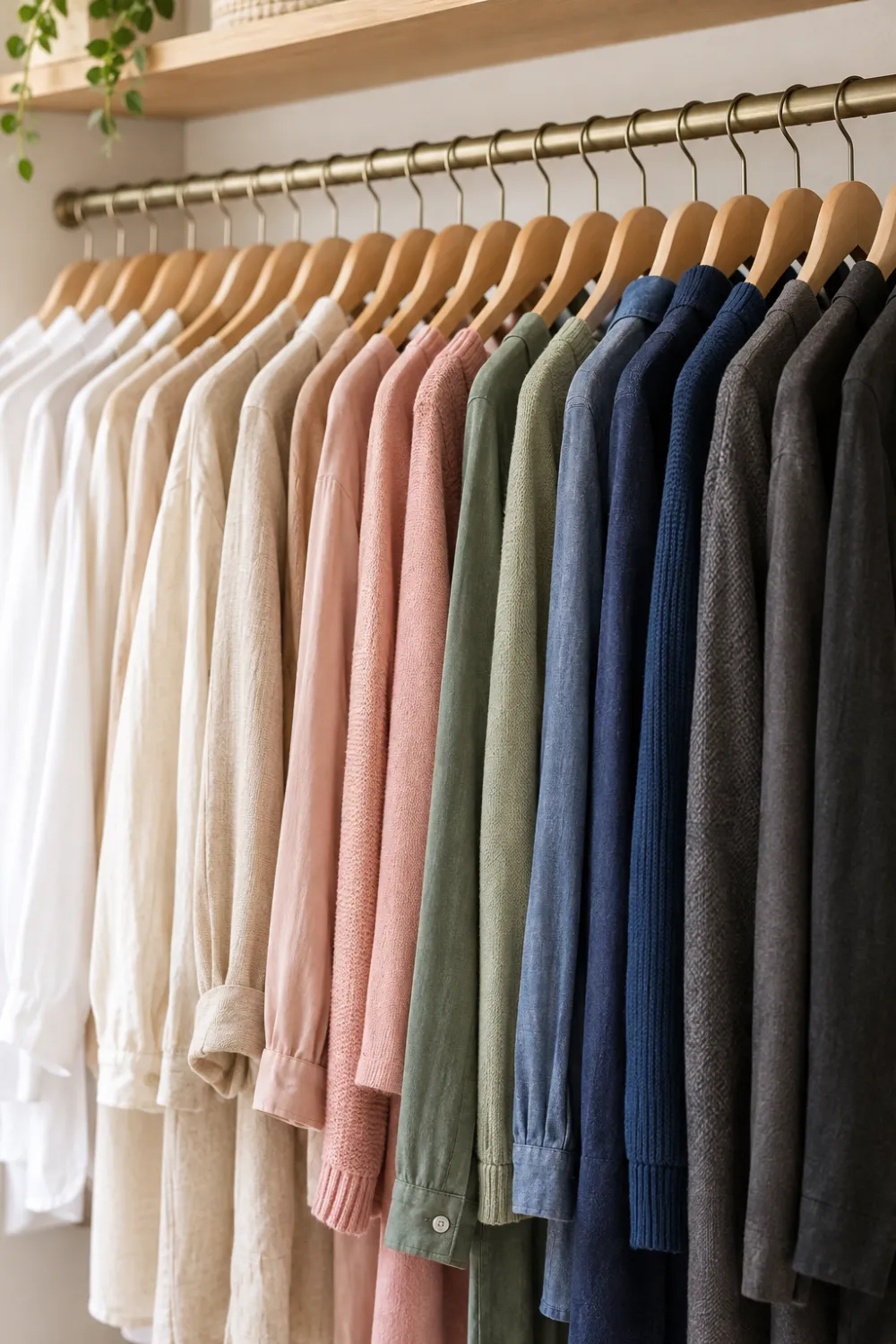
Sorting by color makes a closet feel calm, and it’s surprisingly practical. You spot the navy sweater in two seconds instead of digging for it. Start with whites on one end and move through the rainbow to darks. Group by type first (tops, then pants), then by color inside each group. It also shows you at a glance when you own seven black tees.
3. Matching Slim Hangers
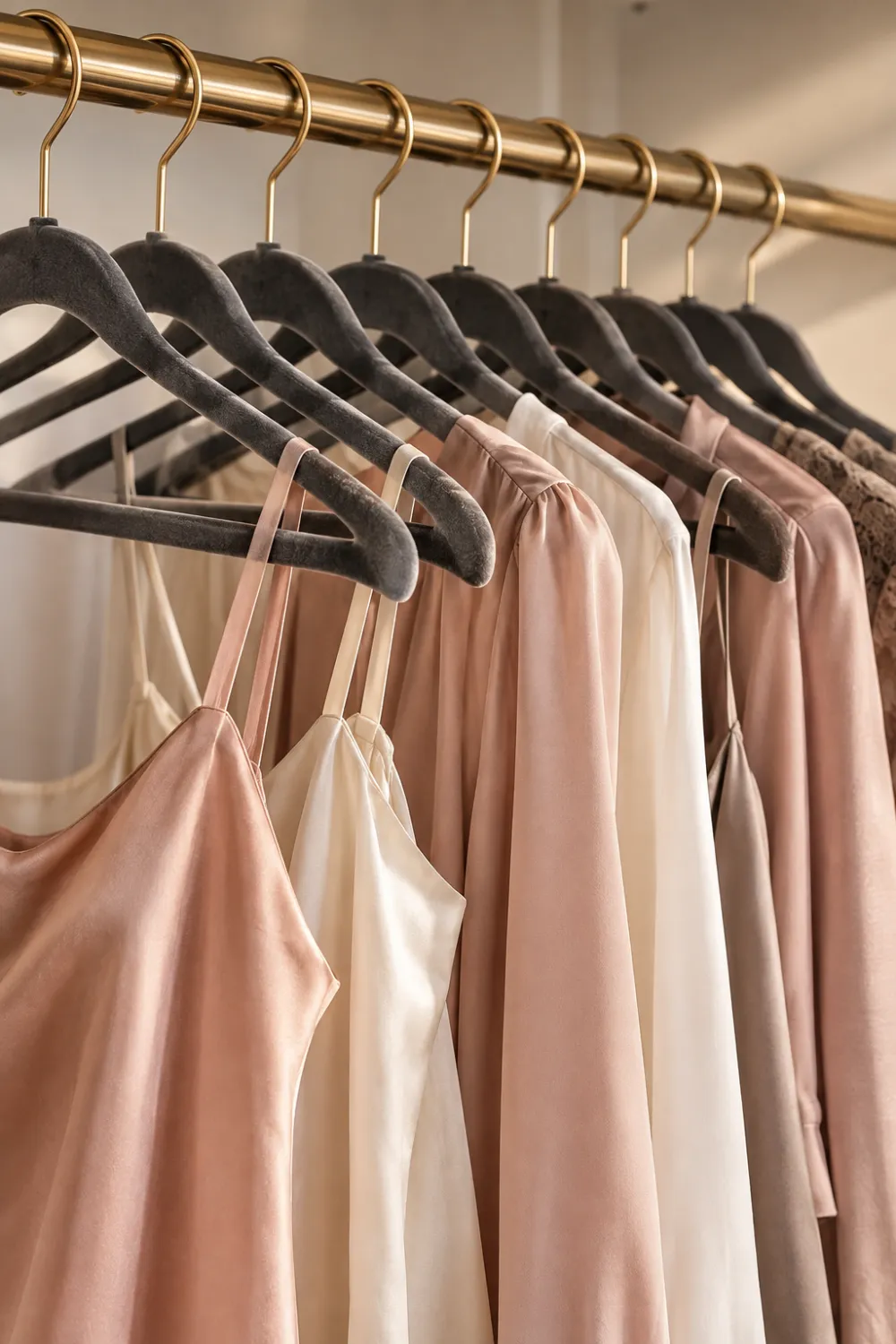
Mismatched hangers create bumpy, uneven rows and waste inches. Swap them for slim, matching ones and you’ll often gain room for a few more pieces. Velvet hangers keep slippery tops and straps from sliding off. Use sturdier wooden or wide-shoulder hangers only for coats and structured blazers. It’s one of the cheapest upgrades, and the closet looks tidier right away.
4. Shelf Dividers

Stacks of sweaters love to topple over. Acrylic or wire shelf dividers hold each pile upright, so pulling one item doesn’t wreck the rest. They also give every category its own lane: jeans here, knits there, tees next. Slide them in where your shelf needs a break. If your shelves are deep, they’re a lifesaver for stopping piles from creeping into a messy heap.
5. Over-the-Door Shoe Pockets
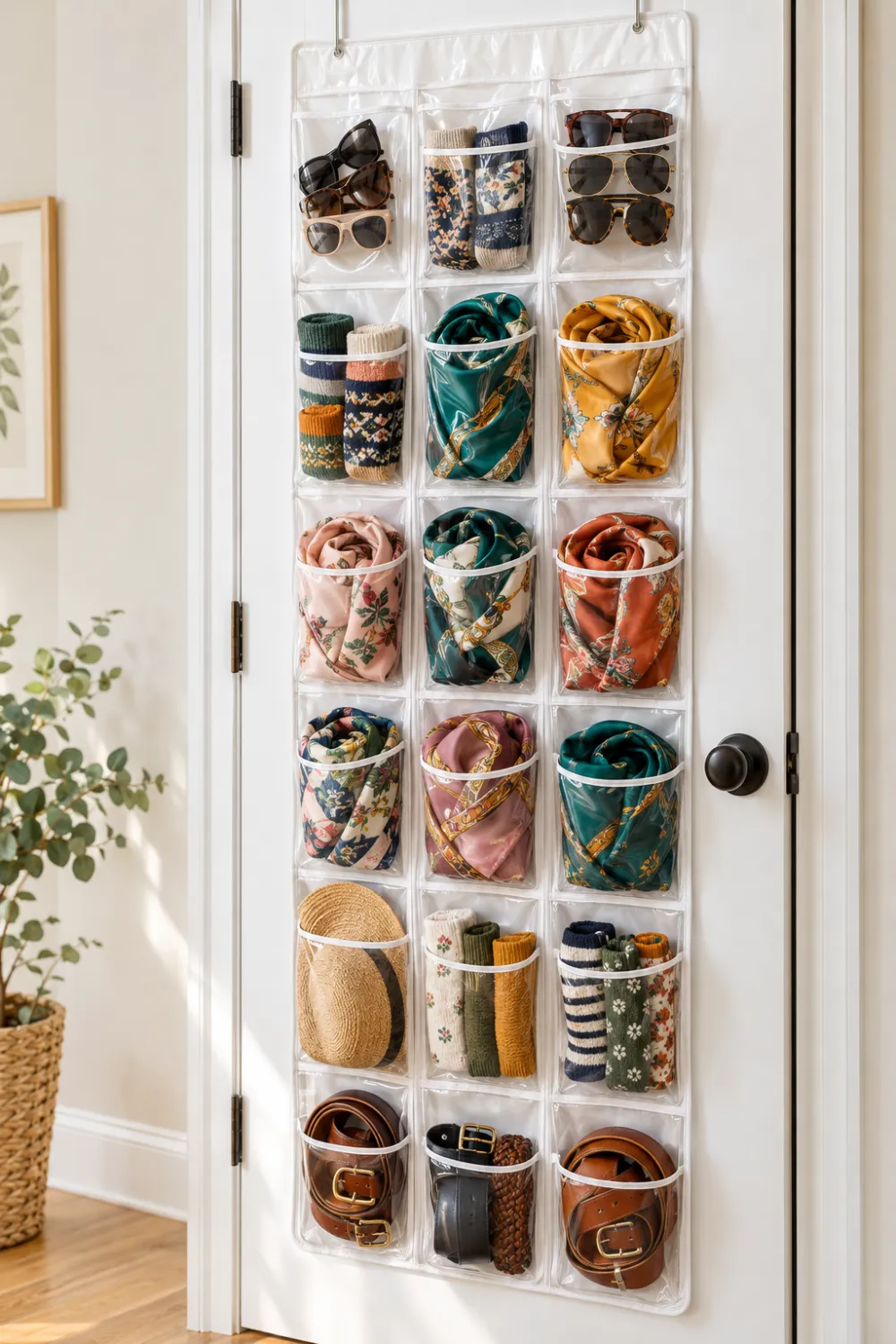
You don’t need to use this one for shoes. Clear pockets hold scarves, sunglasses, socks, hats, and rolled belts just as well. Because you see everything at once, nothing gets forgotten at the bottom of a bin. Hang one on the inside of the closet door and you’ve added storage without losing a single inch of shelf. Go for fabric or clear plastic that fits your door’s thickness.
6. Drawer Dividers
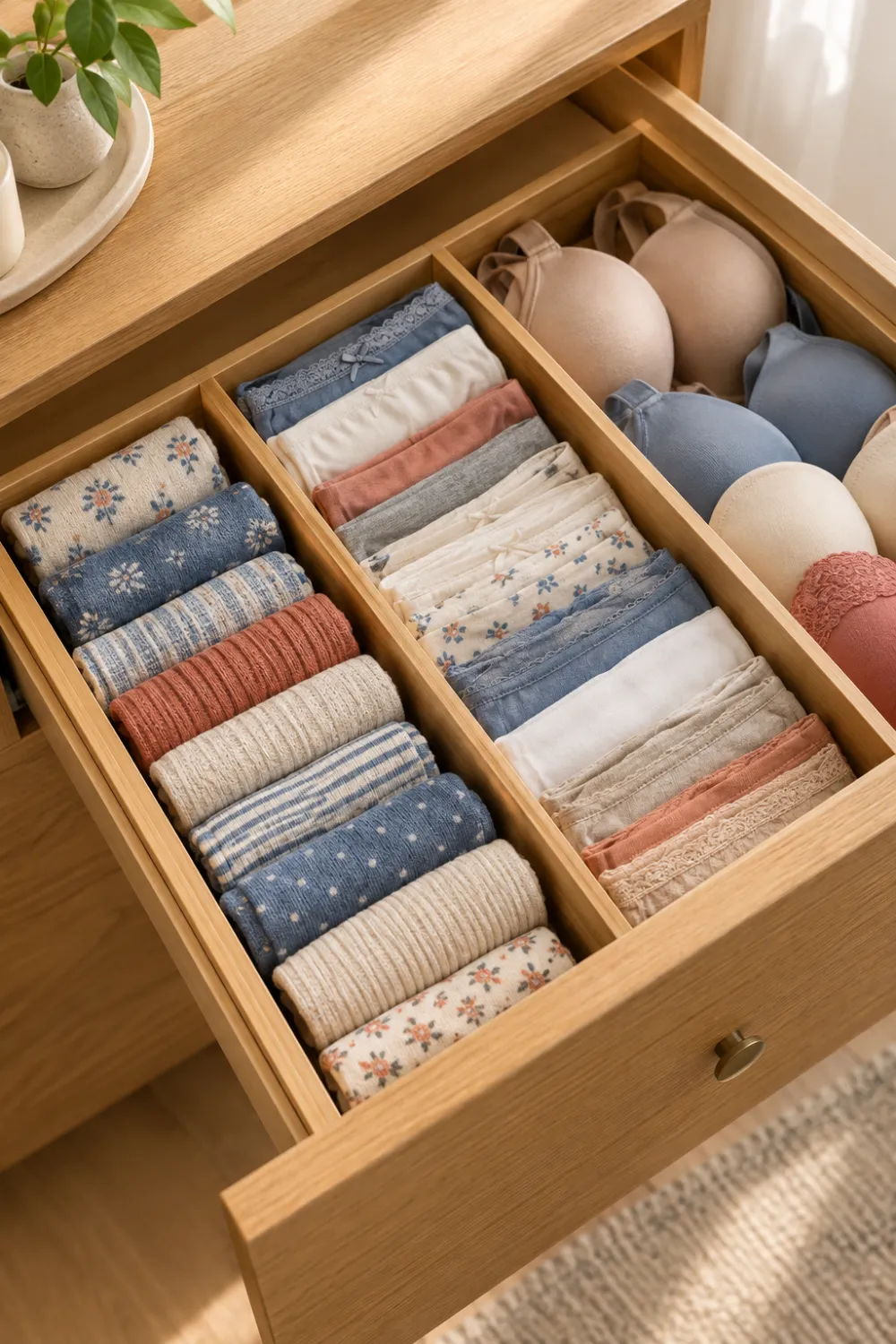
An open drawer of socks and underwear can look like a tangle. Small dividers or shallow boxes turn it into neat compartments. Give each category its own spot: socks, underwear, bras, sleepwear. Fold socks flat instead of balling them so you can see every pair. If you’re short on drawers, a freestanding dresser cube or two inside the closet works beautifully.
7. Hanging Shelf Organizers
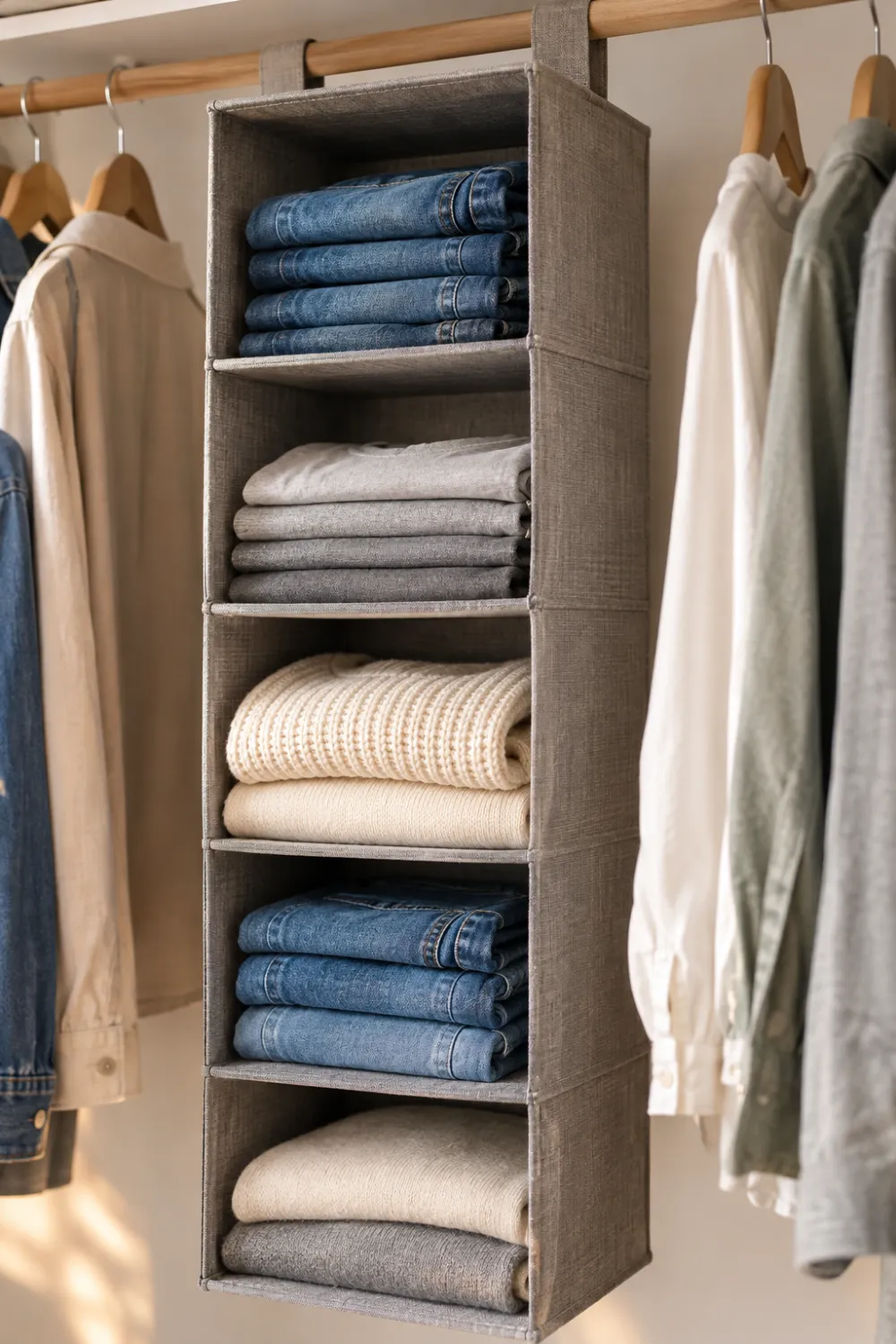
These fabric towers hang from the rod and give you cubbies where there was empty air. They’re great for folded jeans, tees, or sweaters, and they’re easy to take down and move. Choose ones with a stiff base so they don’t sag under weight. They’re a good fit for renters, since there’s no drilling, and for closets that have a rod but hardly any shelves.
8. Clear Bins with Labels
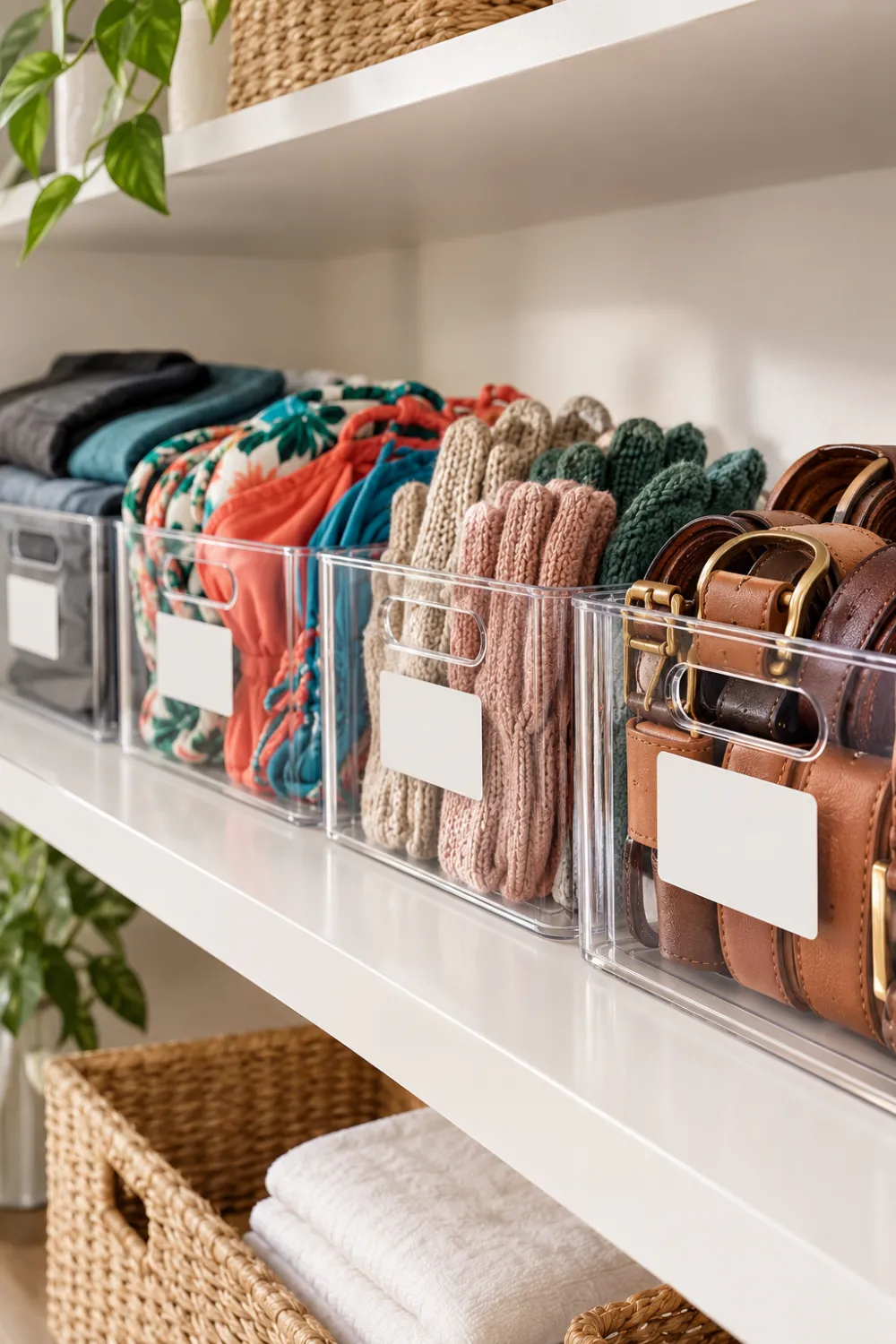
If you can see it, you’ll use it. Clear bins on high shelves keep belts, swimwear, gym gear, or gloves from turning into a mystery pile. Add a simple label to the front so you don’t have to pull them all down. Keep each bin to one category only. Once you start mixing things, the system falls apart fast. Stick with the same bin style for a cleaner look.
9. File-Fold Method
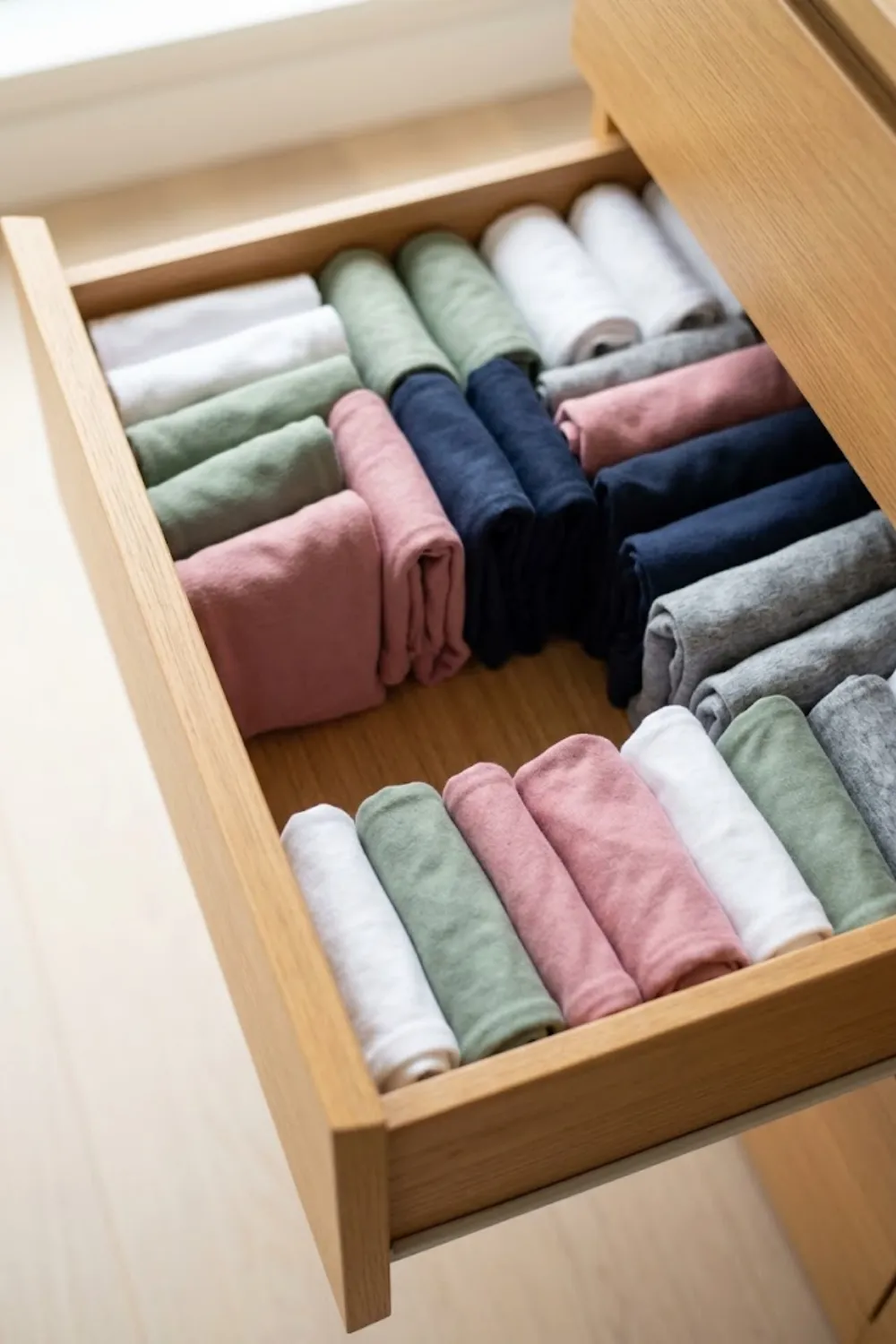
Instead of stacking shirts, fold them into small rectangles and stand them up like files in a drawer. Now you can see every top at once, and pulling one out won’t disturb the rest. It works best for tees, leggings, and lightweight knits. Pack the drawer snugly so the folds stay upright. Once you try it, stacking starts to feel like a silly way to store clothes.
10. Wall Hooks
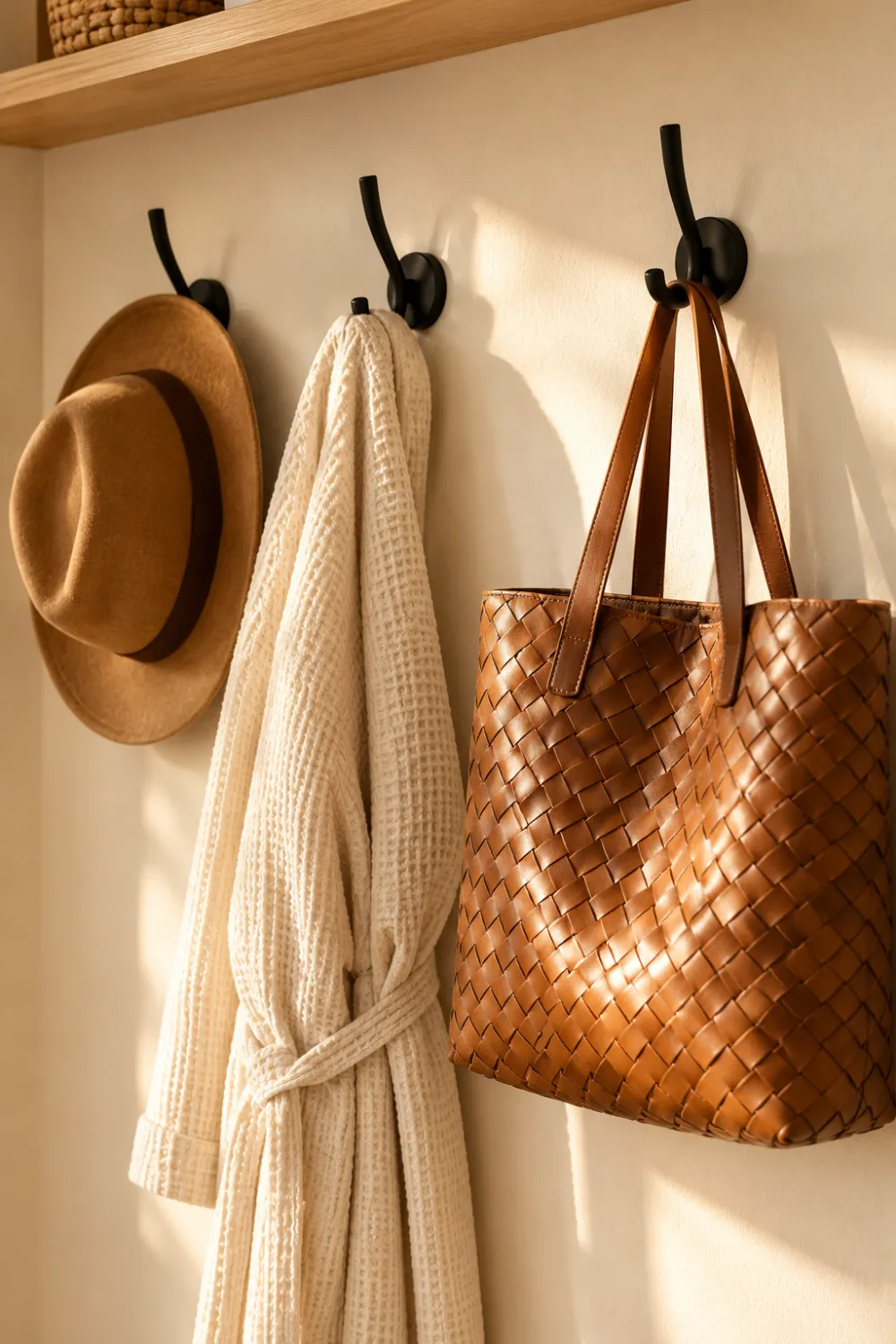
Sometimes the best storage is a row of hooks on a side wall or the back of the door. Use them for bags, robes, hats, or the jacket you wear three times a week. A hook beats a hanger when you need to grab something fast. Mount them at a height you can reach easily, and don’t overload one hook. Two or three items per hook is plenty.
11. Seasonal Swap
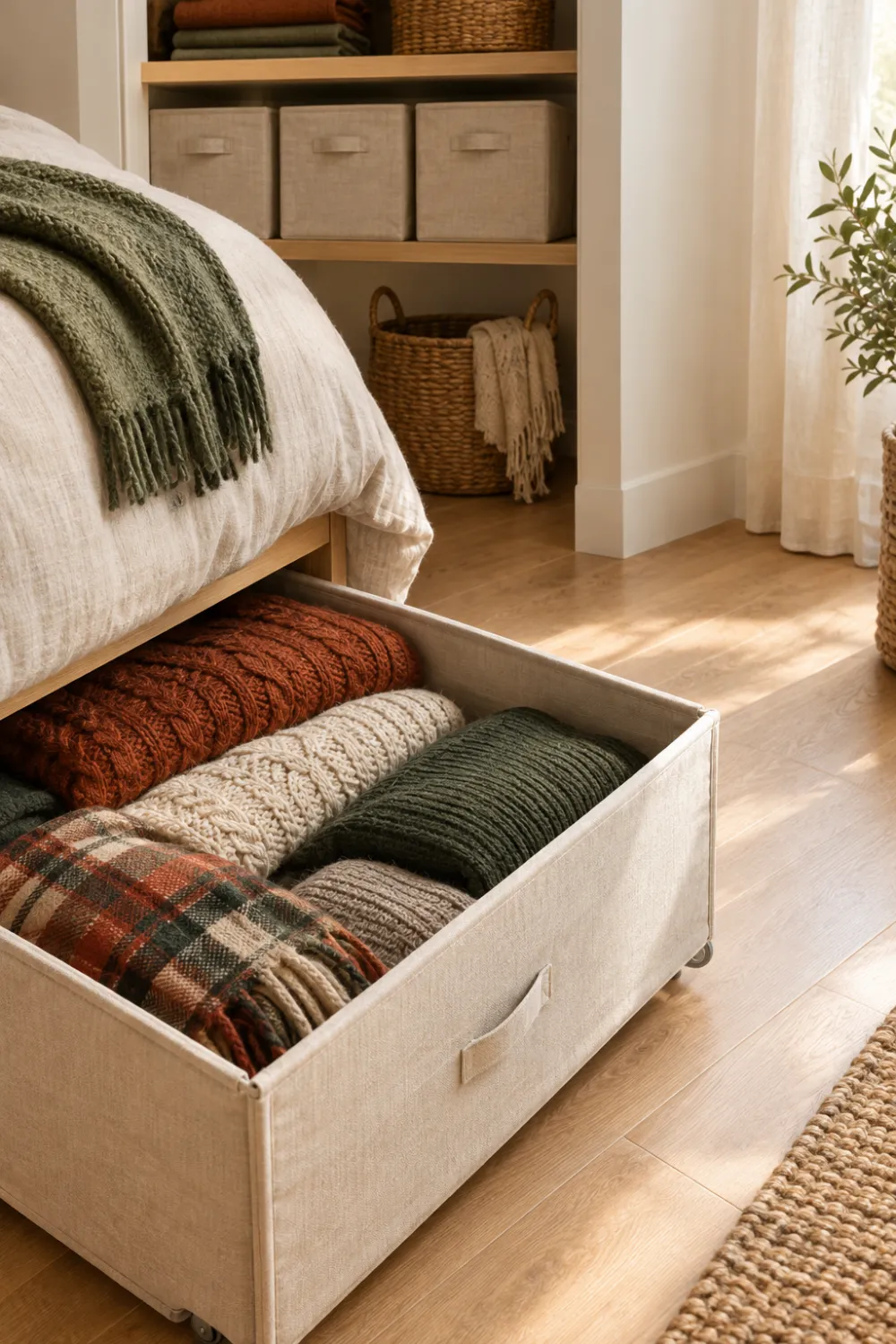
You don’t need heavy coats taking up prime space in July. Pack off-season clothes into under-bed boxes, vacuum bags, or high-shelf bins, and bring them out when the weather turns. This gives your everyday clothes room to breathe. Wash everything before storing it so no odors or stains set in. Swapping twice a year also gives you a natural moment to donate what you didn’t wear.
12. Slide-Out Accessory Racks
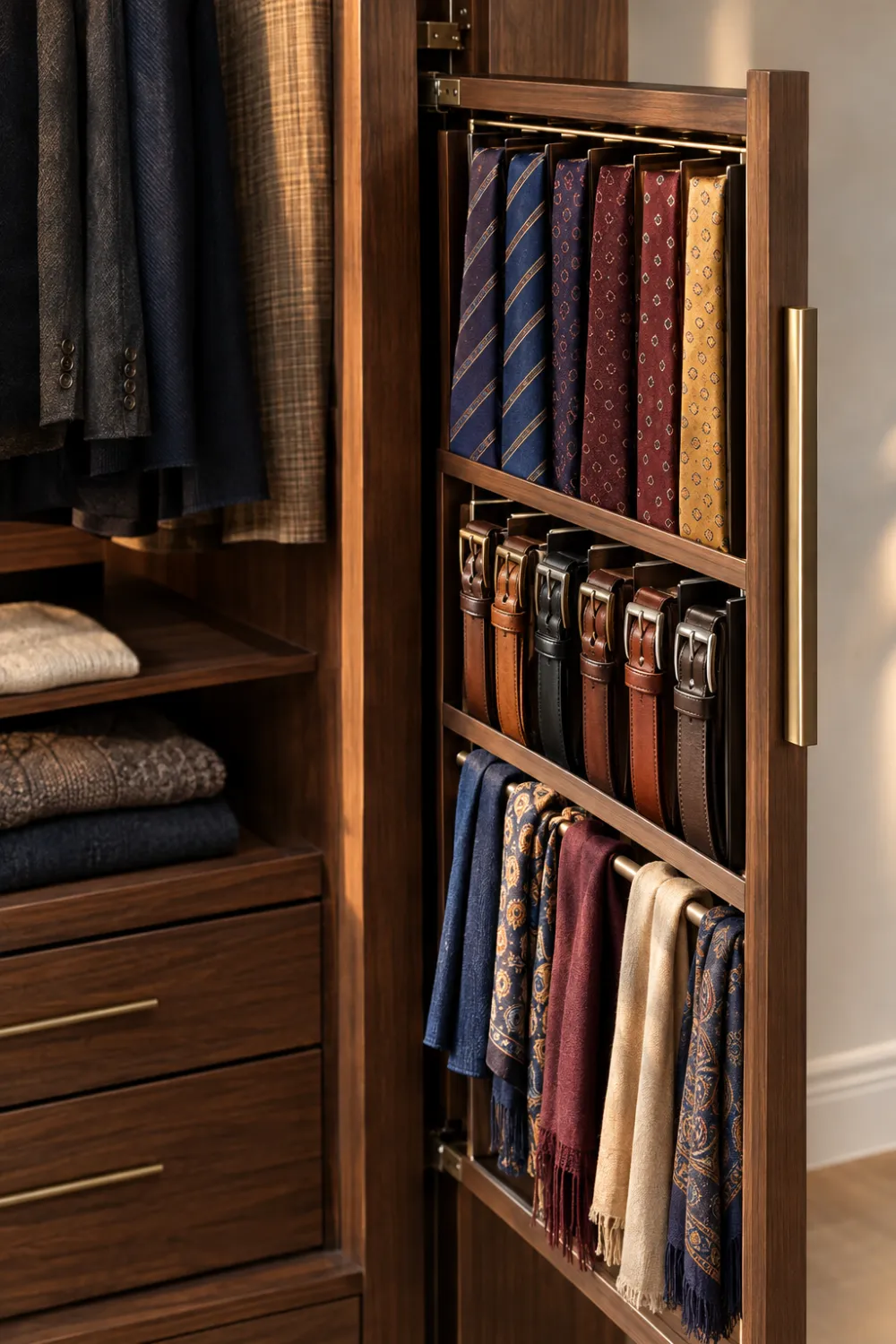
Ties, belts, and scarves are famous for tangling together. A slim pull-out rack on the closet wall keeps each one in its own slot and slides out when you need it. When it’s pushed in, it takes almost no space. Look for one that fits a narrow gap beside your hanging area. This is a great fit for a work wardrobe, where you reach for the same accessories every day.
13. Angled Shoe Shelves
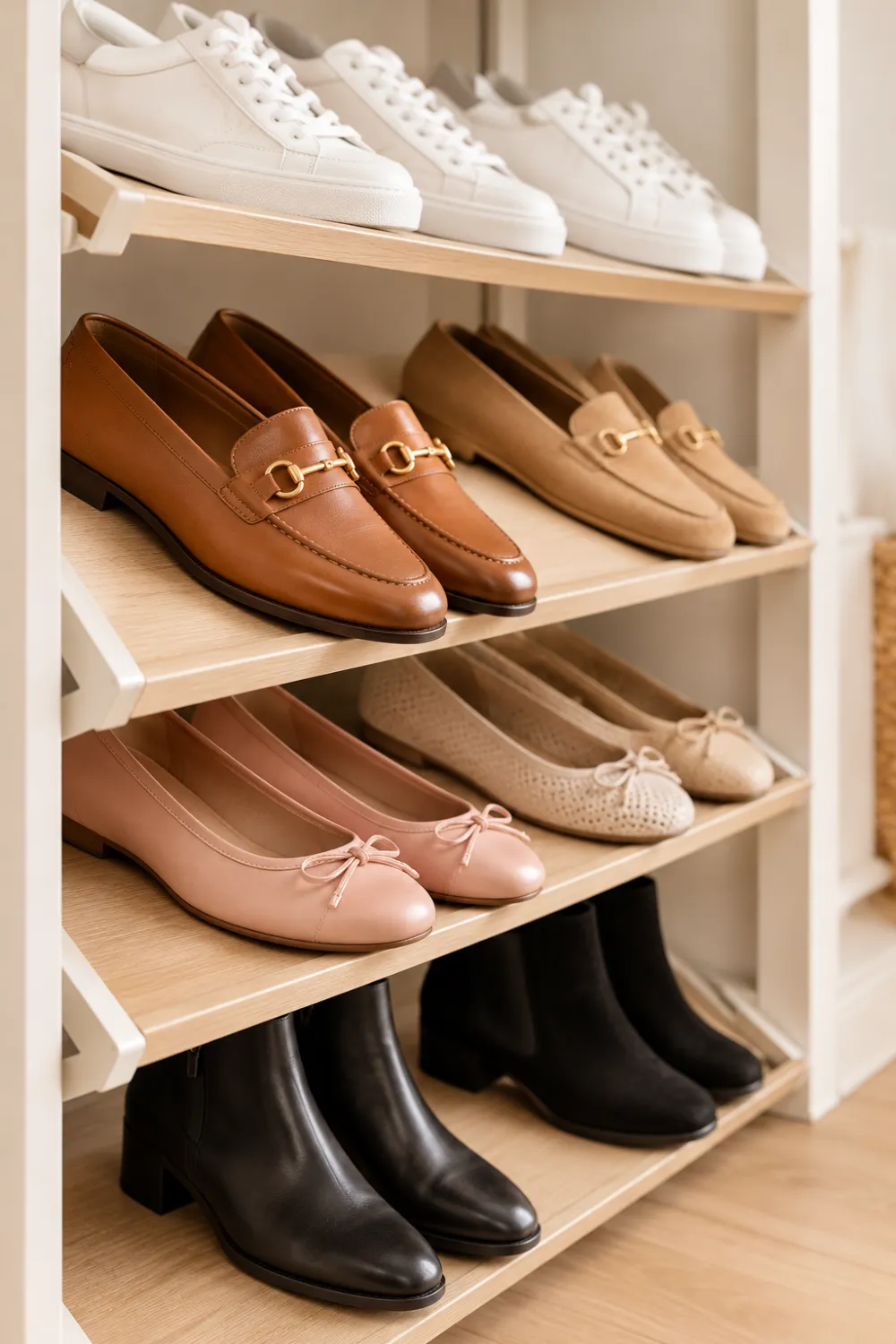
Flat shelves hide the front half of your shoes. Angled shelves tilt each pair forward, so you see them all at a glance and fit more in the same footprint. You can buy adjustable shoe racks or tiered stands that do this. Keep the pairs you wear most at eye level and move occasional heels or boots higher. Tall boots can stand in a separate section with boot shapers.
14. Curtain Instead of Doors
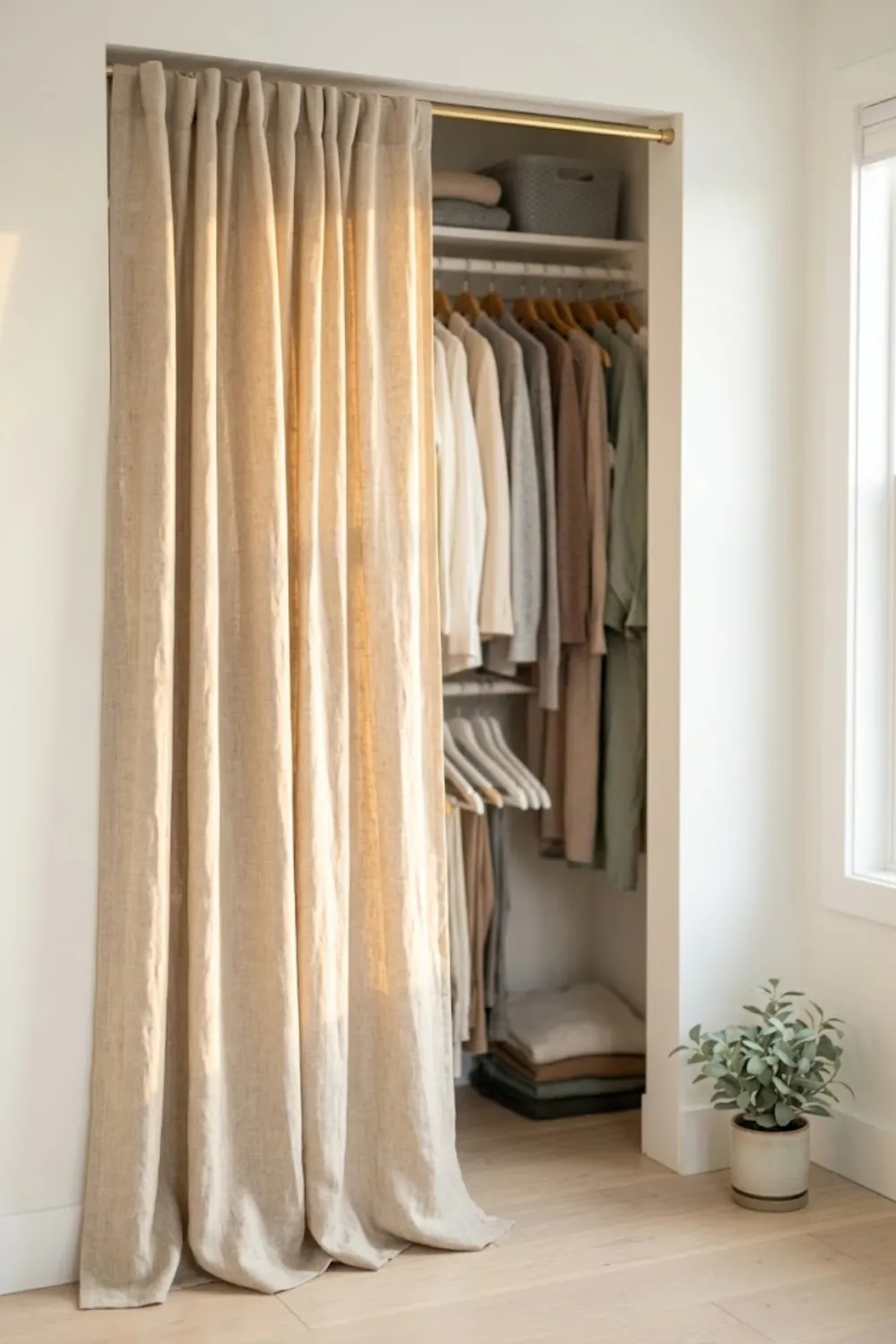
Closet doors swing out and block your view, and sliding doors hide half the closet at any moment. Remove them and hang a simple curtain on a tension rod, and you can see the whole closet when it’s open. It also saves floor space, which matters in a small bedroom. Pick a fabric that matches your room. A linen curtain makes the whole area feel softer and more finished.
15. Tension Rod Tricks
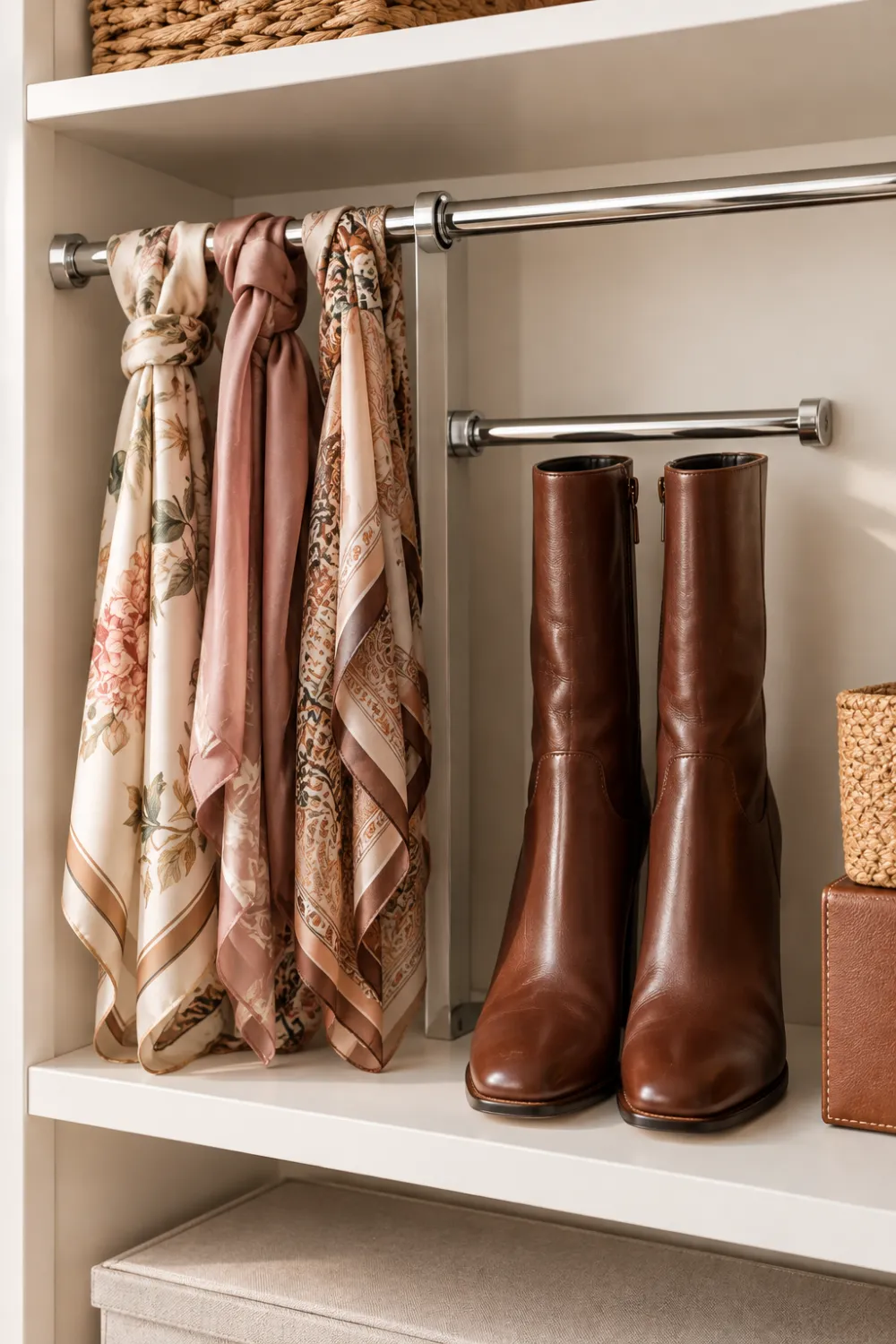
A tension rod costs very little and does more than you’d expect. Place one low inside a deep shelf to hold boots upright. Put one between two walls to hang a row of scarves. Try one vertically to keep baking sheet-sized items like clutches from toppling. They install without any tools, so they’re ideal for rentals and for testing an idea before you commit to a bigger change.
16. Handbag Hooks and Shelves
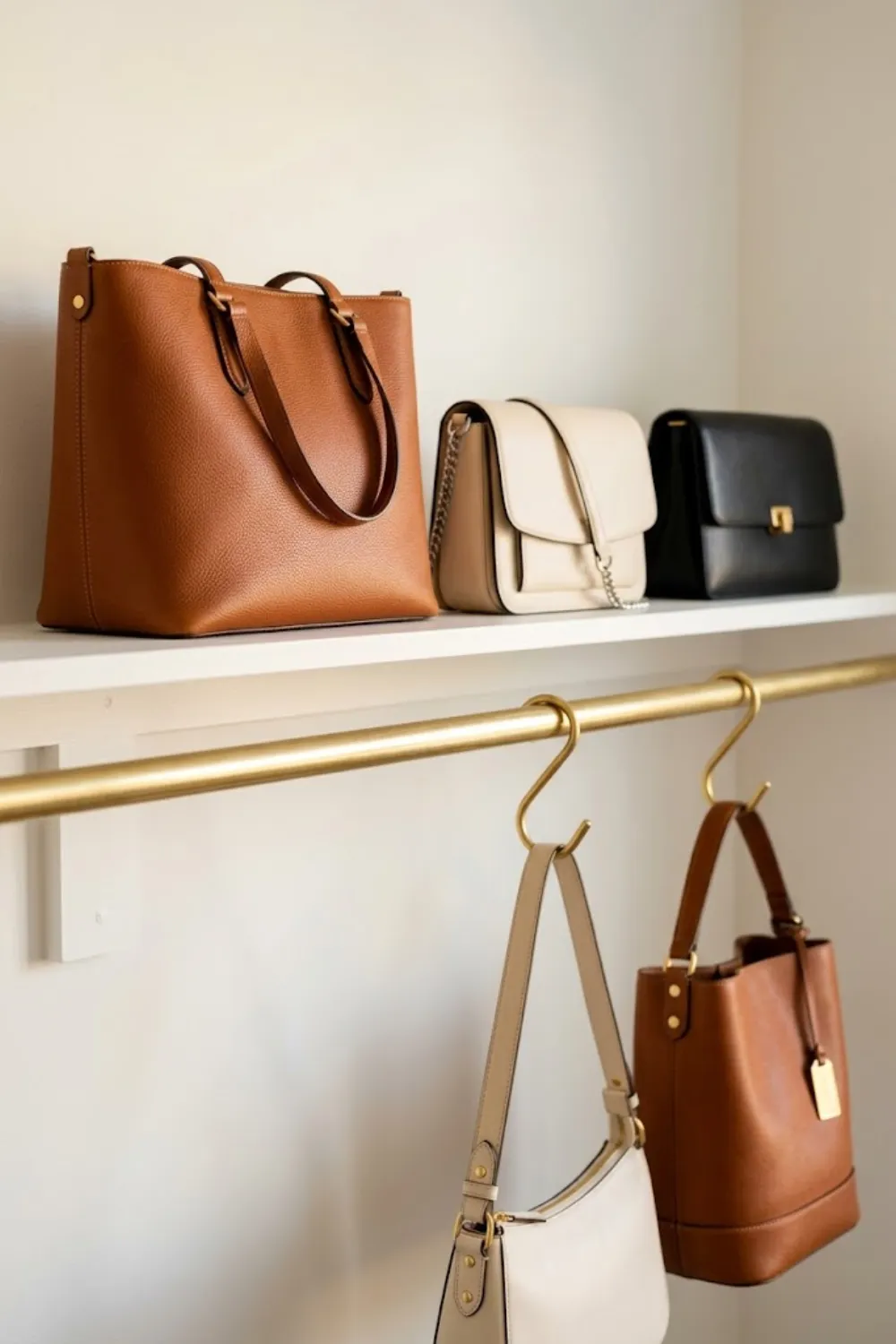
Bags lose their shape when they’re crushed together. Give each one room: use S-hooks on the rod so they hang at the side, or set them upright on a shelf with a tissue-stuffed shape. Group them by size and how often you use them. Keep your everyday bag at arm’s reach and store the fancy ones higher, in their dust bags. A little space keeps handles from cracking.
17. Zoned Sharing
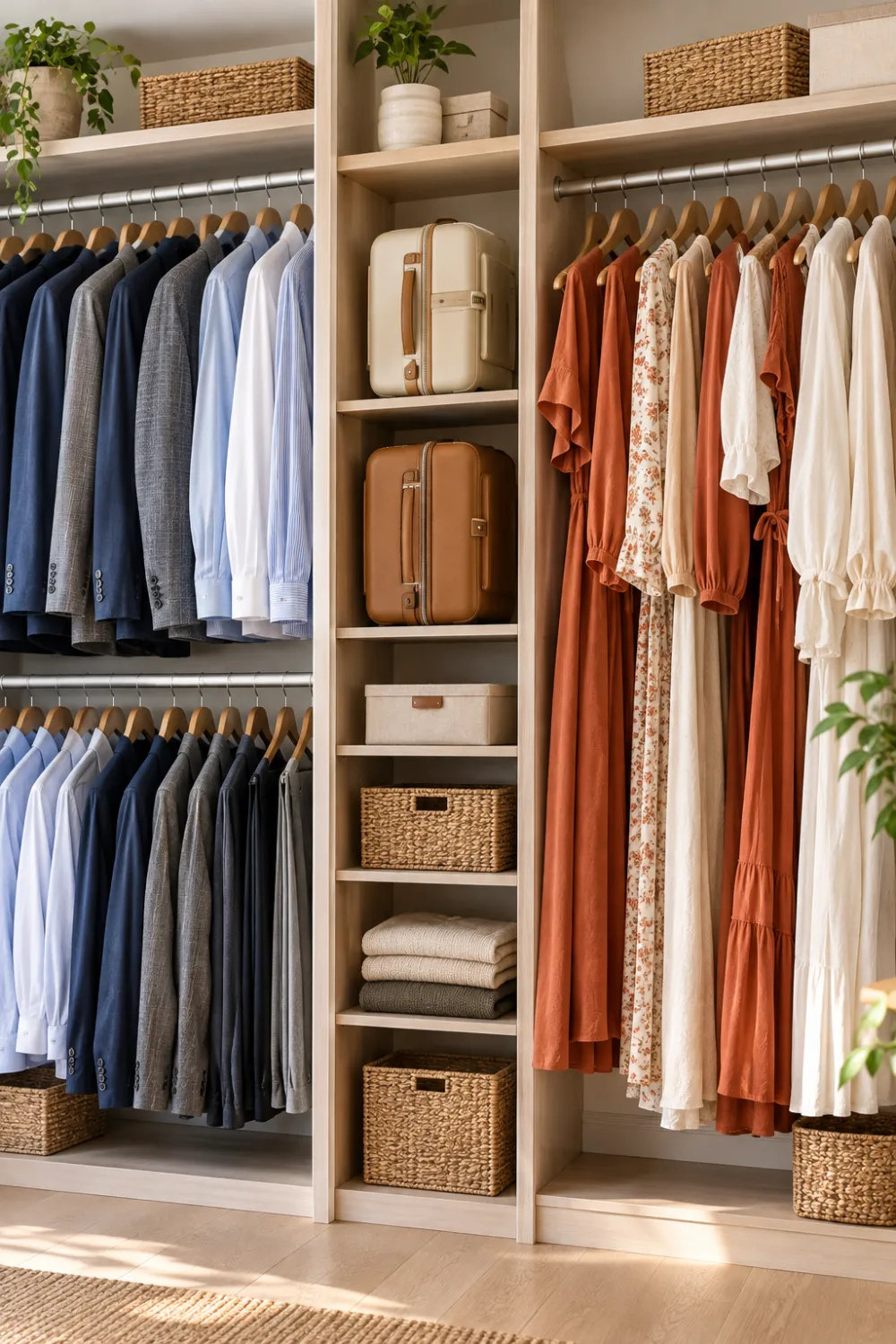
Sharing a closet with a partner or sibling gets messy fast without clear lines. Divide the space so each person has their own rod, shelf, and drawer. A simple divider panel on the shelf makes the boundary obvious. Put shared items, like luggage or spare linens, in a neutral zone. Agree on the split together, and give the person with more hanging clothes more rod space.
18. Tomorrows Outfit Spot
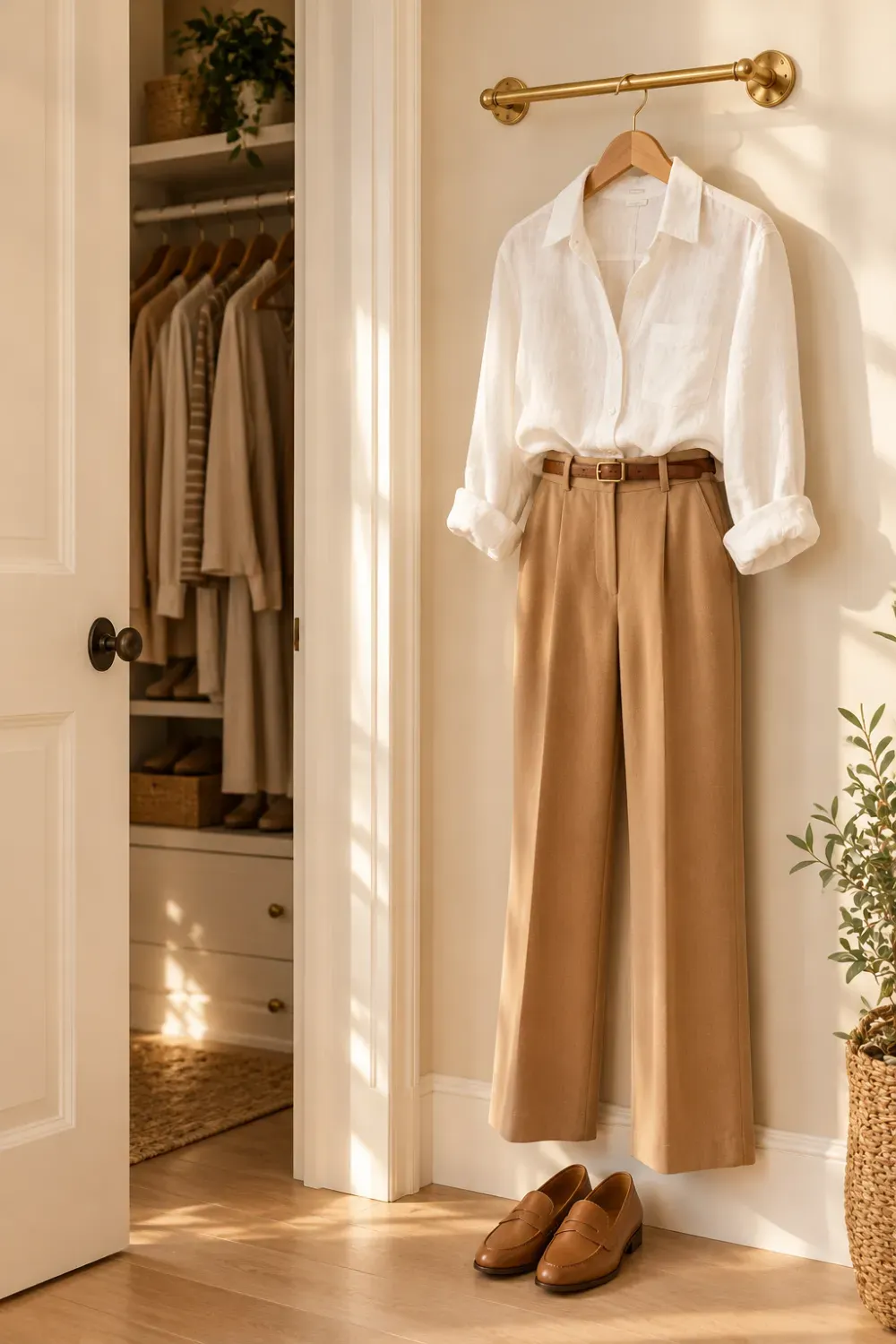
Decision fatigue hits early in the morning. Add one hook or a small hanging rail near the closet door and set out tomorrow’s outfit the night before. It takes a minute and saves you from a frantic dig through the closet. It also keeps clothes from piling on the chair. Use it for the work week, kids’ school clothes, or a gym bag ready to grab.
Conclusion
The best closet organization ideas are the ones you’ll actually keep up. Start with your biggest annoyance, whether that’s piled shoes, tangled hangers, or buried sweaters, and fix just that. Then add one idea at a time. A closet doesn’t need to look perfect. It just needs to make getting dressed feel easy again.